Blue flowers (blå blomster) in Målselv, Troms, Norway,1912, an autochrome by Hanna Resvoll-Holmsen, via Nasjonalbiblioteket (National Library of Norway) Commons on flickr (all photos here).
Resvoll-Holmsem was a Norwegian botanist, natural history educator, and conservationist. She took these rather moody early color pictures for her research.
Ferns (bregner), 1912, in Målselv, a municipality in the county of Troms in northern Norway.
Farm House, Crowell’s Cross Road, Halifax County, North Carolina, between 1935 and 1938, by Frances Benjamin Johnston, via Library of Congress Prints and Photographs Division.
Still, as I went about my potting on a glorious afternoon, one small treasure after another, the world of nature that is so terrible and so beautiful appeared only in its sweetest aspect.
Last February, we took our visiting oldest daughter to Nyungwe National Park and hiked the first half of the trail that includes a tree canopy walkway. Last week, with second daughter and friend in tow, we completed the entire circuit.
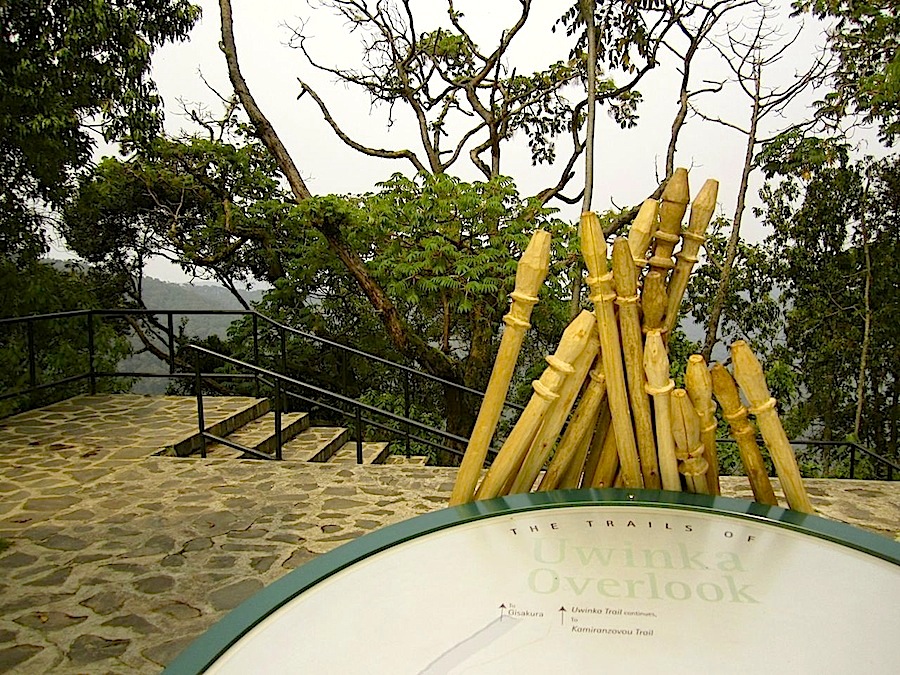
The hike started with us tucking our pants legs into our socks (against ants) and receiving walking sticks.
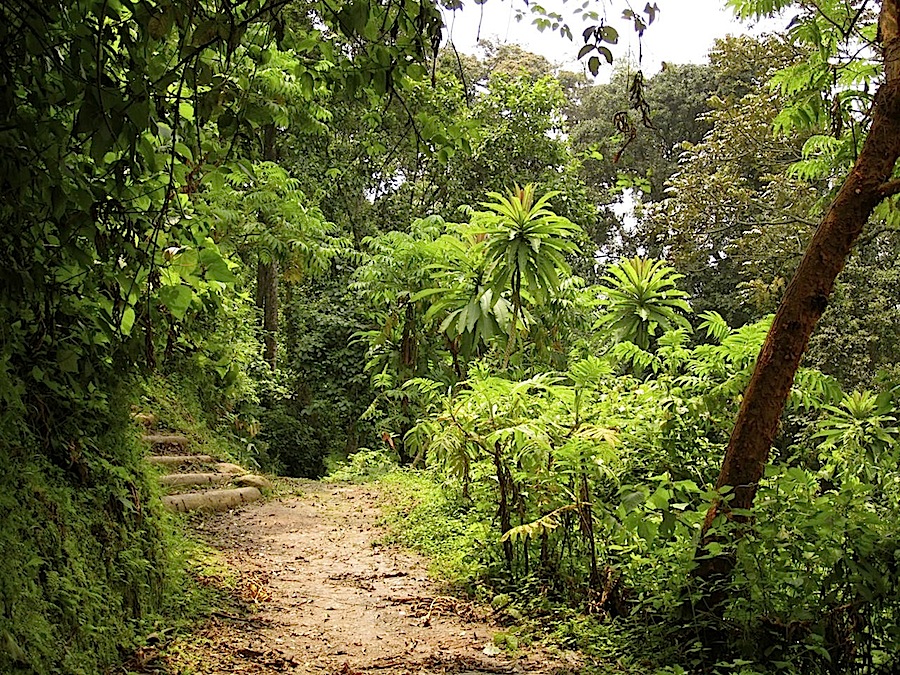
Although the paths are well-maintained, the sticks are necessary for the steeper, sometimes slippery sections.
The steps shown above are the first of many, many, many on a long descent to the canopy walkway. (The welcome center is at one of the highest points in the park.)
It was a hazy day, so I can’t show you the great mountain views that are otherwise visible along the way, but you can click here to see my photos from last February.
Photo by Laura Koran
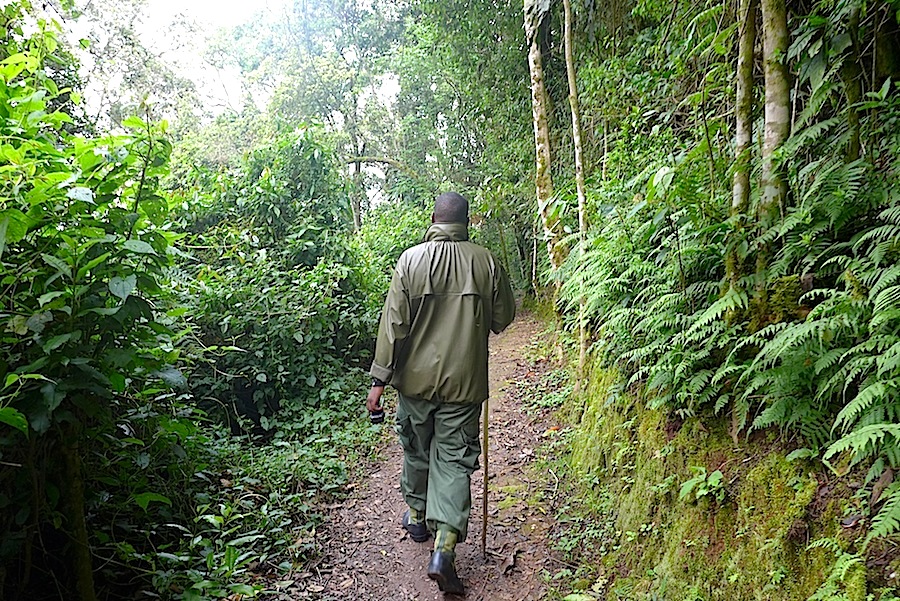
Above: Our guide led the way. He spotted a number of blue monkeys and turaco birds for us.**
(The earth walls that were cut when the trail was created — to the right of the guide above — bring the smaller plants of the forest floor to almost eye level. I’ve put pictures and names of some of them in a photo gallery, which you can scroll through by clicking on ‘Continue reading’ at the end of this post.)
Photo by L. Koran
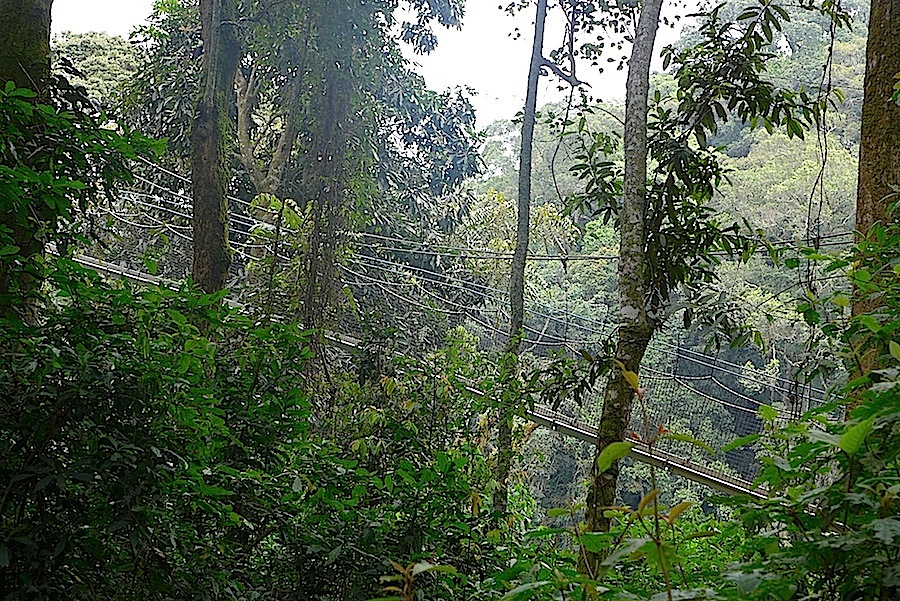
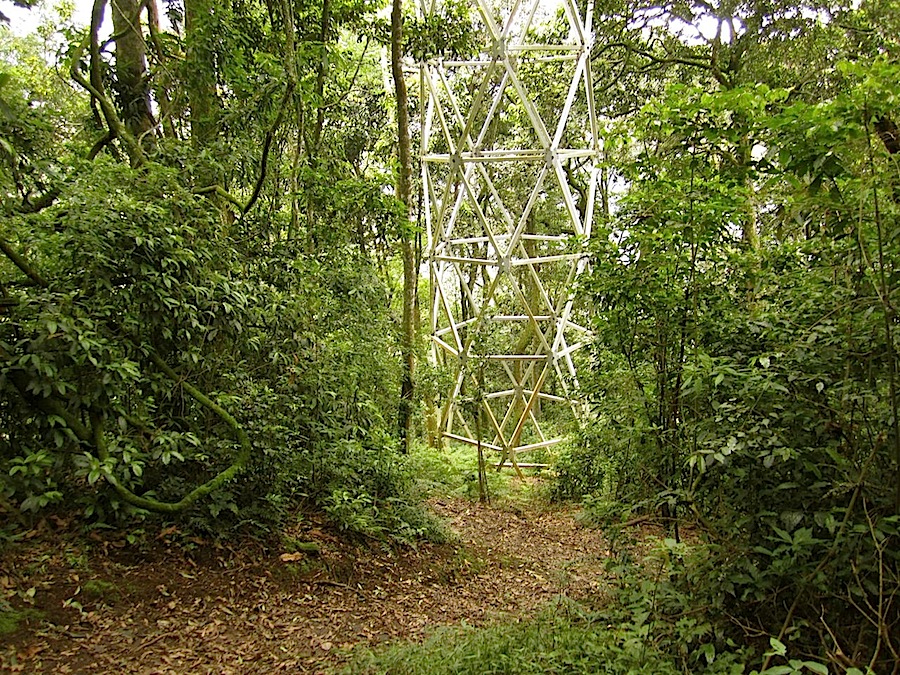
Above: We arrive at the beginning of the canopy walkway.
Photo by L. Koran
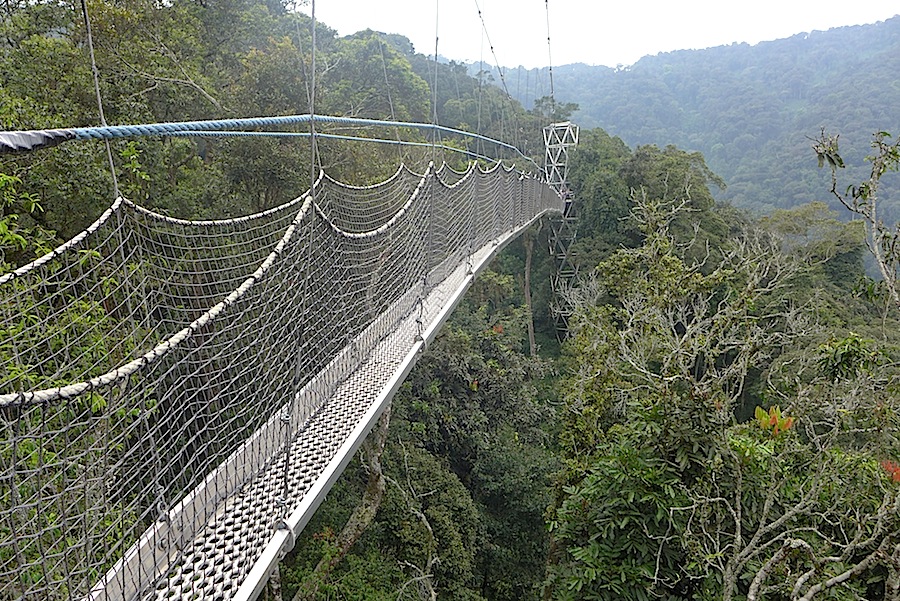
Above: The middle and highest section is 187′ (57 m.) above the ground.
During last year’s visit, with only the three of us and the guide, the walkway swung less, and I stopped a few times to look down and take pictures. (You can see them here.)
This time, in a group of about fifteen — with eight people crossing the walkway at a time — the shaking made me keep my eyes on the back of the person in front of me.
Photo by L. Koran
Above: Our guide starts across.
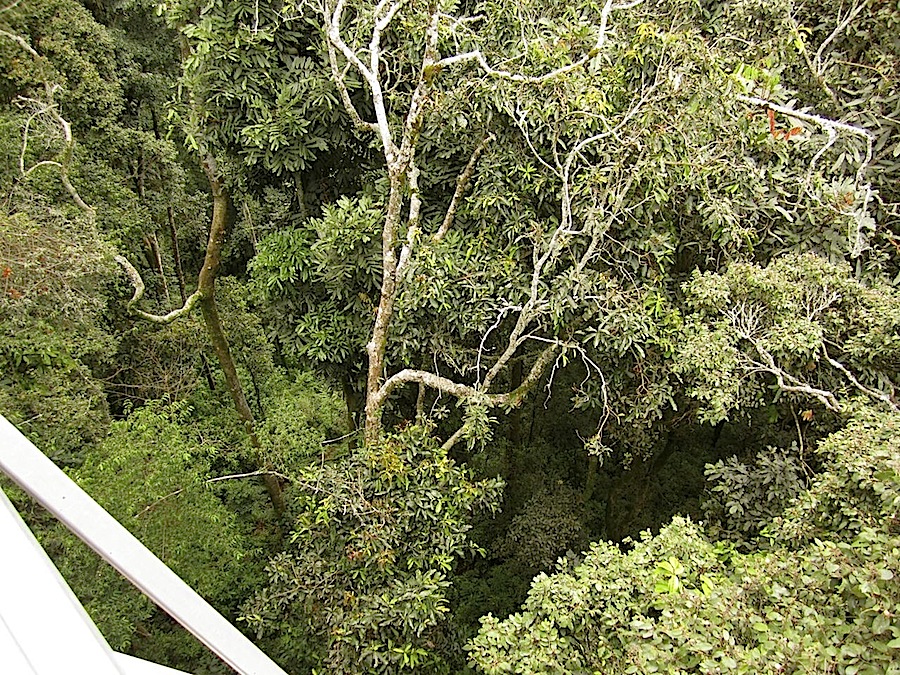
Above: I did look down after I reached the top of the second tower.
Above: Back on the ground below the second tower.
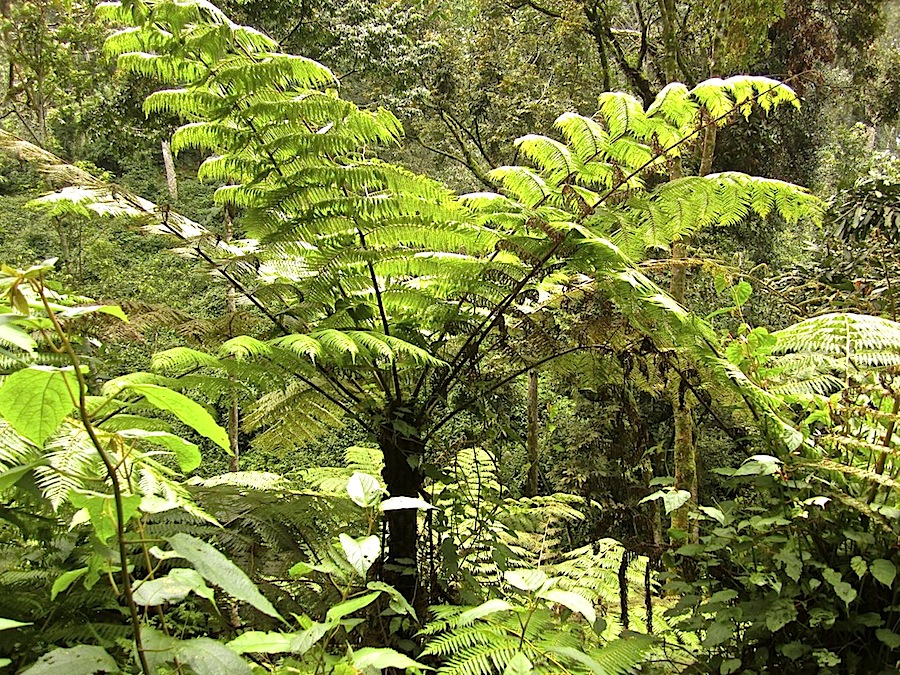
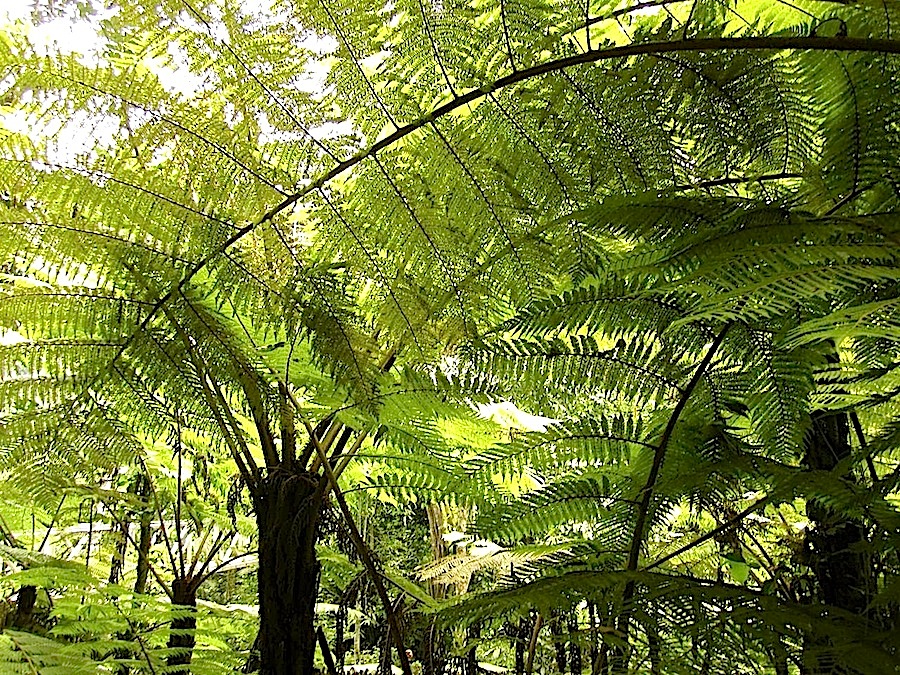
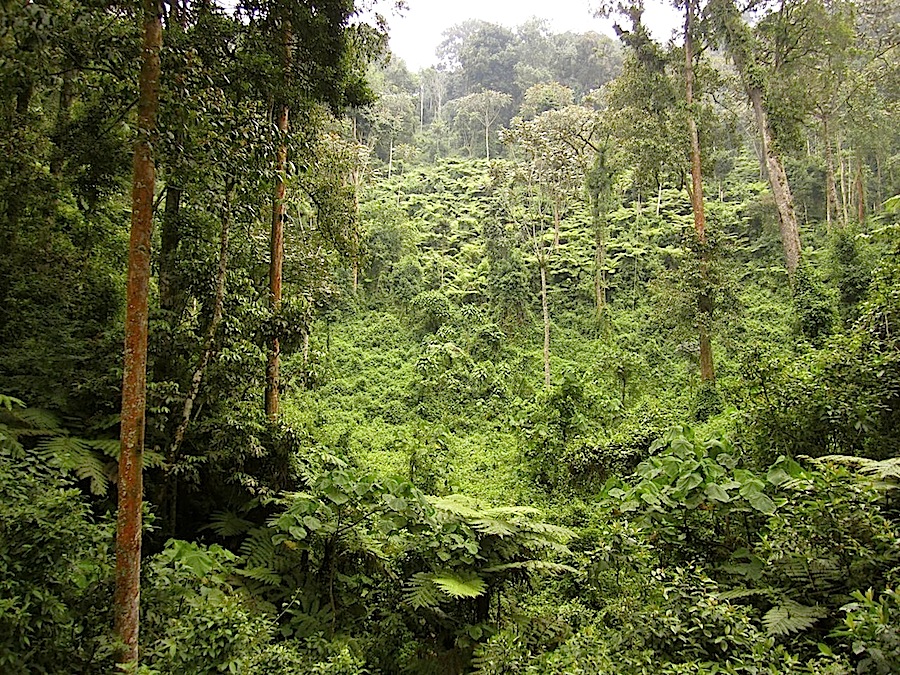
When you cross the middle section of the walkway and (dare to) look down, you see a narrow valley of tree ferns and hear the moving water of a stream. The second half of the hike continues on to that valley. There, we saw hundreds of the tall ferns.
In fact, this trail is named — in Kinyarwanda — for the tree ferns: the Igishigishigi Trail.
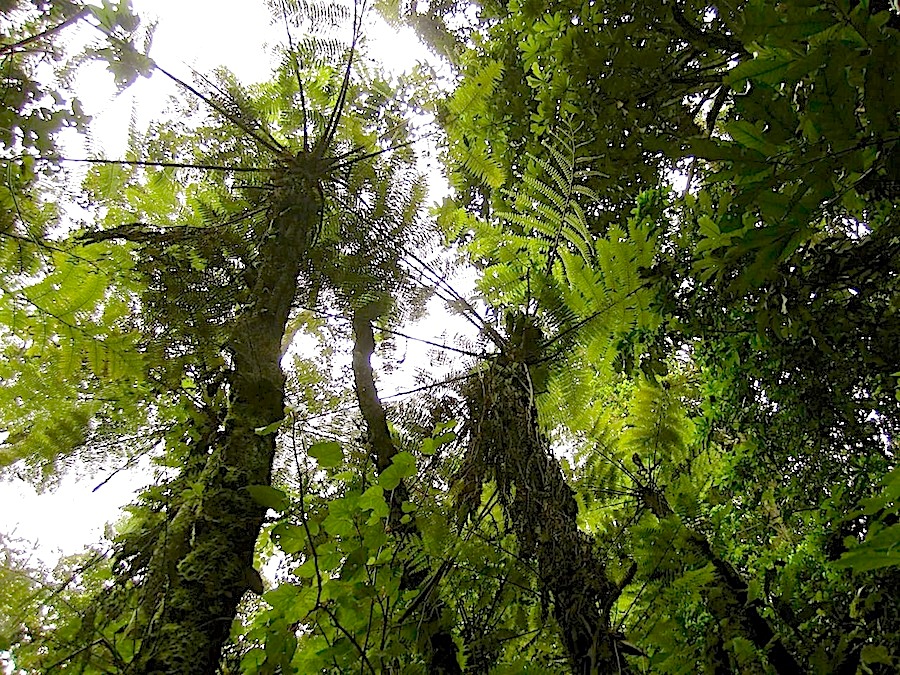
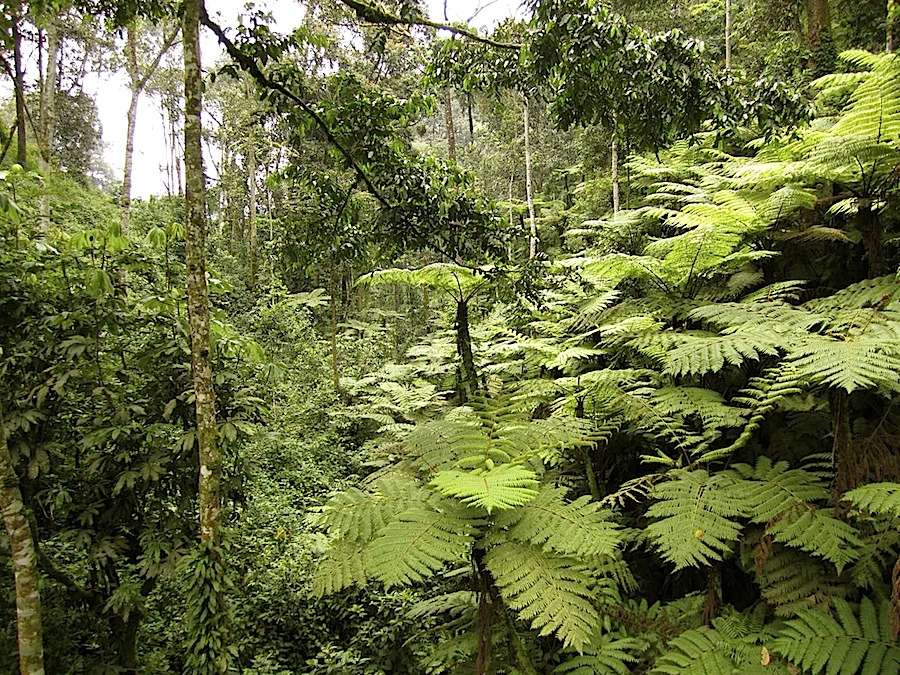
Cyathea manniana is one of two tree ferns in the park. The other is C. dregei. Manniana only grows in undisturbed forest, while dregei can be found along the sides of the road through the park (it also has persistent old leaves).
Above: Looking up into the ferns. C. manniana can grow to almost 20′ (6 m.) tall.
“C. manniana is traditionally used as a medical plant to treat snake bites,” according to my field guide.*** There are nine kinds of snakes in the park, but only one is poisonous.
Photo by L. Koran
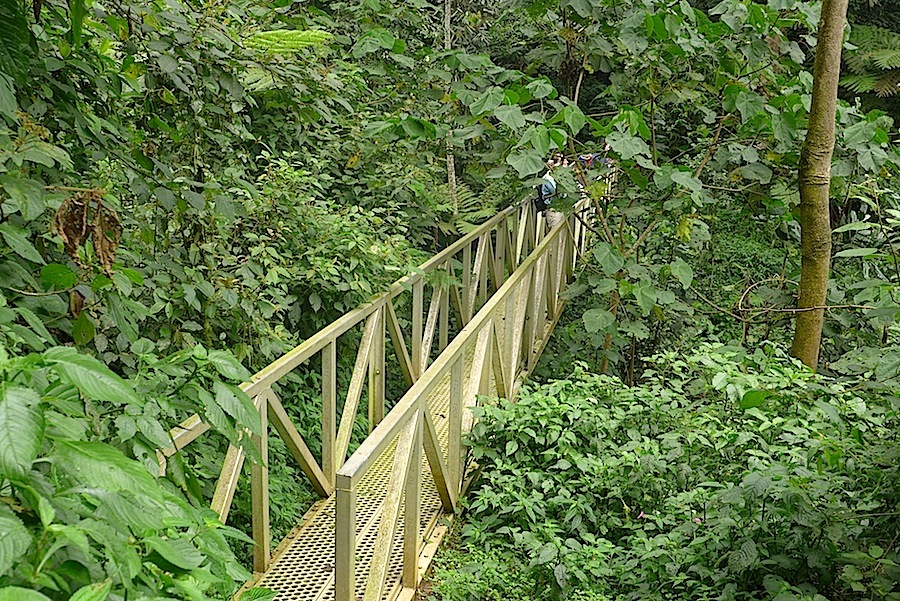
Above: A small bridge crosses the stream that we heard from the canopy walkway. The guide meant to take us down to the water, but there were too many biting ants on the path.
Tree ferns are one of my favorite plants, but unfortunately, they would not grow well in the cold or the heat of our Washington, D.C., garden.
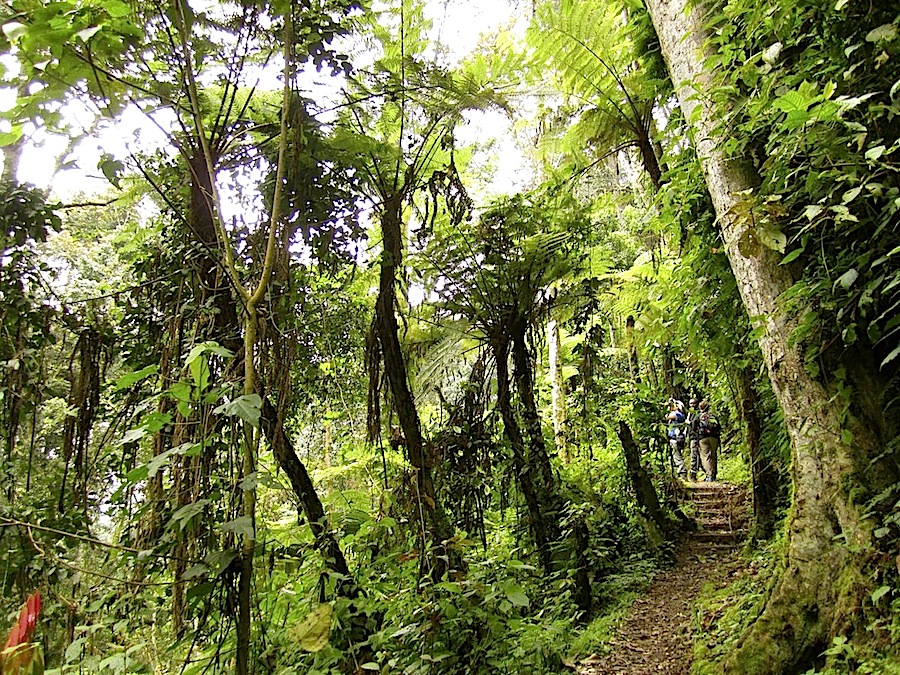
Above: Leaving the ferns behind, we started back to the welcome center.
The Igishigishigi Trail is 1.3 miles (2.1 km.) long and takes 1 1/2 to 2 hours. It is rated ‘easy,’ but a large part of it involves descending and ascending steps. It’s a solid workout.
The trail begins at an elevation of 8,038′ (2450 m.) and descends to 7,530′ (2295 m.).
Above (on the right): Nearing the final set of steps, we found a large group of Lobelia gibberoa or giant lobelias.
With their long candles of greenish white flowers, the plants can grow to 29′ (9 m.) in height. Latex from the stems is traditionally used to treat irritation from stinging nettles.
Above: After the hike, we went back to the Nyungwe Forest Lodge on the Huye-Rusizi Road. The yellow flowers along the edge are a Senecio species.
** It’s also quite possible to see turacos flying from tree to tree from the pool at the Nyungwe Forest Lodge.
***An excellent book about the park is the Illustrated Field Guide to the Plants of Nyungwe National Park [of] Rwanda by Eberhard Fischer and Dorothee Killman. It’s 770 pages long, with color photographs of 650 plants. You can buy a copy here. Unfortunately, it’s $71. Some copies were printed for the Rwandan tourism office, and I bought mine in a Kigali bookstore for about $25, but I haven’t seen any on sale here for about a year.
When we arrived at the park headquarters, we asked to see one of the gorilla groups who normally live closer to the edge of the park. We didn’t feel up to one of the really strenuous hikes. However, nothing is certain with wild animals, and we walked (and climbed) for 2 hours before we found our group (the day before, they had been right inside the wall of the park).
I would have liked to have taken some photos of us tackling the steeper parts of the trail (and skirting the edge of an old volcanic crater), but I was too busy trying not to die at the time.
Earlier — after the first (easy) 40 minutes or so — our guide had stopped and given us a Rwandan saying: if you kill a cow, you cannot stop eating until whole thing is gone, tip to tail (this obviously originated before the freezer). Then, he said that the trackers ahead of us had just radioed back that our hike would be 10 cows long, and that we had already eaten 4 cows. However, only the 6th cow would be a big one.
Holy cow! (An American saying.) I climbed up much of number 6 on my knees and came down it on my bottom. Thank goodness for our porter’s hand and my walking stick.
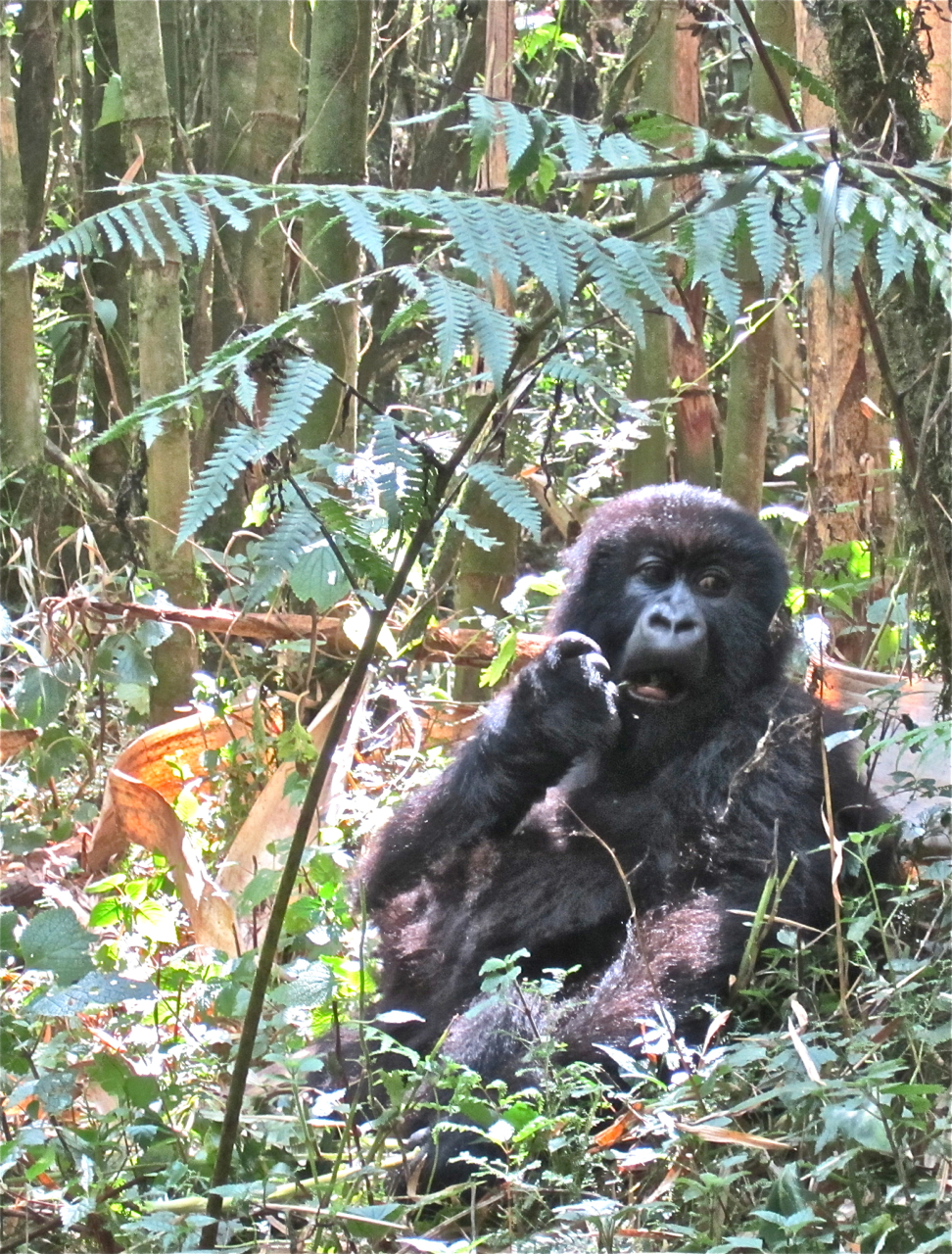
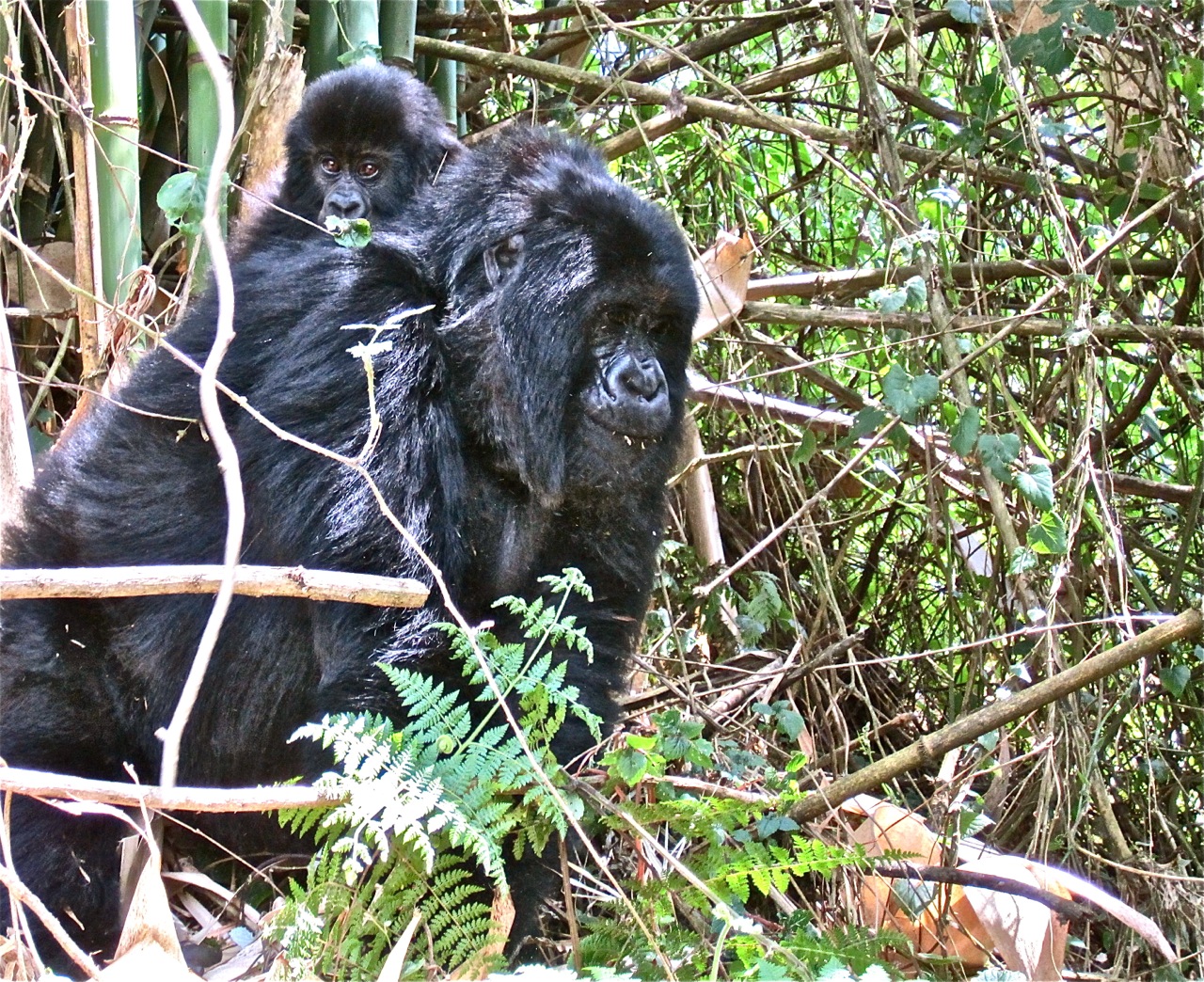
When we found the gorillas, though, it was well worth it. They were lovely — smaller and fluffier than I had expected. Their fur had a healthy sheen, and they seemed quite content to spend an hour with us. Throughout the visit, our guide made low “hrrmm hrrmm” sounds, asking the silverback’s permission to stay; sometimes he would rumble back similar sounds in return. Several times, the little ones showed off by beating their chests.
A baby gorilla in the ferns.
For more pictures and story, click on ‘Continue reading’ below and then on the first thumbnail to scroll through large photos and captions (and there are some travel tips afterwards). To see a short video that I made, go to this link. Continue reading “Among the mountain gorillas”→

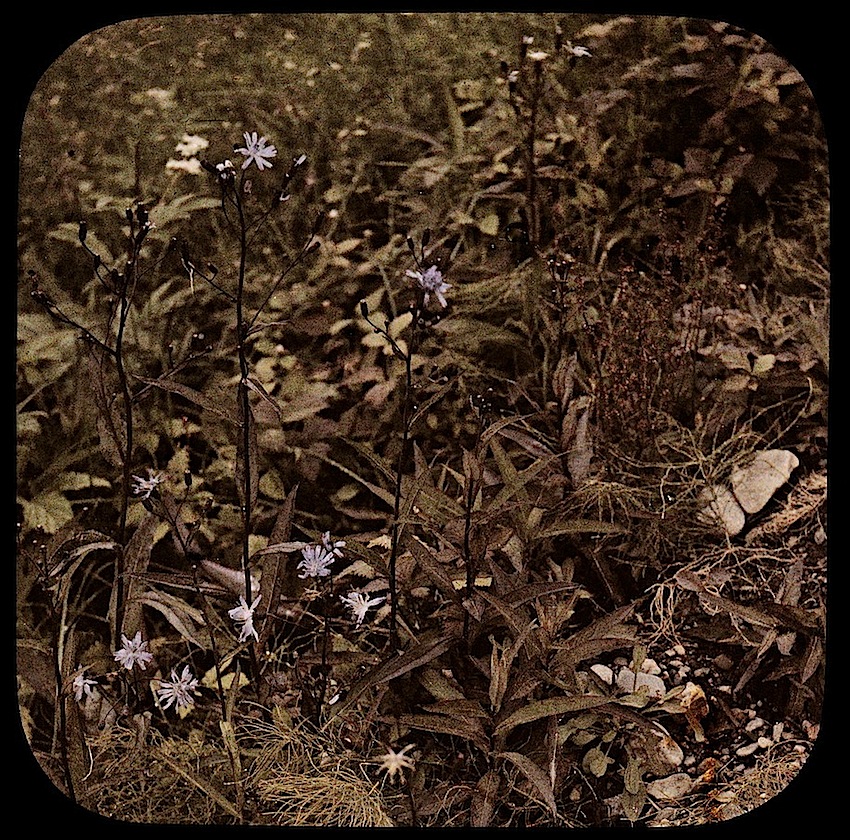 Blue flowers (blå blomster) in Målselv, Troms, Norway,1912, an autochrome by Hanna Resvoll-Holmsen, via Nasjonalbiblioteket (National Library of Norway) Commons on flickr (all photos here).
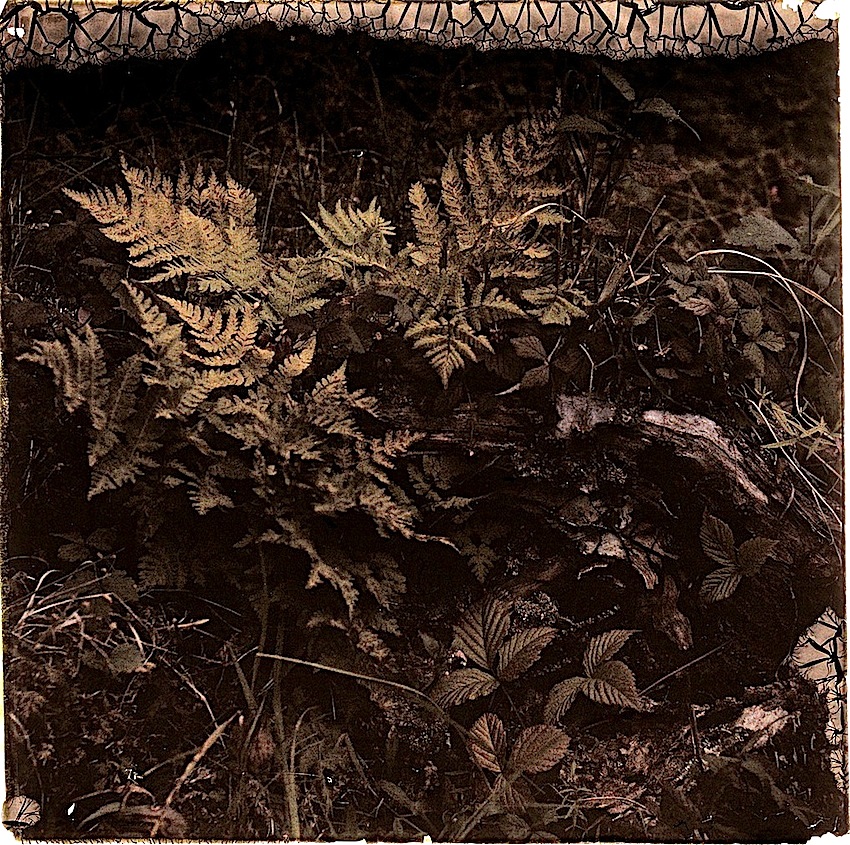 Ferns (bregner), 1912, in Målselv, a municipality in the county of Troms in northern Norway.
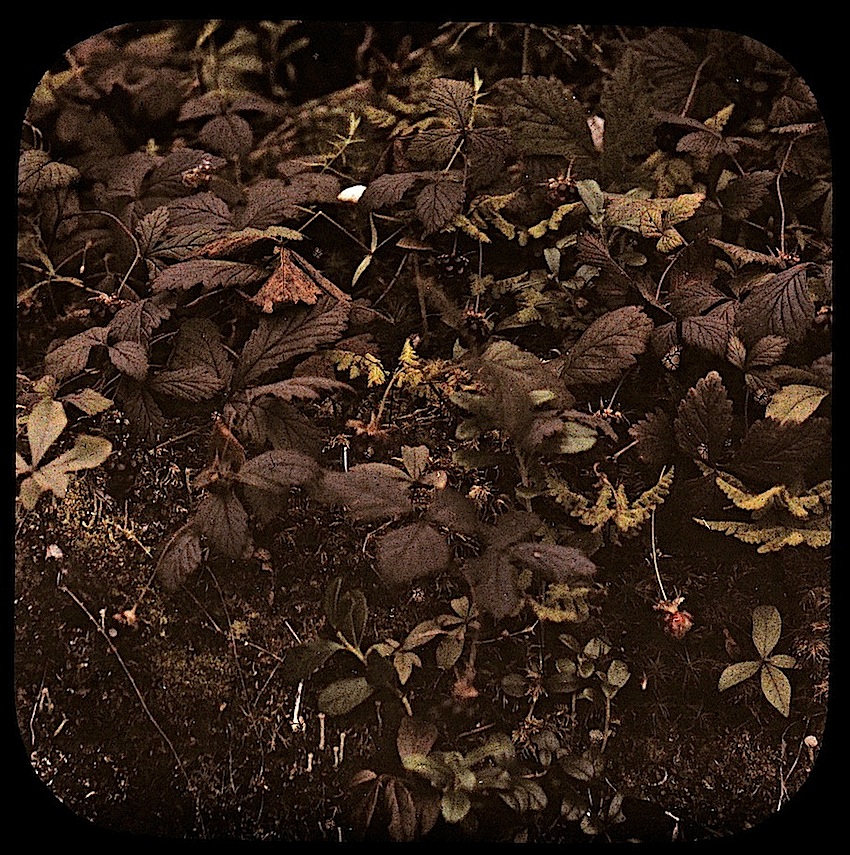 Wild berries, in Målselv, 1912.
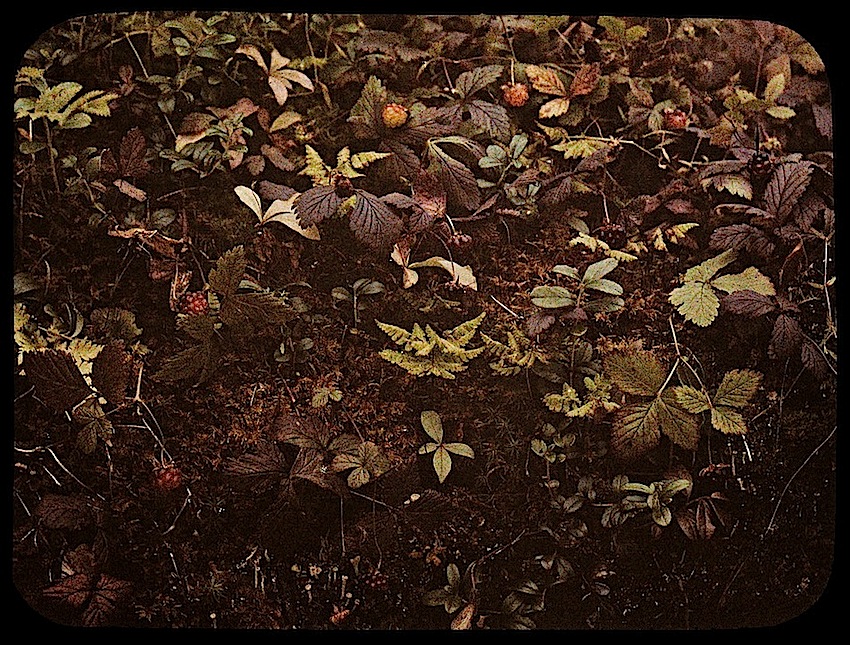 Wild berries, in Målselv, 1912.
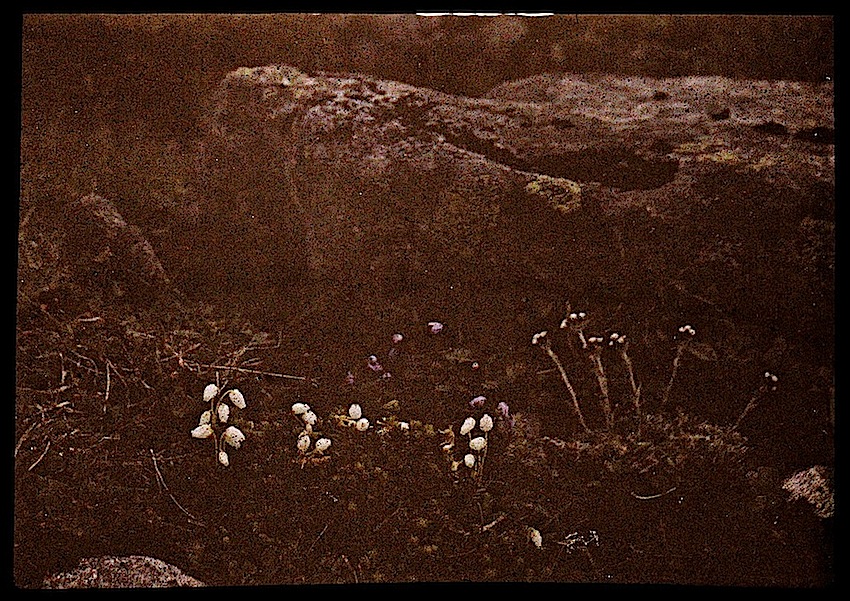 Antennaria alpina (alpine catsfoot) and Phyllodoce caerulean (mountain heath), July 27, 1911, in Lom, Oppland, in southern Norway.
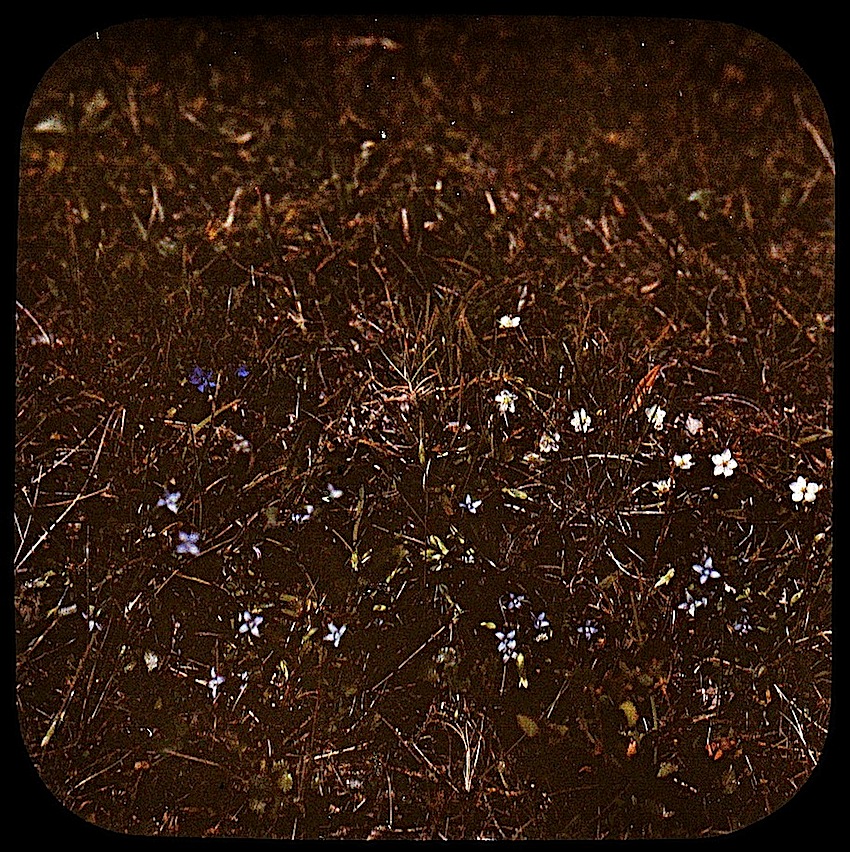 Gentianella tenella (Lapland gentian) and Sagina nodosa (knotted pearlwort) in Lom, July 6, 1911.
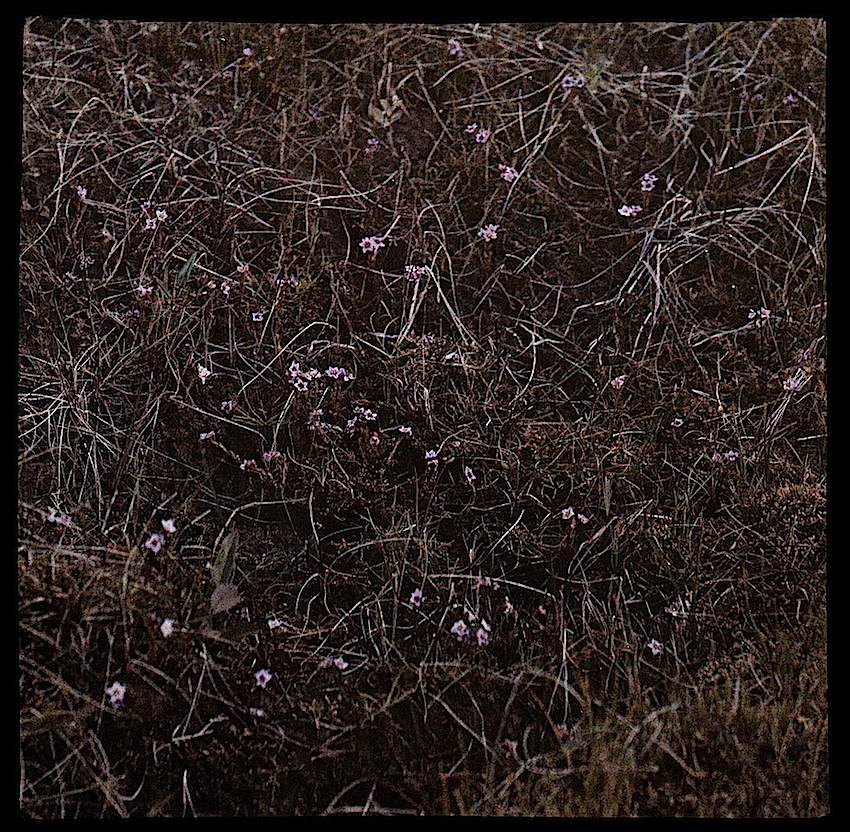 Sedum villosum (hairy stonecrop), Lom, July 16, 1911.
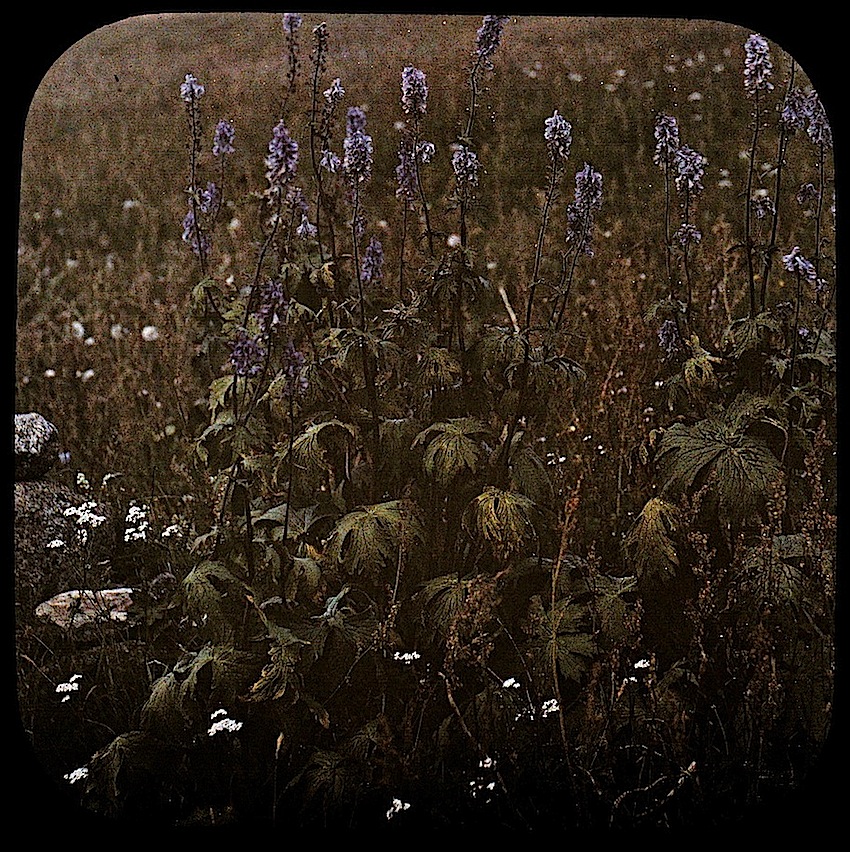 Aconitum lycoctonum (northern wolfsbane) and yarrow (tyrihjelm og ryllik i naturlige omgivelser), in Lom, August 7, 1911.
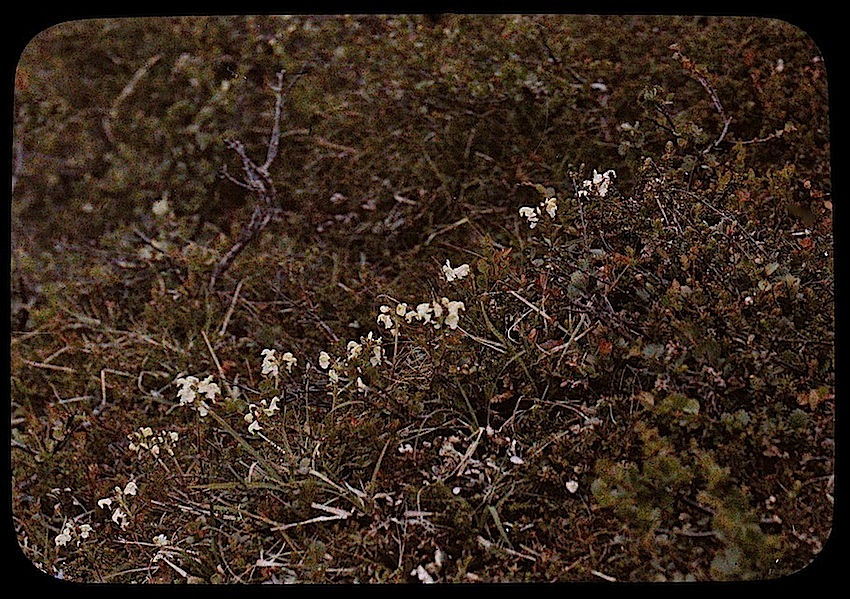 Pedicularis lapponica (Lapland lousewort), in Lom, July 5, 1911.
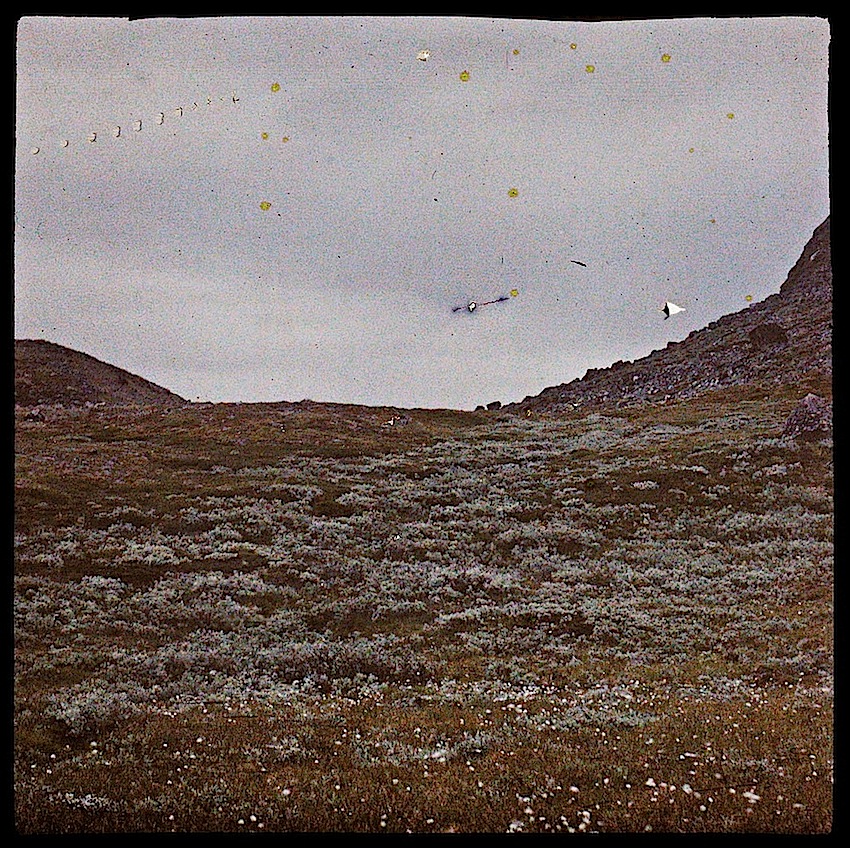 Scrub vegetation, at Lom, July 25, 1911.







 enclos*ure