
 “Lafayette Hill,” Zion Road, Albemarle County, Virginia, 1933, by Frances Benjamin Johnston, via Library of Congress Prints and Photographs Division.
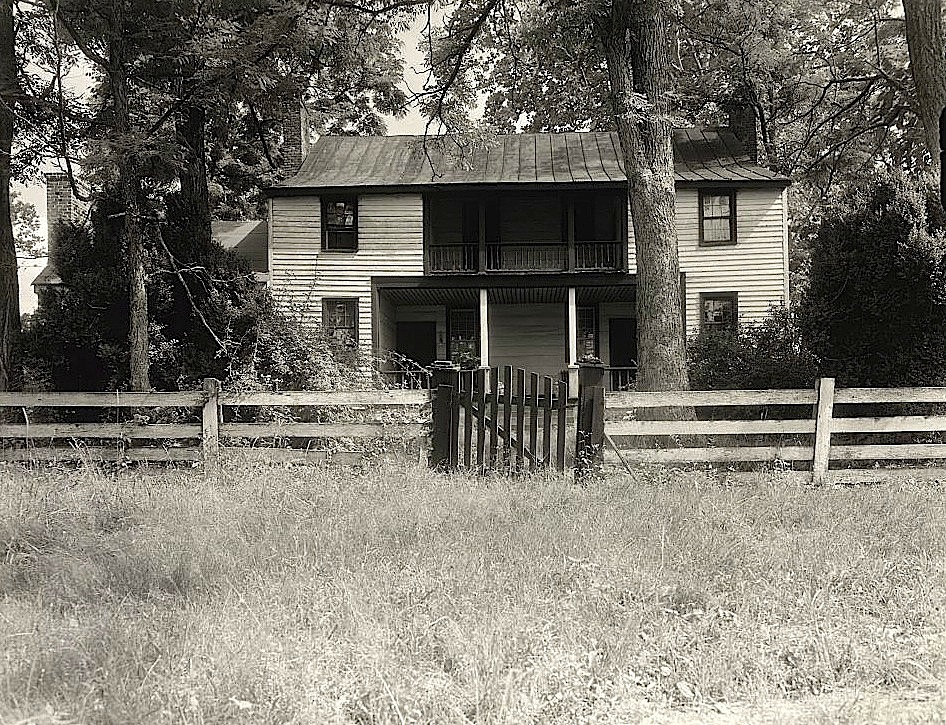
Unfortunately, I was not able to find out anything about this interesting-looking house.
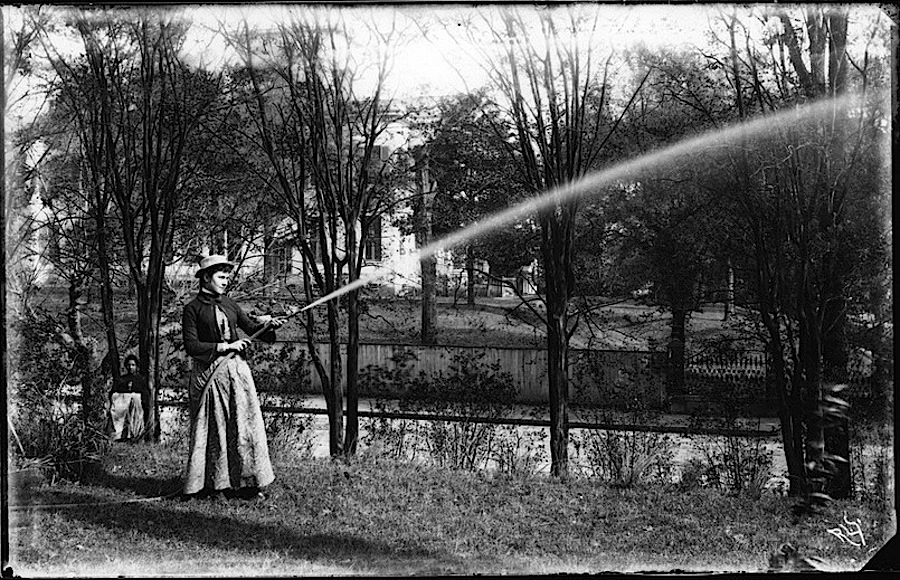 Myrtle Bank terrace, Natchez, Mississippi, ca. 1900, from the Stewart Photograph Collection,* via Mississippi Department of Archives and History Commons on flickr (both photos).
The two houses shown here are about two blocks from each other, both on N. Pearl Street.
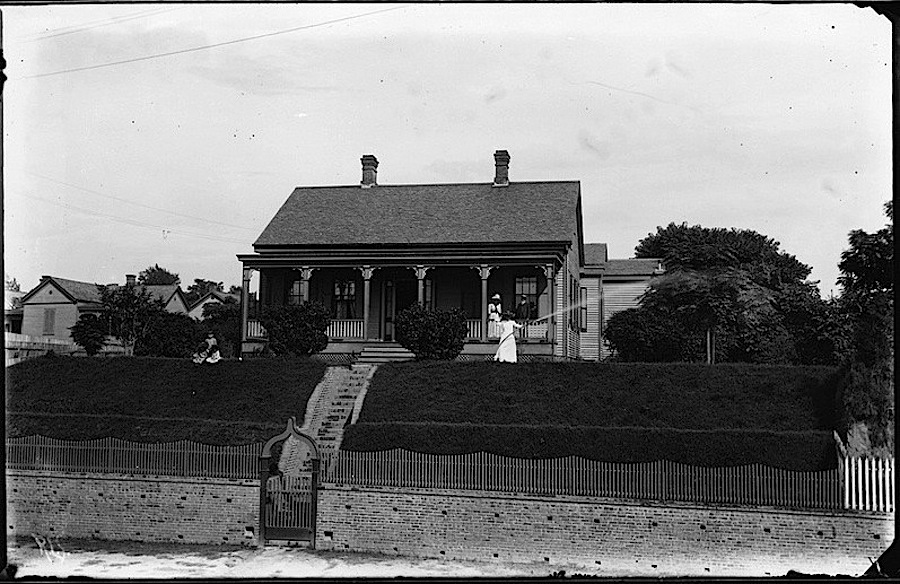
The neighborhood evidently had good water pressure. Both houses still stand.
In ancient Greece, the first hoses (for fire fighting) were made from ox intestines. In the late 17th century, Jan van der Heiden and his son sewed leather into long tubes for Amsterdam’s fire department. Then, in 1821 Boston, James Boyd invented a rubber-lined, cotton-webbed hose. By the 1870s, the first rubber and cotton fiber hoses for gardeners appeared on the market.
In 1895, a garden hose was the subject of what is believed to be the first comedy film, L’Arroseur Arrosé, by Louis Lumière. You can see it here.
*By brothers Robert Livingston Stewart and William Percy Stewart of Natchez, Mississippi, from ca. 1890 to ca. 1905.
 Round enclosure on Eeuwigelaan (street) in Bergen, The Netherlands, 1926, by A. J. Bonda, via Archief Alkmaar Commons on flickr.
I have been wondering about the purpose of this really nice rustic fence in a wooded area (there’s another view here). In a much larger version of the photo, you can see barbed wire all around the top rails. The ground inside has either been dug out or worn away. There are two benches nearby, with more barbed wire fencing behind them. What appears to be a road in the background is actually a canal. (And you can also see that the man standing on the right is wearing wooden shoes.)
It could have been the site of a large tree of special local significance, which then died and was removed. Or the spot of some other removed shrine or monument. But why not take away the fence and fill the hole after dismantling what was inside? Then I thought it might have been the small crater itself that was important — perhaps the remains of a WWI shelling in the area.
Today, this street is lined with very large homes.
ADDENDUM: Nope, wrong all round. 🙂 Please see the very interesting comment below.
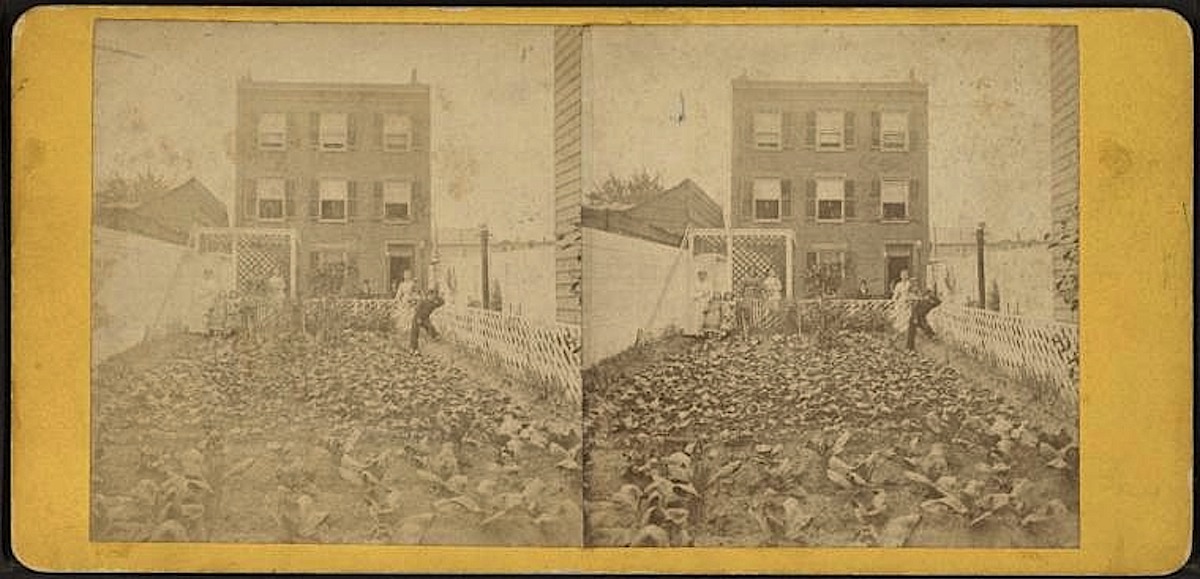
“Artist’s uptown residence,” New York City, ca. 1860, via Robert Dennis Collection of Stereoscopic Views, New York Public Library.
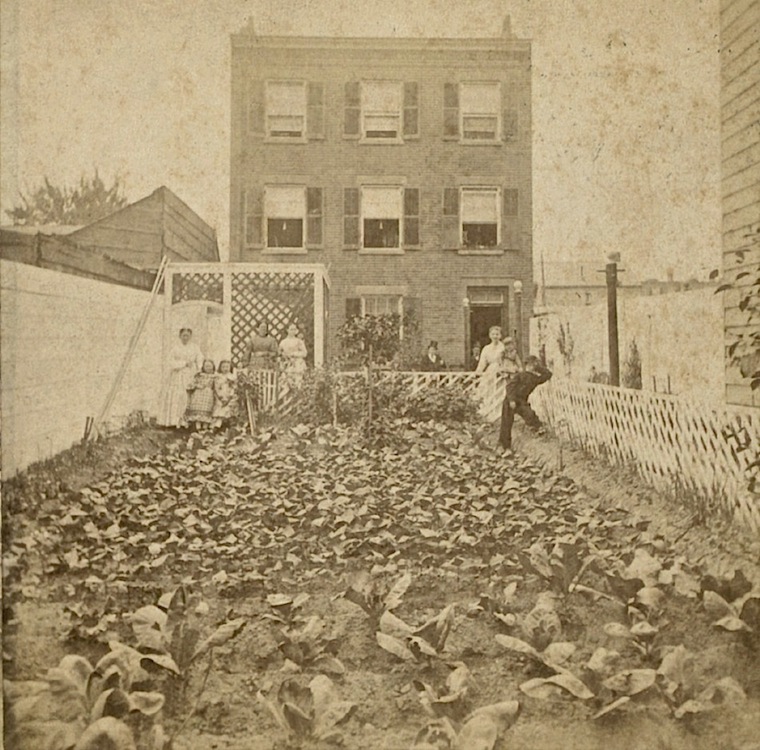
Upper Manhattan at this time was rapidly transforming from country to city — as villages and small farms became blocks of middle-class rowhouses. This backyard, with its neat latticed sitting area and then large cabbage garden, seems to encapsulate the change.
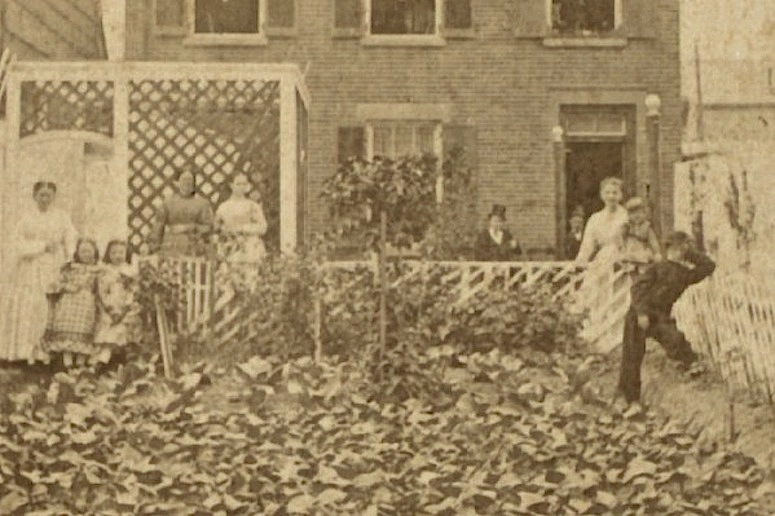
Unfortunately, we don’t have the name of the artist or the address. Is he one of the two men in top hats sitting by the door, or was she standing in front of them, balancing a small boy on the fence — or maybe taking the picture?

Fence on top of a low retaining wall between sidewalk and playground, Sindelfingen, Germany, yesterday morning.
 enclos*ure