Life in gardens: Chicago

Life in gardens/enclos*ure: Chicago, 1973, via National Archives“Black youngsters performing on an empty lot at 5440 South Princeton Avenue on Chicago’s South Side at a small community program called “an Open Air Fashion and Talent Show” presented by “the New Between The Tracks Council.” It is one of many block clubs and community groups organized to help youngsters “do their thing” during special weekend programs in empty lots in the black communities.”

Life in gardens/enclos*ure: Chicago, 1973, via National ArchivesThese photos* were taken August 1973 by John H. White for DOCUMERICA, a 1970s photography project of the U.S. Environmental Protection Agency. They are shown here with their original caption.

A commenter on the flickr page noted: “Forty-one years later and it’s still an empty lot.”

There are more pictures from DOCUMERICA here.


*Via the U.S. National Archives Commons on flickr.
Vintage landscape: Los Angeles

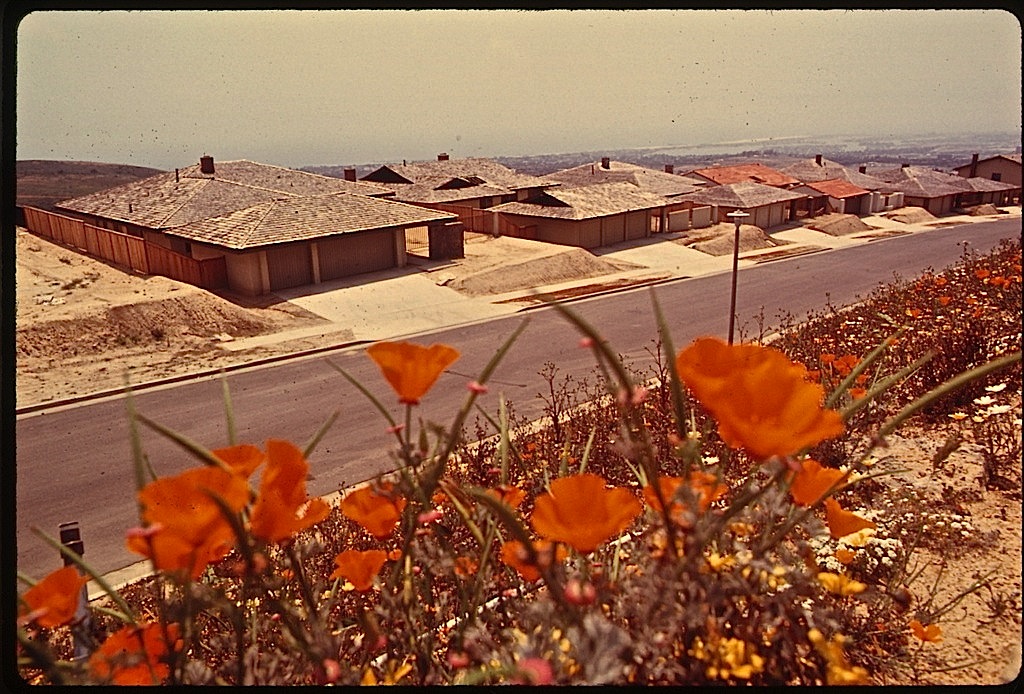
L.A. houses, DOCUMERICA, National ArchivesFlowers planted around Spyglass homes built on a terraced hillside[, Los Angeles], May 1975.”

This photo was taken by Charles O’Rear for DOCUMERICA,  a 1970’s photography program of the Environmental Protection Agency.

There are more pictures from DOCUMERICA here.

Striped road

Vintage landscape/enclos*ure: Big Strips, painting by G. Davis, 1973, via Natl. Archives“Crossing the painted road which extends east from The Philadelphia Museum of Art, August 1973,” by Dick Swanson, via the U.S. National Archives Commons on flickr.
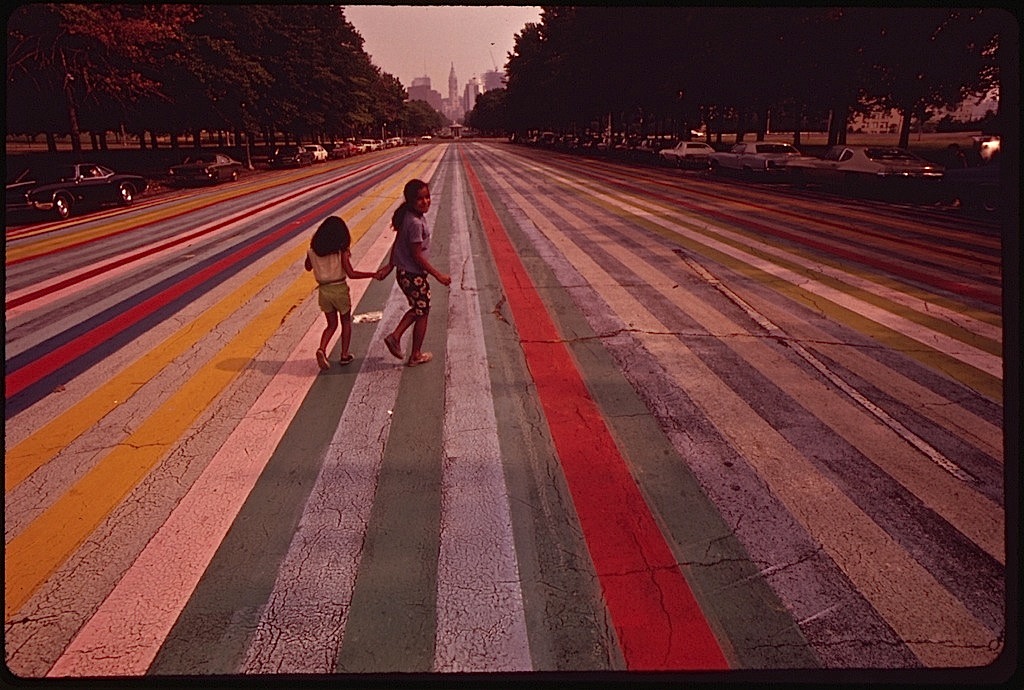
This is another photo taken for DOCUMERICA, a 1970’s photography program of the U.S. Environmental Protection Agency (shown here with original caption).

The road painting, “Big Stripes,” by Gene Davis, was created in 1972. At the time, it was the world’s largest painting.  Davis was a leader in the Washington [D.C.] Color School.

Does anyone know if any part of this painting survives today?

The Sunday porch: East Boston

East Boston, c. 1973, via National ArchivesLaundry hanging from triple-decker porches in East Boston near Logan Airport, May 1973.

East Boston, c. 1973, via National Archives“From the rear porch of his home at the southern corner of Neptune and Lovell Streets, Larry Vienza watches jet take off from Runway 15r-33l. Once airborne, the jet will fly directly over his house, May 1973” (with photographer’s caption).

These photos* were taken by Michael Philip Manheim, for DOCUMERICA, a 1970’s photography project of the Environmental Protection Agency.

The East Boston neighborhood was devastated by the noise from Logan airport’s expansion in the 1960s and 70s. (See Friday’s post, “Neptune Road.”)

There are more pictures from DOCUMERICA here.


*Via the U.S. National Archives Commons on flickr.

Neptune Road, Boston

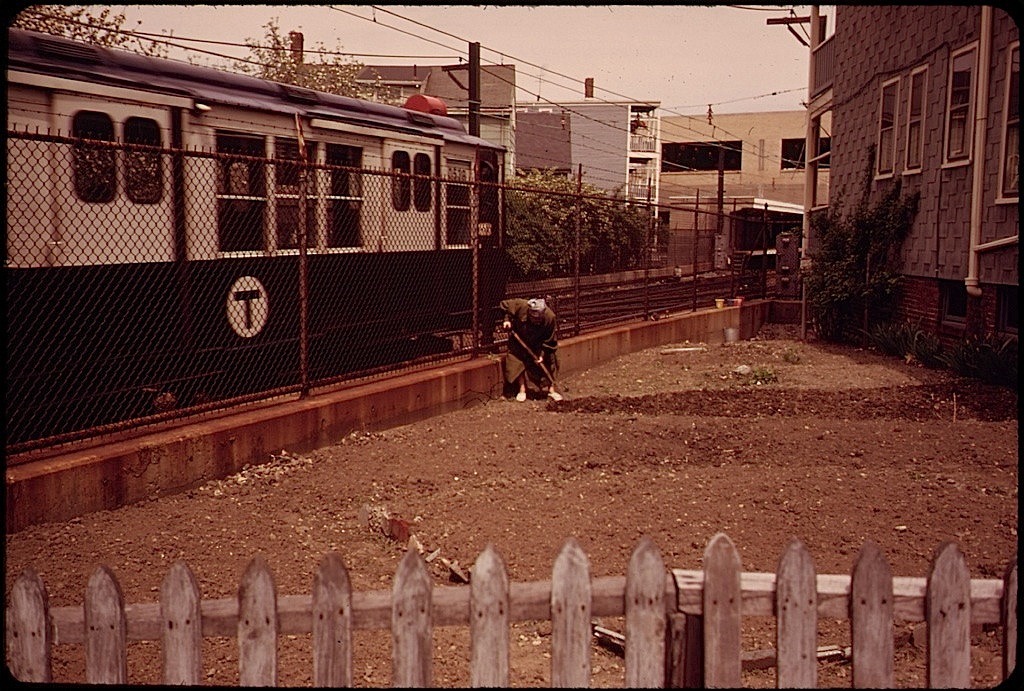
Life in gardens/enclos*ure: East Boston, 1973, by M.P. Manheim, via Natl. ArchivesA woman turns her garden soil while a Massachusetts Bay Transit Authority train rushes past the northeastern side of Neptune Road in East Boston, Massachusetts.

This photo* was taken in May 1973 by Michael Philip Manheim for the DOCUMERICA program of the Environmental Protection Agency.

Manheim captured East Boston, particularly around Constitution Beach and Neptune Road, at a moment of massive expansion of transportation infrastructure, including Interstate 90 (which terminates in East Boston) and an above-ground portion of the city’s rail system (both projects completed in the 1950s). But more than any other piece of infrastructure, Logan Airport was the source of the biggest and potentially most harmful changes.

Logan’s expansion in the mid-1960s led to the removal of a Frederick Law Olmsted-designed park (Wood Island park), and its 1970s expansion led to the displacement of residents on Neptune Road as well as mounting local noise and air pollution issues.

Forty years later, the lively neighborhood Manheim found along Neptune Road hardly exists, replaced with parking lots and runways.

— Mark Byrnes, for the CITYLAB blog of The Atlantic

There are more photos of East Boston by Manheim  here.


*Via the U.S. National Archives Commons on flickr.