Our garden in June

This slideshow requires JavaScript.

Today is Garden Bloggers’ Bloom Day, hosted by Carol at May Dreams Gardens. I don’t have a lot of flowers, but I am enjoying some orange hawkweed, which I hope will pop up in more places in the long grass this summer and next year.

Tomorrow is Garden Bloggers’ Foliage Follow Up, hosted by Pam at Digging. If grass counts as “foliage,” this is my contribution as well.

You can read more about our backyard in Stuttgart, Germany, here.

To scroll through larger versions of the pictures, click on ‘Continue reading’ below and then on any thumbnail in the gallery.

In a field by the river
my love and I did stand.  .  .  .
She bid me take life easy,
as the grass grows on the weirs. . .

— W. B. Yeats, from “Down by the Salley Gardens


Life in gardens: Woodbine

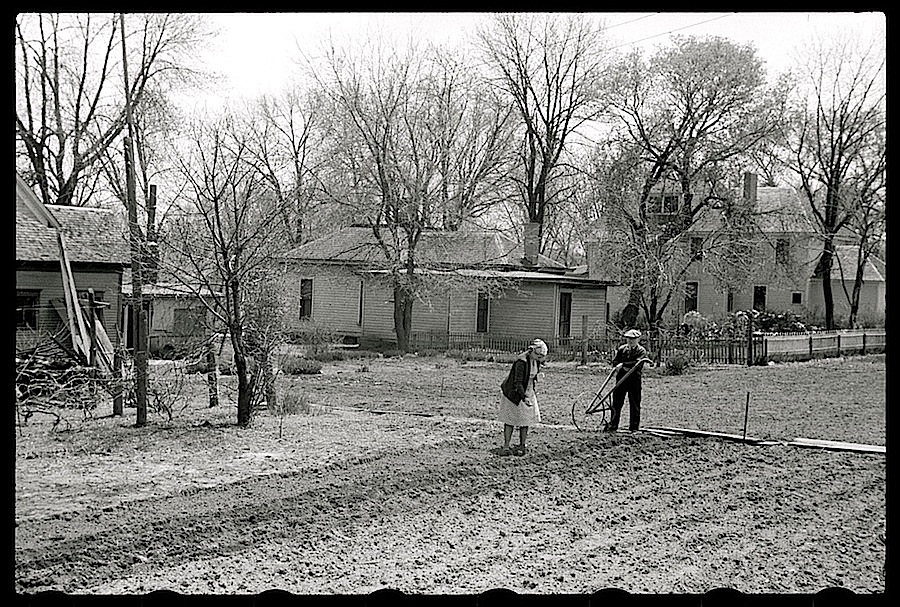
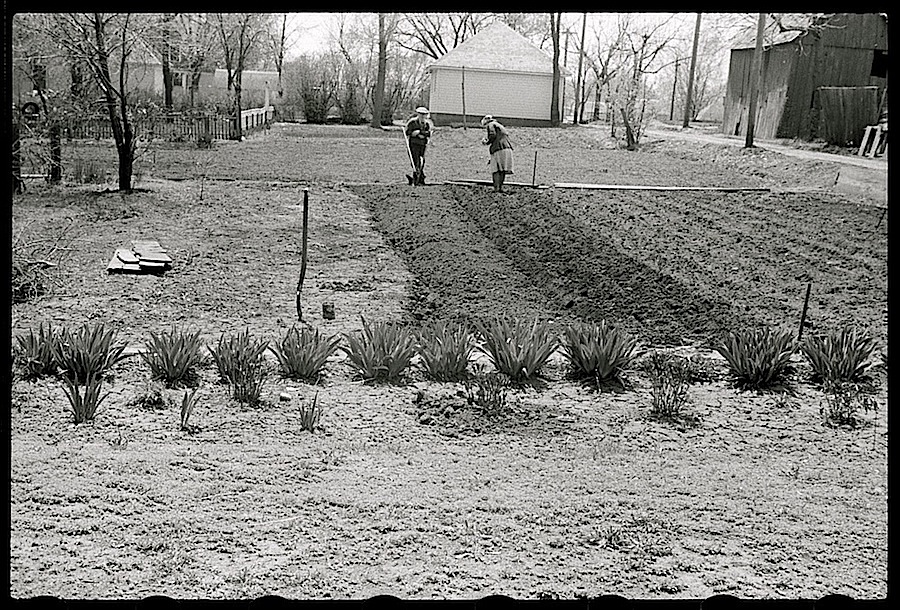
Woodbine, Iowa, 1940, J. Vachon, Library of Congress“Planting a garden in the backyard, Woodbine, Iowa,” May 1940, by John Vachon, via Library of Congress Prints and Photographs Division (both photos here).

Woodbine, Iowa, 1940, Library of Congress

In the spring of 1940, John Vachon was on assignment for the Farm Security Administration in the Midwest.

. . . I photographed Spring – clothes blowing on the wash line, kids playing marbles, women planting backyard gardens, blossoms on trees.

— John Vachon’s journal

Woodbine is a town of about 1,400 people on the Boyer River.  It was named for the woodbine vine (Parthenocissus vitacea) by the wife of the first postmaster, according to the community’s website.

Life in gardens: two mowers

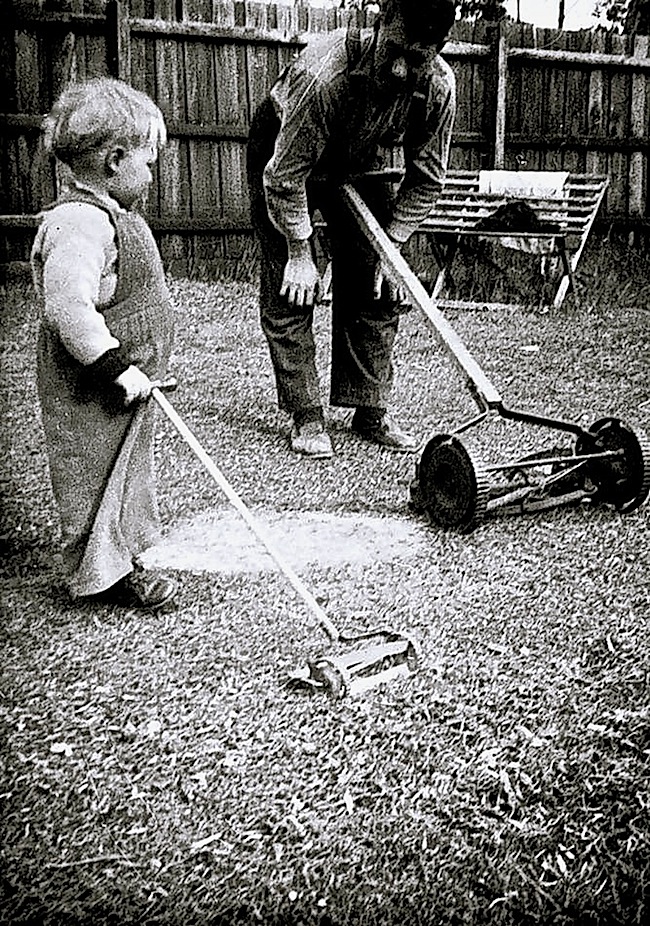
Two mowers, 1956, Museum VictoriaAnother nice backyard scene via Museum Victoria: John and George Lee with push mowers, September 1956, Greensborough, near Melbourne, Australia.

The photo was contributed by Mrs. Brenda Lee to The Biggest Family Album of Australia project.

Life in gardens: backyard sprinkler

Jumping sprinklerGerald Brocklesby of Blackburn (near Melbourne), Australia, jumps over the sprinkler in his family’s backyard, January 17, 1953, via Museum Victoria.

The photo was contributed by Mr Mark Brocklesby as part of the museum’s Melbourne’s Biggest Family Album  project in 2006.

Fair seed-time had my soul. . .
— William Wordsworth, from “The Prelude

K Street in 1850

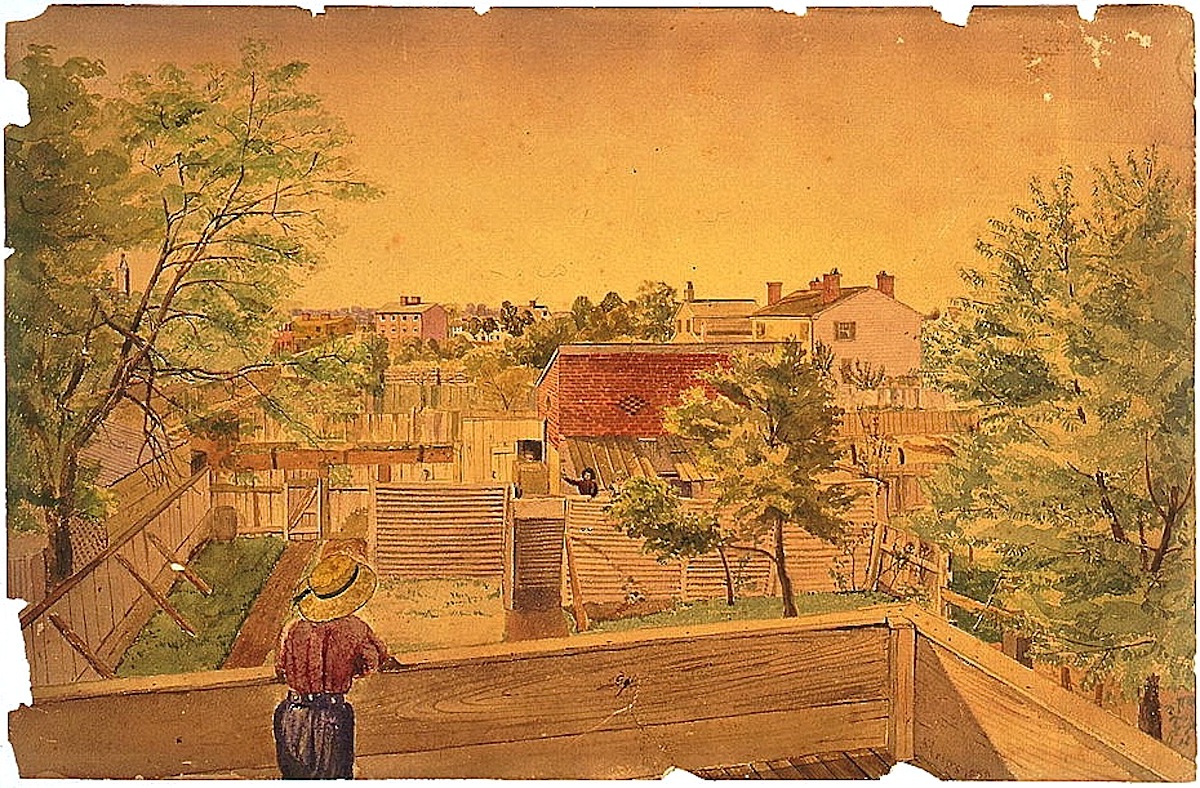
K St. backyards, Washington, DC, Library of Congress/enclos*ureView from the second story of the home of Mrs. John Rodgers at Franklin Row, K Street, N.W., between 12th and 13th Streets, in Washington, D.C.

The watercolor* depicts the backyard and adjacent neighborhood and shows children standing on balconies.

It was painted by Montgomery C. Meigs.  Mrs. Rodgers was Meigs’s mother-in-law and the widow of Commodore John Rogers, a naval hero.

Despite the modest appearance of the yard and surroundings, Mrs. Rodgers was wealthy and socially well-connected.   Even well-to-do Washington in the 1850s seems to have had a somewhat ramshackle look.

You will need to click on the image to get a larger view.  Here’s what the downtown city block looks like now.

As a military engineer, Meigs left his mark on the capital.  In the 1850s, he supervised the building of the Washington Aqueduct and the Union Arch Bridge, as well as the wings and dome of the Capitol Building.  He also played an important role in the early design of Arlington National Cemetery, and he designed and supervised the construction of the Pension Building (now the National Building Museum).


*Via Library of Congress Prints and Photographs Division.