Tokyo, Japan

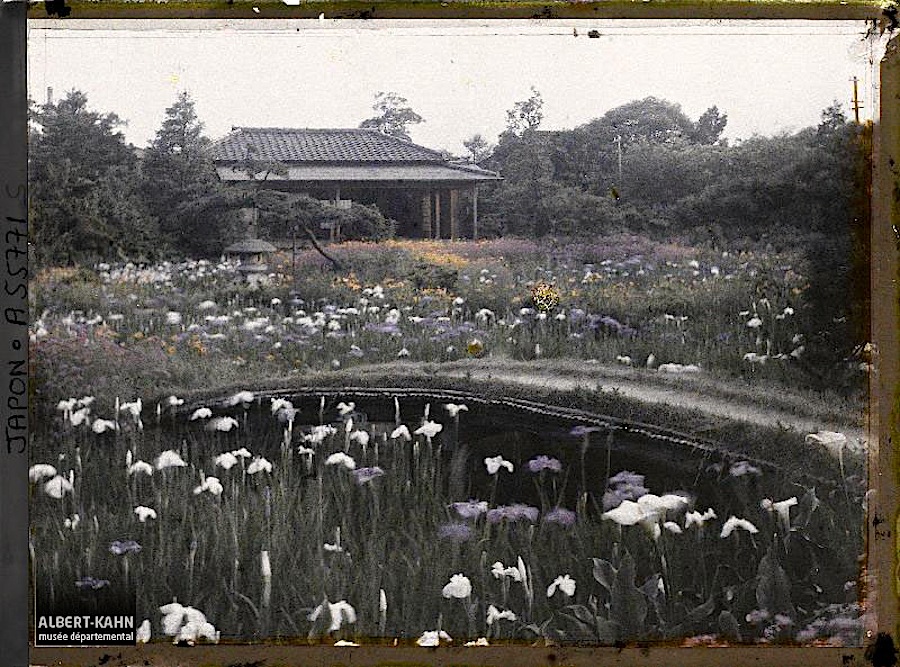
Horikiri Iris Garden, Tokyo, Japan, June 1926, by Roger Dumas, via Archives of the Planet Collection – Albert Kahn Museum /Département des Hauts-de-Seine (all photos here).
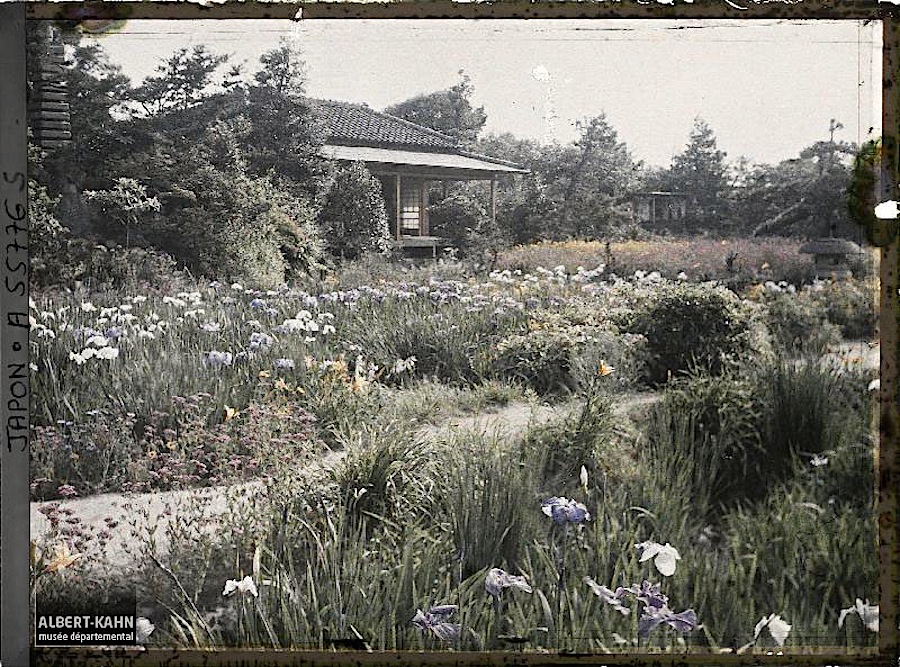
Horikiri Shobuen is one of the oldest iris gardens in Japan. It was probably created by a local flower farmer, Kodaka Izaemo, in the late 17th century. By the early 19th century, it had become a popular destination for sightseers during the Hanashōbu or Iris ensata bloom-time in early June.

In 1900, there were five iris gardens in the swampy land of Tokyo’s Horikiri district — all producing bulbs for export to Europe and the U.S. However, demand was declining by the time these pictures were taken, and the area’s last two iris gardens converted to vegetable plots during World War II.
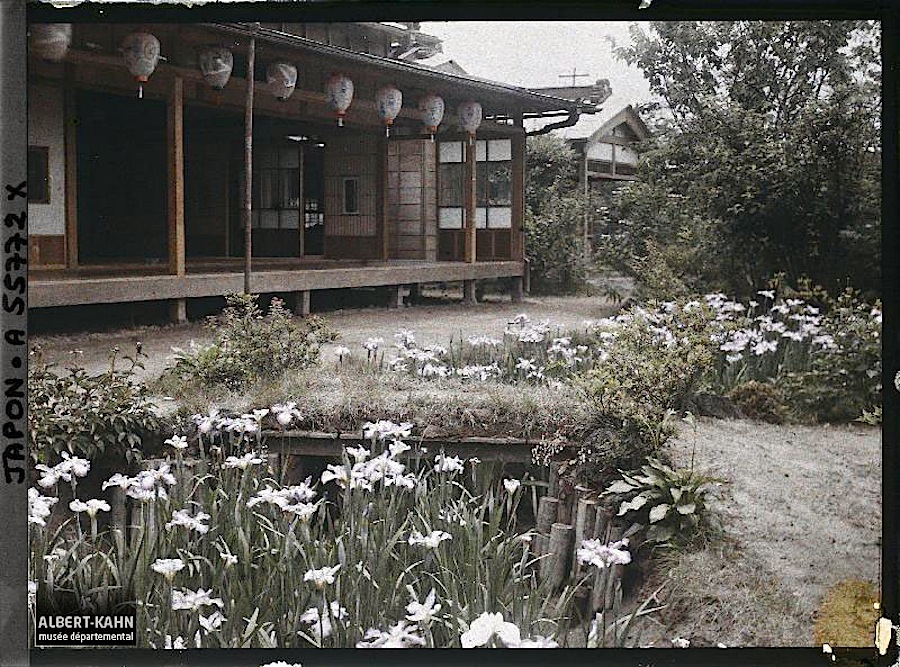
In 1960, the site of the Kodaka iris garden was replanted and opened to the public. Today, its 6,000 iris plants — from 200 cultivars — are the focus of an Iris Festival held every year from May 30 to June 18.
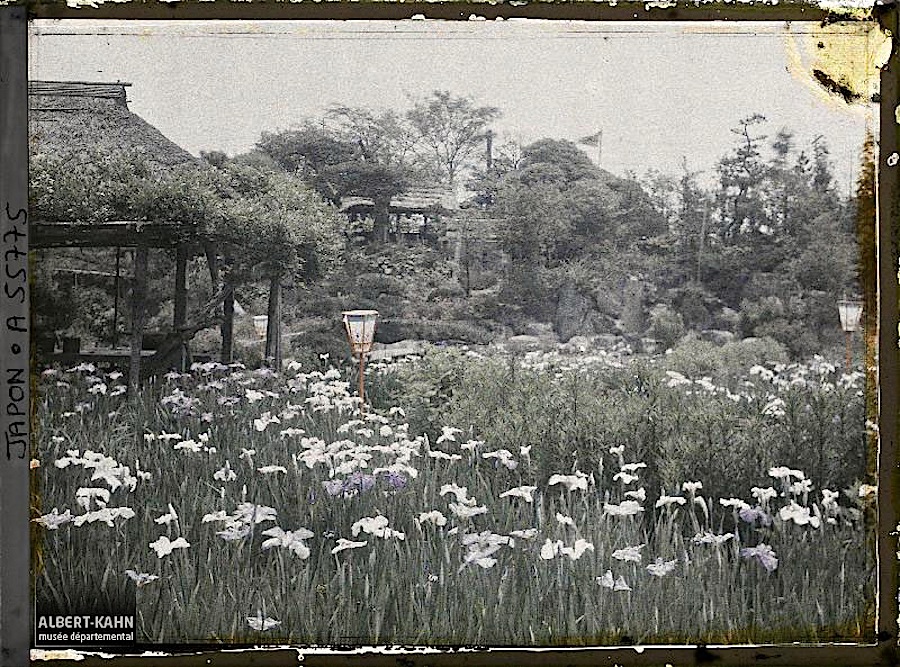
The autochromes above are four of about seventy-two thousand that were commissioned and then archived by Albert Kahn, a wealthy French banker and pacifist, between 1909 and 1931. Kahn sent thirteen photographers and filmmakers to fifty countries “to fix, once and for all, aspects, practices, and modes of human activity whose fatal disappearance is no longer ‘a matter of time.'”* The resulting collection is called Archives de la Planète and now resides in its own museum at Kahn’s old suburban estate at Boulogne-Billancourt, just west of Paris. Since June 2016, the archive has also been available for viewing online here.


*words of Albert Kahn, 1912. Also, the above photos (A 55 771 S, A 55 776 S, A 55 775, A 55 772 X) are © Collection Archives de la Planète – Musée Albert-Kahn and used under its terms, here.
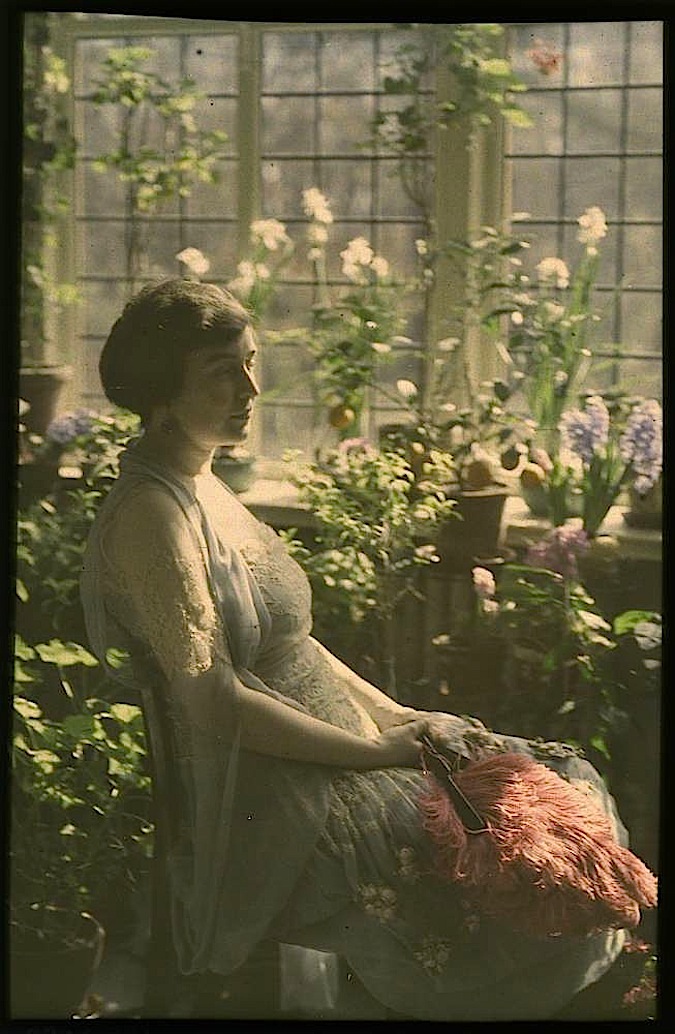
Greenhouse portrait

“Woman in greenhouse,” ca. 1910, an autochrome by Mrs. Benjamin F. Russell, via George Eastman Museum Commons on flickr.

I have not been able to find out anything about Mrs. Russell.

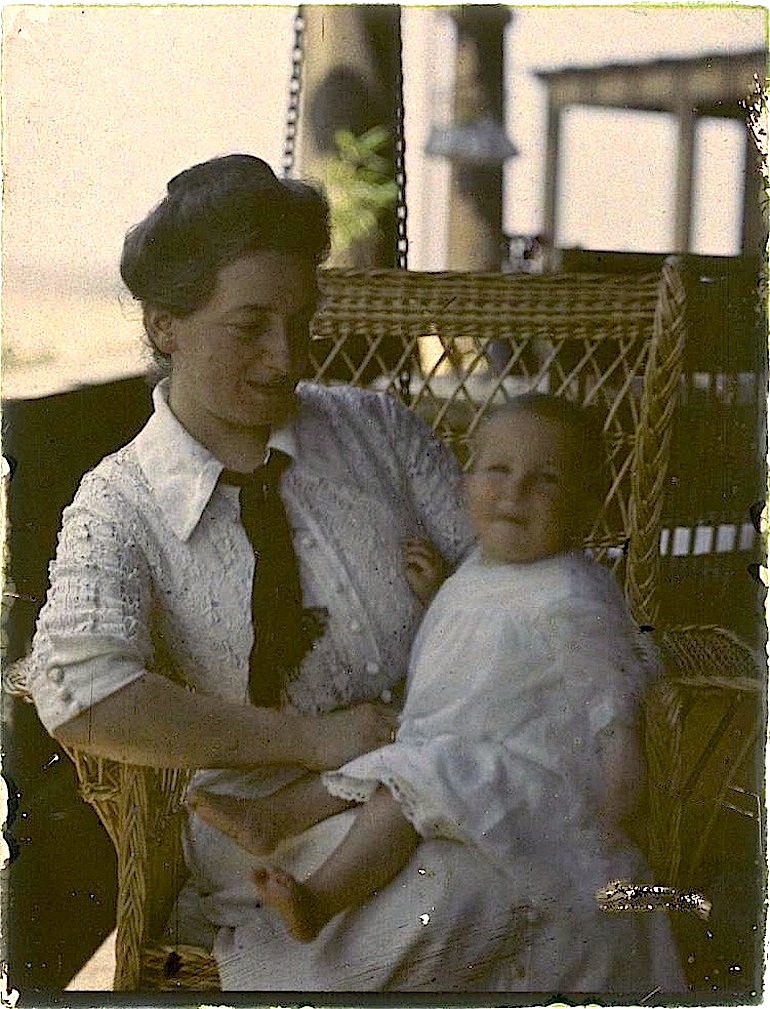
The Sunday porch: Mothers’ Day


“Woman holding baby on outdoor porch,” ca. 1915, an autochrome by unknown photographer, via George Eastman Museum Commons on flickr.

The porches look as if they are facing out to a beach.

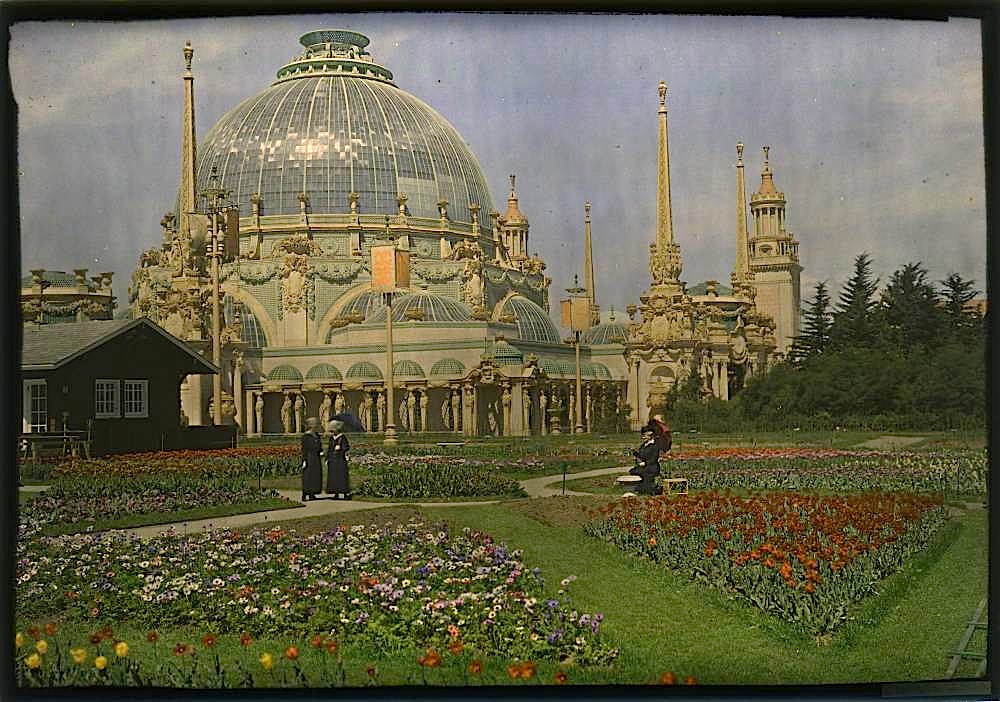
San Francisco, California

Palace of Horticulture, Panama-Pacific International Exhibition, San Francisco, California, 1915, an autochrome by an unknown photographer, via George Eastman Museum Commons on flickr.

The Exhibition was open from February to December 1915 and celebrated the completion of the Panama Canal in 1914. It also showcased the city’s recovery from the devastating 1906 earthquake. Its palaces and halls were built on a 635-acre site along the city’s northern shore, between the Presidio and Fort Mason.

“Constructed from temporary materials (primarily staff, a combination of plaster and burlap fiber), almost all the fair’s various buildings and attractions were pulled down in late 1915,” according to Wikipedia.

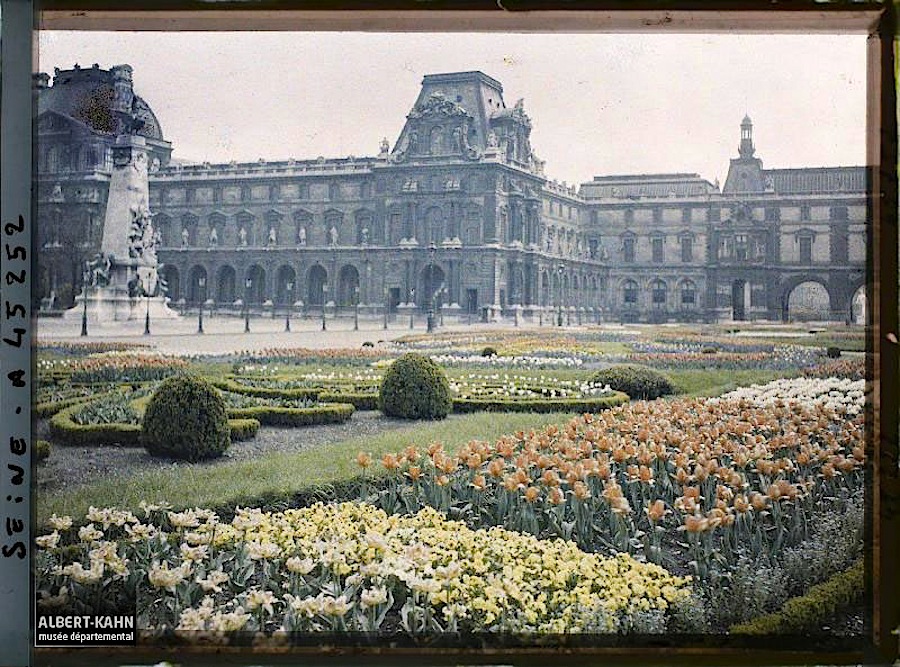
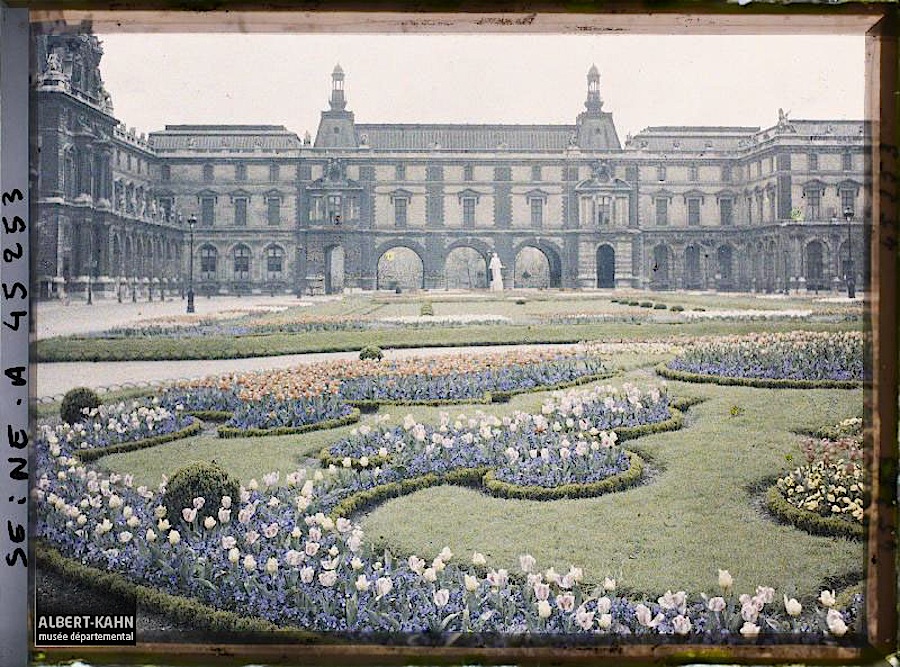
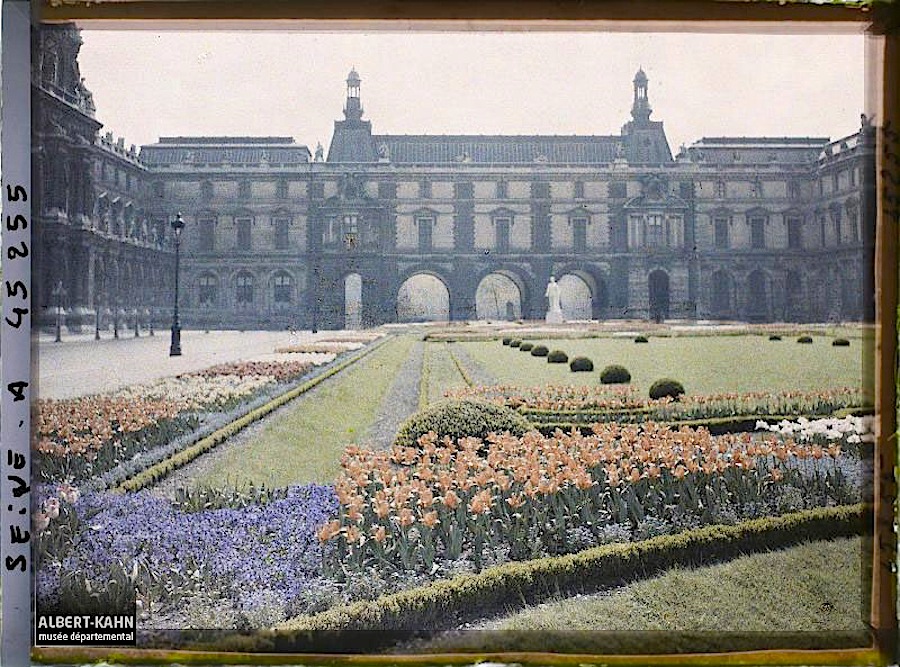
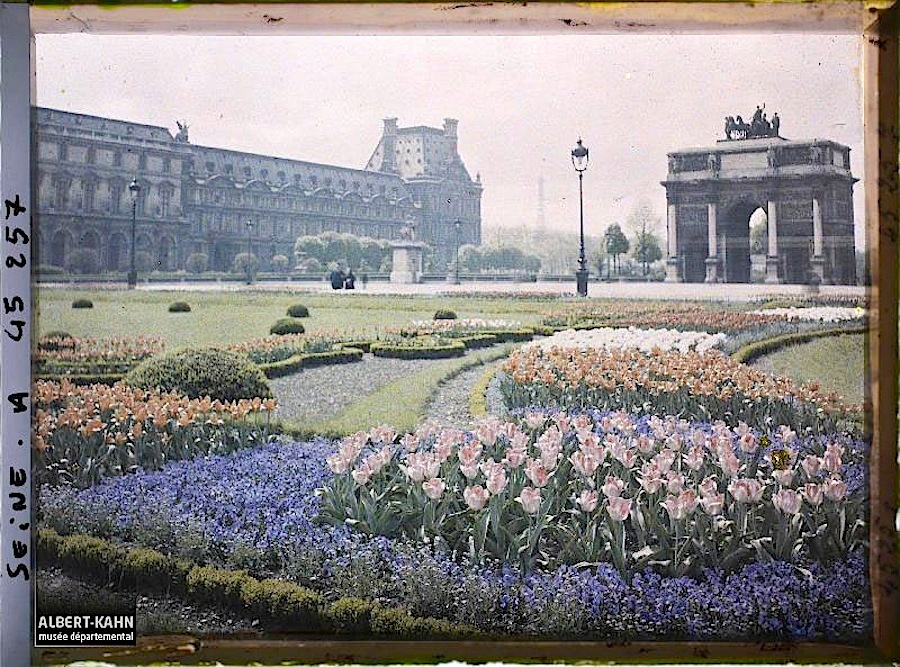
Place du Carrousel

Arrangement of tulips in the Tuileries Garden, Paris, May 8, 1925, by Auguste Léon, via Archives of the Planet Collection – Albert Kahn Museum /Département des Hauts-de-Seine.

These autochromes were taken at the Place du Carrousel, looking south to the Seine River. Today, there is a road and a roundabout (with a skylight for the underground shopping mall below) on this spot, which is just west of where I.M.Pei’s Pyramide du Louvre now stands.

It is also where Emmanuel Macron and his supporters celebrated his victory in the French presidential election runoff last night.

Looking southwest.

Today is La Fête de la Victoire in France. The public holiday commemorates the date of Germany’s unconditional surrender to the Allies in 1945, ending World War II in Europe.

The images above are four of about seventy-two thousand that were commissioned and then archived by Albert Kahn, a wealthy French banker and pacifist, between 1909 and 1931. Kahn sent thirteen photographers and filmmakers to fifty countries “to fix, once and for all, aspects, practices, and modes of human activity whose fatal disappearance is no longer ‘a matter of time.'”* The resulting collection is called Archives de la Planète and now resides in its own museum at Kahn’s old suburban estate at Boulogne-Billancourt, just west of Paris. Since June 2016, the archive has also been available for viewing online here.


*words of Albert Kahn, 1912. Also, the above photos (A 45 252, A 45 253, A 45 255 S, A 45 257) are © Collection Archives de la Planète – Musée Albert-Kahn and used under its terms, here.