
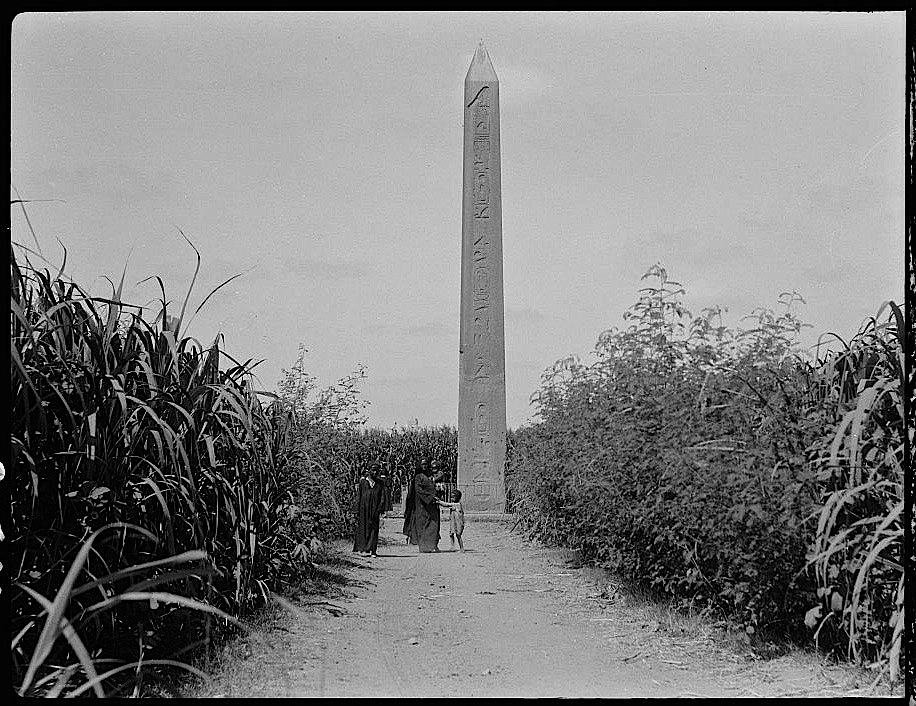
Obelisk, probably Cairo area, Egypt, September 1934, by American Colony of Jerusalem Photo Department, via Library of Congress Prints and Photographs Division.
Obelisk, probably Cairo area, Egypt, September 1934, by American Colony of Jerusalem Photo Department, via Library of Congress Prints and Photographs Division.
 Tea time in the front garden of Mena House, an hotel in Cairo, Egypt. Taken between 1934 and 1939 by the Photo Department of the American Colony of Jerusalem, via Library of Congress Prints and Photographs Division (both photos).
I think that tea has come too late for the lady in the foreground, who seems to have nodded off.
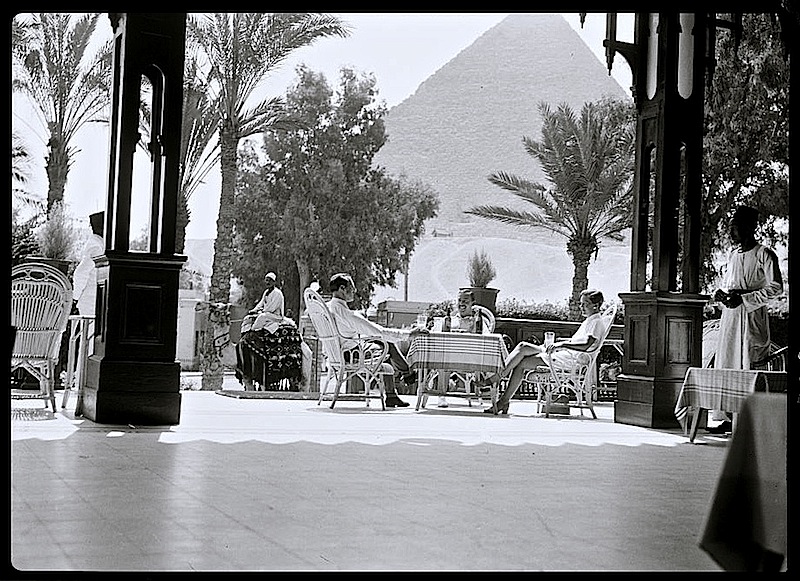 View of a pyramid from the front porch, Mena House, Cairo, Egypt.
The hotel opened in 1890 and featured Egypt’s first swimming pool. Famous guests have included British and Egyptian royalty, Winston Churchill, Sir Arthur Conan Doyle, Agatha Christie, and Charlie Chaplin.
A garden party. . .
Bill Cunningham’s (always) charming fashion video in today’s New York Times, about The Newport Vintage Dance Week — here — made me think of these Library of Congress photos of bygone garden parties.
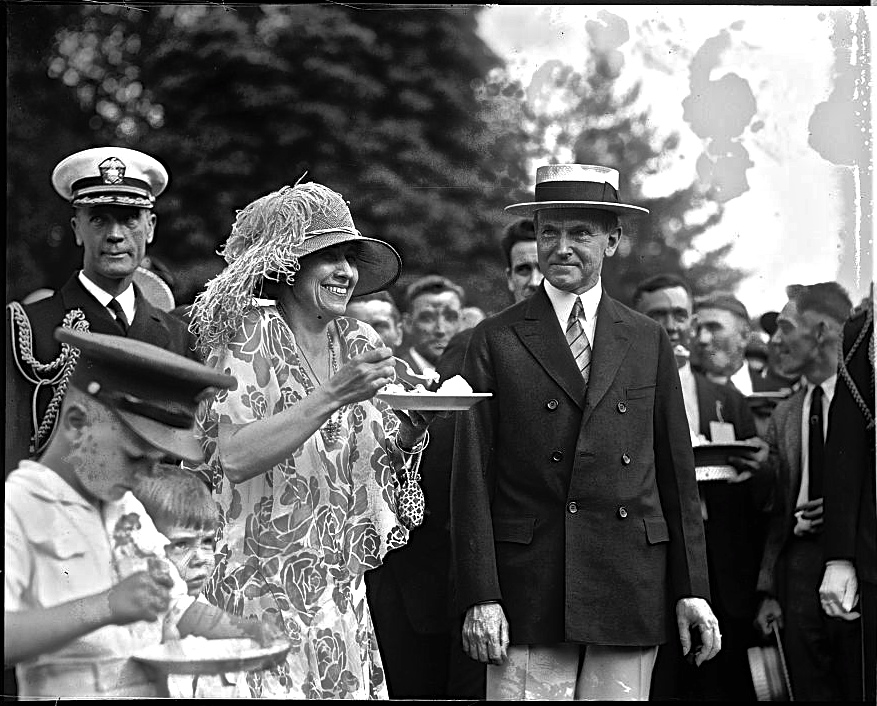 President and Mrs. Coolidge at White House garden party, June 3, 1926, by National Photo Company.
Click on any thumbnail below to scroll through larger photos of a variety of garden and lawn parties.


Hand-colored photographs by the American Colony of Jerusalem taken between 1900 and 1946, showing the Jordan River, olive trees, and “Bethlehem, Juda, and Blue Galilee.”

All photos via the Matson Collection of the Library of Congress.

I’ll take one more pass at the interesting photographs of the Library of Congress Matson Collection (American Colony of Jerusalem).

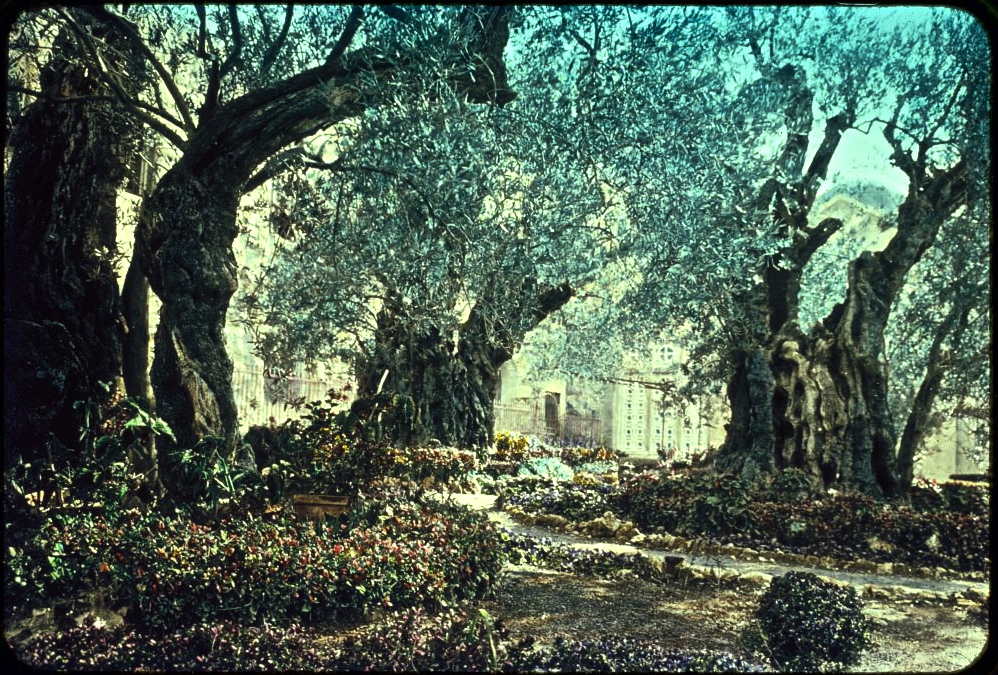
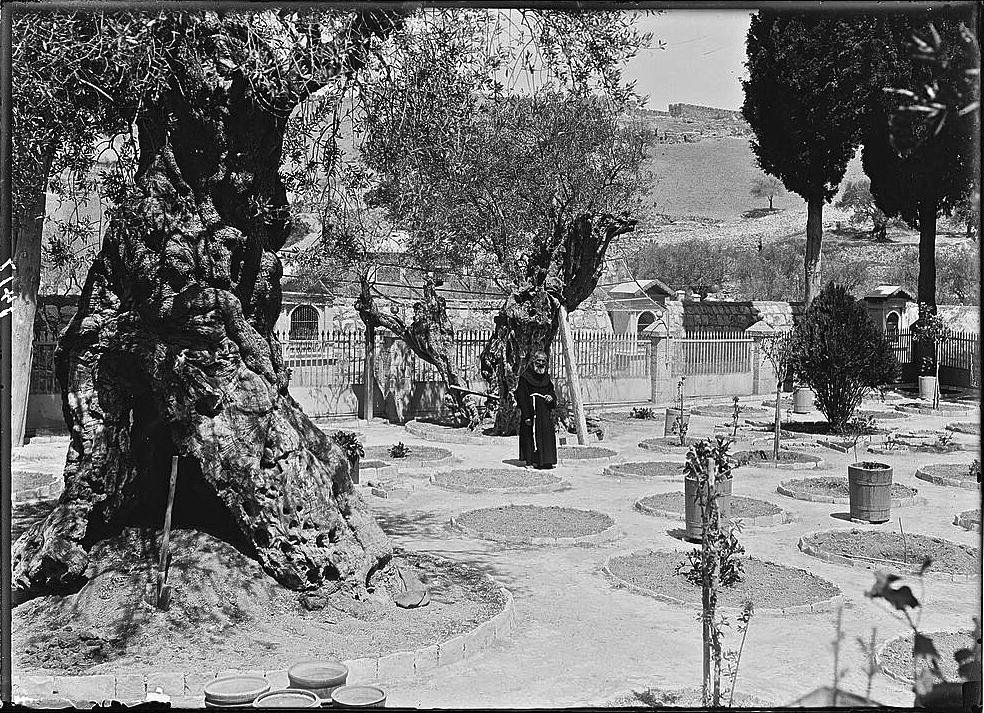
The American Colony photographers took many pictures of the Garden of Gethsemane during the first half of the 20th century. Presumably, they were big sellers in the Colony’s tourist shop near Jaffa Gate.

‘Gethsemane’ is a Greek word derived from an Aramaic word for ‘oil-press.’ The Roman Catholic-administered garden is located at the foot of the Mount of Olives. It is one of four locations in the area currently claimed by different religions as the place where Jesus prayed the night before the crucifixion.

In the gospels of Matthew and Mark, it is called by a word meaning ‘place,’ ‘property,’ or ‘estate.’ In the gospel of John, the Greek word ‘kepos’ is used; it can mean ‘garden,’ but also ‘cultivated tract of land.’
The first recorded pilgrimage to the site was made in 333 A.D. by the anonymous “Pilgrim of Bordeaux,” who recorded his travels in the Holy Land in Itinerarium Burdigalense.

The building attached to the garden, the Church of All Nations, was built in the 1920s. The garden’s olive trees are said to be 2,000, 1,000, or 900 years old, depending on the source.
In 1915, a plague of locusts swept through Palestine, stripping areas — including the garden — of all vegetation. The American Colony was asked to photograph the devastation, which caused food shortages, by the Ottoman-Turkish governor for “Syria and Arabia.”
The Garden of Gethsemane remains a popular tourist and pilgrimage destination today.
 enclos*ure