Quiet corners in foreign lands

Each time we’ve travelled to the north of Rwanda, we’ve passed the small Chinese cemetery in the Rulindo District. Last month, we stopped for a few minutes.

The cemetery is located just off the road to Muzanze, about 50 minutes from Kigali. It holds the remains of 10 Chinese citizens who died in Rwanda during the 1980s and 1990s, while they were working on development projects of road construction or health services.

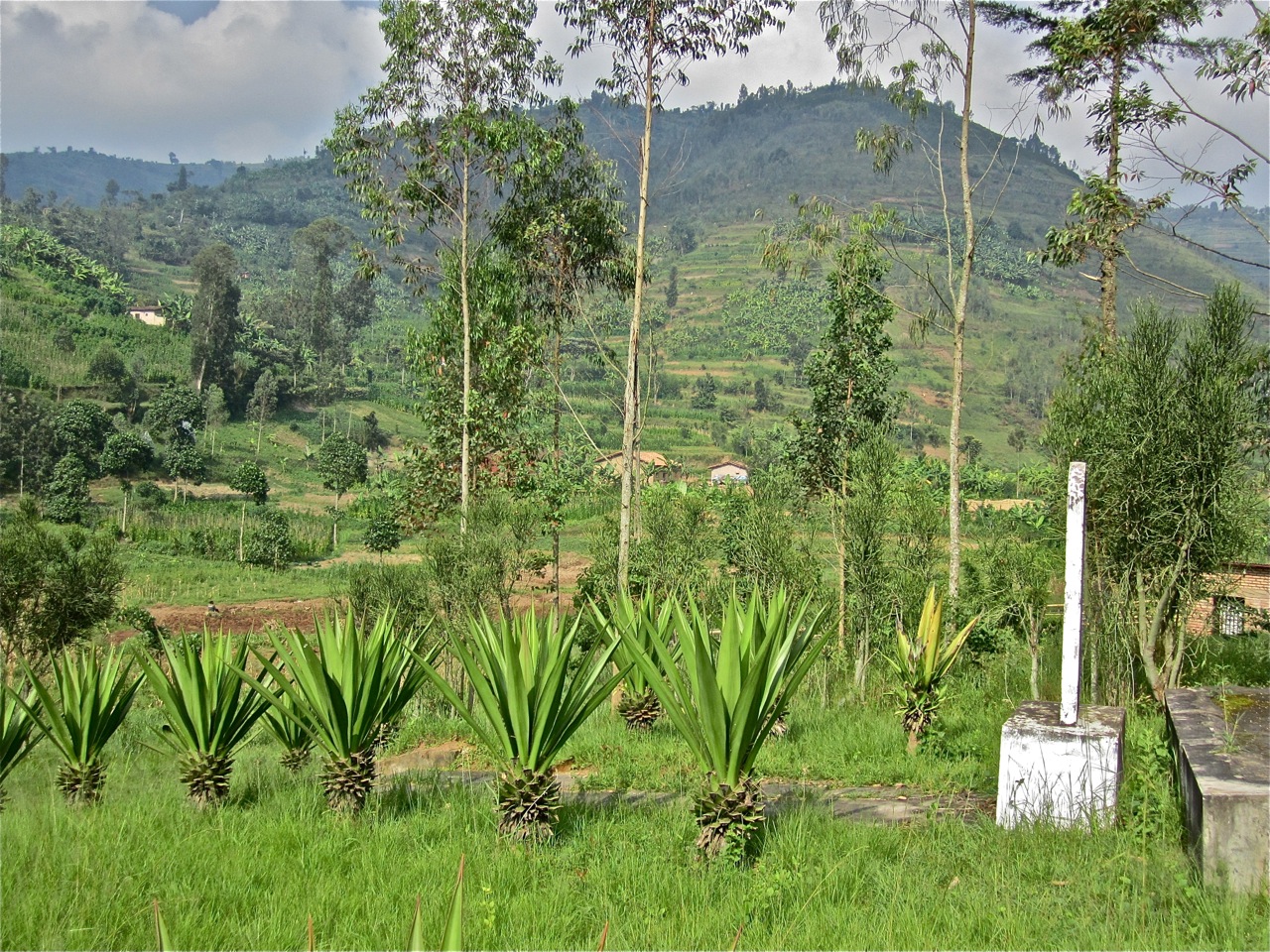
The graves are in a row near the top of a hill, with a set of stairs leading up to each one.
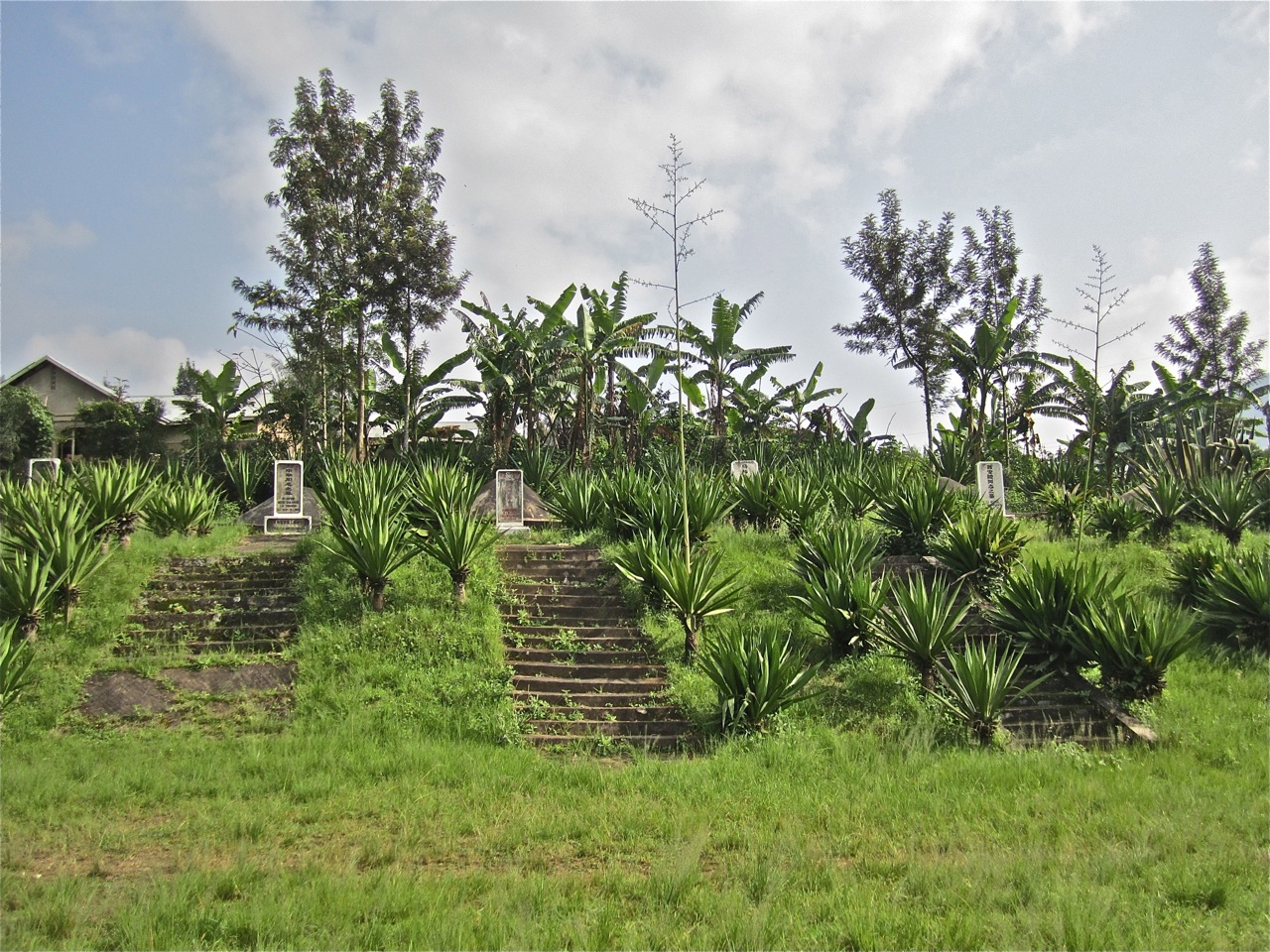
The material elements are now-weathered concrete, grass, and agaves.

The arrangement is simple, the effect poignant.

The cemetery is cared for, and the Chinese community, led by Ambassador Shll Zhan, held a ceremony there for the Qingming Festival on April 5 of this year.
When I looked at these pictures, I remembered two photos I had taken in 2007 of another small, touching cemetery garden. It holds the graves of eighteen Algerian retainers who had followed their Emir into imprisonment in France in 1848.

Abd al-Qadir and his household were held in the Château d’Amboise in the Loire Valley. Those who died before he was released in 1852 were buried there.

The memorial garden on the grounds of the château is beautiful. It was built in 2002, according to one source, but I have been unable to find out any more about it.

The square markers are set in a rectangle planted with low mounding plants. A hedge of rosemary diagonally intersects the space.

Enclosures of the kings

Thanks so much to WordPress.com for including this post on its “Freshly Pressed” page this week! 

Yesterday, we visited the Rukali Palace Museum in the town of Nyanza, a couple of hours south of Kigali.

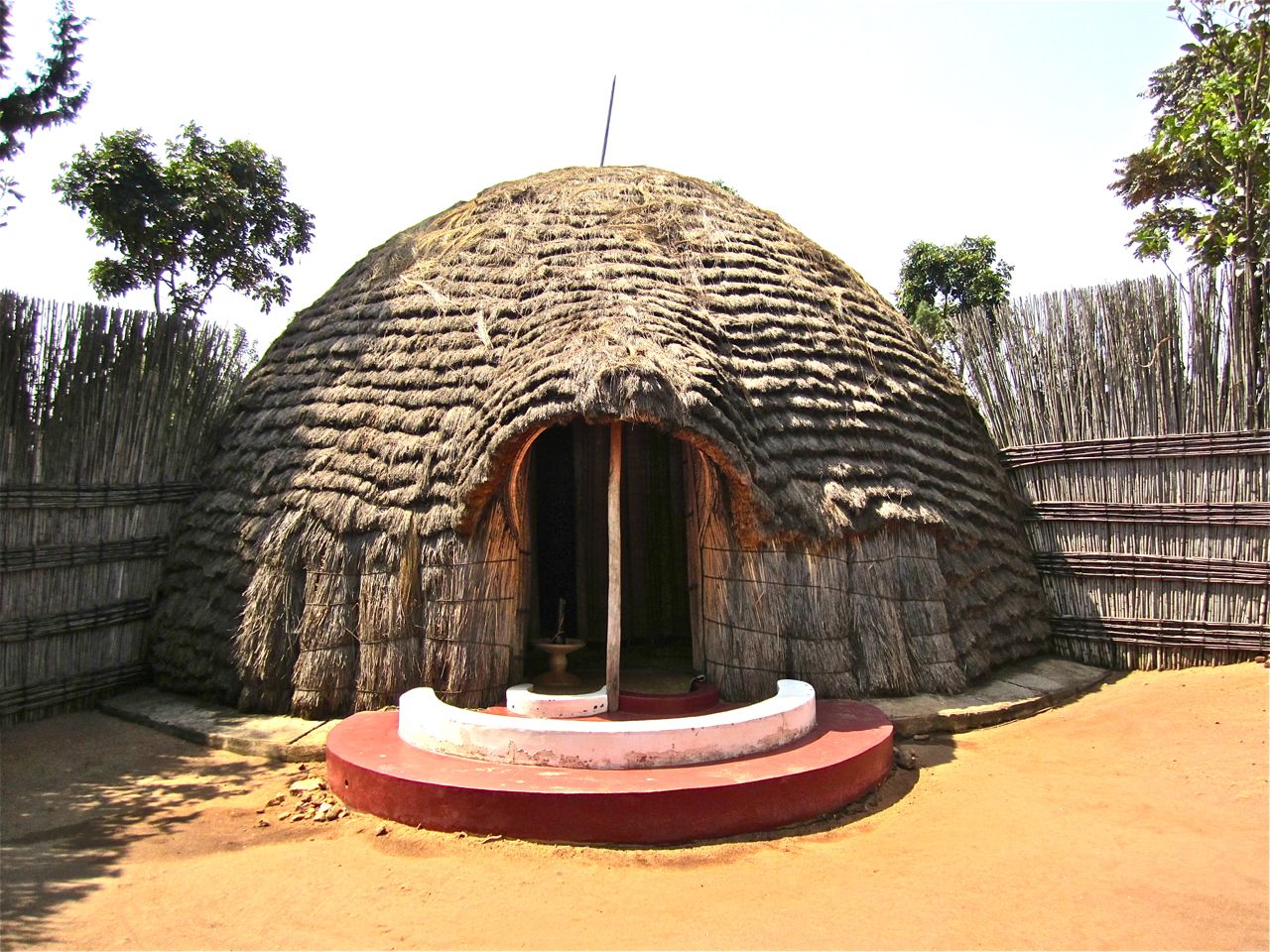
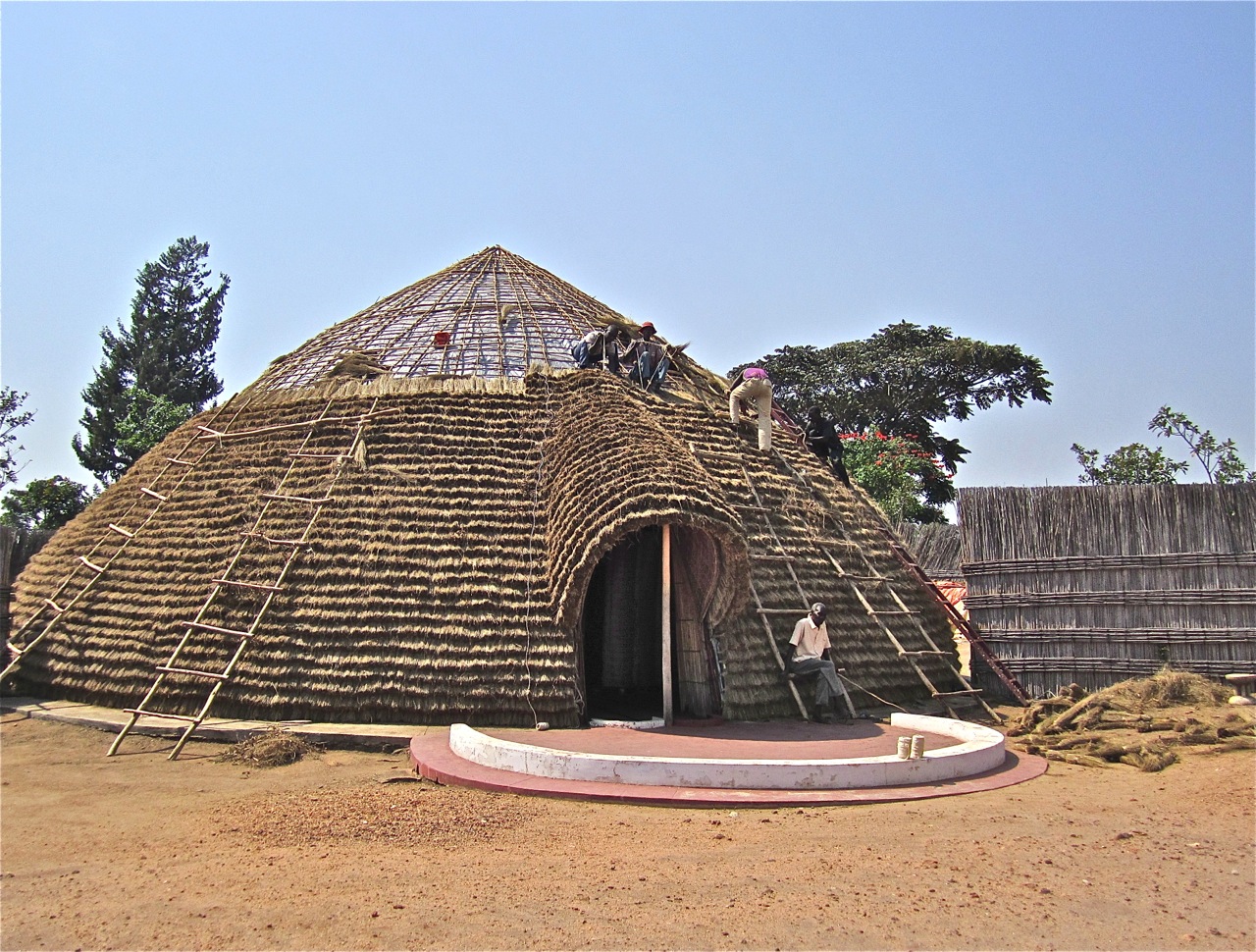
The opening of the enclosure around the house of the keeper of the king’s milk.

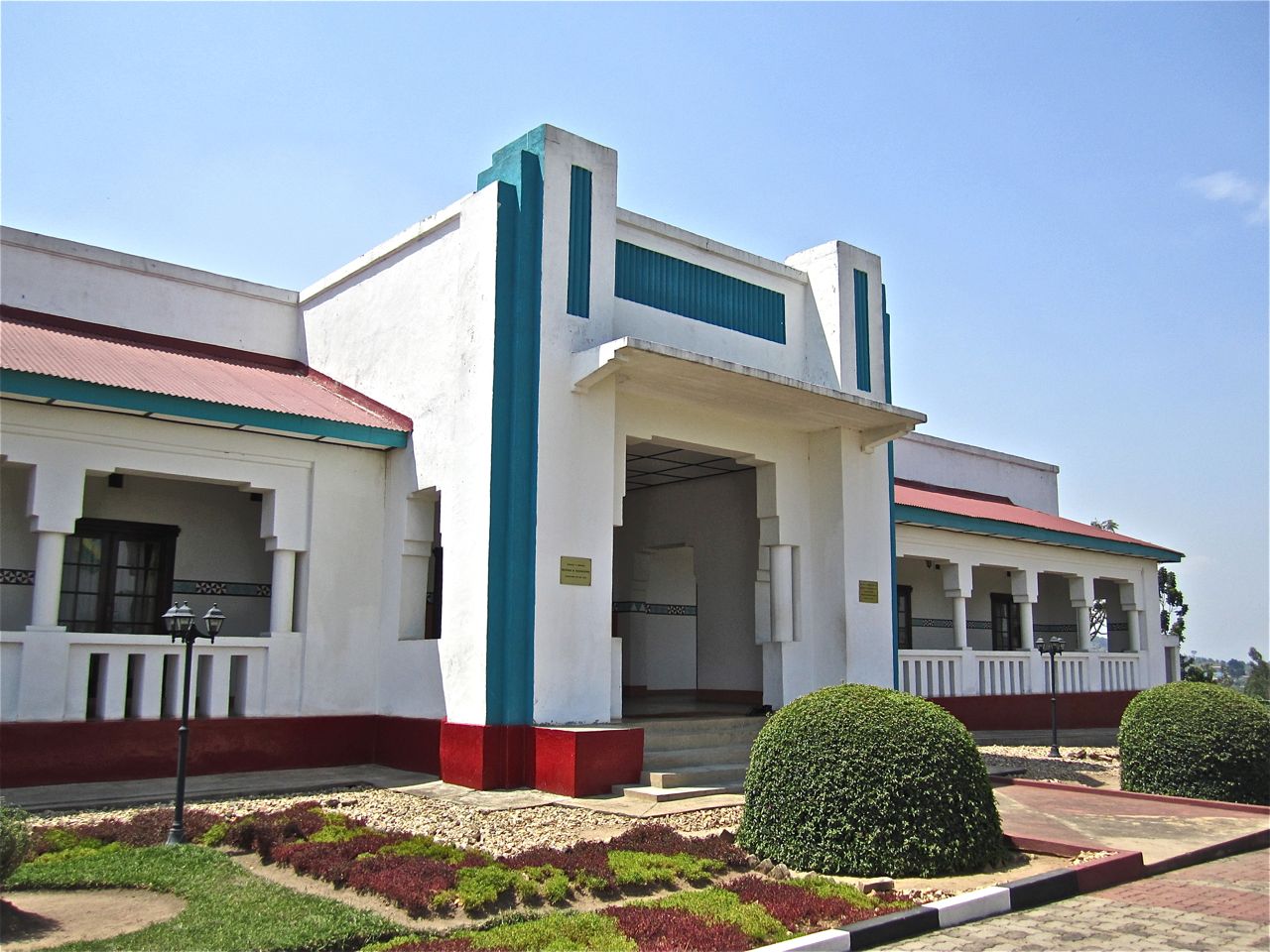
The museum grounds hold a reconstruction of the palace of Mwami (King) Musinga Yuhi V (a few miles from its original location), as well as the actual Western-style palace built for his successor, Mwami Rudahigwa Mutara III, in 1932.

The reconstructed palace is currently undergoing a 5-year refurbishment.

Musinga lived in a palace like this from 1899 until his death in 1931.

An old photograph of the actual court of Mwami Musinga.

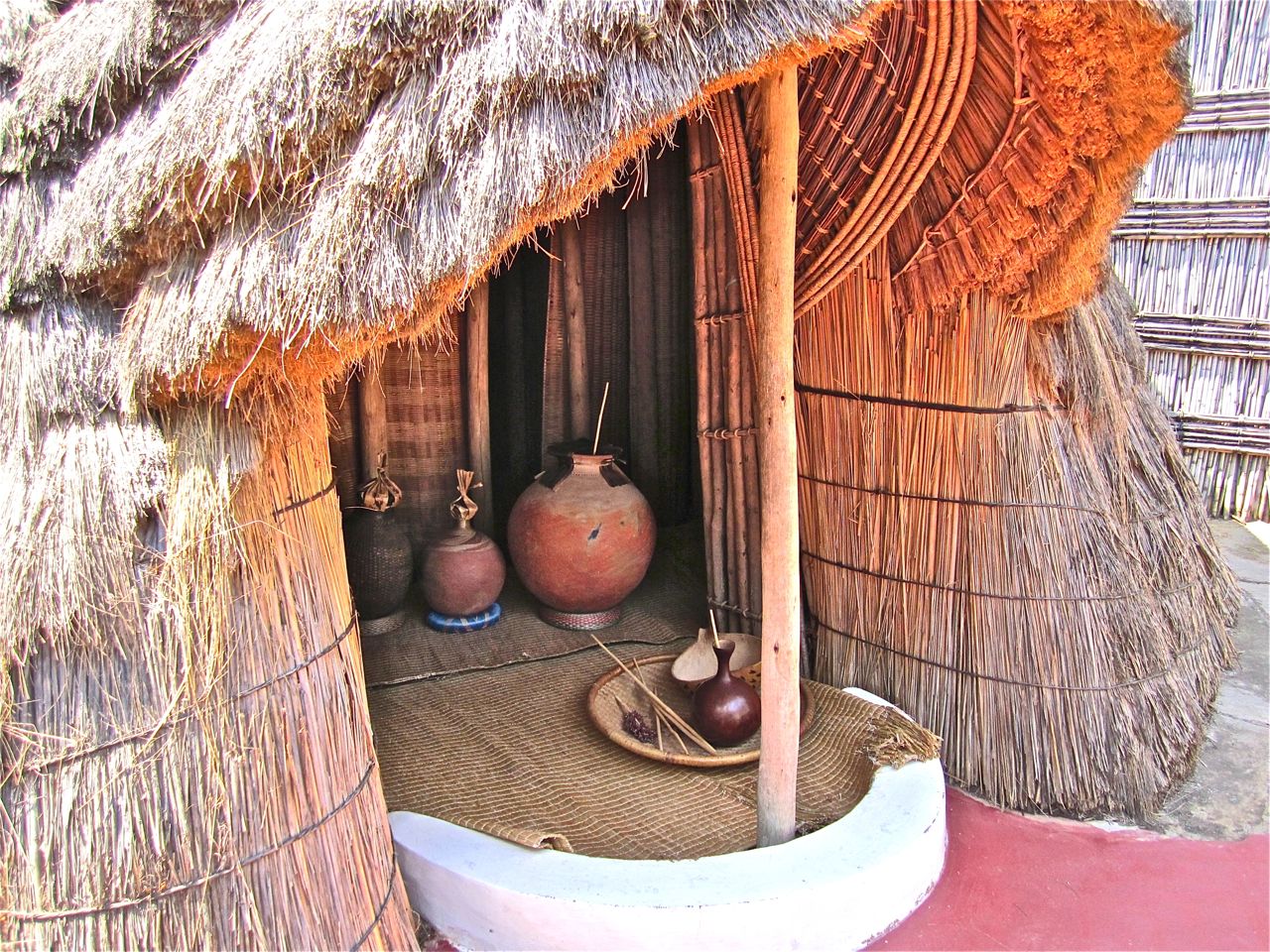
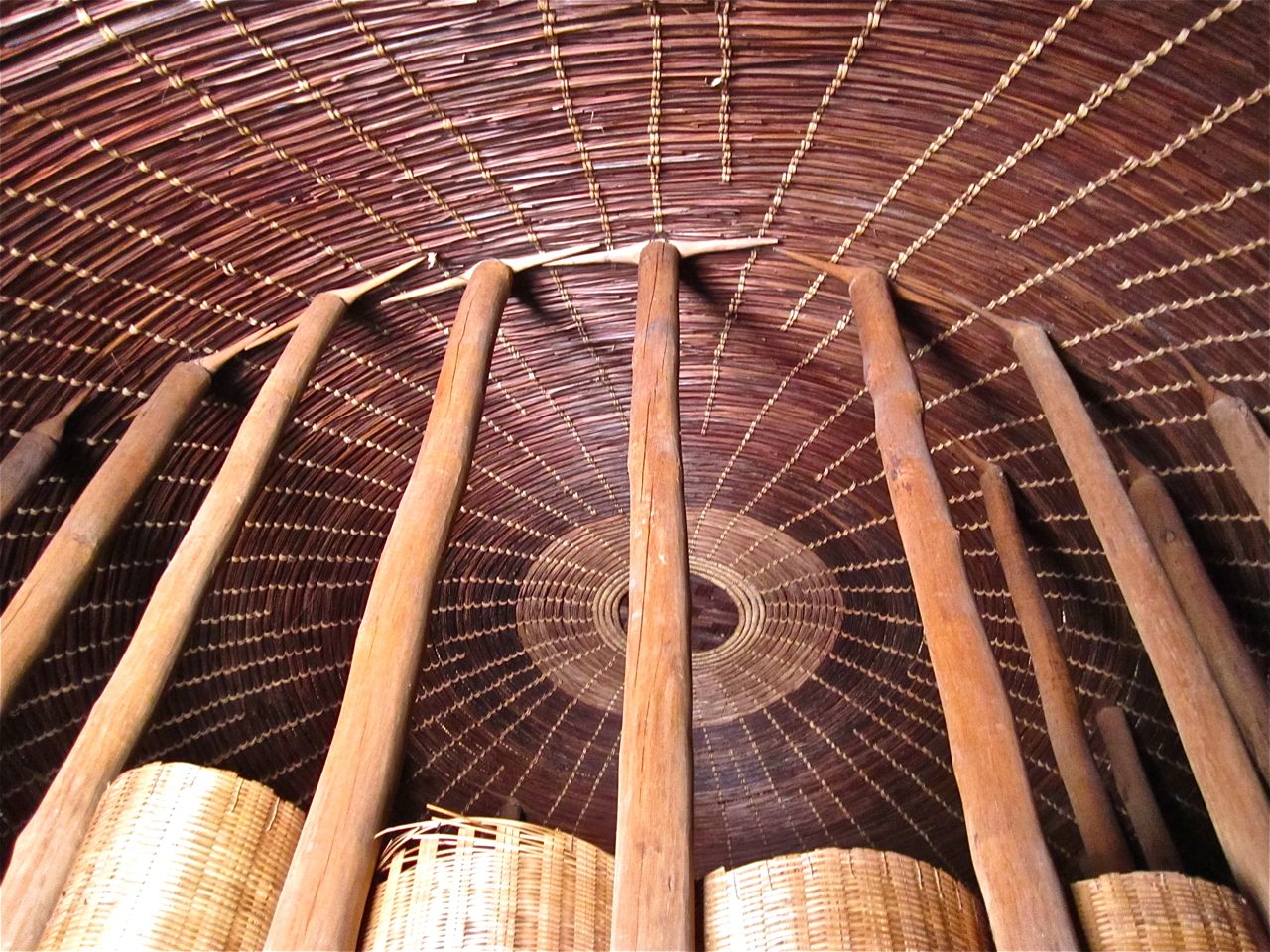
Traditional building and weaving techniques were used to make the structures of grass, reed, and bamboo. The work is very fine.

House of the keeper of the king’s milk.
The entrance to the house of the keeper of the king’s beer.
The inside partition is woven in such a way that an inhabitant could see out, but someone outside could not see in.
The ceiling.

A cow pen is part of the reconstruction. Cows were very important in Rwandan royal culture, and each of the king’s cows had a personal poem that was chanted or sung to call it out. They might also be decorated like this one.

A Rwandan cow wearing decoration at the reconstructed palace. Her keeper is chanting her own poem.
The pretty little calves are sleek as seals.

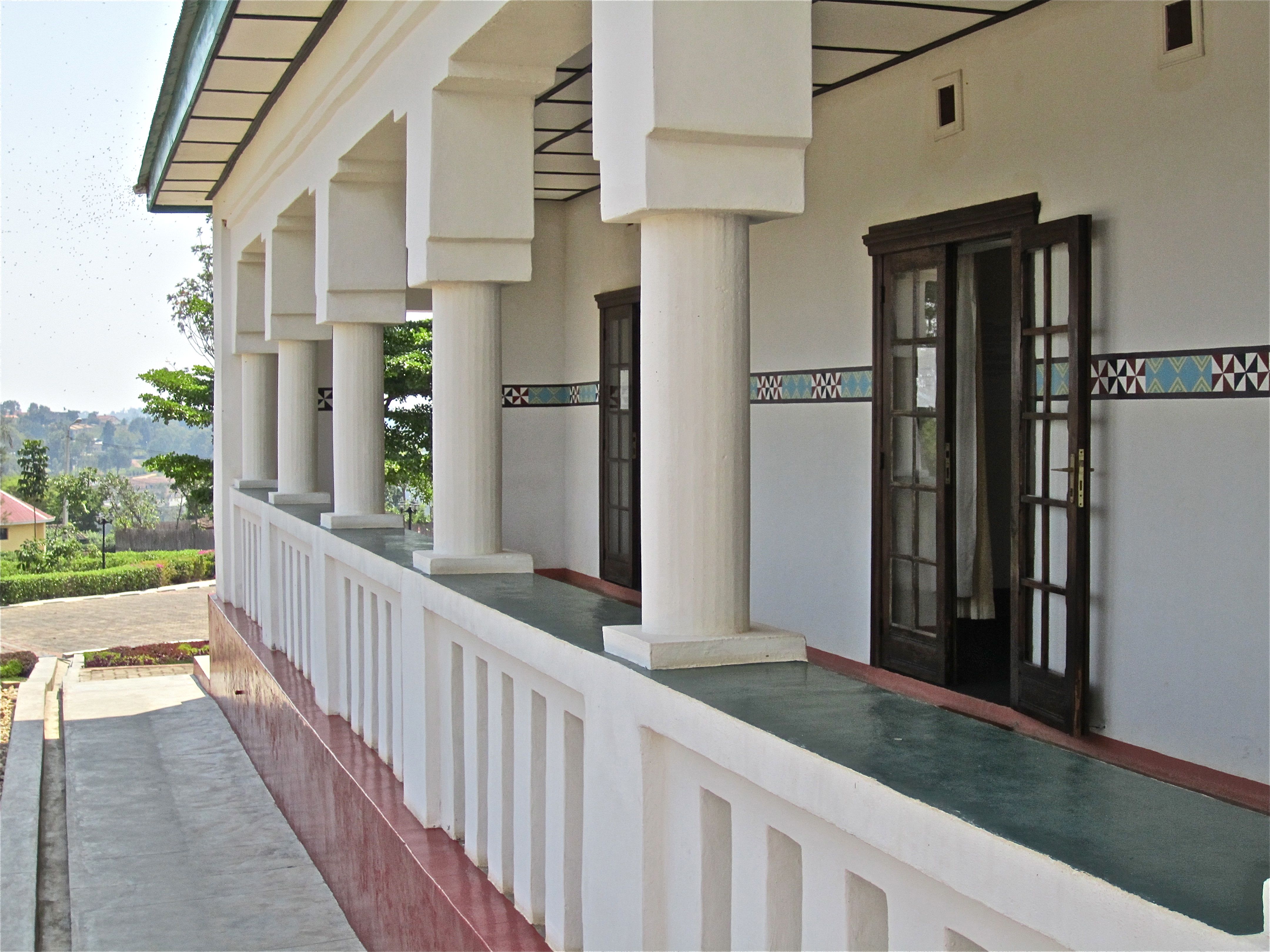
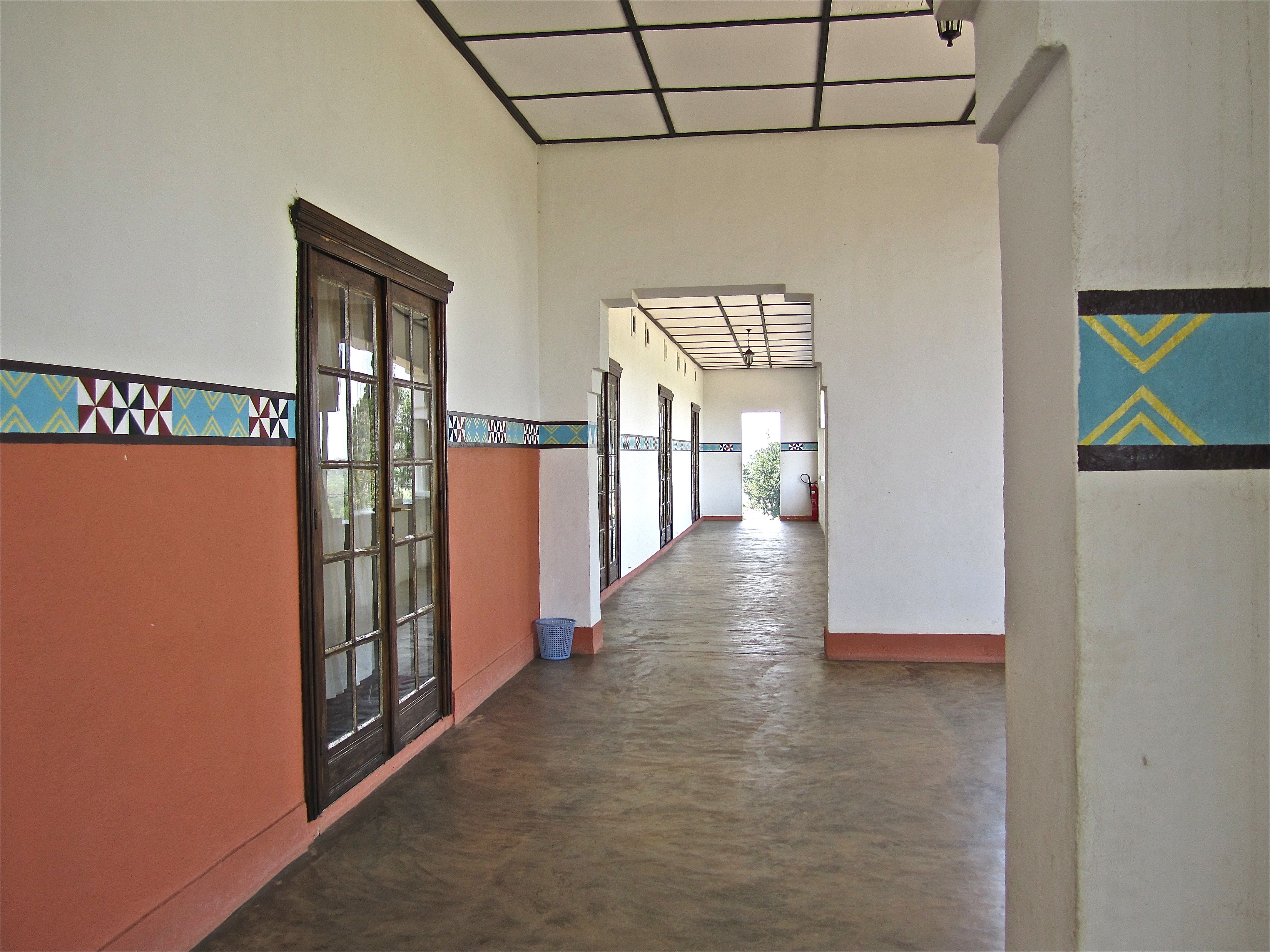
The modern palace (used from 1932 to 1959) is decorated inside and out in geometric motifs. Unfortunately, visitors are not allowed to take pictures inside.

The actual palace of Mwami Rudahigwa Mutara III, who lived here from 1932 until his death in 1959.
The front porch.
Inside, the home contains some original furniture, as well as historical photographs and maps.
Queen Rosalie and the king in the 1950s. The widowed queen was murdered in the 1994 genocide.

The courtyard garden is planted in hedges laid out in patterns like those traditionally used in baskets, mats, and room partitions.

The courtyard garden behind the more modern palace.
Room partitions of the reconstructed palace with traditional geometric patterns.

More about traditional Rwandan homes here.