Women in the garden in Japan, late 19th to early 20th century, via Photographs of Japan Collection, The Miriam and Ira D. Wallach Division of Art, The New York Public Library.
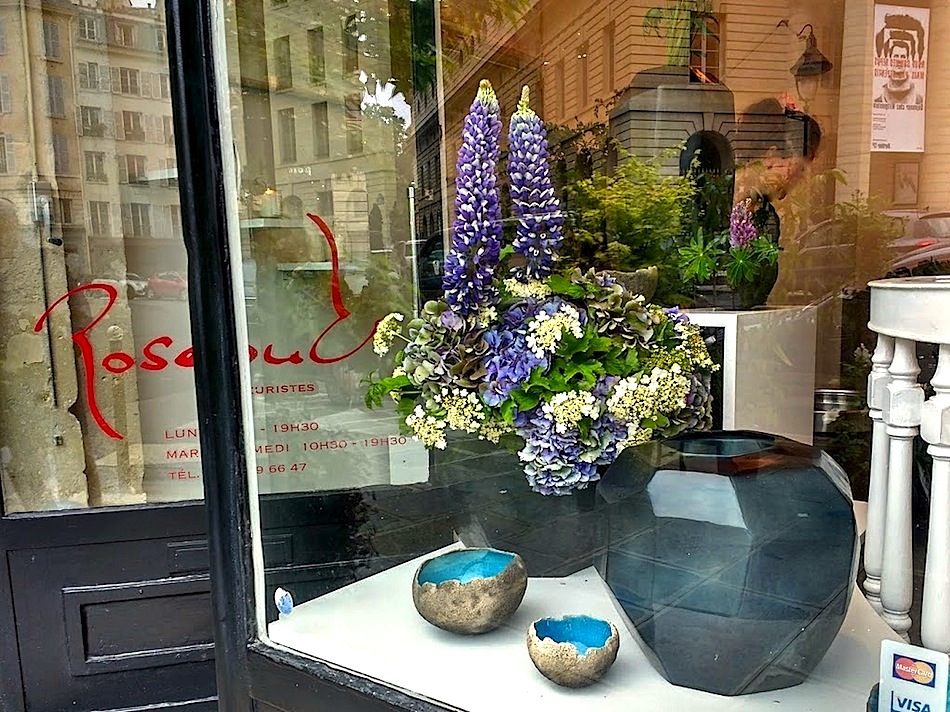
Passing by the windows of Rosebud Fleuristes, 4, Place de l’Odéon, Paris. In the vase are lupin, viburnum, and hydrangea flowers.
We spent the long holiday weekend in Paris, just getting back this afternoon — so I don’t have a flower arrangement of my own today. But I can offer a few pictures of the windows of two florists in the area north of the Luxembourg Garden: Rosebud and Stanislaus Draber.
Foxtail lilies and viburnum flowers at Rosebud, which was mentioned in the Paris-Match article as having been created with “a concept of florist-art gallery” (à l’origine d’un concept de fleuriste-galerie d’art).
On the train to France, I read an article in Paris-Match magazine, “La Fleur Fait Sa Révolution!”
“The flower has become a symbol of an urban renaissance, creative and super-cool,” it said. “One talks flowers with the same appetite that characterizes the foodistas for cooking. The opening of peonies, the Japanese [pruning] knife, and the art of the bouquet are now at the heart of urban conversations.” The trend is “embodied by the explosion of the neo-artisans who are also called the ‘makers’ (les «makers»).”
The article also mentions that the flower-market gardens around Paris “have almost disappeared in favor of the industrialized Dutch market. If nothing is done within ten years, there will be no bouquets of real scented garden roses for the high fashion Parisian florists.”
Peonies, roses, and sweet peas in the window of Stanislas Draber, 19, rue Racine, Paris.
To see what other gardeners/bloggers/makers have put in vases today, please visit Cathy at Rambling in the Garden.
ADDENDUM: There’s an interesting video clip by Rick Steves of a giant Dutch commercial flower auction here.
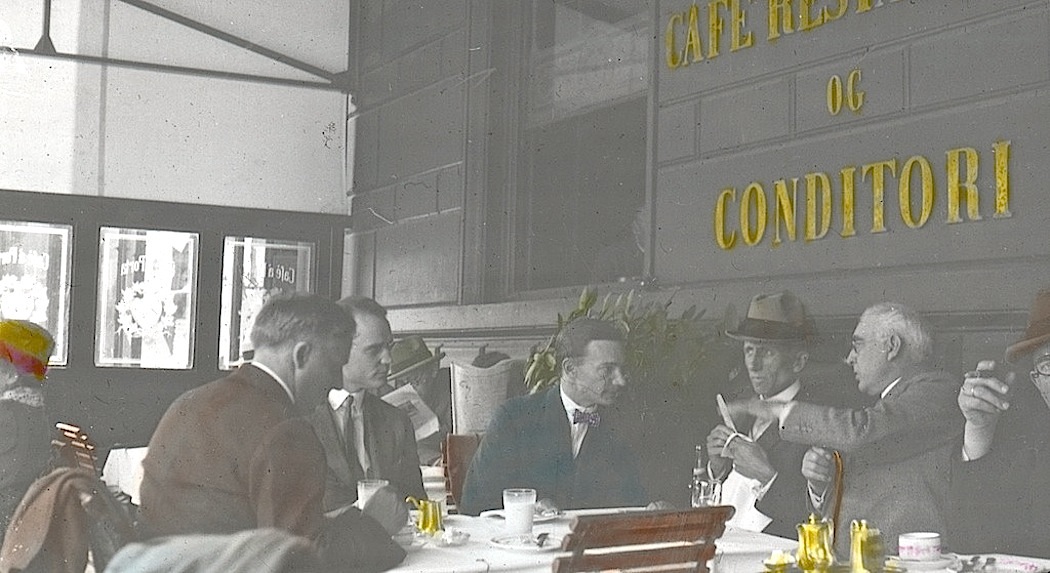
“Outdoor Restaurant,” Copenhagen, ca. 1915, via Oregon State University Special Collections & Archives on flickr. The image is from a collection of lantern slides of the “Visual Instruction Department.”
The accompanying bit of the class lecture observed that “[European] eating places have less of the haste and nervous tension which characterize cafeterias and cafes in American cities. In Copenhagen it is common for tables to be set out under an awning on the broad sidewalk. Here folk can eat leisurely and watch the happenings in the neighborhood.”
In the lettering above the tables, “og Conditori” means “and cake/pastry shop.” There’s another cake shop with nice outdoor seating (in Sweden) here.
I used to mock my father and his chums
for getting up early on Sunday morning
and drinking coffee at a local spot
but now I’m one of those chumps.
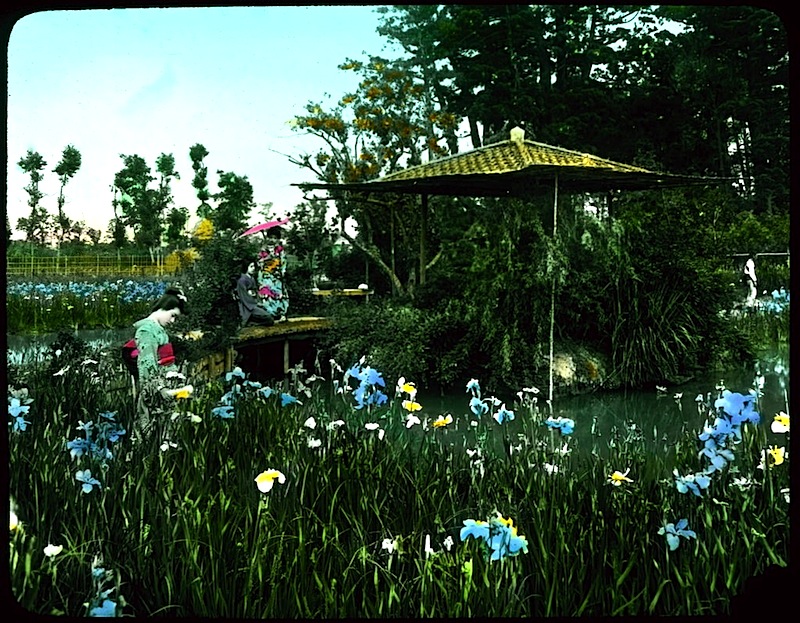 Iris garden beside water in Japan, probably Yokohama, ca. 1910, via University of Victoria Libraries Commons on flickr.





 enclos*ure