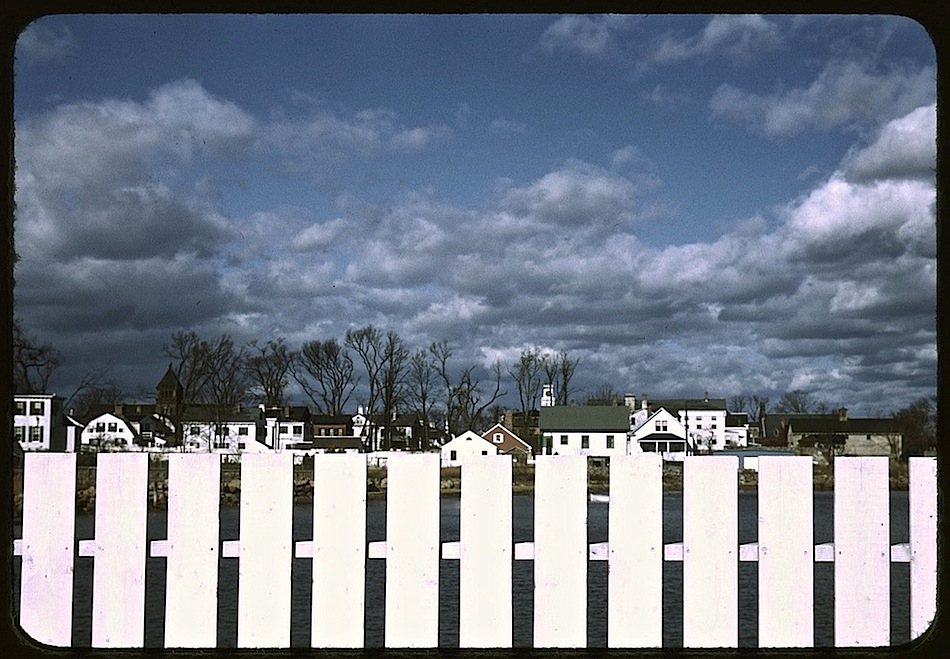
Vintage landscape: white fence

white fence, white town, Library of CongressPicket fence and view of Stonington, Connecticut, November 1940, by Jack Delanovia Library of Congress Prints and Photographs Division.

The image was taken for the U.S. Farm Security Administration on the then new Kodachrome color transparency film.

The Sunday porch: late afternoon

A repeat porch from June 2014. . .
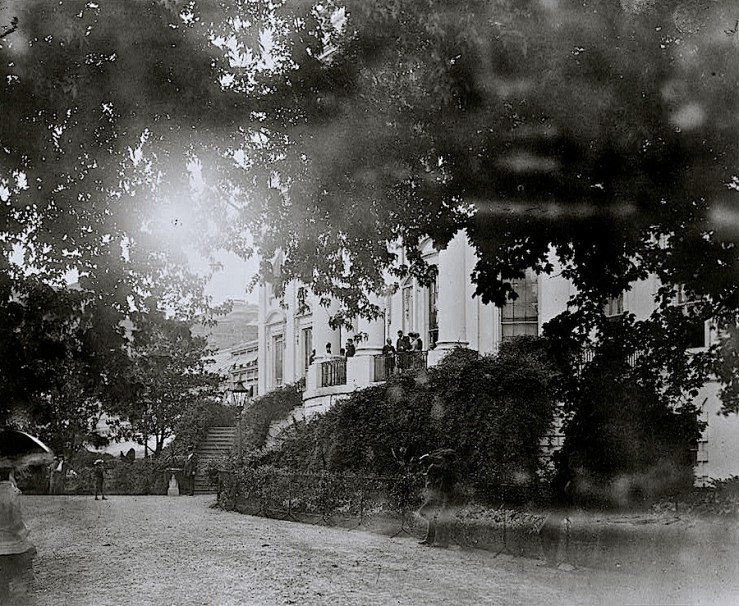
A gathering on the south portico (or back porch) of the White House, probably between 1890 and 1910, photographer unknown, via the Library of Congress Prints and Photographs Division.
The portico was built in 1824, principally from an 1807 design by architect Benjamin Henry Latrobe, then Surveyor of Public Buildings.  Latrobe was appointed and supervised by Thomas Jefferson, who loved  neoclassical design and called Palladio’s books “the bible.”

The South of France

Roman temple
“simple and sublime”

Maria Cosway
harpist
on his mind

white column
and arch

Lorine Niedecker, from “Thomas Jefferson

Fading

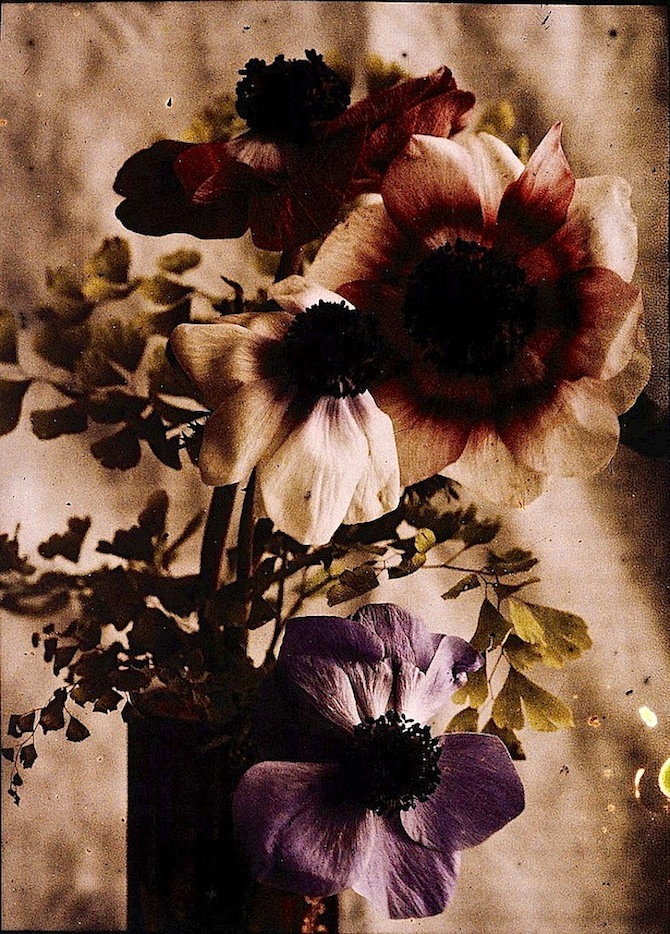
These are summer flowers, but the picture captures a late fall mood.
purple-autochrome-flowers-j-jaderstrom-sweden-via-tekniska-museetAn autochrome still life, probably taken in Sweden, ca. 1910s, by John Jäderström, via Tekniska museet on flickr (under CC license).

The Sunday porch: Halloween

Halloween back porch, HABS, Library of Congress
Front porch of a farmhouse ready for Halloween, near Elderon, Wisconsin, 1994, by John N. Vogel for an Historic American Building Survey (HABS), via Library of Congress Prints and Photographs Division.
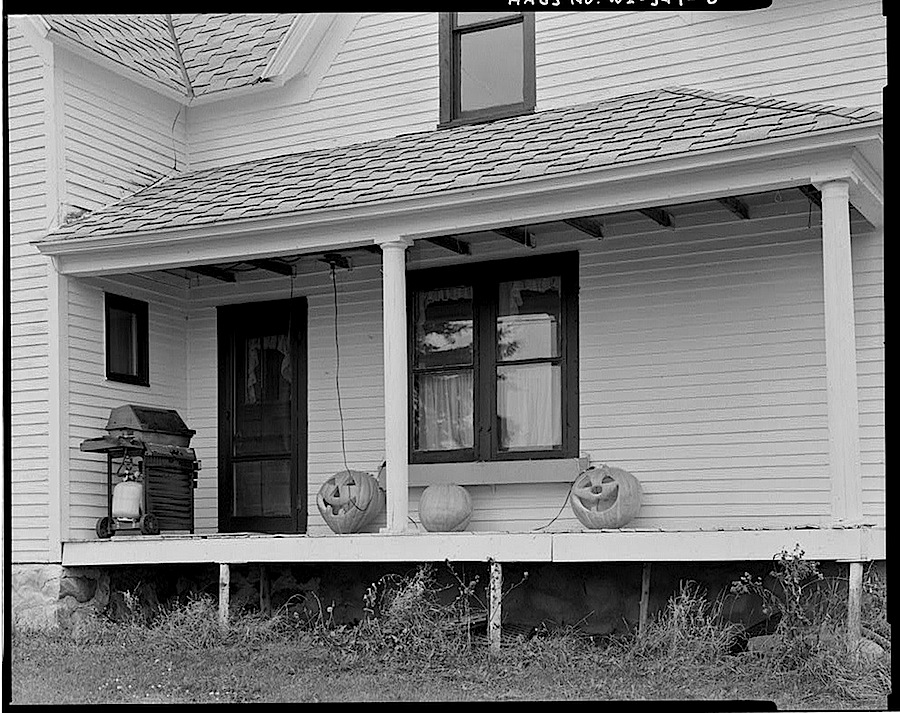
The HABS noted the house’s “prominent front porch with Tuscan columns and hipped roof” and called it “a good example of the Gabled Ell form” of Wisconsin vernacular architecture. There are wider views here.

Calculations

Paving problem, FB Johnston, Library of Congress“6th Division mathematics class on a street paving problem,” Washington, D.C., ca. 1899, by Frances Benjamin Johnston, via Library of Congress Prints and Photographs Division.
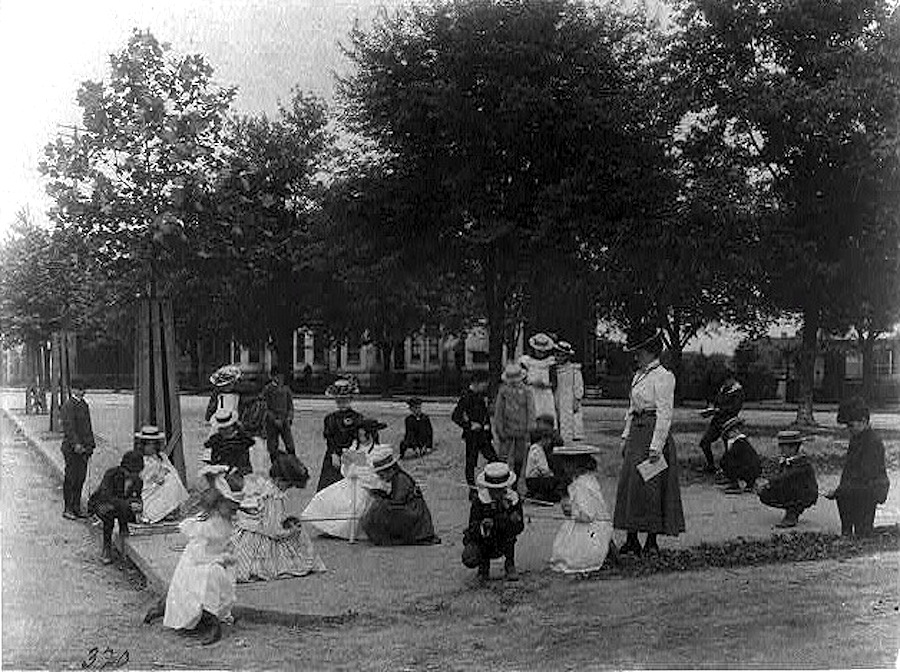
Before she became immersed in the work of photographing old houses and gardens, Johnston was a photojournalist and a portraitist. In 1899, she became interested in progressive education and made a photo survey of students at public schools in Washington, D.C.