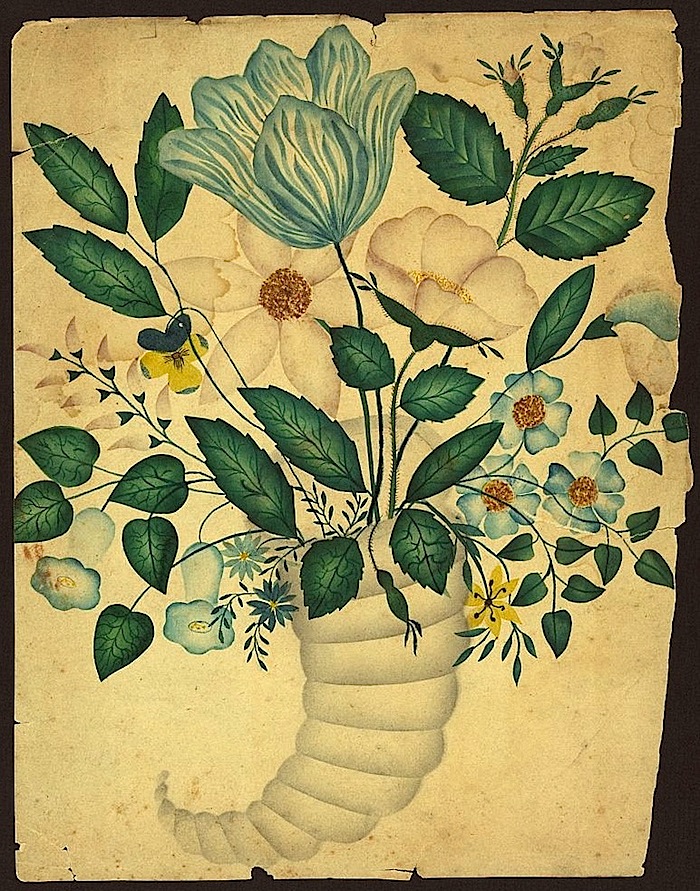
“Cornucopia of flowers,” between 1820 and 1890, an American watercolor by an unknown artist (possibly related to this?), via Library of Congress Prints and Photographs Division.
I wasn’t able to make my own flower arrangement this week for “In a vase on Monday,”‘ but to see what other garden bloggers have created, please visit host Cathy at Rambling in the Garden.
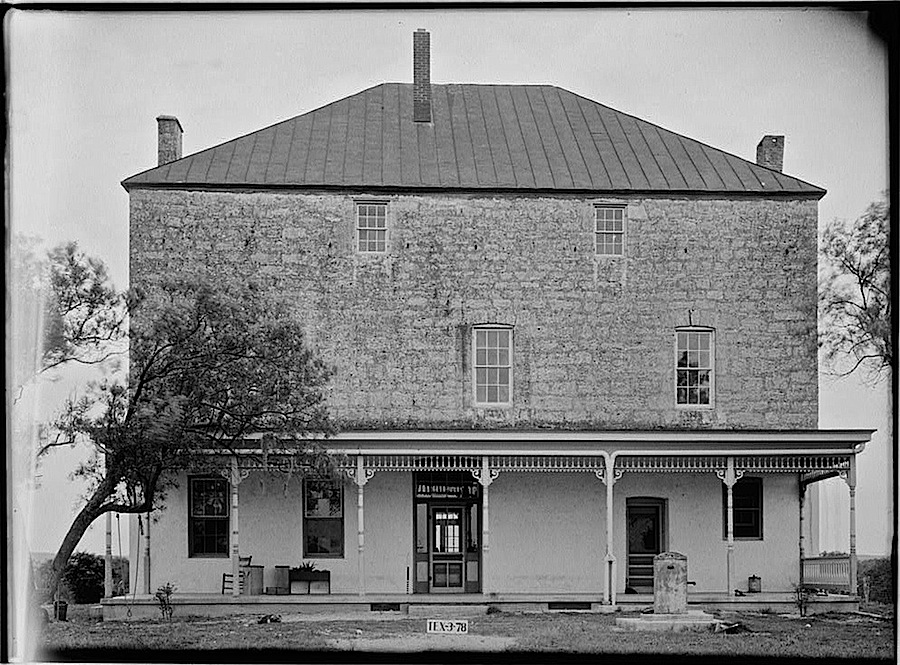
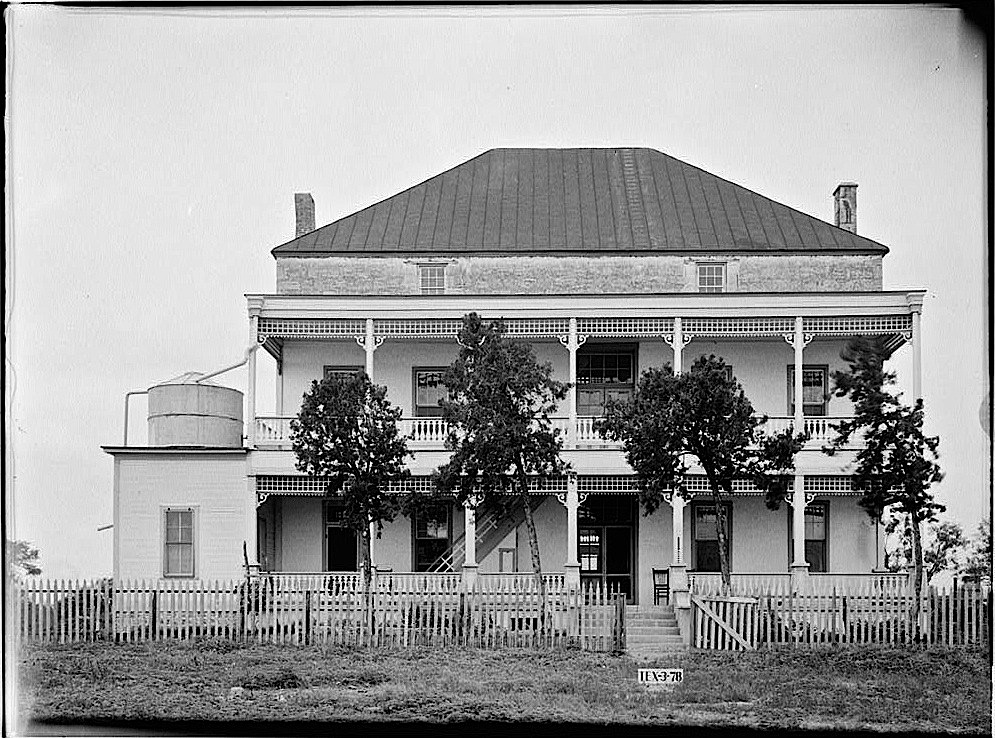
North (back) side of Rode-Kothe House, Cherry Spring, Gillespie County, Texas, May 29, 1936, by Richard MacAllister for an Historic American Buildings Survey (HABS), via Library of Congress Prints and Photographs Division (all three photos).
South (front) side of house.
The HABS says the limestone house was at least partly built in 1855 by German immigrant Dietrich Rode. (He completed it in 1879.) Rode was one of the founders of nearby Fredericksburg, as well as Cherry Spring. He was also a lay Lutheran minister and a teacher, first in his students’ homes at night and then on the second floor of his ranchhouse shown here.
Detail of front porch.
The house may still stand near Christ Lutheran Church, which Rode helped found, but I cannot find a current picture of it.
The HABS says the building was “[s]ited to dominate its surroundings.”
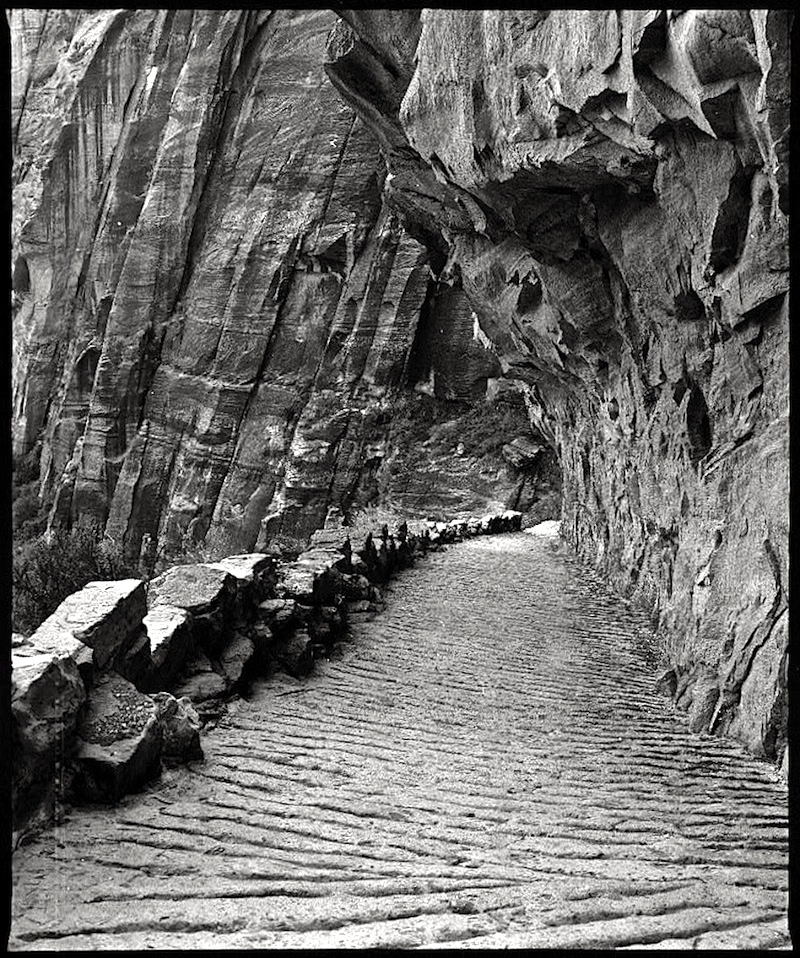
It’s National Trails Day. Detail of the West Rim Trail, looking southwest, Zion National Park, Washington County, Utah, 1984, by Clayton B. Fraser, via Historic American Engineering Record, Library of Congress Prints and Photographs Division.
The trail opened in 1926 and was paved in 1929 with oil mixed with sand and rock. It was later repaved in concrete, most recently in 2007.
“Built of native stone and associated with the “National Park Service-Rustic” architectural style, the West Rim Trail possesses architectural integrity,” says the Record. “Rock used in the masonry switchback walls was quarried locally and shaped as little as possible to provide a rough appearance, yet stable construction.” You can read more here.
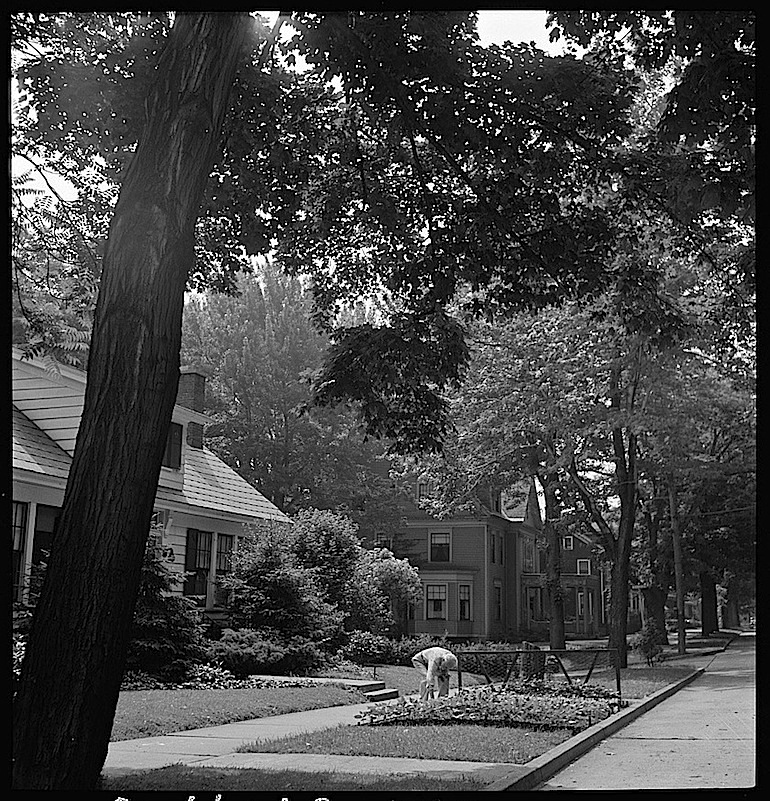
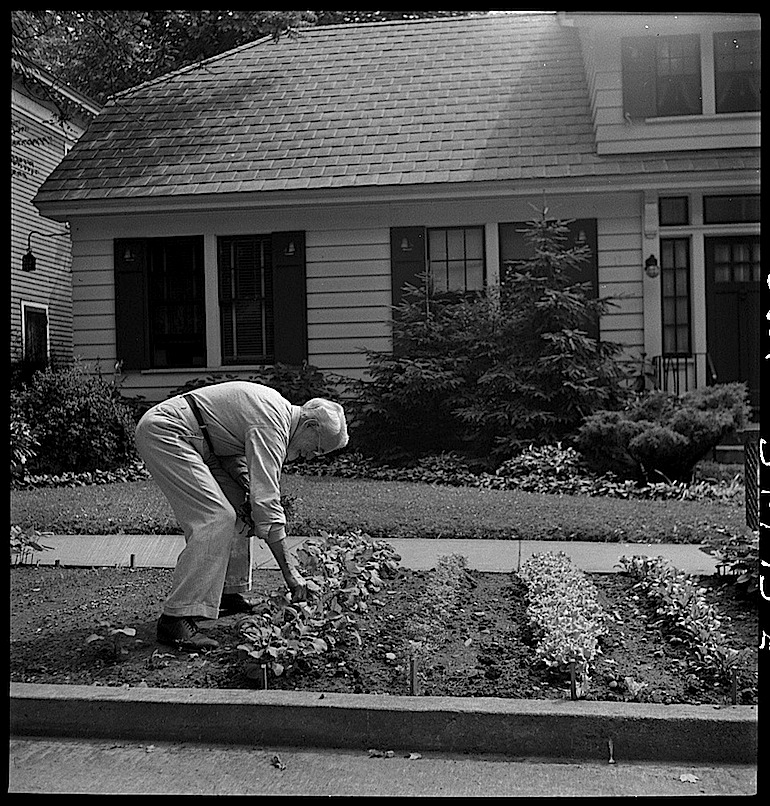
“A citizen working on Sunday morning in the victory garden he has made on the edge of the street,” Oswego, New York, June 1943, by Marjory Collins, via Library of Congress Prints and Photographs Division (all photos here).
“Reports estimate that by 1944, between 18-20 million families with victory gardens were providing 40 percent of the vegetables in America,” according to Smithsonian Gardens.
Showing his wife vegetables as she starts on her way to church.
“Trying to hear,” Wisconsin, May 1973, by David Brill, via U.S. National Archives Commons on flickr.
This photo was taken for DOCUMERICA, an early photography program of the U.S. Environmental Protection Agency (EPA).
From 1972 to 1977, the EPA hired over 100 photographers to “document subjects of environmental concern.” They created an archive of about 20,000 images. In addition to recording damage to the nation’s landscapes, the project captured “the era’s trends, fashions, problems, and achievements,” according to the Archives, which held an exhibit of the photos, “Searching for the Seventies,” in 2013.





 enclos*ure