The sausage tree

A couple of weeks ago, I discovered a really nice blog about birds and ecology in Rwanda,  Rwanda on the Wing, by Jared Cole* of Agahozo-Shalom Youth Village.
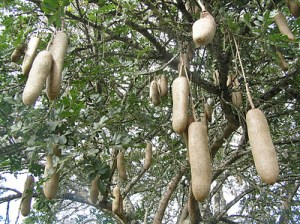
By Jared Cole, via Bird on the Wing.

In an October post, Jared wrote about the sausage tree, one of the great trees of Africa, and about how few of them he has found during his time in Rwanda.  He speculated that they have been replaced by non-natives like jacarandas, eucalytus, and bananas.

Jared and the students at the Youth Village tried to germinate sausage tree seeds from a piece of rotting fruit.  However, out of about 100 seeds, only 4 seedlings sprouted, which they planted on their campus.

Last night, we attended the Christmas fête at the Belgian School of Kigali.   While I was taking a few pictures with my husband’s phone, I turned around to find that the school had a sausage tree, growing right there in the concrete-tiled playground.
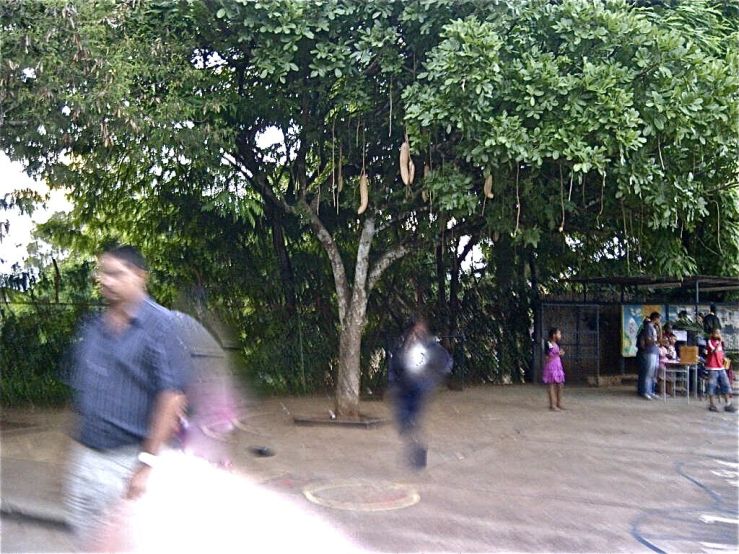
I wonder if there was a temptation to paint the fruits red, gold, and green for the occasion.

Kigelia africana (aka sausage tree and Kigelia pinnata, abssinica, aethiopica, and Bignonia africana) is the only species in the genus Kigella, which is a member of the family Bignoniacese. It is native to sub-Saharan Africa and is most easily recognized by its large, sausage-shaped fruit. Its flowers are large and maroon-colored.
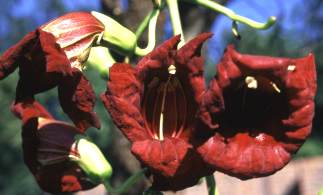
Via http://www.plantzafrica.com

The fruits are toxic to humans, but slices are sometimes added to beer to aid fermentation. They are also used in traditional medicines and in some commercially produced skin lotions.  They may have anti-fungal and anti-inflammatory properties. According to Kew Garden’s website, the trees are sacred to some communities; the Luo and Lukaya peoples of Kenya bury a fruit “to symbolize the body of a lost person believed to be dead.”

All the websites I consulted warned against camping or parking under a Kigelia; the fruits can weigh up to 26 lbs. or 12 kgs.

Sausage tree seeds can have a poor germination rate, so Jared’s experience was not unusual. A few sites recommend planting the seeds in river sand.

To return to the Ecole Belge and its Christmas fête — we were lured there by the promise of imported goodies from Belgium, including oysters and foie gras.  There were also boudin blanc sausages, Liege waffles, and Belgian beer.

The seniors were holding a plant sale to support their class trip.
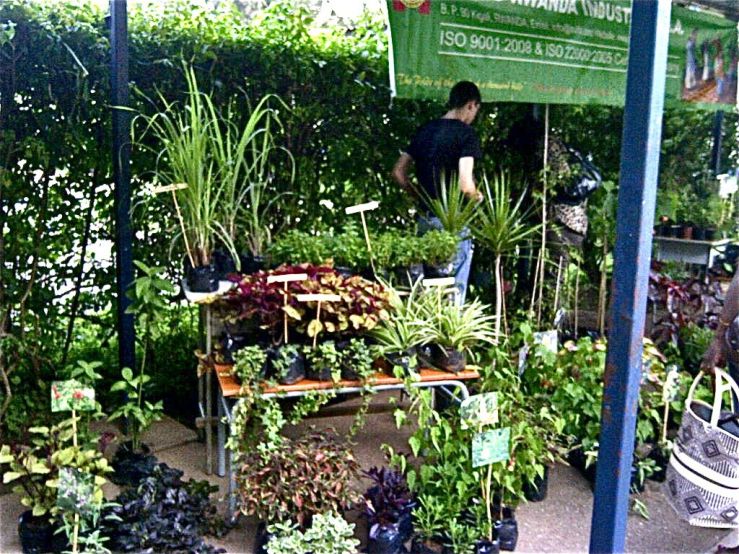
A plant sale to support the senior class trip.

I bought some dramatically blotched coleus. . .
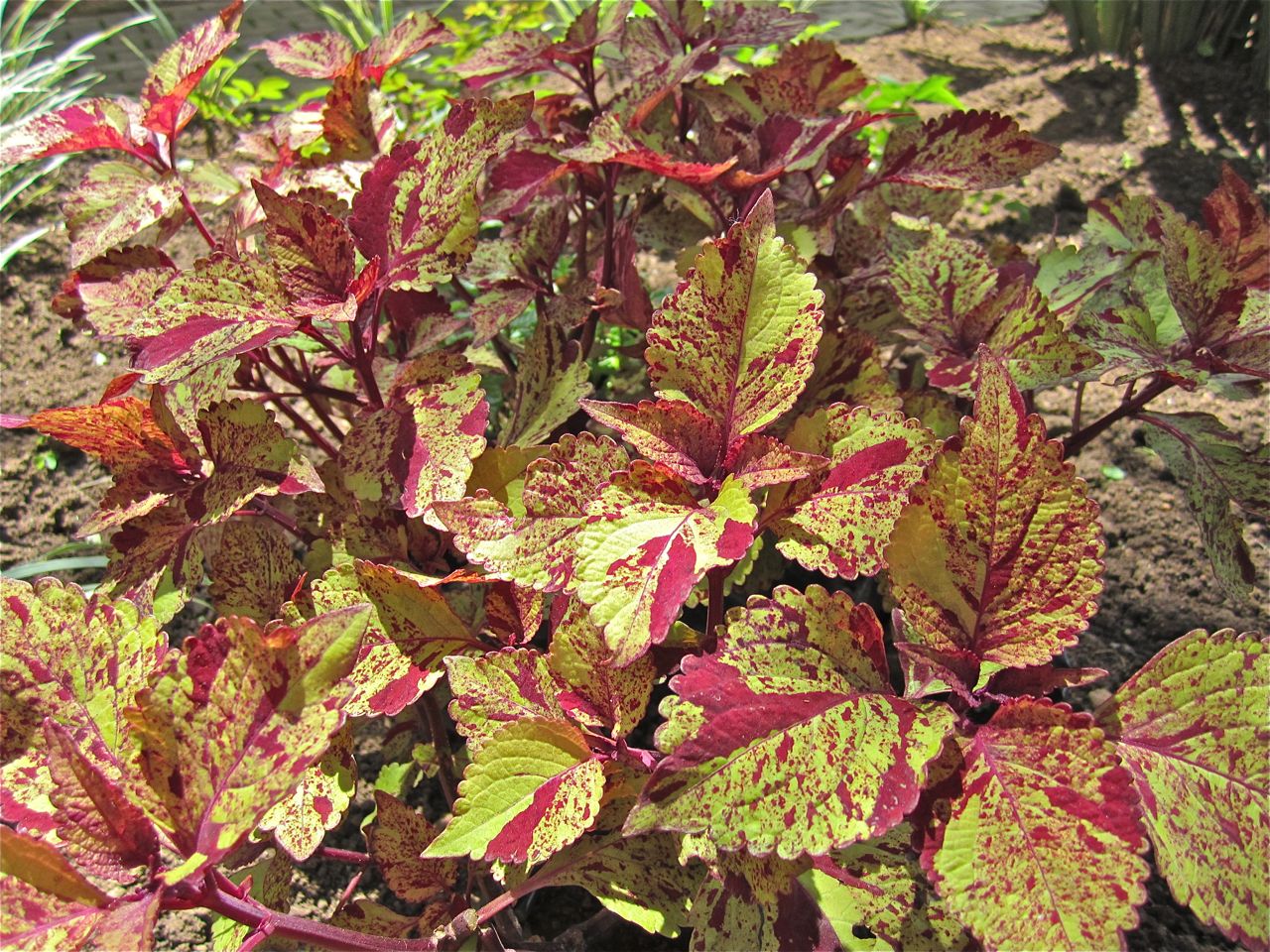
Burgundy and lime Coleus.

Tree Tomato jam.
And some Tree Tomato (or Tamarillo) jam made by Afrique en Marche. They help the handicapped obtain prostheses.


*Jared is no longer in Rwanda, but you can read about his continuing adventures in birding at his blog, Earth on the Wing.
Bloom Day in December

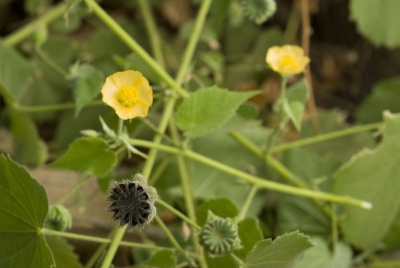
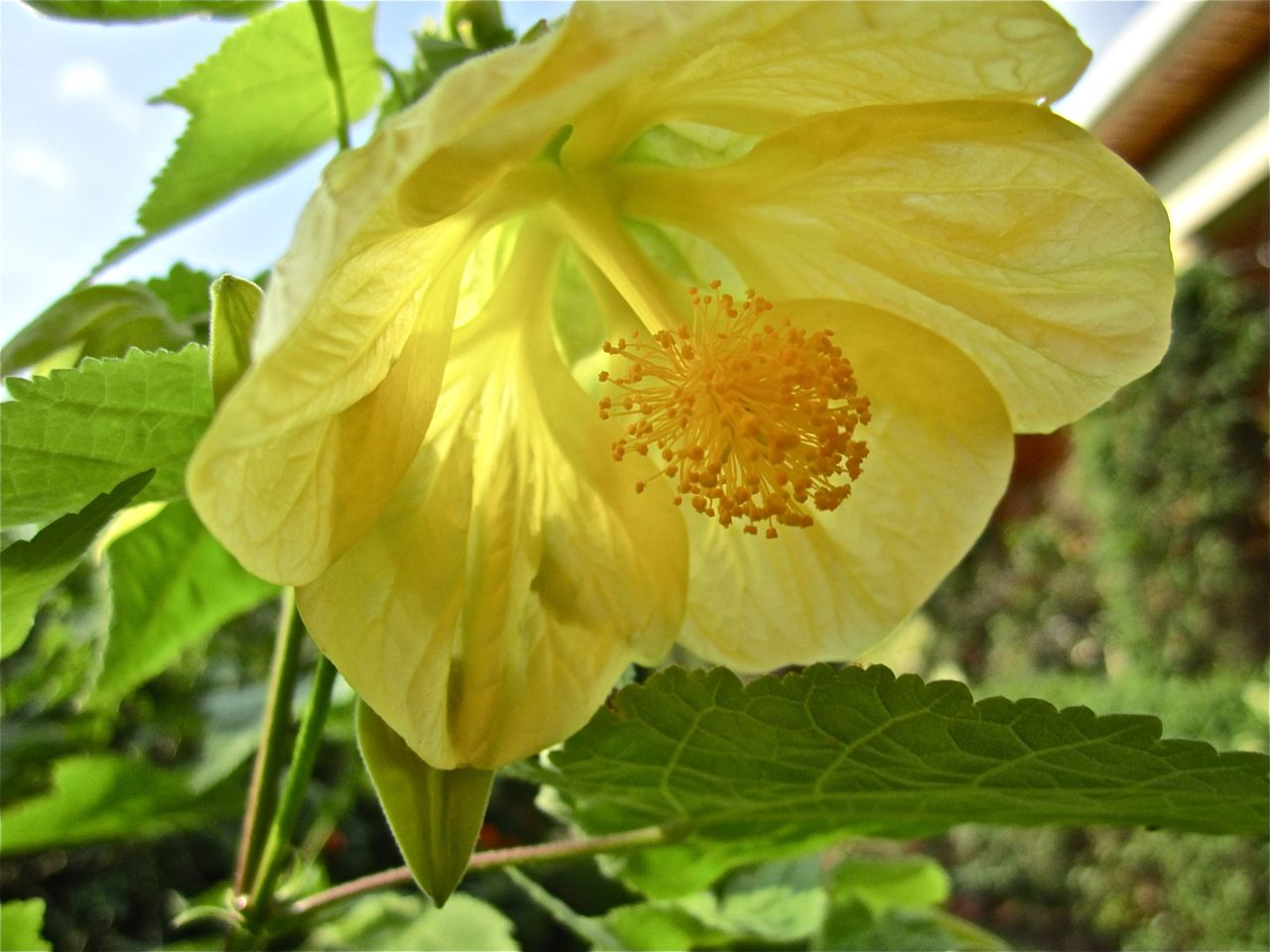
Today, I took a closer look at my Abutilon or Chinese Lantern bushes.

Closeup of yellow Abutilon.

Compared to many of the other tropical or semitropical plants in the garden, the Abutilon are rather quiet.  The flowers are neat and smallish and hang down like bells.

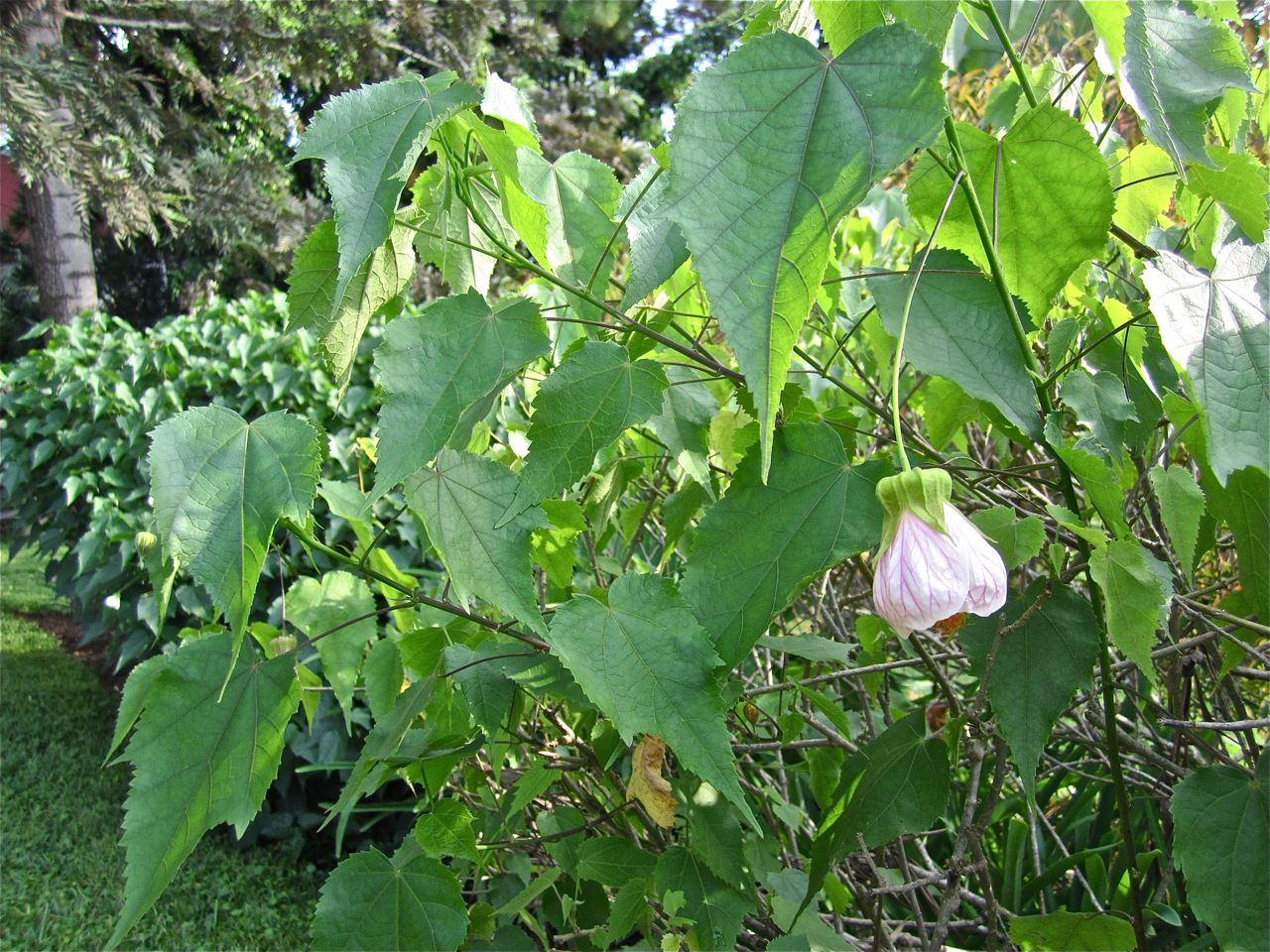
Abutilon are also sometimes called Flowering Maples because of their leaves.
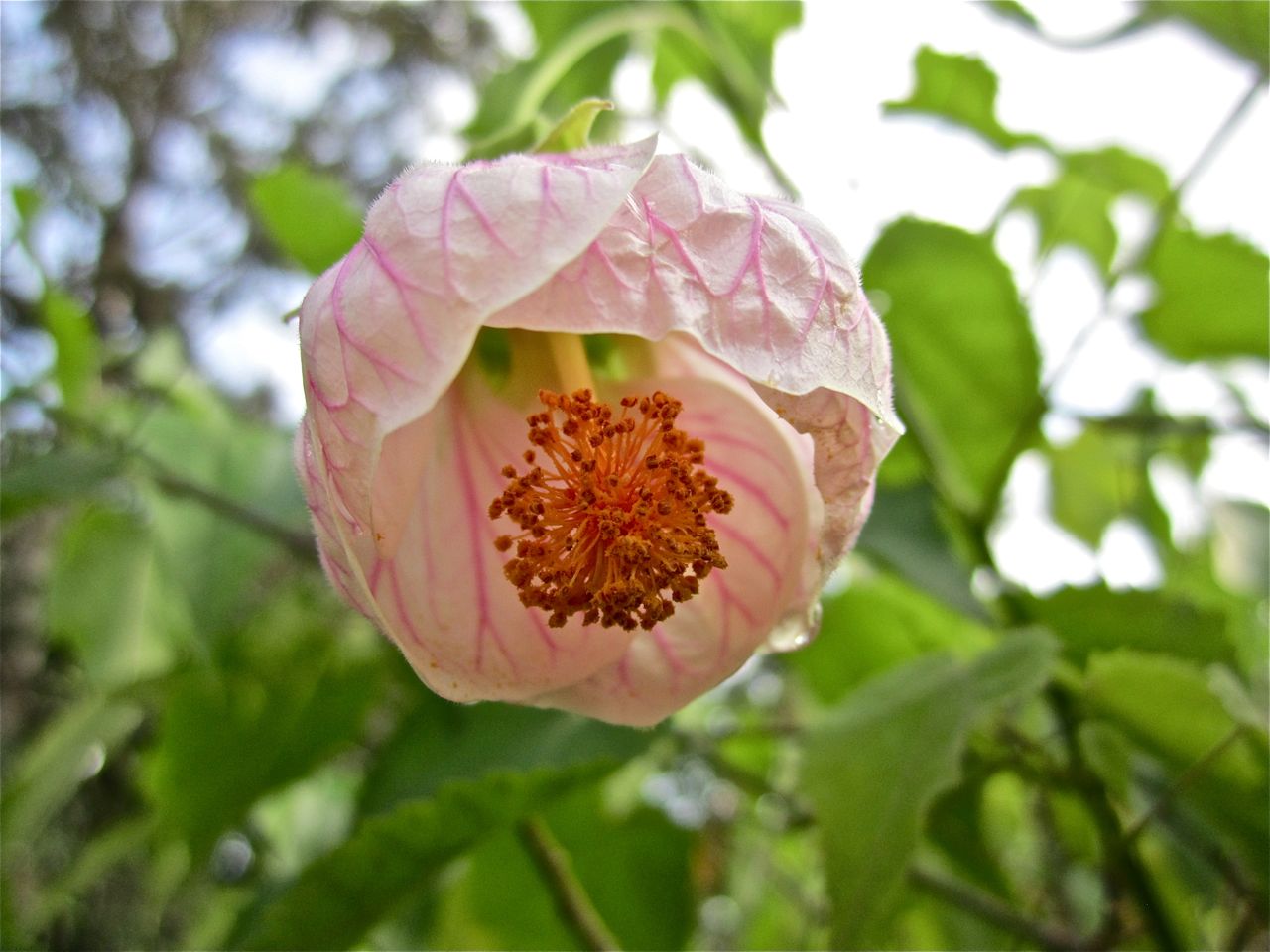
This variety has white blooms with pink veins.
A closeup.
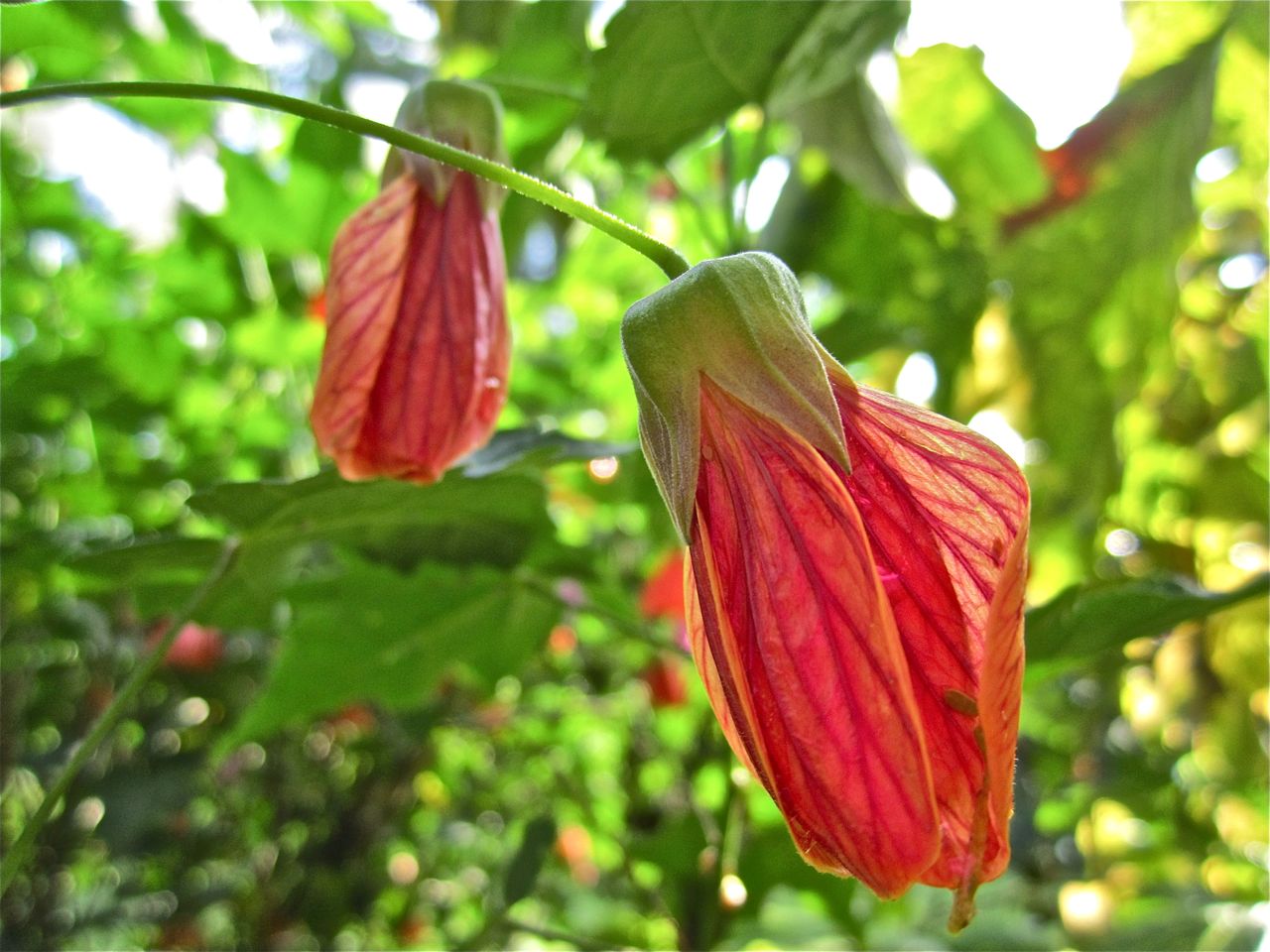
A showier bush with reddish-orange blooms.
A reddish-orange bloom.
Closed blooms.
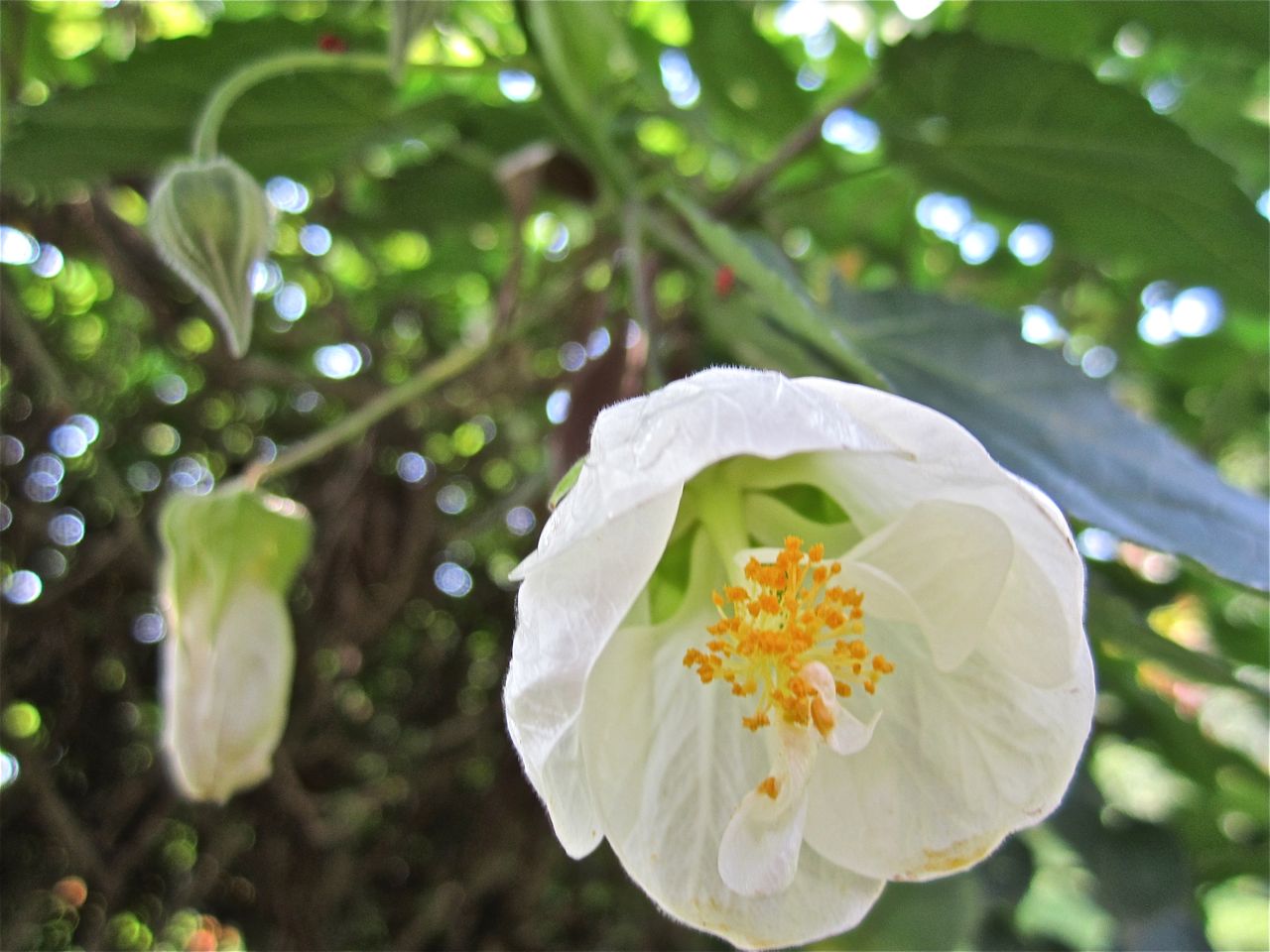
A white flowered Abutilon.

This bush has variegated leaves and is rather overshadowed by a pink Brugmansia or Angel’s Trumpet.

An Abutilon with variegated leaves beside a Brugmansia.
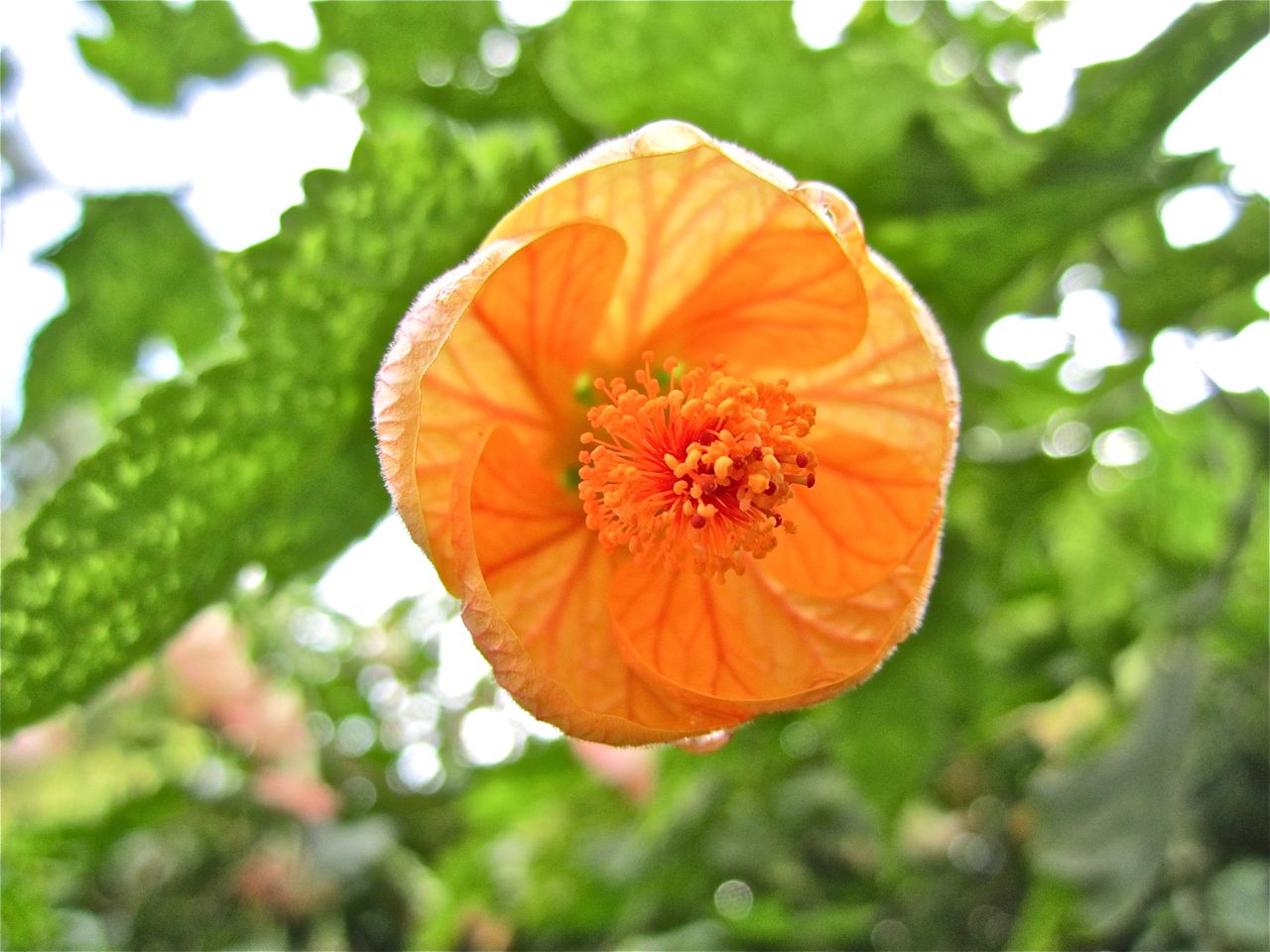
A coral bloom.  Another name for the bush is Chinese Bell Flower.
Closeup of a coral flower.

I think my bushes are Abutilon x hybridum, descended from South American varieties and brought here by expats.  Rwanda has one native variety, Abutilon bidentatum Hochst. ex A. Rich., which is not very showy.

Abutilon bidentatum.  Photo via http://westerndesertflora.geolab.cz.

Another species, Abutilon longicuspe, with purple flowers, is also native to east and central Africa.

Please visit May Dreams Gardens for more Bloom Day postings (the 15th of every month).

Abutilon longicuspe.  Photo via http://database.prota.org.

On the road

The farm in yesterday’s post overlooks the Nyakabingo tungsten mine, located about 10 kms. north of Kigali.

The mine was the first stop on a two-day bus trip organized by the Foreign Ministry for diplomats. We felt a little like we were on a school field trip — only one with a police escort and a press van.

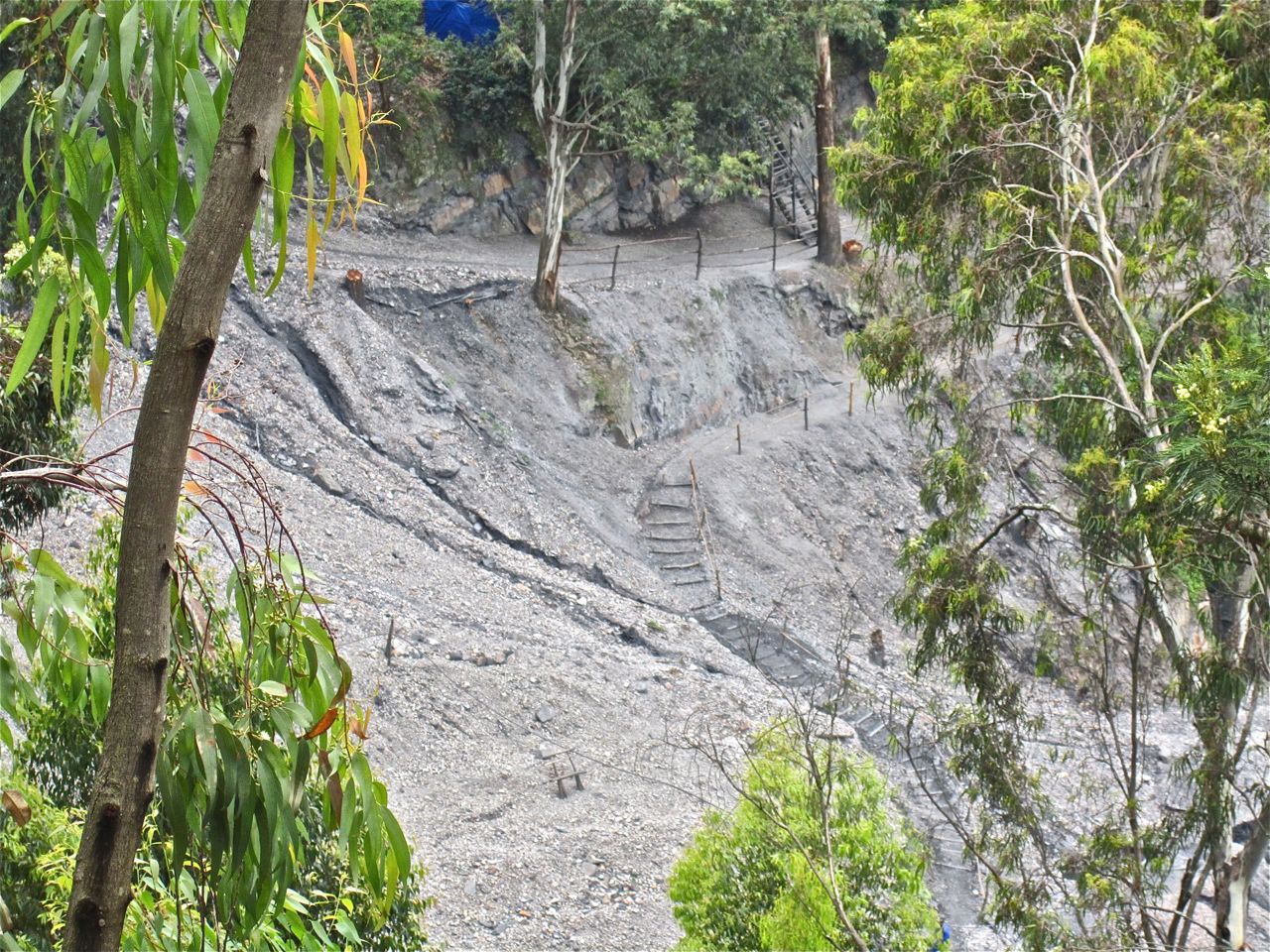
While we were at Nyakabingo, I turned down the invitation to see the mine from underground and instead photographed it from an upper road.

Paths and steps descending the hillside of the mine. About 700 people work there removing tungsten, a chemical element used in incandescent light bulb filaments, x-ray tubes, and superalloys.

The afternoon itinerary included a stop at the Sabyinyo Silverback Lodge.

The Lodge is one of two “swishy” (as Bradt’s Travel Guide puts it) places to stay in the vicinity of the Parc National des Volcans and the mountain gorillas. The other one — the Virunga Safari Lodge — we toured last month. Both cost around $500 to $600 per night per person.

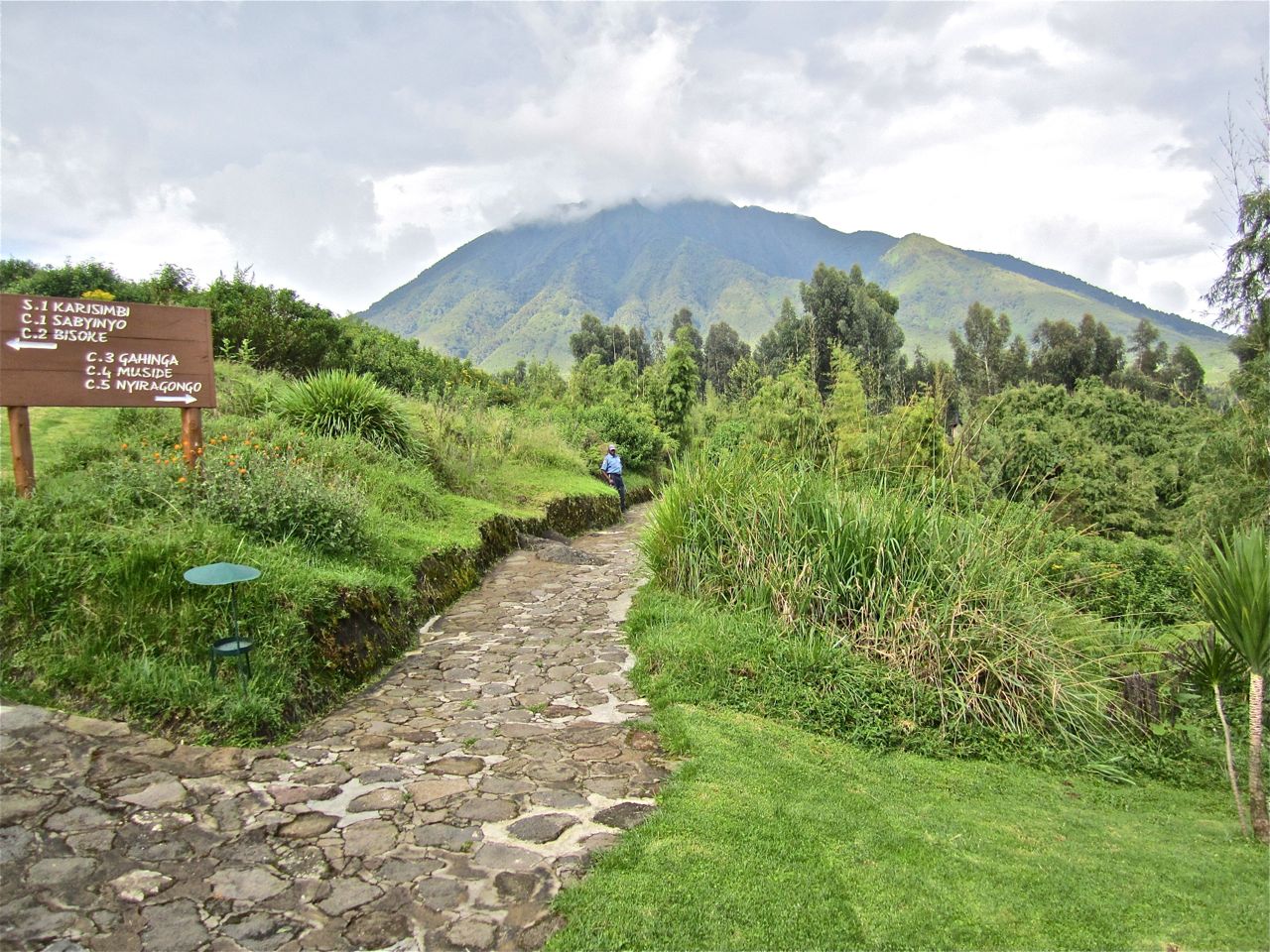
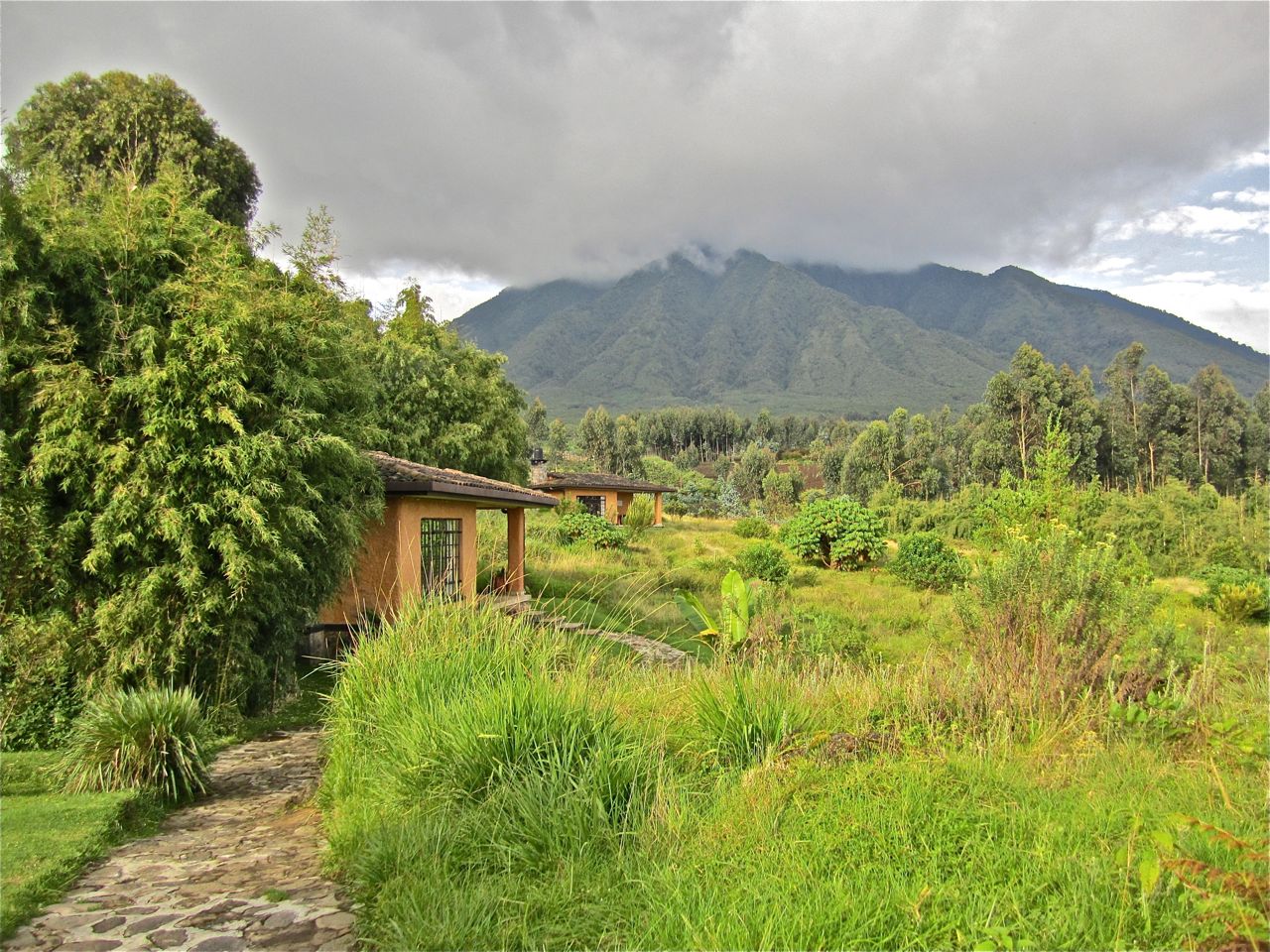
Paths to the five cottages, with the volcano in the background.

Sabyinyo has the advantage of being only 10 minutes drive from the entrance to the park headquarters. Like Virunga, it offers accommodation in individual cottages.

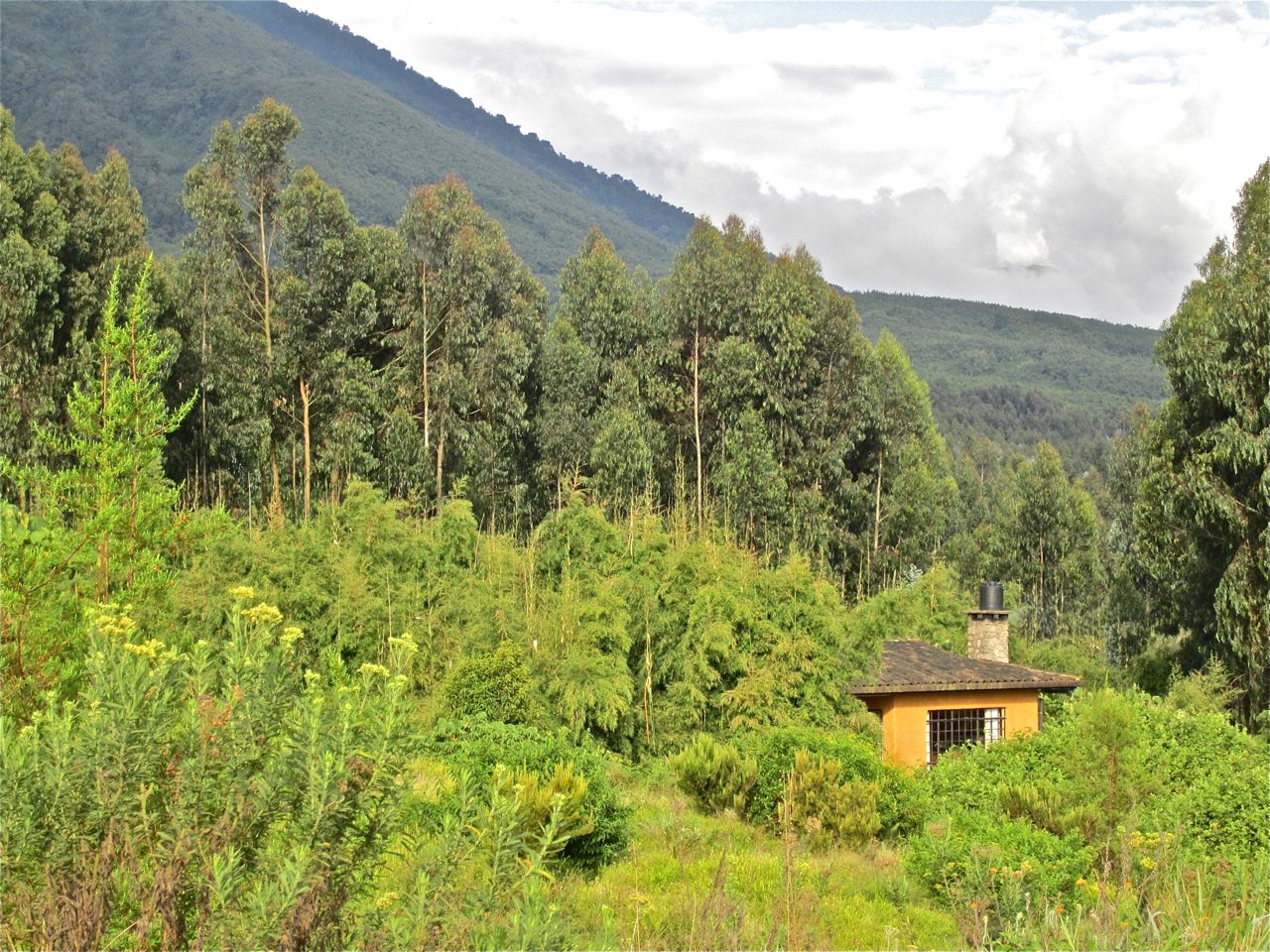
A Sabyinyo cottage. The lodge levies a $58 per person per night community fee, and the community also receives a 17% cut of the lodge’s profits.
Two other cabins.

Also like Virunga Safari Lodge, the landscaping is kept simple so as not to compete with the gorgeous views.

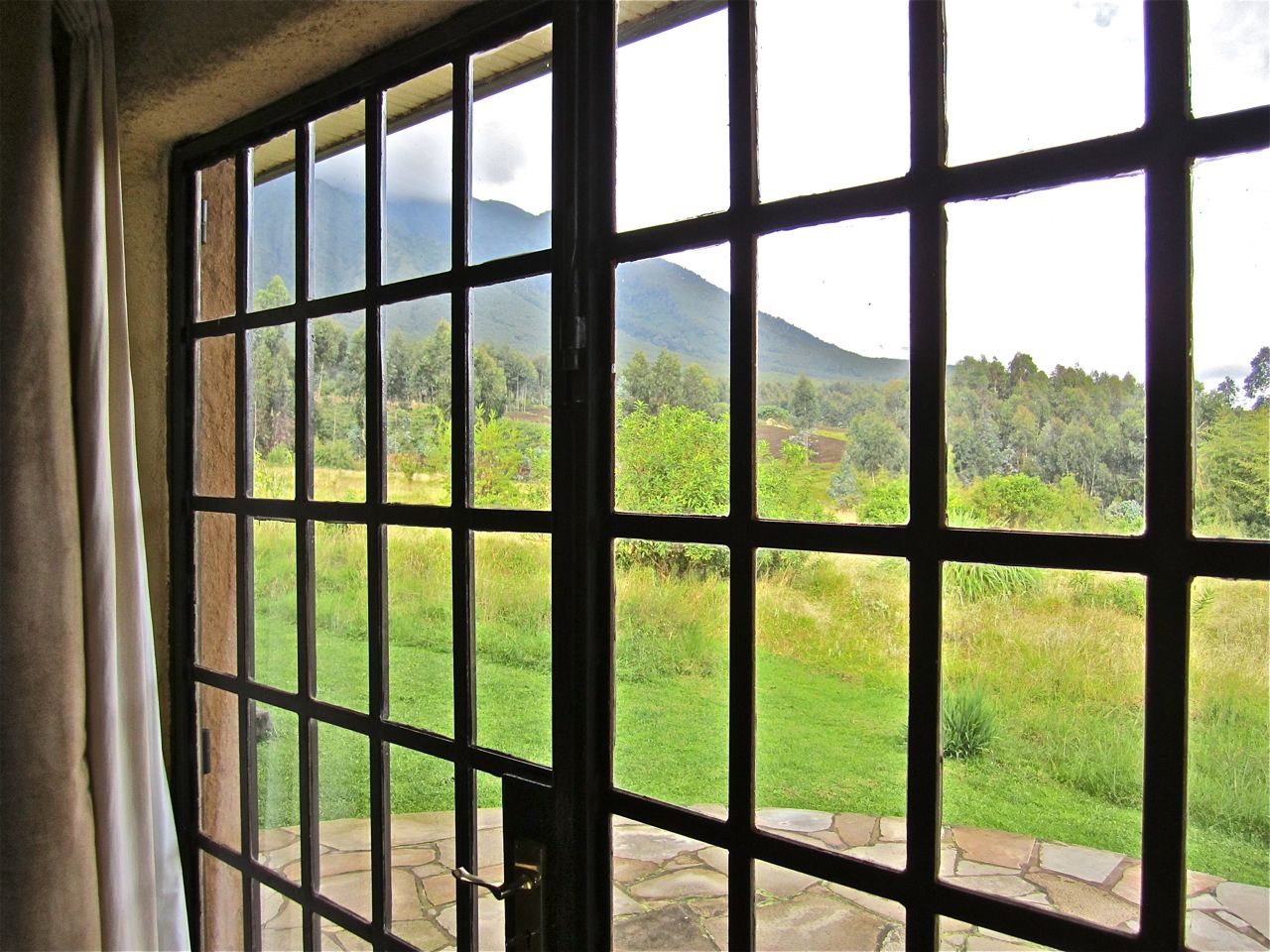
The view from a cottage window.
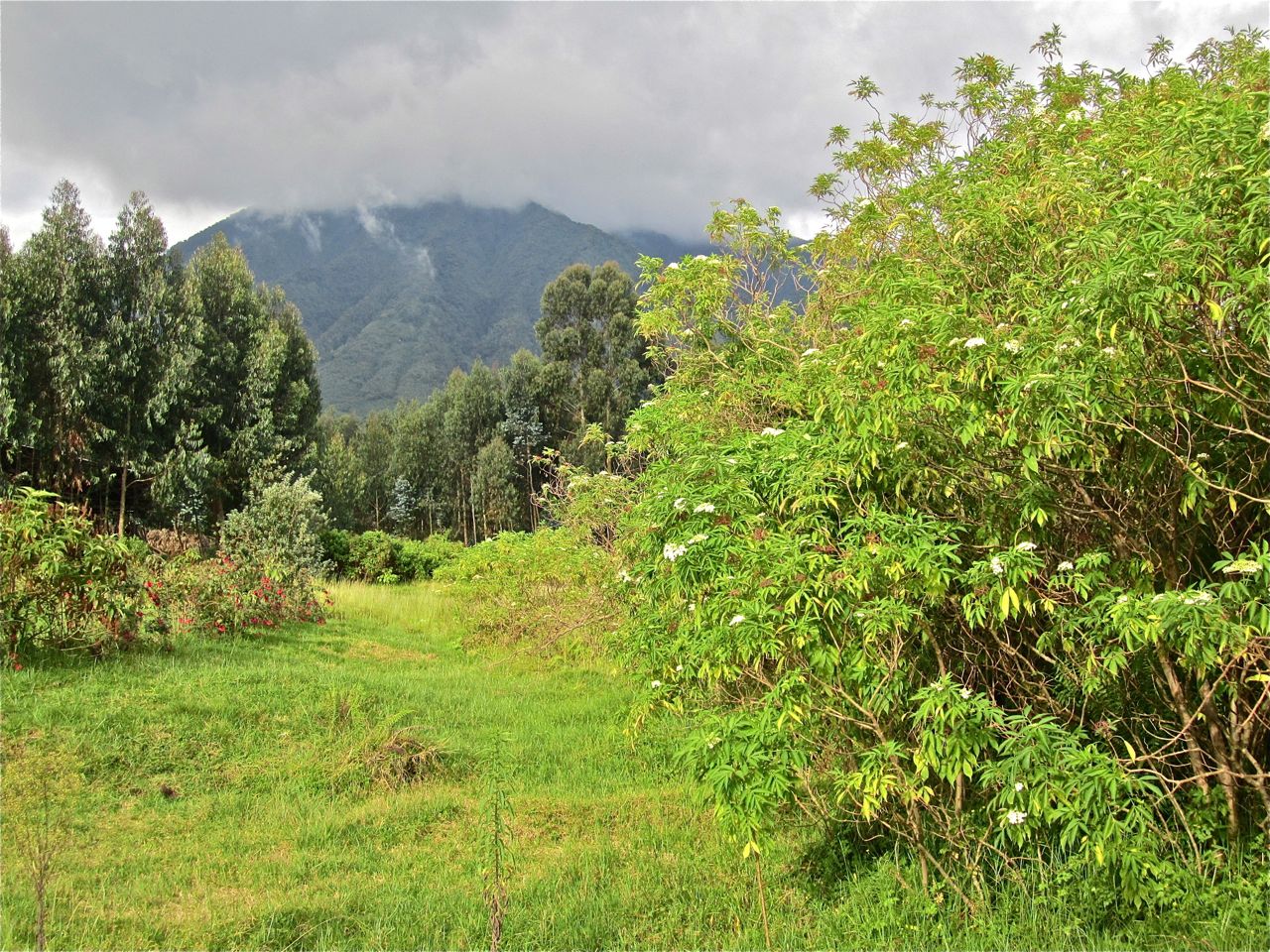
One of the views at Sabyinyo, somewhat obscured by clouds.
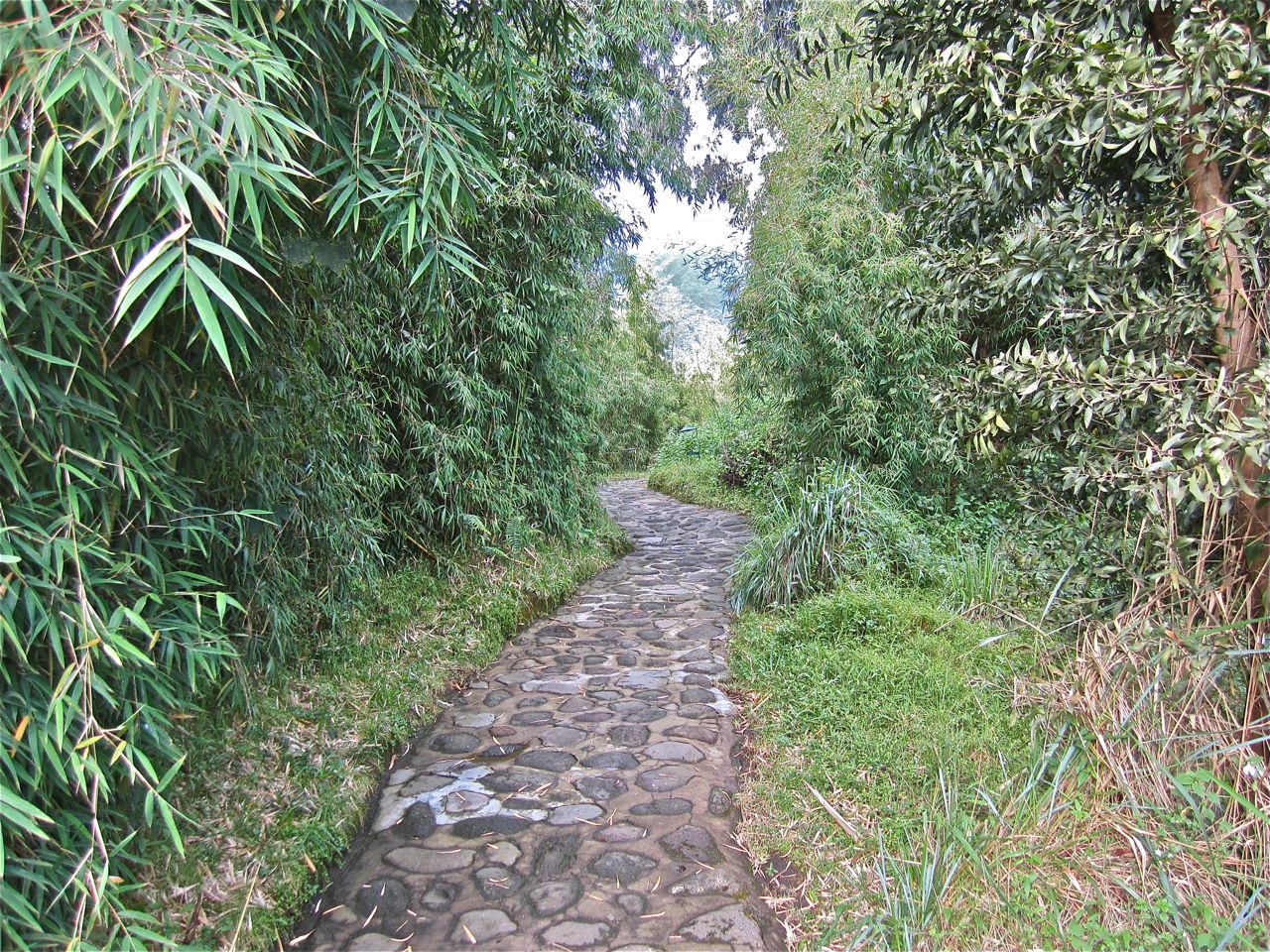
A path through the bamboo.
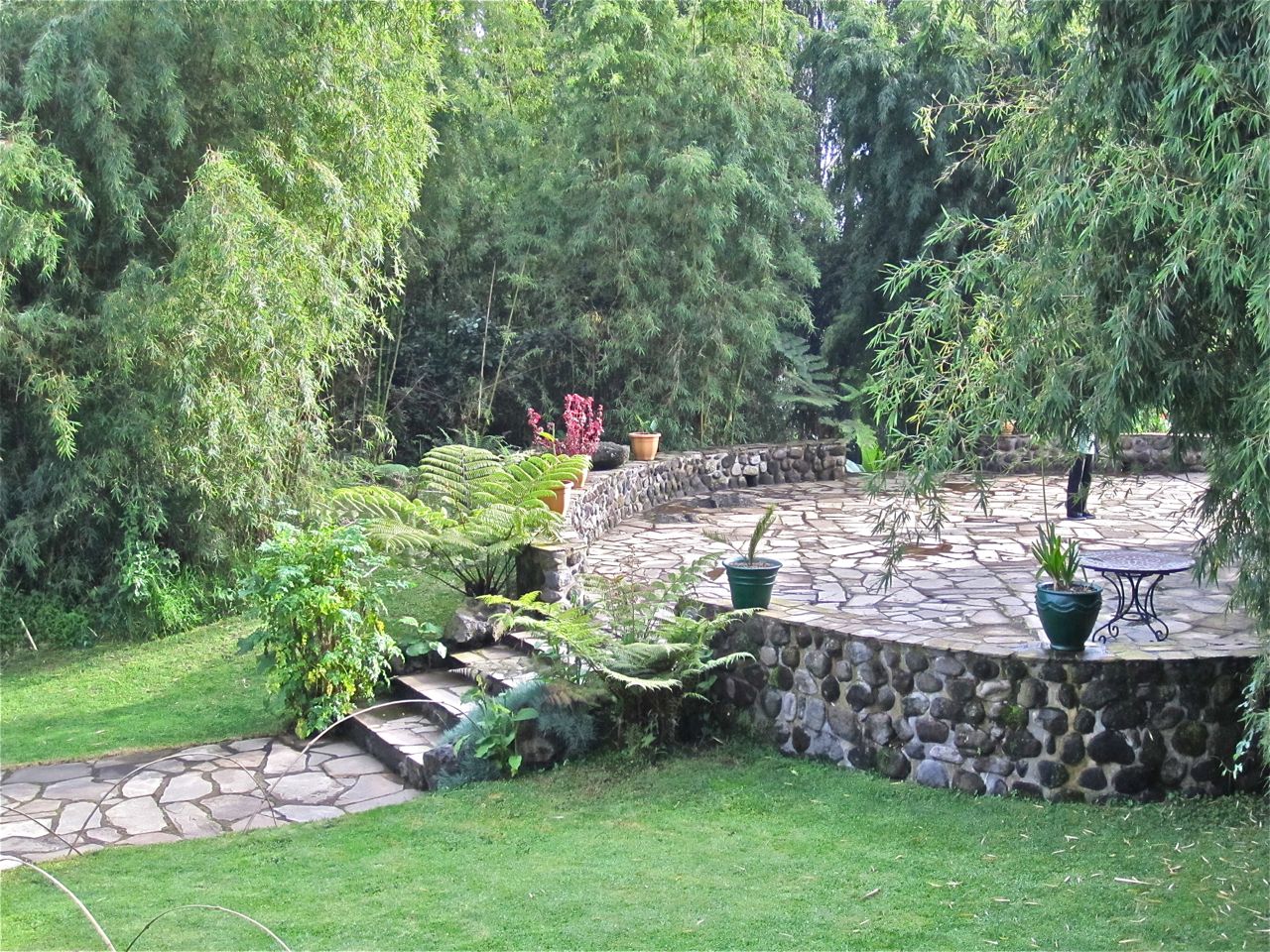
Patio at the entrance to the main building.
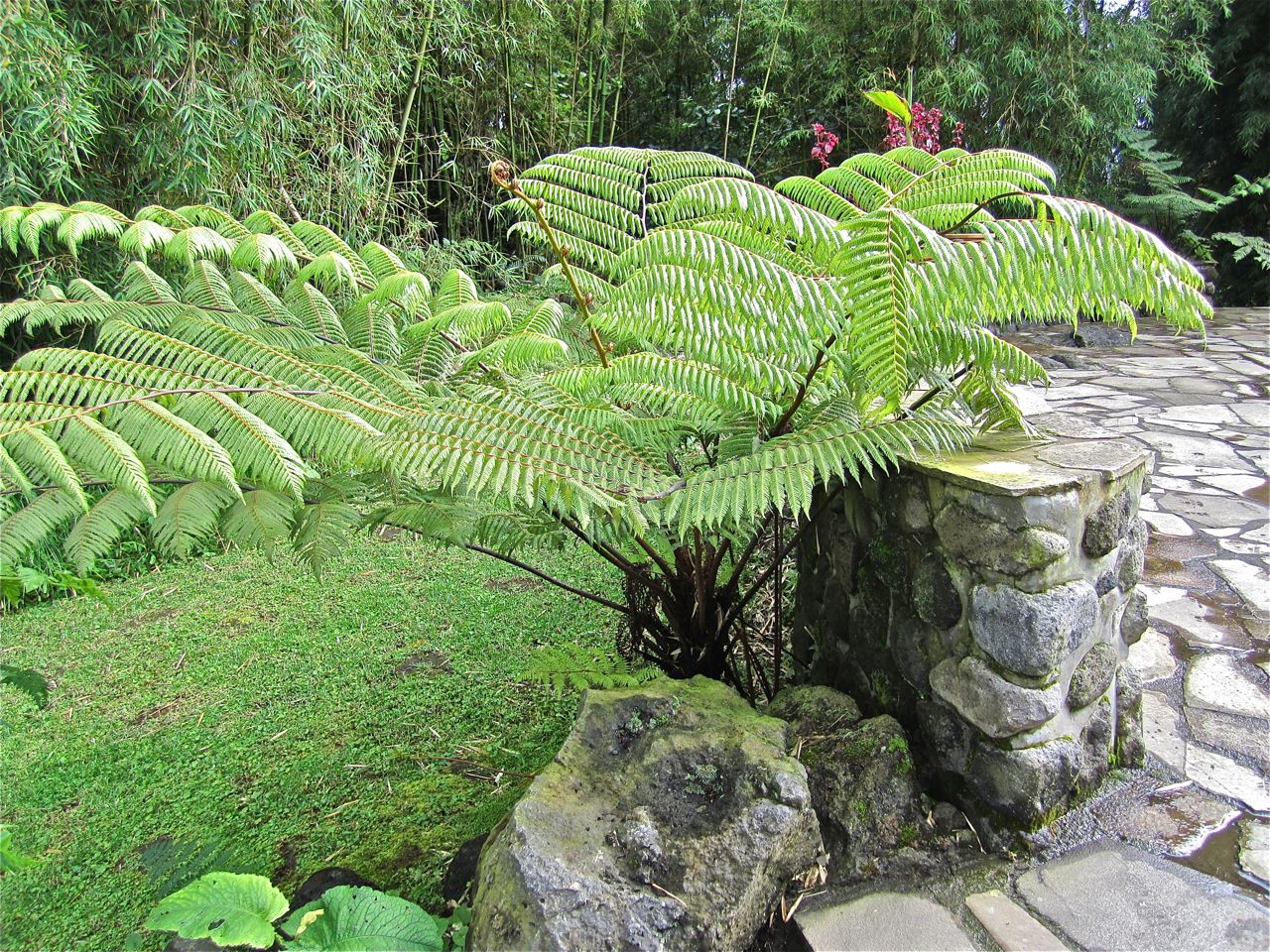
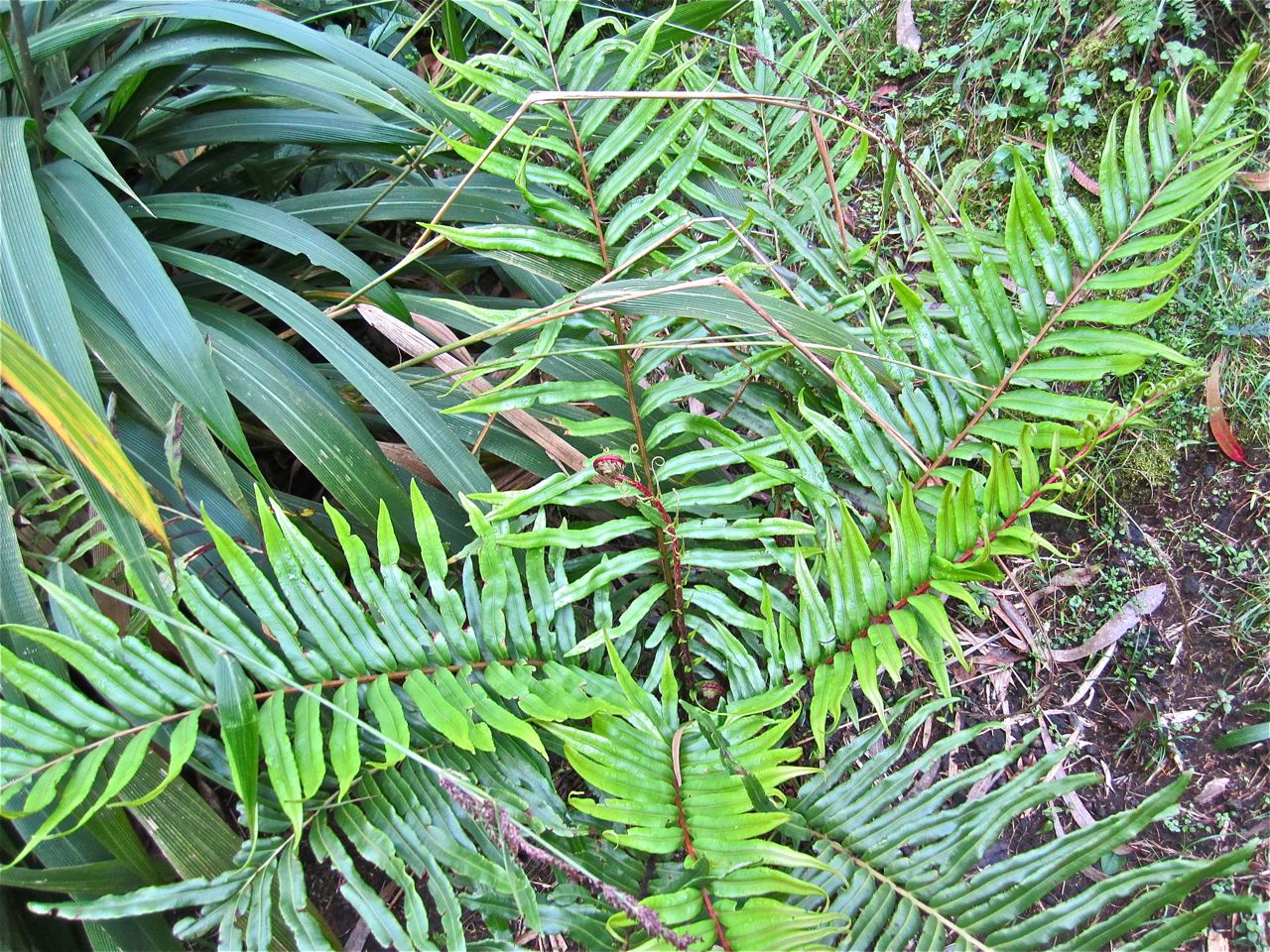
A large fern by the patio steps.
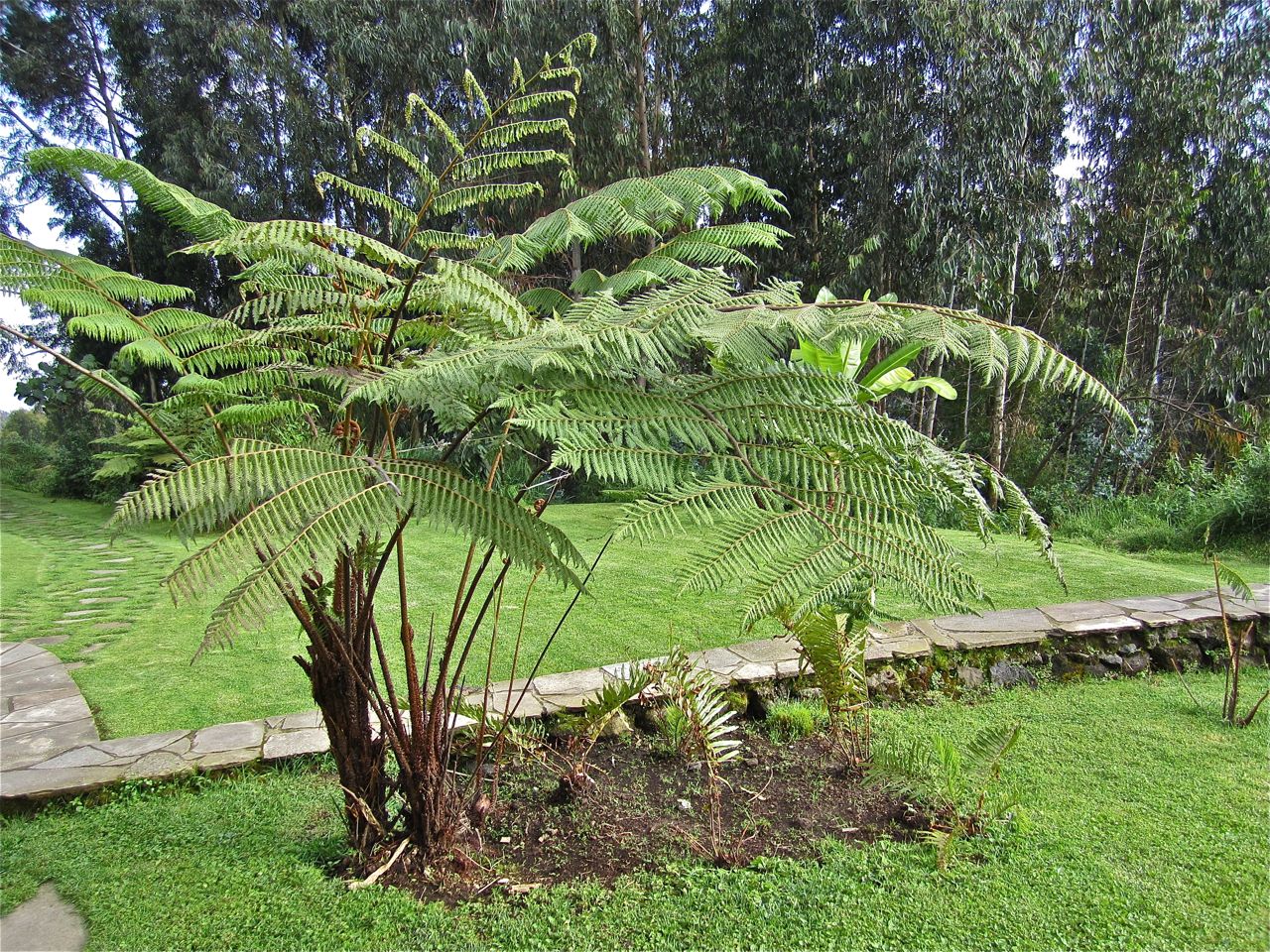
Another very large fern near the main building.
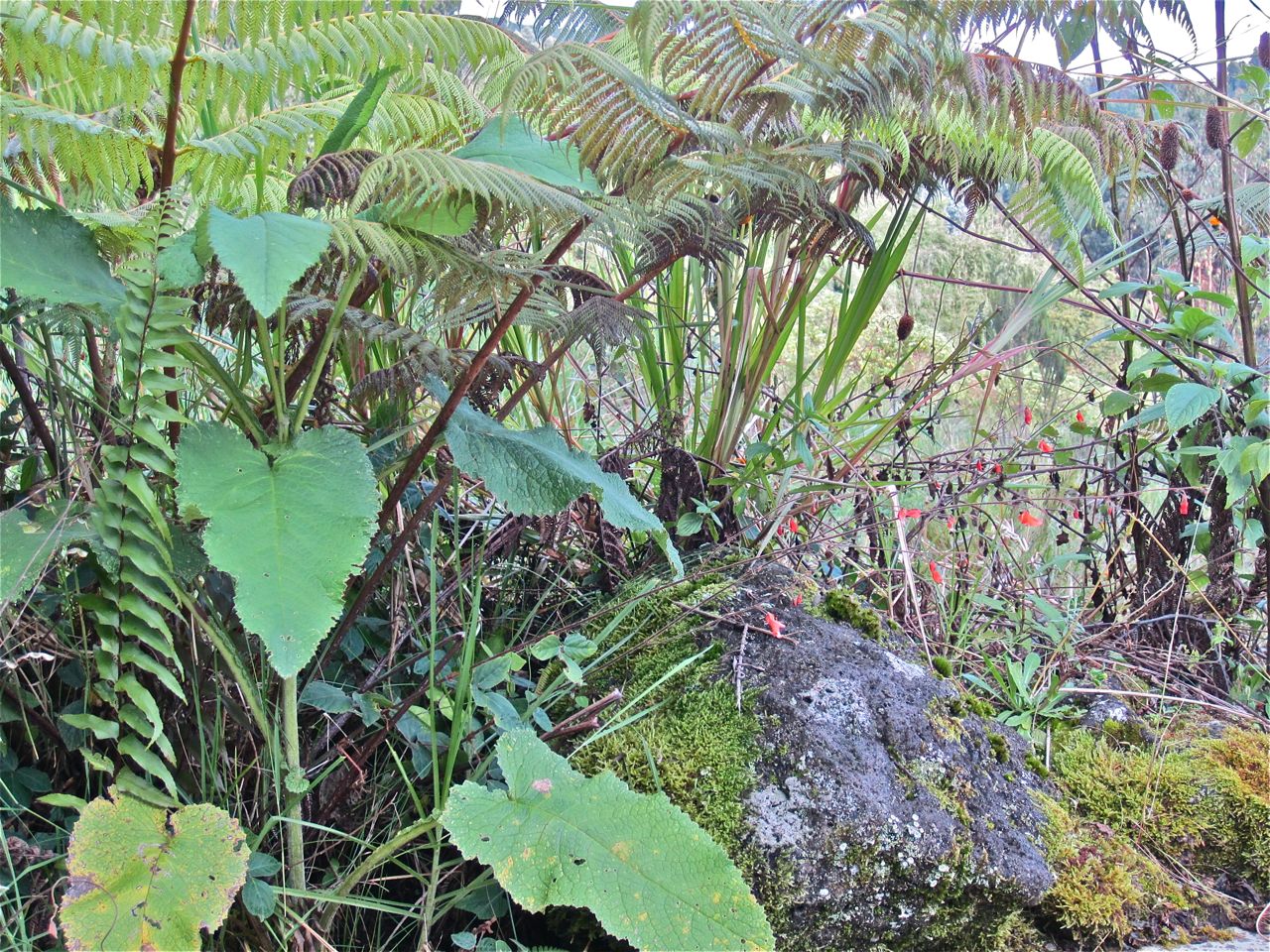
Ferns and other wild plants along the path.
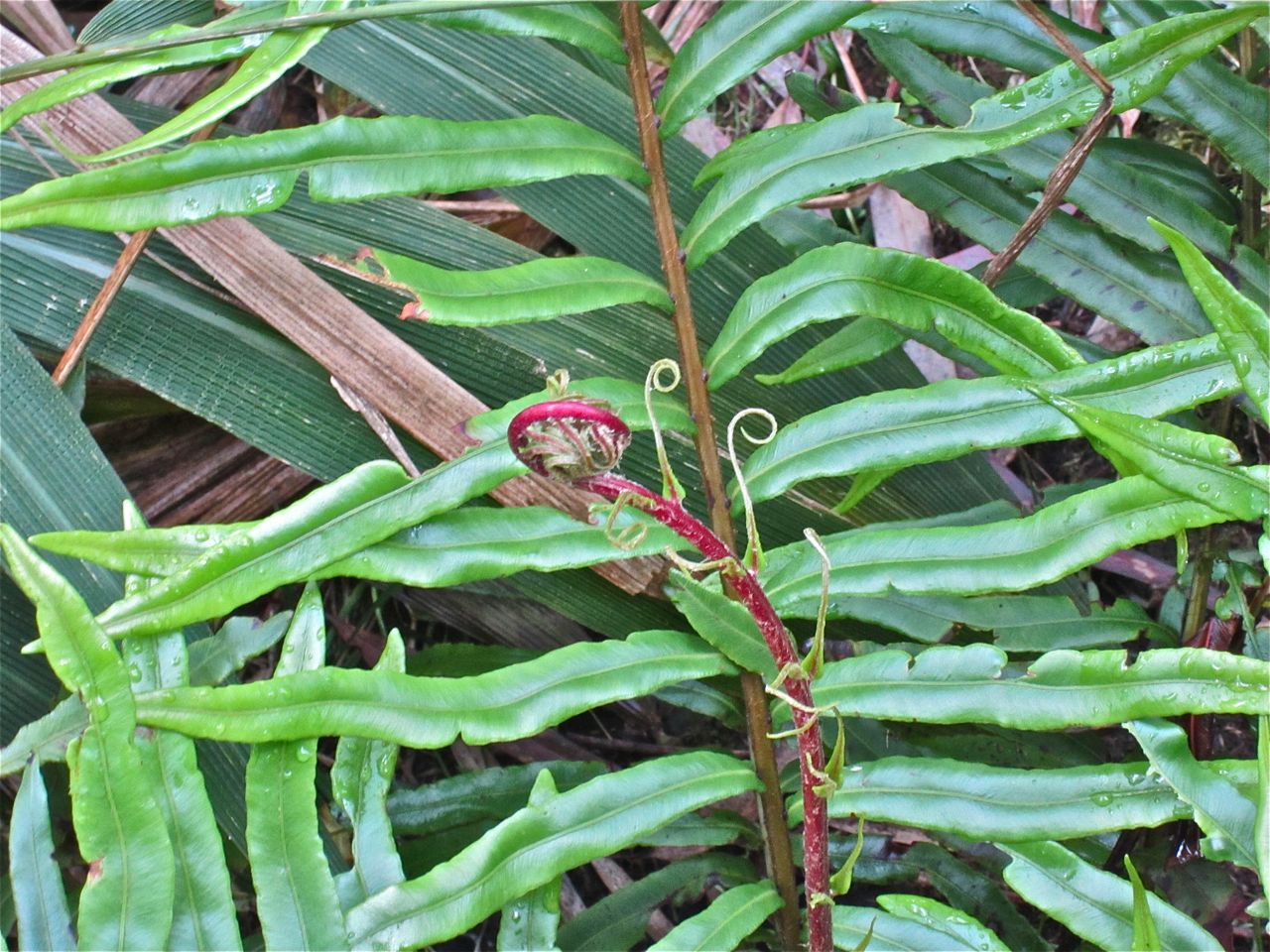
A smaller wild fern
Fern detail.
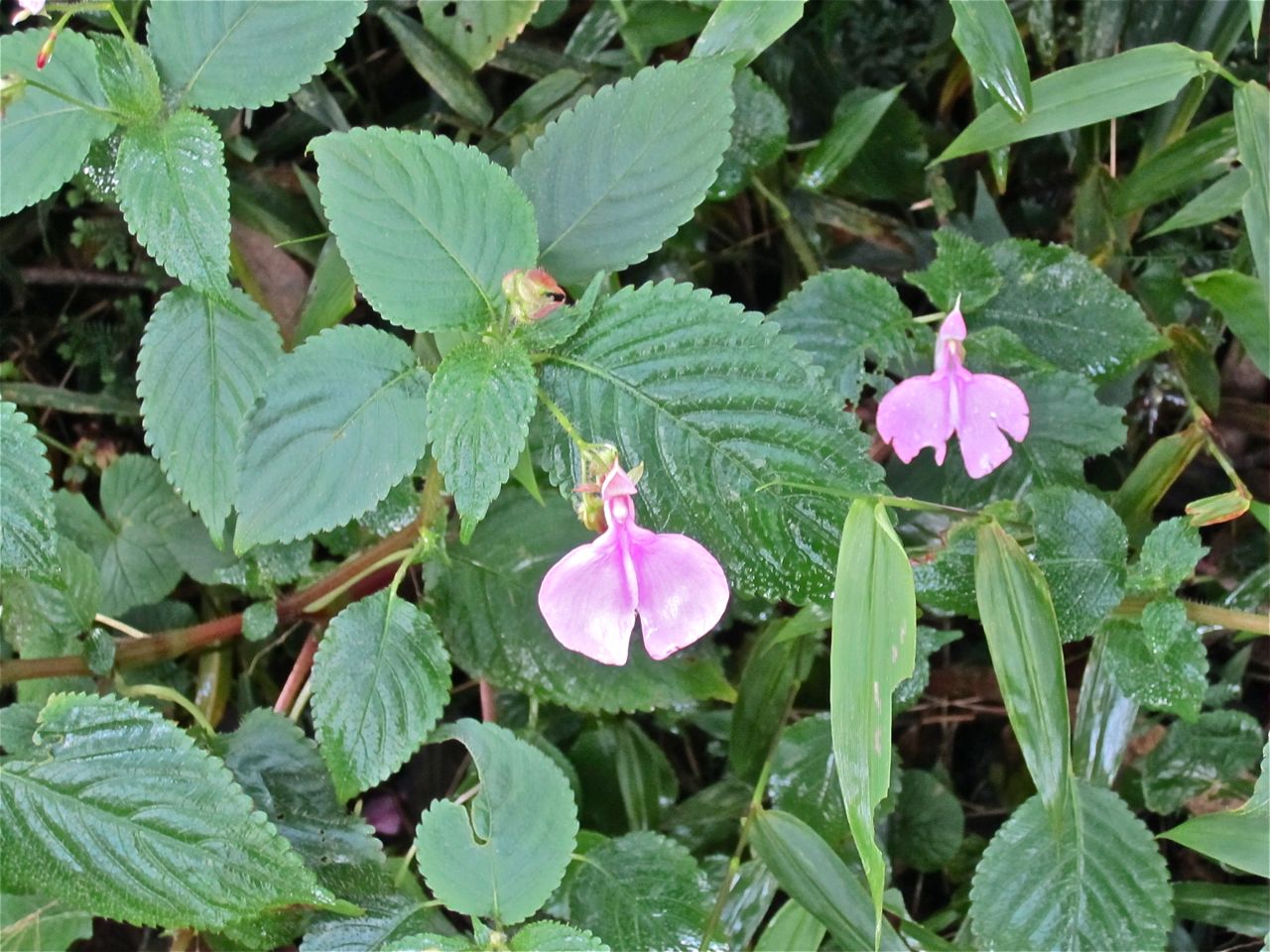
Impatiens native to Rwanda.
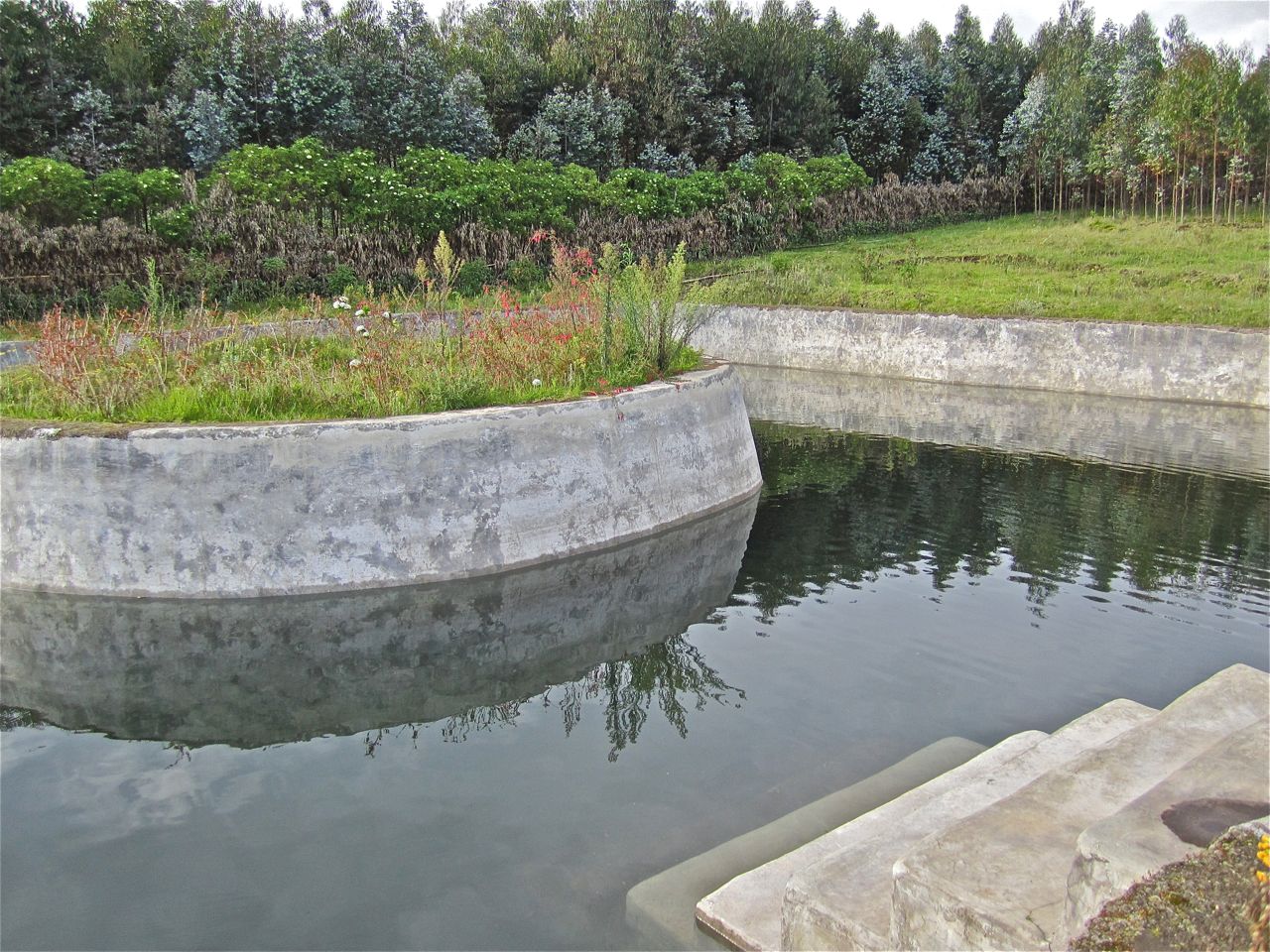
The water retention pool.
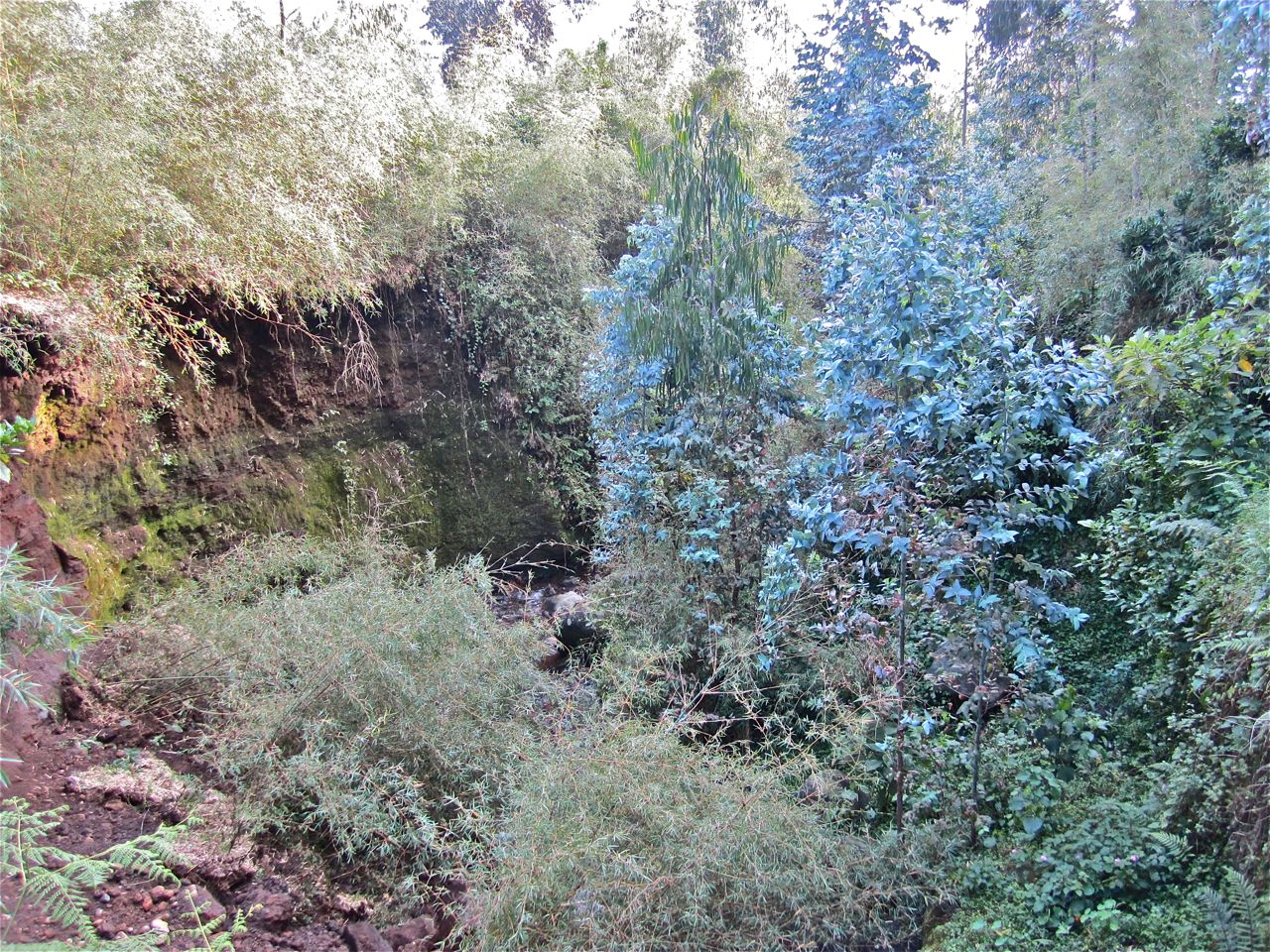
Small stream gorge filled with bamboo and eucalyptus.

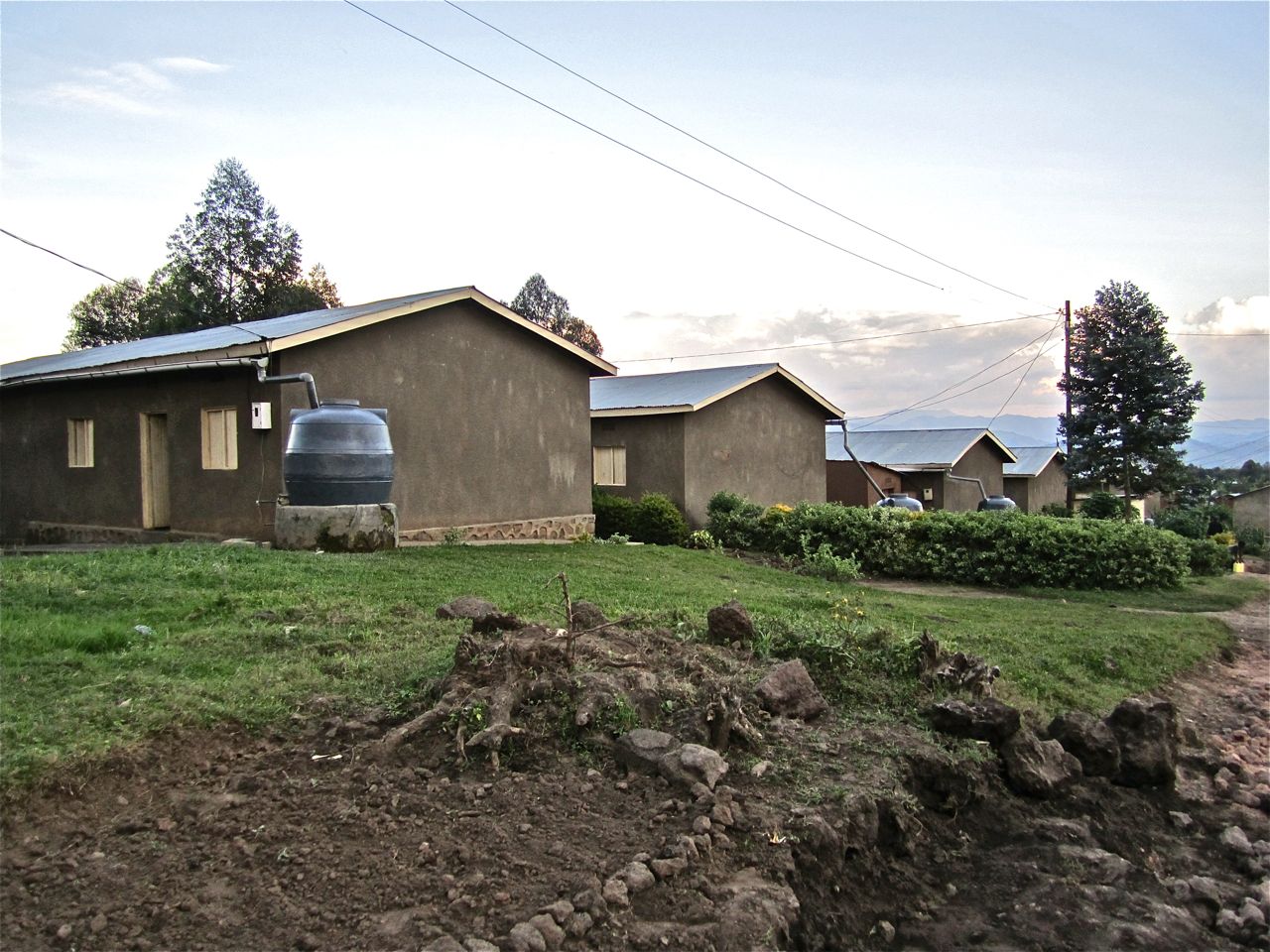
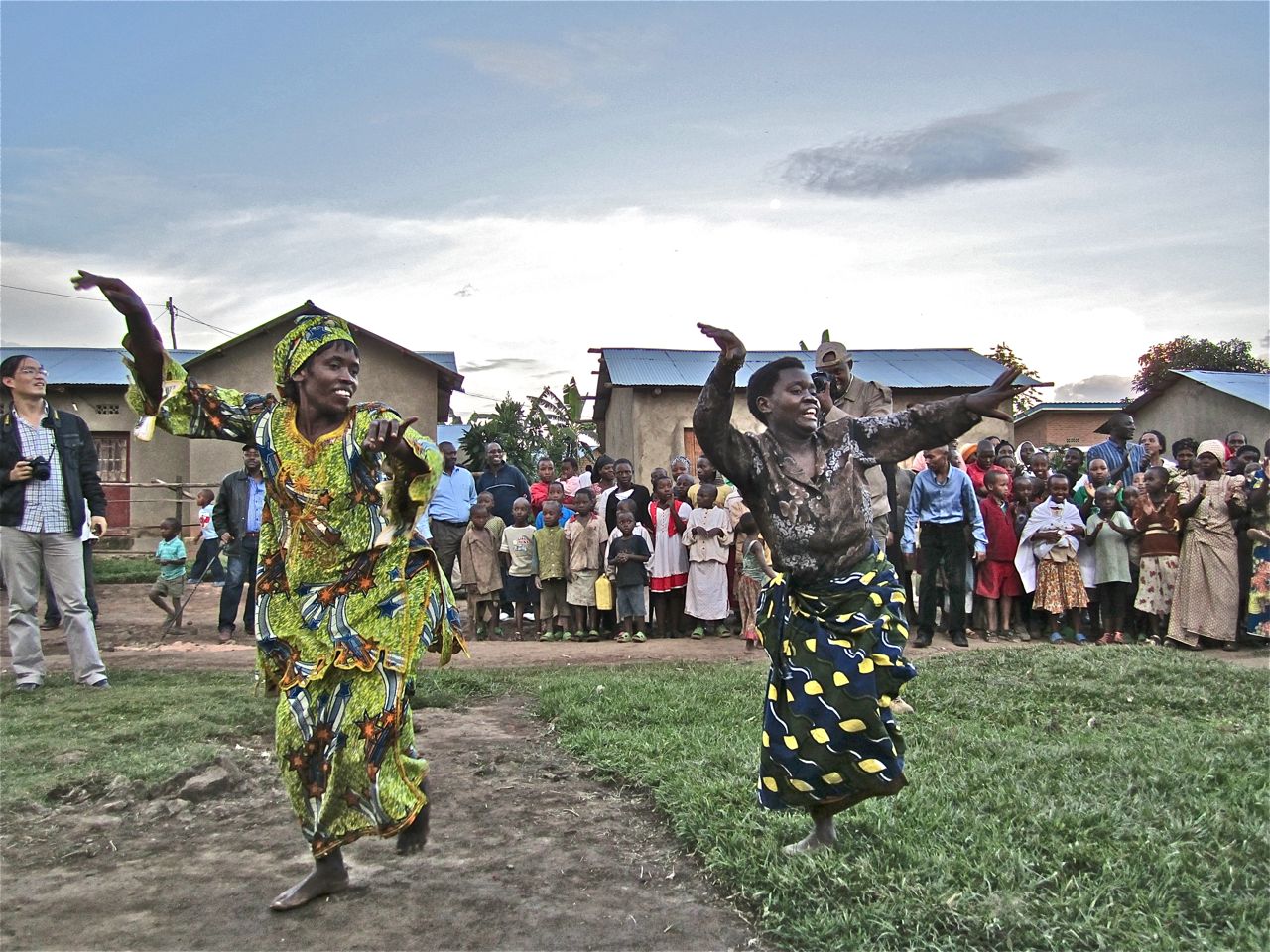
We ended our day in the village of Susa, largely made up of 96 homes built with the assistance of the Rwandan government.  The people who live there include Genocide survivors, Batwa (pygmys), and Rwandans formerly living in exile in Tanzania.

Village homes with tanks that capture rainwater runoff from the roofs.

As the light began to fade, we were greeted by dancers.

Susa village dancers.

Gardening at an angle

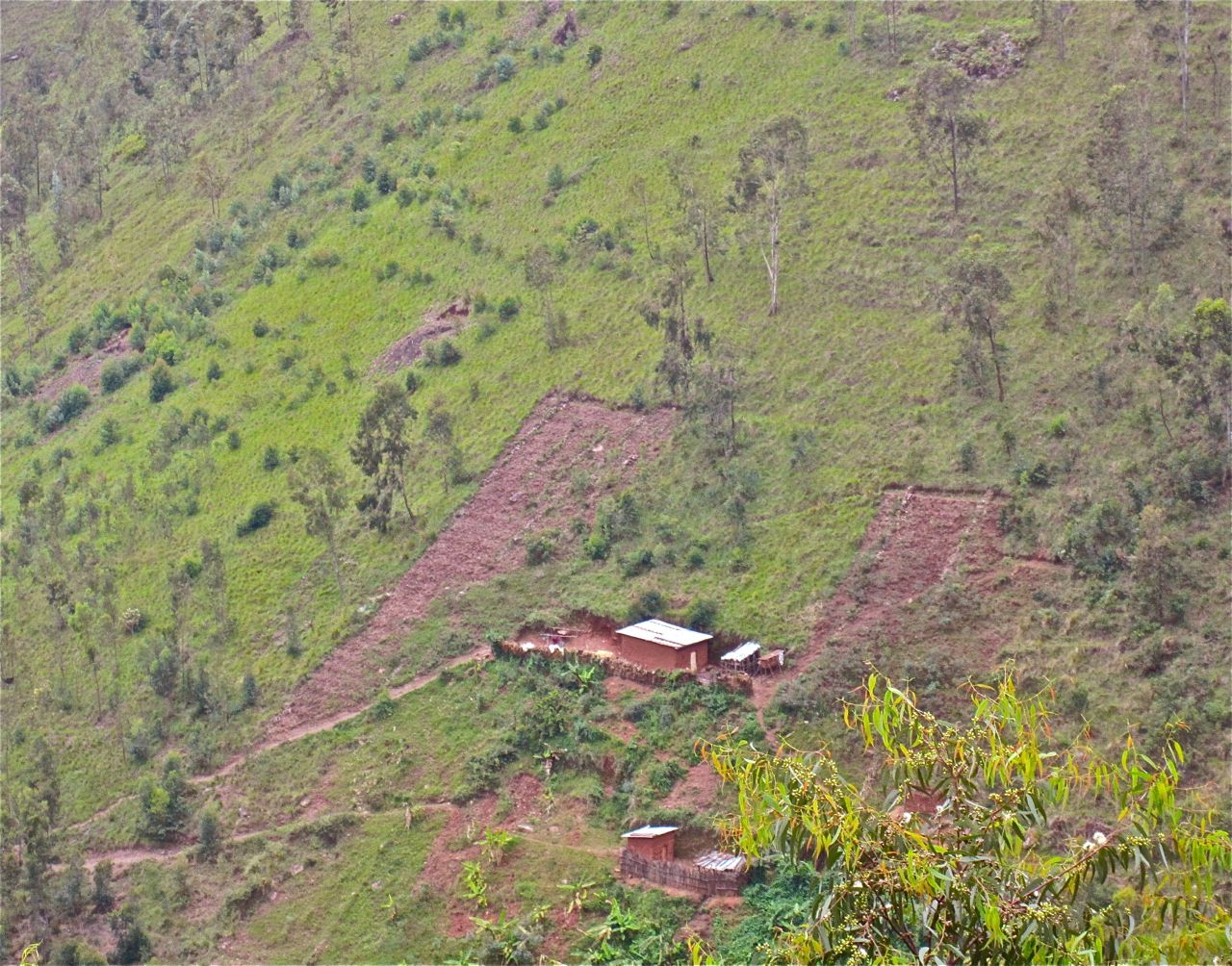
If you think your garden has some challenges with slope, consider this picture. This is quite a typical Rwandan farm. I put it at about 45 degrees.

Rulindo District farm. Click photo to enlarge.

The photo below is another view — rather hazy, I’m afraid — of the most common Rwandan landscape type, a patchwork of small farms on a hillside. This is in the northwest, in Rubavu District.

Typical Rwandan patchwork quilt of small farms.

Why all those people are walking down the road will be the subject of tomorrow’s post.