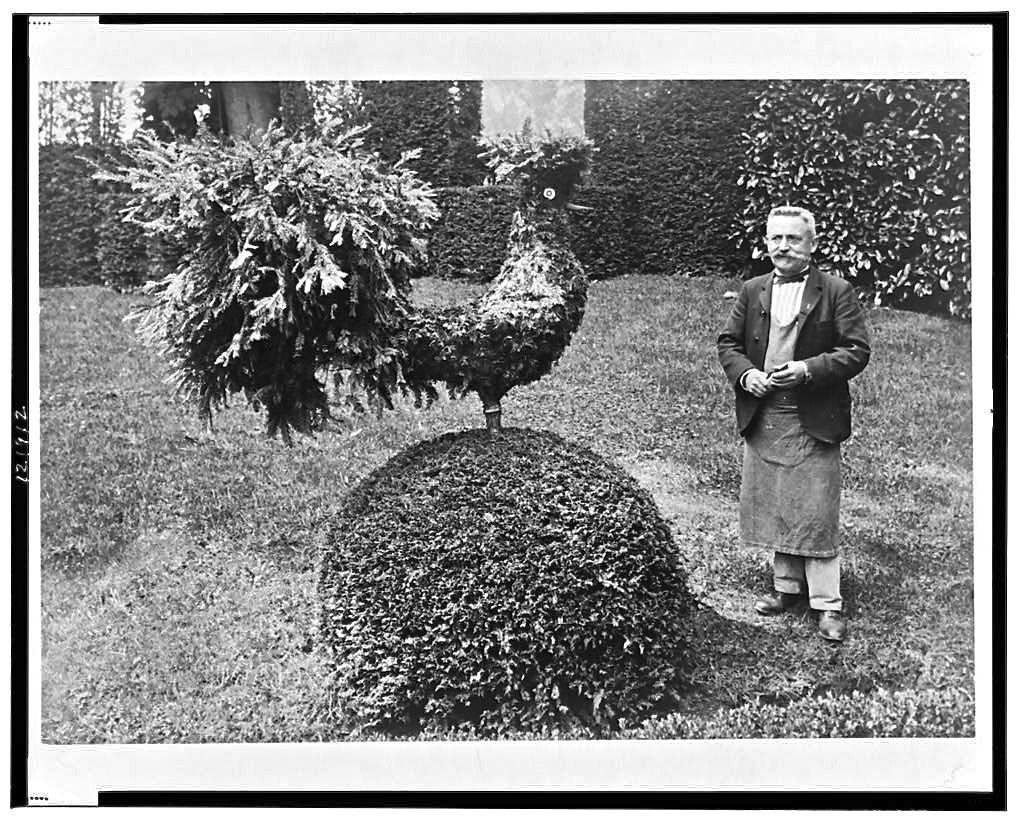
Frances Benjamin Johnston (1864-1952) was one of the first American women to achieve prominence as a professional photographer. After studying art in Paris, she returned home to Washington, D.C., in the 1880s and opened a photography studio about 1890. Her family’s social standing gave her access to the capital’s elite, including the First Family, politicians, and diplomats, and her business soon took off. In the 1910s, she turned to garden and estate photography.
Thanks so much to WordPress.com for including this post on its “Freshly Pressed” page this week!
Yesterday, we visited the Rukali Palace Museum in the town of Nyanza, a couple of hours south of Kigali.
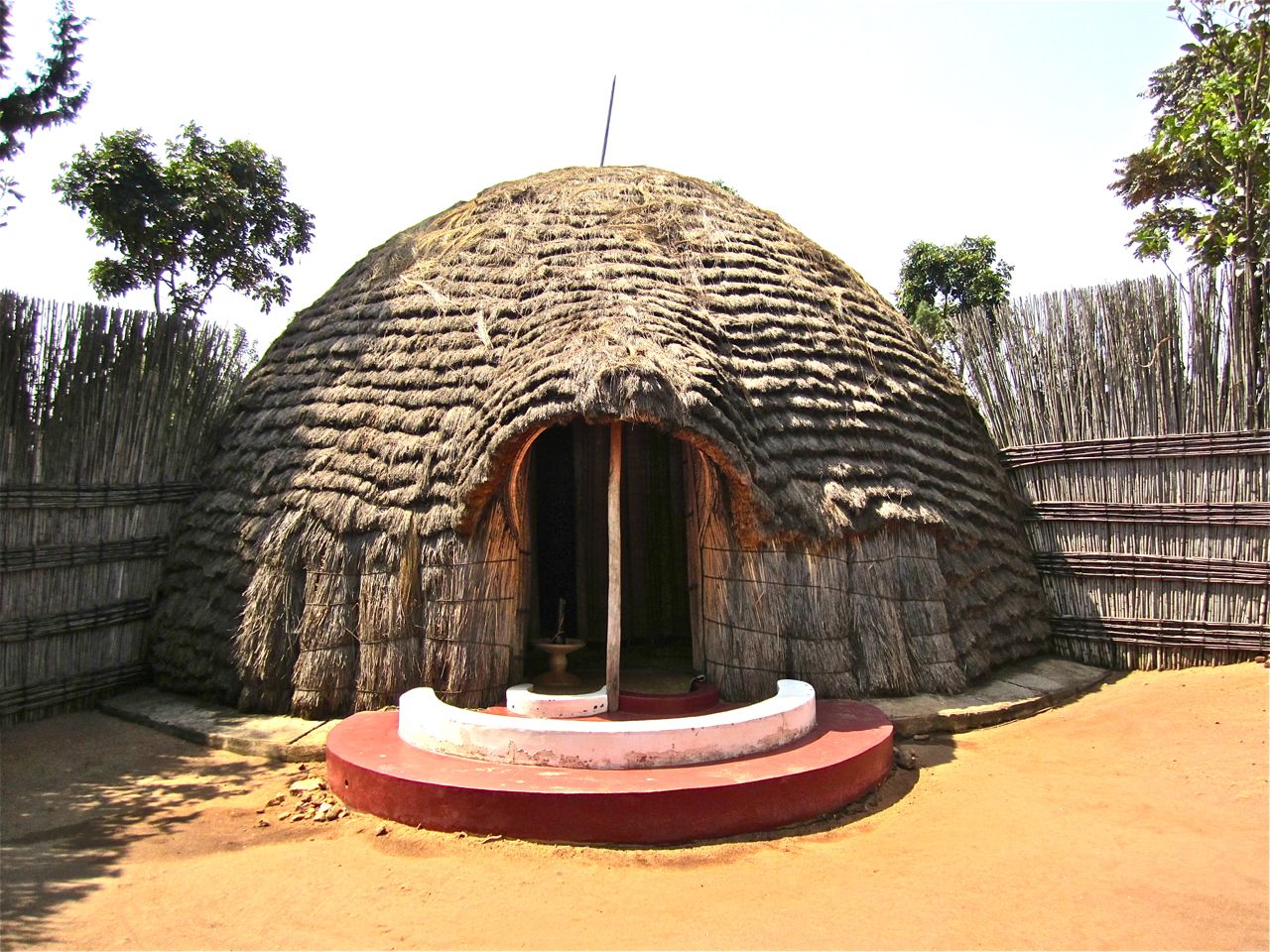
The opening of the enclosure around the house of the keeper of the king’s milk.
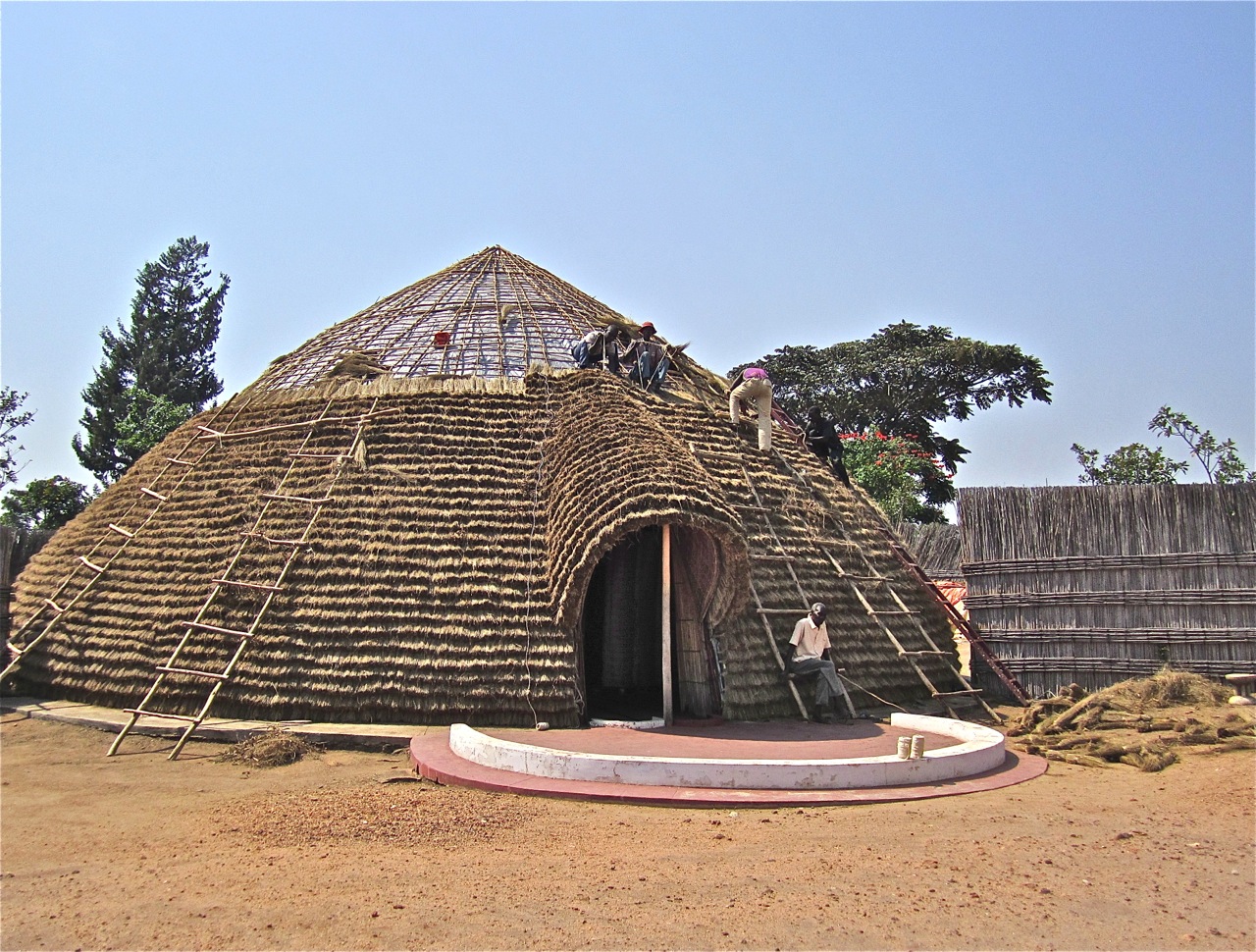
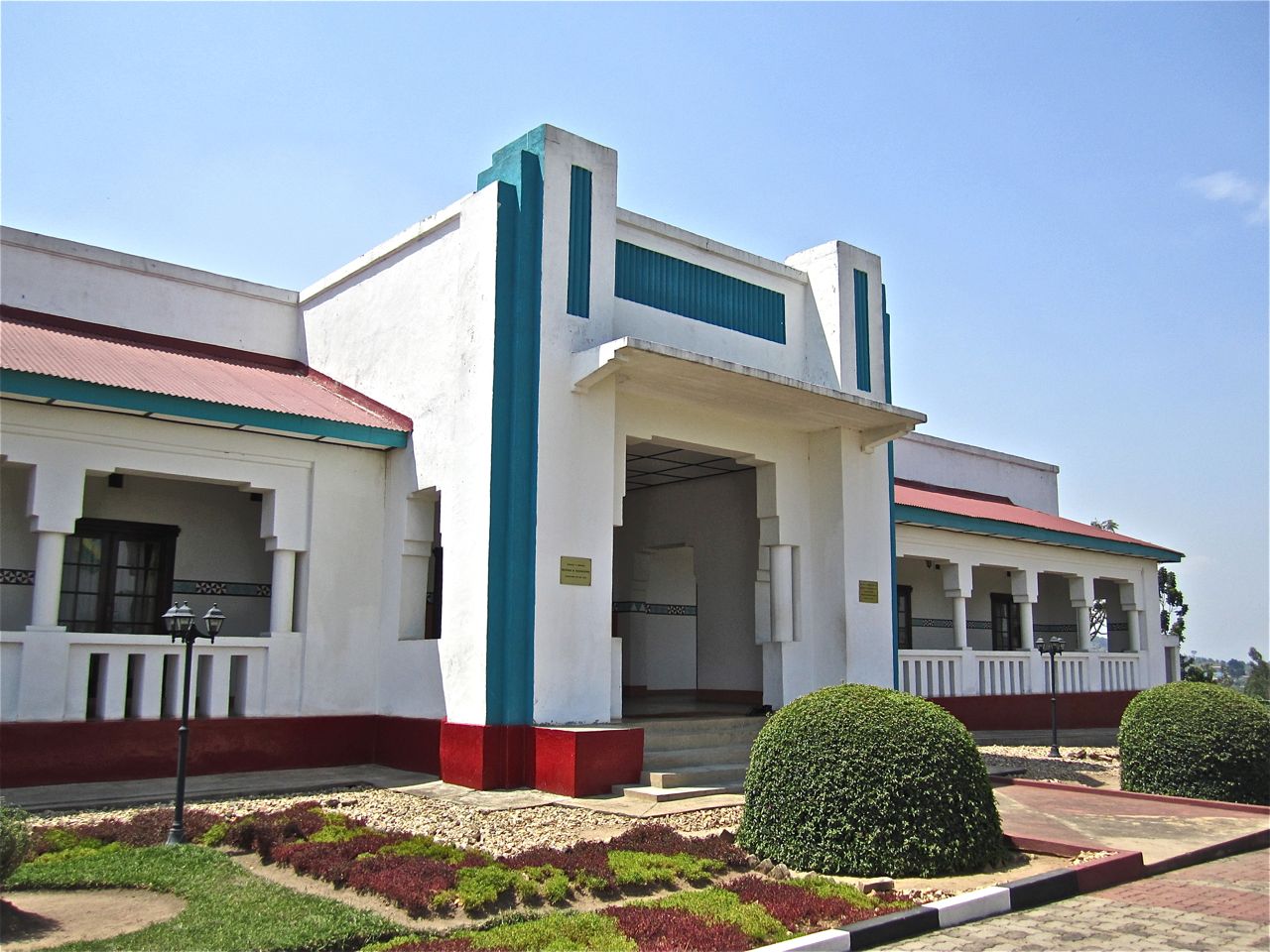
The museum grounds hold a reconstruction of the palace of Mwami (King) Musinga Yuhi V (a few miles from its original location), as well as the actual Western-style palace built for his successor, Mwami Rudahigwa Mutara III, in 1932.
The reconstructed palace is currently undergoing a 5-year refurbishment.
Musinga lived in a palace like this from 1899 until his death in 1931.
An old photograph of the actual court of Mwami Musinga.
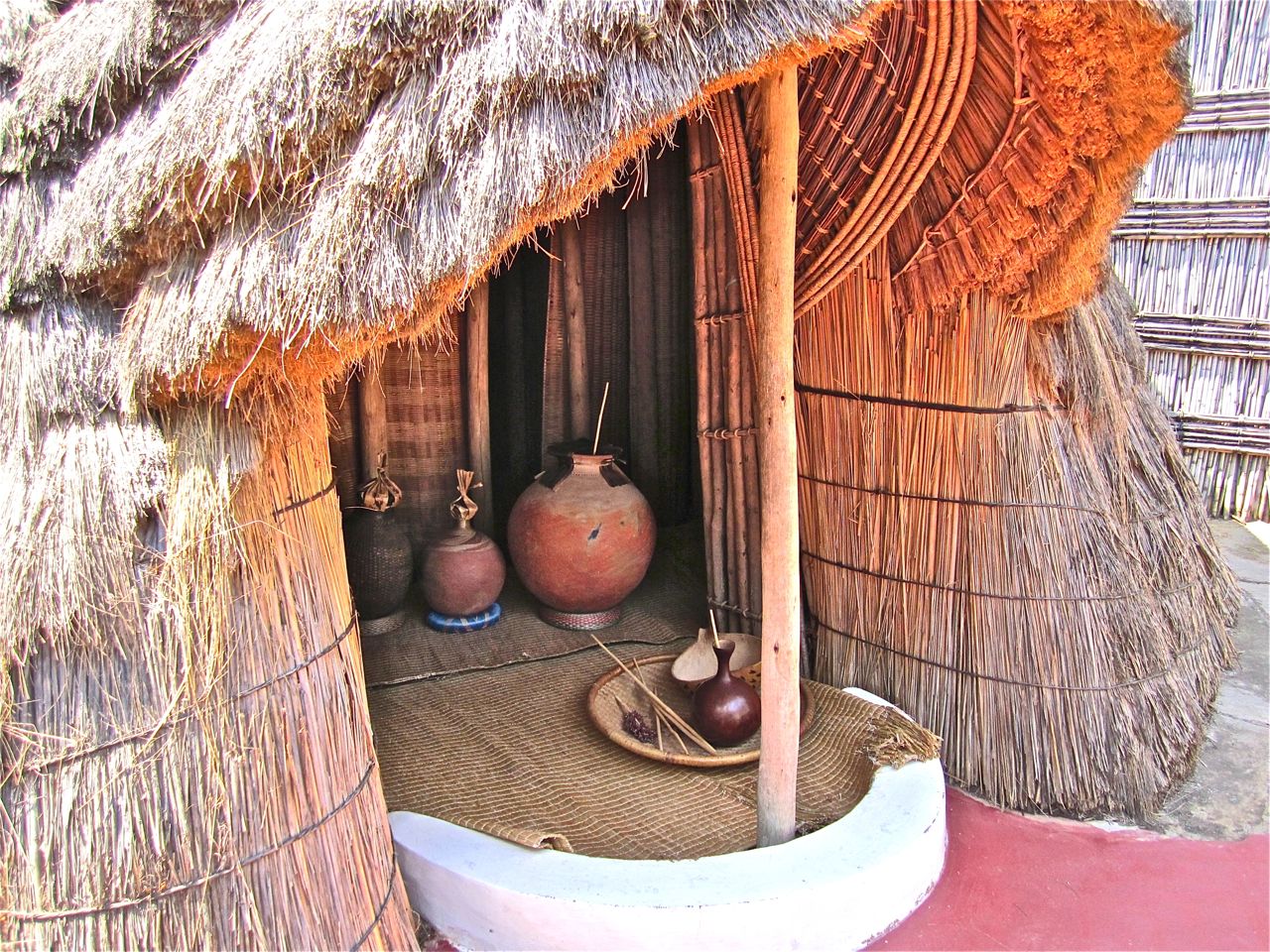
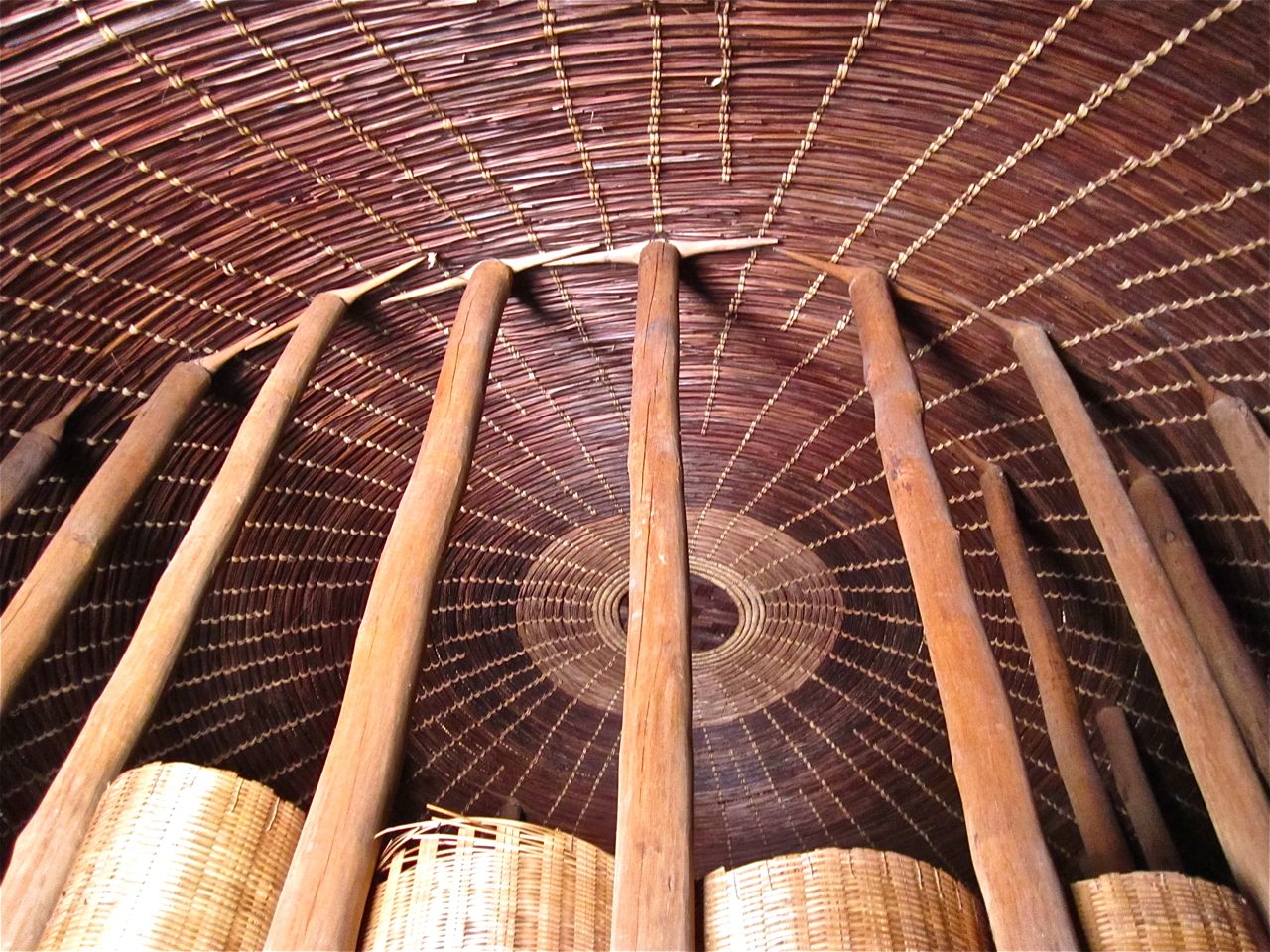
Traditional building and weaving techniques were used to make the structures of grass, reed, and bamboo. The work is very fine.
House of the keeper of the king’s milk.The entrance to the house of the keeper of the king’s beer.The inside partition is woven in such a way that an inhabitant could see out, but someone outside could not see in.The ceiling.
A cow pen is part of the reconstruction. Cows were very important in Rwandan royal culture, and each of the king’s cows had a personal poem that was chanted or sung to call it out. They might also be decorated like this one.
A Rwandan cow wearing decoration at the reconstructed palace. Her keeper is chanting her own poem.The pretty little calves are sleek as seals.
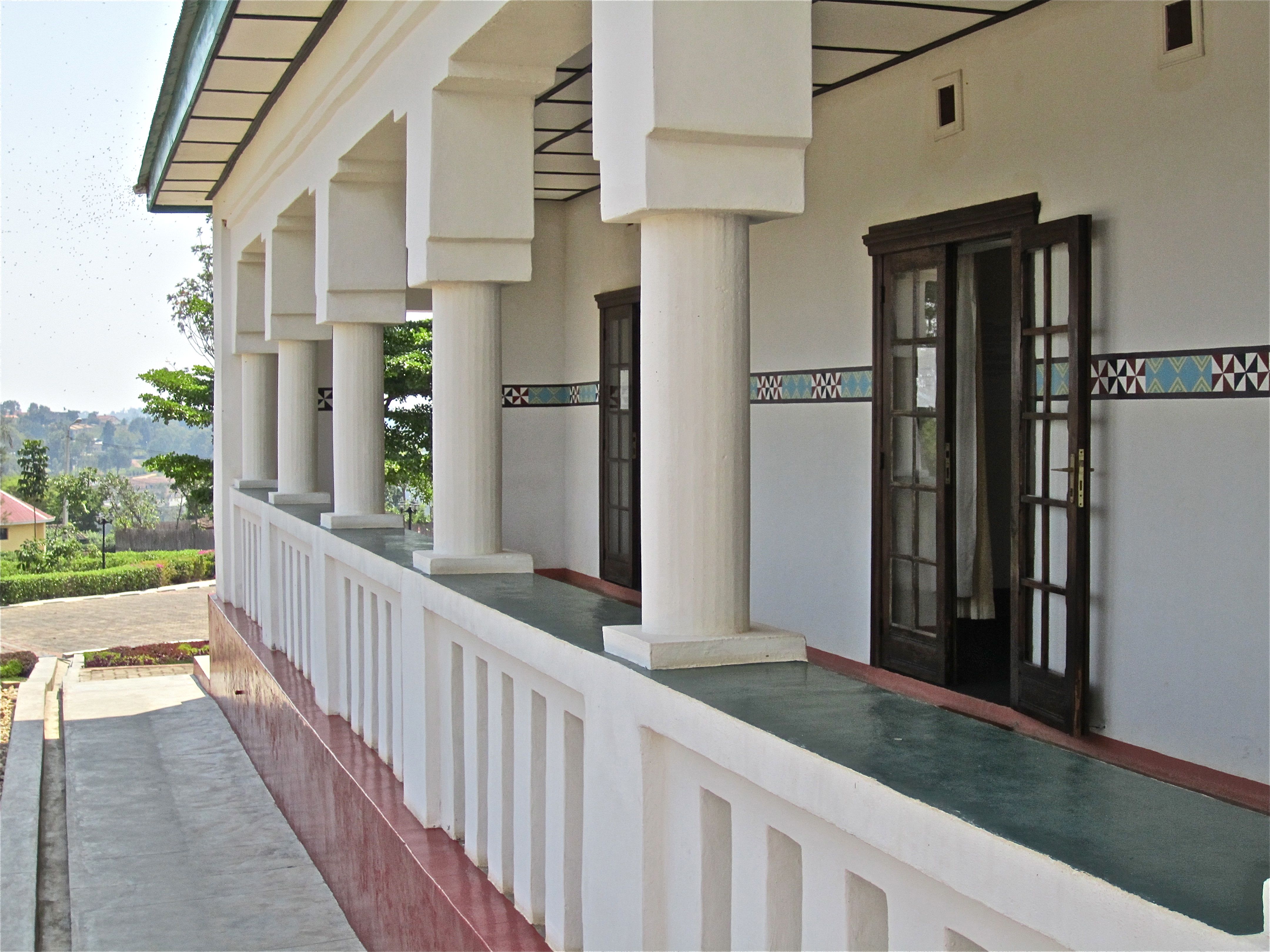
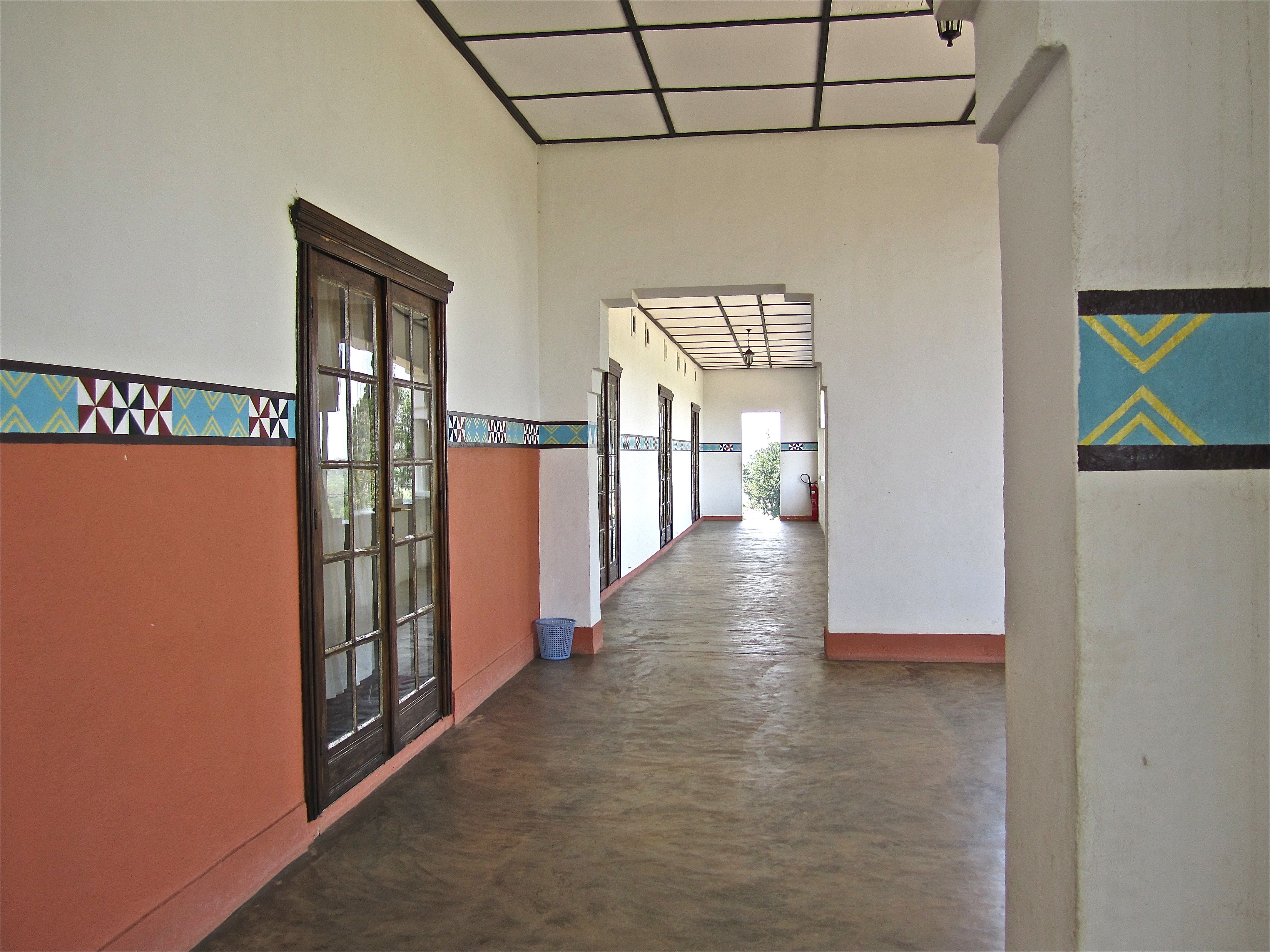
The modern palace (used from 1932 to 1959) is decorated inside and out in geometric motifs. Unfortunately, visitors are not allowed to take pictures inside.
The actual palace of Mwami Rudahigwa Mutara III, who lived here from 1932 until his death in 1959.The front porch.Inside, the home contains some original furniture, as well as historical photographs and maps.Queen Rosalie and the king in the 1950s. The widowed queen was murdered in the 1994 genocide.
The courtyard garden is planted in hedges laid out in patterns like those traditionally used in baskets, mats, and room partitions.
The courtyard garden behind the more modern palace.Room partitions of the reconstructed palace with traditional geometric patterns.
I have been looking at vintage garden photos from the online catalog of the Library of Congress. These two — of 1943 victory gardens in northwest and southeast Washington, D.C. — are really charming.
This couple is heading home from their plot with their sailor whites still looking clean and sharp.
“Washington, D.C. Victory garden in the Northwest section,” 1943, by Louise Rosskam. Via Library of Congress Prints and Photographs Division (all photos here).
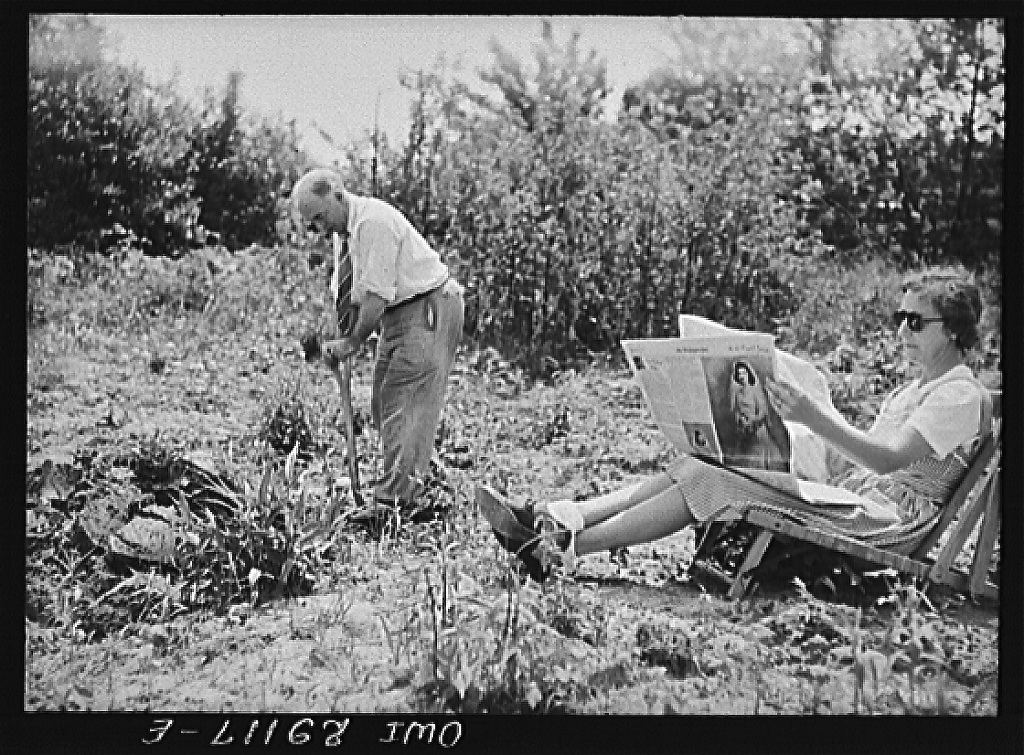
Below, Mrs. Carr seems to be present for moral support only, or perhaps she will take the next shift with the shovel.
“Washington, D.C. Leslie Edward Carr of the British Purchasing Commission with his wife at their victory garden on Fairlawn Ave., Southeast,” June 1943, by Joseph A. Horne.
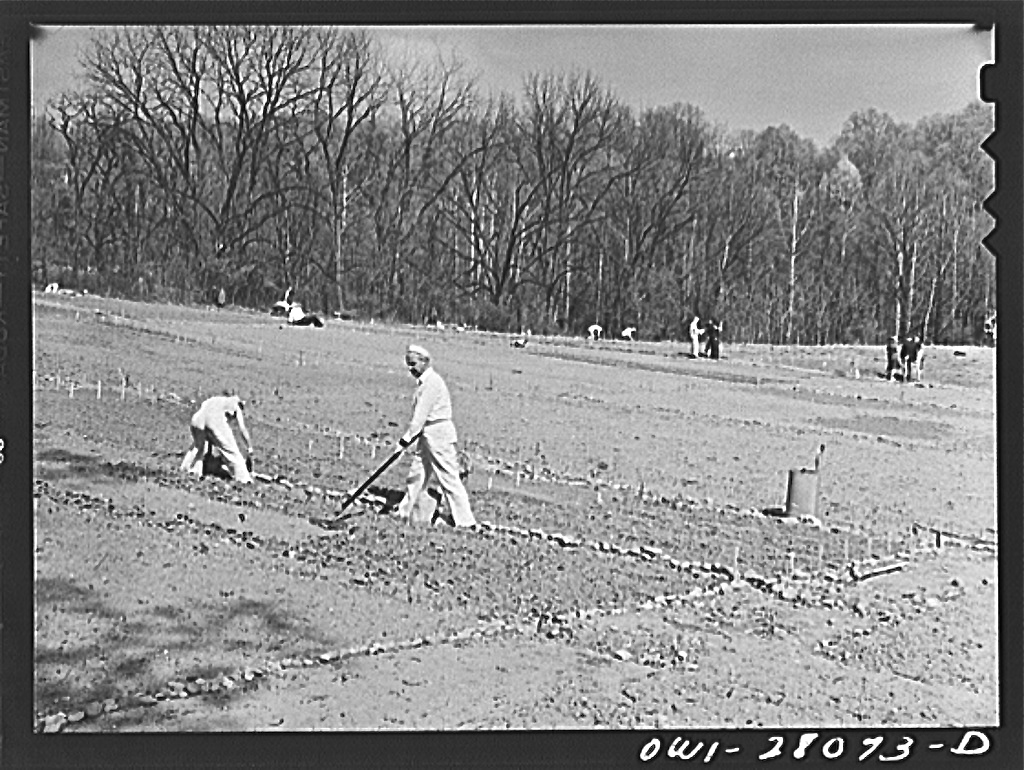
Louise Rosskam, who took the first photo above, was “one of the elusive pioneers of what has been called the golden age of documentary photography.” She took a number of pictures of the same group of northwest D.C. victory gardens in the spring of 1943. (Click on any of the photos to enlarge.)
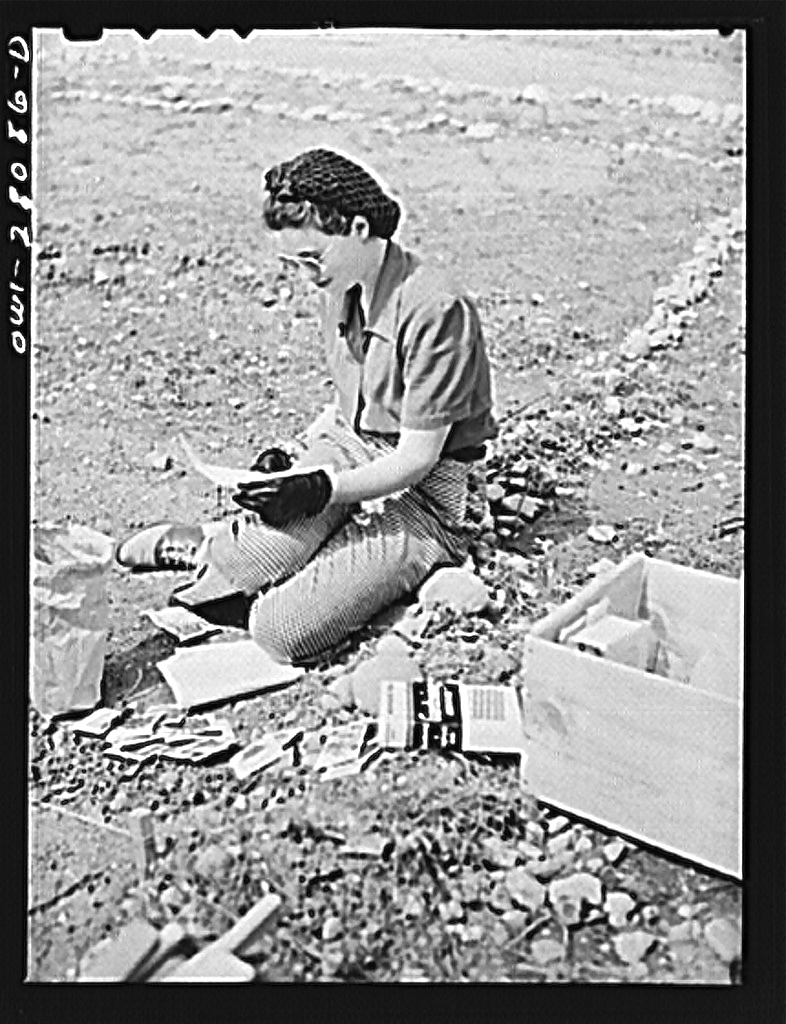
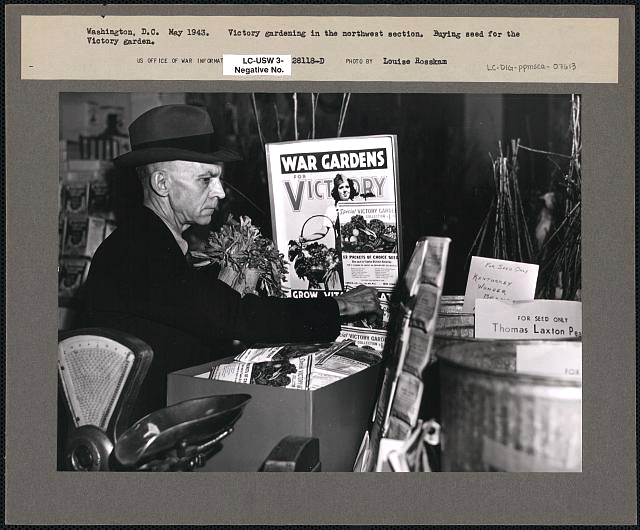
I believe this is the couple in the first photo above.Apartment buildings in the background.Another couple working. I love her high-waisted, wide-leg white pants.This lady also looks great in black gloves and snood and sunglasses.The individual plots were outlined with field rocks.Another gardener heading home by the same fence opening.Buying victory garden supplies.
All the photos above (except that of the Carrs) are by Louise Rosskam, via the Prints and Photographs Division of the Library of Congress.
I believe these garden plots were in the neighborhood of Glover Park, where we have a house. According to the Glover Park Citizens Association, it established the first World War II victory garden in the city, at 42nd and Tunlaw Road. It still exists today as a community garden. (Alternatively, they may be of the Tilden victory gardens at Connecticut Avenue and Tilden Street, which Rosskam also photographed.)
This is a link to a short film made in the forties about how to prepare, plant, and harvest a 1/4 acre victory garden. It features a rural northern Maryland family and is an interesting look at home gardening advice and practices of the time.
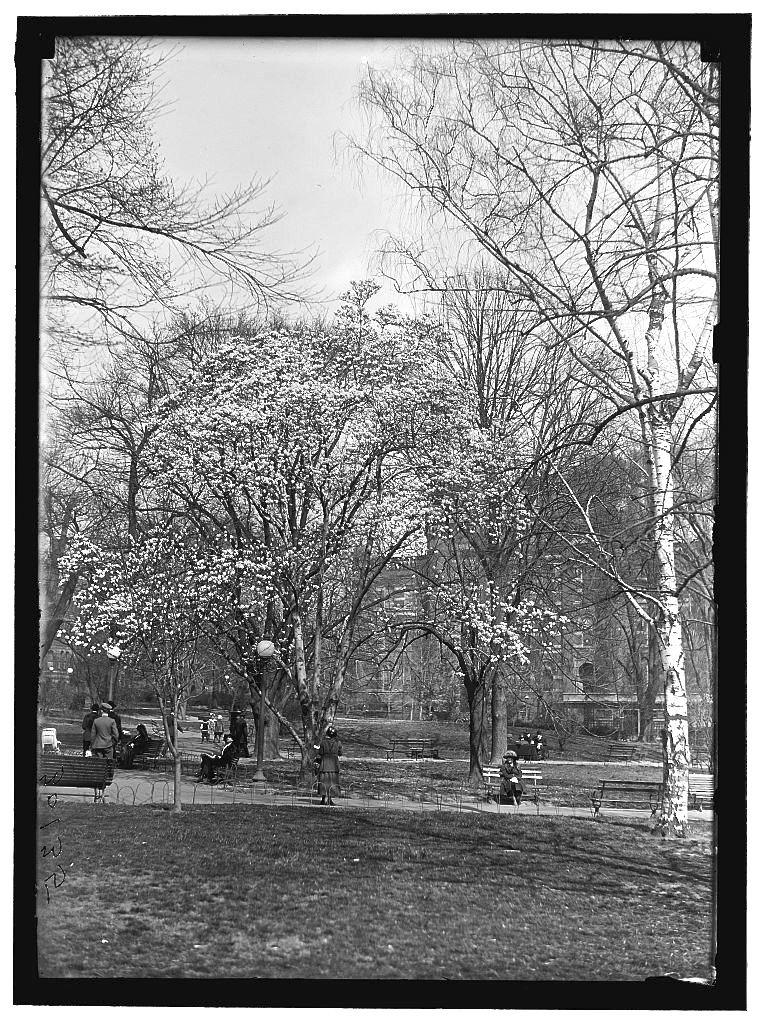
A peaceful view of a magnolia tree blooming in a Washington, D.C., park in 1919 — before any other trees have leafed out.
That winter seems to have been as mild as the preceding year’s was harsh. But the sweet scene may belie the real state of affairs. The influenza pandemic that began in the fall remained pervasive, and in the summer to come, deadly race riots would grip the city.
Photo by Harris & Ewing from the Harris & Ewing Collection of the Library of Congress. Click the photo to enlarge.
Here are some of the textures and patterns from our first four months in Rwanda. Click on the first thumbnail to scroll through the photos.
The dining porch of Republika Lounge, Kigali.
Banana leaf ceiling
Republika.
Interior walls in concrete and pebbles, Republika.
Shokola Lite Cafe, Kigali.
Mango tree in the parking lot , Lava Cafe, Musanze
Rock face along the road near a tungsten mine, Nyakabingo.
Rustic fence at mine.
Tungsten mine.
Kigali fence.
Detail of a stone supporting a carving of a gorilla, Sabyinyo Silverback Lodge, near Parc National des Volcans
Wild squash at the Kigali golf course. Inedible for humans, but elephants eat them. In the old days, Rwandans cut them in half and used them to wash clothes.
Colorful sacks at Sorwathe tea factory.
Sorwathe tea factory.
Shimering Lake Kivu and fishing boats at day’s end, Rubavu.














 enclos*ure