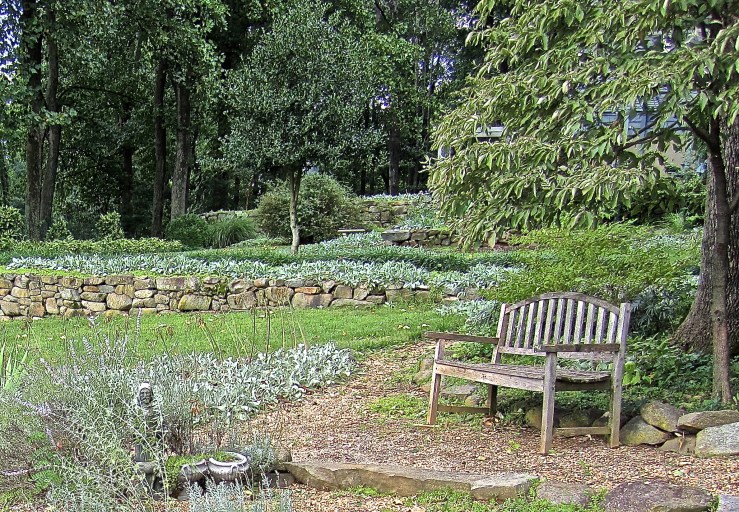
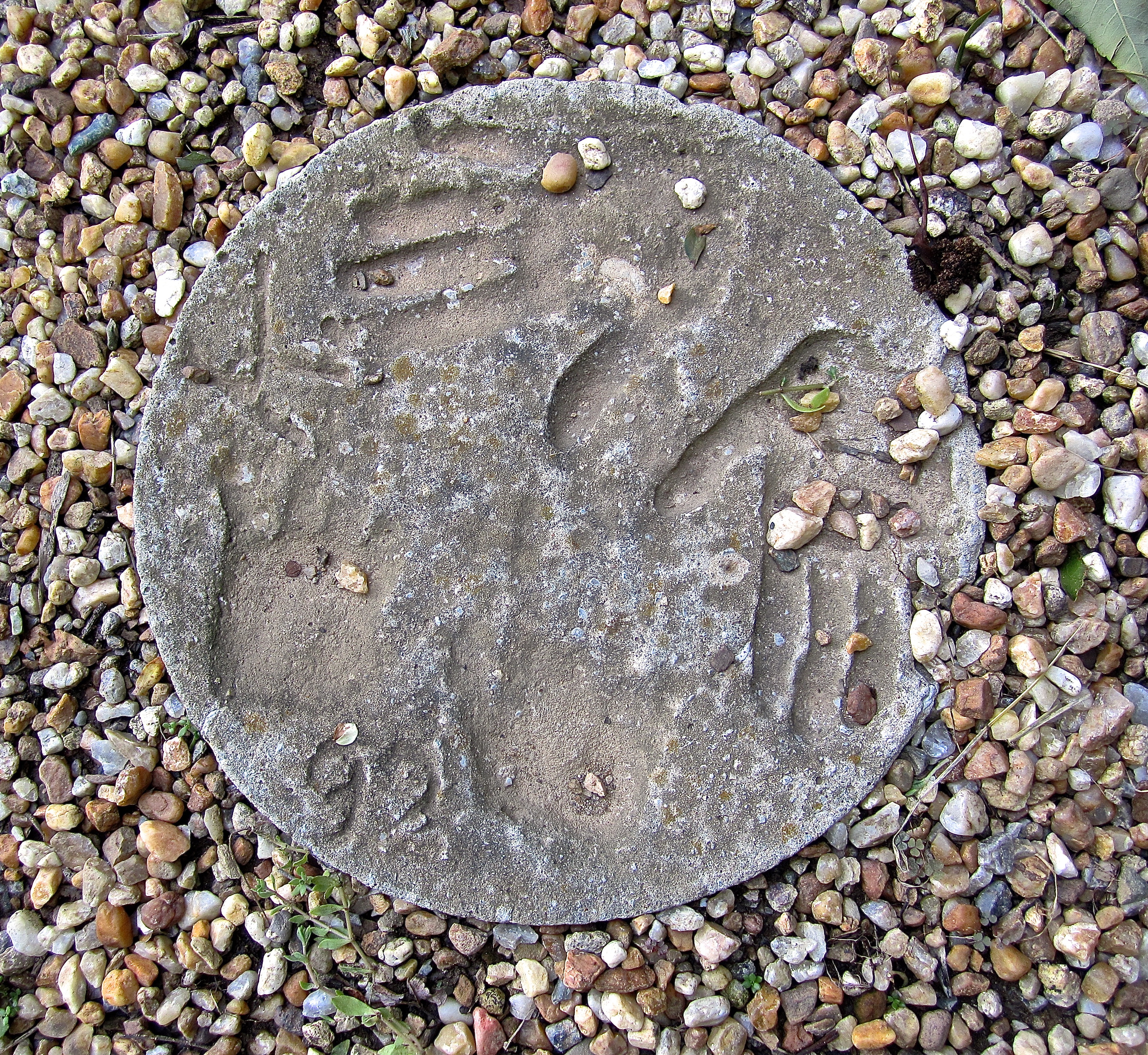
I thought you might like to see some photos of my parents’ garden in Northern Virginia — the one which surrounds last week’s “Wordless Wednesday” stepping stone. I took these pictures last August, before we left for Rwanda.
Tara Dillard often writes in her blog about beautiful landscapes shaped by the “poverty cycle.” My parents have a deer cycle.
Every summer, the deer pass through the garden, the old Christmas tree field, and the woods — eating and eating. Their numbers have increased over the garden’s 30-year existence, as farmed and forested lands have been lost to suburban development.
The result is a planting palette dominated by species that deer don’t like: boxwood, cherry laurels, beautyberry, Miscanthus grass, lamb’s ear, Liriope, Hellebores, Russian sage.
The hollies, Aucuba, Hostas, Viburnums, and Solomon’s seal — which deer do like — are protected, with some success, by lines of nylon filament and and smelly sprays. The two dogs occasionally rise to a bark and a brief pretend chase, but mostly ignore the passing herds.
My mother misses her old daylily collection, but she also loves watching each year’s crop of fawns. I think the drifts of silvery grey, lavender, lime, and dark green are peaceful and perfectly set off the gorgeous view of the mountains.
Click on any thumbnail below and enjoy.

The garden and view from the patio on the first of three terraces. A small pond is hidden by the arbor.

The view from the pond. The area is planted with lamb’s ear (Stachys byzantina), Russian sage (Perovskia atriplicifolia), and a bright green small creeping sedum. You can also see the spent stalks of naked lady lilies (Lycoris squamigera) and some irises.

The arbor, built by my father, holds Clematis montana. In the foreground is beautyberry, Hellebores, and wild violets. The center holly has been limbed up by the deer. My father also built the stone retaining walls, using stone from the woods. On the top terrace (hidden by the arbor) is a patio area covered by a pergola.

Clear filament protects Viburnums and Hostas. The dark green plants in the background are Hellebores.

Hellebores border a path from the woods to the pond.

The pond.

A tall persimmon tree and a perennial bed that covers the site of an old sinkhole. Beyond is the old Christmas tree farm.

The view of distant mountains.

Sophie hunts in the Miscanthus; a grove of persimmon trees is in the background.

A birdhouse surrounded by Buddleia, goldenrod, and Miscanthus.

View from the house.

Looking down from the top terrace level and pergola.

My grandparent’s garden chairs.

“Tread lightly.”

Stepping stones with the imprints of grandchildren’s hands and feet.

The holly over the bench was limbed up by the deer.

Lichens on the bench.

A high fence protects the vegetable garden.

We brought this sculpture made from old auto parts back from Niger.

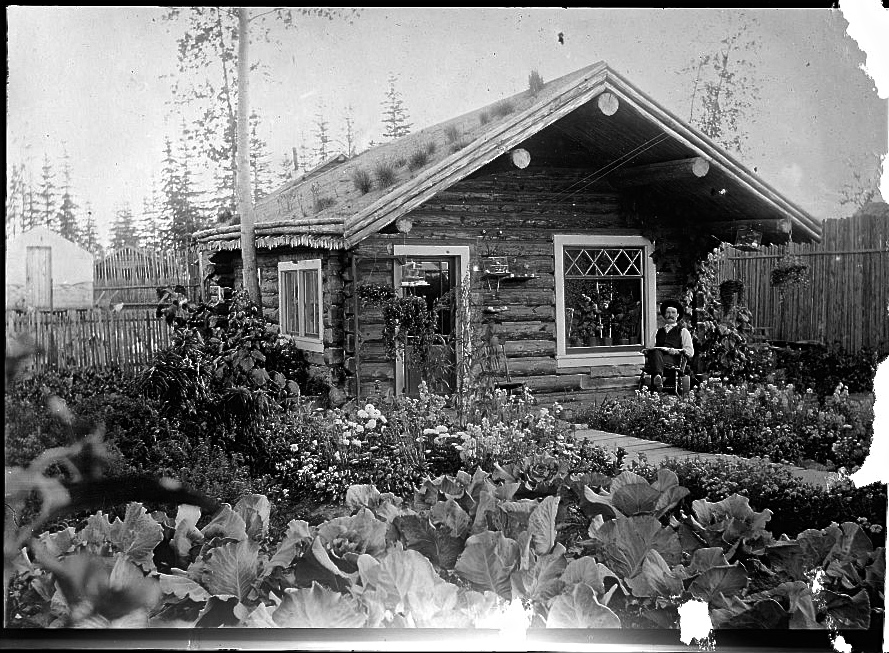 “A cottage & garden, Alaska,” ca. 1909-1920. By National Photo Company, via Library of Congress Prints and Photographs Division.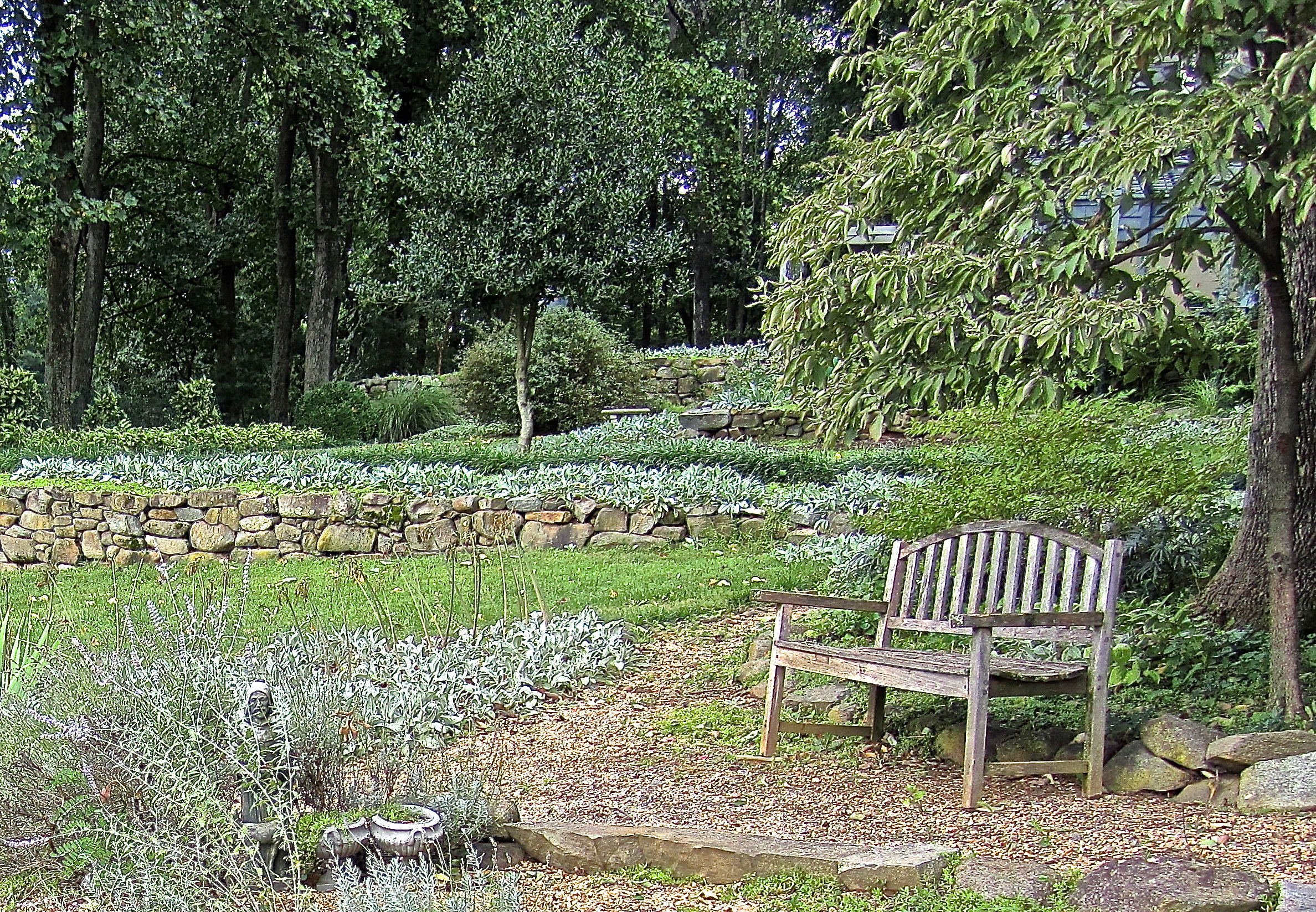


 enclos*ure