Garden Bloggers’ Bloom Day: Celosia

This Bloom Day, I’m most taken with this stand of Celosia argentea.  The annual self-seeded all over the garden, and we transplanted a number of the babies to this spot at the southeast end of the two parallel retaining walls (see garden plan here).
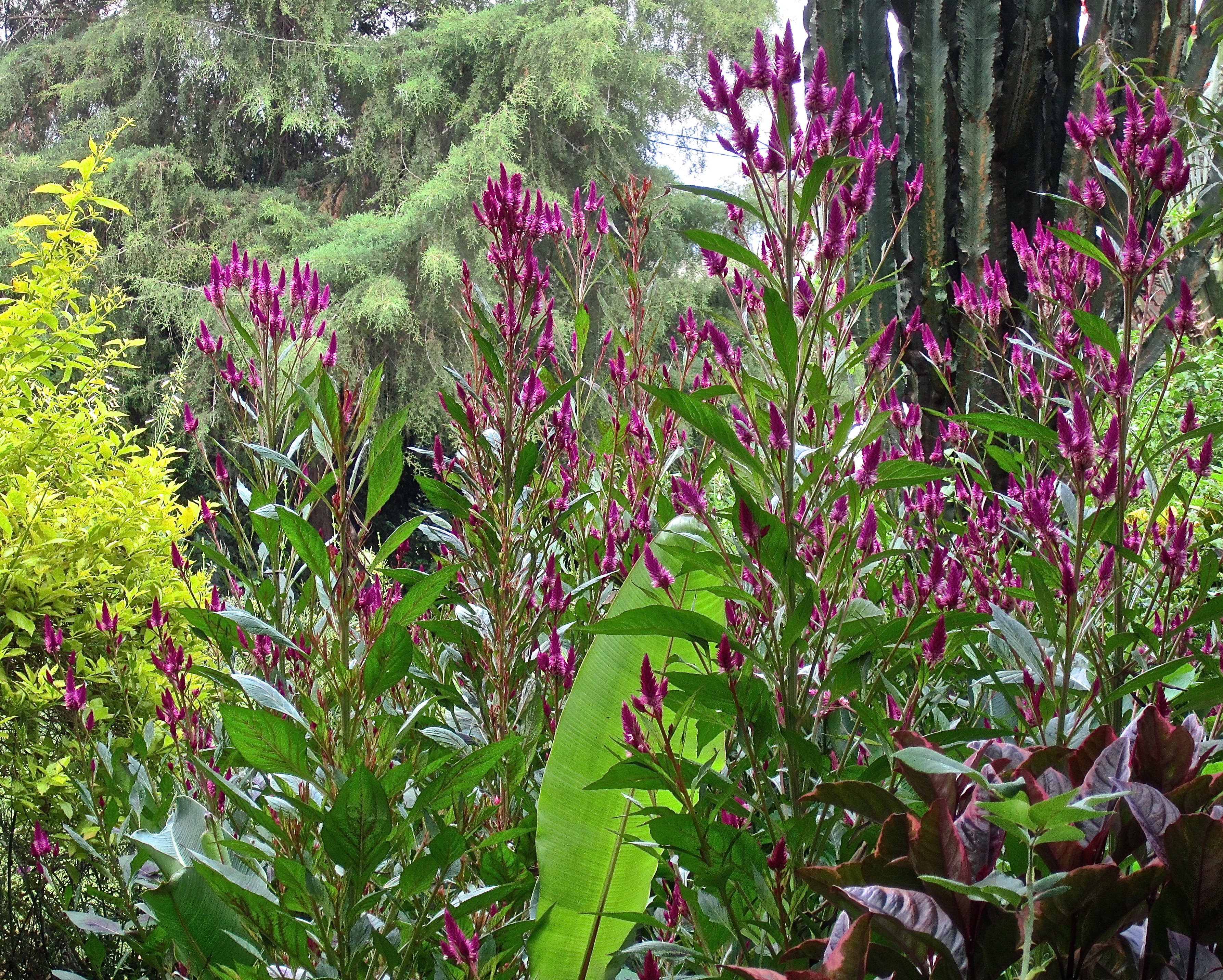
Eventually, some very tall Heliconia rostrata will grow up here (you can see one leaf in the front of the photo above), but this is a nice filler until the transplanted roots really take off.
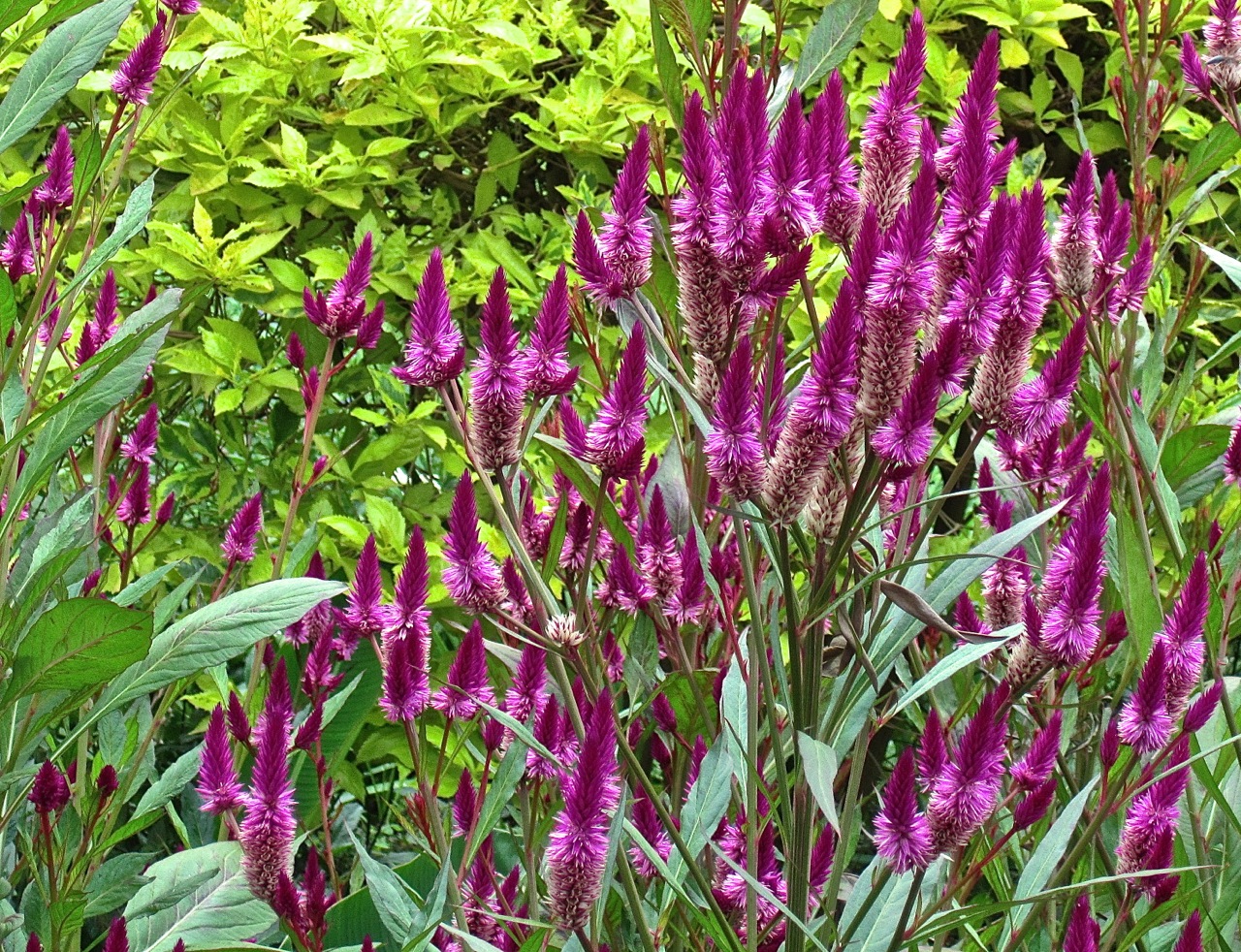
I believe my plants are a red-leafed Celosia argentea var. argentea, which is commonly know in Africa as Lagos spinach.  (Although I may have var. spicata, similar to ‘Flamingo Feathers.’)  Harvested before it flowers, the plant is an important leaf vegetable in tropical Africa and Southeast Asia.  In Nigeria, it is called soko yokoto, which means ‘make husbands fat and happy.’  In Swahili, it’s called mfungu.

To prepare it, boil (don’t steam) the leaves and tender stems for five minutes, and then drain away the cooking water (which eliminates the oxalic acid and nitrates).  It is said to taste like spinach and contains very good levels of protein, vitamins A, C, and E, calcium, and iron.
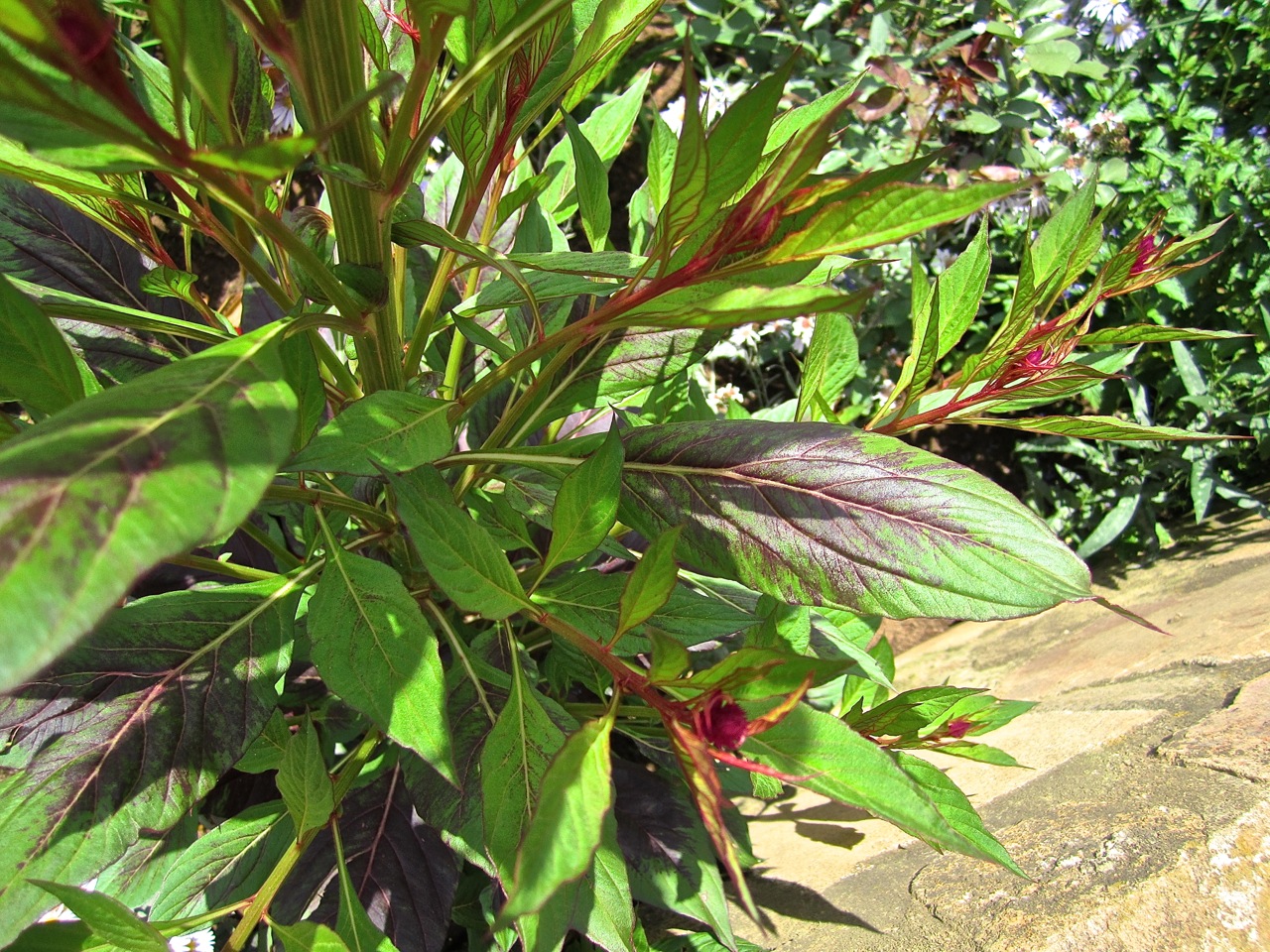
The genus Celosia is a member of the amaranth family.  The name comes from the Greek word kelos, meaning ‘burned’ — referring to the flame-shaped and colored blooms.  Most sources I looked at gave the genus’s probable origin as Africa.

To see what’s blooming in other garden bloggers’ gardens, check out May Dreams Gardens.
Royal animals

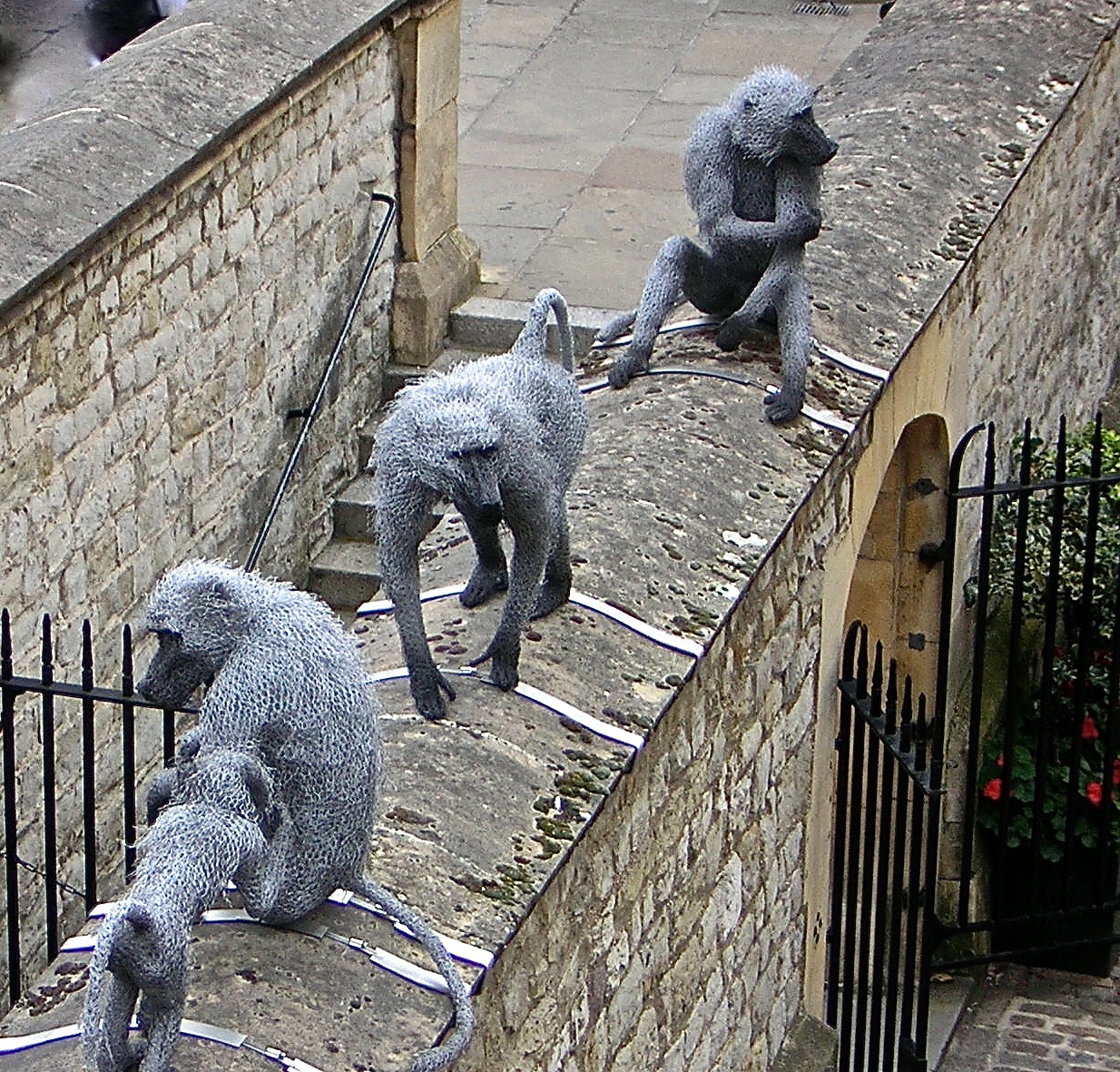
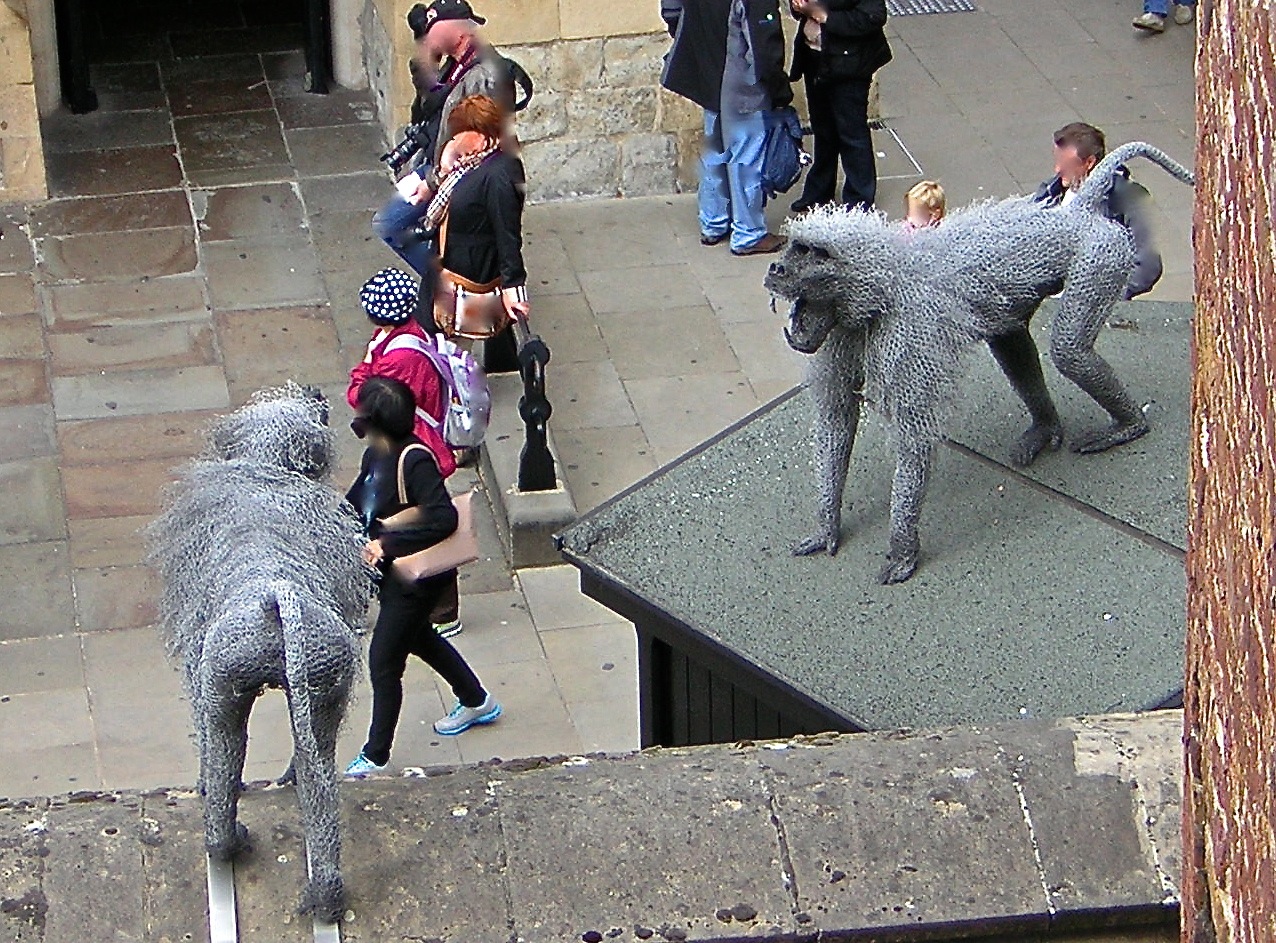
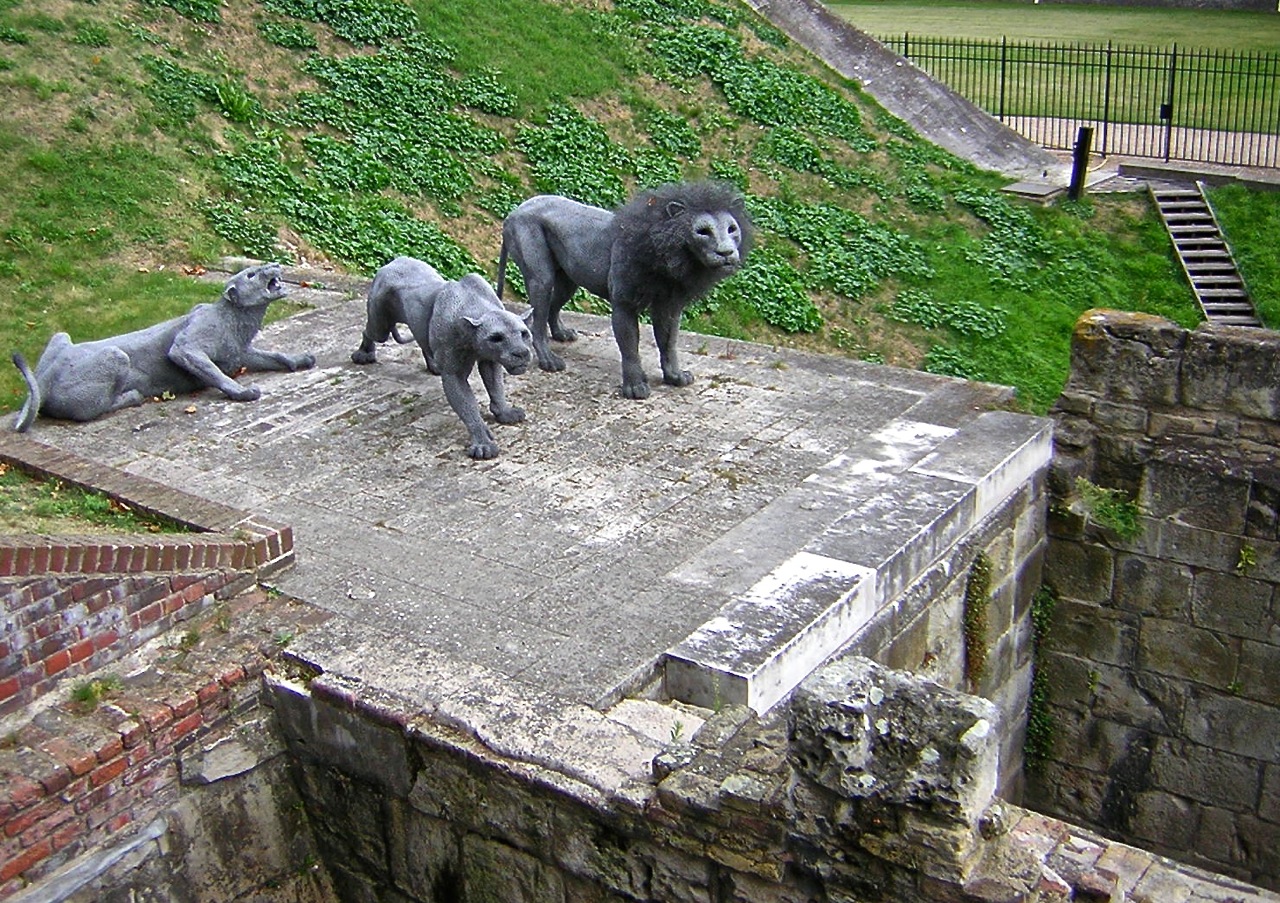
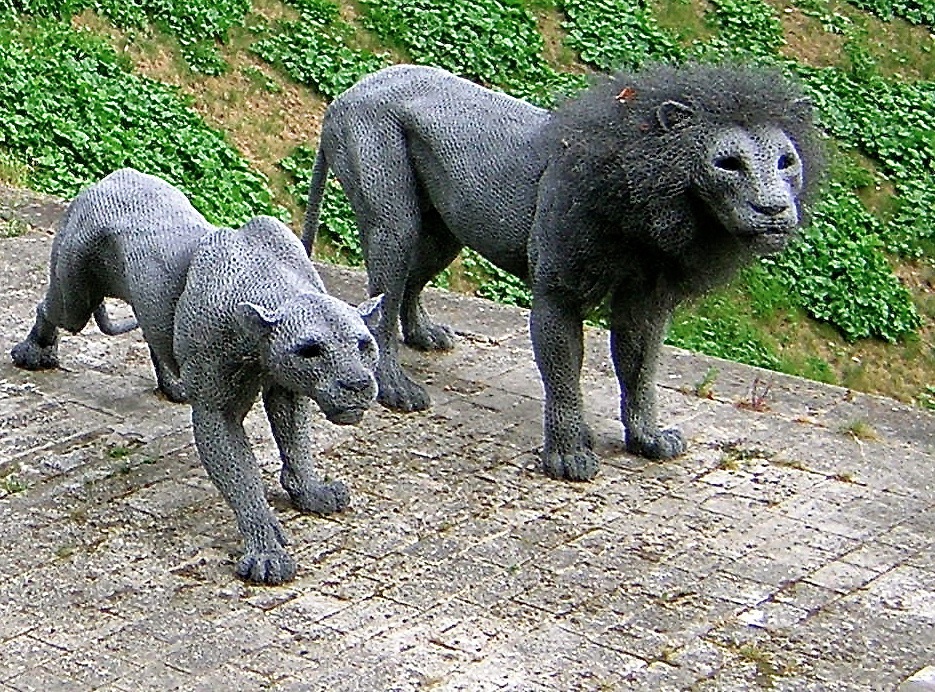
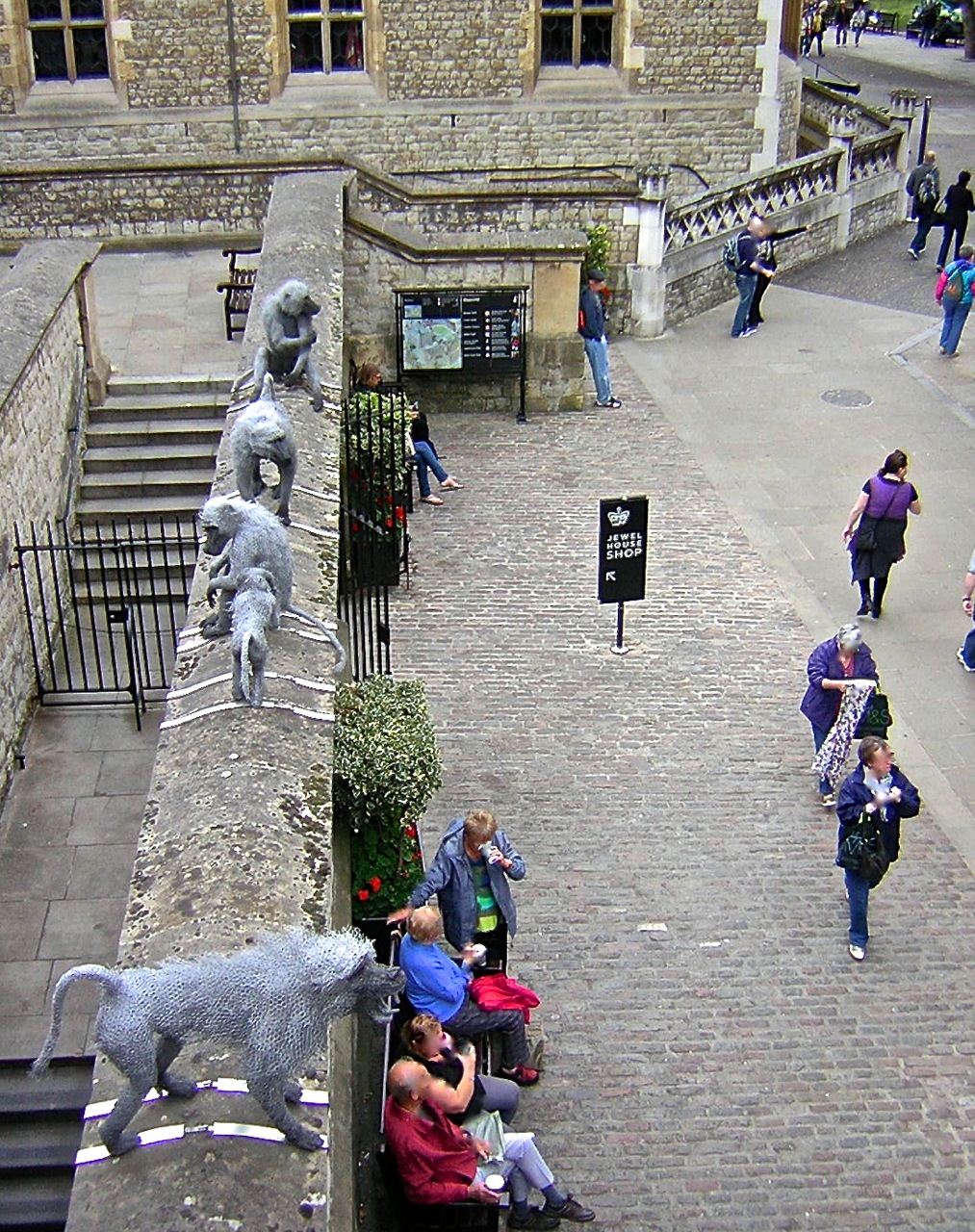
We visited the Tower of London during our September travels, and I really enjoyed these sculptures by artist Kendra Haste, representing the animals of the “Royal Menagerie,” who lived at the Tower for over 600 years.

The baboons, lions, elephant, and polar bear are remarkably life-like, especially considering that they are made out of chicken wire (with a steel armature within). Haste was commissioned to create the animals in 2010, and they were installed in 2011 as part of the Tower’s “Royal Beasts” exhibit. They will remain in place for 10 years.

There’s an interesting short video of Haste at work here.

The first animals at the Tower were lions (1210). An elephant arrived in 1255. In 1832, when attacks on visitors and staff could no longer be ignored, the animals were moved to the London Zoo.

A-s-c-l-e-p-i-a—

I walked by the White House a few weeks ago to look through the fence at the famous vegetable garden. Then I took a further look around and realized that all of the ornamental beds and pots on public view, on all sides of the house, were planted out in red wax begonias.

Just wax begonias combined with dusty miller.

And I thought, “seriously?”

Yes, this — just this, all around.

I know they’re tough and look neat and give reliable color and my feet were hurting from too much walking, but how dull.

The kitchen garden looked fine and huge kudos, but next year, would it not also be educational for D.C. schoolchildren to learn to spell ‘Asclepias tuberosa‘ — as they tuck them in around the fountains with maybe some native switchgrass and goldenrod* — or even the family to which it belongs, ‘Apocynaceae‘ (formerly thought to be ‘Asclepiadaceae‘), and its subfamily, ‘Asclepiadoideae.’

Or maybe just the word ‘perennial,’ which I have to let spellcheck fix every time I write it.

Why do we have wax begonias at the White House, while the British Museum currently has this?  (“North American Landscape:  Kew at the British Museum”)

* and even some scarlet rose mallow (Hibiscus c-o-c-c-i-n-e-u-s), which was planted at the Old Executive Office Building and looked great. (Addendum:  I’m now thinking it could have been this.)

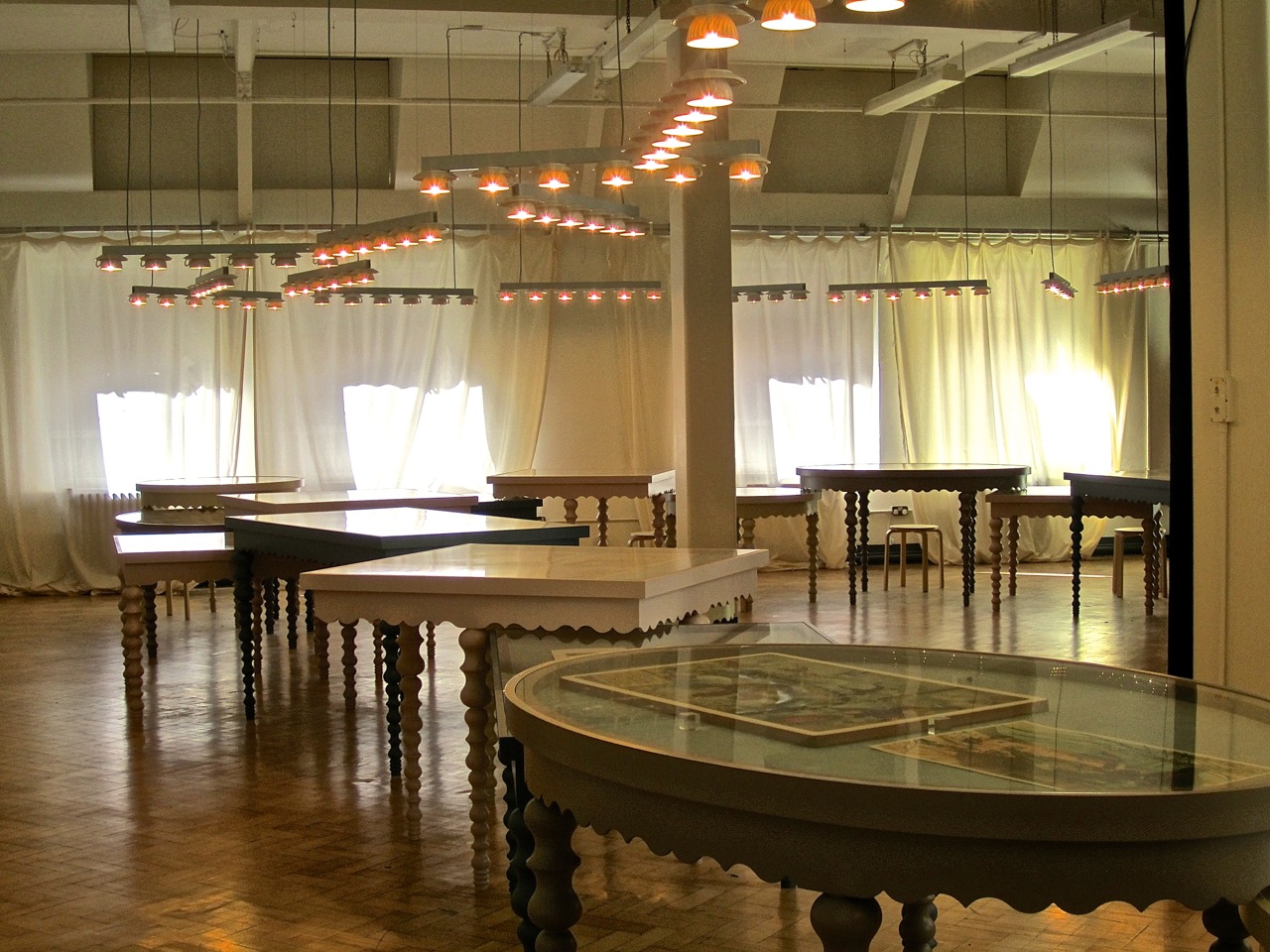
The Story Museum, Oxford

My niece works in a really charming place in Oxford called The Story Museum. Last month, we took a day trip from London to pay her a visit, and she gave us a behind-the-scenes tour.

The Story Museum exists “to celebrate children’s stories and to share enjoyable ways for young people to learn through stories as they grow.” It has a very nice website here.

Although founded in 2003, the museum only recently found a permanent home in three 19th and 20th century buildings on Pembroke Street. In the 13th century, the site was the location of the first purpose-built college dormitory.

There is a lot of renovation work to be done, so the museum is not fully open to the public, but you can find out how to schedule a visit here.

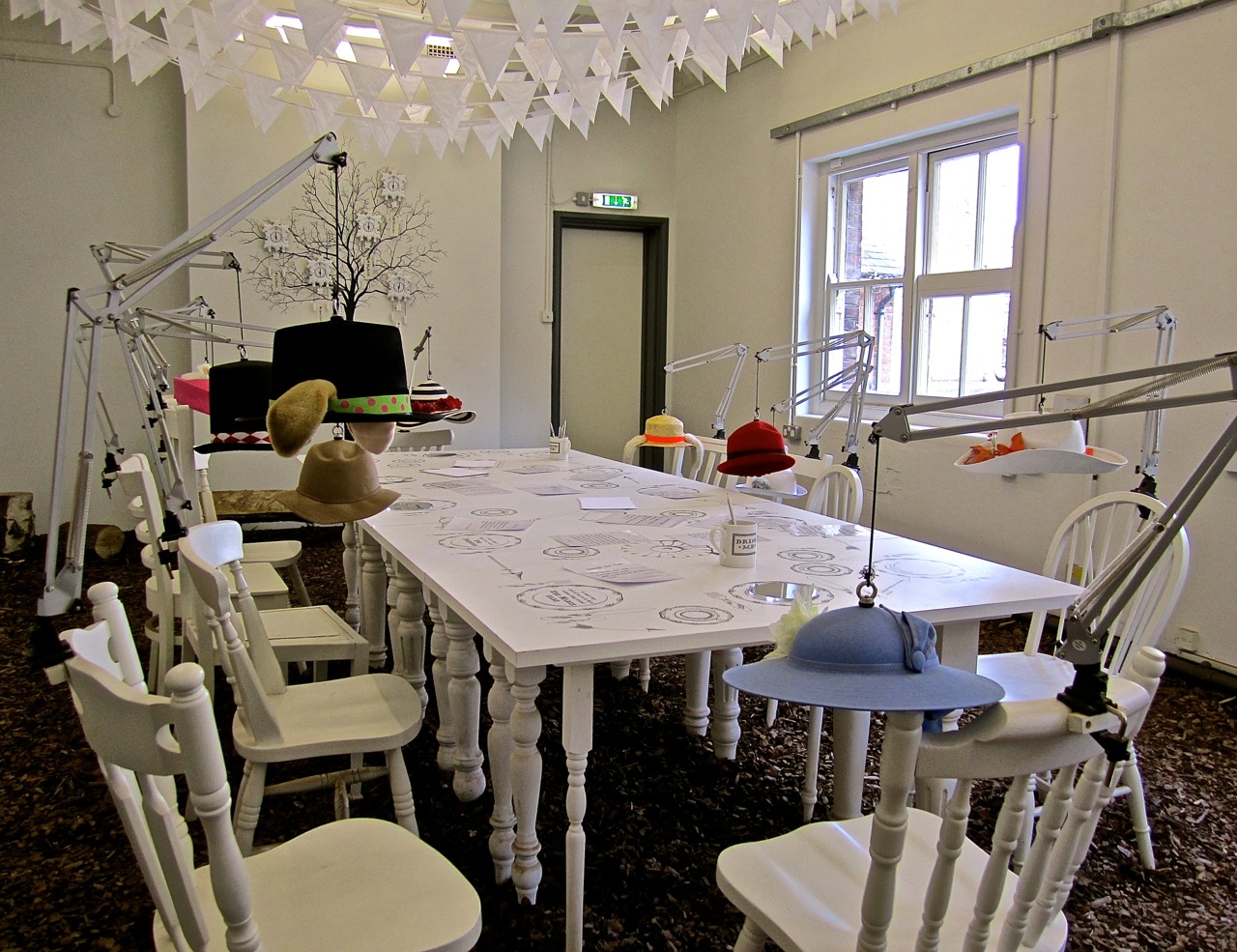
It is currently hosting the exhibit “Tea with Alice: a world of Wonderland illustration” (but only until September 16).

Children can take part in a Mad Tea Party in the “Be it” room.

That’s mulch on the floor.

There is also an amazing exhibit called “Storyloom” that is hard to explain, but you can hear all about it in this interview with the creator.

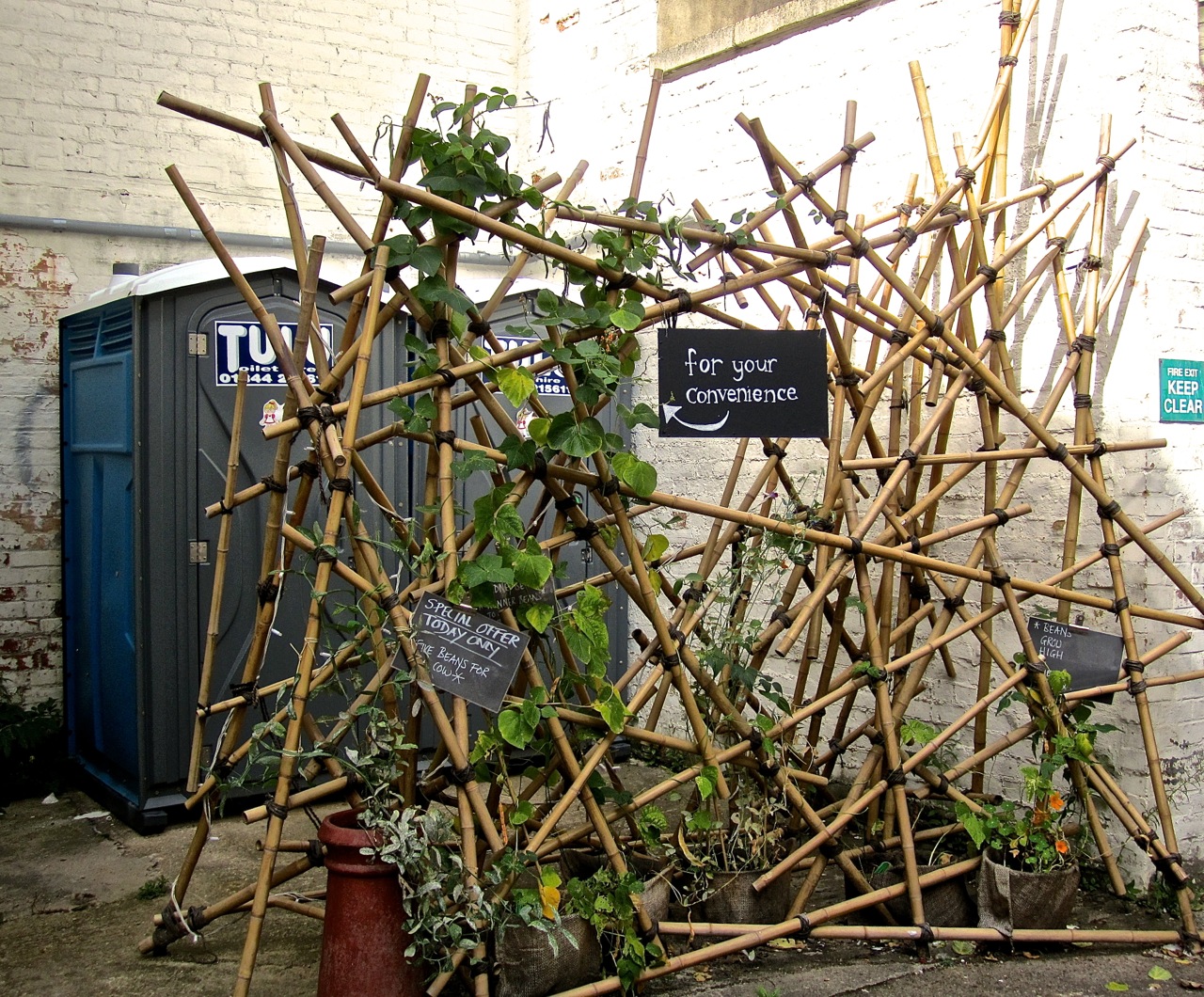
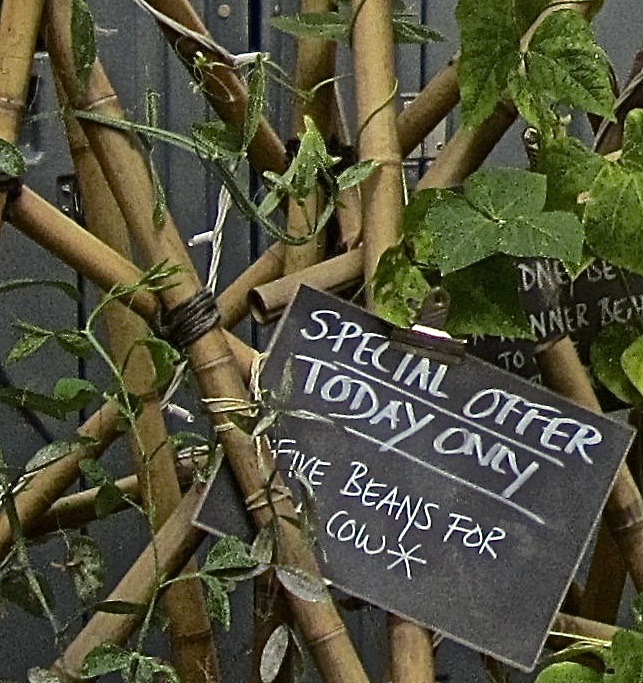
I really liked the screen for their courtyard porta-potties.

Click here for information about how to donate to the museum — in sterling, euros, and dollars.