Bloom Day in July: tropical hibiscus

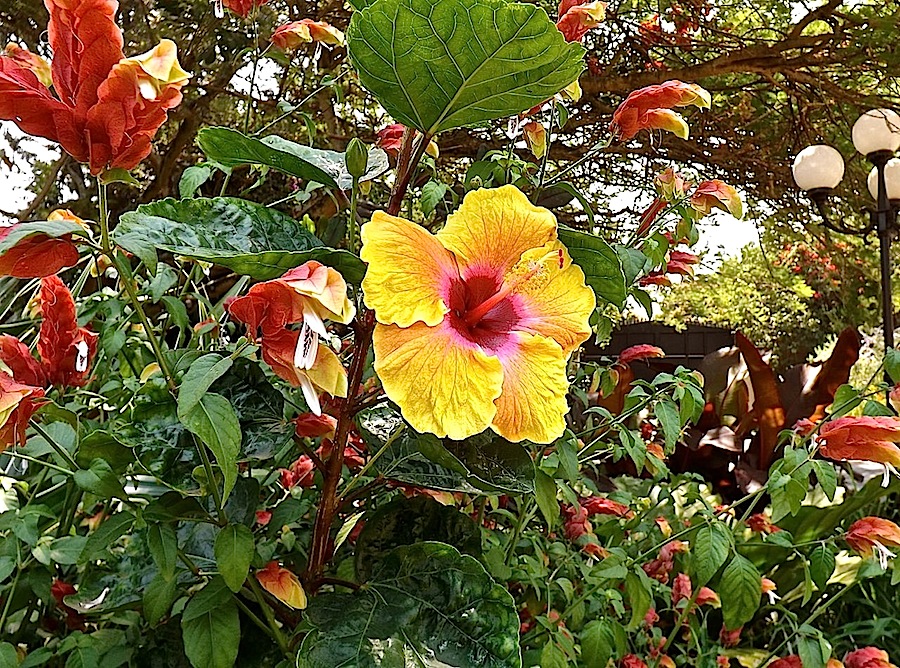
About 8:30 this morning:
Garden Bloggers' Bloom Day in July, tropical hibiscus in our Kigali garden/enclos*ure

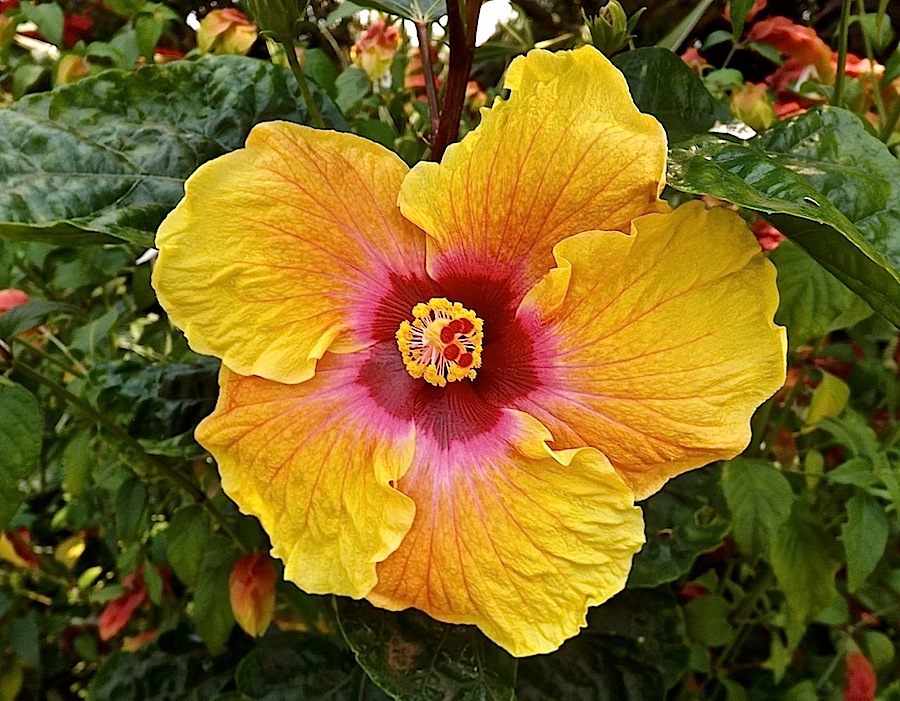
Five hours later:
Garden Bloggers' Bloom Day in July, tropical hibiscus in our Kigali garden/enclos*ure

Well. . . aloha.
Garden Bloggers' Bloom Day in July, tropical hibiscus in our Kigali garden/enclos*ure

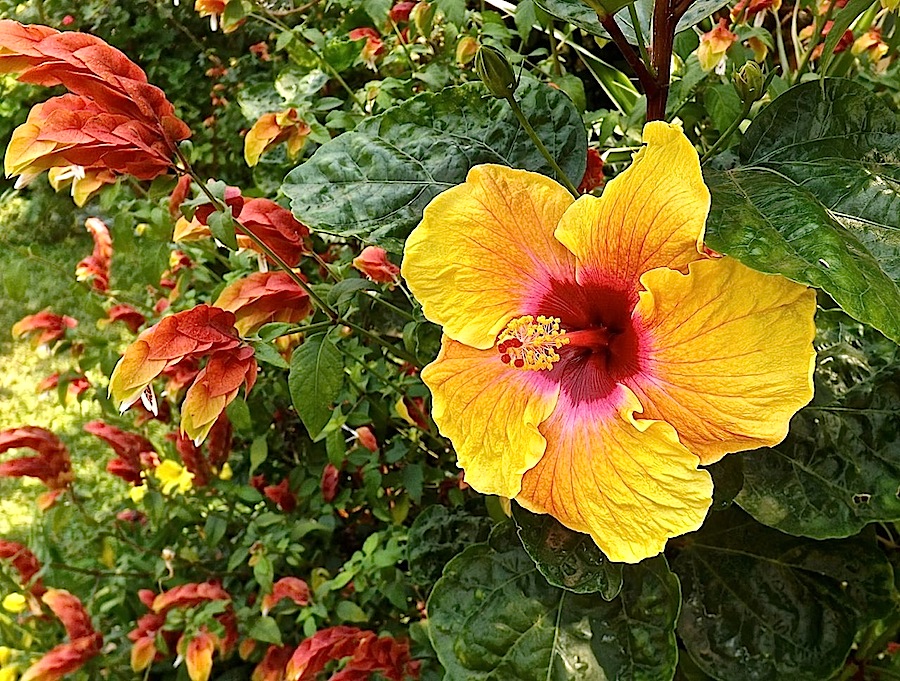
This is the second bloom I’ve seen on this particular tropical hibiscus. None of my others are this flashy dramatic.

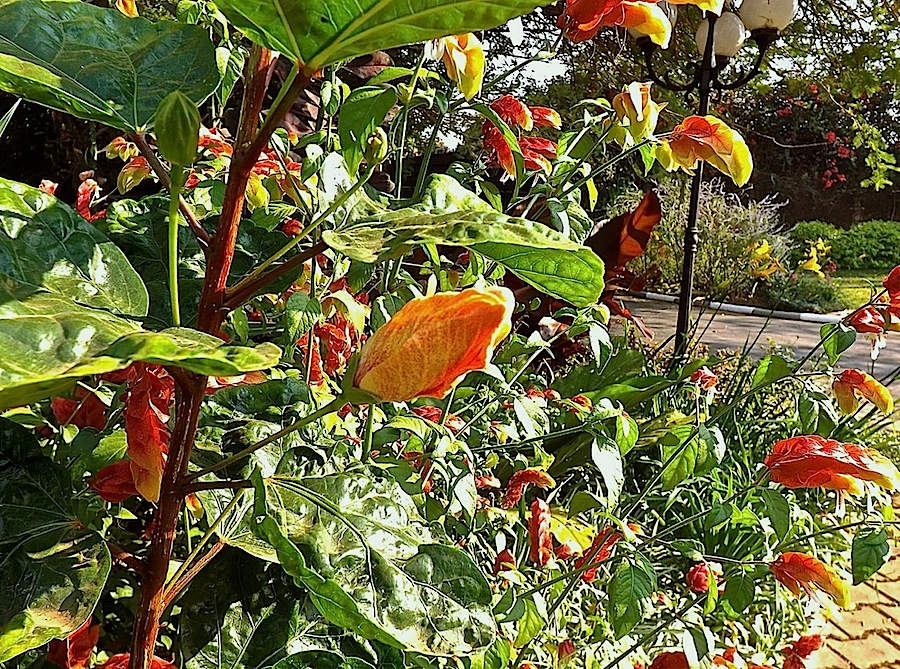
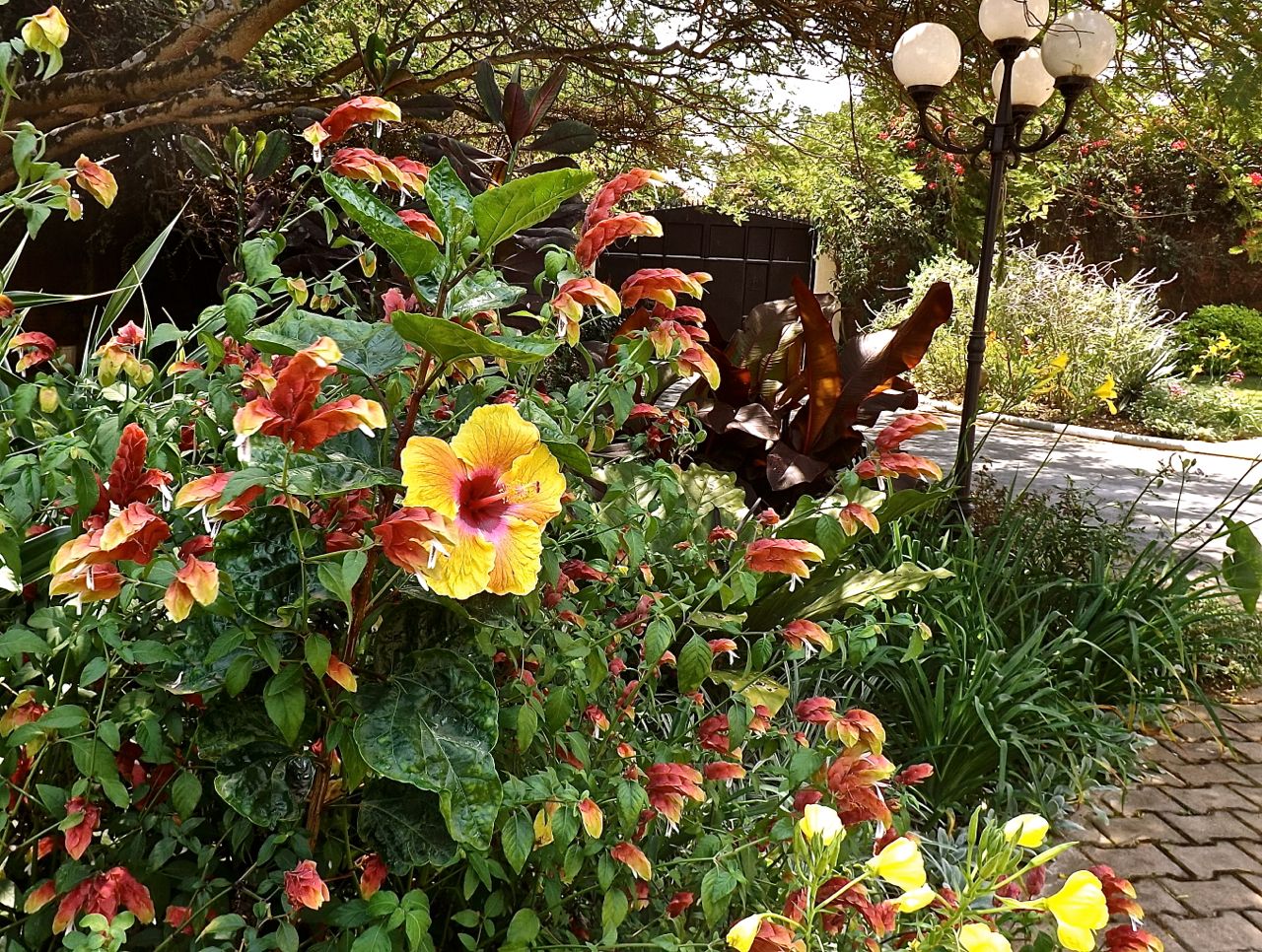
Surrounding it are several Justicia brandegeeana or shrimp plants, which are always in bloom.

Garden Bloggers' Bloom Day in July, tropical hibiscus in our Kigali garden/enclos*ure

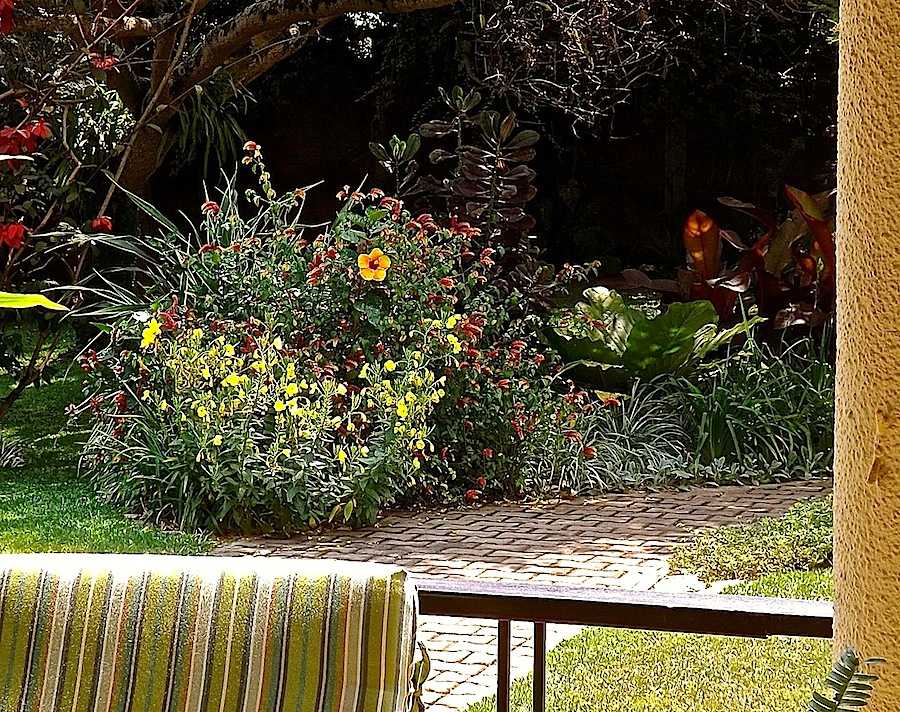
This is a small planting bed near the entrance to the front terrace. We removed* all the old clipped shrubs from this area early last summer, but in a combination of fatigue and indecision, I just cut this bush to the ground, thinking it could die (or not) in place.

A couple of months ago, I noticed that it had sent up two stems and that flower buds were developing.  I was a little amazed about a week and a half ago when the first one opened.

Garden Bloggers' Bloom Day in July, tropical hibiscus in our Kigali garden/enclos*ure

Garden Bloggers' Bloom Day in July, tropical hibiscus in our Kigali garden/enclos*ure

It goes well with the shrimp plants, so I’ll just leave it here and keep it pruned to about 4′ – 5′ tall.  The yellow-flowering plant in front of it is a Missouri primrose (Oenothera missouriensis).  It is an American native annual that self-seeds around the garden.

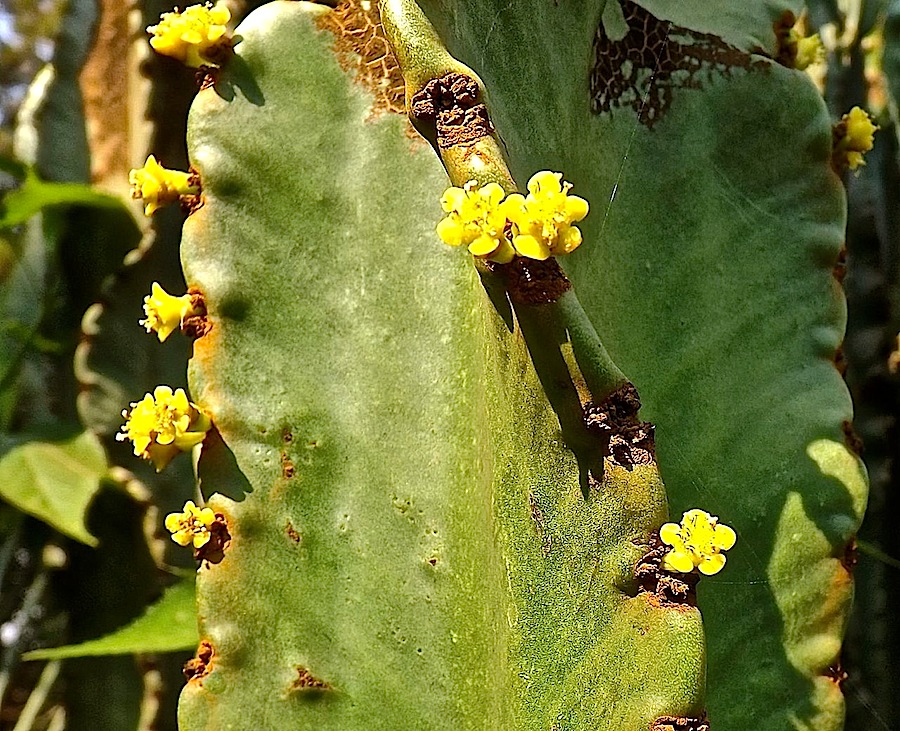
Cactus in our Kigali garden/enclos*ure

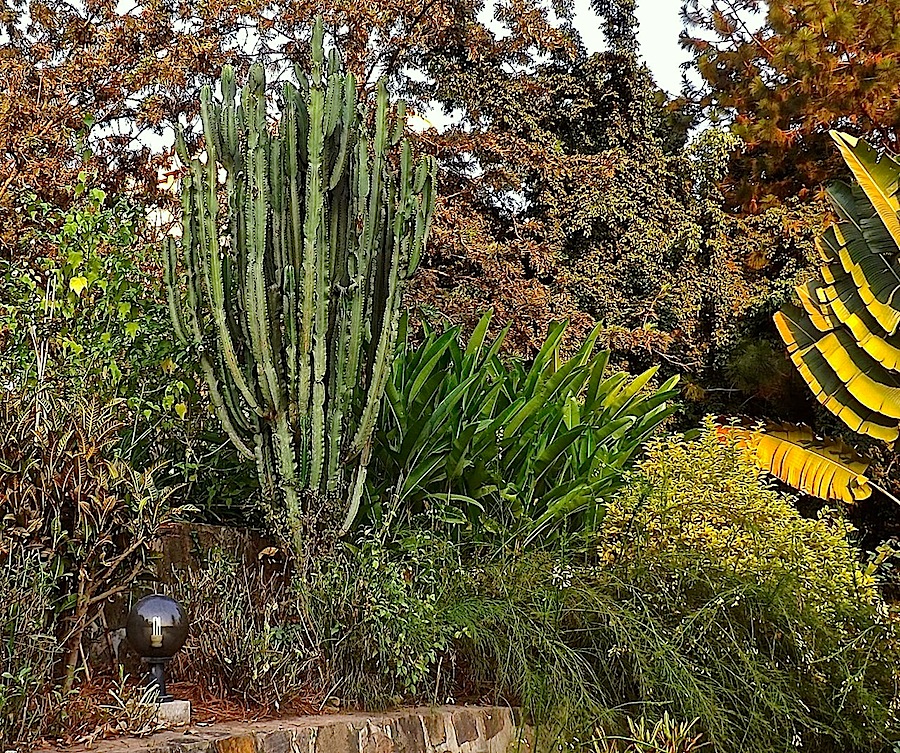
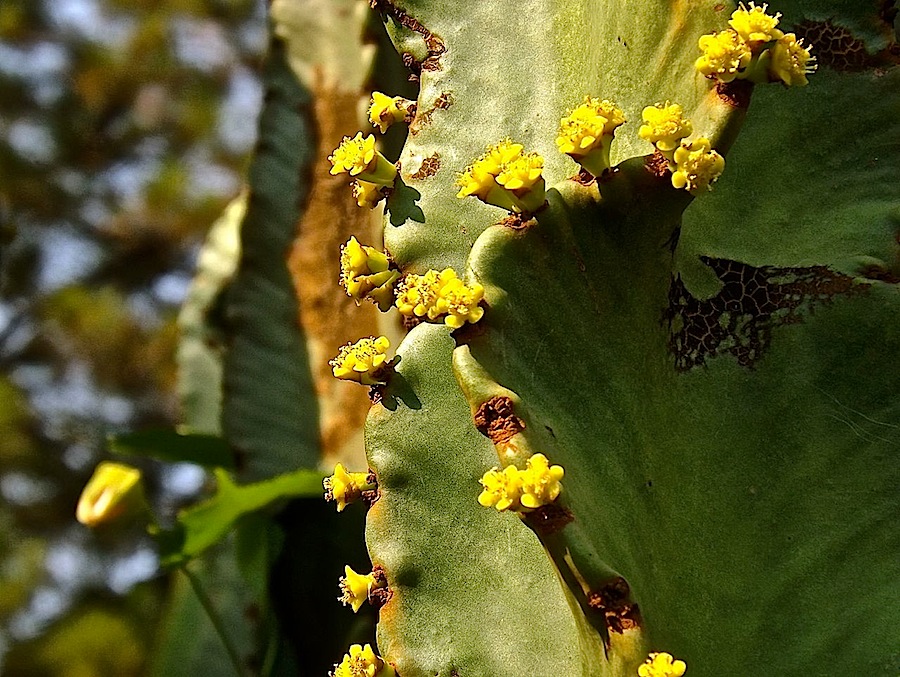
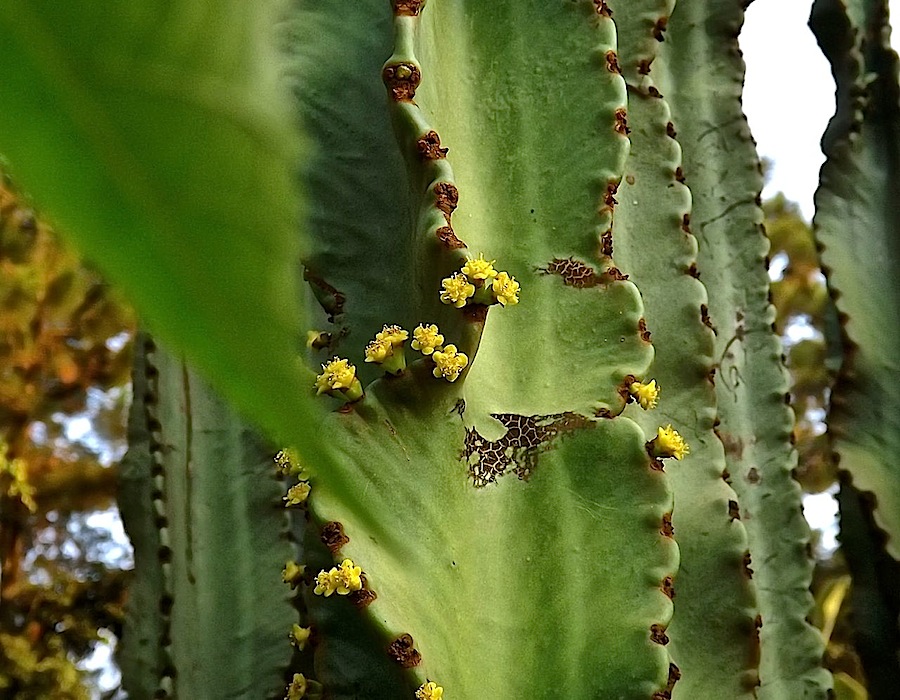
On the opposite end of the showy-ness scale, I discovered last week that our cactus-like Euphorbia (above and below) is blooming.

Cactus in our Kigali garden/enclos*ure

The flowers are a little over a 1/4″ across.

Cactus in our Kigali garden/enclos*ure

Cactus in our Kigali garden/enclos*ure

GBBD — the 15th of every month — is hosted by Carol at May Dreams Gardens. Click here to see other garden bloggers’ mid-July flowers.


*It was among the bushes on the right in this photo. It was always clipped, so it probably hasn’t bloomed for a long time.

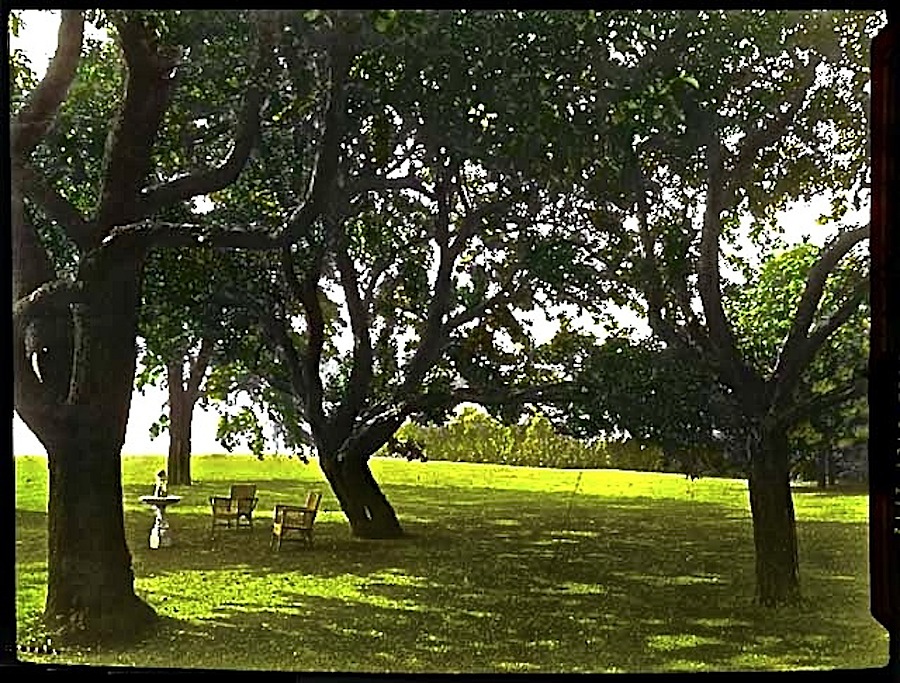
Shadow-chequer’d lawn

Grosse Pointe, Michigan, garden, 1930, Archives of American gardens, Smithsonian Institution
Unidentified garden in Grosse Pointe, Michigan, 1930, photographer unknown, via Archives of American Gardens, Smithsonian Institution Commons on flickr.

Thence thro’ the garden I was drawn—
A realm of pleasance, many a mound,
And many a shadow-chequer’d lawn. . . .

— Alfred, Lord Tennyson, from “Recollections of the Arabian Nights

Ruzizi Tented Lodge at Akagera National Park

After our recent drive to the southeast corner of Rwanda, we backtracked and then headed north to Akagera National Park to spend the night.
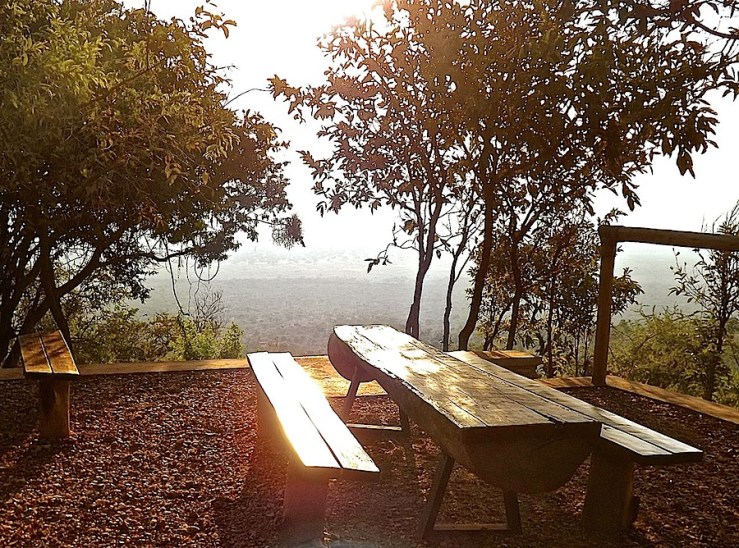
Picnic table, welcome center, Akagera Nat'l. Park in Rwanda:enclos*ure

It was about 4:30 p.m. when we arrived at the park’s welcome center, and I was anxious to get some photos before the light disappeared.  Here, near the equator, dark comes between 6:00 and 6:30 all year round.  No extra long summer days for us.
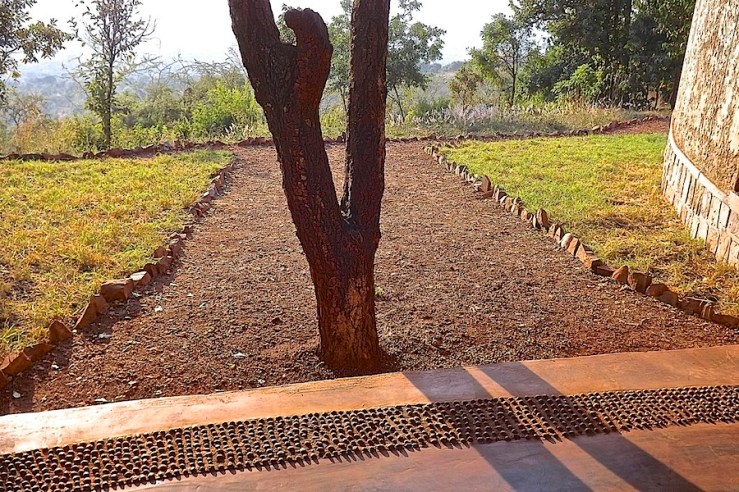
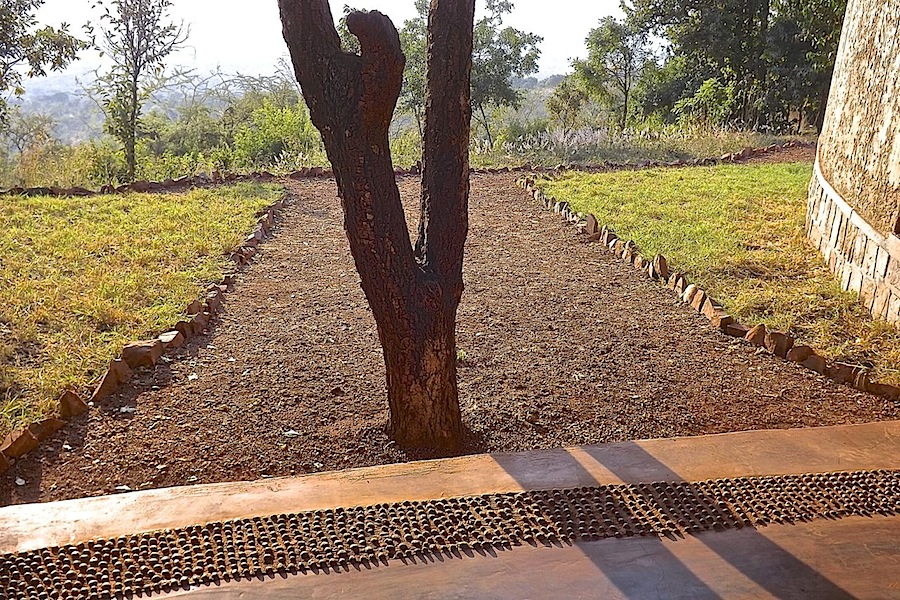
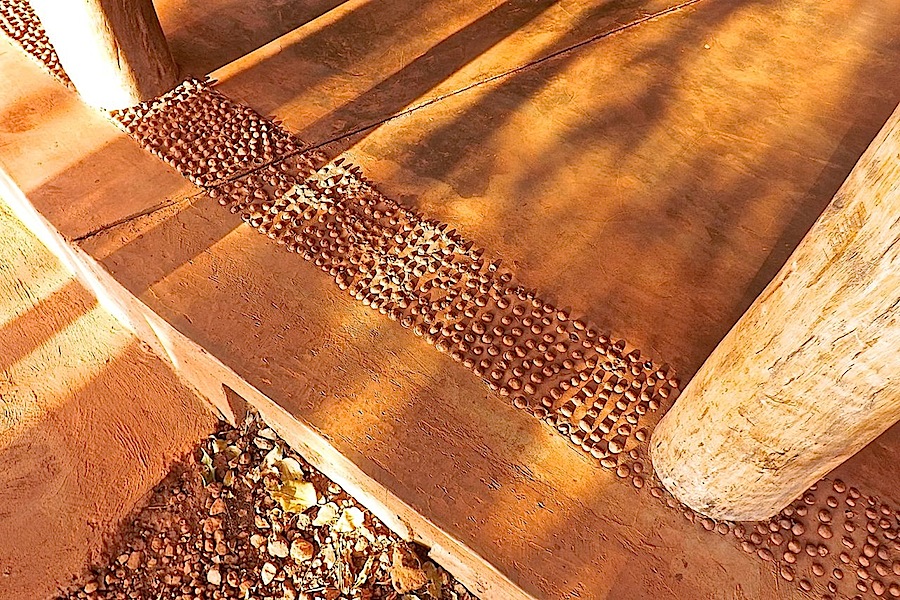
Pebble floor border, welcome center, Akagera Nat'l. Park in Rwanda:enclos*ure

I liked the pebble border to the welcome center’s concrete floor, which had been colored red, like the surrounding dirt.
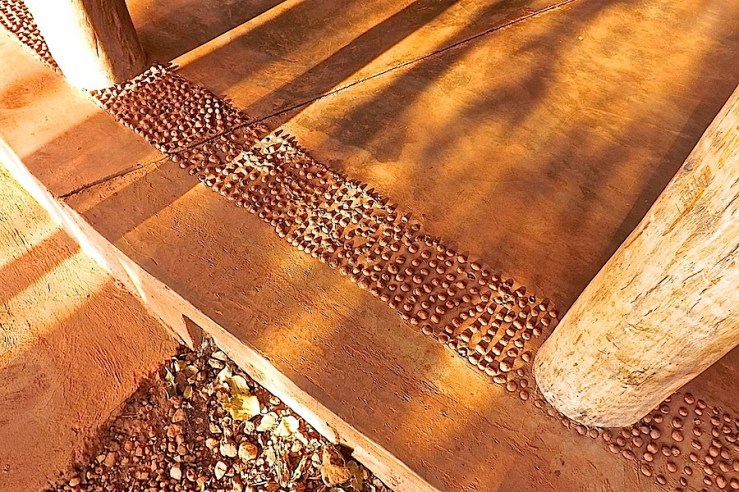
Pebble floor border, welcome center, Akagera National Park, Rwanda:enclos*ure

The attractive building, which for some reason I failed to photograph, was stone and stucco and had a thatched roof, like the lodge pictured below.
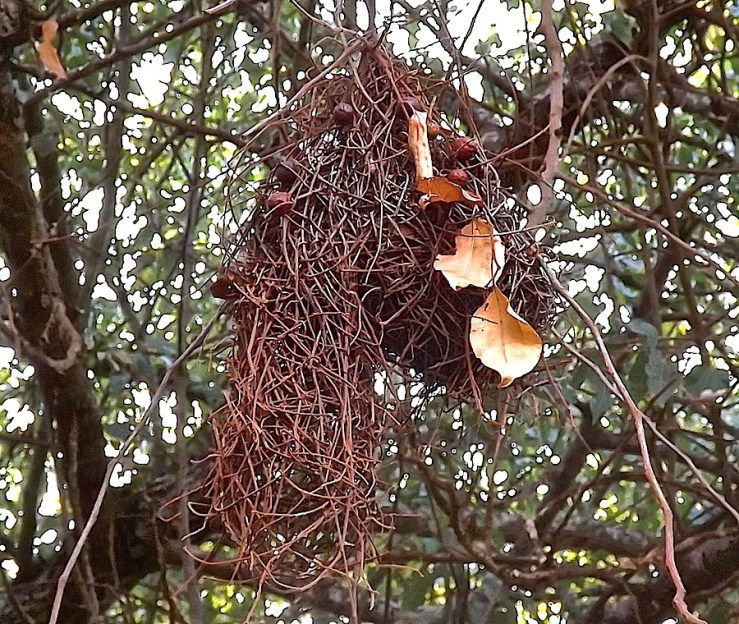
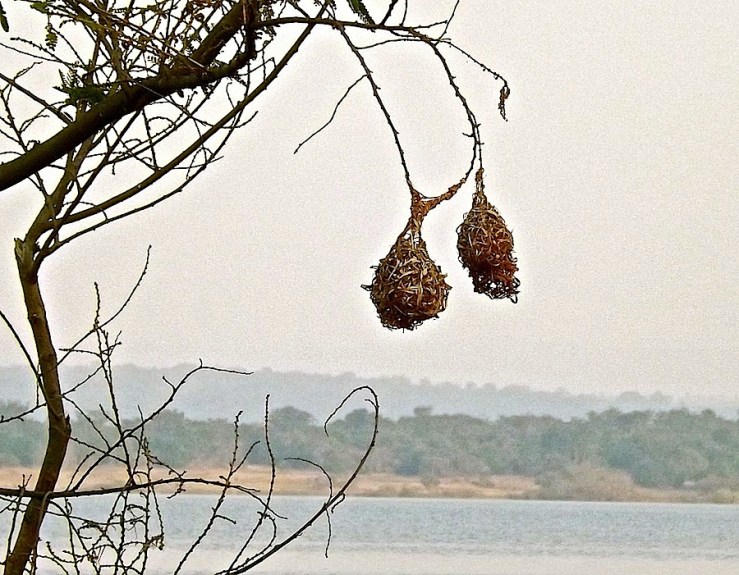
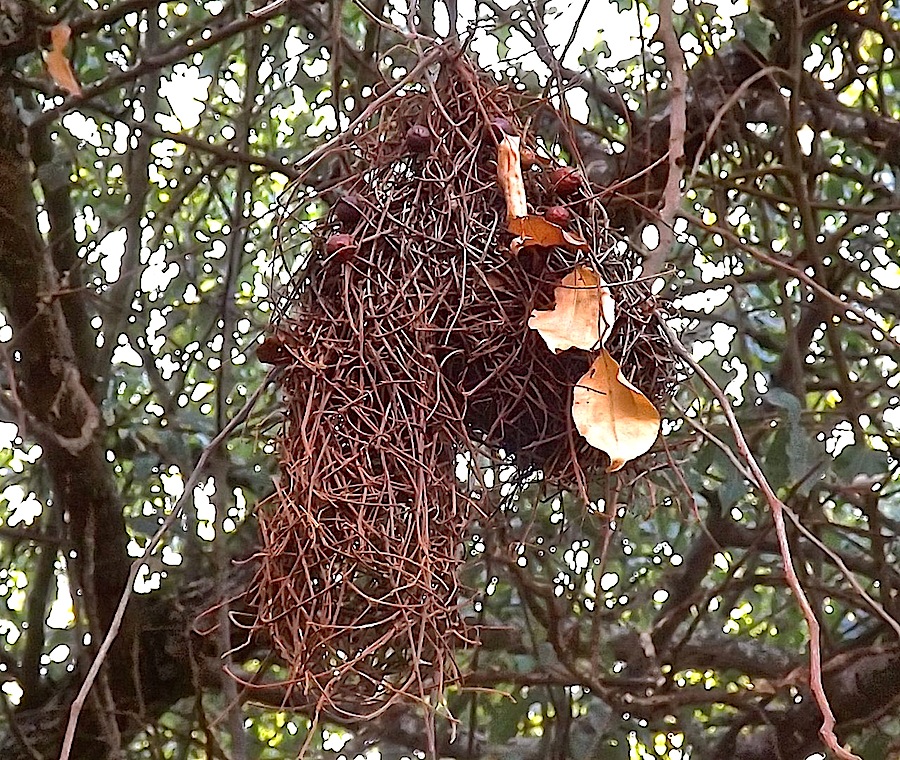
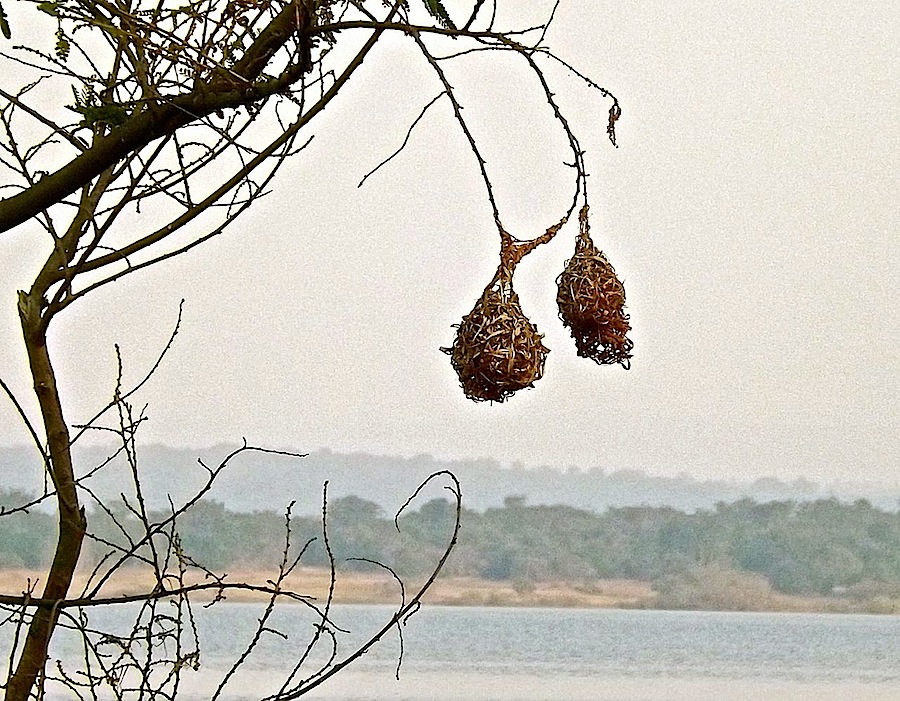
Long-neck weaver bird nest, Akagera Natl. Park, Rwanda:enclos*ure

In a tree just outside the welcome center, there was a weaver bird nest (above) — this one with a very long entrance tunnel, a protection against predators.
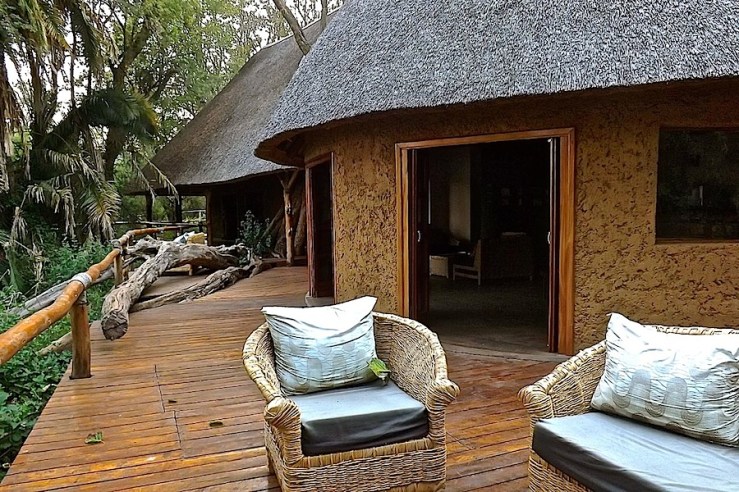
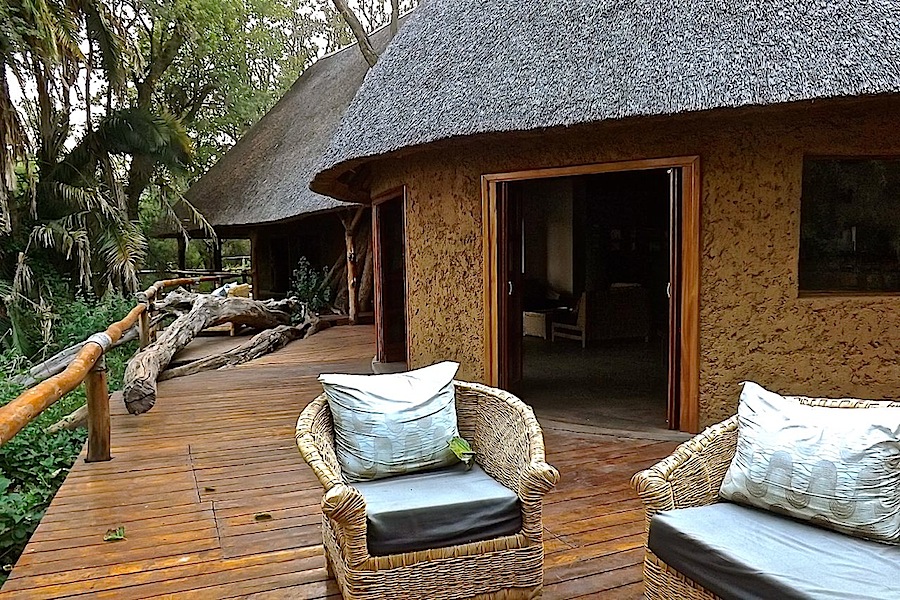
Main lodge, Ruzizi Tented Lodge, Akagera Nat'l. Park, Rwanda:enclos*ure

The Ruzizi Tented Lodge — which opened inside the park just this year — is on a small strip of largely undisturbed land along the edge of Lake Ihema.
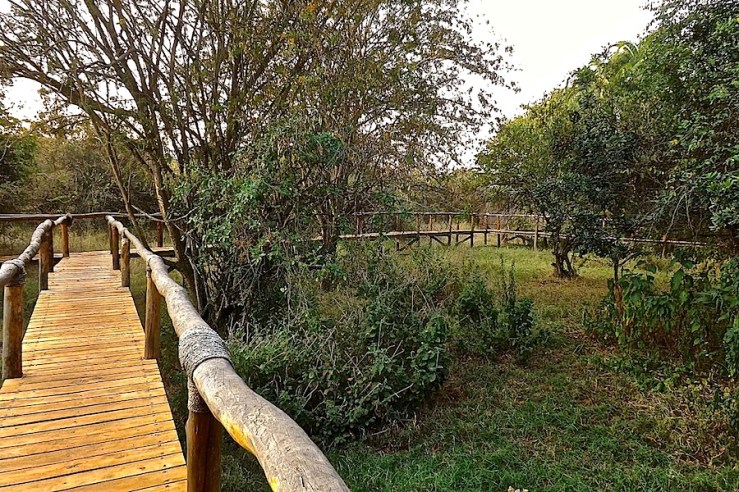
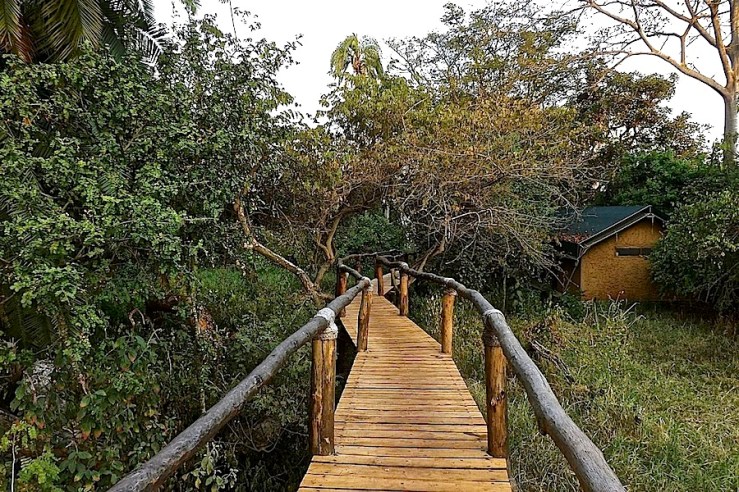
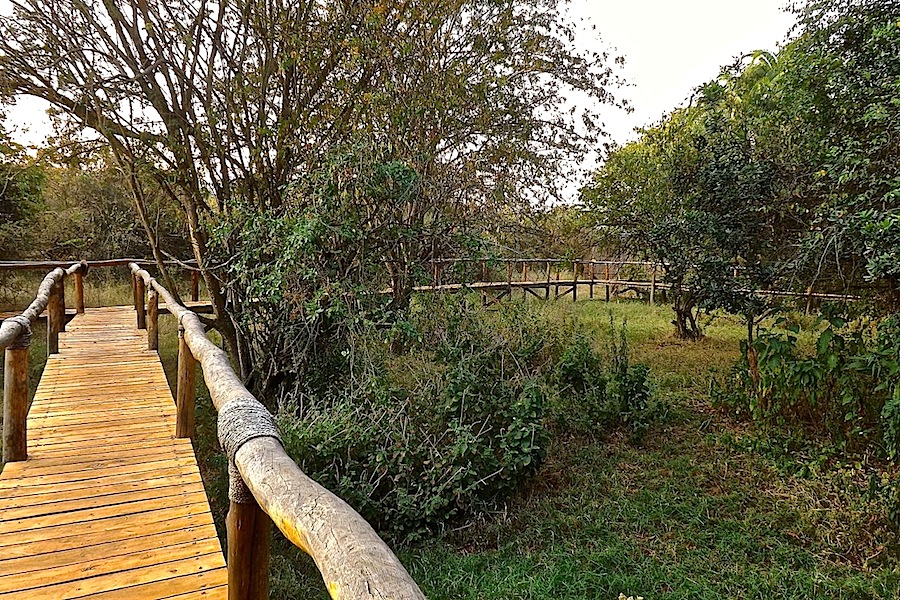
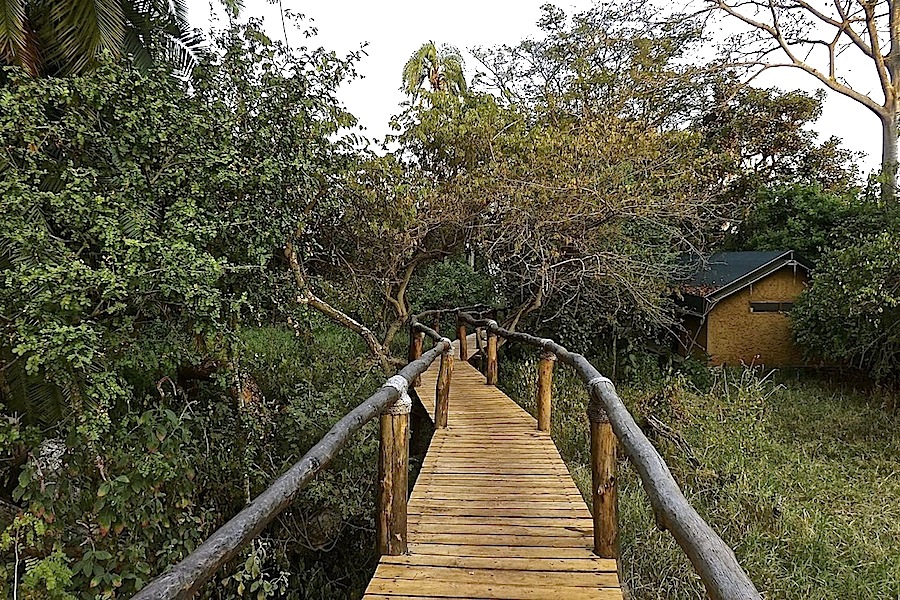
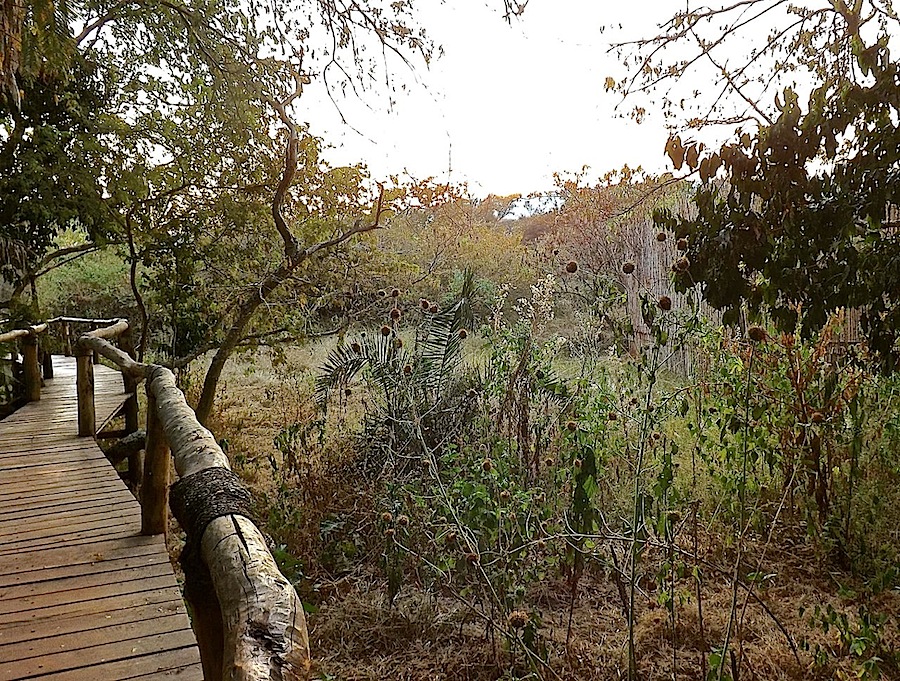
Boardwalk, Ruzizi Tented Lodge, Akagera Nat'l. Park in Rwanda:enclos*ure

Boardwalks keep visitors off the native plants, not to mention away from the equally native crocodiles and hippos.  (An electric fence keeps other large animals out on the inland side of the lodge.)
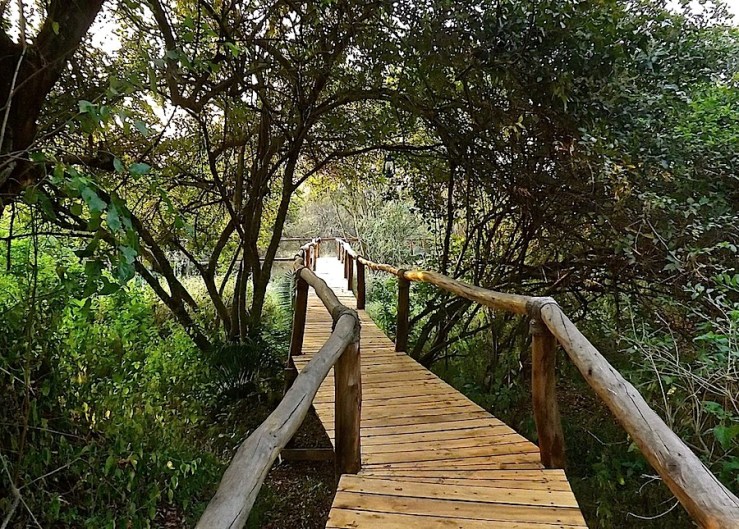
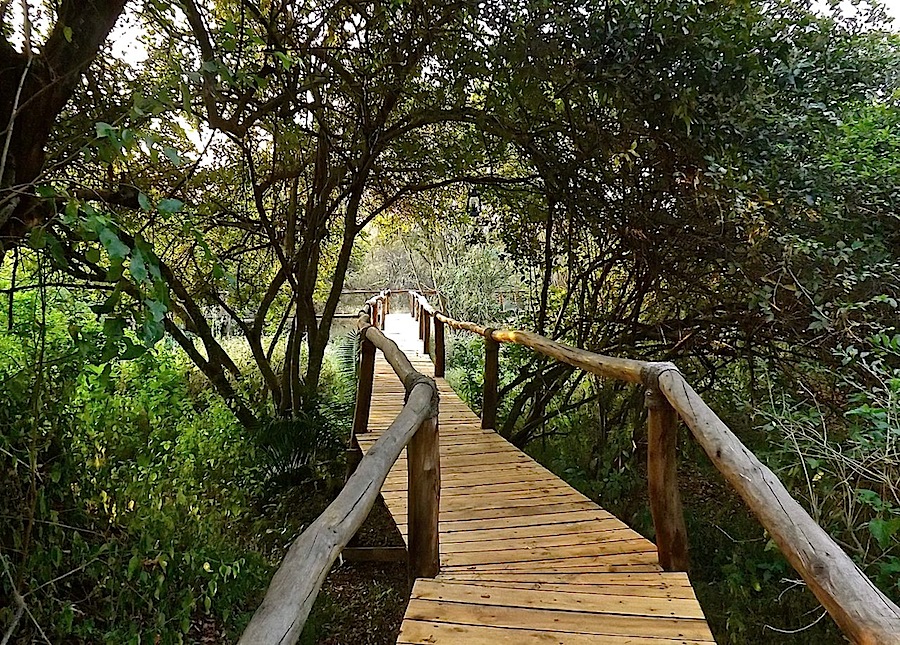
Boardwalk, Ruzizi Tented Lodge, Akagera National Park, Rwanda:enclos*ure

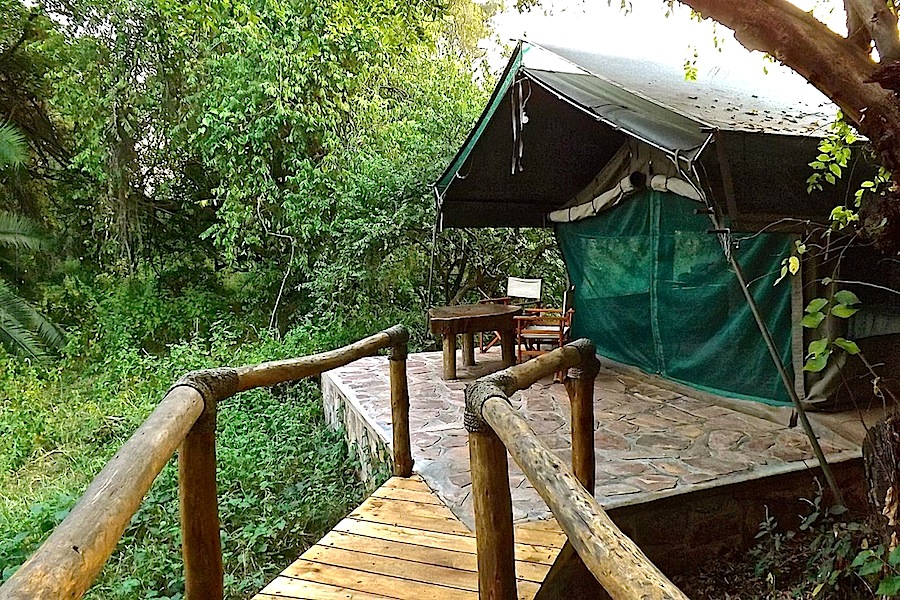
Boardwalk to tent, Ruzizi Tented Lodge, Akagera Natl. Park in Rwanda:enclos*ure

The camp has seven tented cabins, each with a full bath, one or two real beds (with reading lamps), and an outlet for recharging phones.
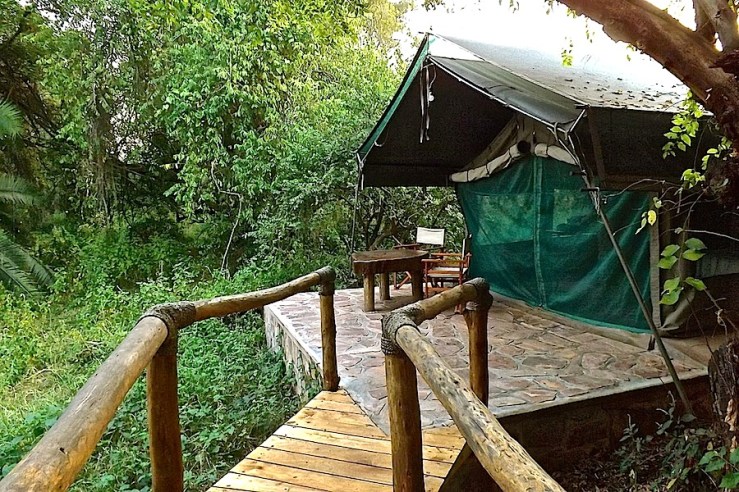
Tent cabin, Ruzizi Tented Lodge, Akagera Natl. Park, Rwanda:enclos*ure

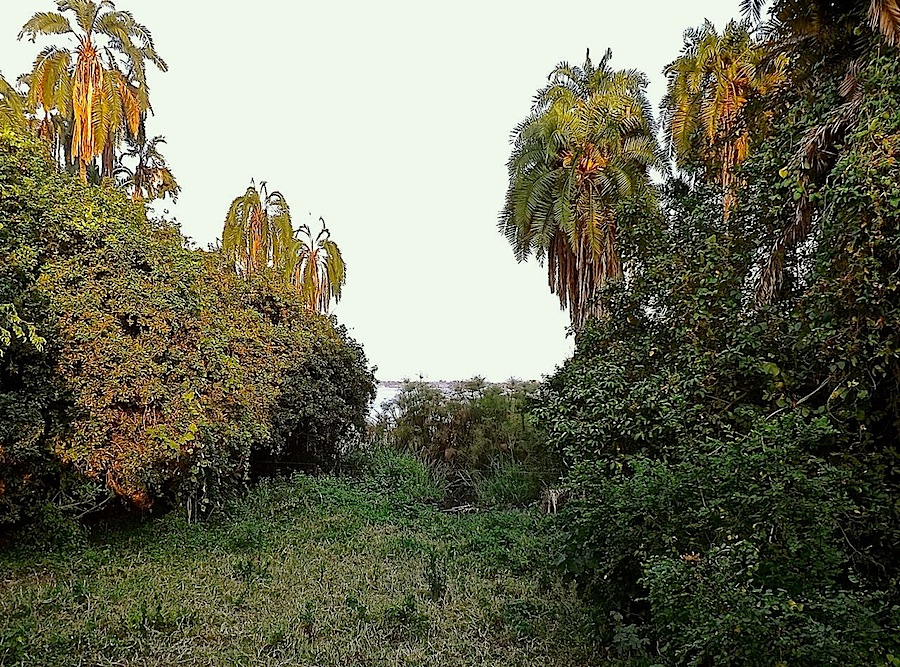
Below is our tent’s “front yard,” which was quite close to the water’s edge.  That night, we heard, but did not see, hippos near our tent.
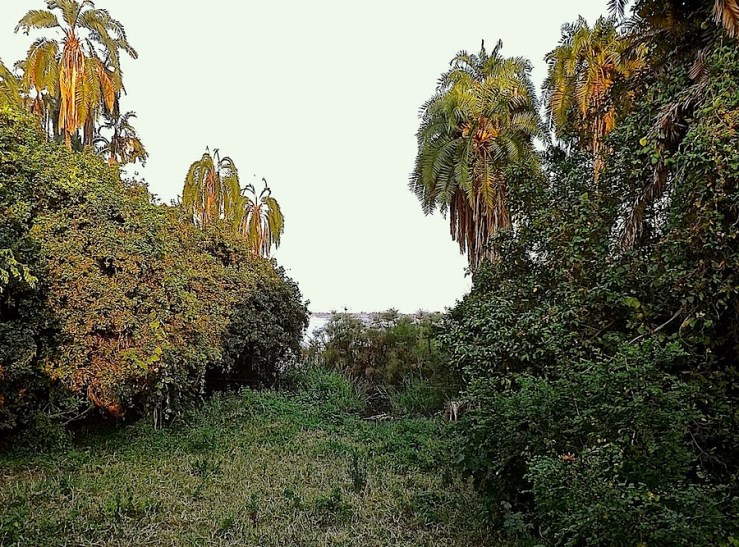
Marshy edge of Lake Ihema at Ruzizi Tented Lodge, Akagera National Park, Rwanda:enclos*ure

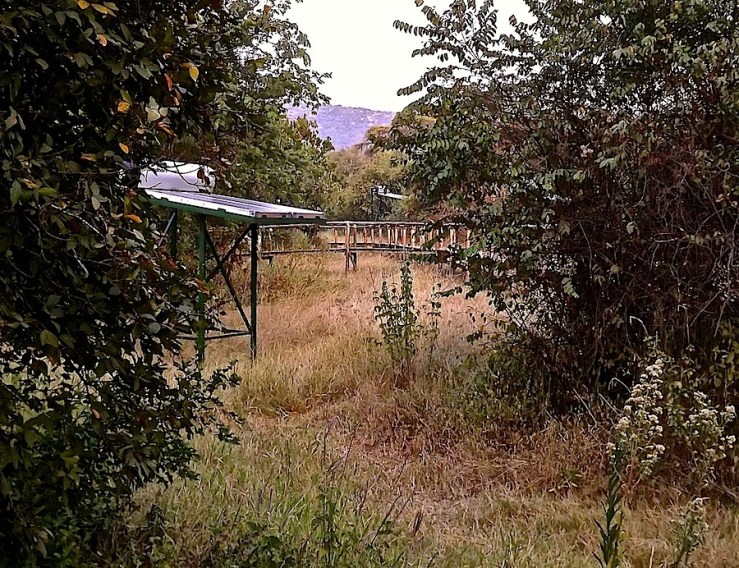
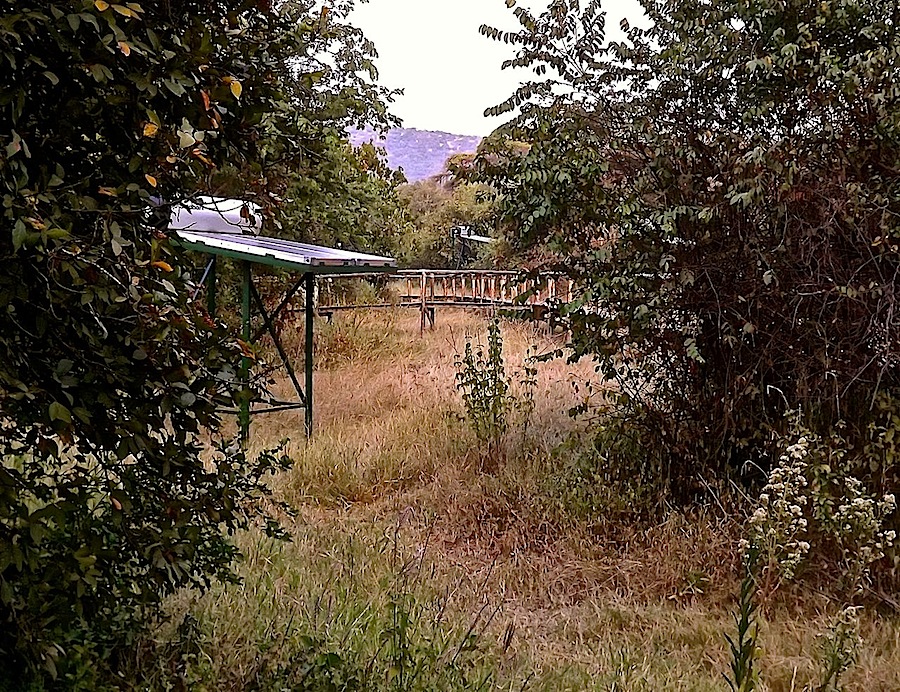
Solar panels for tents, Ruzizi Tented Lodge, Akagera National Park, Rwanda:enclos*ure

Each tent has a solar panel for lights and hot water — shown above.
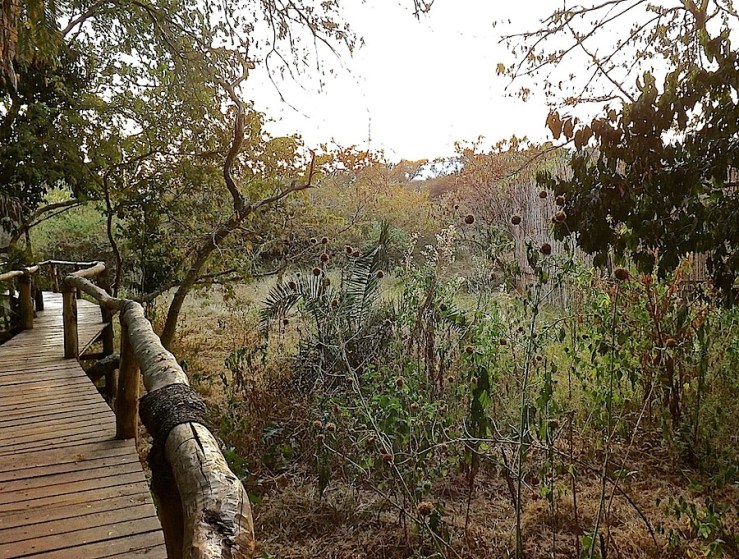
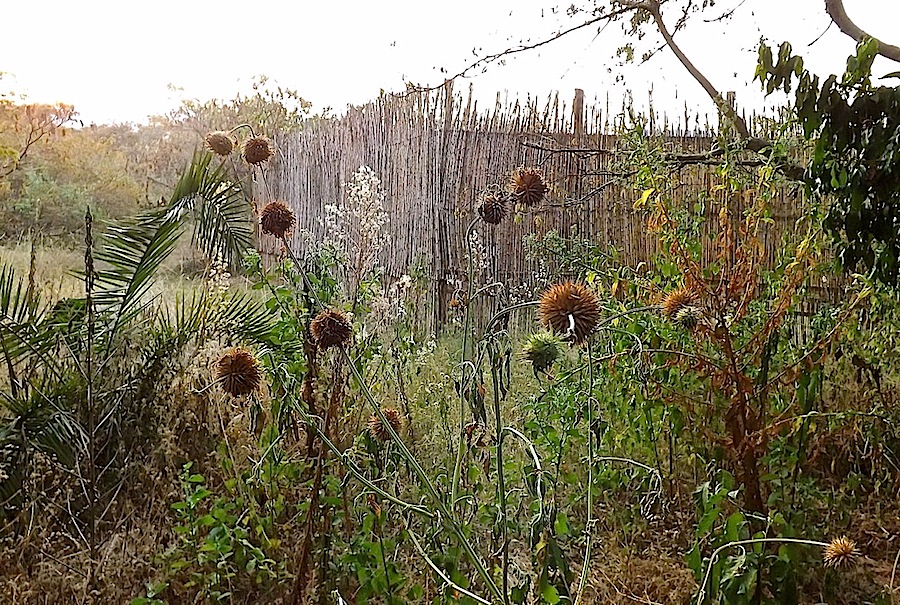
Wildflowers and boardwalk, Ruzizi Tented Lodge, Akagera National Park in Rwanda:enclos*ure

Even in the dry season, there were some wildflowers catching the last of the day’s light.
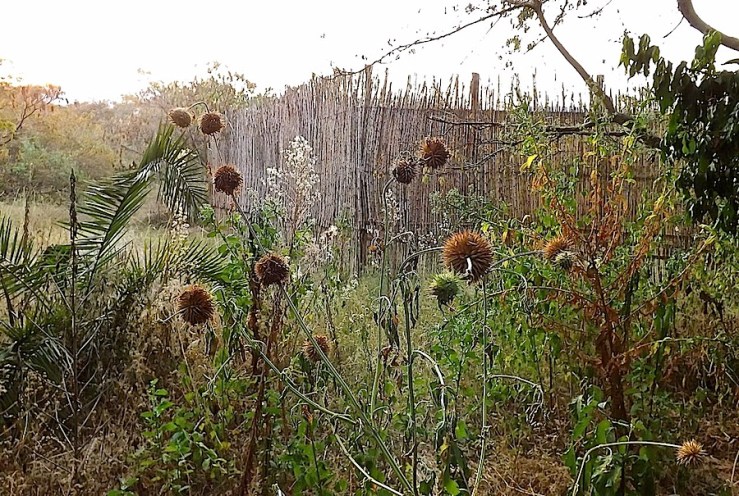
Wildflowers, Ruziz Tented Lodge, Akagera National Park, Rwanda:enclos*ure

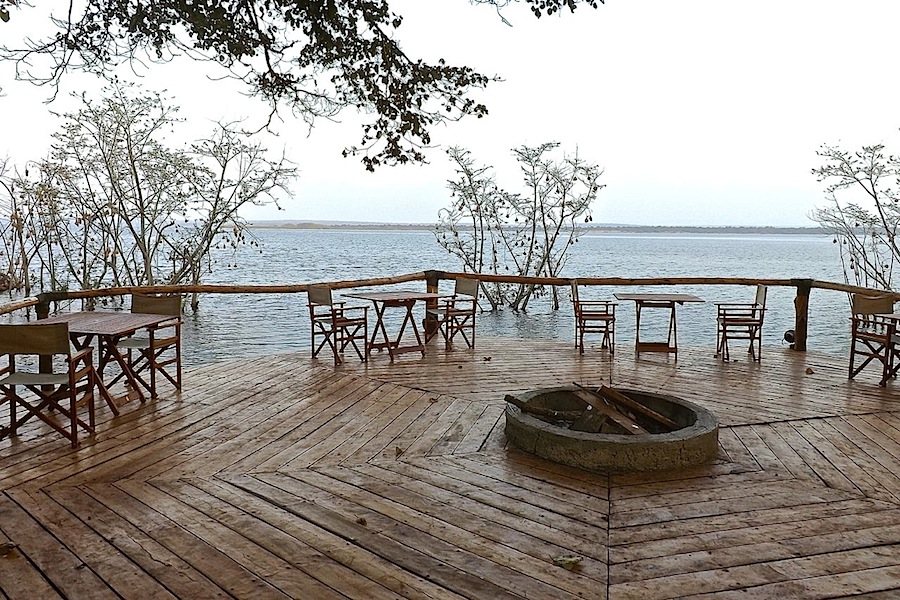
In the evening, we had cocktails around a fire on the riverside deck, below.
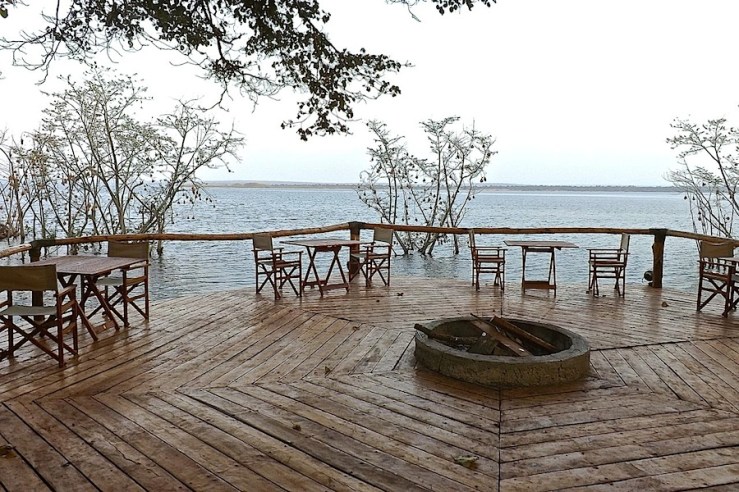
Lakeside eating area, Ruzizi Tented Lodge, Akagera National Park, Rwanda:enclos*ure

Breakfast was also served there — while monkeys ate fruit off a big tree above us.
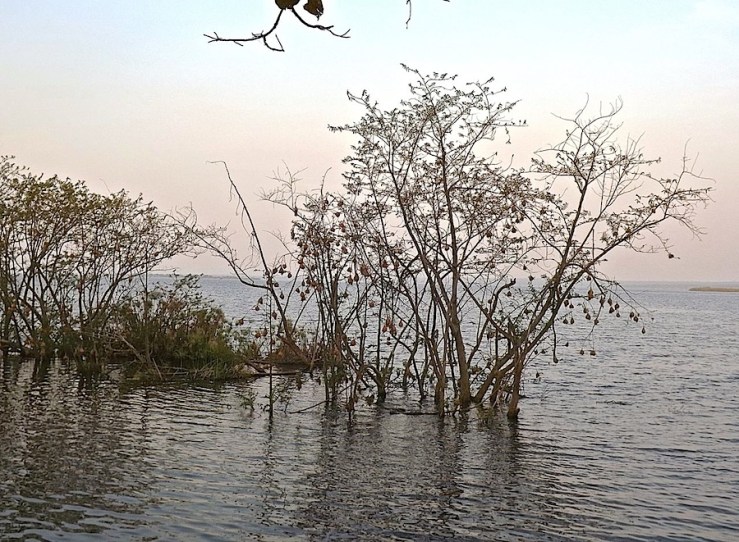
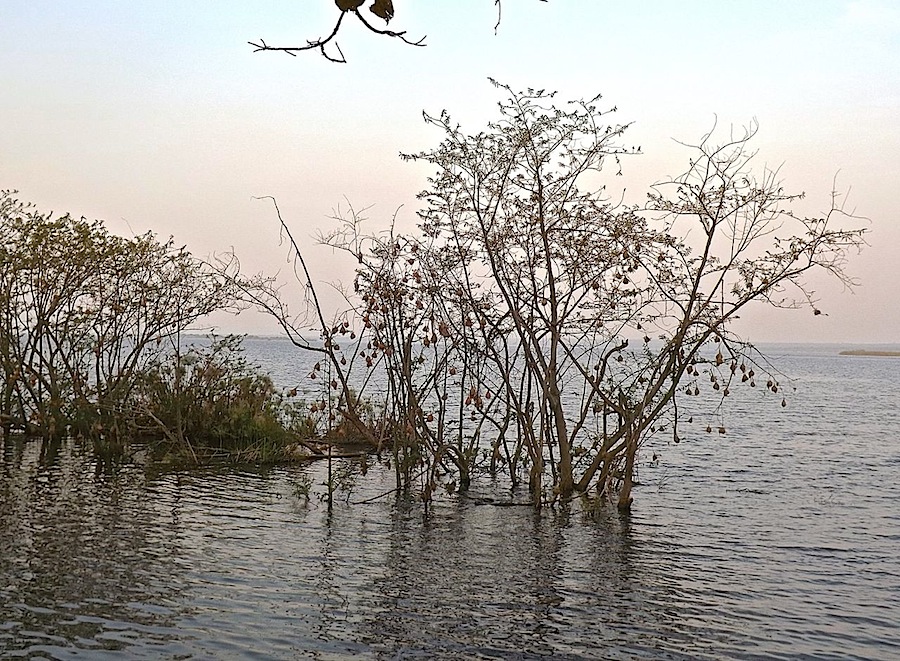
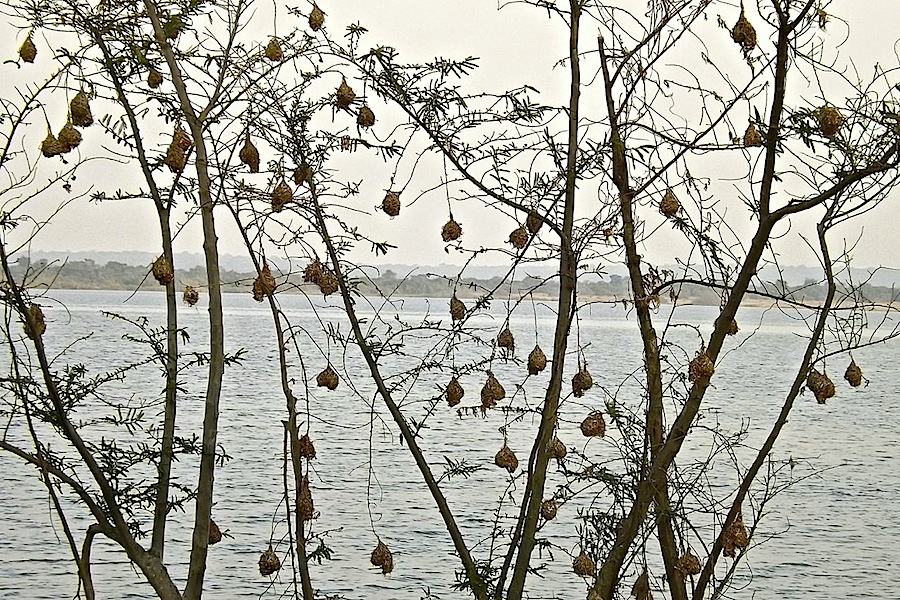
Weaver birds' nests at dusk, Ruzizi Tented Lodge, Akagera National Park, Rwanda:enclos*ure

In the shrubby trees just beyond the deck, there were dozens of (empty) weaver birds’ nests.
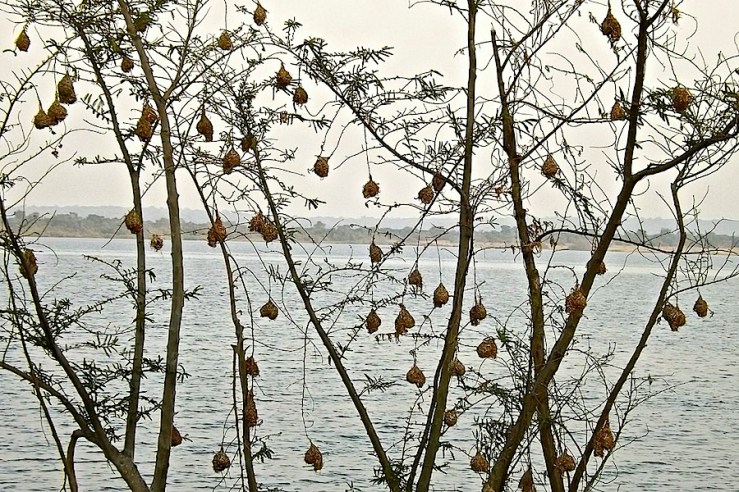
Weaver birds' nests, Akagera Nat'l Park, Rwanda:enclos*ure

Weaver birds' nests, Ruzizi Tented Lodge, Akagera Natl. Park in Rwanda:enclos*ure

Located along Rwanda’s eastern border with Tanzania, Akagera National Park presents quite a different landscape from the mountainous forests and farms of western and central Rwanda. (It is one of four large national parks in the country.)

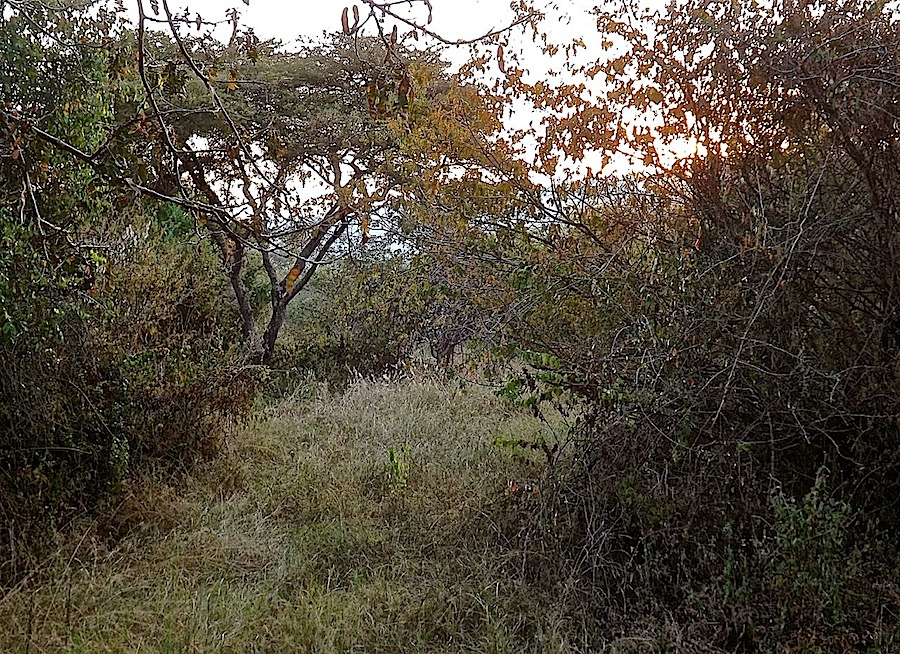
“[I]ts undulating plains support a cover of dense, broad-leafed woodland interspersed with lighter acacia woodland and patches of rolling grassland studded evocatively with stands of the superficially cactus-like Euphorbia candelabra [aka E. ingens] shrub,” according to the Bradt guide to Rwanda.
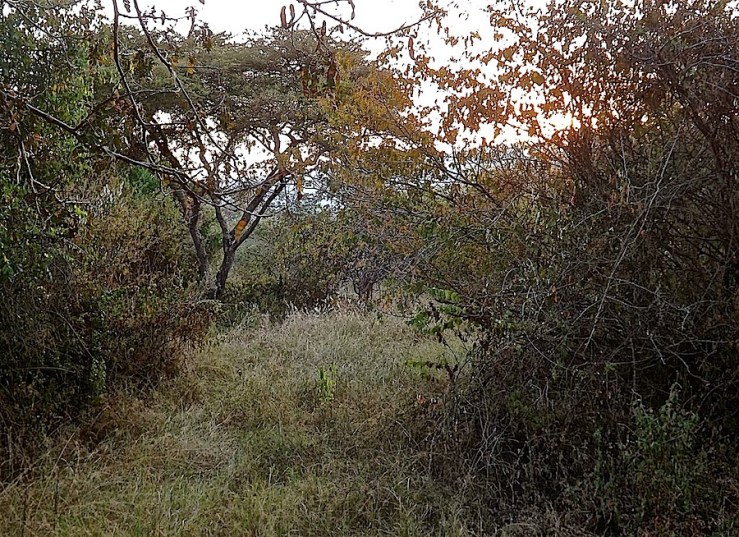
Grass and shrubs near Ruzizi Tented Lodge, Akagera Natl. Park, Rwanda:enclos*ure

There are also large wetlands surrounding several lakes and the channels of the Akagera River, which runs along the border between the two countries.

The game-viewing is not up the standards of the great savanna parks in neighboring countries, but every visitor I have talked to recently has seen elephants, hippos, zebra, and giraffes, as well as antelopes and impalas.  (Unfortunately, we did not have time to tour the park during our stay.)

Currently, there may or may not be lions and leopards in small numbers, but there are reportedly plans to restock them — and add black rhinos — eventually.

According to the Bradt guide, the birdlife is “phenomenal.”  The landscape is particularly scenic, with forests, lakes, swamps, and low mountains.  Perhaps best of all, the park is fairly empty of other tourists.

Camping (in real tents) is allowed in various locations.  It is also possible to take boat safaris on Lake Ihema.

Happy Fourth of July

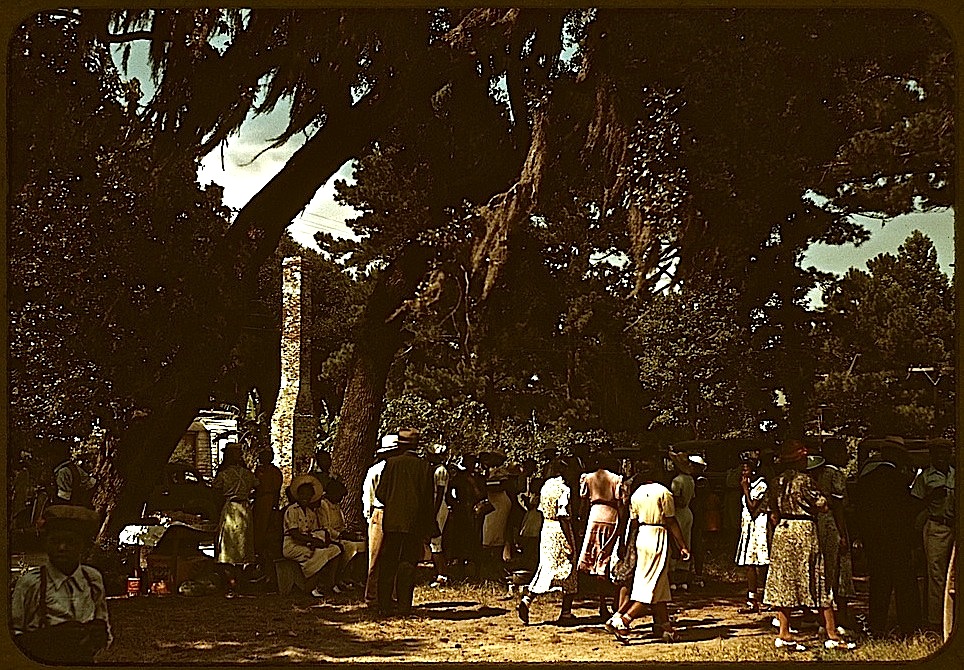
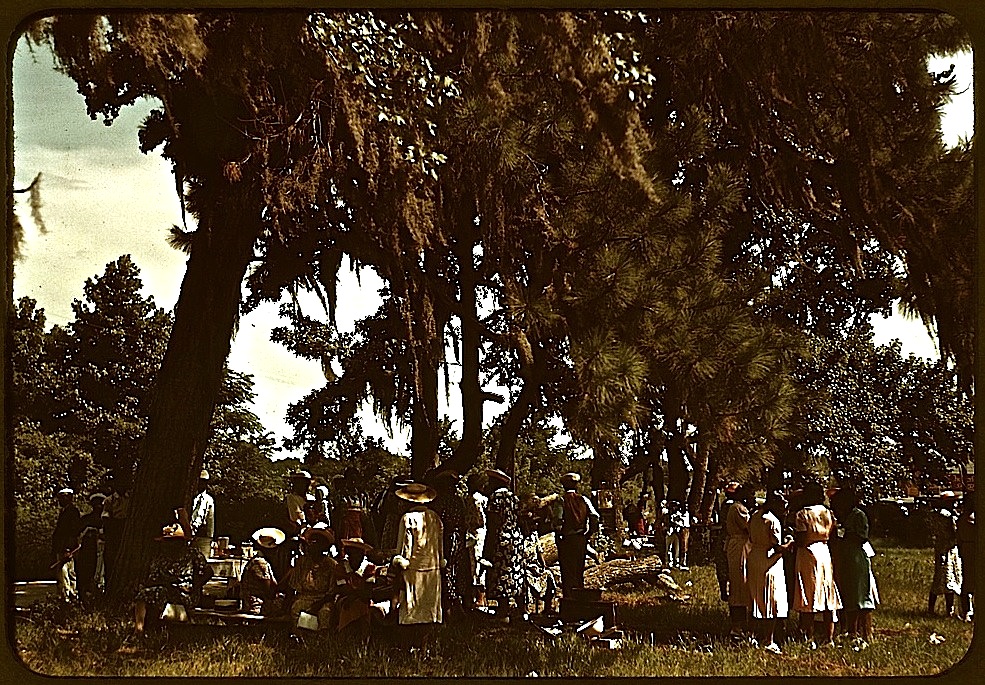
1939 Fourth of July on St. Helena Island, S.C., by Marion Post Wolcott, Library of CongressI found these early color slides of a 1939 community Fourth of July picnic on St. Helena Island, South Carolina, by Marion Post Wolcott.*

1939 Fourth of July on St. Helena Island, S.C., by Marion Post Wolcott, Library of CongressThey’re rather shadowy, but still lovely — like old oil paintings.

1939 Fourth of July on St. Helena Island, S.C., by Marion Post Wolcott, Library of CongressTo scroll through larger pictures, click on ‘Continue reading’ below and then on any thumbnail in the gallery. I lightened the images here a little, but those in the gallery are the original versions.

1939 Fourth of July on St. Helena Island, S.C., by Marion Post Wolcott, Library of CongressSt. Helena Island is one of the Sea Islands and a center of African-American Gullah culture and language.

1939 Fourth of July on St. Helena Island, S.C., by Marion Post Wolcott, Library of CongressHere in Rwanda, the American Embassy held its Independence Day reception last night. This is because the 4th is Rwandan Liberation Day — when Kigali was liberated in 1994, and the genocide was effectively ended. July 1 is Rwanda’s Independence Day, celebrating the end of Belgian colonialism in 1962.

1939 Fourth of July on St. Helena Island, S.C., by Marion Post Wolcott, Library of Congress


*via Library of Congress Prints and Photographs Division

Continue reading “Happy Fourth of July”

Vintage landscape: Pasadena garden

I do think a garden should be seductive. The strength of any garden is its ability to take you away.

— David L. Culp, in “3,000 Plants, and Then Some,” The New York Times.

1930 Pasadena garden, Archives of American Gardens, Smithsonian Institution Unidentified garden in Pasadena, California, 1930, by Diggers Garden Club, via Archives of American Gardens, Garden Club of America, Smithsonian Institution Commons on flickr.

Simple, elegant, and a little mysterious. . .

The Diggers Garden Club was founded in 1924 and still exists today.  It is a member of the Garden Club of America, which is celebrating its centennial this year.

At its 75th anniversary, the GCA donated 3,000 glass lantern slides (of which this is one) and over 30,000 film slides to the Smithsonian Institution’s Archives of American Gardens.  Its members continue to contribute to the collection, which now has over 60,000 images.

Many of the gardens pictured in the Archives’ slides are unidentified.  The Smithsonian is asking the public’s help in finding names and locations.  Click here to view its “Mystery Gardens Initiative.”