Vintage landscape: lilac bush

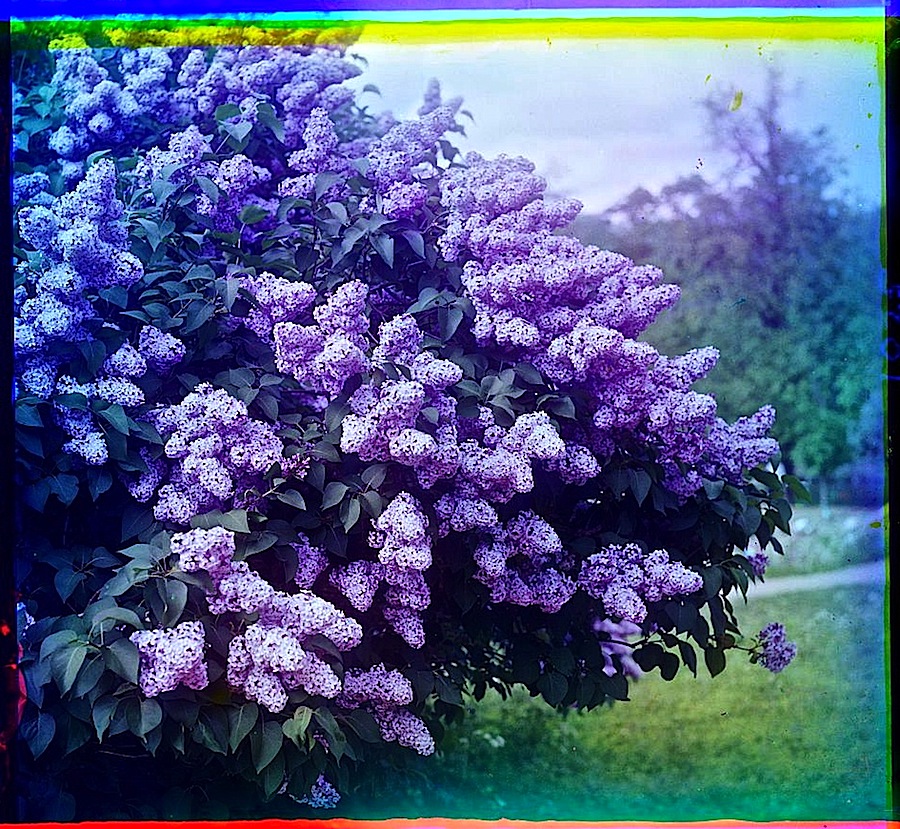
Lilacs, between 1905 and 1915, by  via Library of CongressSirenʹ  or lilacs — an early color photograph taken between 1905 and 1915 — by Sergeĭ Mikhaĭlovich Prokudin-Gorskiĭ, via Library of Congress Prints and Photographs Division.

In the dooryard fronting an old farm-house near the white-wash’d palings,
Stands the lilac-bush tall-growing with heart-shaped leaves of rich green,
With many a pointed blossom rising delicate, with the perfume strong I love. . . .

— Walt Whitman, from “When Lilacs Last in the Dooryard Bloom’d

Our garden: bird droppings (sort of)

On Friday morning, I looked down from our upstairs porch and cursed the hawks.

For about a year now, they have had a huge nest in the tree right next to the house — and they have “feathered” it with all sorts of garbage, particularly dirty pieces of cloth and scraps of paper.  They regularly redecorate by pushing some of their treasures out over the side.

Whenever I look up, I take in the sight of what looks like someone’s old underwear lapped over a branch.

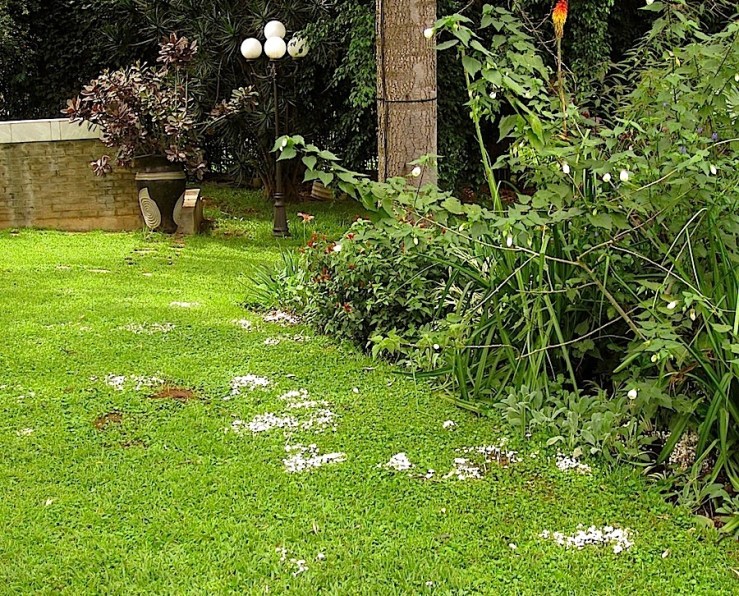
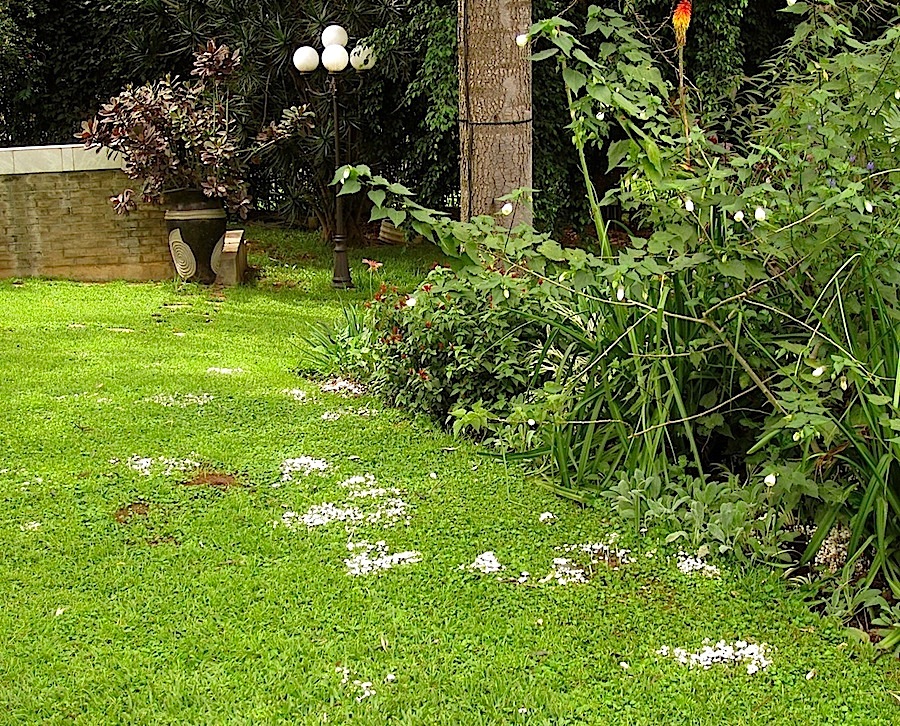
This appeared to be the worst yet — chips of styrofoam (?) all over the ground.  They really were flying pigs.
Tiny mushrooms in the grass/enclos*ure

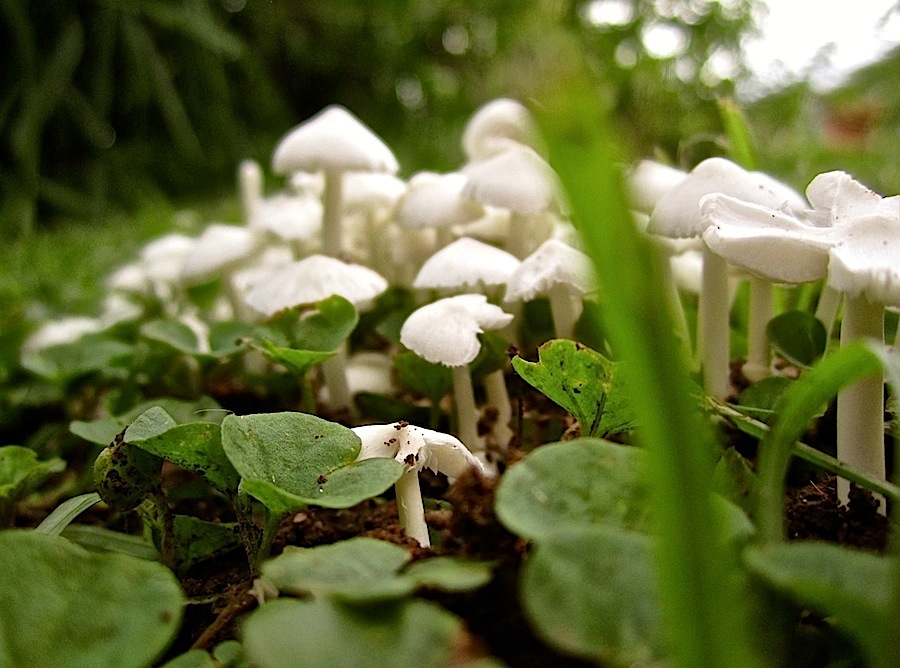
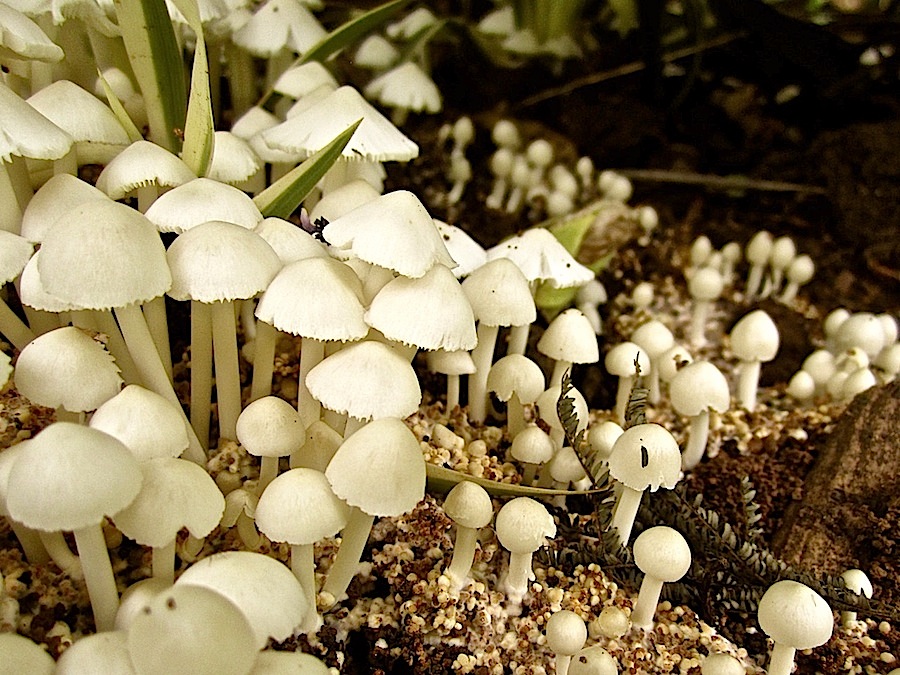
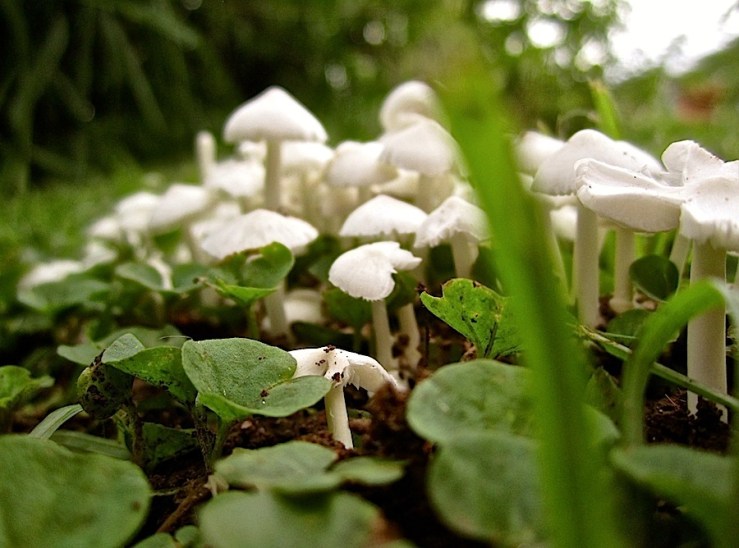
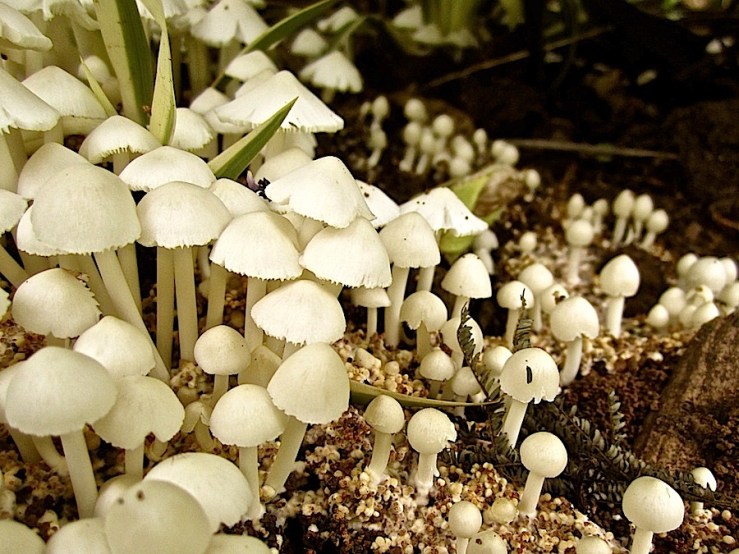
A closer inspection, however, revealed that I had to take it all back.
Tiny mushrooms in our garden/enclos*ure

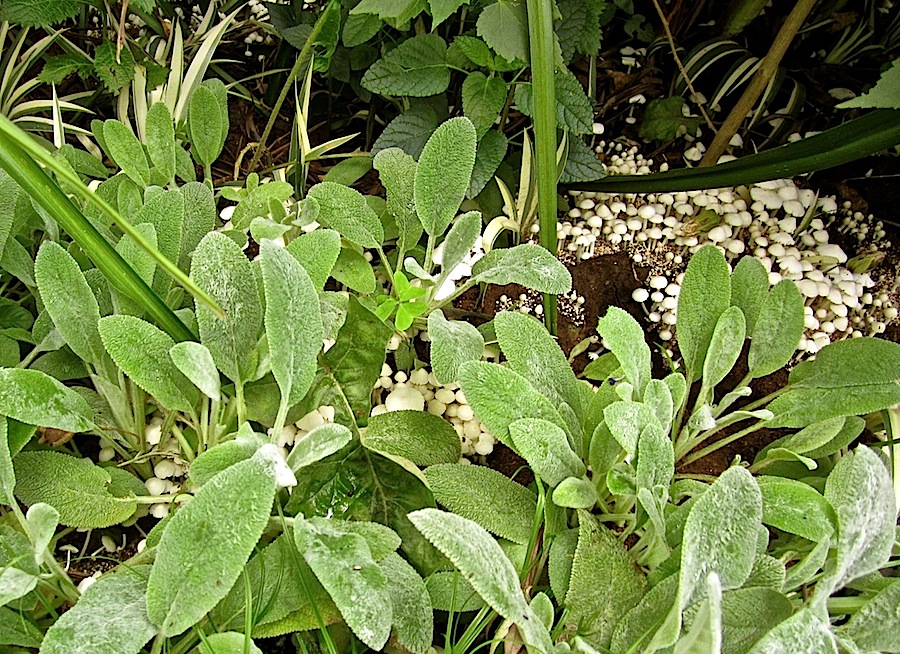
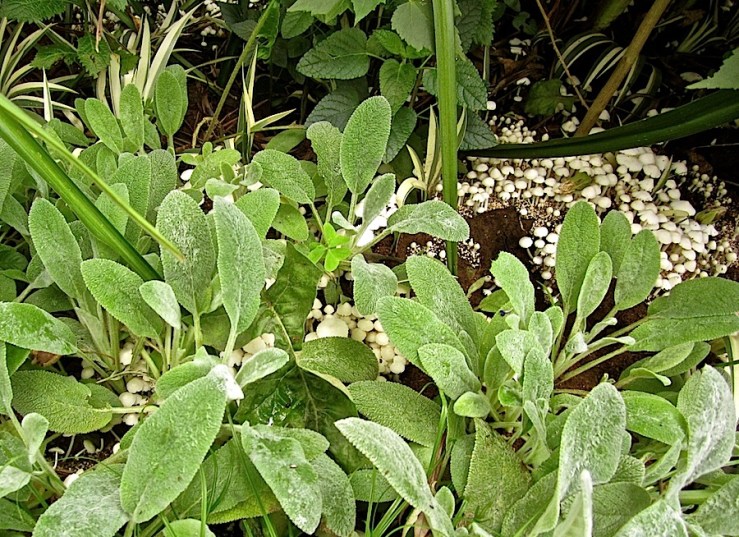
Thousands of tiny, tiny white mushrooms were in the grass and the planting bed.
Tiny mushrooms in our garden/enclos*ure

Below, the white grains under the mushrooms are yet more mushrooms.Tiny mushrooms in our garden/enclos*ure
Sorry, hawks. . . until next time.

Petit à petit, l’oiseau fait son nid

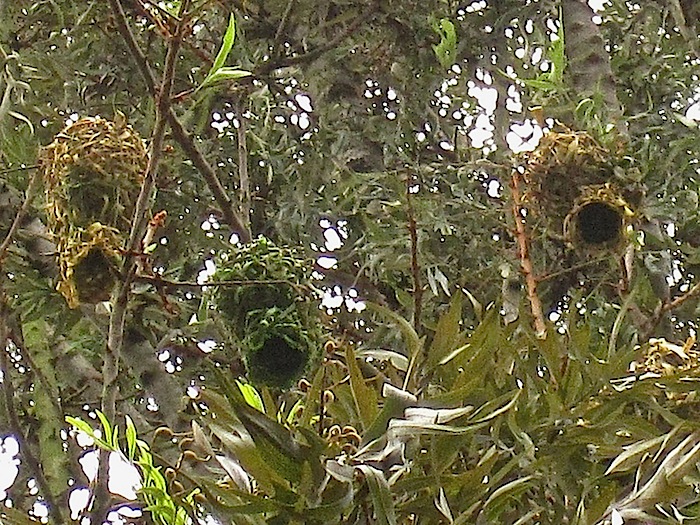
In more news from the same tree, the weaver birds and their amazing basket nests are back.

The yellow-colored males have been building and re-building for several weeks now, chattering loudly as they work.  According to a guidebook, the males weave and the females inspect (and destroy any subpar work).
Our garden and the birds/enclos*ure(There are much nicer photos of last year’s nests here.)

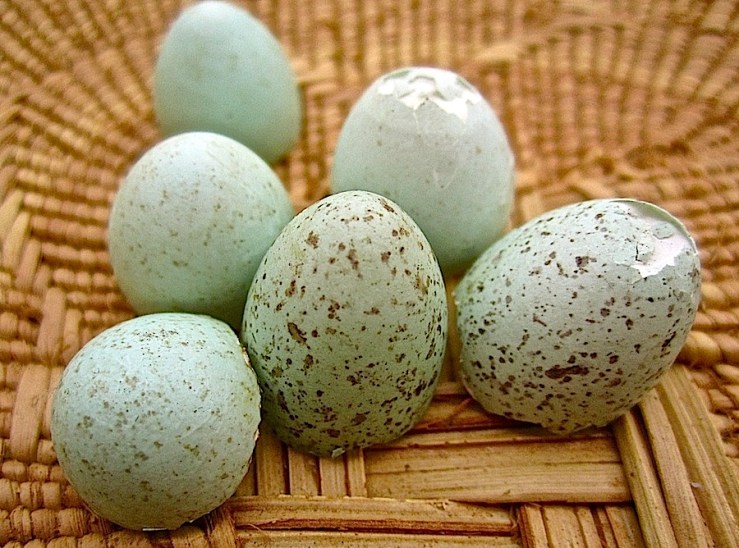
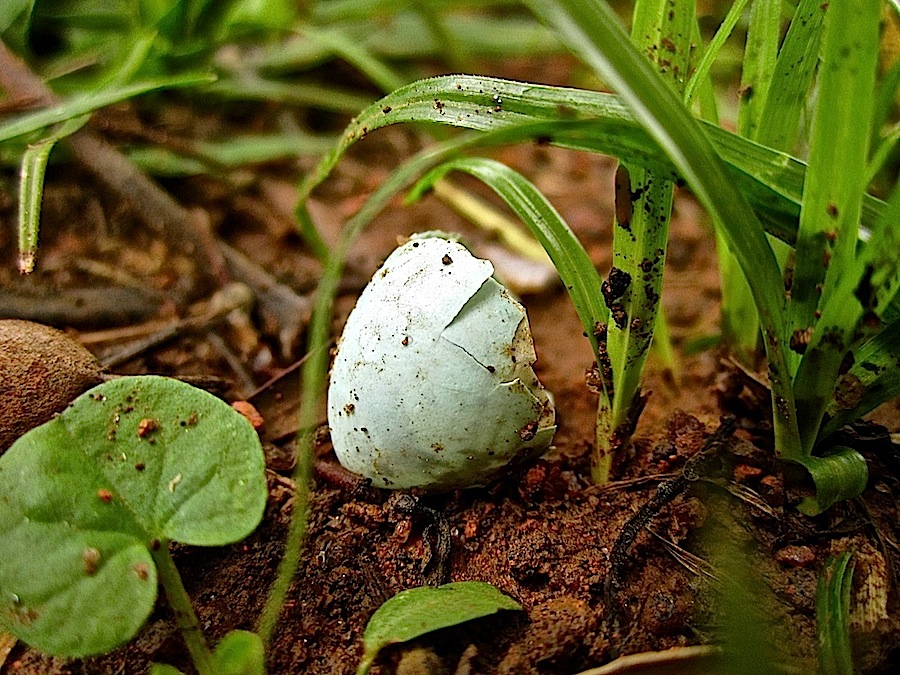
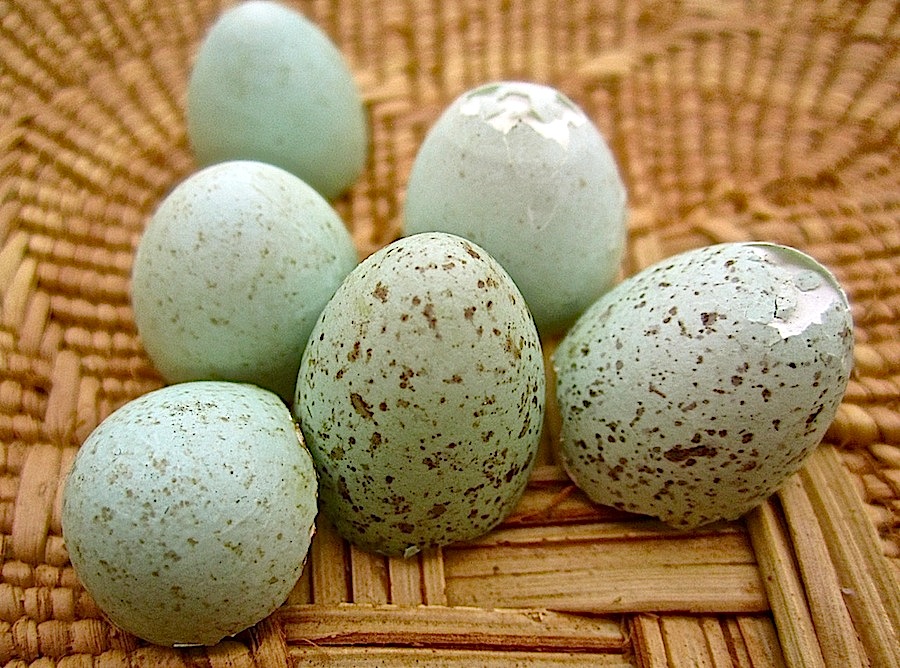
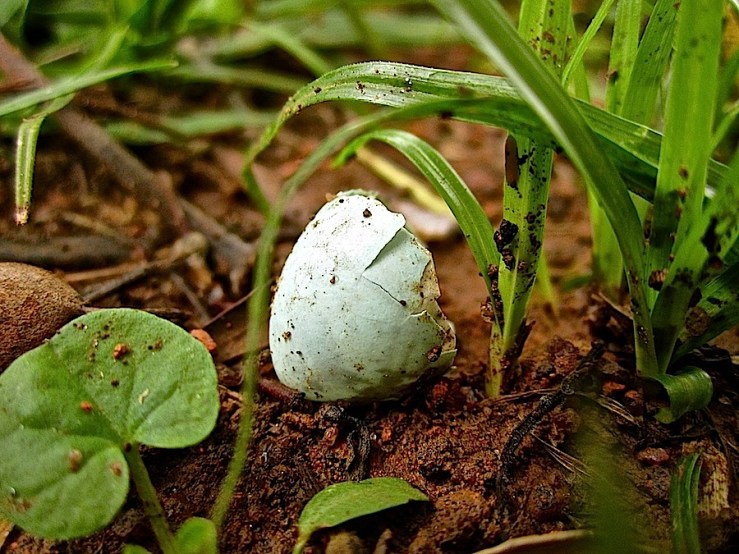
I guess the girls — who are plain brown — were finally satisfied, because it recently got much quieter up there. Then, a few days ago, I started finding halves of eggshells on the grass under the tree.
Our garden and the birds/enclos*ure

Here’s my collection so far.Our garden and the birds/enclos*ure


There are birds here,
so many birds here
is what I was trying to say
when they said those birds were metaphors
for what is trapped
between buildings
and buildings. . .

Jamaal May, from “There Are Birds Here

Foliage Follow Up: Eden’s curls

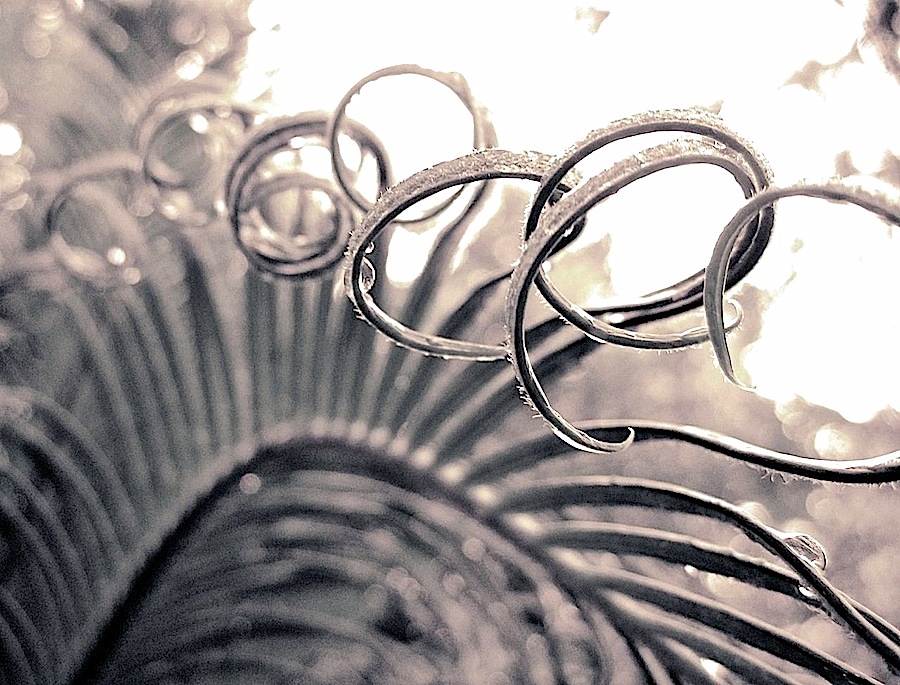
Our garden in Kigali/enclos*ure: the cycad's new leavesOne of our cycad’s new leaves — there’s more about this plant here.

Our cycad is a sago palm or Cycas revoluta, a species of gymnosperm with origins in the Mesozoic era.  Revoluta refers to the “curled back” leaves.

A strain of the earth’s sweet being in the beginning
In Eden garden. . .

— Gerard Manley Hopkins, from “Spring

Garden Bloggers’ Foliage Follow Up is the 16th of every month. Check out more beautiful leaves at Digging.

The Sunday porch: somewhere in Texas

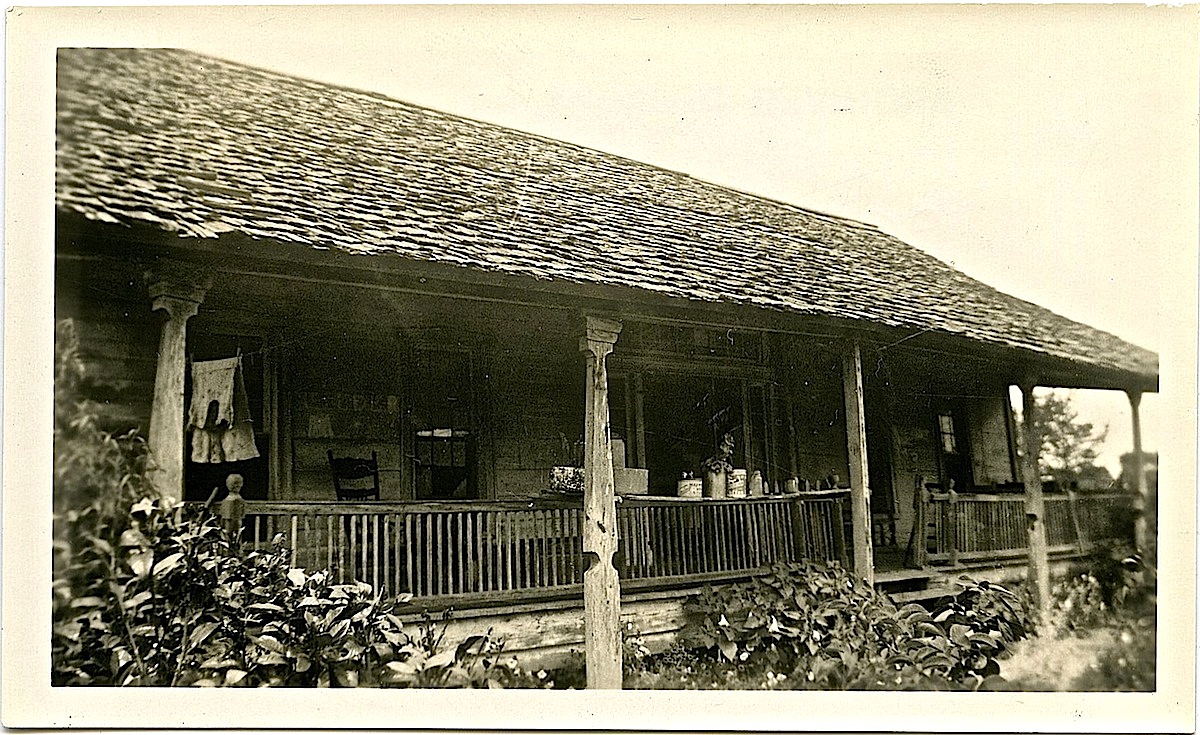
The Sunday porch/enclos*ure: unidentified Texas porch, by Fanny Ratchford, 1936, via Texas State Archives Commons.“Unidentified house,” probably by Fanny Ratchford, 1936, via Texas State Archives Commons on flickr. (You can click on the photo to enlarge it.)

It’s interesting to me that the roof of the house extends beyond the edge of the porch. The pretty columns are not attached to the railings, but come down to the ground a few feet beyond them.

There seems to be a word — maybe a name — on the wall above the chair on the left side, but I can’t read it.

ADDENDUM: The way the columns are set makes this a rain porch.

This slideshow requires JavaScript.

Among a little wind grit, in a grid on a grid, somewhere
like the crossroads of outer space and Earth, Texas,
a handful of ragged elms withstand a long sway
of heat and wind. These old guards of a home haunt
the field but wither even as ghosts must. Honor them
with a walk among homesick bricks, and prophesy good.

John Poch, from “The Llano Estacado

Life in gardens: White House

Sadat and Carter at the White House, 1980, Library of Congress“President Jimmy Carter and Egyptian President Anwar Sadat have refreshments in the garden of the White House,” April 8, 1980, Washington, D.C. Photo credited to Marion S. Trikosko and Warren K. Leffler,via Library of Congress Prints and Photographs Division.*
The previous spring, Sadat and Israeli Prime Minister Menachem Begin had signed the Egypt-Israel Peace Treaty on the White House lawn.


*U.S. News & World Report Magazine Photograph Collection.