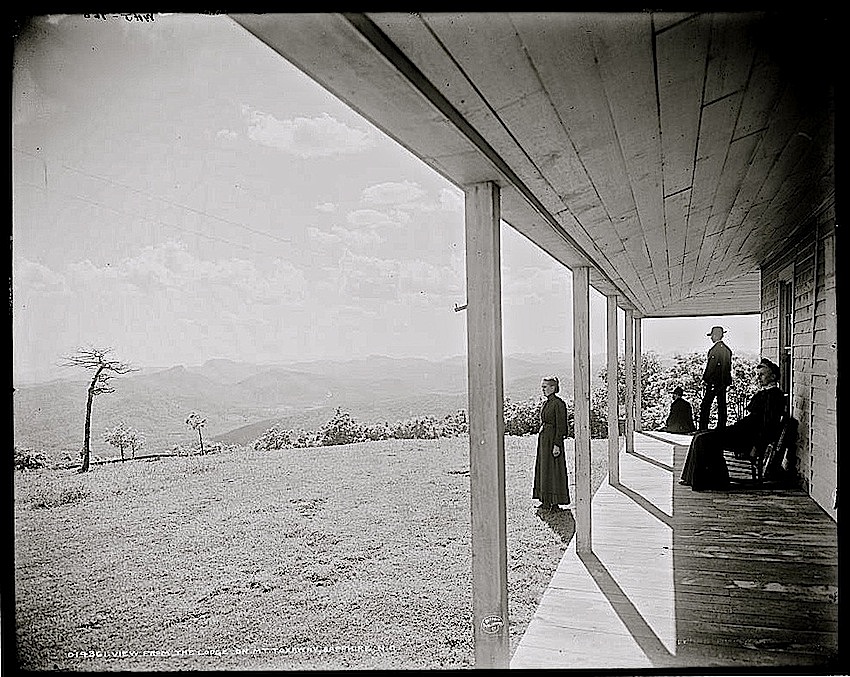
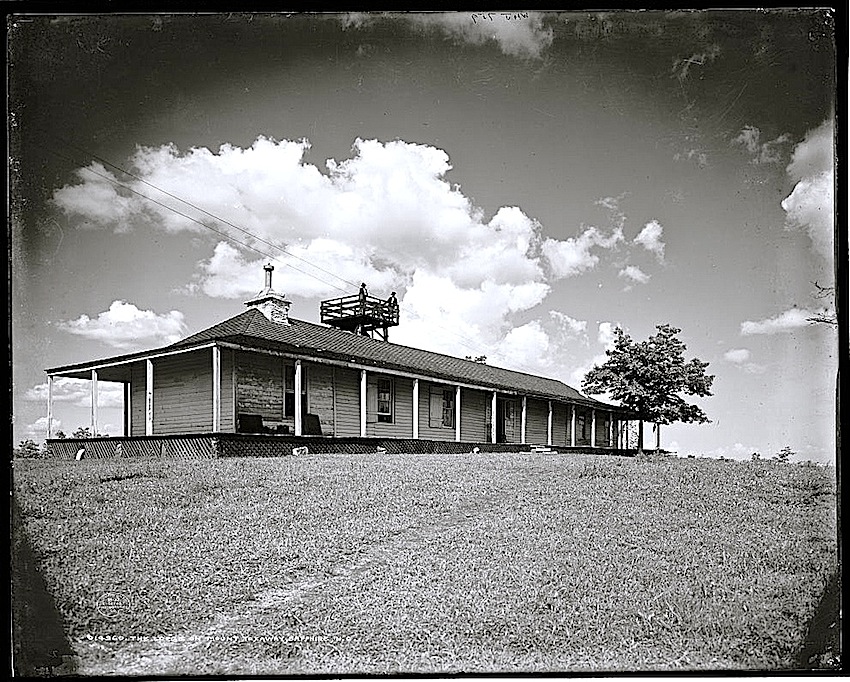
The Lodge on Mount Toxaway, Sapphire, North Carolina, ca. 1902, by William Henry Jackson, via Library of Congress Prints and Photographs Division (all photos here).
By 1903, they had dammed the Toxaway River — creating the 640-acre artificial Lake Toxaway — and constructed the luxurious 500-guest Toxaway Inn. After 1904, when the Southern Railroad opened a depot on the lake, the area was known as “Switzerland of America.”
The Lodge was presented in a 1905 company brochure as a “nature kindergarten” for “children of the city” to learn about trees, flowers, and birds. Farm animals and poultry were also available for study.
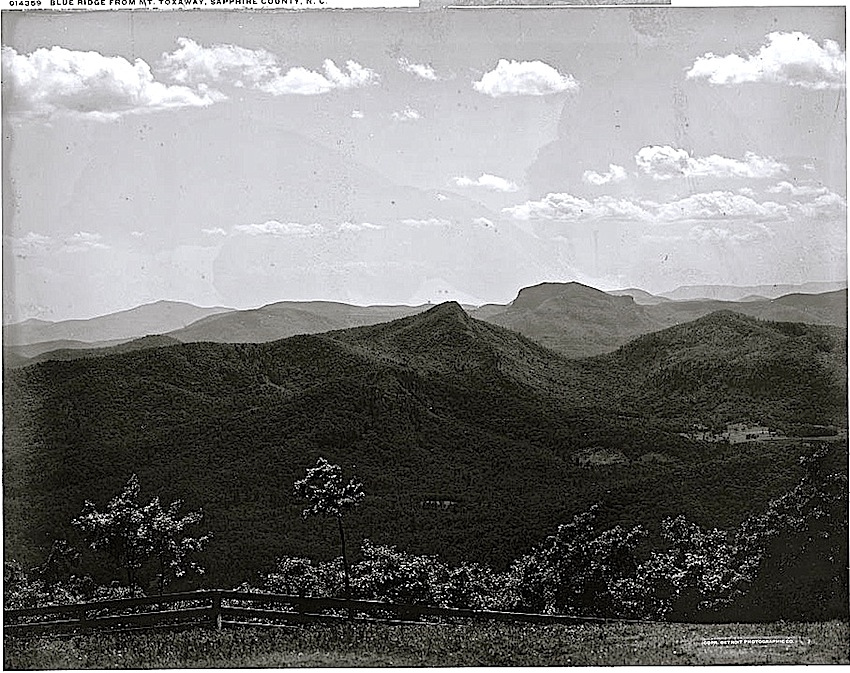
At an altitude of over 4,500 ft., the views from the wrap-around porch and the lookout tower were particularly good. Guests from the other Toxaway hotels would spend the night in the house to see the sunrise or sunset over the mountains.
It was also used as a hunting retreat for wealthy industrialists.
The Lodge no longer exists — although it was still there in 1920, four years after severe flooding caused the company’s dam to burst. (Some homes were destroyed, but only a mule perished.)
Lake Toxaway disappeared, and the Toxaway Inn emptied out as well. It never re-opened after 1916 and was demolished in 1947.
In the early 1960s, another group of investors rebuilt the dam. The lake re-filled, and a golf club and hotel were opened. The property around what was once The Lodge is now Preserve at Rock Creek, an “exclusive” real estate development.
To scroll through larger version of the photos, click on ‘Continue reading’ below and then on any thumbnail in the gallery.
My mind was once the true survey
Of all these meadows fresh and gay,
And in the greenness of the grass
Did see its hopes as in a glass. . .
My question here in Stuttgart is a common one: “how to make a garden without much gardening?”
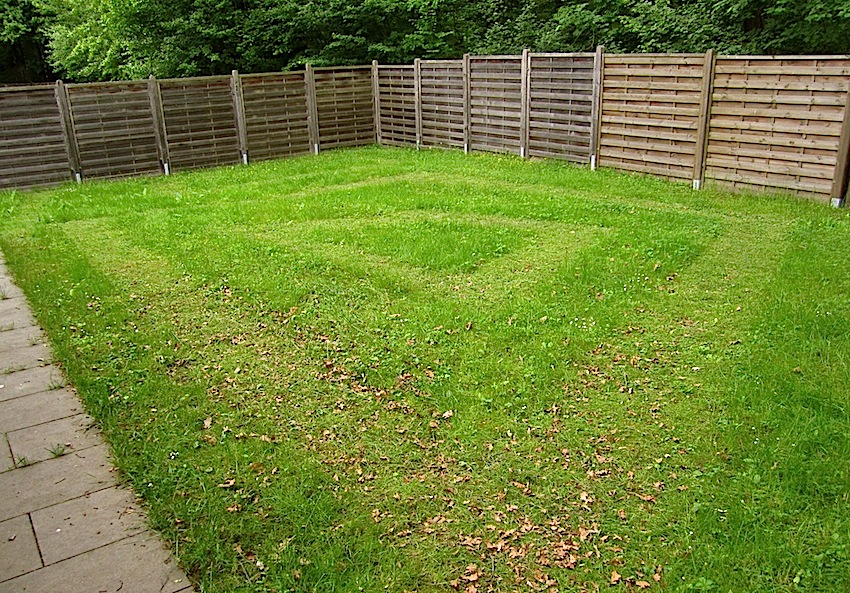
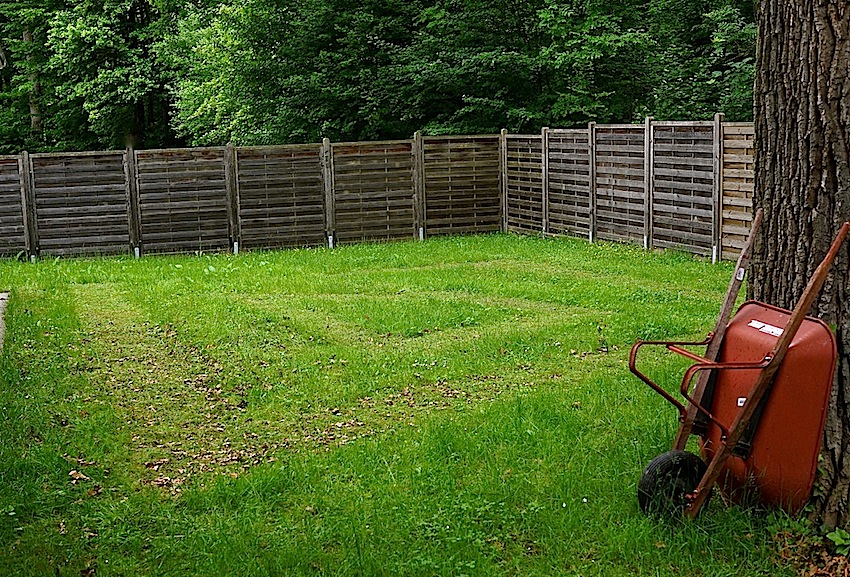
Our backyard is an enclosed strip of lawn that runs the length of the back of the house and wraps halfway around on both sides. There are two large trees and a concrete patio outside the center door. In one far corner is a small, oval-ish planting bed with a few shrubs and perennials and a lot of weeds. About 5′ beyond the fence are mature woods.
This slideshow requires JavaScript.
And when I say ‘lawn,’ I mean moss, clover, dandelions, plantains, buttercups, lawn daisies, sprouted trees, an assortment of other low creeping plants, and some grass.
I have no desire to dig the planting beds (or buy the trees and shrubs) that would improve this dull (except for the woods) space. We want to spend our time in Europe getting out and about.
But I do want to have a garden that’s a little more pretty aesthetically satisfying to sit in during the long daylight of summer.
My solution (at least for this year) has taken inspiration from several different sources.
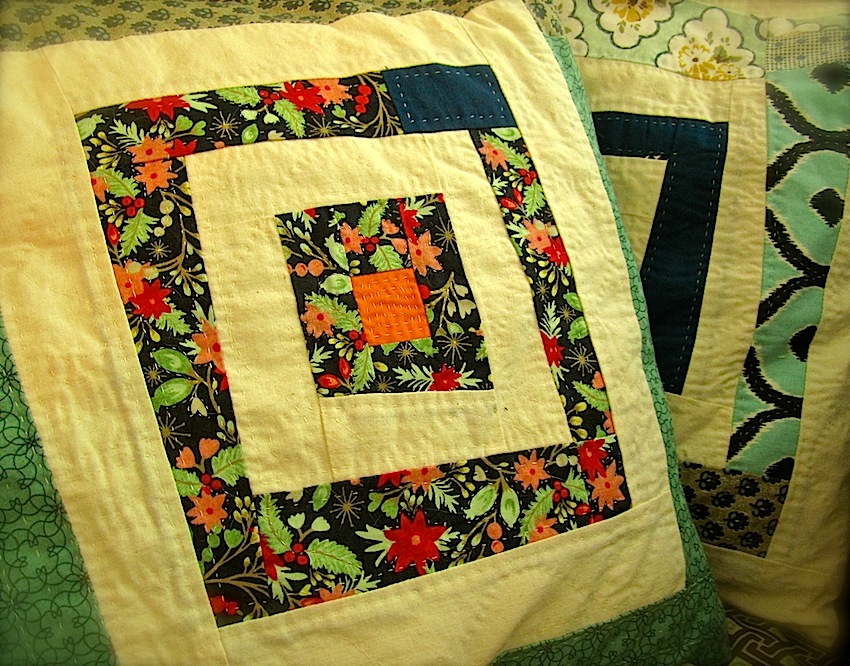
1) The “wonky” log cabin patchwork pillows I made for the living room.
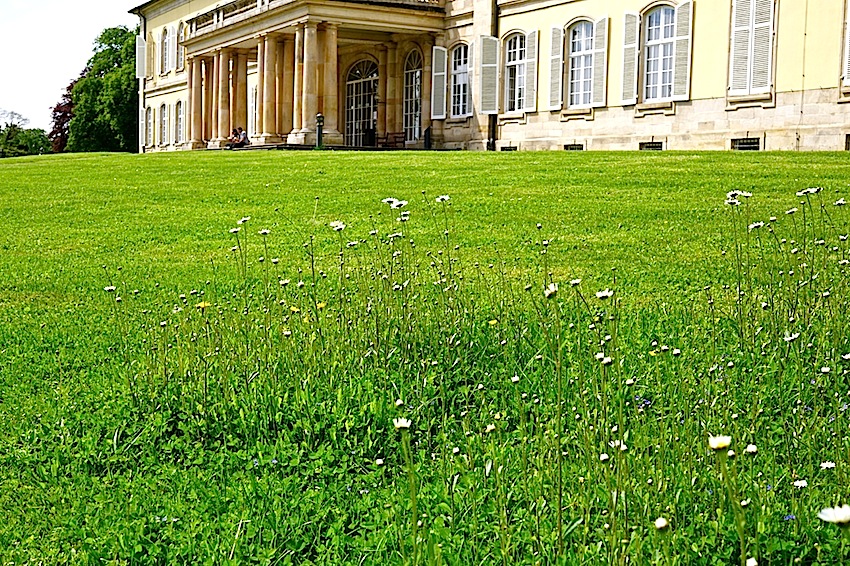
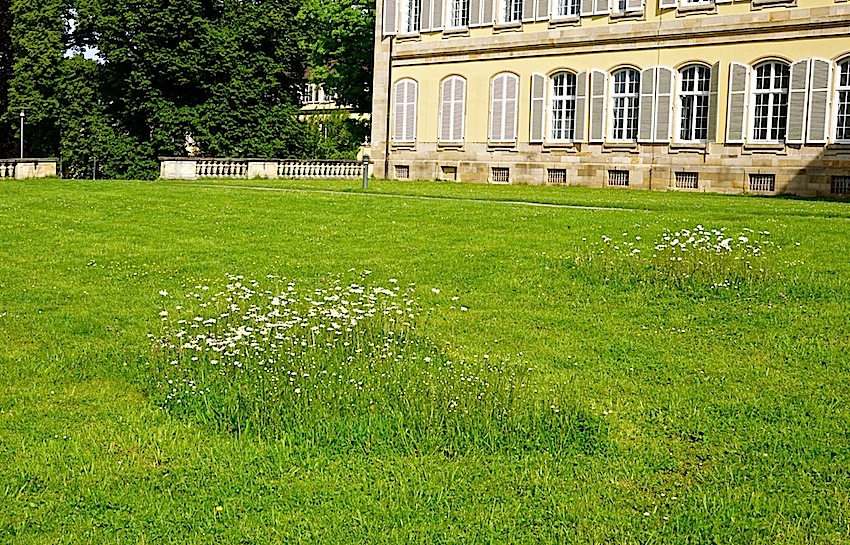
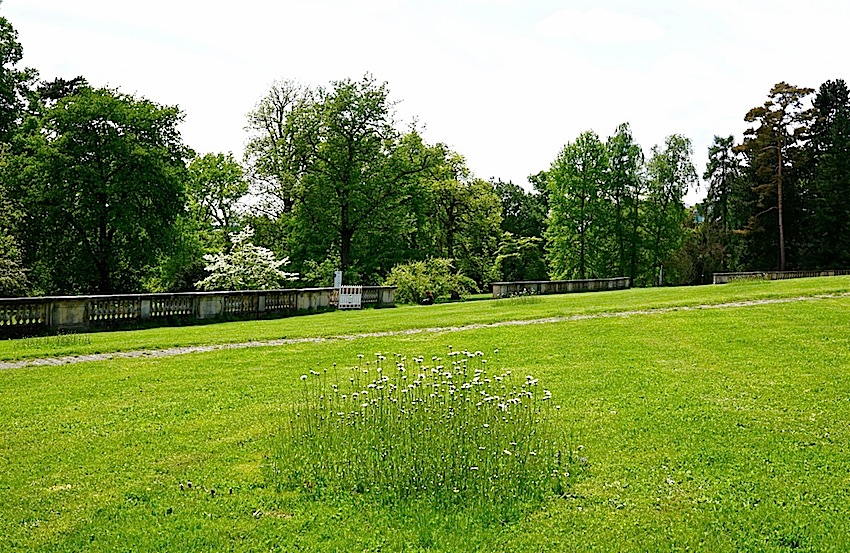
2) The front lawn of the 18th century schloss (palace) of Hohenheim (near our house in the southern suburbs of Stuttgart) — it’s part of the University of Hohenheim, which specializes in agriculture and natural sciences.
The grass is cut short, except for five or six unmown islands.
No doubt, the university is also trying to add some pattern and texture with low effort and cost.
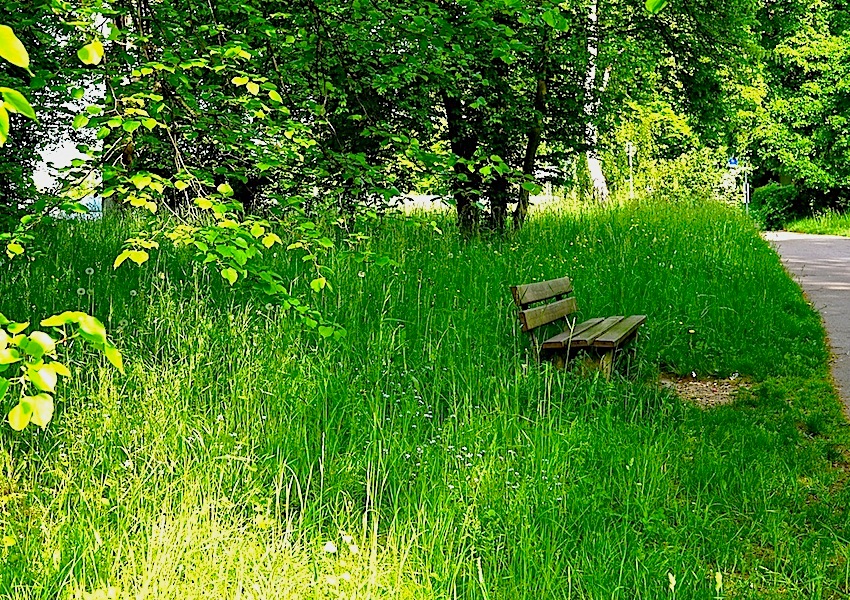
3) The public “hell” strips and other intermediary spaces along streets and sidewalks in nearby towns. They have been left uncut and have grown into really beautiful urban meadows. The area in the photo above was sprinkled with blue forget-me-nots a week ago.
4) Paths and patterns cut through long grass — and labyrinths. Here and here are a couple of images of a garden by Mien Ruys.
This is what I did about a week ago:
Using my antique reel mower and some clippers, I cut patterns through the grass, which has only been mowed once this spring.
This slideshow requires JavaScript.
I just “free-handed” it, starting with a patchwork-type design on the north side.
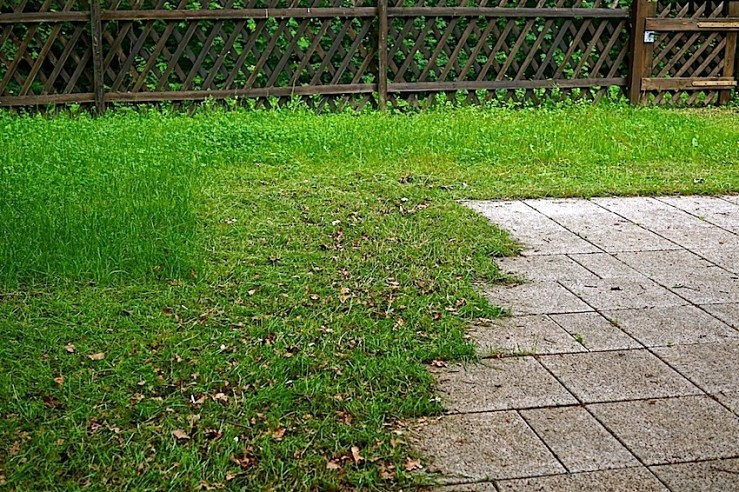
Then, I mowed a border around the patio and made a short path to the back gate.
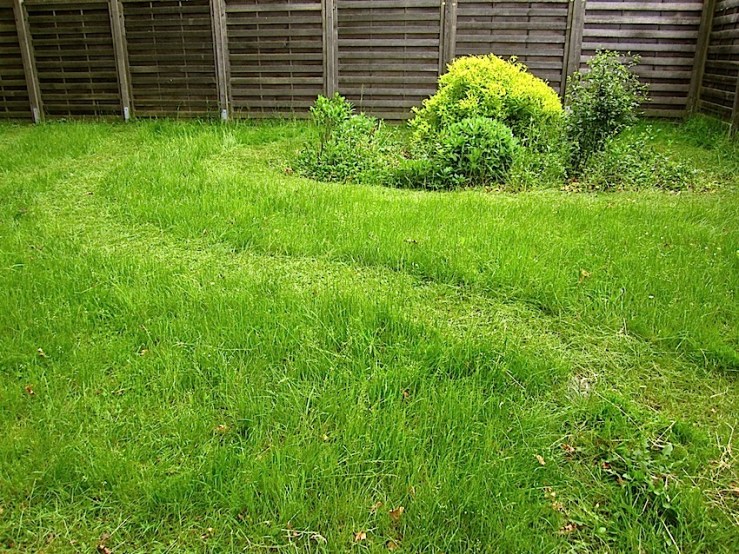
On the south side, my main concern was the planting bed, the shape of which does not even rise to that of a kidney.
First, I mowed around it, enlarging it and cleaning up the edges (weeding it will come one of these days — it’s not really in our line of sight when we sit on the patio). Then I matched it by making a similar shape on the other end of the same side of the yard, under one of the trees.
I put our old table and chairs there (painting them is another chore for the future).
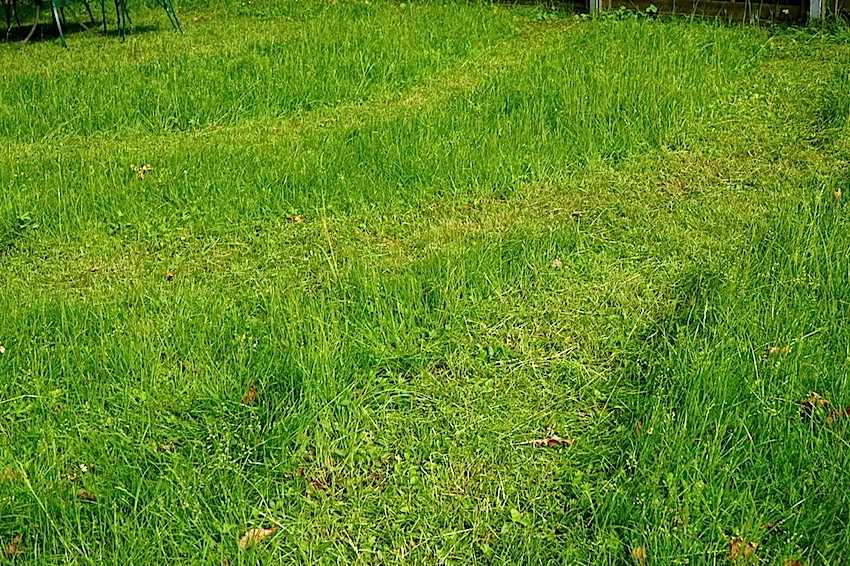
Then, I mowed two curvy paths out from each oval, so they cross in the center.
Then, I sat down to rest and admire my work.
Admittedly the results are, let’s say, “understated.” But I have made my mark and I’m happier about the place.
The wheelbarrow is entirely ornamental.
For the rest of the warm months, I just have to mow the paths from time to time. I may plant some bulbs in the grass in the fall. And I’ve thought of wrapping the tree trunks in fairy lights.
In late fall (or should I do it in late winter?), I will need to knock down the long grass — which I’m afraid will involve me and a pair of long shears. There is always something. . . .
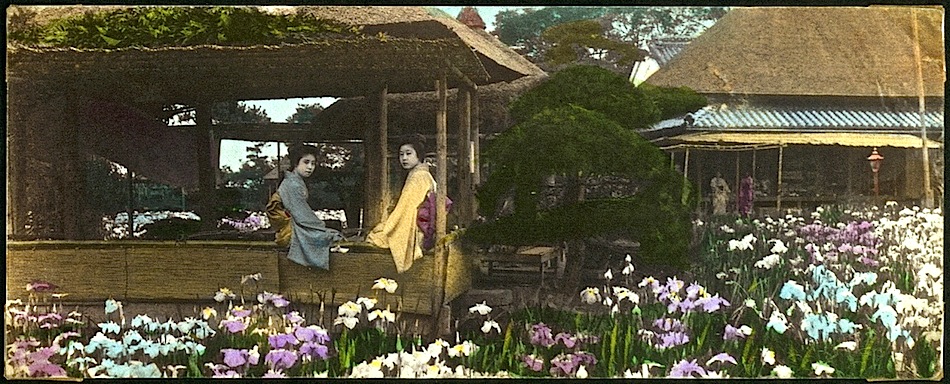
Two women in a pavilion overlooking irises in Japan, between 1860 and 1910.
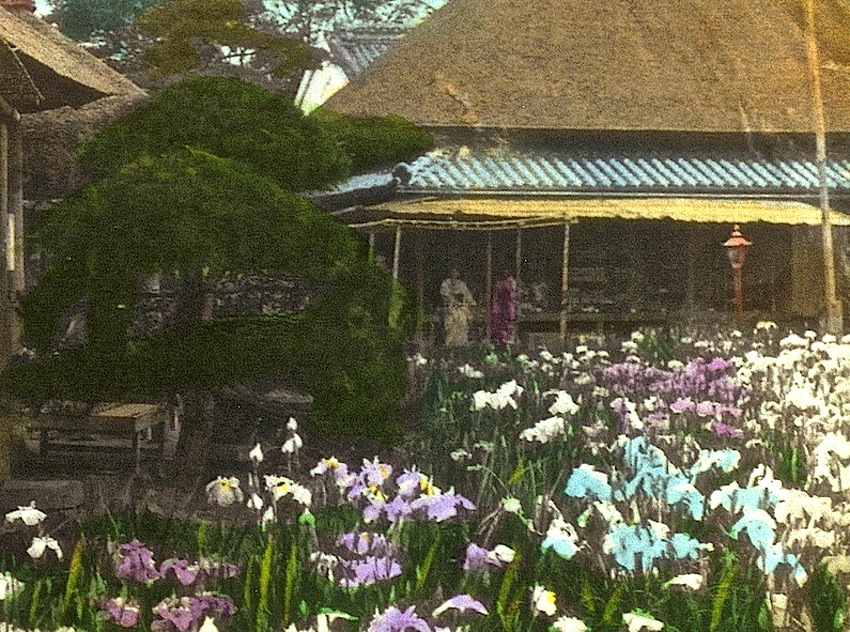
Detail of photo above.
This hand-colored photograph comes from the National Museum of Denmark Commons on flickr — part of a collection that belonged to journalist Holger Rosenberg.
Unfortunately, the museum does not have any additional information about it.
Detail of top photo. The flowers are probably growing in slightly sunken, wet or damp ground.
In Heian Period [794 -1185] Japanese gardens, built in the Chinese model, buildings occupied as much or more space than the garden. The garden was designed to be seen from the main building and its verandas, or from small pavilions built for that purpose. In later gardens, the buildings were less visible. Rustic teahouses were hidden in their own little gardens, and small benches and open pavilions along the garden paths provided places for rest and contemplation. In later garden architecture, walls of houses and teahouses could be opened to provide carefully framed views of the garden. The garden and the house became one.
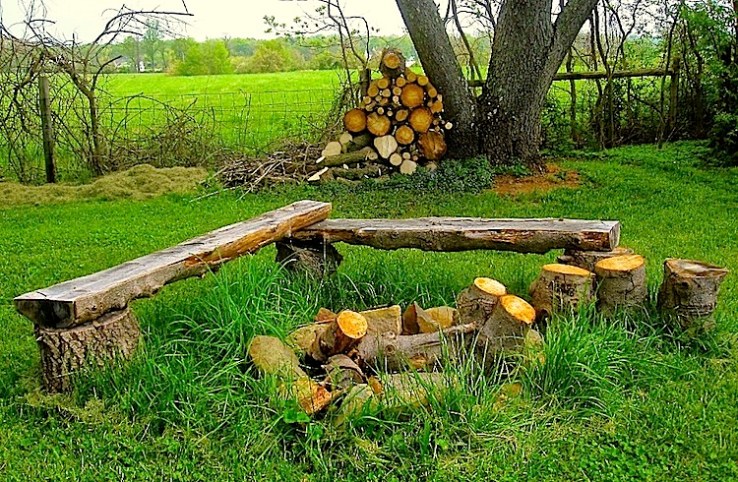
There is a fire pit underneath, awaiting summer cleanup — but I was drawn to the nice arrangement of shaggy grass and logs* (and, of course, the bench and the other beautiful pile of wood in the background).
This is at my brother’s and sister-in-law’s home in Loudon County, Virginia. The picture is from her (mostly about) quilting blog, deeroo designs. Check out the spring color in their garden and also some ideas for half-square triangles here.







 enclos*ure