The photo is from Fennel and Fern’s “Real gardens” section*, which is always interesting. I love the simplicity of this labyrinth by Adrian Fisher at Parham House and Gardens in England. It appears to me both whimsical and profound. (Click on the photo to link to the F&F post.)
*My “oasis” garden in Niger was featured here in August.
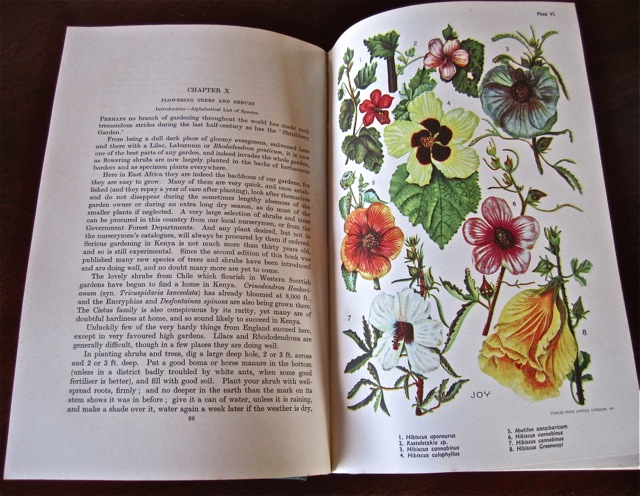
This was my husband’s Christmas present to me — a copy of the third edition (1950) of Gardening in East Africa, by the members of the Kenya Horticultural Society and of the Kenya, Uganda, and Tanganyika Civil Services.
Rwanda (then the eastern edge of the Belgian Congo) just makes it onto the left side of the frontispiece map.
I like the first chapter’s opening sentence: “This chapter is intended for the beginner rather than for the hardened gardener.” ‘Hardened,’ not skilled or experienced, but hardened — as in, “I’ve been through a lot.”
The writer then chides those already toughened up Kenya gardeners who adopt “a pseudomodest manner” with newcomers:
“You have forgotten about the innumerable insect pests and plagues, cutworms, flies, aphides, and the fact that each kind of plant has a pest of its own to all seeming. What about the scorching wind, the burning sun, the hungry hares and antelopes nibbling your roses and carnations to death, the mousebirds that steal your fruit and tear your flowers to shreds? Think of the torrents of tropical rain, the raging floods that batter all your plants to the ground, and wash off your lovely top soil far, far away into the Desert or the Indian Ocean. . . .” And please don’t get him started on the locusts.
Most of the color plates in the book were painted by Joy Adamson of “Born Free” fame. The previous year, she had received the Grenfell Gold Medal from the Royal Horticultural Society for her botanical artwork.
Lady Muriel Jex-Blake (daughter of the 14th Earl of Pembroke, no less) was President of the Kenya Horticultural Society and author of three chapters of the book, as well as of her own book, SomeWildflowers of Kenya.
In Chapter 10, Lady Muriel is precise about how to plant a shrub: “give it a can of water, unless it is raining.”
Her husband, Dr. Arthur John Jex-Blake, was the book’s editor. He made a promising start as a physician in England, but after serving in World War I and marrying Muriel in 1920, he left it all behind to live outside Nairobi.
The writer of his 1957 obituary noted that Dr. Jex-Blake always felt overshadowed by his aunt (Sophia Jex-Blake, one of the first women doctors in Great Britain and co-founder of two medical schools for women) and his sisters (the heads of Lady Margaret Hall, Oxford, and Girton College), but “he loved flowers, the classics, and beautiful things.”
In 1948, however, as he completed his preface to the third edition, he seemed to be finding the post-war times challenging. In expressing his gratitude to his publishers, he nearly lost control of his final sentence:
“For, after three piping years of peace, printers and publishers, like the rest of the industrial world, are ever at the mercy of the impersonal incompetence of officialdom and the well-organized administrative chaos now, alas! so painfully familiar to everybody who lives and works in England.”
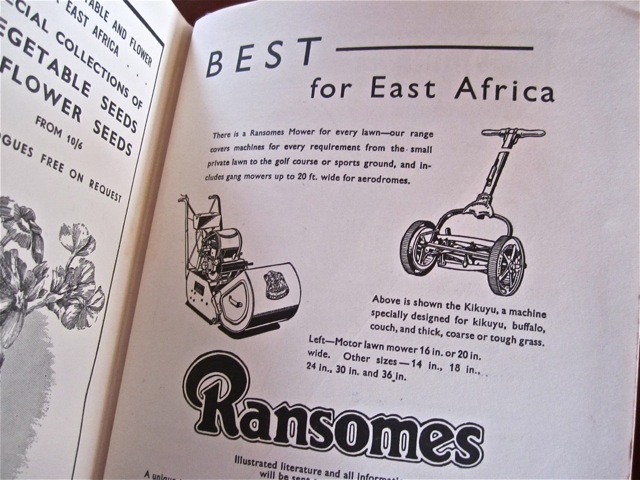
An advertisement at the back of the book: Ransomes can supply you with a mower suitable for maintaining your aerodrome or Kikuyu grass.
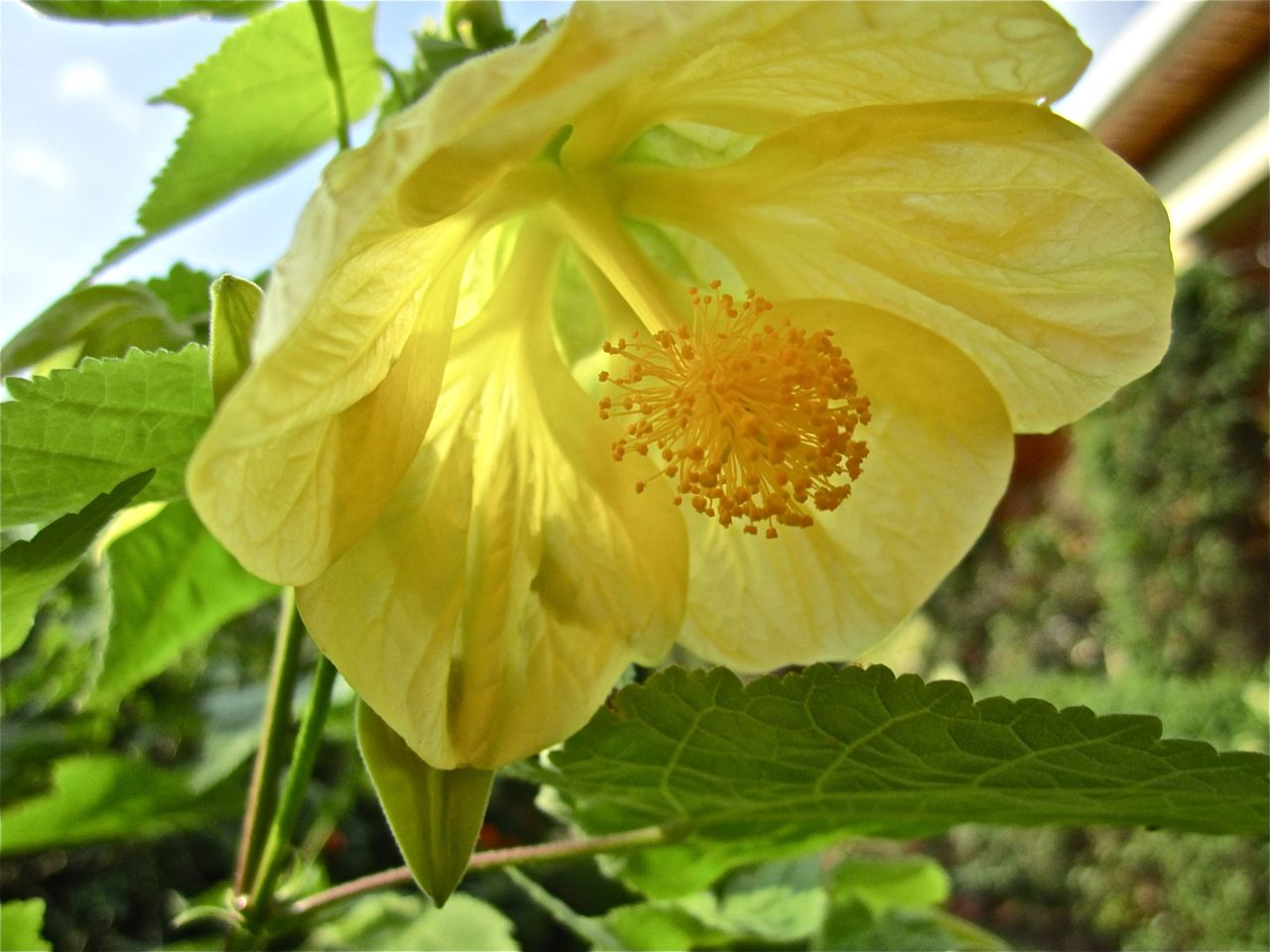
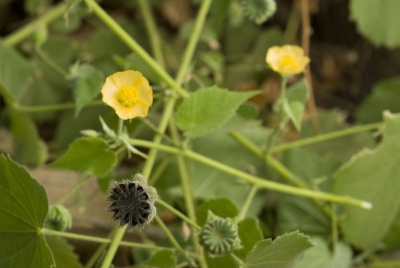
Today, I took a closer look at my Abutilon or Chinese Lantern bushes.
Closeup of yellow Abutilon.
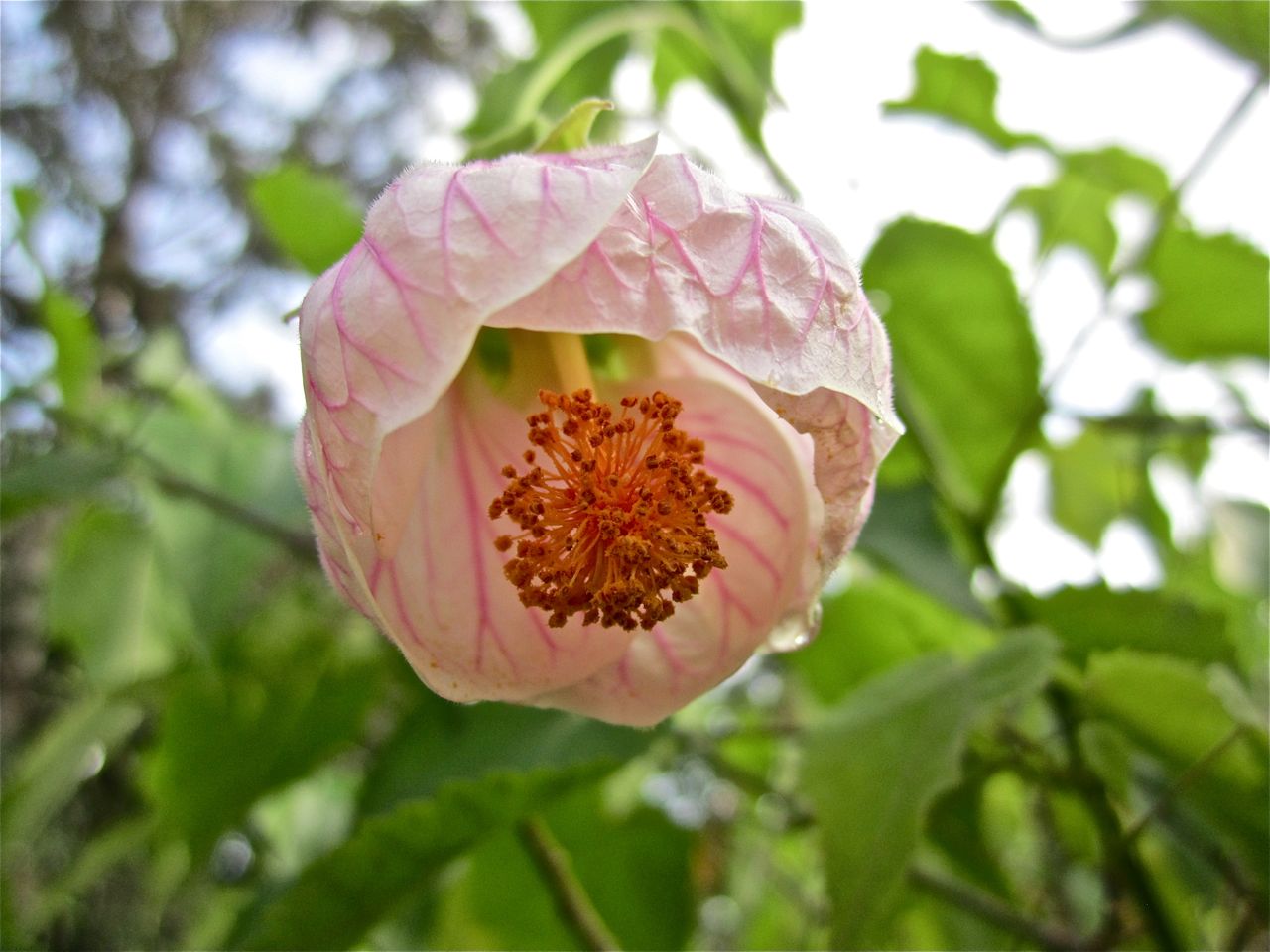
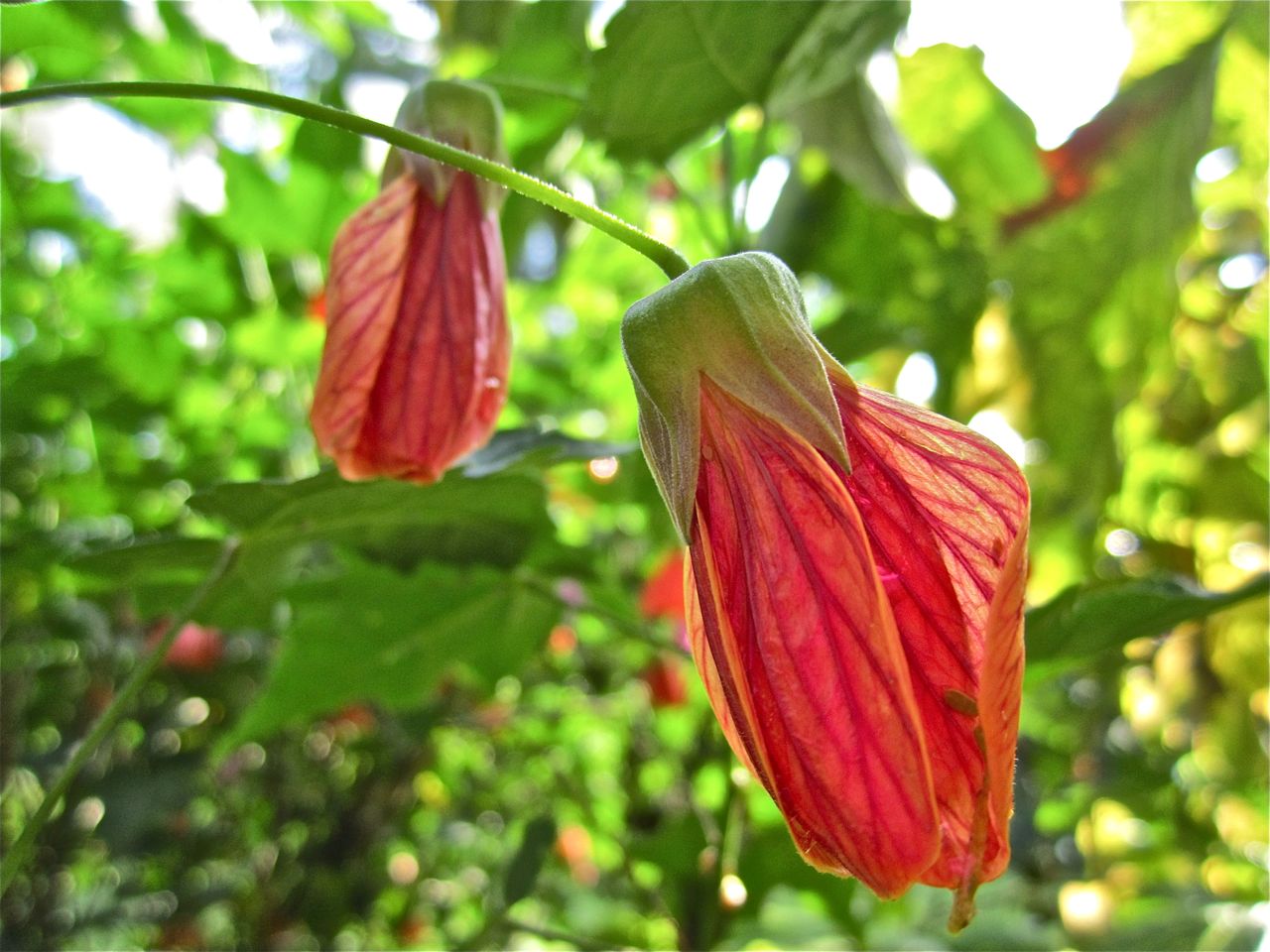
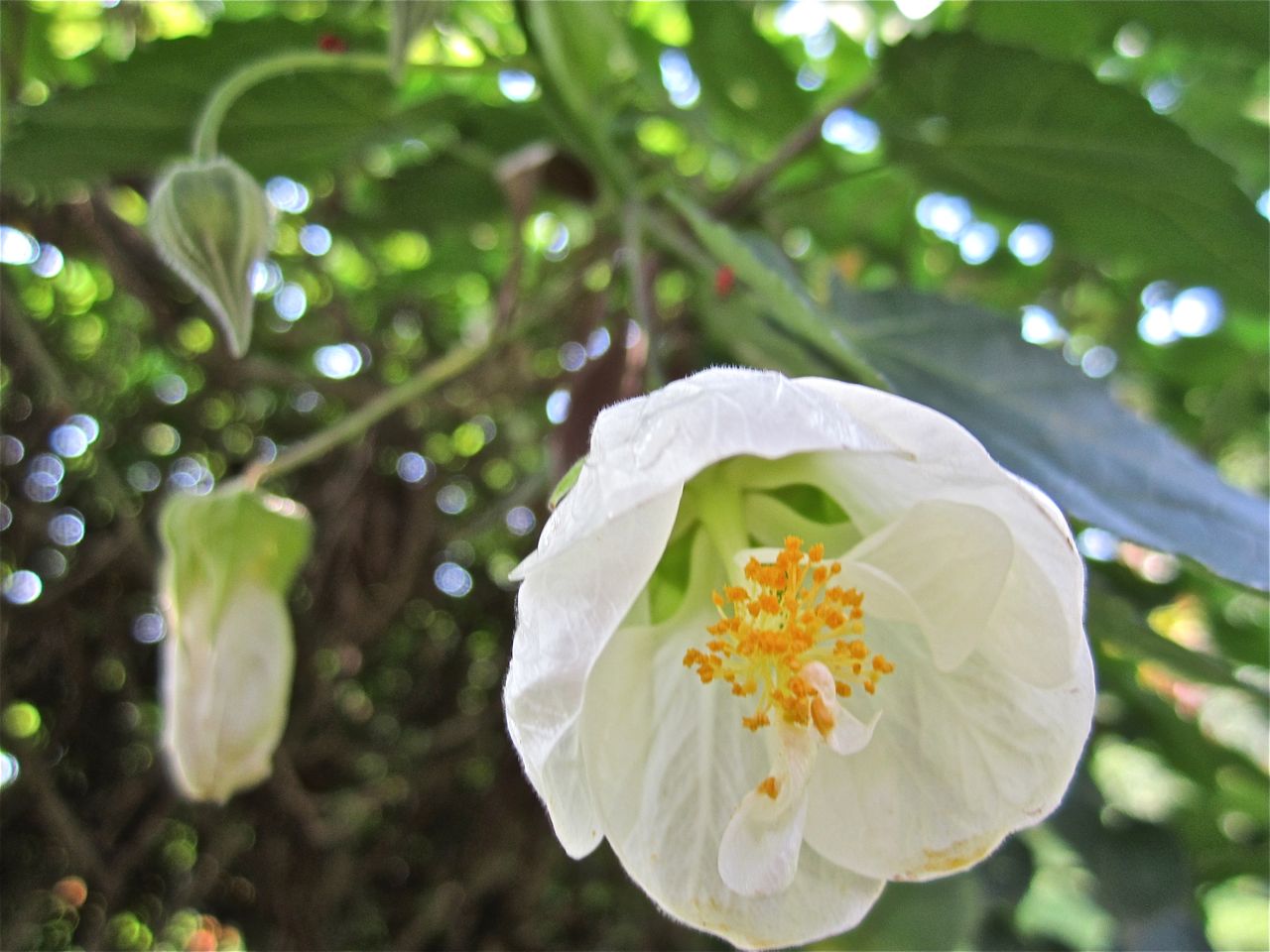
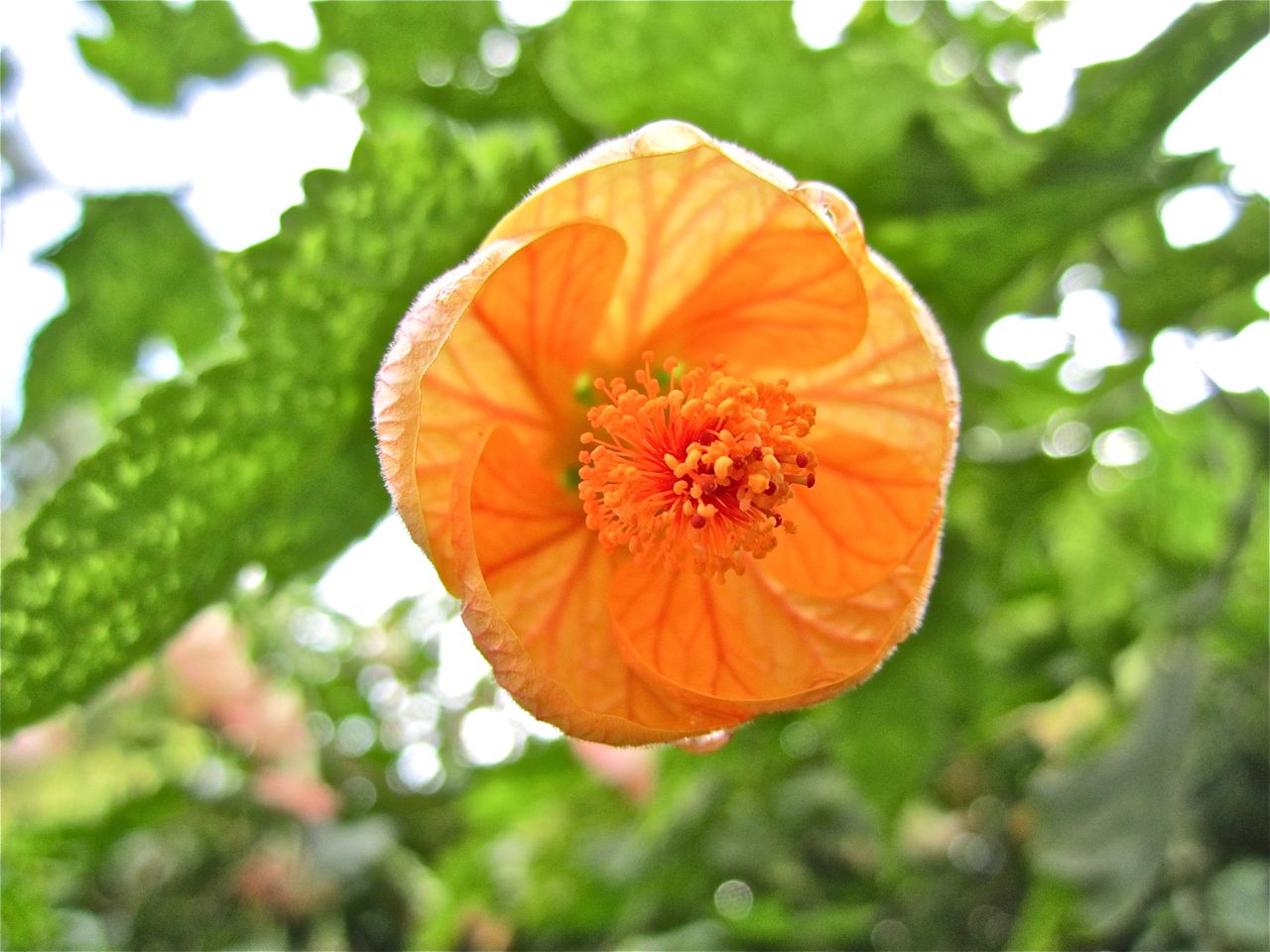
Compared to many of the other tropical or semitropical plants in the garden, the Abutilon are rather quiet. The flowers are neat and smallish and hang down like bells.
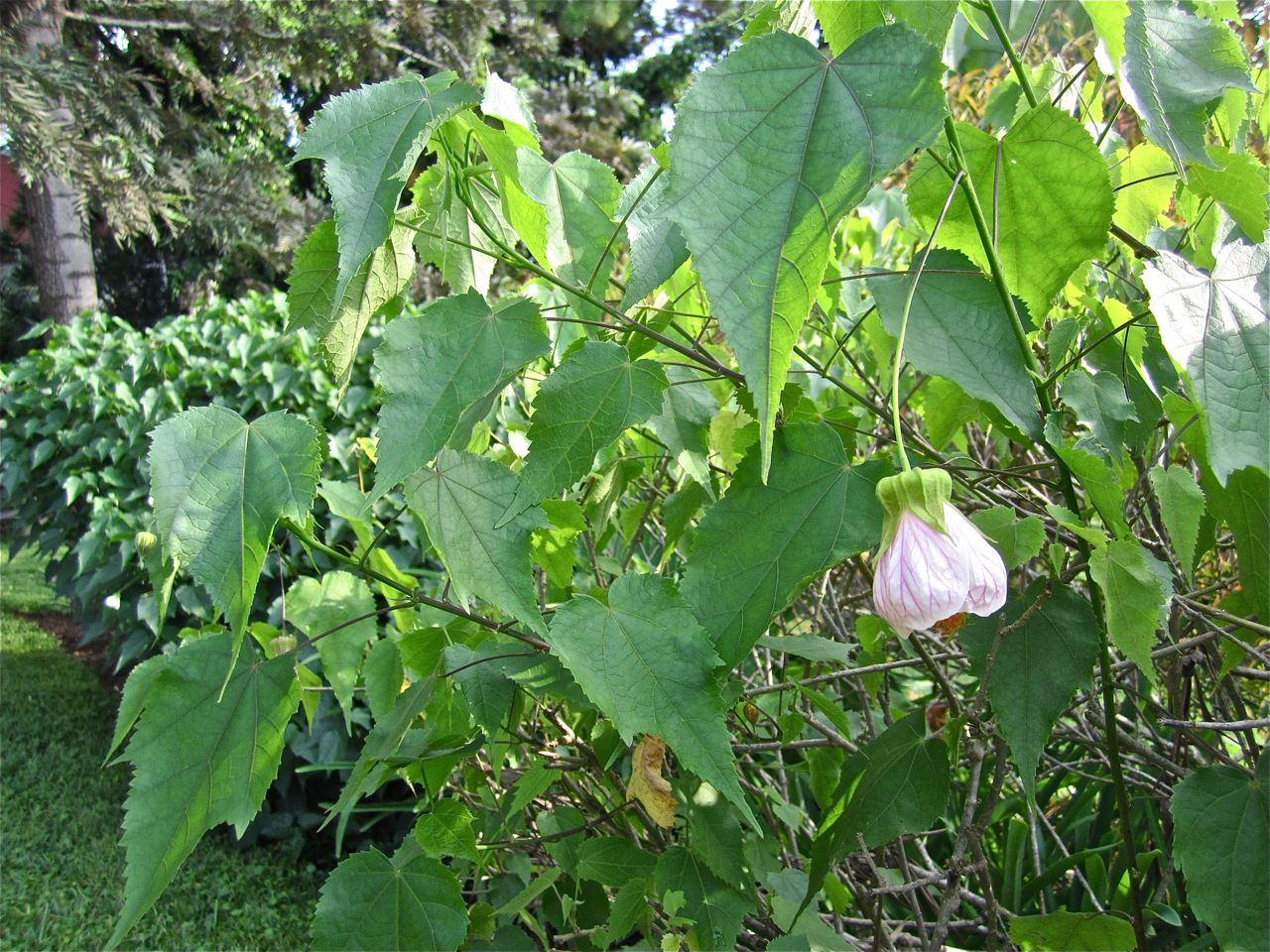
Abutilon are also sometimes called Flowering Maples because of their leaves.This variety has white blooms with pink veins.A closeup.A showier bush with reddish-orange blooms.A reddish-orange bloom.Closed blooms.A white flowered Abutilon.
This bush has variegated leaves and is rather overshadowed by a pink Brugmansia or Angel’s Trumpet.
An Abutilon with variegated leaves beside a Brugmansia.A coral bloom. Another name for the bush is Chinese Bell Flower.Closeup of a coral flower.
I think my bushes are Abutilon x hybridum, descended from South American varieties and brought here by expats. Rwanda has one native variety, Abutilon bidentatum Hochst. ex A. Rich., which is not very showy.
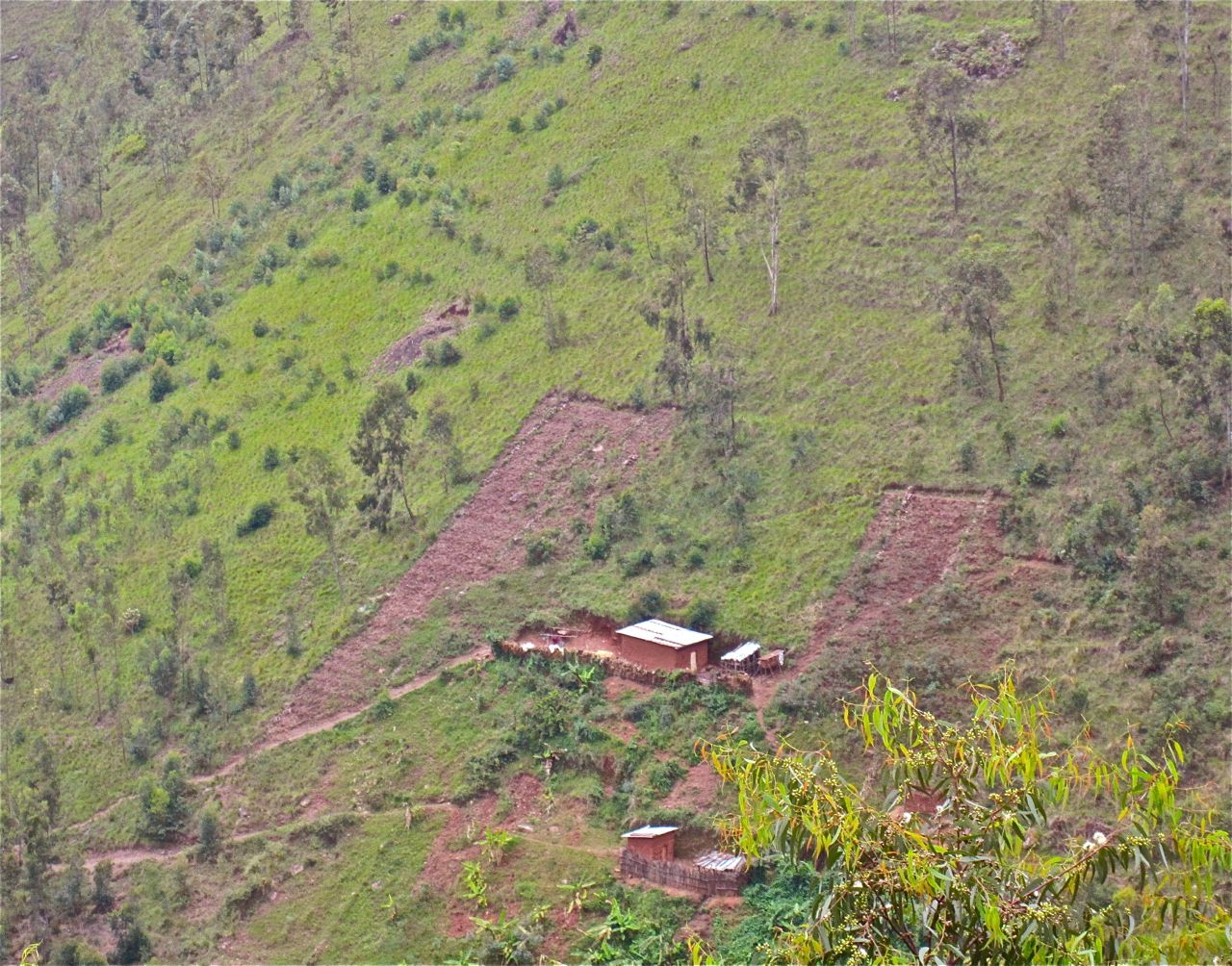
If you think your garden has some challenges with slope, consider this picture. This is quite a typical Rwandan farm. I put it at about 45 degrees.
Rulindo District farm. Click photo to enlarge.
The photo below is another view — rather hazy, I’m afraid — of the most common Rwandan landscape type, a patchwork of small farms on a hillside. This is in the northwest, in Rubavu District.
Typical Rwandan patchwork quilt of small farms.
Why all those people are walking down the road will be the subject of tomorrow’s post.
After the design and installation are complete, maintenance is everything.
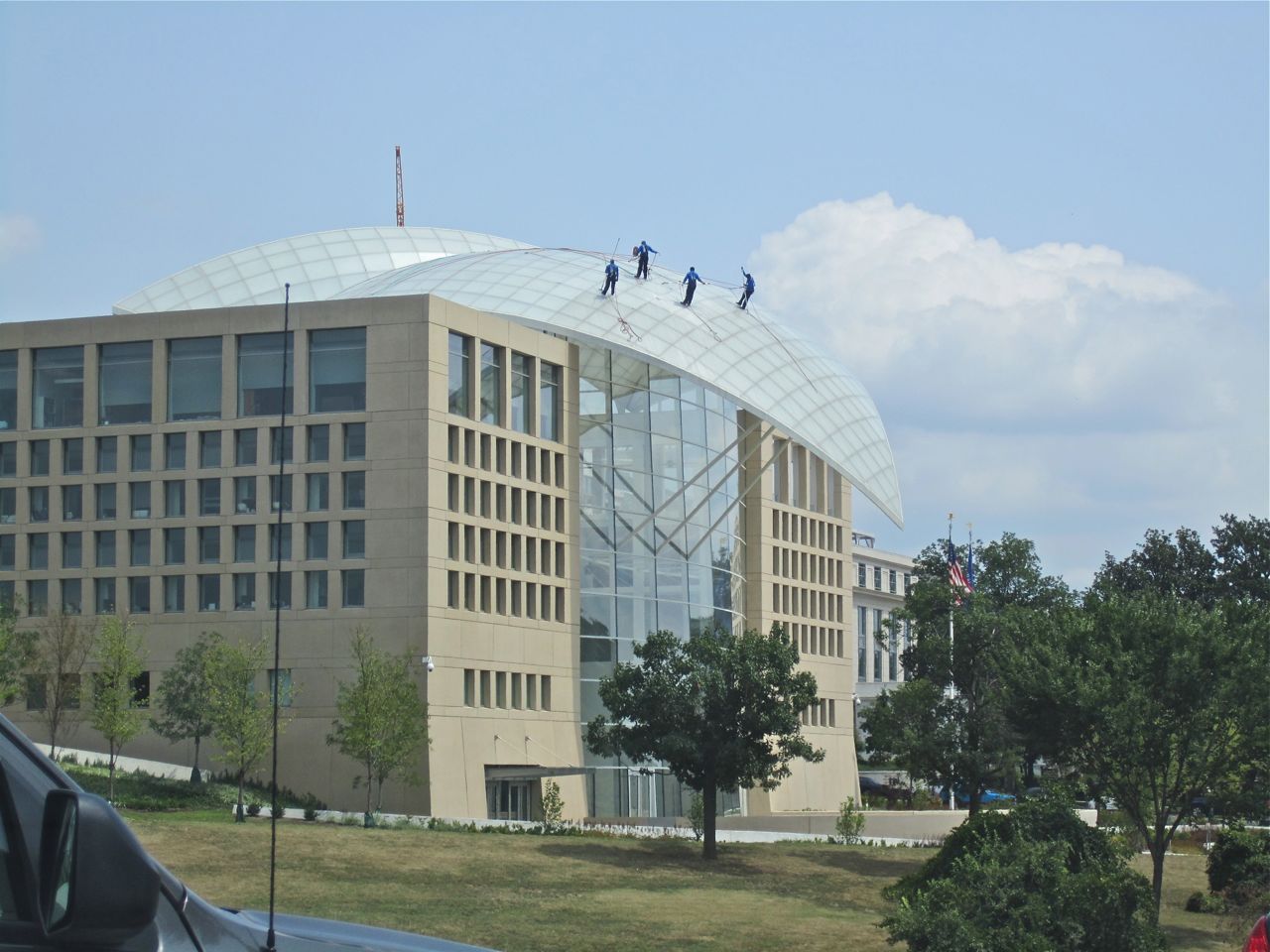
This is the United States Institute of Peace, located at 2301 Constitution Avenue, N.W. The building was designed by Moshe Safdie Architects and completed in March 2011. It will open to the public in October 2011.
I wish I could have remained in this spot long enough to see how they would handle the very tip.











 enclos*ure