Photographer Frances Benjamin Johnston used slides of various prints and illustrations in her popular Garden and House lectures — which she gave from 1915 to 1930.
She took the ones below from the February 1875 issue of Fruit Recorder and Cottage Gardener. They are now part of the Frances Benjamin Johnston Collection at the Library of Congress Prints and Photographs Division.
The successful lady gardener dresses in modest clothes with sensible hat and apron and stays home to care for her flowers.
While the unsuccessful one dresses in low-cut bodice and frilly hat, threatens her flowers and chickens with an umbrella, and then goes out on the town.
A good husband carries and then holds the pots — he’s a keeper.
Rows of houses in the Petworth neighborhood, Washington, D.C., ca. 1920-1950, by Theodor Horydczak, via Library of Congress Prints and Photographs Division.
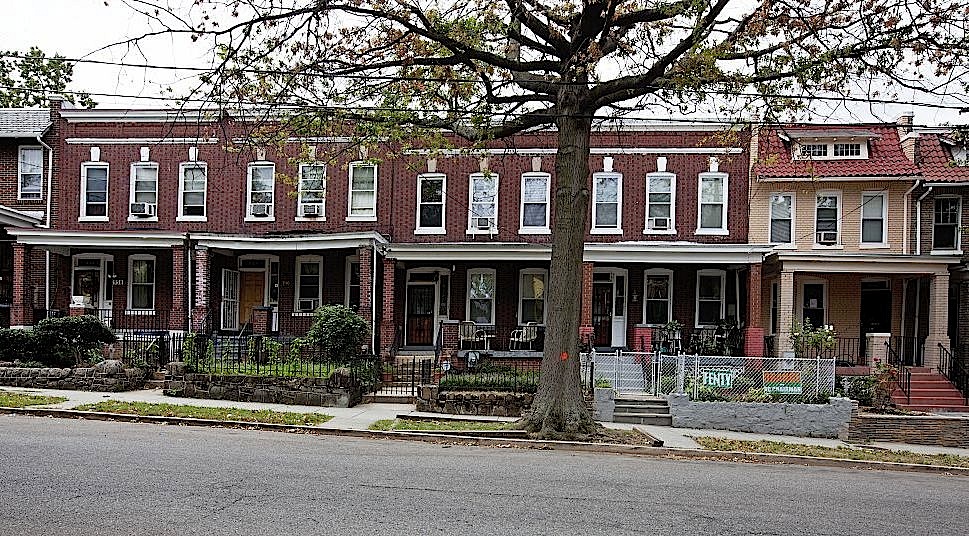
Petworth was farm and forest until the 1880s when the land was purchased for development. In the 1920s and 30s, thousands of rowhouses were built, many of them in a style popularized by developer Harry Wardman (from 1907) — with its distinctive elevated front porch and tiny front yard.
Above: Petworth rowhouses on Shepherd St., 2010, by Carol Highsmith, via Library of Congress.
“The porches [were] a big part of growing up in Petworth. On my block there had to be 15 or 20 kids, and you’d come home from school, get on the porch, and look down the block, and you could see this long row of porches, and you’d see everybody coming out of their house. The porches made you get to know your neighbors, they made it a neighborhood.”
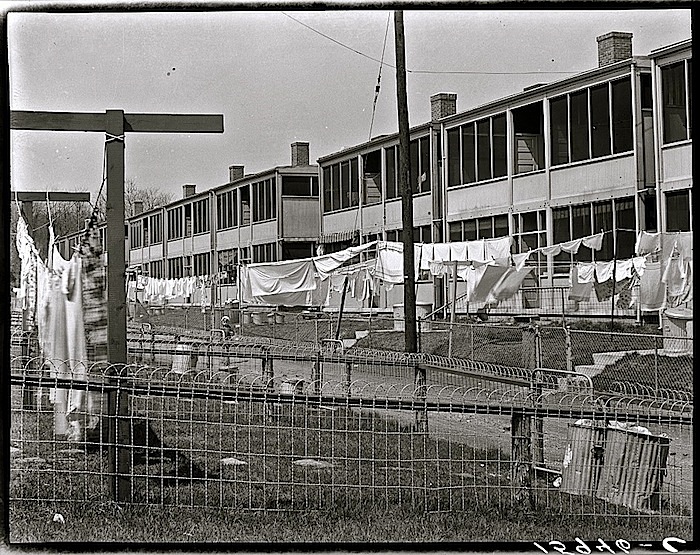
Above: backyards of rowhouses, neighborhood not noted, Washington, D.C., July 1939, by David Myers, via Library of Congress.
At the backs of Wardman-style rowhouses were screened sleeping porches (top) and kitchen porches (bottom).
Petworth resident Annette L. Olson decided to install a green roof on the top of her rowhouse front porch. She wrote about the process for the “Where We Live” column of The Washington Posthere.
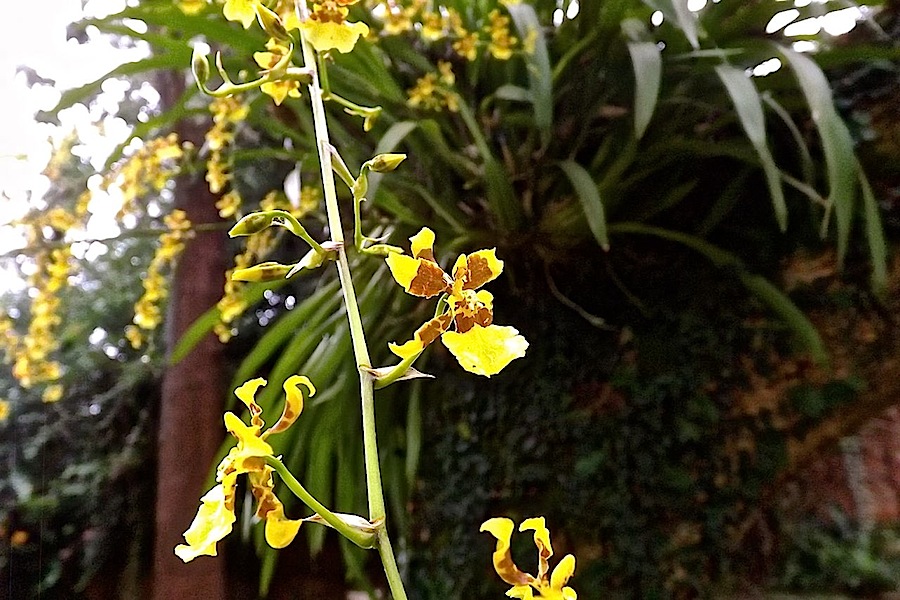
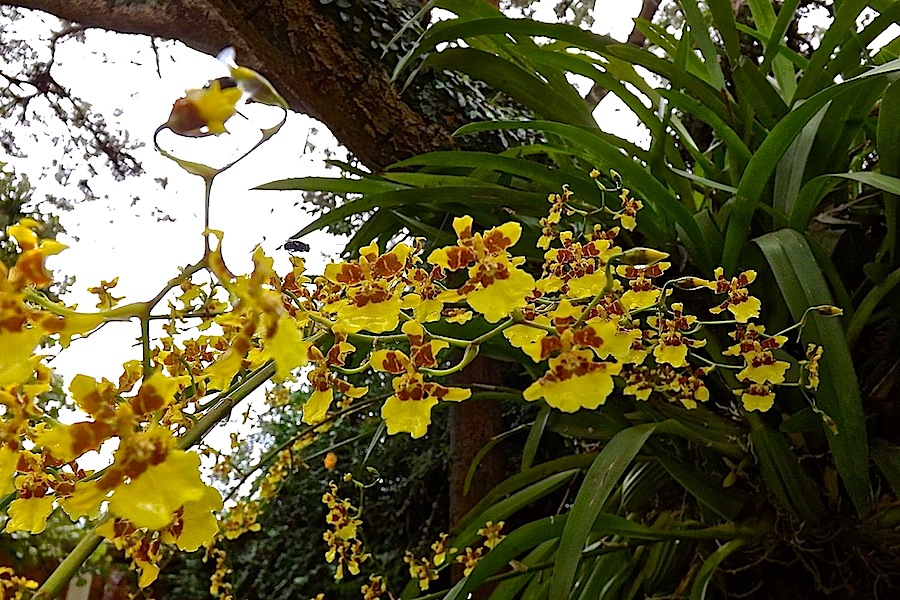
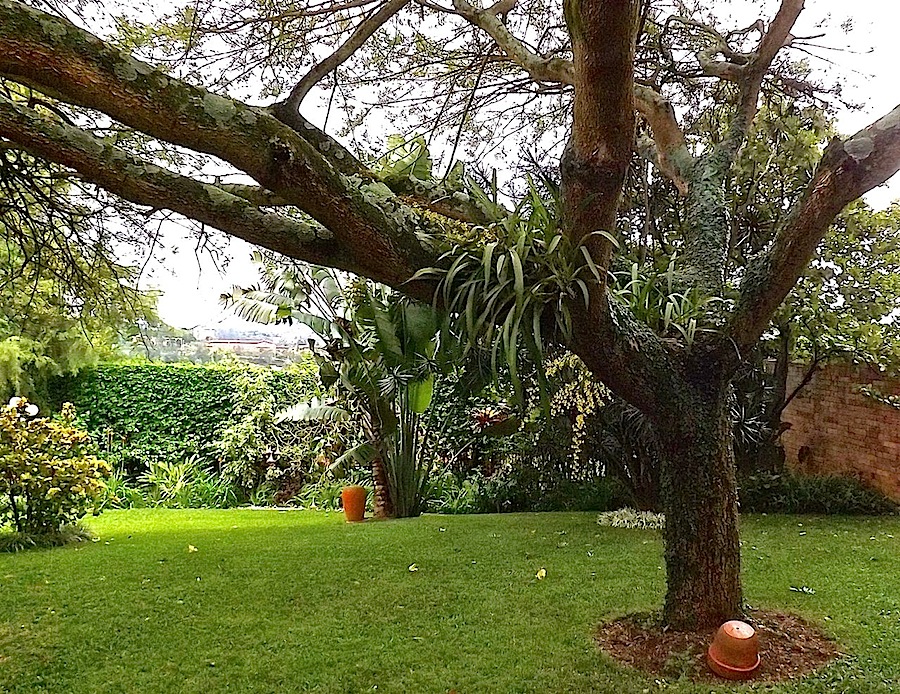
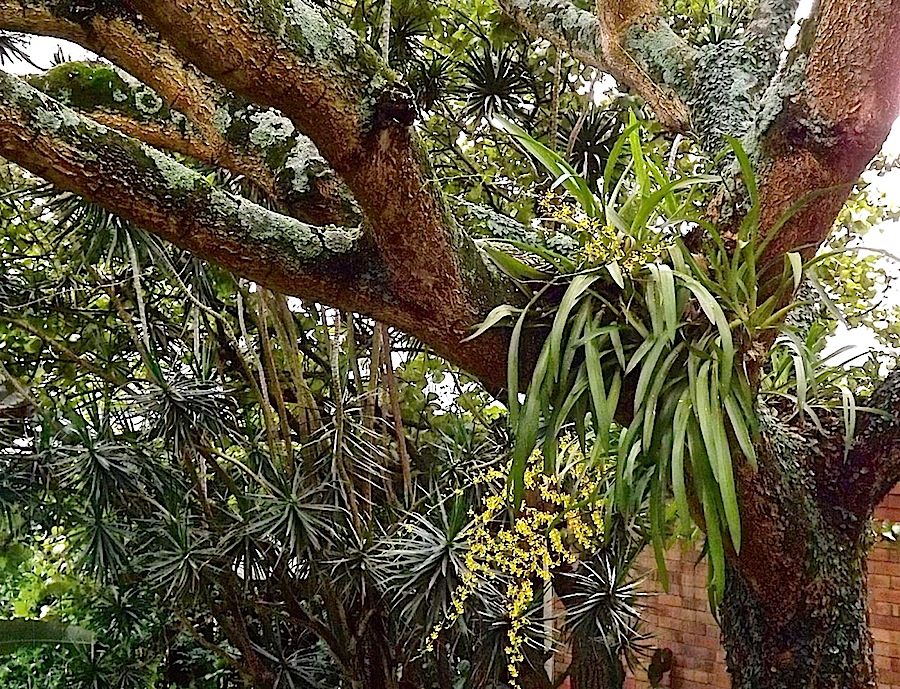
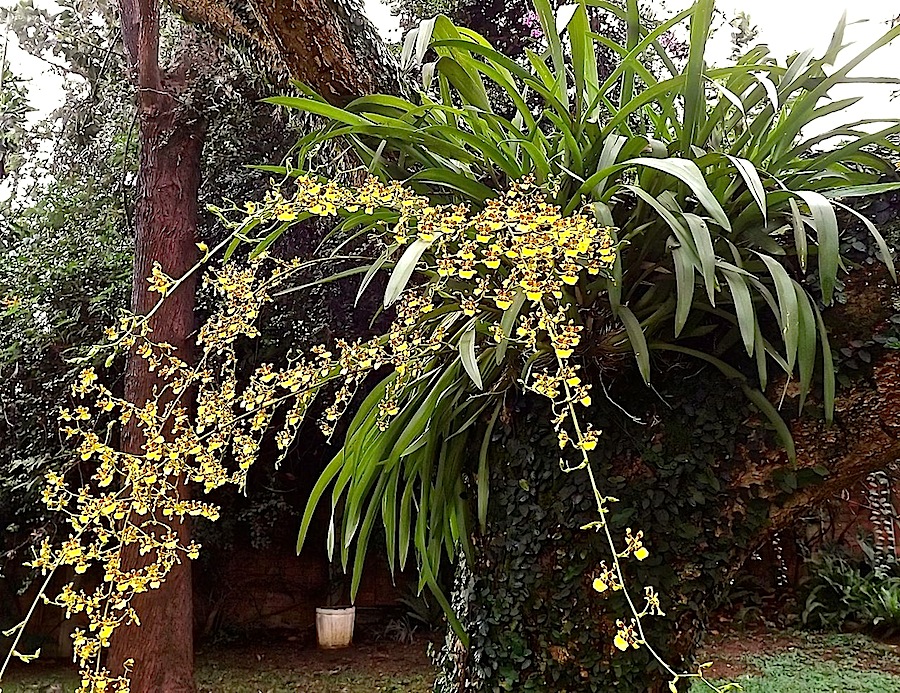
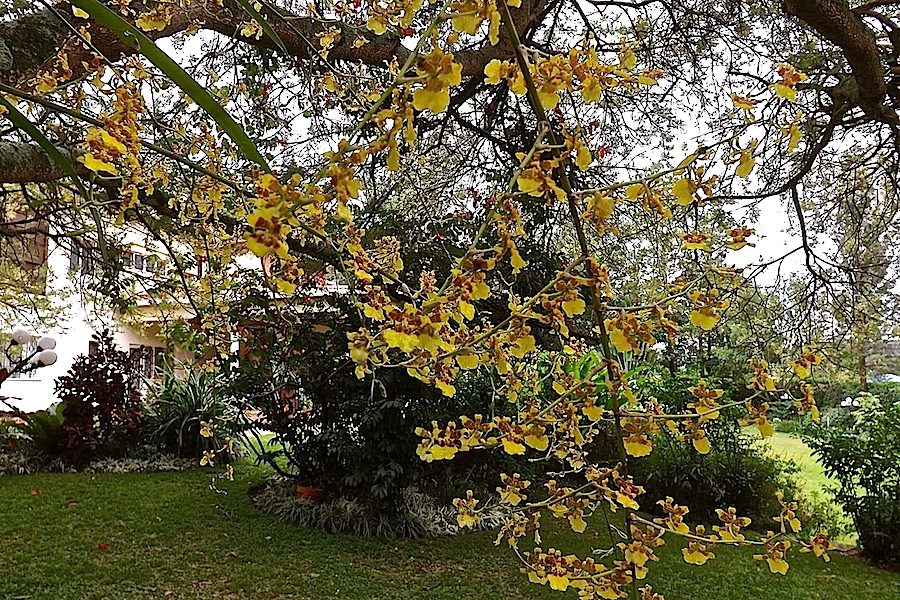
These two clumbs of orchids came out of the big old Norfolk pine that used to grow at the entrance to the terrace. (It was cut down a year and a half ago when it was clear it was dying.)
When we wired them onto the acacia, the gardener said the flowers were yellow, but I really didn’t think I’d ever see them bloom.
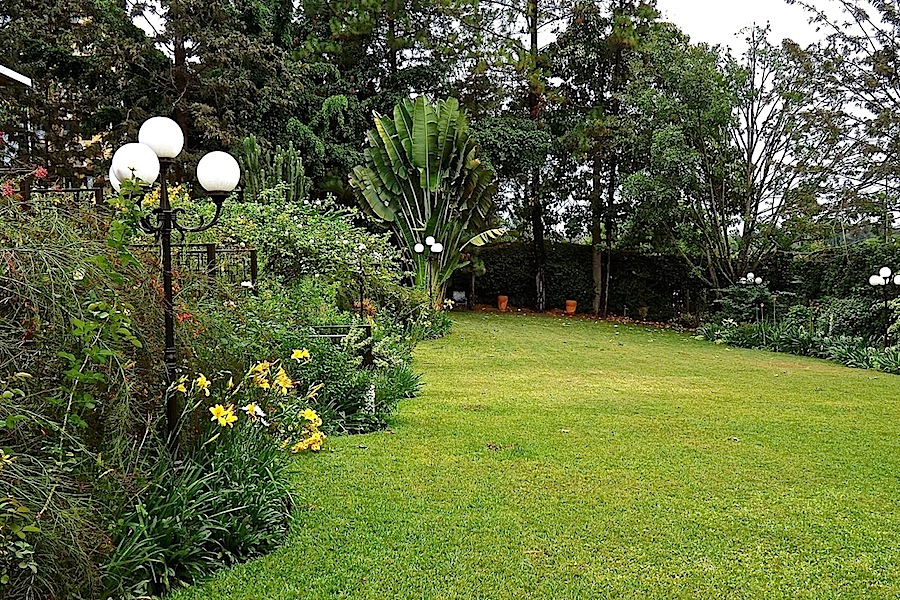
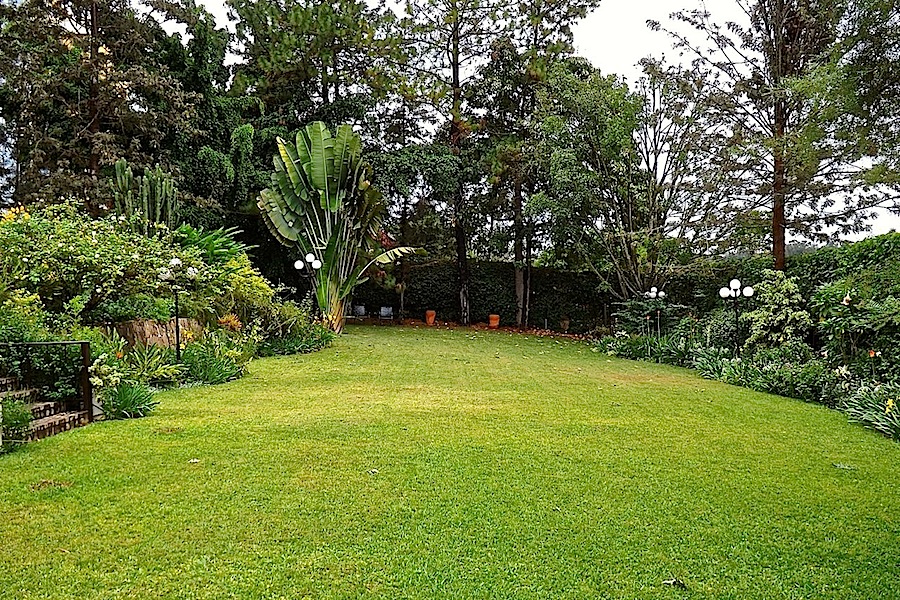
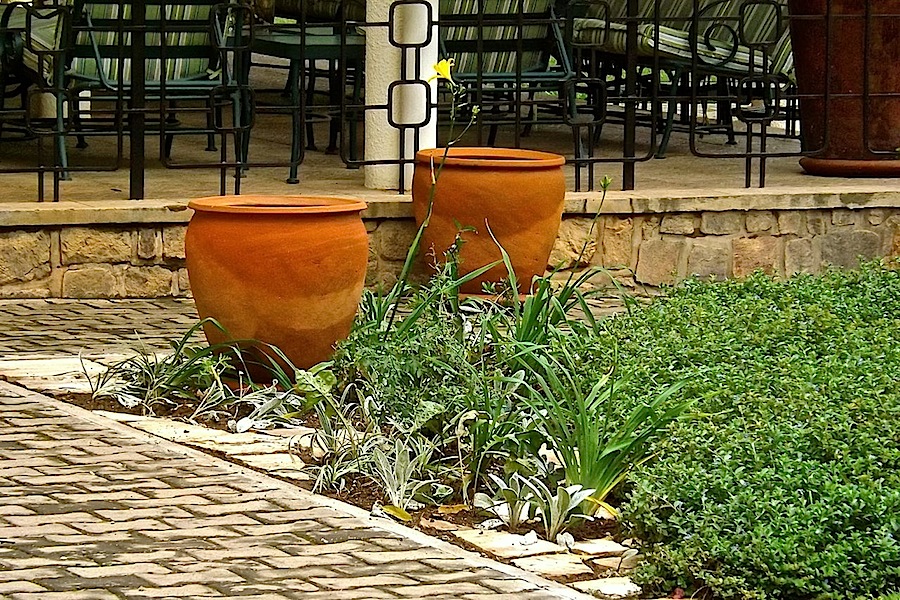
Another change: at the end of the long lawn (below), we have added two tall pots to set off a trio of pine trees.
I will plant something tall to the right of the trees/pots grouping.
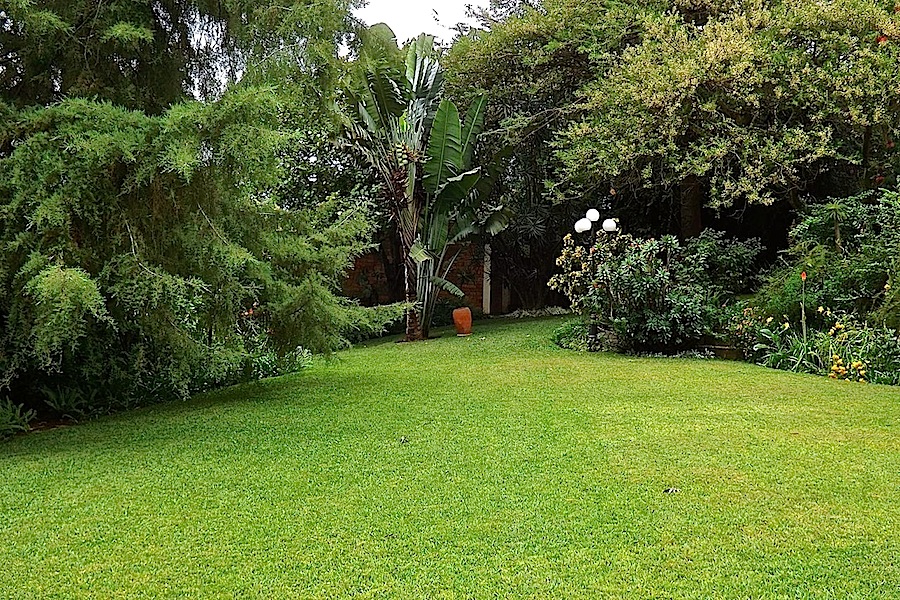
At the other end of the lawn, I placed this single tall pot. I will enlarge the planting area at the base of the traveller’s palm and add some stones to make a level base for the pot.
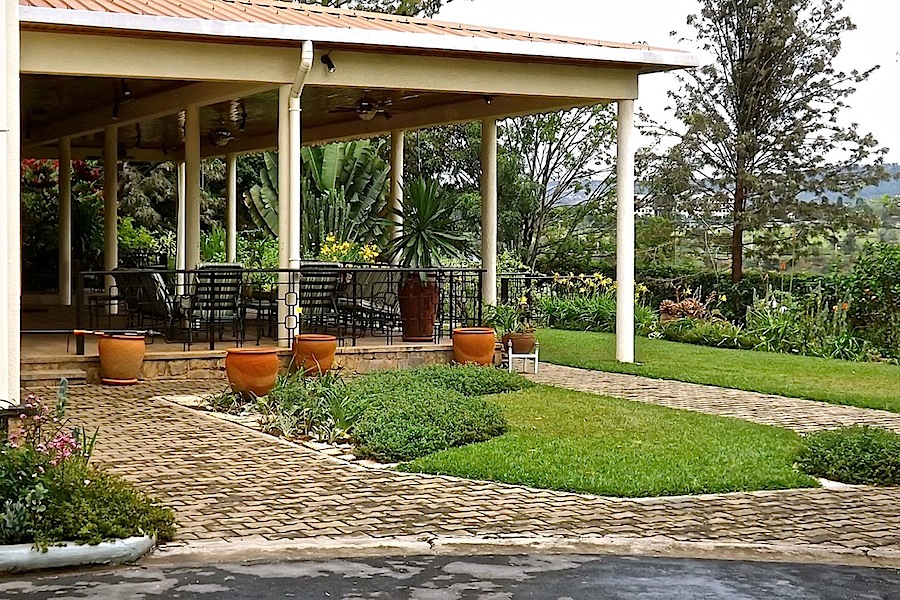
And finally, I faced the fact that my stepping stones and grass arrangement (below) on the right side of the entrance to the terrace just didn’t work. (The aforementioned Norfolk pine used to fill this area.)
We (meaning the gardener mostly) took up all the grass and stones . . .
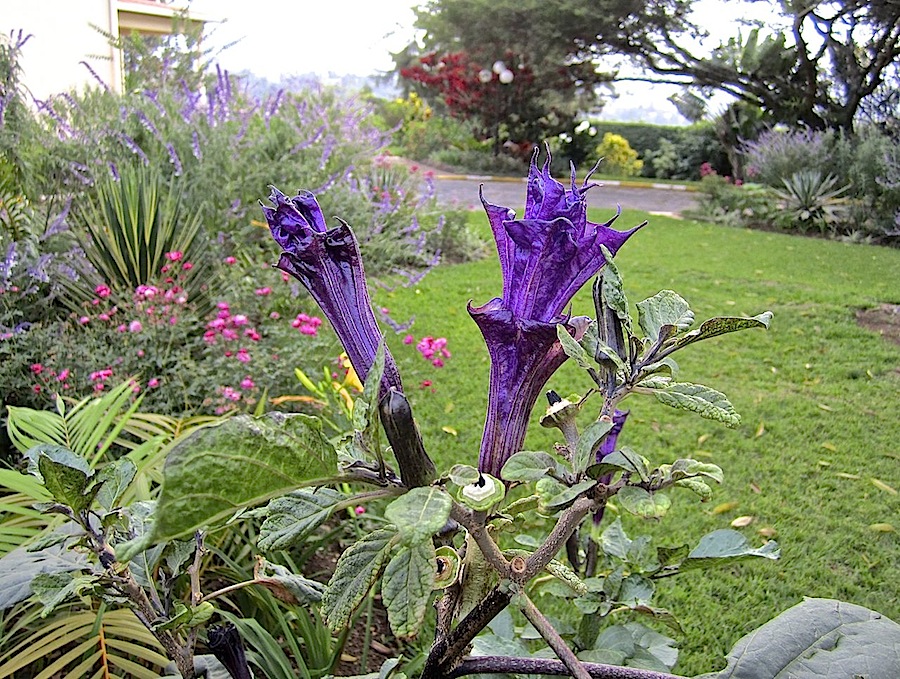
and we replanted (meaning me) with the same plants that are in the borders around the driveway:
Mexican sage, small pink shrub roses (like ‘The Fairy’), datura, lambs’ ear, and yellow day lilies.
I’m still working on the placement of the pots. Please stay tuned.
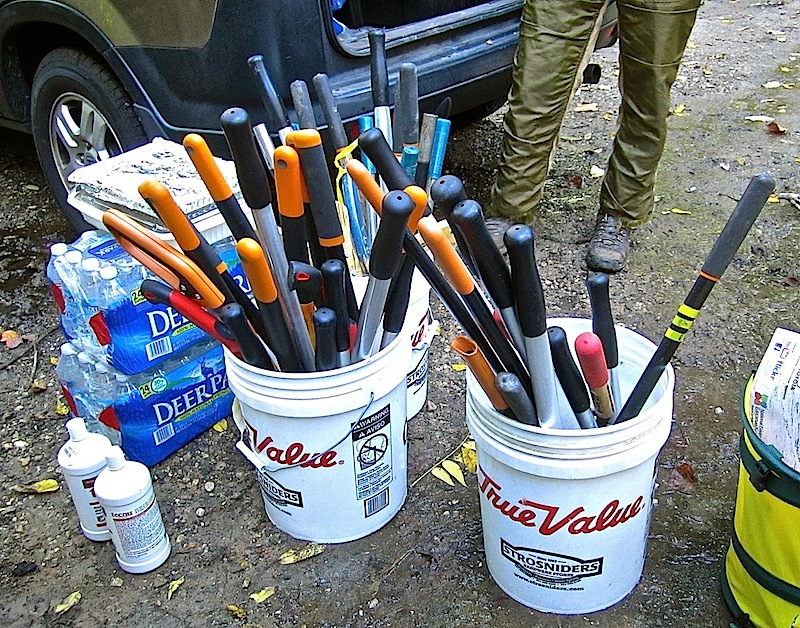
Is this not a picture of fun? Two buckets full of loppers, pruners, saws, and even a couple of machetes.
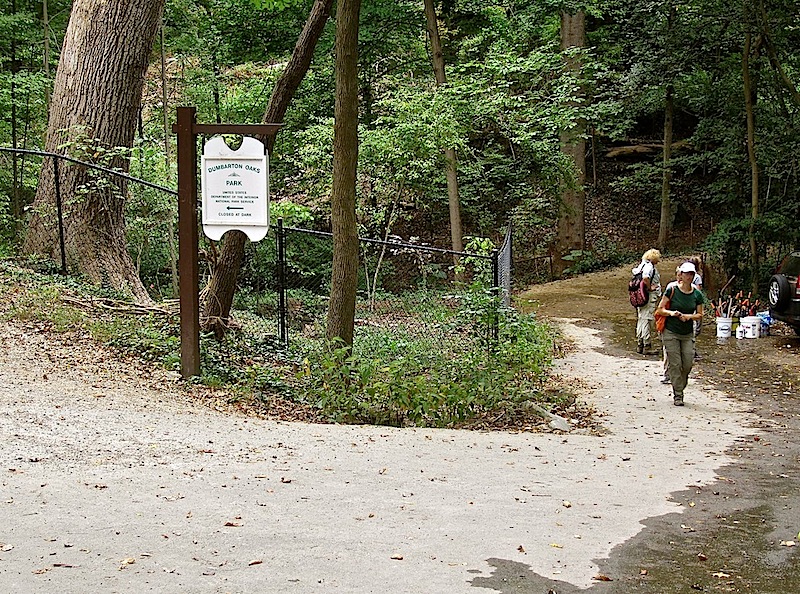
Our recent visit to Washington, D.C., coincided with a September Saturday “Weeding Day” at Dumbarton Oaks Park, sponsored by the Dumbarton Oaks Park Conservancy. I have wanted to volunteer for one of these days for a couple of years — ever since learning about the group’s efforts to restore this Beatrix Farrand masterpiece, which is located behind the more famous Dumbarton Oaks Gardens.
Owned by the National Park Service since 1940, the park has suffered from invasive exotic plants and water runoff.
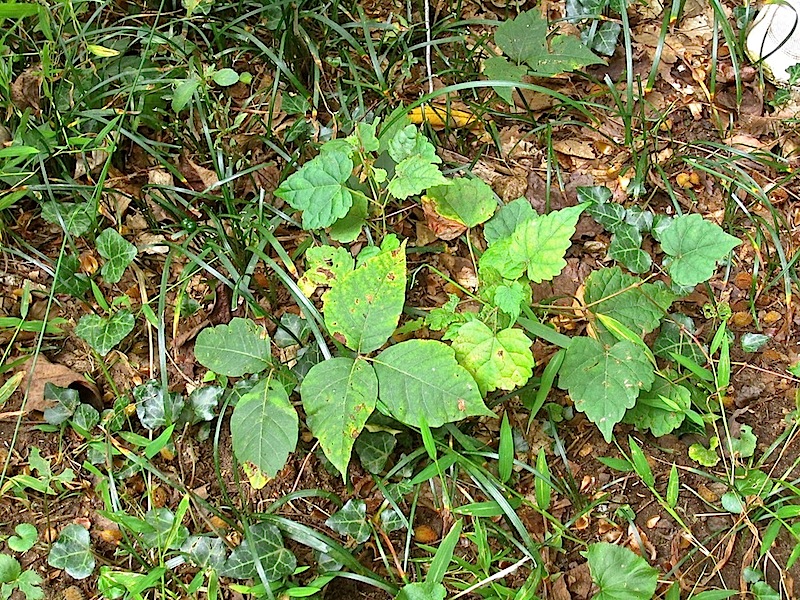
The morning started with Ann Aldrich, the Conservancy’s Program Director, making sure we knew how to recognize poison ivy. Then we all doused our exposed skin in Tecnu, a soap that mitigates the effects of exposure.
We learned that poison ivy was not one of the weeds we would be pulling — it is native to the area and an important source of (protein) food for birds.
(Good) poison ivy surrounded by (bad) porcelain berry, English ivy, Japanese stilt grass, and liriope.
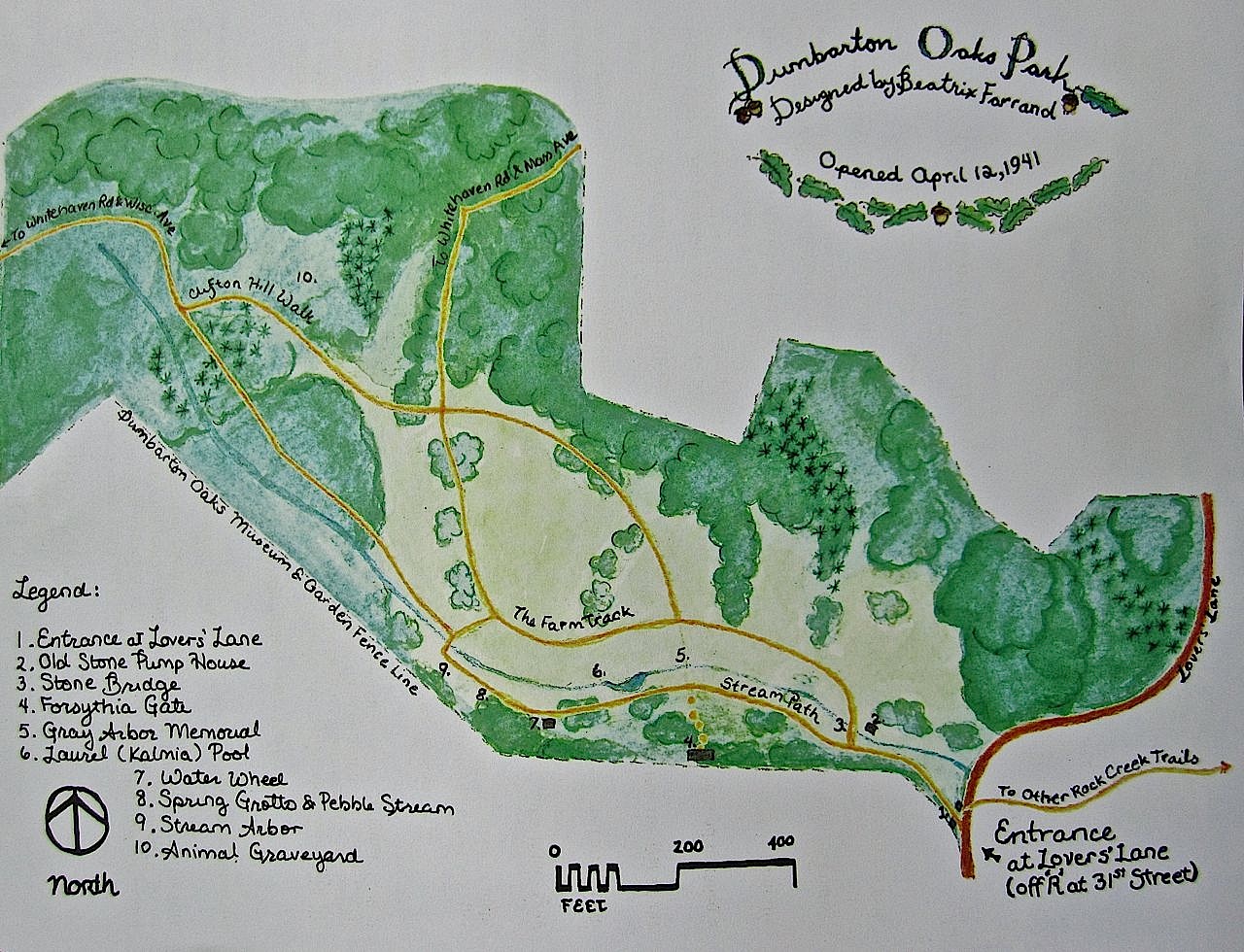
We were clearing a meadow area just above the stone pump house (no. 2), on the right in the drawing below.
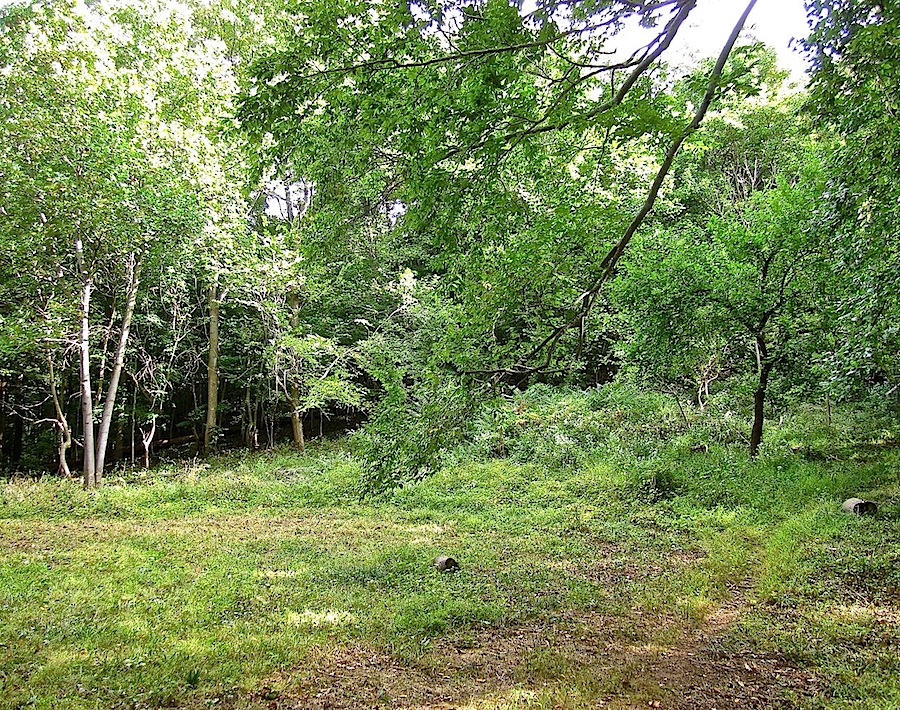
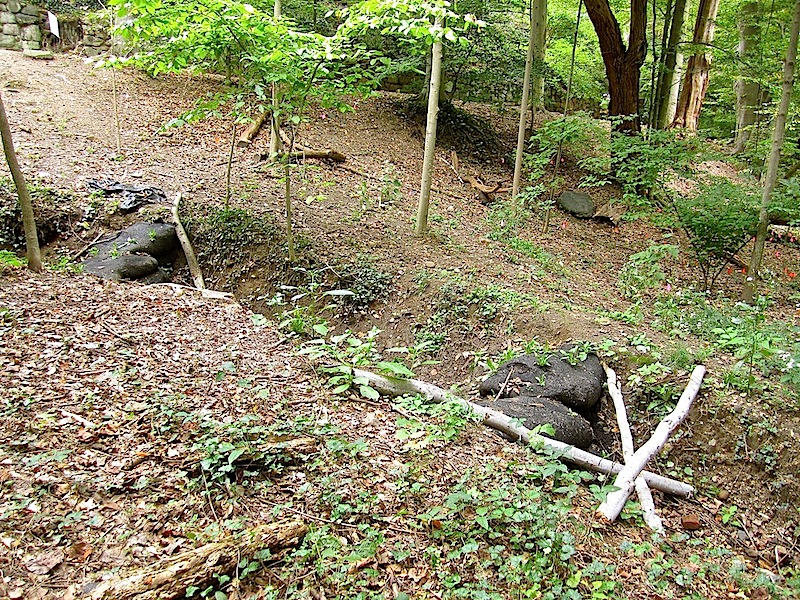
Below is a picture of the area before we started. . .
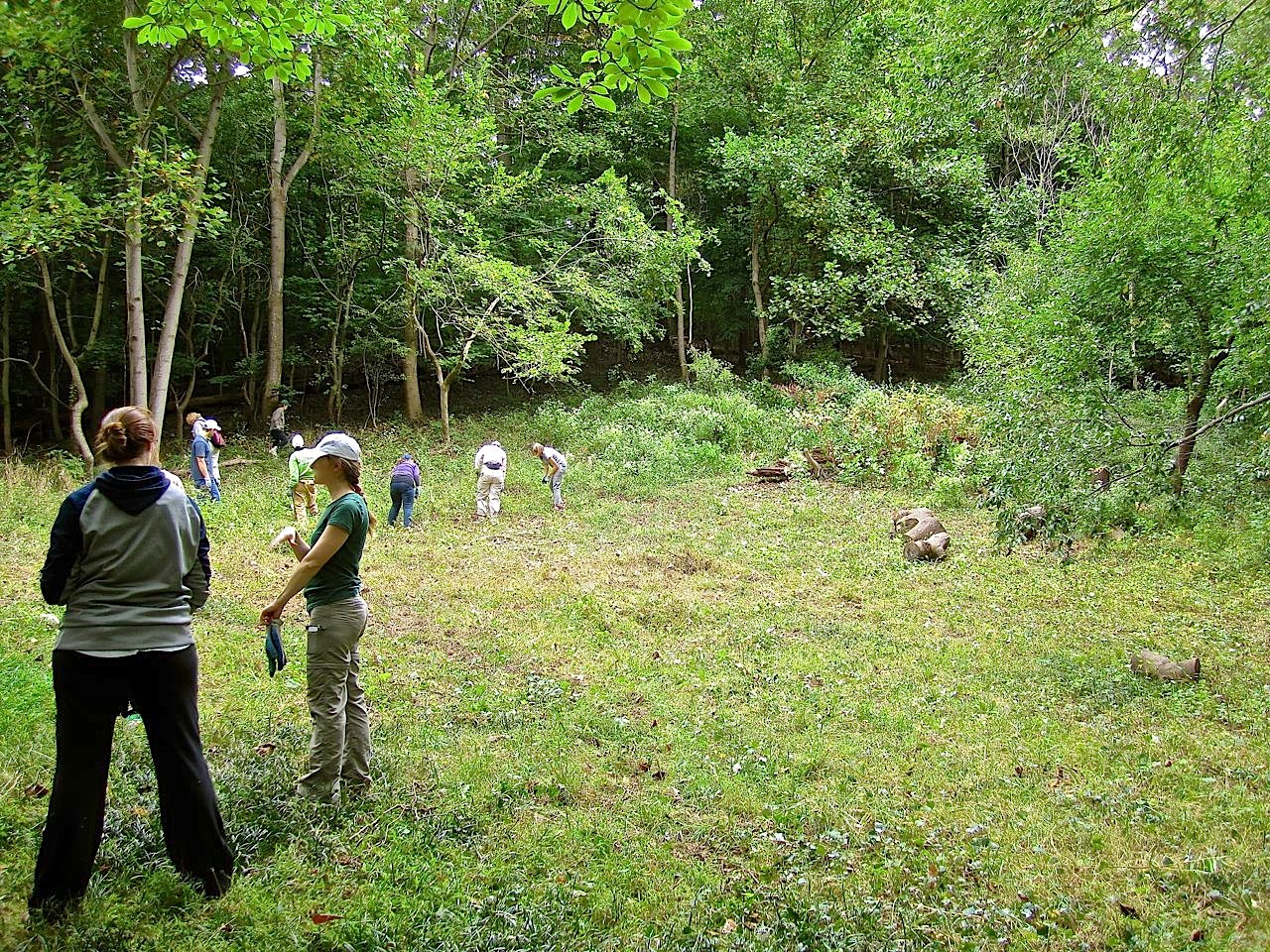
And below is what it looked like after we finished (about 3 1/2 hours later). We probably would have cleared out more above the old log, but there was a bees’ nest on the other side.
Ann has spent many a weekend this summer leading garden enthusiasts, college students, and D.C. schoolchildren in “weed warrior-ing.” There is so much to do, and I am so impressed with the group’s ambitious commitment to this lovely place.
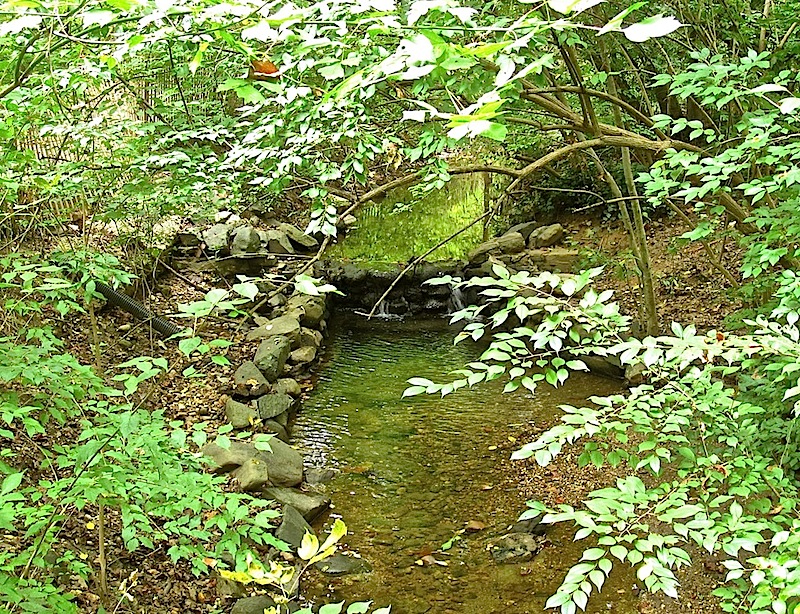
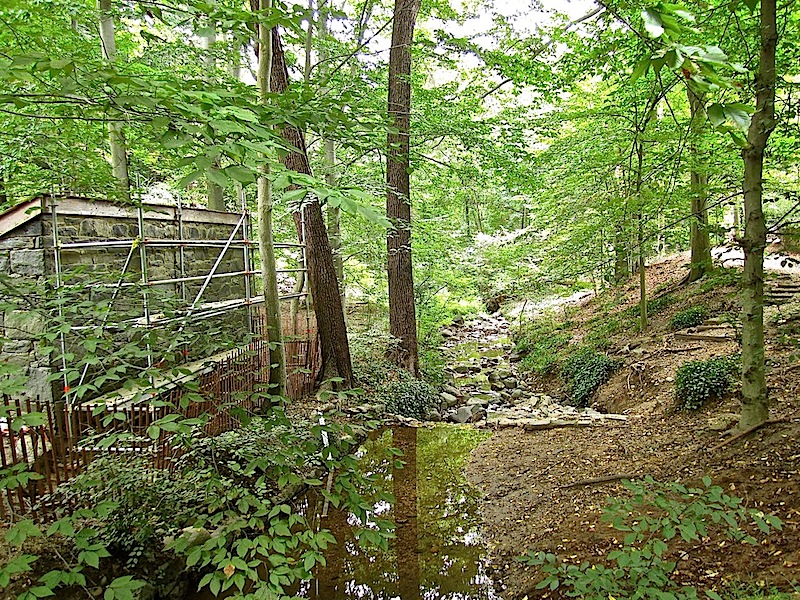
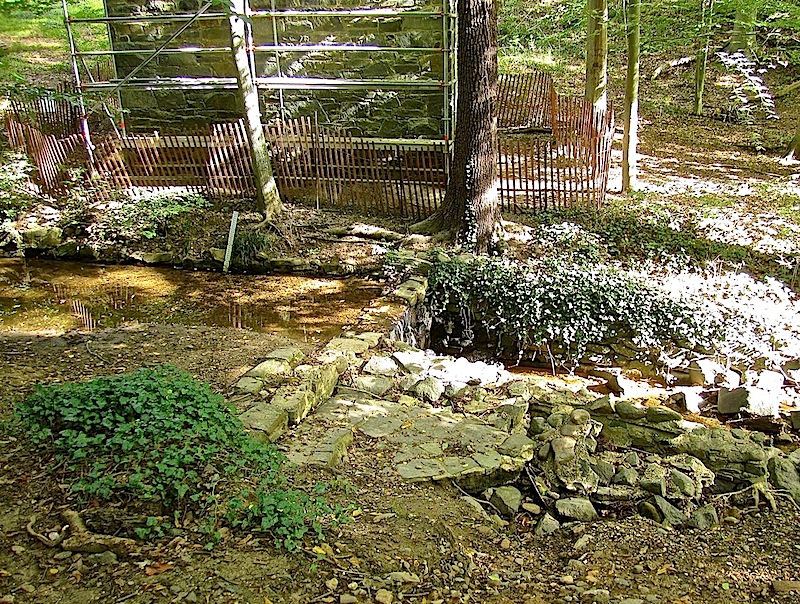
As I was leaving, I stopped to admire the Arts and Crafts-style stonework of the dams that Farrand installed all along the little stream that runs through the park.
The Conservancy was just about to have a contractor make repairs to this area when the government shutdown put a halt to even volunteer efforts. (The Conservancy supports and is supervised by the National Park Service.) I hope the work is underway now. Earlier this year, the group was able to place compost filter socks (below) near the Lovers’ Lane entrance to the park.
They are preventing further damage from the water runoff that comes shooting down the small asphalt road that runs along Dumbarton Oaks Gardens.
I had a great time and I will definitely do it again when we move back to Washington (the park is an easy walk from our house). If you live in the D.C. area and would like to help, click here and ask to be put on the Conservancy’s mailing list.
Dumbarton Oaks Park Conservancy is also holding a fundraiser on November 7, 6:30 p.m., at The Josephine Butler Parks Center. Author Richard Guy Wilson will speak on “Edith Wharton at Home: Life on the Mount.” (Wharton was Farrand’s aunt.) Tickets are $35; click here for more information.
* Farrand actually specified porcelain berry vine to be grown over her arbors, which just makes me shudder.

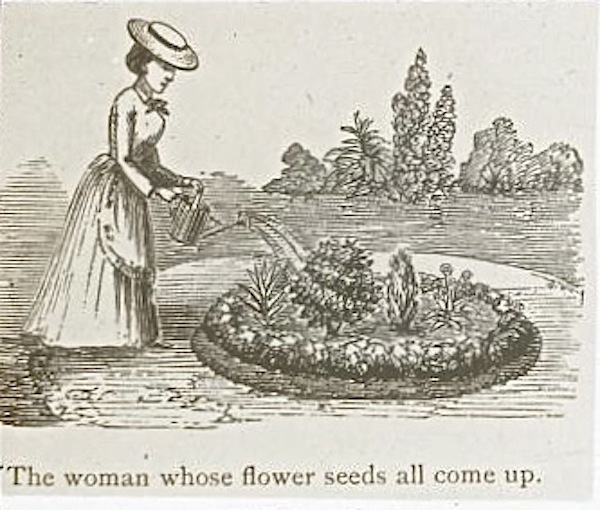 The successful lady gardener dresses in modest clothes with sensible hat and apron and stays home to care for her flowers.
 While the unsuccessful one dresses in low-cut bodice and frilly hat, threatens her flowers and chickens with an umbrella, and then goes out on the town.
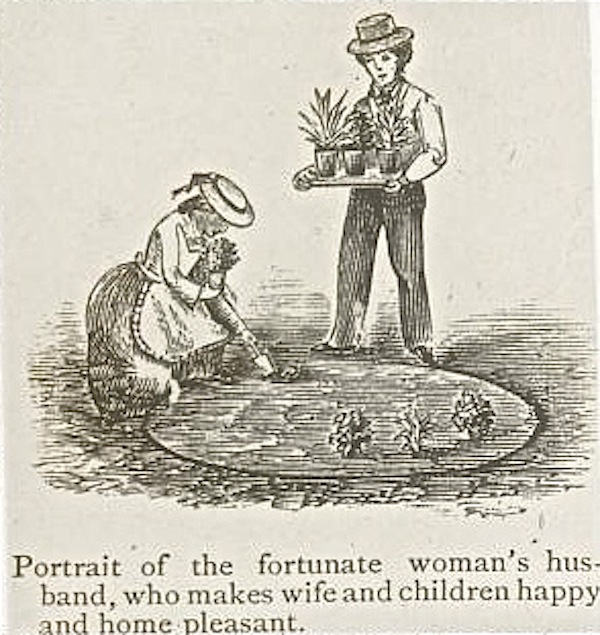 A good husband carries and then holds the pots — he’s a keeper.
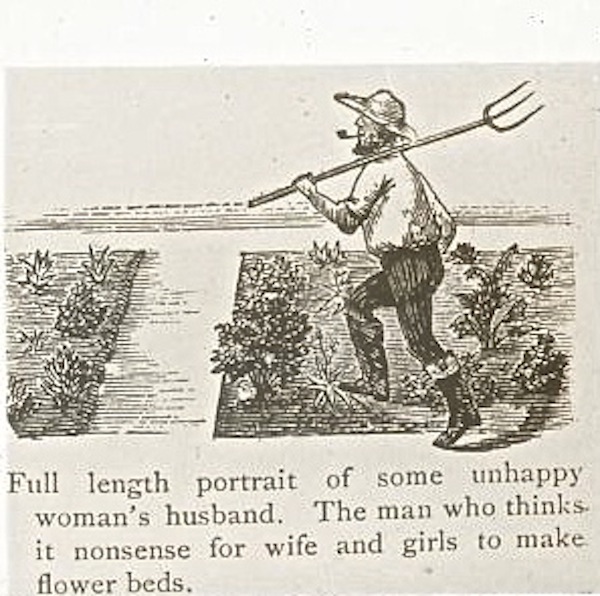 Oh, dump him.

 enclos*ure