The fire pit in May

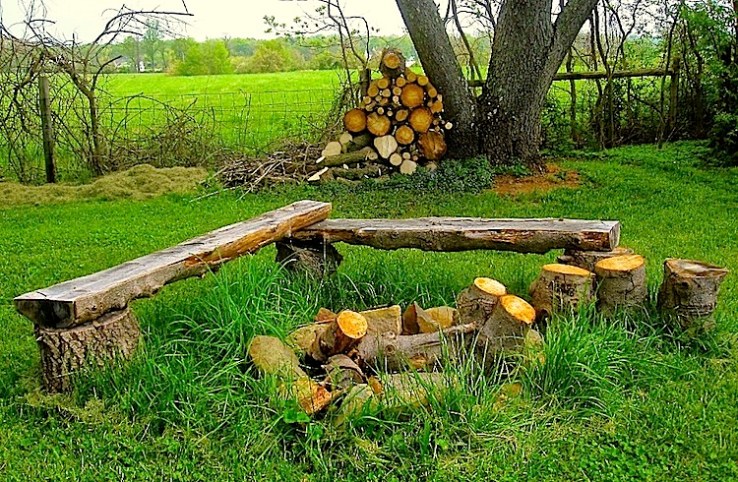
There is a fire pit underneath, awaiting summer cleanup — but I was drawn to the nice arrangement of shaggy grass and logs* (and, of course, the bench and the other beautiful pile of wood in the background).

This is at my brother’s and sister-in-law’s home in Loudon County, Virginia. The picture is from her (mostly about) quilting blog, deeroo designs.  Check out the spring color in their garden and also some ideas for half-square triangles here.

There’s another nice arrangement of logs here.

Tomorrow Tuesday Wednesday, about my own long grass. . .

Of all our sunny world
I wish only for a garden sofa
where a cat is sunning itself.

Edith Södergran, from “A Wish


*I imagine a nice little snake has been drawn to it too.

Photo © deeroo designs.

The Sunday porch: Delta Farm

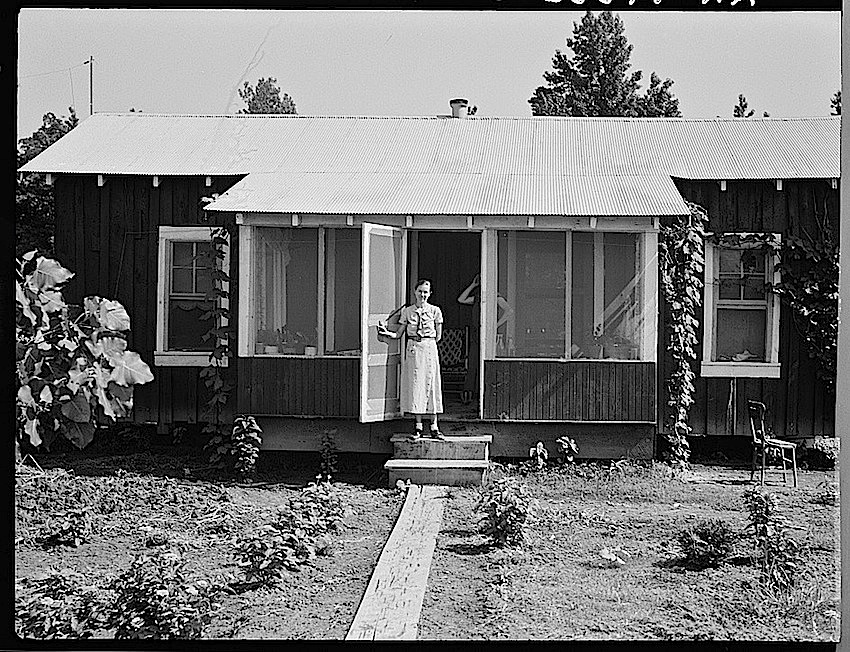
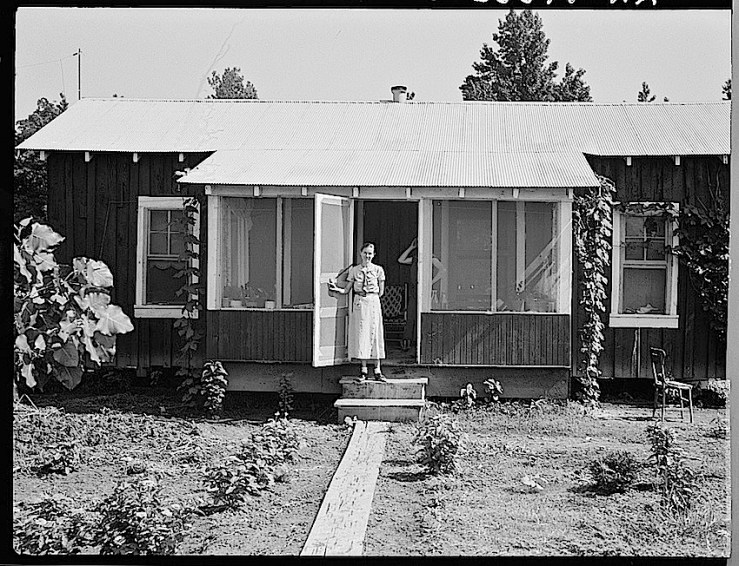
Front porch, Delta Coop Farm, 1937, Library of CongressThe front porch of a Delta Farm home, Hillhouse, [Bolivar County,] Mississippi,” June 1937, by Dorothea Lange, via Library of Congress Prints and Photographs Division (all photos here).

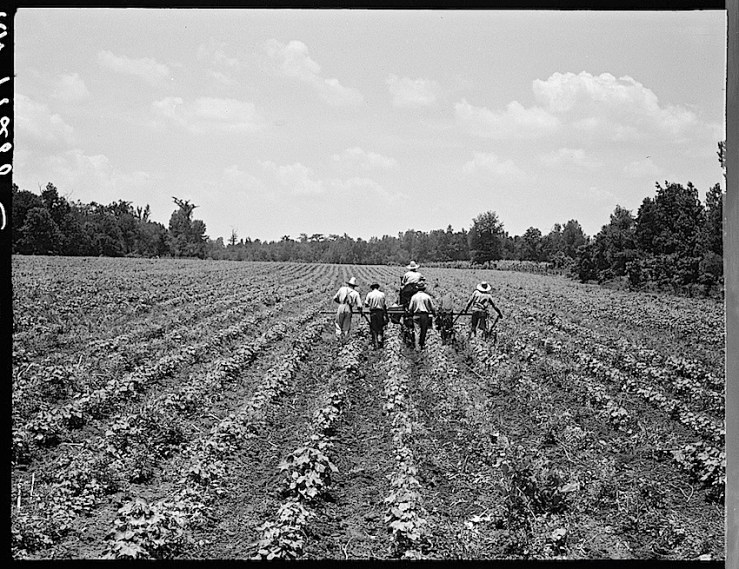
Delta Cooperative Farm was a privately owned and administered agricultural resettlement project for white and African-American sharecroppers evicted in the mid-1930s.

Founded in 1936 by several religious thinkers, educators, and organizers — including well-known missionary author Sherwood Eddy, who had $20,000 to spend from a follower — the enterprise avowed a commitment to economic equality among the races.

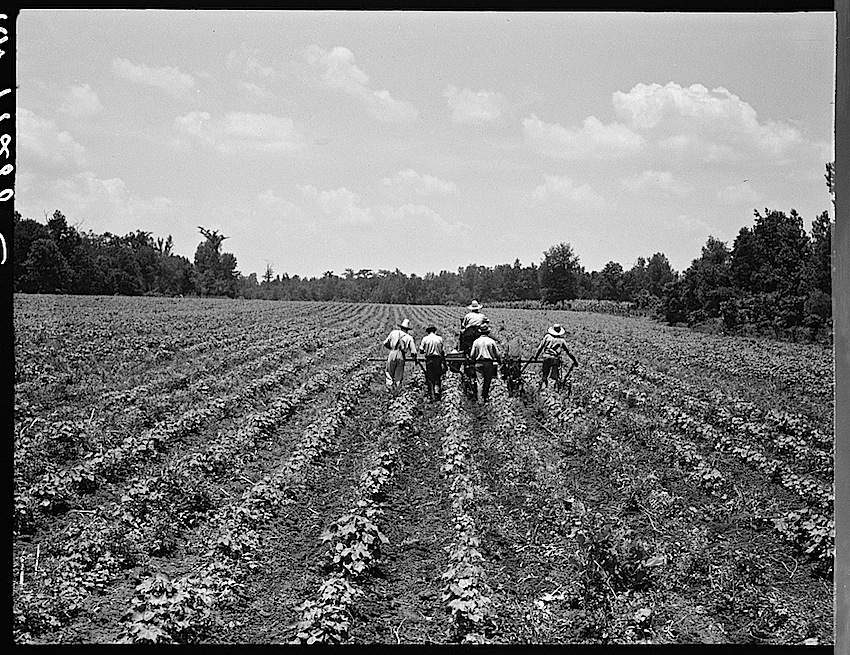
Over half of the first group of 31 farmers to settle at Delta were Black. All members worked together to grow cotton and cut and mill the land’s cypress timber.  All of them shared in the first year’s profits: $327 per family.
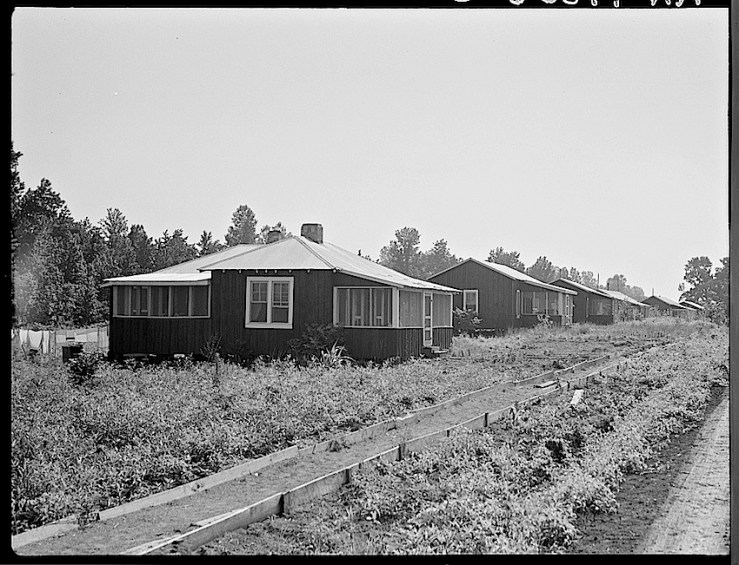
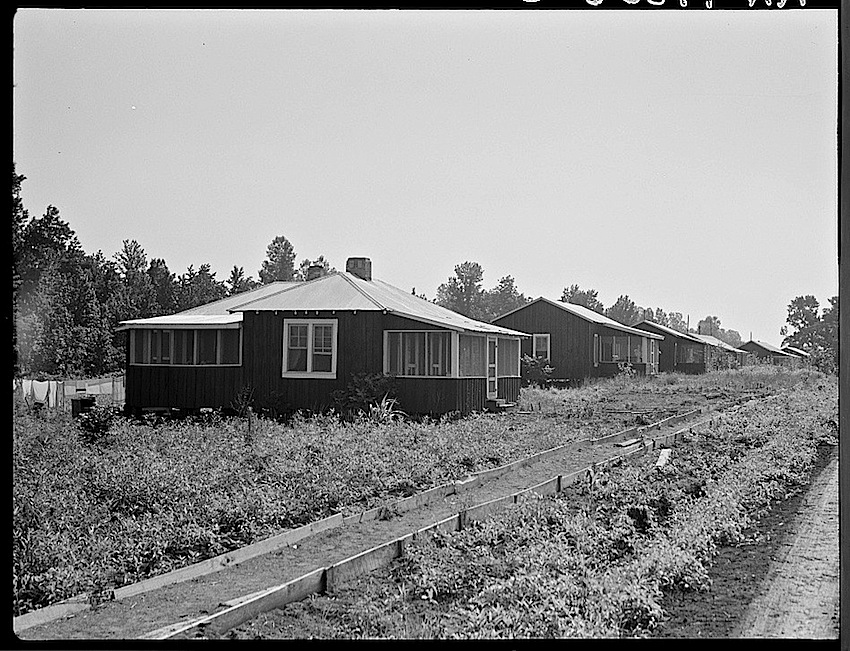
Delta Coop Farm houses, 1937, Library of Congress

The farm’s small houses had the same simple plan and amenities — “Screen windows and porches are uncommon in cotton cabins,” noted Lange — but they were segregated in two rows: one white, one African-American, separated by a road. And the children attended segregated schools.

All the families shared the produce of a 10-acre vegetable garden, however, which appears in the photos above to have engulfed the cabins.

And they all used the farm’s clinic, nursery, and library and attended the integrated cooperative meetings.  There had to be at least two Black members on the five-person farm council.
Delta Coop Farm, 1937, Library of Congress

At the start of World War II, the project lost members to wartime industry jobs and military enlistment, and, in 1942, the land was sold.

Four years before, in 1938, the Delta trustees had established a second inter-racial farm project in Mississippi — Providence Cooperative Farm in Holmes County. It operated until 1955, when its staff and residents fled after being threatened by the white citizens of nearby Tchula.  The empty land was sold the following year.

You can read a more complete story of the two visionary cooperative farms here.

Vintage landscape: food cellar

Food storage, 1940, Wabash Farms, Library of Congress“Food storage cellar, Deshee Unit, Wabash Farms [Cooperative], Indiana,” May 1940, by John Vachon, via Library of Congress Prints and Photographs Division.

I found the preserves in the cellar. . . .

The black raspberries were still
delicious, each cluster
burning like years in the brain.

— Michael Waters, from “Preserves

Life in gardens: Woodbine

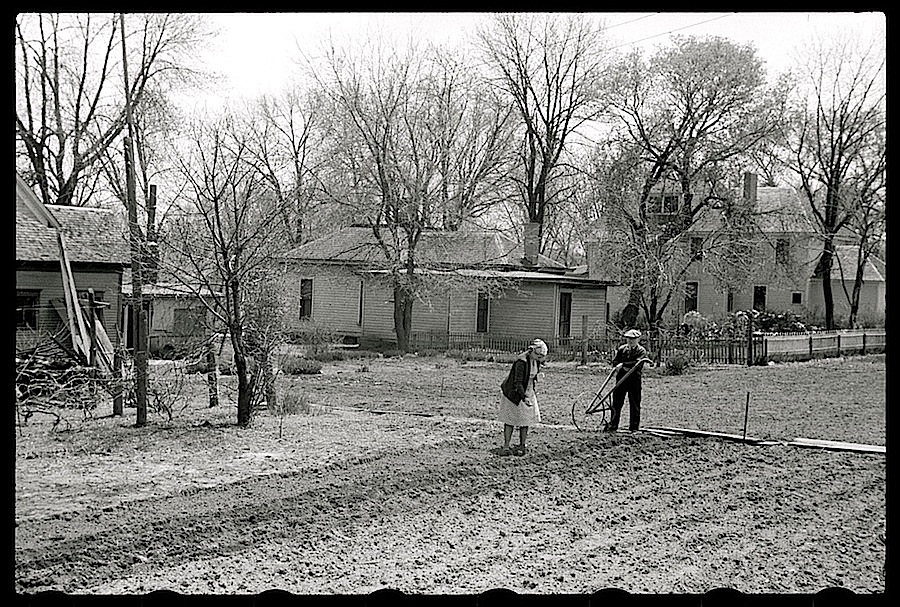
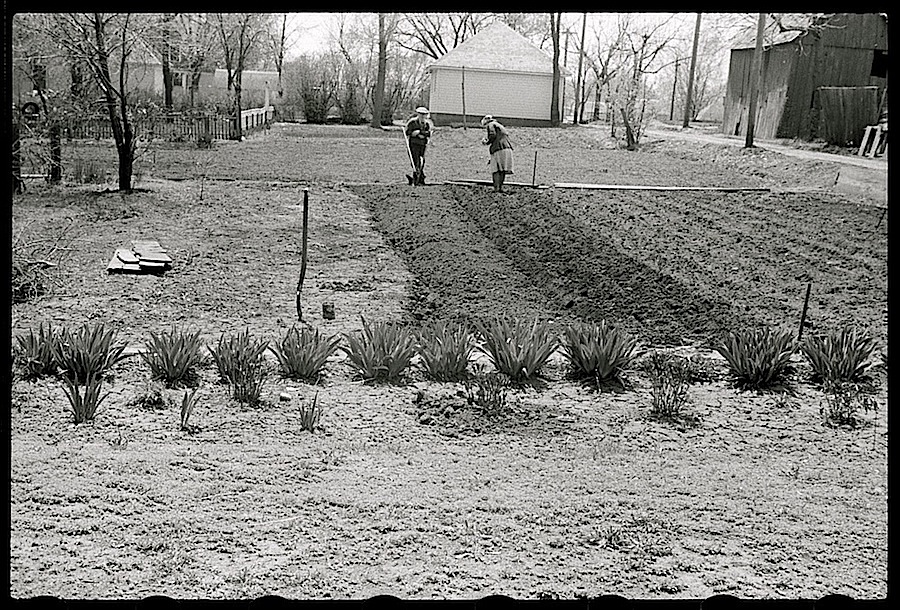
Woodbine, Iowa, 1940, J. Vachon, Library of Congress“Planting a garden in the backyard, Woodbine, Iowa,” May 1940, by John Vachon, via Library of Congress Prints and Photographs Division (both photos here).

Woodbine, Iowa, 1940, Library of Congress

In the spring of 1940, John Vachon was on assignment for the Farm Security Administration in the Midwest.

. . . I photographed Spring – clothes blowing on the wash line, kids playing marbles, women planting backyard gardens, blossoms on trees.

— John Vachon’s journal

Woodbine is a town of about 1,400 people on the Boyer River.  It was named for the woodbine vine (Parthenocissus vitacea) by the wife of the first postmaster, according to the community’s website.

Life in gardens: colored eggs

chicken fed food color, Library of Congress“Possible now to color yolks of eggs “red, white and blue” by feeding hens different feeds,” April 7, 1939, by Harris & Ewing, via Library of Congress Prints and Photographs Division.

Washington, D.C., April 7. . . . Charles A. Denton, Junior Chemist, poultry nutrition laboratory of the National Agriculture Research Center, Beltsville, Maryland, feeding a hen a certain food to produce a definite colored yolk.

— from the original Harris & Ewing caption

Blue eggs and ham?

More photos of the Department of Agriculture in action in the 1930s here and here.

. . . Yesterday the egg so fresh
it felt hot in his hand and he pressed it
to his ear. . . .
riveted to the secret of birds
caught up inside his fist. . . .

— Naomi Shihab Nye, from “Boy and Egg