Vintage landscape: Bagatelle Garden (and Chelsea Miscellany)

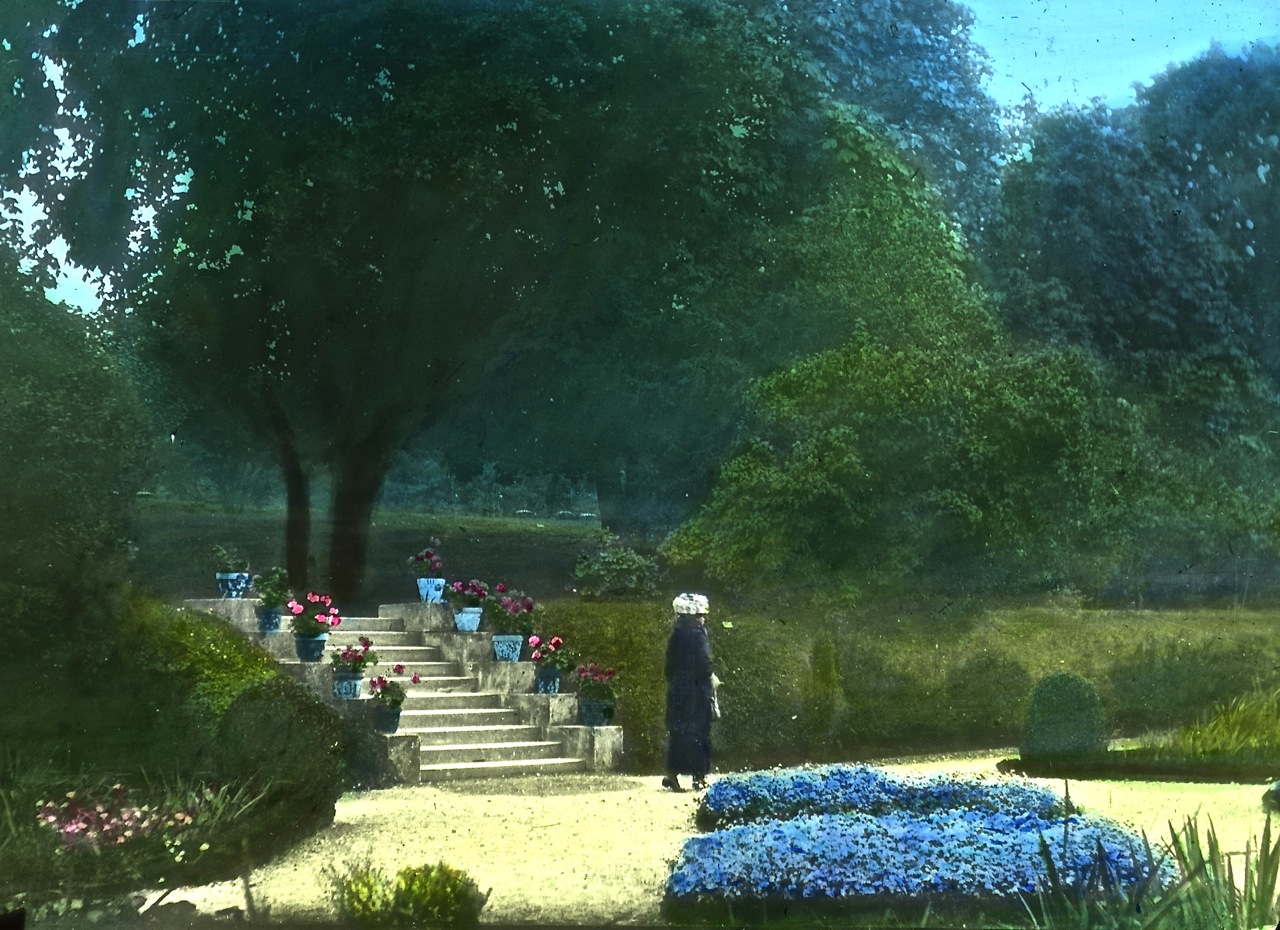
Bagatelle/enclos*ure Hand-tinted (3″ x 5″) glass lantern slide of Bagatelle Garden, Paris, France, ca. 1930, photographer unknown.
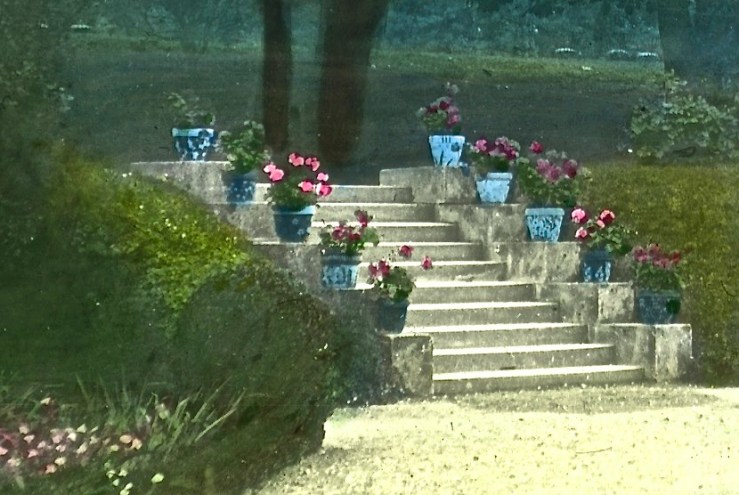
Bagatelle detail/enclos*ure
Detail.

The image is from the Garden Club of America Collection, part of the Archives of American Gardens at the Smithsonian Institution (used here by permission).

Bagatelle detail/enclos*ure
Detail.

The Archives hold over 60,000 photos and records documenting 6,300 historic and contemporary American gardens.  At its core are almost 3,000 hand-colored glass lantern and 35mm slides donated by the Garden Club of America.

Smithsonian Gardens maintains 11 gardens around the Smithsonian Institution’s grounds and also has a good blog here.

Chelsea Miscellany

It’s RHS  Chelsea Flower Show time!  Their website is here.

All The Telegraph’s  Chelsea coverage is here; The Guardian’s is here; The Independent’s is here.

BBC coverage is here.  You may need this to view it.  (View episodes soon; some expire in four days.)

The New York Times reports on how gnomes will be allowed in the show this year (only), here.  In the Herald (Dublin), “Diarmuid Gavin has branded the Chelsea Flower Show ‘dull’ and described Prince Harry’s garden at the centenary exhibition as ‘bad,'” here.

Studio ‘g’  has photos of the Best in Show winner — the Australian garden — here, and they promise more pictures to come.  Also, check out The Galloping Gardener’s report, here (thanks to GD by CM) — Gardenista’s, here — and The Enduring Gardener’s, here.   Anne Wareham of thinkinGardens comments on two of this year’s entries, here.

Sources for seeds for cow parsley — plant of the moment at this year’s show, according to Gardenista — here.

Instagram photos tagged #chelseaflowershow are here.  GAP Photos has 103 photos of Chelsea, here.  More photos, as well as plant lists, are posted on Shoot, here.

Where have you found good photos or reviews of the show?
Help save a masterpiece

The Dumbarton Oaks Park Conservancy is in the midst of a campaign to win $75,000 from the “Partners in Preservation” $1 million giveaway in the Washington, D.C., metro area.  The giveaway is sponsored by the National Trust for Historic Preservation and American Express.

You can vote for the DO Park HERE* every day through midnight on May 10.

(And voting enters you in a contest to win a three-night stay at a Marriott hotel.)

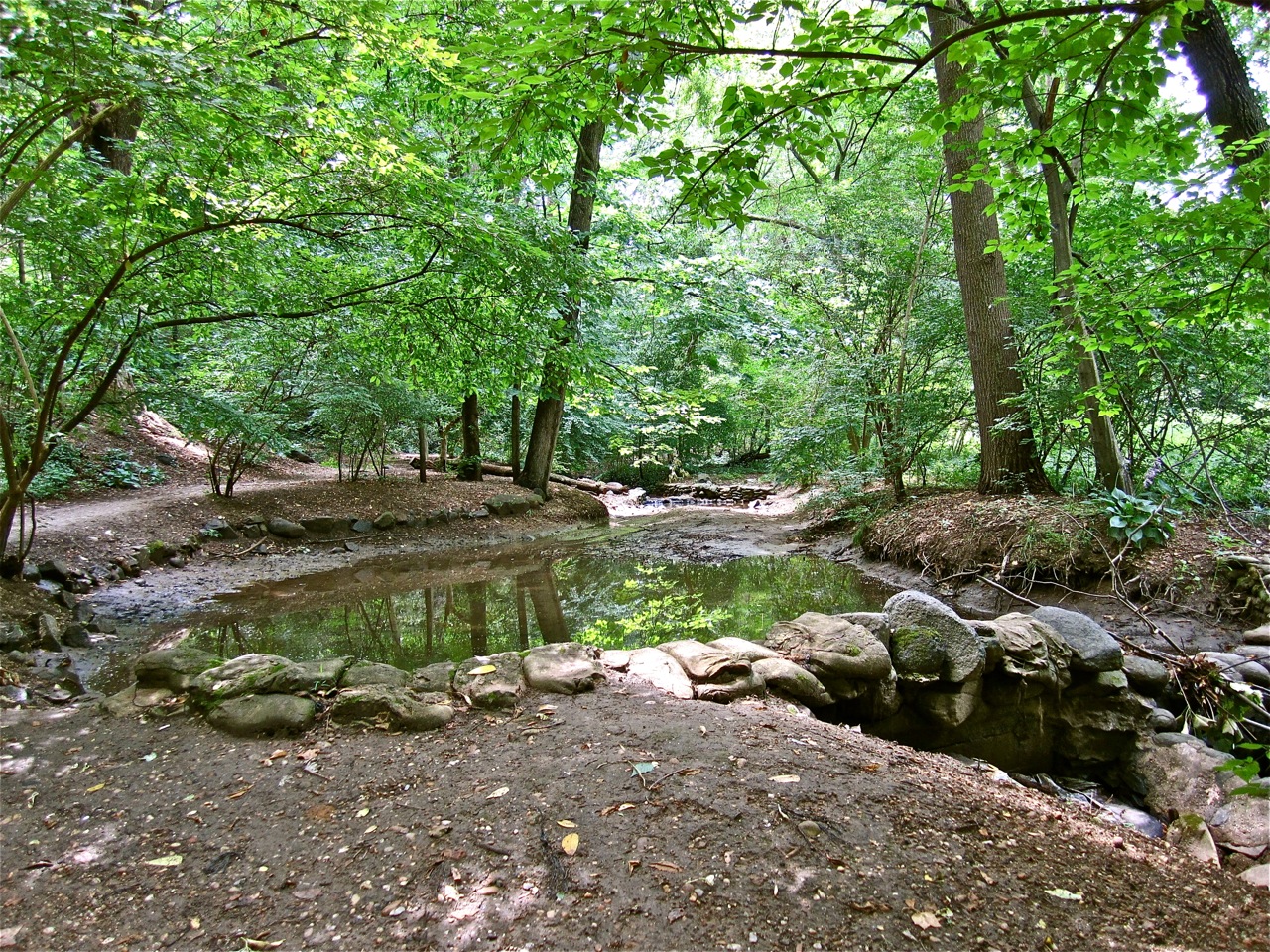
Dumbarton Oaks Park (not to be confused with the adjacent Dumbarton Oaks Gardens) is one of the masterworks of landscape architect Beatrix Farrand.

In 1928, she composed the park as a series of paths and meadows along a small tributary of Rock Creek and had them planted out with drifts of native and exotic wildflowers, bulbs, and woodland shrubs.  Eighteen waterfall dams, two arbors, and several benches and footbridges were built in the rustic Arts and Crafts style.

Even with the damage, the artistry of Farrand's arrangement of dams and bridges shine through.
Even with many years’ damage, the artistry of Farrand’s stonework shines through.

Sadly, the 27-acre park has suffered greatly from lack of sufficient resources since 1940, when it was turned over to the National Park Service.  However, in 2010, the Conservancy was formed to restore the park to its former glory by raising money and fielding teams of volunteer “weed warriors.”

Beatrix Farrand was America’s first female professional landscape architect and one of eleven founding members of the American Society of Landscape Architects.

Participants at a recent conference on her work lauded her as a “scientific-minded experimenter, an early proponent of native plants, a leader in ‘pre-ecological design,’ an expert in stormwater management, and a flexible and innovative designer who mastered numerous styles,”reported The Dirt, the blog of the American Society of Landscape Architects.

Please vote and spread the word! The $75,000 will repair the park’s stonework at the east falls dam and viewing platform.


*The first time you go to the site, don’t click ‘vote’ right away. Go to ‘log in’ and register. Then, you’ll receive an e-mail asking you to confirm your address. Then you can log in and vote. It takes a couple of minutes, but you’ll be able to vote in seconds for the next five days.  (You must be a legal resident of the U.S. to be eligible to win the free stay in  a Marriot hotel.)

Early pink magnolias

Tulip magnolia

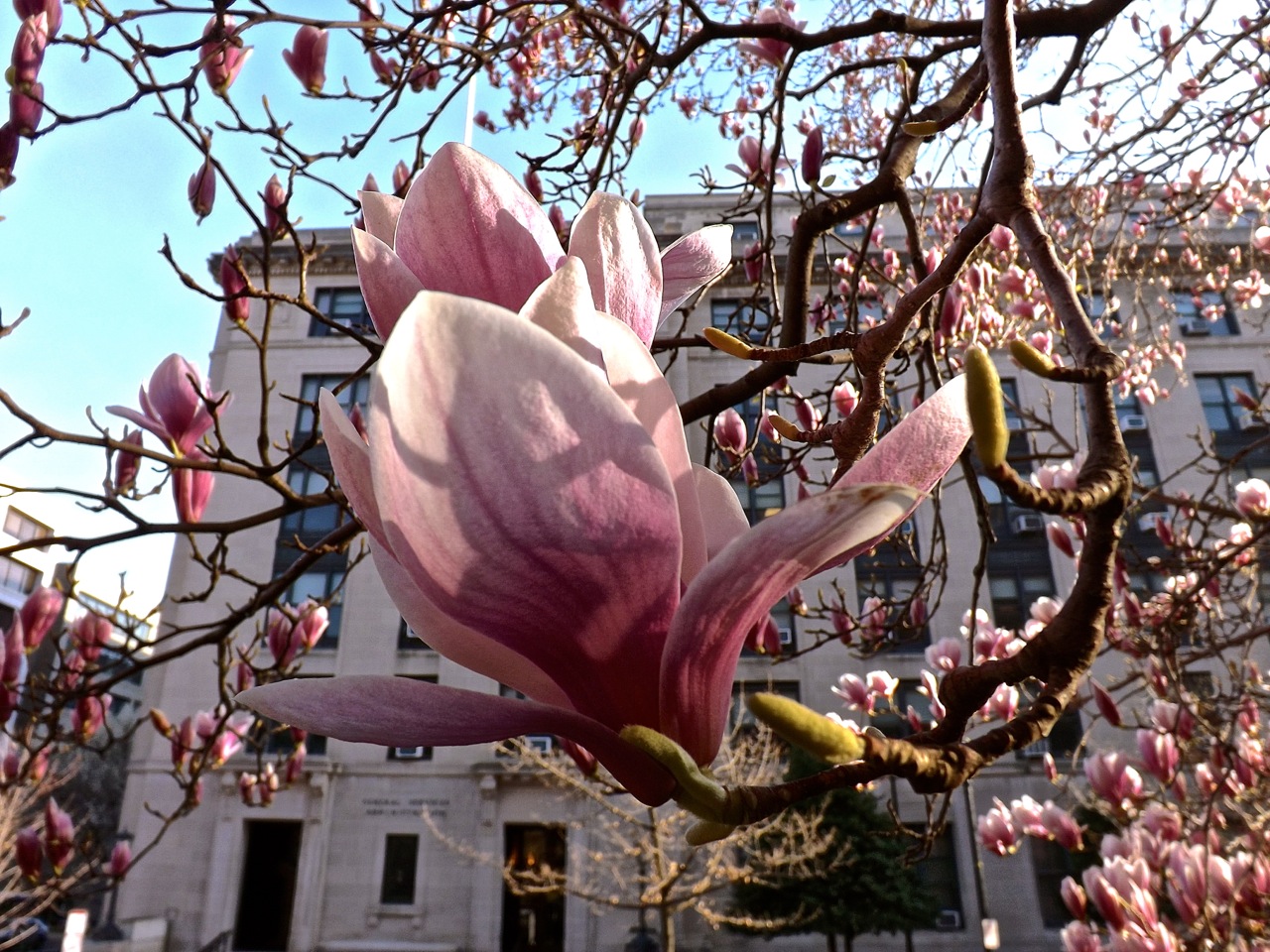
When we arrived back in Washington, D.C., in the first week of April, I enjoyed the flowers of the tulip magnolias.  They were practically the only blooms in the still wintery landscape.

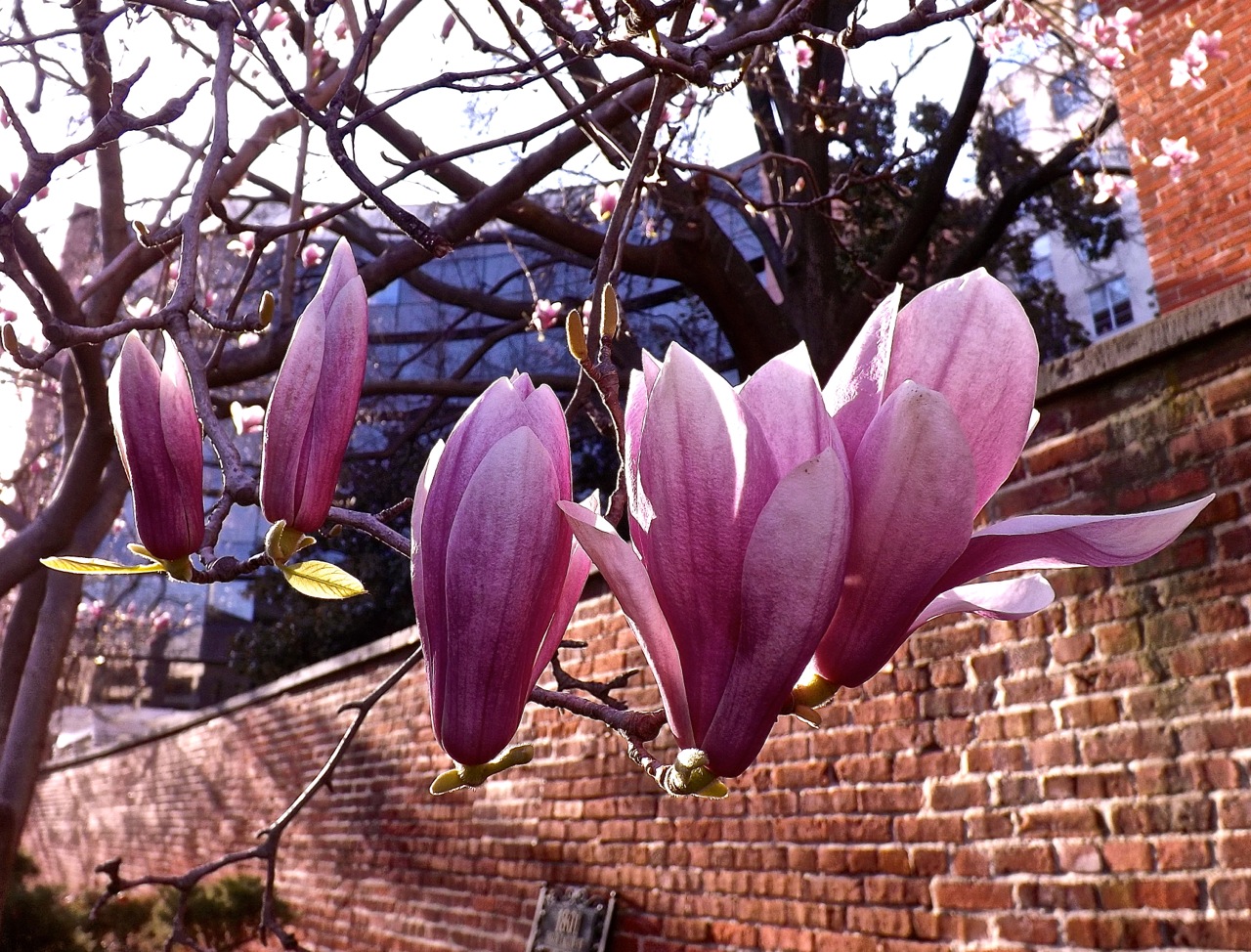
Tulip magnolia at DACOR-Bacon Hse., Wash., D.C., April 2013/enclos*ure

Although I believe what I was calling ‘tulip’ magnolias were really saucer magnolias (Magnolia x soulangeana), which are a hybrid of tulip or Mulan magnolia (M. liliiflora) and Yulan magnolia (M. denudata).

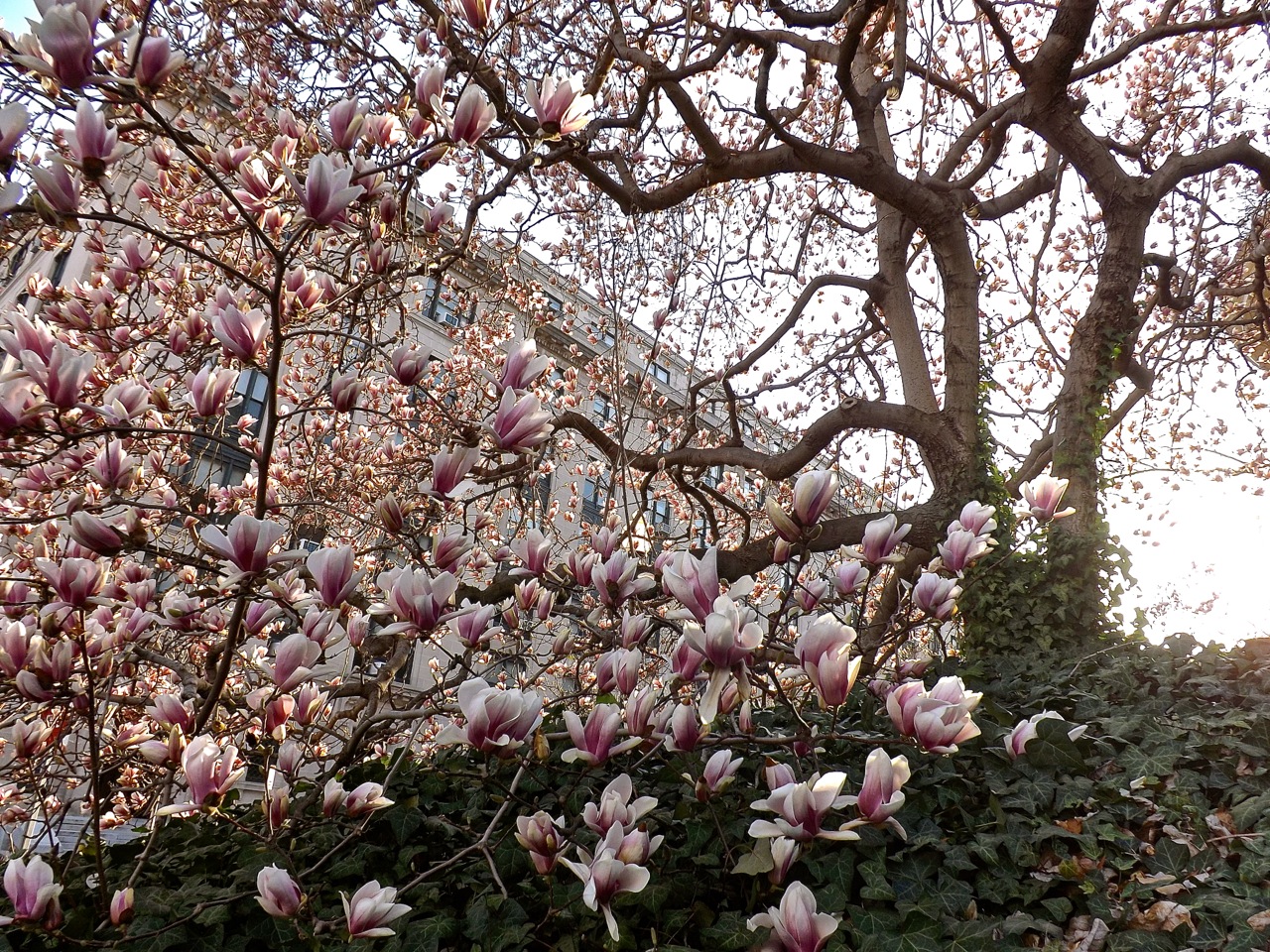
Tulip magnolia at DACOR-Bacon Hse., Wash., D.C., April 2013/enclos*ure

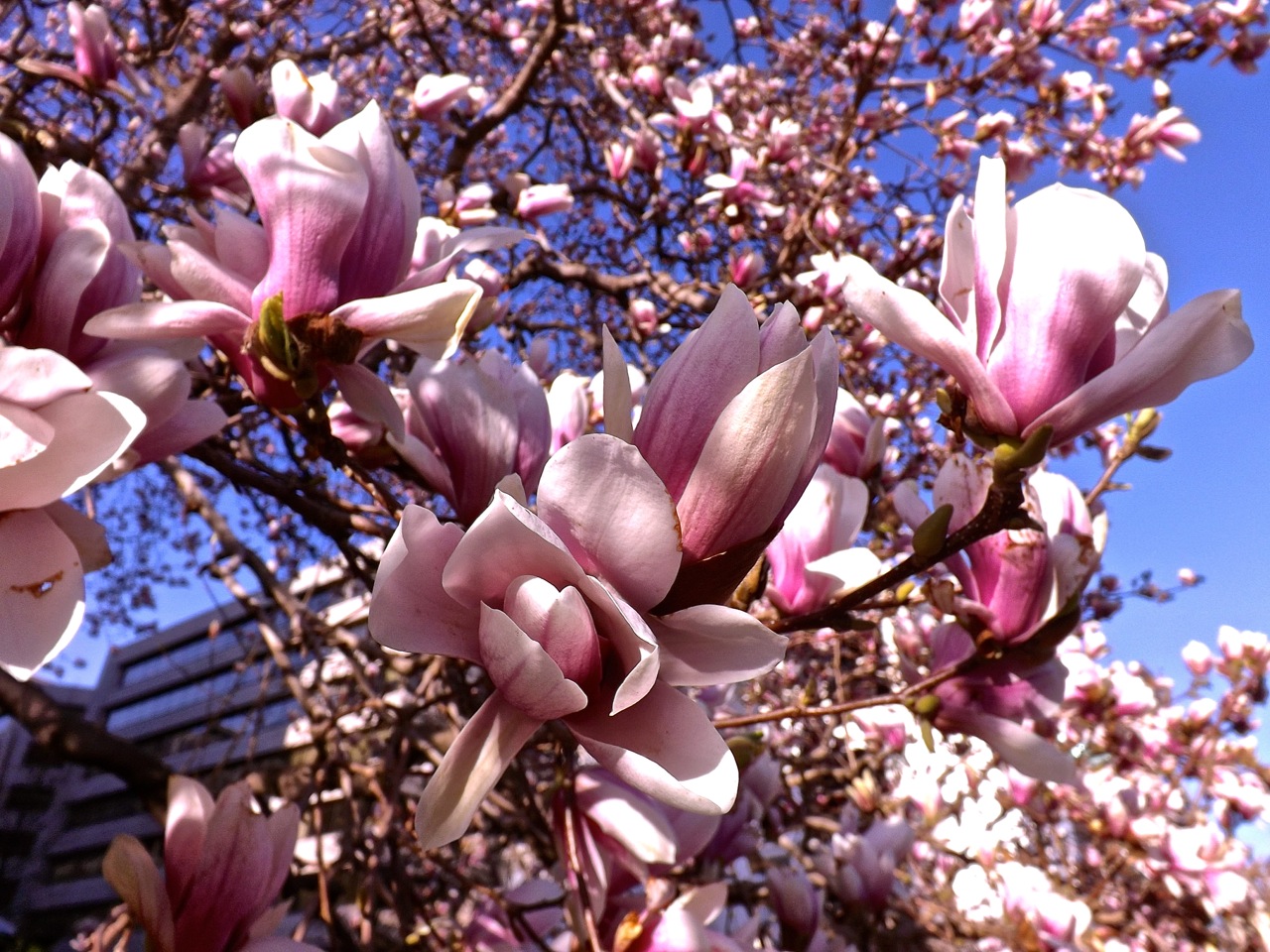
At DACOR-Bacon House, about two blocks west of the White House, I took a lot of photos of two magnolia trees that are planted at the tops of retaining walls, so that the lower blooms are right at eye level.

One of the best places in Washington to enjoy this tree blooming (or leafed out and casting shade) is the Moongate Garden of the Smithsonian’s Enid A. Haupt Garden.

Tulip magnolia at DACOR-Bacon Hse., Wash., D.C., April 2013/enclos*ure

And that Washington flower, the pink magnolia tree, blooms now/ In little yards, its trunk a smoky gray. . . .

James Schuyler, from “Hymn to Life

Vintage landscape: painting the cherry blossoms

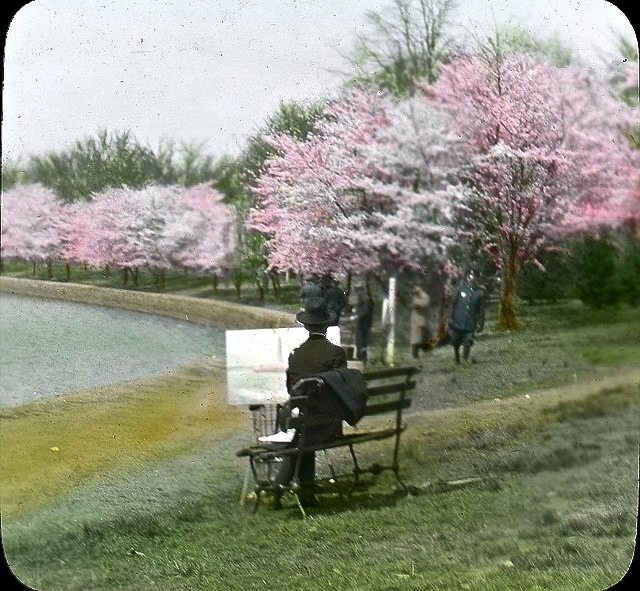
Painting the cherry blossoms, Wash., DC, c. 1920“An artist seen painting the Cherry Blossoms along the Tidal Basin,” Washington, D.C., by E. B. Thompson. The photo is undated, but was possibly taken in the 1920s. Via D. C. Public Library Commons on flickr.

The National Cherry Blossom Festival in Washington, D.C., will begin next week on Wednesday, March 20, and will continue through April 14.  Click here for more information on events and local accomodations.

The National Park Service is predicting that peak bloom (70% of the flowers open) will occur March 26 – 30.  The average date for peak bloom is April 4.

[ADDENDUM: The Capital Weather Gang blog at The Washington Post is departing from the NPS prediction.  They believe that the peak bloom will come between April 3 and 7.]

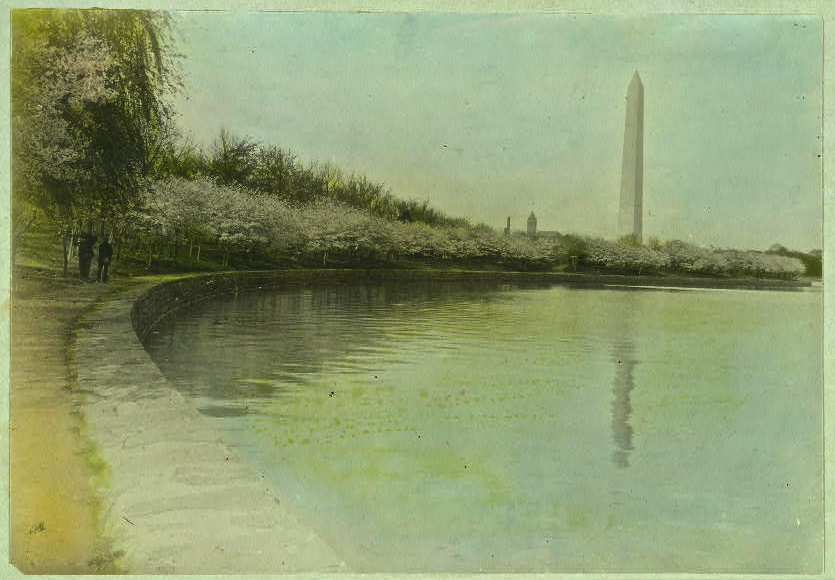
Here’s another lovely hand-colored photograph of the Tidal Basin from about 1920.

Tidal Basin, Washington, DC, c. 1920The photographer is unknown; the image is via the Library of Congress Prints and Photographs Division.

The cherry trees along Washington’s Tidal Basin were a gift from the Japanese government 101 years ago, so they would have been about 10 to 15 years old at the time of these photos.

Loveliest of trees, the cherry now
Is hung with bloom along the bough,
And stands about the woodland ride
Wearing white for Eastertide.

Now, of my threescore years and ten,
Twenty will not come again,
And take from seventy springs a score,
It only leaves me fifty more.

And since to look at things in bloom
Fifty springs are little room,
About the woodlands I will go
To see the cherry hung with snow.

— A. E. Housman, “Loveliest of trees, the cherry now

Ready for action

Announced by all the trumpets of the sky,
Arrives the snow. . .

— Ralph Waldo Emerson, from “The Snow-Storm

This slideshow requires JavaScript.

Ford Motor Co. snow plows, ca. 1910 – 1925, possibly in Washington, D.C., National Photo Company Collection, Library of Congress Prints and Photographs Division.

“Most sources seem to agree that the basic street snow plow (not horse-drawn or built for trains) was created in 1913,” according to the blog Landscape Management Network.

“The first street snow plow, however, wasn’t patented until the early 1920s. At the time, a New Yorker by the name of Carl Fink was the leading manufacturer of plows mounted to motorized vehicles. Today, the company is known as Fink-America and its plows are still on the market.”

Current snow reports: here and here.

Continue reading “Ready for action”