
 “Vier broertjes in de tuin” (four brothers in the garden). probably in the Netherlands, ca. 1910, photographer unknown, via Spaarnestad Collection of the Nationaal Archief (Netherlands).
Category: vintage landscape
Philadelphia
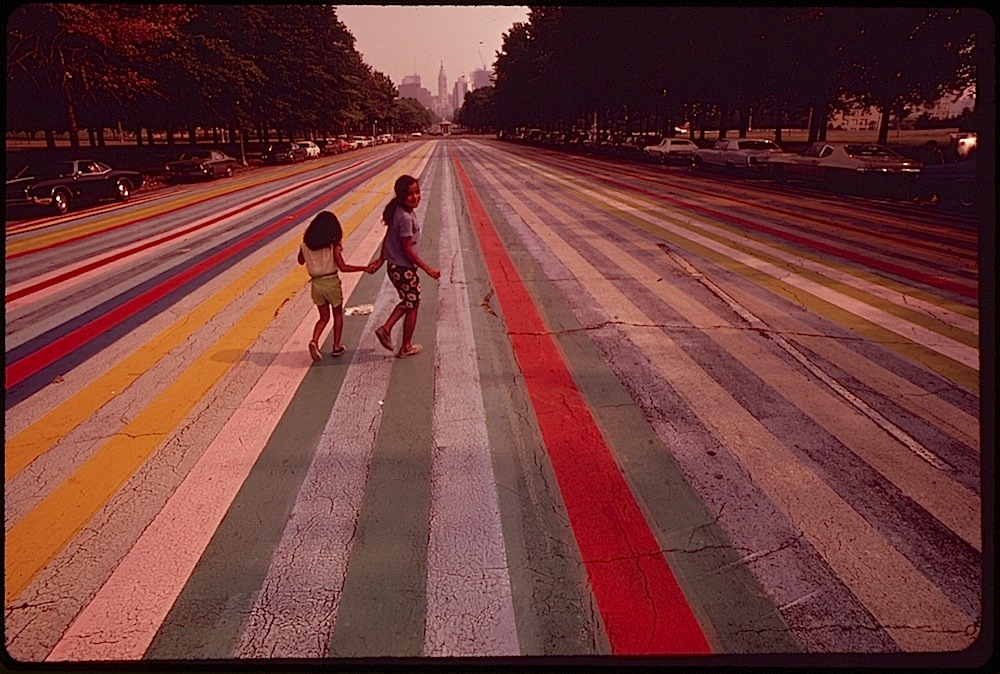 “Crossing the painted road which extends east from The Philadelphia Museum of Art, August 1973,” by Dick Swanson, via the U.S. National Archives Commons on flickr (all photos and captions in quotes here).
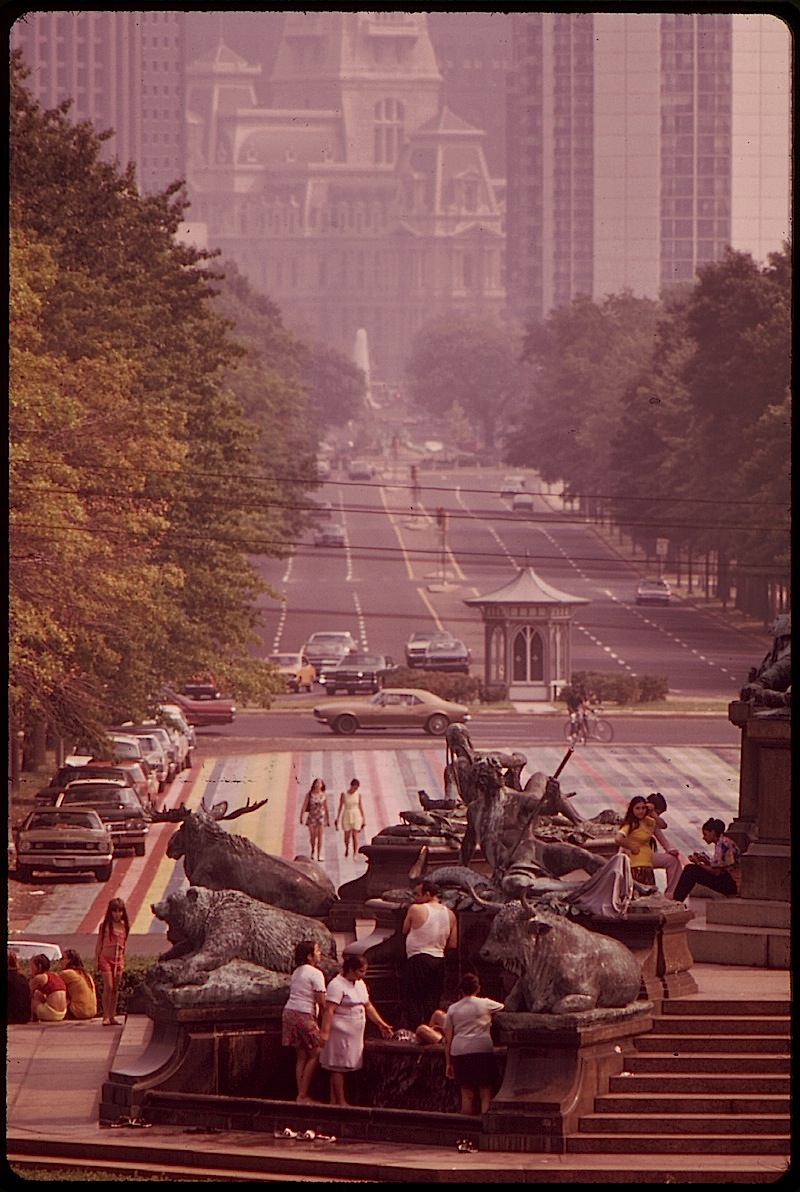 “From the steps of the Philadelphia Museum of Art — looking down Benjamin Franklin Parkway toward City Hall and Center City.”
The road painting, “Big Stripes,” was created by Gene Davis in 1972. At the time, it was the world’s largest painting. Davis was a leader in the Washington [D.C.] Color School.
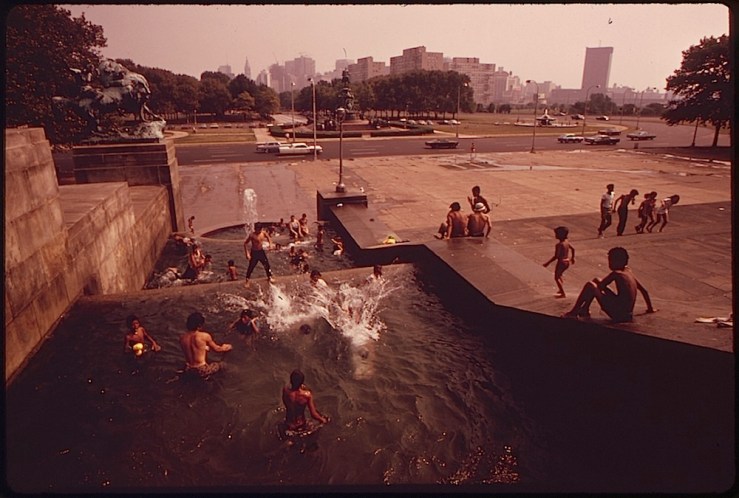
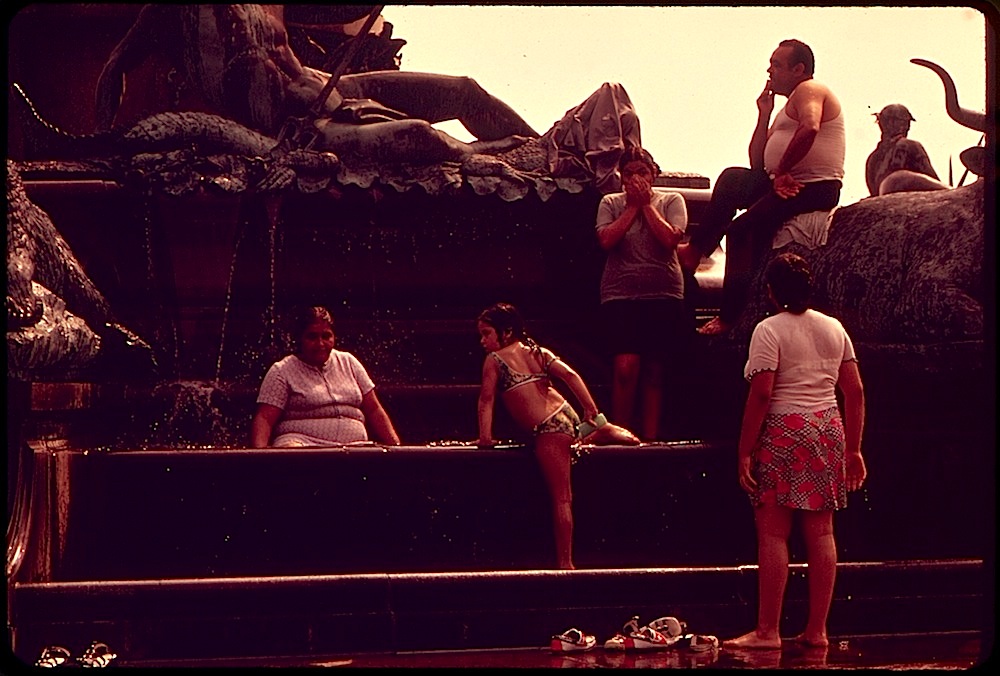 “Fountains surrounding Philadelphia Museum of Art are especially popular in a heat wave.”
Swanson took these images for DOCUMERICA, a photography program of the U.S. Environmental Protection Agency (EPA). From 1972 to 1977, it hired over 100 photographers to “document subjects of environmental concern.” They created an archive of about 80,000 images. In addition to recording damage to the nation’s landscapes, the project captured “the era’s trends, fashions, problems, and achievements,” according to the Archives, which held an exhibit of the photos, “Searching for the Seventies,” in 2013.
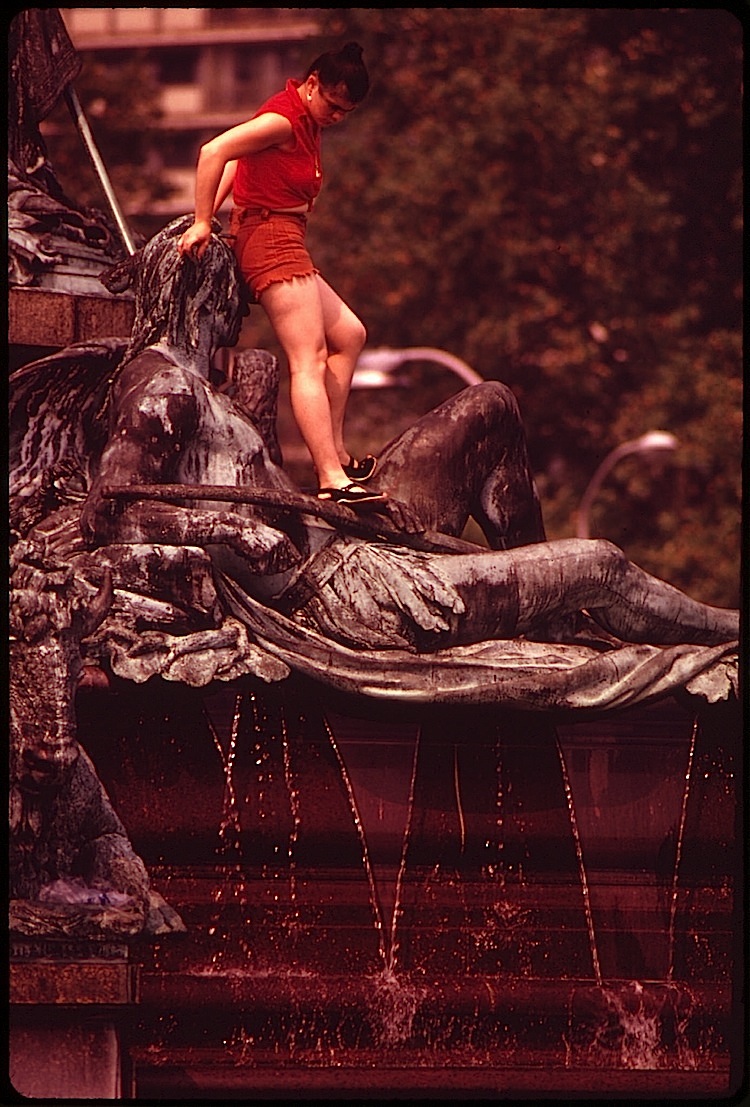
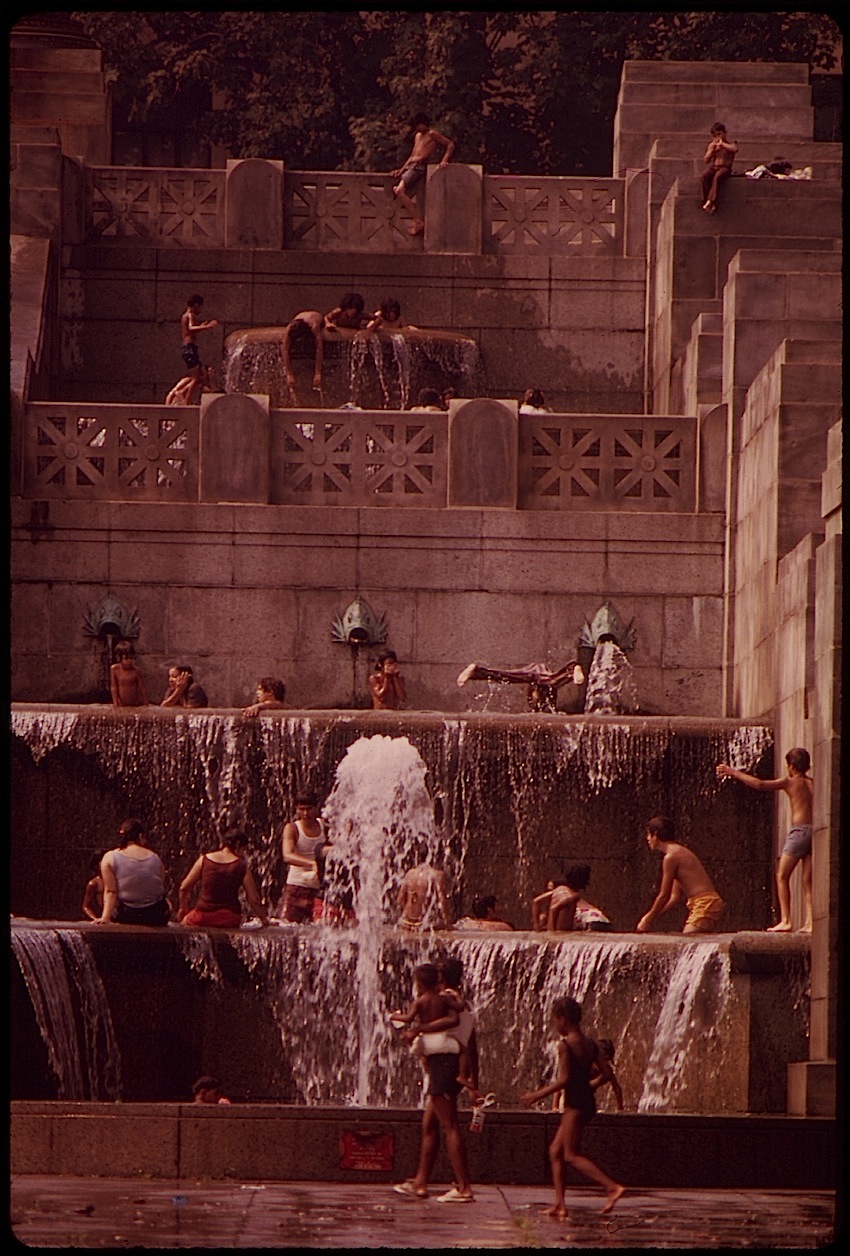
 “The art of cooling off is enthusiastically pursued in the fountains of The Philadelphia Museum of Art.”

Hillsboro, Oregon
 Two views of a mushroom (Amanita muscaria), Hillsboro, Oregon. 1910, from the Huron H. Smith botany expedition to Oregon, via The Field Museum Library Commons on flickr.
Lisbon, Portugal
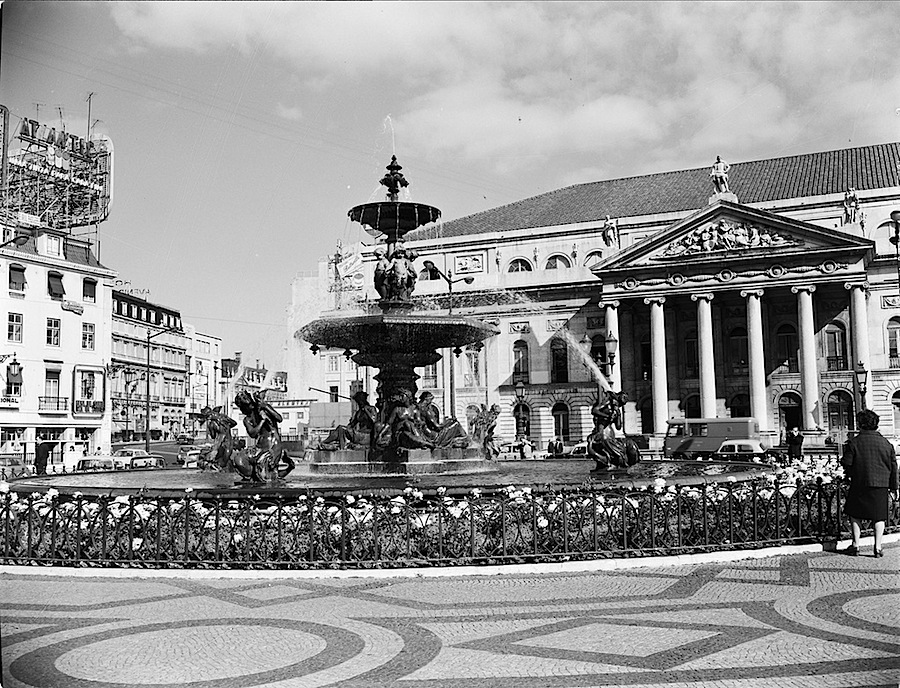 Rossio (or Pedro IV) Square, Lisbon, Portugal, ca. mid 20th c., by Estúdio Mário Novais, via Art Library of the Calouste Gulbenkian Foundation Commons on flickr (under CC license).
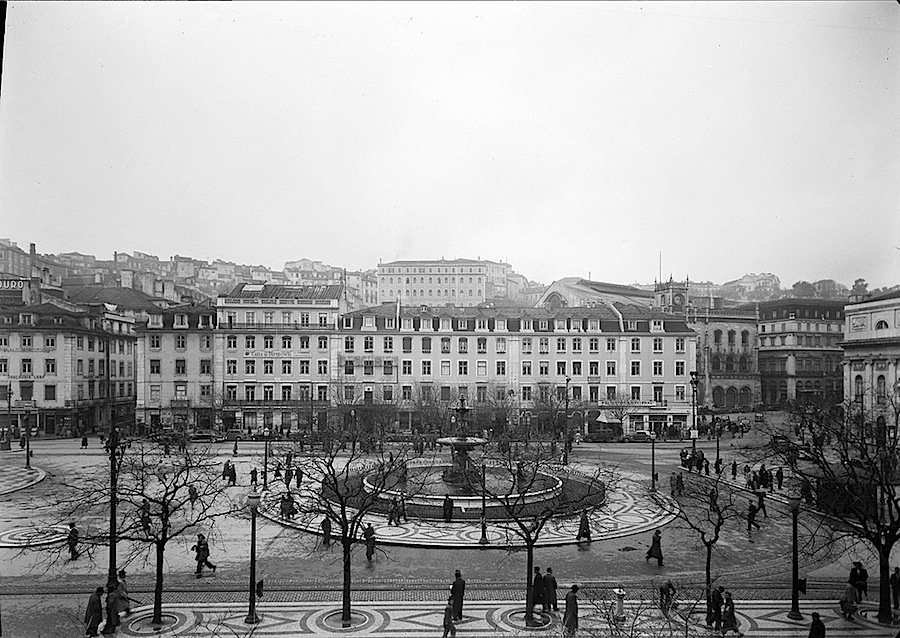
The Rossio has been an important central Lisbon square since the 14th century. Rossio roughly means “commons.” Its current appearance, however, was formed in the mid (paving) and late (fountains and column) 1800s.
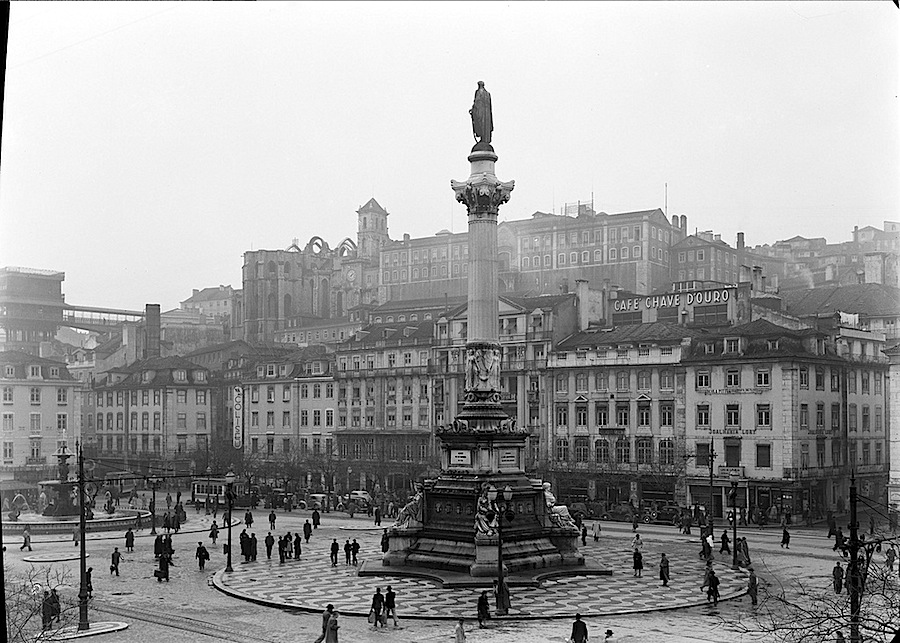
The distinctive paving — calçada Portuguesa — is made up of small irregular cobblestones of white limestone and black basalt. In 1842, the governor of São Jorge Castle, Eusebio Furtado, set prisoners to work laying an unusual zigzag pattern on its parade ground. The effect was so popular that in 1848 Furtado was asked to use the same sort of design (and prisoners) on the Rossio Square. After that, “Portuguese pavement” spread across the city and country and ultimately out to the colonies of Brazil and Macau.
Although beautiful, it’s said to be extremely slippery when wet.

 enclos*ure