Frances Benjamin Johnston (1864-1952) was one of the first American women to achieve prominence as a professional photographer. After studying art in Paris, she returned home to Washington, D.C., in the 1880s and opened a photography studio about 1890. Her family’s social standing gave her access to the capital’s elite, including the First Family, politicians, and diplomats, and her business soon took off. In the 1910s, she turned to garden and estate photography.
I have been looking at vintage garden photos from the online catalog of the Library of Congress. These two — of 1943 victory gardens in northwest and southeast Washington, D.C. — are really charming.
This couple is heading home from their plot with their sailor whites still looking clean and sharp.
“Washington, D.C. Victory garden in the Northwest section,” 1943, by Louise Rosskam. Via Library of Congress Prints and Photographs Division (all photos here).
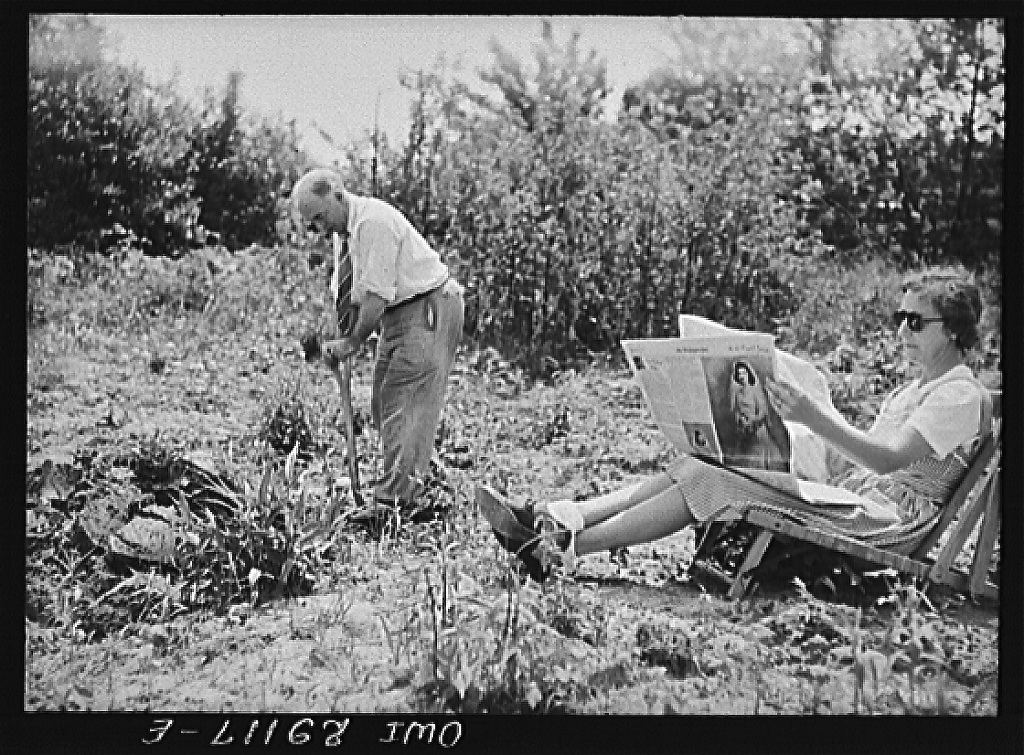
Below, Mrs. Carr seems to be present for moral support only, or perhaps she will take the next shift with the shovel.
“Washington, D.C. Leslie Edward Carr of the British Purchasing Commission with his wife at their victory garden on Fairlawn Ave., Southeast,” June 1943, by Joseph A. Horne.
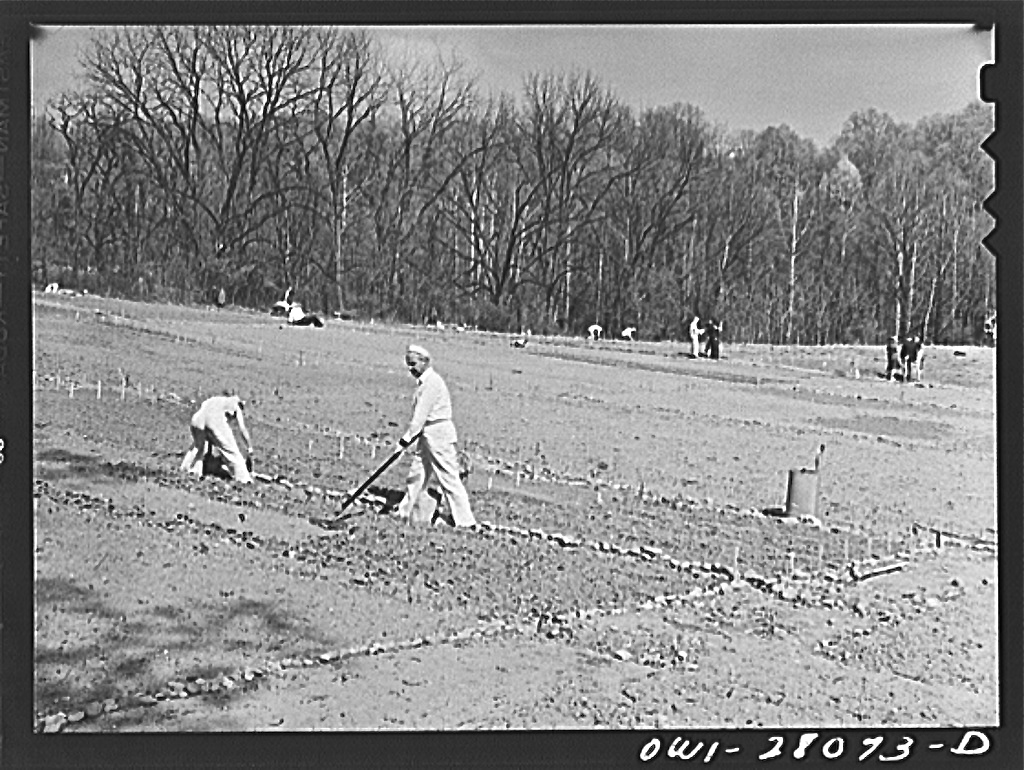
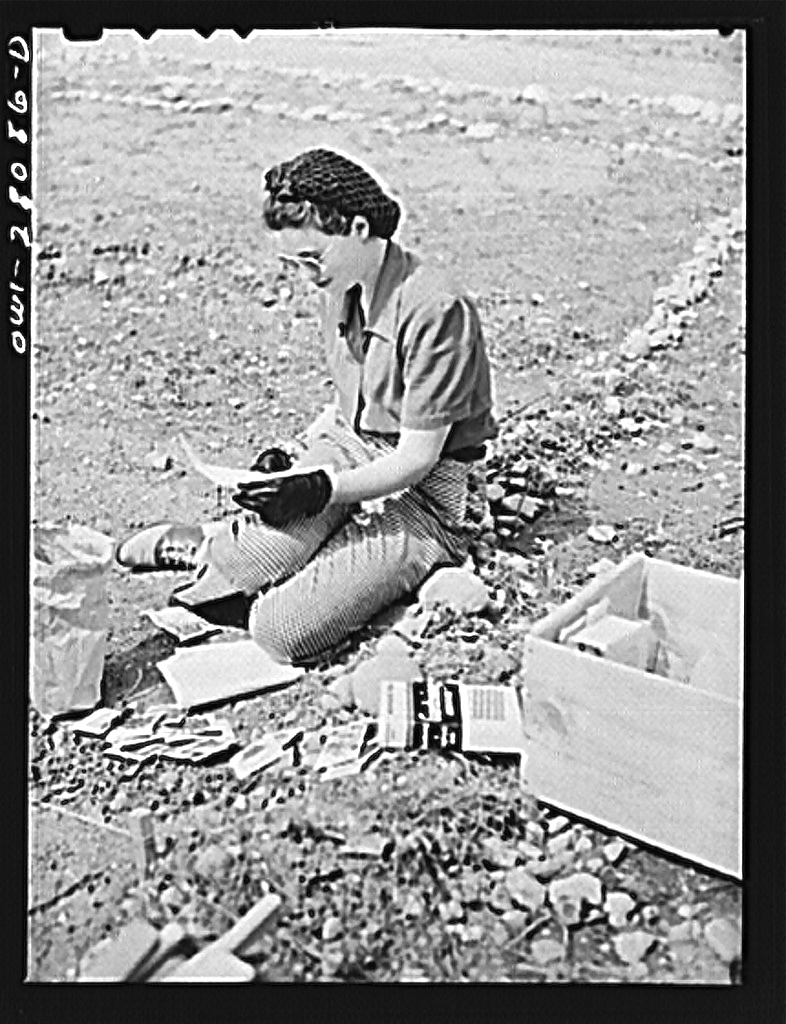
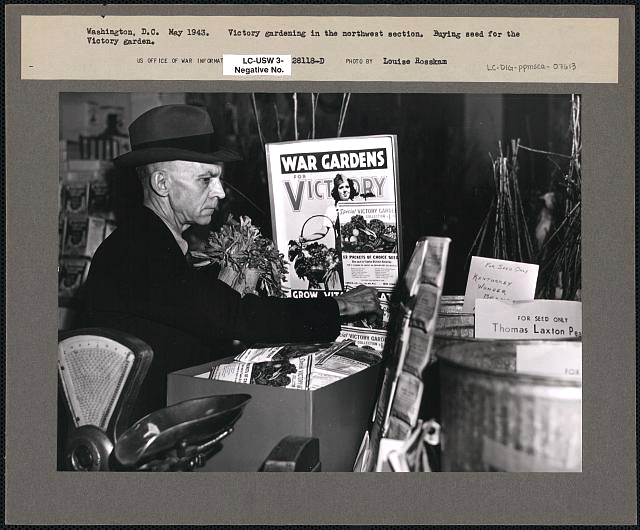
Louise Rosskam, who took the first photo above, was “one of the elusive pioneers of what has been called the golden age of documentary photography.” She took a number of pictures of the same group of northwest D.C. victory gardens in the spring of 1943. (Click on any of the photos to enlarge.)
I believe this is the couple in the first photo above.Apartment buildings in the background.Another couple working. I love her high-waisted, wide-leg white pants.This lady also looks great in black gloves and snood and sunglasses.The individual plots were outlined with field rocks.Another gardener heading home by the same fence opening.Buying victory garden supplies.
All the photos above (except that of the Carrs) are by Louise Rosskam, via the Prints and Photographs Division of the Library of Congress.
I believe these garden plots were in the neighborhood of Glover Park, where we have a house. According to the Glover Park Citizens Association, it established the first World War II victory garden in the city, at 42nd and Tunlaw Road. It still exists today as a community garden. (Alternatively, they may be of the Tilden victory gardens at Connecticut Avenue and Tilden Street, which Rosskam also photographed.)
This is a link to a short film made in the forties about how to prepare, plant, and harvest a 1/4 acre victory garden. It features a rural northern Maryland family and is an interesting look at home gardening advice and practices of the time.
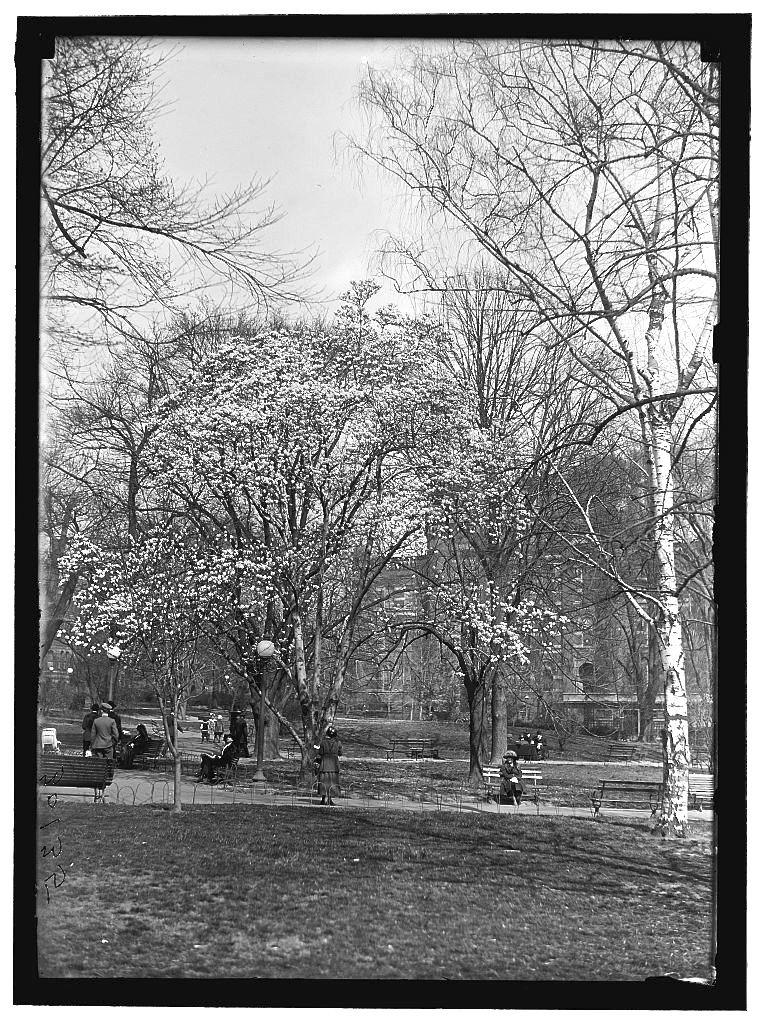
A peaceful view of a magnolia tree blooming in a Washington, D.C., park in 1919 — before any other trees have leafed out.
That winter seems to have been as mild as the preceding year’s was harsh. But the sweet scene may belie the real state of affairs. The influenza pandemic that began in the fall remained pervasive, and in the summer to come, deadly race riots would grip the city.
Photo by Harris & Ewing from the Harris & Ewing Collection of the Library of Congress. Click the photo to enlarge.
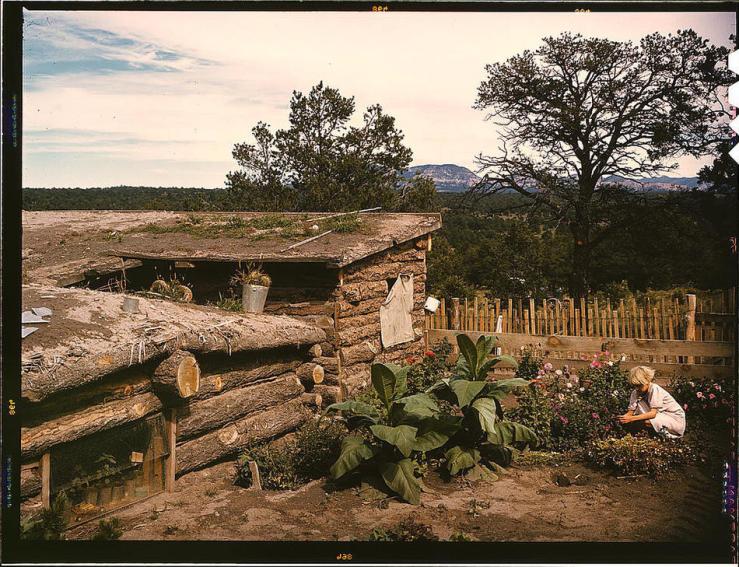
Photo by Russell Lee. Prints and Photographs Division, Library of Congress.
This photo of a homesteader’s garden in Pie Town, New Mexico, September 1940, was taken by Russell Lee, a photographer of the Farm Security Administration/Office of War Information. It was part of a 2006 Library of Congress exhibition of early color images taken between 1939 and 1943, “Bound for Glory: America in Color.” Thanks to links by Studio G and The Denver Post.
Click this link to see a larger version or to buy a print. Click here to see another view of the same homesteader’s garden.