Vintage landscape: pin-able

Sorry about this, but I couldn’t resist. It’s just some mid-week silliness.

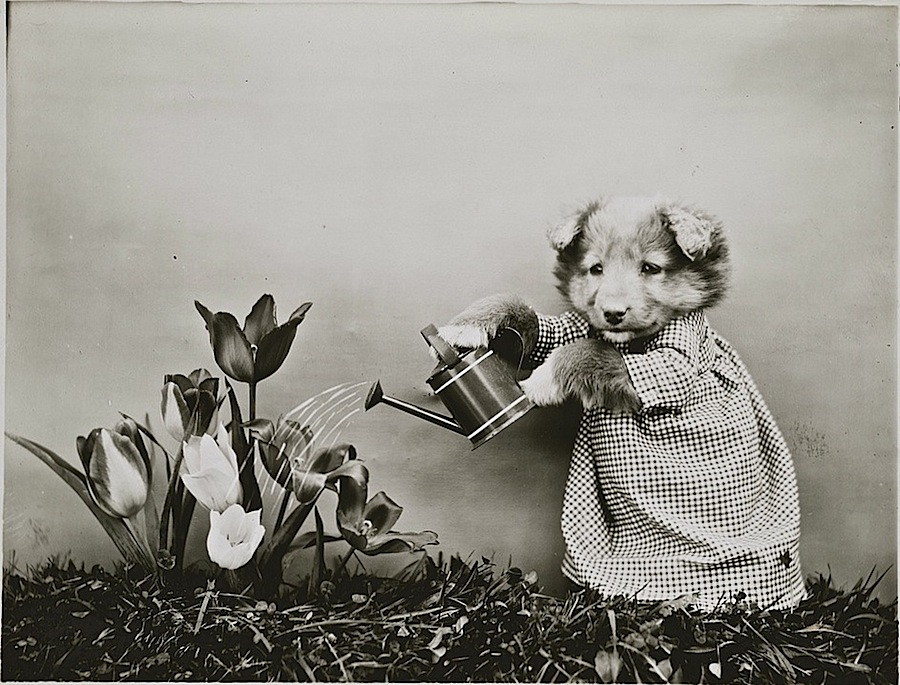
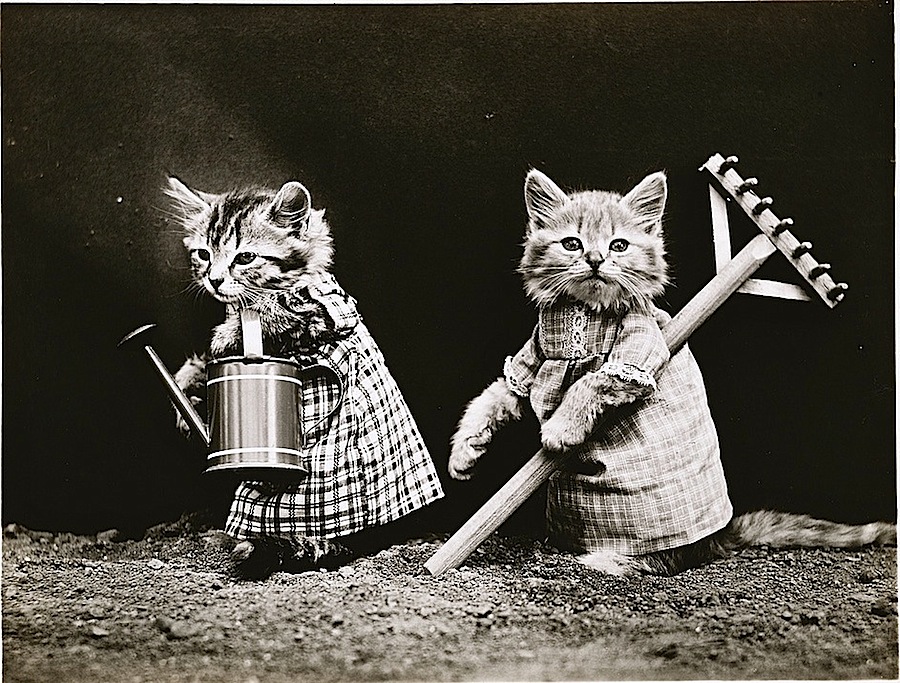
Gardening puppy, c. 1914, by Harry Whitter Frees, via Library of Congress“Watering the flowers,” c. 1914, by Harry Whittier Frees, via Library of Congress Prints and Photographs Division (both photos).
Oh, go ahead and click that button.

Frees, an American photographer, began taking posed pictures of animals in 1906.  They soon became popular on novelty postcards and calendars and in advertisements, magazines, and children’s books. (More here.)

Gardening kittens, c. 1914, by Harry Whittier Frees, via Library of Congress“Planting time.”

The Sunday porch: vine-covered, par excellence

On abandon, uncalled for but called forth. . . .*

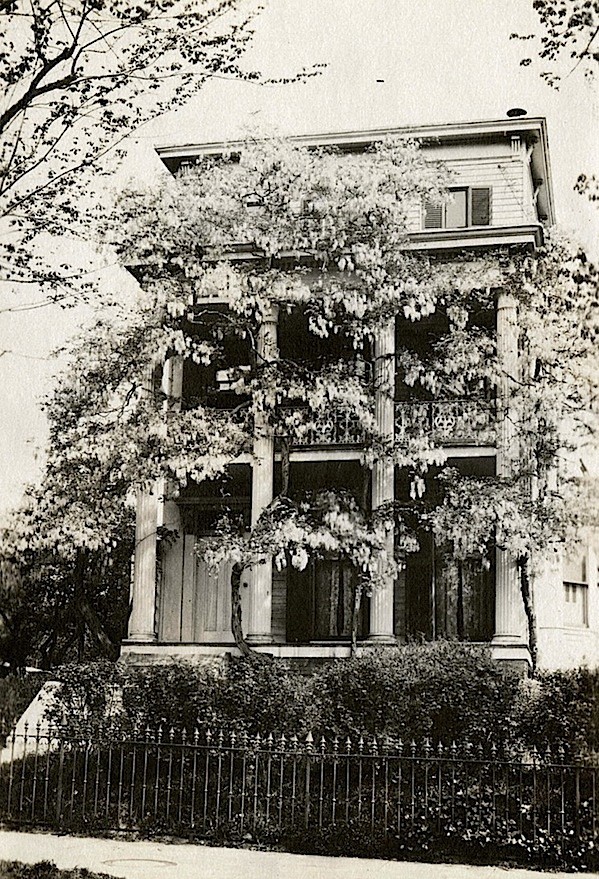
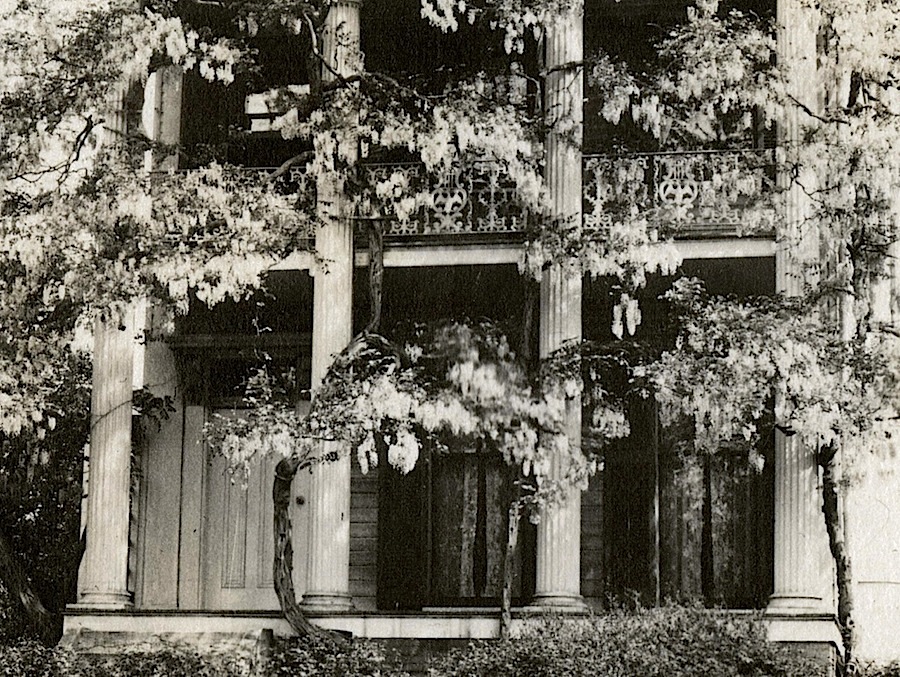
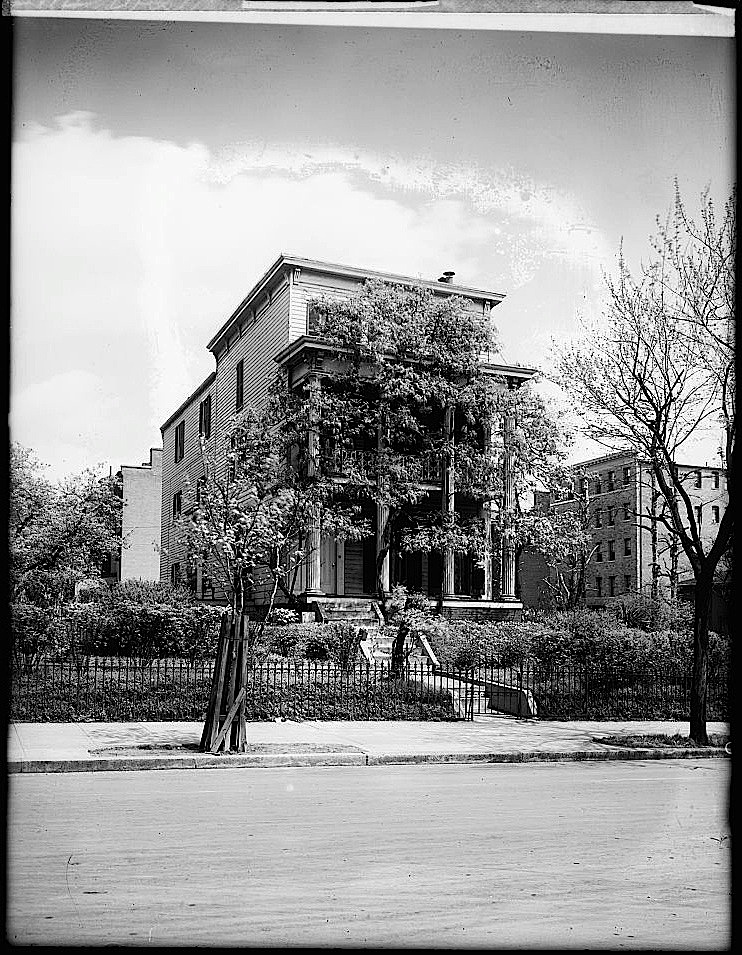
full croppedI think this is the loveliest wisteria I have ever seen.  It grew on the porch columns of “Wisteria House,” at Massachusetts Avenue and Eleventh Street, N.W., in Washington, D.C. The photo was taken in 1919, by Martin A. Gruber.**

The house was torn down in 1924 to make room for the Wisteria Mansion apartment building.

Wisteria House detail, 1919, via Smithsonian Institution CommonsA naval officer brought the vine from China and gave it to the owner of the house, probably during the 1860s, according to the blog Greater Greater Washington.

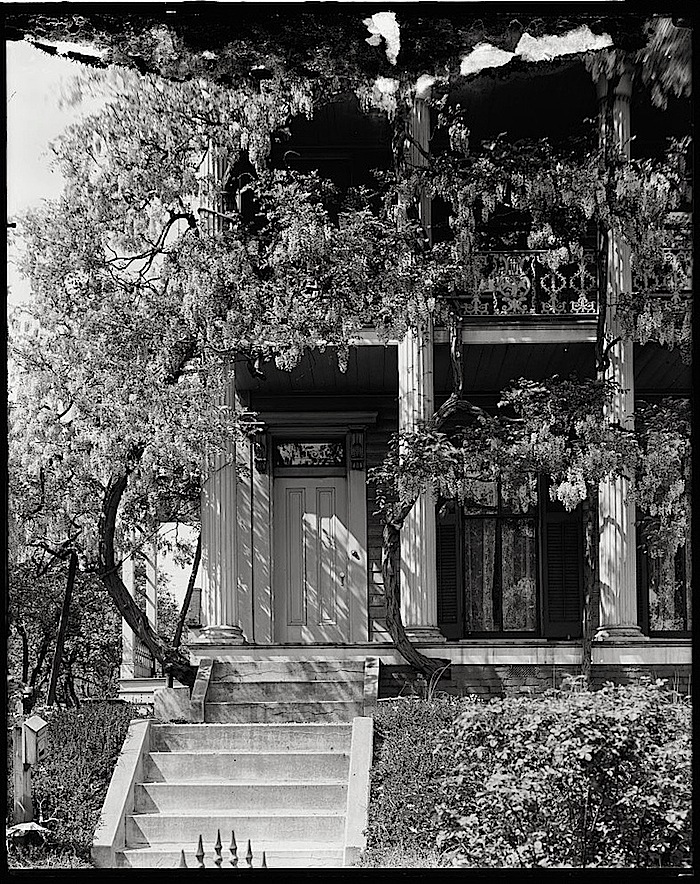
Wisteria House, Harris & Ewing photoThe Harris & Ewing** photo above, taken between 1910 and 1920, shows the trunks of the (one?) plant emerging through openings at the base of the porch.  The house was built in 1863, and the two-story portico was added in 1869 — so it looks like the wisteria was planted between those years and protected during the construction.

Wisteria House, LOC photoThe National Photo Company image above shows the house about 1920.


*Lucie Brock-Broido, from “Extreme Wisteria

**Top and second (a detail of the first) photos via the Smithsonian Institution Archives Commons on flickr.  Third and fourth photos via Library of Congress Prints and Photographs Division.

Vintage landscape: the tree sellers

For ev’ry year the Christmas tree,
Brings to us all both joy and glee.

Bring on the holiday season!

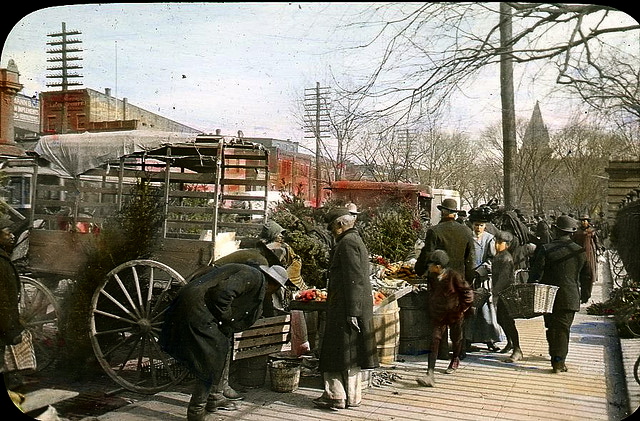
The Christmas tree sellers, via D.C. Public Library“View of street vendors at 7th and B Streets, NW [Washington, D.C.] (ca. 1880 [sic]),” by E.B. Thompson, via D.C. Public Library Commons on flickr.

B Street, N.W., was the original name for what is now Constitution Avenue (since 1931). At the time of this picture, Center Market stood on B Street, between 7th. and 9th. Streets — at the current site of the National Archives building.

Commenters on the flickr page have suggested — correctly, I think — that the 1880 date is wrong and the photo was probably taken in the first decade of the 20th century.

O Christmas tree, O Christmas tree,
Much pleasure dost thou bring me!

— from c. 1910 English version of O Tannenbaum

Vintage landscape: burning the leaves

Burning the autumn leaves on Broadway in Norwich, Connecticut, 1940, by Jack Delano, Library of Congress“Burning the autumn leaves on Broadway in Norwich, Connecticut,” November 1940, by Jack Delano.

Today, they might be advised to do this.

Burning the autumn leaves on Broadway in Norwich, Connecticut, 1940, by Jack Delano, Library of CongressBoth photos via the Library of Congress Prints and Photographs Division.

Have a happy Thanksgiving Day!

The Sunday porch: as backdrop

What better setting for some summertime snapshots than a charming porch dripping with vines?

This slideshow requires JavaScript.

These are the Cabot children (and probably their mother), photographed by Thomas Warren Sears and via the Smithsonian Institution, Archives of American Gardens, Thomas Warren Sears Collection.*

The Archives’ website says that these images were taken in 1930, but I would guess between 1900 and 1910, based on the clothing.

Sears studied landscape architecture at Harvard University between about 1900 and 1906. During that time, he also won awards for his amateur photography. One can well imagine him taking his camera to the summer home of friends and taking some casual pictures.

After graduation, he worked for Olmsted Brothers Landscape Architects.  By 1913, he had established his own office in Philadelphia, from where he designed various types of landscapes in the mid-Atlantic region until the mid 1960s.

The Archives of American Gardens holds over 4,600 of his black and white glass negatives and glass lantern slides taken between c. 1900 and 1966.

Earlier this month, the Archives announced the acquisition of the Ken Druse Garden Photography Collection, which includes thousands of transparencies and slides of over 300 American gardens.  Selected images will eventually be added to the Smithsonian’s online catalogue.

Little girl. . . .

She has things to do,
you can tell. Places to explore
beyond the frame .  .  .

— Tami Haaland, from “Little Girl,” from When We Wake in the Night


*Used with permission.