Thanks so much to WordPress.com for including this post on its “Freshly Pressed” page this week!
Yesterday, we visited the Rukali Palace Museum in the town of Nyanza, a couple of hours south of Kigali.
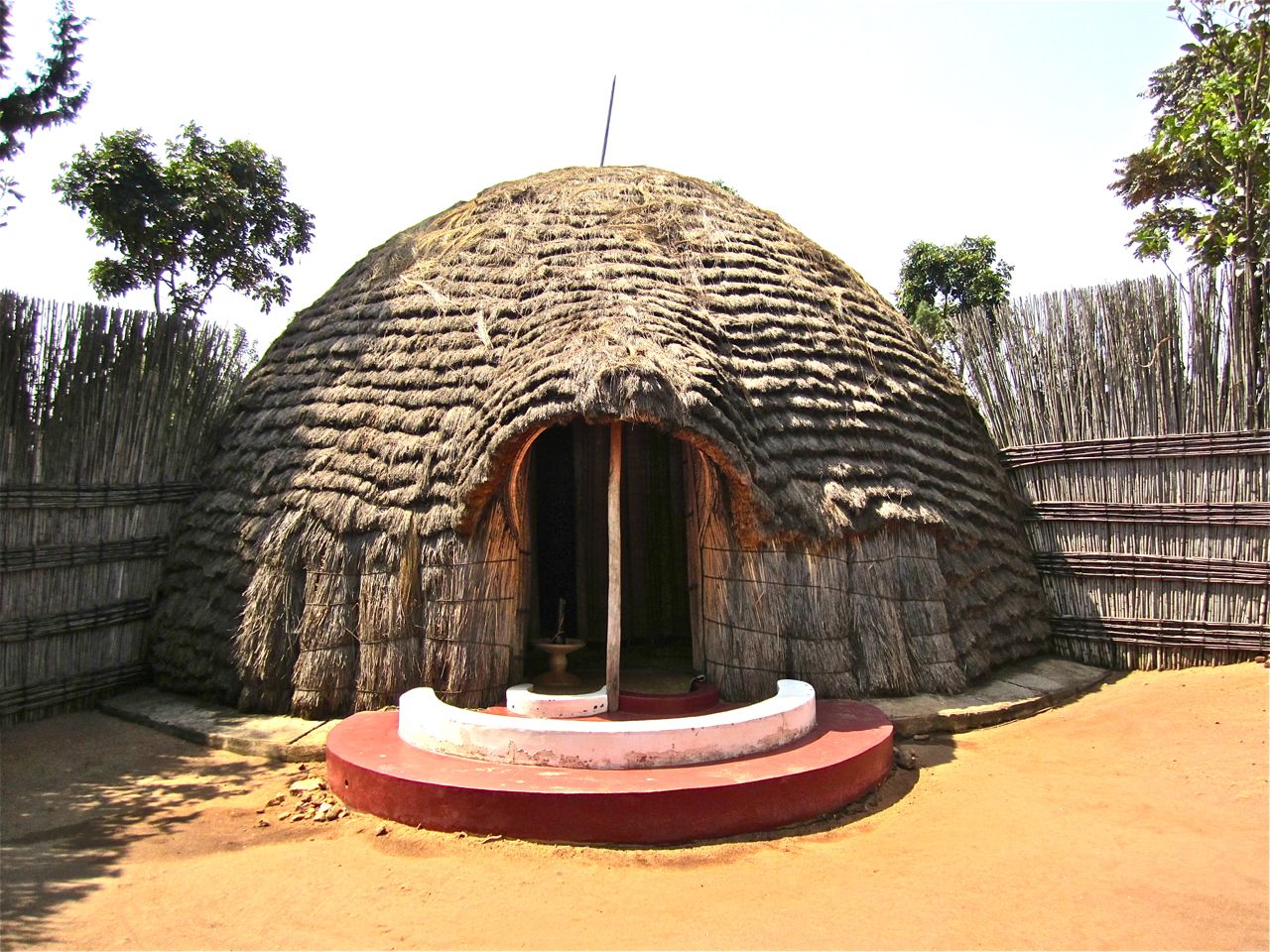
The opening of the enclosure around the house of the keeper of the king’s milk.
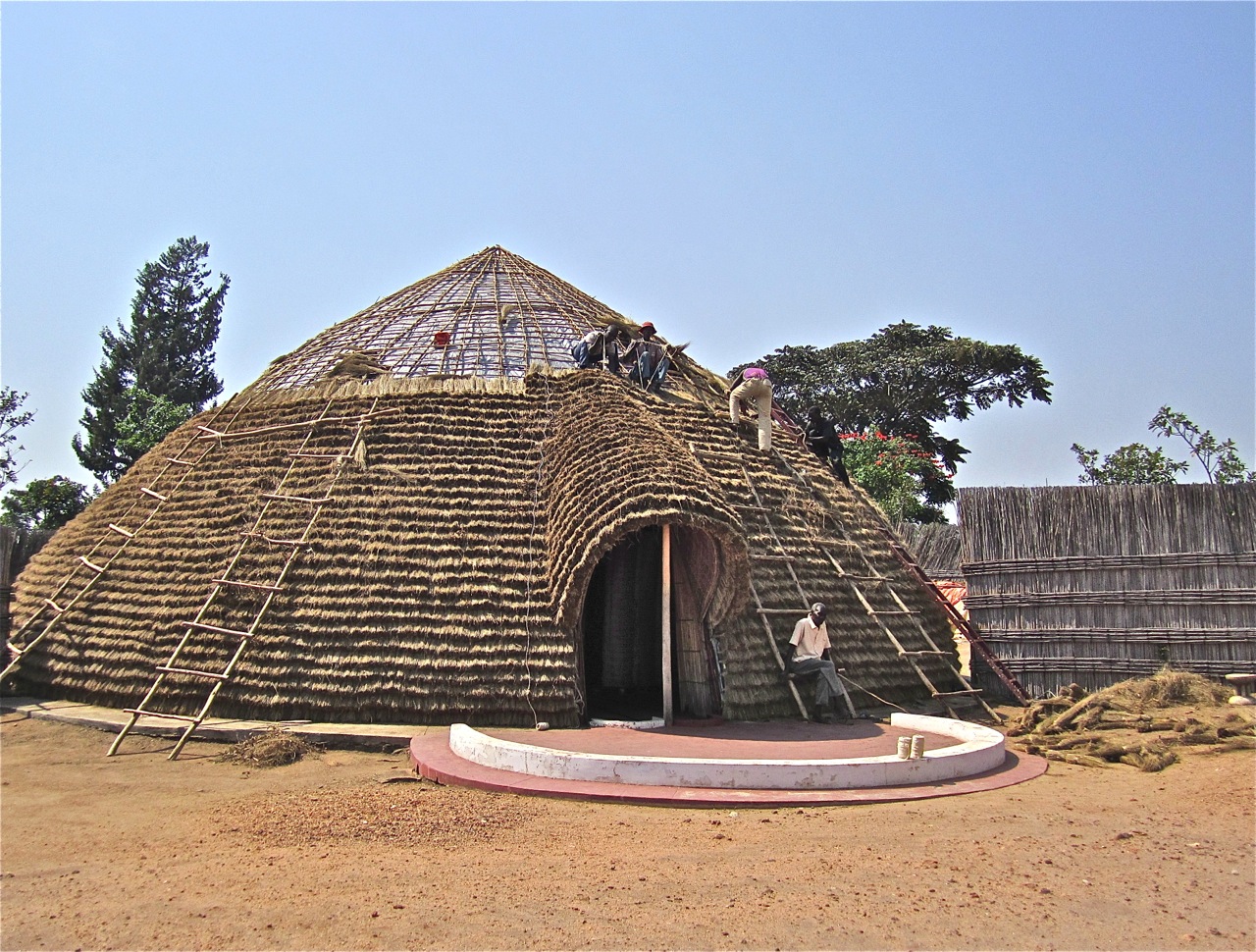
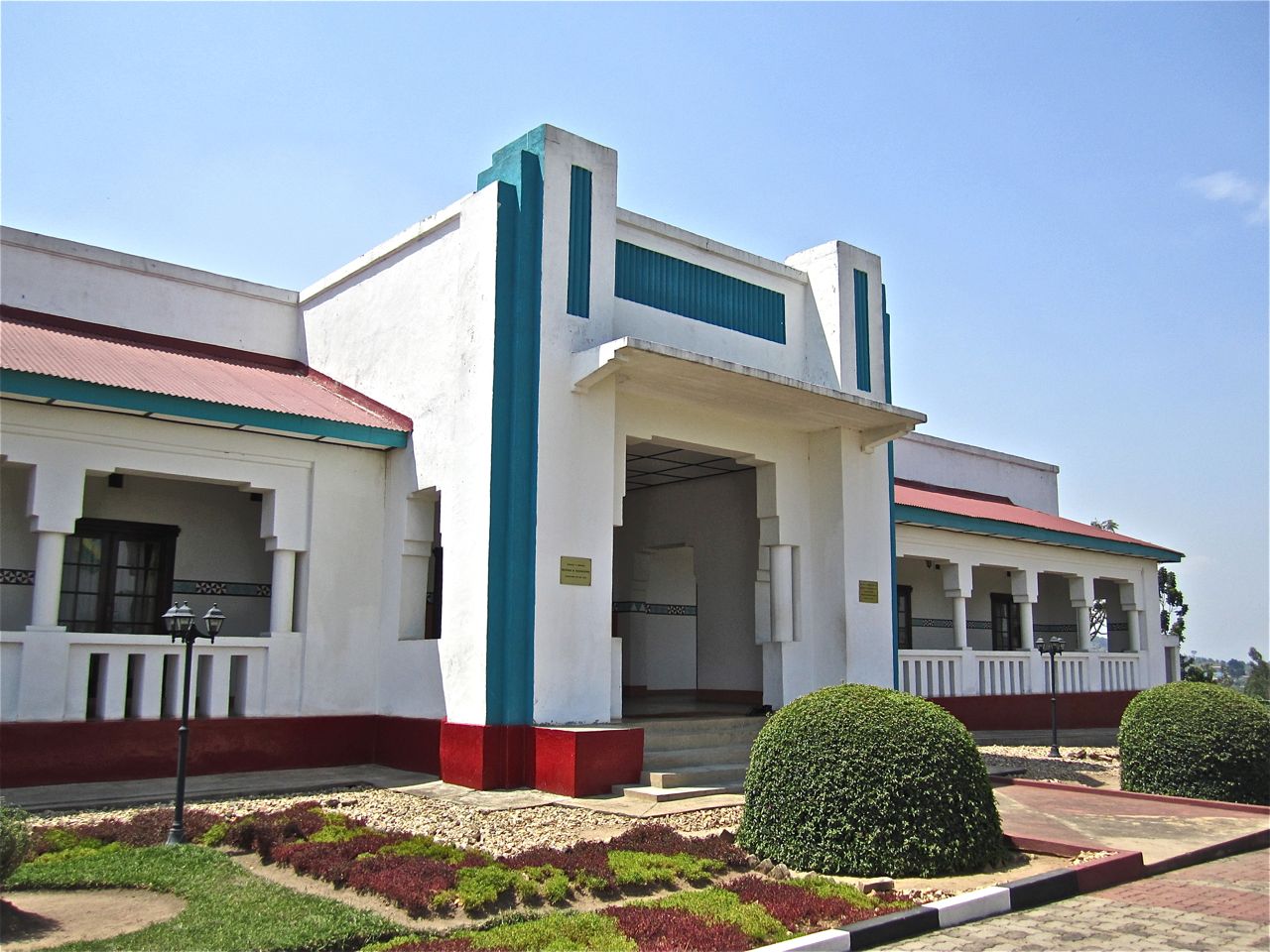
The museum grounds hold a reconstruction of the palace of Mwami (King) Musinga Yuhi V (a few miles from its original location), as well as the actual Western-style palace built for his successor, Mwami Rudahigwa Mutara III, in 1932.
The reconstructed palace is currently undergoing a 5-year refurbishment.
Musinga lived in a palace like this from 1899 until his death in 1931.
An old photograph of the actual court of Mwami Musinga.
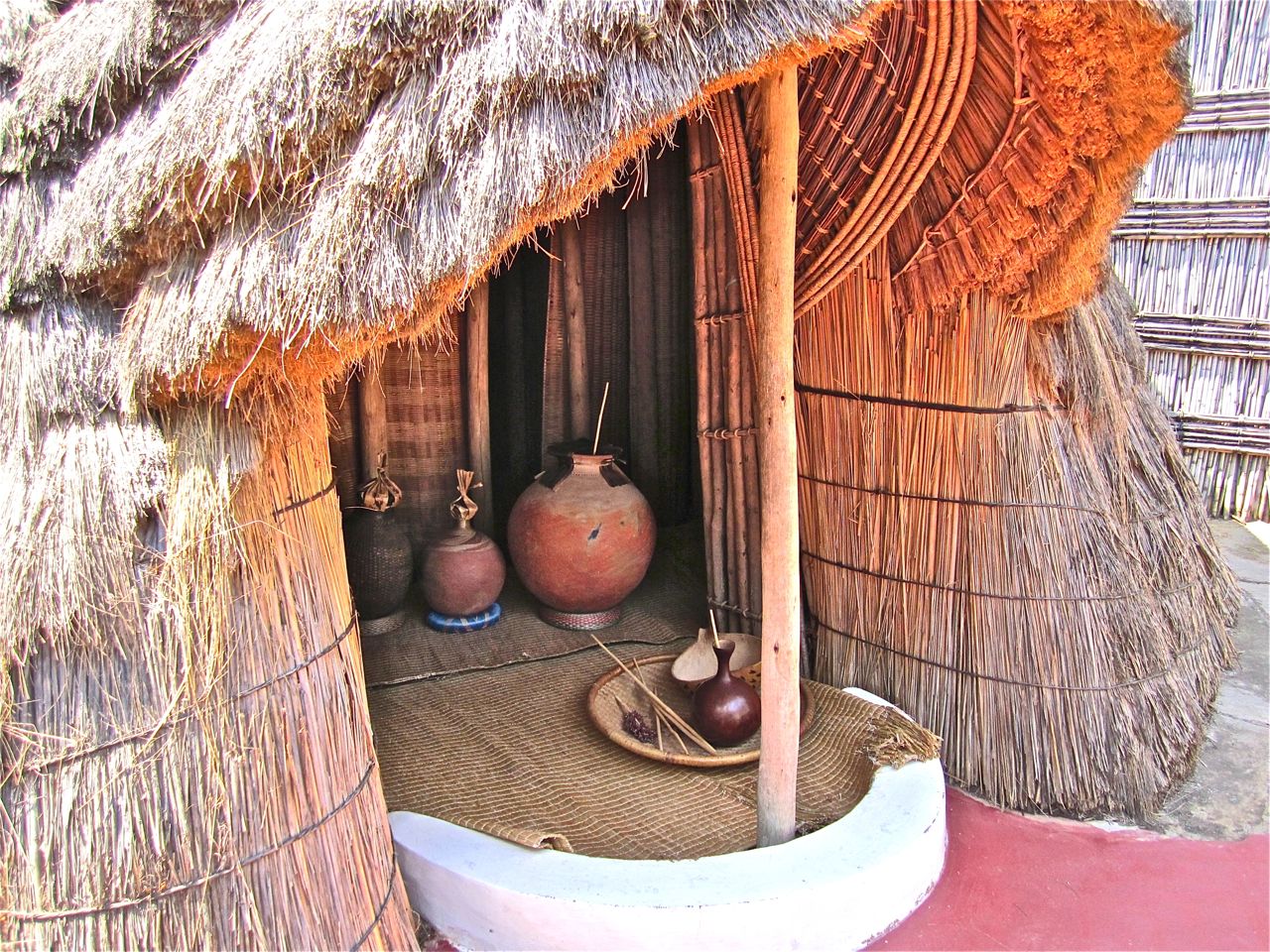
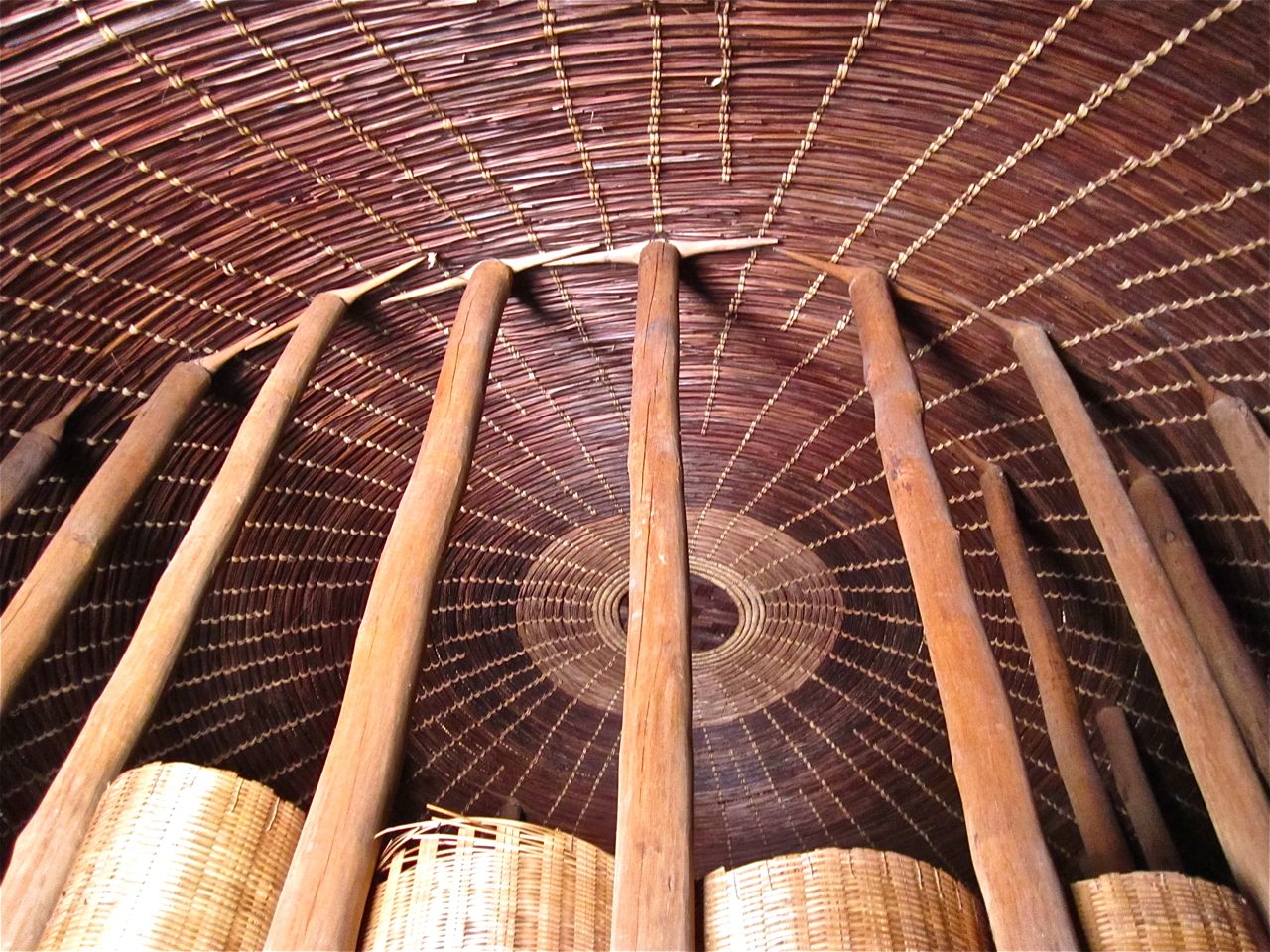
Traditional building and weaving techniques were used to make the structures of grass, reed, and bamboo. The work is very fine.
House of the keeper of the king’s milk.The entrance to the house of the keeper of the king’s beer.The inside partition is woven in such a way that an inhabitant could see out, but someone outside could not see in.The ceiling.
A cow pen is part of the reconstruction. Cows were very important in Rwandan royal culture, and each of the king’s cows had a personal poem that was chanted or sung to call it out. They might also be decorated like this one.
A Rwandan cow wearing decoration at the reconstructed palace. Her keeper is chanting her own poem.The pretty little calves are sleek as seals.
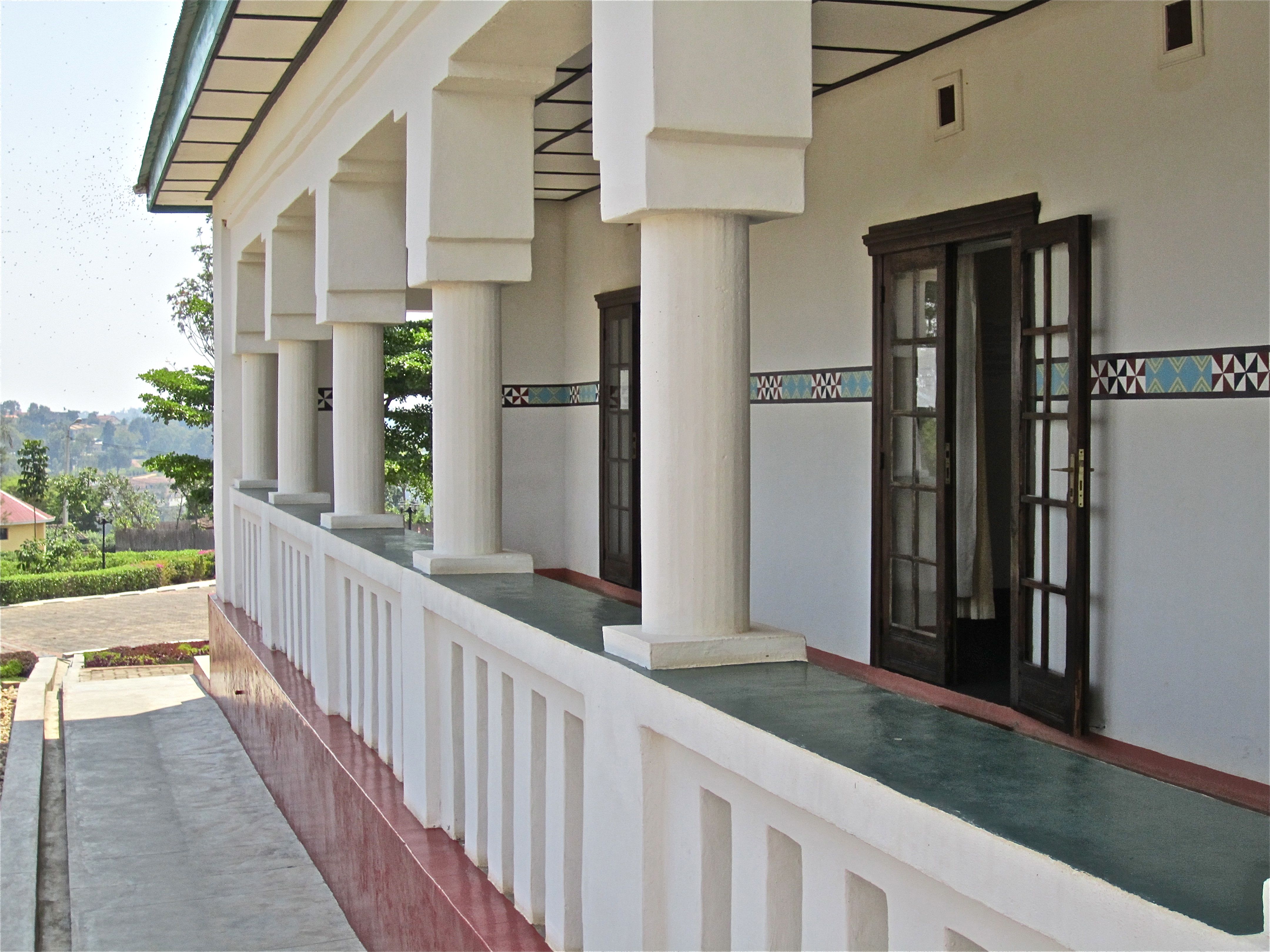
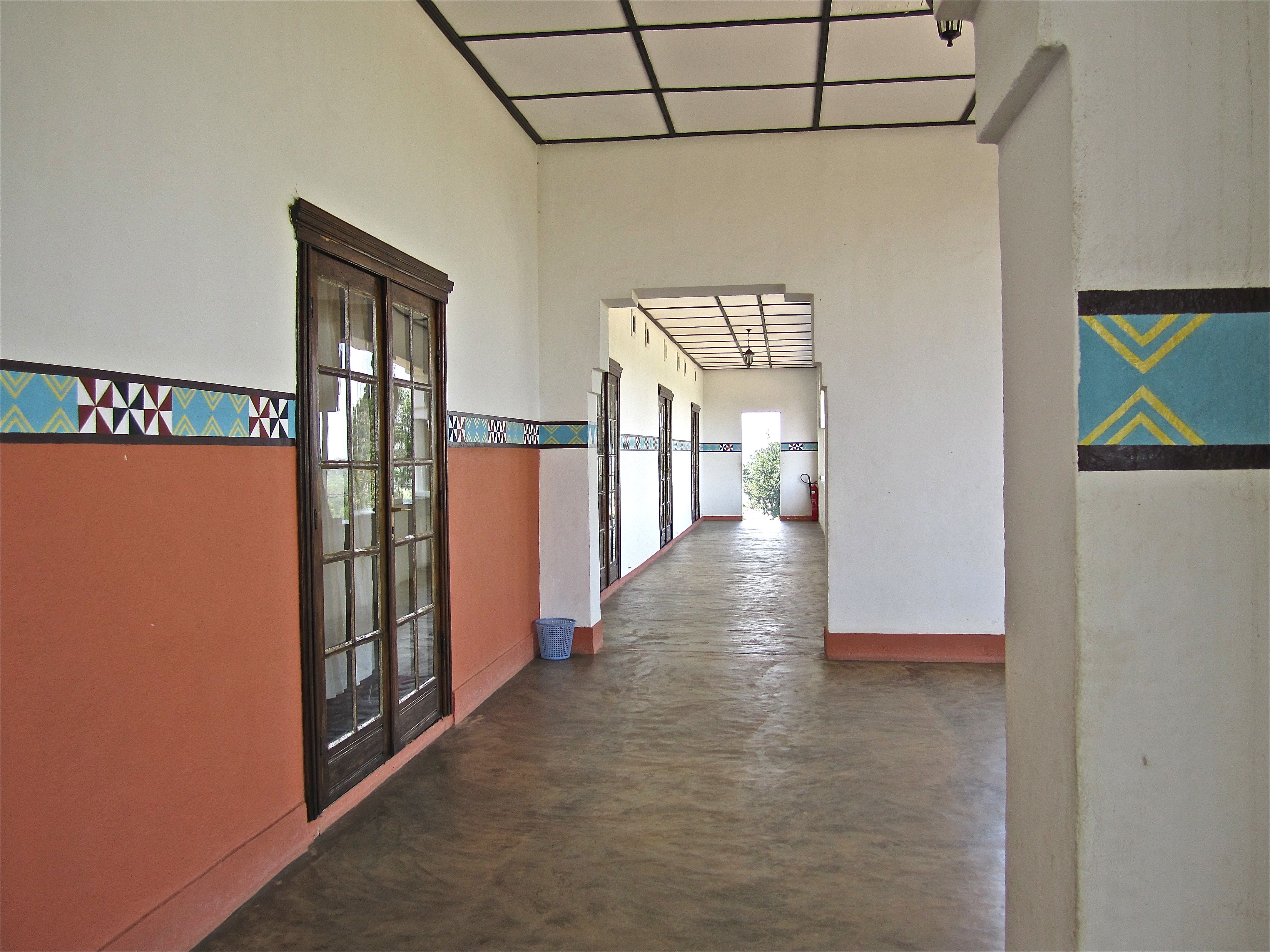
The modern palace (used from 1932 to 1959) is decorated inside and out in geometric motifs. Unfortunately, visitors are not allowed to take pictures inside.
The actual palace of Mwami Rudahigwa Mutara III, who lived here from 1932 until his death in 1959.The front porch.Inside, the home contains some original furniture, as well as historical photographs and maps.Queen Rosalie and the king in the 1950s. The widowed queen was murdered in the 1994 genocide.
The courtyard garden is planted in hedges laid out in patterns like those traditionally used in baskets, mats, and room partitions.
The courtyard garden behind the more modern palace.Room partitions of the reconstructed palace with traditional geometric patterns.
On a hot day in early August, I visited the Heirloom Garden of the National Museum of American History* and took a lot of photos, but because of our move, I never had time to post them. Now that it is seed-ordering time in the U.S., I thought they might be inspirational.
The south side of the Museum of American History and the Washington Monument.
The main entrance with frangipani, agave, and canna.
Agave closeup.
Planters and benches with crape myrtles Lagerstromeia indica ‘Watermelon’.
Canna, red zinnias, and coleus.
A closeup of red zinnias and coleus beside the cannas.
Black-eyed susans (Rudbeckia hirta) and Canna indica.
Love-lies-bleeding (Amaranthus) and dill (Anethum graveolens).
Dill, zinnias, and love-lies-bleeding.
Amaranthus or love-lies-bleeding and rose campion (Lychnis coronaria).
Fading coneflowers (Echinacea purpurea) and sage (Salvia officinalis).
Caladiums and small burgundy amaranthus.
A closeup.
Sage and black-eyed susans.
Amaranthus with bright red stems.
Peeling bark of Natchez crape myrtles.
The museum plays American music from speakers that look like rocks.
Crape myrtle tree and bleeding heart (Dicentra spectabilis) leaves.
Basil, peppers, and sage.
Dill (Anethum graveolens), zinnias, and love-lies-bleeding (Amaranthus).
Cleome hassieriana and burgundy bachelor’s buttons (Centuarea cyanus).
An arrangement in lime green and burgundy.
Sage and fallen ‘Watermelon’ crape myrtle petals.
Huge ceramic pots on the south side across from the Heirloom Garden.
Trailing plants and blue ceramic.
Palms and coleus in huge blue ceramic pots.
(Click on any image above to scroll through larger photos.)
The garden — huge, raised planters, all the way around the museum building — contains a mix of open-pollinated plants cultivated in America prior to 1950 (heirlooms). The plantings are anchored by crape myrtles and a variety of shrubs.
The colorful annuals, perennials, bulbs, and herbs are all so familiar, but the combinations are often surprising. It’s a splendid ode to the flower gardens of our grandparents.
The museum pipes in a selection of American music from speakers set in the planters (in fake rocks). Normally, I would find this annoying, but in the already noisy, wide open site, it actually drew me in to the garden and enhanced the experience. And their selection is excellent — folk, jazz, blues, musicals. The planters are raised about 3′, which also helps the plants compete for attention in the immense space.
By late summer, the flowers were being allowed to grow a little leggy and fade naturally, which added to the various forms and tones of the groupings.
*The Smithsonian Institution on the National Mall in Washington, D.C., has eight beautiful gardens (ten if you count the inner courtyards of the Freer Gallery and Museum of American Art).
Tea growing around Kinihira, Rwanda. Tea plantations are traditionally called ‘tea gardens.’
In late December, we were included in a Christmas season lunch at the home of the Director General of Sorwathe and his wife. Sorwathe is the Société Rwandais de Thé or, in English, the Rwanda Tea Company, and is located about 70 kms. north of Kigali.
Before the meal, we had a chance to tour the factory, which is the largest in Rwanda and produces over 6 million lbs. of made tea annually, almost all of it for export.
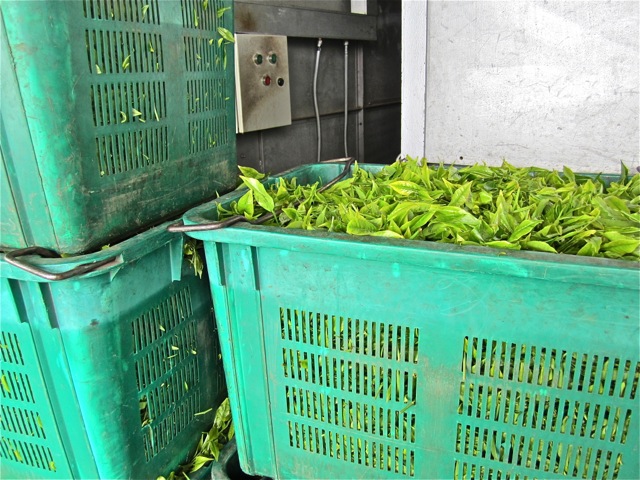
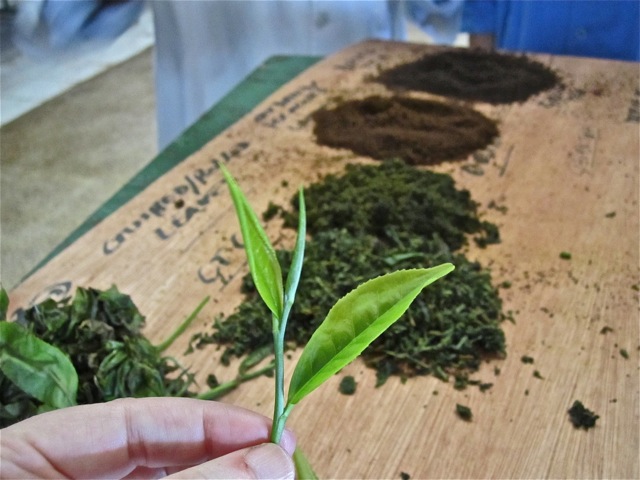
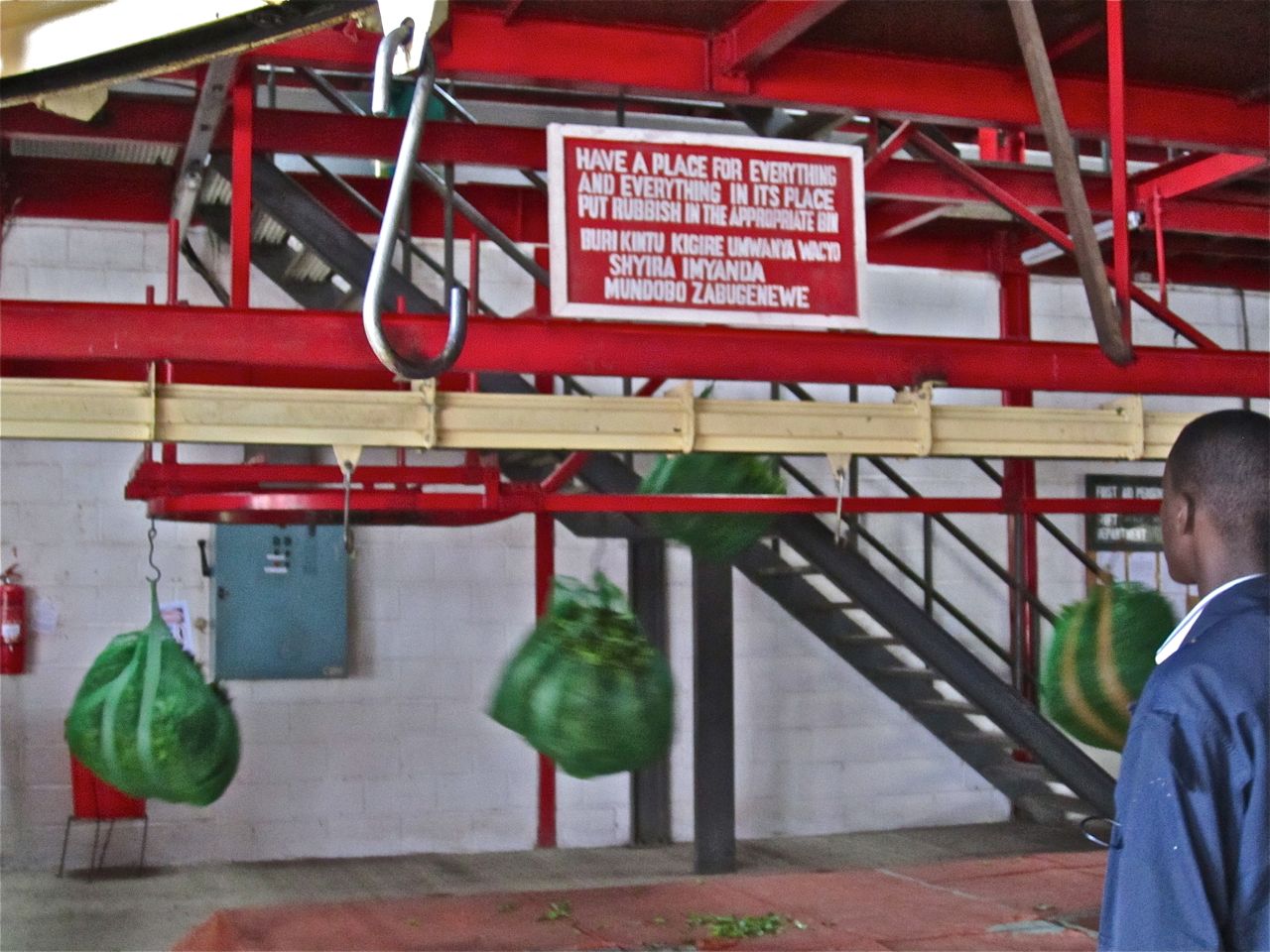
Fresh tea leaves about to go to the withering process, where they will lose excess moisture. The leaves have no scent while fresh.
Sorwathe was founded in 1975 by American Joe Wertheim. It remains 85% owned by Mr. Wertheim’s Connecticut-based company, Tea Importers, Inc. It cultivates 650 acres, mostly in drained swampland (marais). Click here to see some really nice photos of their tea gardens.
After coffee, tea is Rwanda’s most important export. Tea cultivation began here in 1952, and Sorwathe was the first private factory. Although the factory sustained serious damage during the genocide, it was also one of the first to reopen in the aftermath.
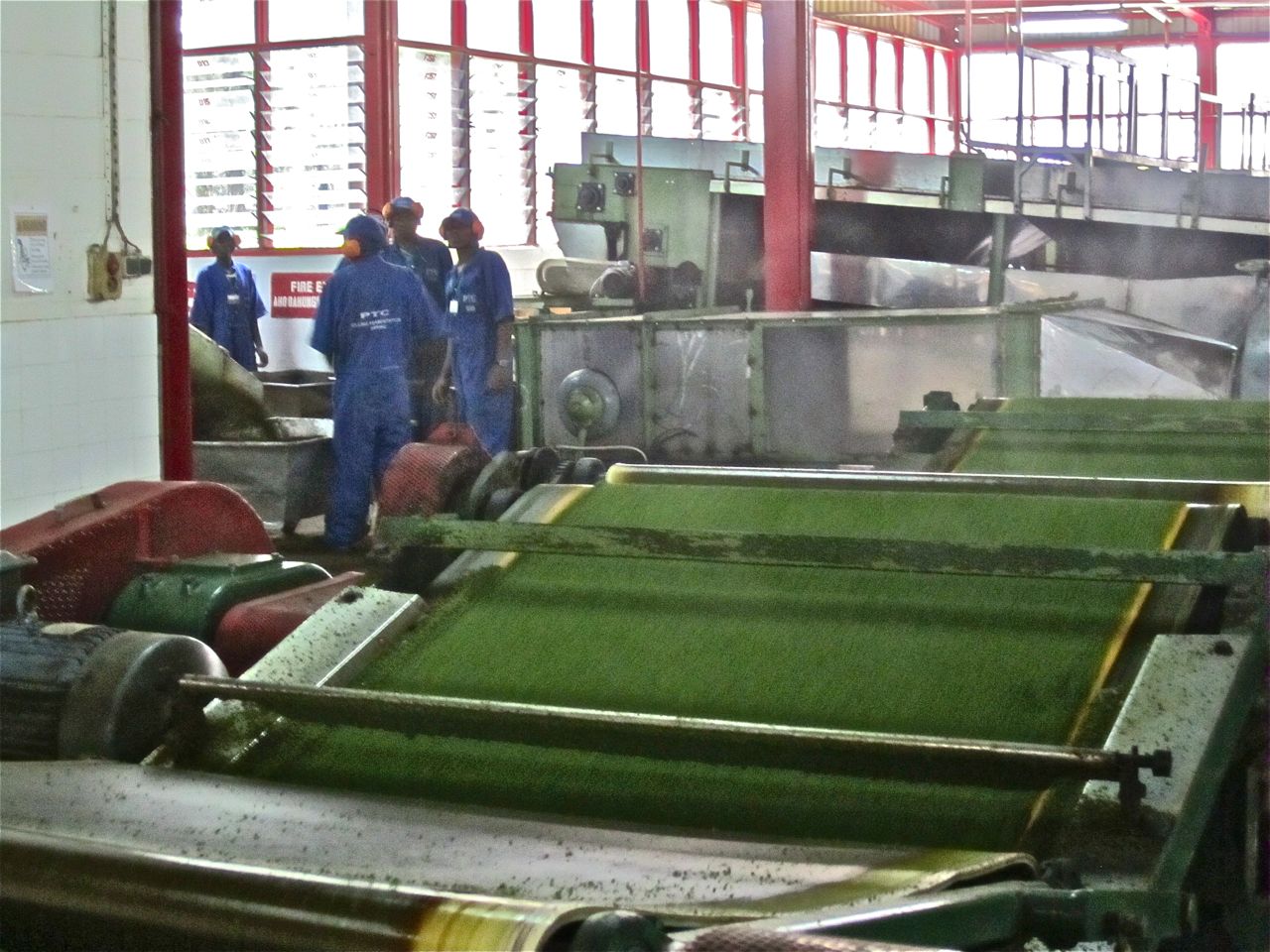
The stages of black tea processing. Only the terminal bud and 2 young leaves are plucked from the bush.These beautiful sacks will take most of the withered tea to the cutting stage, after which it will become green or black tea, depending on how long it is oxidized. Orthodox tea is not cut, but rolled whole leaf, which gives it a more nuanced flavor.The chopped tea is a vivid green.
Sorwarthe was the first tea factory in Rwanda to obtain ISO 9001:2000, ISO 22000:2005, and Fair Trade certification. It is also a participant in the Ethical Tea Partnership. The company was the first to manufacture orthodox (rolled, whole leaf) and green teas (also white). (They will proudly tell you that they export green tea to China.) It is also the first to start organic tea cultivation in Rwanda.
Sorwarthe creates 3,000 job opportunities for the surrounding Kinihira community. It also supports the local tea growers’ cooperative, ASSOPTHE.
[UPDATE: The U.S. State Department presented its 2012 Award for Corporate Excellence to Tea Importers, Inc., and SORWATHE, in recognition of their commitment to social responsibility, innovation, and human values. The award is given annually to two American businesses abroad.]
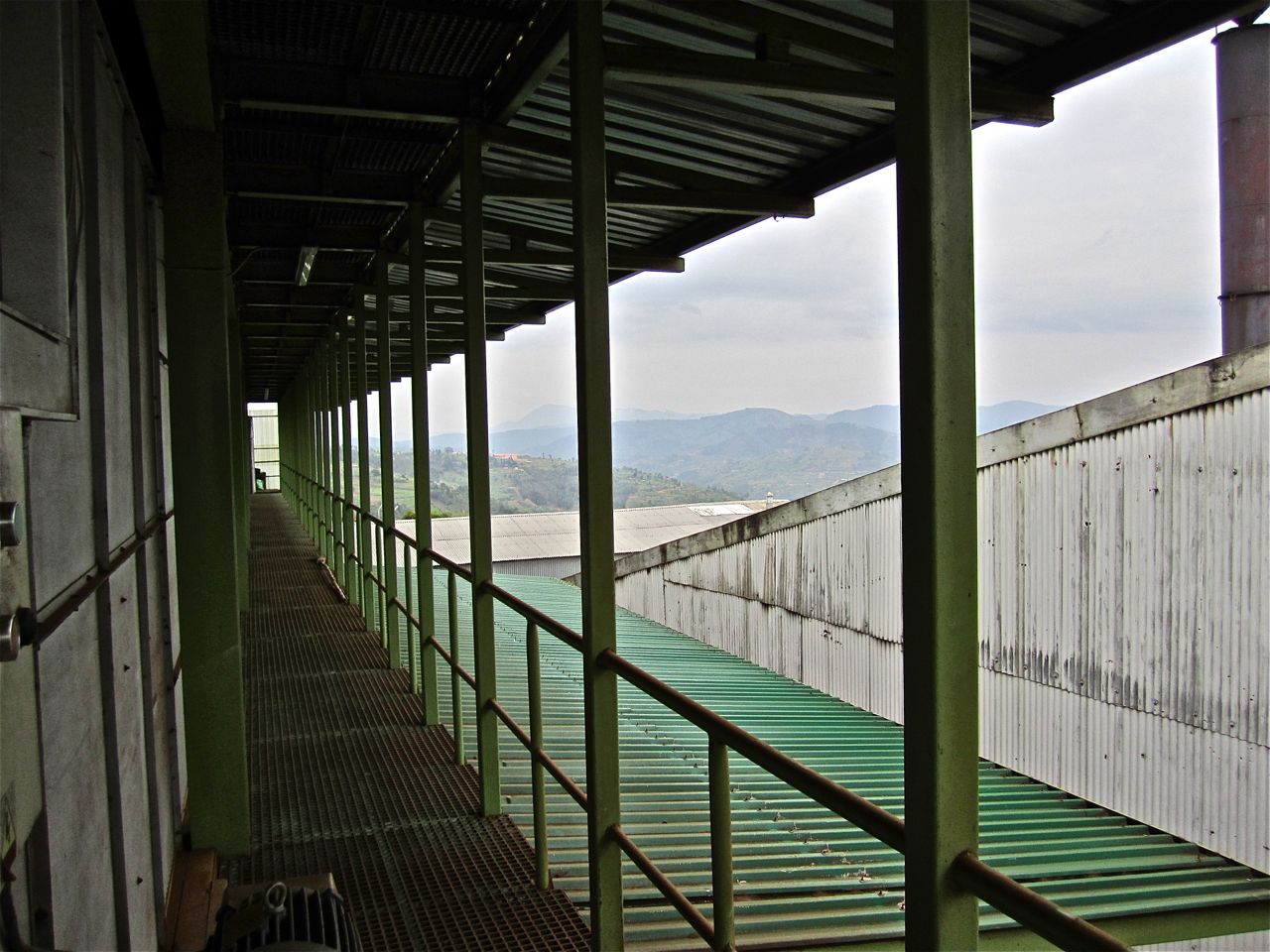
The factory’s buildings are detailed in shades of green, and its surroundings are friendly and sometimes rather whimsical.
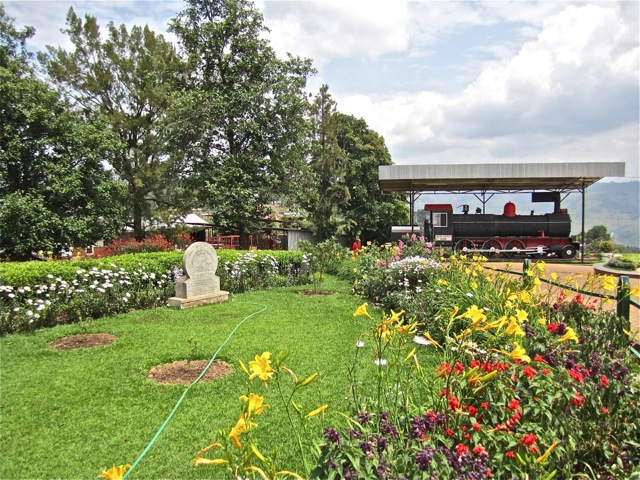
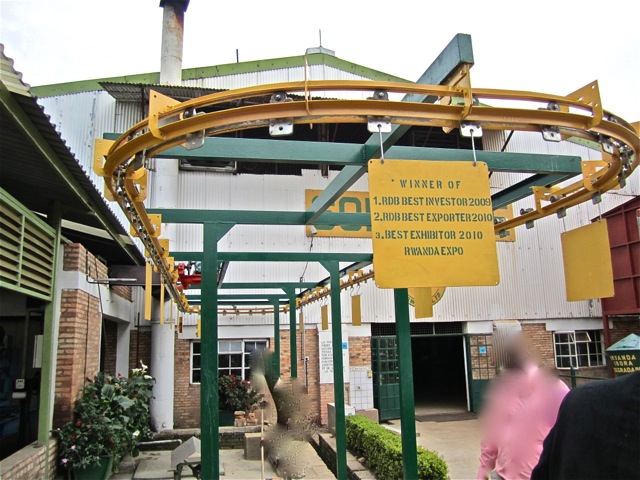
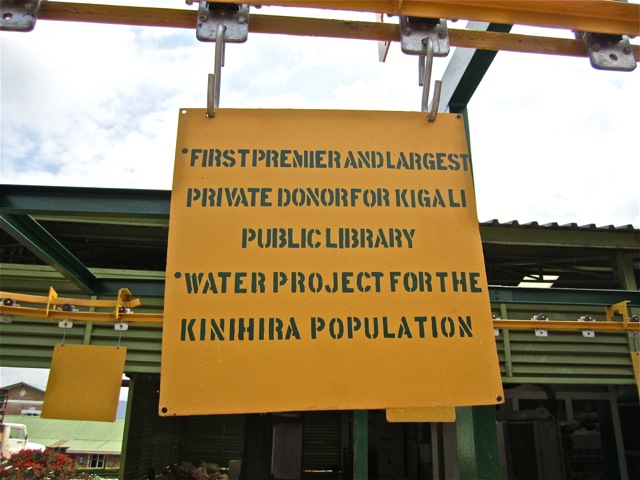
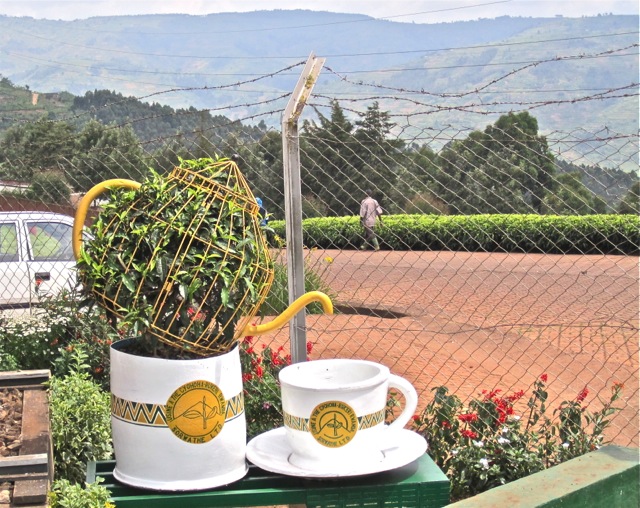
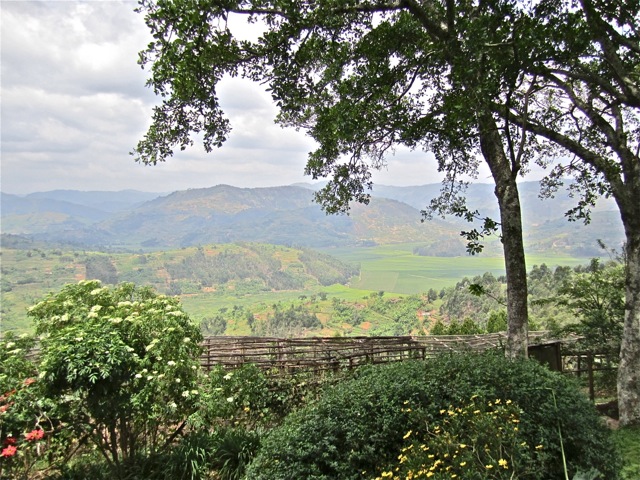
In the early days of the factory, old railroad steam engines were brought in to provide heat for the tea dryers (used after oxidation). To celebrate the 30th anniversary of Sorwathe in 2005, a 1920’s steam locomotive of the East Africa Railway Company was restored in Nairobi and installed in the factory garden.The company’s accomplishments are displayed on a sort of merry-go-round at the entrance.Sorwathe was an early large donor to the construction of Rwanda’s national public library, now almost complete.A topiary teapot at the entrance to the factory.The factory has beautiful views. In clearer weather, the Virunga volcanoes are visible.
You can order Rukeri Tea, Sorwathe’s garden mark, from Tea Importers’ website. The company also runs a guest house next to its factory.
Our lunch was eaten on the patio of the couple’s house, which overlooks their lovely garden and a knockout view of the tea gardens in the valley below.
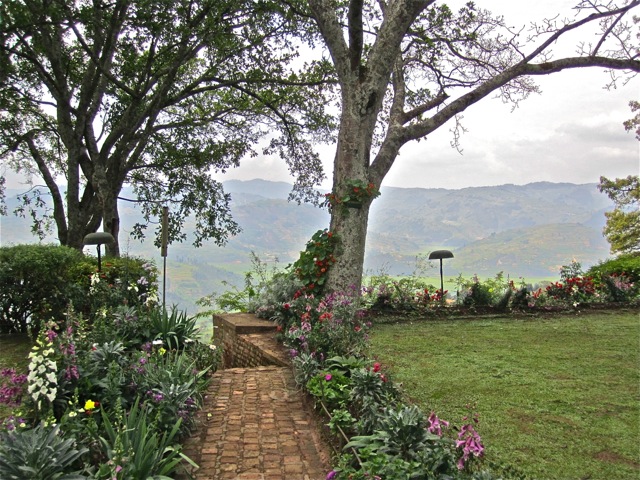
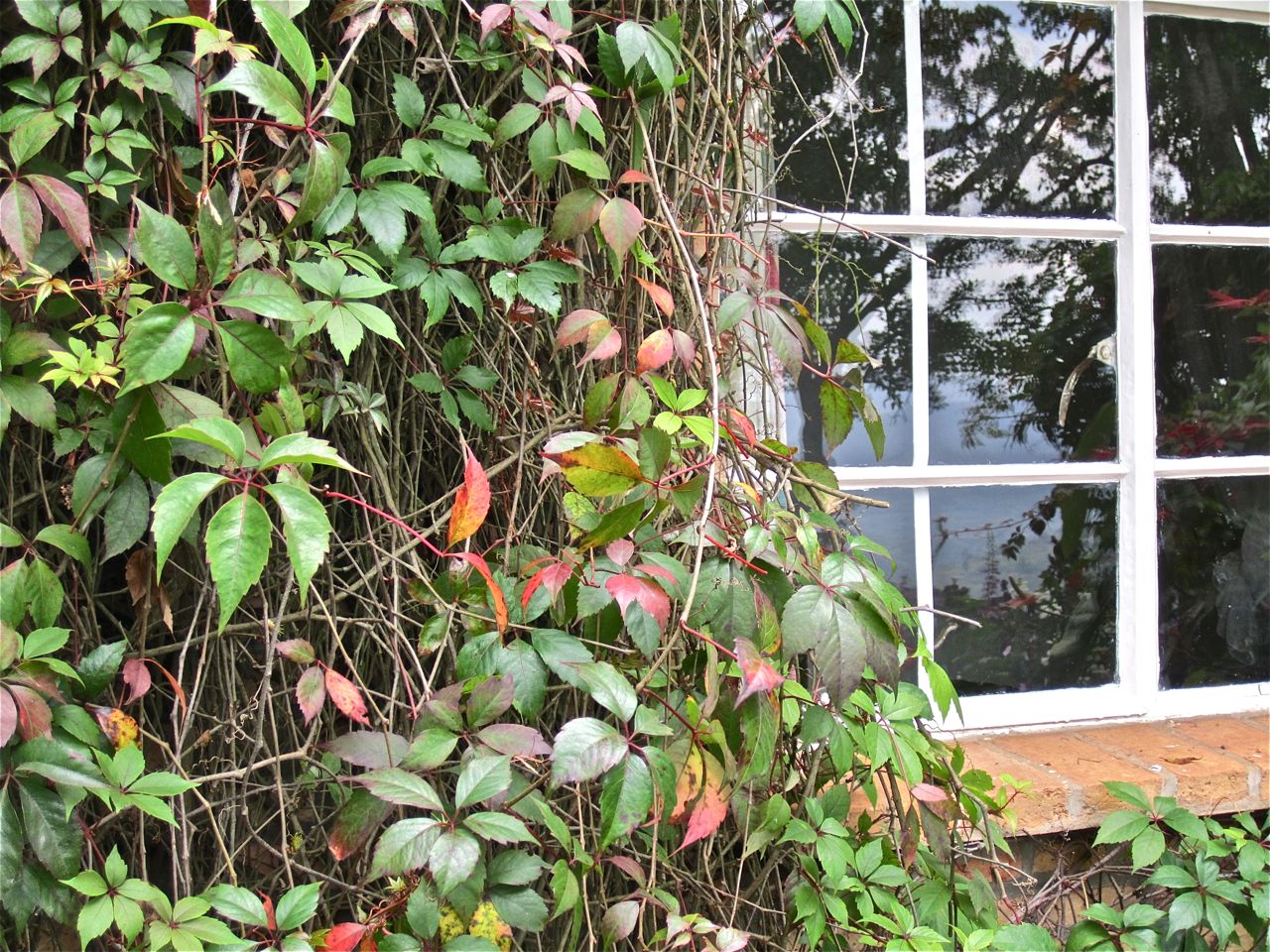
Cottage garden flowers and tea fields.Foxglove and stock are among the old-fashioned annuals in the garden.The tea fields and hills beyond a shaded garden.Virginia creeper vines on the house.The trees in the foreground are Ficus sycomorus or sycamore fig. They are native to much of central Africa and parts of the Middle East.
If you live in U.S. zone 7 or higher, you can try growing tea bushes (Camellia sinensis) at home. The plants like soil a little on the acid side and are drought tolerant. Pests can be treated with horticultural oil. If left unpruned, the plants will grow into small trees. You can buy them from Camellia Forest Nursery in Chapel Hill, N.C.
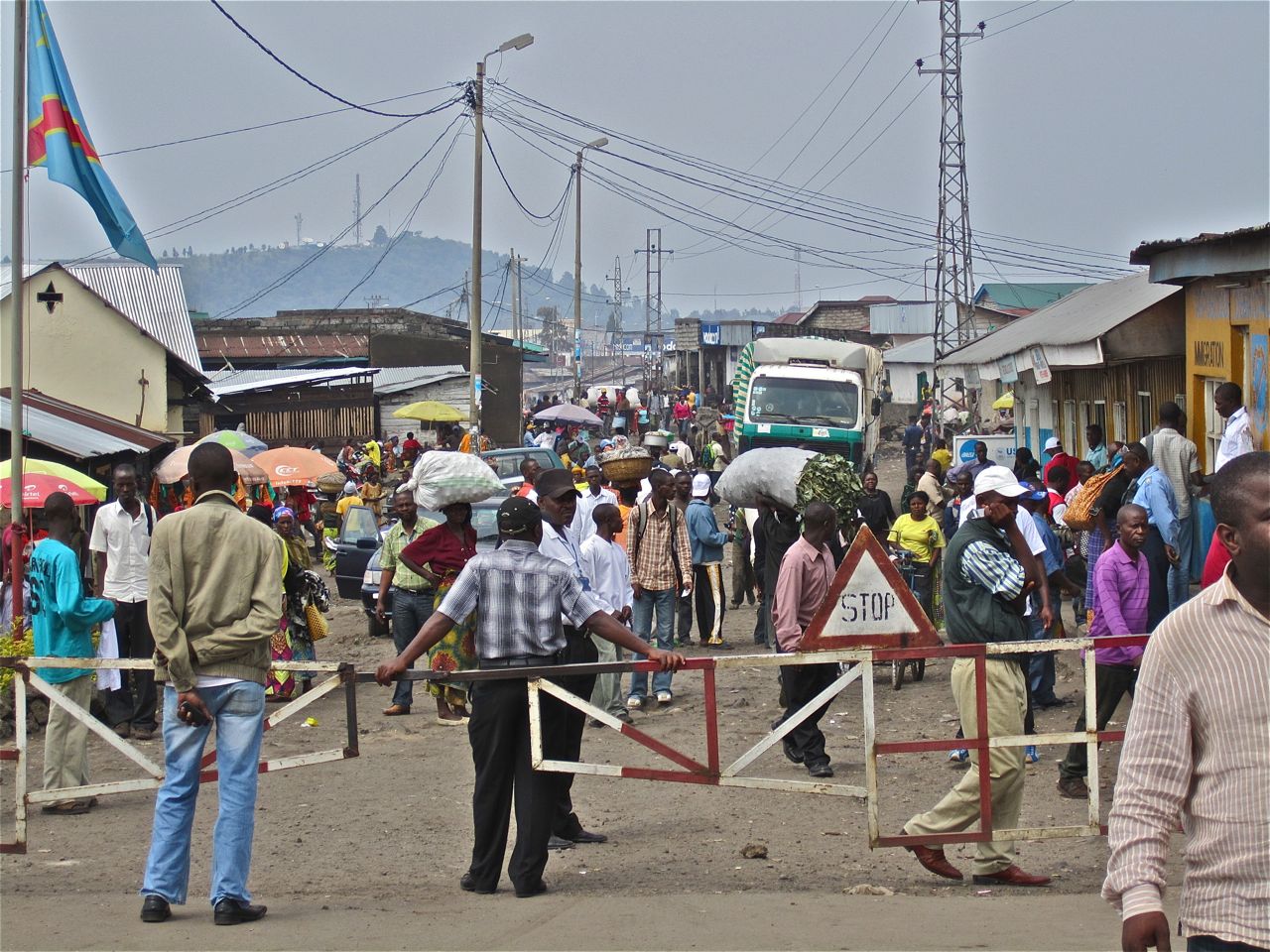
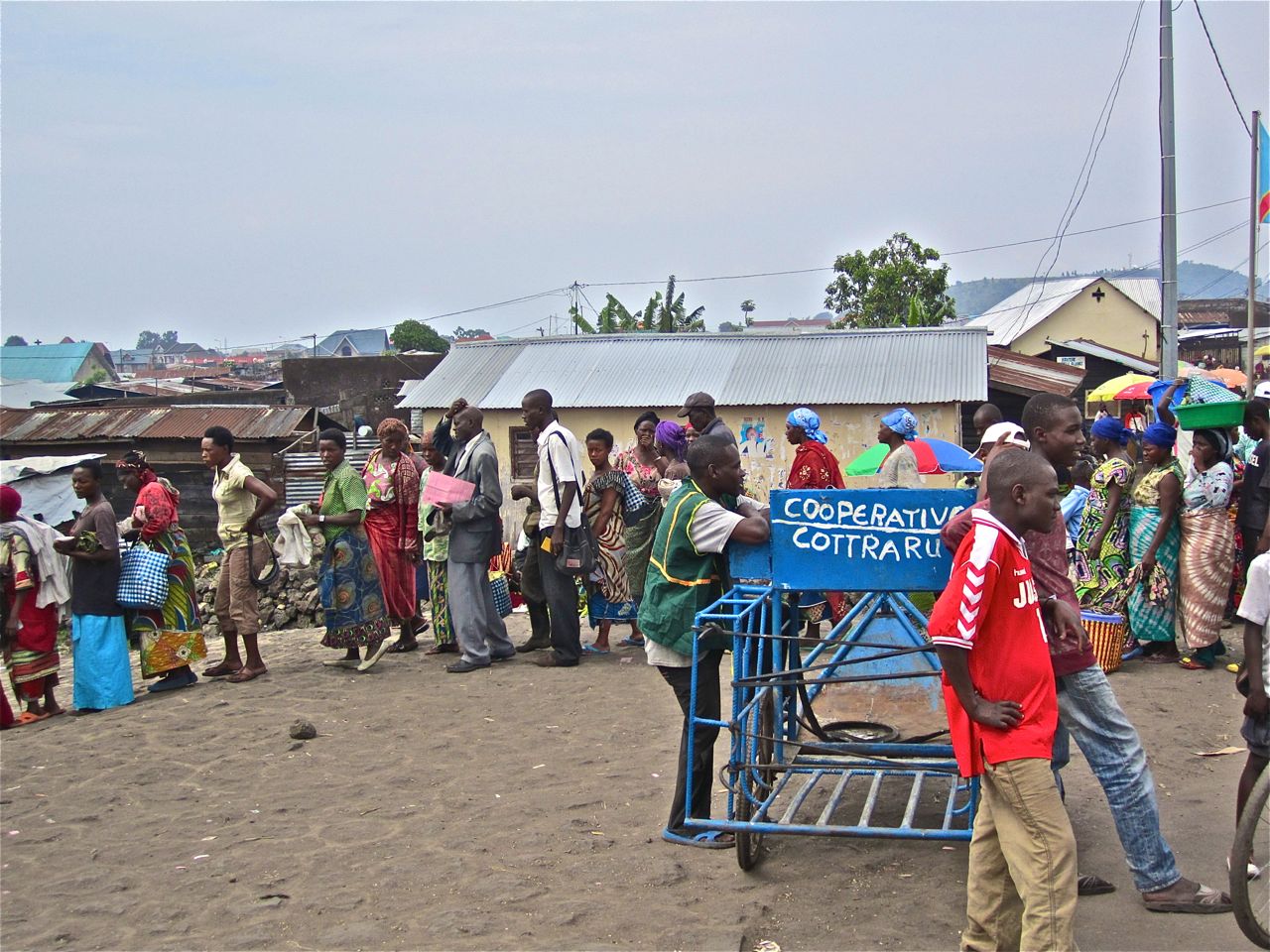
On the second day of our recent trip to the north of Rwanda, we visited a border crossing with the Democratic Republic of Congo (DRC), this one located between the otherwise contiguous cities of Gisenyi (Rwanda) and Goma (DRC).
Looking over the barrier to a street in Goma, DRC.
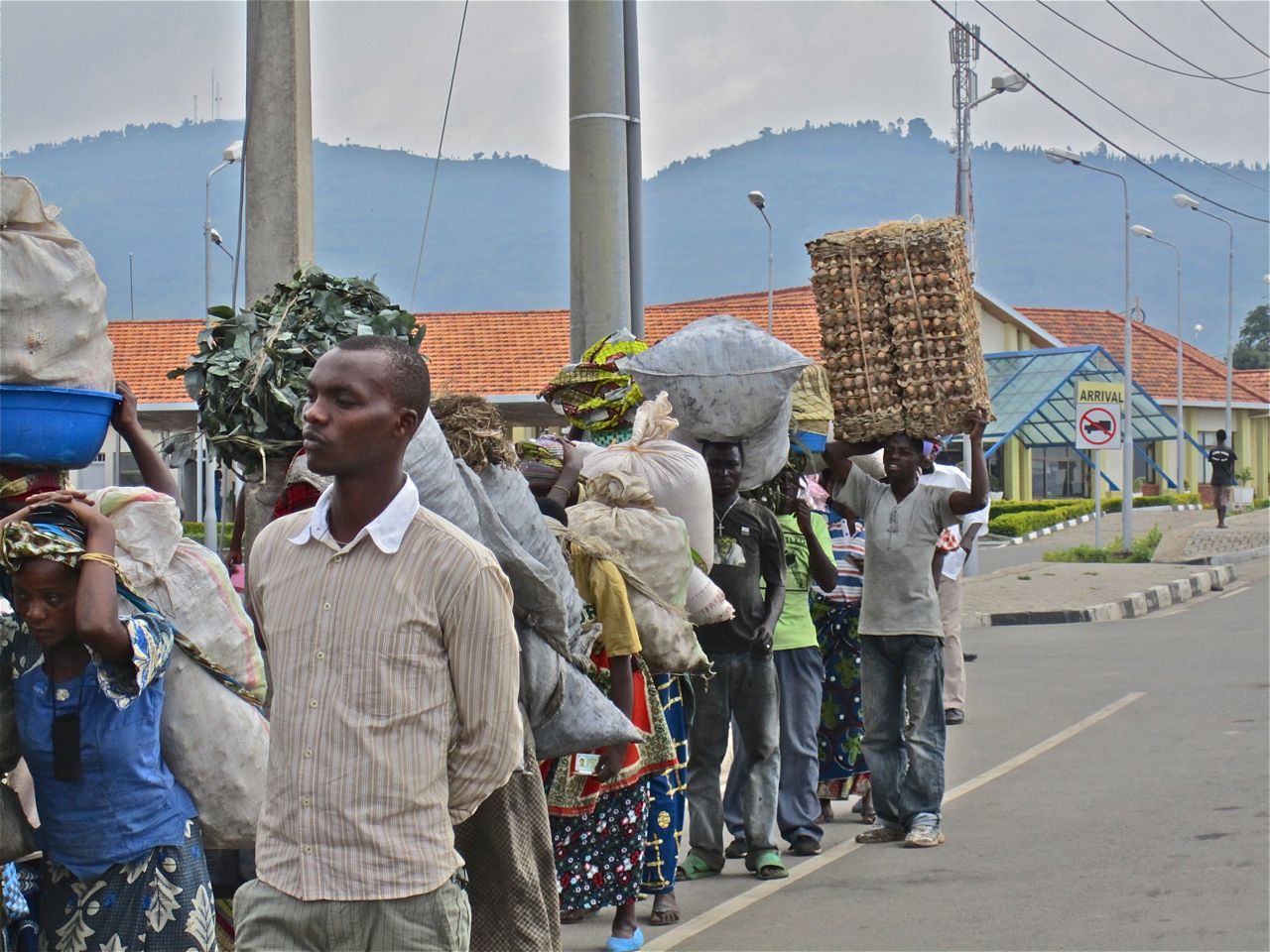
We watched a line of people, almost all carrying large parcels of food, waiting to enter eastern Congo.
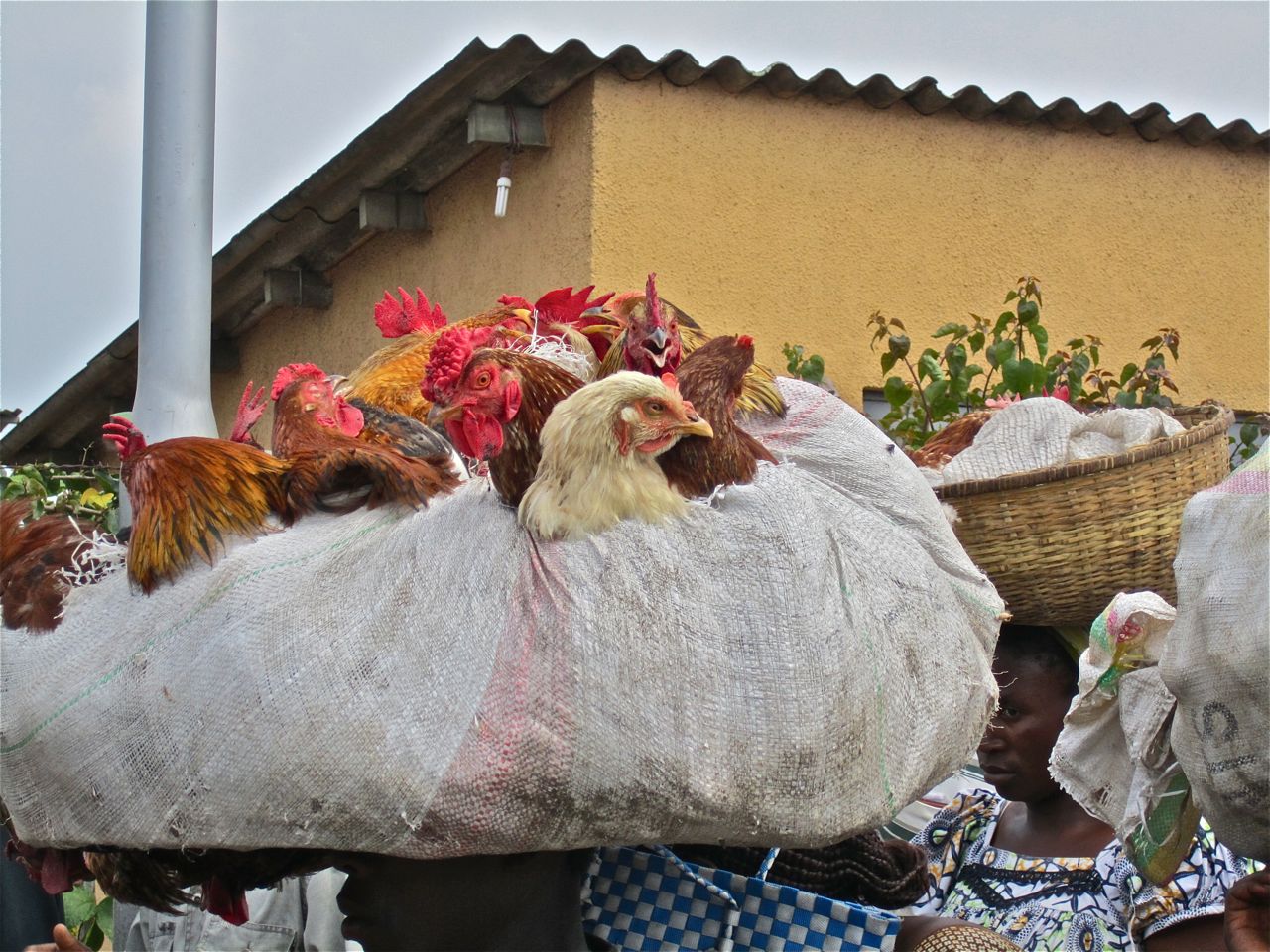
People laden with food to sell in the DRC.I believe these chickens (who are traveling on someone’s head) would be called non-intending immigrants. Nevertheless, they are destined for pots in the Congo.
We watched another line of people, now almost empty-handed, coming back into Rwanda.
The line to leave the DRC.
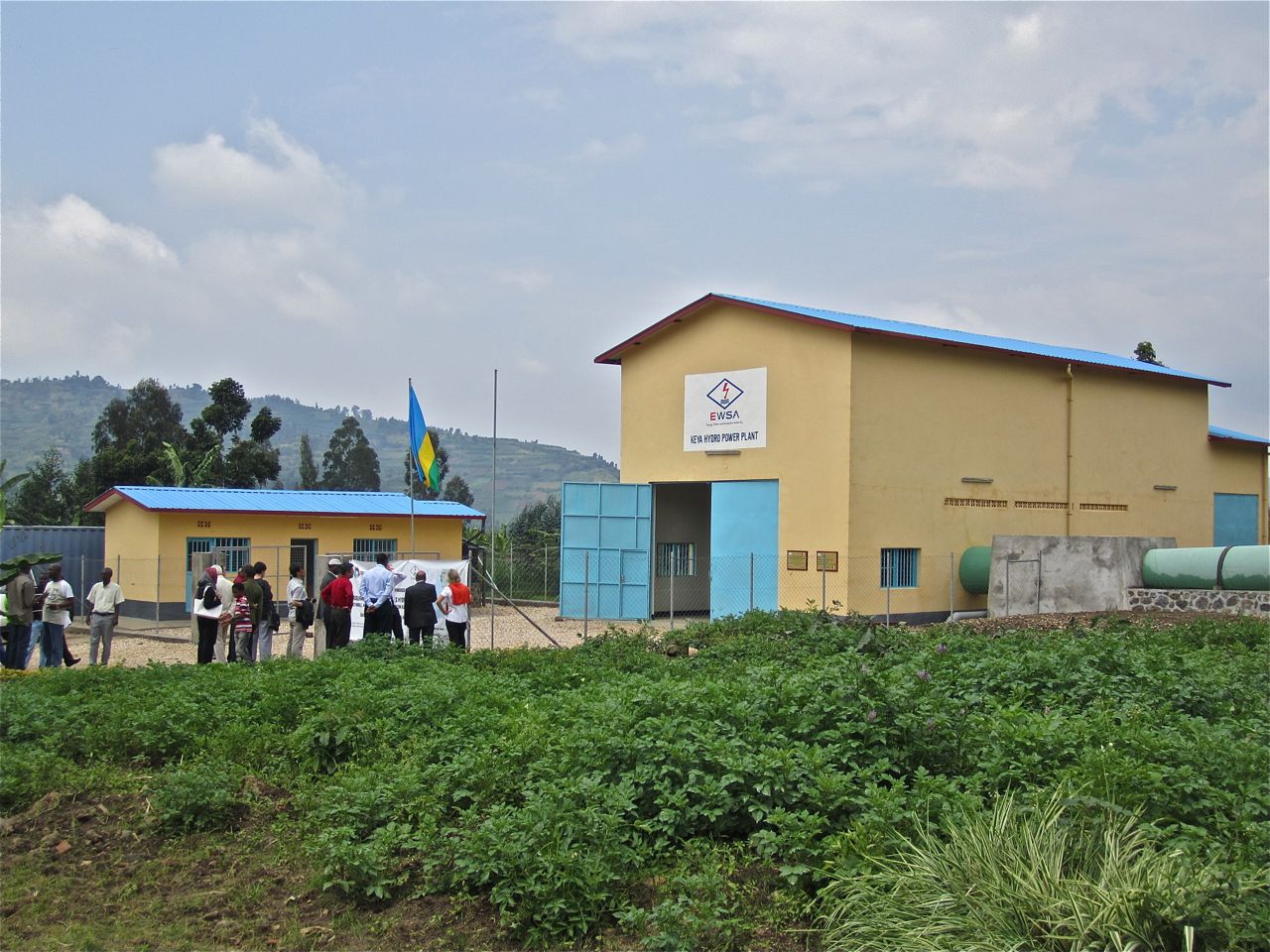
Afterwards, we headed about 10 miles east to visit a small hydro-electric plant. The unpaved road to the plant was too rough for the bus, so we had a walk through the neighboring village.
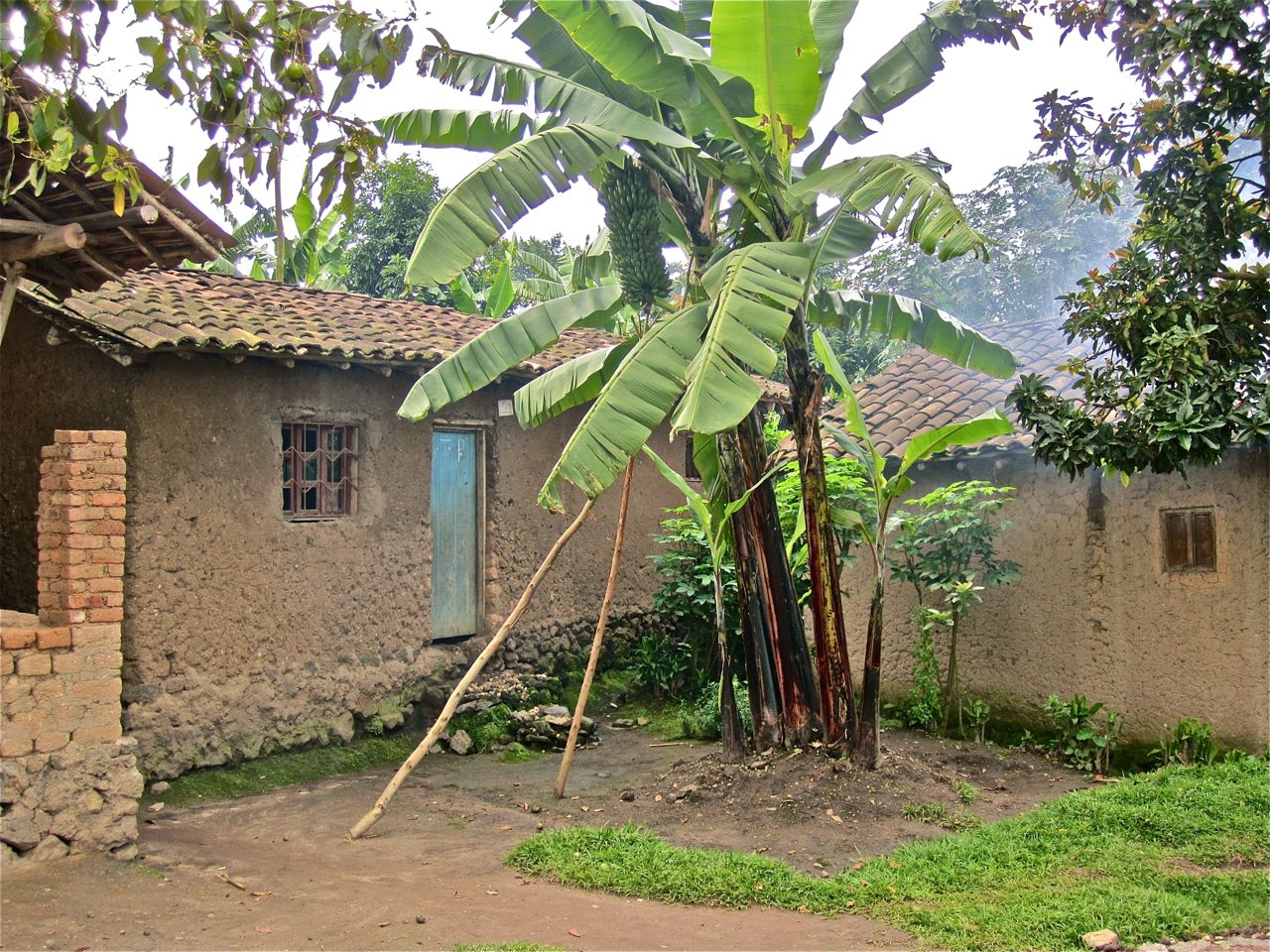
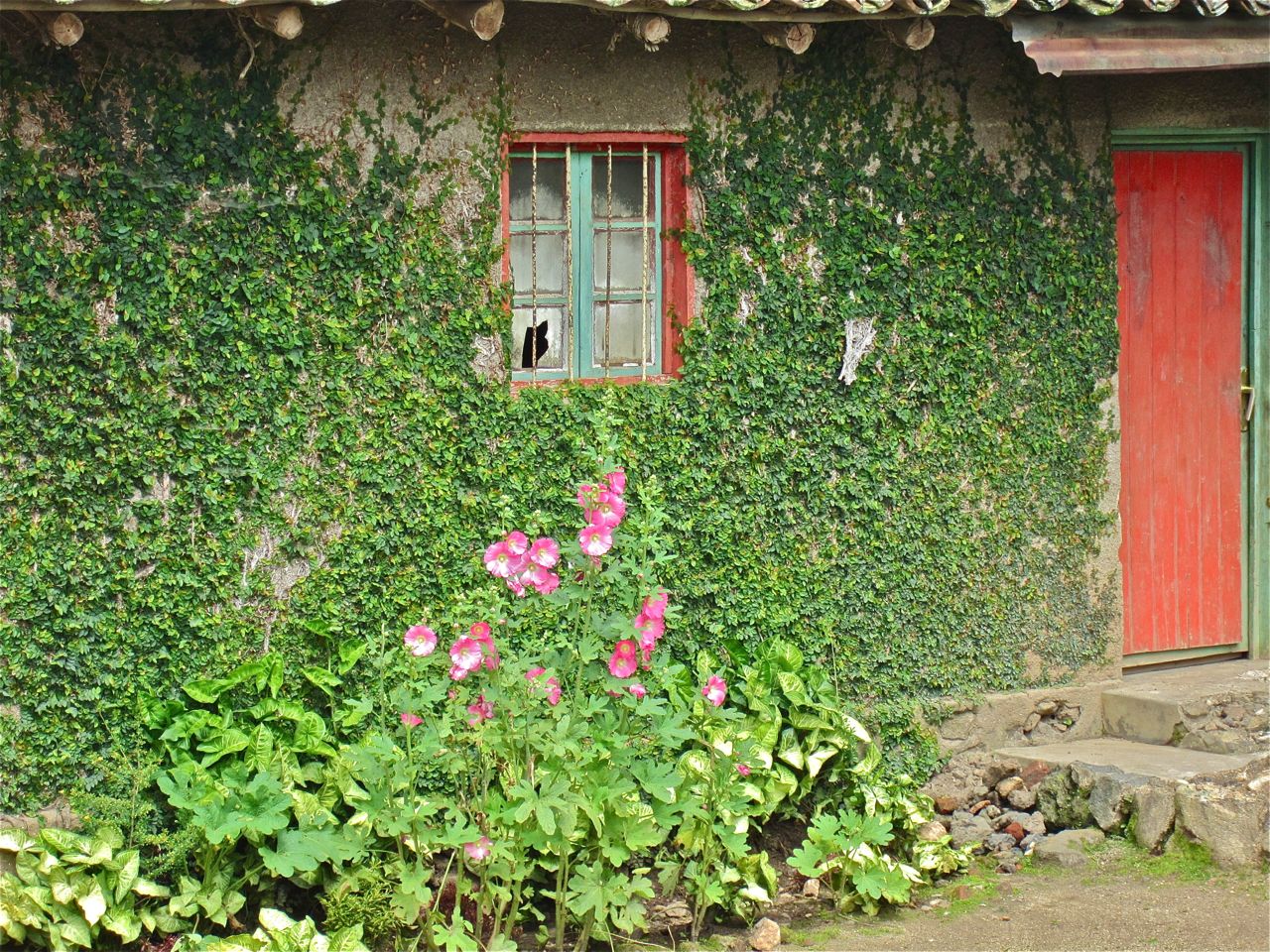
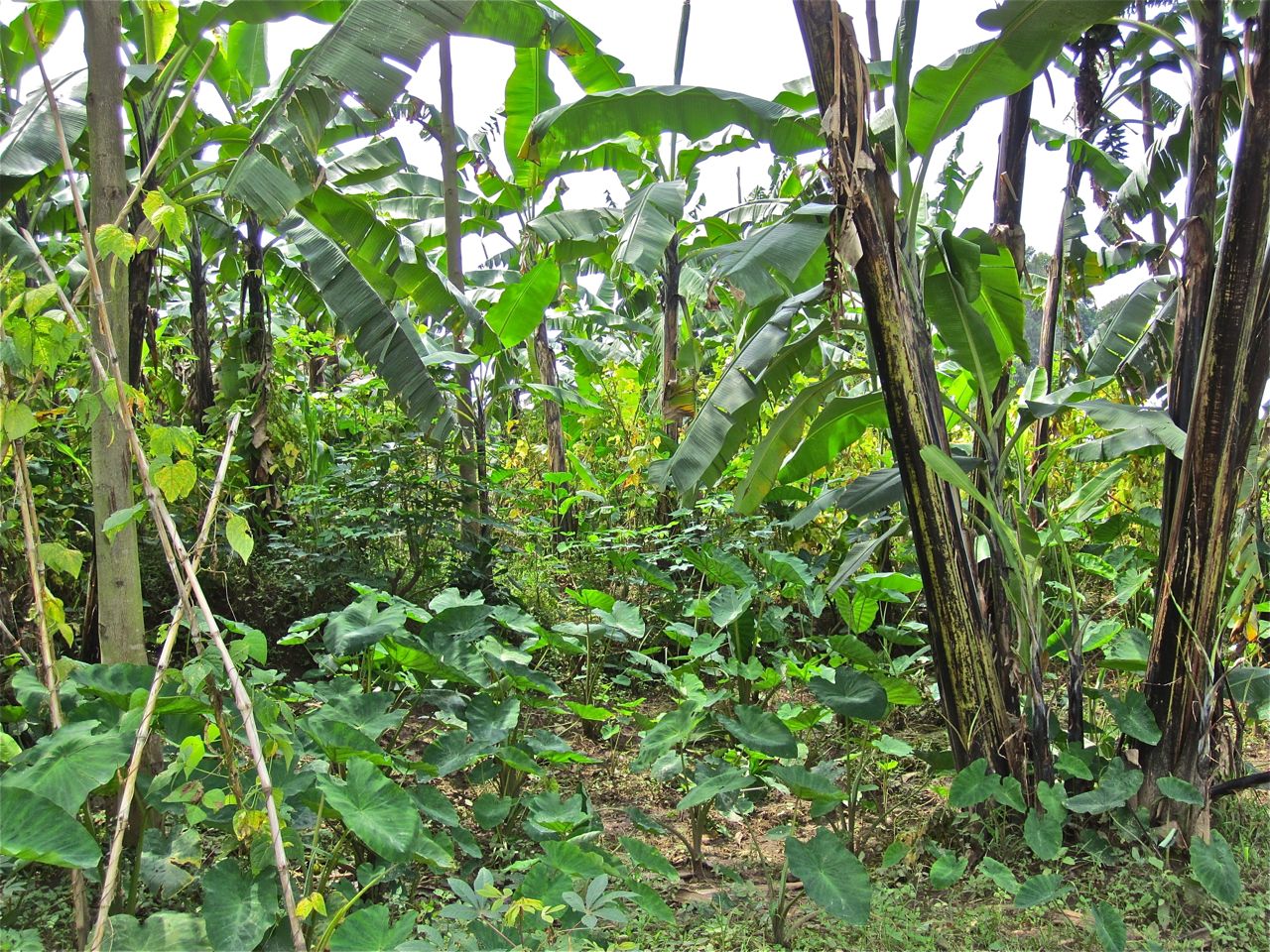
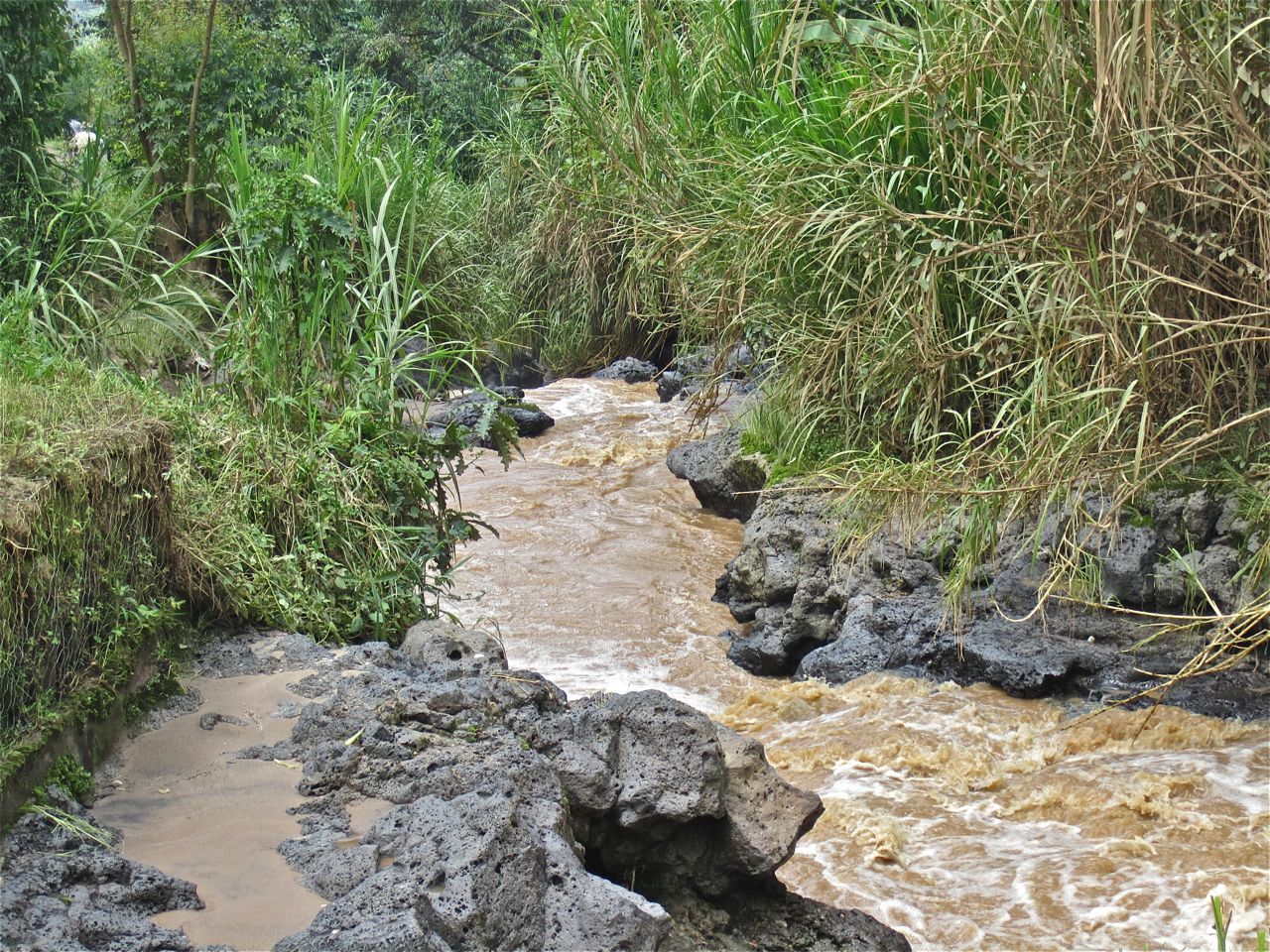
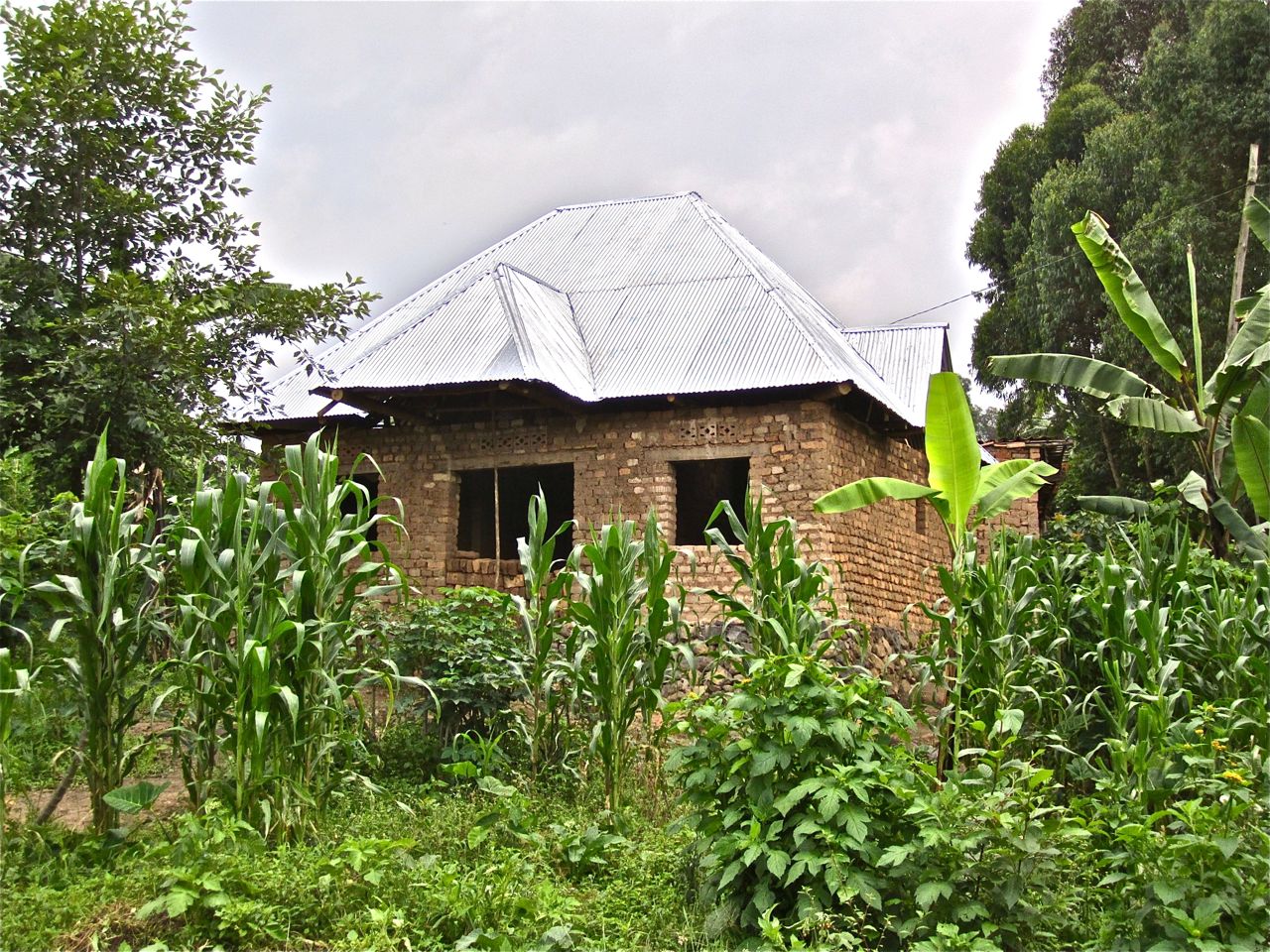
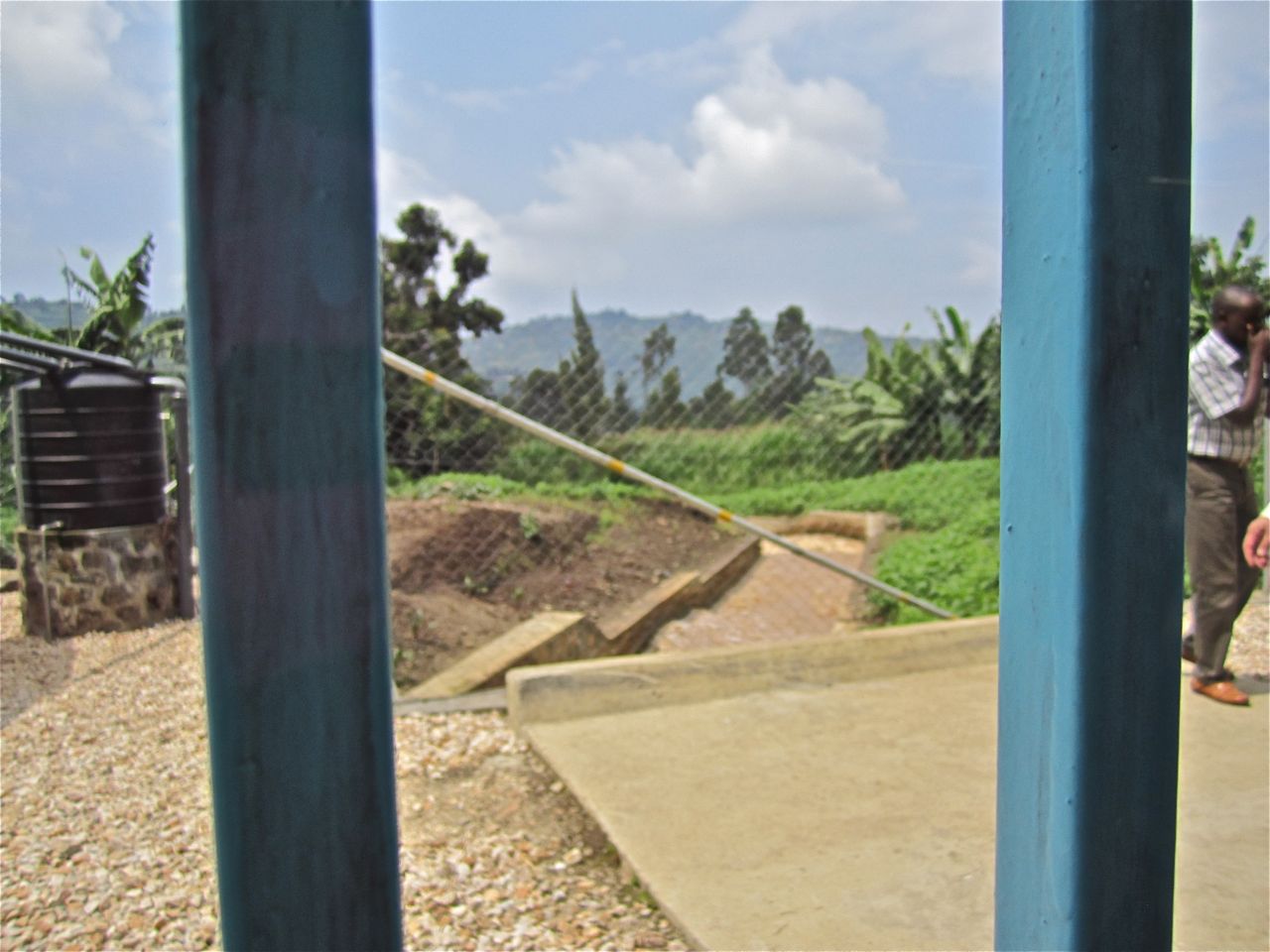
Bananas outside a village house.House door with a blue patch. Cassava (aka manioc) plants and beans grow in the foreground.Hollyhocks by a doorway.A typical garden of bananas, taro, cassava, and beans.A stream bordered by long-hardened volcanic lava. The fast-moving water runs approximately parallel to the water pipe supplying water to the hydro-electric plant.A house under construction with a roof-line typical of the Rubavu District. It seems to echo the surrounding hills and nearby volcanoes.The Keya hydro-electric power plant. The water enters from the blue pipe on the right. Built by the Rwandan government with the support of Belgium, it provides 2.2 megawatts of power.Water runs out the other side of the plant, beans planted right up to the edge. On the far left is a tank capturing rainwater from the roof of the plant’s office.
We ended our trip at the Pfunda Tea Company factory. Two thousand people work on the Pfunda Tea Estate, and the company also runs a cooperative for area tea farmers. All the tea is raised without pesticides, and, in February 2011, Pfunda Tea Company became the first company in Rwanda to obtain Rainforest Alliance certification.
One hundred and fifty people work 8 hours shifts in the tea factory, day and night. They will produce over 4.4 million lbs. (or 2 million kgs.) of black tea this year. The climate, altitude, and soil of the area is excellent for growing high-quality tea.
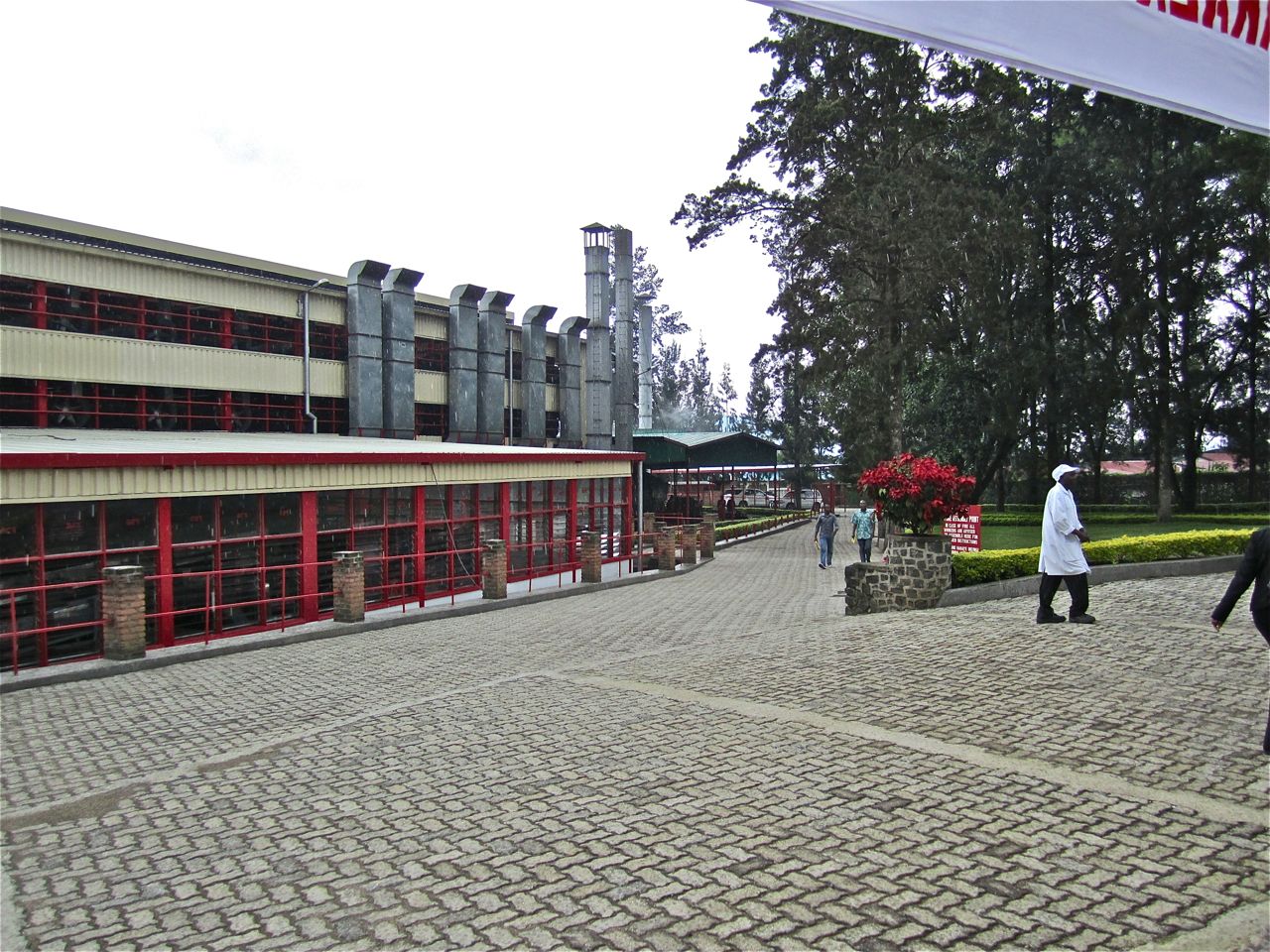
The Pfunda Tea Factory
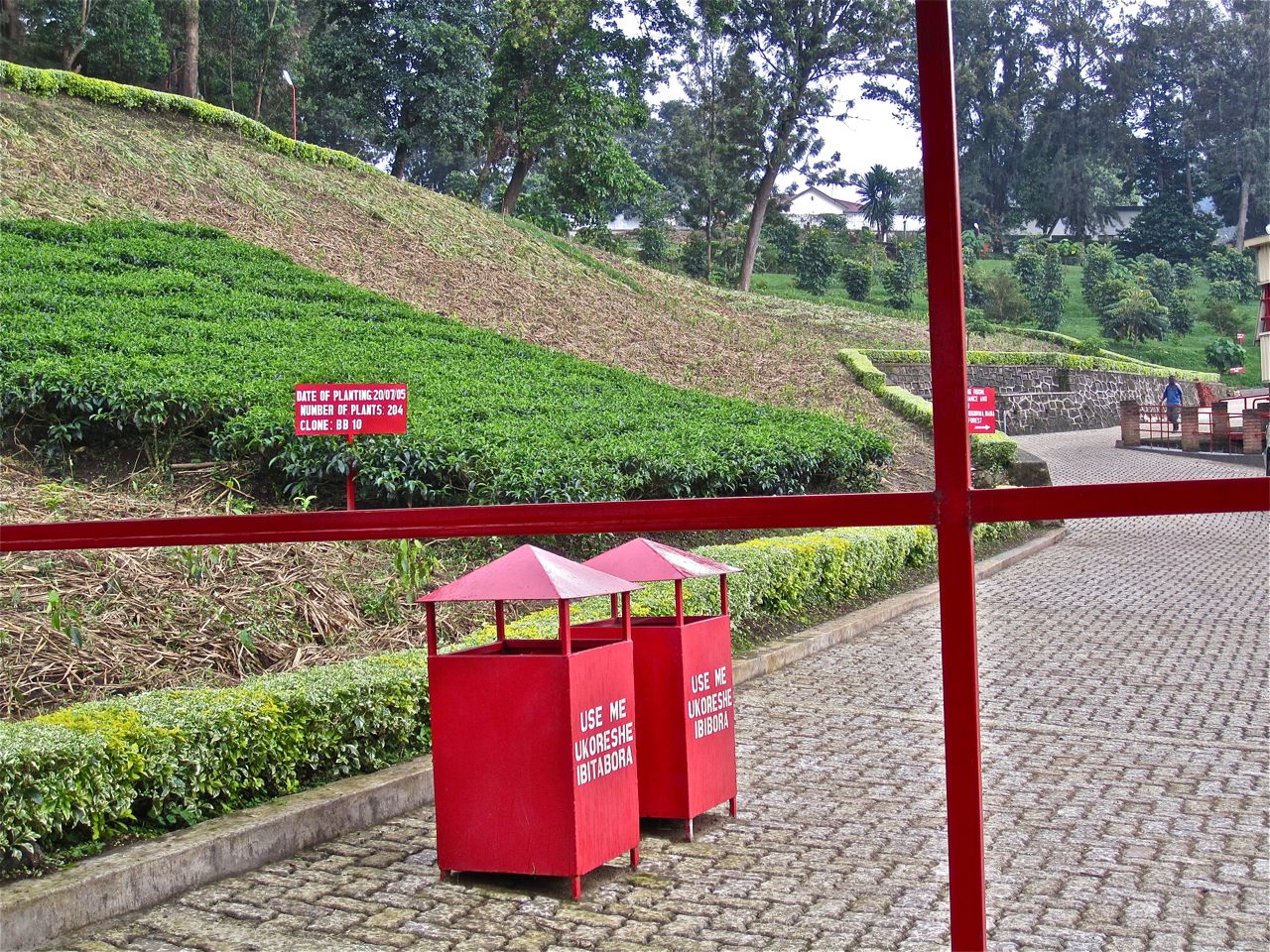
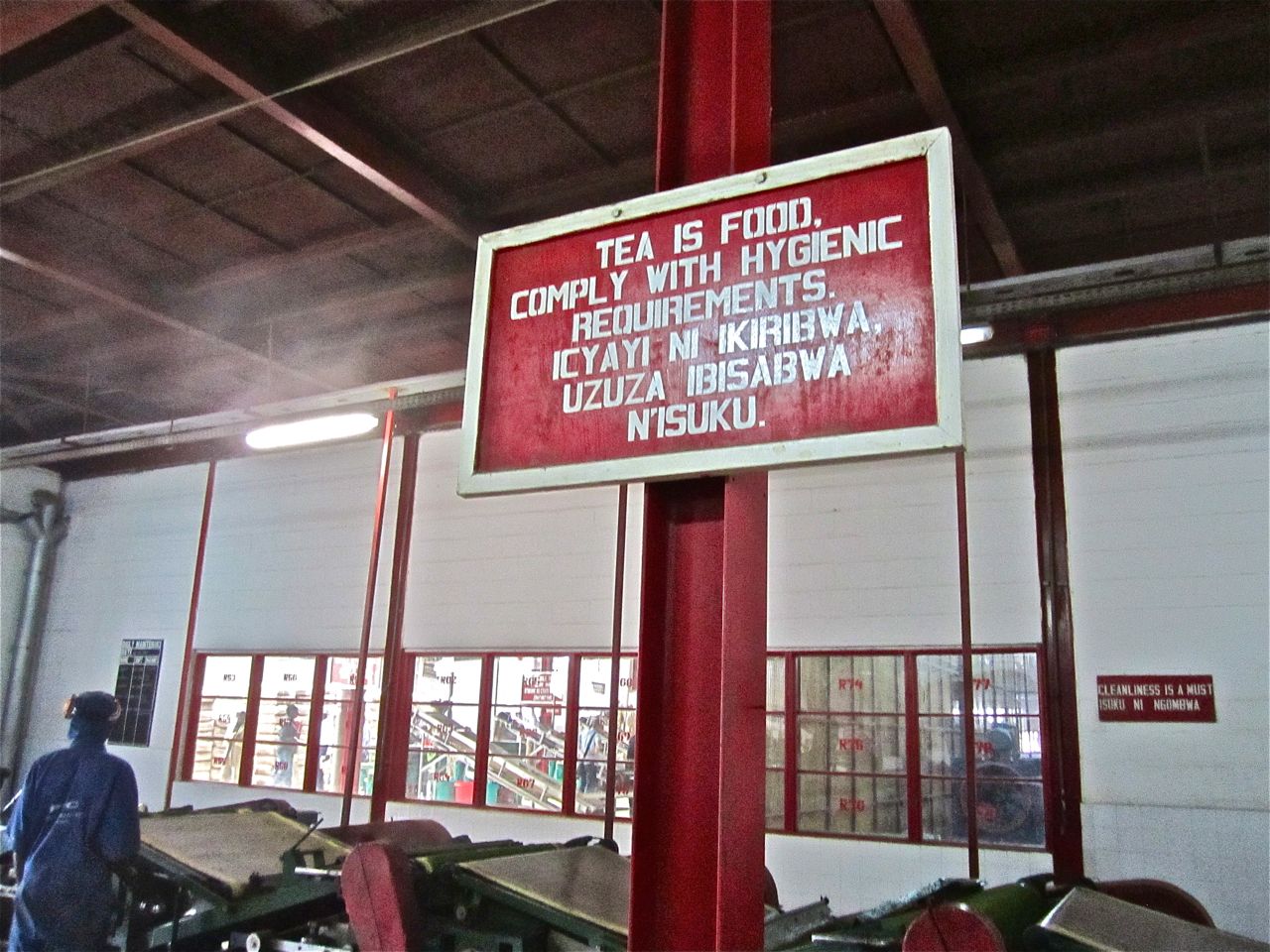
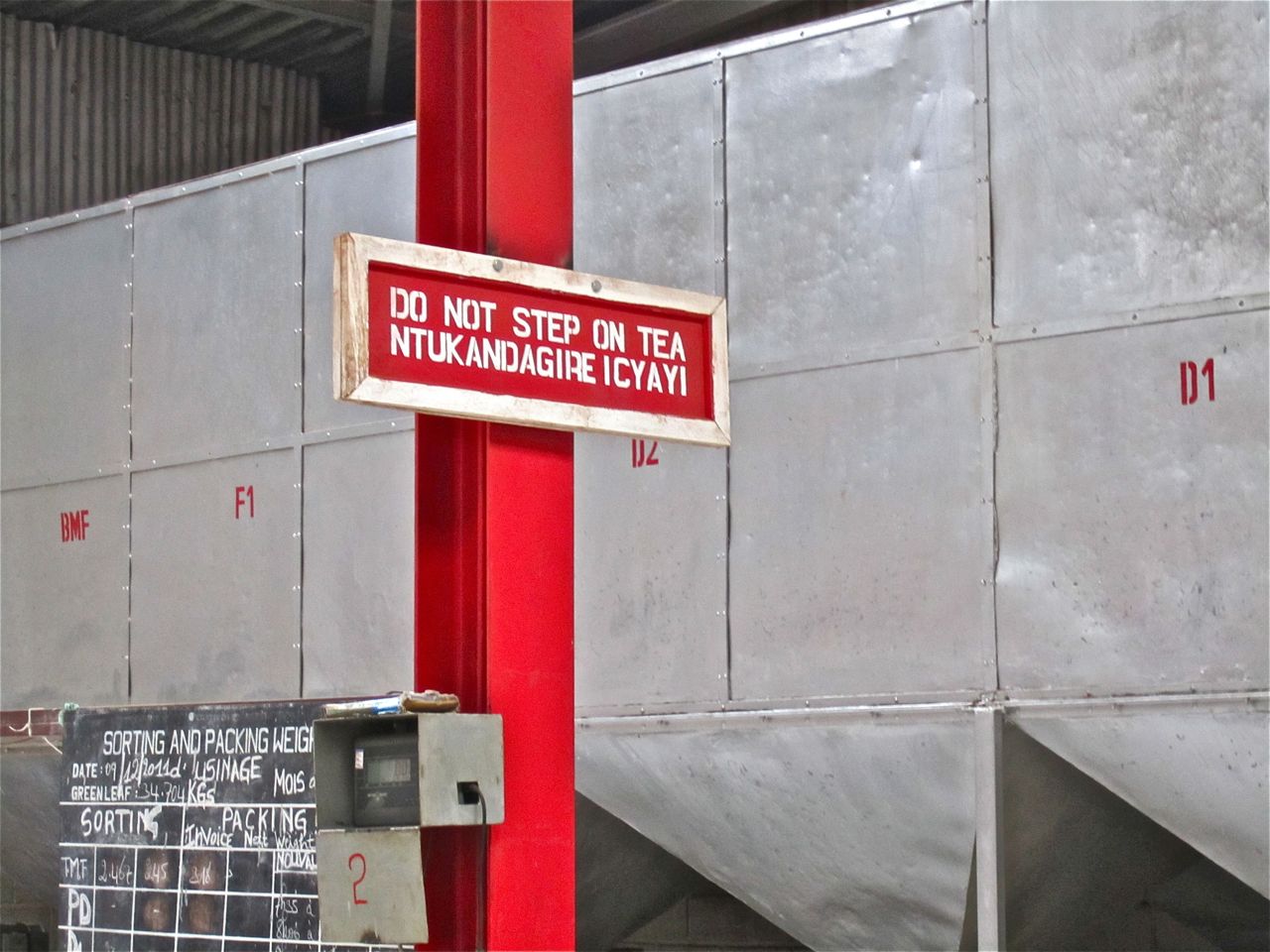
The design of the factory and its surrounding grounds — even its signage — struck me as remarkably consistent, orderly, and pleasant. Lots of straight, clean lines in red paint and low hedges.
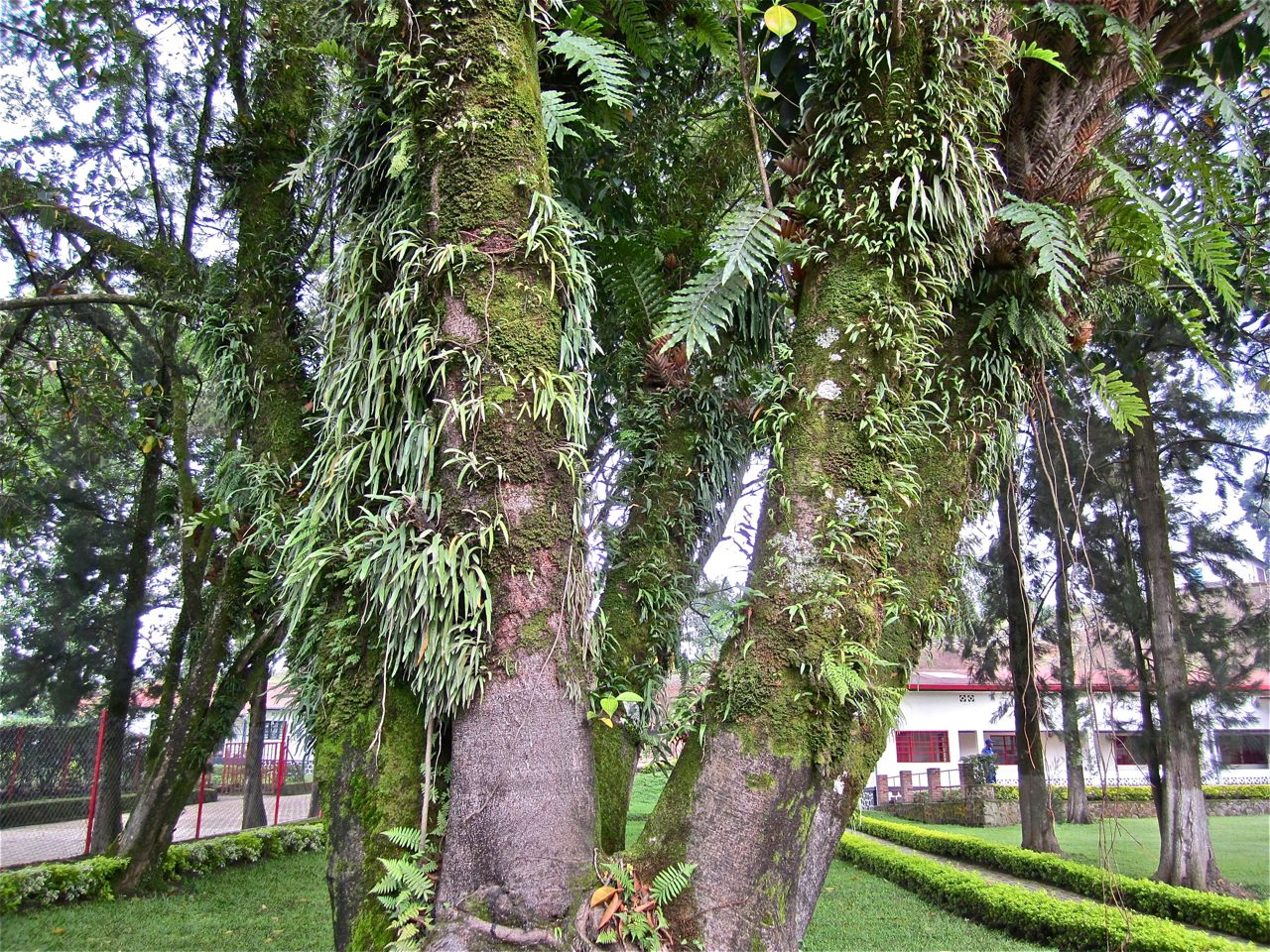
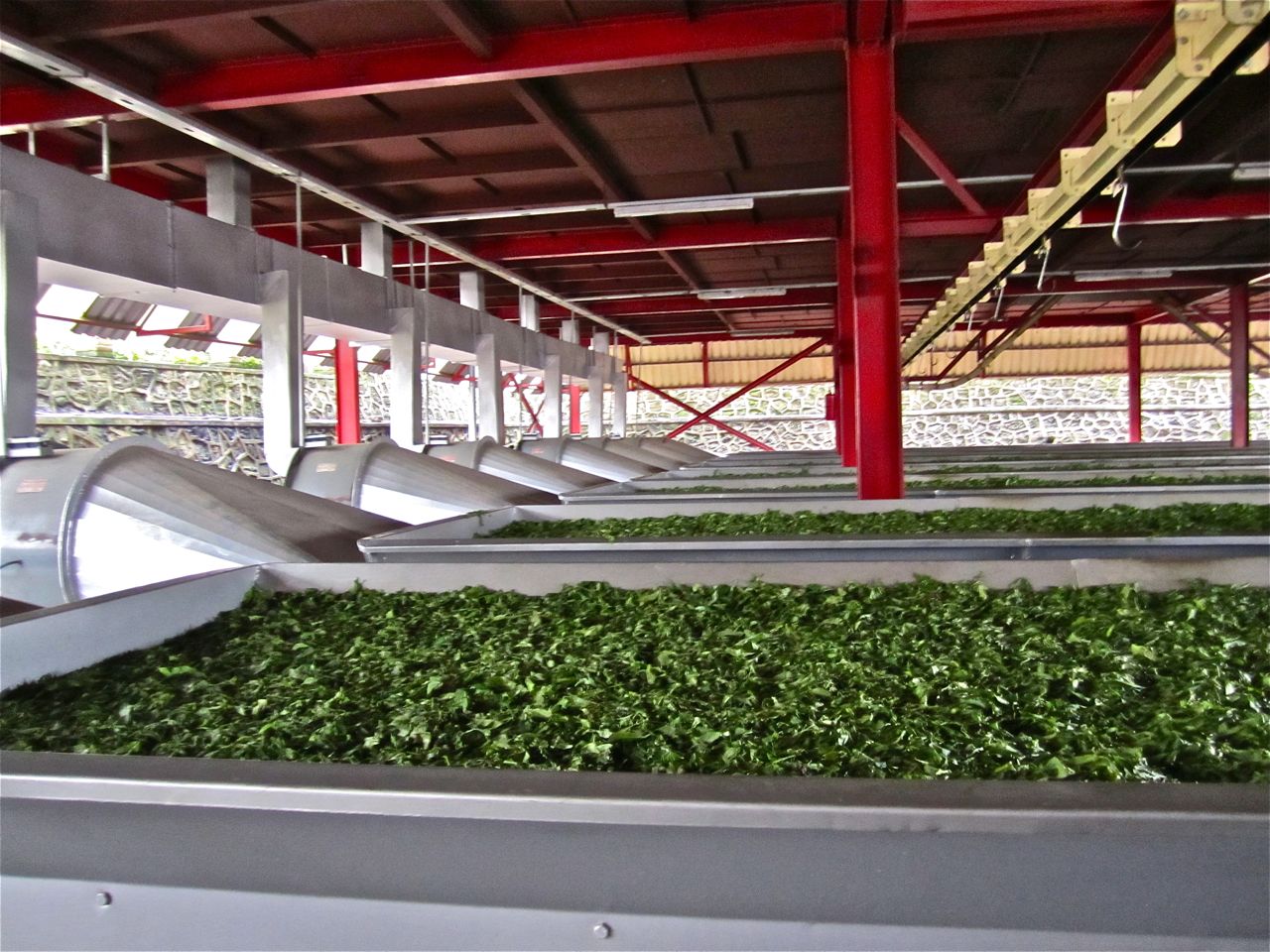
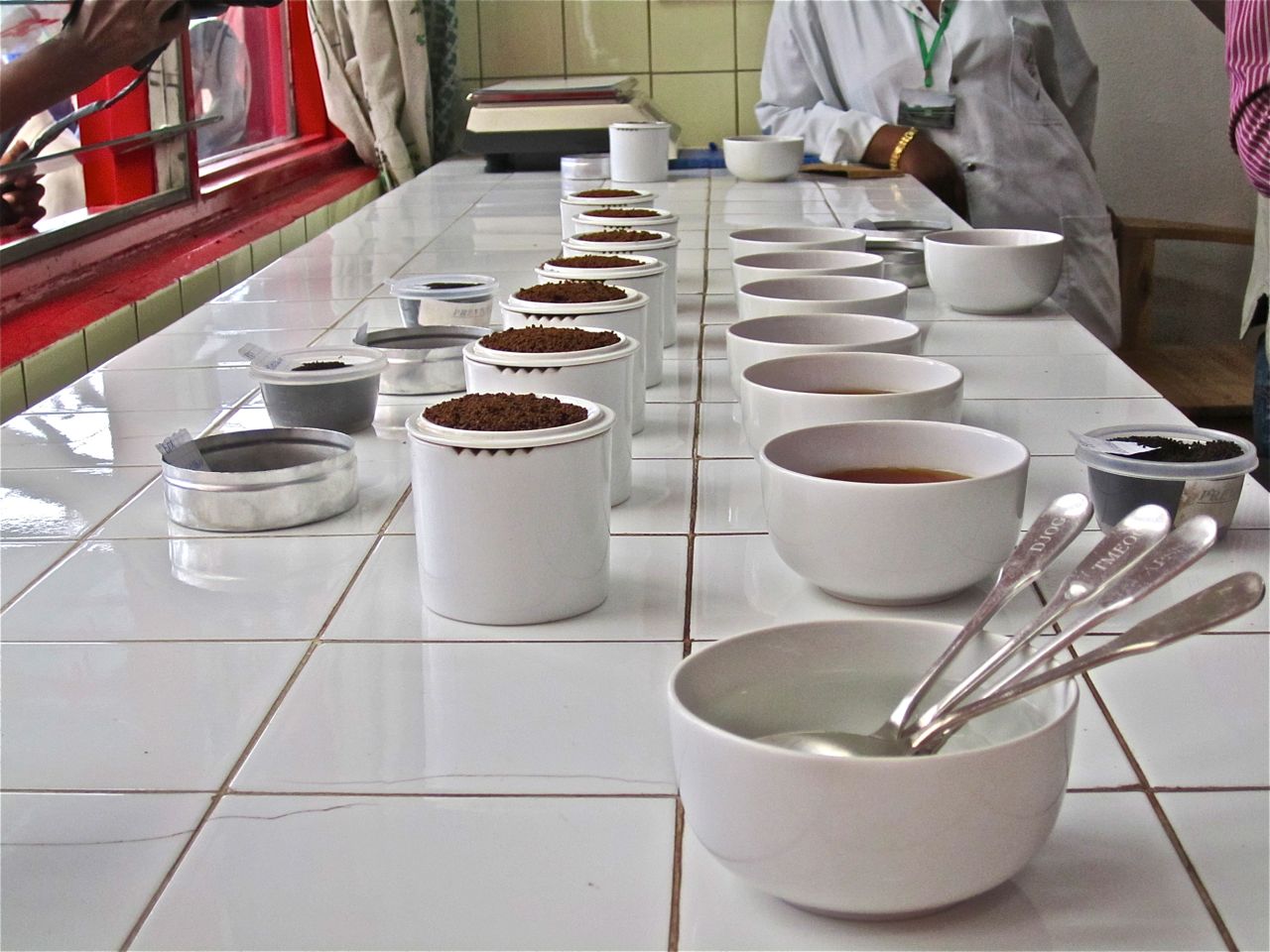
A test plot of tea bushes.A factory tree laden with moss and ferns.The green tea leaves dry here for approximately 15 hours. The factory smells like a combination of cut grass and brewed tea.Dried leaves on their way to be processed. The leaves are finely chopped.After the oxidation process, the now-black tea rolls off the belt and into buckets.And put in piles before being bagged.The factory is very orderly and clean.A relief to tea drinkers.The testing and tasting room.
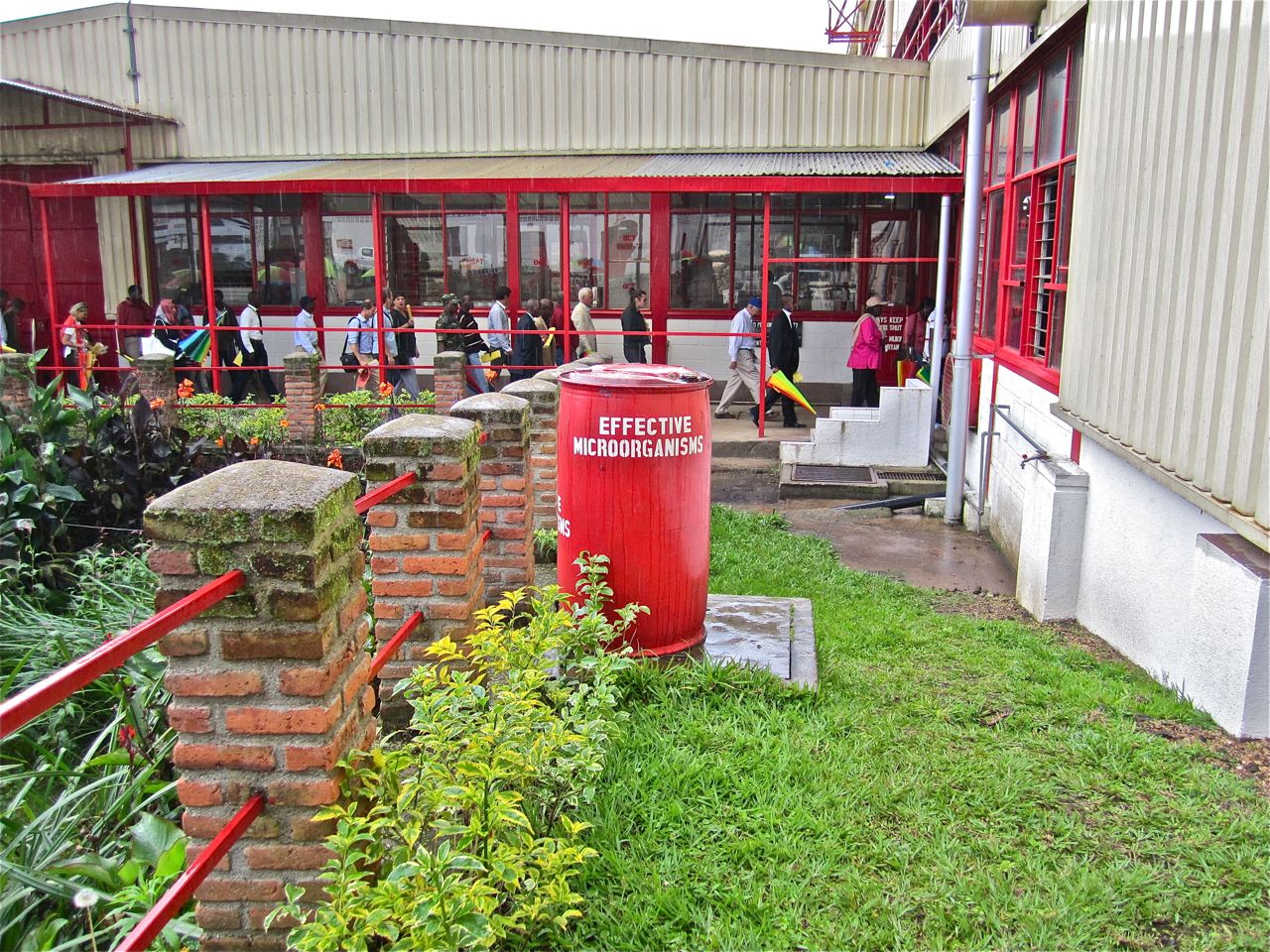
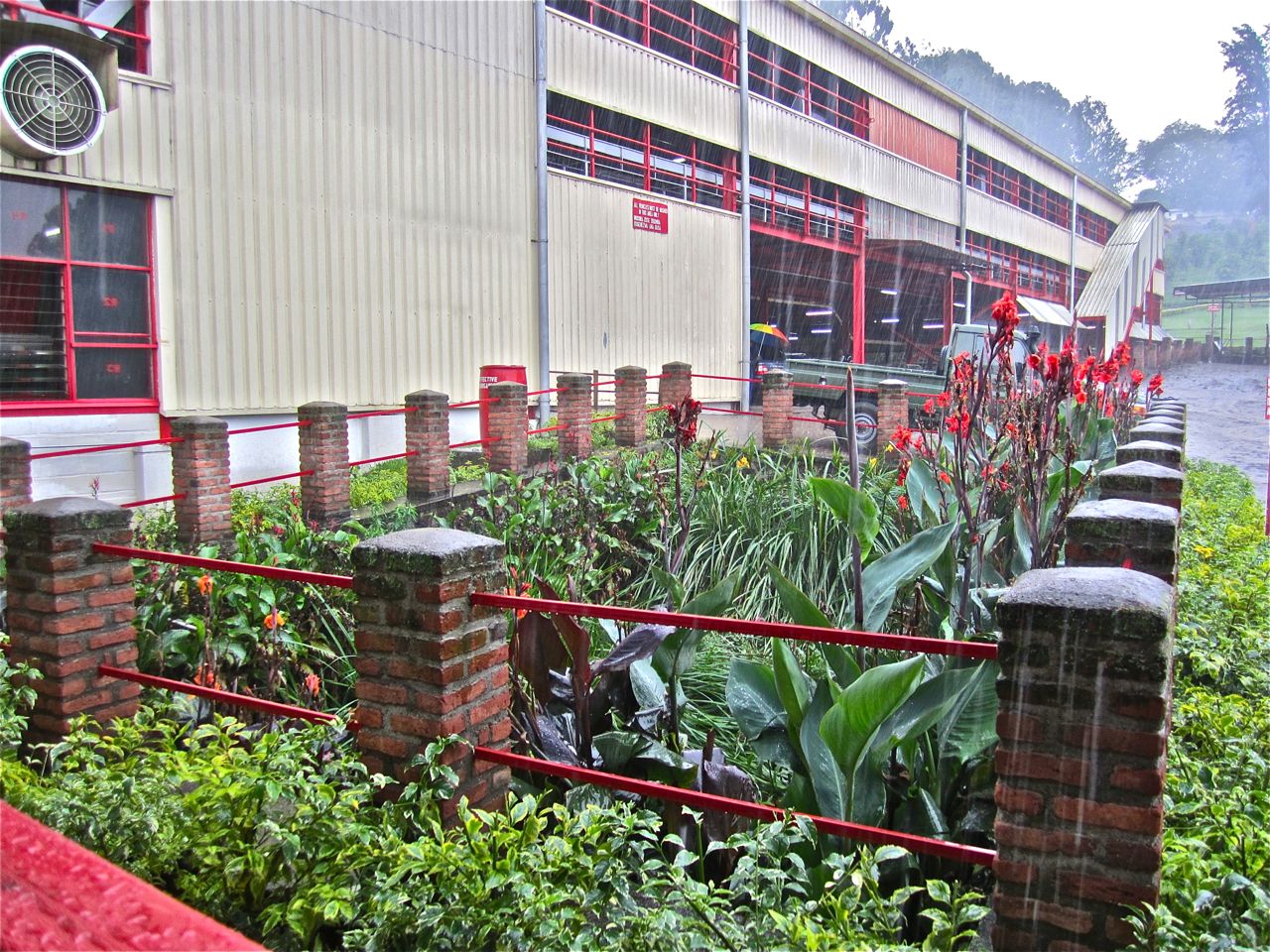
Waste water from the tea processing is diverted to a garden pool and treated with “Effective Microorganisms,” a product that cleans water and eliminates bad odors with a combination of microorganisms that were collected and cultivated naturally.
A barrel of Effective Microorganisms.A waste water garden pool in the rain.
As we travel, I am always looking for recurrent elements in the landscapes and urban surroundings through which we pass, as well as in the architecture and craft. I am trying to grasp what Rwanda really looks like, what it cares about, how it experiences its environment (and how I experience its environment) and how I can interpret at least some of that in a garden design.
The farm in yesterday’s post overlooks the Nyakabingo tungsten mine, located about 10 kms. north of Kigali.
The mine was the first stop on a two-day bus trip organized by the Foreign Ministry for diplomats. We felt a little like we were on a school field trip — only one with a police escort and a press van.
While we were at Nyakabingo, I turned down the invitation to see the mine from underground and instead photographed it from an upper road.
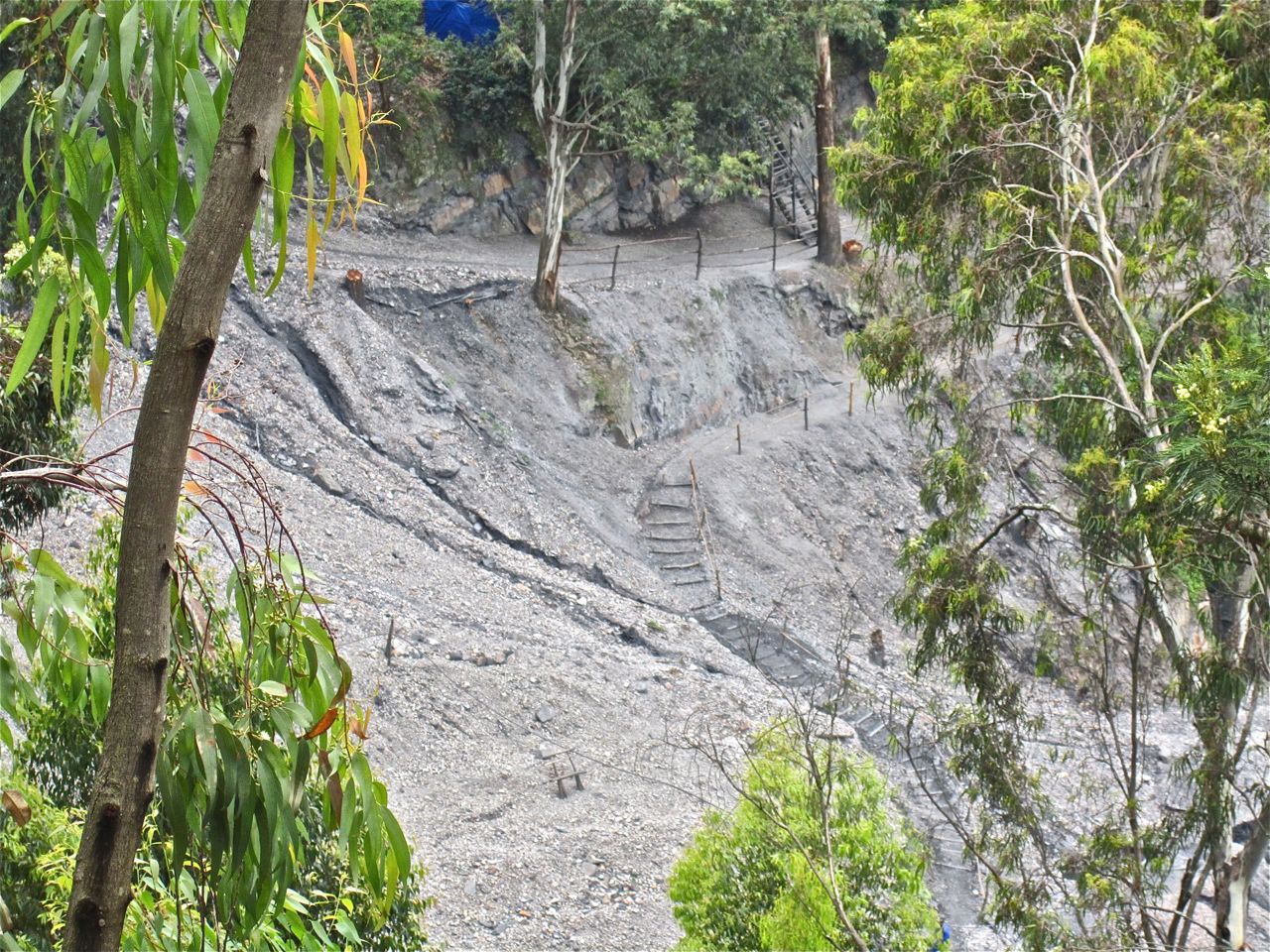
Paths and steps descending the hillside of the mine. About 700 people work there removing tungsten, a chemical element used in incandescent light bulb filaments, x-ray tubes, and superalloys.
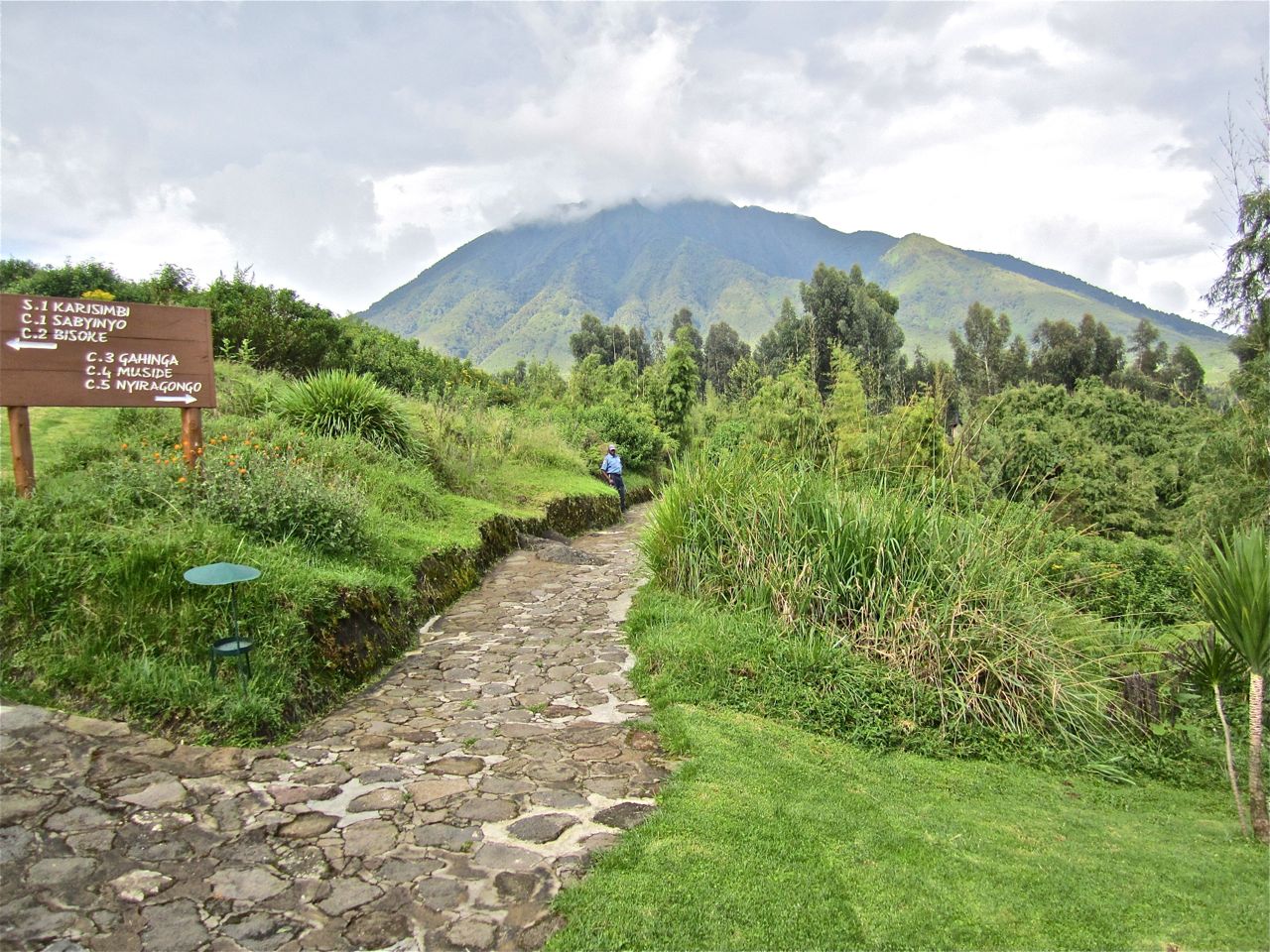
The Lodge is one of two “swishy” (as Bradt’s Travel Guide puts it) places to stay in the vicinity of the Parc National des Volcans and the mountain gorillas. The other one — the Virunga Safari Lodge — we toured last month. Both cost around $500 to $600 per night per person.
Paths to the five cottages, with the volcano in the background.
Sabyinyo has the advantage of being only 10 minutes drive from the entrance to the park headquarters. Like Virunga, it offers accommodation in individual cottages.
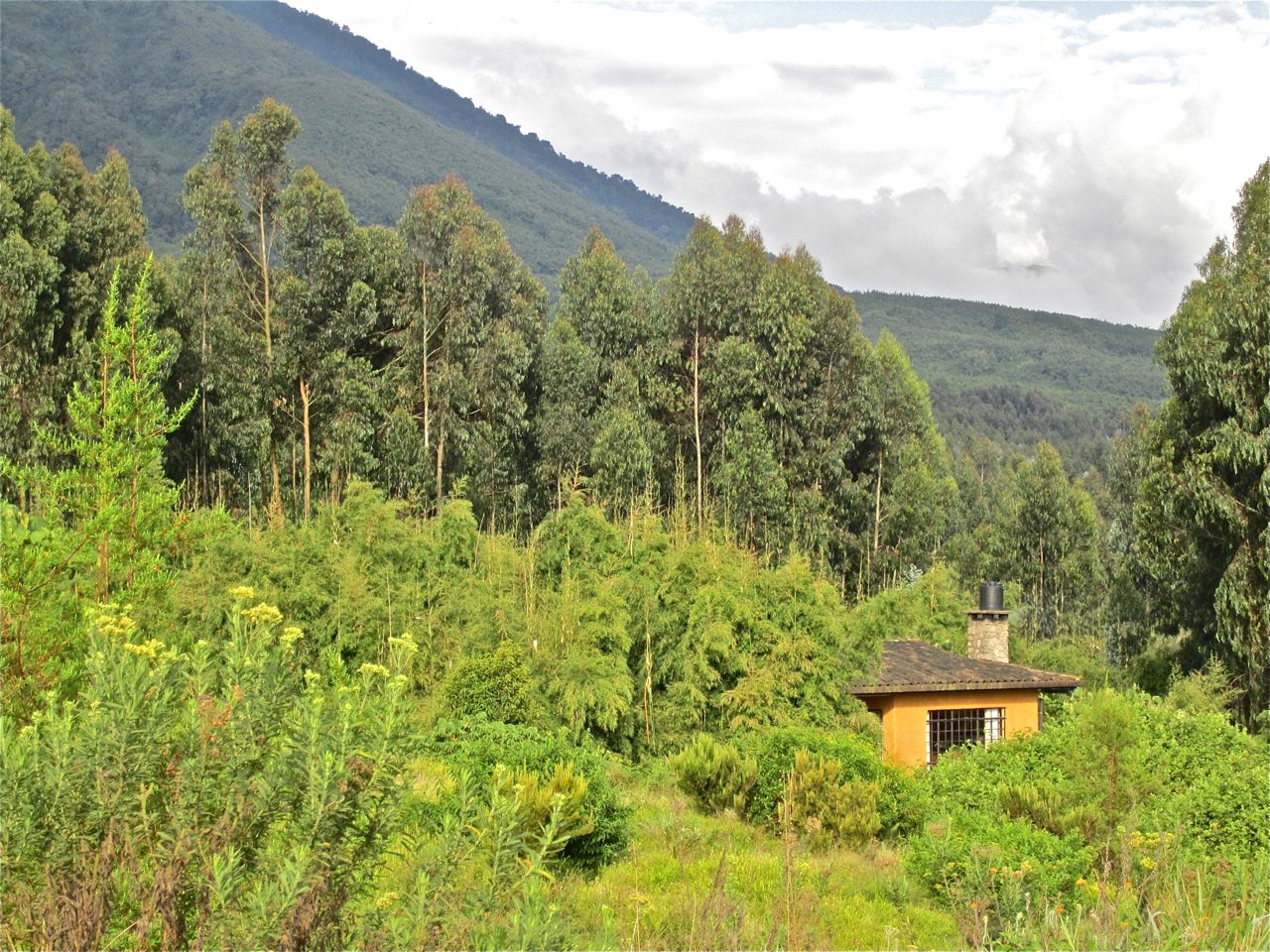
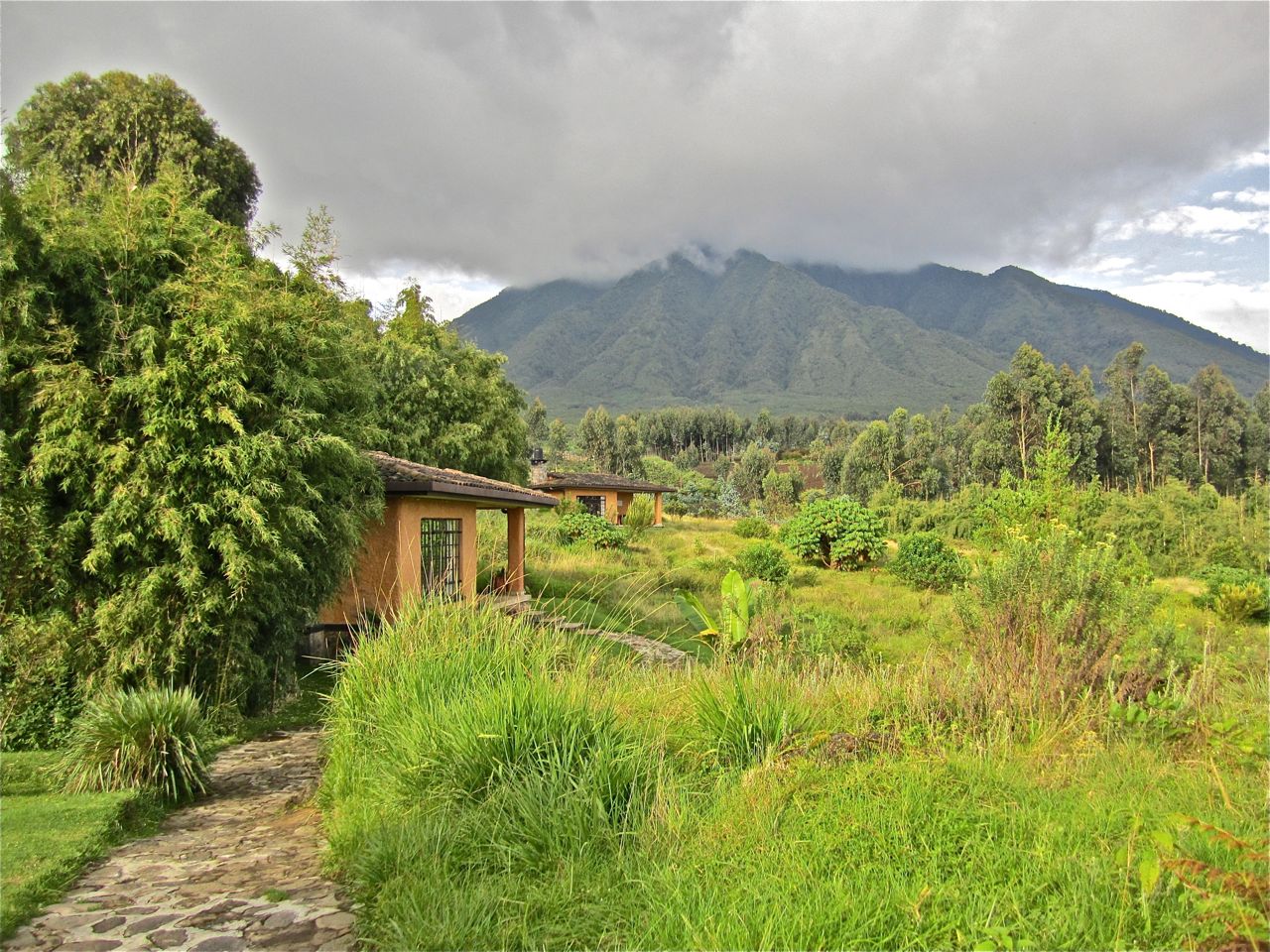
A Sabyinyo cottage. The lodge levies a $58 per person per night community fee, and the community also receives a 17% cut of the lodge’s profits.Two other cabins.
Also like Virunga Safari Lodge, the landscaping is kept simple so as not to compete with the gorgeous views.
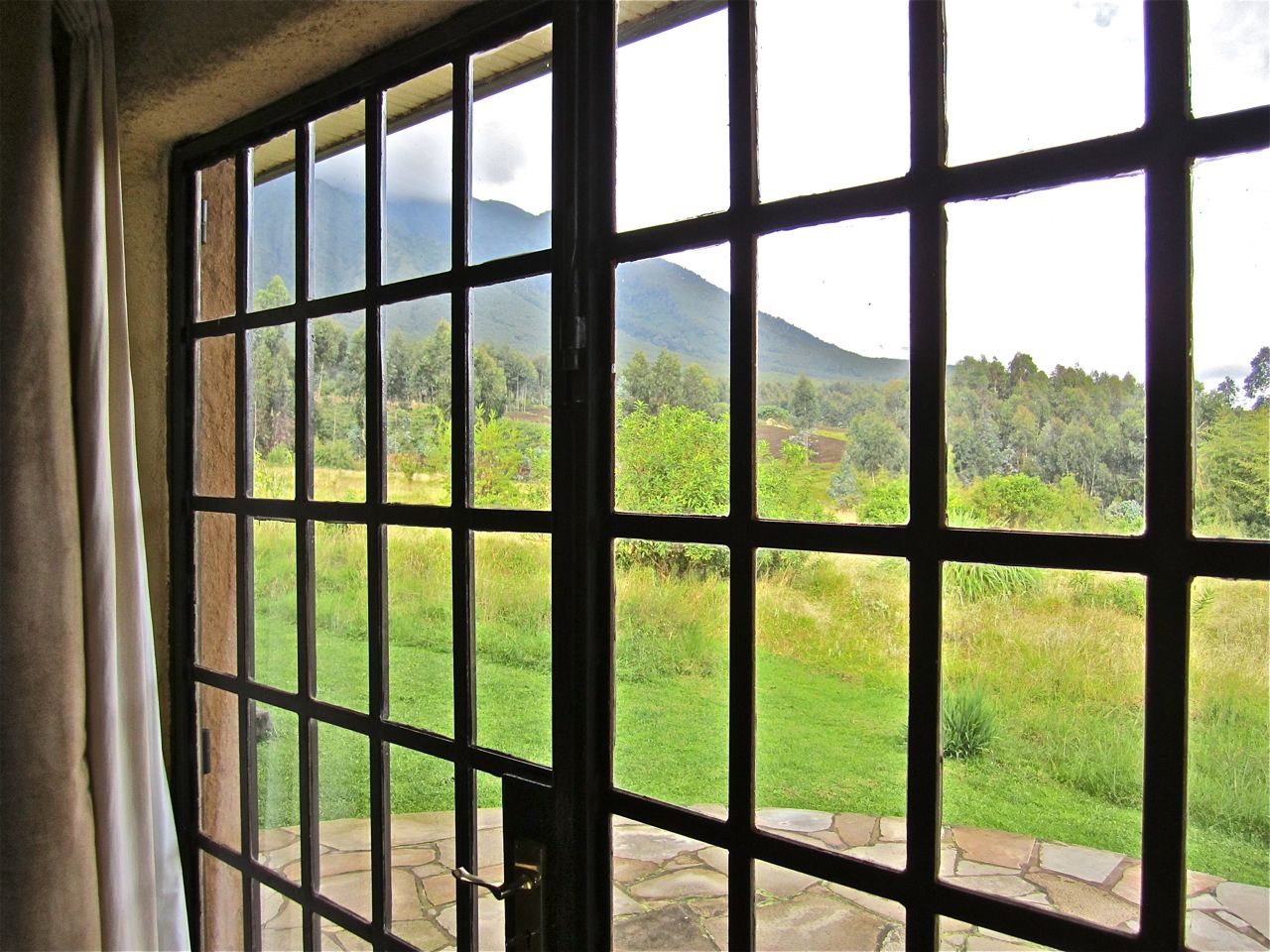
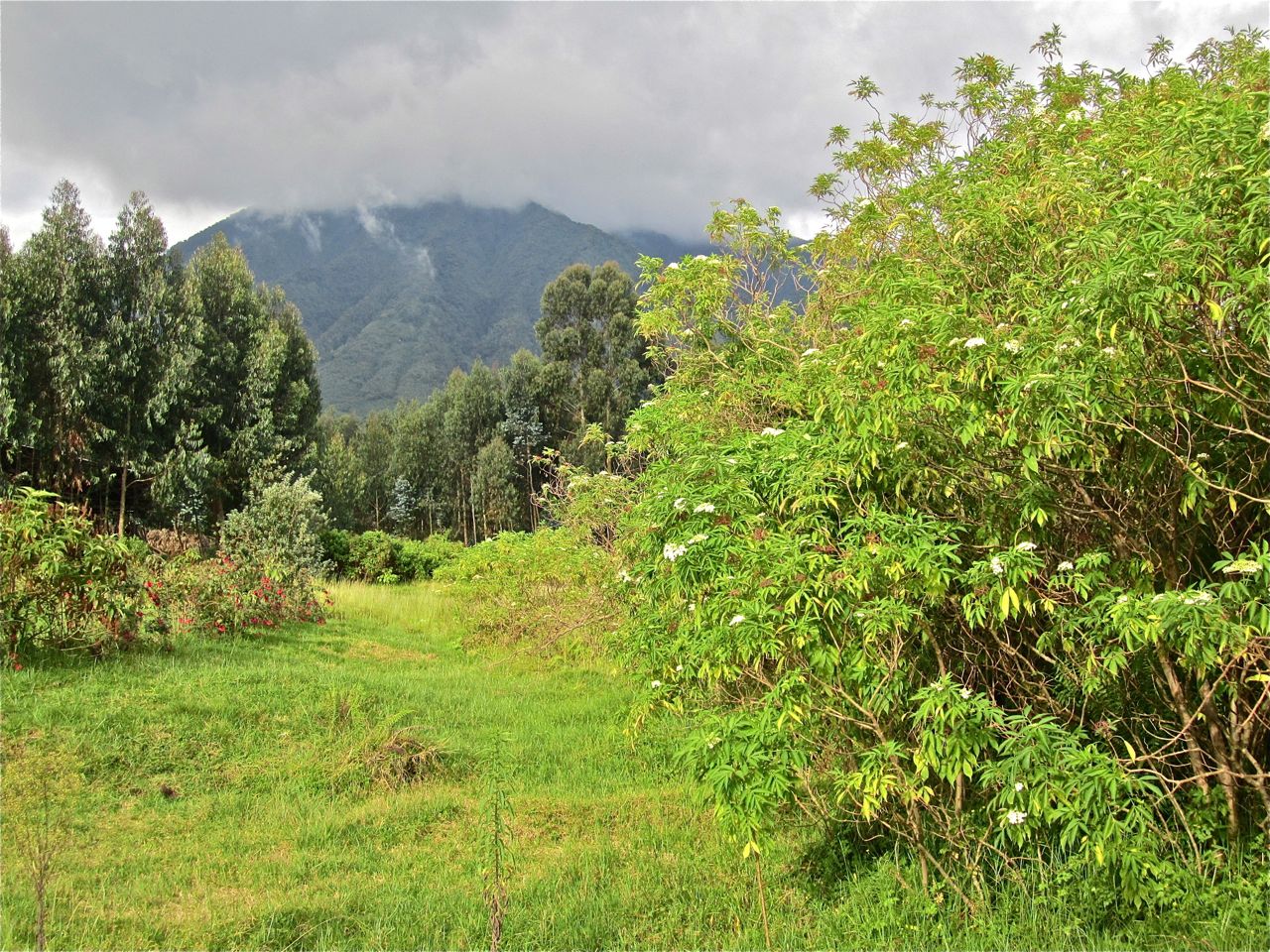
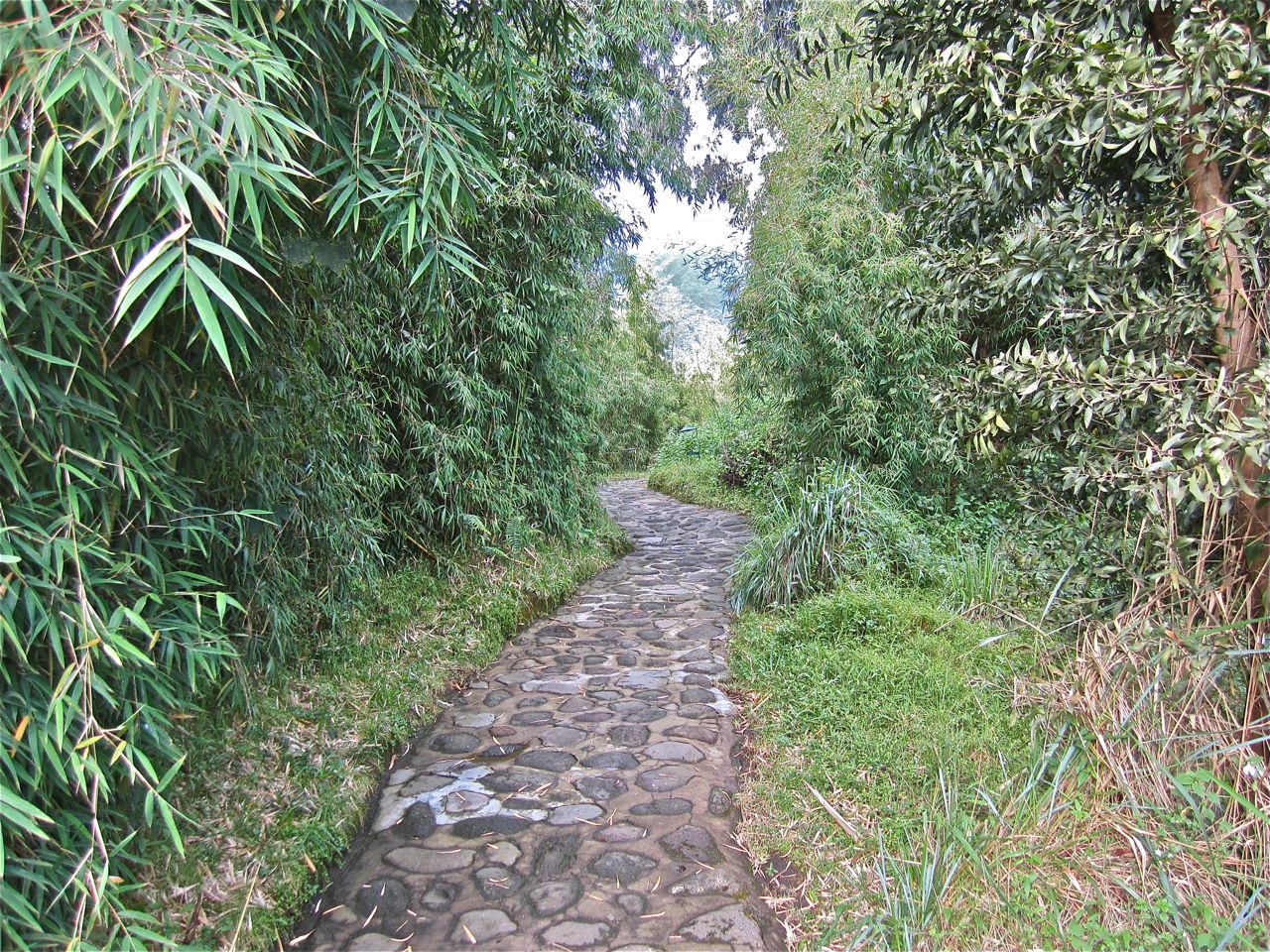
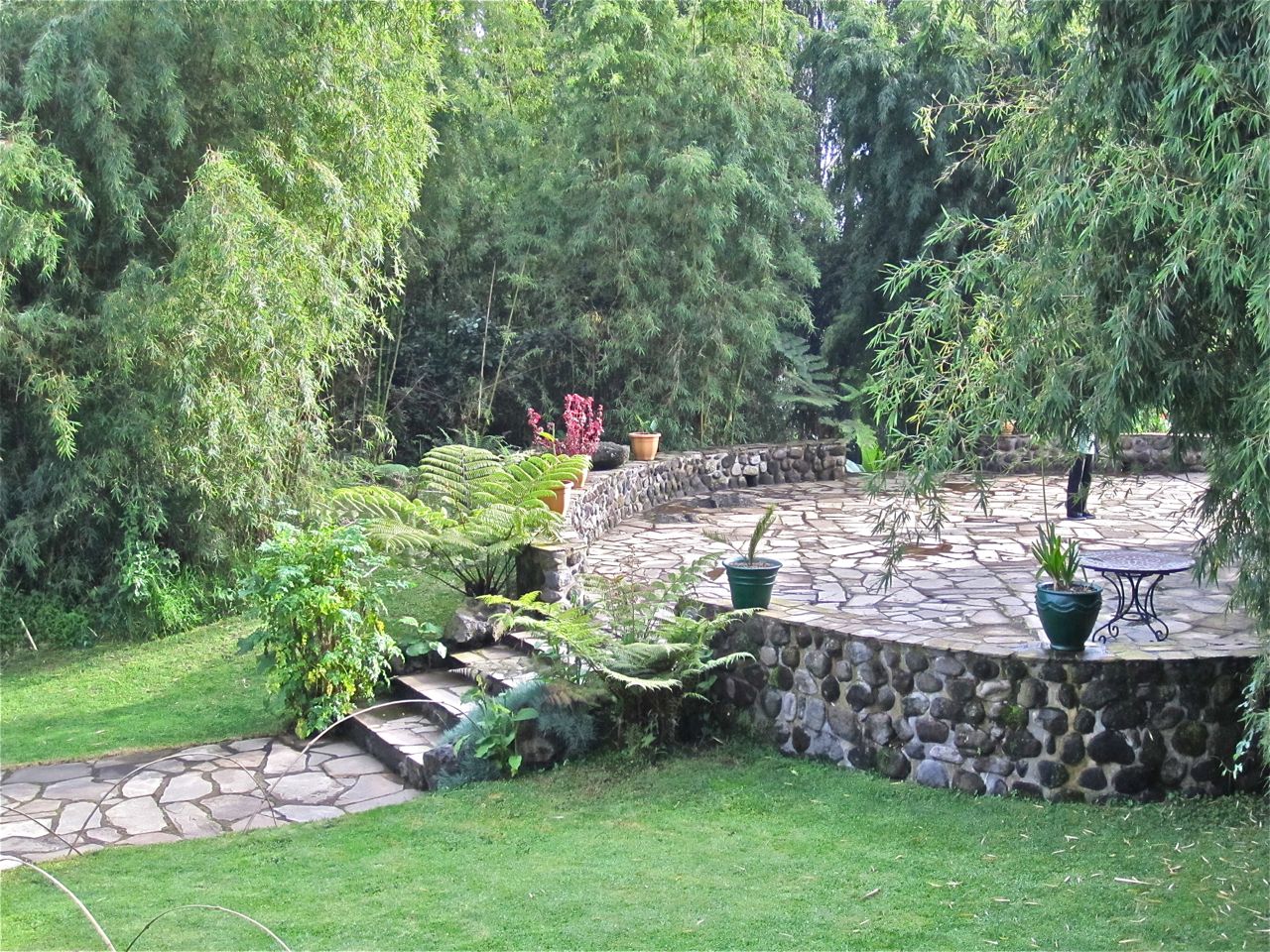
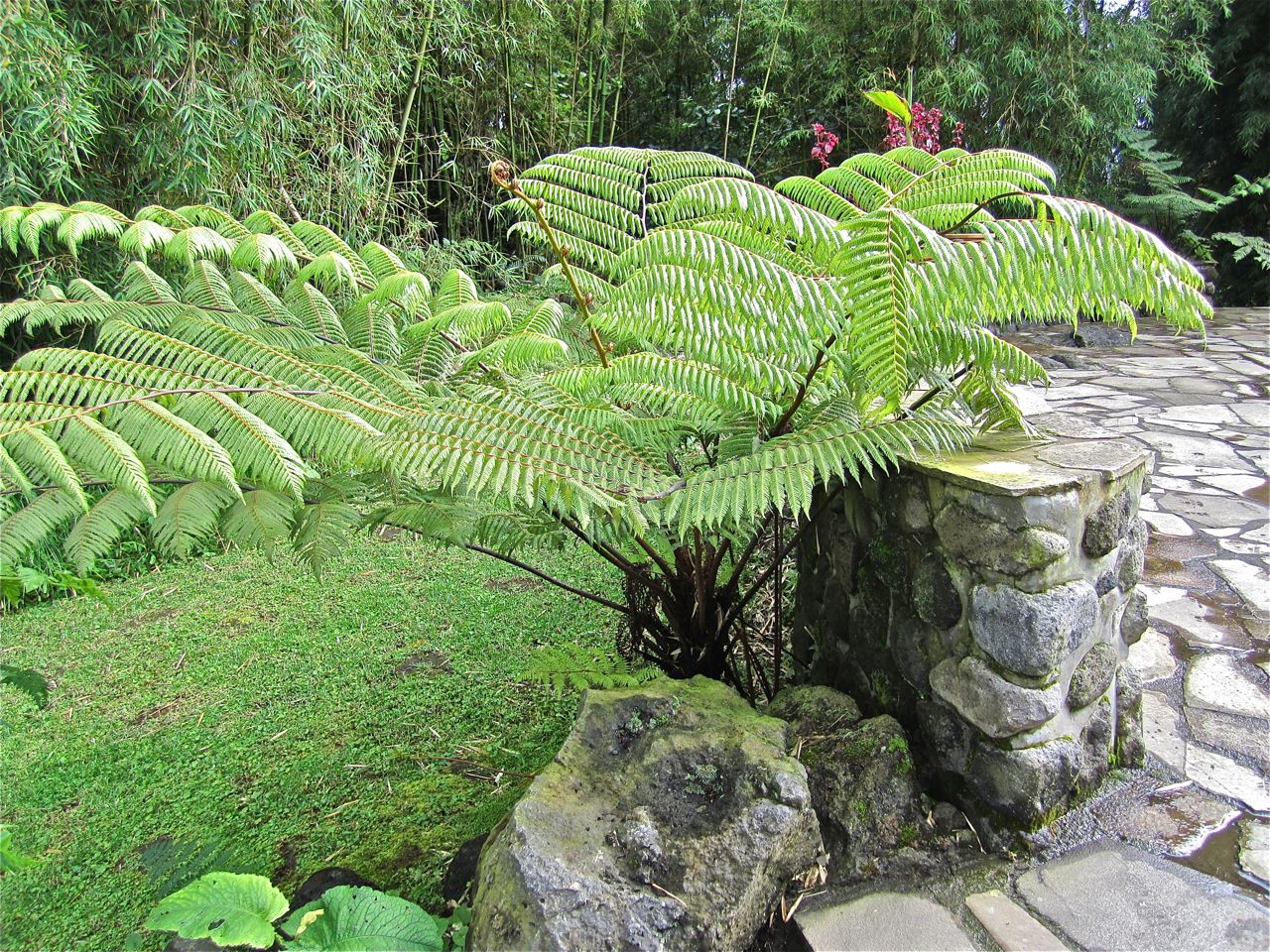
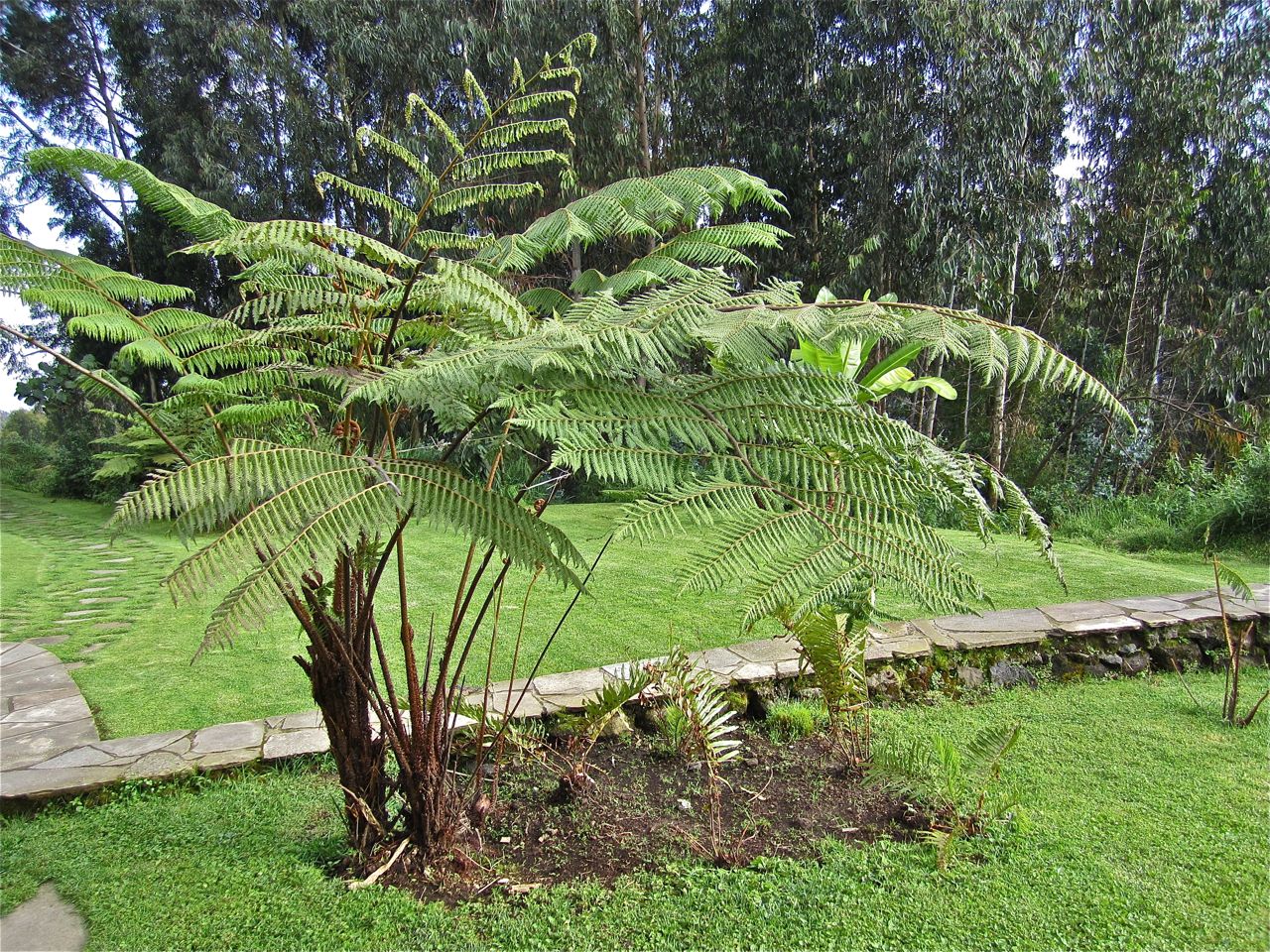
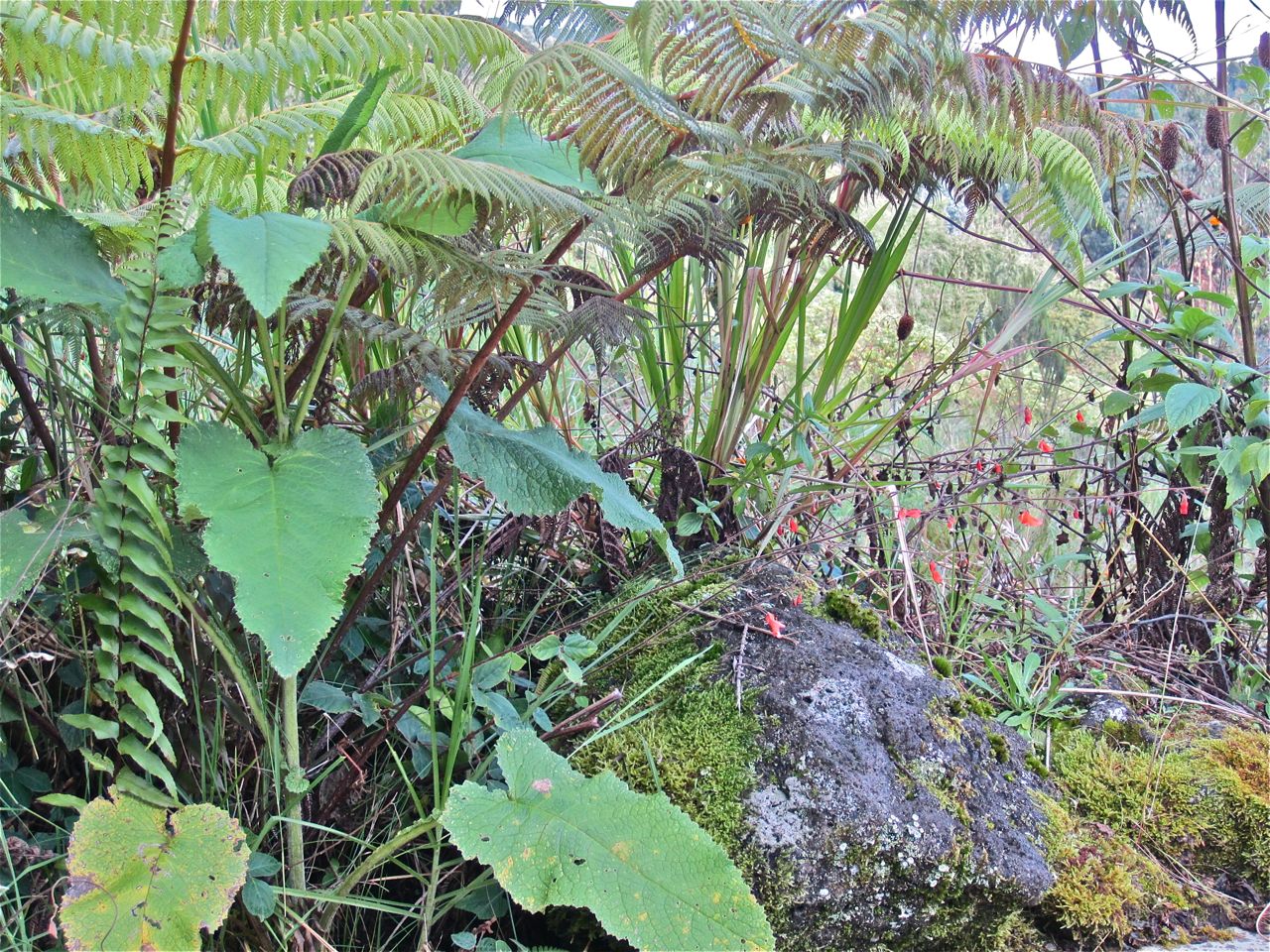
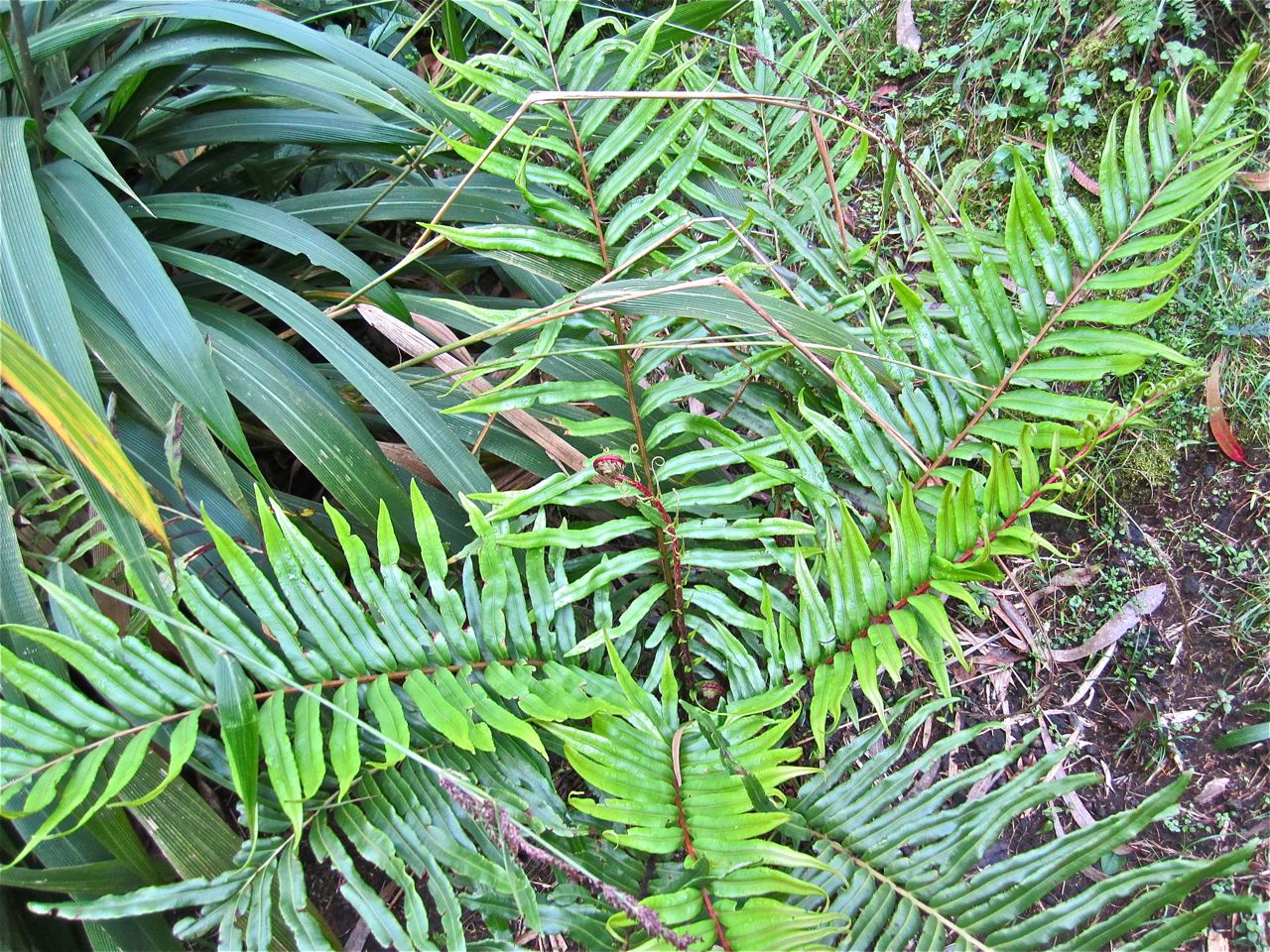
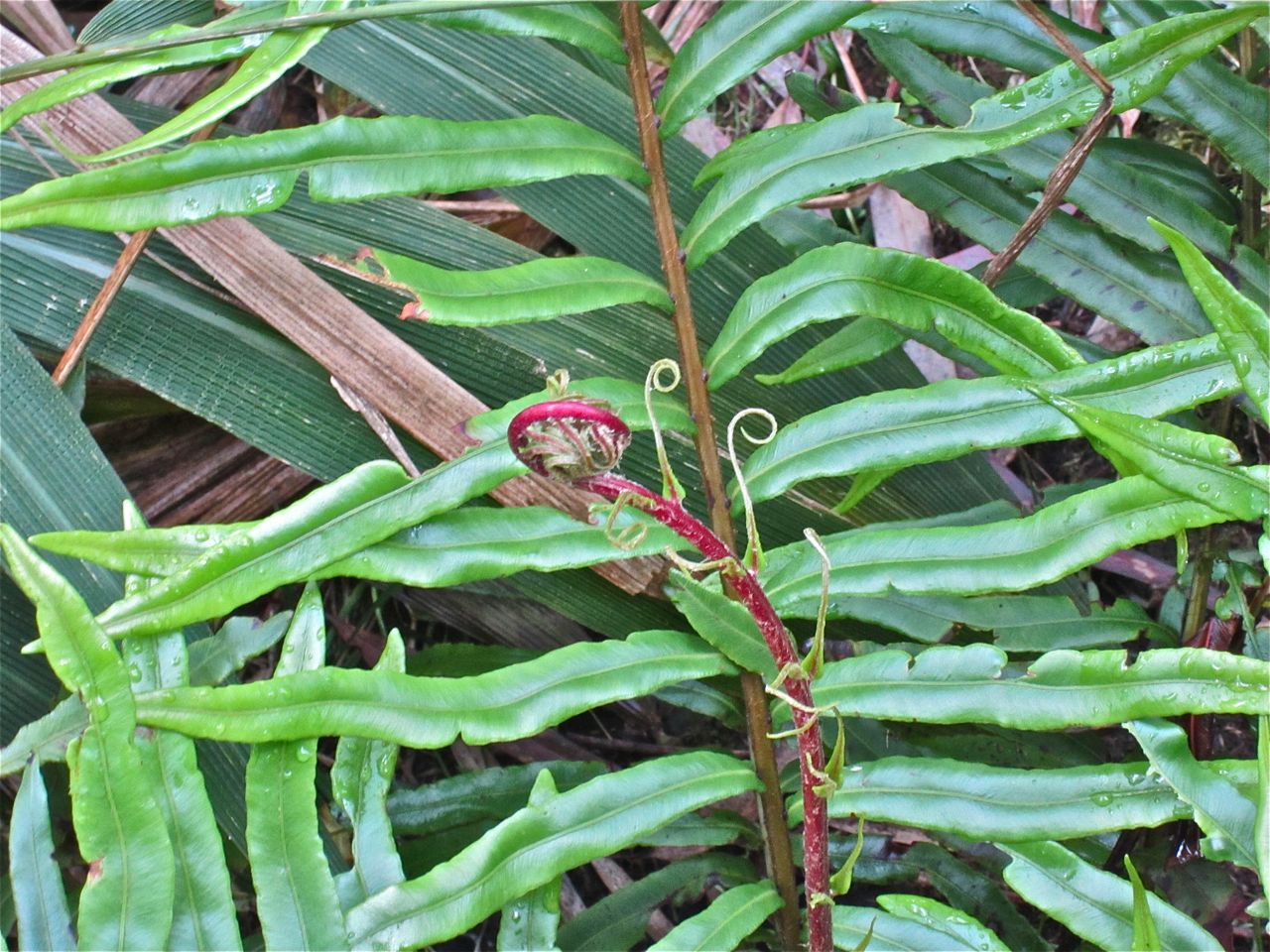
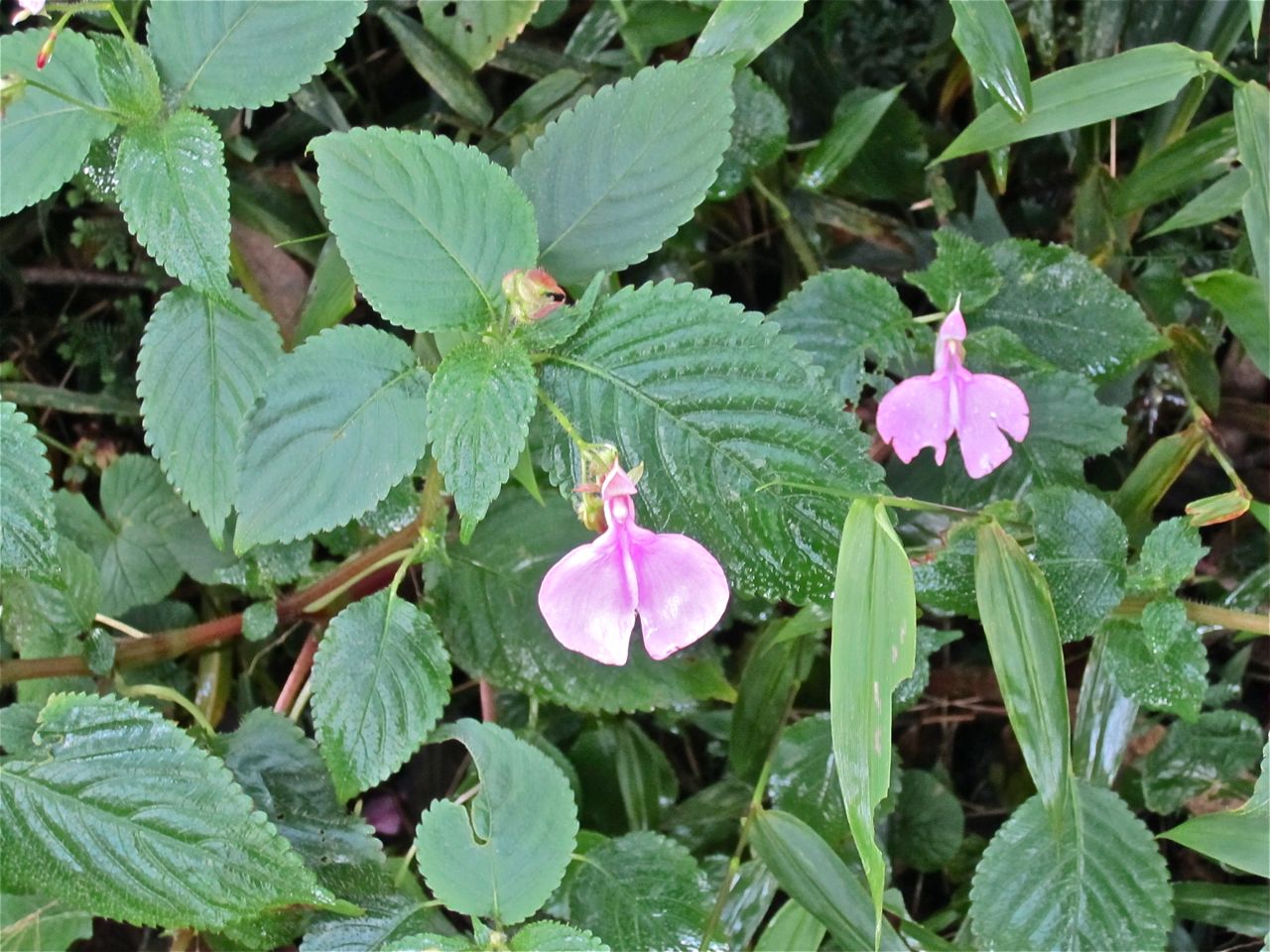
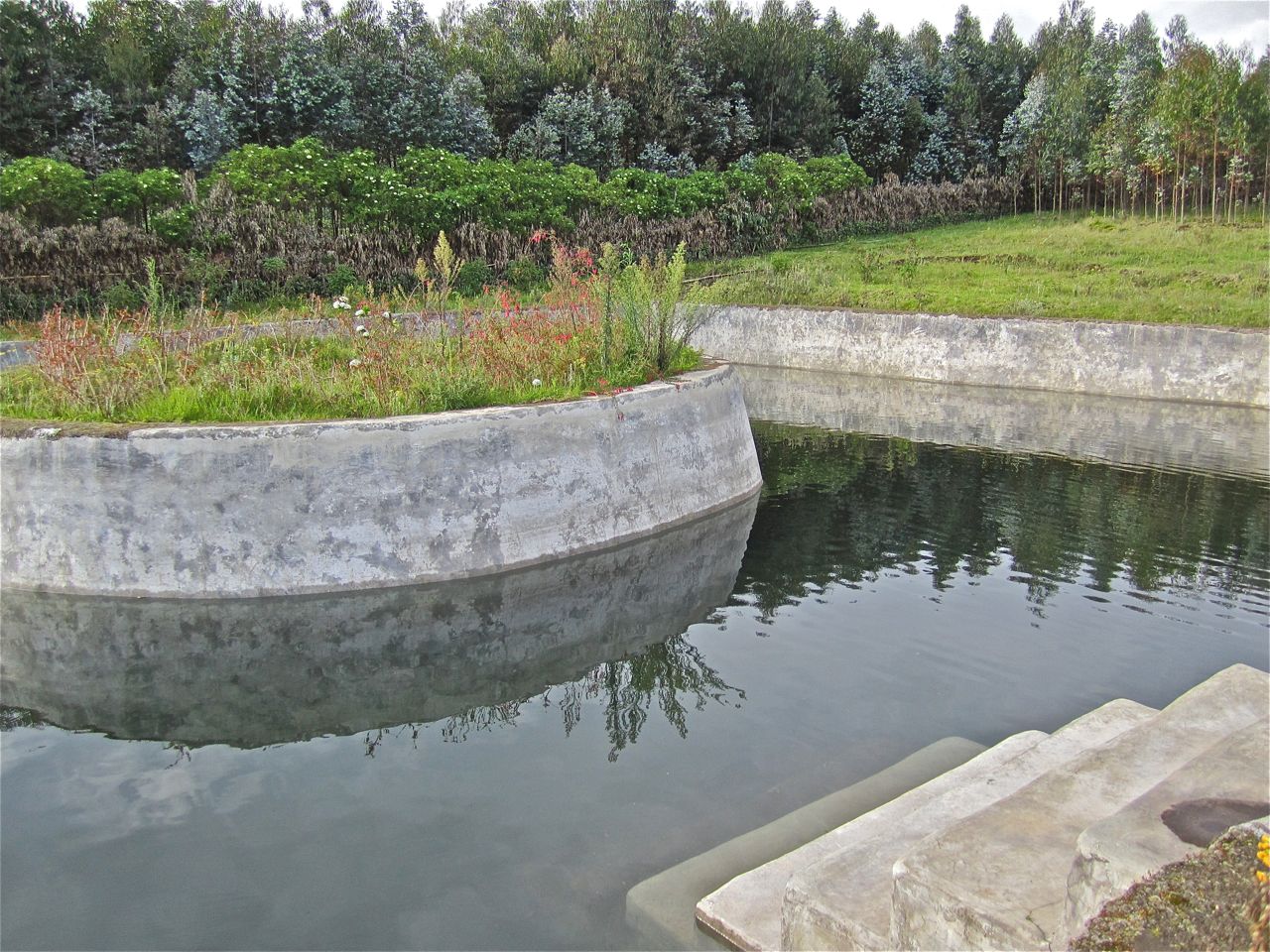
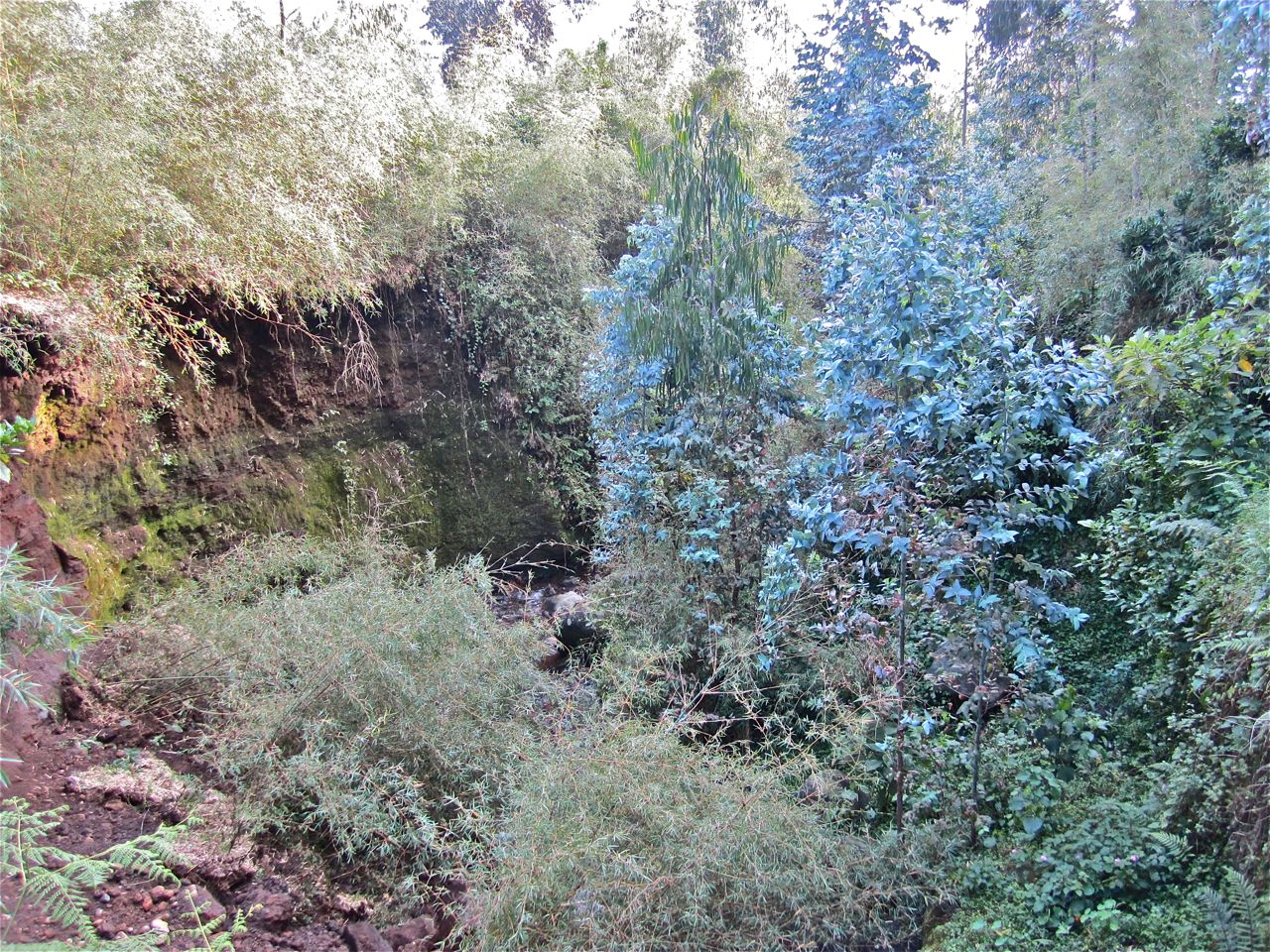
The view from a cottage window.One of the views at Sabyinyo, somewhat obscured by clouds.A path through the bamboo.Patio at the entrance to the main building.A large fern by the patio steps.Another very large fern near the main building.Ferns and other wild plants along the path.A smaller wild fernFern detail.Impatiens native to Rwanda.The water retention pool.Small stream gorge filled with bamboo and eucalyptus.
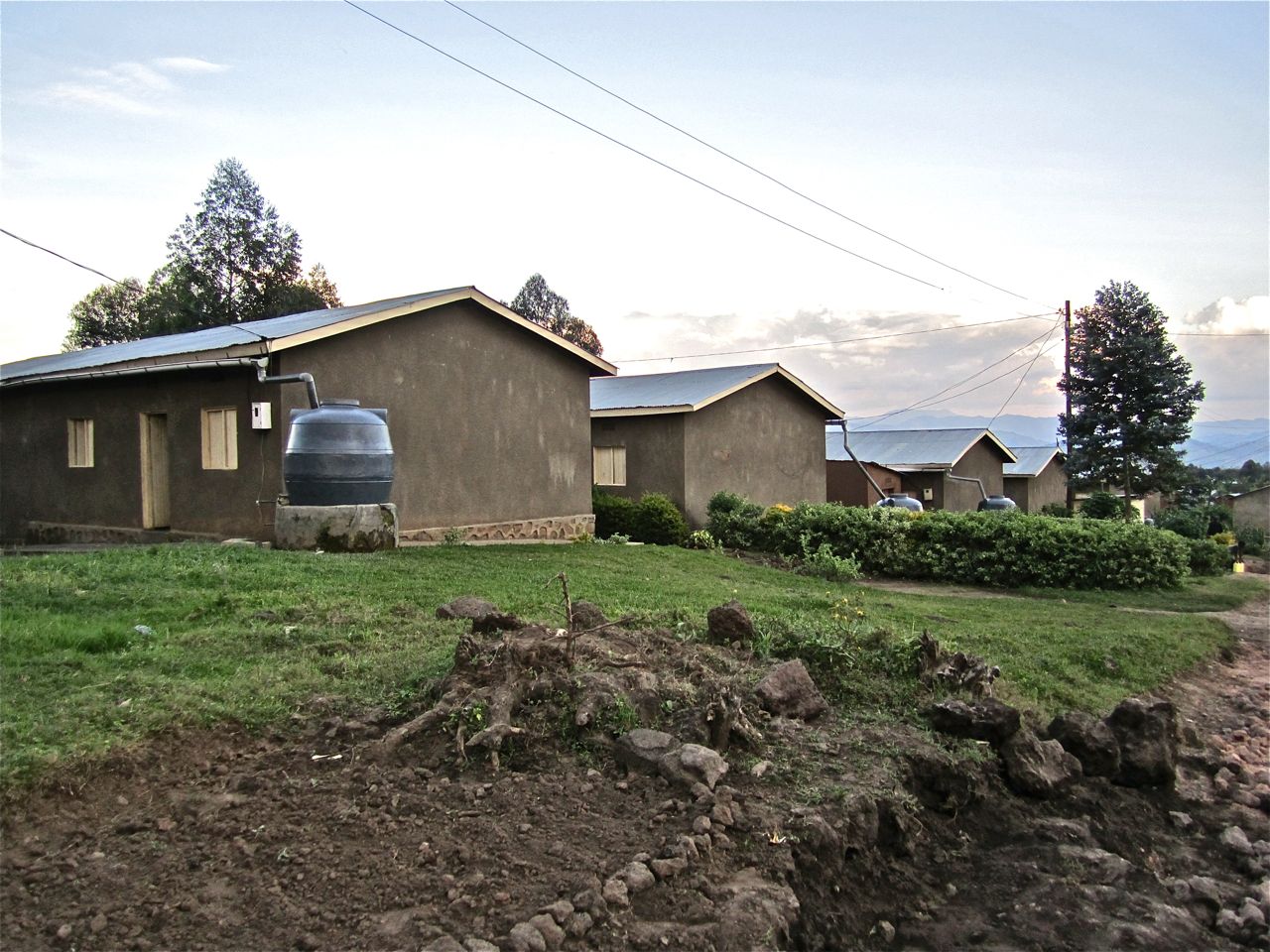
We ended our day in the village of Susa, largely made up of 96 homes built with the assistance of the Rwandan government. The people who live there include Genocide survivors, Batwa (pygmys), and Rwandans formerly living in exile in Tanzania.
Village homes with tanks that capture rainwater runoff from the roofs.
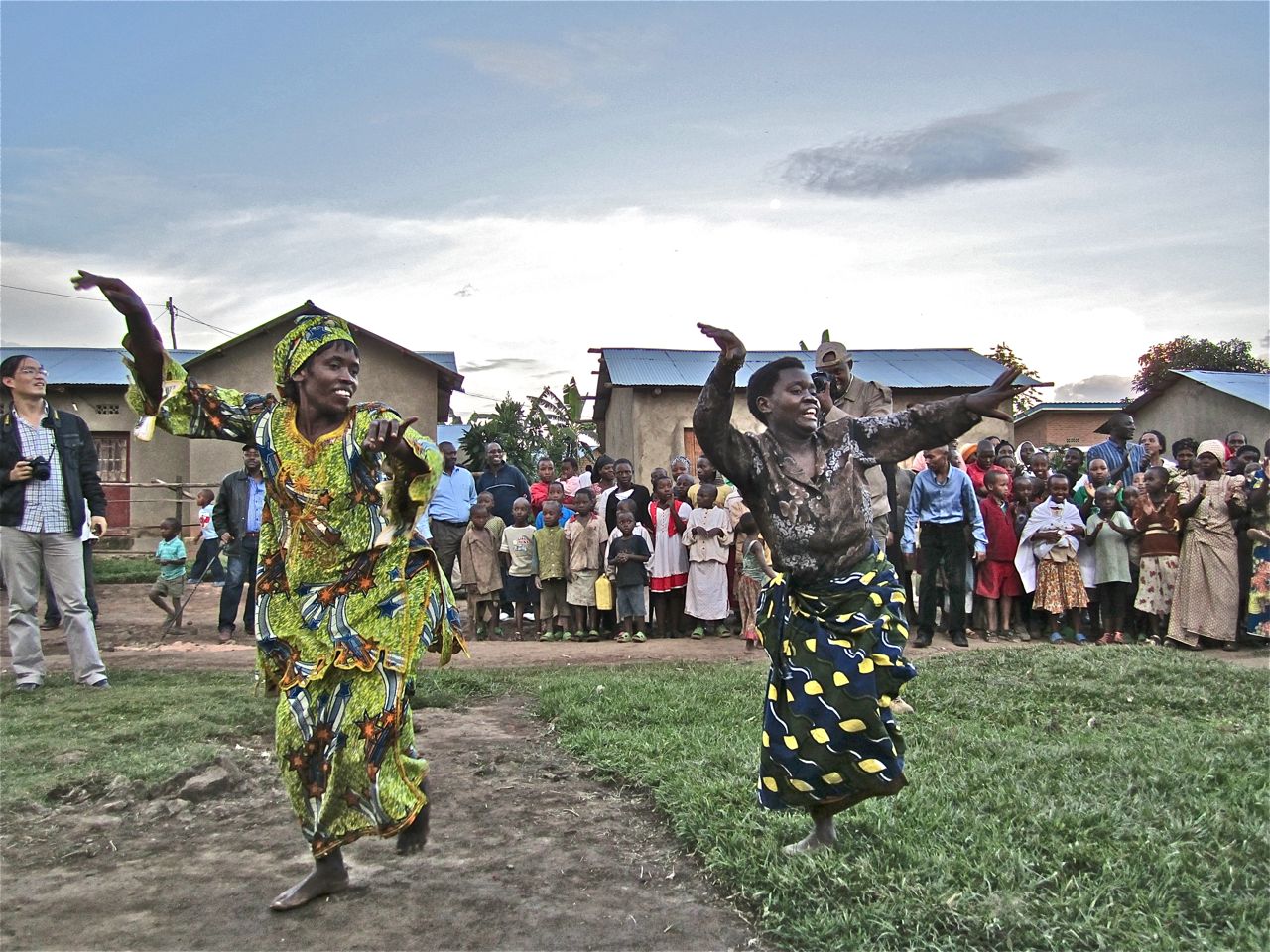
As the light began to fade, we were greeted by dancers.















 enclos*ure