The Sunday porch: Strawberry Hill

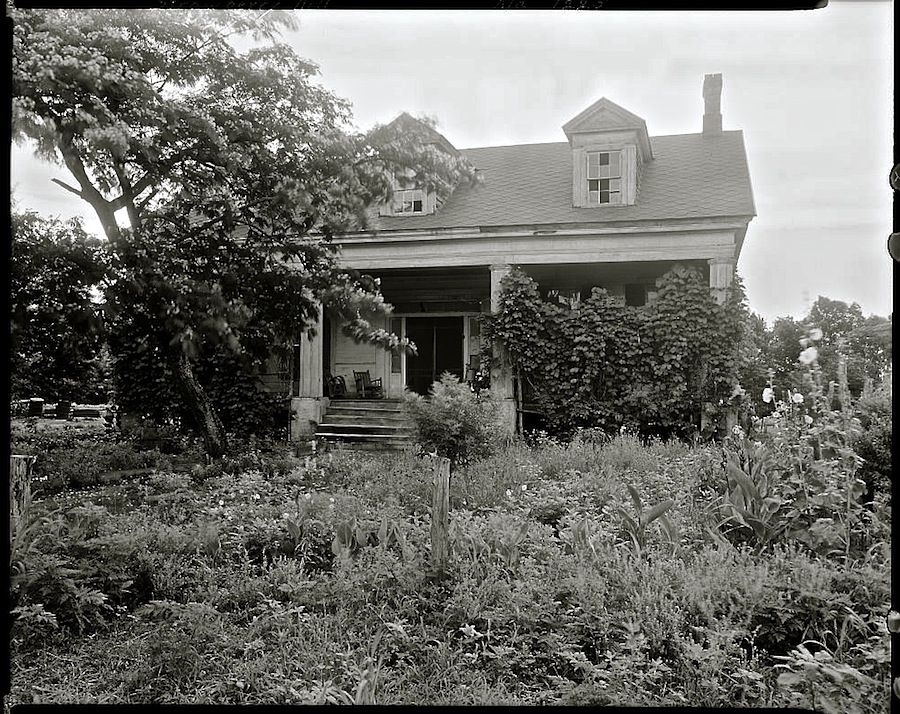
Vintage Photo of Strawberry Hill, Forkland vic., Greene County, Alabama, via Library of Congress Prints and Photographs Division Strawberry Hill, Greene County, Alabama, in 1939.  Photo by Frances Benjamin Johnston, via the Library of Congress Prints and Photographs Division. (Click on the image for a larger view.)

I’ve been looking at and bookmarking a lot of old photographs of beautiful porches lately, so today, I’m starting a Sunday series for these pictures.

The porch, particularly the front porch, connects — with a pause — the private interior of the house with the communal landscape beyond it.   Andrew Jackson Downing wrote:

A porch strengthens or conveys expression of purpose, because, instead of leaving the entrance door bare, as in manufactories and buildings of inferior description, it serves both as a note of preparation, and an effectual shelter and protection to the entrance. . . .

The unclouded splendor and fierce heat of our summer sun, render this general appendage a source of real comfort and enjoyment; and the long veranda round many of our country residences stands instead of the paved terraces of the English mansions as the place for promenade; while during the warmer portions of the season, half of the days or evenings are there passed in the enjoyment of cool breezes, secure under the low roofs supported by the open colonnade, from the solar rays, or the dews of night.

In his pattern books of the 1840s and 50s, Downing popularized the front porch for the American home as a link to nature.

I see it as a box seat for the theater of the garden or of the street.  Although the one above seems to have half drawn its curtains against the buzzing and chirping action of the cottage garden below.

The porch — and 1821 house attached — still exist, although without the vines and flowers.  The surrounding land is now a cattle ranch. In fact, it is currently for sale for about $3.8 million.
Vintage landscape: small side porch

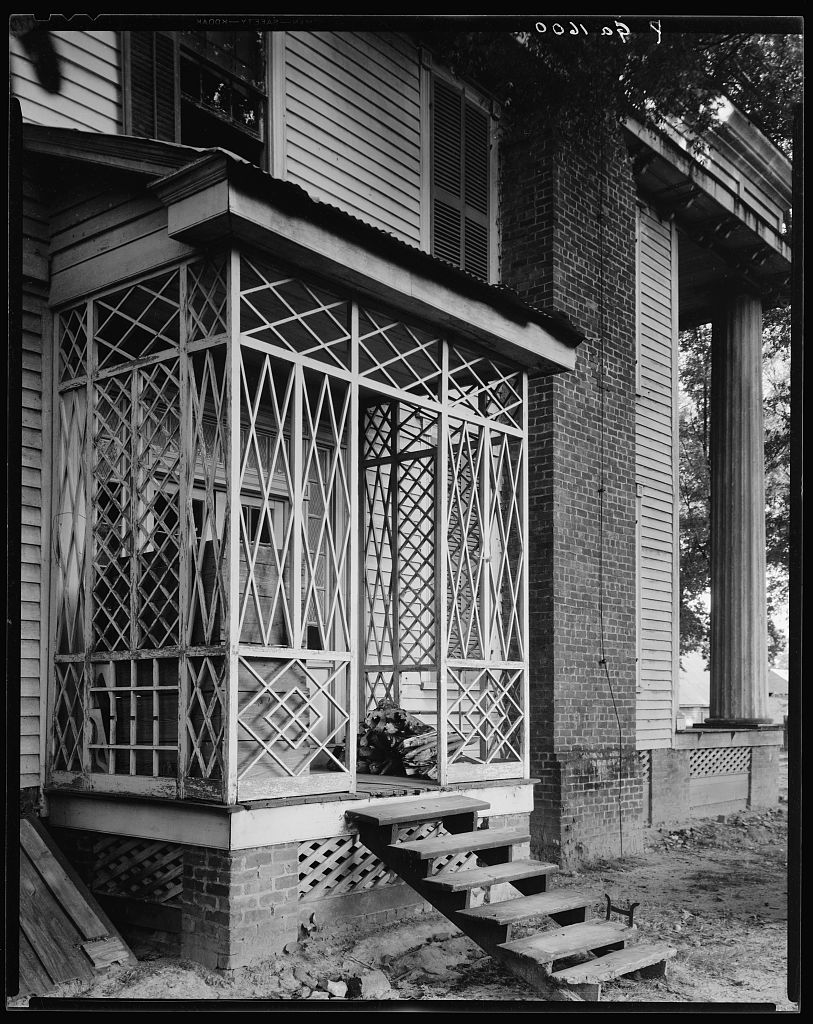
Latticework on side porch in Georgia, 1939 or 1944, by F.B. Johnston, Library of Congress/enclos*ure

Hill Plantation, Wilkes County, Georgia, 1939 or 1944, by Frances Benjamin Johnston, via Library of Congress Prints and Photographs Division.

I love the latticework on this old side porch.

A dachterrasse and Friday miscellany

I recently discovered the beautiful German blog Gartenblick  (Garden View) by Dusseldorf photographer Sibylle Pietrek.

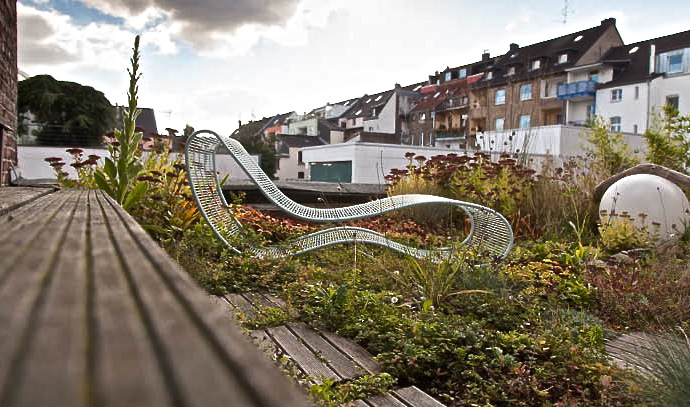
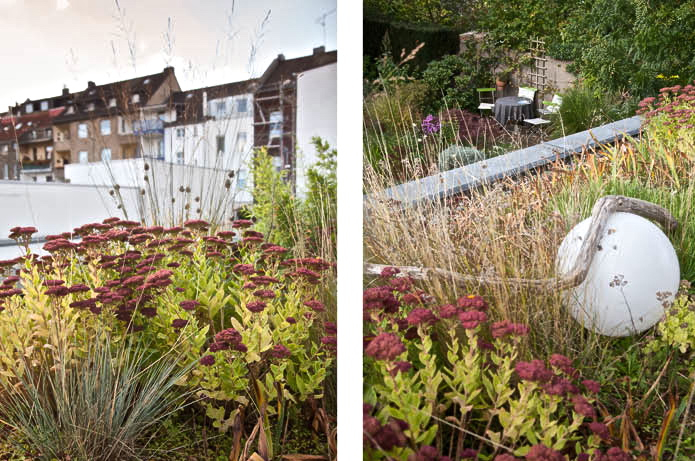
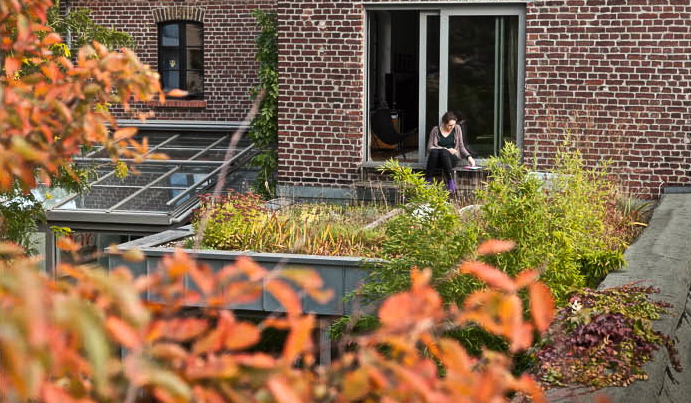
I particularly liked this post about her small, but really lovely, roof terrace (dachterrace).  I was impressed that the designer  — Karim Rashid — could achieve a real sense of an edge of a meadow (with a lounge chair) in so few square feet.

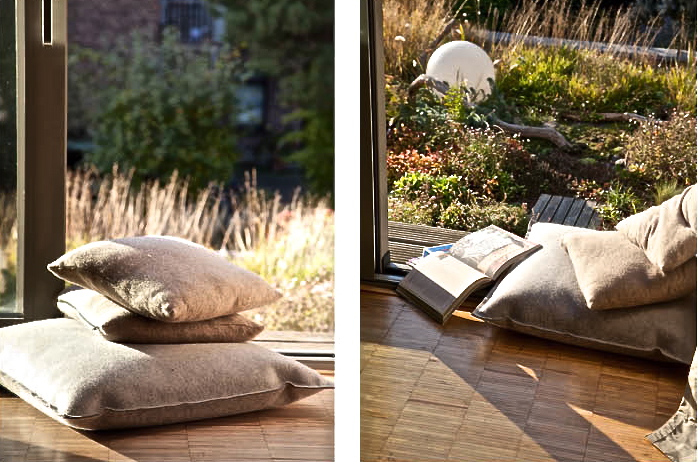
In her post, Sibylle writes that she uses the space for “early evening aperitif, photo shoots, painting, reading, and painting nails.” And to catch the long autumn afternoon sun.  What a nice refuge.

I’m starting to  think about the possibilities for the flat porch roof of our house back in D.C. . . .

All the above photos: ©Sibylle Pietrek, used here with permission.  Please check her blog before pinning or sharing.

Miscellany

Please check out Garden Rant’s review of October annuals at the Smithsonian Institution’s gardens.  Again, why are the S.I. gardens so wonderful and its neighbor, the White House, has this?

Have you seen the online Landscape Architect’s Guide to Washington, D.C., featuring write-ups by 20 L.A.s on 75 historic and contemporary landscapes?  I wish it were somewhat more opinionated (see above), but it’s useful for a visit to the Capital.

The Global Garden,” the weekly series of the Los Angeles Times’s home and garden blog, explores “multicultural L.A. through the lens of its landscapes.”  Now it has created a library of its posts, here. In the last year, the series has looked at sugar cane, shiso, loquat, purslane, moringa, sweet lemon, ice cream bean, and more. It will continue to update the archive with new material.

I really like this garden by the firm Covachita in San Pedro, Mexico (I believe it’s their studio).  It effectively combines edgy modern urban with antique farm.

The “Urban Jungle” columns by Patterson Clark in The Washington Post are always so interesting, especially this recent one about milkweed (Asclepias syriaca — the light pink one).  If yours left pods and white fluff all over your garden in September, consider how — during World War II — you (or your enterprising child) could have been paid about 15¢ a bushel for them.  The Japanese occupation of Java had cut off supplies of kapok — a fiber (then) needed to fill life vests.

ADDENDUM: I clicked on ‘publish’ and then found one more. I have to admit I love this sort of thing.

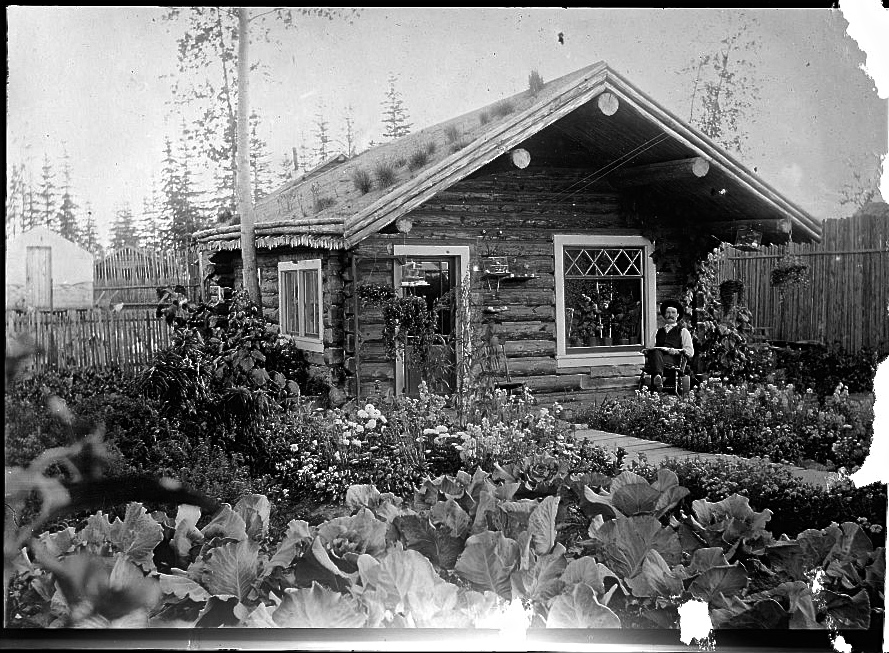
Vintage landscape: flowers and cabbages

“A cottage & garden, Alaska,” ca. 1909-1920. By National Photo Company, via Library of Congress Prints and Photographs Division.

A similar photo of this cottage was labeled “a sourdough’s home.” The word ‘sourdough’ was slang in Alaska for an oldtimer, probably from the Klondike gold rush.  You can click on the image to enlarge it.

                        O cabbage gardens
summer’s elegy
                        sunset survived
Susan Howe, from “Cabbage Gardens

Vintage landscape: Maplewood cottages

“Cottages at Maplewood [Waseca, Minnesota],” ca. 1880-1899. By Detroit Publishing Co., via Library of Congress Prints and Photographs Division.

Maplewood Park on Clear Lake was a national vacation attraction at the end of the nineteenth century. Click the image to enlarge it.

For another sort of summer cabin living, see today’s New York Times, here.