The Sunday porch: Washington, D.C.

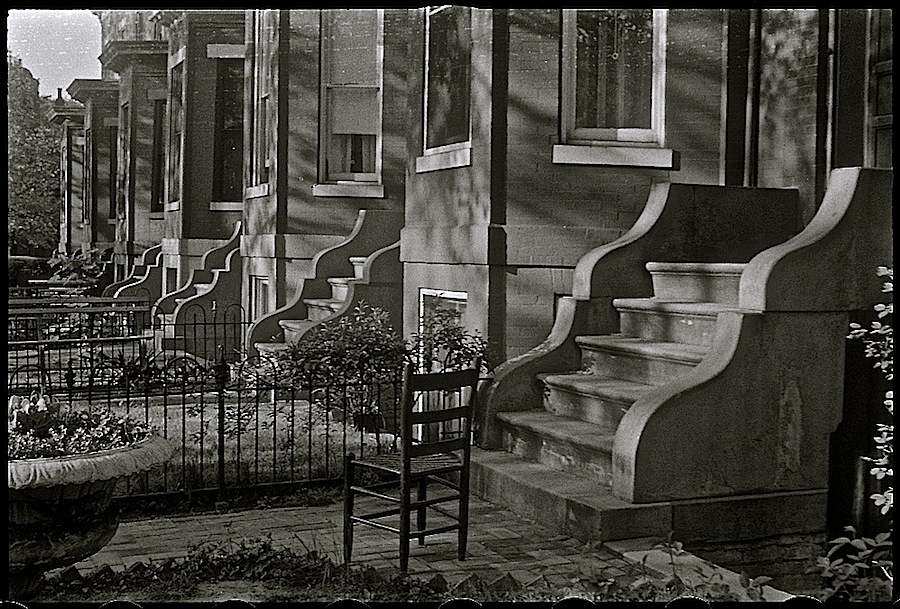
Wash. D.C., rowhouses, via Library of CongressSeven Washington, D.C., rowhouses in 1939, by David Myers, via Library of Congress Prints and Photographs Division.

The neighborhood is not given, although it looks like Capitol Hill to me.

In his book, The American Porch, Michael Dolan attempts to trace the European, African, and Asian origins of our many kinds of porches.  The front stoop — several steps and a small landing — came from the Dutch.

Down the coast [from New England], in Nieuw Amsterdam, a different entry was proliferating.  Made of stone or brick, the stoep — Dutch for “step” — was a roofless link between doorway and street.  Though municipal tradition required a building’s occupants to maintain the stoep, the Dutch deemed it public territory.  However, in Nieuw Amsterdam, the stoop acquired a private connotation:  “. . . before each door there was an elevation, to which you could ascend by some steps from the street,” an observer wrote.  “It resembled a small balcony, and had some benches on both sides on which the people sat in the evening, in order to enjoy the fresh air, and have the pleasure of viewing those who passed it.”

The stoops above lack benches, but the owner of the first one has brought down a chair, and two doors down there is a park bench in the tiny garden.  You can see a similar arrangement here.

I’m taking a break from blogging for a couple more weeks (except for “The Sunday porch”), but I’ll be back for GB Bloom Day in October.

The Sunday porch: Gee’s Bend

Gee's Bend, Alabama, Library of Congress

This porch and its wonderful chairs were in Gees Bend [Boykin], Alabama,  in 1939. The photo was taken by Marion Post Wolcott,* and she captioned it:

Jorena Pettway and her daughter making [a] chair cover out of bleached flour sacks and flower decorations from paper. She also made the chairs and practically all the furniture in the house.

Gee’s Bend is an African-American community located in a large bend of the Alabama River. It has become famous in the last decade for its remarkable quilts.

In 1816, Joseph Gee brought slaves to the area and started a cotton plantation, which was sold in 1845 to the Pettway family. After the Civil War, the farm’s freed slaves remained on the land as sharecroppers and many took the last name of Pettway.

In the winter of 1932-33, the community’s particular isolation — with a small ferry to the east and a bad road to the west — and its dire poverty came to the attention of the Red Cross, which sent a boatload of flour and meal.   It began receiving Resettlement Agency assistance in 1935, and the Agency purchased the plantation in 1937. By 1939, when the Farm Security Administration sent Wolcott to take photos, there had been a number of improvements, such as new homes (one is pictured above).

In 1962, when residents began trying to register to vote, the local government eliminated the ferry service, which connected Gee’s Bend to the county seat of Camden. Without it, people of the community had to drive more than an hour to reach the town. The ferry service remained closed until 2006.

In 2002, an exhibition of quilts made by the women of Gee’s Bend opened at the Museum of Fine Arts in Houston and then traveled to the Whitney Museum in New York City. Another show in Houston and at the Smithsonian Institution followed in 2006. The New York Times art critic, Michael Kimmelman, called the quilts on display “some of the most miraculous works of modern art America has produced.”

In August of the same year, the United States Postal Service released ten stamps picturing Gee’s Bend quilts sewn between 1940 and 2001.

The U.S. Embassy in Rwanda has three Gee’s Bend quilts by Mary Lee Bendolph and Loretta Bennett in its permanent art collection.


*Via Library of Congress Prints and Photographs Division.

The Sunday porch: Ellen Glasgow house, Richmond

Preserve, within a wild sanctuary, an inaccessible valley of reveries.
— Ellen Glasgow

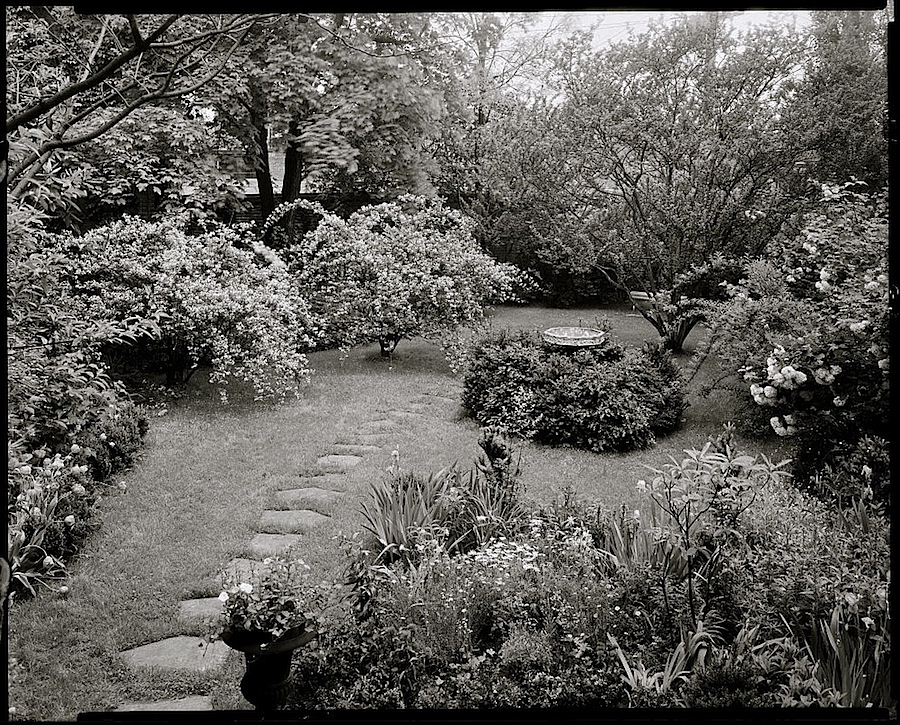
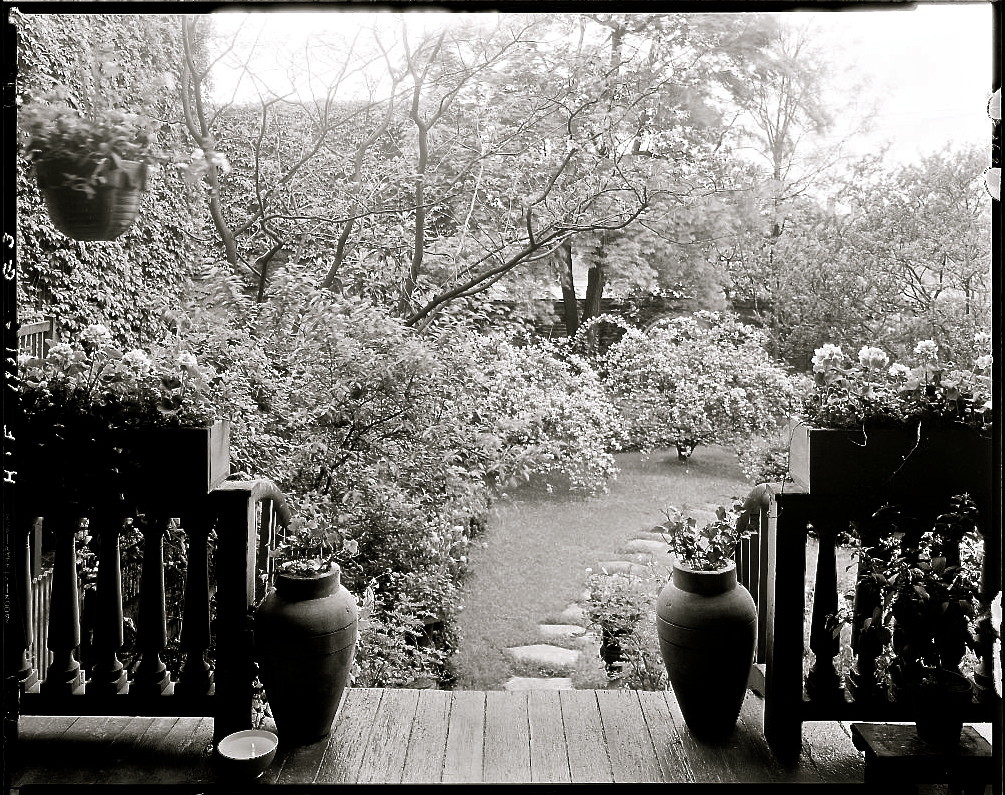
The Sunday porch/enclos*ure: Ellen Glasgow Hse., Richmond, ca. 1930s, F.B. johnston, Library of CongressView from the back porch of the home of novelist Ellen Glasgow, Richmond, Virginia, ca. 1930s, by Frances Benjamin Johnston, via Library of Congress Prints and Photographs Division.  (Click here for a larger view.)

Ellen Glasgow House, 1930s, Richmond, by Frances Benjamin Johnston, Library of Congress

Glasgow published 19 novels and an autobiography — The Woman Within — about life in Virginia. Their realism “helped direct Southern literature away from sentimentality and nostalgia.”

Her books were selling briskly in the 1930s, when these pictures were taken, and she won the Pulitzer Prize in 1942.

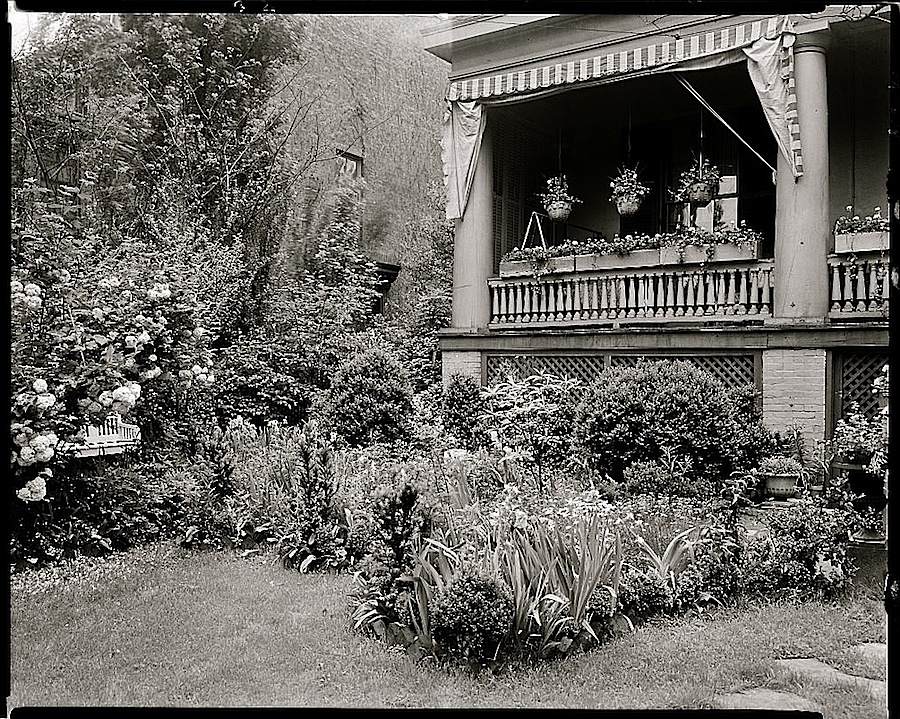
Ellen Glasgow House, 1930s, Richmond, by Frances Benjamin Johnston, Library of CongressHer home was built in 1841, and Glasgow lived there from the time her father bought it in 1887, when she was about 13, until her death in 1945.

Ellen Glasgow House, 1930s, Richmond, by Frances Benjamin Johnston, Library of CongressIt is now owned by the Association for the Preservation of Virginia Antiquities but is not open to the public.

The Sunday porch: Charleston piazzas

Charleston, S.C.Piazzas and garden, Charleston, South Carolina, ca. 1910-20, by Detroit Publishing Co., Library of Congress Prints and Photographs Division.

The double side porches of Charleston are traditionally called ‘piazzas’ (pee-AH-ahs), a term that came into local use about 1730.

It’s also a feature of the city’s 18th and 19th century homes to have the formal front door (behind the cute little dog above) open onto the lower piazza instead of to the interior of the house.

If you click on the photo and enlarge it, you can better see all the little terracotta pots and geraniums lined up on the shelves along the railings.

I’ve sent my empty pot again
To beg another slip;
The last you gave, I’m grieved to tell
December’s frost did nip.

I love fair Flora and her train
But nurse her children ill;
I tend too little, or too much;
They die from want of skill.

I blush to trouble you again,
Who’ve served me oft before;
But, should this die, I’ll break the pot,
And trouble you no more.

Christian Milne, “Sent with a Flower-Pot Begging a Slip of Geranium”

The Sunday porch: Wiseman, Alaska

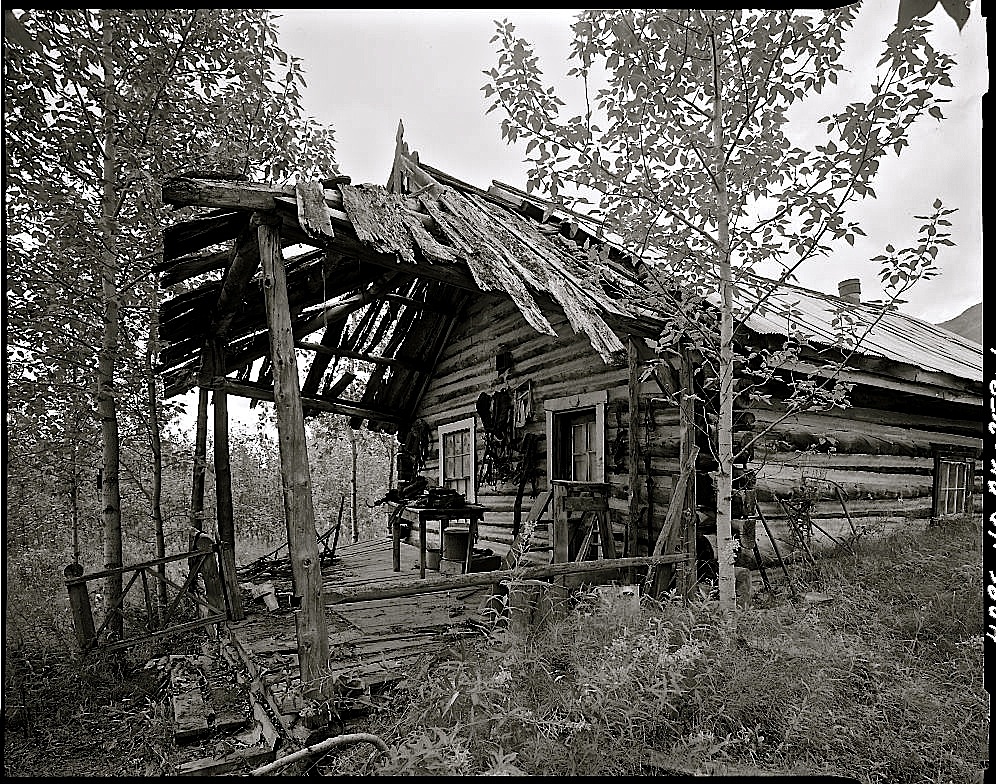
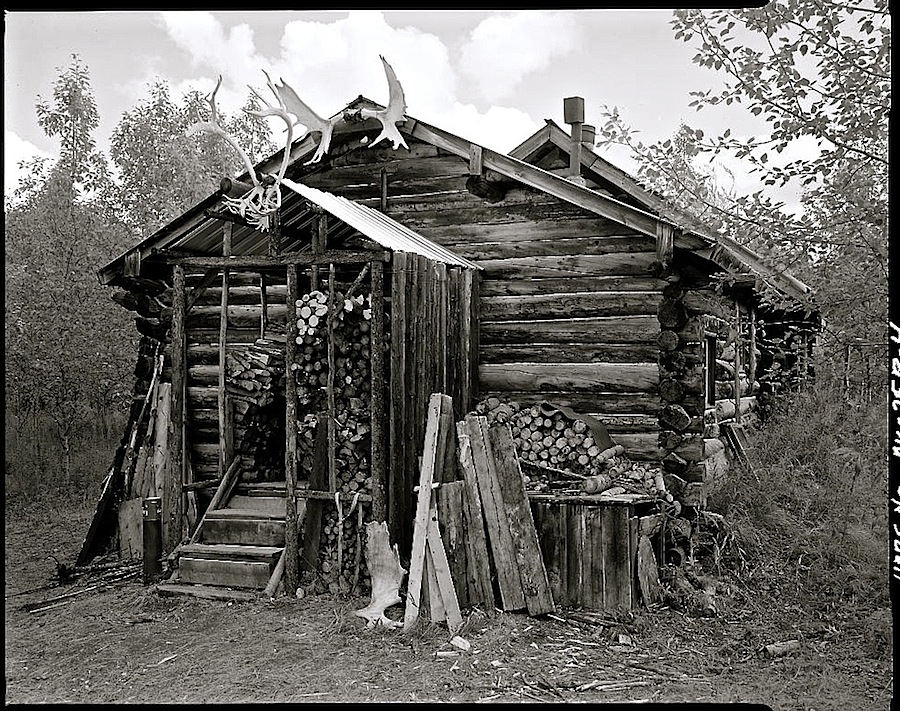
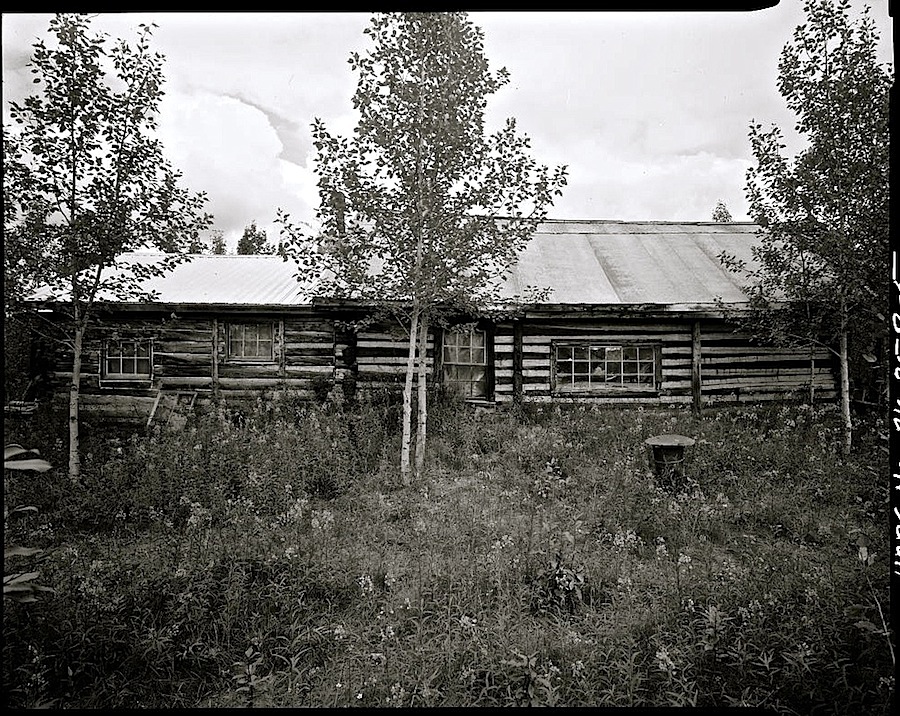
Igloo No. 8 by Jet Lowe, Library of CongressFront porch near the Koyukuk River at Wiseman Creek, Wiseman, Alaska, July 1984. Photo by Jet Lowe for an Historic American Buildings Survey (HABS), via the Library of Congress Prints and Photographs Division.

For over six decades, this little porch sheltered many hours of masculine leisure and conviviality. In 1913, it fronted the Siverly and Bowker Saloon.  The following year, the building was sold to the Pioneers of Alaska and used as one of its local chapters — an ‘Igloo;’ it was Igloo No. 8.   The Pioneers, a fraternal organization, was formed in 1907 “for social purposes to keep alive the memories of the early trailblazers.”

By 1972, the building had been sold again.  At the time of these photos, it was the home of the owner’s son.

Igloo No. 8, HABS, Library of CongressAbove is the back porch and entrance to the kitchen.

Igloo #8, HABS, Library of CongressAbove is the side view. The flowers and birch trees are so pretty; it’s a pity we don’t have a picture of the view from the front porch. All photos by Jet Lowe.