The Sunday porch: Louisburg, North Carolina


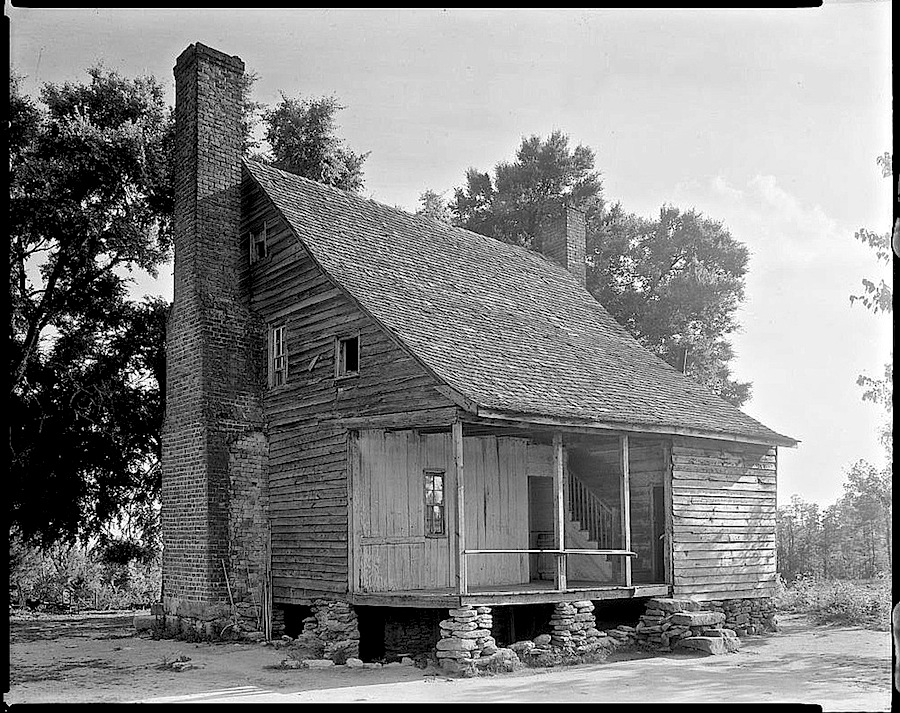
“A Peggy Wright Farm,” Louisburg, North Carolina, 1938, by Frances Benjamin Johnston, via Library of Congress Prints and Photographs Division.

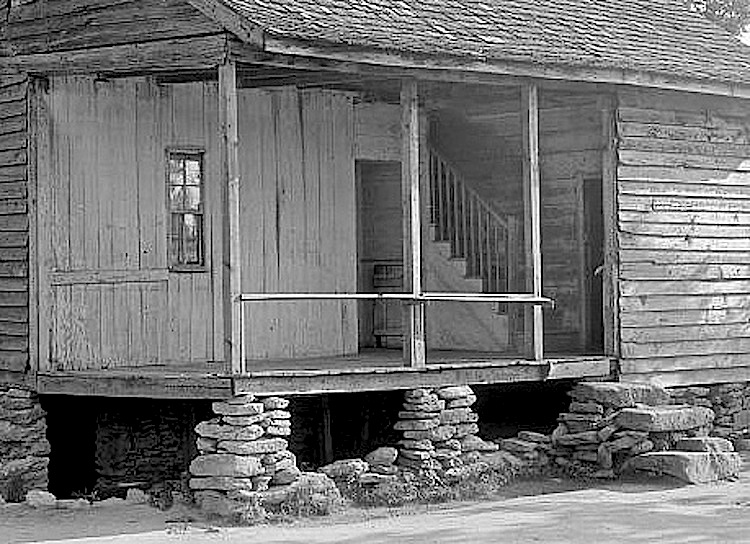
Detail of above photo.

All three Johnston photos of this house are captioned “A Peggy Wright Farm,” so Peggy may have been a woman who owned several properties. (The other two pictures are here and here.)

The Library’s online catalogue notes say that the building dates from 1780 and that this is the place “where Peggy was killed by lightning.”

The Sunday porch: Minden, Louisiana

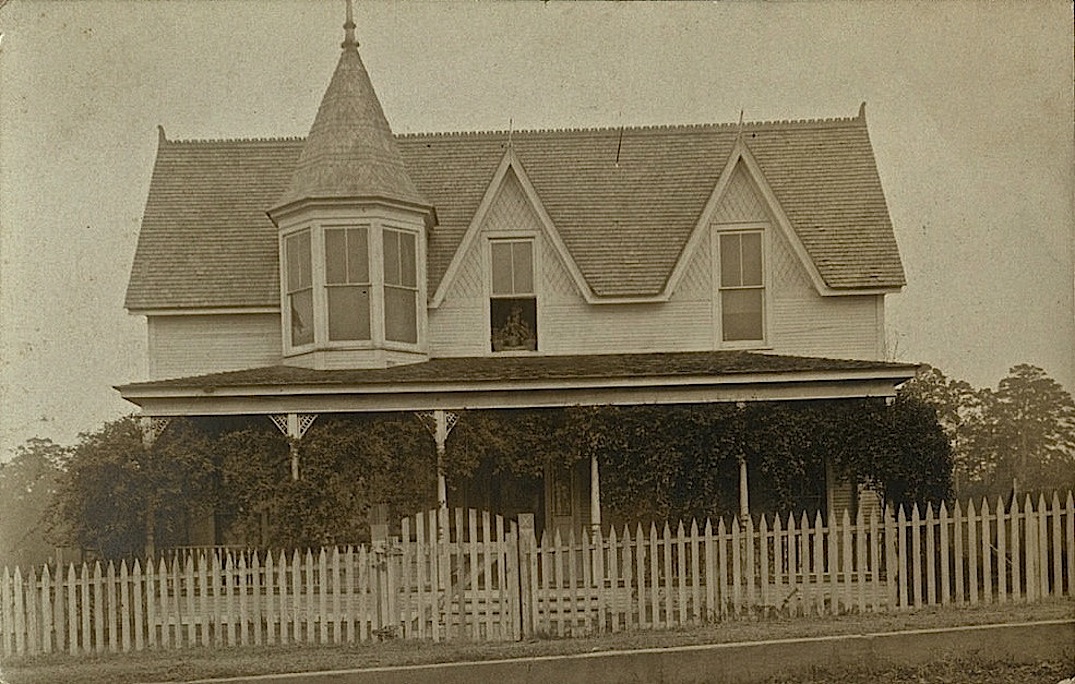
The home of George and Rosa Lee Woodbridge, Minden, Louisiana, ca. 1907, via Tyrrell Historical Library (Beaumont, Texas) Commons on flickr.

A definite “best in vines” contender. I also like the trio of potted plants in the upper window and the decorative woodwork at the tops of the columns. (You may want to click on the photo for a better look.)

Detail of above.

George Woodbridge was a Presbyterian minister, and Rosa Lee was a former teacher. She died in the house in 1907, age 41.

Johnny and Edgar Winter, blues and rock musicians, are the direct descendants of Rosa Lee’s sister, Sarah.

The Sunday porch: East Hampton, N.Y.

Home of E.E. McCall, East Hampton, New York, between ca. 1910 and ca. 1915, by Bain News Service, via Library of Congress Prints and Photographs Division.

The house was a split level. You can see the two-story side here.

Edward Everett McCall was a Justice of the Supreme Court of New York. He also ran unsuccessfully for mayor of New York City as the Tammany candidate. He died in 1924, and his seaside house burned down three years later.

The Sunday porch: no idea

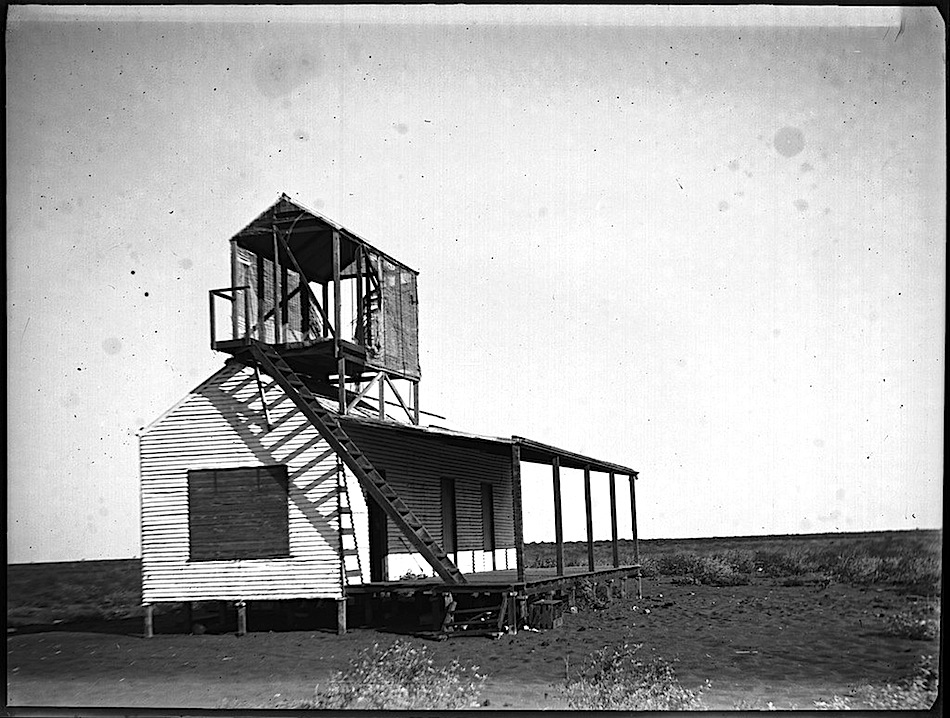
dwelling-with-laddernational-library-of-australia“Dwelling with ladder and wooden structure on top,” Dunbar, Queensland, between 1900 and 1951, by John Flynn, via Australian Inland Mission Collection, National Library of Australia Commons on flickr.

I have no explanation for the second-story (sleeping porch maybe?). . . but it’s kinda cool.

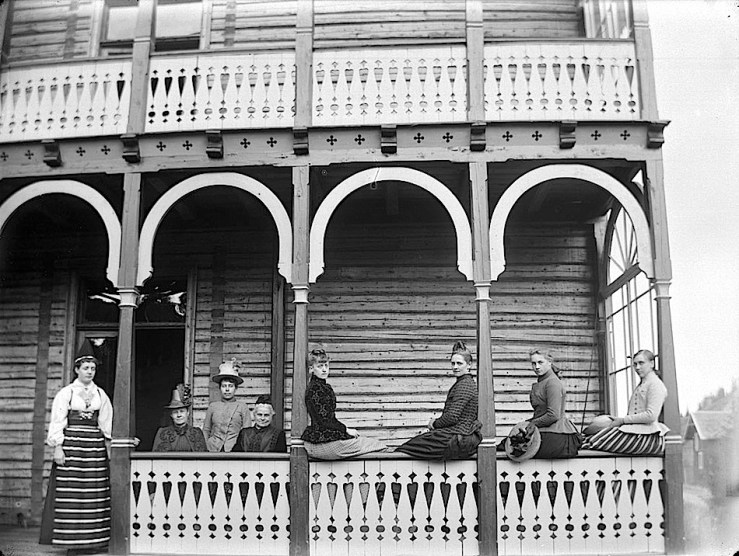
The Sunday porch: Valdres, Norway

tonsasen-sanatorium-porch-ca-1890-by-carl-curman-valdres-norway-swedish-heritage-boardWomen on a veranda at Tonsåsen Sanatorium (the woman on the left is wearing a traditional costume similar to the one in this photo), Valdres, Norway, ca. 1890, by Carl Curman, via Swedish National Heritage Board Commons on flickr (all three photos).

tonsasen-sanatorium-ca-1890-by-carl-curman-valdres-norway-swedish-heritage-board

Tonsåsen Sanatorium was established for the treatment of tuberculosis in 1881 — the same year that the bacillus causing the disease* was identified by Robert Koch. Like similar facilities, just about the only treatment it could offer was a combination of nutritious food, rest, and plenty of fresh air. However, it also had thermal baths, and the photographer, Carl Curman, was a physician, specializing in the science of health baths (balneology).
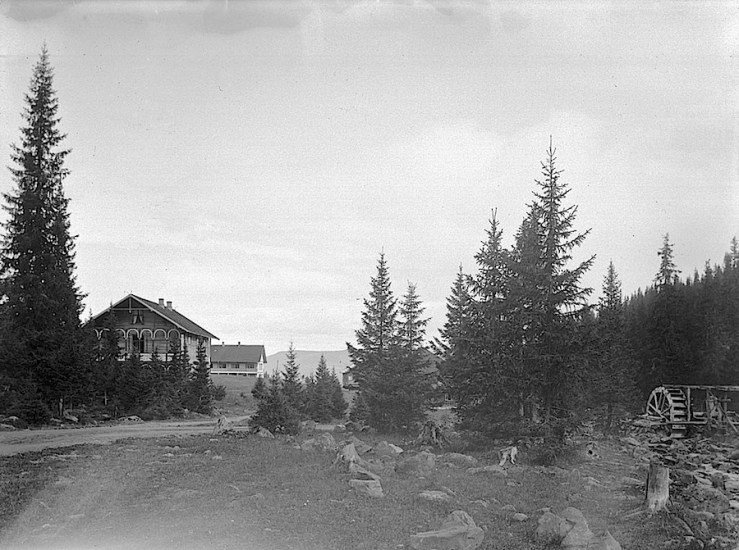
tonsasen-sanatorium-2-ca-1890-by-carl-curman-valdres-norway-swedish-heritage-board

Even at the better sanatoriums, fifty percent of patients were dying within five years in 1916. It was only after the development of antibiotics after World War II that it was possible to treat and cure TB reliably. Tonsåsen closed in the 1960s.


*TB was proven to be communicable in 1869.