The winter garden: Mark Twain House

Conservatory, Mark Twain House, HABS, Library of CongressThe conservatory of the Mark Twain House, viewed from the library, Hartford, Connecticut, photographer not noted.*

Samuel Clemens (aka Twain) and his wife built the house in 1874 in a prestigious neighborhood, which included the homes of Harriet Beecher Stowe, garden writer Charles Dudley Warner, and suffragist Isabella Beecher Hooker.

“The Clemenses were known for their ostentatious lifestyle and entertaining,” according to the HABS. “[T]he house was fitted with the most advanced technological equipment of the day, including a telephone, speaking tubes and bells, burglar alarm, gas lighting, central heating, and extensive plumbing.”

The floor of the conservatory is pea gravel.

Another winter garden is here.

Climate is what we expect, weather is what we get.

— Mark Twain


*The photo is part of a 1983 Historic American Buildings Survey (HABS), via Library of Congress Prints and Photographs Division.  You can see and read more of this survey here.
The Sunday porch: Sherrill Inn

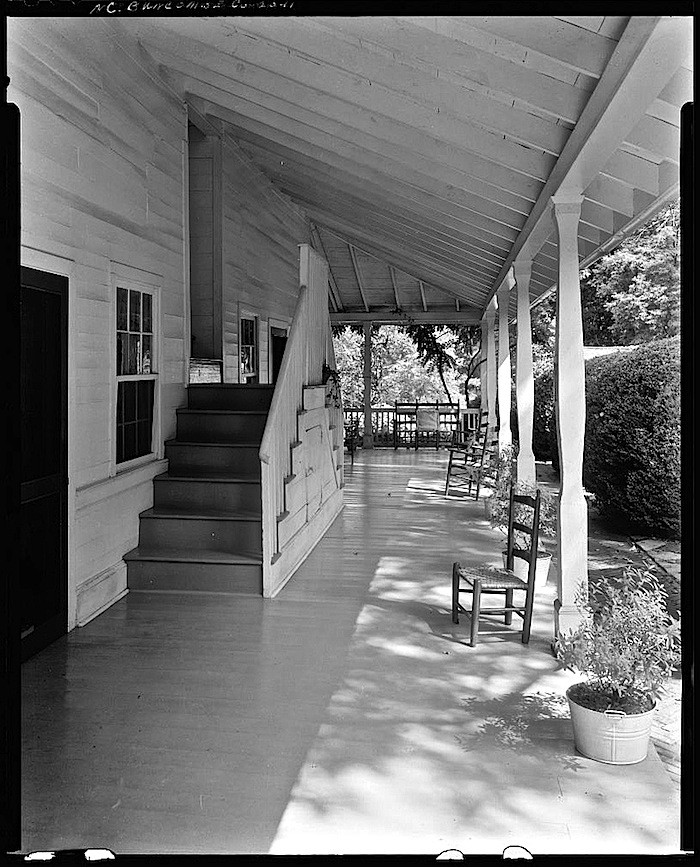
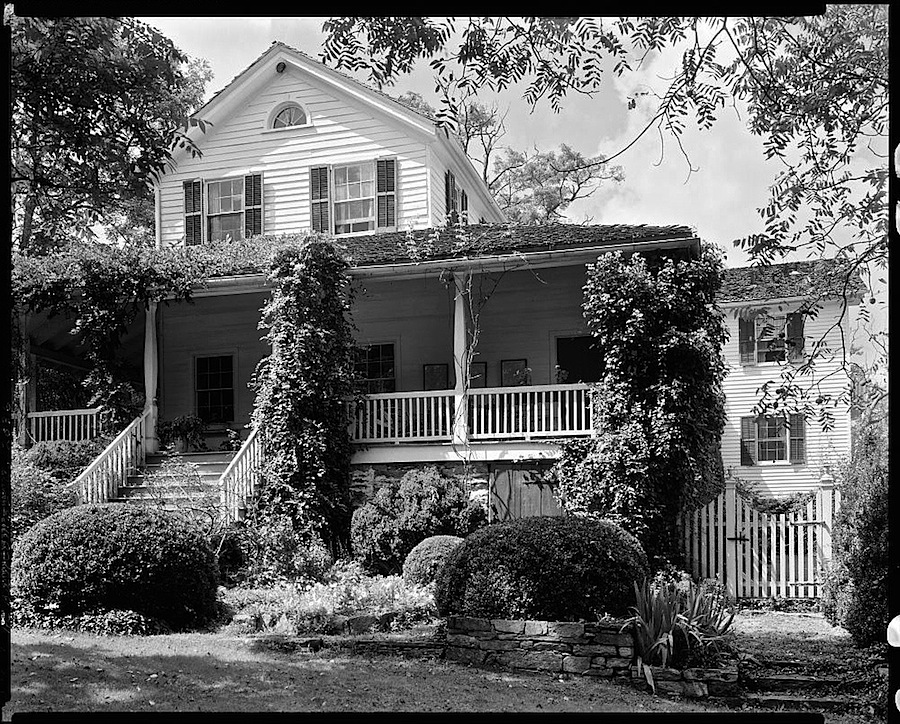
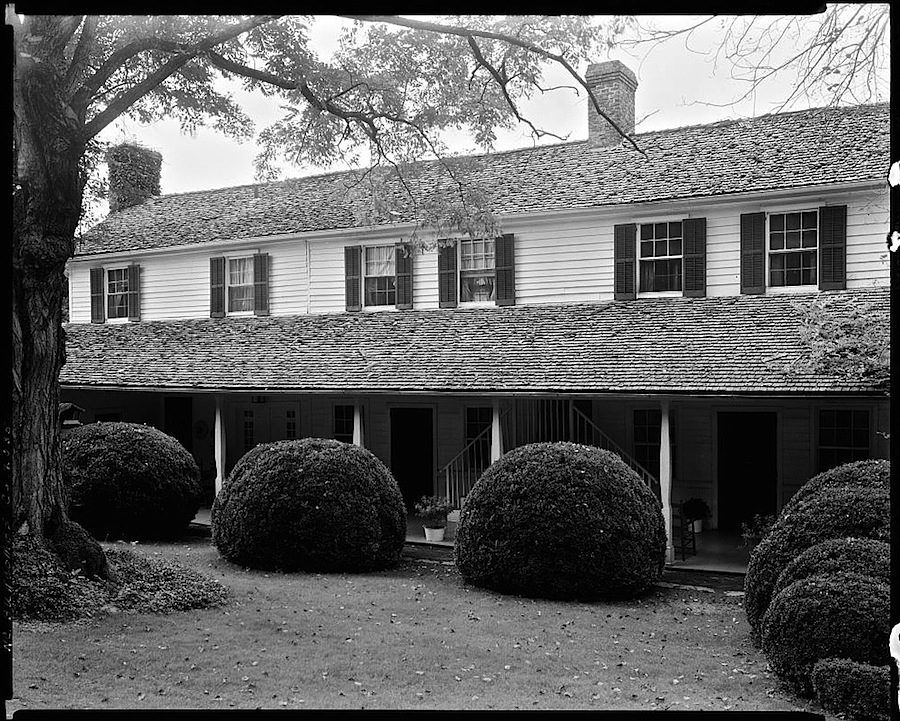
1 Sherrill Inn, North Carolina, 1938, via Library of CongressSherrill Inn, Hickory Nut Gap, Buncombe County, North Carolina, in 1938, by Frances Benjamin Johnston, via Library of Congress Prints and Photographs Division (all photos here).

I know, and even better. . .

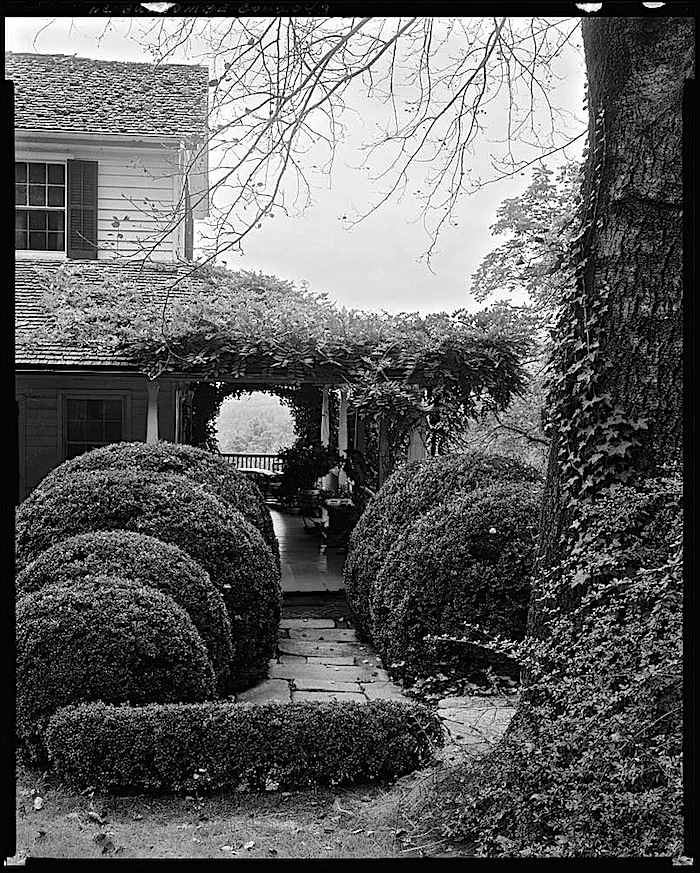
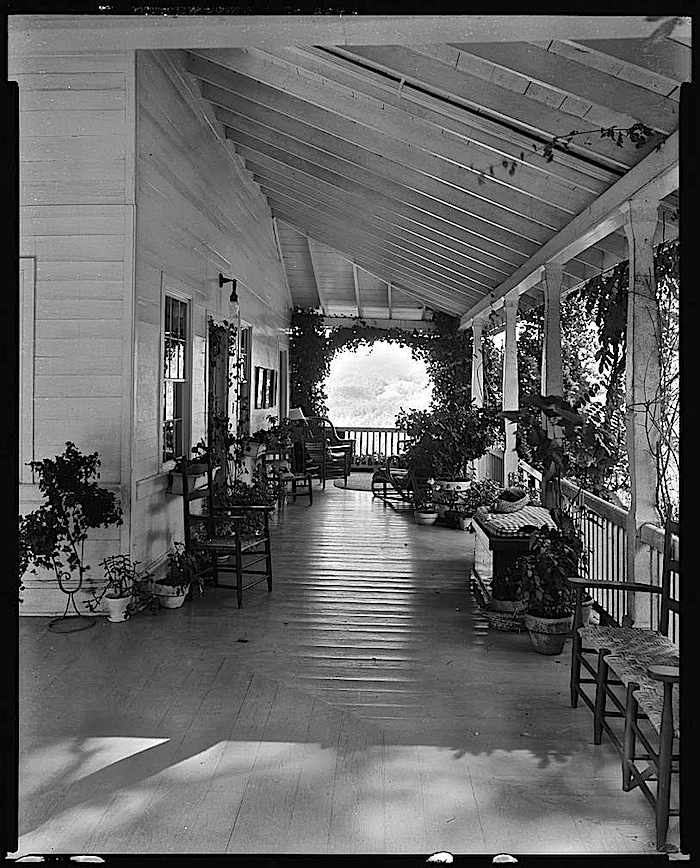
1a Sherrill Inn, North Carolina, 1938, via Library of CongressThis is what’s behind the boxwoods. (There’s another photo of this section of the porch here.)

In the nomination form for inclusion in the National Register of Historic Places, the porch columns were described thusly:

The porch is supported by gracefully tapered posts each rising without interruption from rectangular bases to approximately balustrade level, where it is quickly cinched in on all four sides; above, the post gently flares out to original width near eye level and then back in, until near the top the taper reaches its conclusion to flare quickly into a cap for the porch roof supporting plate to rest upon.

2bb Sherrill Inn, North Carolina, 1938, via Library of Congress

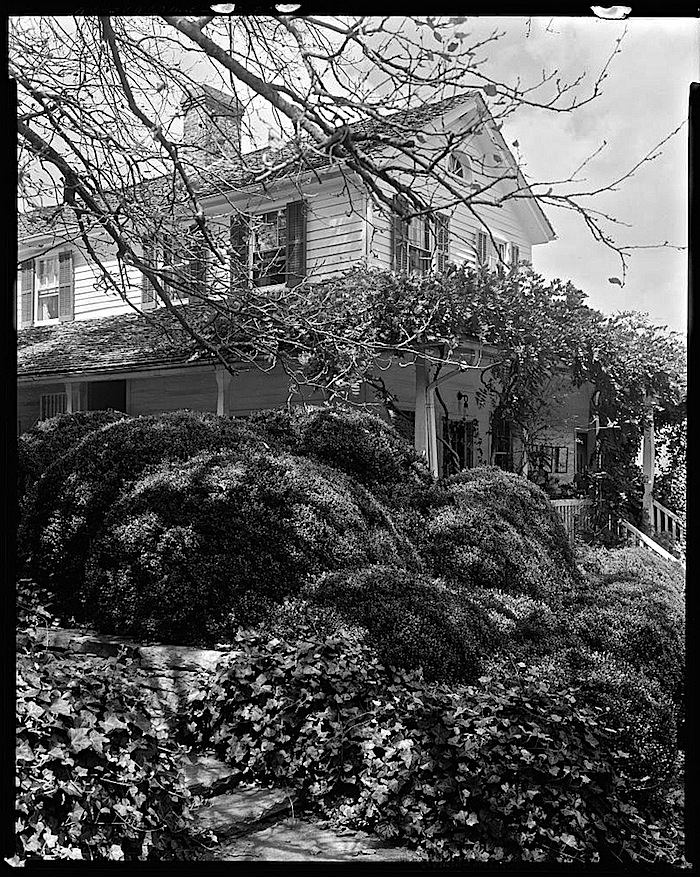
At the corner of the L-shaped porch,

2 Sherrill Inn, North Carolina, 1938, via Library of Congress

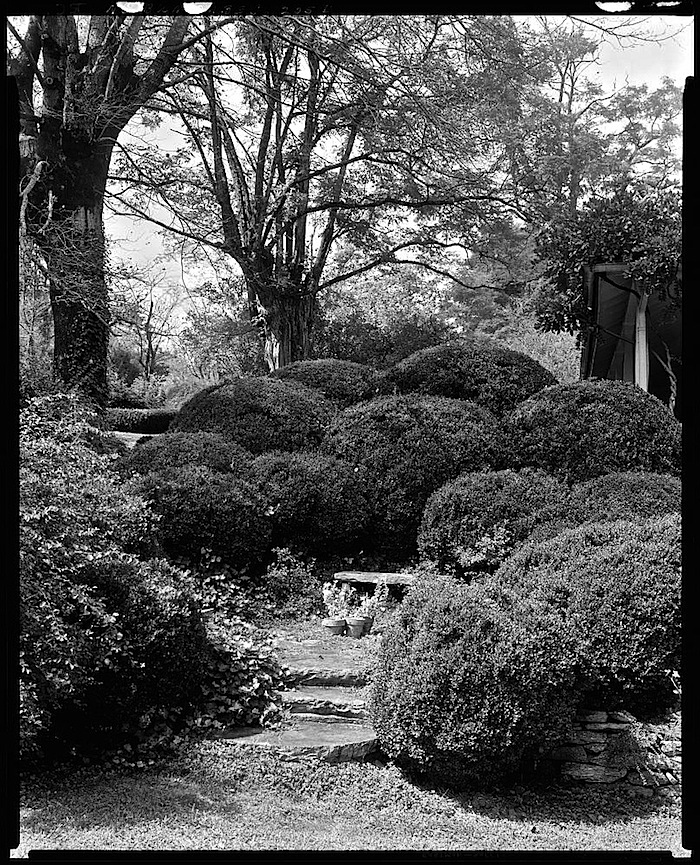
. . .the boxwoods cover the slope like giant boulders.

2a Sherrill Inn, North Carolina, 1938, via Library of Congress

And below is the porch after the turn,2b Sherrill Inn, North Carolina, 1938, via Library of Congress

2ba Sherrill Inn, North Carolina, 1938, via Library of Congress

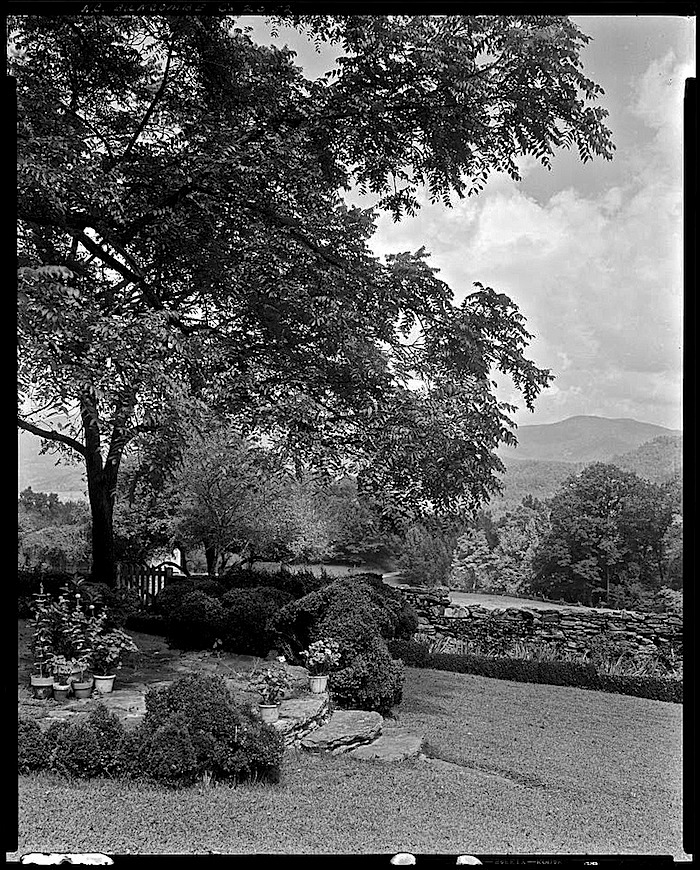
and a view of the mountains.5a Sherrill Inn, North Carolina, 1938, via Library of Congress

A bit of heaven.

Best of all, it seems that most of the old boxwoods are still in place.  The property is being run as an organic farm by descendants of the McClures, the couple who owned the Inn when Johnston took these photos.

Pictures of a beautifully styled wedding held at the Inn in recent years show it to have been in loving hands over the decades.

The house began as two log structures, possibly built by 1806 or maybe even earlier.  Between 1839 and 1850, Bedford Sherrill connected and enlarged those buildings to make an inn for travelers on the “Hickory Nut Turnpike,” an early stage route to western North Carolina.

There are many more details about the history and design of the house and grounds here.

My crops: alpine strawberries

This slideshow requires JavaScript.

I had a good harvest today of my alpine strawberries, which I grew from seed. (O.K., the bed is less than 4 ft.x 4 ft.)

I’m actually pretty bad at raising things from seed, but I’ve succeeded in three gardens with alpines. I sowed the seeds for these plants right into the ground.

Their taste is wonderful, more perfume-y than commercial strawberries (maybe I’ll even share the next handful). They also make nice small edging plants in flower beds.

To-morrow it will be the same:
Cakes and strawberries. . .

–Amy Lowell, from “Interlude

Vintage landscape: Alabama garden

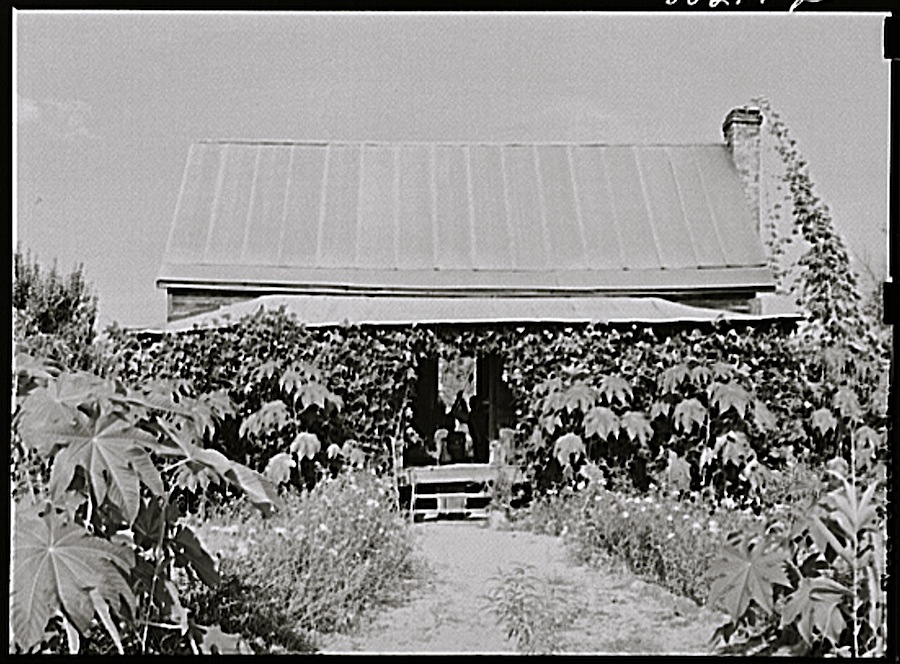
Drigger home, 1941 Coffee Co., Alabama, via Library of Congress“James F. Drigger’s farmhouse. Coffee County, Alabama,” August 1941, by John Collier, via Library of Congress Prints and Photographs Division.

This photo was taken in the same county as yesterday’s farmhouse with quilts. I think those are papaya plants in front of the porch vines and in the lower left corner. Nope, they’re Ricinus communis  or castor beans.  Thanks Melissa!

They and the flowers make a nice approach to the lined-up front and back doors.

John Collier was working for the Farm Security Administration when he took this photo. The Drigger family was receiving assistance to raise chickens under the “Food for Defense” program.

Vintage landscape: the axis

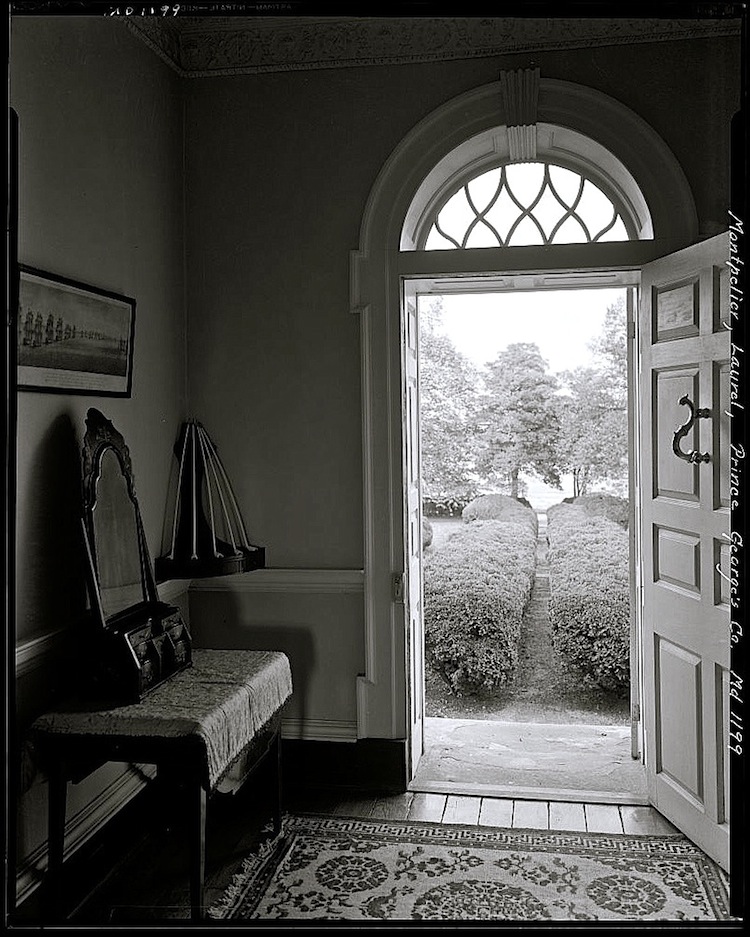
door, insideMontpelier, south of Laurel, Md., 1931, by Frances Benjamin Johnston, via Library of Congress Prints and Photographs Division.

(Those are antique smoking pipes in the corner.)

door, outsideThe house was built in the early 1780s. George Washington was a guest there several times, and Abigail Adams praised the owners’ “true English hospitality” after a stay.

It still stands, although the boxwoods along the front walkway are gone.

boxwoodThe estate  is open to the public and available for events. (Although, it has been closed for much of 2013 for renovations.)

irises