
Flowers in the borders around our lower lawn, August 15, 2014.
To see what’s blooming in other garden bloggers’ gardens, visit Carol at May Dreams Gardens.
Flowers in the borders around our lower lawn, August 15, 2014.
To see what’s blooming in other garden bloggers’ gardens, visit Carol at May Dreams Gardens.
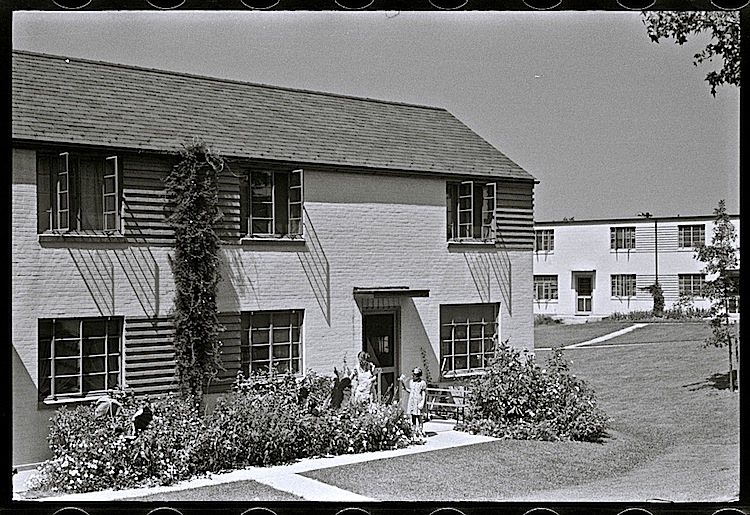 Mother and daughter cut flowers in their cottage style garden in Greenbelt, Maryland, near Washington, D.C., September 1938, by Marion Post Wolcott, via Library of Congress Prints and Photographs Division.
Greenbelt was one of three* “Greenbelt Towns” created by the New Deal federal government in the late 1930s. The built-from-scratch communities were designed to provide the best of both city and country living.
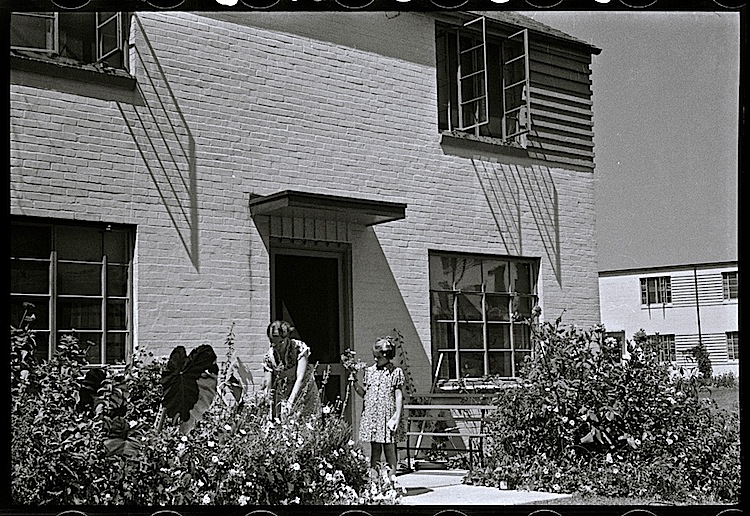
In addition to affordable housing, they incorporated commercial, medical, educational, and social facilities — all within park-like landscaping.
. . .Greenbelt was an experiment in both the physical and social planning that preceded its construction. Homes were grouped in superblocks, with a system of interior walkways permitting residents to go from home to town center without crossing a major street. Pedestrian and vehicular traffic were carefully separated. The two curving major streets were laid out upon and below a crescent-shaped natural ridge. Shops, school, ball fields, and community buildings were grouped in the center of this crescent.
. . .The first families were chosen not only to meet [low] income criteria, but also to demonstrate willingness to participate in community organizations.
[They] arrived on October 1, 1937, [and] found no established patterns or institutions of community life. Almost all were under 30 years of age. All considered themselves pioneers in a new way of life. A mix of blue and white collar workers, they reflected the religious composition of Baltimore and Washington, D.C.—Protestant, Catholic, and Jewish; but because of the racial bias controlling public policy at that time, all were white.†
. . .In 1952, when Congress voted to sell off the greenbelt towns, citizens in Greenbelt formed a housing cooperative (Greenbelt Veterans Housing Corporation, later Greenbelt Homes, Inc.)
— “The History of Greenbelt, Maryland“
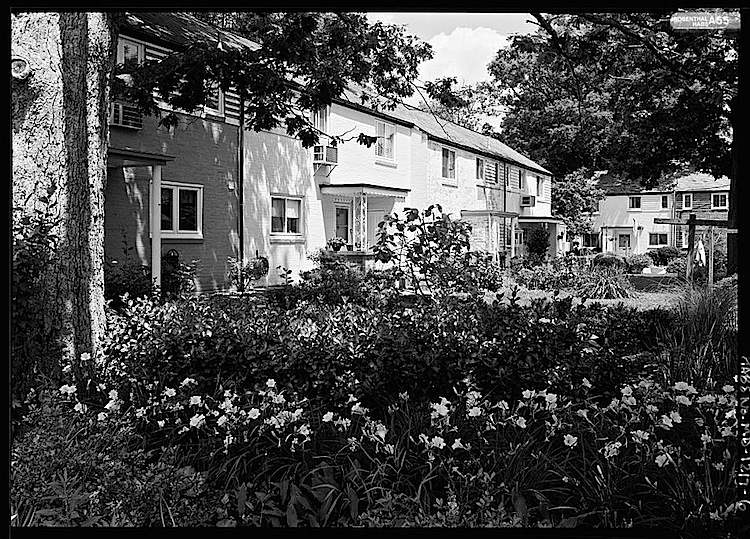
“Old Greenbelt” has been well preserved over the years and was designated a National Historic Landmark in 1997. The photo above shows some of its rowhouses with gardens in 2005. It was taken by James W. Rosenthal for an Historic American Buildings Survey (via Library of Congress).
More Library of Congress photos of Greenbelt are here (1938) and here (2005).
*Along with Greendale, Wisconsin, near Milwaukee, and Greenhills, Ohio, near Cincinnati.
†The Census found that 41% of residents were African-American in 2000.
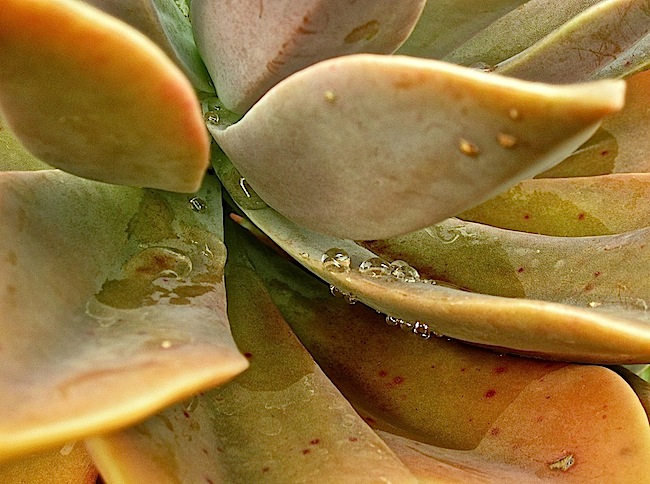 Raindrops on the Graptopetalum leaves yesterday morning.
It had rained the night before, for the third time in two weeks. Maybe the summer dry season is ending early?
(I would normally look for consistent heavy showers to start in early to mid September and last until late December.)
I have been hoping for an early fall rainy season, since we only have a few more months in the country, and I would like to see the garden in high growth mode one more time.
ADDENDUM: 6:27 p.m. — raining.
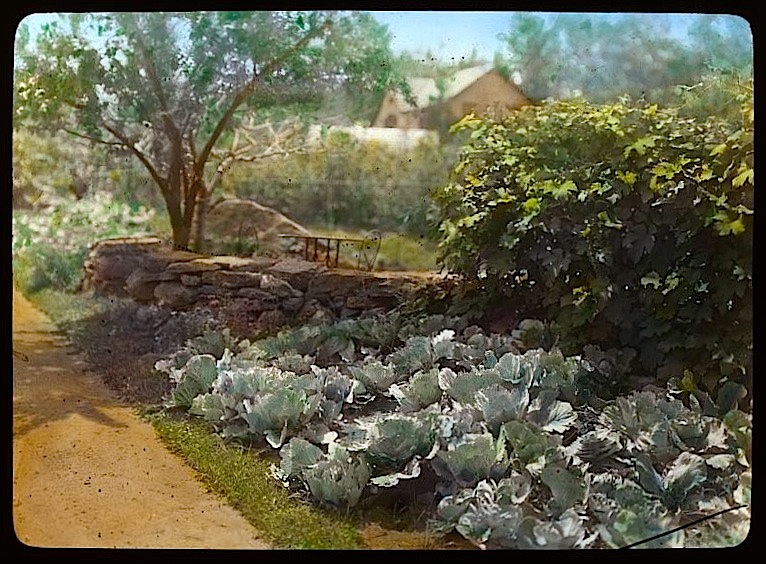 Cabbages in the vegetable garden of Chelmsford, Greenwich, Connecticut, ca. 1914, by Frances Benjamin Johnston, via Library of Congress Prints and Photographs Division.
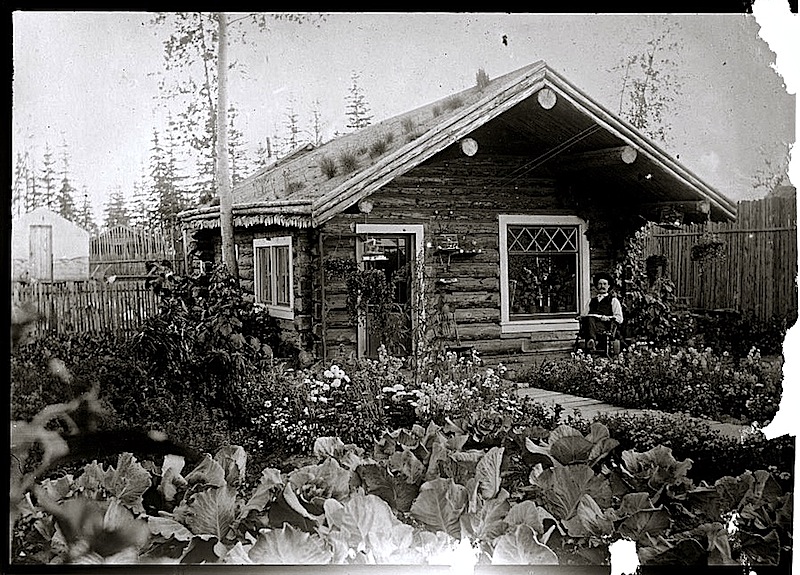 A cottage garden in Alaska, between 1909-1920. By National Photo Company, via Library of Congress Prints and Photographs Division.
 Woman in her garden, Puerto Rico, Winter 1941/42, by Jack Delano, via Library of Congress Prints and Photographs Division.
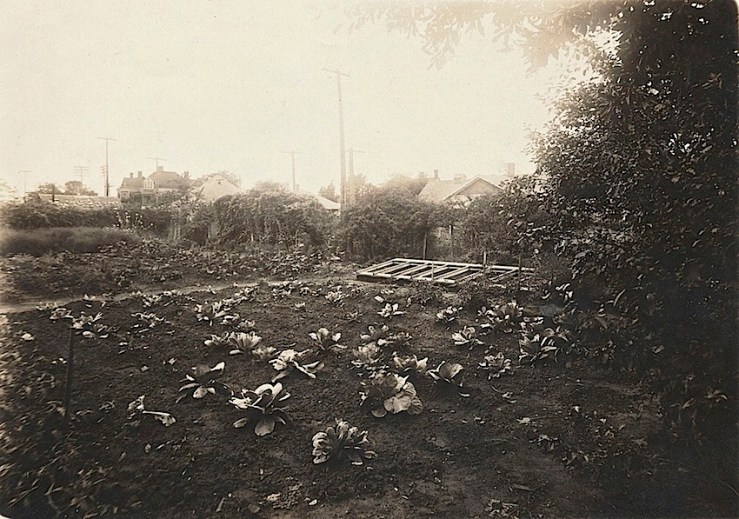 The vegetable garden and cold frames of the Maxey House, Paris, Texas, undated, from the Samuel Bell Maxey Collection, via Texas State Archives Commons on flickr.
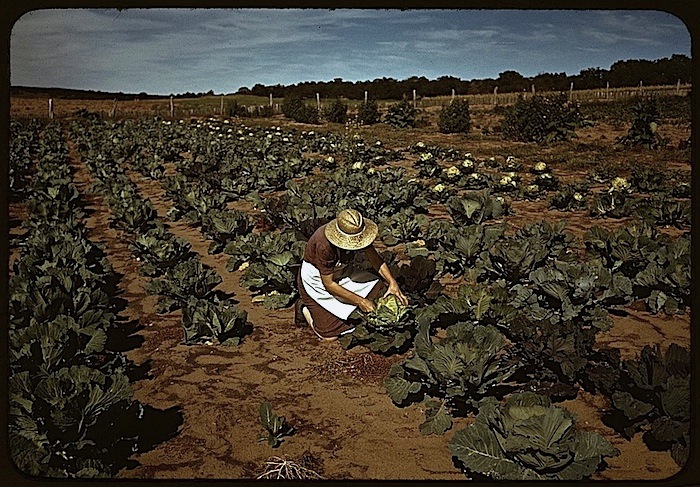 Mrs. Jim Norris with homegrown cabbage, Pie Town, New Mexico, October 1940, by Russell Lee, via Library of Congress Prints and Photographs Division.
eternity swallows up timeO cabbage gardenssummer’s elegysunset survived
— Susan Howe, from “Cabbage Gardens”
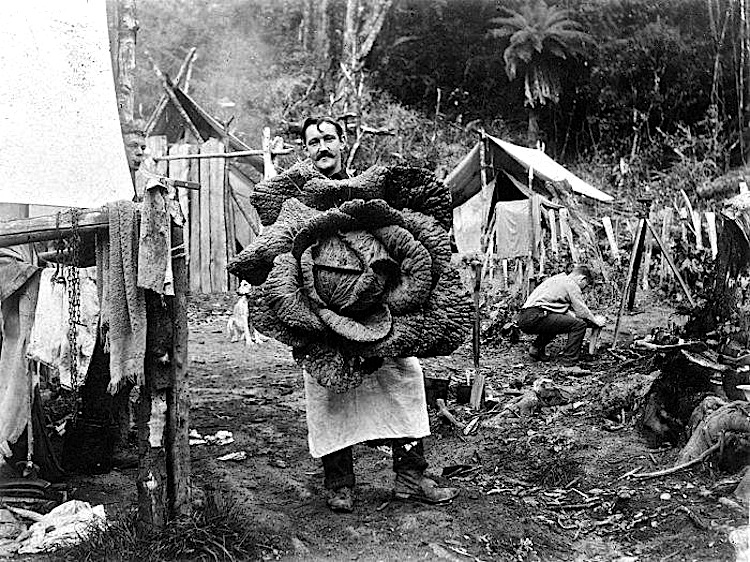 “A cook holding up a giant cabbage at a camp in Wairarapa[, New Zealand],” ca. 1890s, photographer unknown, via National Library of New Zealand.
One of my favorite coleslaws is made by tossing shredded cabbage, a chopped apple or underripe mango, and some chopped peanuts with the dressing part of Vietnamese green papaya salad (recipe here).
At Samoa, hardly unpacked, I commenced planting. . .
I plant cabbage by moonlight, set out more cacao.
The heart of a death’s-head moth beats a tattoo in my hand.
— Carolyn Kizer, from “Fanny“

