Life in gardens: spring dance

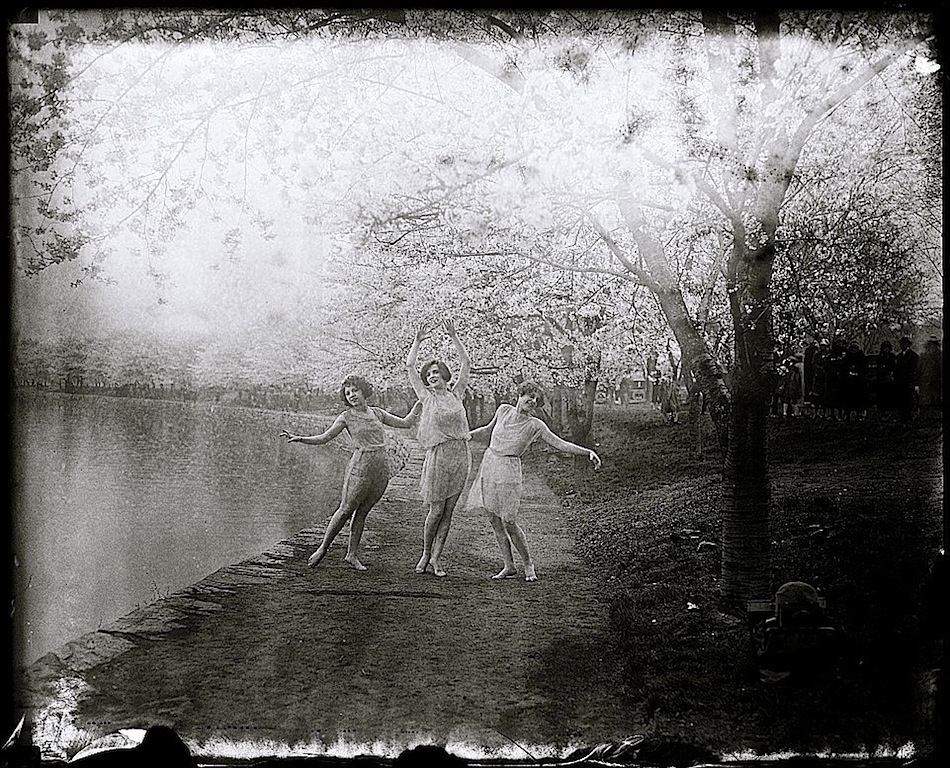
Rites of Spring, 1927, Wash.DC, Library of CongressDancers and cherry blossoms, [Tidal Basin,] Washington, D.C.,” between 1923 and 1929, by Harris & Ewing, via Library of Congress Prints and Photographs Division.

The National Cherry Blossom Festival in Washington, D.C., began on March 20 and continues until April 12. This year, the National Park Service is predicting that peak bloom will occur between April 11 and 14.

The first Tidal Basin Yoshino cherry trees — a gift from the city of Tokyo — were planted in 1912. The first organized celebration of them was held in 1927, when D.C. schoolchildren reenacted the planting.  The first Cherry Blossom Festival, which became the annual event, took place in 1935.
Castle garden in Meersburg

This slideshow requires JavaScript.

Castle garden, Meersburg, March 29, 2015.

I’m sorry that I had no porch for you on Sunday; we spent a long weekend in the town of Meersburg on Lake Constance, about an hour and a half south of Stuttgart.

Aside from its lakefront location (and a beautiful view of the Swiss Alps across the water), the town’s principal feature is the medieval Alte (old) Burg — Germany’s oldest inhabited castle.*

Its sweet little garden, tucked along a high wall, seems to reflect the presence of the castle’s most distinguished resident, the romantic poet Annette von Droste-Hülshoff. She frequently stayed there in the 1840s, when her brother-in-law owned it.

Her pretty rooms with their floral wallpapers have been carefully preserved — she died there in 1848.

You can see the position of the garden along the castle walls in this Wikipedia photo.


*Sections date as early as the 7th century.

Vintage landscape: daffodils

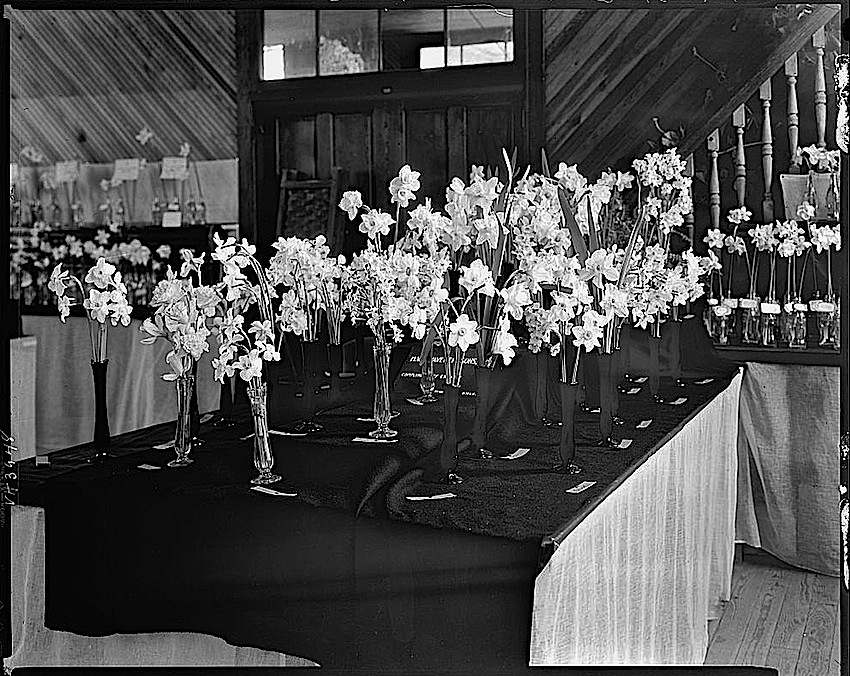
Middleburg, Va., flower show, 1931, Library of CongressMiddleburg Flower Show, Middleburg, Virginia, April 1931, by Frances Benjamin Johnston, via Carnegie Survey of the Architecture of the South, Library of Congress Prints and Photographs Division.

Right now, here in Stuttgart, a few daffodils have poked up from our front yard. I will probably pick them. I don’t usually like Narcissus in the landscape in early spring — the bright yellow is too much, too soon.  But, like those in the photo above, they look really nice in a vase.

There are also some fat cultivated Dutch hyacinths by our front door. They’re going to get the chop too.

In the fall, for next March and early April, I want to plant snowdrops and snake’s head fritillarias.

Life in gardens: sowing

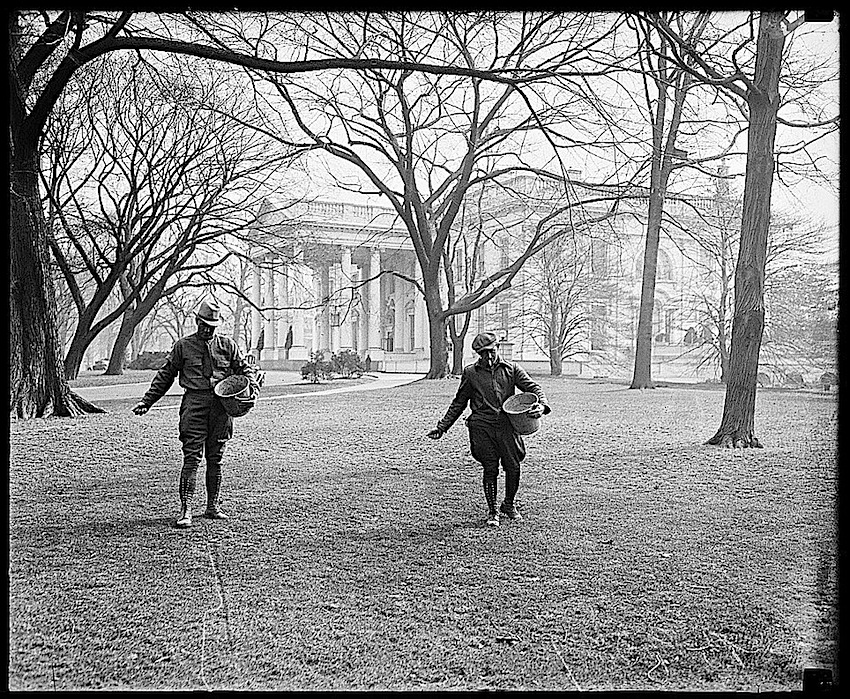
Gardeners at the 1936 White Hse., Library of Congress“Grounds workers at White House, Washington, D.C.,” March 1936, by Harris & Ewing, via Library of Congress Prints and Photographs Division. (You can click on the photo to enlarge it.)

The National Park Service has maintained the White House gardens since 1933.

. . . [W]hile lawns are cultural (in the sense that they are meaning-laden), they are not the product of some pre-existing “culture,” and are instead the meaningful expression of political and economic forces. . . . Lawns are propelled into the landscape both by economic imperatives (e.g., real estate growth) and also by intentional and thoughtful efforts to produce certain kinds of subjects. Lawns are a strategy, therefore, both for capital accumulation and making docile and responsible citizens.

— Paul Robbins, from Lawn People: How Grasses, Weeds, and Chemicals Make Us Who We Are (p. 32)

Vintage landscape: preparation

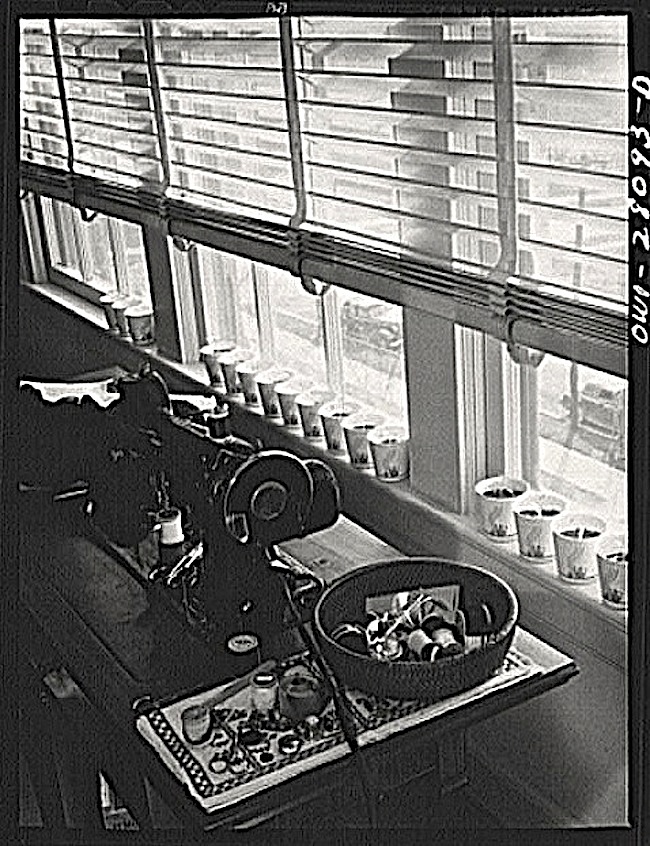
Starting seeds 2, 1943, L. Rosskam, Library of Congress“Washington, D.C. Victory gardening in the Northwest section. [Tomato s]eedlings in paper cups that will be transplanted in the victory garden,” 1943, by Louise Rosskam, via Library of Congress Prints and Photographs Division. (Another view here.)