Jardin de l’Infante, Paris

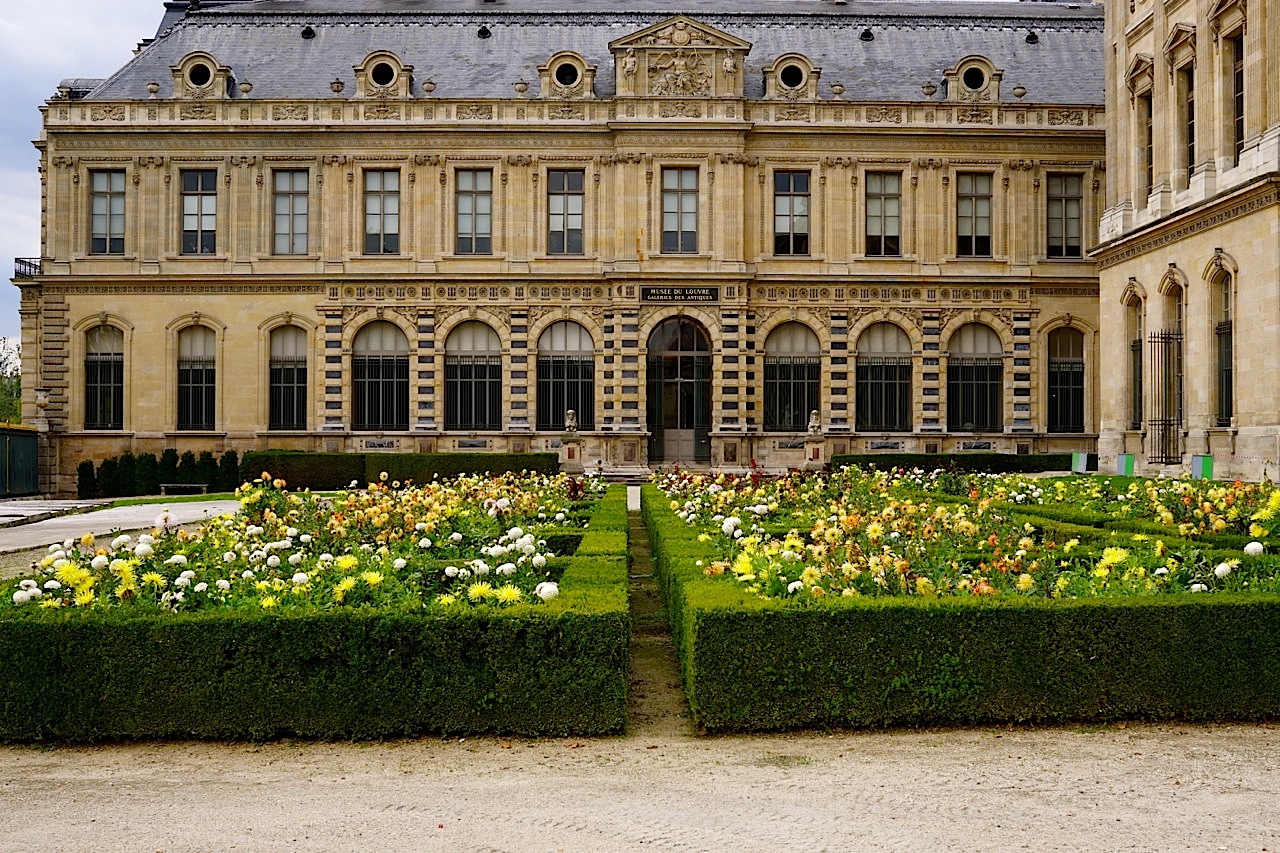
My favorite flower display in Paris last week was at the entrance to the Cour Carrée of the Louvre, near the Pont des Arts.
DSC01756full

But I’m a pushover for massed dahlias — these were yellow, white, orange, and dark red, mixed with some burgundy amaranth and caster bean plants in the back.
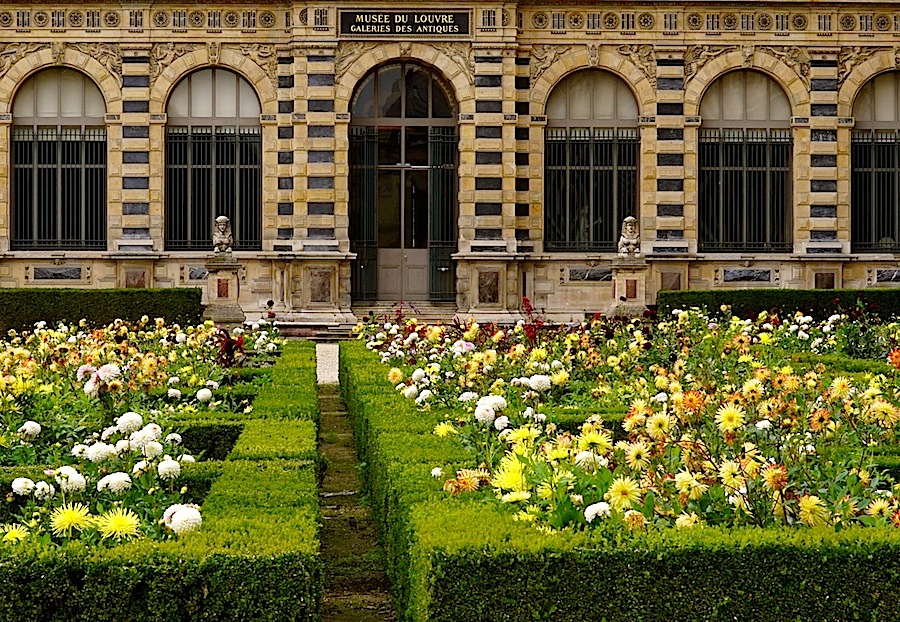
Jardin de l'infante, Louvre, Paris, Sept 2015, by enclos*ure

Jardin de l'Infante, The Louvre, Paris, September 2015, by enclos*ure

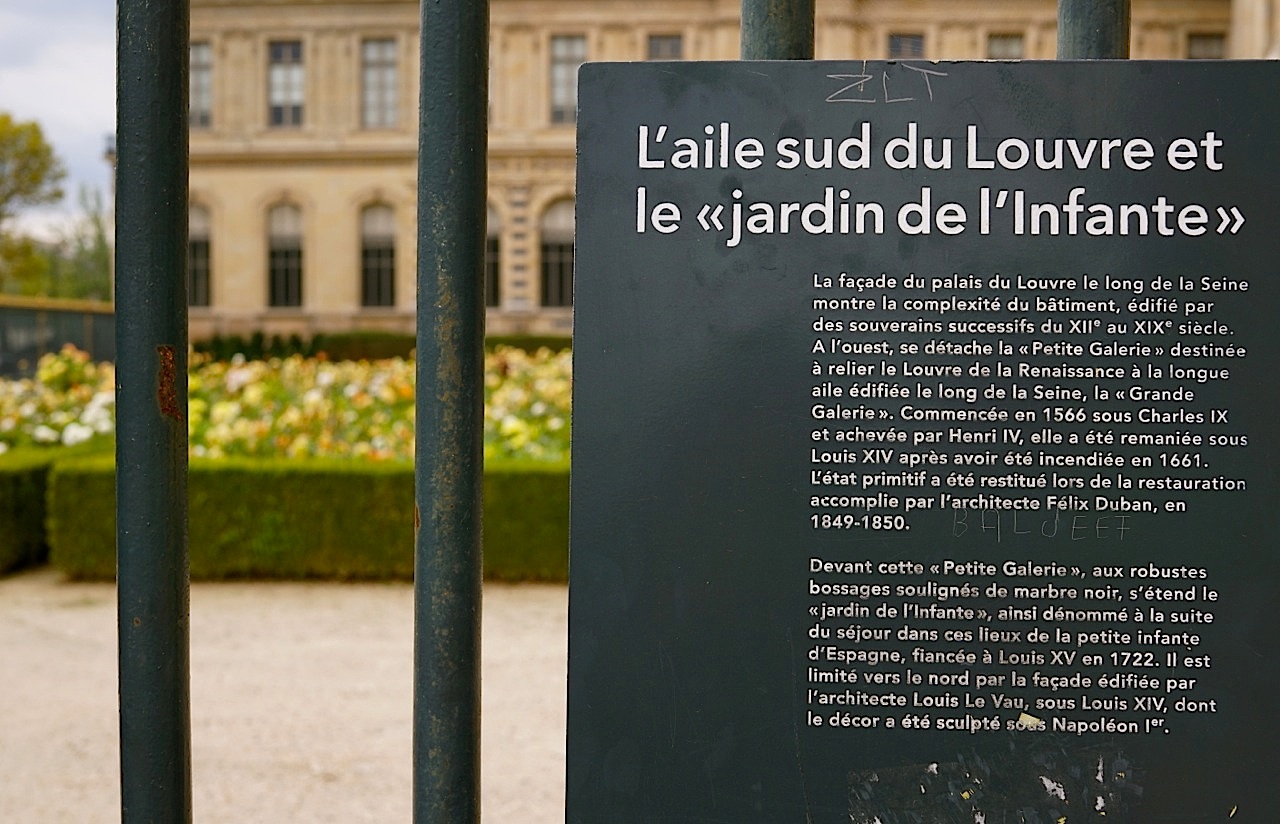
Unfortunately, a tall iron fence blocked them off from close inspection.
DSC01757

 I didn’t have a zoom lens, so I did the best I could to get some useable photos by pushing the camera through the bars and holding it out.
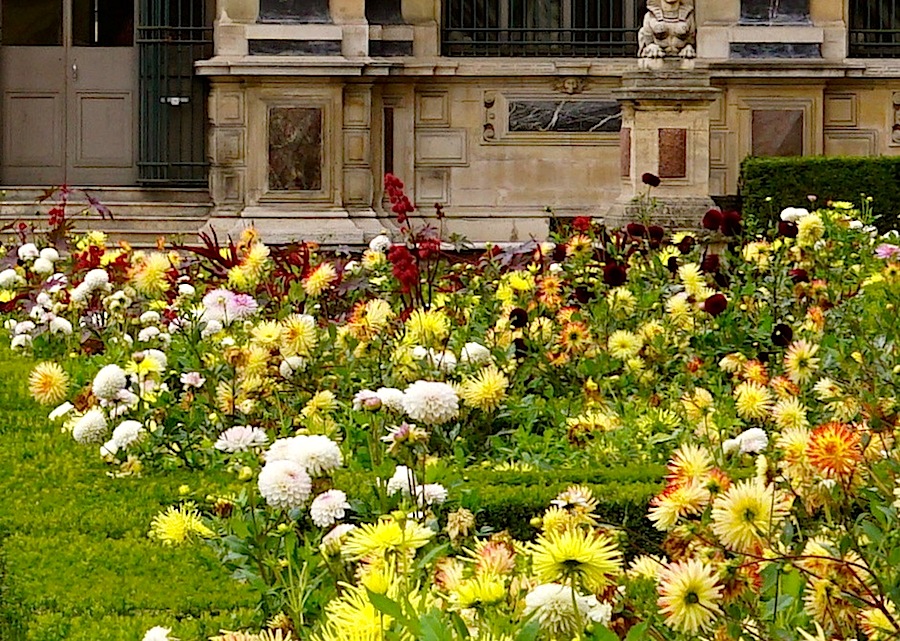
Jardin de l'infante,detail 2, Louvre, Paris, Sept 2015, by enclos*ure

The space is named “Garden of the Princess” for Mariana Victoria of Spain.  The three-year-old Infante was brought to live in the Louvre in 1721 when she was engaged to the preteen King Louis XV.

Jardin de l'infante,detail, Louvre, Paris, Sept 2015, by enclos*ure

Although she was deemed the “sweetest and prettiest little thing,” four years later, Louis broke off the match in order to marry an older Polish princess.

Jardin de l'infante,detail 3, Louvre, Paris, Sept 2015, by enclos*ure

Mariana was sent back to Spain and later married King Joseph I of Portugal.
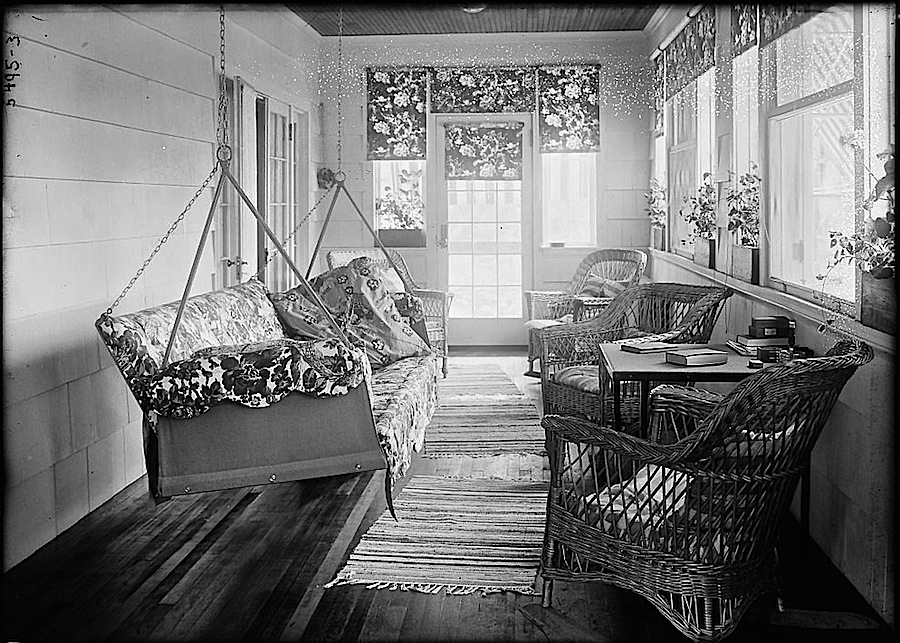
The Sunday porch: cozy

The Sunday porch:enclos*ure- cozy porch interior, ca. 1900, via Library of CongressEnclosed porch, location unknown, ca. 1900 – ca. 1920s, by Bain News Service, via Library of Congress Prints and Photographs Division.

Nice. . . chintz, wicker, books, and potted geraniums — and I love that swing.  There are striped awnings outside over the windows.

. . . You’re bunkered in your
Aerie, I’m perched in mine. . .
We’re content, but fall short of the Divine.
Still, it’s embarrassing, this happiness—
Who’s satisfied simply with what’s good for us
When has the ordinary ever been news?

Rita Dove, from “Cozy Apologia

The Sunday porch: luncheon

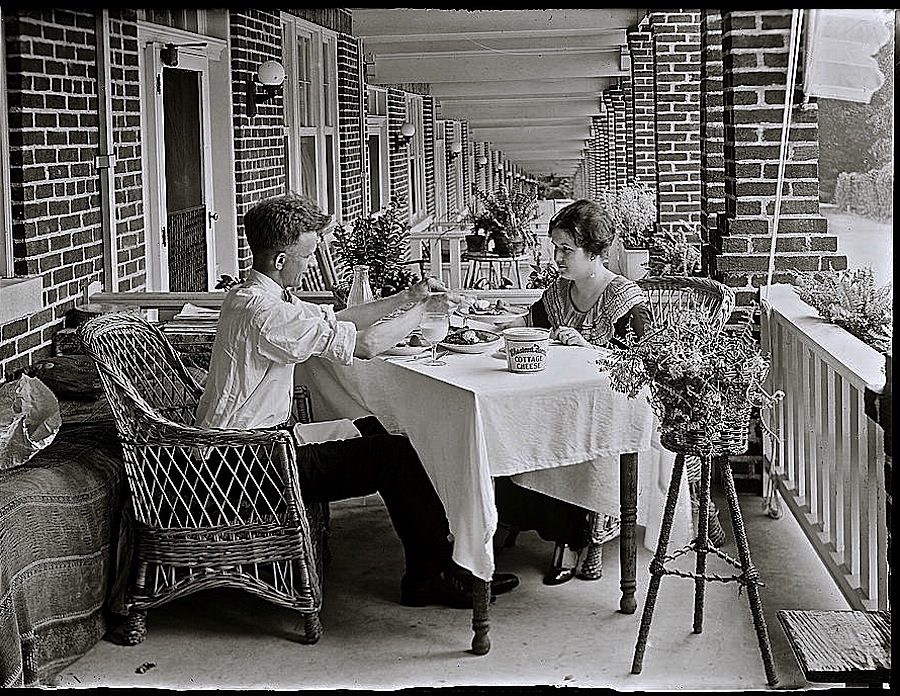
The Sunday porch:enclos*ure- cozy porch interior, ca. 1900, via Library of Congress“Man and woman eating at table on front porch of row house,” Washington, D.C., 1924, by National Photo Company, via Library of Congress Prints and Photographs Division.

I’m sure that this photo was taken to illustrate an advertisement for the maker of that tub of cottage cheese on the table.  (I can’t make out the name of the dairy company.)

You can click on the picture to enlarge it — then you can see that the couple are drinking their milk from wine glasses.

The location could have been in any one of several northwest D.C. neighborhoods — so popular in the city was the Wardman-style of rowhouse by the 1920s.

ADDENDUM:  I found another photo of the same couple, here, having a picnic lunch in Rock Creek Park — again with plenty of cottage cheese.

Vintage landscape: cabbage

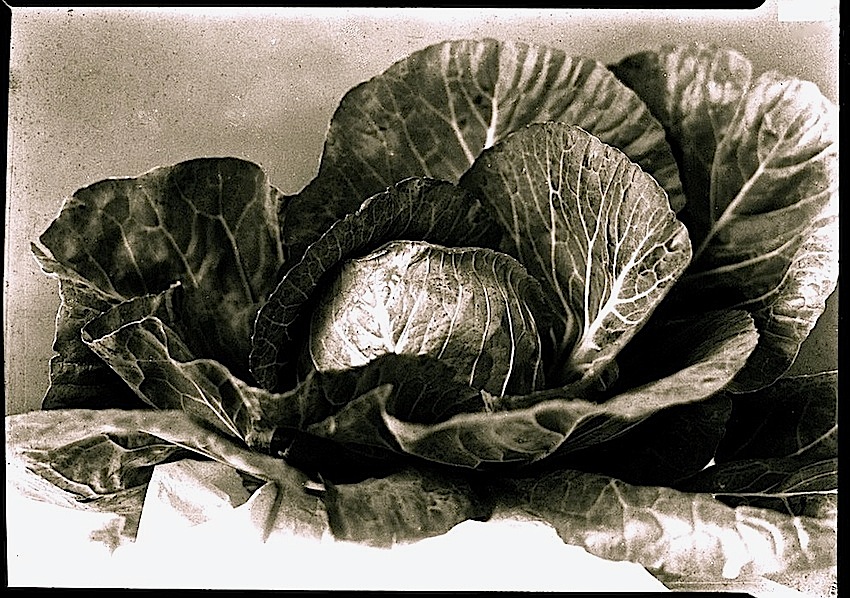
Cabbage portrait, Mississippi Dept. of History and ArchivesCrystal Springs, Mississippi, between 1900 and 1950, via Luther Hamilton Photograph Collection, Mississippi Department of Archives and History Commons on flickr.

The almost 1,000 photos in this collection were taken or collected by the Luther Myles Hamiltons — Sr. and Jr. — during the first half of the 20th century.  They document life in and around the farm town of Crystal Springs.  

Luther Sr. was a portraitist, and his pictures of the babies, children, and women on this page are lovely.

Many of the farm fields in the suburbs of Stuttgart are blue with rows of cabbages right now.  I will try to get a photo before the harvest.

The stump of the newborn
dries in the crook of my arm.
I am the witch, cradling
the pale green head,
murmuring, “Little one,
you look good enough to eat.”

Lisel Mueller, from “Found in the Cabbage Patch

Life in gardens: dahlias

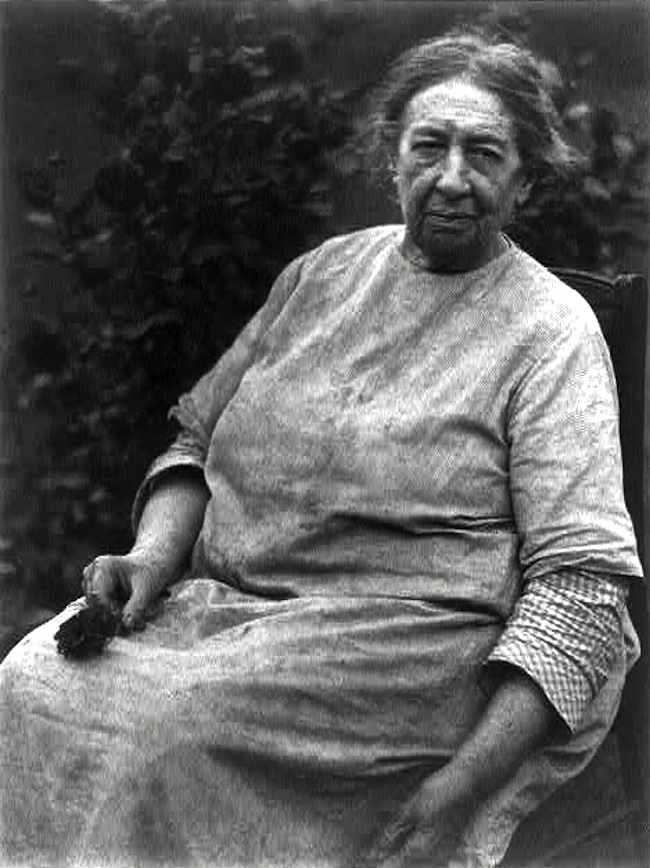
Woman with dahlia, Library of Congress“Woman with dahlias,” ca. 1930, by Doris Ulmann, via Library of Congress Prints and Photographs Division.

In this beautiful portrait of an older Appalachian women, you can just see her stand of dahlias behind her.

In the traditional language of flowers, the dahlia is usually said to represent dignity, sometimes elegance.

A well-to-do New Yorker, Doris Ulmann trained as an art photographer with Clarence H. White in the 1910s. In the 1920s, she began traveling to the southeast to photograph rural people, particularly in the hills of Kentucky and the Sea Islands of South Carolina — people “for whom life had not been a dance.” She also documented Appalachian folk arts and crafts, working with musician and folklorist John Jacob Niles.