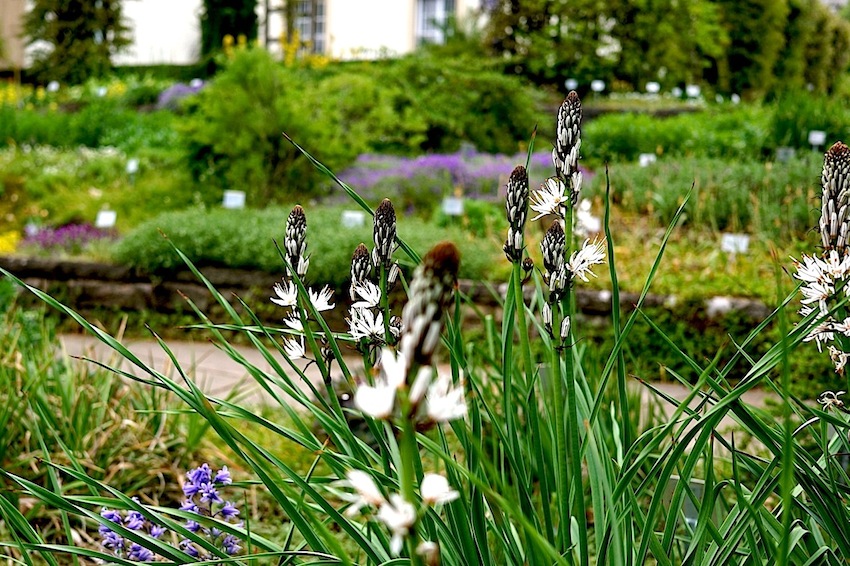
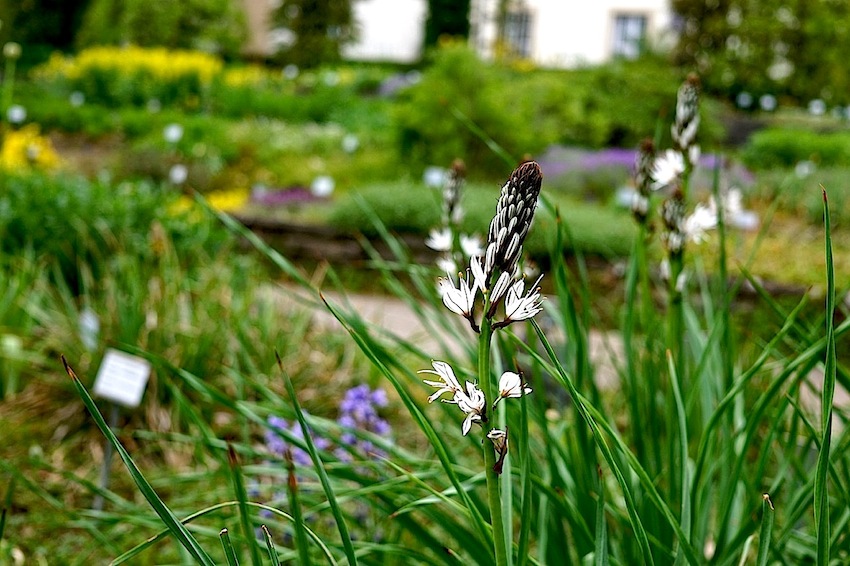
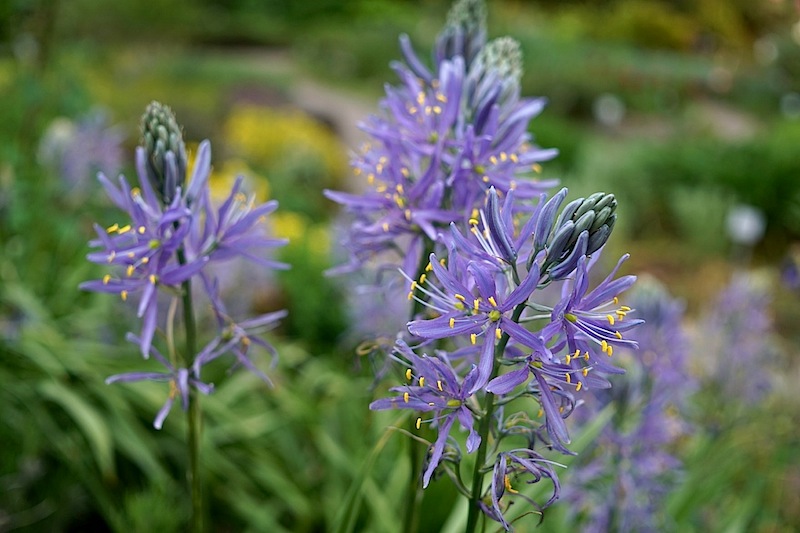
The pretty blue-violet flower above was close by, but I didn’t get a picture of its label. I think it’s another Asphodelus. It’s a Camassia, a North American native in the asparagus family (see the comments below).
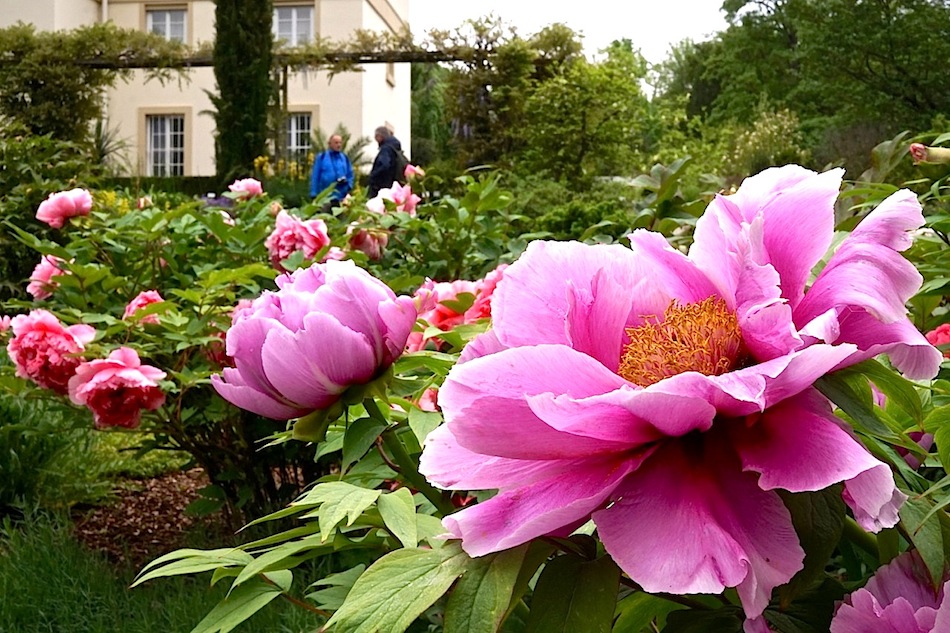
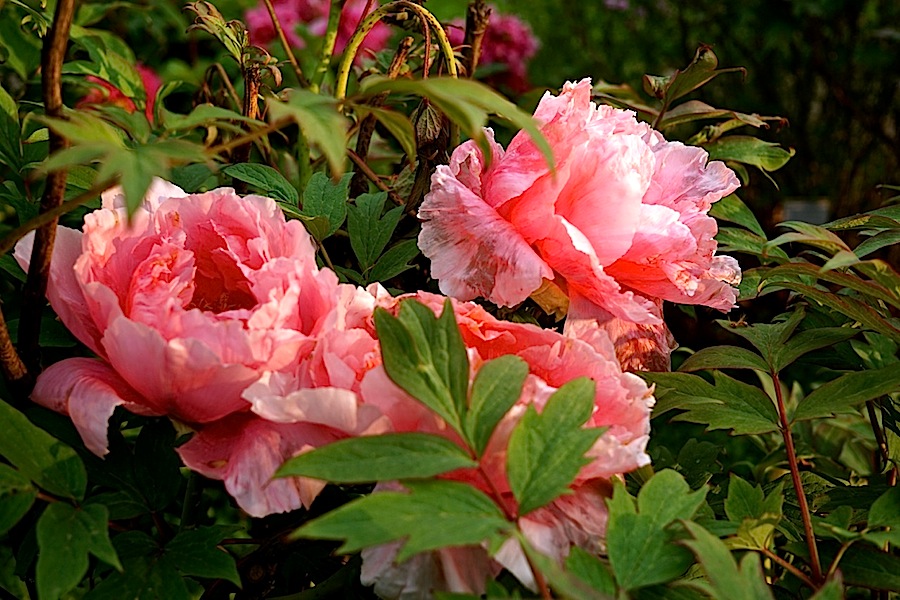
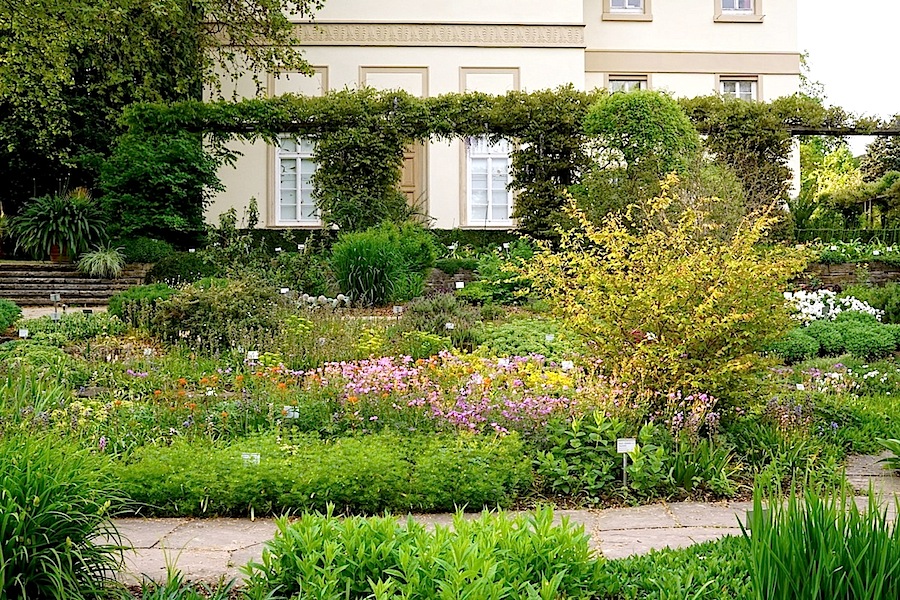
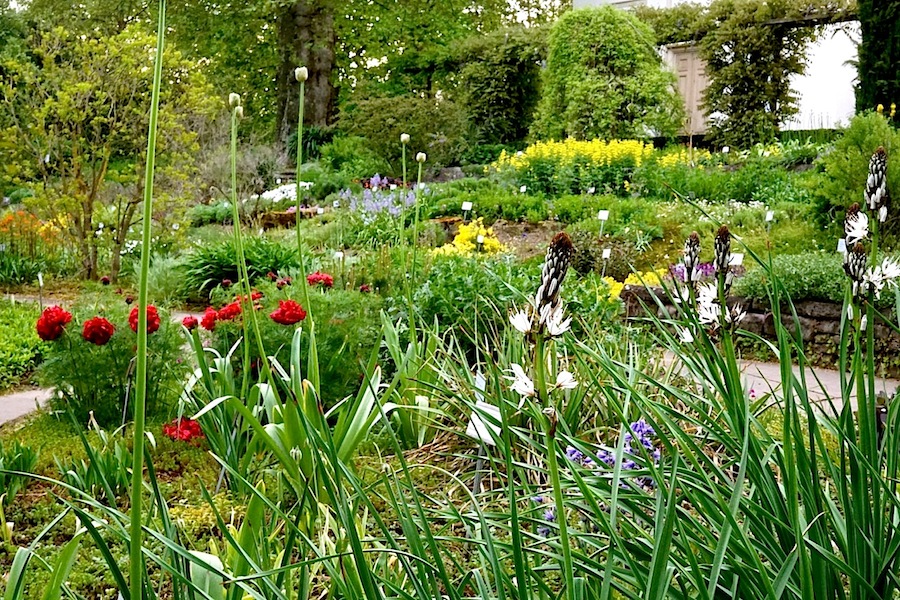
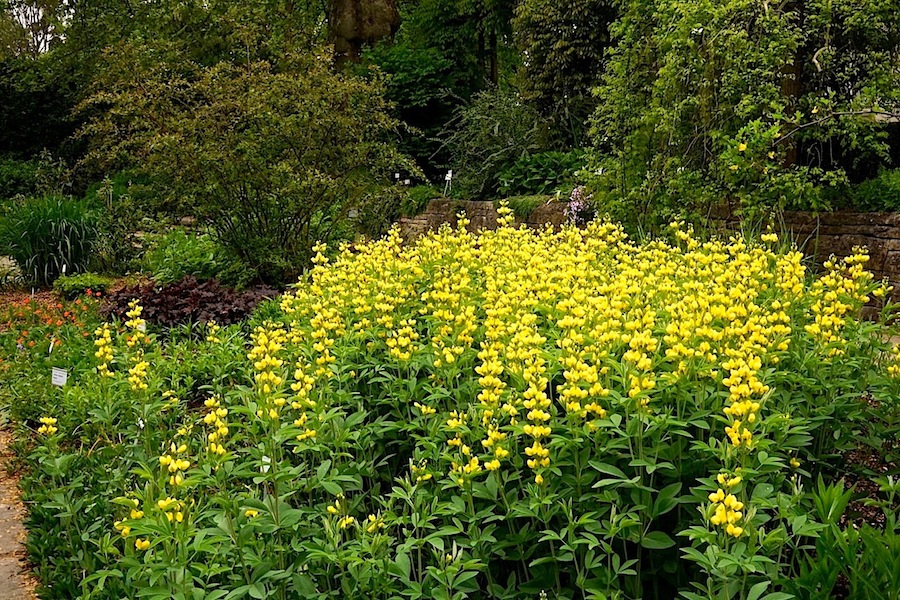
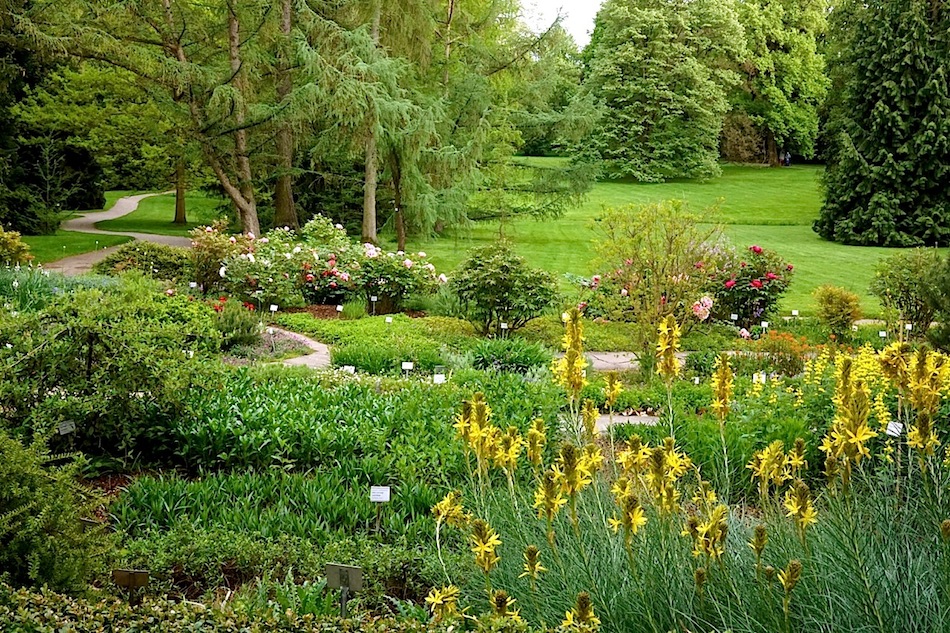
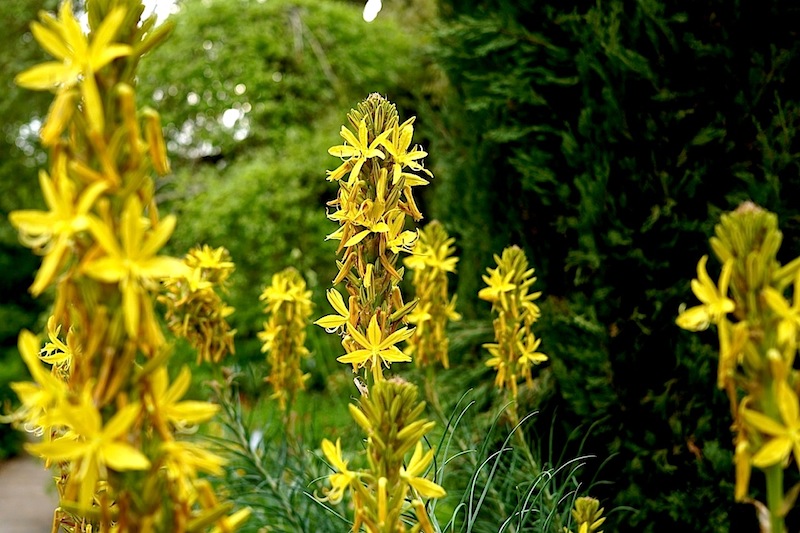
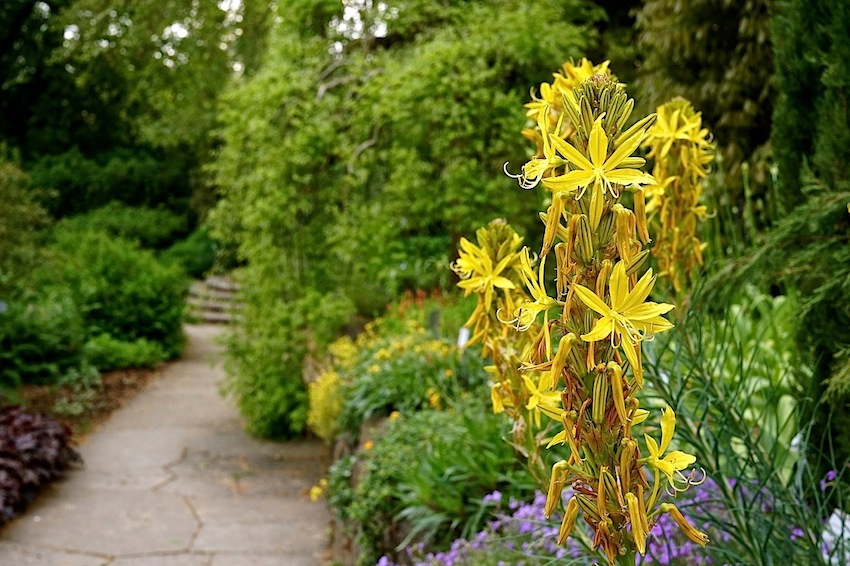
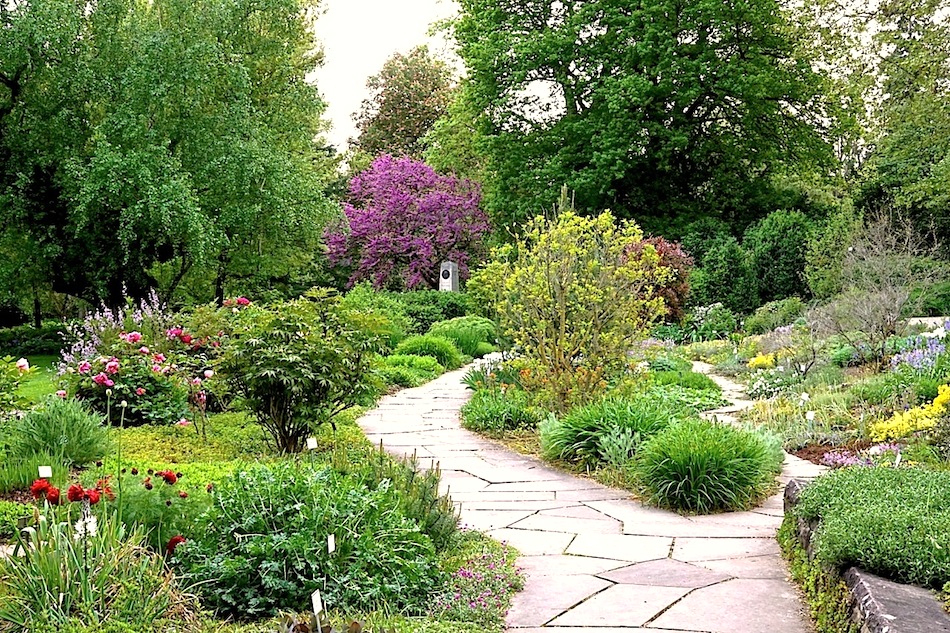
Looking south across the garden from behind the wisteria arbor, you can see the row of tree peonies. In the lower right-hand corner is a planting of yellow asphodel or king’s spear.
Asphodelus lutea
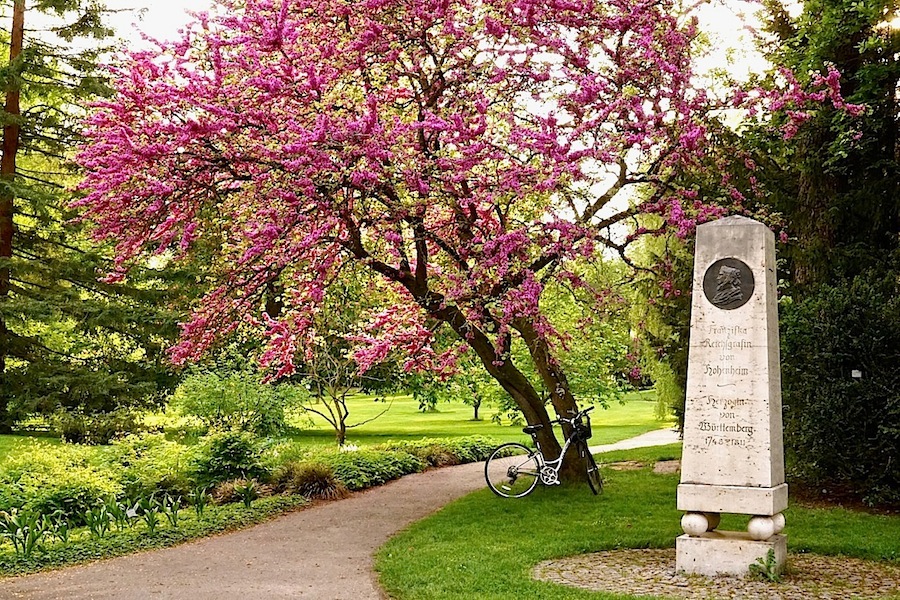
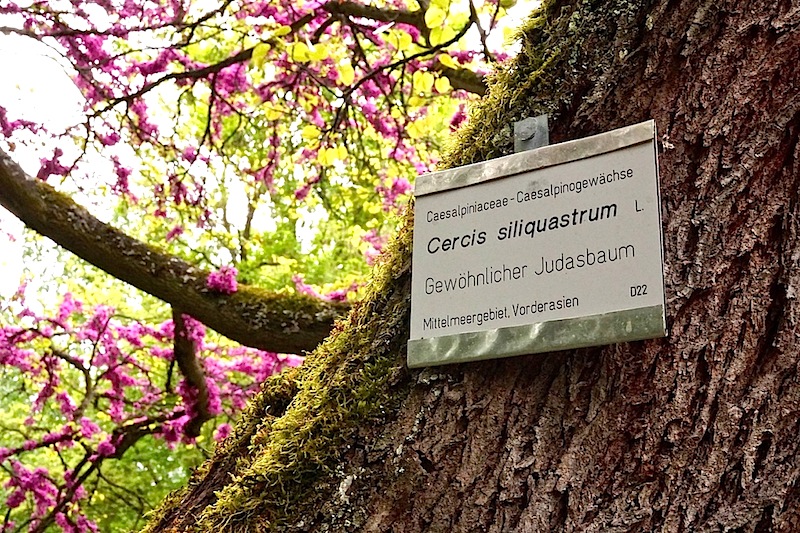
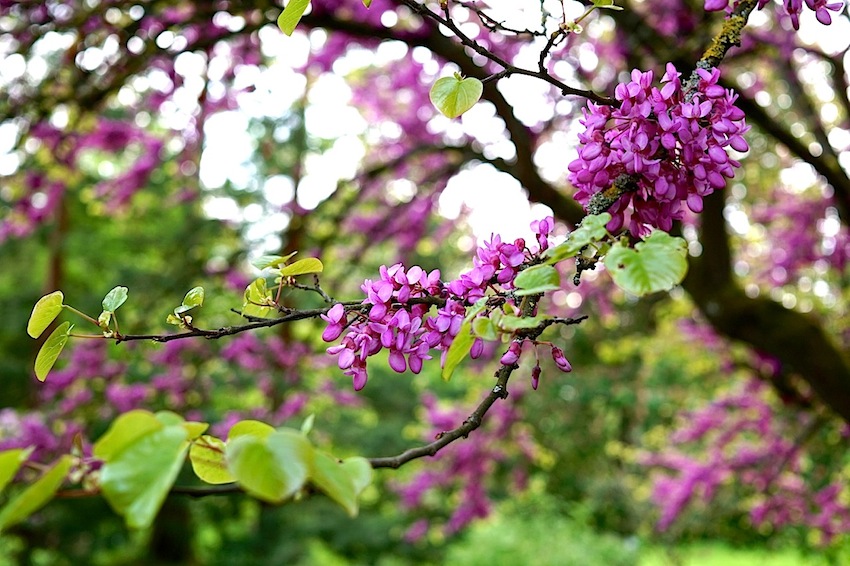
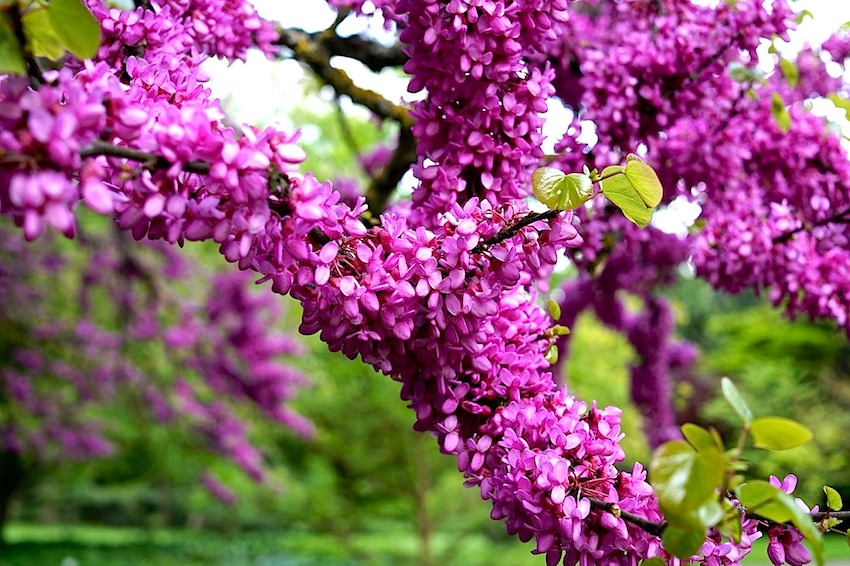
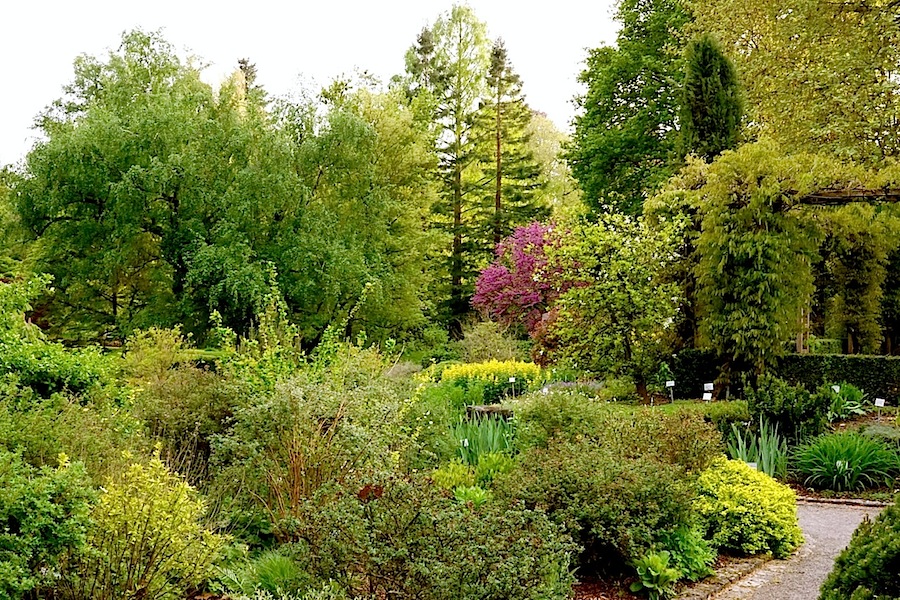
Looking across the garden from the east to the west, a beautiful pink blooming Judas tree draws the eye.
The tree is native to Southern Europe and Western Asia.
The flowers are edible and are said to have a sweetish-acid taste.
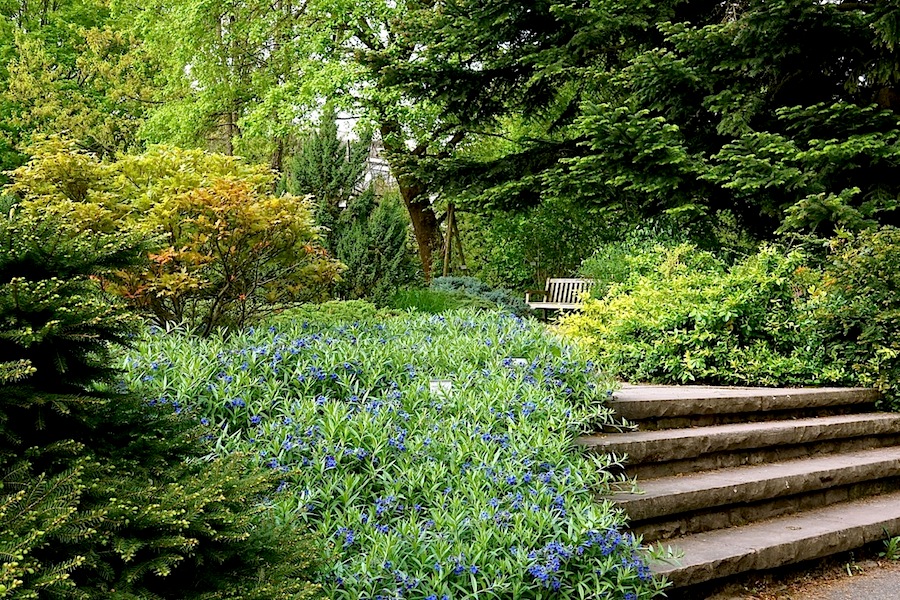
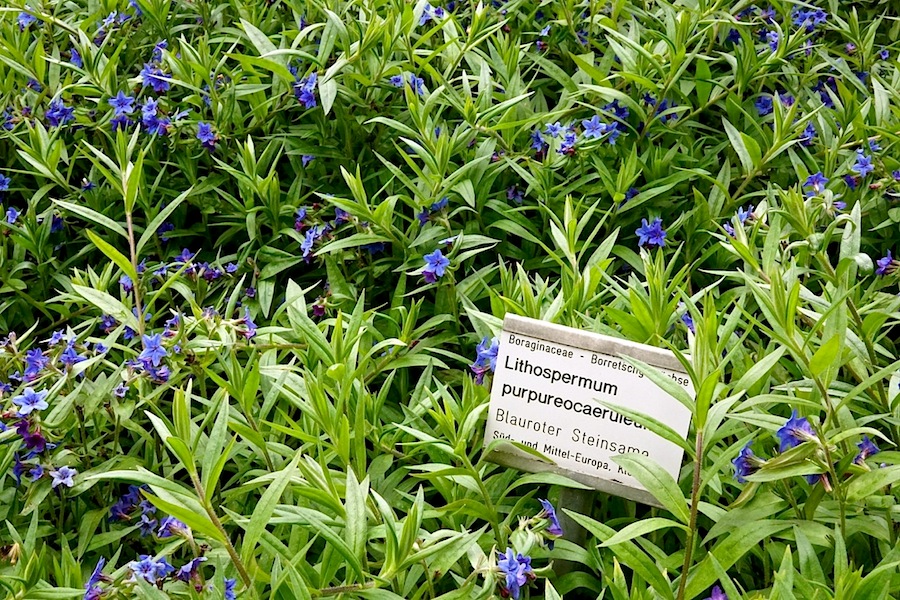
At the other side of the garden a Lithospermum purpurocaeruleum or purple gromwell drapes over the steps. The flowers emerge purple reddish and then mature to deep blue.
A last look from the northeast. At mid-month, the wisteria on the arbor (right side) has only a few blooms.
To see what’s blooming today for other garden bloggers, please visit Carol at May Dreams Gardens.
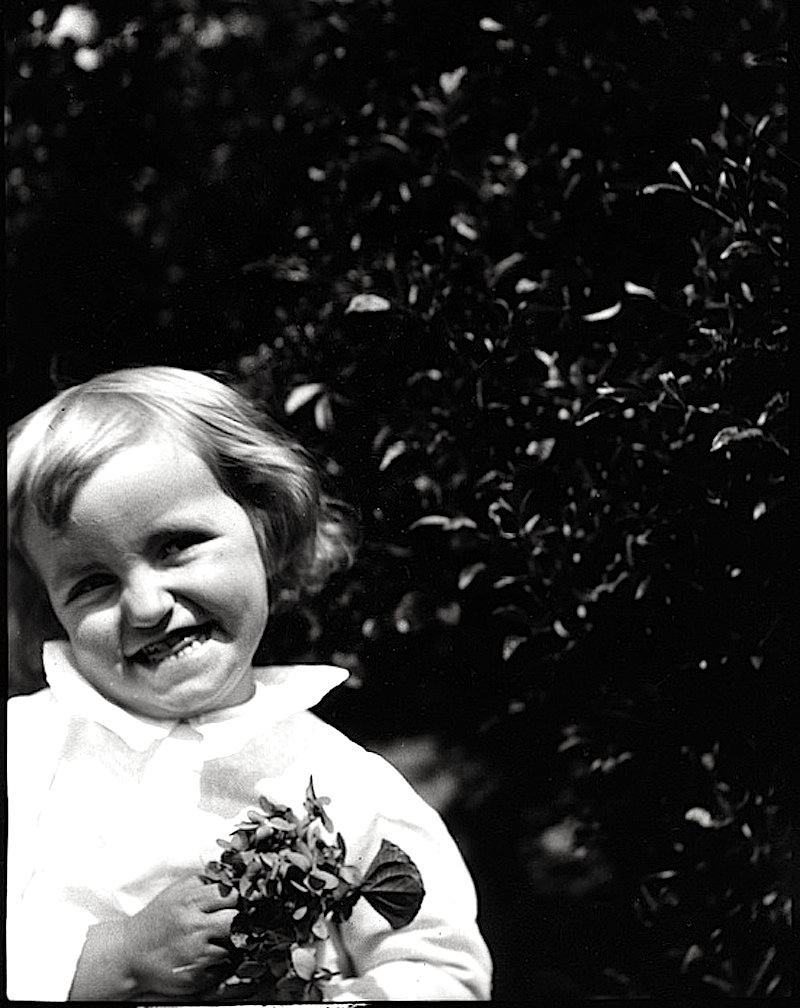
Mary Heldon, between 1900 and 1920, Friars Point, Mississippi, by Milton McFarland Painter, Sr., via Mississippi Department of Archives and History.* Mary was also pictured in this garden photo by Painter.
I had not thought of violets late,
The wild, shy kind that spring beneath your feet
In wistful April days. . .
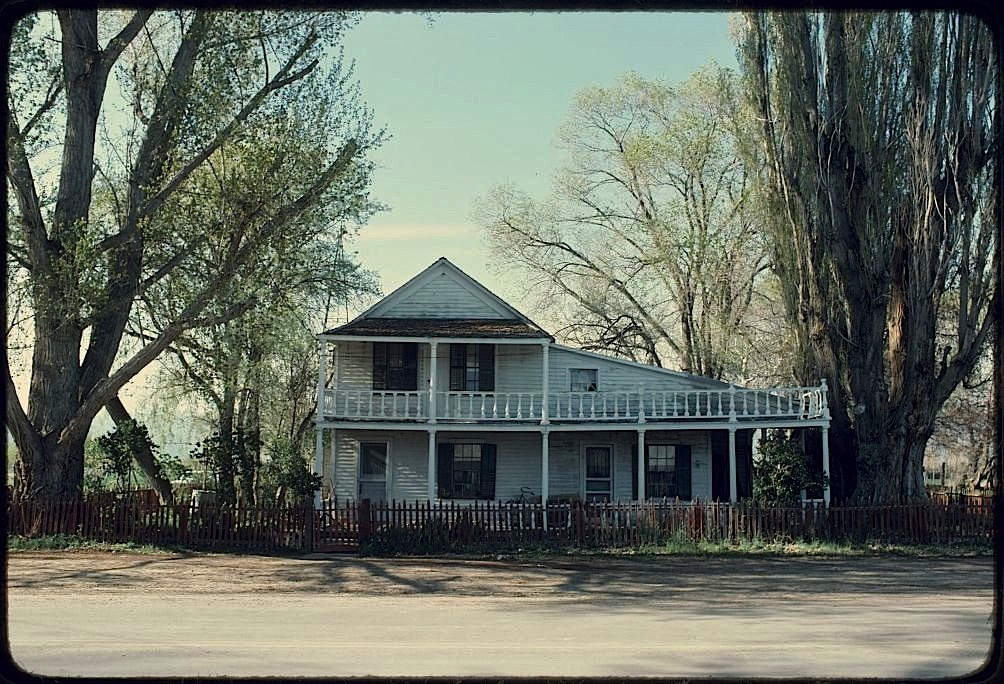
Buckingham Residence, Paradise Valley, Nevada, July 1978, (35mm slide) by Suzi Jones, via American Folklife Center of the Library of Congress (all photos here).
The house, the oldest in the town, was originally built as a hotel for a mining settlement. It was later disassembled and rebuilt in Paradise Valley.
May 1978 slide by Carl Fleishhauer.
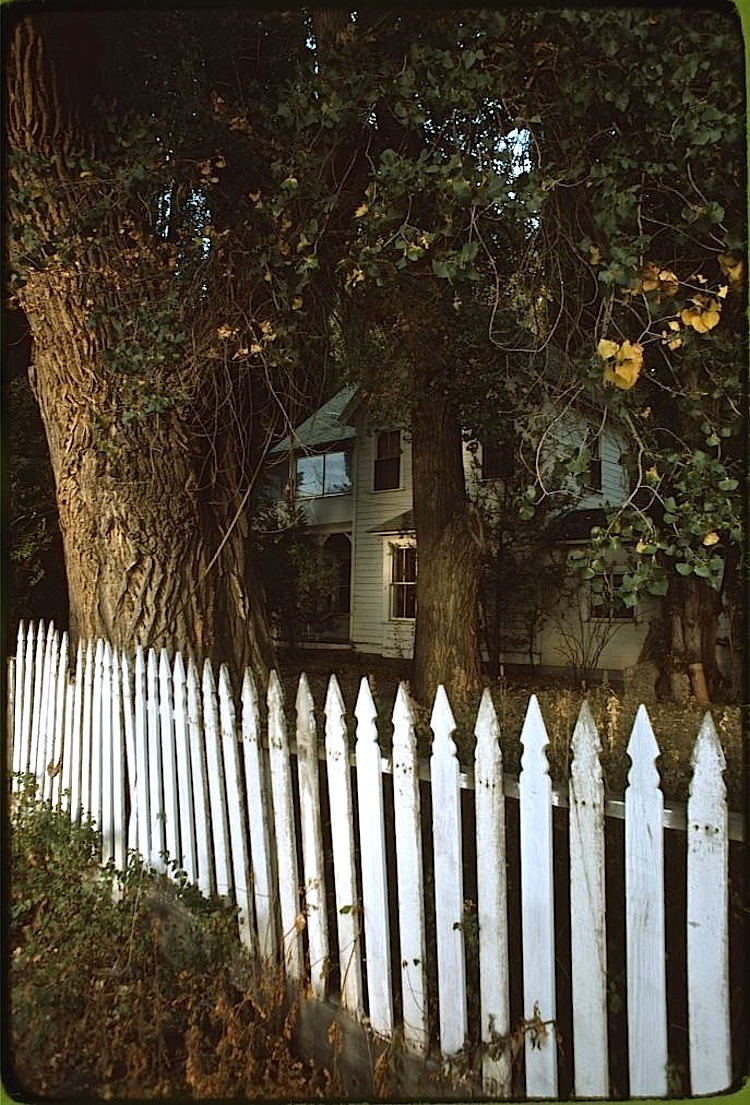
White Fence
Also from the Folklife Center’s Paradise Valley* collection. . .
The Stock-Stewart house, October 1979, by Carl Fleischhauer.
This residence on the Ninety-Six Ranch was built around 1900, added onto a bunkhouse/dining hall from the 1880s (shown below).
Ox yoke and wagon wheel entrance to Stock-Stewart house, July 1978, by Howard W. Marshall.
The ranch has been in the same family’s ownership since 1864. The ox yoke above the gate may have had particular significance for them, as their ancestor — a German immigrant named William Stock — first saw the land while hauling freight from California.
*From 1978 to 1982, the Center conducted an ethnographic field project in this distinctive ranching and mining community. The study became the collection “Buckaroos in Paradise: Ranching Culture in Northern Nevada, 1945-1982.”






 enclos*ure