
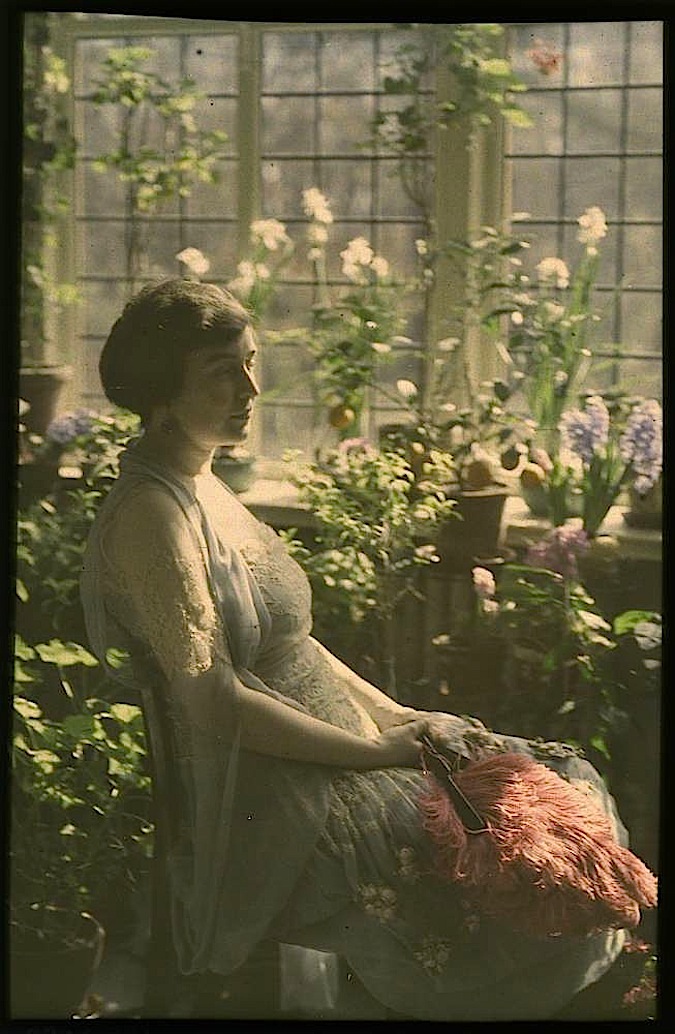
 “Woman in greenhouse,” ca. 1910, an autochrome by Mrs. Benjamin F. Russell, via George Eastman Museum Commons on flickr.
I have not been able to find out anything about Mrs. Russell.
“Woman in greenhouse,” ca. 1910, an autochrome by Mrs. Benjamin F. Russell, via George Eastman Museum Commons on flickr.
I have not been able to find out anything about Mrs. Russell.
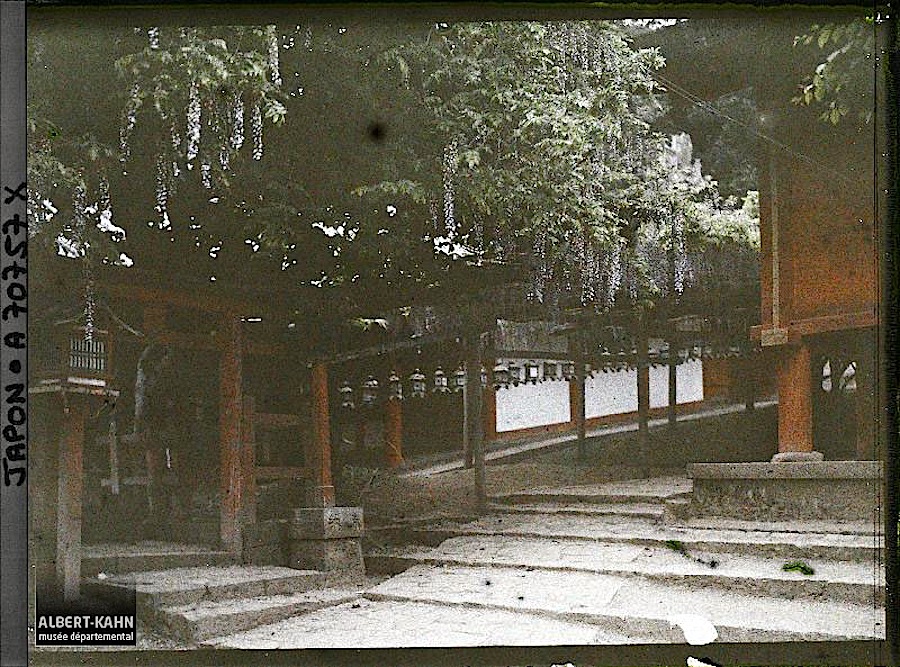
Kasuga-jinja (or Kasuga-taisha) Sanctuary and wisteria, Nara, Japan, Spring 1926, by Roger Dumas, via Archives of the Planet Collection – Albert Kahn Museum /Département des Hauts-de-Seine (all three photos here).
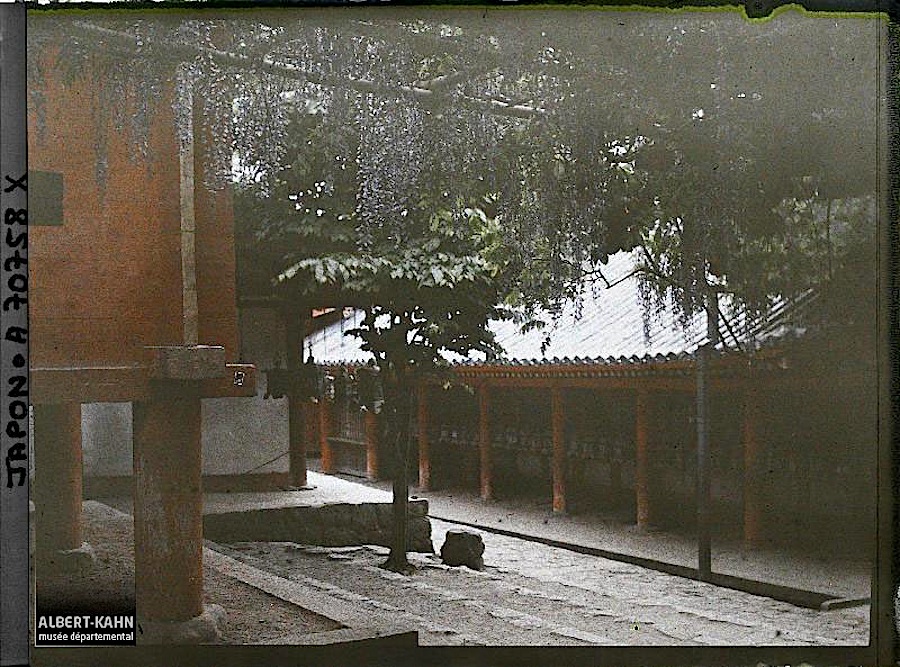
The Shinto shrine (first built in 768 A.D.) is famous for its thousands of bronze and stone lanterns. It is located on the edge of Nara Park, home to freely roaming deer said to be messengers of the gods.
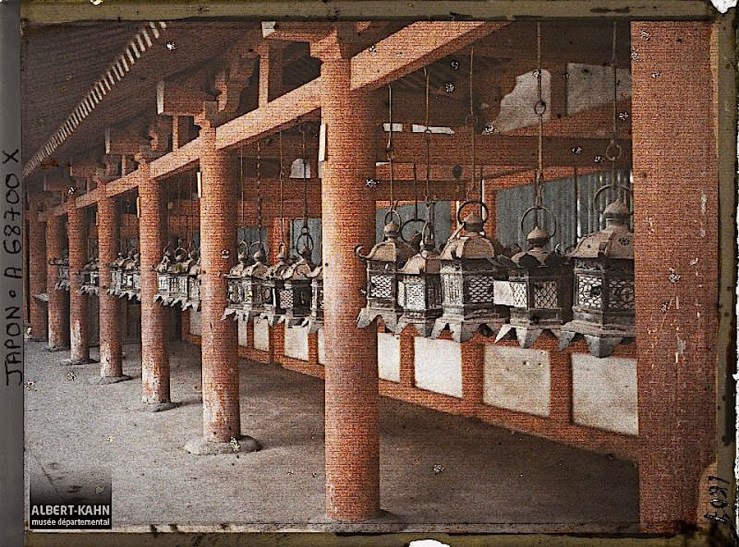
The autochromes above are three of about seventy-two thousand that were commissioned and then archived by Albert Kahn, a wealthy French banker and pacifist, between 1909 and 1931. Kahn sent thirteen photographers and filmmakers to fifty countries “to fix, once and for all, aspects, practices, and modes of human activity whose fatal disappearance is no longer ‘a matter of time.'”* The resulting collection is called Archives de la Planète and now resides in its own museum at Kahn’s old suburban estate at Boulogne-Billancourt, just west of Paris. Since June 2016, the archive has also been available for viewing online here.
*words of Albert Kahn, 1912. Also, the above photos (A 70 757 X, A 70 758 X, A 68 700 X) are © Collection Archives de la Planète – Musée Albert-Kahn and used under its terms, here.
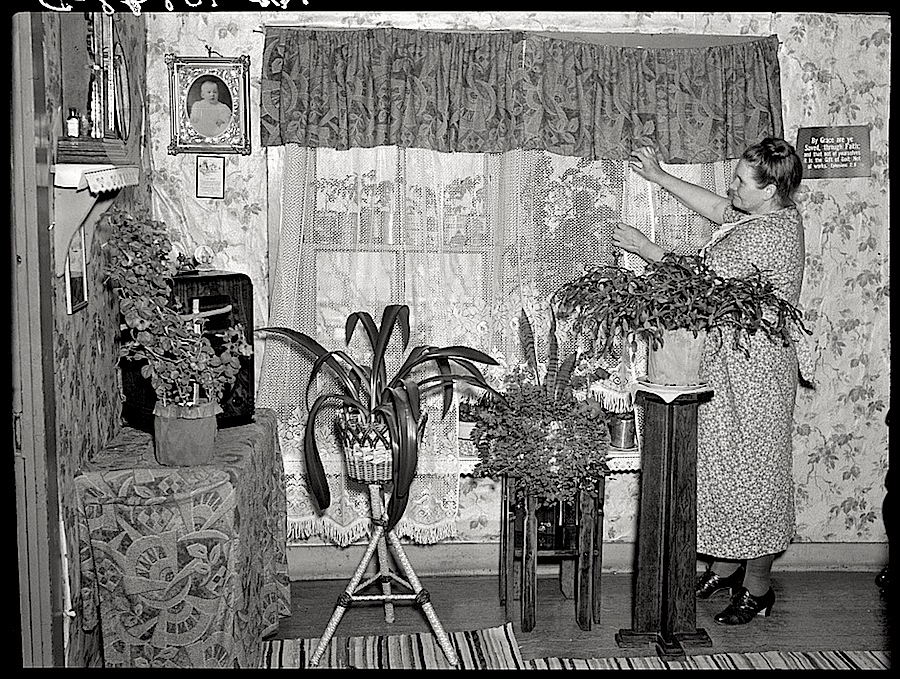
“Mrs. Herman Perry in her home at Mansfield, Iron County, Michigan,” May 1937, by Russell Lee, via Library of Congress Prints and Photographs Division.
Look through the net curtains at her tomato plants in tin cans. I wonder if she really waited until the average last frost date* for zone 18 — which is currently between July 1 and 10 — to put them in the ground.
Lee took the photo on assignment for the U.S. Farm Security Administration. Mrs. Perry was “the wife of an oldtime iron miner who worked in the mines before they were abandoned.”
*The average first frost date is between September 1 and 10.
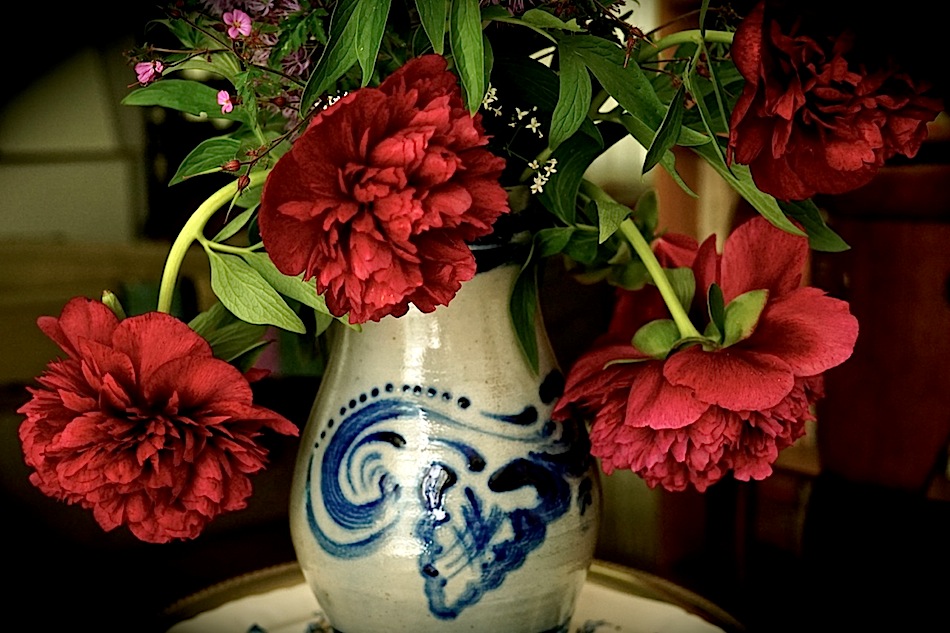 For each of the last two springs in this house, the peony plant in the back yard has given me exactly one bloom. This week, there were eight — all but two opening fully on the same day. Their stems are very curved from being knocked over earlier in the month by a late snow and then rain and wind. Next year, I will try to remember to rig up some sort of support before they emerge.
The blooms look red, but they’re actually a very dark pink, and they have a nice light scent. I arranged them with some wild pink geranium that comes up along the back fence (maybe G. palustre?) and some sweet woodruff. The Westerwald salt-glazed pottery pitcher is from this Saturday’s flea market.
To see what other bloggers have put in a vase today, please visit Cathy at Rambling in the Garden. She hosts this Monday theme.
While we’re all waiting for the Chelsea Flower Show to open next week and for pictures to emerge, here are a few things that I particularly liked when I visited the original Chelsea — the Chelsea Physic Garden — about a week and a half ago.
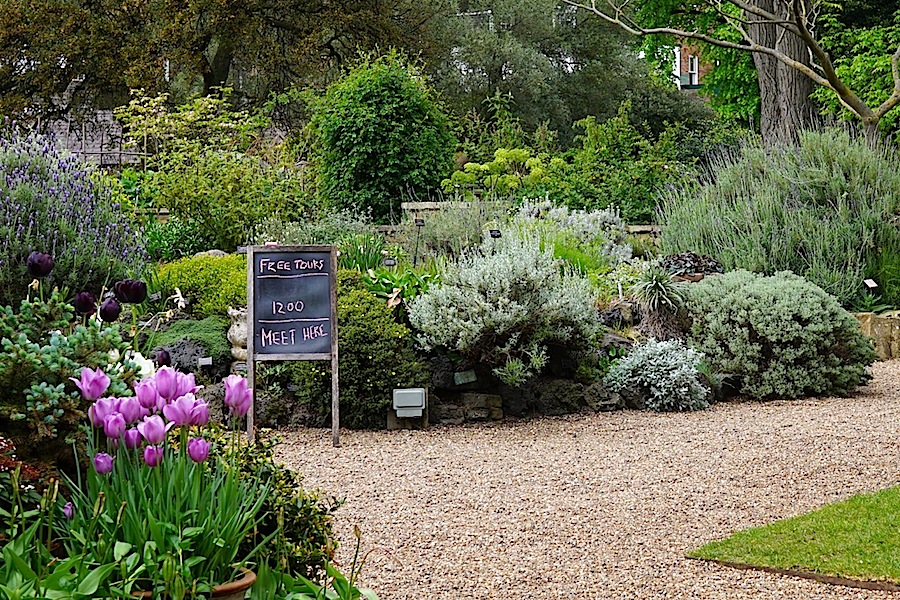
The four-acre London garden was founded in 1673 by the Worshipful Society of Apothecaries in order to grow medicinal plants and train their apprentices. It is the second oldest botanic garden in Britain, after the one at Oxford.
 1. The Pond Rockery area (also shown at the top). The sides are planted in Mediterranean and alpine plants.
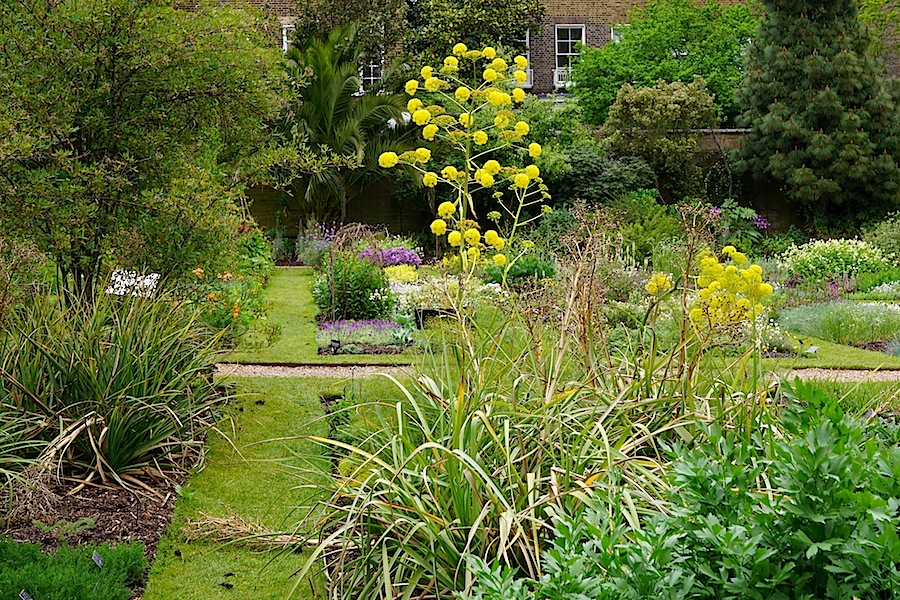 2. This giant fennel. It was a beacon in the Botanical Order Beds at about 8′ tall.
 It did not have a label, but I have since looked it up — Ferula communes.
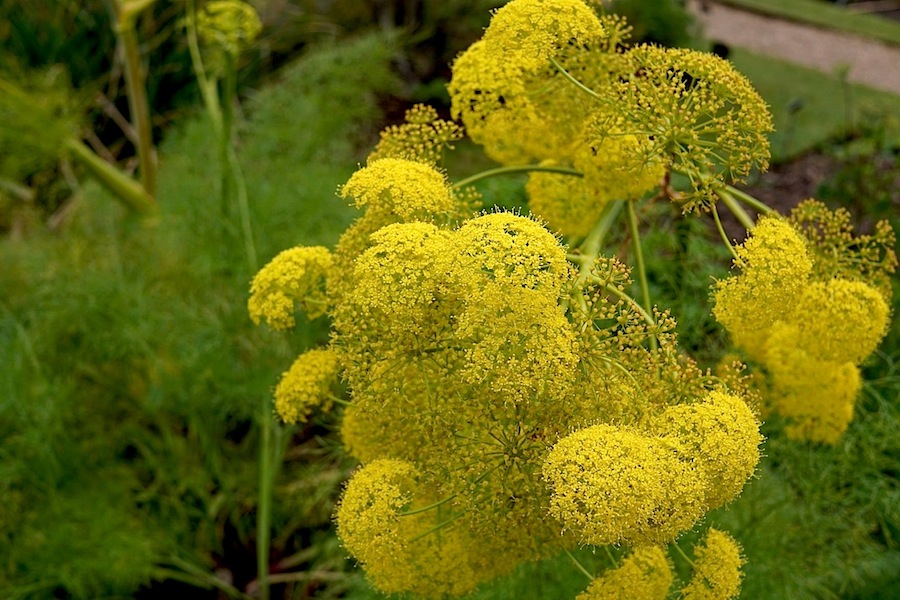 The species is part of the carrot family, Apiaceae. (Common fennel belongs to another genus, Foeniculum.)
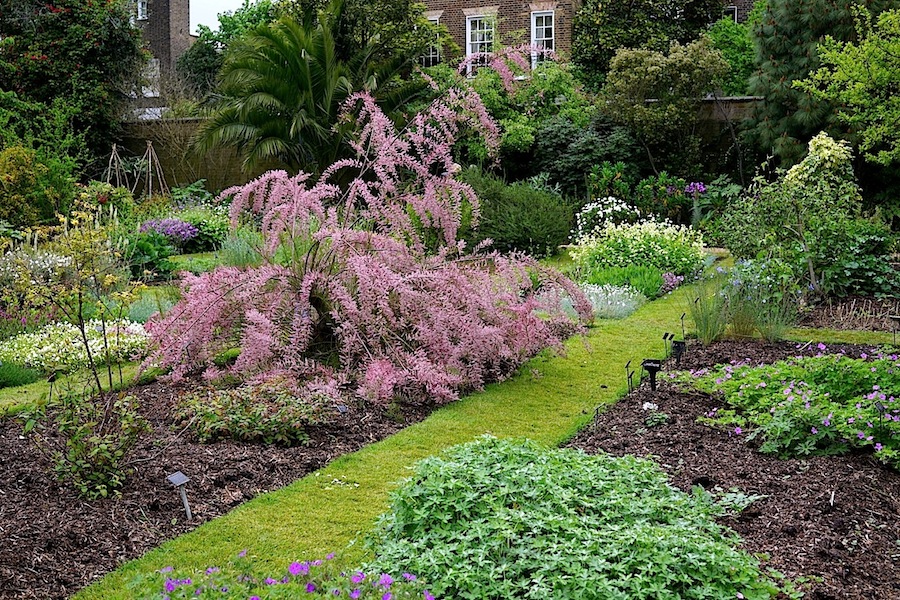 This tamarix in the center of the beds was a star too.
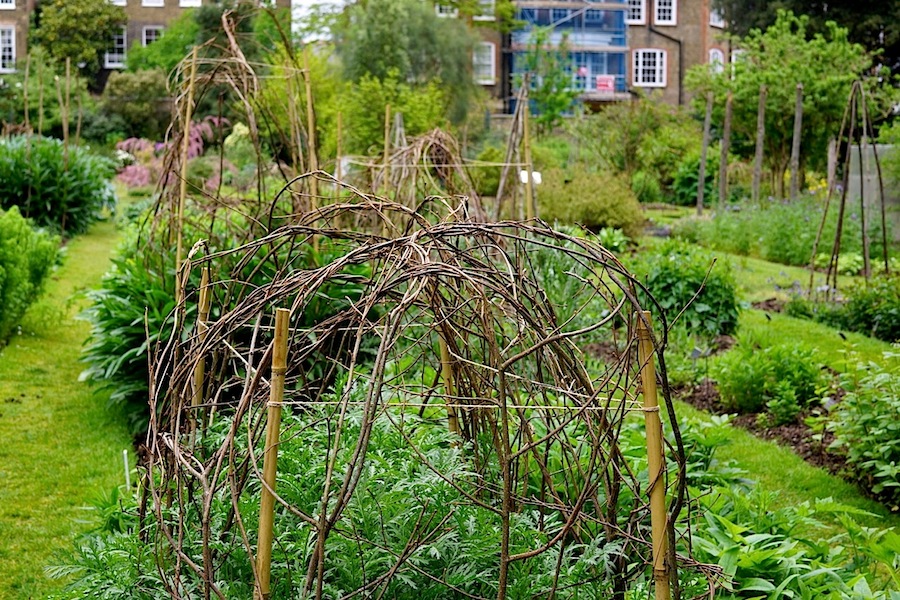
 3. The plant supports of bamboo, string, and shrub and vine cuttings.

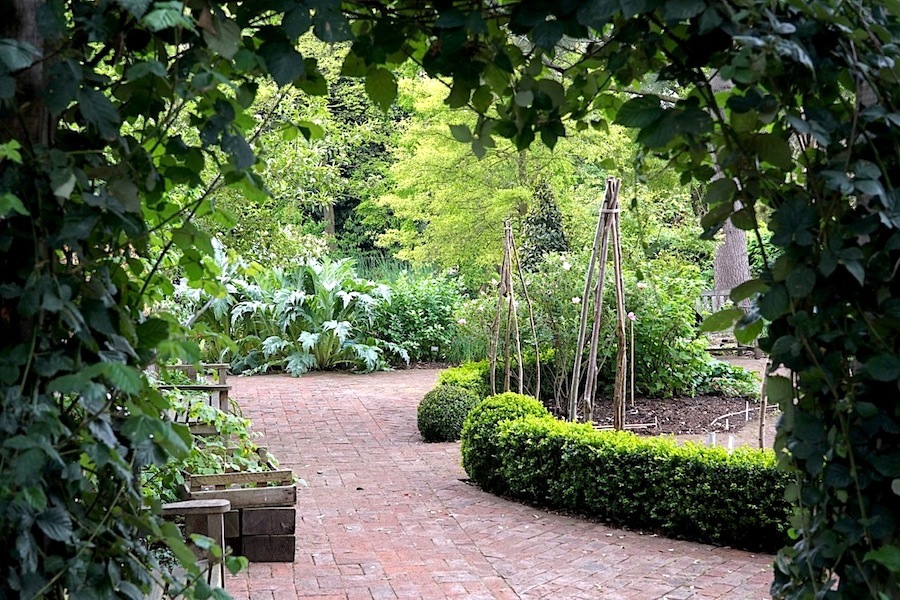 4. This neat little kitchen garden arrangement and its beautiful cardoons.


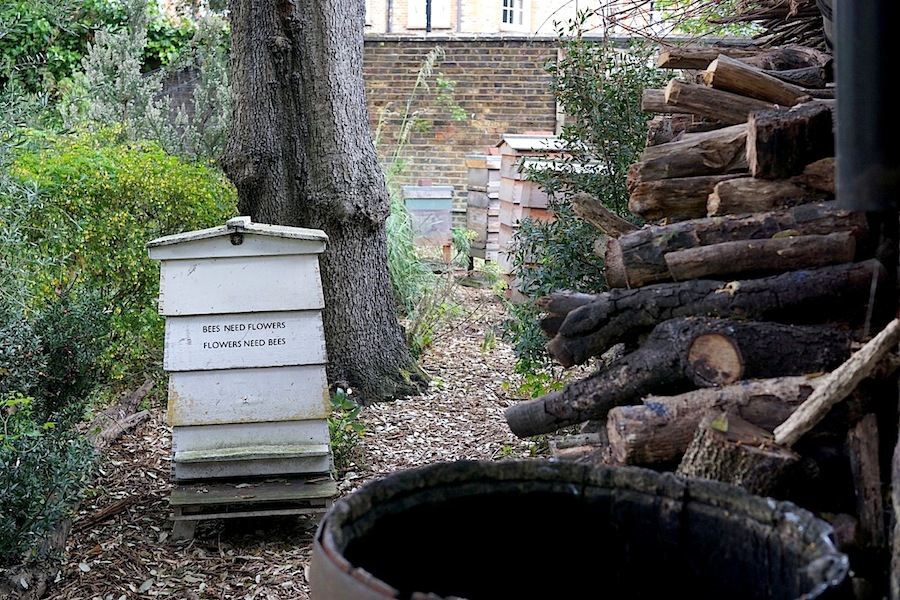 And the nearby beehives.
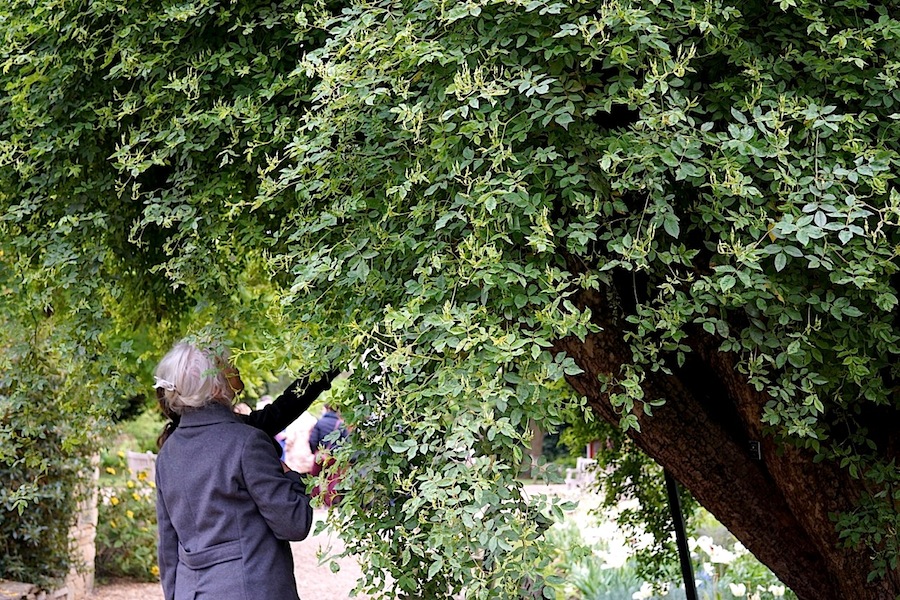 5. This trunk of a Catalpa bignonioide, which is supporting a huge Rosa Brunoni or Himalayan musk rose.
 The rest of the tree was cut off. It may have died, but it may also have been too large for the space.
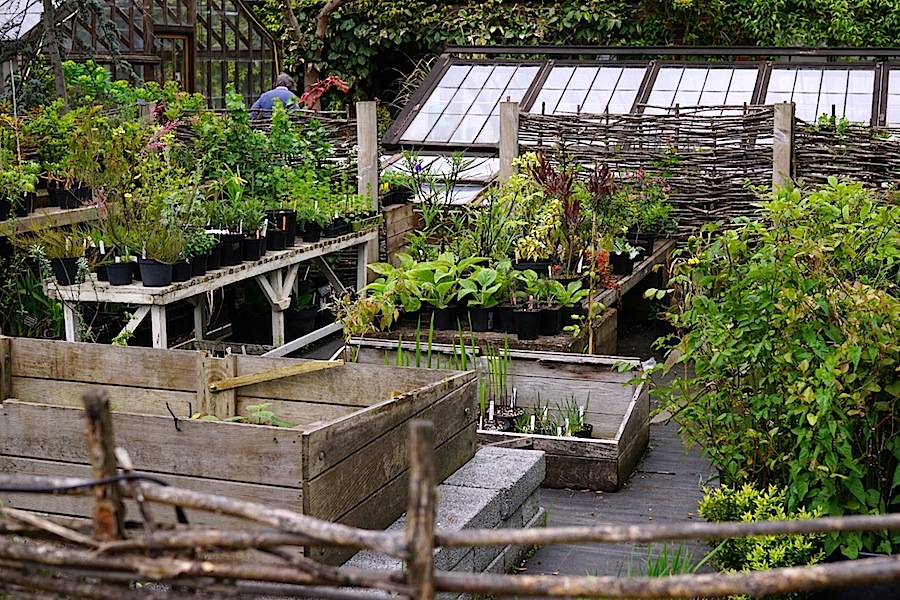
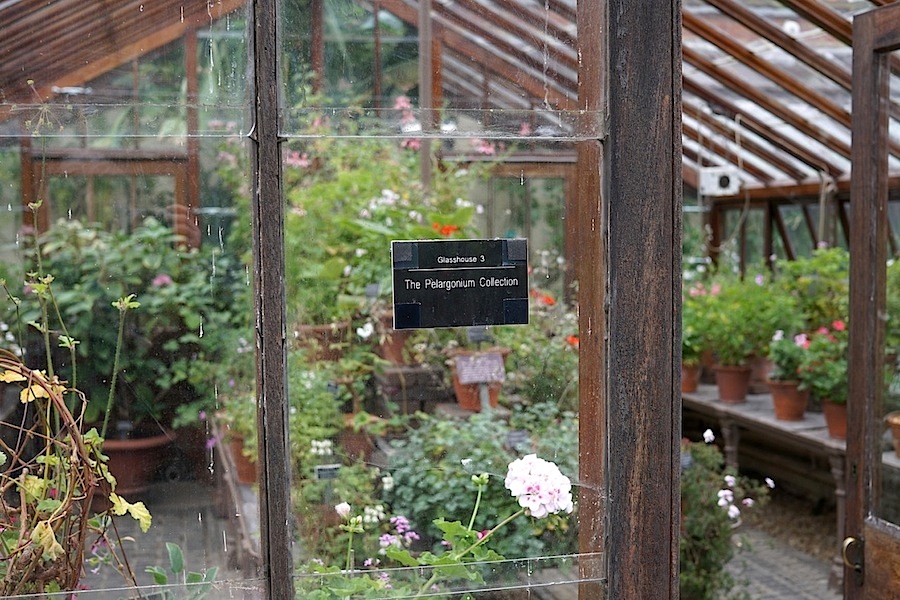
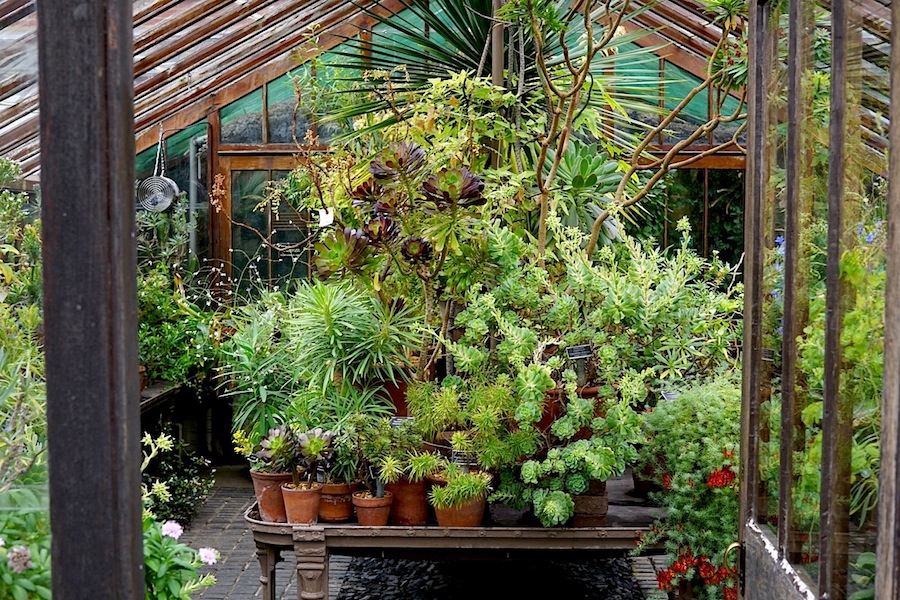
 6. The greenhouse area.


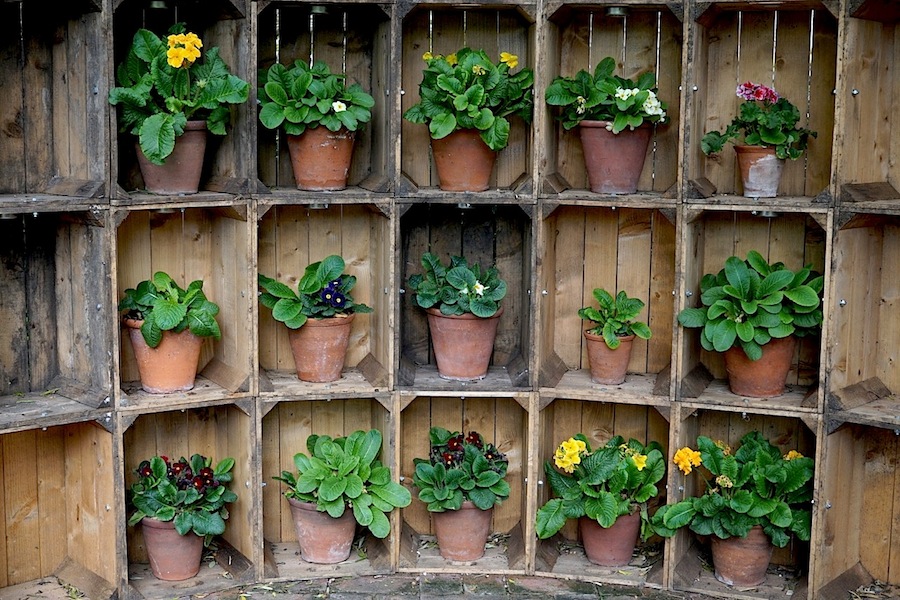
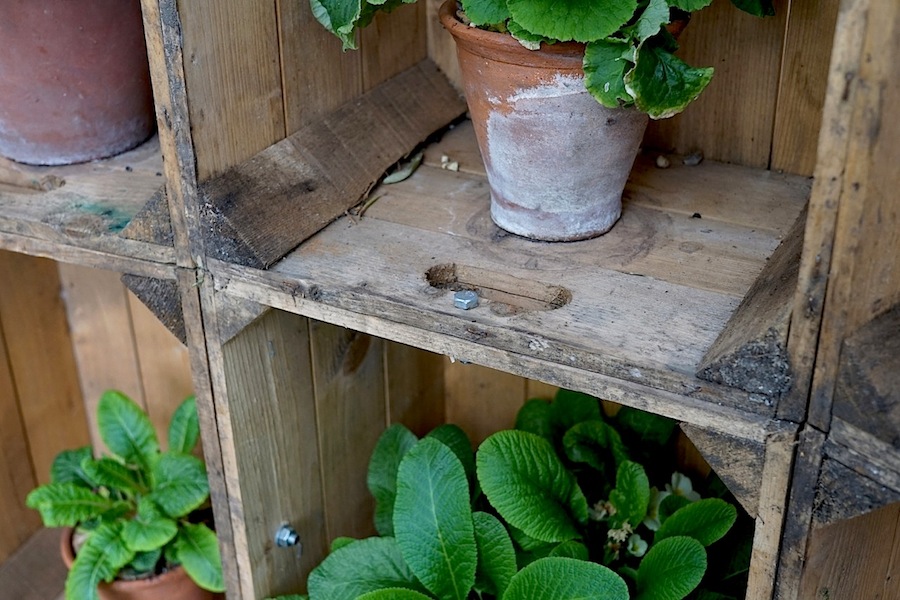
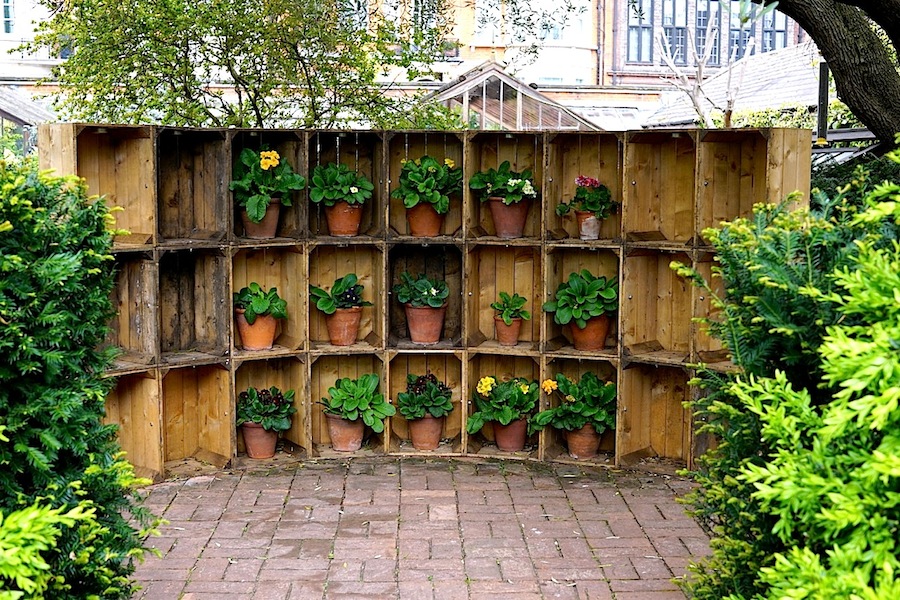 7. This primrose display, which — with the giant fennel — made my “most desired” list that day (along with this).
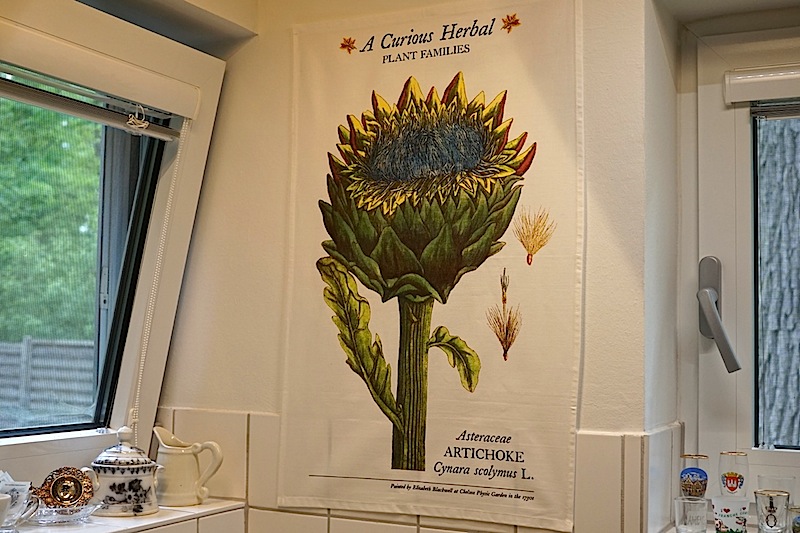 8. My tea towel from the gift shop.
 (And the café is excellent.)
 enclos*ure