On a hot day in early August, I visited the Heirloom Garden of the National Museum of American History* and took a lot of photos, but because of our move, I never had time to post them. Now that it is seed-ordering time in the U.S., I thought they might be inspirational.
The south side of the Museum of American History and the Washington Monument.
The main entrance with frangipani, agave, and canna.
Agave closeup.
Planters and benches with crape myrtles Lagerstromeia indica ‘Watermelon’.
Canna, red zinnias, and coleus.
A closeup of red zinnias and coleus beside the cannas.
Black-eyed susans (Rudbeckia hirta) and Canna indica.
Love-lies-bleeding (Amaranthus) and dill (Anethum graveolens).
Dill, zinnias, and love-lies-bleeding.
Amaranthus or love-lies-bleeding and rose campion (Lychnis coronaria).
Fading coneflowers (Echinacea purpurea) and sage (Salvia officinalis).
Caladiums and small burgundy amaranthus.
A closeup.
Sage and black-eyed susans.
Amaranthus with bright red stems.
Peeling bark of Natchez crape myrtles.
The museum plays American music from speakers that look like rocks.
Crape myrtle tree and bleeding heart (Dicentra spectabilis) leaves.
Basil, peppers, and sage.
Dill (Anethum graveolens), zinnias, and love-lies-bleeding (Amaranthus).
Cleome hassieriana and burgundy bachelor’s buttons (Centuarea cyanus).
An arrangement in lime green and burgundy.
Sage and fallen ‘Watermelon’ crape myrtle petals.
Huge ceramic pots on the south side across from the Heirloom Garden.
Trailing plants and blue ceramic.
Palms and coleus in huge blue ceramic pots.
(Click on any image above to scroll through larger photos.)
The garden — huge, raised planters, all the way around the museum building — contains a mix of open-pollinated plants cultivated in America prior to 1950 (heirlooms). The plantings are anchored by crape myrtles and a variety of shrubs.
The colorful annuals, perennials, bulbs, and herbs are all so familiar, but the combinations are often surprising. It’s a splendid ode to the flower gardens of our grandparents.
The museum pipes in a selection of American music from speakers set in the planters (in fake rocks). Normally, I would find this annoying, but in the already noisy, wide open site, it actually drew me in to the garden and enhanced the experience. And their selection is excellent — folk, jazz, blues, musicals. The planters are raised about 3′, which also helps the plants compete for attention in the immense space.
By late summer, the flowers were being allowed to grow a little leggy and fade naturally, which added to the various forms and tones of the groupings.
*The Smithsonian Institution on the National Mall in Washington, D.C., has eight beautiful gardens (ten if you count the inner courtyards of the Freer Gallery and Museum of American Art).
I was surprised this week by this pretty cream and pink canna, blooming among some shrubs near the garage. It’s a short variety, and I need to move it to a place where it will get a little more attention.
This is another small canna currently blooming near the patio.
They are all I’ve found in our flower beds, which is a little strange since cannas are such a common plant here.
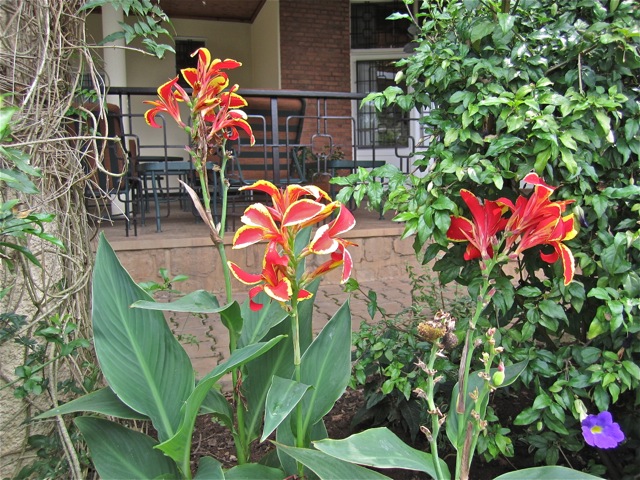
This is my favorite local variety. It’s medium tall and the blooms are clear orange.
These are my neighbors’ cannas, planted outside their garden walls.
Cannas are so common in Africa that you might think of them as native plants, but all cannas are native to the Americas. In the U.S., they range from southern South Carolina, west to southern Texas.
Cannas like full sun and consistently moist soil. They have a high tolerance for contaminants and can be used to extract pollutants from wetlands.
The blooms and foliage of cannas have such a strong presence that I think they need to be placed in gardens that are rather dramatic in return and maybe somewhat tropical.
Beautiful use of burgundy-leaved cannas in front of the Smithsonian’s Museum of American History, Summer 2011.
Here is a nice old-fashioned garden bed with canna from the South African blog Sequoia Gardens.
Via Sequoia Gardens.
Of course, they’re great in showy pots.
Cannas and coleus at The Morton Arboretum, via This Garden Cooks.
I found an interesting online newsletter, Old House Gardens, which offers a lot of history and advice on the use of cannas. It reports that Georgia gardener Ryan Gainey uses Canna indica (commonly called Indian Shot) in a big clump with chartreuse ‘Limelight’ hydrangeas and yellow ‘Hyperion’ daylilies.
Russell Page included them in his imaginary personal garden in groups of pots, along with “yuccas, hedychium, Francoa ramose, tigridias, yellow and white lantanas clipped into balls, and the dwarf pomegranate.”
Henry Mitchell lamented in The Essential Earthman that cannas had been swept out of favor, along with geraniums, elephant’s ear, and crotons, “because people remembered well how ridiculous they had looked in the wormy little dribbles of Victorian gardens.”
He recommended the large, red-flowered, green-leaved variety, ‘The President’, with “clumps of ligularias and rhubarbs and so on.”
For cannas with reddish-purple or bronze leaves, Mitchell recommended pairing them with plants of gray and bronze foliage, as well as straw-yellow, buffy, or sharp lemon flowers like daylilies — or with figs, pomegranates, or “chest-high mounds of gray wormwood and black-green yews.” It is perfectly OK to cut off the canna flowers if they are “too flashy” for you.
Tea growing around Kinihira, Rwanda. Tea plantations are traditionally called ‘tea gardens.’
In late December, we were included in a Christmas season lunch at the home of the Director General of Sorwathe and his wife. Sorwathe is the Société Rwandais de Thé or, in English, the Rwanda Tea Company, and is located about 70 kms. north of Kigali.
Before the meal, we had a chance to tour the factory, which is the largest in Rwanda and produces over 6 million lbs. of made tea annually, almost all of it for export.
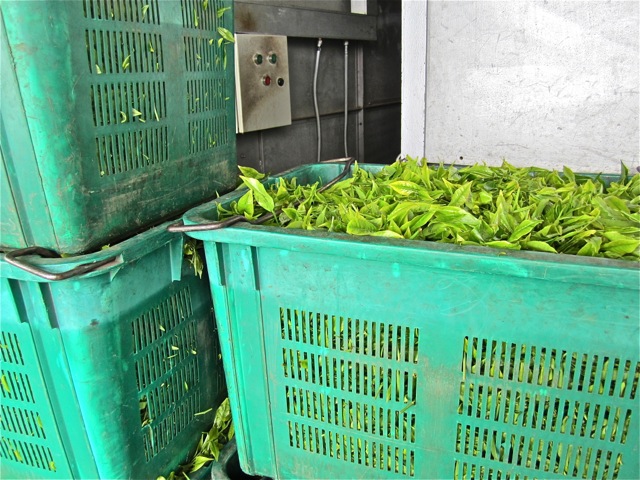
Fresh tea leaves about to go to the withering process, where they will lose excess moisture. The leaves have no scent while fresh.
Sorwathe was founded in 1975 by American Joe Wertheim. It remains 85% owned by Mr. Wertheim’s Connecticut-based company, Tea Importers, Inc. It cultivates 650 acres, mostly in drained swampland (marais). Click here to see some really nice photos of their tea gardens.
After coffee, tea is Rwanda’s most important export. Tea cultivation began here in 1952, and Sorwathe was the first private factory. Although the factory sustained serious damage during the genocide, it was also one of the first to reopen in the aftermath.
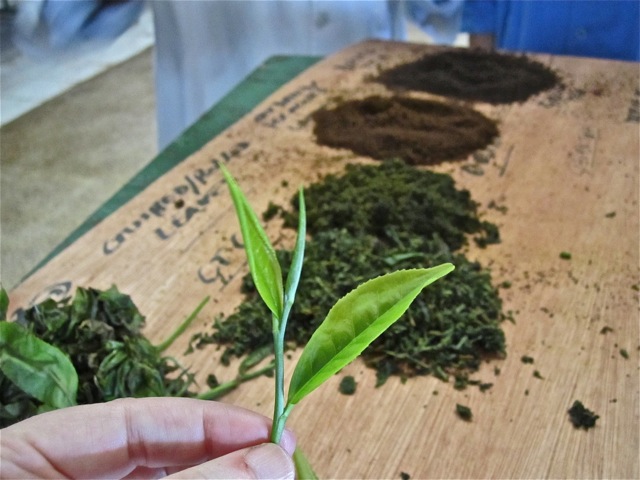
The stages of black tea processing. Only the terminal bud and 2 young leaves are plucked from the bush.These beautiful sacks will take most of the withered tea to the cutting stage, after which it will become green or black tea, depending on how long it is oxidized. Orthodox tea is not cut, but rolled whole leaf, which gives it a more nuanced flavor.The chopped tea is a vivid green.
Sorwarthe was the first tea factory in Rwanda to obtain ISO 9001:2000, ISO 22000:2005, and Fair Trade certification. It is also a participant in the Ethical Tea Partnership. The company was the first to manufacture orthodox (rolled, whole leaf) and green teas (also white). (They will proudly tell you that they export green tea to China.) It is also the first to start organic tea cultivation in Rwanda.
Sorwarthe creates 3,000 job opportunities for the surrounding Kinihira community. It also supports the local tea growers’ cooperative, ASSOPTHE.
[UPDATE: The U.S. State Department presented its 2012 Award for Corporate Excellence to Tea Importers, Inc., and SORWATHE, in recognition of their commitment to social responsibility, innovation, and human values. The award is given annually to two American businesses abroad.]
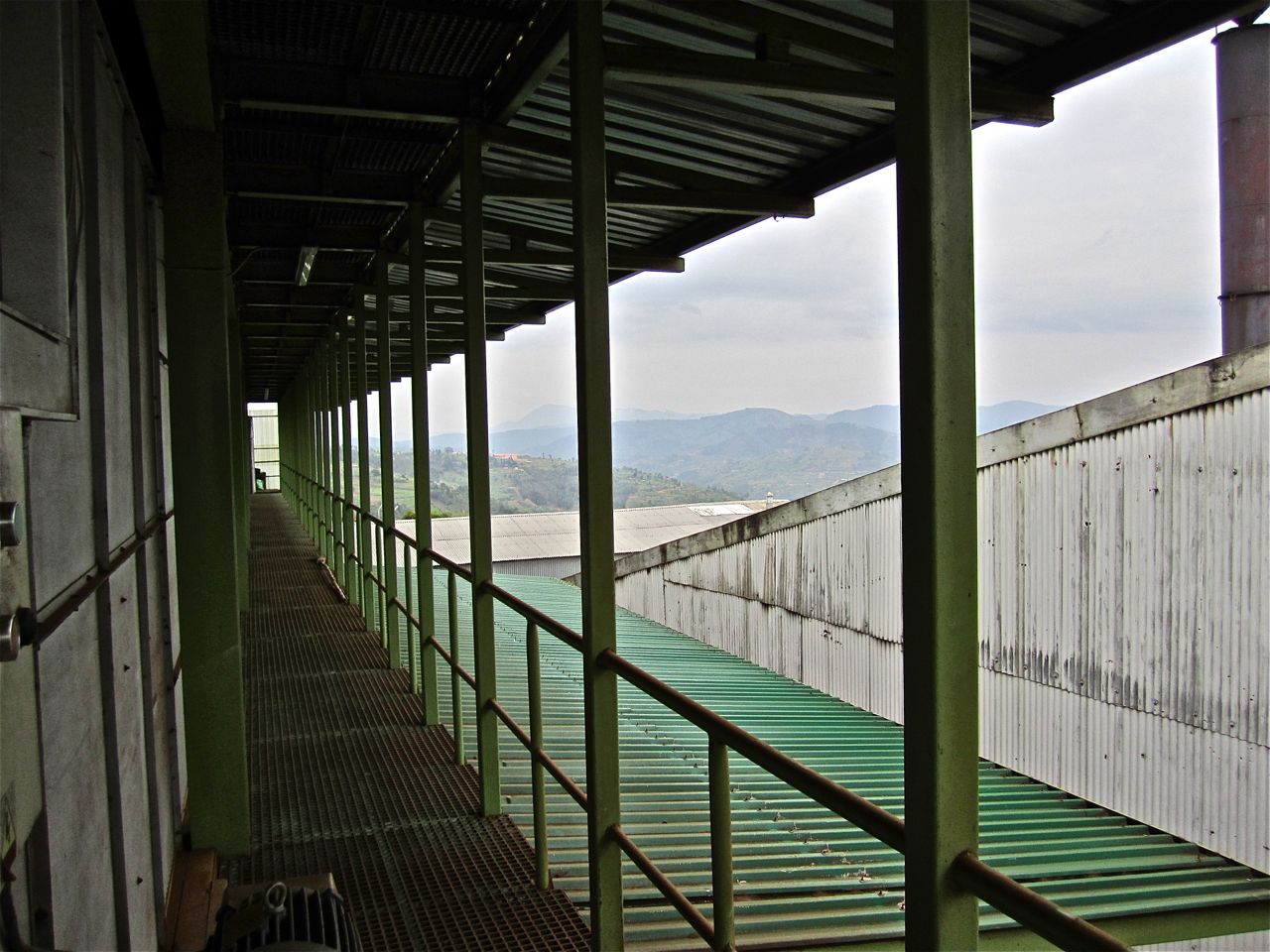
The factory’s buildings are detailed in shades of green, and its surroundings are friendly and sometimes rather whimsical.
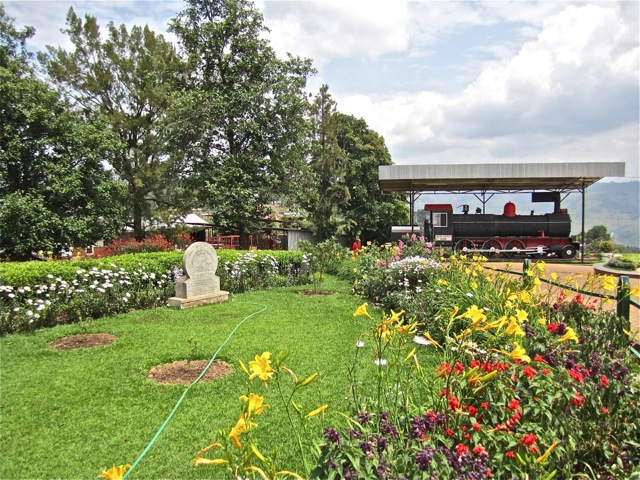
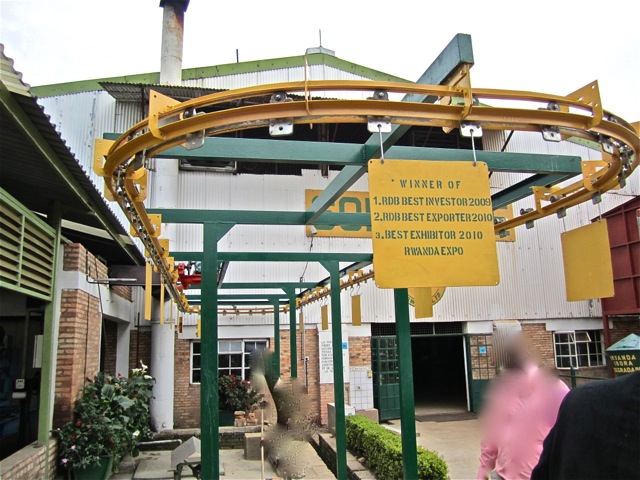
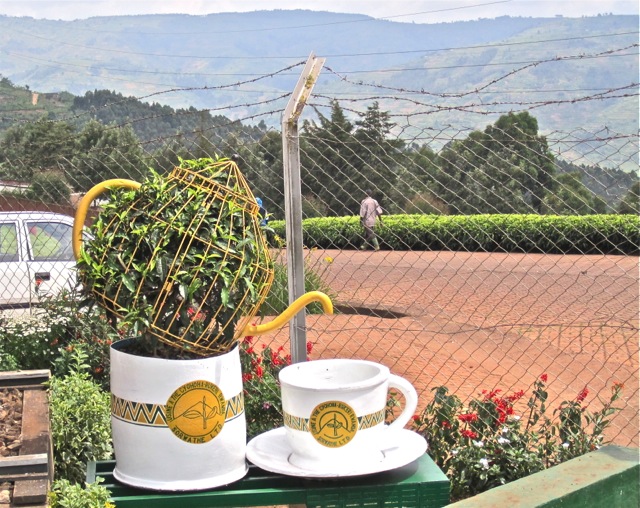
In the early days of the factory, old railroad steam engines were brought in to provide heat for the tea dryers (used after oxidation). To celebrate the 30th anniversary of Sorwathe in 2005, a 1920’s steam locomotive of the East Africa Railway Company was restored in Nairobi and installed in the factory garden.The company’s accomplishments are displayed on a sort of merry-go-round at the entrance.Sorwathe was an early large donor to the construction of Rwanda’s national public library, now almost complete.A topiary teapot at the entrance to the factory.The factory has beautiful views. In clearer weather, the Virunga volcanoes are visible.
You can order Rukeri Tea, Sorwathe’s garden mark, from Tea Importers’ website. The company also runs a guest house next to its factory.
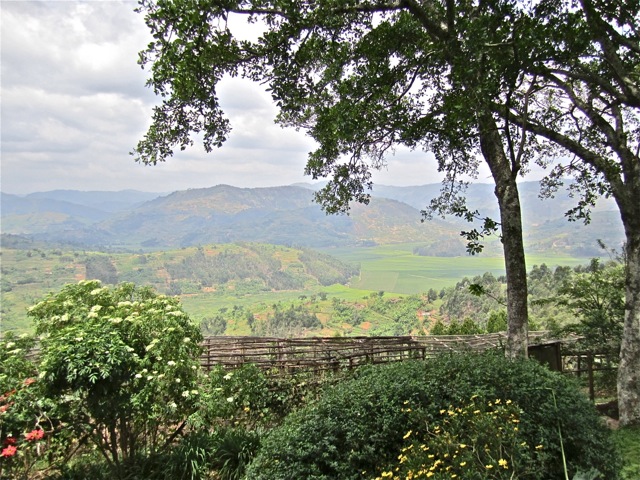
Our lunch was eaten on the patio of the couple’s house, which overlooks their lovely garden and a knockout view of the tea gardens in the valley below.
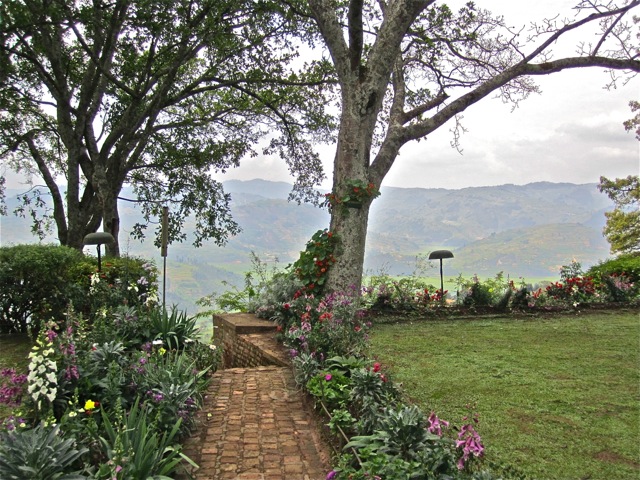
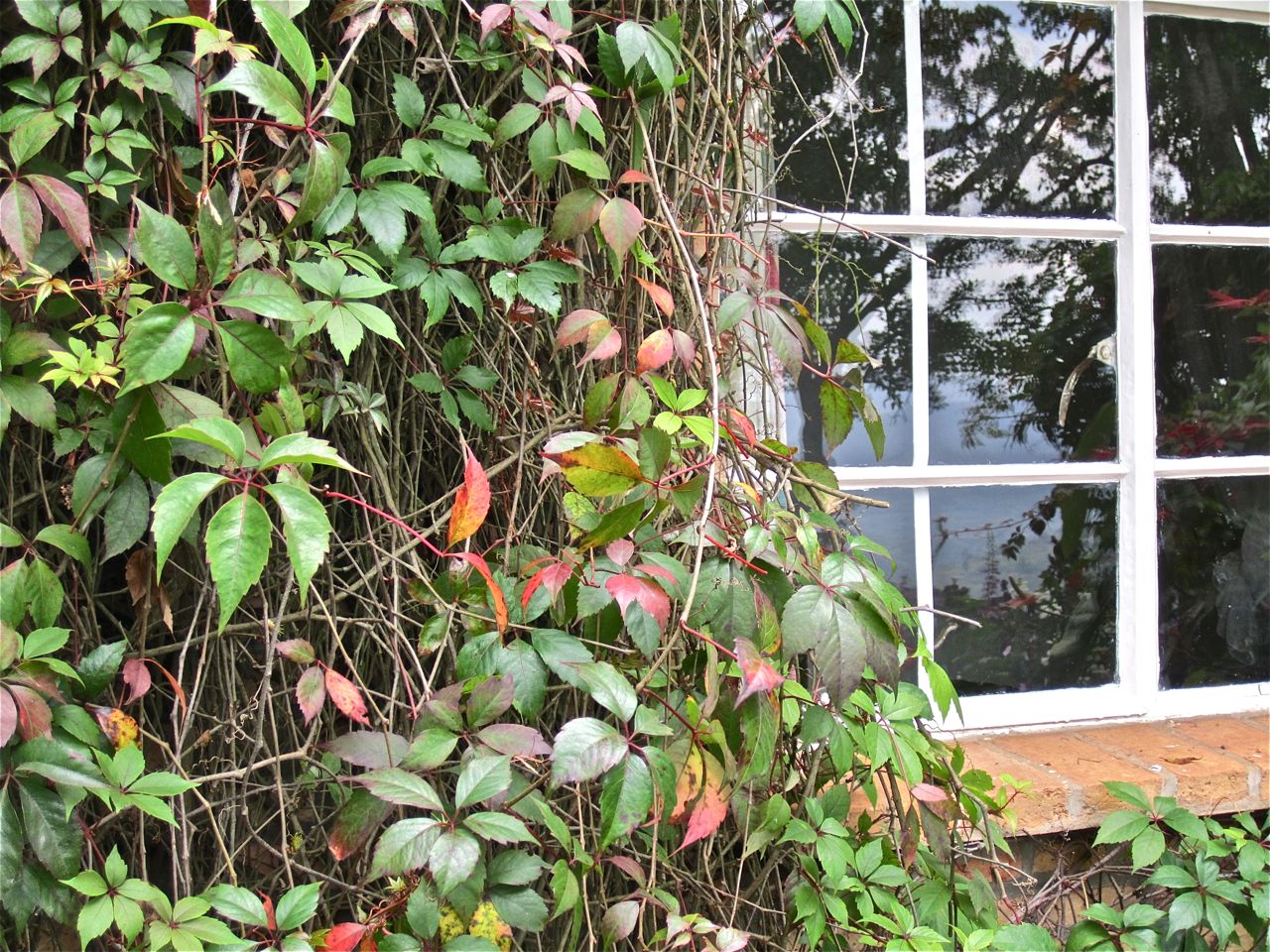
Cottage garden flowers and tea fields.Foxglove and stock are among the old-fashioned annuals in the garden.The tea fields and hills beyond a shaded garden.Virginia creeper vines on the house.The trees in the foreground are Ficus sycomorus or sycamore fig. They are native to much of central Africa and parts of the Middle East.
If you live in U.S. zone 7 or higher, you can try growing tea bushes (Camellia sinensis) at home. The plants like soil a little on the acid side and are drought tolerant. Pests can be treated with horticultural oil. If left unpruned, the plants will grow into small trees. You can buy them from Camellia Forest Nursery in Chapel Hill, N.C.
This was my husband’s Christmas present to me — a copy of the third edition (1950) of Gardening in East Africa, by the members of the Kenya Horticultural Society and of the Kenya, Uganda, and Tanganyika Civil Services.
Rwanda (then the eastern edge of the Belgian Congo) just makes it onto the left side of the frontispiece map.
I like the first chapter’s opening sentence: “This chapter is intended for the beginner rather than for the hardened gardener.” ‘Hardened,’ not skilled or experienced, but hardened — as in, “I’ve been through a lot.”
The writer then chides those already toughened up Kenya gardeners who adopt “a pseudomodest manner” with newcomers:
“You have forgotten about the innumerable insect pests and plagues, cutworms, flies, aphides, and the fact that each kind of plant has a pest of its own to all seeming. What about the scorching wind, the burning sun, the hungry hares and antelopes nibbling your roses and carnations to death, the mousebirds that steal your fruit and tear your flowers to shreds? Think of the torrents of tropical rain, the raging floods that batter all your plants to the ground, and wash off your lovely top soil far, far away into the Desert or the Indian Ocean. . . .” And please don’t get him started on the locusts.
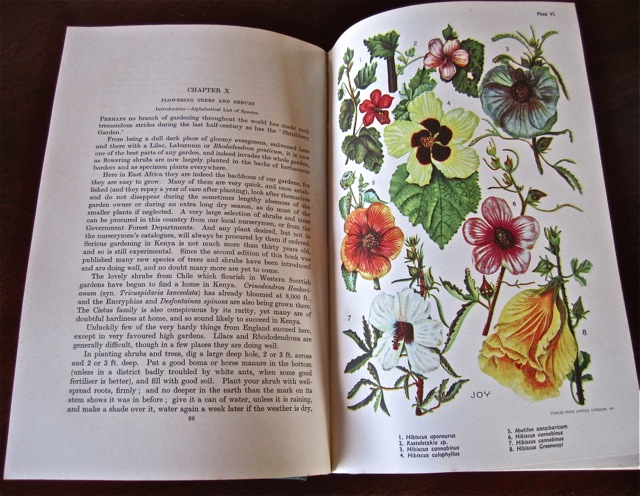
Most of the color plates in the book were painted by Joy Adamson of “Born Free” fame. The previous year, she had received the Grenfell Gold Medal from the Royal Horticultural Society for her botanical artwork.
Lady Muriel Jex-Blake (daughter of the 14th Earl of Pembroke, no less) was President of the Kenya Horticultural Society and author of three chapters of the book, as well as of her own book, SomeWildflowers of Kenya.
In Chapter 10, Lady Muriel is precise about how to plant a shrub: “give it a can of water, unless it is raining.”
Her husband, Dr. Arthur John Jex-Blake, was the book’s editor. He made a promising start as a physician in England, but after serving in World War I and marrying Muriel in 1920, he left it all behind to live outside Nairobi.
The writer of his 1957 obituary noted that Dr. Jex-Blake always felt overshadowed by his aunt (Sophia Jex-Blake, one of the first women doctors in Great Britain and co-founder of two medical schools for women) and his sisters (the heads of Lady Margaret Hall, Oxford, and Girton College), but “he loved flowers, the classics, and beautiful things.”
In 1948, however, as he completed his preface to the third edition, he seemed to be finding the post-war times challenging. In expressing his gratitude to his publishers, he nearly lost control of his final sentence:
“For, after three piping years of peace, printers and publishers, like the rest of the industrial world, are ever at the mercy of the impersonal incompetence of officialdom and the well-organized administrative chaos now, alas! so painfully familiar to everybody who lives and works in England.”
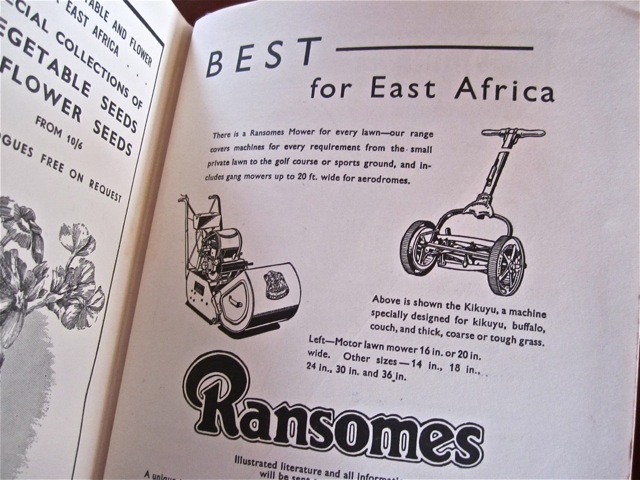
An advertisement at the back of the book: Ransomes can supply you with a mower suitable for maintaining your aerodrome or Kikuyu grass.
In a comment, Diana of Elephant’s Eye asked me about Rwandan native plants. I had to say that I wasn’t sure how many, if any, of the plants in my garden are native to this country or region. It’s amazing how many common ornamental plants in East African gardens are of South American or Asian origin, brought here by colonists or other travelers.
Other plants originate from north, west, or southern Africa, but may have traveled to Rwanda via sojourns in European collectors’ conservatories.
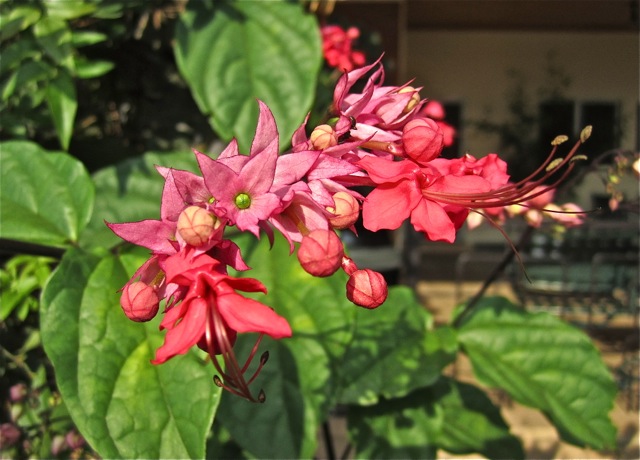
It has already helped me identify two flowering vines in the garden that were unfamiliar to me, Clerodendron thomsoniae and Clerodendron thomsoniae var. delectum. They also go by the common names of Beauty Bush, Bleeding Glory-Bower, or Bleeding Heart Vine.
Cleodendron thomsoniae with white calyx and red flowers. Photo via Wikipedia, taken at the U.S. Botanic Garden.C. thomsoniae var. delectum with mauve calyx and dark rosy pink flowers.
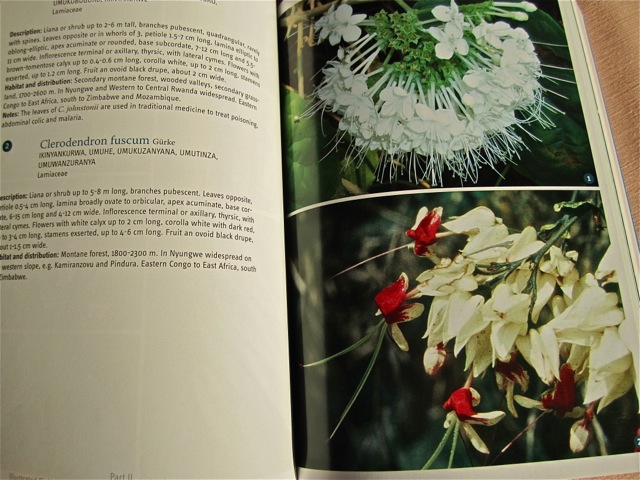
I found that the species is native to tropical West Africa, from Cameroon to Senegal. But a very similar-looking cousin, Clerodendron fuscum, is native to Rwanda and other parts of East Africa — as are two much less showy species, C. johnstonii and C. bukobense.
They are all lianas — long-stemmed, woody vines that use trees as a means of vertical support to reach the light.
A photo of C. fuscum, a Rwandan native, in my book. The flowers are white, blotched with red.
Clerodendron thomsoniae has just the sort of exotic, showy blooms that would have been very desirable to the Victorians. Wikipedia said its 19th century popularity eventually declined, however, because “its root system must be partially submerged in water most of the time and it wants very good light.” Other sources did not indicate that it needs to grow in particularly damp ground. Mine does not. But in the U.S., it probably will not be hardy outside of Florida or California.
Wikipedia also said the species was named in honor of “Rev. William Cooper Thomson (fl. 1820’s-1880’s), a missionary and physician in Nigeria.” However, a further Google search turned up a Rev. Thomson who was a linguist, not a doctor, with the Church Missionary Society in Sierra Leone. He was a man of zeal in the propagation of the gospel and the crusade against slavery. In 1841, he led an ultimately fruitless expedition to make treaties with the Muslim Fulani people in what is now Guinea. He died during the journey in 1843.
That much is confirmed by other articles and a copy of his journal posted on the internet. There is no indication, however, of how this William Cooper Thomson might have come to have a popular hothouse plant named after him.
A French website said that the species was named for surgeon-botanist Thomas Thomson (1817-1878), co-author of the first volume of Flora Indica and eventually Superintendent of the botanical garden in Calcutta, India. Swedish Wikipedia also says that Thomas T. is origin of the name. But Thomas T. never served in Africa.
The source for the English Wikipedia entry is the CRC World Dictionary of Plant Names by Umberto Quattrocchi, which unfortunately is not on-line and costs £204. If any reader does have access to this book, maybe you could let us know what it says. Other sites also give a William Cooper Thomson. as the origin of the name, but they are obviously just quoting Wikipedia.
Regardless of the source of its name, it is really a lovely African plant.
ADDENDUM: Please see KAMCDONALD’s comment below for more about the source of the name, which was given in honor of the first wife of William Cooper Thomson, a missionary in Nigeria and son of the William Cooper T. discussed above.