A formal garden in Italy

The Formal GardenHow lovely.

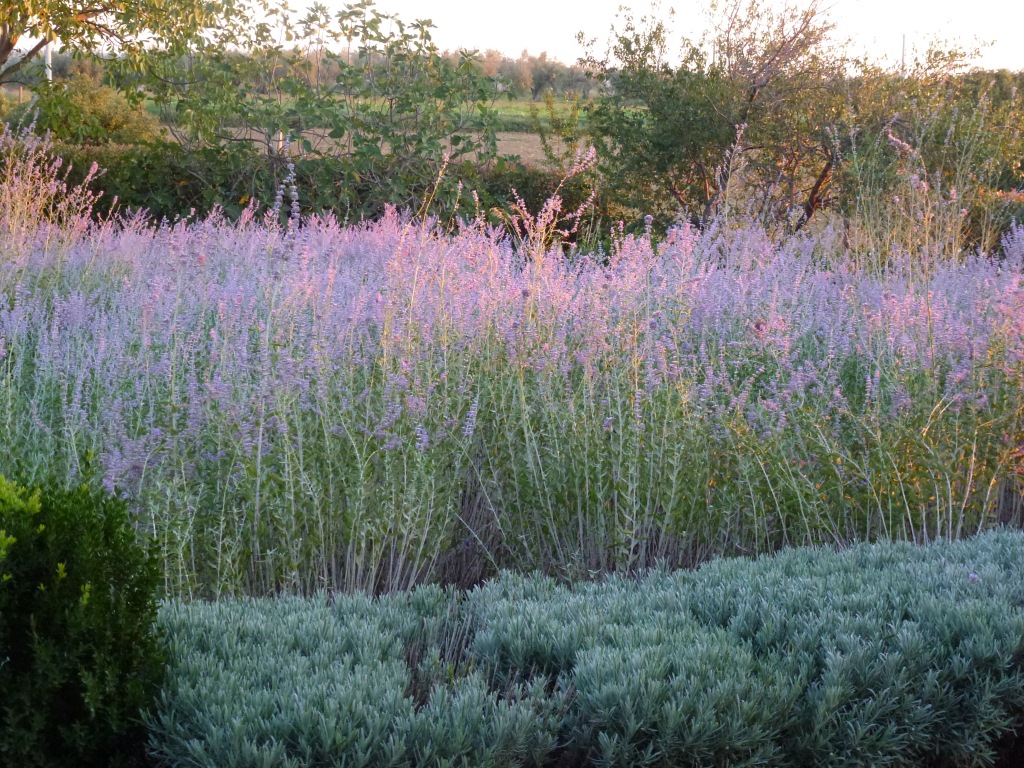
Just lavender (clipped), box, and Russian sage in September.
Just lavender (clipped), box, and Russian sage — in September.

Until recently, I had somehow missed the blog, Creating my own garden of the Hesperides.  I found it last week, via a picture on Pinterest.

The Formal Garden

I wrote to Christina, who gardens in Lazio, Italy, and asked her if I could share some of her pictures of her “Formal Garden,” which is so beautiful and simple.

The garden in October.
The garden in October.  All photos by Christina.

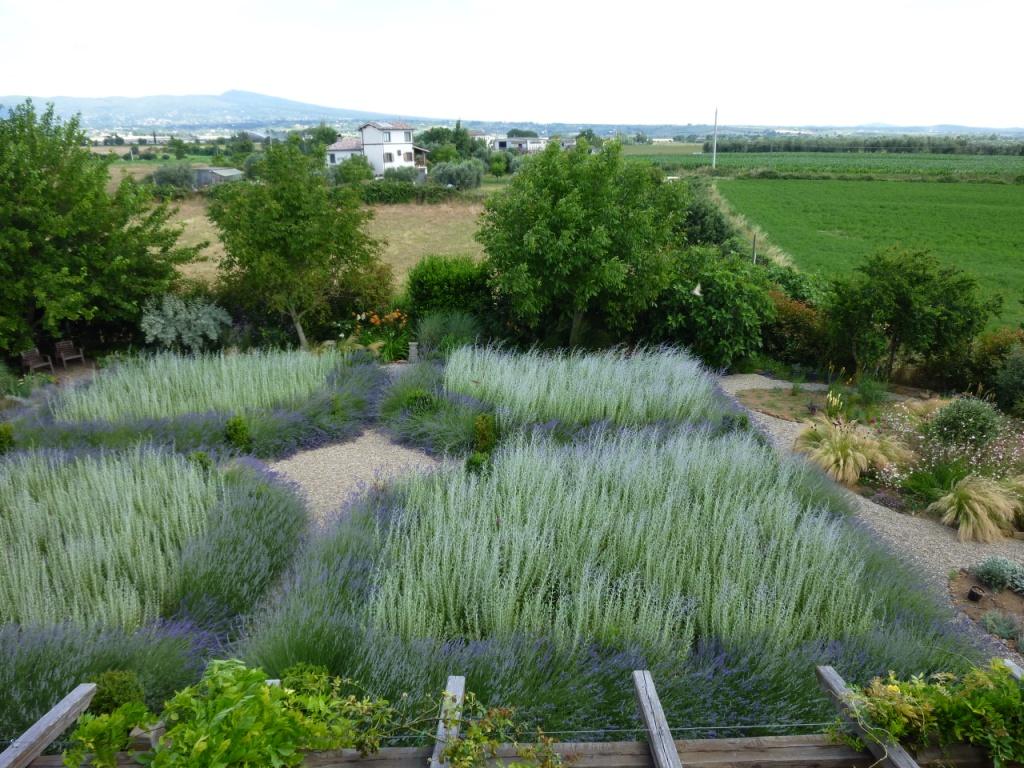
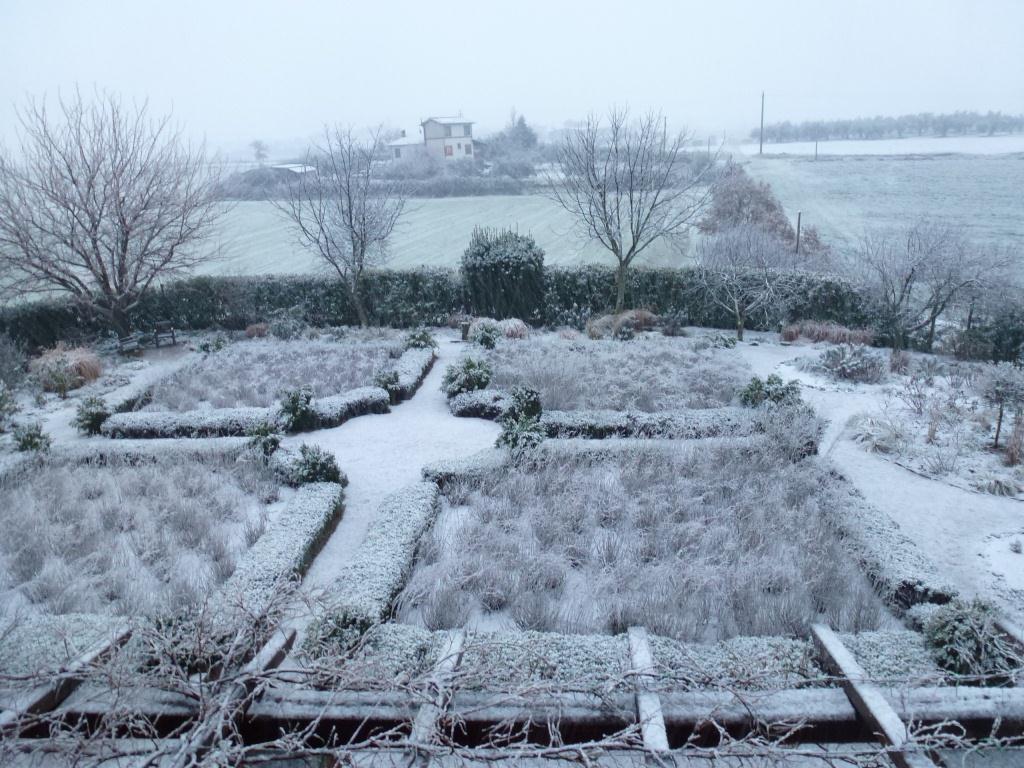
The garden was laid out and planted in 2008.  The soil is soft volcanic rock, which is fertile and free-draining.  The area usually receives no rain from June through August, and Christina does not irrigate.  In the winter, there is “bitingly cold” wind.

The garden in June.
The garden in June.

The four identical beds are planted with Perovskia (Russian sage), edged with lavender, and accented with boxwood cubes at the corners.  The two beds nearest the house are underplanted with tulip ‘White Dream‘ and allium.

The lavender borders are clipped before September.
The lavender borders are clipped flat later in the season.

Christina also has  large and small island-shaped borders with mixed plantings, many old roses, and a vegetable garden.  Here is how she explains the name of her blog:

The garden of the Hesperides was where Hercules had to go to find the golden apples, references to it  in Italian Renaissace gardens are a symbolic way of comparing the garden to paradise, a way of achieving immortality through hard work. So this garden is, for me, my paradise and certainly the hard work in achieving it will bring its own reward.

The garden after a January snow.

All photos above ©Christina at Creating my own garden of the Hesperides. Thanks!

How do you define ‘elegance’?
“Simplicity and imagination.”

— from an interview with actress Helen Mirren

Just another day in paradise

What if we just let it all go?

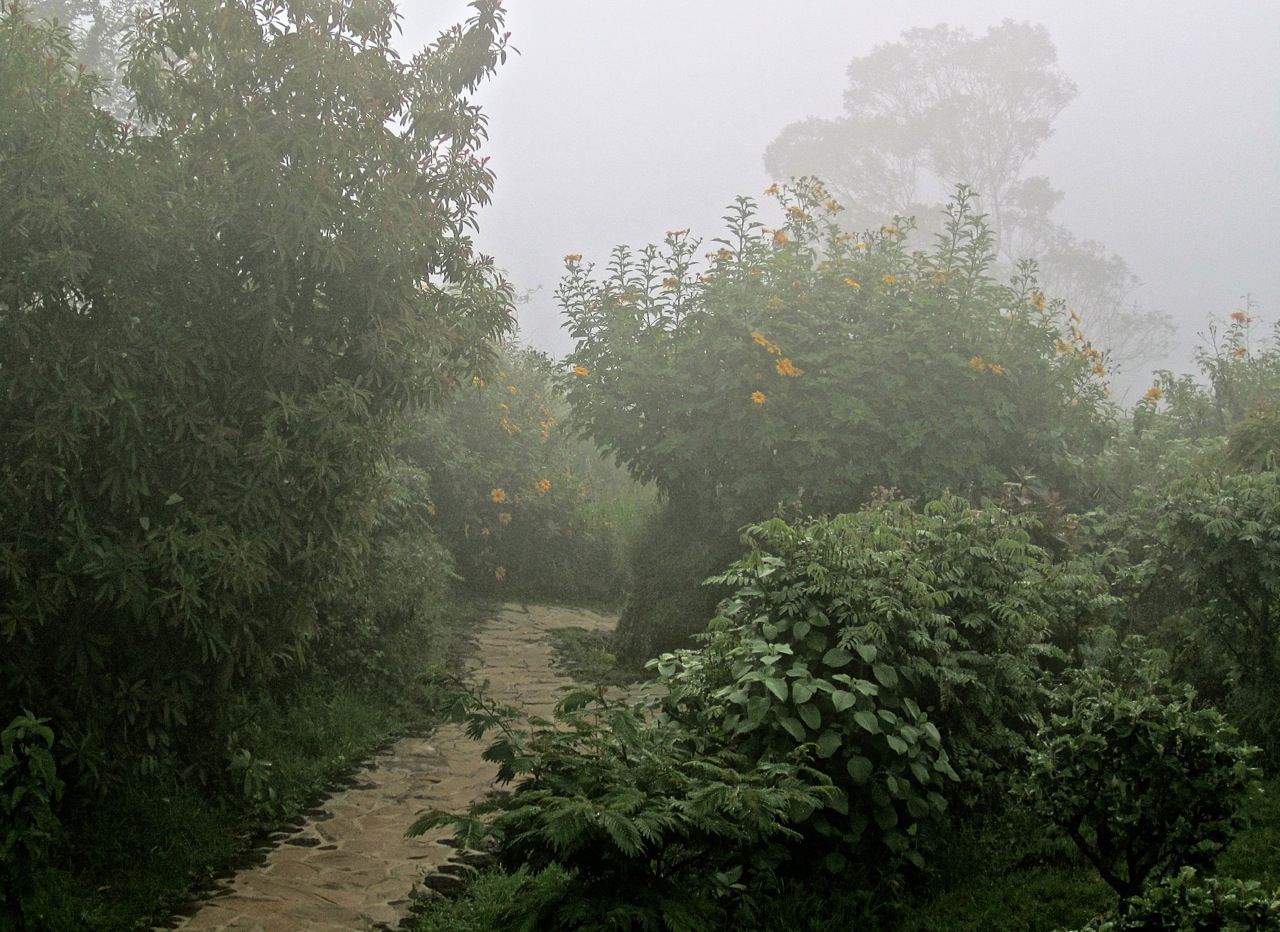
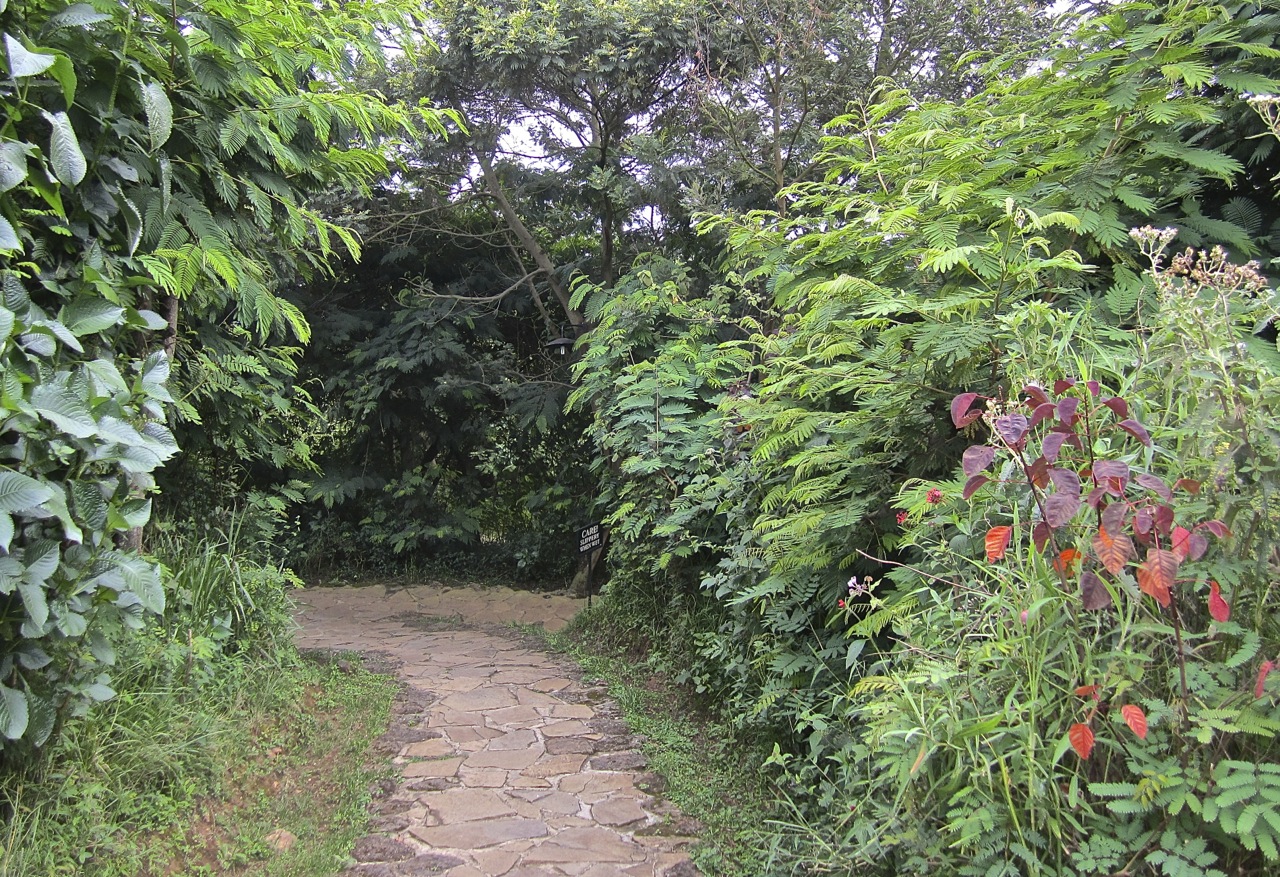
A path in the early morning fog.
Virunga Safari Lodge in early morning fog.

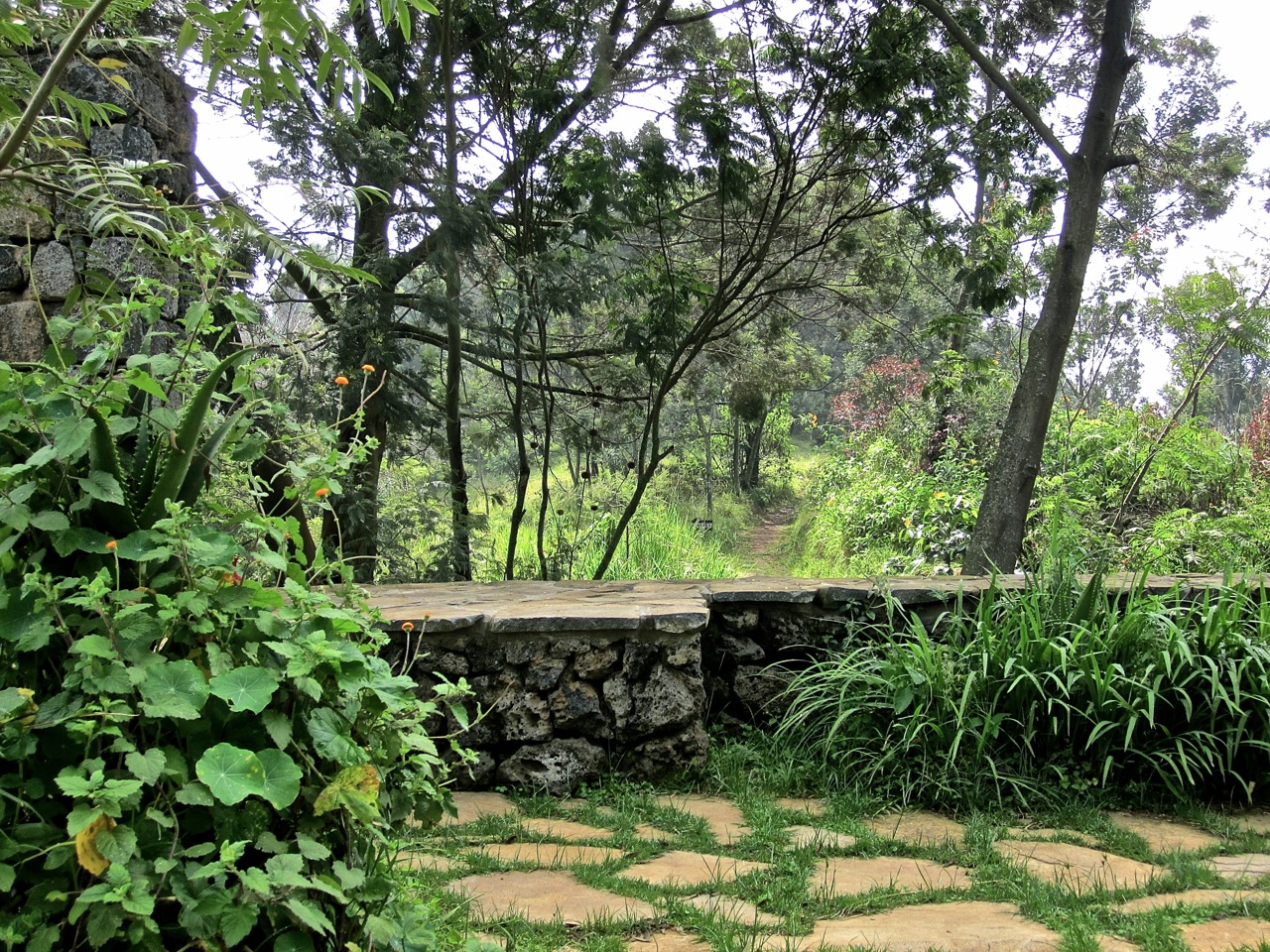
Just cut paths through the brush and then beautifully paved them?

path - Virunga Safari Lodge

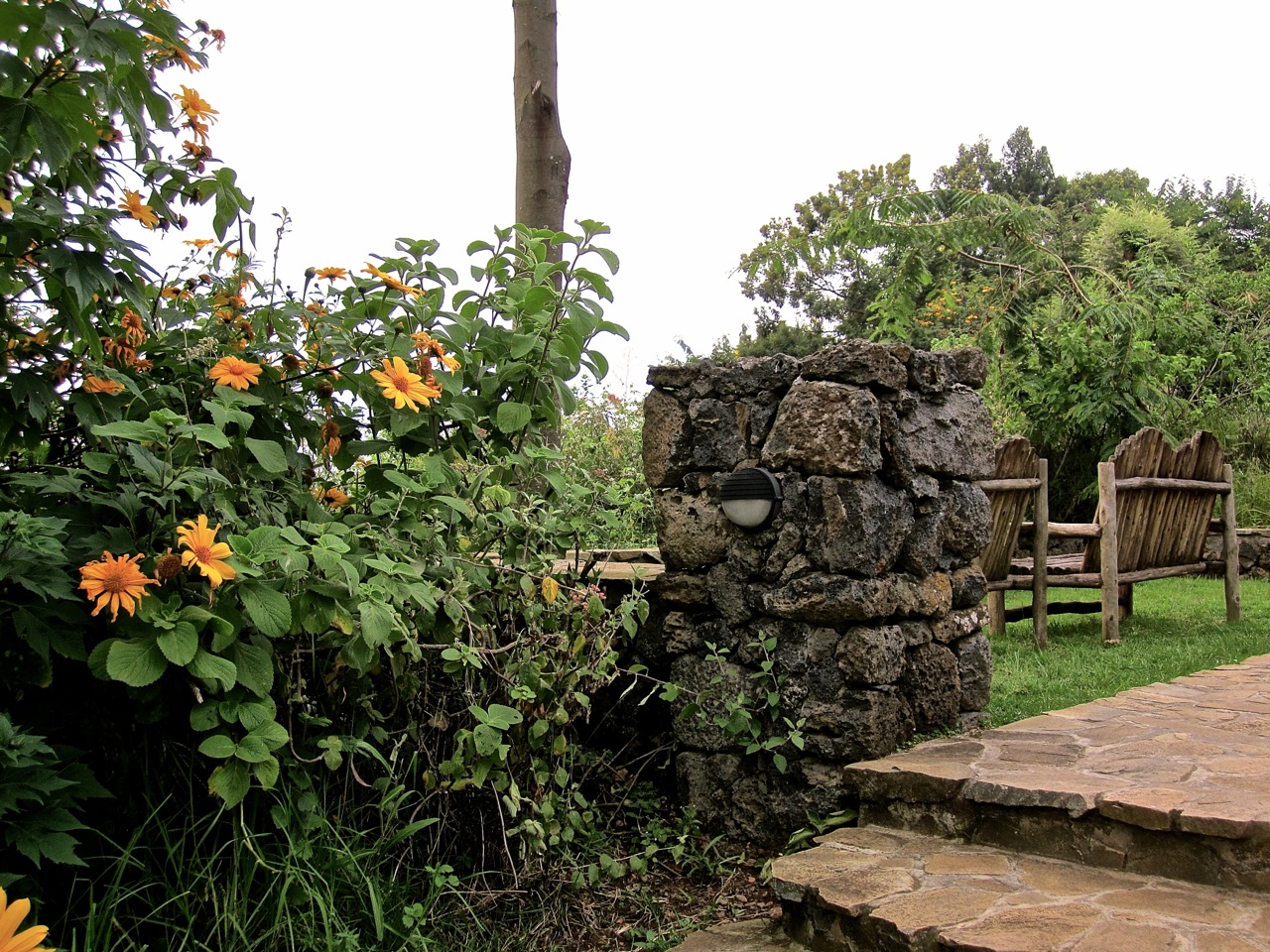
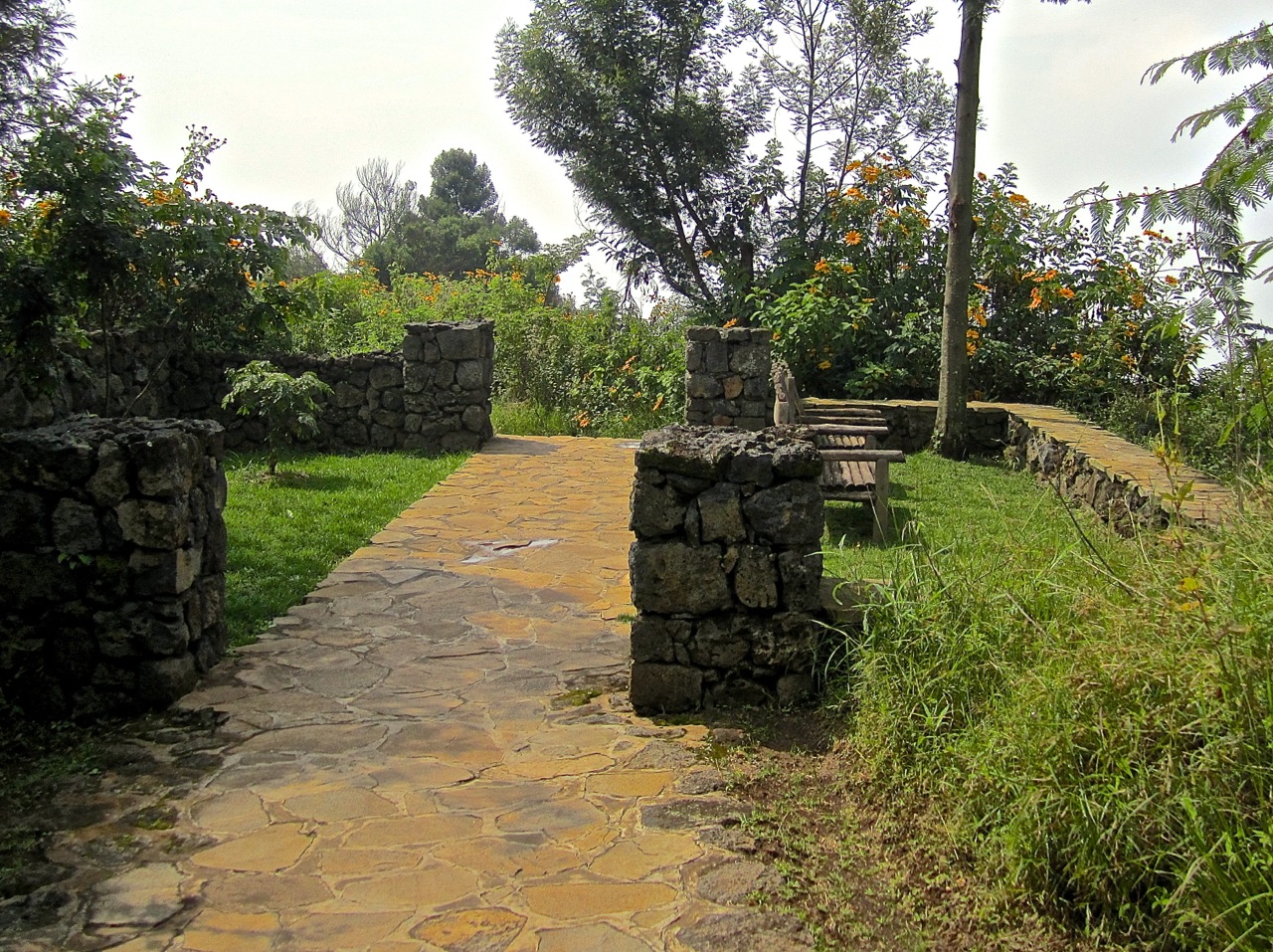
Pushed out a few garden rooms with low walls and columns built of local stone?

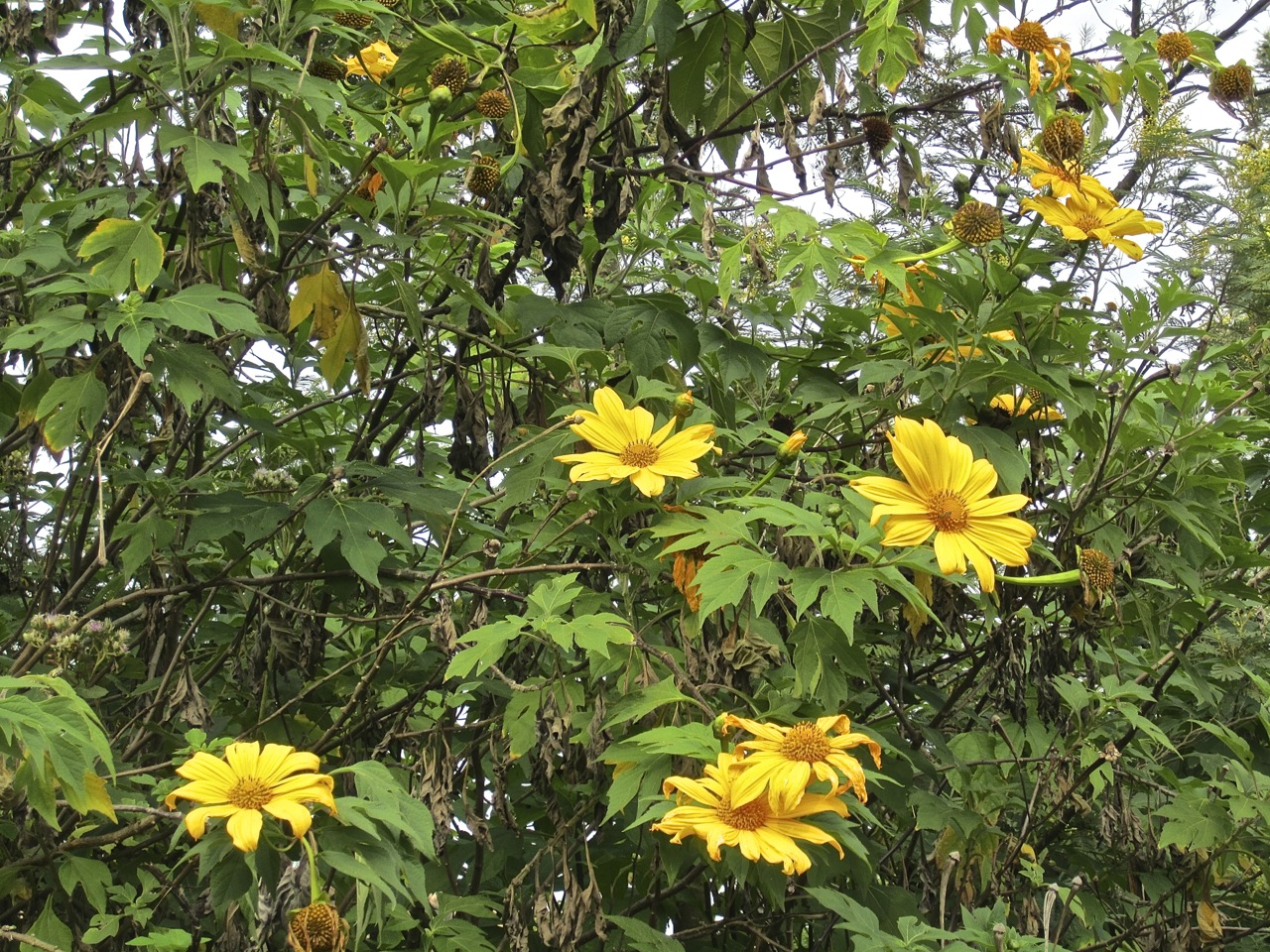
Sunflowers at the entrance to a garden room.

The central path crosses a garden room.

Mowed the grass only in those small spaces? Gardened (sometimes) with a machete, not hoes and shovels?

wildflowers beyond wall
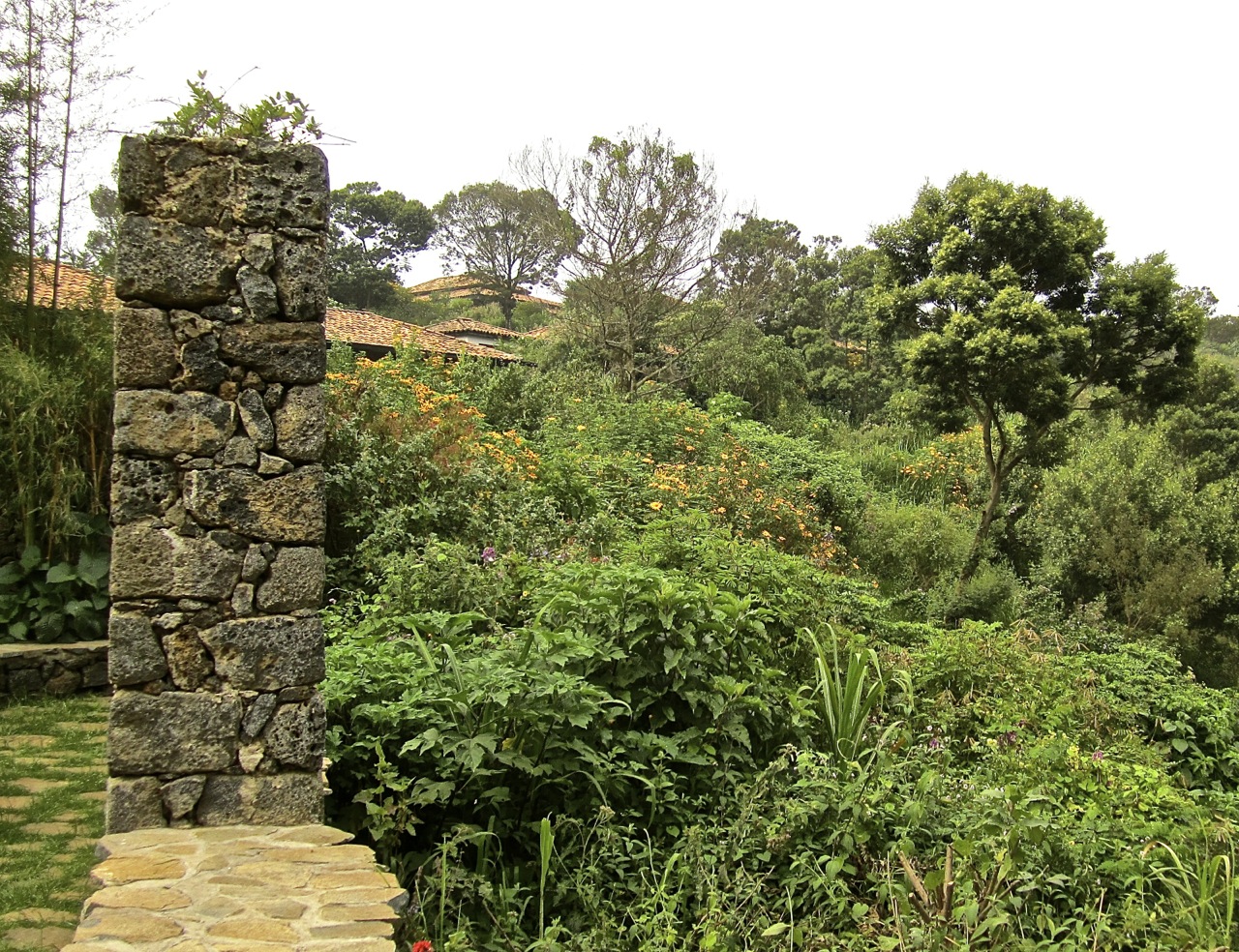
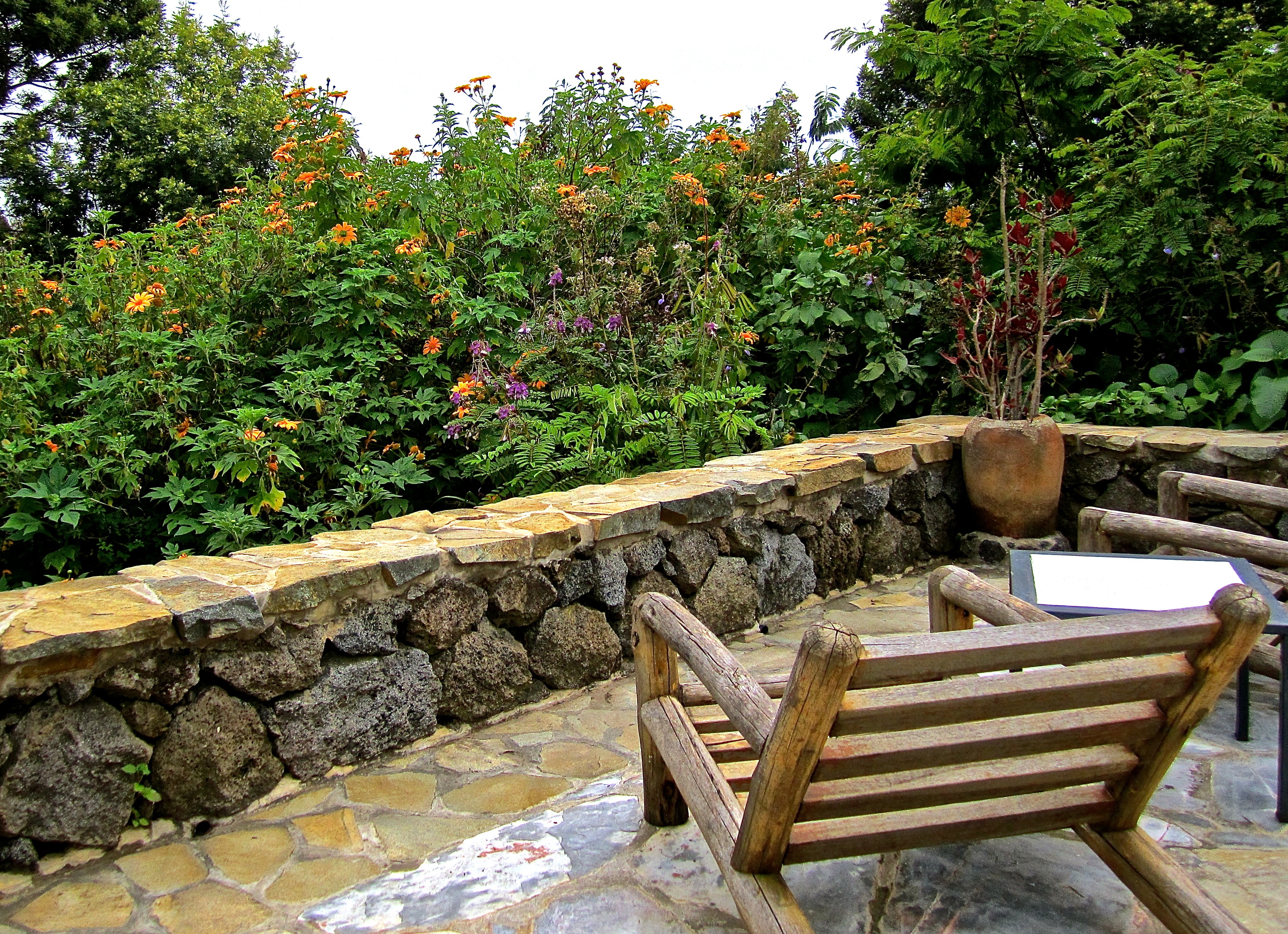
A terrace overlooking the wild hillside, the roofs of cabins in the background.

That’s what I kept thinking during our overnight stay at the Virunga Safari Lodge in northern Rwanda a couple of weeks ago.

The path to the local village.
Path to the local village beyond a wall.

The hotel consists of a main dining/lounge building and eight very private cabins.

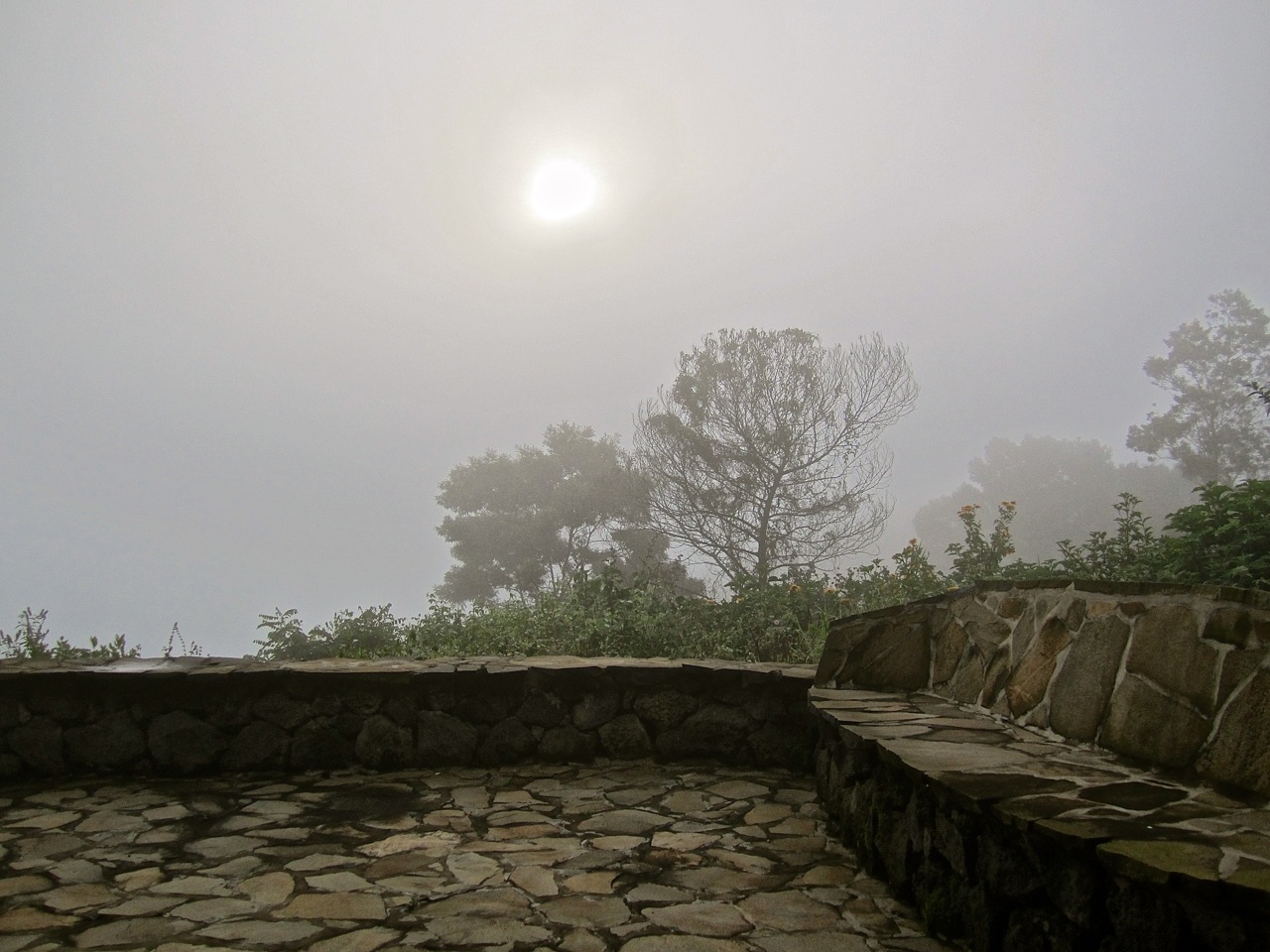
The stone terrace of our cabin in morning fog.
The stone terrace and bench of our cabin in morning fog.

A central path through the hotel grounds runs along the top of a hill, and the cabins are sited on both sides on a level below.

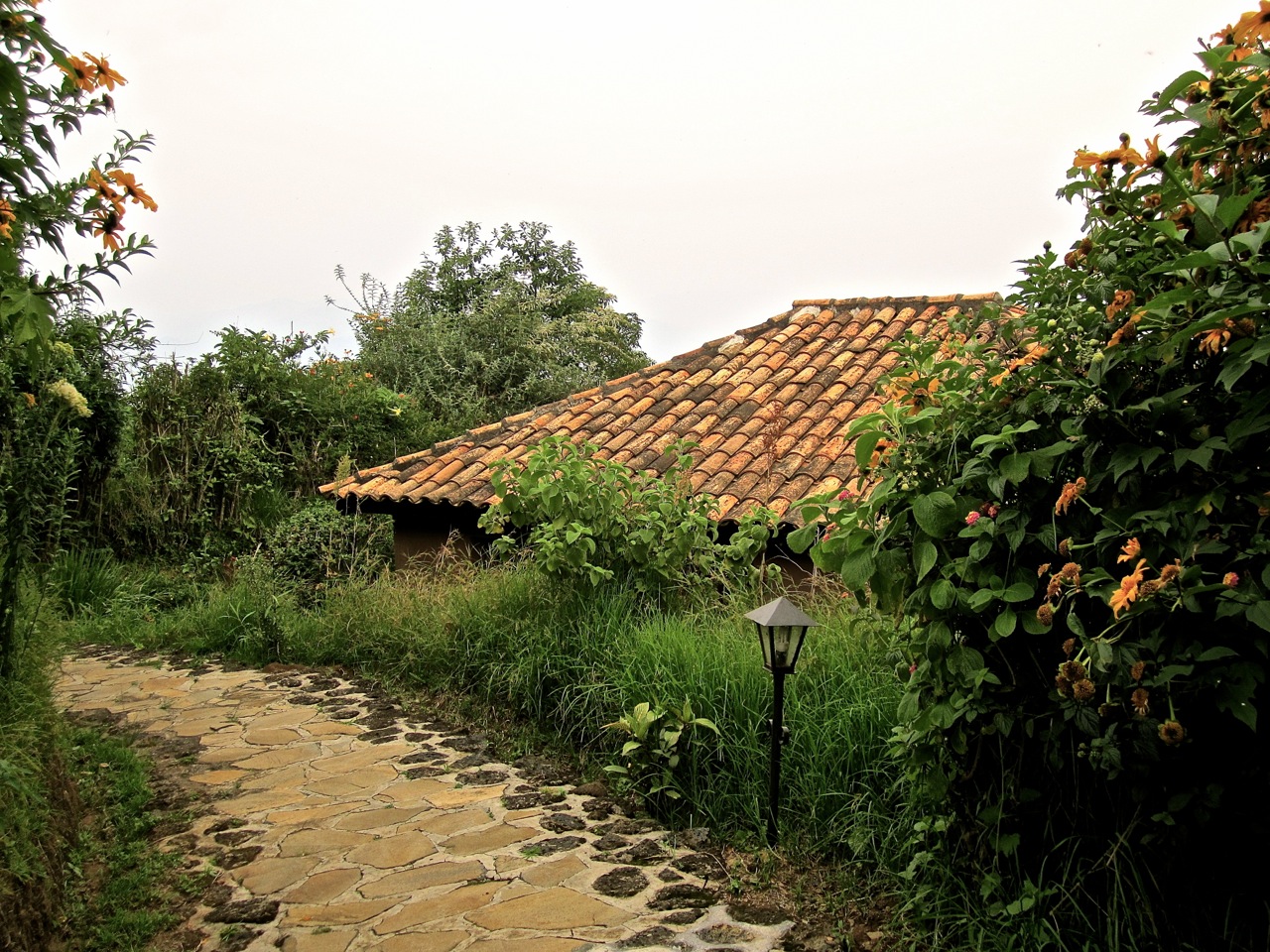
roof of our cabin
The roof of our cabin.

In the brush, wild natives and naturalized exotics grow together in a jumble.  They were noisy with birds and insects.

plants over wall

Perennial sunflowers.

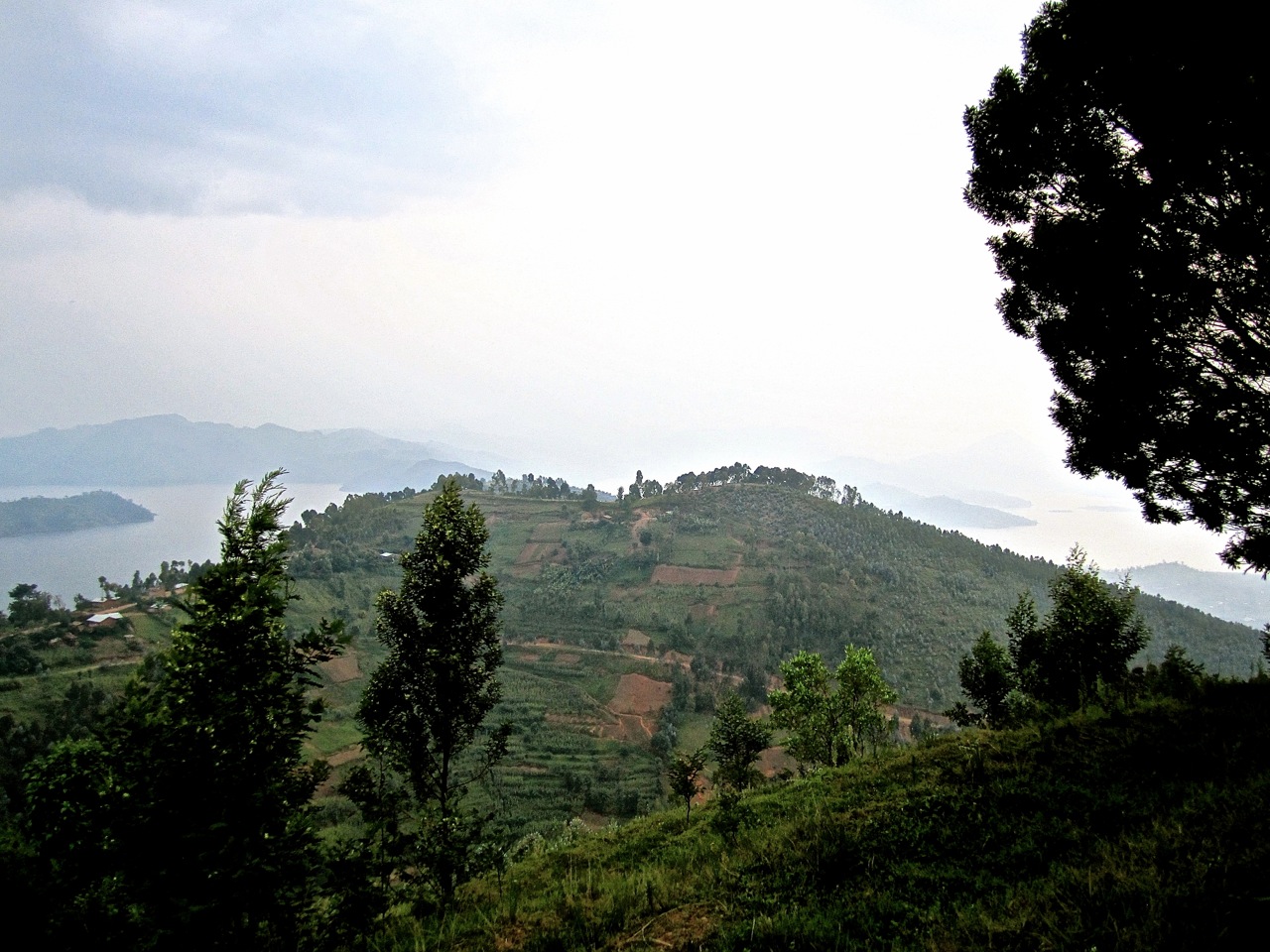
As we took a walk through the neighboring community, I realized that the light-touch landscaping of the hotel grounds created, in a sense, the least artificial environment in the area. Rwanda’s country land is highly cultivated — almost every square foot is part of a vegetable garden or field or wooded plot for timber.  A steep slope is rarely an obstacle.

Fields on a nearby hillside.

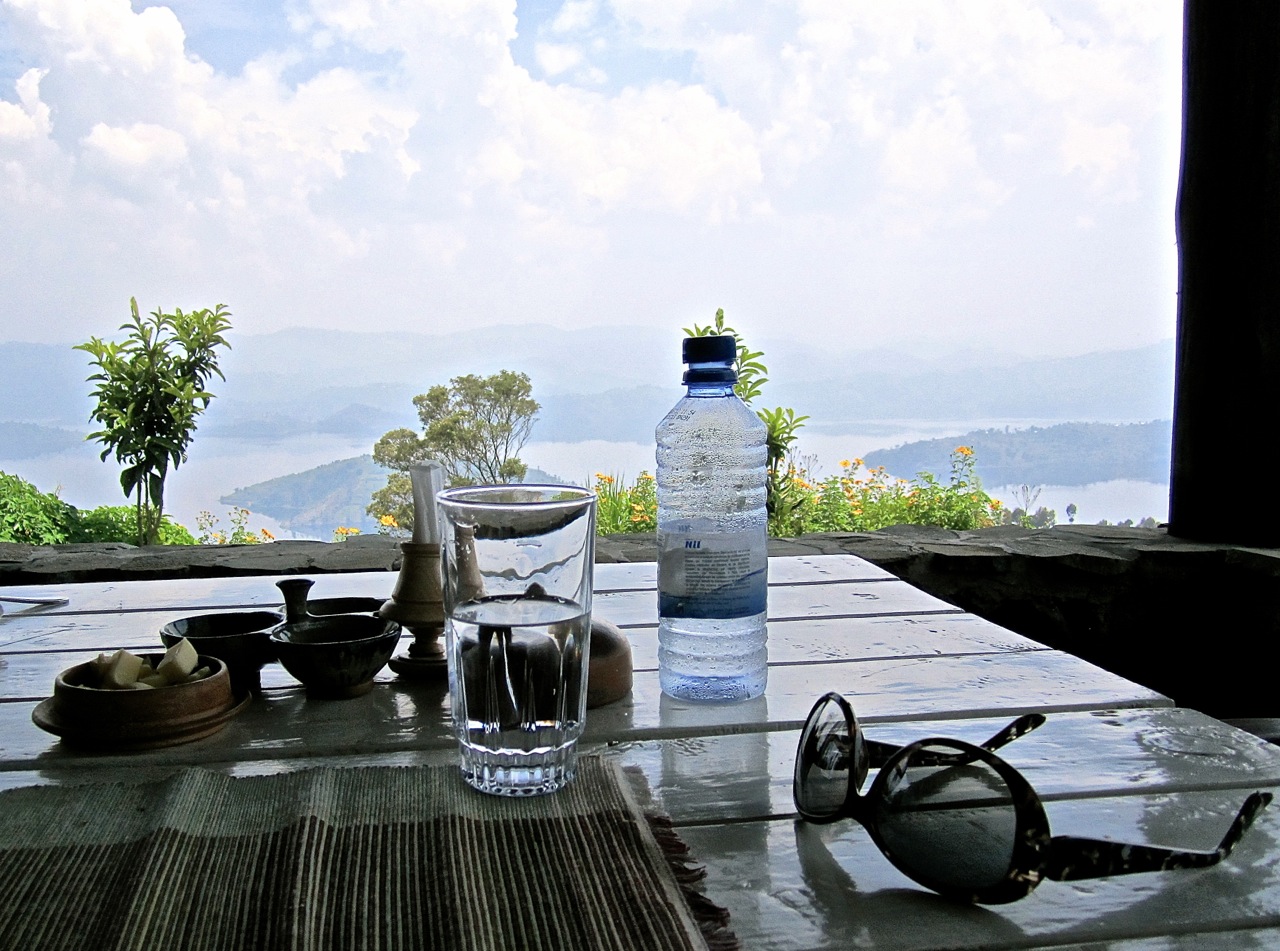
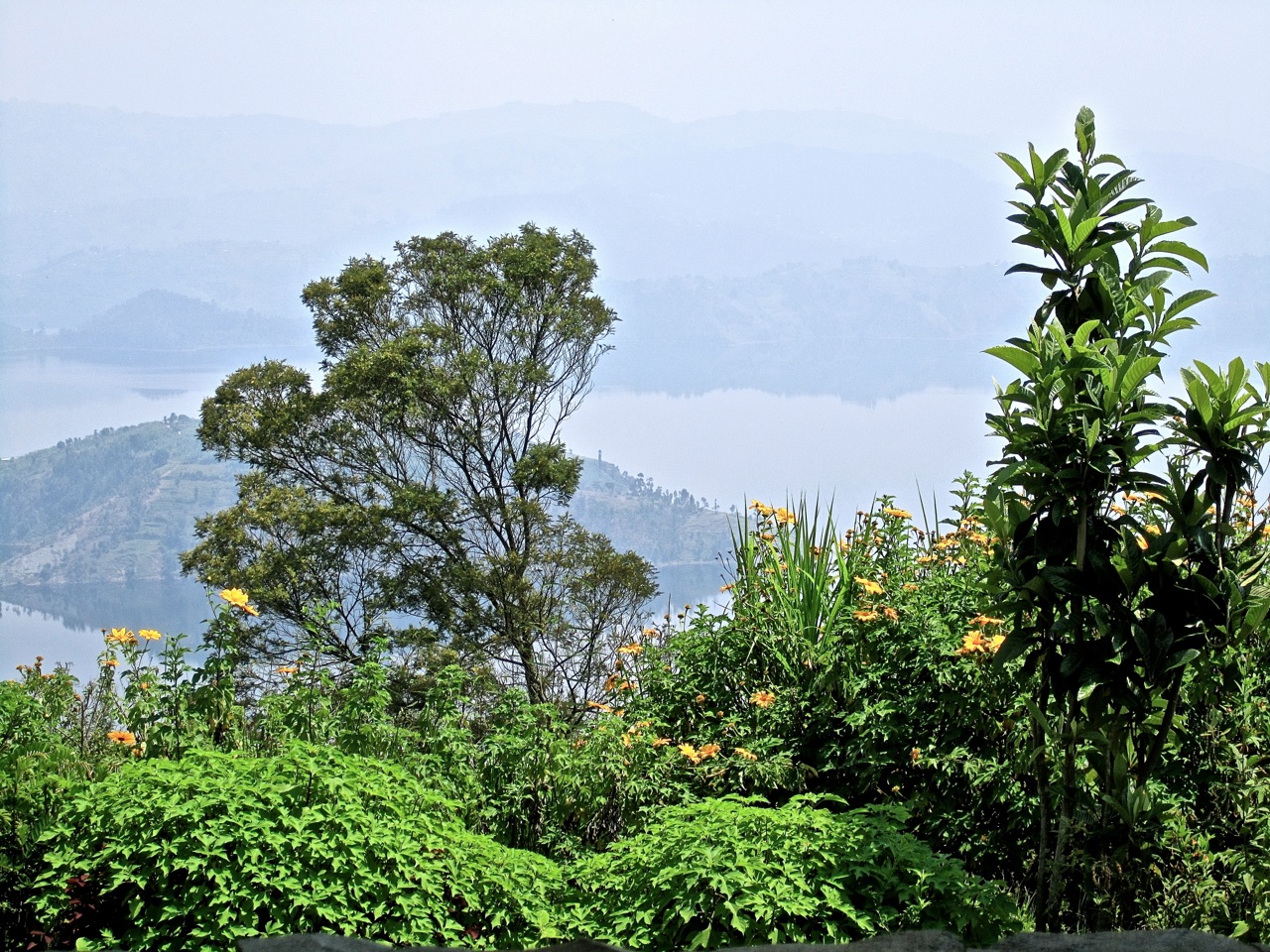
At the end of a relaxing stay, we had lunch at a table overlooking Lake Burera and its little islands. Then we were off on the 2-hour drive back to Kigali.

The view at lunch.

It’s sad to leave Eden.

View from our table at lunch.
View of sunflowers and the lake from our table at lunch.

To scroll through larger versions of these images (and several more), click ‘Continue reading’ below and then on any thumbnail in the gallery.

To see more photos of Virunga Safari Lodge from a brief visit last year, click here.

Continue reading “Just another day in paradise”

Vintage landscape: bush-houses in Australia

Toowoomba
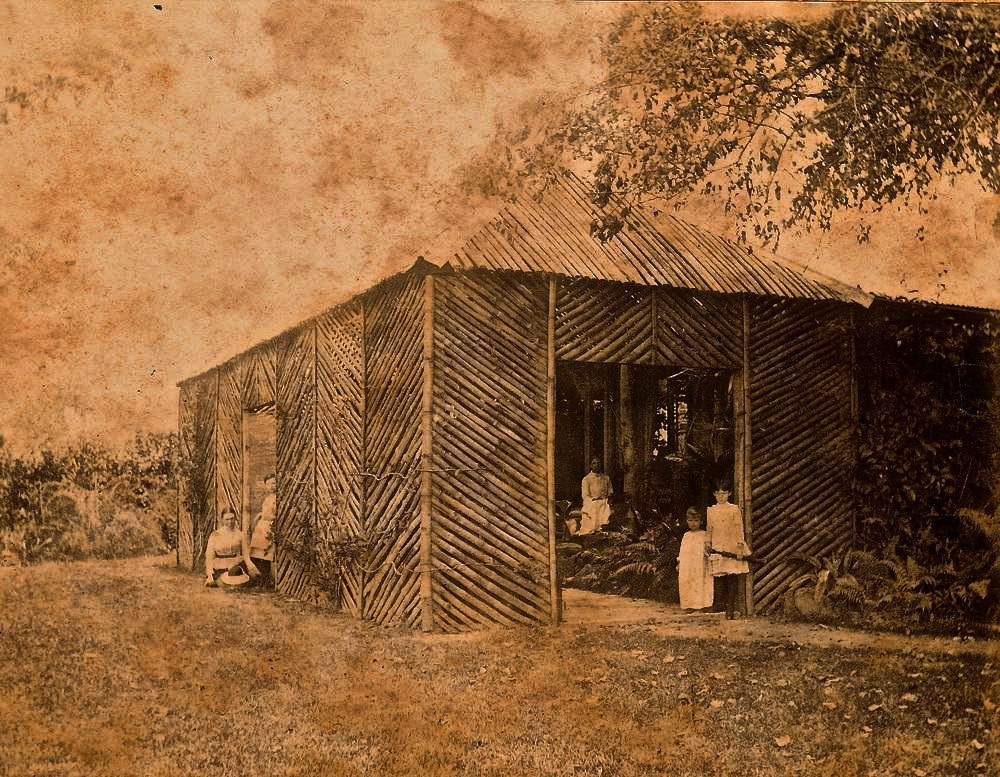
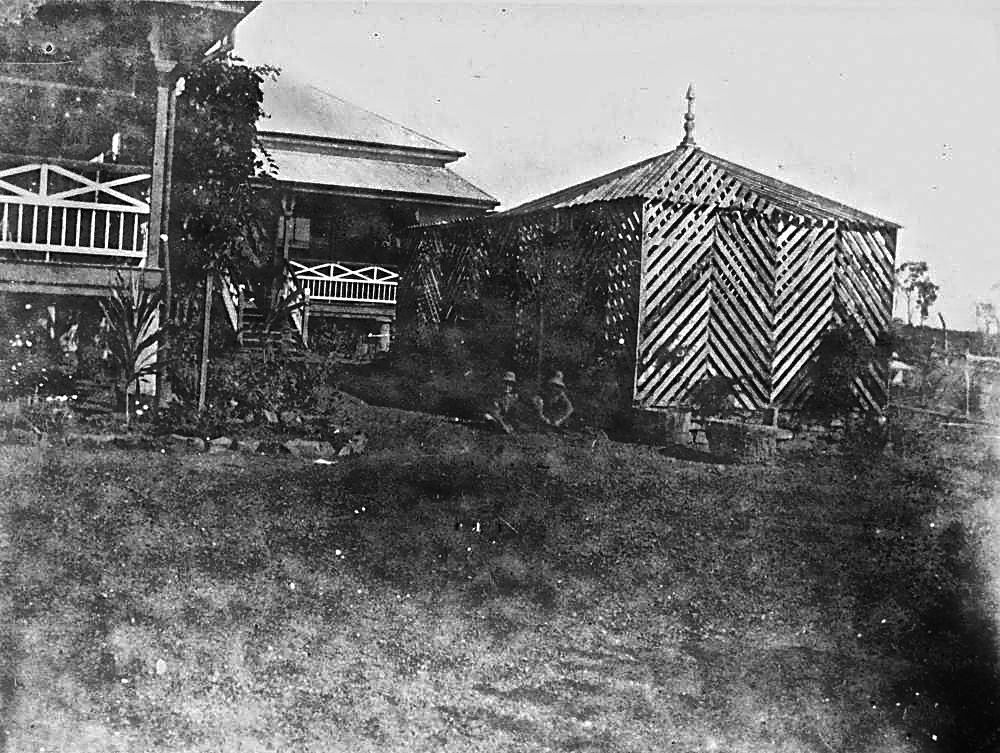
Bush- or shade-house at Toowoomba residence, Roslyn, ca. 1900.

I recently came across these photos of an Australian vernacular garden structure:  the bush-house.

Mackay
Fernery at ‘The Hollow,’ Mackay, ca. 1877, by Edmund Rawson.

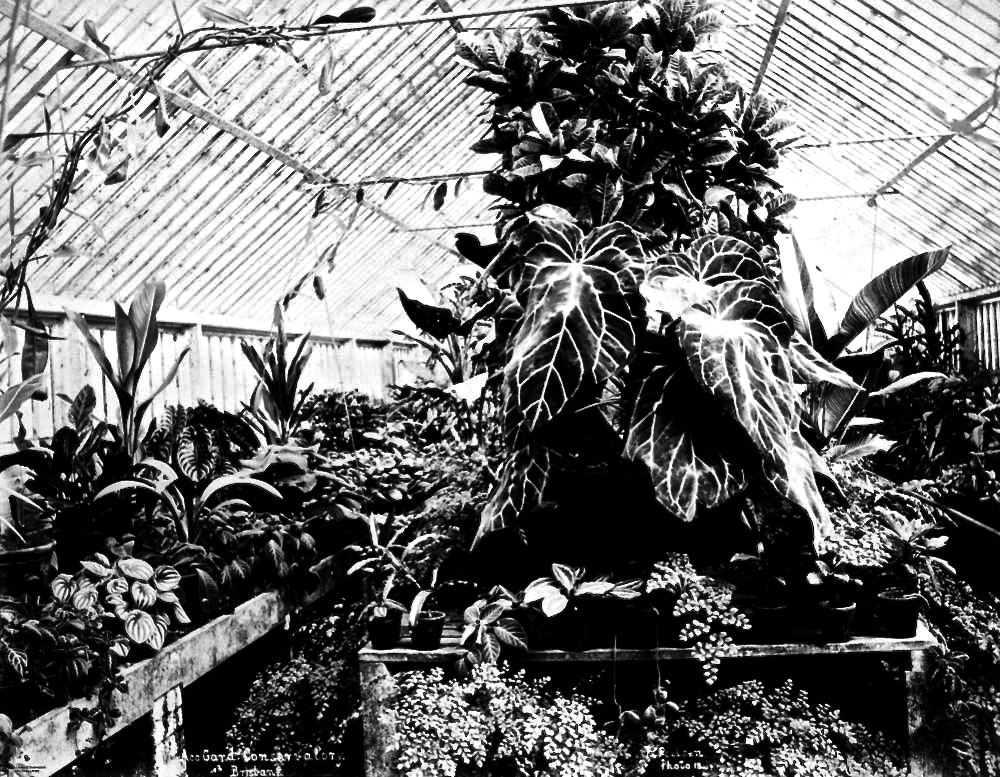
Bush-houses (also called shade-houses or ferneries) were built to protect tropical plants from the sun.  By the late 1800s, many Australian gardeners were as enthusiastic about amassing and displaying these plants as Victorian hothouse collectors in Great Britain and North America.

Florence Reid
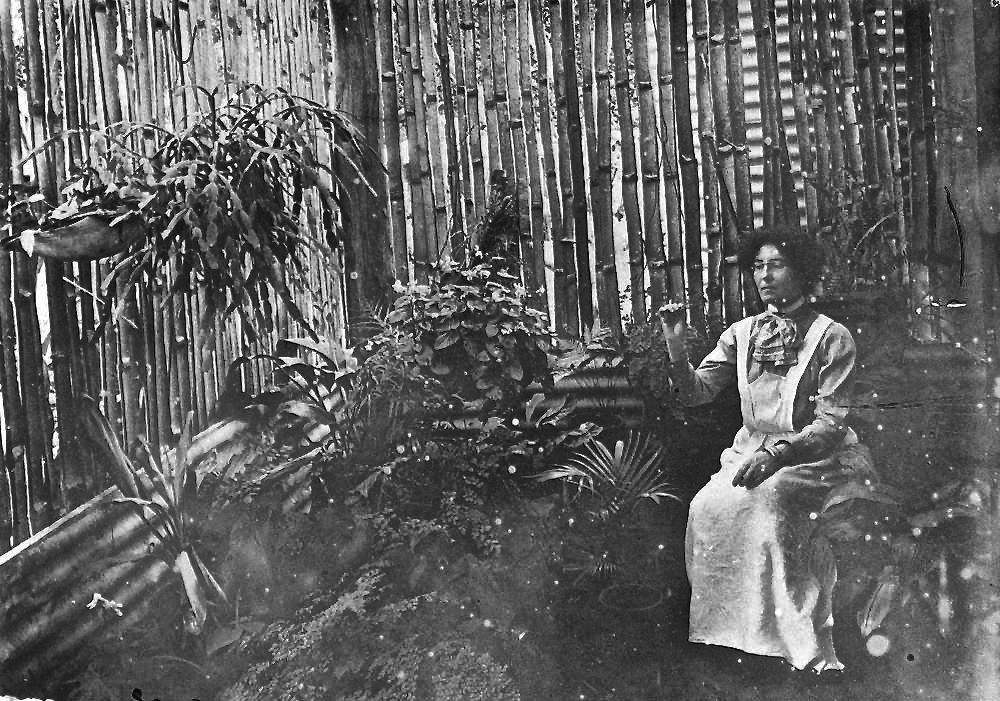
Florence Reid in a bamboo bush-house at Bainagowan Station, ca. 1900.

The bush-house was modeled on the English glassed-in greenhouse or conservatory, but built with less costly, local materials.

Aloe Villa
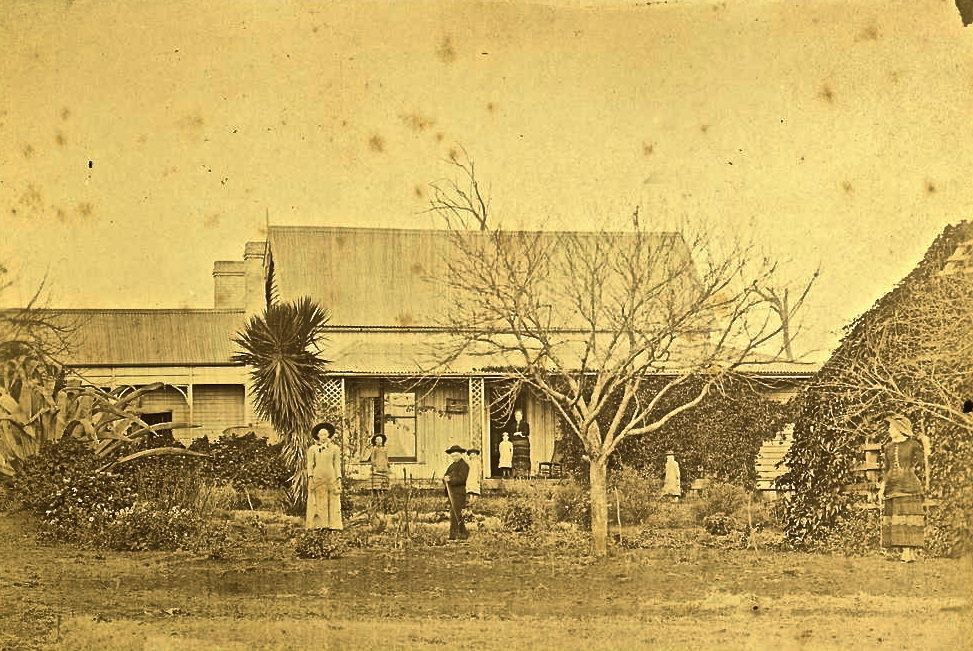
Gardening at the front of Aloe Villa, Toowoomba, ca. 1900. There is a bush-house on the right (and a massive agave on the left).

In a 2003 article for Queensland Review, “Tropicalia: Gardens with Tropical Attitude,” Jeannie Sim wrote that, by the end of the 19th century, a number of international exhibitions in Australia were showing off “high-quality examples of tropicalian gardening” in bush-houses.

Bowen Park
Fern-filled conservatory at Bowen Park, Brisbane, ca. 1890, by P.C. Poulsen.
Merthyr Hse, Brisbane
Shade-house in the garden at Merthyr House, Brisbane, ca. 1908.

“The most extraordinary of these kinds of structures,” she wrote,  “[was] arguably the one built in 1897 for the Queensland Colonial and Indian Exhibition in Brisbane. . . . Covering the walls and pillars of the bush-house were more than 3000 staghorn, bird’s nest and elkhorn ferns collected from the Blackall Range . . . . The exhibition guide [noted that] . . . Queenslanders ‘could gain a more vivid idea than ever before of the unequalled luxuriance of their scrubs.’  These horticultural displays marked both local pride and individuality, and promoted the use of native plants and bush-houses in gardens.”

Townsville Botanical Gardens
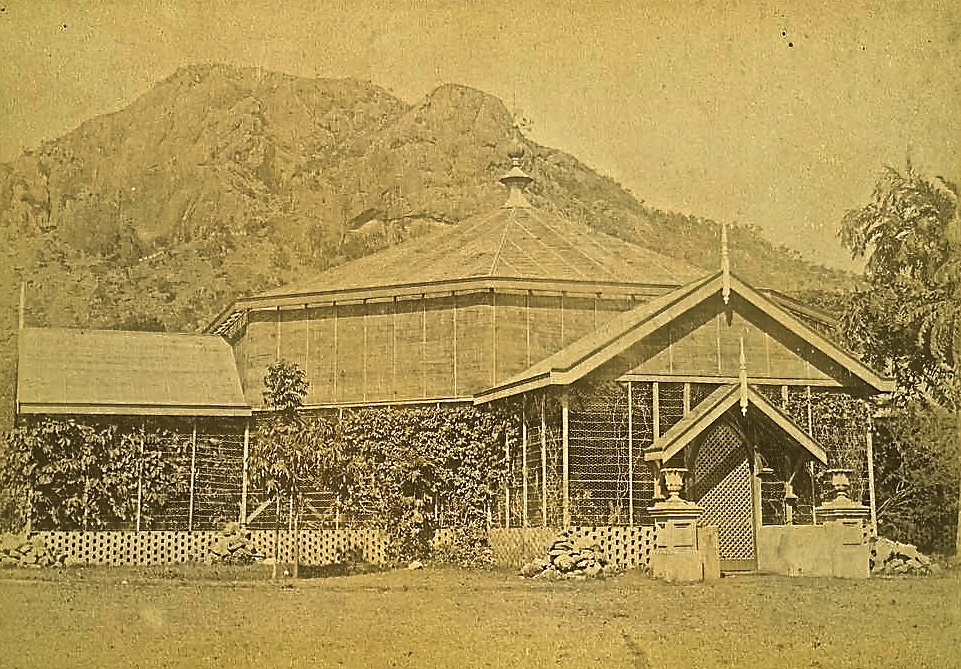
Bush-house at the Townsville Botanical Gardens, ca. 1900.

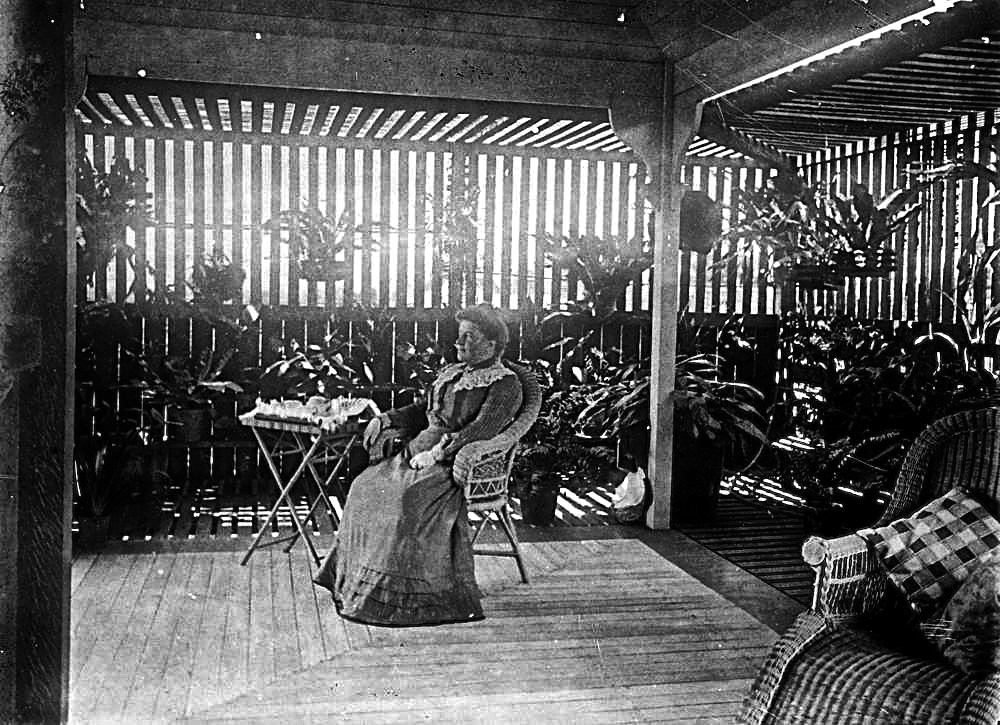
According to Sim, many of the plants cared for and protected in the bush-houses were also displayed in popular verandah gardening.  “The verandah was the public showcase for the gardener’s bush-house skills.”

Milton
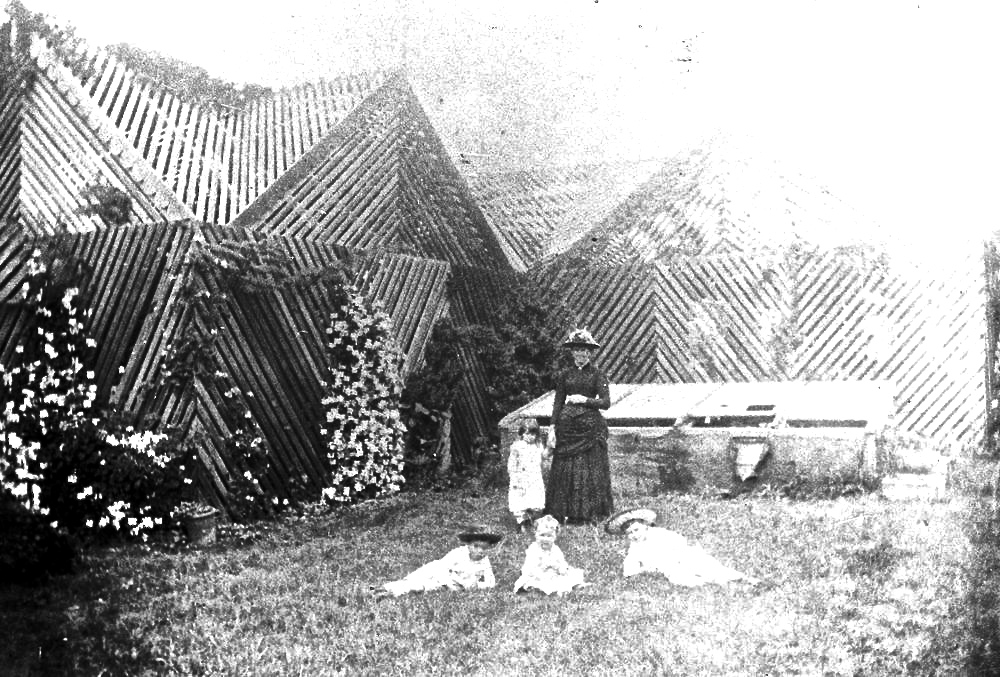
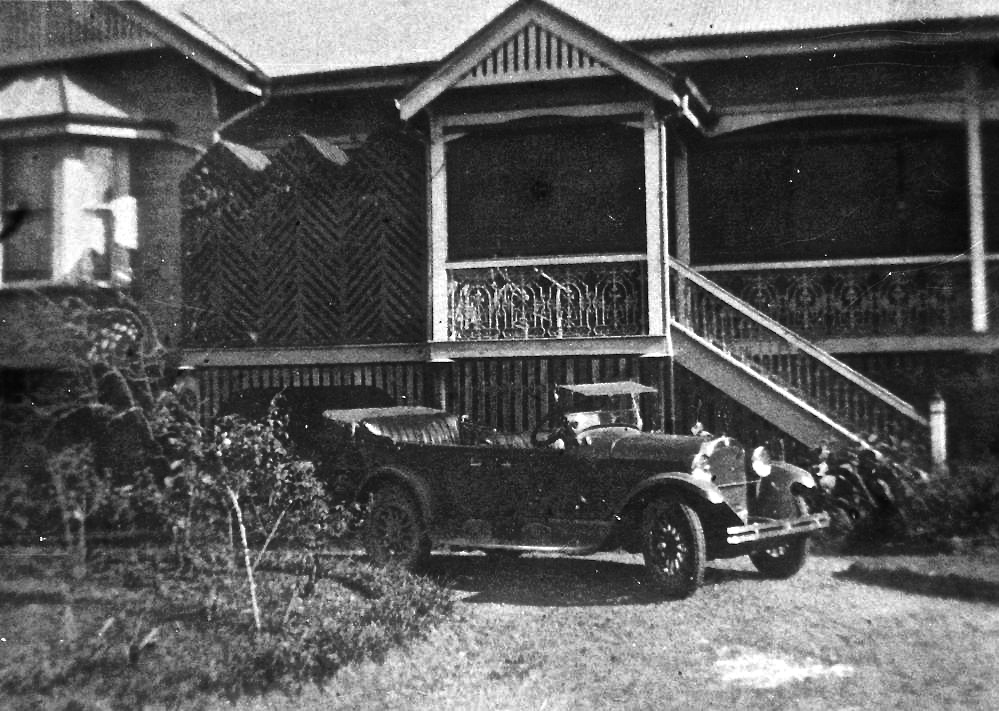
Milton residence, Holly Dean on River Road, Milton, ca. 1900. While it’s hard to see any plants, there is an interesting lath structure on the left side of the porch.

Judging from these photos, bush-houses seem to have been frequently constructed of panels of wood or bamboo lath set at decorative angles.

Greenmount Station
Bush-house at Greenmount Station, ca. 1927.

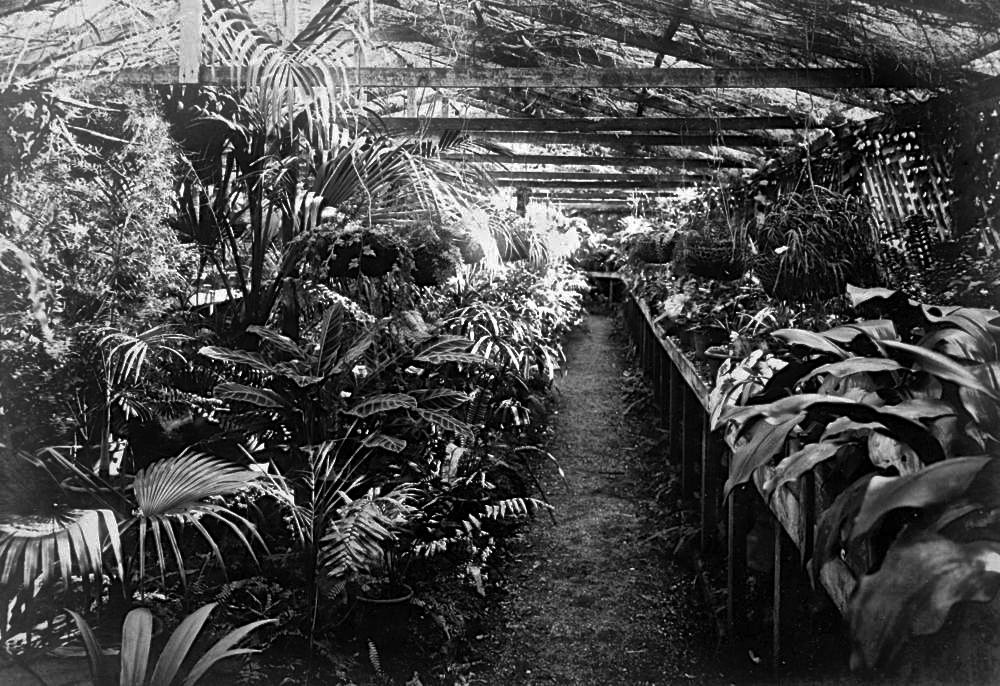
It also appears that many bush- or shade-houses were used as cool(er) places to entertain and relax.

Clayfield residence
Fernery in the Clayfield residence, Elderslie, in the Brisbane suburb of Clayfield, ca. 1900.

All of these photos are via the Commons Flickr photostream of the State Library of Queensland, Australia.

St. Helena
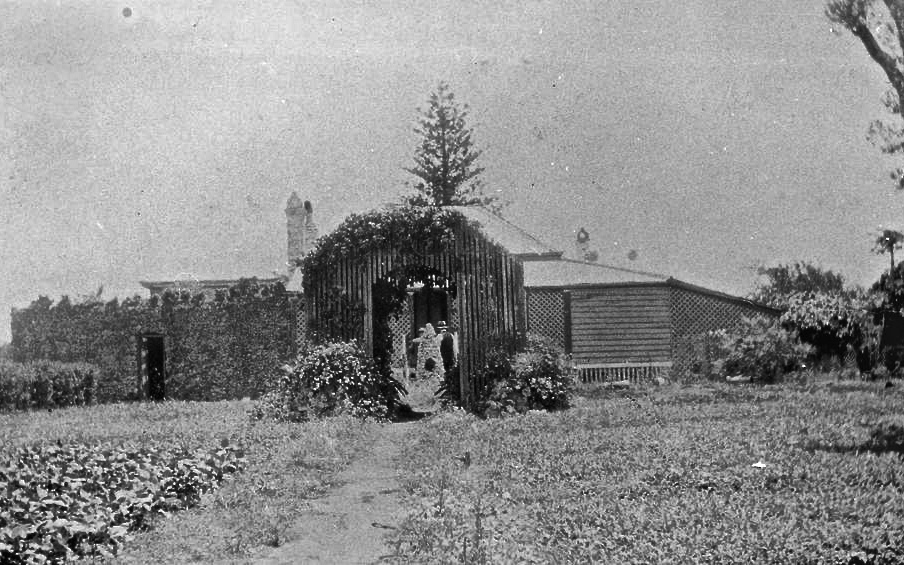
Garden of the old prison superintendent house, St. Helena, 1928. There is a small lath summer house in the center of the path and trellis around the perimeter of the home behind it — perhaps enclosing a verandah around interior rooms?

To scroll through larger versions of the pictures, click on ‘Continue reading’ below and then on any of the thumbnails in the gallery.

Continue reading “Vintage landscape: bush-houses in Australia”

(A bit belated) Bloom Day for January

Here are a few of the flowers blooming in our garden this month.
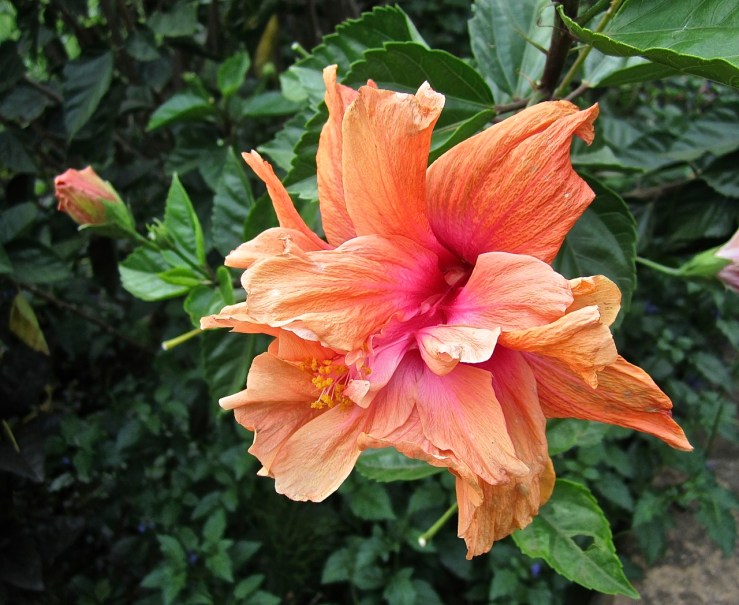
orange tropical hibiscus

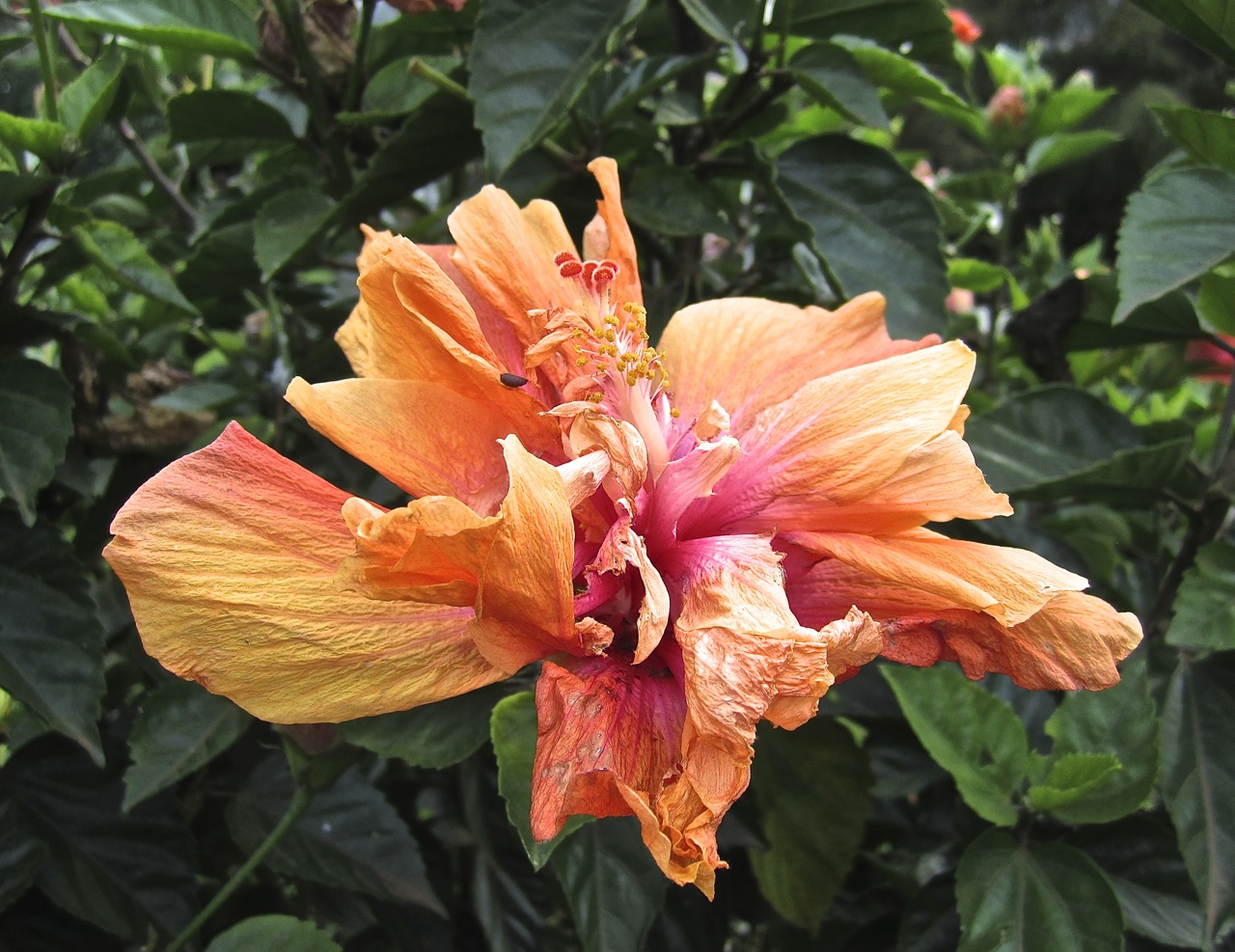
This beautiful light orange tropical hibiscus — this large shrub is growing on the middle level of the retaining walls along the front lawn.

orange tropical hibiscus

Below:  Rudbeckia laciniata or cutleaf coneflowers — this is a double variety, possibly ‘Goldquelle,’ ‘Hortensia,’ or ‘Goldenglow.’
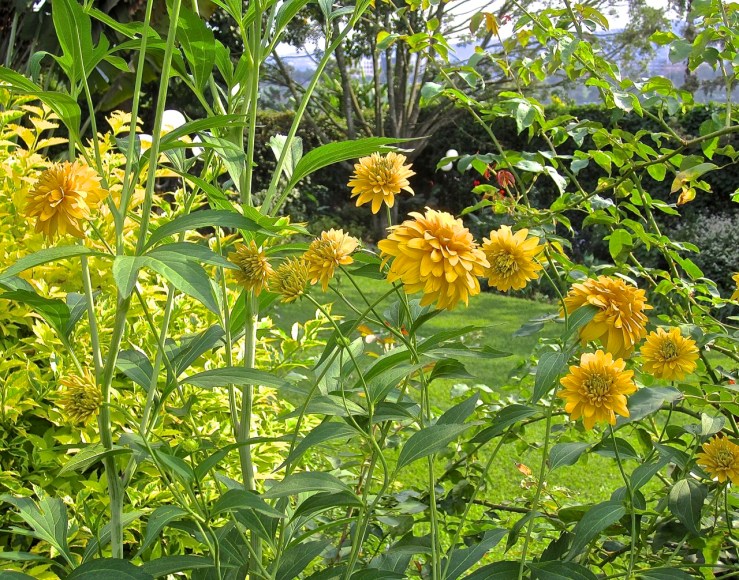
Double Rudbeckia

This 3′ to 5′ rudbeckia — usually seen with single coneflower blooms — is native to eastern North America. A double variety appeared in 1897 and became popular as an “outhouse flower,” planted to shield privies from view.

When we arrived in Rwanda, there was one clump in the garden. I divided it, and now, because it is a “vigorous spreader,” I have about 25 plants.

Rudbeckia

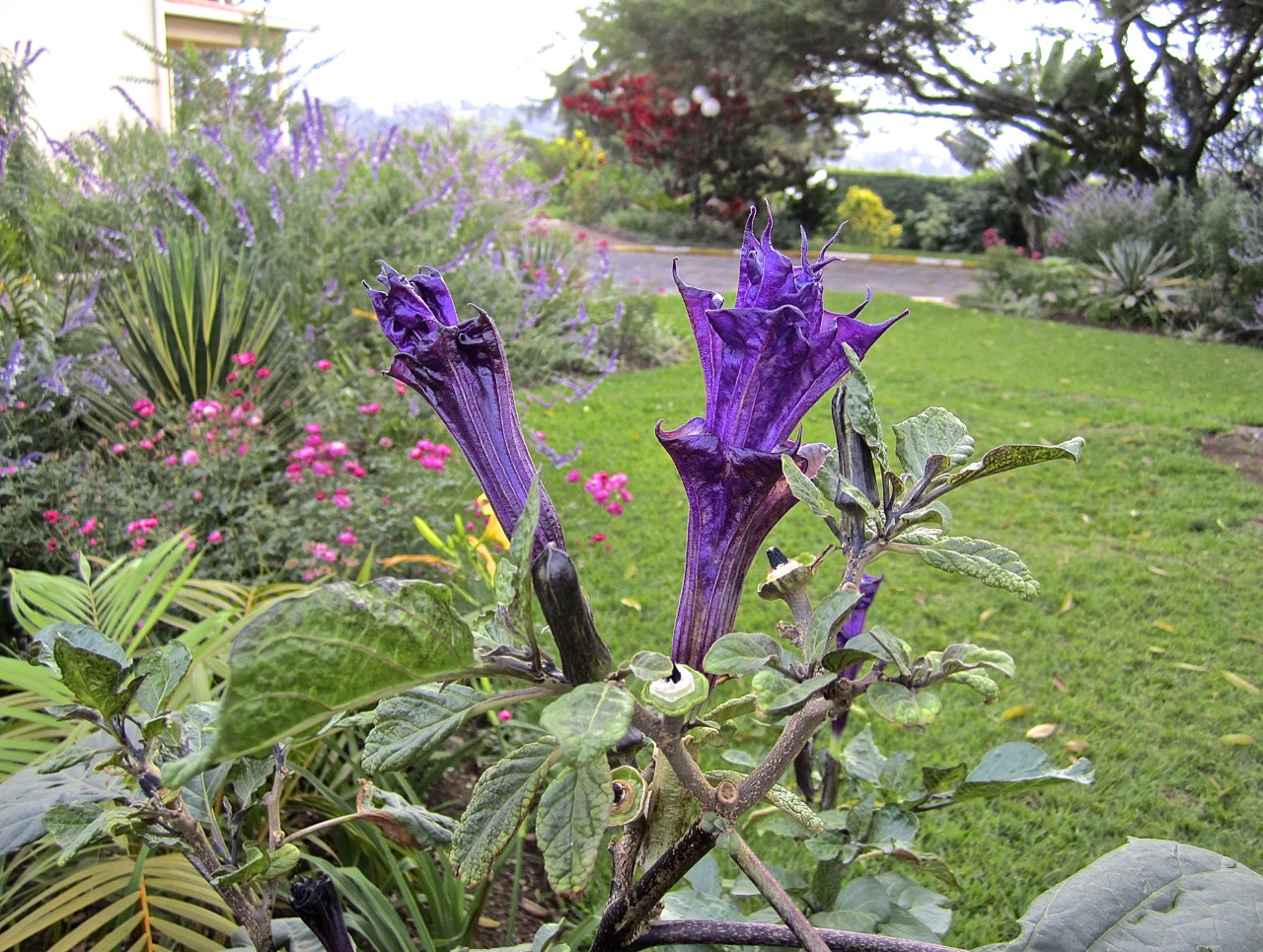
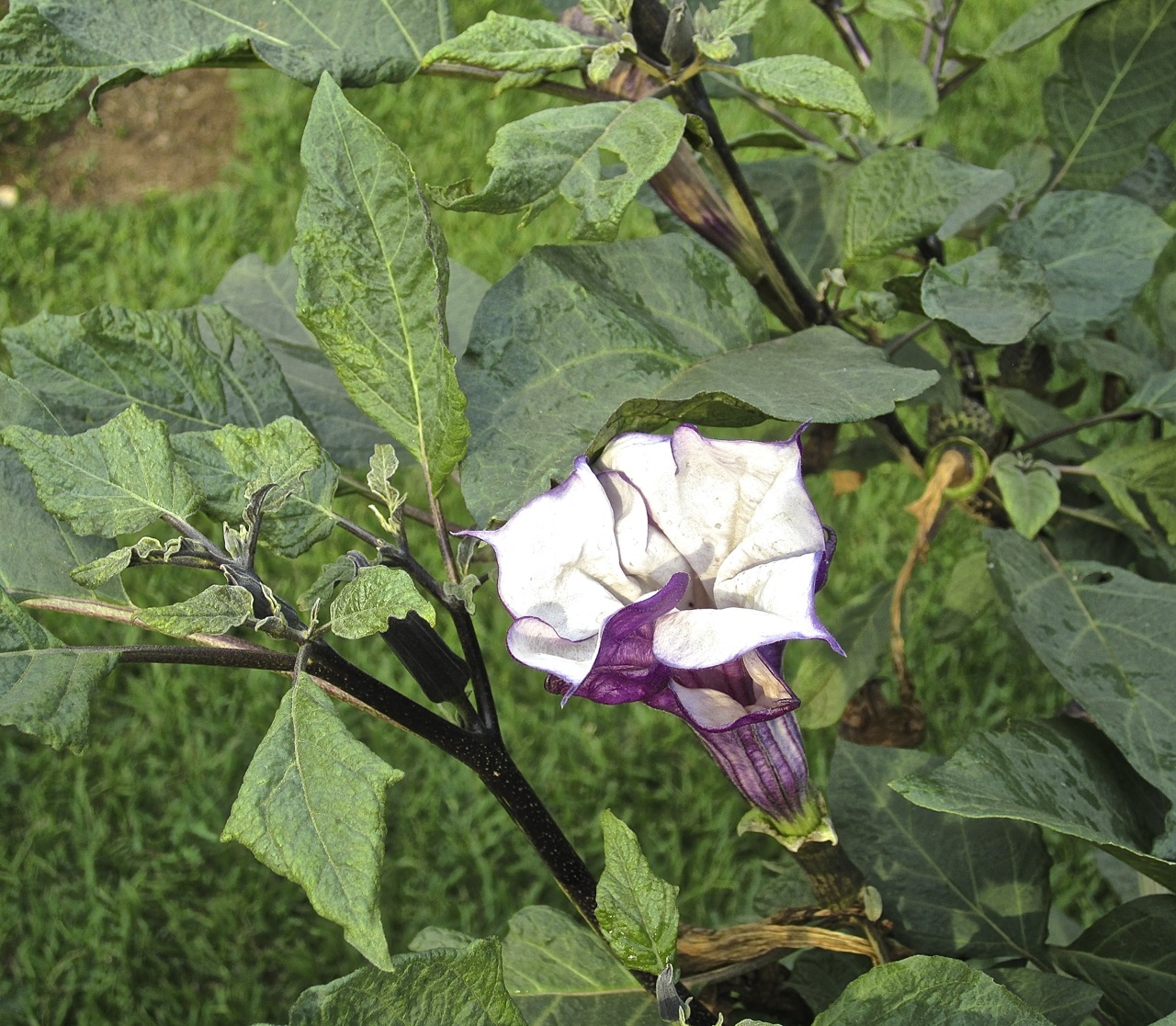
I’m pretty sure the plant below is another American native in our garden: Datura stramonium or Jimson weed or Jamestown weed.

entrance and jimson weed

Because all parts of the plant can produce delirium or bizarre behavior if ingested or smoked, it played a small role in colonial American history when it drugged British soldiers sent to quell a 1676 uprising in Virginia.

The James-Town Weed . . . , being an early plant, was gather’d very young for a boil’d salad, by some of the soldiers sent thither to quell the rebellion of Bacon; and some of them ate plentifully of it, the effect of which was a very pleasant comedy, for they turned natural fools upon it for several days: one would blow up a feather in the air; another would dart straws at it with much fury; and another, stark naked, was sitting up in a corner like a monkey, grinning and making mows [grimaces] at them; a fourth would fondly kiss and paw his companions, and sneer in their faces with a countenance more antic than any in a Dutch droll.

In this frantic condition they were confined, lest they should, in their folly, destroy themselves. . . .  [A]fter eleven days [they] returned themselves again, not remembering anything that had passed.

The History and Present State of Virginia, 1705
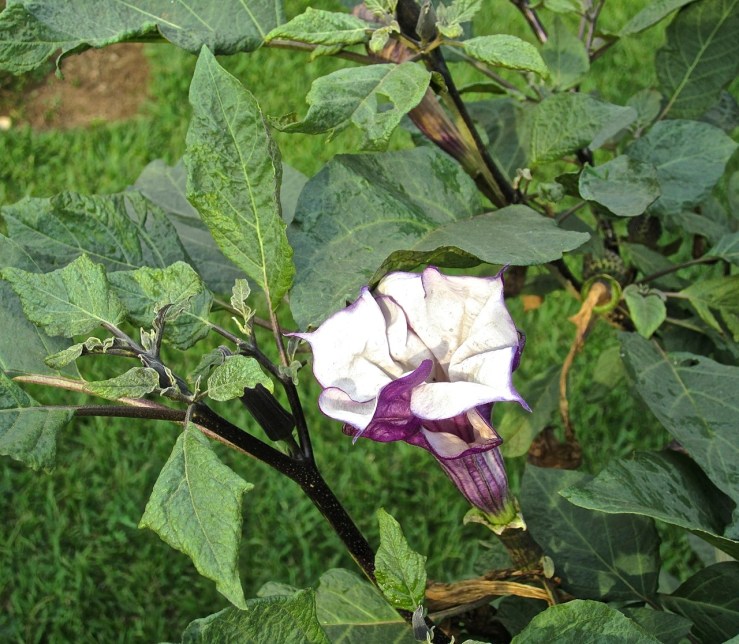
jimson weed

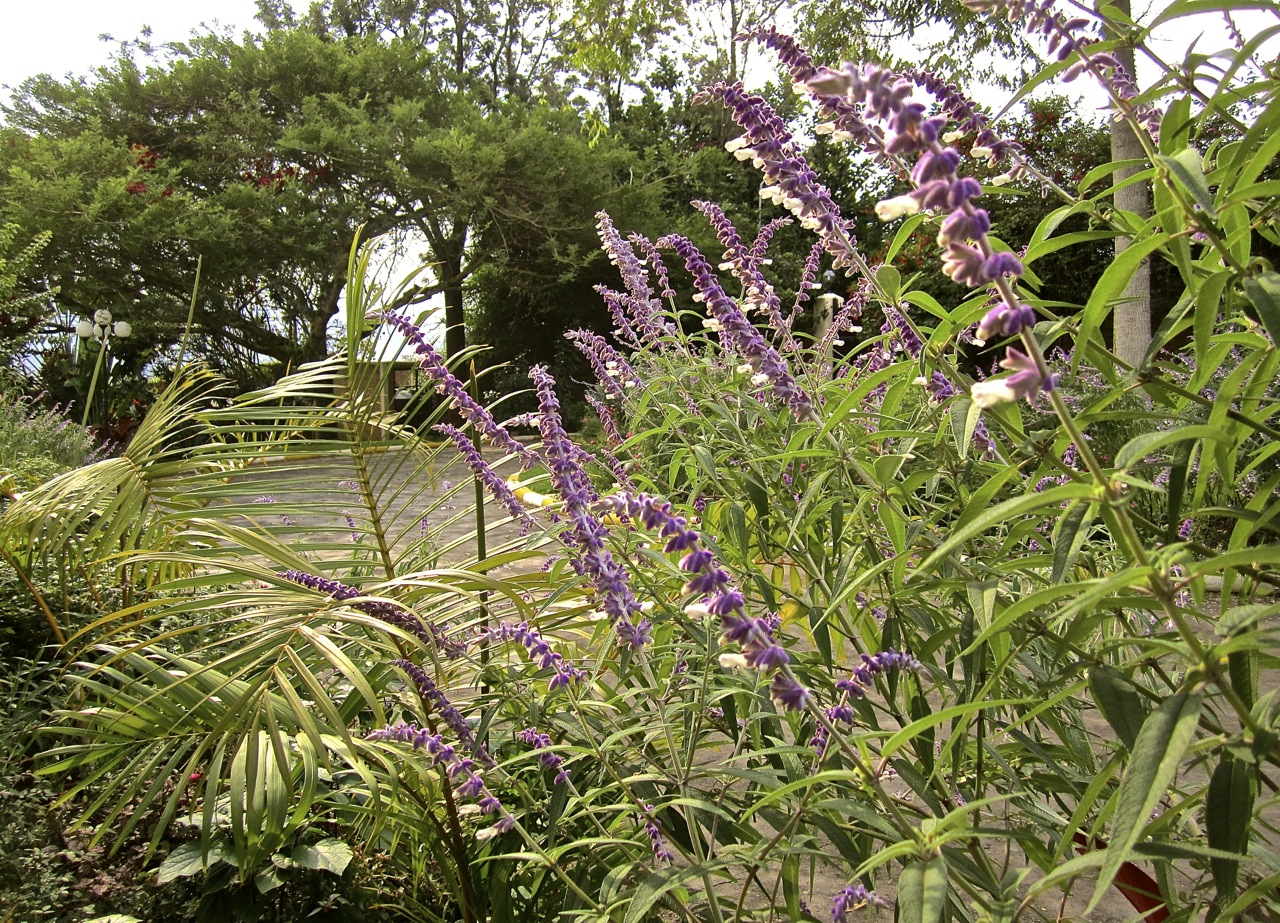
Below:  Salvia leucantha or Mexican sage — when we moved in over a year ago, there was one clump near the driveway.  I divided it, and now we have the purple and white flowers all around the semi-circle of pavement.

mexican sage

I like its tall, twisty, rather floppy nature, but I think those same attributes annoy our gardener, who keeps trying to stake it upright.

mexican sage and driveway 2

The driveway area is mainly planted with the sage, ‘Fairy’ (I think) roses, yellow daylilies, Jimson weed, and orange lantana. There are also several palm trees, which will eventually add some vertical interest. I’m thinking of adding either some tall, dark pink celosia, burgundy sunflowers, or cranberry-colored hardy hibiscus.

mexican sage and driveway

I am not responsible for the bright yellow and white paint on the curbs, by the way.  I go back and forth about whether I like it or not.

Below:  We have finally stopped using the cutting garden as a holding area for various plants being moved from one place to another.
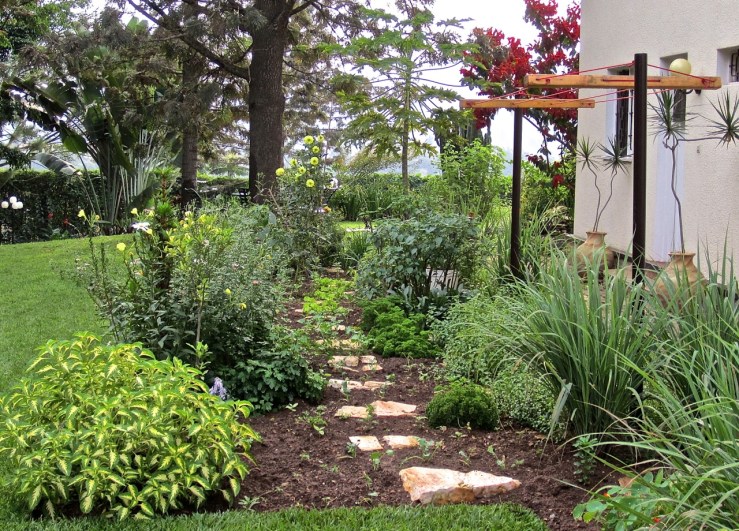
cutting garden

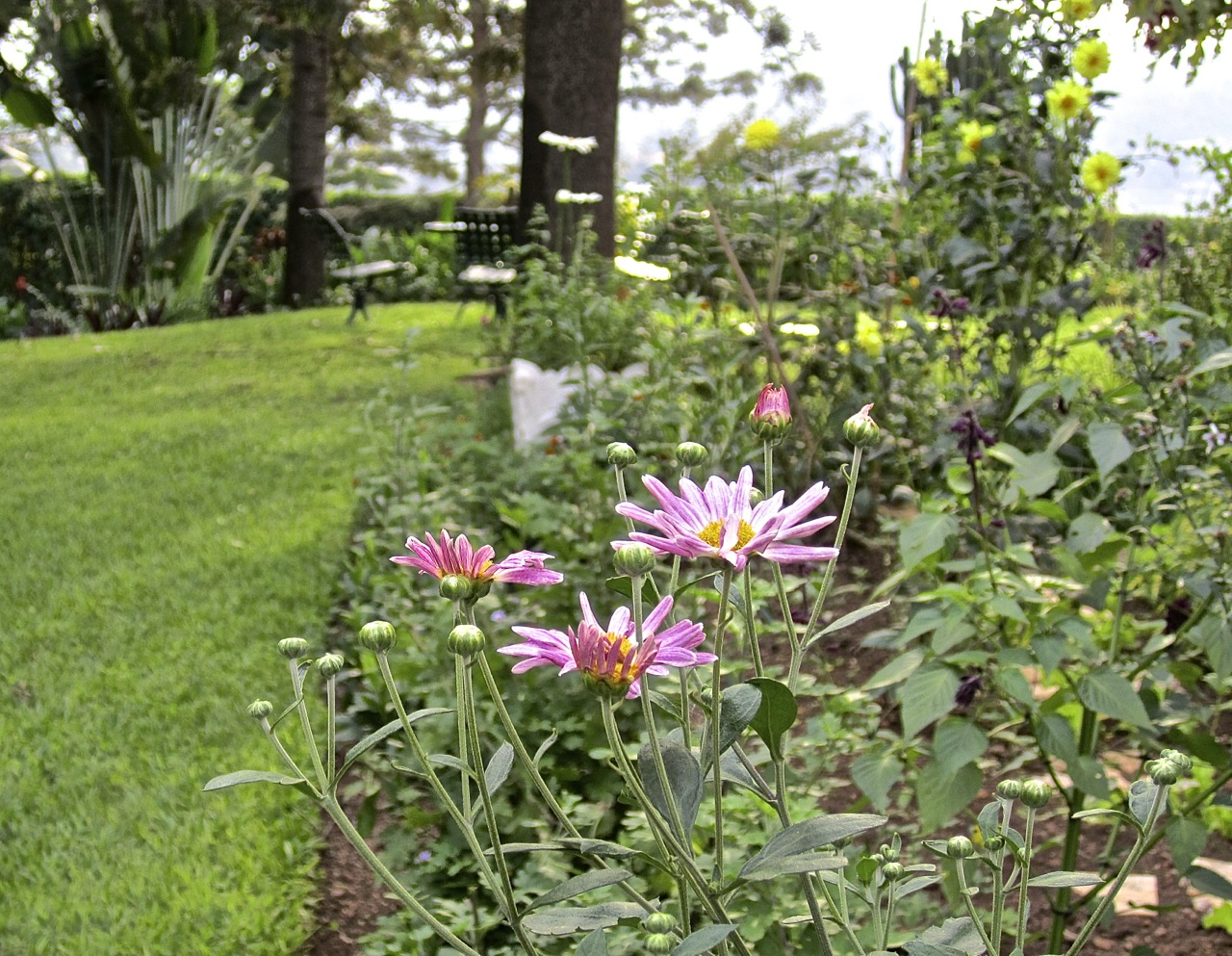
It is now planted out with zinnias, borage, and cosmos seedlings, as well as some perennials, like the pink chrysanthemums below.

pink chrysatheums in cutting garden

I have really tried to like those acid yellow dahlias in the background, but I just can’t, and I think they are going into the compost pile quite soon.

Garden Bloggers’ Bloom Day is the 15th day of each month. To see what’s blooming in other garden bloggers’ gardens, check out May Dreams Gardens.

Foliage Follow Up

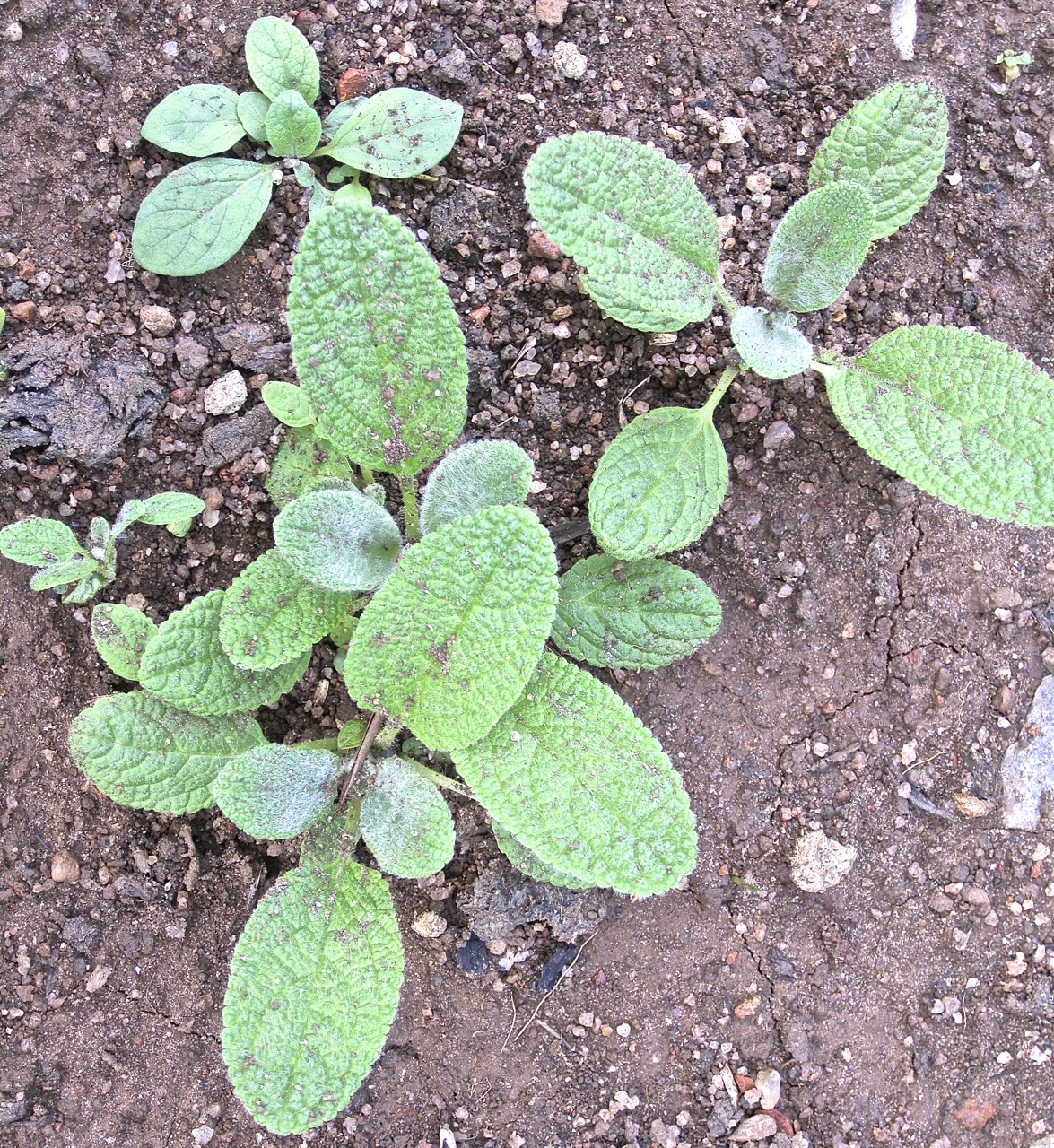
When we were at my parents’ house in September, I went around the garden and gathered seeds from their purple coneflowers, lamb’s ear, and wild mullein.  I put them all in one baggie because I thought I would recognize the seedlings as they emerged.  Of course, now I have no idea whether this is lambs ear or mullein.  I hope it’s mostly lamb’s ear, because I should only need a few of the tall, wide mulleins.
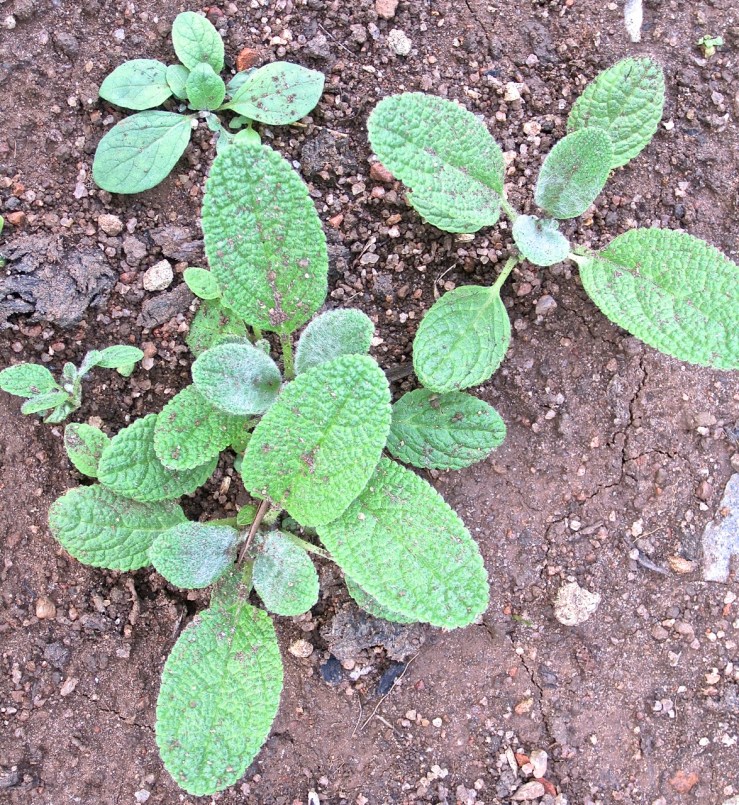
mullein or lambs ear

My mother also gave me some kale seeds, which I forgot about and then mixed in with all the other seeds. Then I went and bought a packet of kale seeds and planted them. So now my vegetable garden is about half kale.  Oh well, it does seem to be the vegetable of the moment.

Thanks to Digging for hosting Garden Bloggers’ Foliage Follow Up the 16th of every month.