Early pink magnolias

Tulip magnolia

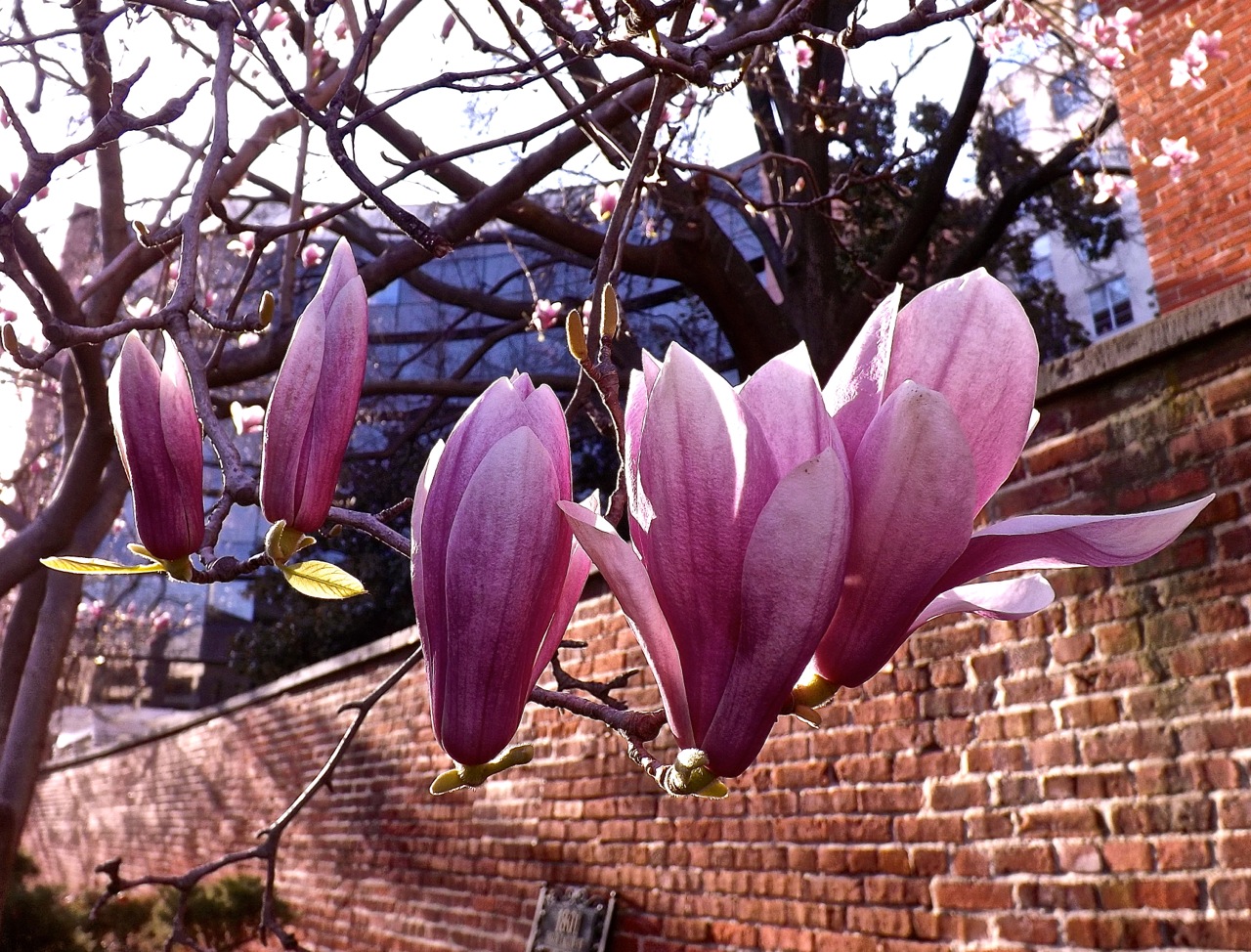
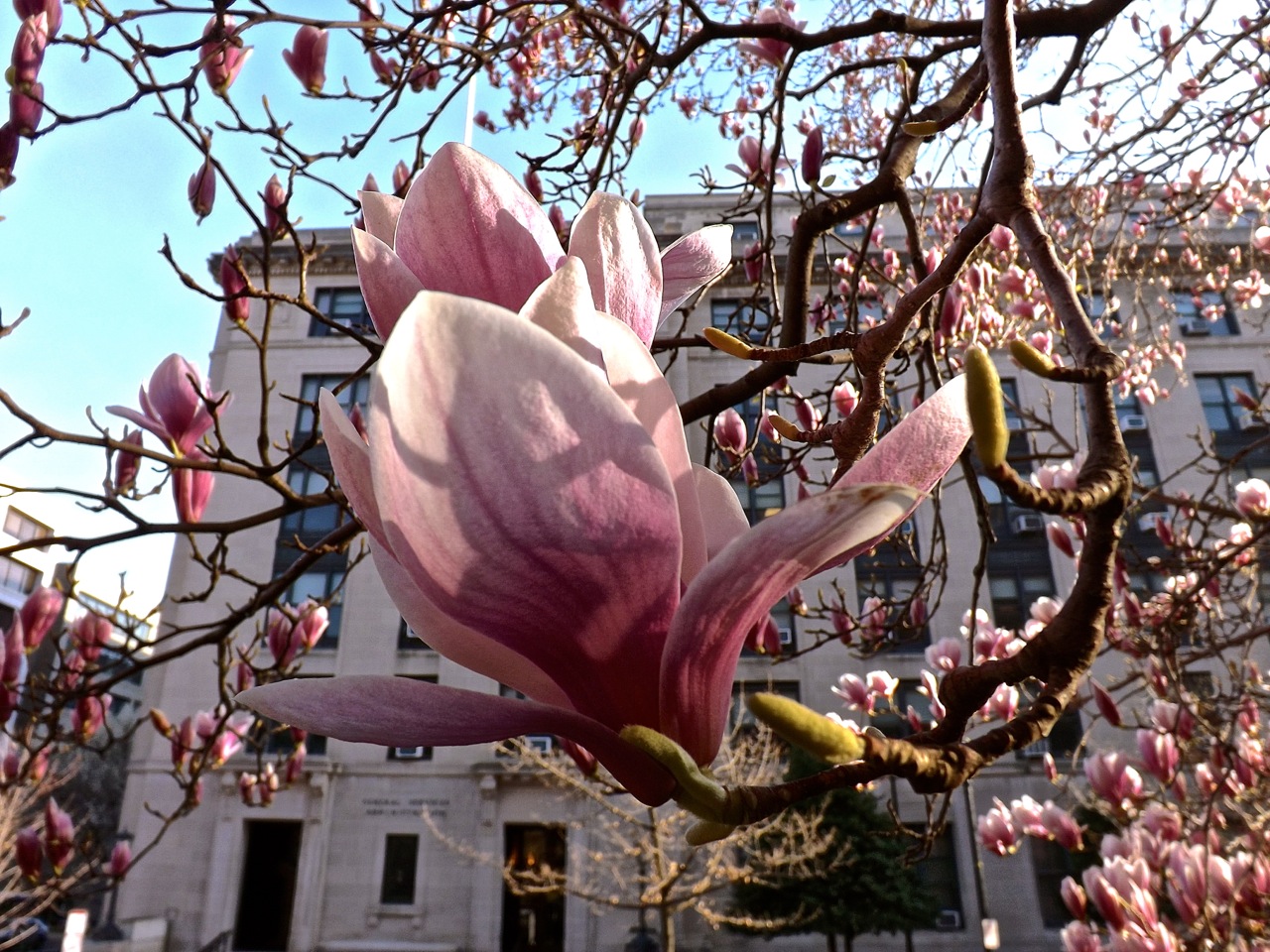
When we arrived back in Washington, D.C., in the first week of April, I enjoyed the flowers of the tulip magnolias.  They were practically the only blooms in the still wintery landscape.

Tulip magnolia at DACOR-Bacon Hse., Wash., D.C., April 2013/enclos*ure

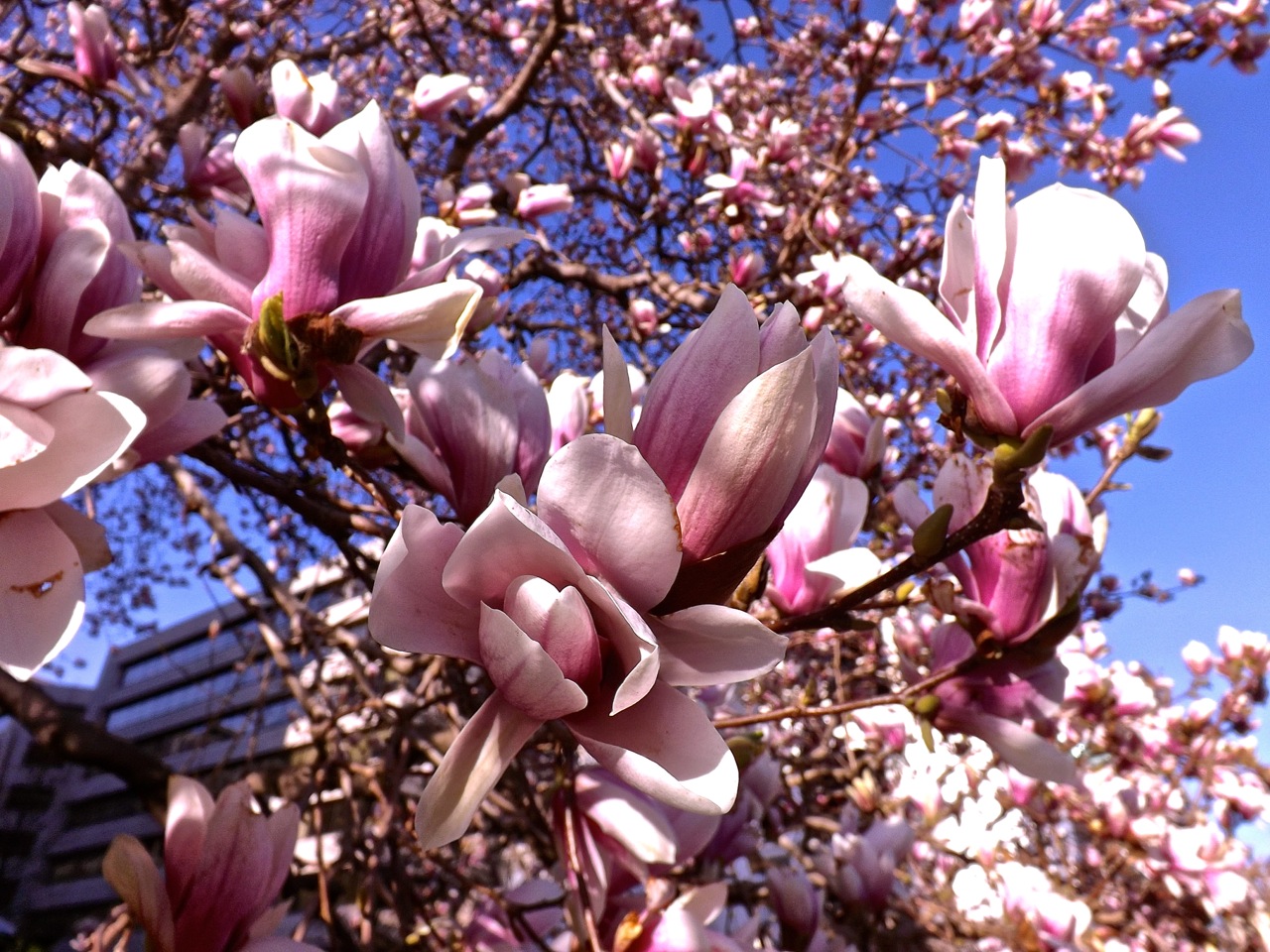
Although I believe what I was calling ‘tulip’ magnolias were really saucer magnolias (Magnolia x soulangeana), which are a hybrid of tulip or Mulan magnolia (M. liliiflora) and Yulan magnolia (M. denudata).

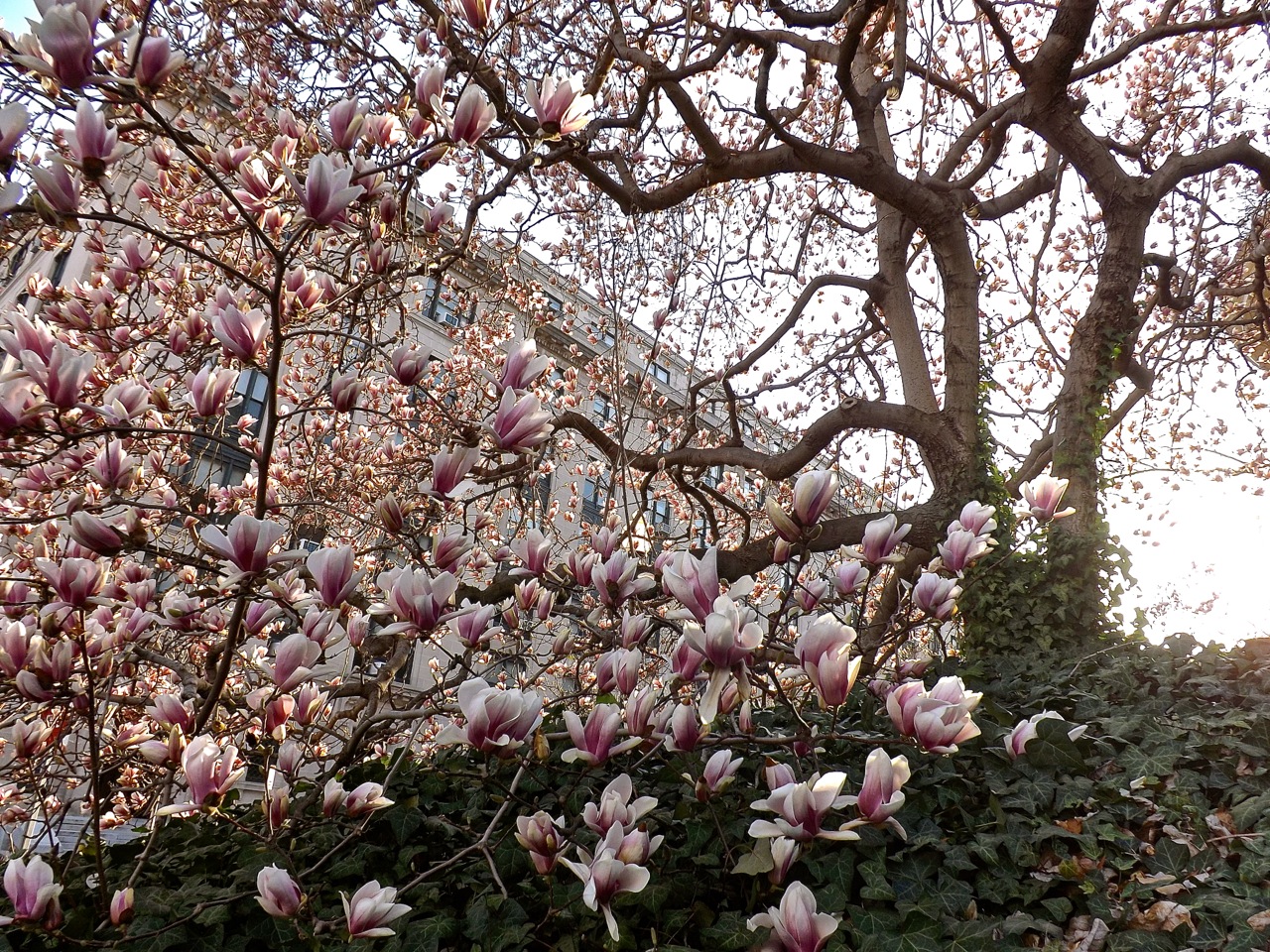
Tulip magnolia at DACOR-Bacon Hse., Wash., D.C., April 2013/enclos*ure

At DACOR-Bacon House, about two blocks west of the White House, I took a lot of photos of two magnolia trees that are planted at the tops of retaining walls, so that the lower blooms are right at eye level.

One of the best places in Washington to enjoy this tree blooming (or leafed out and casting shade) is the Moongate Garden of the Smithsonian’s Enid A. Haupt Garden.

Tulip magnolia at DACOR-Bacon Hse., Wash., D.C., April 2013/enclos*ure

And that Washington flower, the pink magnolia tree, blooms now/ In little yards, its trunk a smoky gray. . . .

James Schuyler, from “Hymn to Life

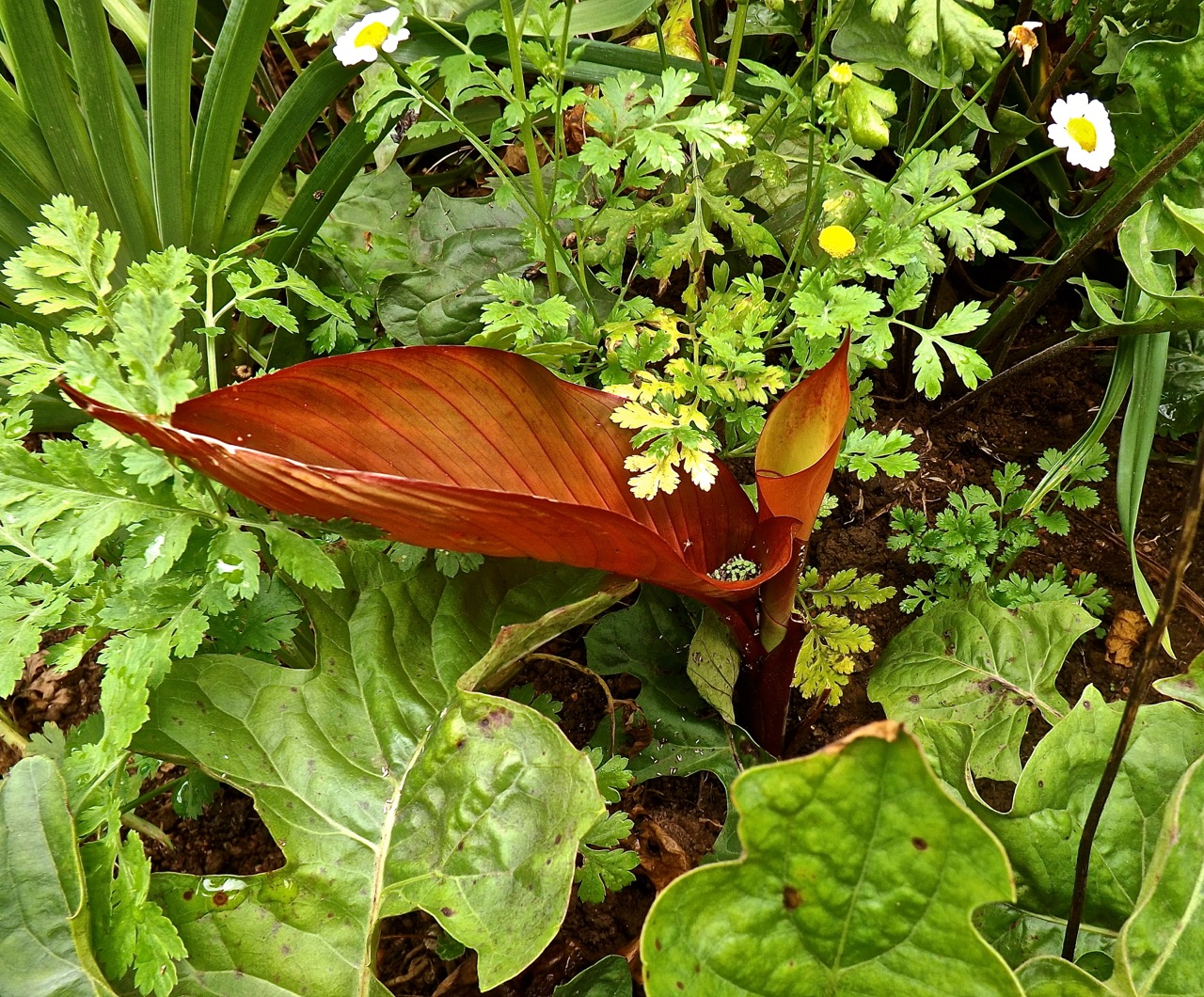
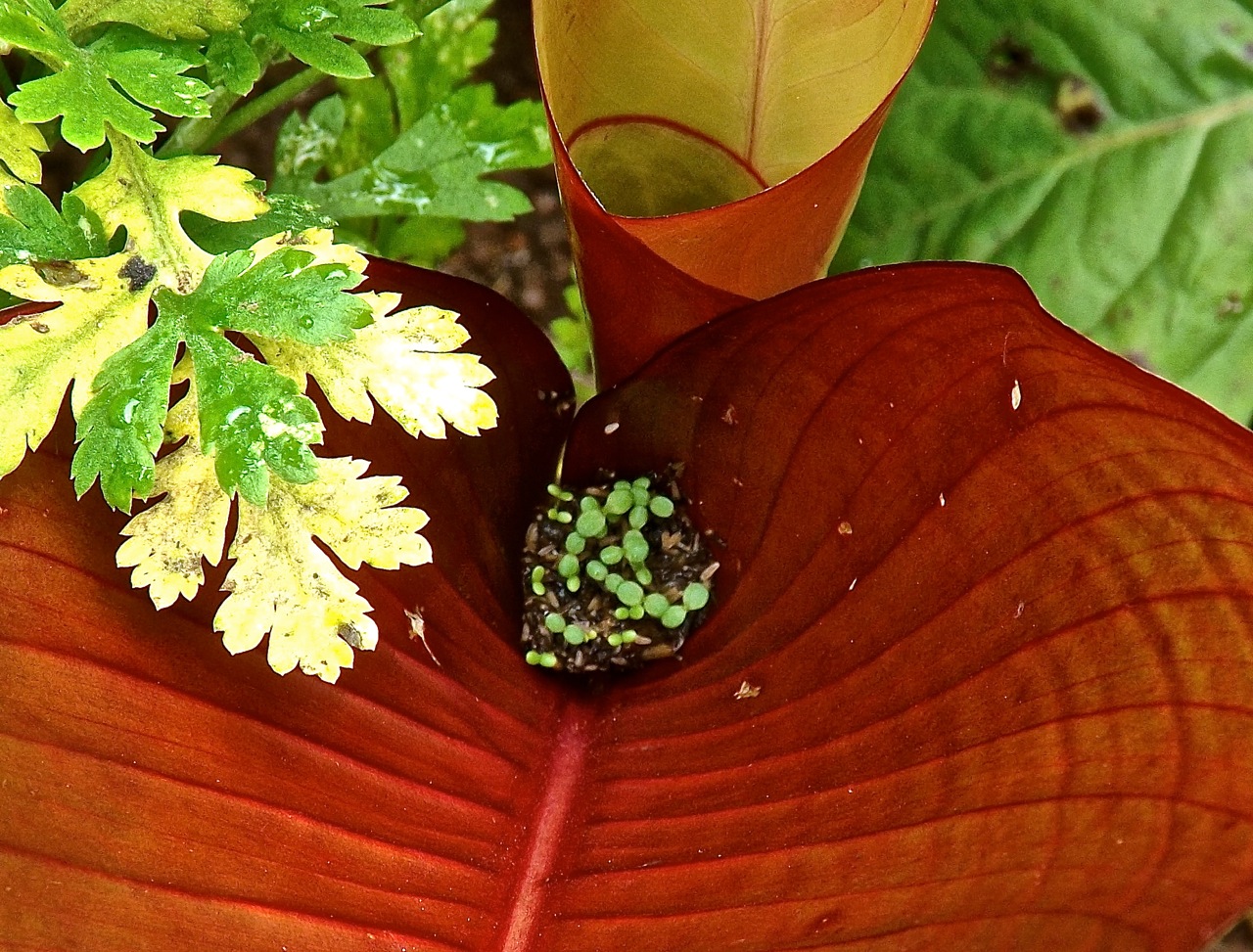
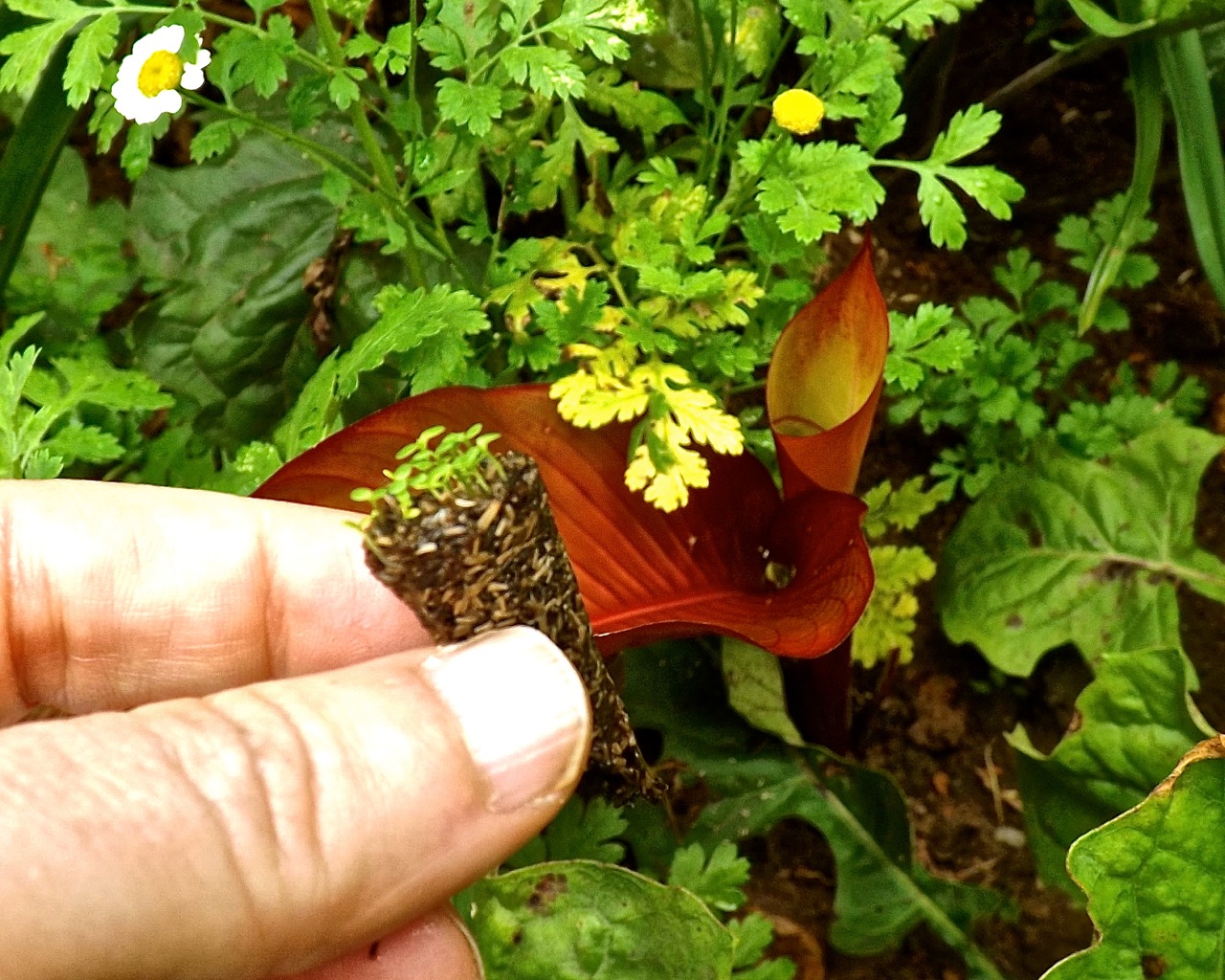
Wordless Wednesday: canna leaf and sprouts

canna with sprouts/enclos*ureOur garden, April 22, 2013.

more canna 2

canna with sprouts 3aThe seeds are probably from the pictured Pyrethrum daisies (pictured), which may be feverfew (Tanacetum parthenium).

Our garden: March going out

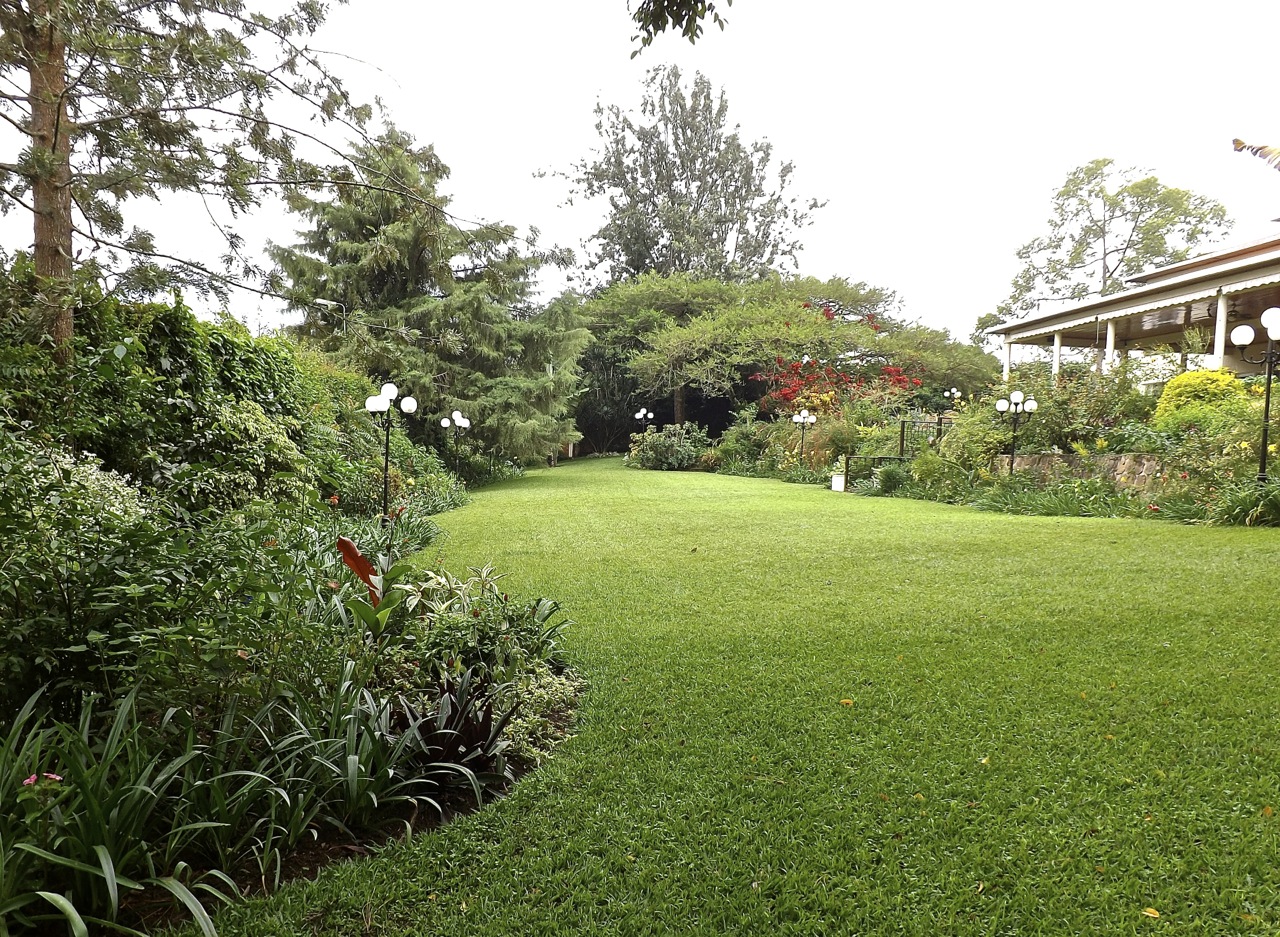
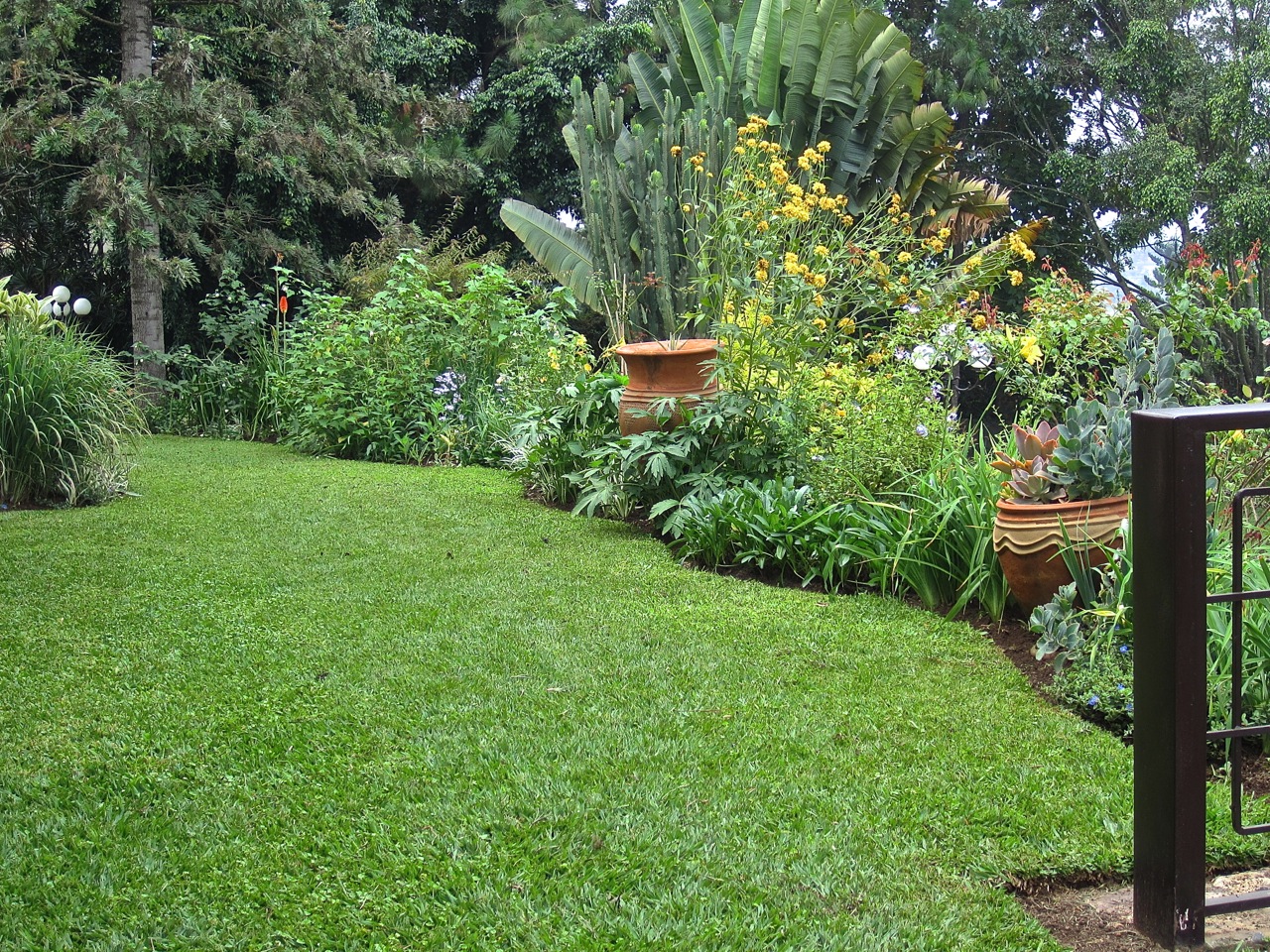
I’m going to be traveling for the next few weeks, so I wanted to leave you with some snapshots that I took this morning of the lower lawn area.

(Pictures of the upper lawn are here).
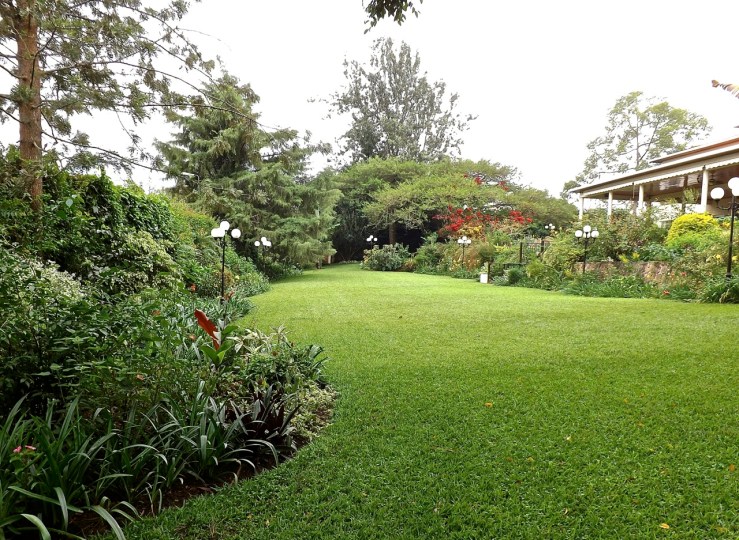
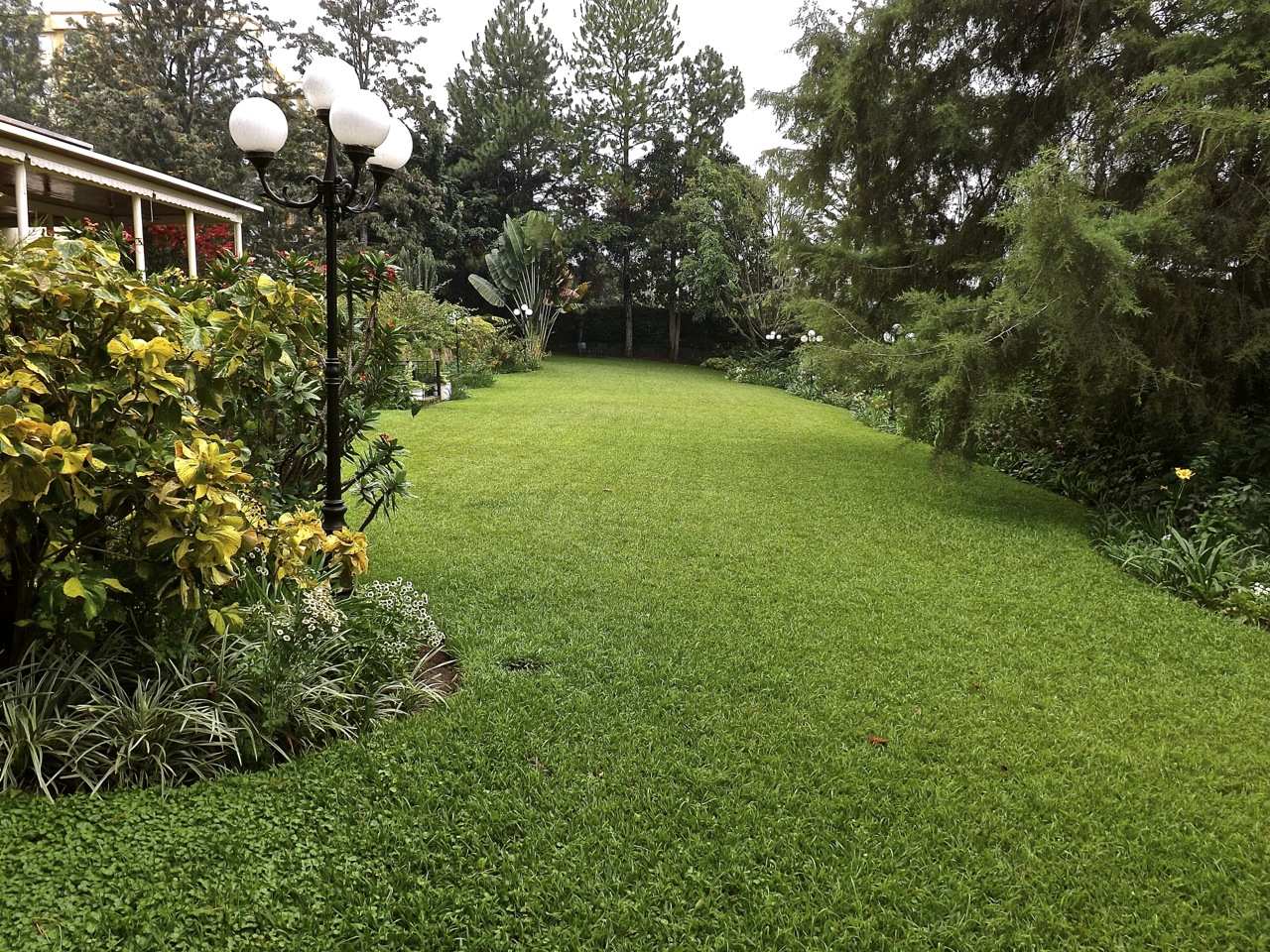
The long lower lawn from the south end.

The borders are filling out, and I’m starting to see more blooms.  Most of the plants were put in in the last eight months — many of them in the last couple of months, including some purple coneflowers that I started from seed.

(To see a garden plan and some “before” photos, click here and here.)

Above and below, on the right side:  the flowers will be — in about 6′ to 12′ sections — 1) red with some pink; 2) purple with some pink and white; 3) yellow and blue; 4) pink and some burgundy; 5) yellow and some burgundy; then a section of green, burgundy, and yellow foliage; 6) (way down there) pink, orange, and white.
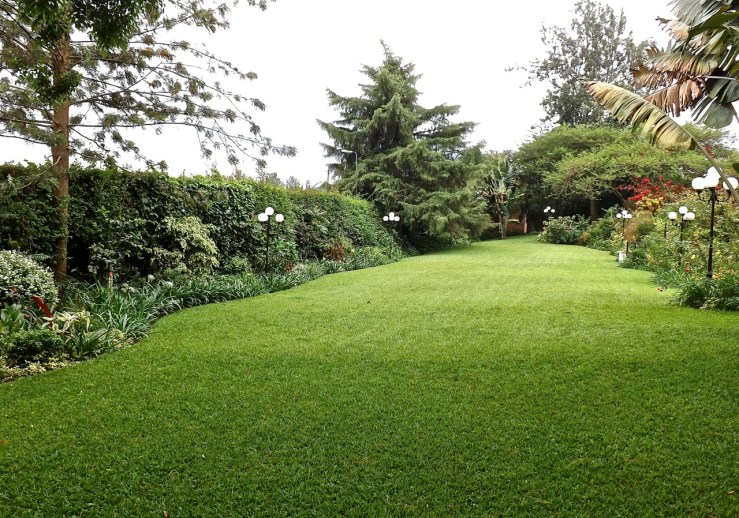
Our Kigali garden/ enclos*ure

Next month, I’ll show the borders closer up, section by section.

There are also a number of plants with variegated or burgundy or bronze foliage interspersed throughout.  Everything just needs a little more growing time, but it’s been raining almost daily this month (we never really had much of a winter dry season), so I’ll see a lot of change when I get back.

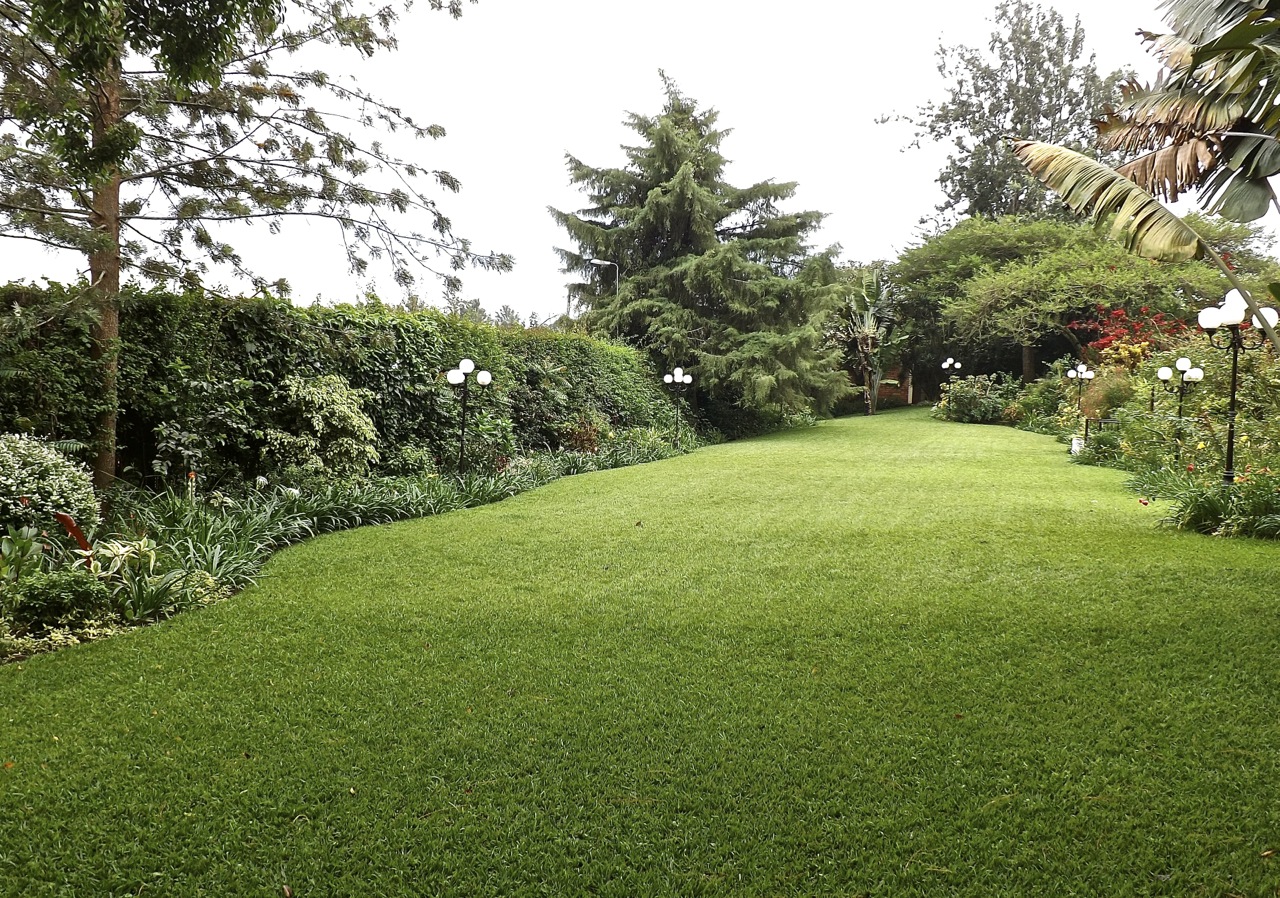
Below is the lawn from the other end.
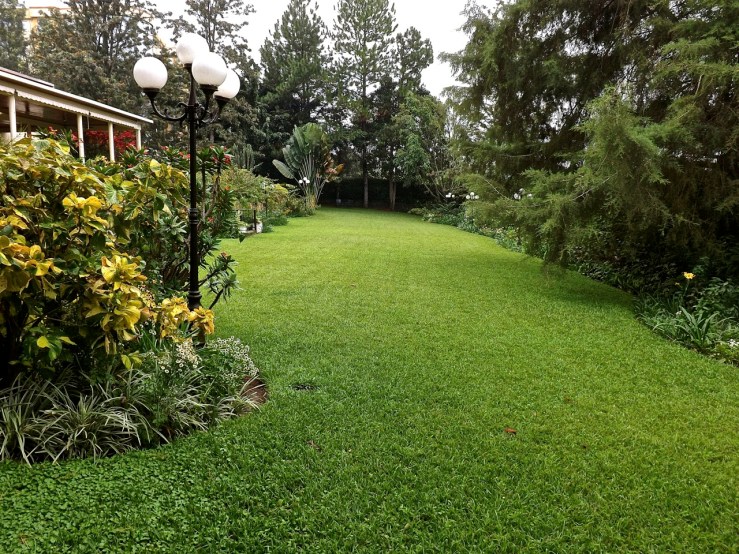
From the other end of the lawn.

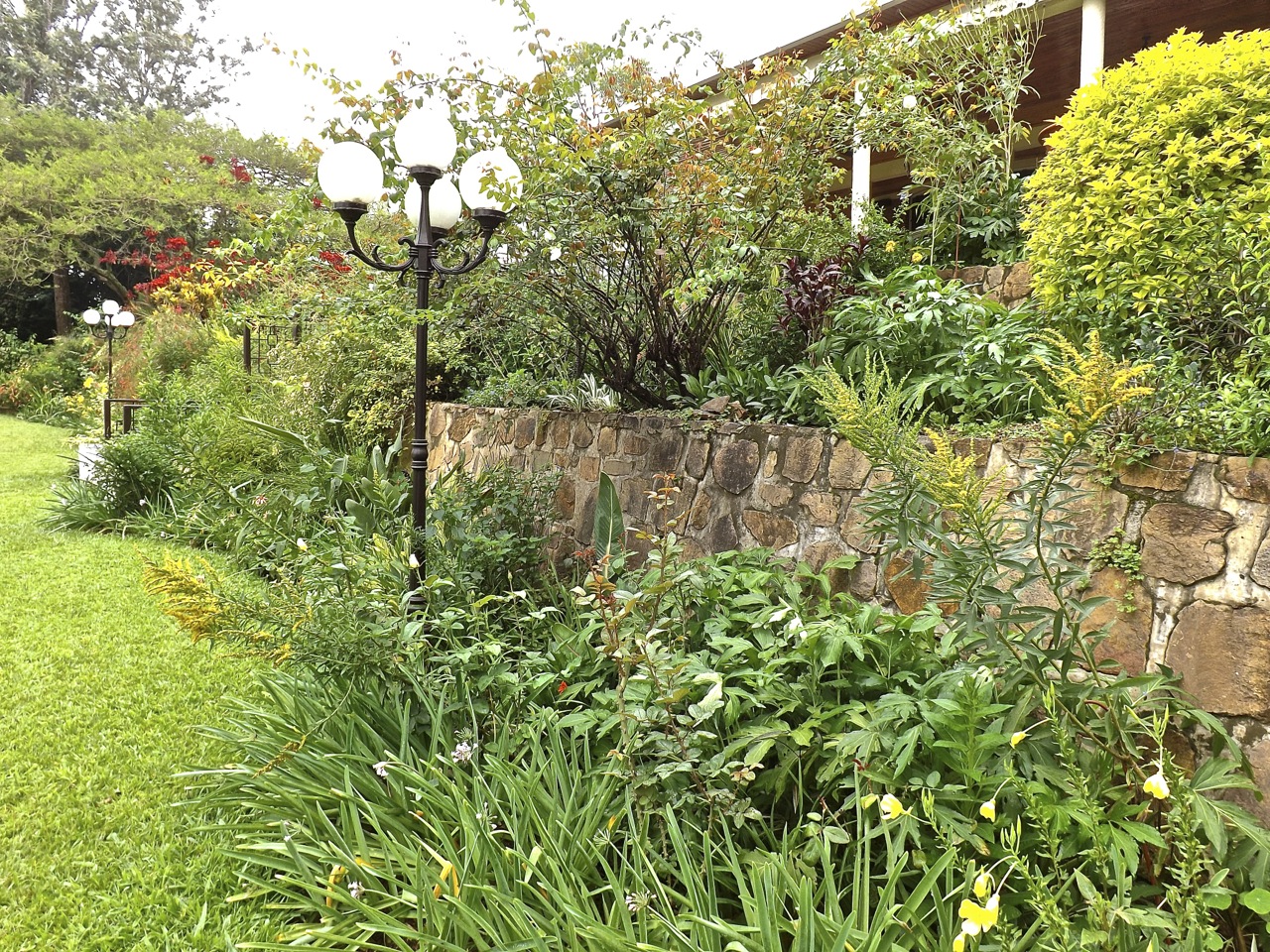
Below are the borders on the other side of the lawn.  The photo just below shows what will be a mostly yellow section at the base of the retaining wall and a yellow and blue section above (with a little white, pink and purple).
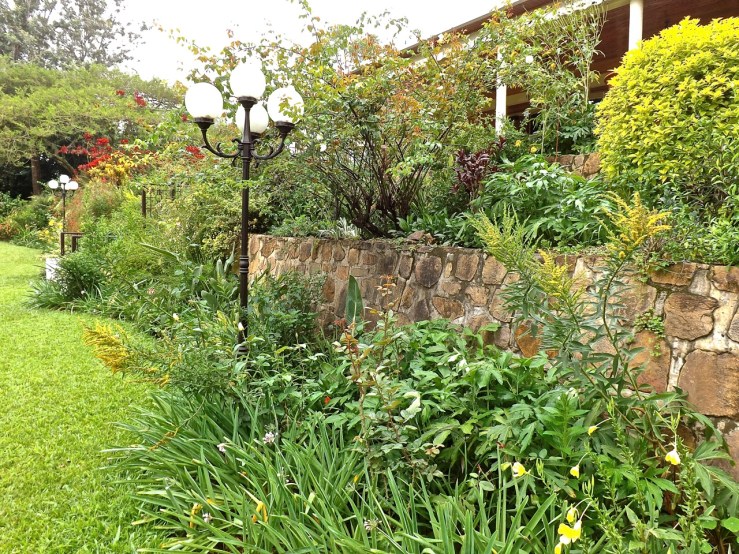
A yellow section of border in front of the retaining walls.

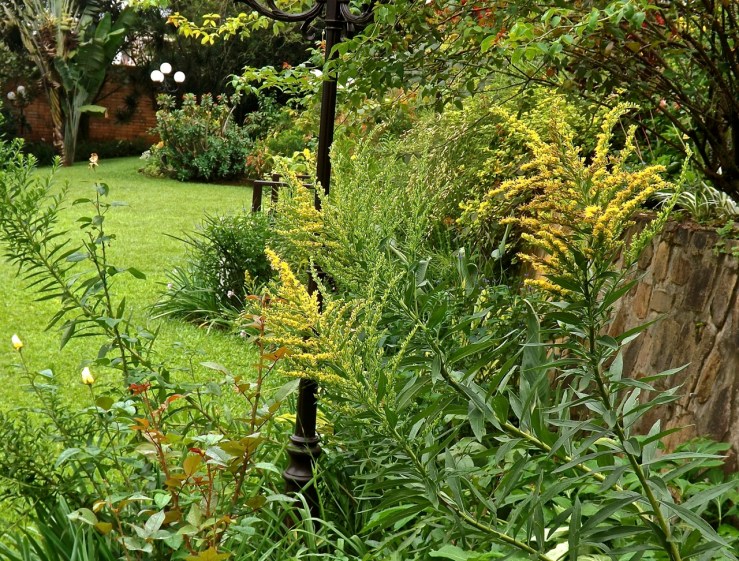
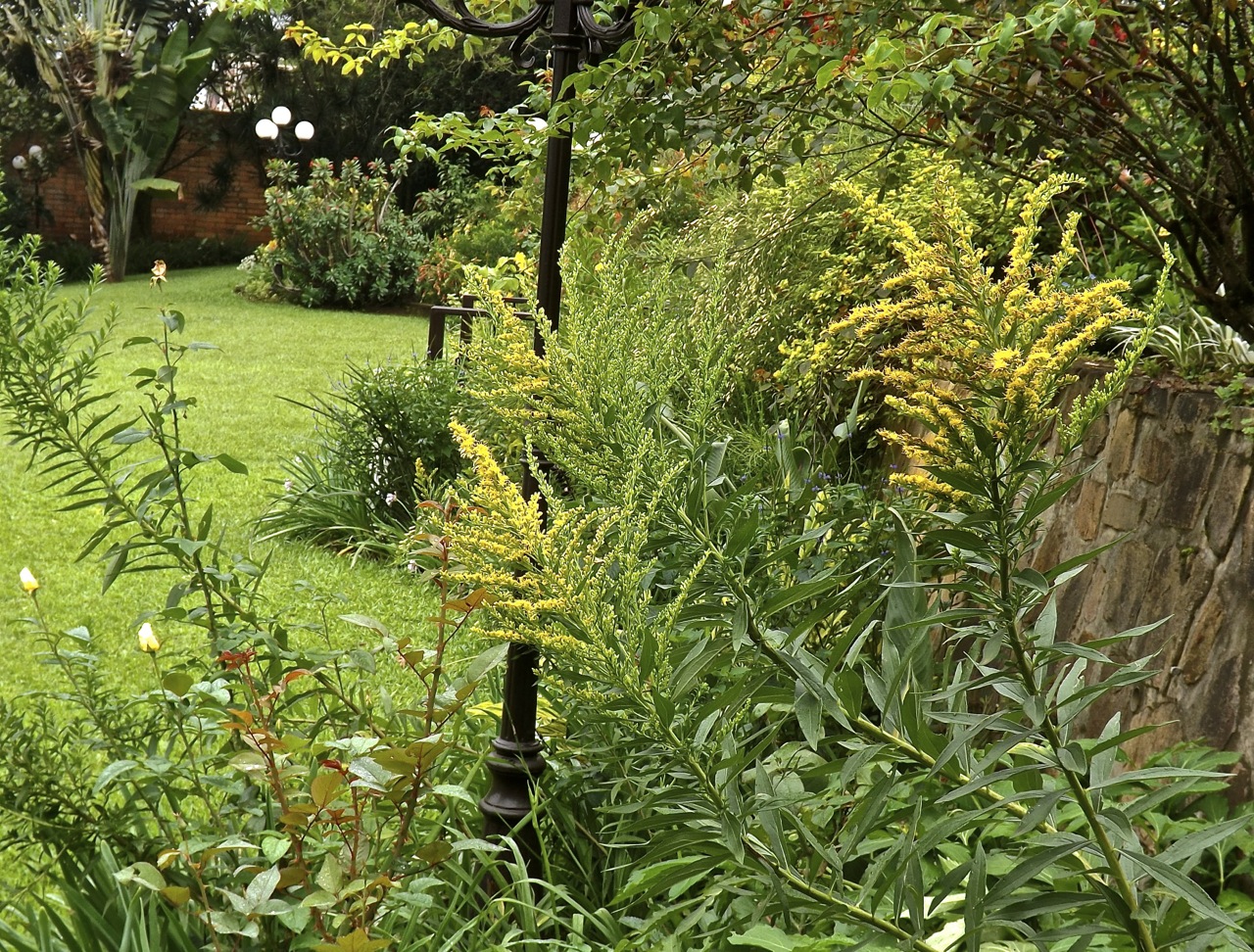
Below, the goldenrod is blooming.

Goldenrod in bloom.

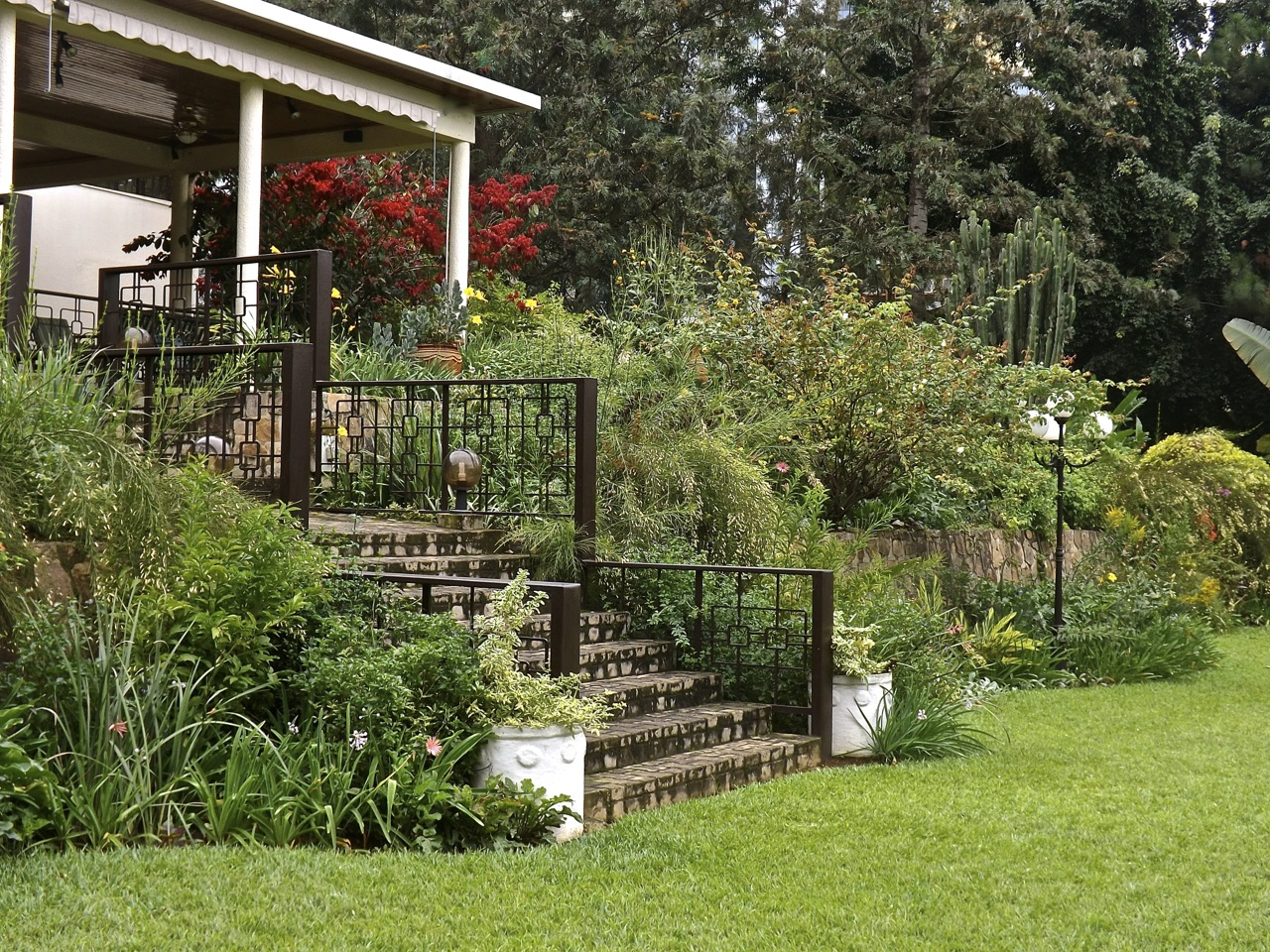
Below:  the steps and retaining wall borders from the other direction.
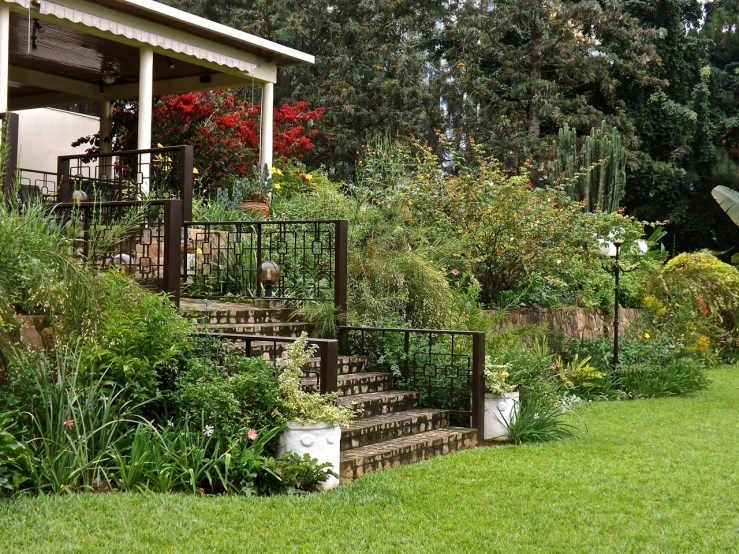
The steps and retaining walls.

Above: in the lower border, on the far side of the steps, you can just glimpse a little of the lamb’s ear that I grew from seeds from my parents’ garden.

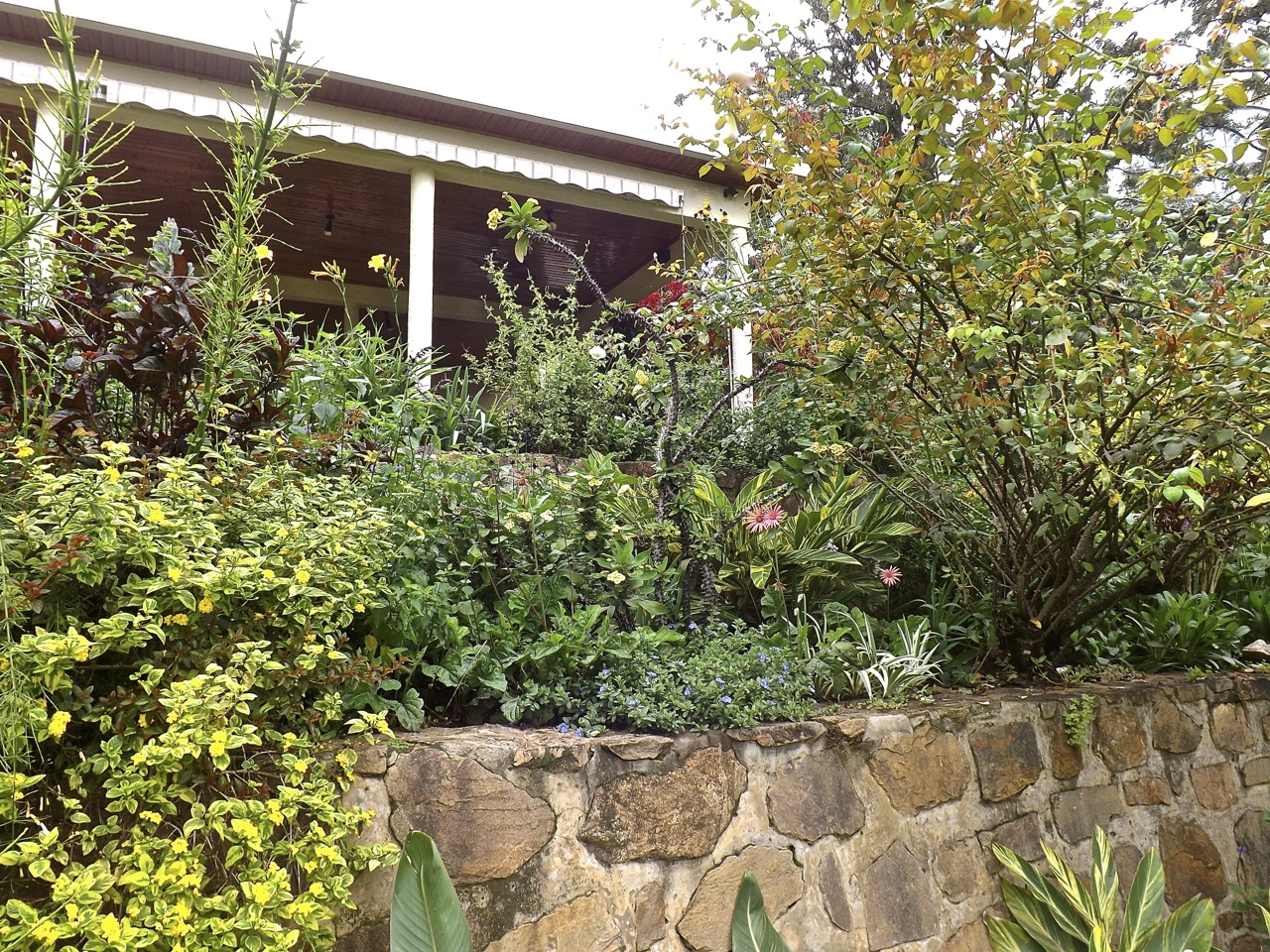
Below: yellow lantana, pink gerbera daisies, blue evolvulus, yellow crown of thorns, ginger with yellow striped leaves, and a giant white rosebush.
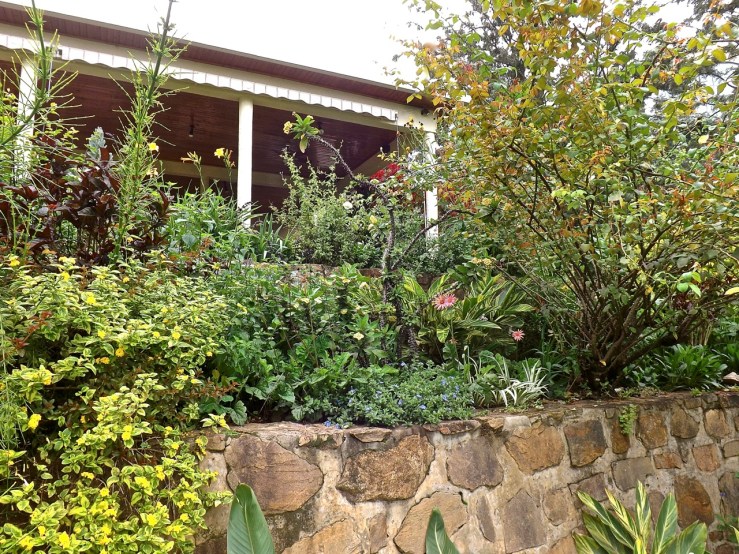
Lantana, gerbera daisies, yellow crown of thorns, and a giant white rosebush.

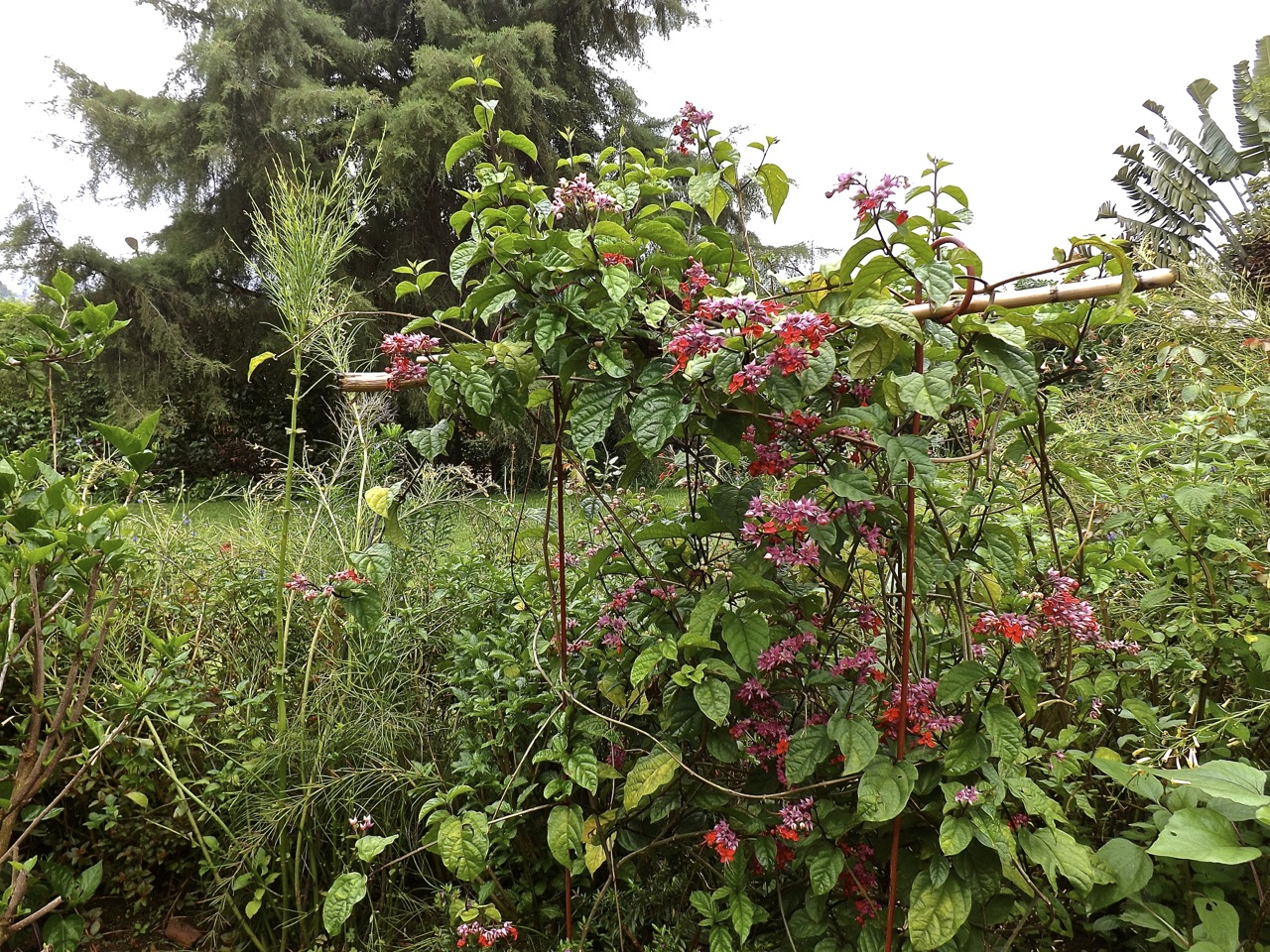
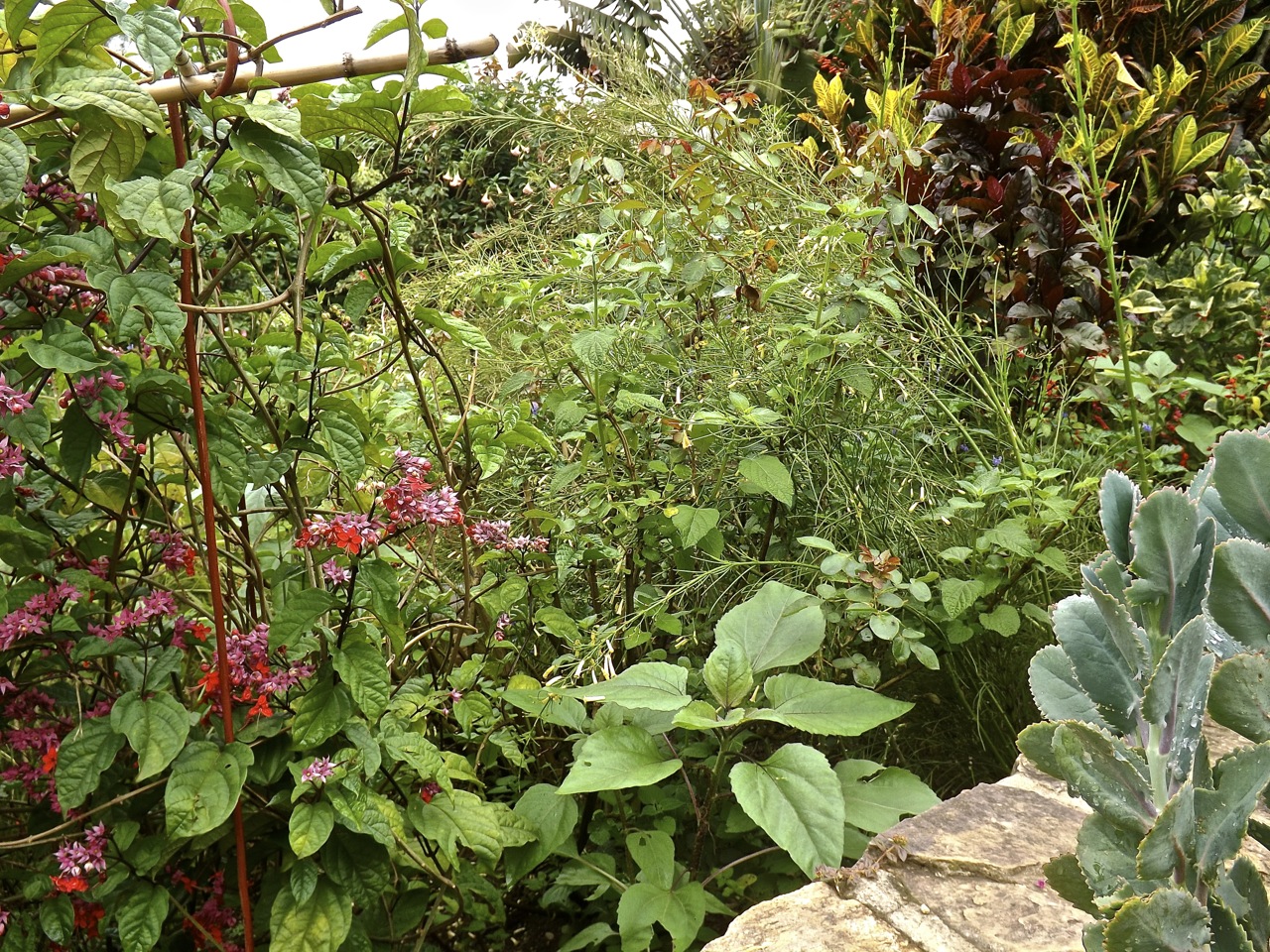
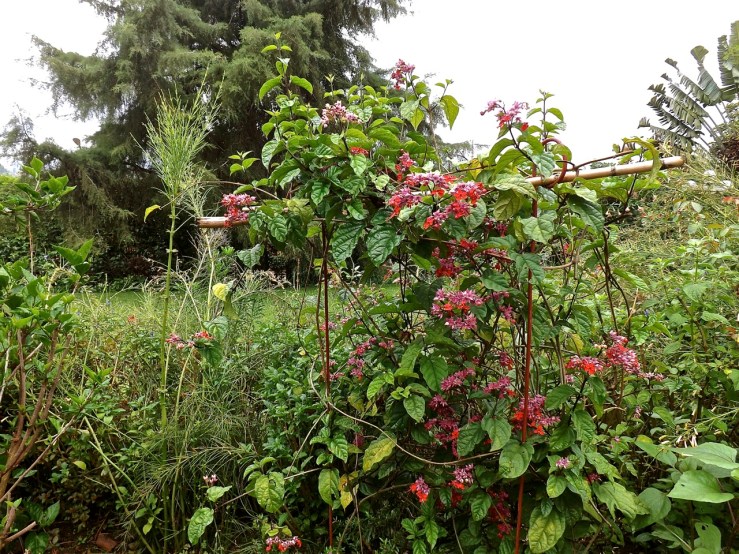
The vine Cleodendrum thomsoniae var. delectum growing on plant supports in a bed between the retaining walls.

Above and below is a Clerodendrum thomsoniae var. delectum vine growing on plant supports in the upper bed between the two retaining walls.  You can also see the top of one of four burgundy-flowered sunflowers that are coming up in this mostly red (with some pink) section.
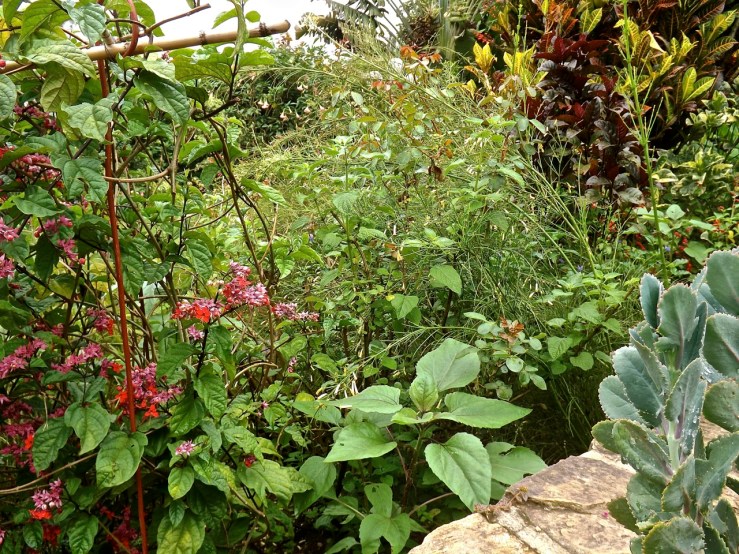
One of four burgundy sunflowers coming up in a mostly red-flowing area.

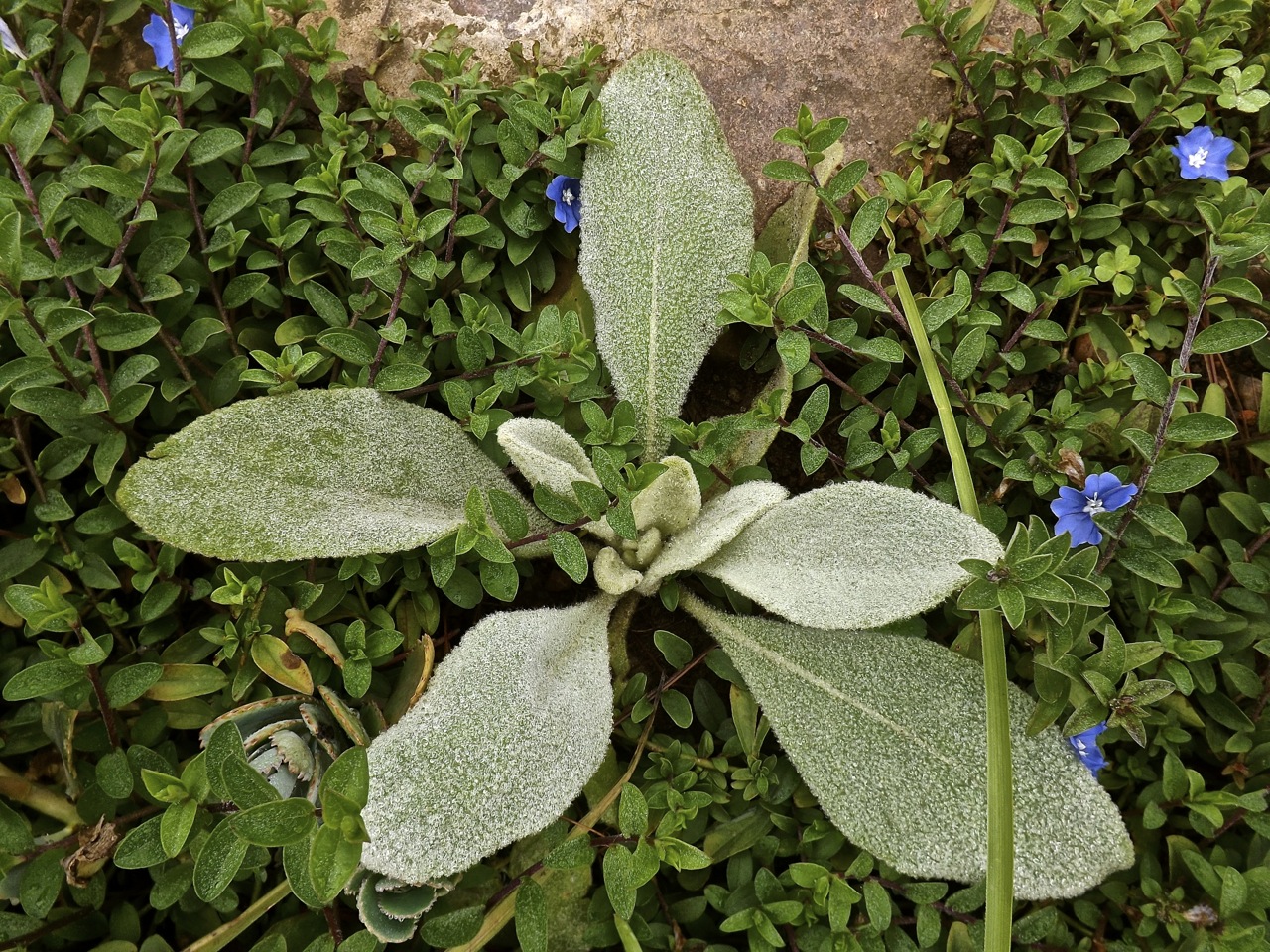
Finally, below is a baby wild mullein coming up from seed from my parents’ Virginia garden.
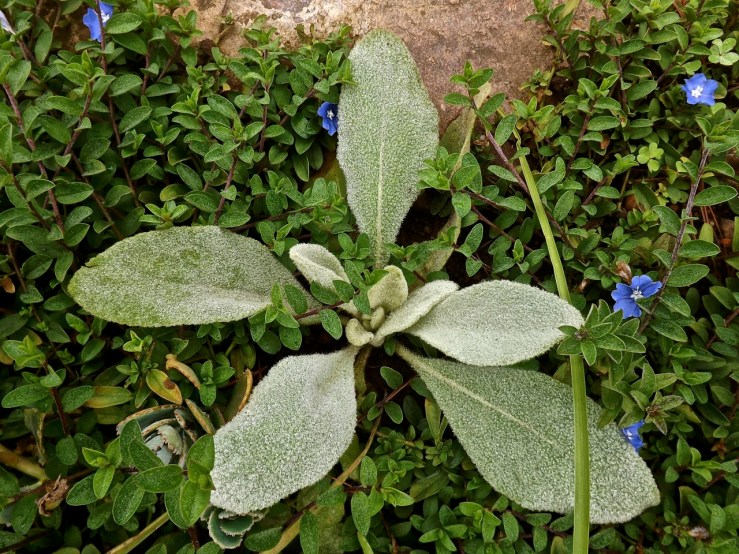
Wild mullein from seeds from my parents' Virginia garden.

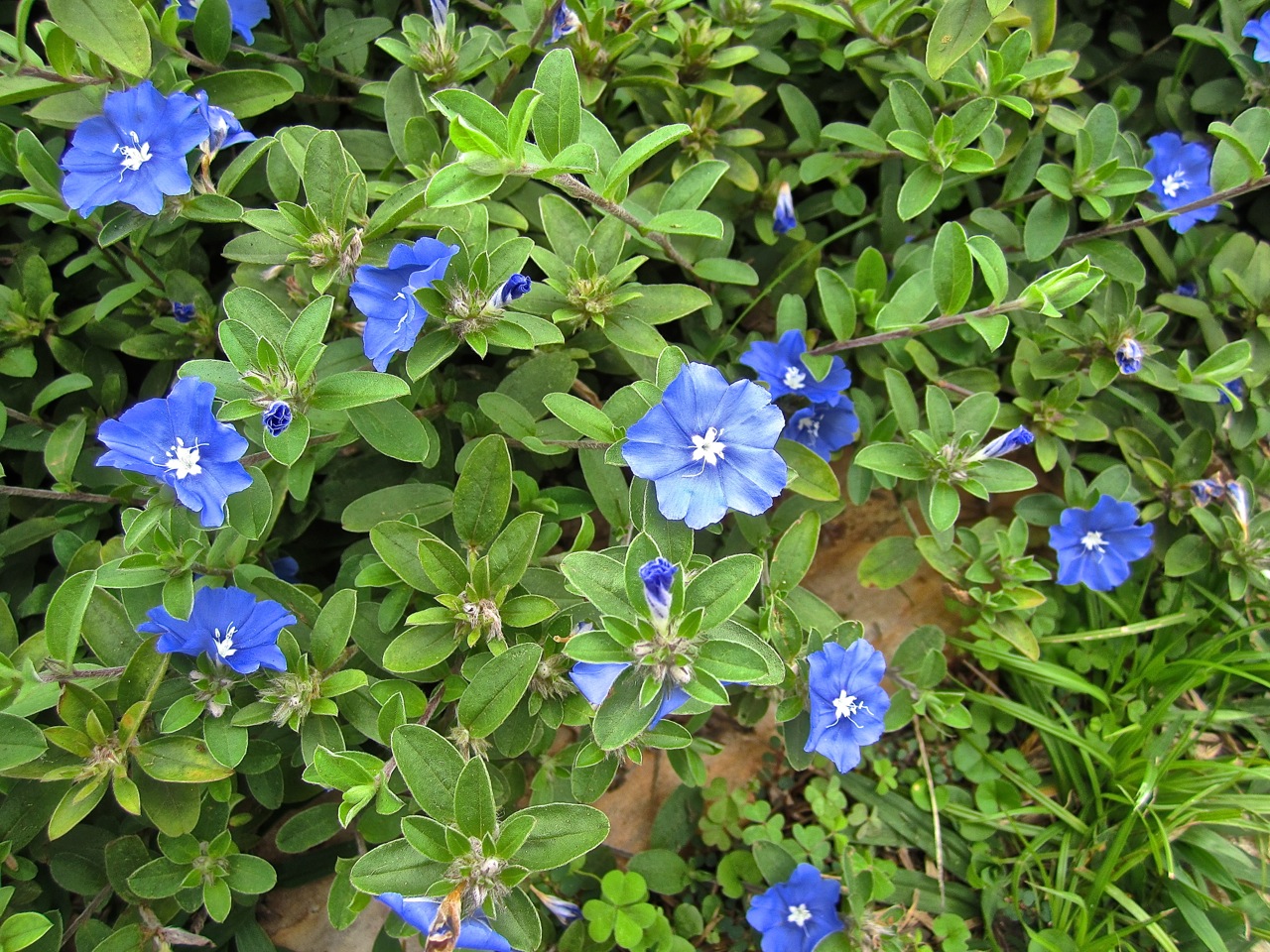
The bright blue flowers are Evolulus ‘Blue Sapphire.’

I’m looking forward seeing the garden with fresh eyes when I return.

New York City is on my schedule.  Of course, I will walk through the High Line, and there’s a show on Impressionism and 19th c. fashion at MOMA that I want to see.  Any other recommendations for NYC in April?

To scroll through larger images, click on ‘Continue reading’ below and then on any thumbnail in the gallery.
Continue reading “Our garden: March going out”

Garden Bloggers’ Bloom Day: Evolvulus ‘Blue Sapphire’

The green of life requires blue. . .*

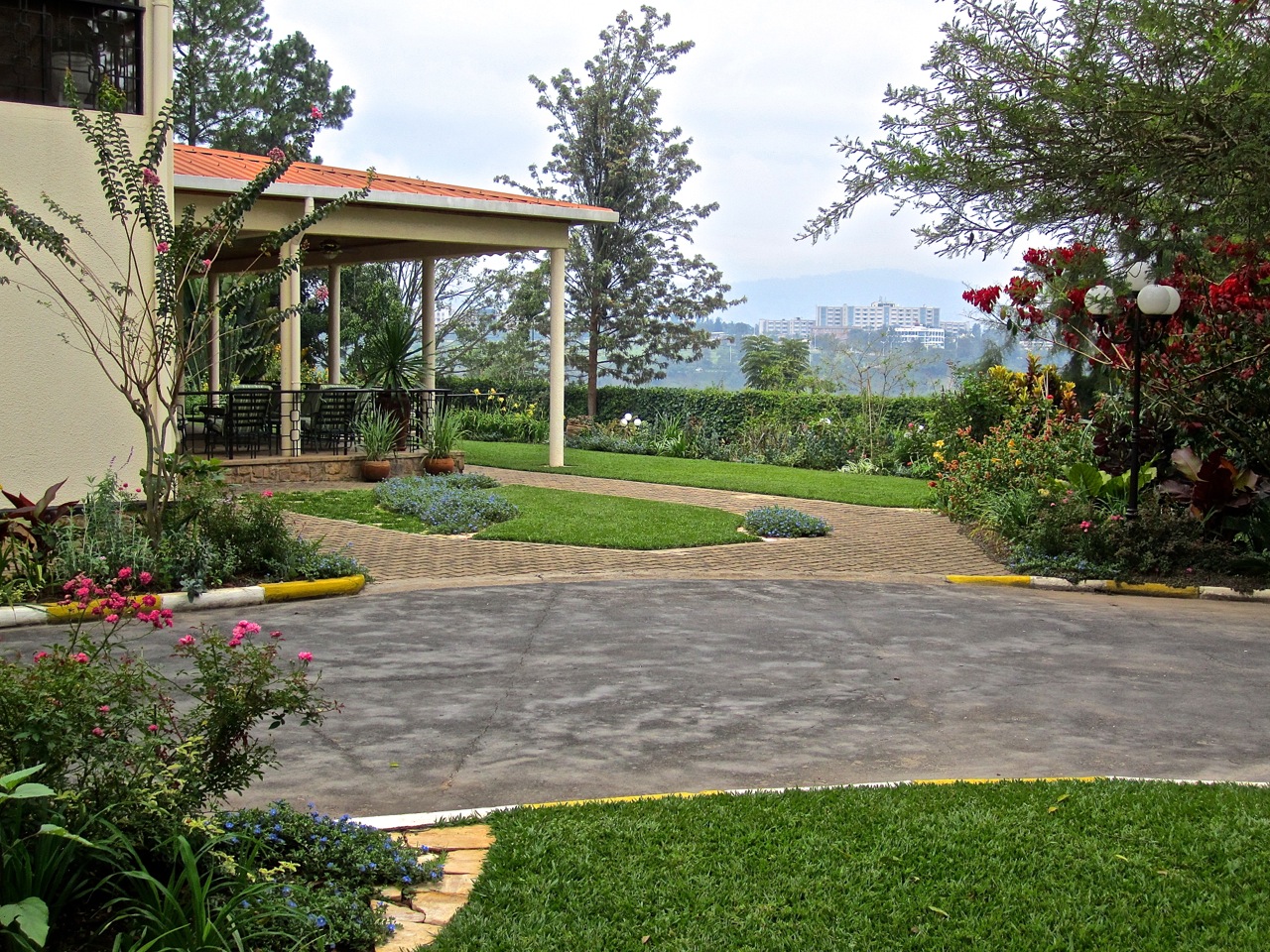
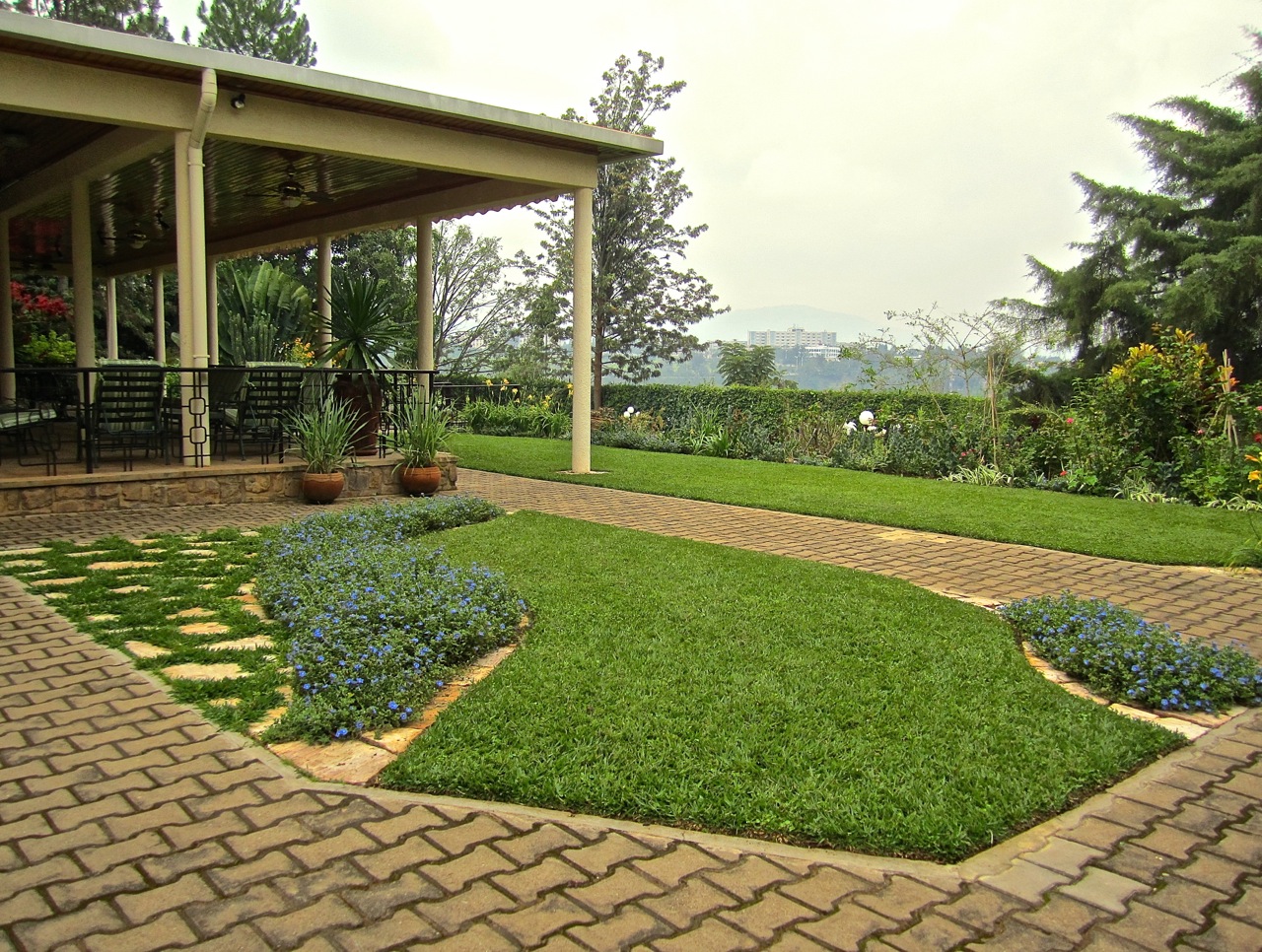
Entrance to our garden/enclos*ure

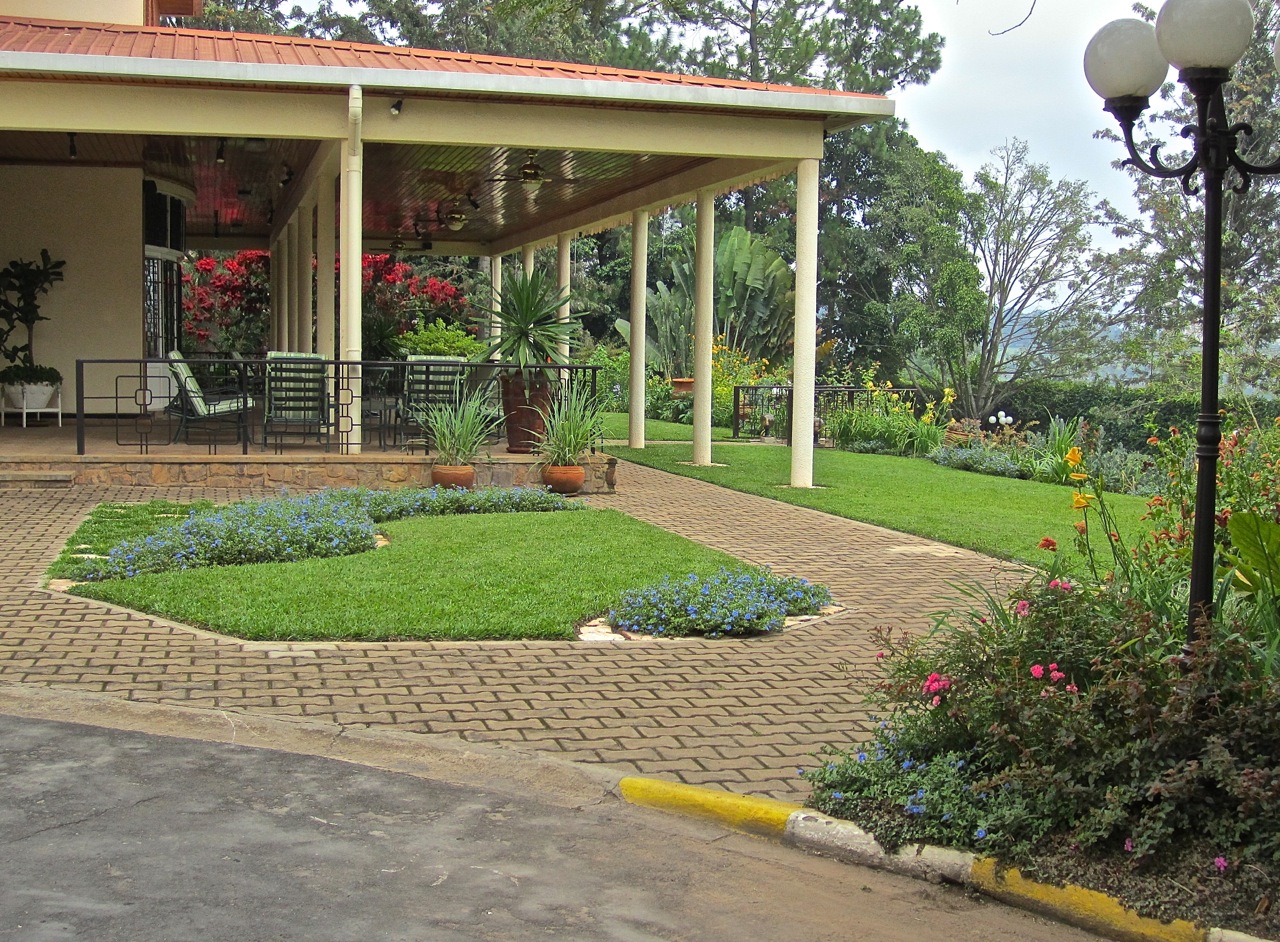
At the front of our house, in two curvy planting beds, the Evolvulus ‘Blue Sapphire’ is thick and blooming heavily — in the morning.

By early afternoon, the flowers close up, and I’m left with just a small-leaved, grey-green ground cover — which is still pretty nice.

(Above:  that’s a pink-blooming crape myrtle tree to the left, doing so-so — I’m going to give it a light pruning pretty soon and see if it will fill out a bit.)

Front entrance and Evolvulus 'Blue Sapphire' blooming/enclos*ure

I planted out little sprigs of the evolvulus last July. This open area used to be occupied by a large Norfolk pine.  However, it was dying (see here; sixth photo) and had to be cut down.

I’m not very happy with the grass and stone arrangement on the left side of the center planting area (below).  It looks rather ragged.   One of these days, I plan to remove the turf grass (I really like to have a wee bit of Round-Up) and plant mondo grass between the stones — as well as take up a few stones and add a two or three mounding plants.

Entrance and Evolvulus blooming/enclos*ure

Below, the blooms of Evolvulus ‘Blue Sapphire’ are a true blue.  It is a tropical plant, hardy to U.S. zones 8-11.

(Click on any of the photos to enlarge them or on ‘Continue reading’ below to scroll through all the bigger images.)

Evolvulus for Garden Blogger's Bloom Day in March/enclos*ure

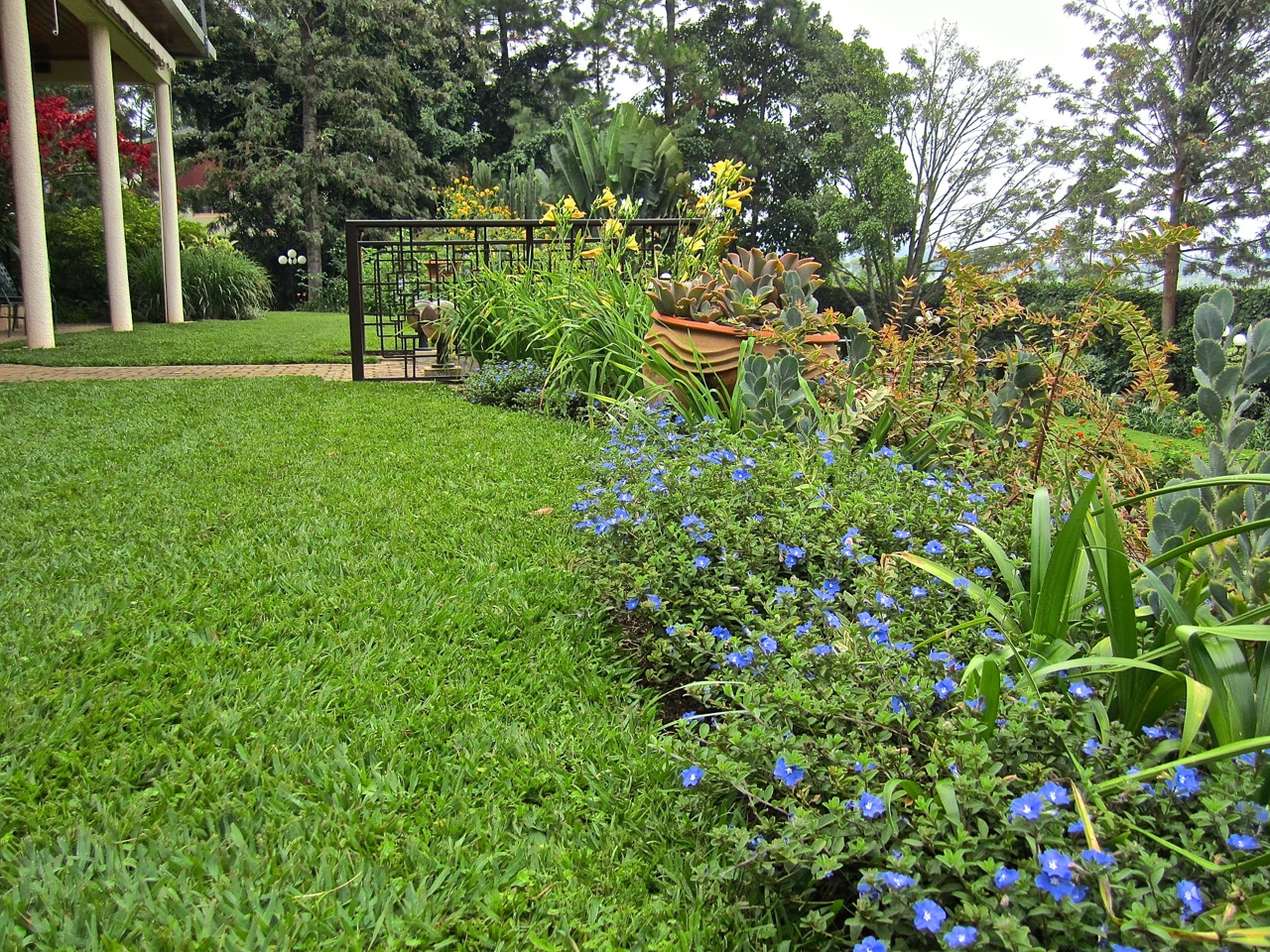
Below, I’ve also used it to edge the planting border along the upper lawn in front of the terrace. (A plan of our garden is here.)

Front border edged with Evolvulus/enclos*ure

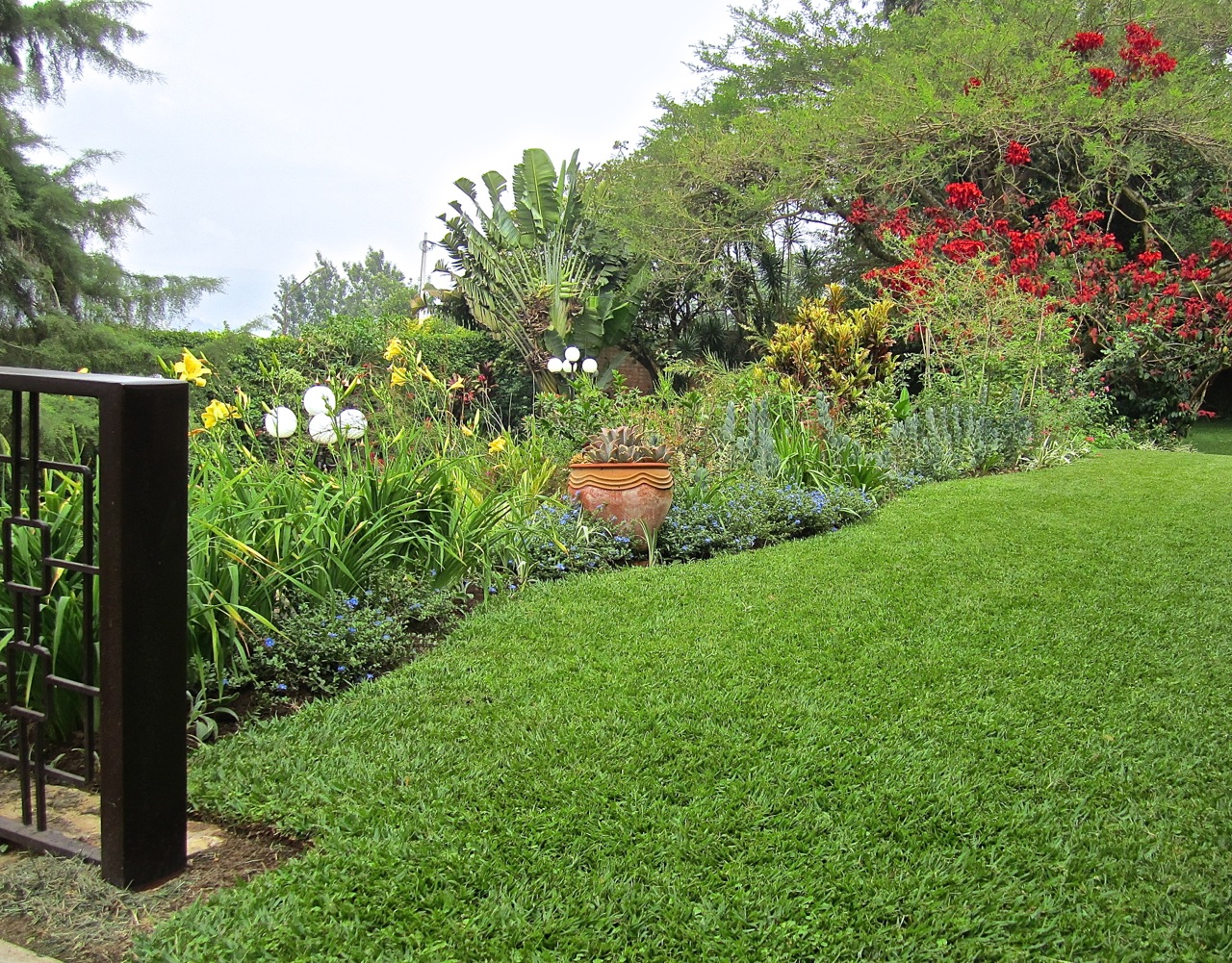
Below is the same border from the other direction, standing at the center steps.  (The red-flowering shrub/vine at the end is a Mussaenda erythrophylla.)

Border with Evolvulus 'Blue Sapphire' and yellow daylilies

Below, the border continues on the left side of the steps. The tall yellow flowers are double Rudbeckia laciniata.

Our front border/enclos*ure

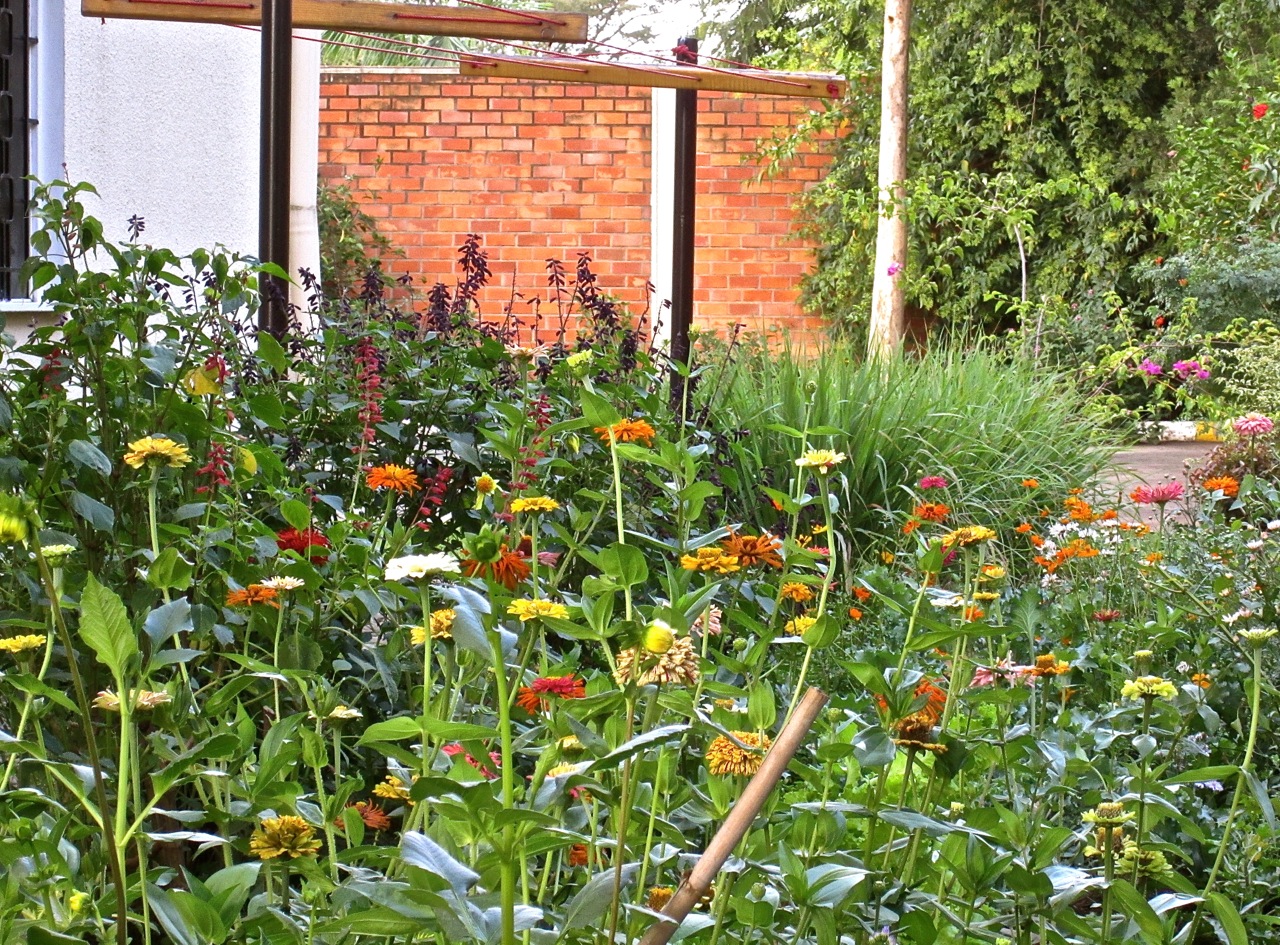
Below, the zinnias in our cutting garden (from last month’s GBBD) continue to be beautiful.  The tall grass in the back is lemongrass.

Zinnias in our cutting garden in Rwanda/enclos*ure

To see what’s blooming in other garden bloggers’ gardens today, check out May Dreams Gardens.

Garden Bloggers’ Bloom Day is the 15th of every month.


*by Robert L. Jones, from “Blue.”

Vintage landscape: painting the cherry blossoms

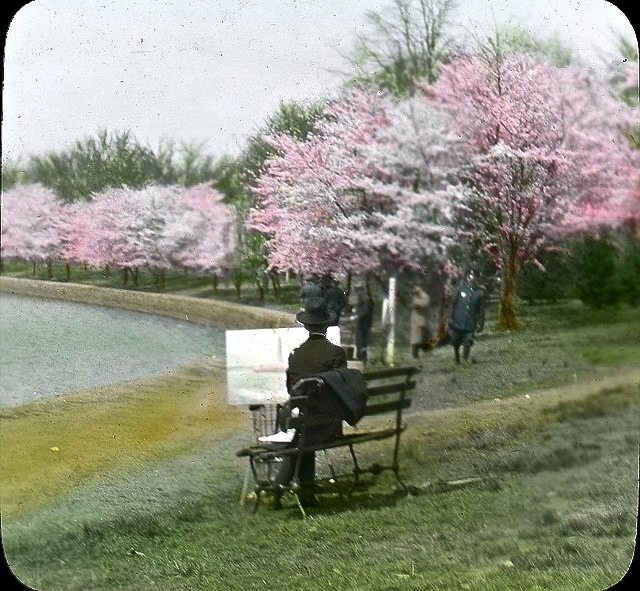
Painting the cherry blossoms, Wash., DC, c. 1920“An artist seen painting the Cherry Blossoms along the Tidal Basin,” Washington, D.C., by E. B. Thompson. The photo is undated, but was possibly taken in the 1920s. Via D. C. Public Library Commons on flickr.

The National Cherry Blossom Festival in Washington, D.C., will begin next week on Wednesday, March 20, and will continue through April 14.  Click here for more information on events and local accomodations.

The National Park Service is predicting that peak bloom (70% of the flowers open) will occur March 26 – 30.  The average date for peak bloom is April 4.

[ADDENDUM: The Capital Weather Gang blog at The Washington Post is departing from the NPS prediction.  They believe that the peak bloom will come between April 3 and 7.]

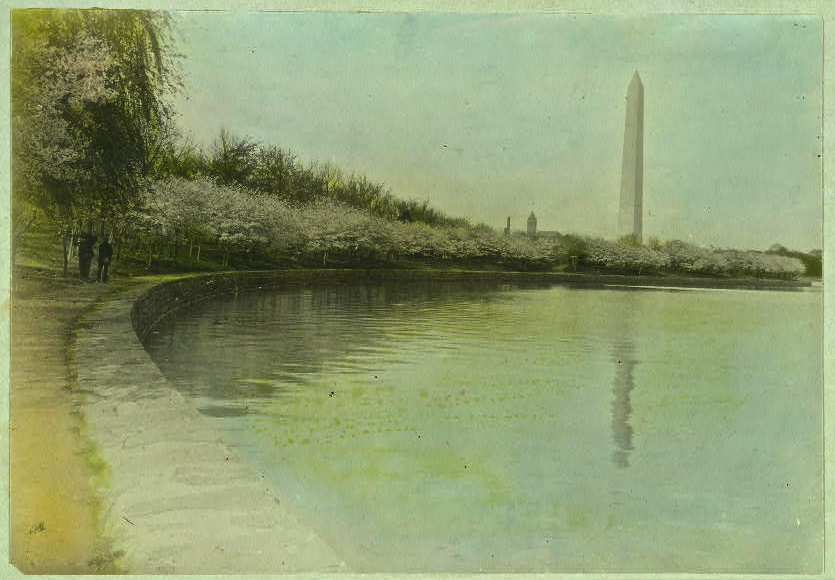
Here’s another lovely hand-colored photograph of the Tidal Basin from about 1920.

Tidal Basin, Washington, DC, c. 1920The photographer is unknown; the image is via the Library of Congress Prints and Photographs Division.

The cherry trees along Washington’s Tidal Basin were a gift from the Japanese government 101 years ago, so they would have been about 10 to 15 years old at the time of these photos.

Loveliest of trees, the cherry now
Is hung with bloom along the bough,
And stands about the woodland ride
Wearing white for Eastertide.

Now, of my threescore years and ten,
Twenty will not come again,
And take from seventy springs a score,
It only leaves me fifty more.

And since to look at things in bloom
Fifty springs are little room,
About the woodlands I will go
To see the cherry hung with snow.

— A. E. Housman, “Loveliest of trees, the cherry now