
This slideshow requires JavaScript.
A community garden in Baltimore, Md., in October.
A community garden in Baltimore, Md., in October.
. . . . . Houses in rows
Patient as cows.— Robert Pinsky, from “City Elegies — III. House Hour“
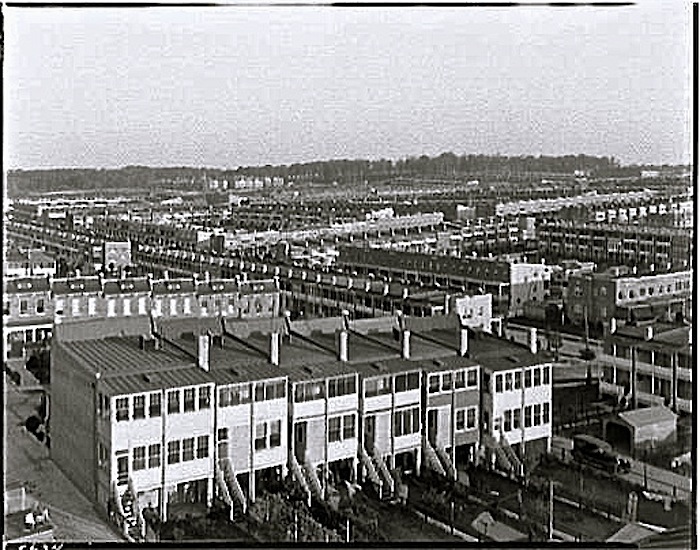 Rows of houses in the Petworth neighborhood, Washington, D.C., ca. 1920-1950, by Theodor Horydczak, via Library of Congress Prints and Photographs Division.
Petworth was farm and forest until the 1880s when the land was purchased for development. In the 1920s and 30s, thousands of rowhouses were built, many of them in a style popularized by developer Harry Wardman (from 1907) — with its distinctive elevated front porch and tiny front yard.
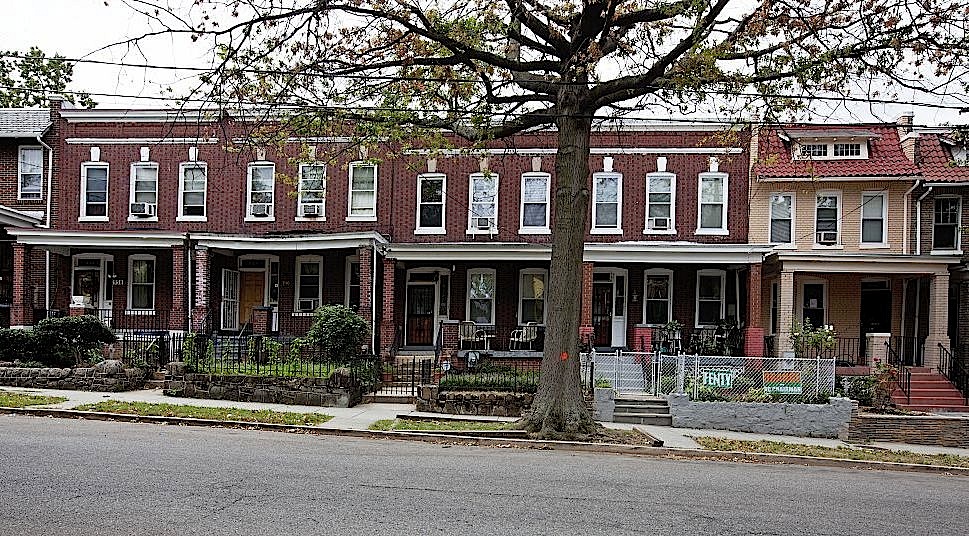 Above: Petworth rowhouses on Shepherd St., 2010, by Carol Highsmith, via Library of Congress.
“The porches [were] a big part of growing up in Petworth. On my block there had to be 15 or 20 kids, and you’d come home from school, get on the porch, and look down the block, and you could see this long row of porches, and you’d see everybody coming out of their house. The porches made you get to know your neighbors, they made it a neighborhood.”
— A Petworth resident in the 1940s, quoted in the Washington City Paper
Wardman built his front porch rowhouses in large parts of northwest Washington, and several other developers copied them all over D.C.
Petworth was named a “Best Old House Neighborhood of 2013” by the magazine This Old House.
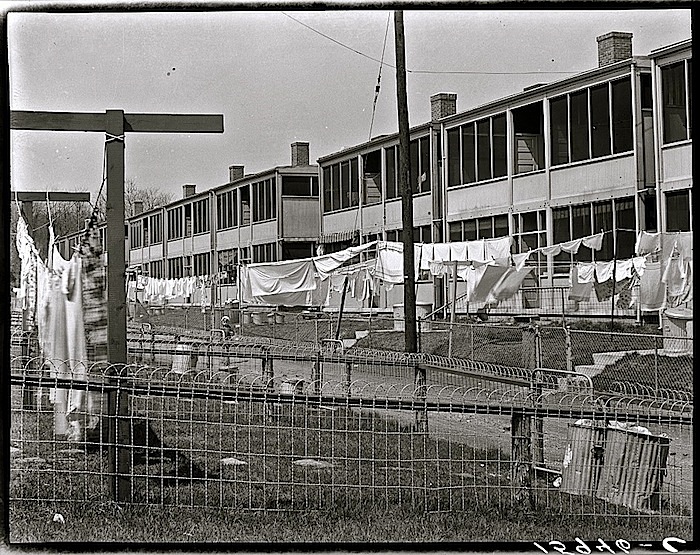 Above: backyards of rowhouses, neighborhood not noted, Washington, D.C., July 1939, by David Myers, via Library of Congress.
At the backs of Wardman-style rowhouses were screened sleeping porches (top) and kitchen porches (bottom).
Petworth resident Annette L. Olson decided to install a green roof on the top of her rowhouse front porch. She wrote about the process for the “Where We Live” column of The Washington Post here.
During the last week of September, I took a walk around the Heirloom Garden of the Museum of American History and was filled — once again — with admiration for the Smithsonian Institution’s horticulture division.
The garden — huge, raised planters, all the way around the building — contains a mix of open-pollinated plants cultivated in America prior to 1950. The perennials and annuals are anchored by crape myrtles and a variety of shrubs.
The space is very large, open, and — at the south entrance — crowded with tourists. Still, the beautiful long borders, which were being allowed to fade with fall naturally, offered a surprisingly intimate and even soulful experience.
You can see more Heirloom Garden pictures here.
One would have thought, (so cunningly the rude
And scorned partes were mingled with the fine,)
That Nature had for wantonesse ensude
Art, and that Art at Nature did repine;
So striving each th’ other to undermine,
Each did the others work more beautify;
So diff’ring both in wills agreed in fine:
So all agreed through sweete diversity,
This gardin to adorne with all variety.— Edmund Spenser, from “In the Bower of Bliss”
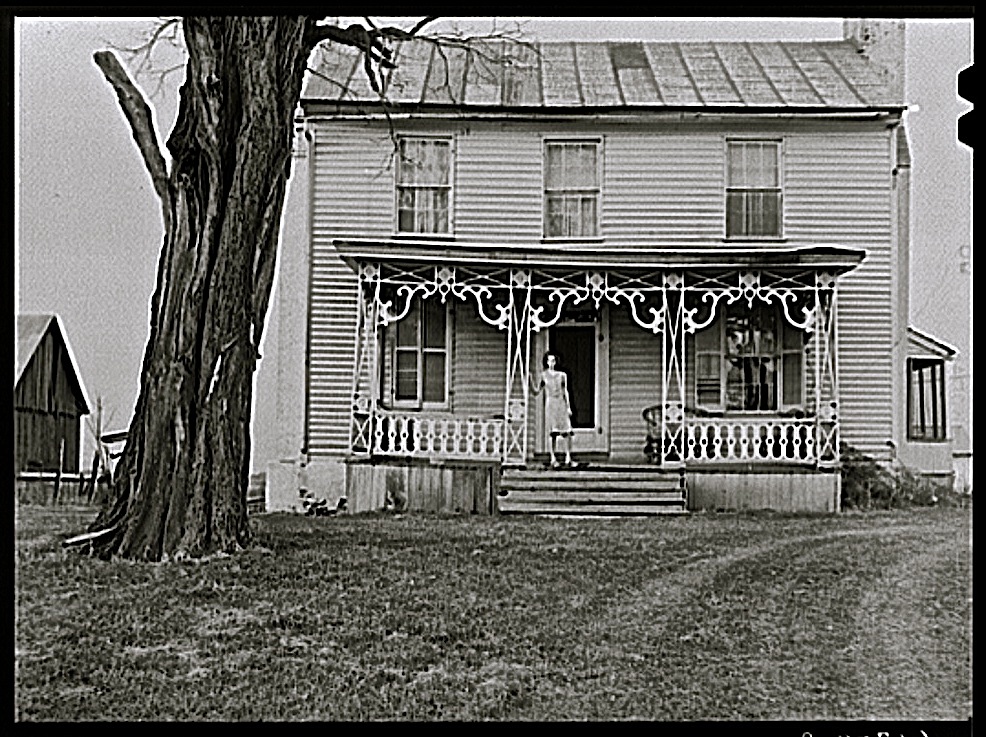
Just one more porch photographed by John Vachon — this one in Nicholas County, Kentucky, in November 1940.*
What frills attached to such a simple farmhouse and yard.
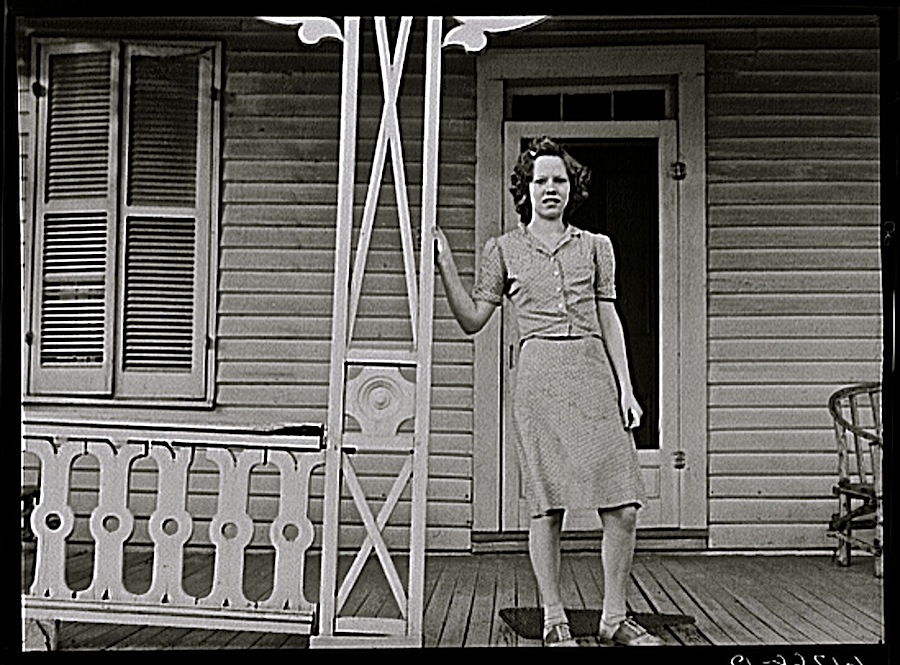
Her dress goes with the house and her curls with the porch.
*via Library of Congress Prints and Photographs Division.
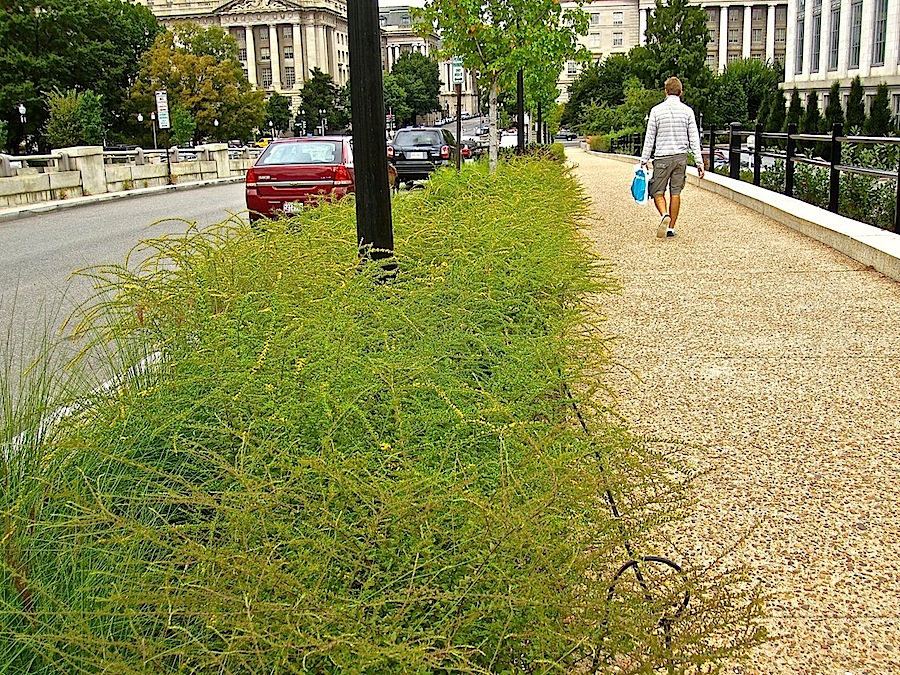 This is an example of how nice an urban ‘hellstrip’ can be. It’s just to the west of the Museum of Natural History of the Smithsonian Institution. I took this photo in the last few days of September.
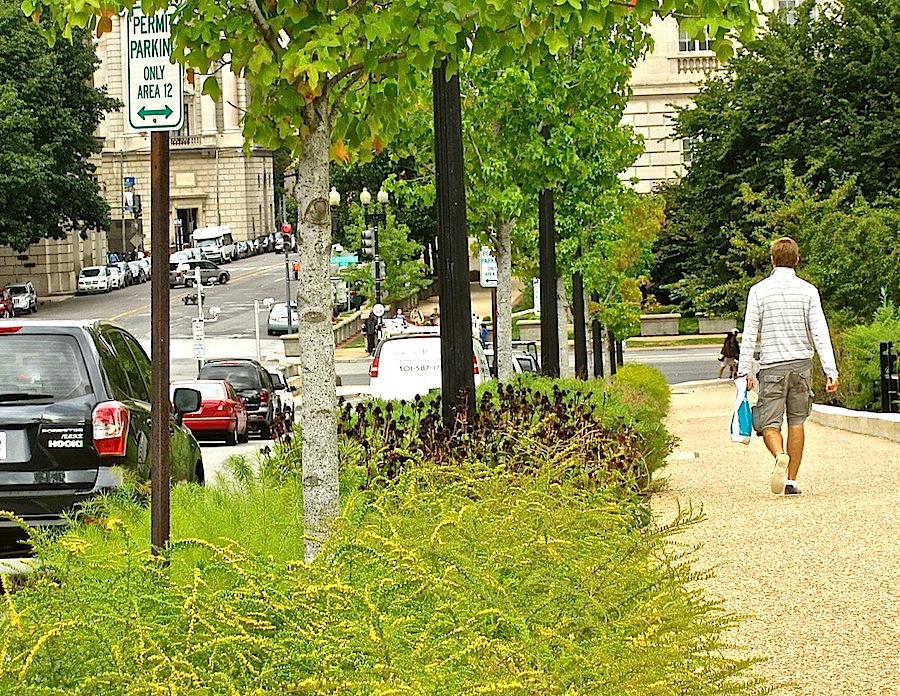 I think they are all American native plants. I see a fine grass I can’t identify (just visible in the top photo), goldenrod (‘Fireworks’?), amsonia (I think), and the seedheads of purple coneflower.
I like the arrangement of squares of a single species, one after another, rather than all of the plants in one long mix. It goes well with the surrounding architecture.
Sometimes I save a weed if its leavesare spread fern-like, hand-like,or if it grows with a certain impertinence.I let the goldenrod stay and the wild asters.I save the violets in spring. People who kill violetswill do anything.— Ann Struthers, from “Planting the Sand Cherry“
 enclos*ure