Vintage landscape: food cellar

Food storage, 1940, Wabash Farms, Library of Congress“Food storage cellar, Deshee Unit, Wabash Farms [Cooperative], Indiana,” May 1940, by John Vachon, via Library of Congress Prints and Photographs Division.

I found the preserves in the cellar. . . .

The black raspberries were still
delicious, each cluster
burning like years in the brain.

— Michael Waters, from “Preserves

Life in gardens: Woodbine

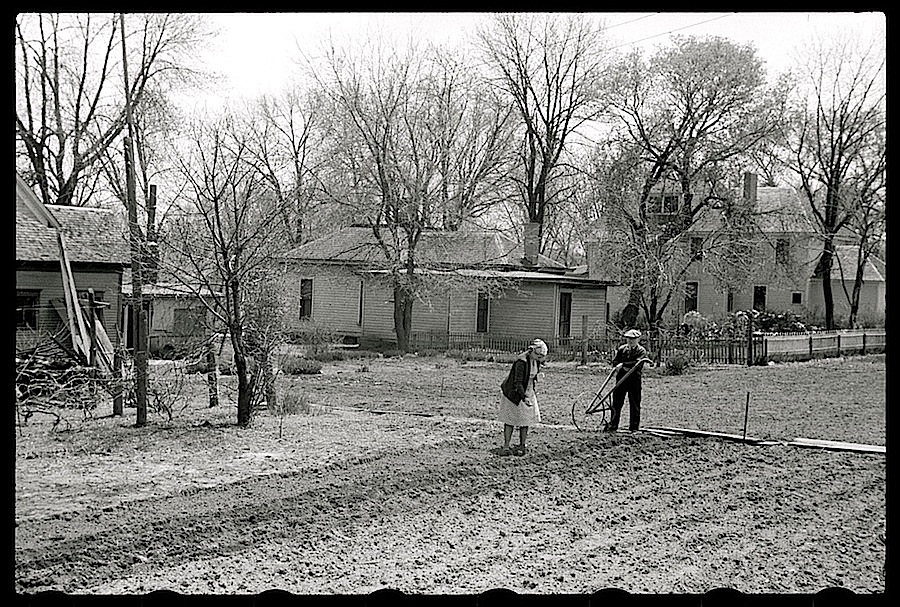
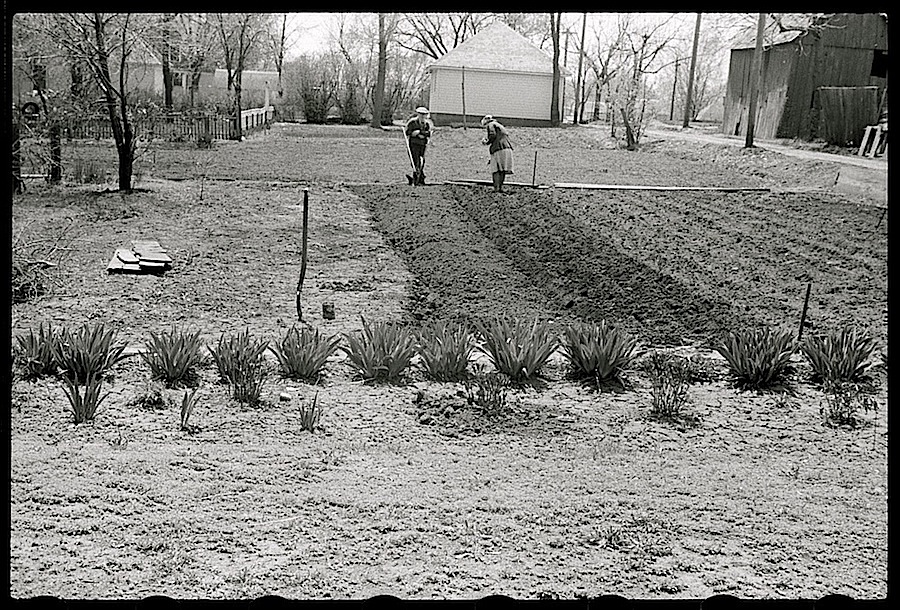
Woodbine, Iowa, 1940, J. Vachon, Library of Congress“Planting a garden in the backyard, Woodbine, Iowa,” May 1940, by John Vachon, via Library of Congress Prints and Photographs Division (both photos here).

Woodbine, Iowa, 1940, Library of Congress

In the spring of 1940, John Vachon was on assignment for the Farm Security Administration in the Midwest.

. . . I photographed Spring – clothes blowing on the wash line, kids playing marbles, women planting backyard gardens, blossoms on trees.

— John Vachon’s journal

Woodbine is a town of about 1,400 people on the Boyer River.  It was named for the woodbine vine (Parthenocissus vitacea) by the wife of the first postmaster, according to the community’s website.

The banks of Flat Creek

This slideshow requires JavaScript.

May 2, 2010, at Flat Creek near Beatrice, Alabama, an infrared photograph by Carol M. Highsmith, via the Carol M. Highsmith Archive, Library of Congress Prints and Photographs Division.

for the creek racks
strongest in springtime when everything’s liquid,
tightroping over the rocks
in the plashing braid. . .

Jonathan Galassi, from “Flow

The Sunday porch: Eutaw

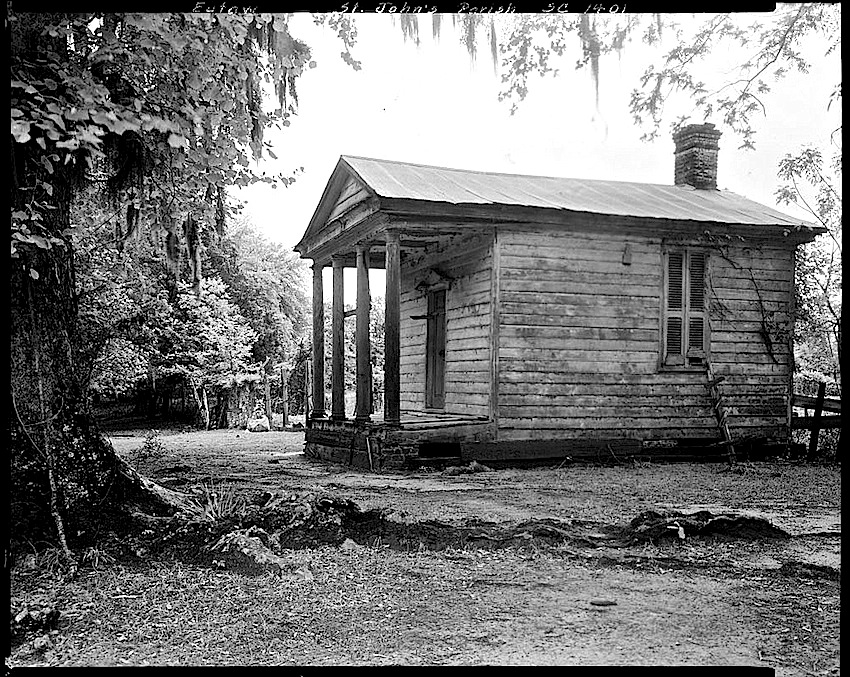
Eutaw, S.C., 1938, Library of Congress“The Lodge” at Eutaw Plantation, Berkeley County, South Carolina, 1938, by Frances Benjamin Johnston, via Library of Congress Prints and Photographs Division.

Eutaw Plantation, South Carolina, 1938, via Library of Congress
The plantation was established by William and Elizabeth Sinkler in the early 1800s.  Their descendants owned it until the 1940s, when the South Carolina Public Service Authority flooded the area to build the Santee Cooper hydroelectric project.  The estate now lies beneath Lake Marion.

The Lodge — built to resemble a Greek temple — was used as a medical office by a physician member of the family.

I came to explore the wreck. . . .
I came to see the damage that was done
and the treasures that prevail.

Adrienne Rich, from “Diving into the Wreck

The Sunday porch: wisteria par excellence

In honor of the wisteria now beginning to bloom in many regions, here is a Sunday porch redux from 2013:

On abandon, uncalled for but called forth. . . .*
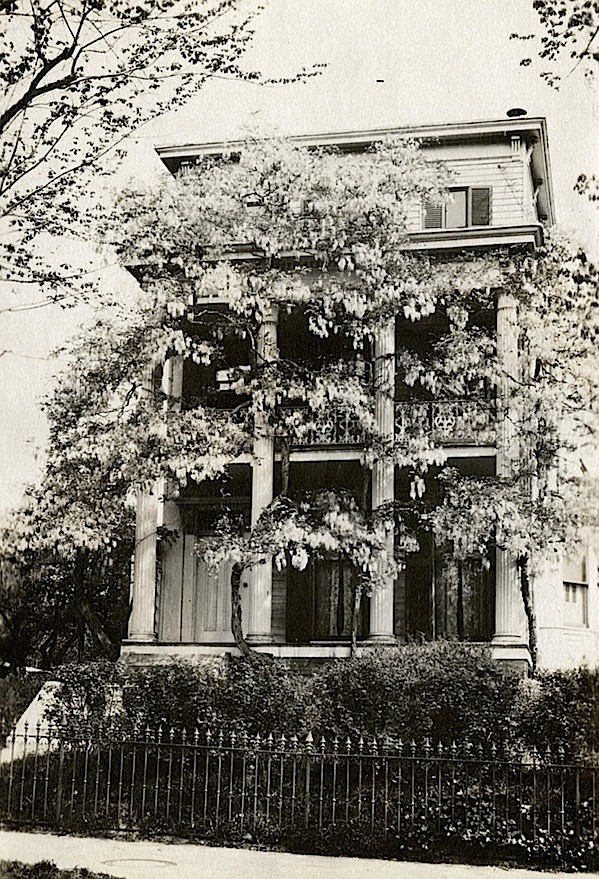
full cropped

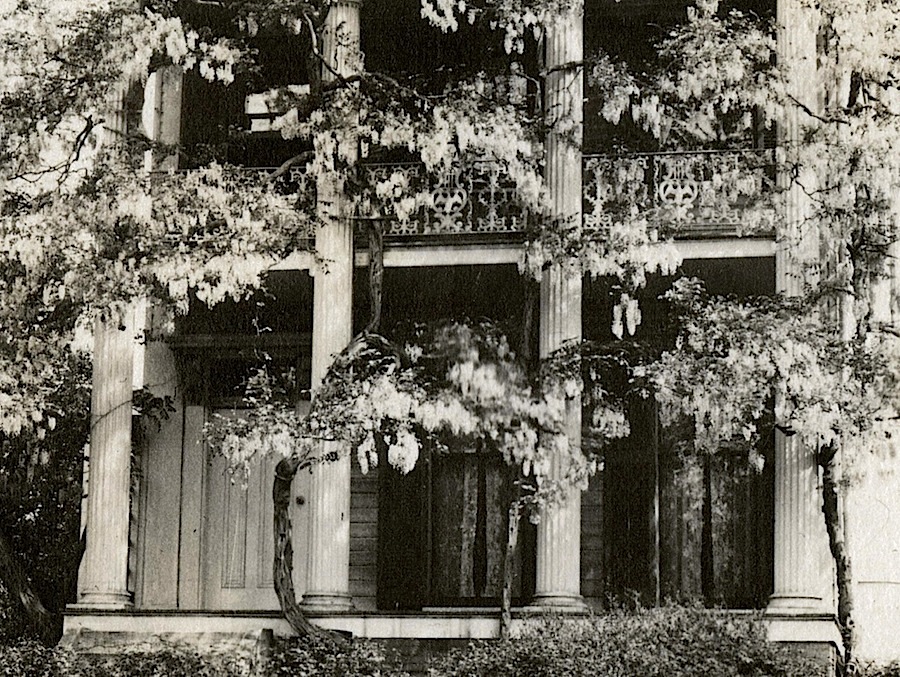
I think this is the loveliest wisteria I have ever seen.  It grew on the porch columns of “Wisteria House,” at Massachusetts Avenue and Eleventh Street, N.W., in Washington, D.C. The photo was taken in 1919, by Martin A. Gruber.**

The house was torn down in 1924 to make room for the Wisteria Mansion apartment building.
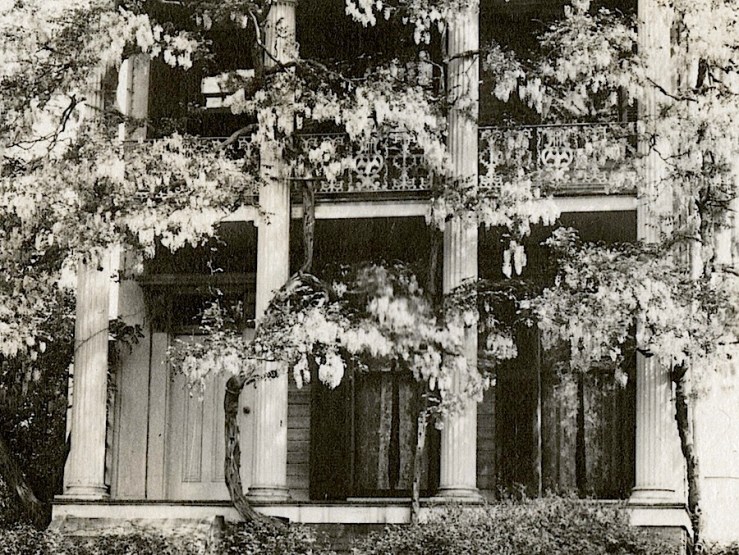
Wisteria House detail, 1919, via Smithsonian Institution Commons

A naval officer brought the vine from China and gave it to the owner of the house, probably during the 1860s, according to the blog Greater Greater Washington.
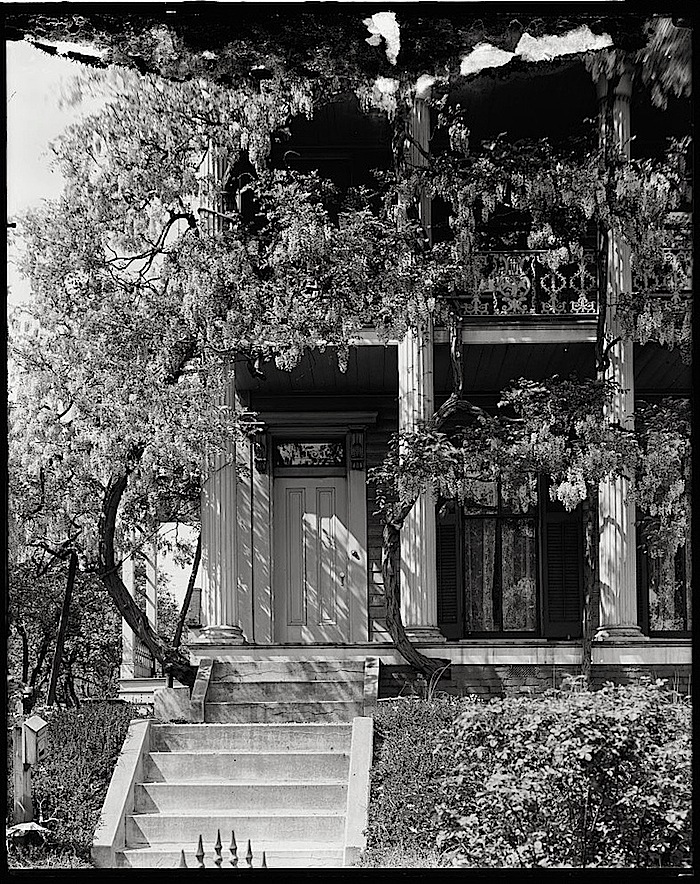
Wisteria House, Harris & Ewing photo

The Harris & Ewing** photo above, taken between 1910 and 1920, shows the trunks of the (one?) plant emerging through openings at the base of the porch.  The house was built in 1863, and the two-story portico was added in 1869 — so it looks like the wisteria was planted between those years and protected during the construction.
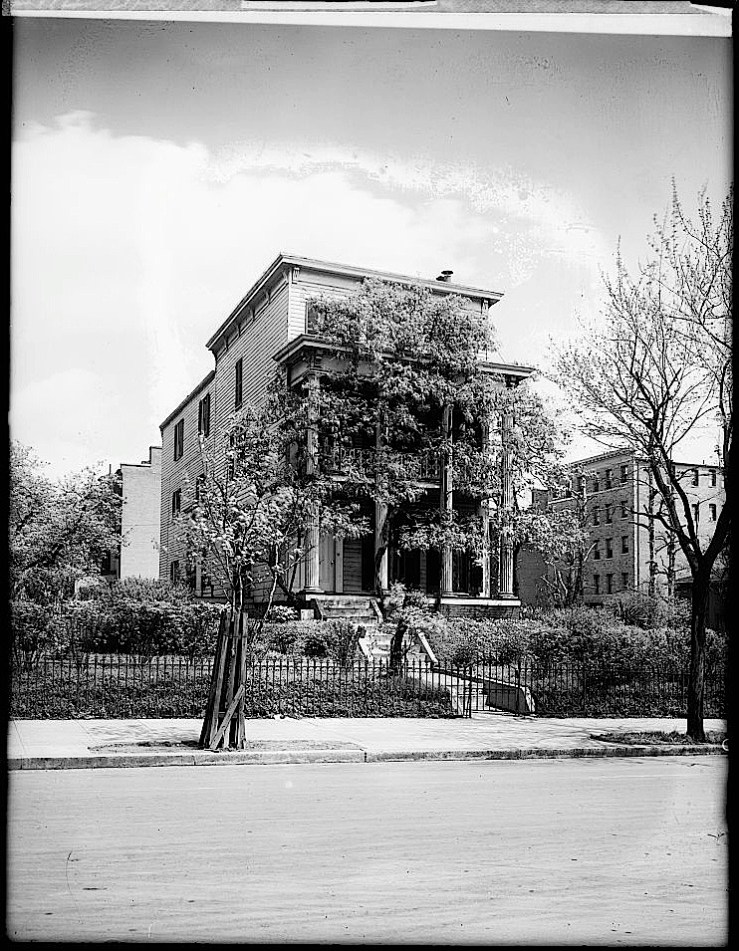
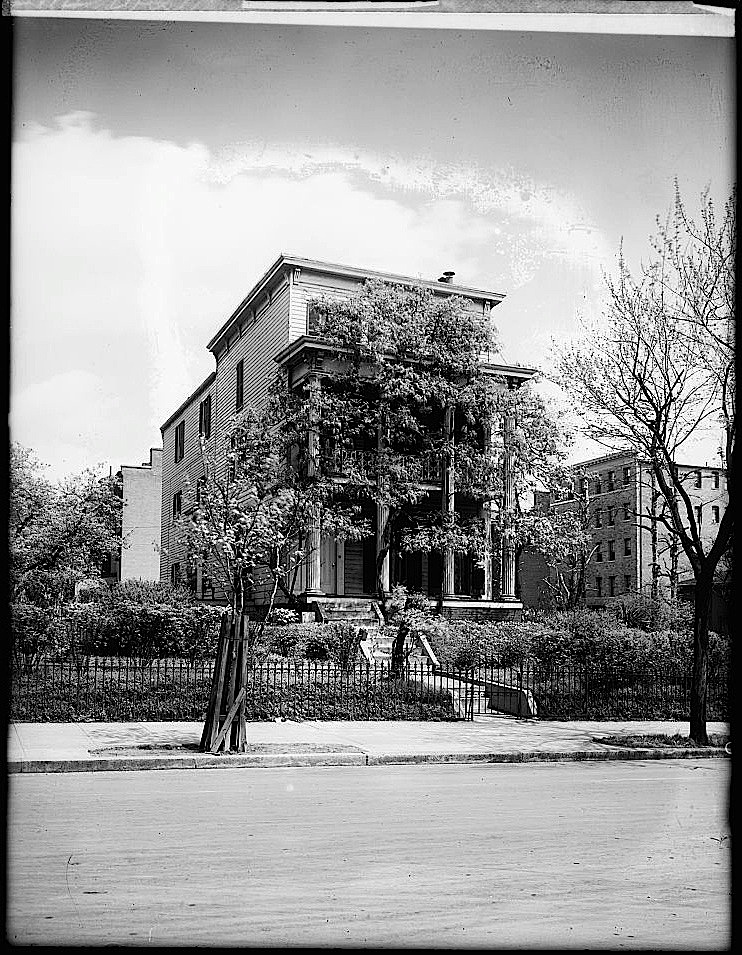
Wisteria House, LOC photo

The National Photo Company image above shows the house about 1920.

*Lucie Brock-Broido, from “Extreme Wisteria

**Top and second (a detail of the first) photos via the Smithsonian Institution Archives Commons on flickr.  Third and fourth photos via Library of Congress Prints and Photographs Division.