Washington, D.C.

Small front gardens and a sidewalk cafe on 17th Street, N.W., between H and I Streets, August 1973, by Dick Swanson for DOCUMERICA, via The U.S. National Archives Commons on flickr.

(Click on the image for a better view.)

None of these buildings remain today. The current view (from the ground) is here.

DOCUMERICA was an photography program of the U.S. Environmental Protection Agency (EPA). From 1972 to 1977, it hired over 100 photographers to “document subjects of environmental concern.” They created an archive of about 80,000 images.

In addition to recording damage to the nation’s landscapes, the project captured “the era’s trends, fashions, problems, and achievements,” according to the Archives, which held an exhibit of the photos, “Searching for the Seventies,” in 2013.

Caret, Virginia

Blandfield garden, Caret, Virginia, 1935, by Frances Benjamin Johnston, via Library of Congress Prints and Photographs Division (both photos).

Cropped slightly by me.

Coffee County, Alabama

A repeat post from January 2014. . .
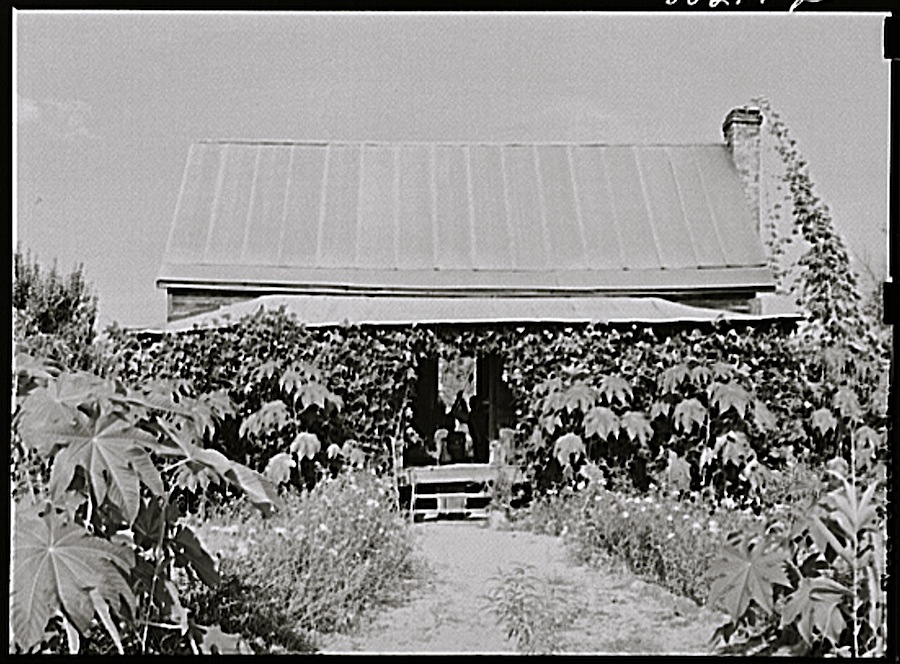
Drigger home, 1941 Coffee Co., Alabama, via Library of Congress“James F. Drigger’s farmhouse. Coffee County, Alabama,” August 1941, by John Collier, via Library of Congress Prints and Photographs Division.

The large plants in front of the vines and along the walk are Ricinus communis  or castor beans.

They and the flowers make a nice approach to the lined-up open front and back doors.

John Collier was working for the Farm Security Administration when he took this photo. The Drigger family was receiving assistance to raise chickens under the “Food for Defense” program.

The Sunday porch: Houston, Texas

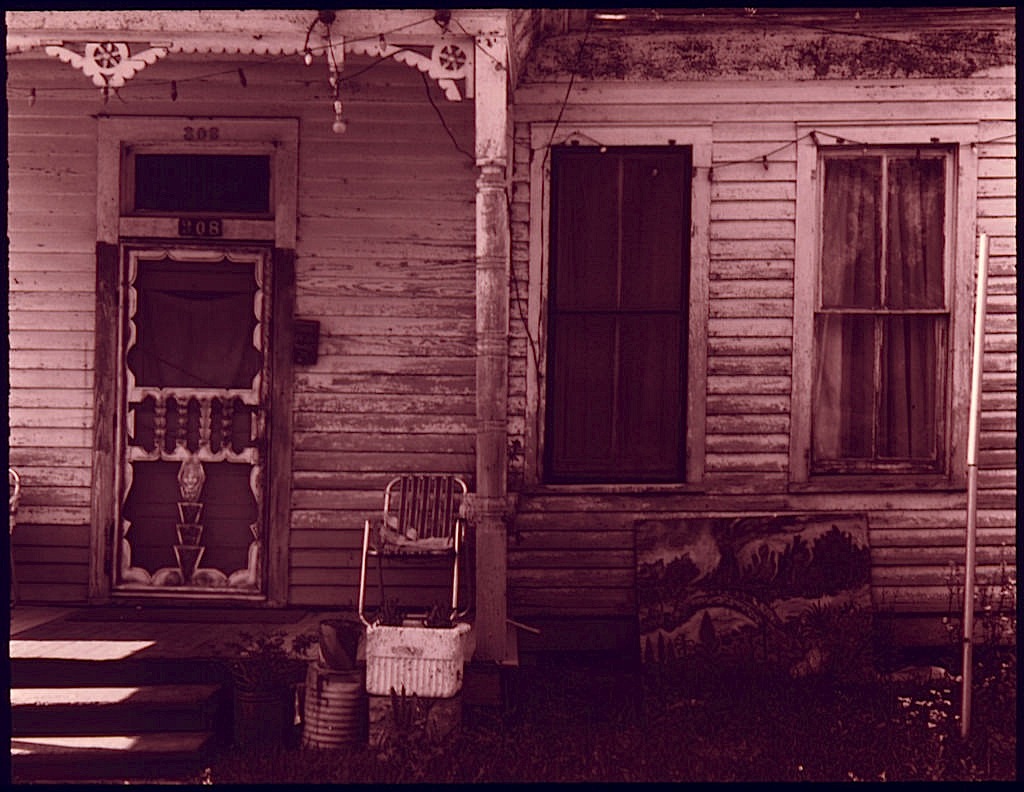
Mexican-American home in Houston, Texas, April 1973, by Danny Lyon for the DOCUMERICA project, via The U.S. National Archives Commons on flickr (all three photos here).

Lyon made a series of 21 black and white photographs in East Texas in 1973. “They document the environments remaining from the 19th century in terms of architecture, commerce and lifestyles,” according to their original captions. “The pictures also compare the contemporary city showing displacement of the unique by the ordinary and noting current urban problems.”

Above: houses in the Fifth Ward, Houston. Click on the images to enlarge them.

DOCUMERICA was an photography program of the U.S. Environmental Protection Agency (EPA). From 1972 to 1977, it hired over 100 photographers to “document subjects of environmental concern.” They created an archive of about 80,000 images.

In addition to recording damage to the nation’s landscapes, the project captured “the era’s trends, fashions, problems, and achievements,” according to the Archives, which held an exhibit of the photos, “Searching for the Seventies,” in 2013.
Natchez, Mississippi

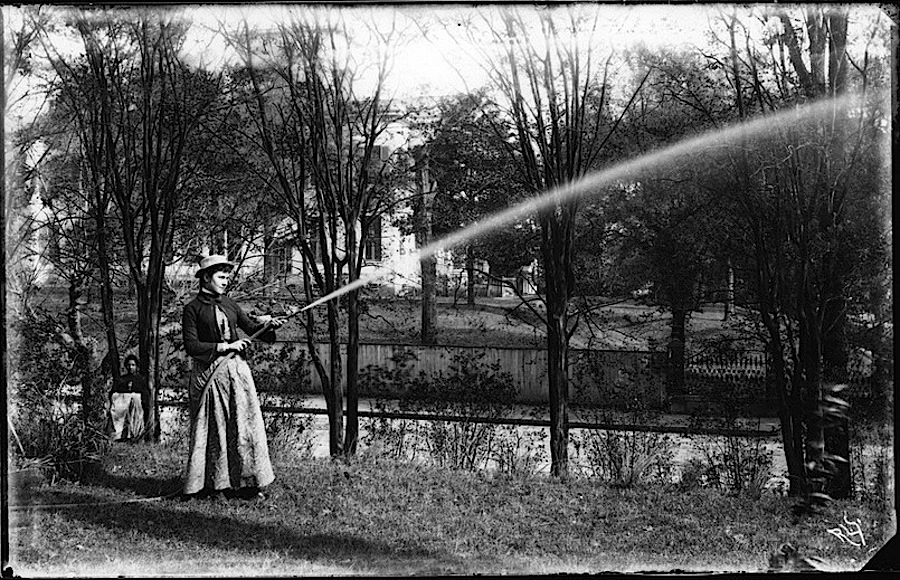
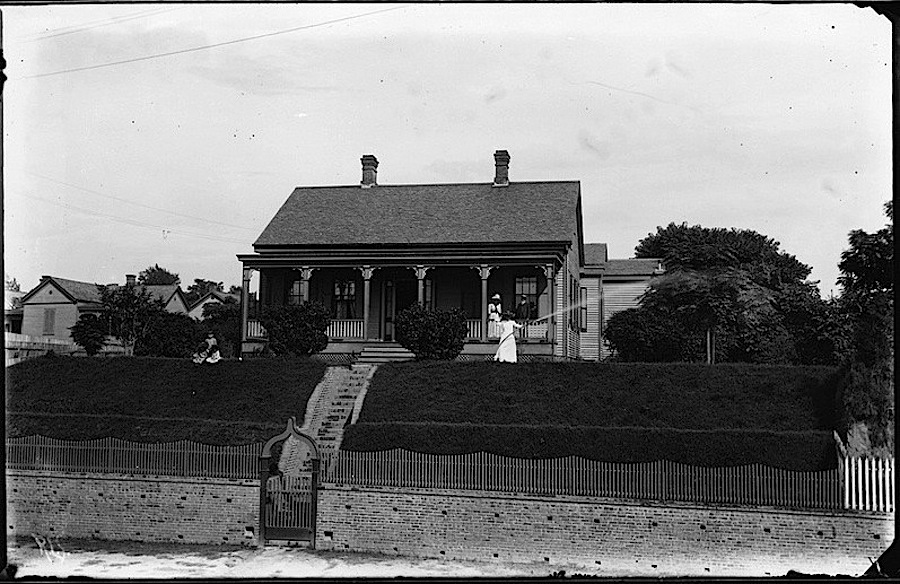
Myrtle Bank terrace, Natchez, Mississippi, ca. 1900, from the Stewart Photograph Collection,* via Mississippi Department of Archives and History Commons on flickr (both photos).

The two houses shown here are about two blocks from each other, both on N. Pearl Street.

Major Benbrook residence, corner with B Street, ca. 1895, also from the Stewart Collection.

The neighborhood evidently had good water pressure. Both houses still stand.

In ancient Greece, the first hoses (for fire fighting) were made from ox intestines. In the late 17th century, Jan van der Heiden and his son sewed leather into long tubes for Amsterdam’s fire department. Then, in 1821 Boston, James Boyd invented a rubber-lined, cotton-webbed hose. By the 1870s, the first rubber and cotton fiber hoses for gardeners appeared on the market.

In 1895, a garden hose was the subject of what is believed to be the first comedy film, L’Arroseur Arroséby Louis Lumière. You can see it here.


*By brothers Robert Livingston Stewart and William Percy Stewart of Natchez, Mississippi, from ca. 1890 to ca. 1905.