A Brassica moment

On the same day that I walked by the White House, I visited the Smithsonian Institution’s Heirloom Garden at the American History Museum and its Butterfly Garden beside the Natural History Museum to see how they look in early spring.

In both, the SI gardeners were putting forward Brassicas — ornamental kale, cabbage, and red mustard.

In the American History Museum entrance planter, yellow predominates, not from forsythia, but from the flowers of ornamental kale (Brassica oleracea var. acephala) and red mustard (Brassica juncea). Here’s the link to how it was planted last summer.
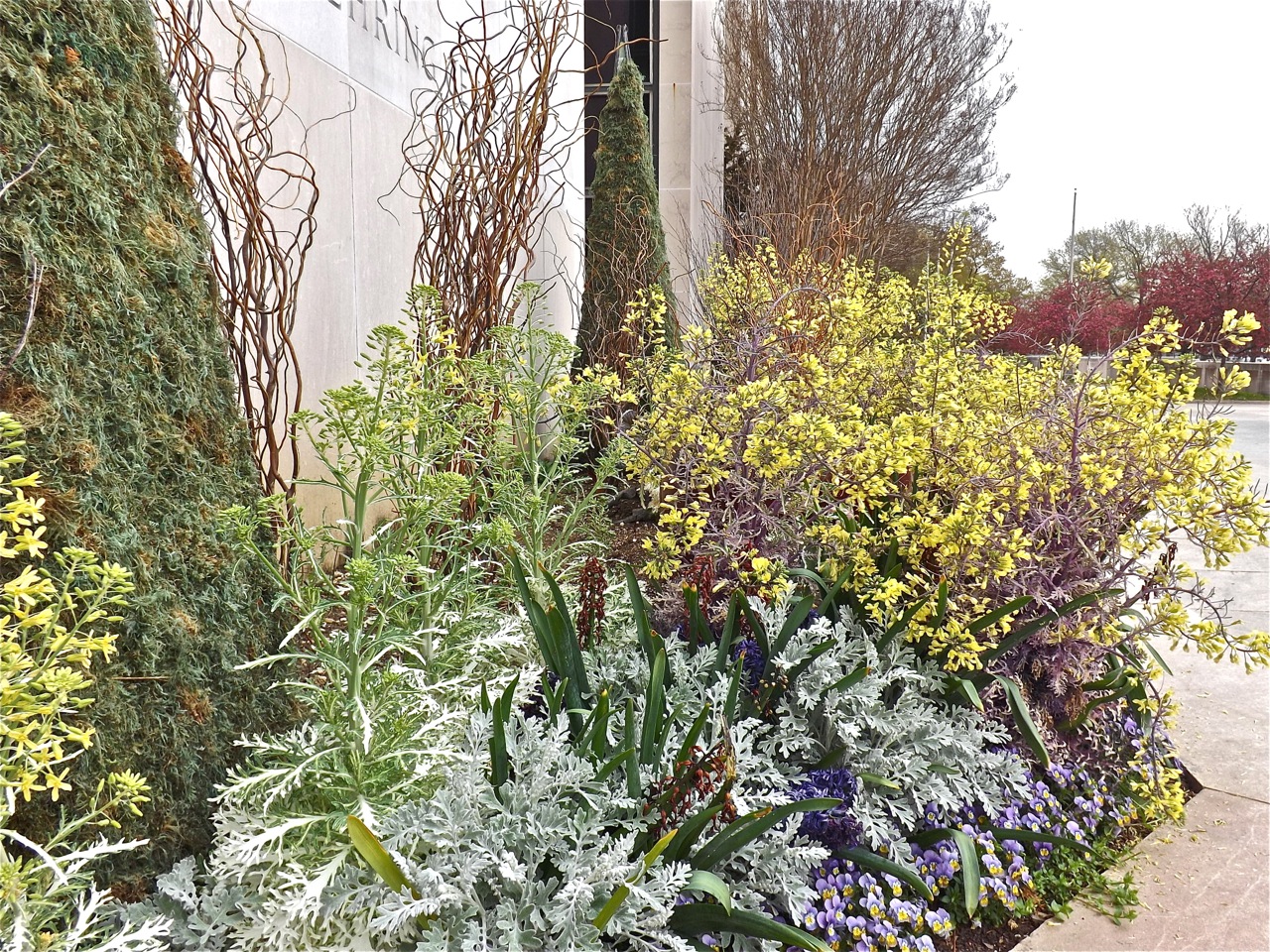
Now it’s filled with dusty miller, violas, and two Brassicas. I did not see any labels, but I’m pretty sure that the lacy white one on the sides is B. oleracea ‘Peacock White’  and the other one with light purple/light green leaves in the center is B. juncea ‘Red (or Ruby) Streaks,’ a mustard mizuna.

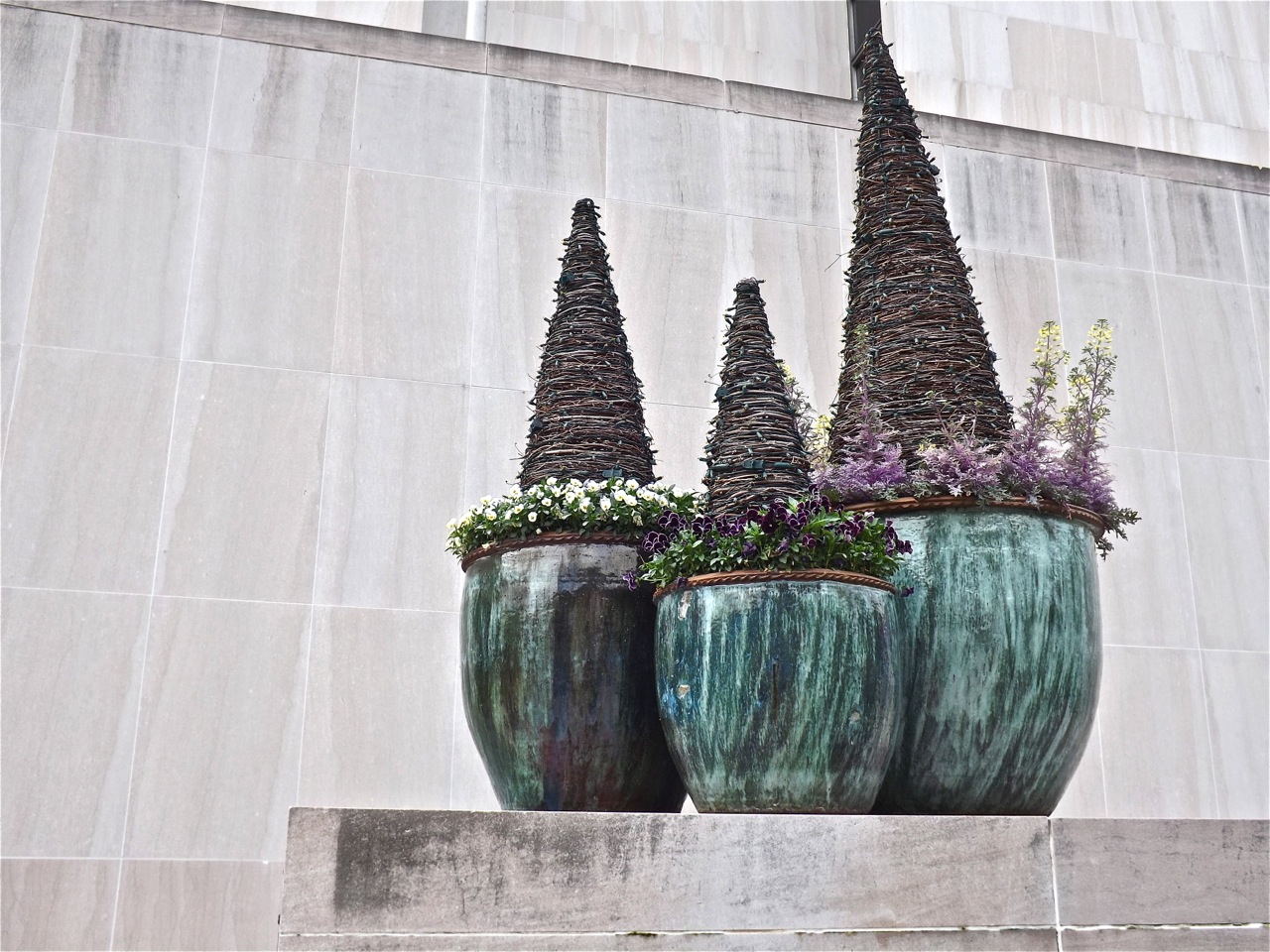
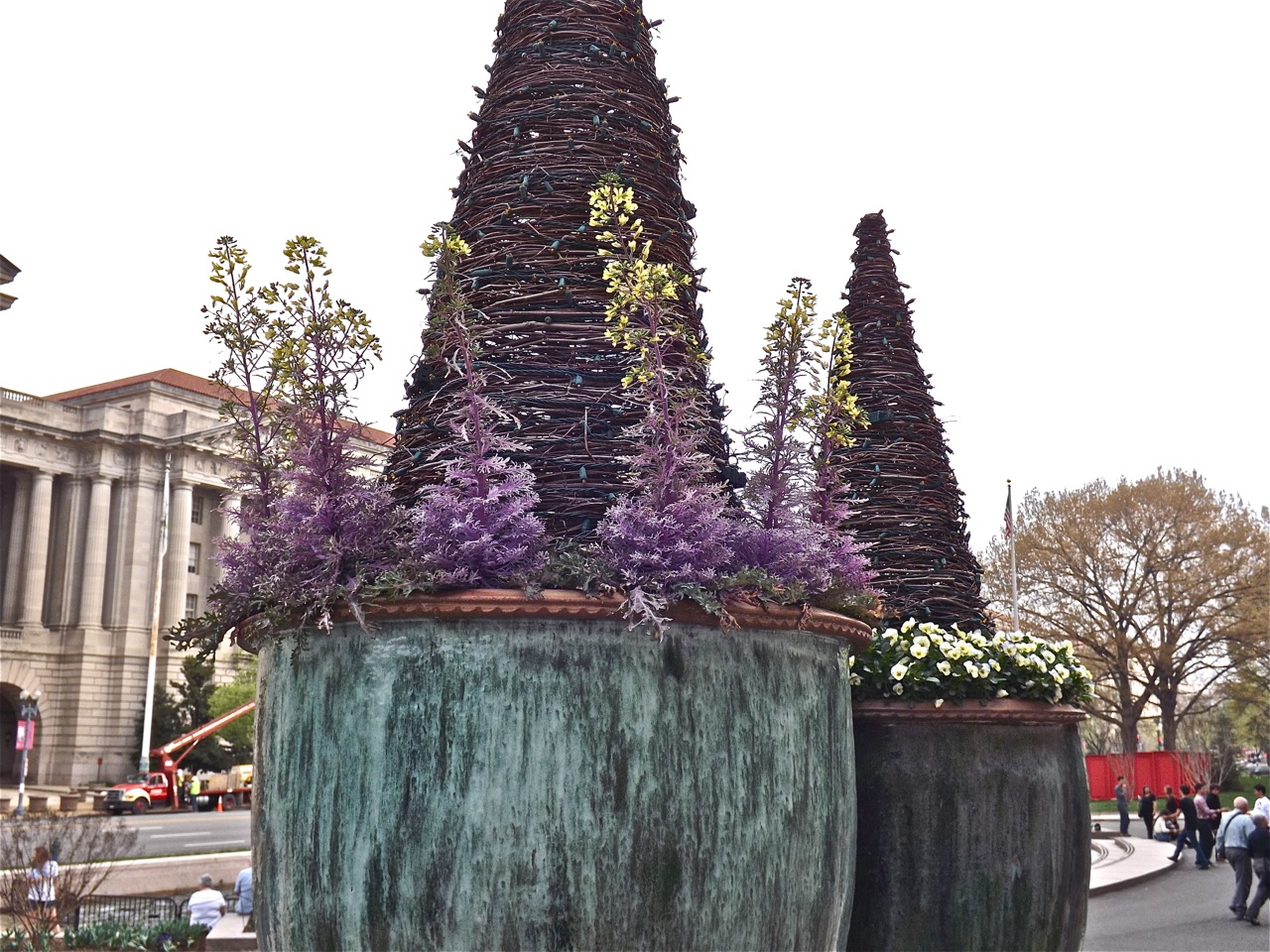
The museum’s big blue pots are also planted in purple kale (I think it may be B. oleracea ‘Peacock Red’) and violas. (You can click on any photo to enlarge it.)
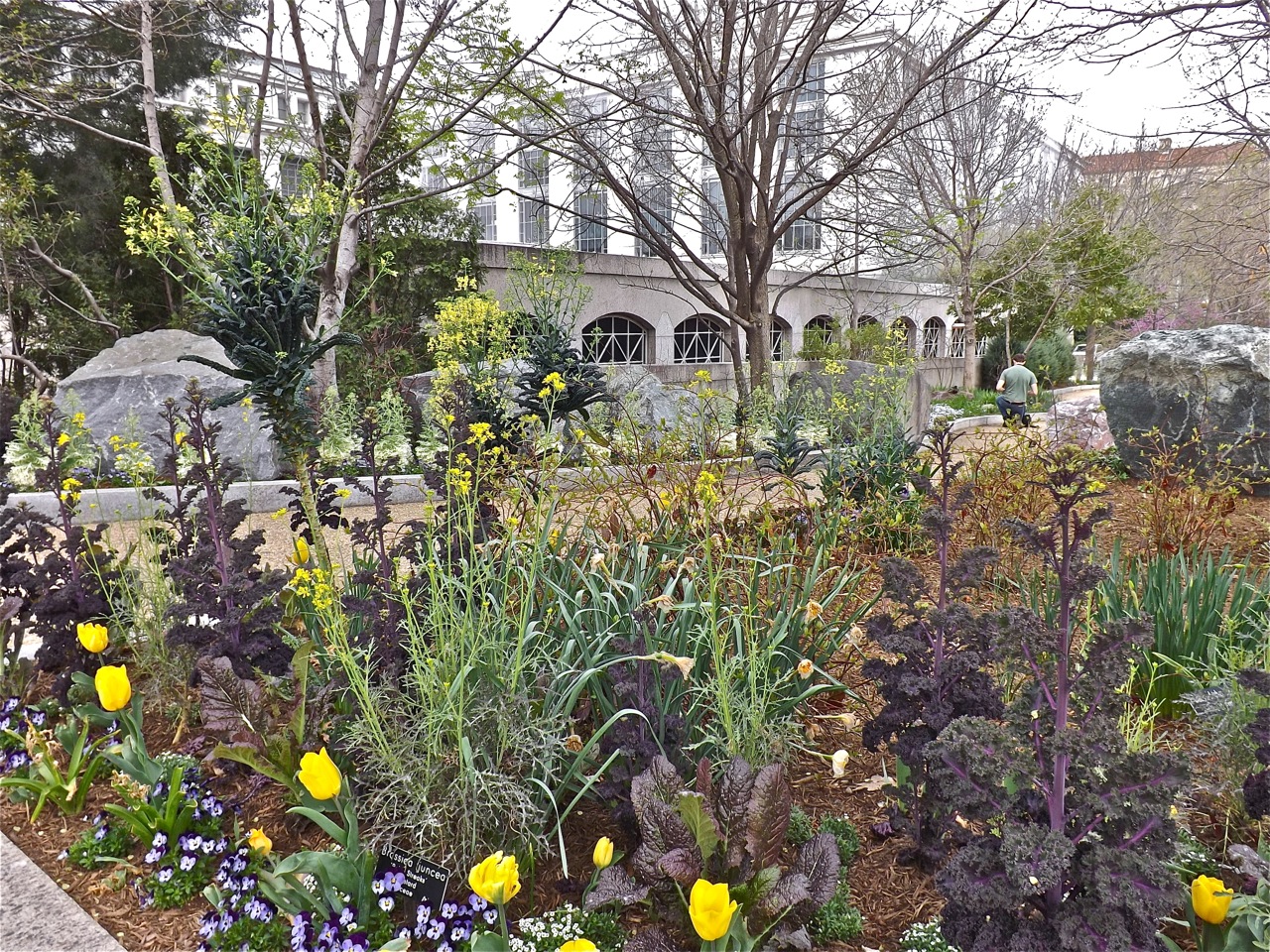
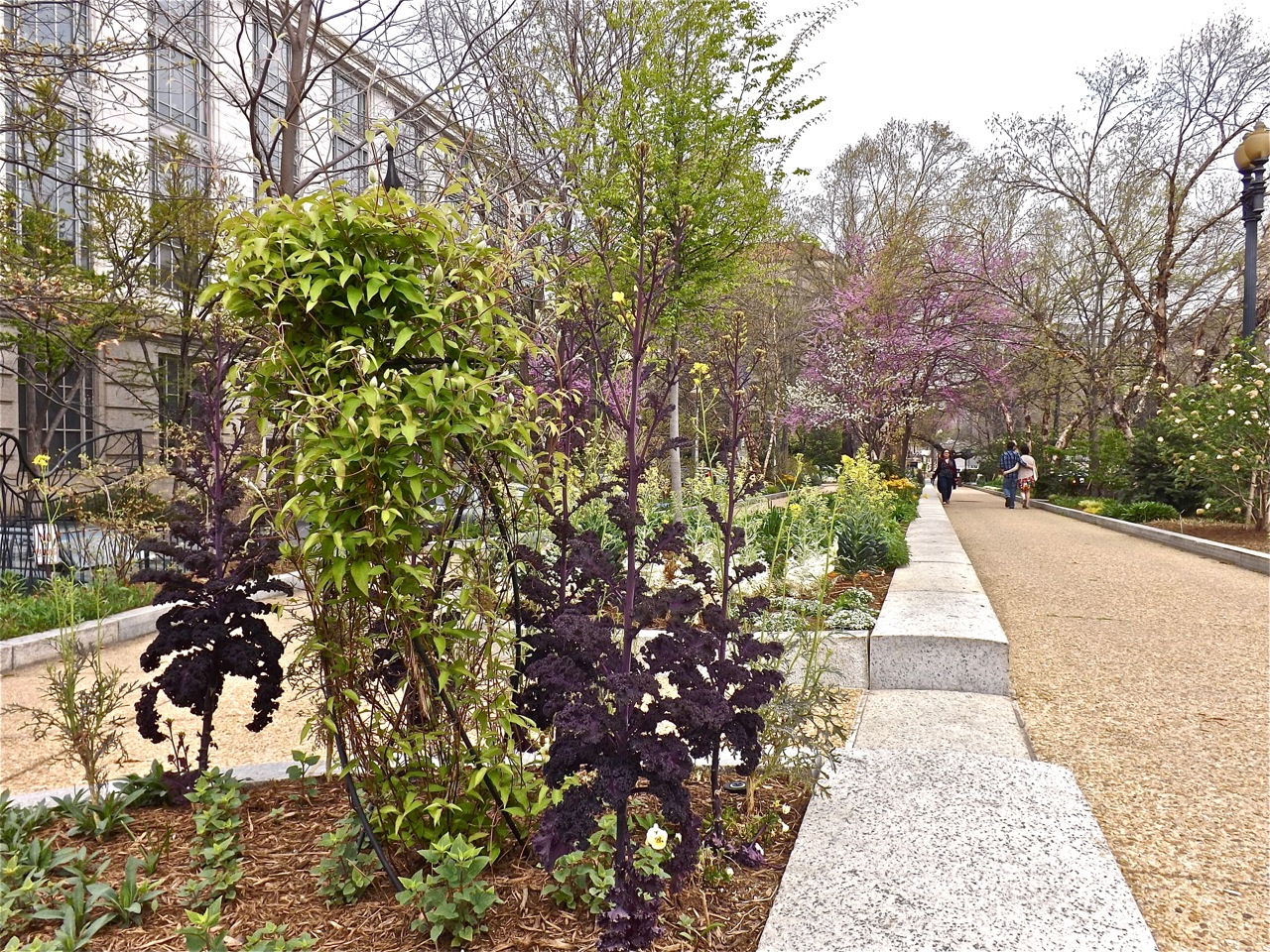
At the Mall entrance to the Butterfly Garden, below, various Brassicas stood out, along with yellow tulips and violas.
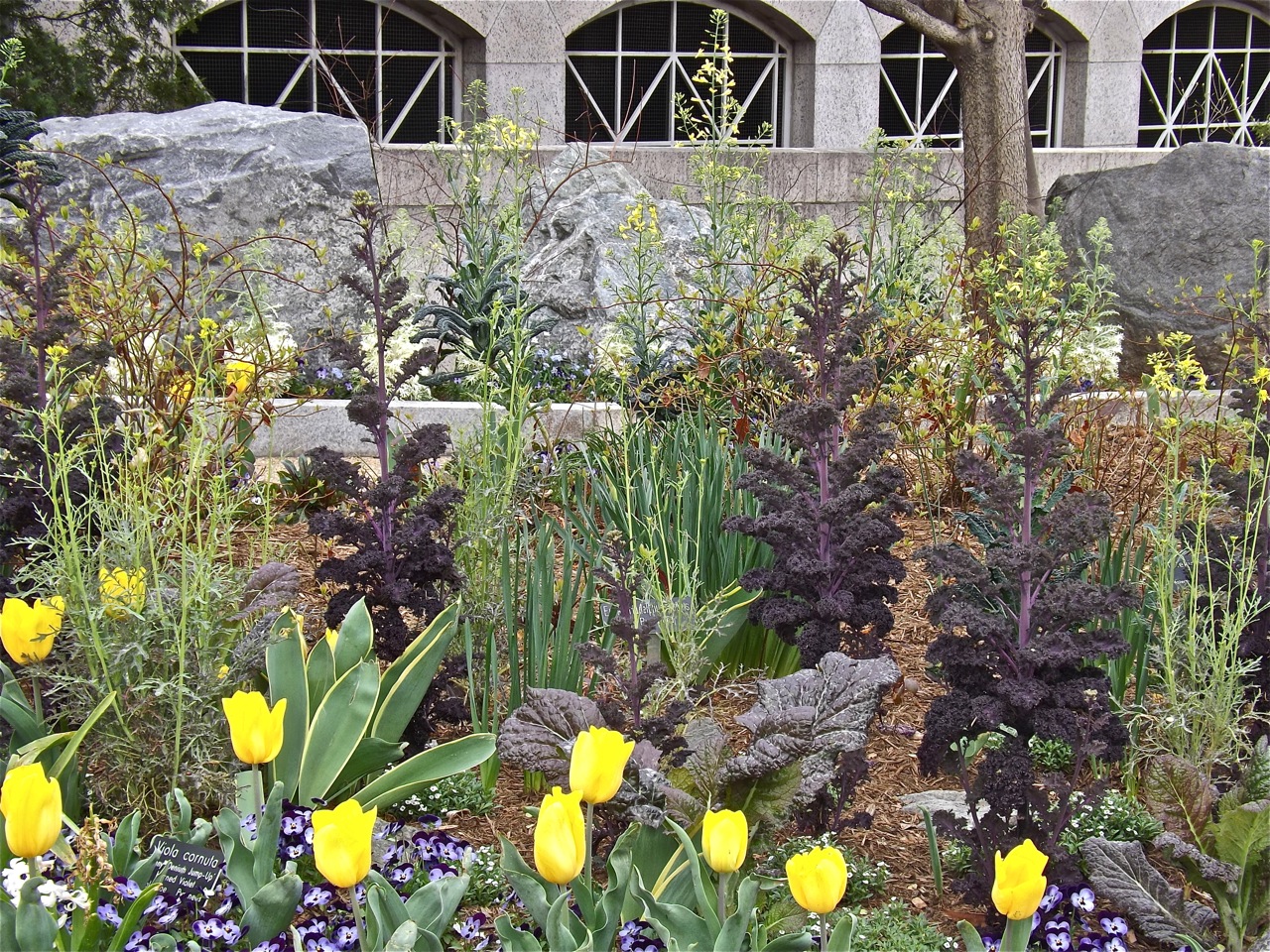
These photos show ruffled dark purple B. oleracea ‘Redbor,’ as well as (I think) ‘Garnet Giant’ red mustard (in the center above) and Johnnie jump-up violas.  The lacy light-purple/light-green plant is B. juncea ‘Red (or Ruby) Streaks.’

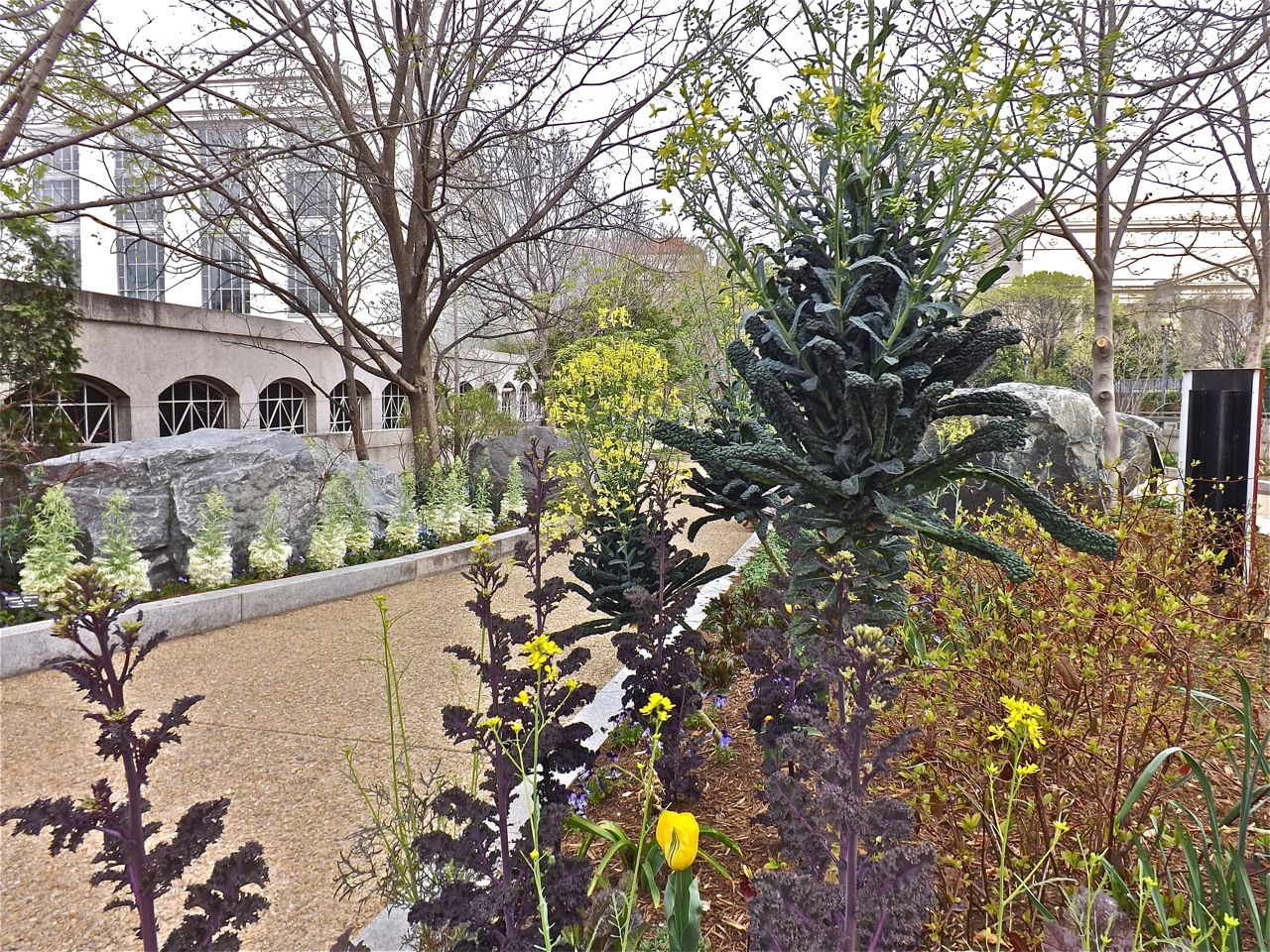
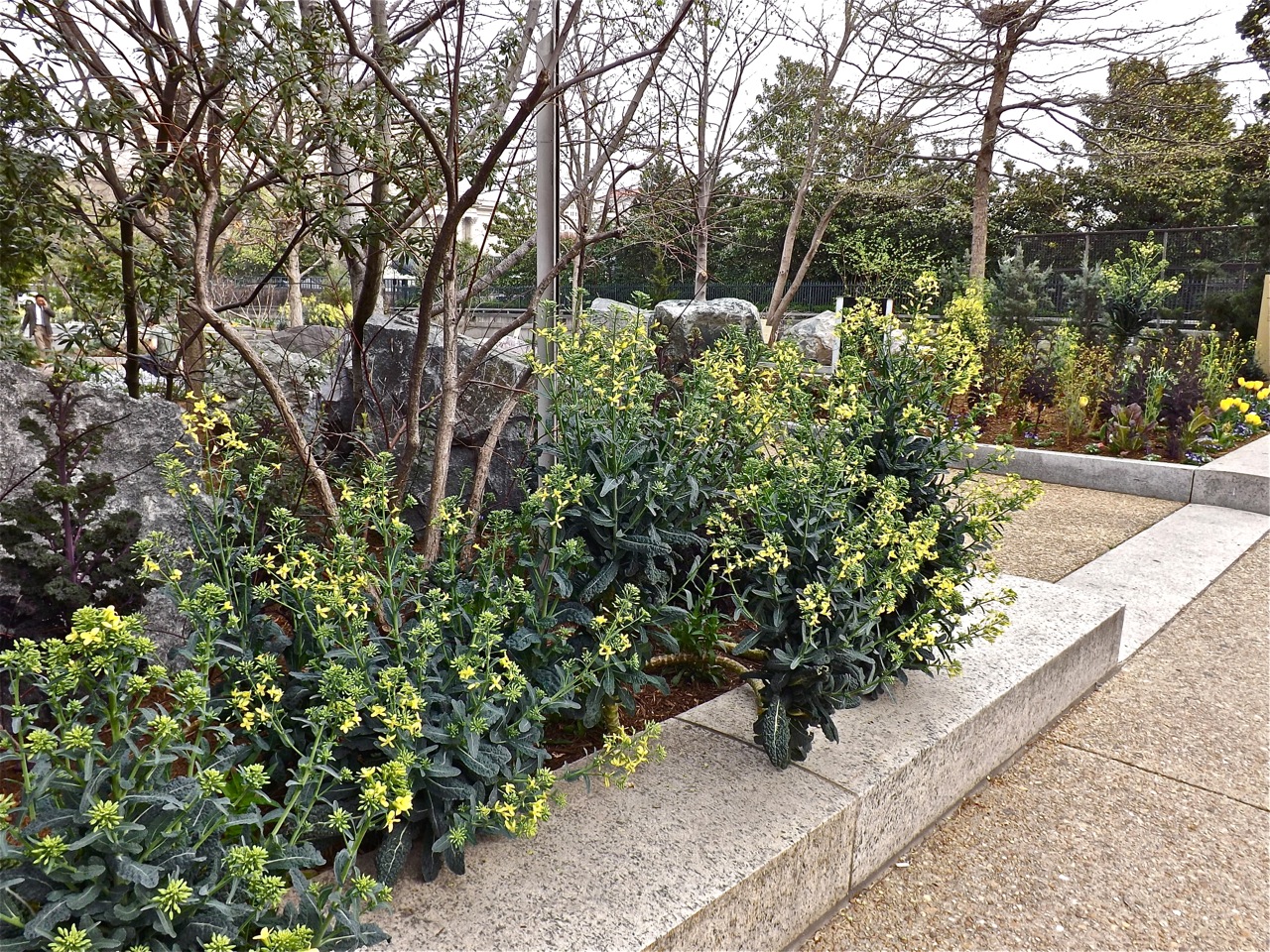
I think the tall, dark blue-green kale in the foreground below is dinosaur kale, maybe ‘Lacinato’ or ‘Cavalo Nero.’  Unfortunately, it was not labeled.
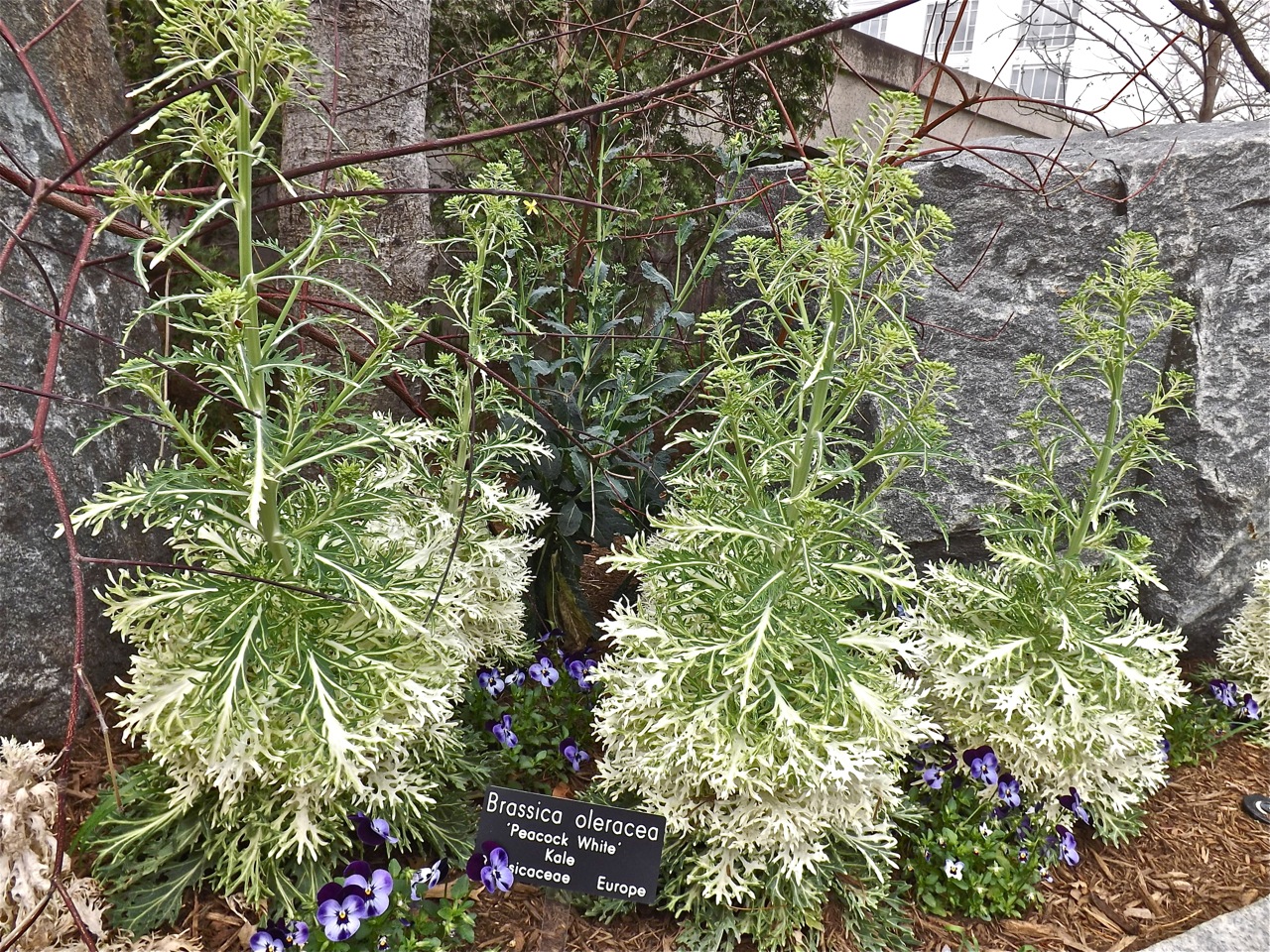
Below are ‘White Peacock’ kale.
I didn’t find a label for the very dark purple kale below.  They may be ‘Redbors’ that are just more mature and darker than the other specimens.
The cabbages in the front of the bed below are ‘Red Drumhead,’ with a row of dinosaur kale behind them.
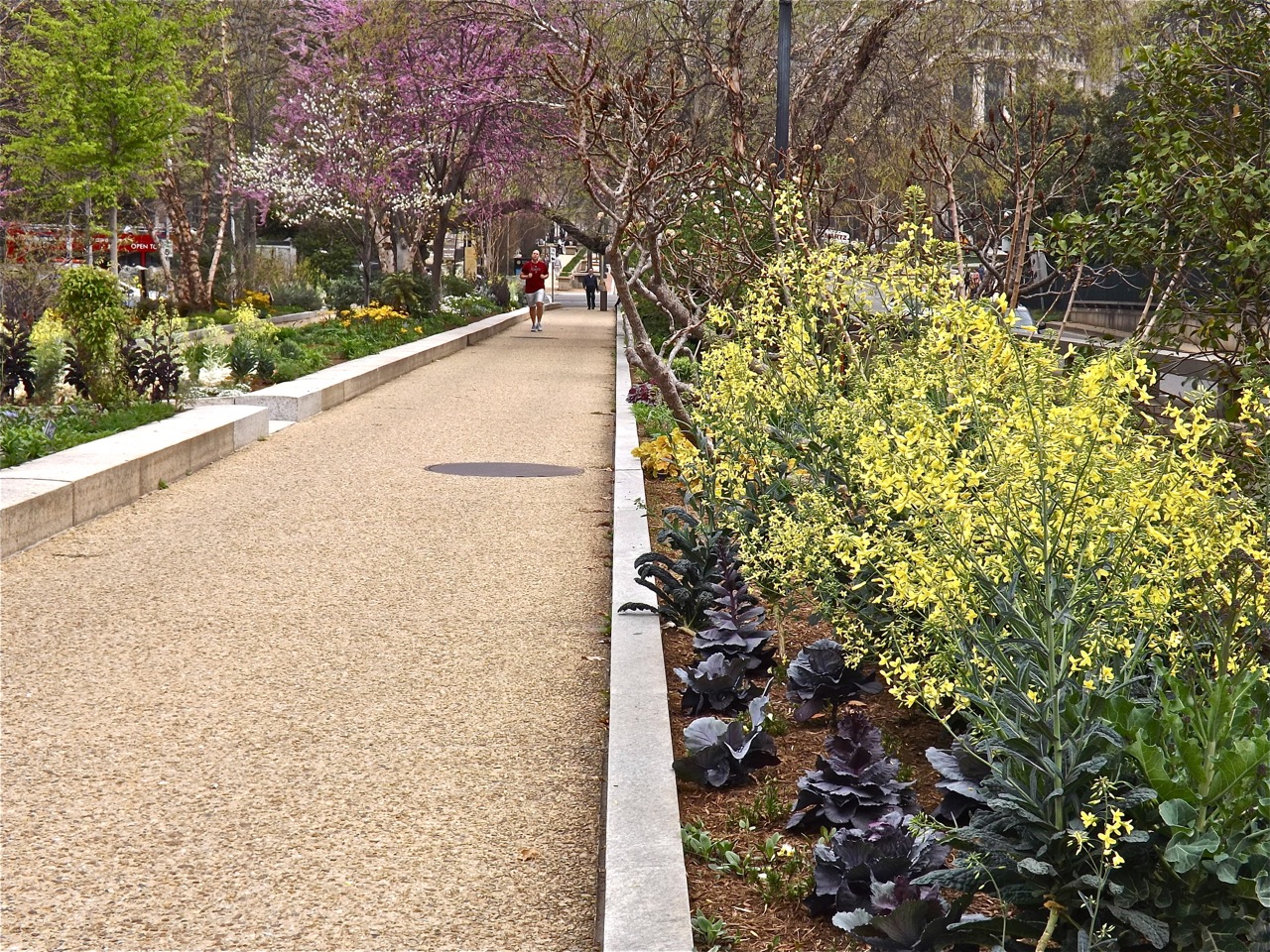
At the entrance are more dinosaur kale.  Here’s the link to what they looked like last summer.
Here and here are some links to growing ornamental kale.

To scroll through larger versions of all the photos above, click on ‘Continue reading’ below and then on the first thumbnail in the gallery.

ADDENDUM: In Paris, in March, I spotted some lovely flower beds on the Champs Elysees planted only with various-colored primroses and regularly interspersed tall flowering ornamental kale (something like B. oleracea ‘Redbor’). Unfortunately, I was on a bus and couldn’t get a picture.
Continue reading “A Brassica moment”

A glimpse of the White House garden

I’m skipping around somewhat in sharing my photos from our March travels. Today I’m back to Washington, D.C.

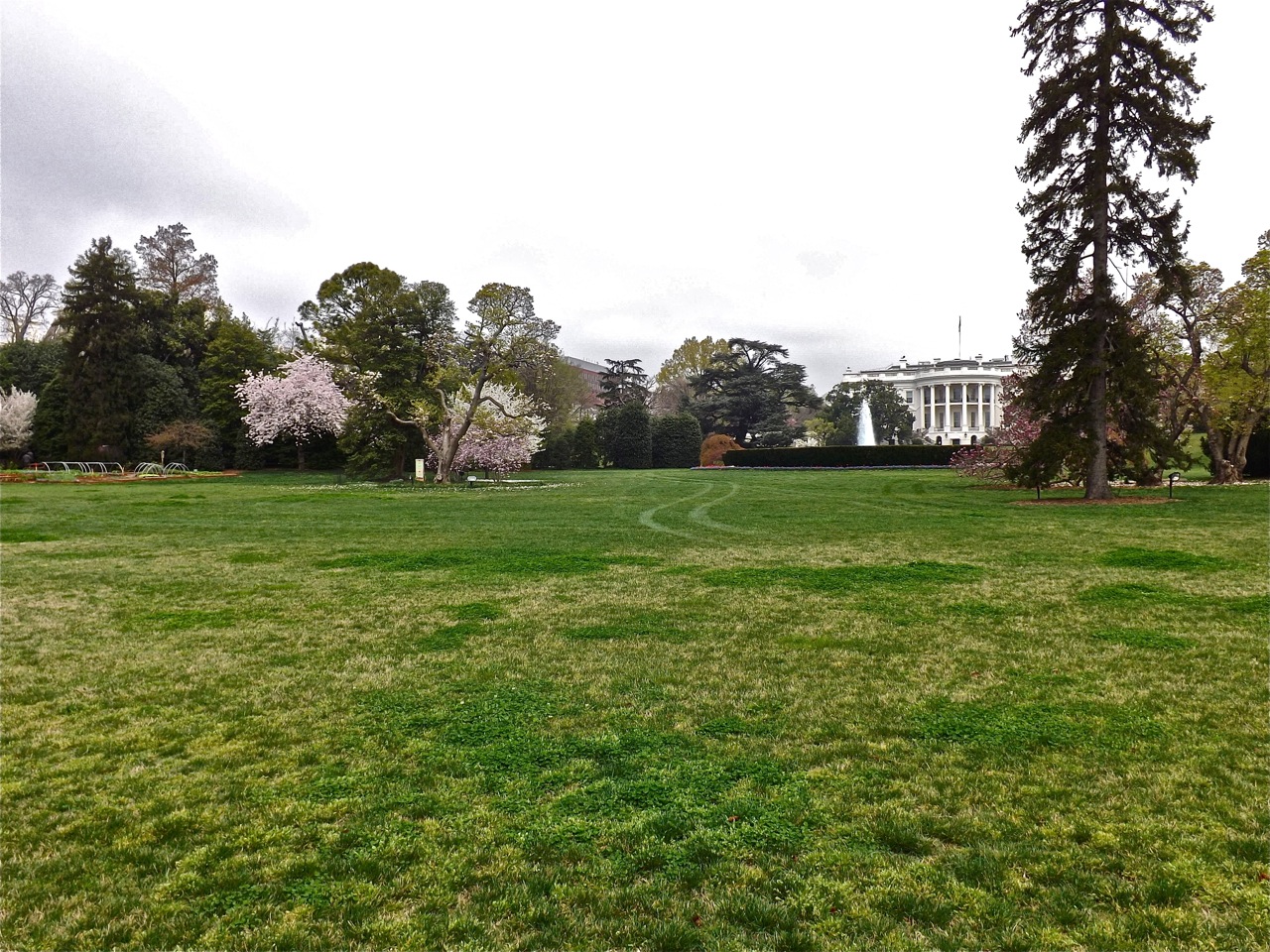
I’ve been a little curious about the White House vegetable garden and its exact location, because the W.H. grounds are not enormous — not after you subtract for enough lawn to land a helicopter or two, press/security tents and equipment, large conifers for privacy, roses, etc.

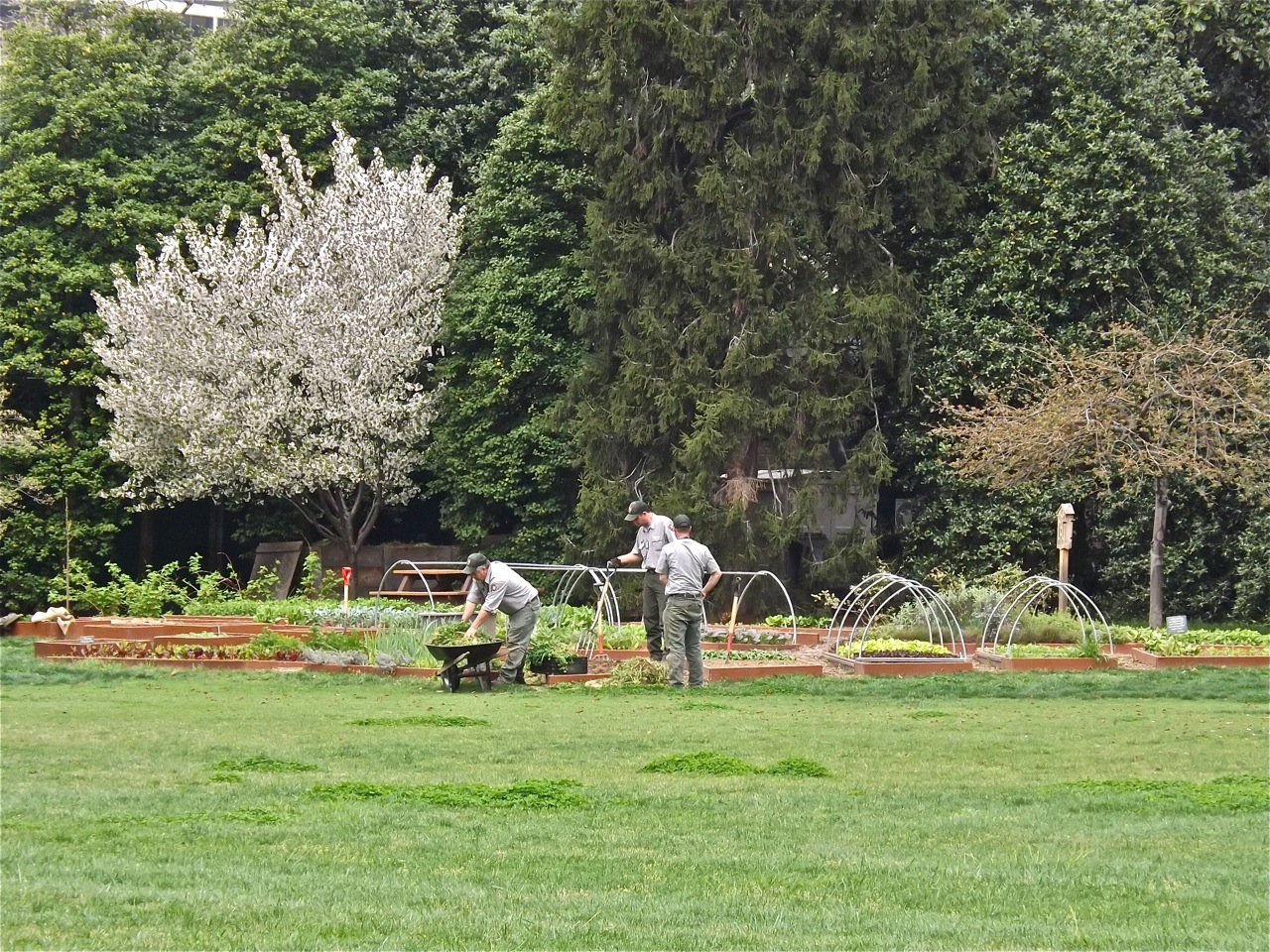
But on a walk I took about March 15, I passed by the fence on the south side and there it was (on the far left of the first photo below).

The Park Service seemed to be doing some spring cleanup, although the beds looked pretty well planted out with various early greens. (Click any photo to enlarge it.)

About 10 days after I passed by, schoolchildren and Mrs. Obama officially planted out the 2012 garden.

There’s a very interesting post in Early American Gardens about the White House Gardens in the 19th century, here.

Sk(in)

About two weeks ago, while we were in Washington, D.C., I went to the Phillips Collection to see the exhibition Snapshot: Painters and Photography, Bonnard to Vuillard.

It displays 200 personal photographs taken by 7 post-impressionist painters at the end of the 19th century, using the then-new Kodak handheld camera. Seventy paintings and prints are also shown. The pictures are engrossing, although many are only a few inches tall. It runs until May 6. See it if you can.

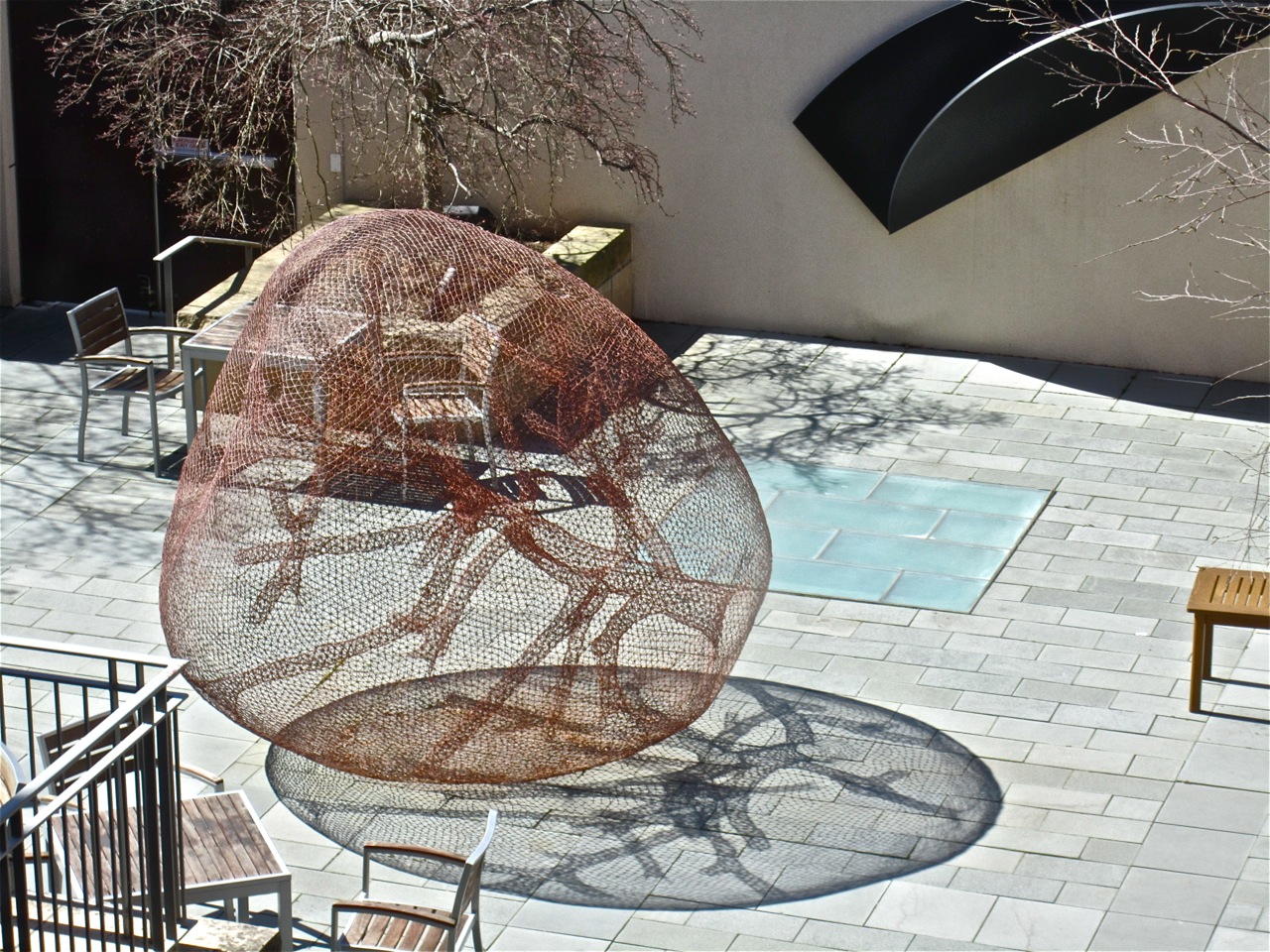
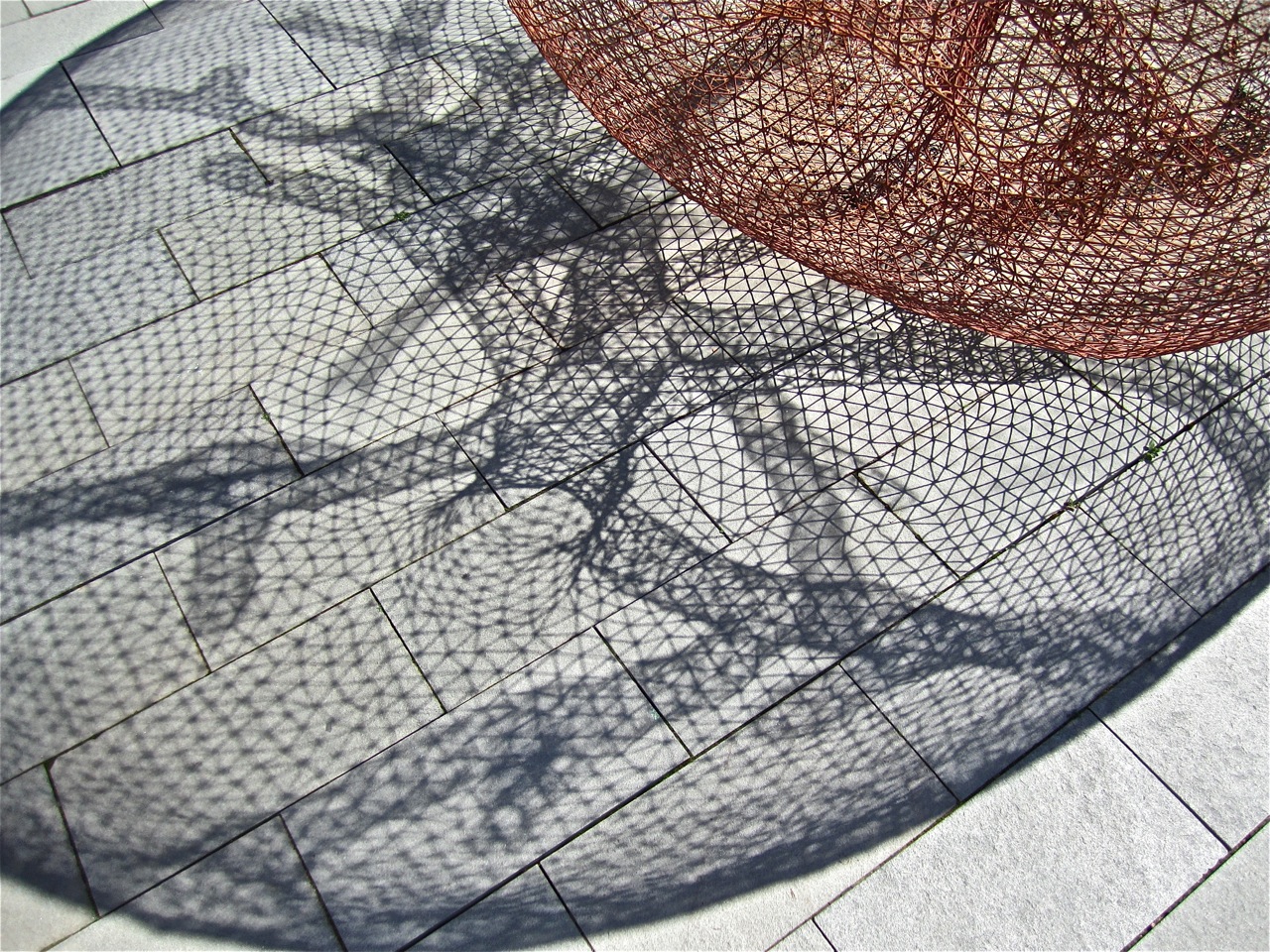
On the way down the stairs, I spotted this sculpture in the Hunter Courtyard.

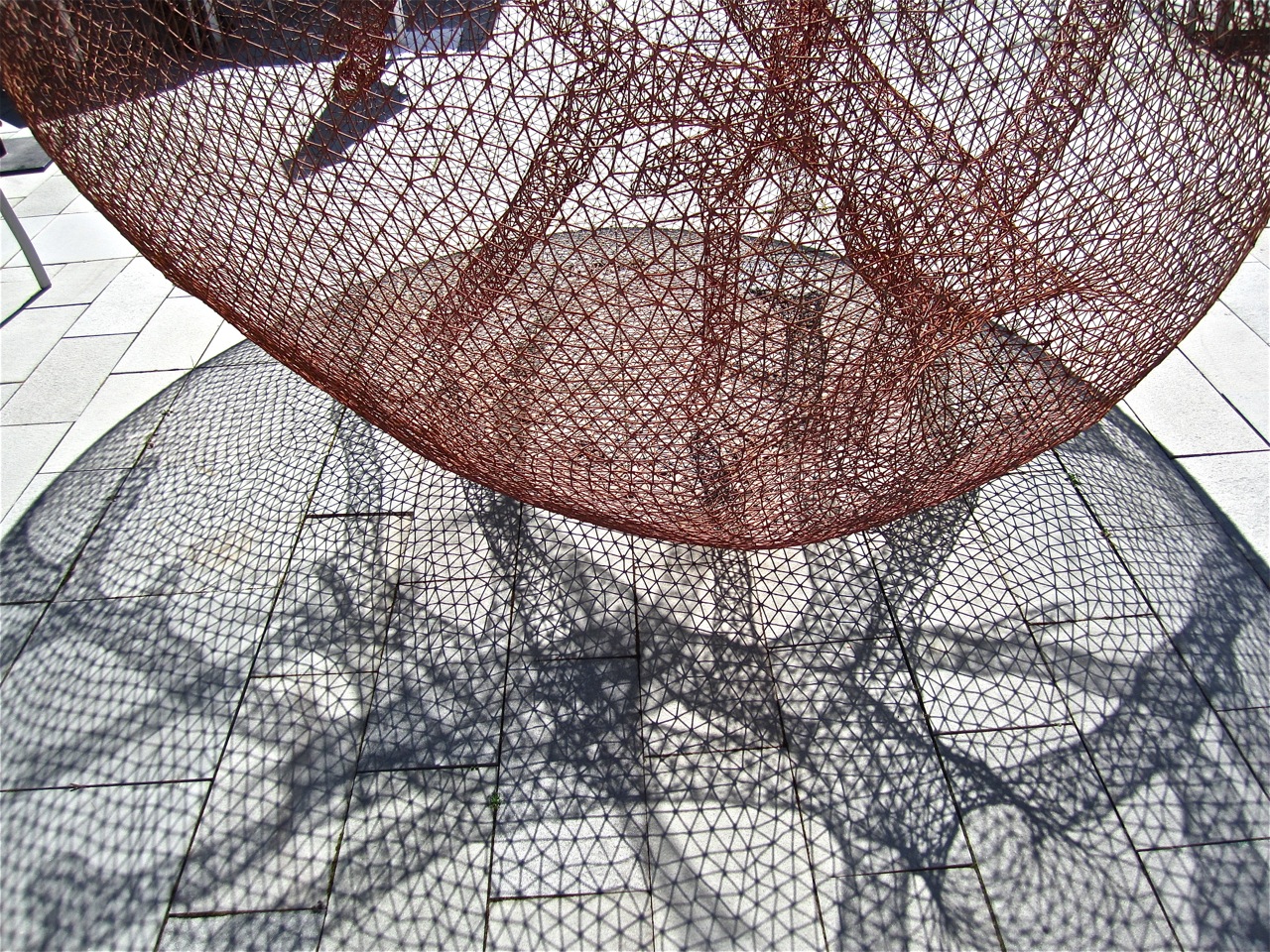
It’s one part of a work called Sk(in).  The other part was hung inside, but, unfortunately, it has been removed.  The artist is A. Balasubramaniam, and you can watch an interesting short video on the full work’s  installation here.  The sculpture “explores the limits of perception.”

It certainly explores the potential of steel mesh.

The Olbrich Botanical Gardens in March

We just returned from a three-week trip to the U.S., Belgium, and France. There was amazingly great weather everywhere, and I think we walked several miles every day. I hope I can sort out all the photos I took of spring landscapes while it’s still spring.

We spent three days in Madison, Wisconsin, where the temperatures were in the 70s. Of course, we had to visit the beautiful Olbrich Botanical Gardens just to enjoy the warm sun.

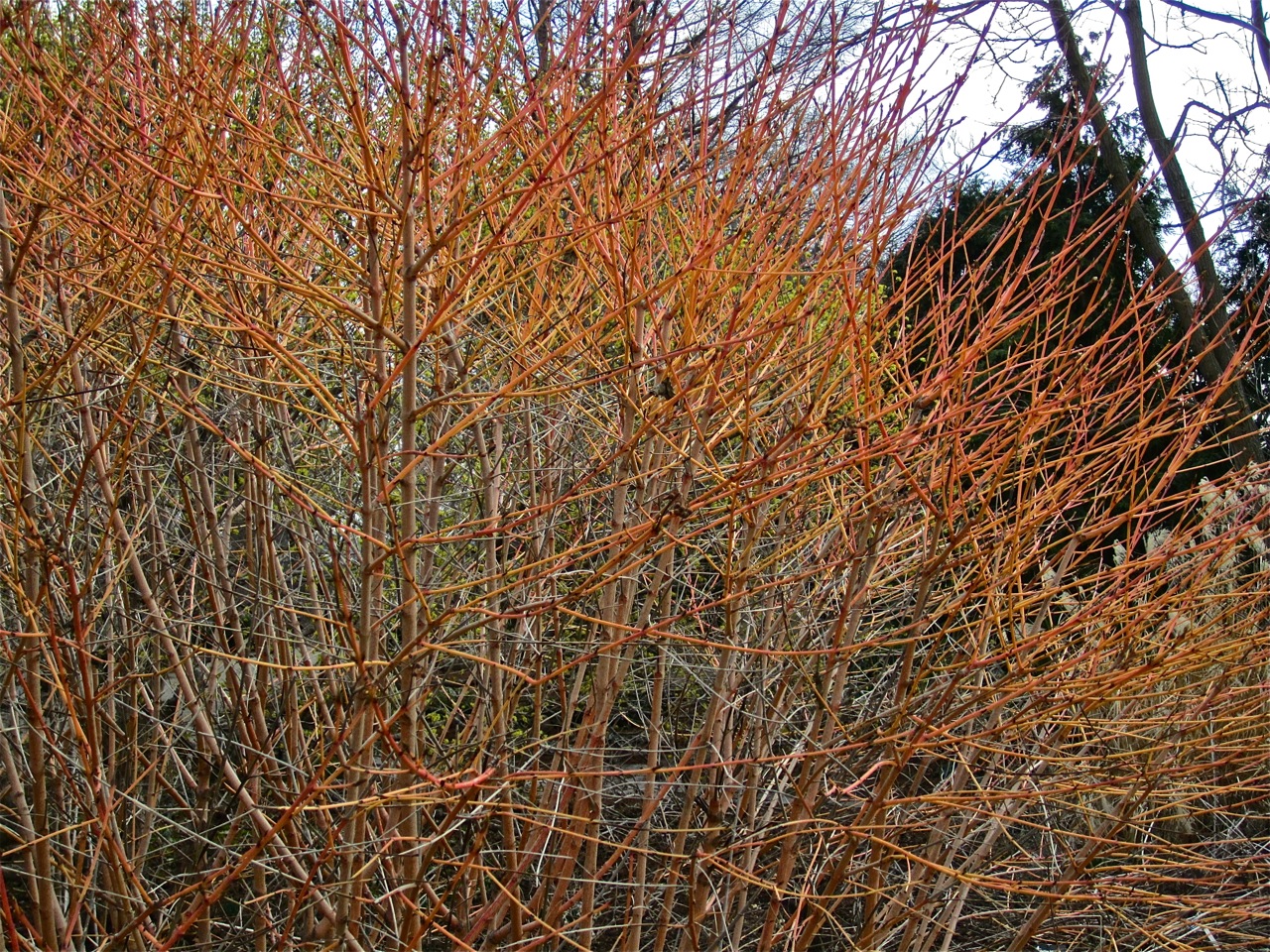
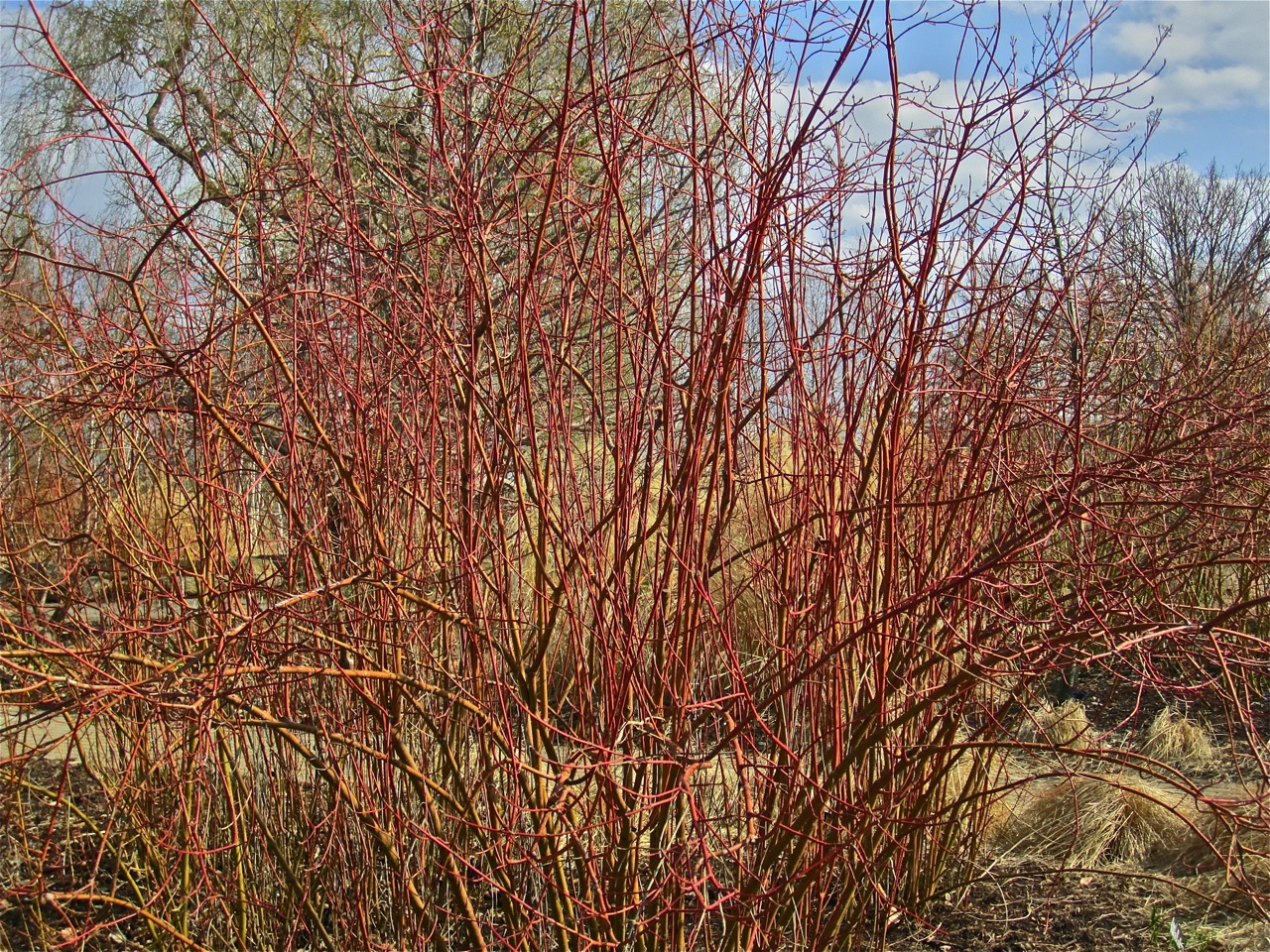
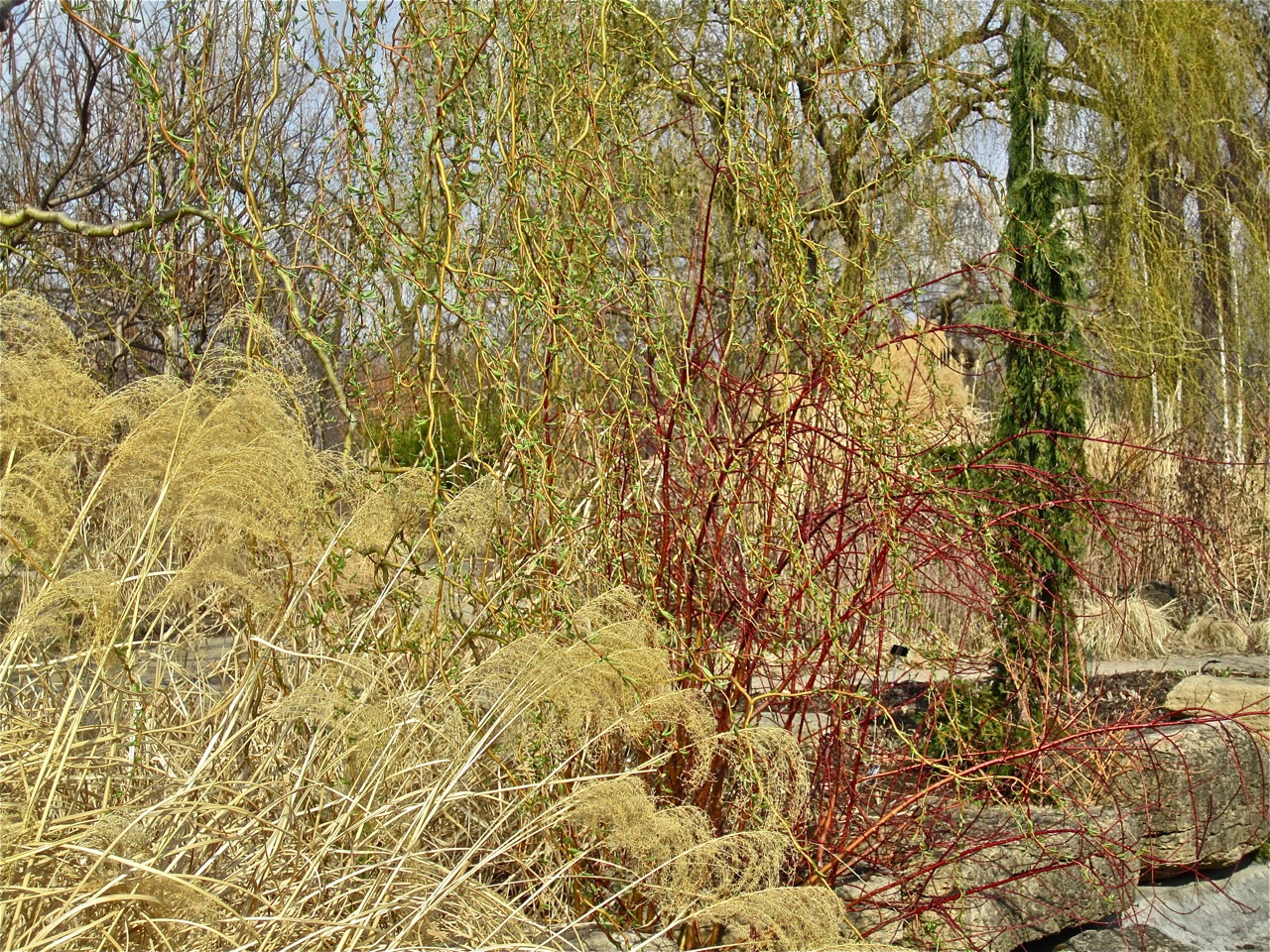
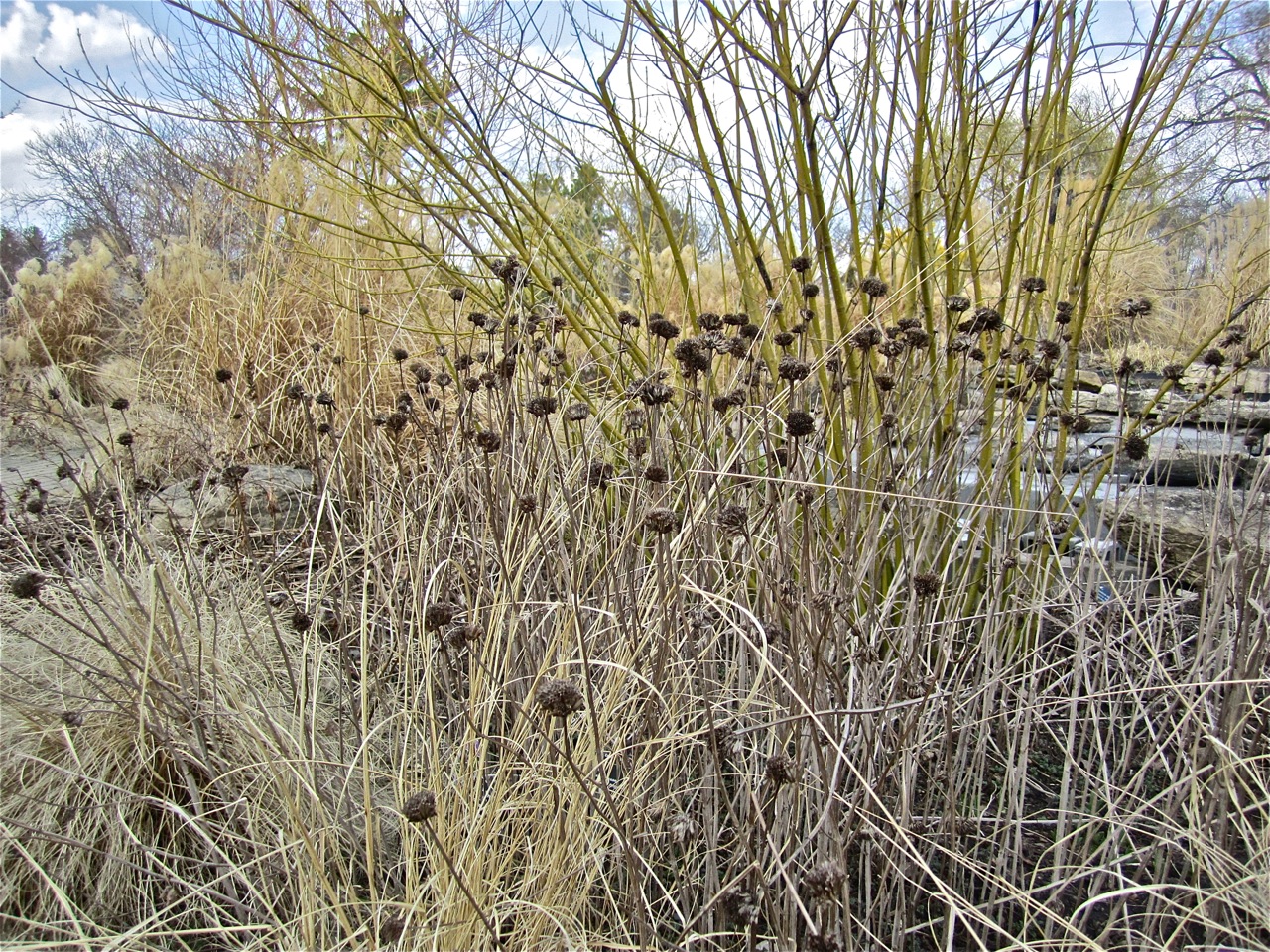
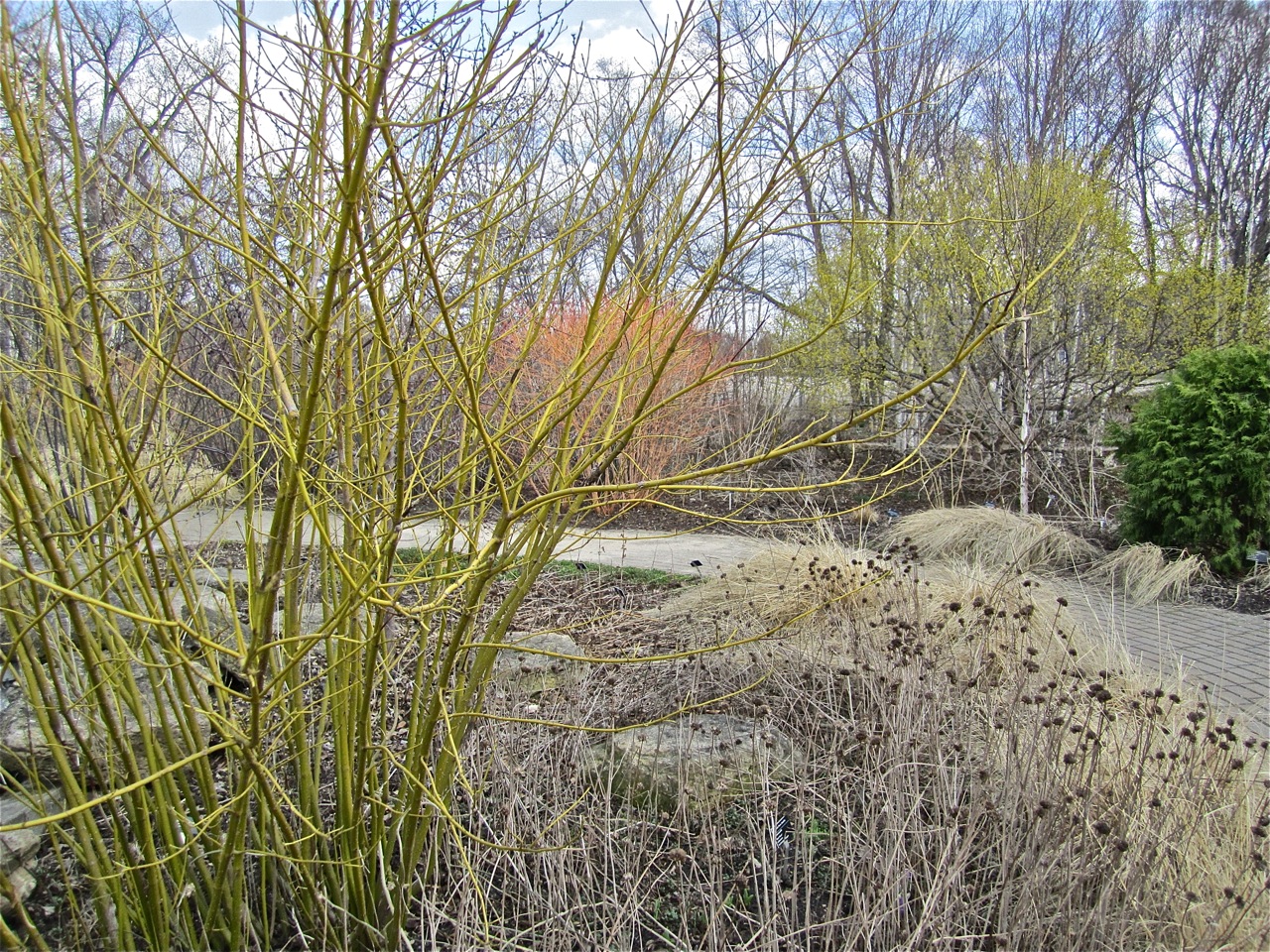
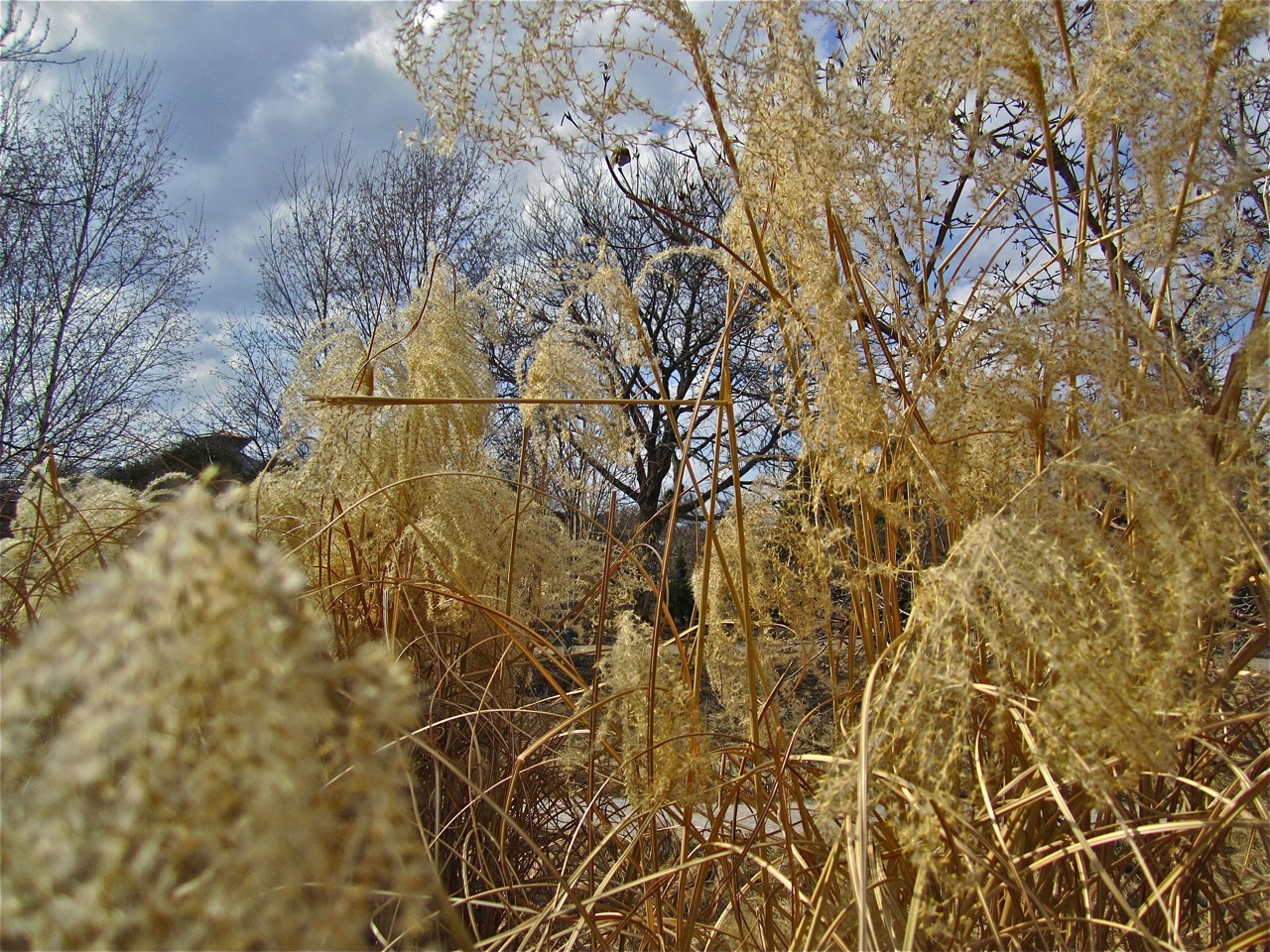
I wasn’t really expecting to be wowed at the end of winter, but the blond grasses, red, coral, and yellow dogwoods, and white birches put on a gorgeous display.

This is winter bloodtwig dogwood or Cornus sanguinea ‘Winter Beauty.’

Below are red osier dogwoods or Cornus stolonifera among a variety of grasses.

Above, the pavilion of the Thai Garden glitters in the background.

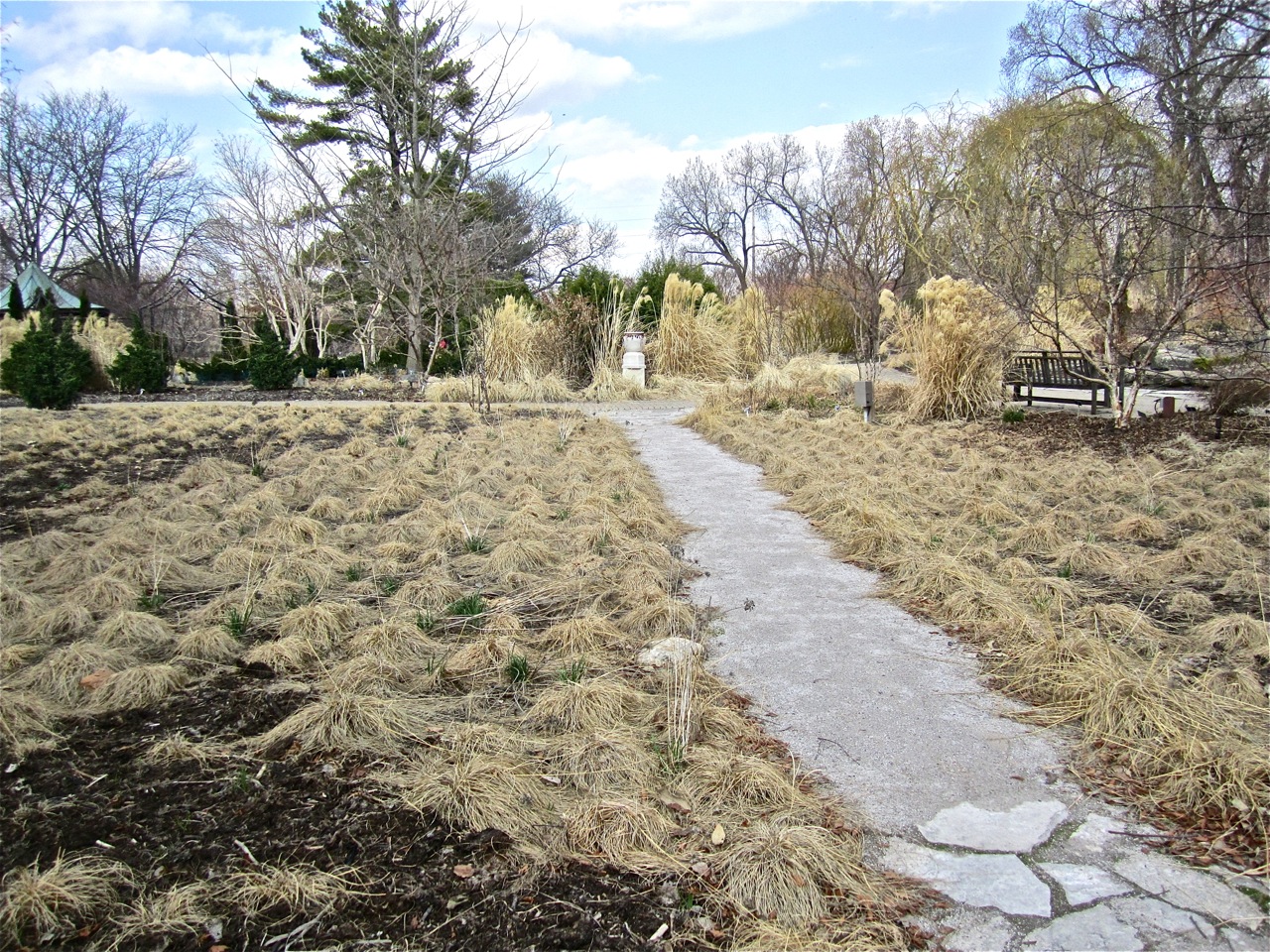
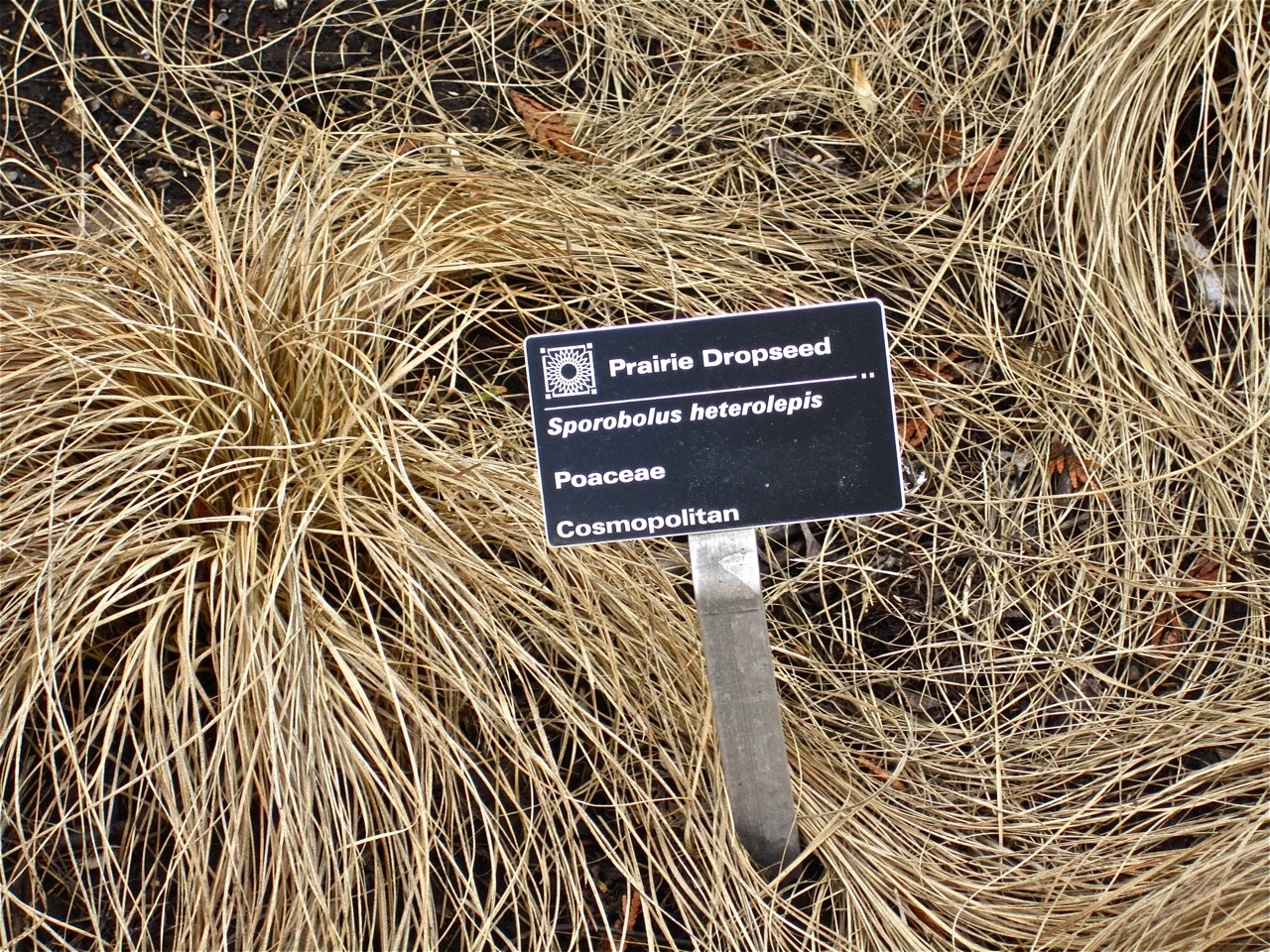
Bordering the Perennial Garden, shown above, are the Sedge and Prairie Dropseed Meadows — examples of alternatives to the typical lawn — shown below.

The Birch Walk, below, features 100 native paper birches.