The Sunday porch: Montgomery, Alabama

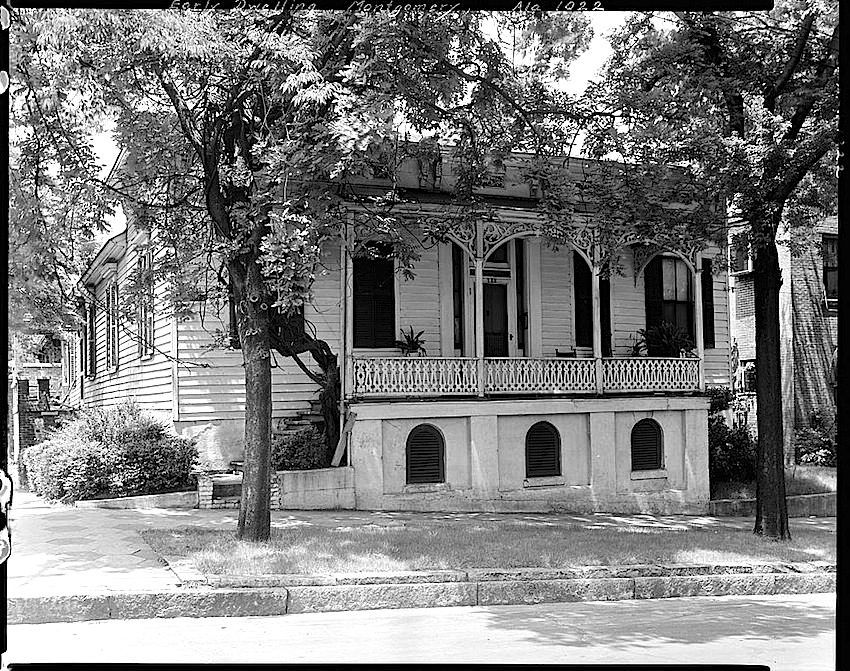
“Early dwelling, 222 S. Perry St.,” Montgomery, Alabama, 1939, by Frances Benjamin Johnstonvia Library of Congress Prints and Photographs Division.
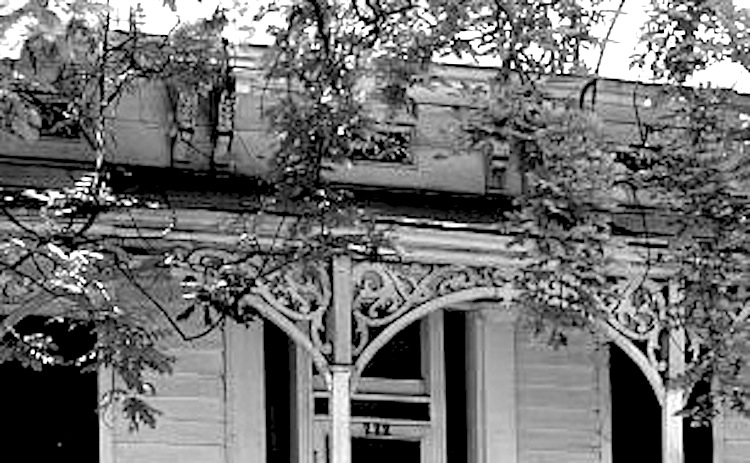
The porch woodwork pattern is echoed in the little attic windows. Click to enlarge.

A huge vine is growing beside the steps, but it seems to go up into the tree on the left, rather than onto the porch.

The sidewalk is tiled in a simple geometric pattern. The effect, with the arches of the porch and basement windows, is a little Moroccan/Andalusian.

The house no longer stands.
Bee allée

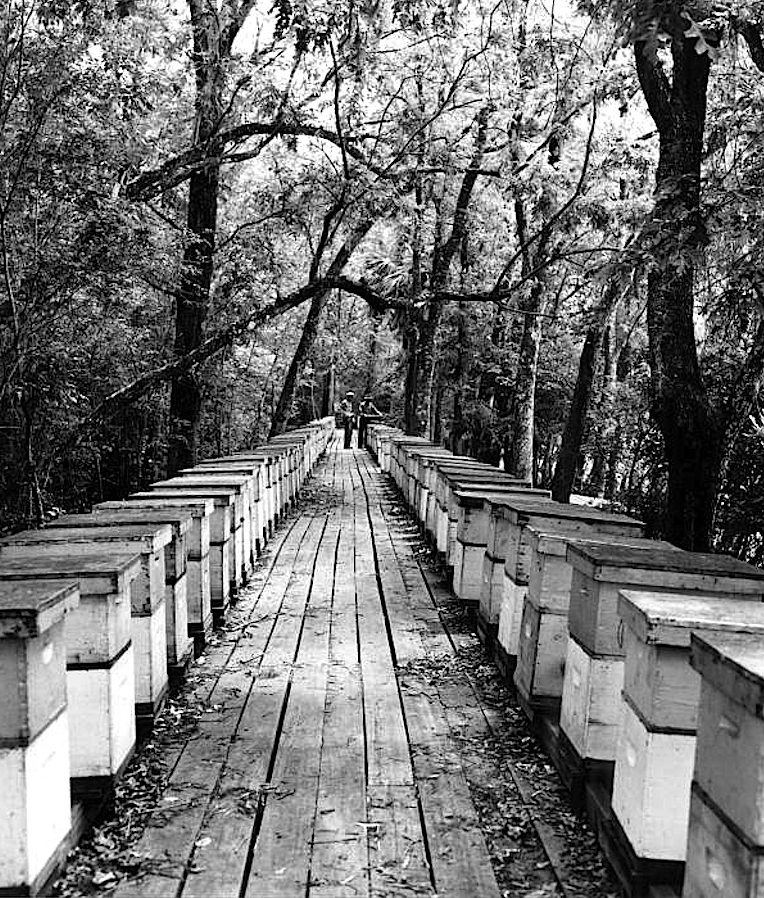
“Beekeepers Wallace Anderson and R.R. Talbert tending to tupelo honey beehives in Apalachicola, Florida,” May 6, 1948, via Florida Memory (State Library and Archives of Florida) Commons on flickr.

Another note on the Archive’s website says, “Typical scaffold, platform 14 to 16 feet high and 300 to 700 feet long on which colonies (hives) are placed.”

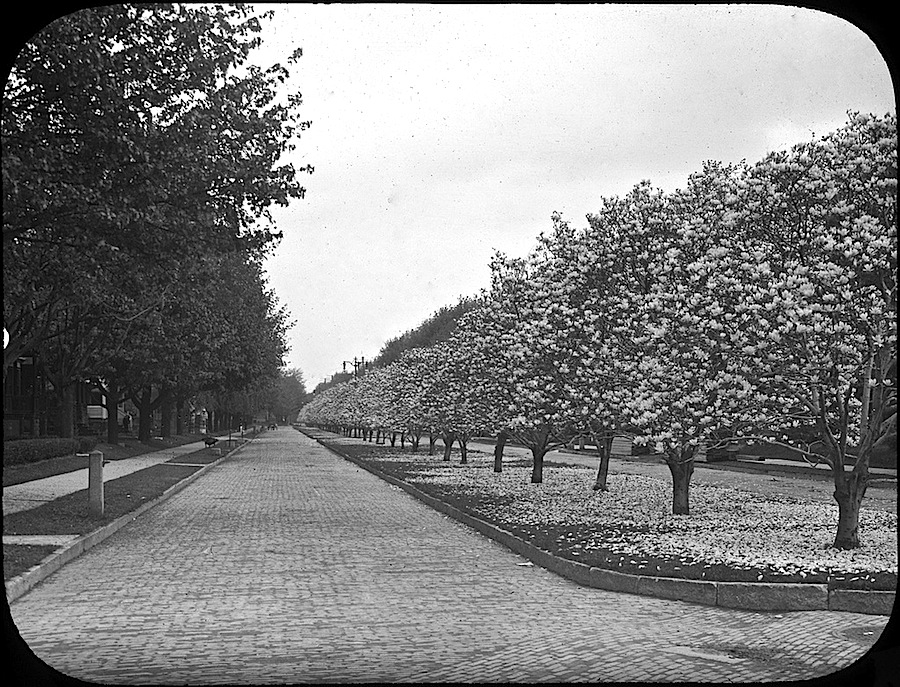
Oxford Street

Magnolias in Rochester, New York, undated, via  Arthur Peck Collection, OSU Special Collections & Archives Commons on flickr.

Since the late 19th century, Oxford Street in the city’s Park Avenue neighborhood has attracted visitors in May for its display of blooming magnolia trees. There is another vintage picture of the trees here.

Arthur Peck was a Professor of Landscape Architecture at the Oregon Agricultural College* from 1908 to 1948. This picture was part of his teaching library of 24 boxes of glass lantern slides — now in OSU’s archives.


*The college later became Oregon State University (OSU).

Englewood, New Jersey

“Beechgate,” Englewood, New Jersey, 1918, a hand-colored glass lantern slide by Frances Benjamin Johnston, via Library of Congress Prints and Photographs Division.

Some mid-week prettiness. . . . The four-acre garden was designed by Anna Gilman Hill about 1911.

Hill and her husband also owned “Grey Gardens,” the East Hampton estate later famously inhabited by Edith Bouvier Beale and “Little Edie.” She was Director of the Garden Club of America for six years in the 1920s, and, in 1938, she wrote a book about her gardening life, called Forty Years of Gardening. You can read it online here.

The Sunday porch: Williamsboro, N.C.

 “Blooming Hope” (also called “Cedar Walk”), Williamsboro, North Carolina, 1938, by Frances Benjamin Johnston, via Library of Congress Prints and Photographs Division.

I like the way the vines are a little blurry from a sudden gust of wind.

The home may have been built as early as the 1750s by a Hutchins (or possibly Robert) Burton, who called it “Blooming Hope.” He may have operated a boarding school there. It also seems to have served as an academy for young ladies later in the early 1800s, run by the Rev. Henry Patillo. At some point in its first 100 years, there was a suicide in the house (either Burton or Patillo’s son), and it acquired a reputation as haunted. It was torn down in 1967.