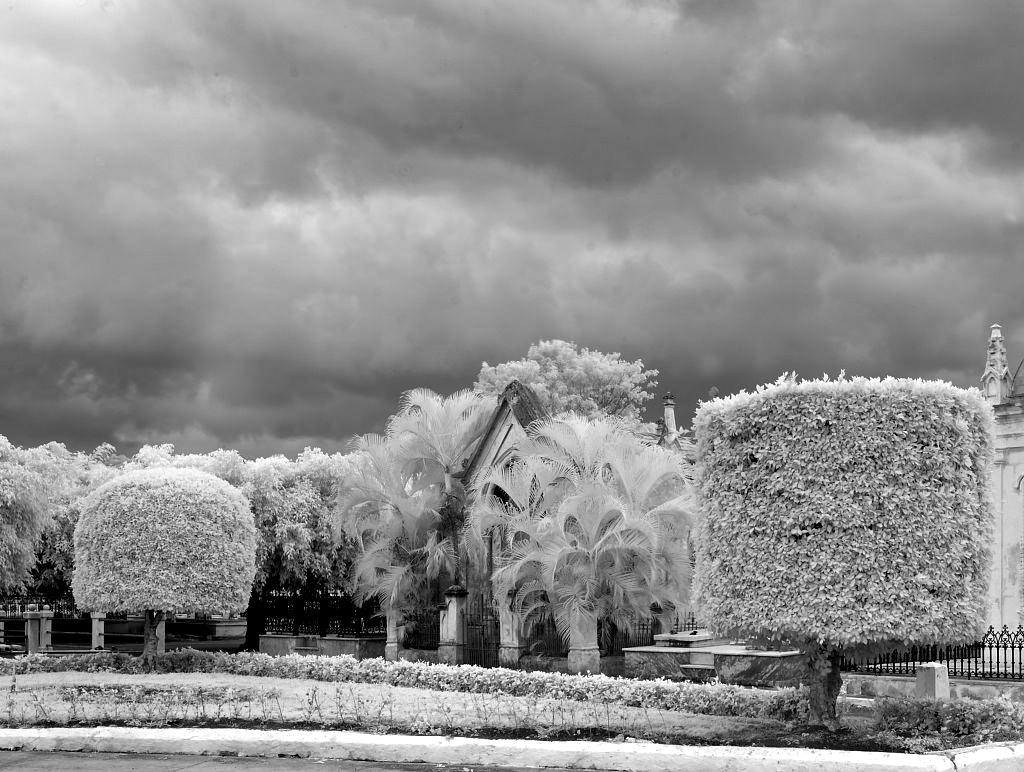
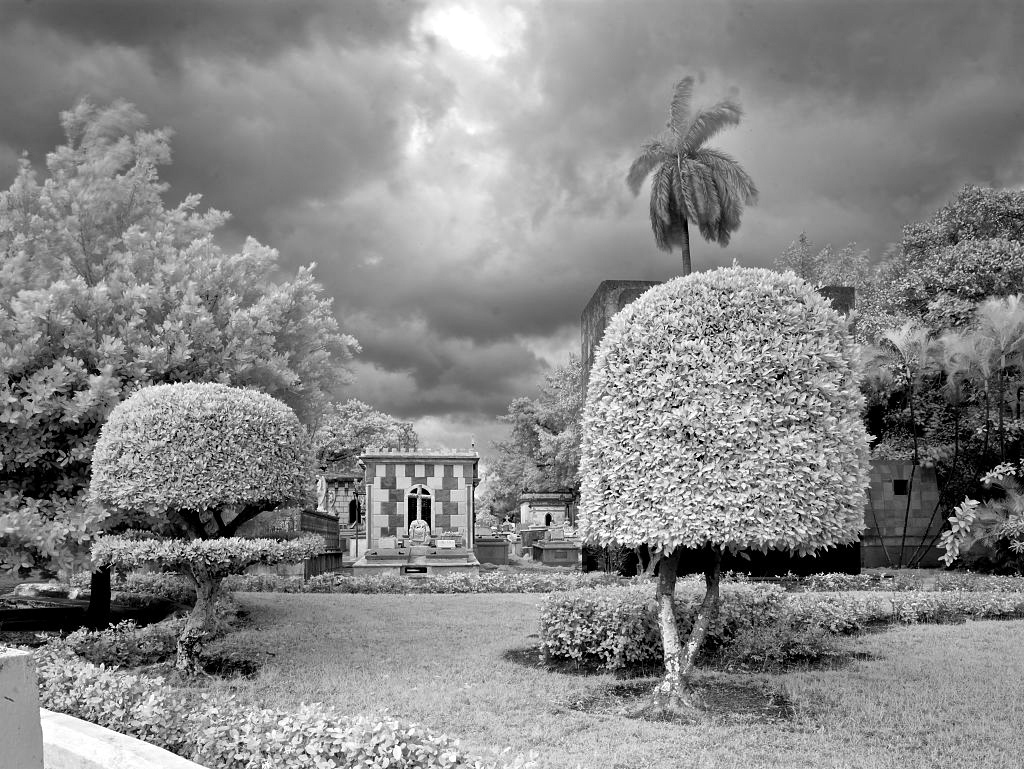
Necropolis de Colon, Havana

Necropolis de Colon, Havana, by C. Highsmith, 2010

“Necropolis de Colon, Havana, Cuba,” 2010, by Carol Highsmith, via the Highsmith Archive, Library of Congress Prints and Photographs Division.

Necropolis de Colon, Havana, by C. Highsmith, 2010.

The Cementerio de Cristóbal Colón [Christopher Columbus] was founded in 1876. The 140-acre cemetery is located in the Vedado neighbourhood of Havana, Cuba, and holds more than 500 family vaults, mausoleums, and chapels.

Carol M. Highsmith is a contemporary photographer who has specialized in documenting architecture and landscape — high and low — in all 50 American states.  Her influences are Frances Benjamin Johnston and Dorothea Lange. You can read more about her life here.

Highsmith is donating her life’s work — more than 100,000 images — copyright-free to the Library of Congress. Many of her images are printed in the distinctive black and white style shown here.

A garden should make you feel you’ve entered privileged space – a place not just set apart but reverberant – and it seems to me that, to achieve this, the gardener must put some kind of twist on the existing landscape, turn its prose into something nearer poetry.

— Michael Pollan

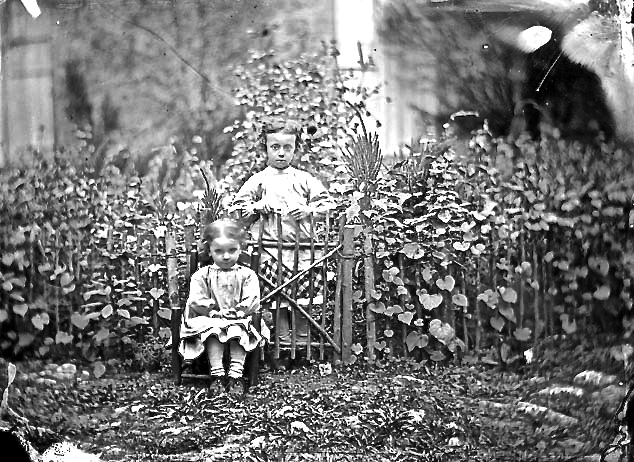
Vintage landscape: Paul et Henri

Paul et Henri

Paul and Henri at Cornusson, Parisot Commune, in the Pyrenees, France, ca. 1870, by Eugène Trutat, via the Bibliothèque de Toulouse Commons on flickr.

As from the house your mother sees
You playing round the garden trees,
So you may see, if you will look
Through the windows of this book,
Another child, far, far away,
And in another garden, play.
But do not think you can at all,
By knocking on the window, call
That child to hear you. He intent
Is all on his play-business bent.
He does not hear; he will not look,
Nor yet be lured out of this book.
For, long ago, the truth to say,
He has grown up and gone away,
And it is but a child of air
That lingers in the garden there.
— Robert Louis Stevenson, “To Any Reader”

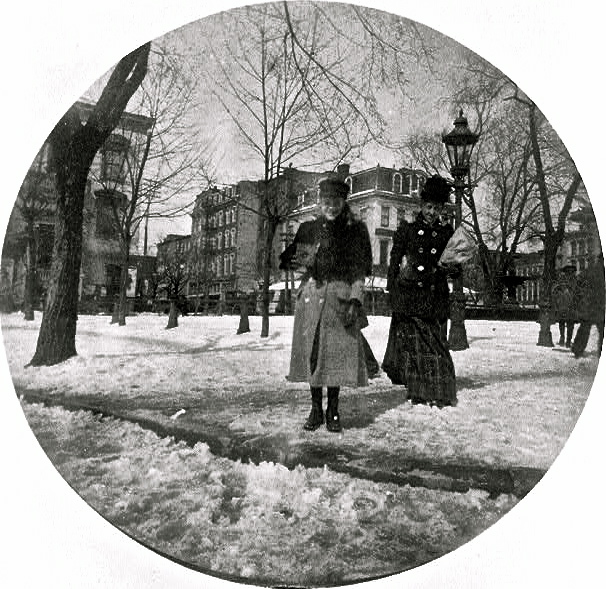
Vintage landscape: more snow in Washington, D.C.

Hunt photo of snowy Washington

“Woman and girl standing in icy square, Washington, D.C.,” 1889, by Uriah Hunt Painter, via Library of Congress Prints and Photographs Division.

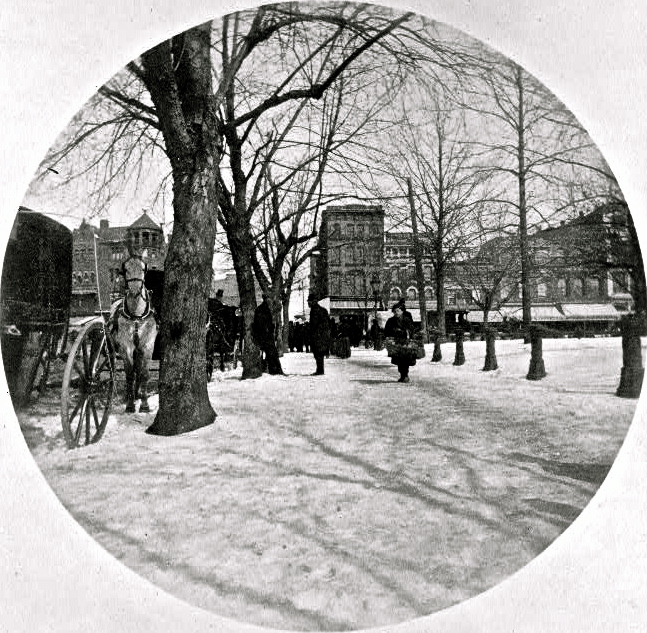
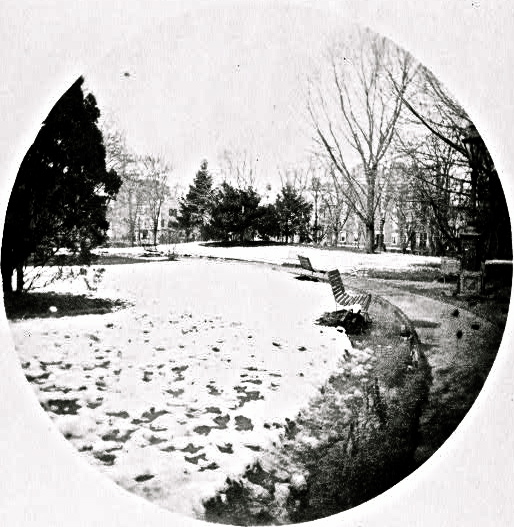
Uriah Hunt Painter, 1837-1900, took a number of snapshot photographs of his neighborhood around Franklin Square and of downtown Washington using the first Kodak cameras.  Painter was a businessman and retired newspaper reporter.

“[The p]hoto shows a woman and a young girl posing mid-square with bundles. The two may be Painter’s wife, Melinda Avery Painter, and older daughter, Eleanor, returning from a marketing trip. Or perhaps Painter took their portrait because the girl is holding another Kodak – exemplifying the growing corps of amateur photographers who took advantage of Eastman’s simple box camera.”

— from the LoC online catalog

Washington market, 1989

Above: “Market scene, Washington, D.C., snow view,” 1889, by Uriah Hunt Painter. I don’t know which square is pictured in these photos.

Franklin Square, 1989

Above: “Franklin Square, Washington, D.C., snow view,” 1989, by Uriah Hunt Painter.

Today’s quote

Pope’s famous lines, in his “Epistle to the Earl of Burlington,” on ‘the genius of the place,’ . . . surely evoke a conception of The Garden as an epiphany. For Pope, ‘the genius of the place’ does not refer, as it does for many later writers, to the ambiance or natural setting of a garden: rather, it is that which ‘Now breaks, or now directs, the intending lines’ and ‘Paints as you plant, and, as you work, designs.’ Palpable, here is a sense of The Garden as both a response to and an exemplification of something beyond the control and invention of human beings.

— David E. Cooper, from A Philosophy of Gardens
(Thanks to View from Federal Twist.)


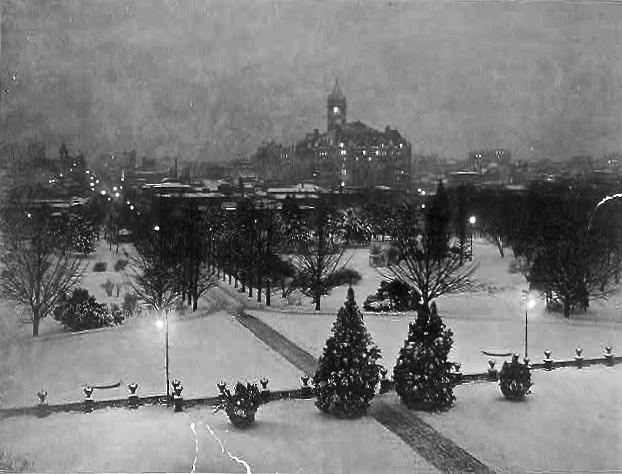
Vintage landscape: snow in Washington

View from Post Office Building, 1911, Wash.D.C.

The view at night, under snow, of the Post Office Building, Washington, D.C., 1911. Via Library of Congress Prints and Photographs Division, photographer unknown.

Merry Christmas!

Recent finds

I knew the thing
before I knew its name. . . .*
Dec 24 Gerbera

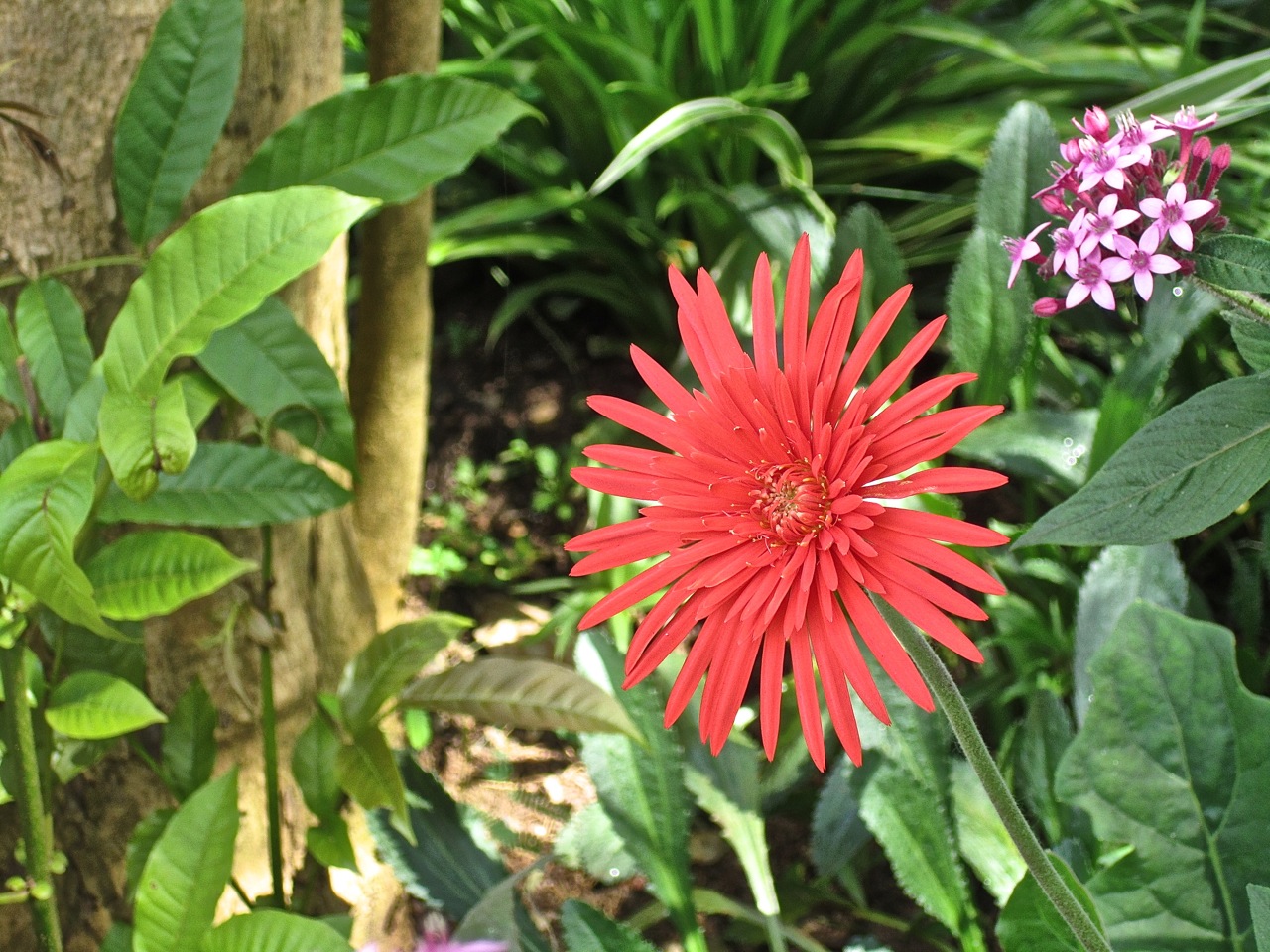
I went outside yesterday and discovered this single dark orange Gerbera daisy (probably Gerbera jamesonii or Transvaal daisy) in the back flower bed.

I was so pleased because I’ve been looking for more orange flowers to tie together two orange-flowered shrubs about 7′ apart in a mostly yellow section of the front garden (they are too large to move).  It divided into four little plants when I transplanted it.

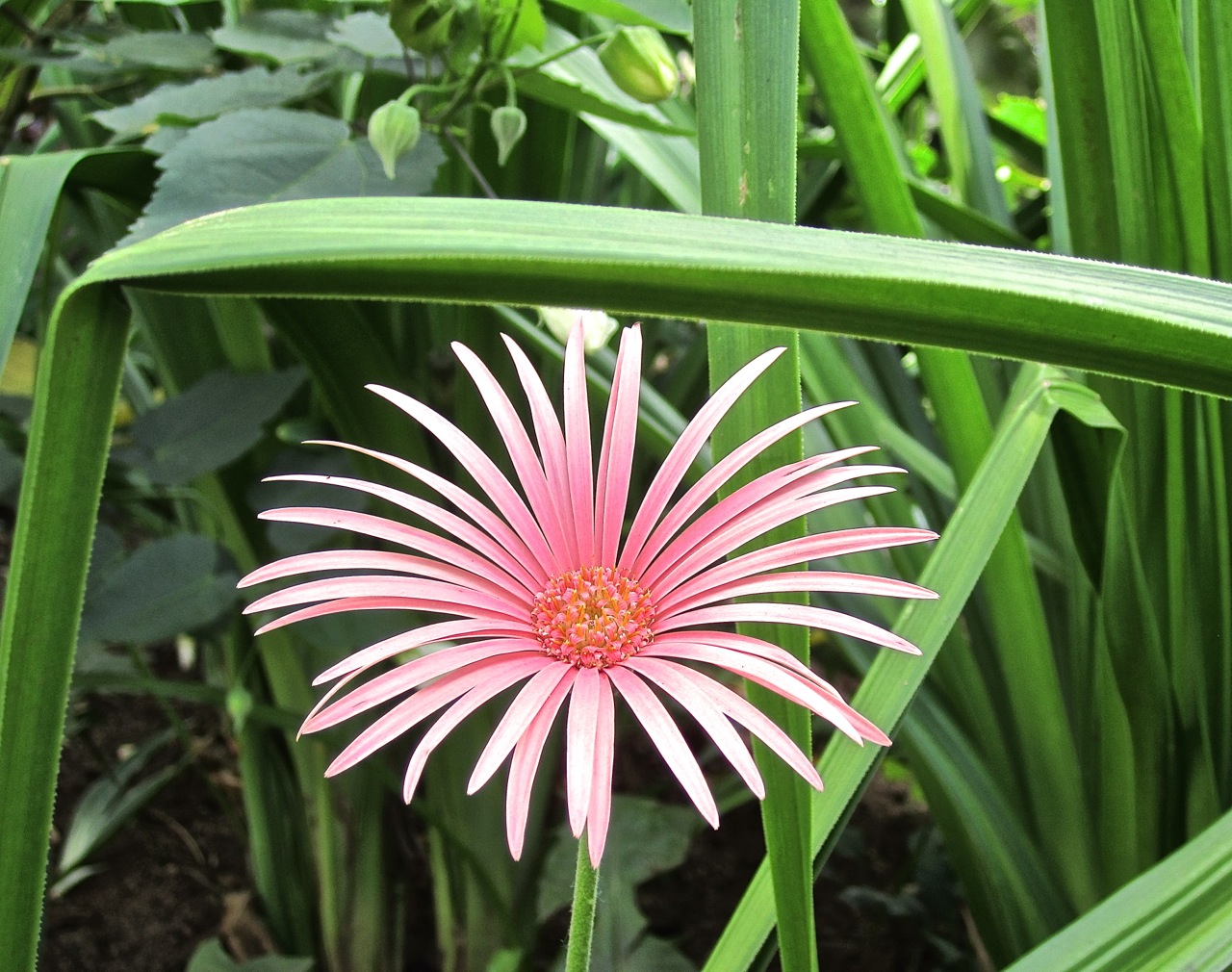
We have a lot of coral pink Gerberas.  They bloom all the time and are a nice color for setting off flowers in red, orange and white, and violet and blue areas.
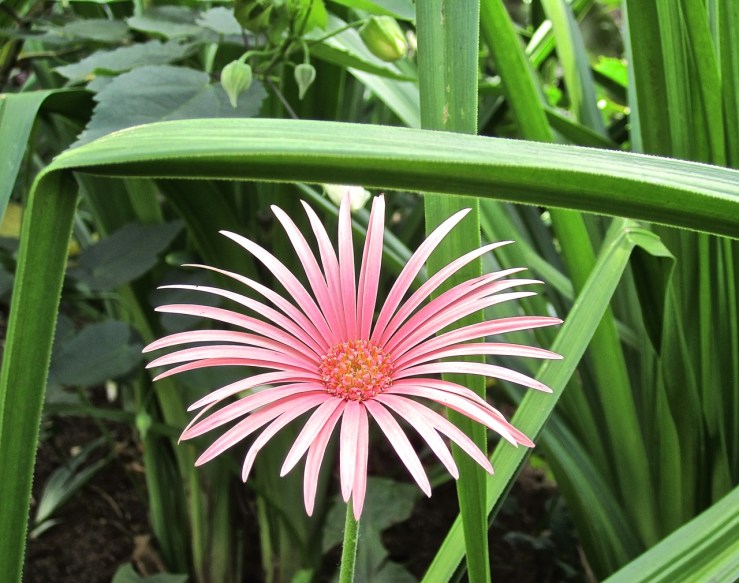
Dec 24 pink Gerbera

They are also a super-tough perennial for warm climates. Back in Washington, D.C., we mostly see them as cut flowers or potted plants sold in a grocery store. Gerberas are the fifth most-used cut flower in the world, according to Wikipedia.

A couple of weeks ago, I also found this in bloom in the back area:
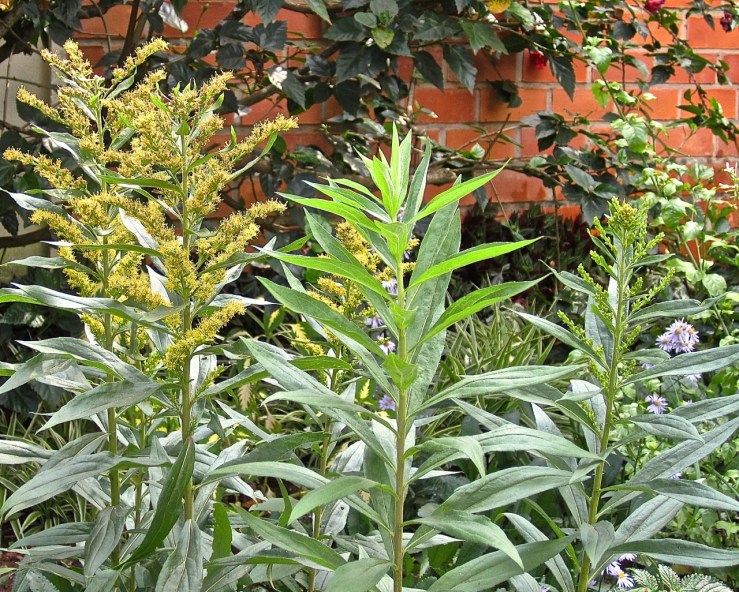
Dec 24 goldenrod

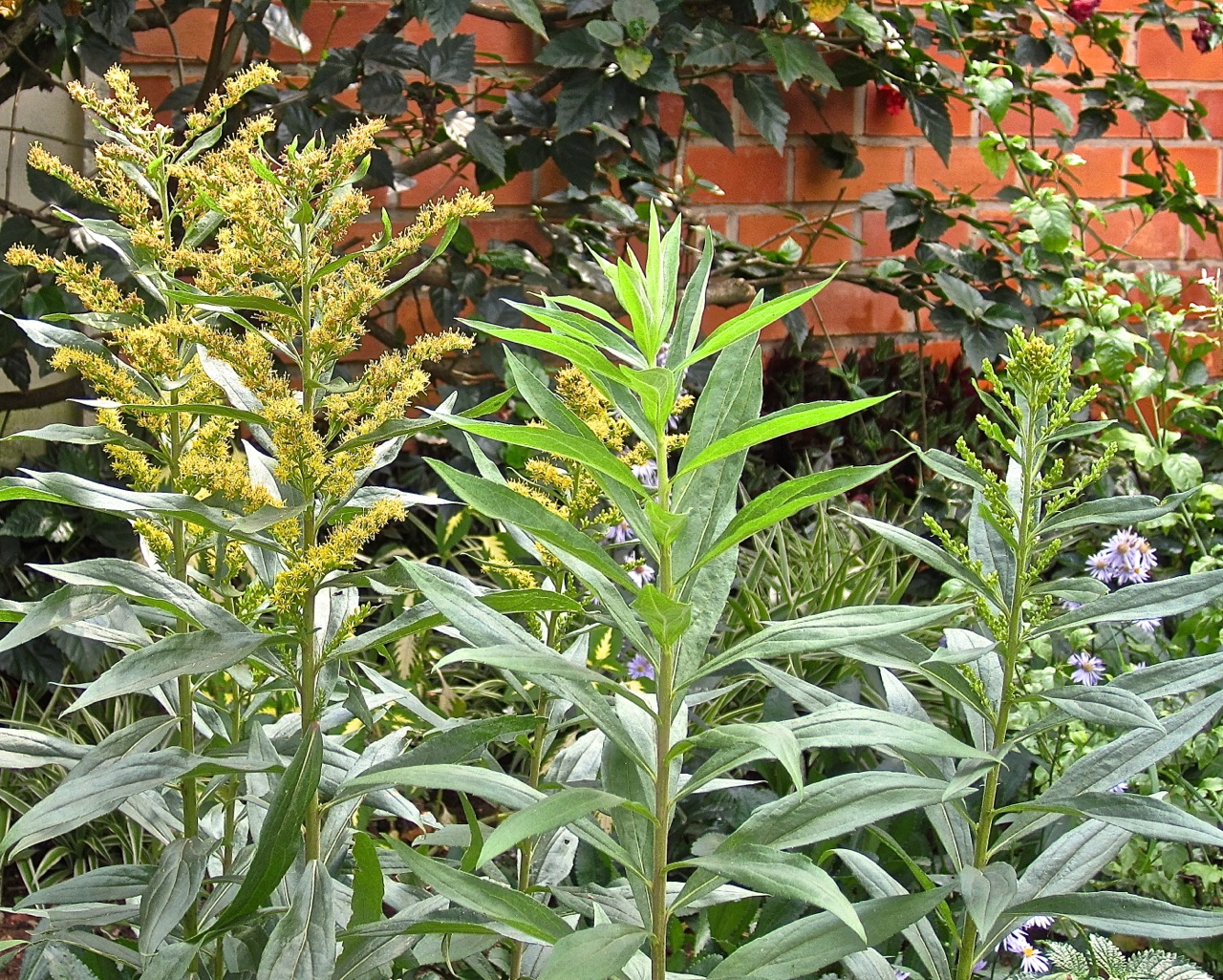
Goldenrod (Solidago) — I immediately divided it and took some pieces to the yellow border in the front.

I had been watching the plant for a couple of months, thinking it was possibly a weed, but also thinking that it looked familiar. I should have recognized it — Solidago rugosa ‘Fireworks’ is one of my favorite  perennials.

There are over 100 species in the Solidago genus (both it and Gerbera are in the Asteraceae family), so I doubt I’ll identify it more specifically than ‘goldenrod.’  The plant is native to North America, although a few species are found in South America and Eurasia.

I searched for images of Fireworks on Google and found my own picture was number three on the page.  This was sort of thrilling (I lead a very quiet life.)  Strangely, pictures of our dog Sophie, were numbers seven and eight — I guess because I had put them in the same post. (There’s a nicer picture of the plant here.)

An interesting story from Wikipedia:

Inventor Thomas Edison experimented with goldenrod to produce rubber, which it contains naturally.  Edison created a fertilization and cultivation process to maximize the rubber content in each plant. His experiments produced a 12-foot-tall (3.7 m) plant that yielded as much as 12 percent rubber. The tires on the Model T given to him by his friend Henry Ford were made from goldenrod.

Extensive process development was conducted during World War II to commercialize goldenrod as a source of rubber.  The rubber is only contained in the leaves, not the stems or blooms. Typical rubber content of the leaves is 7 percent. The resulting rubber is of low molecular weight, resulting in an excessively tacky compound with poor tensile properties.

Miscellany

David Montgomery of The Washington Post has a sad story today about the elimination of “Ye Olde Yule Log” from this year’s events on the Ellipse (in front of the White House):

For more than 50 years, it was one of the quirky miracles of holiday Washington.  Groundskeepers stoked the fire around the clock. They used a forklift to feed it giant stumps and trunks from trees that had been marked as “hazardous” and culled from national parks in the region. Tourists and residents would gather around the mesmerizing inferno, sharing stories with strangers, feeling uplifted as much by the smoky, sparky nostalgia of it all as by the sheer unlikeliness of such a scene in this locked-down, plugged-in world.

The National Park Service has a contact page here, by the way.

If your potted poinsettias are already getting on your nerves, you may want to cut the “flowers” (I know — bracts) to arrange in a vase.  Here’s an article from The Telegraph on getting them to last.


*by Ian Parks, from “Goldenrod“