
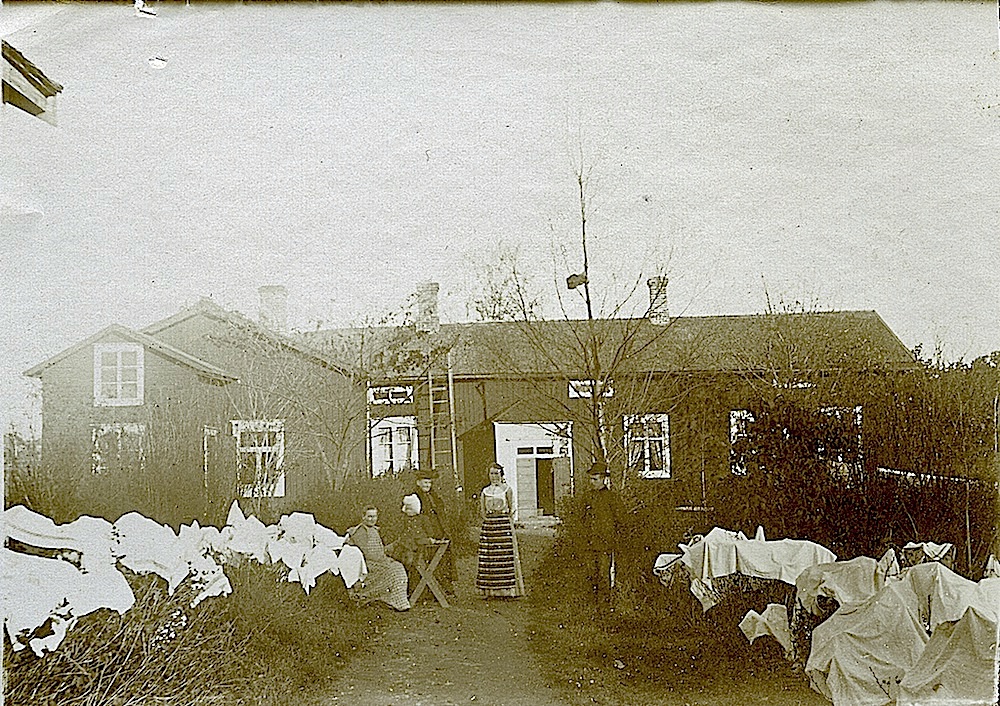
 Possibly Kristinestad, Ostrobothnia, Finland, between 1910 and 1920, photographer unknown, via The Society of Swedish Literature in Finland Commons on flickr.
Category: nature
Cortland, New York
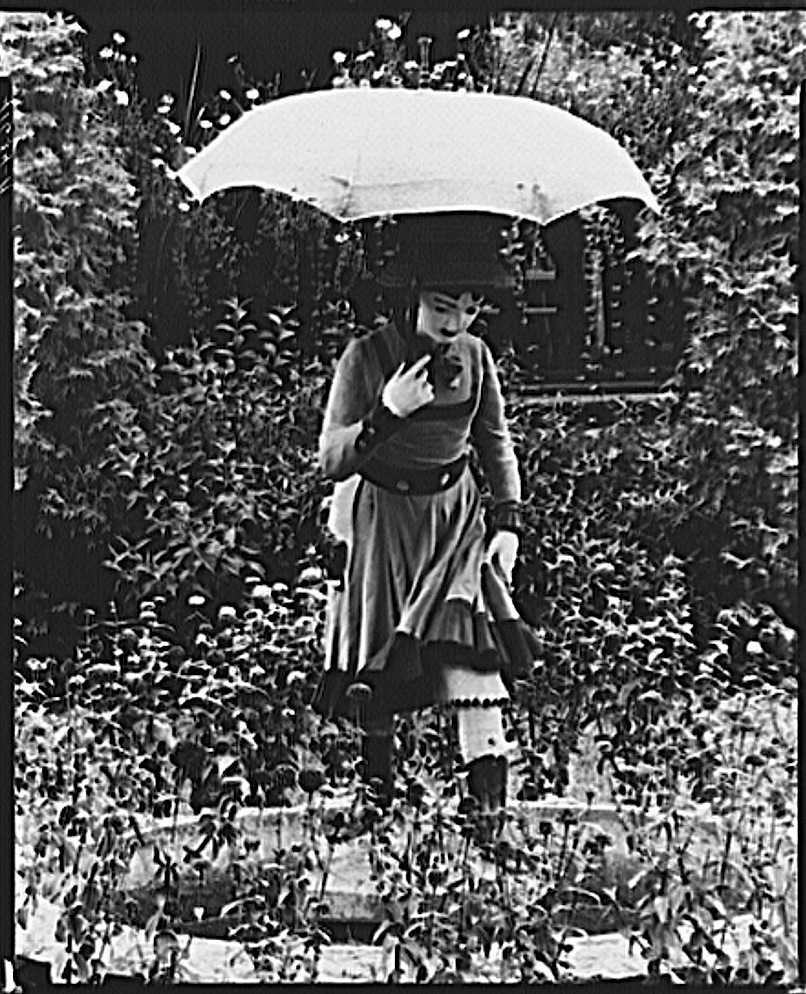
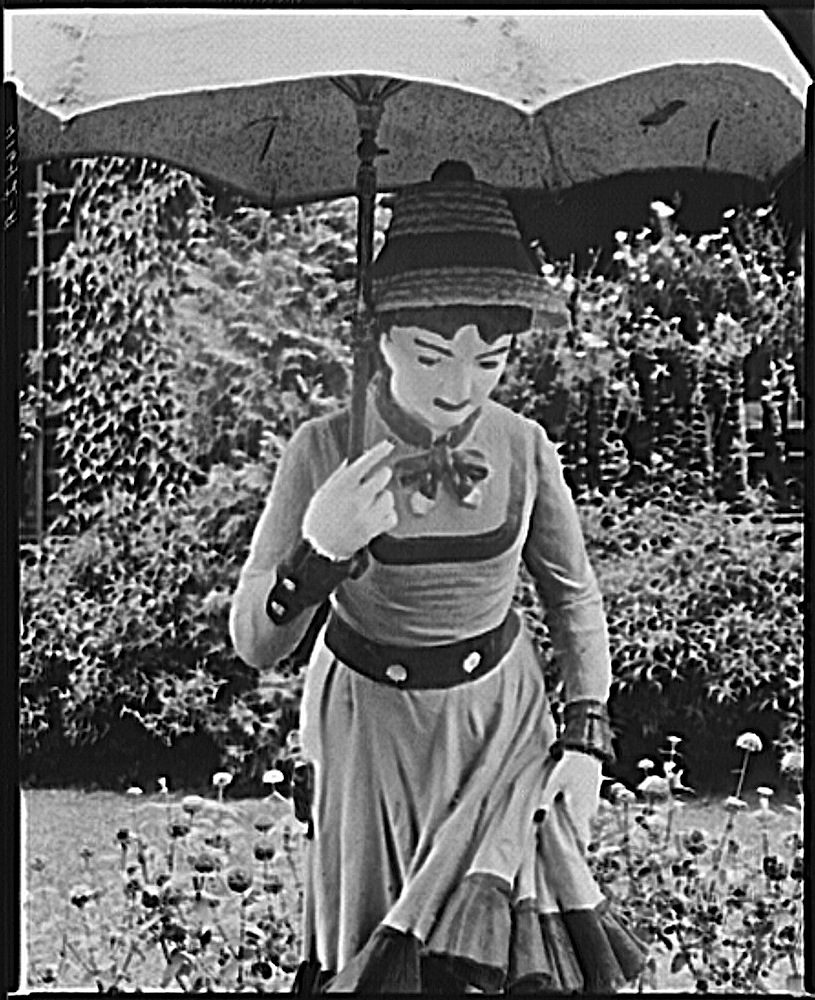 “Cast-iron fountain piece originally from Milan, Italy [ca. 1890], on the lawn of a house in Cortland, New York,” September 1940, by Jack Delano, via (and here) Library of Congress Prints and Photographs Division.
Little Bendigo
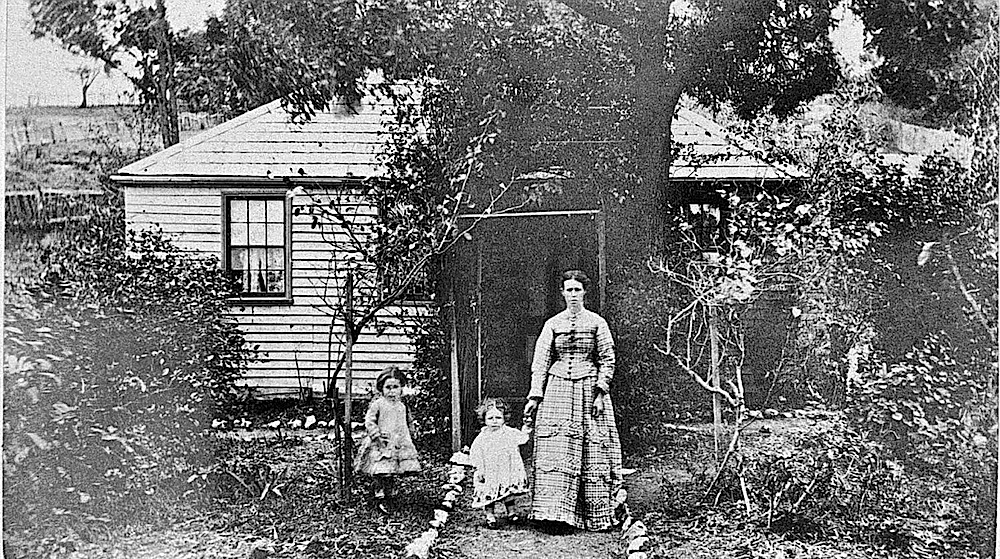 “Woman and children in home garden, Little Bendigo, Ballarat, Victoria, 1876,” by unknown photographer, via The Biggest Family Album in Australia, Museums Victoria Collections on flickr.
Harriet, Caroline, and Harriet Mary Whitaker are shown in front of their home on Lofven Street. (A photo of their neighbors is here.)
Little Bendigo was the site of a small gold rush in the 1860s. It took inspiration from Bendigo, Victoria, an important gold mining boomtown of the 1850s. In 1881, the town’s name became Nerrina.
Ready for action
A repeat post from 2013. . .
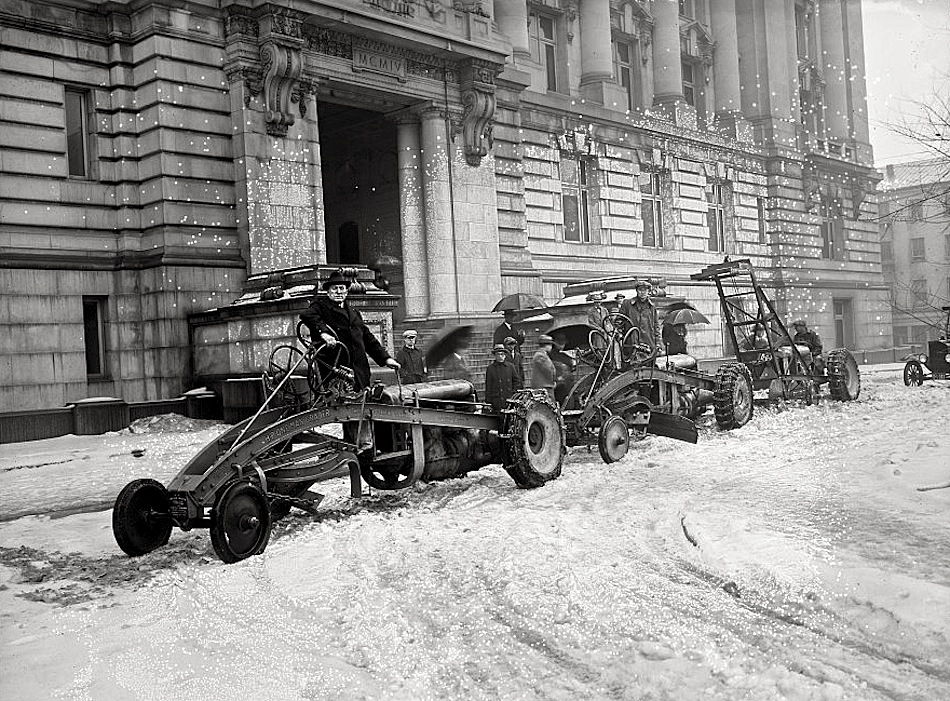 Ford Motor Co. snow plows, ca. 1910 – 1925, possibly in Washington, D.C., via National Photo Company Collection, Library of Congress Prints and Photographs Division.
“Most sources seem to agree that the basic street snow plow (not horse-drawn or built for trains) was created in 1913,” according to the blog Landscape Management Network.
“The first street snow plow, however, wasn’t patented until the early 1920s. At the time, a New Yorker by the name of Carl Fink was the leading manufacturer of plows mounted to motorized vehicles. Today, the company is known as Fink-America and its plows are still on the market.”
Announced by all the trumpets of the sky,
Arrives the snow. . .— Ralph Waldo Emerson, from “The Snow-Storm“
Senlis, France
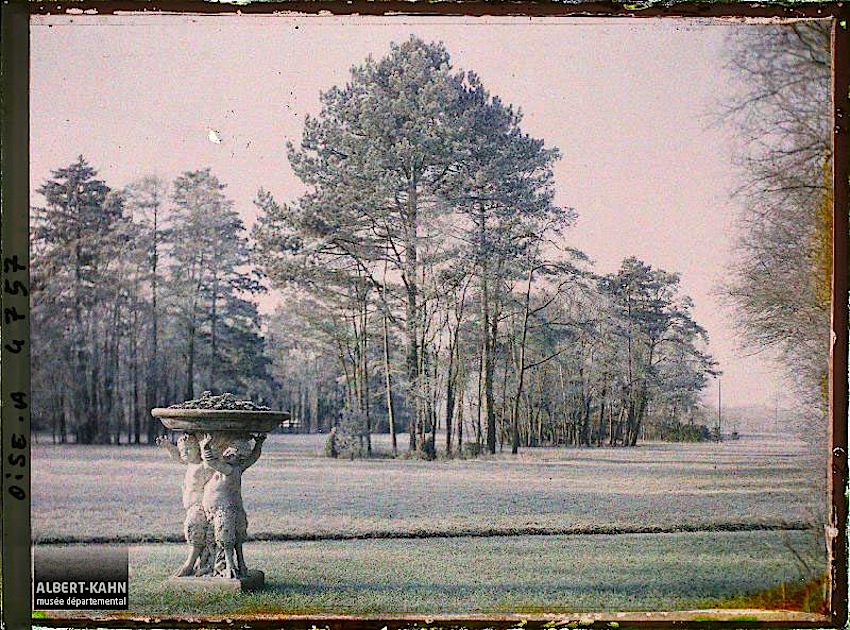
Grounds of the château of Captain René-François Fenwick, Senlis, France, December 26, 1914, by Auguste Léon, via Archives of the Planet Collection – Albert Kahn Museum /Département des Hauts-de-Seine.
The house itself had been largely destroyed in a WWI battle about four months before the photo was taken (another image here). Fenwick was a captain of the 31st Regiment of the Dragons who fell in combat in July 1918 (“an example of energy and good humor under fire”).
The autochrome above is one of about seventy-two thousand that were commissioned and then archived by Albert Kahn, a wealthy French banker, between 1909 and 1931. Kahn sent thirteen photographers and filmmakers to fifty countries “to fix, once and for all, aspects, practices, and modes of human activity whose fatal disappearance is no longer ‘a matter of time.'”* The resulting collection is called Archives de la Planète and now resides in its own museum at Kahn’s old suburban estate at Boulogne-Billancourt, just west of Paris. Since June 2016, the archive has also been available for viewing online here.
*words of Albert Kahn, 1912. Also, the above photo (A 4 757) is © Collection Archives de la Planète – Musée Albert-Kahn and used under its terms, here.
 enclos*ure
