I have been looking at vintage garden photos from the online catalog of the Library of Congress. These two — of 1943 victory gardens in northwest and southeast Washington, D.C. — are really charming.
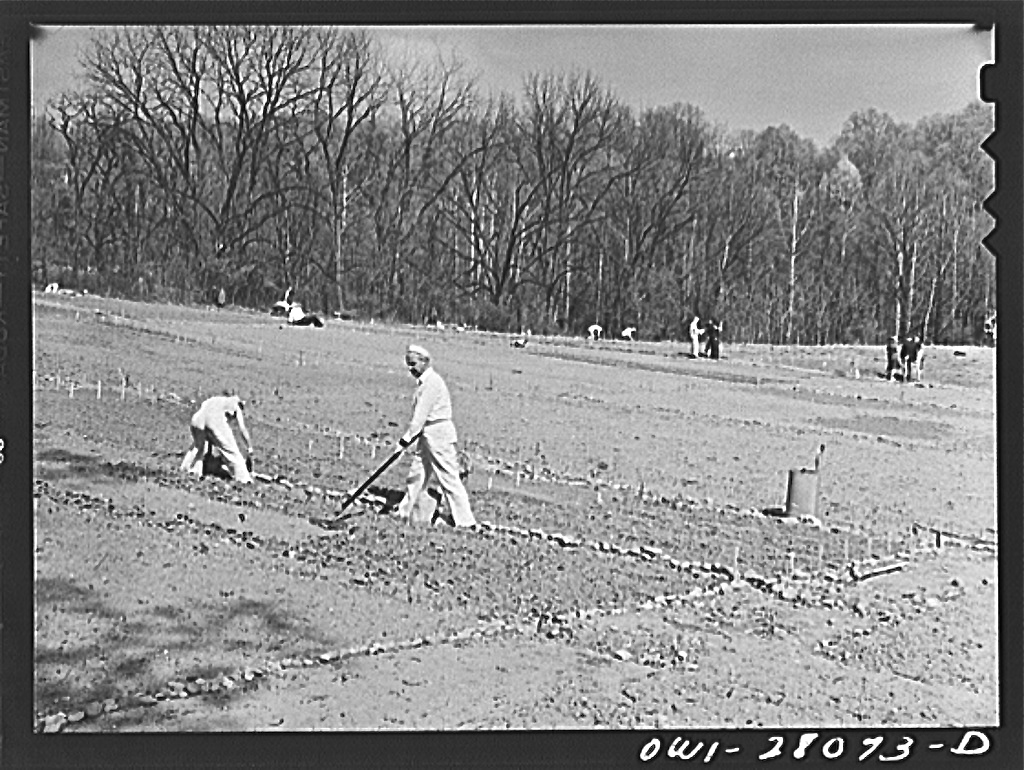
This couple is heading home from their plot with their sailor whites still looking clean and sharp.
“Washington, D.C. Victory garden in the Northwest section,” 1943, by Louise Rosskam. Via Library of Congress Prints and Photographs Division (all photos here).
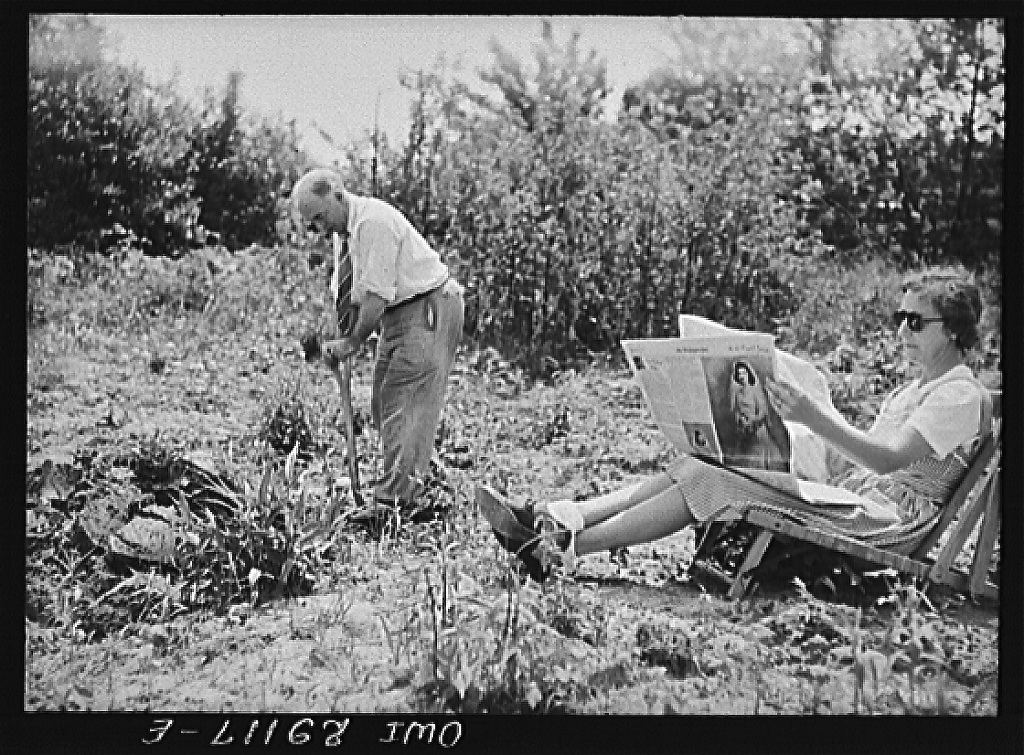
Below, Mrs. Carr seems to be present for moral support only, or perhaps she will take the next shift with the shovel.
“Washington, D.C. Leslie Edward Carr of the British Purchasing Commission with his wife at their victory garden on Fairlawn Ave., Southeast,” June 1943, by Joseph A. Horne.
Louise Rosskam, who took the first photo above, was “one of the elusive pioneers of what has been called the golden age of documentary photography.” She took a number of pictures of the same group of northwest D.C. victory gardens in the spring of 1943. (Click on any of the photos to enlarge.)
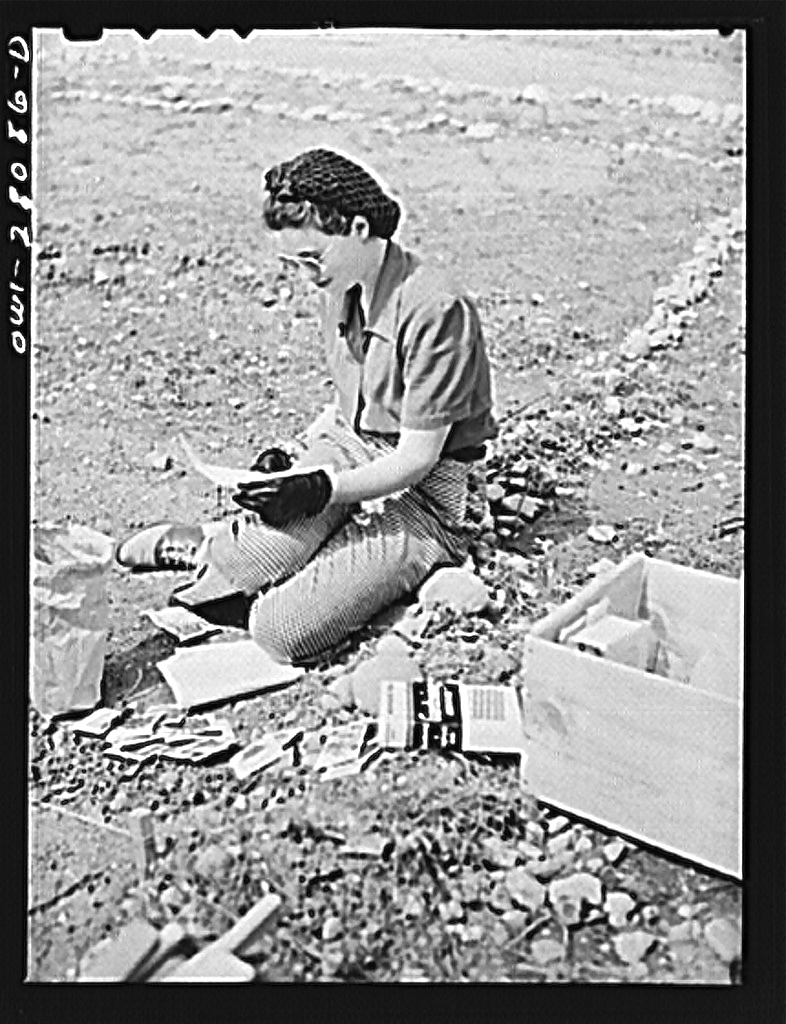
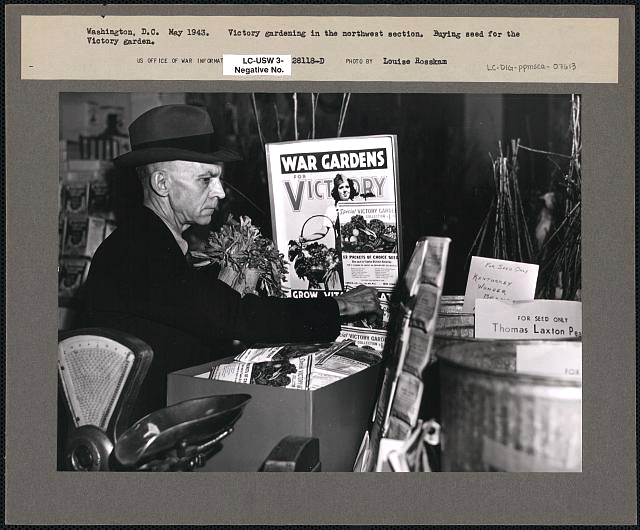
I believe this is the couple in the first photo above.Apartment buildings in the background.Another couple working. I love her high-waisted, wide-leg white pants.This lady also looks great in black gloves and snood and sunglasses.The individual plots were outlined with field rocks.Another gardener heading home by the same fence opening.Buying victory garden supplies.
All the photos above (except that of the Carrs) are by Louise Rosskam, via the Prints and Photographs Division of the Library of Congress.
I believe these garden plots were in the neighborhood of Glover Park, where we have a house. According to the Glover Park Citizens Association, it established the first World War II victory garden in the city, at 42nd and Tunlaw Road. It still exists today as a community garden. (Alternatively, they may be of the Tilden victory gardens at Connecticut Avenue and Tilden Street, which Rosskam also photographed.)
This is a link to a short film made in the forties about how to prepare, plant, and harvest a 1/4 acre victory garden. It features a rural northern Maryland family and is an interesting look at home gardening advice and practices of the time.
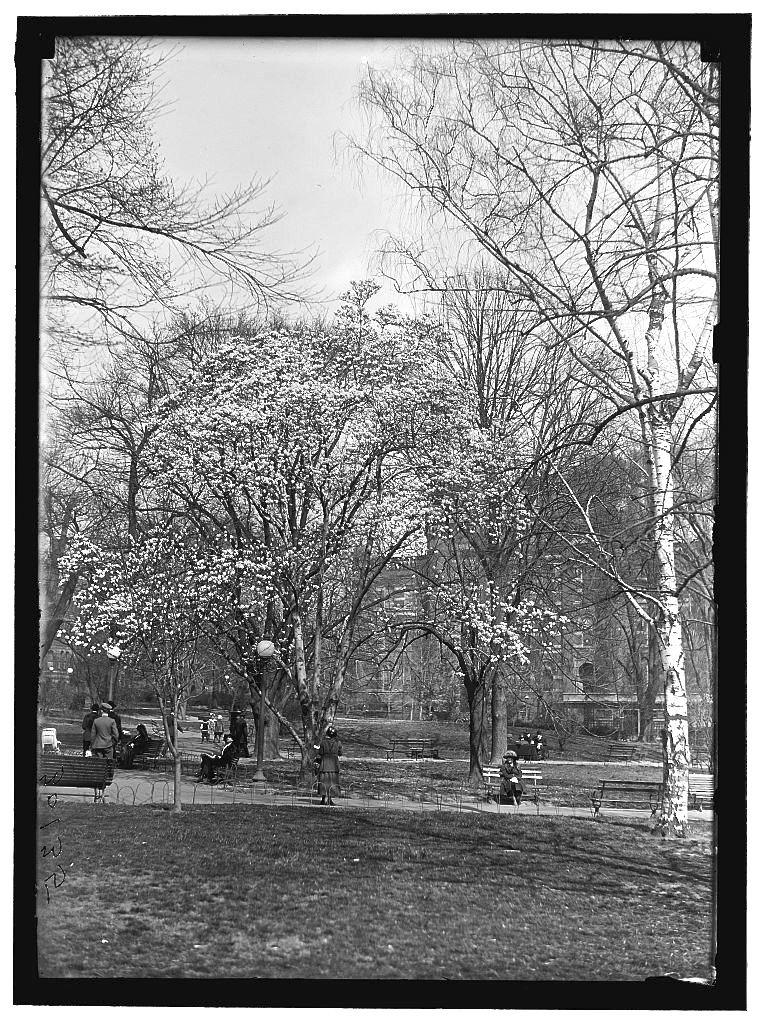
A peaceful view of a magnolia tree blooming in a Washington, D.C., park in 1919 — before any other trees have leafed out.
That winter seems to have been as mild as the preceding year’s was harsh. But the sweet scene may belie the real state of affairs. The influenza pandemic that began in the fall remained pervasive, and in the summer to come, deadly race riots would grip the city.
Photo by Harris & Ewing from the Harris & Ewing Collection of the Library of Congress. Click the photo to enlarge.
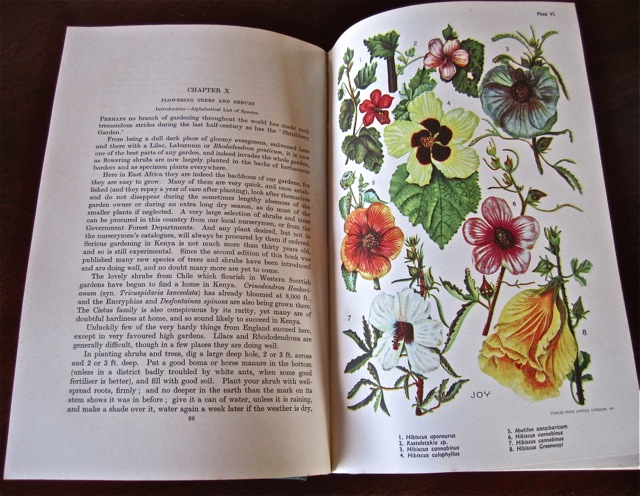
This was my husband’s Christmas present to me — a copy of the third edition (1950) of Gardening in East Africa, by the members of the Kenya Horticultural Society and of the Kenya, Uganda, and Tanganyika Civil Services.
Rwanda (then the eastern edge of the Belgian Congo) just makes it onto the left side of the frontispiece map.
I like the first chapter’s opening sentence: “This chapter is intended for the beginner rather than for the hardened gardener.” ‘Hardened,’ not skilled or experienced, but hardened — as in, “I’ve been through a lot.”
The writer then chides those already toughened up Kenya gardeners who adopt “a pseudomodest manner” with newcomers:
“You have forgotten about the innumerable insect pests and plagues, cutworms, flies, aphides, and the fact that each kind of plant has a pest of its own to all seeming. What about the scorching wind, the burning sun, the hungry hares and antelopes nibbling your roses and carnations to death, the mousebirds that steal your fruit and tear your flowers to shreds? Think of the torrents of tropical rain, the raging floods that batter all your plants to the ground, and wash off your lovely top soil far, far away into the Desert or the Indian Ocean. . . .” And please don’t get him started on the locusts.
Most of the color plates in the book were painted by Joy Adamson of “Born Free” fame. The previous year, she had received the Grenfell Gold Medal from the Royal Horticultural Society for her botanical artwork.
Lady Muriel Jex-Blake (daughter of the 14th Earl of Pembroke, no less) was President of the Kenya Horticultural Society and author of three chapters of the book, as well as of her own book, SomeWildflowers of Kenya.
In Chapter 10, Lady Muriel is precise about how to plant a shrub: “give it a can of water, unless it is raining.”
Her husband, Dr. Arthur John Jex-Blake, was the book’s editor. He made a promising start as a physician in England, but after serving in World War I and marrying Muriel in 1920, he left it all behind to live outside Nairobi.
The writer of his 1957 obituary noted that Dr. Jex-Blake always felt overshadowed by his aunt (Sophia Jex-Blake, one of the first women doctors in Great Britain and co-founder of two medical schools for women) and his sisters (the heads of Lady Margaret Hall, Oxford, and Girton College), but “he loved flowers, the classics, and beautiful things.”
In 1948, however, as he completed his preface to the third edition, he seemed to be finding the post-war times challenging. In expressing his gratitude to his publishers, he nearly lost control of his final sentence:
“For, after three piping years of peace, printers and publishers, like the rest of the industrial world, are ever at the mercy of the impersonal incompetence of officialdom and the well-organized administrative chaos now, alas! so painfully familiar to everybody who lives and works in England.”
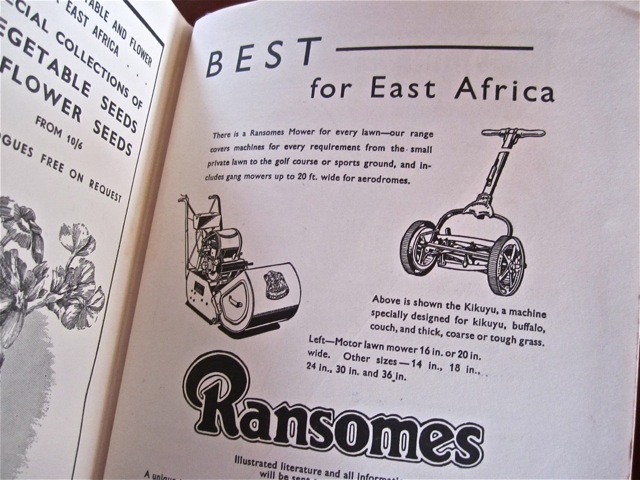
An advertisement at the back of the book: Ransomes can supply you with a mower suitable for maintaining your aerodrome or Kikuyu grass.
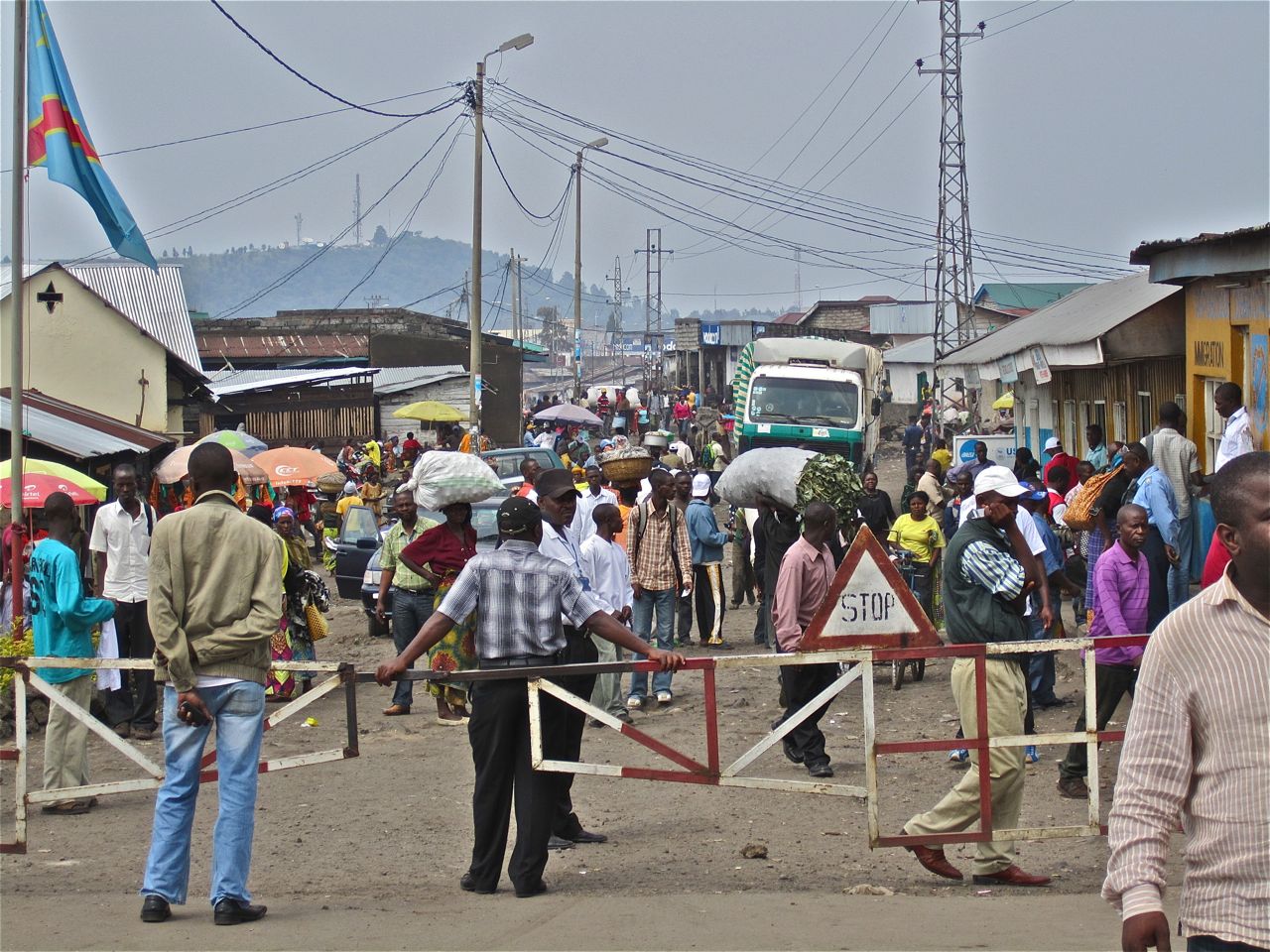
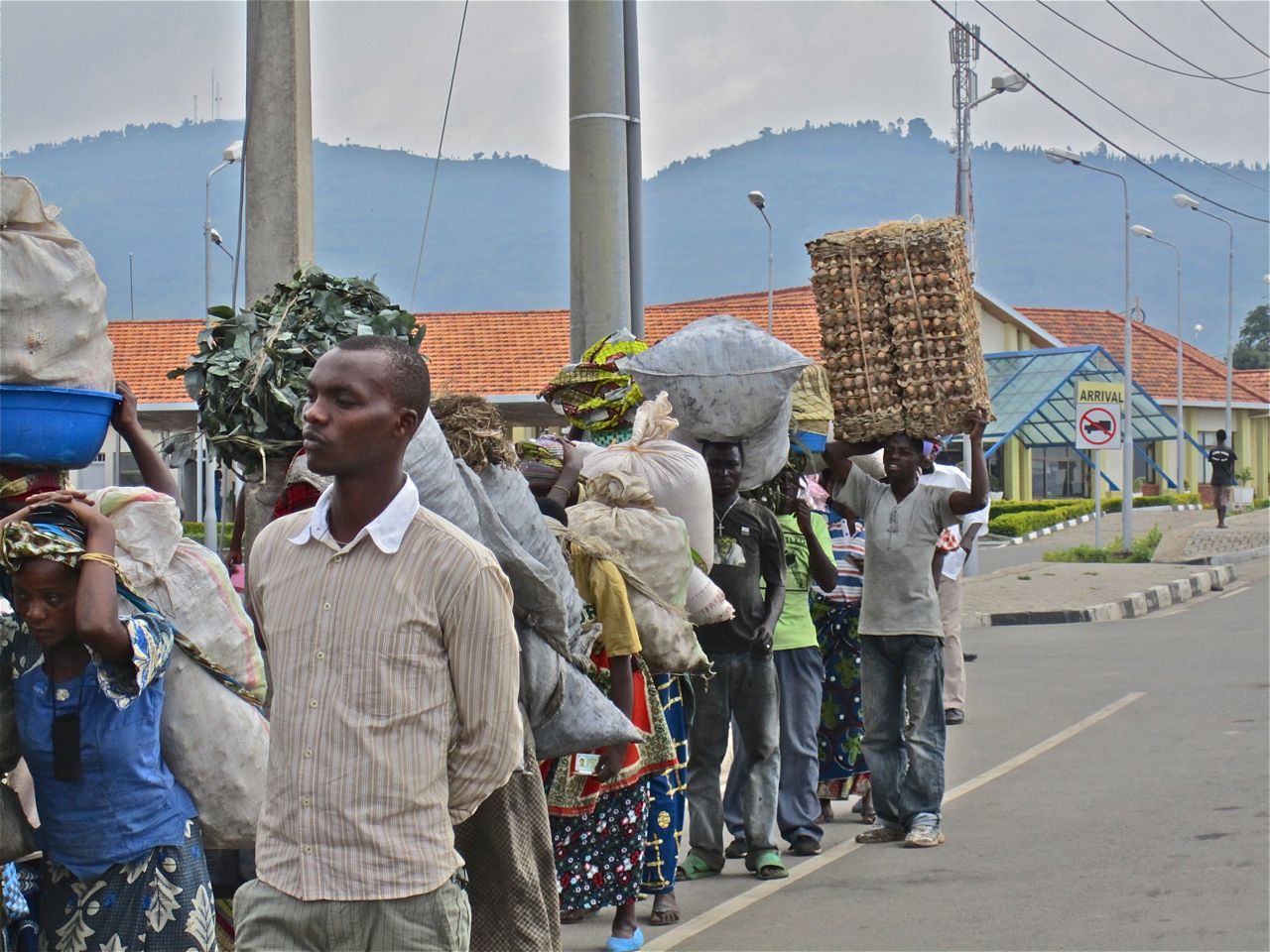
On the second day of our recent trip to the north of Rwanda, we visited a border crossing with the Democratic Republic of Congo (DRC), this one located between the otherwise contiguous cities of Gisenyi (Rwanda) and Goma (DRC).
Looking over the barrier to a street in Goma, DRC.
We watched a line of people, almost all carrying large parcels of food, waiting to enter eastern Congo.
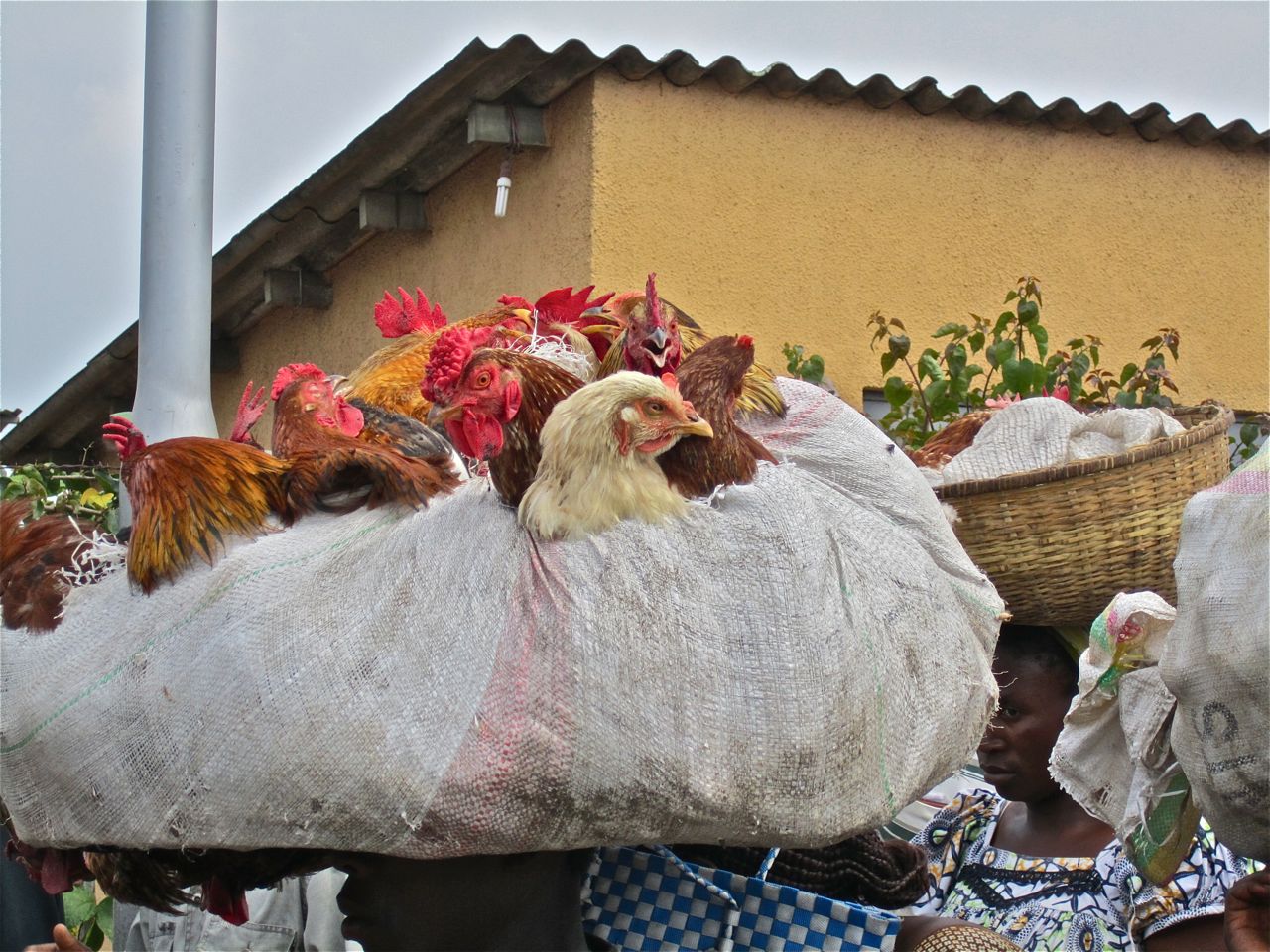
People laden with food to sell in the DRC.I believe these chickens (who are traveling on someone’s head) would be called non-intending immigrants. Nevertheless, they are destined for pots in the Congo.
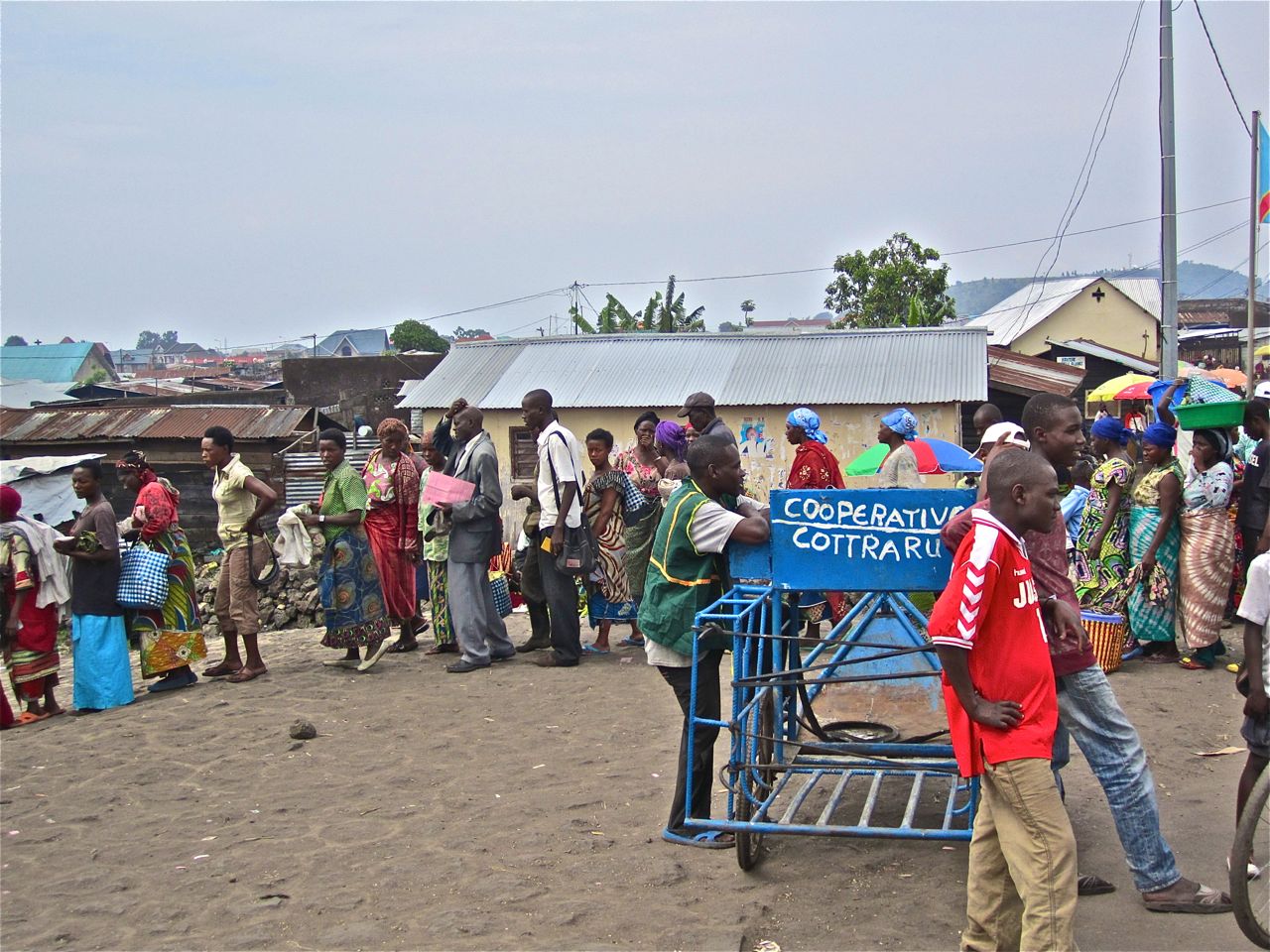
We watched another line of people, now almost empty-handed, coming back into Rwanda.
The line to leave the DRC.
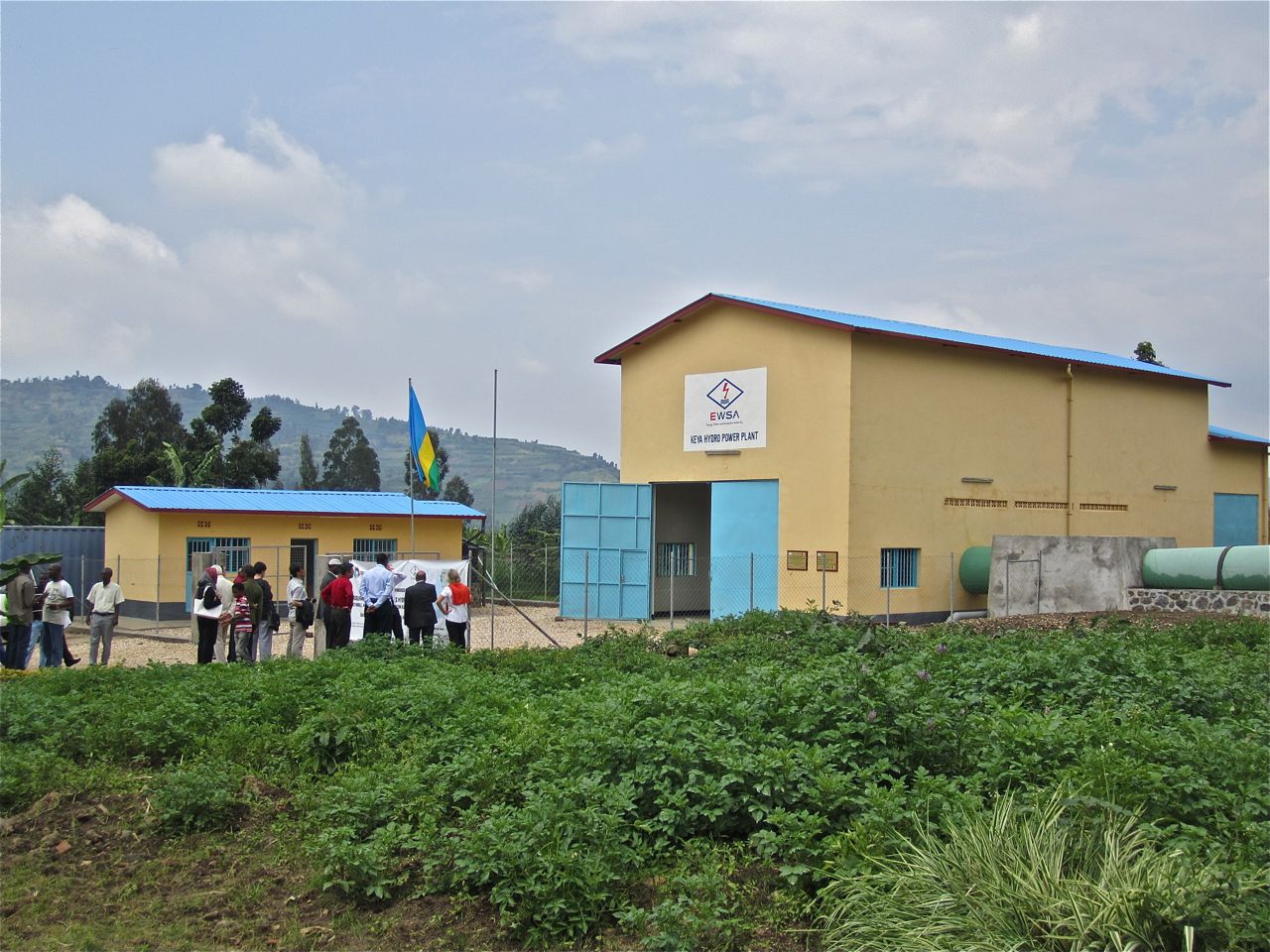
Afterwards, we headed about 10 miles east to visit a small hydro-electric plant. The unpaved road to the plant was too rough for the bus, so we had a walk through the neighboring village.
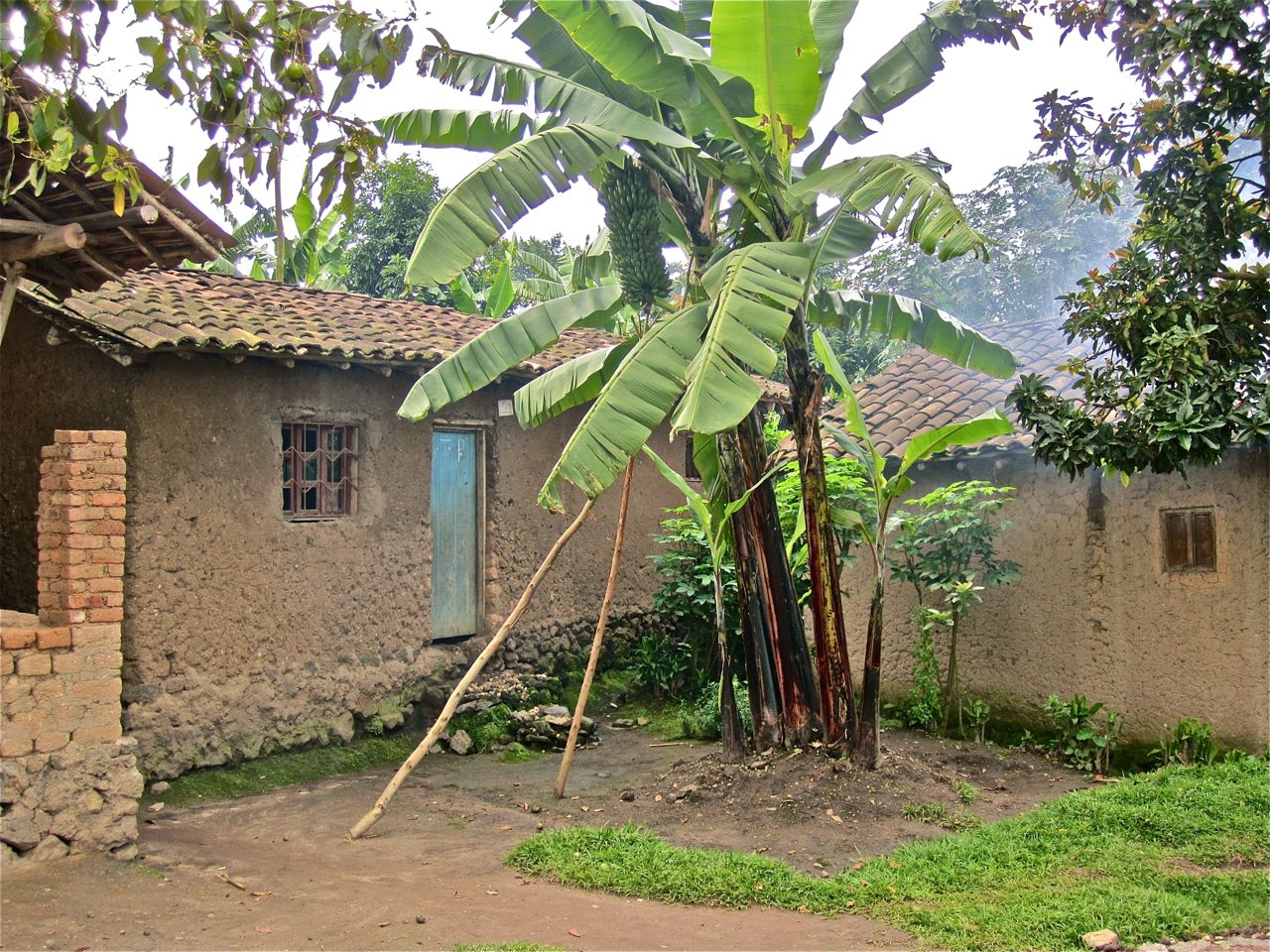
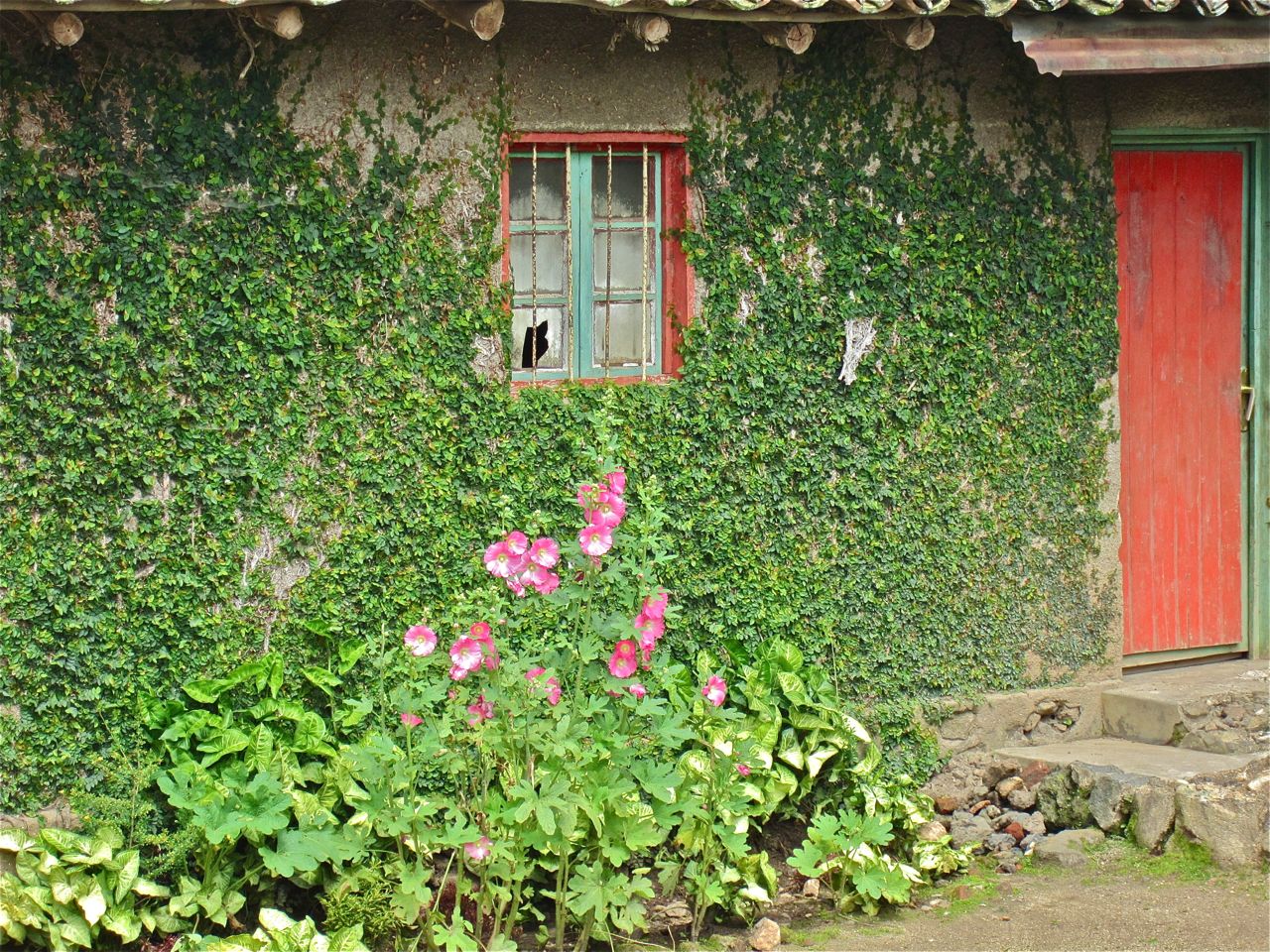
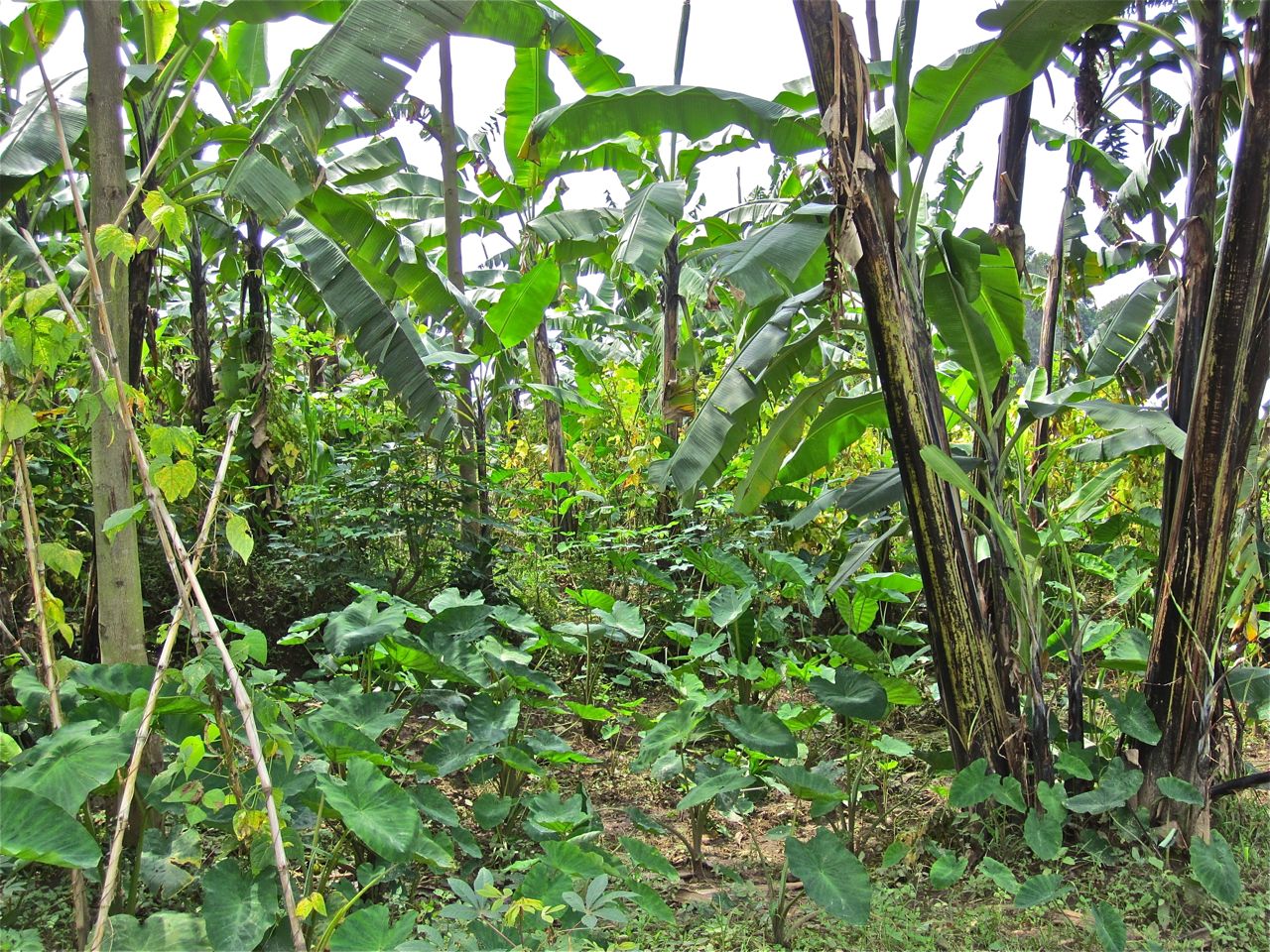
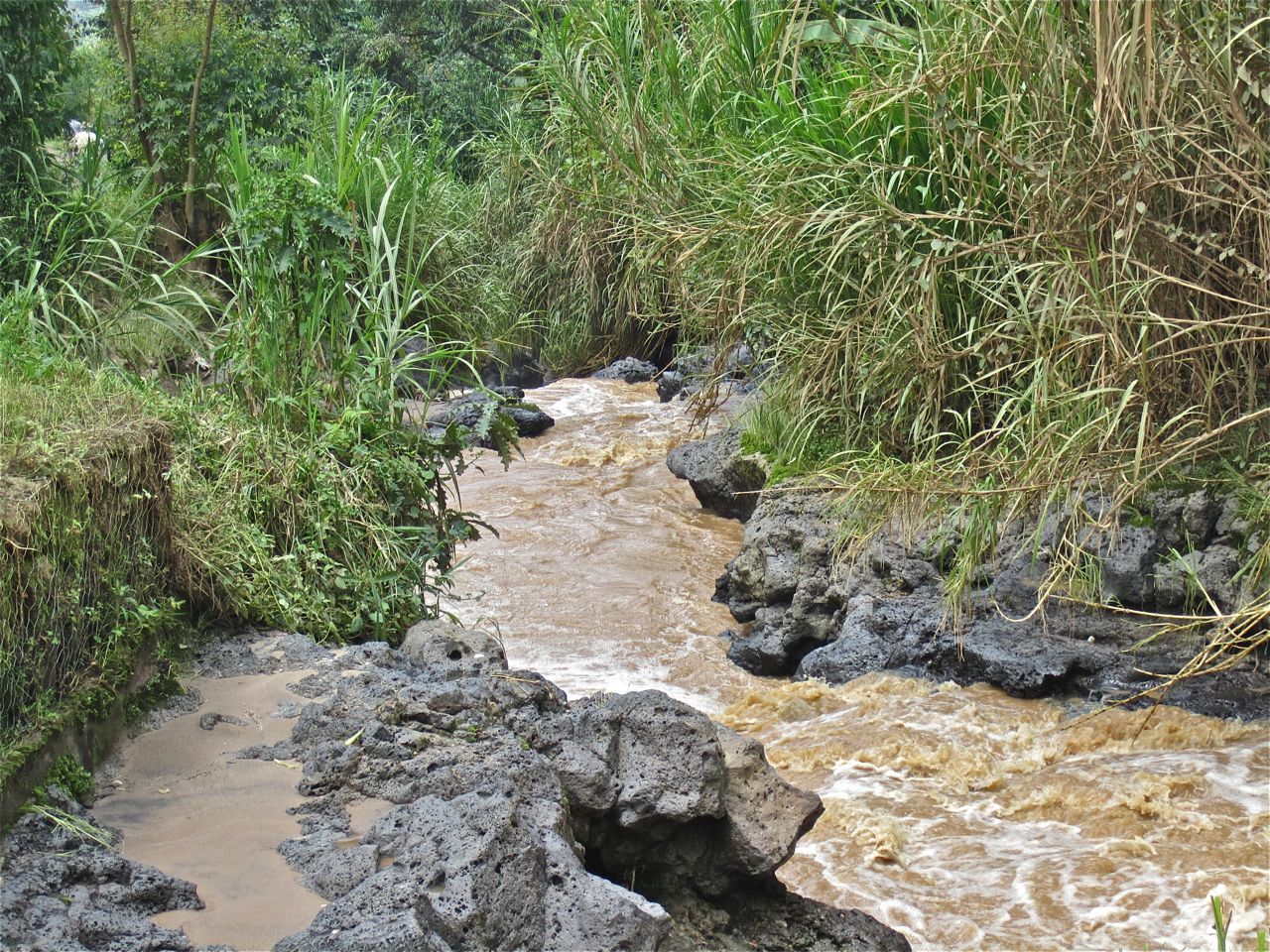
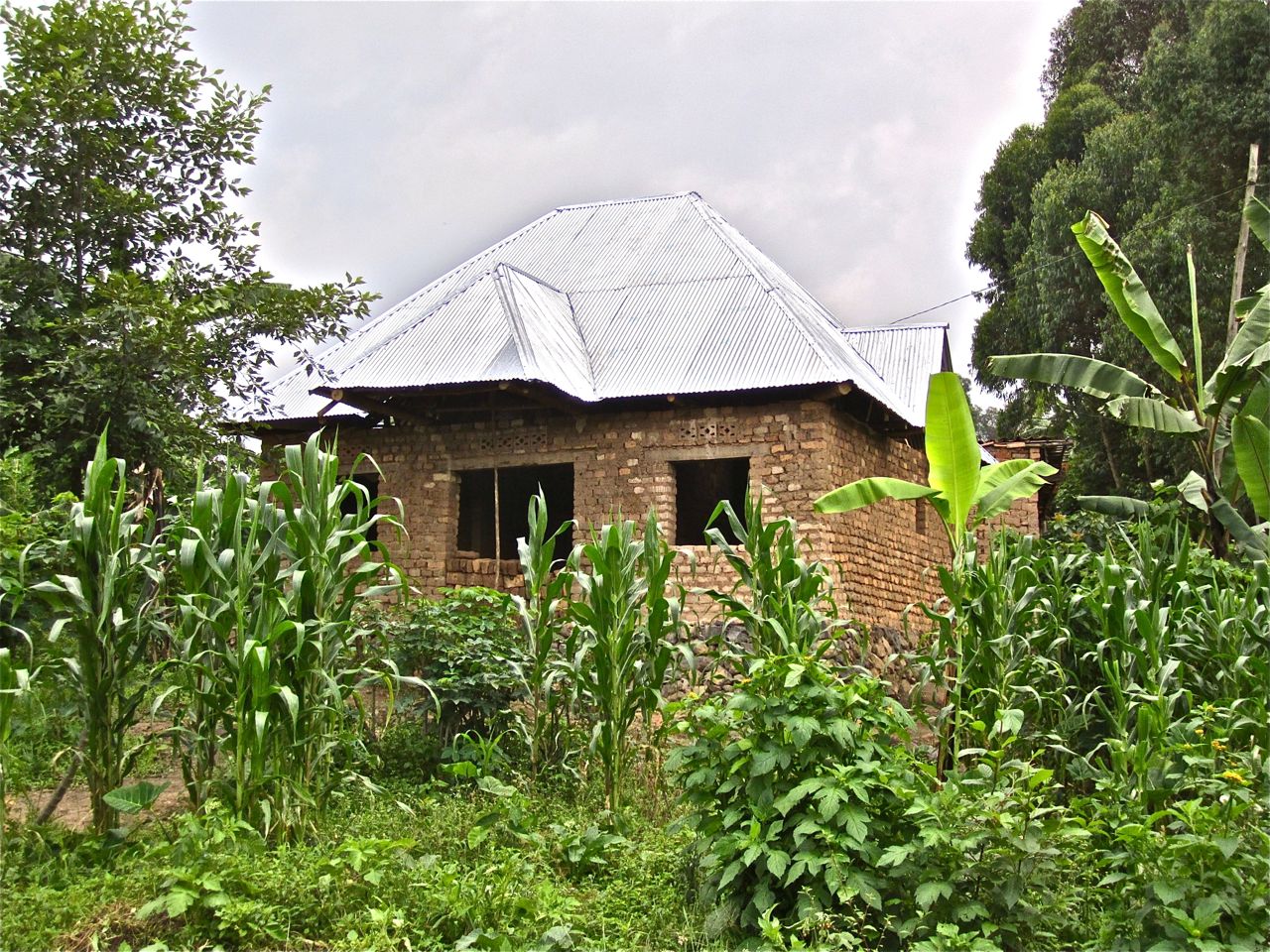
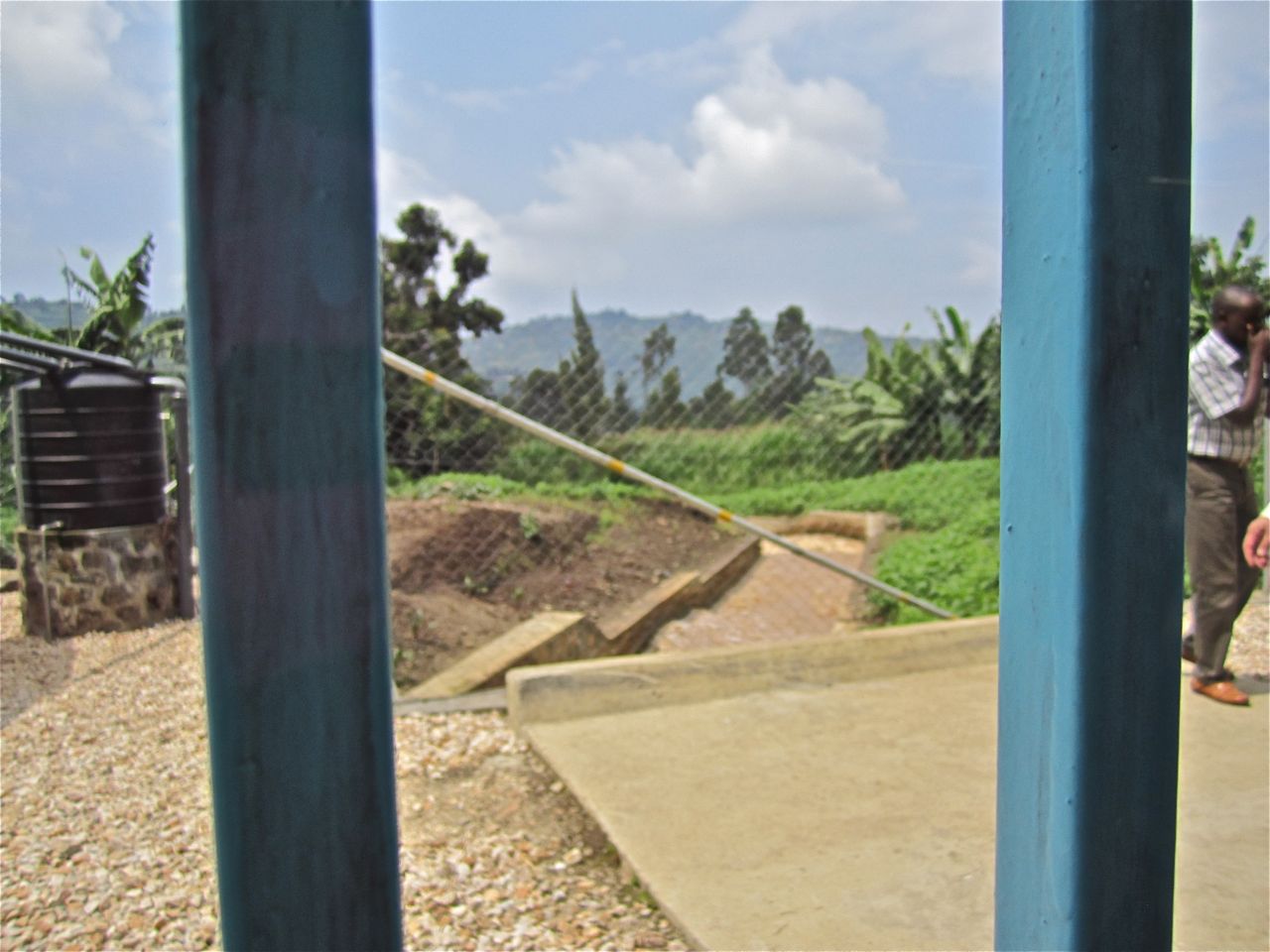
Bananas outside a village house.House door with a blue patch. Cassava (aka manioc) plants and beans grow in the foreground.Hollyhocks by a doorway.A typical garden of bananas, taro, cassava, and beans.A stream bordered by long-hardened volcanic lava. The fast-moving water runs approximately parallel to the water pipe supplying water to the hydro-electric plant.A house under construction with a roof-line typical of the Rubavu District. It seems to echo the surrounding hills and nearby volcanoes.The Keya hydro-electric power plant. The water enters from the blue pipe on the right. Built by the Rwandan government with the support of Belgium, it provides 2.2 megawatts of power.Water runs out the other side of the plant, beans planted right up to the edge. On the far left is a tank capturing rainwater from the roof of the plant’s office.
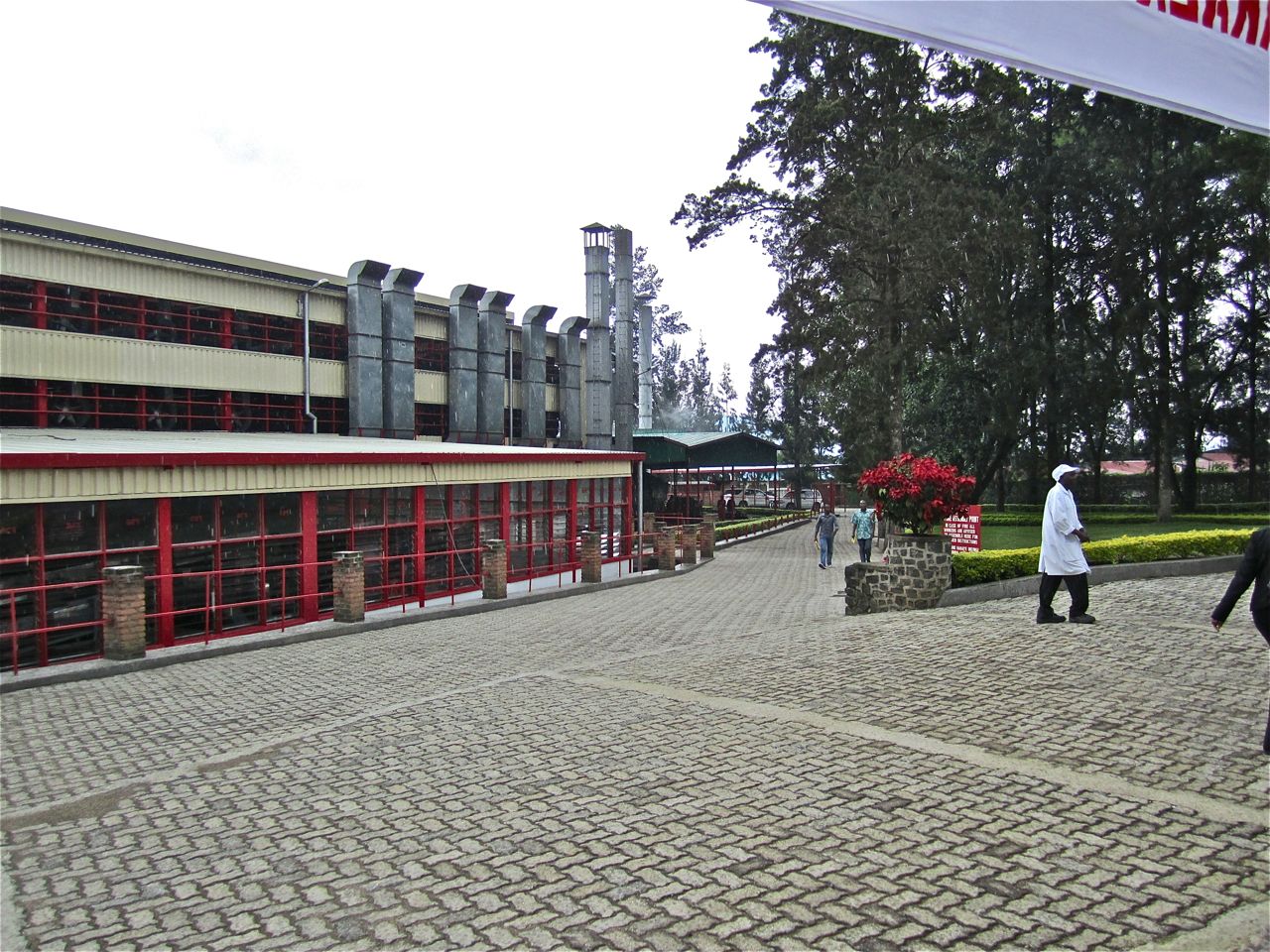
We ended our trip at the Pfunda Tea Company factory. Two thousand people work on the Pfunda Tea Estate, and the company also runs a cooperative for area tea farmers. All the tea is raised without pesticides, and, in February 2011, Pfunda Tea Company became the first company in Rwanda to obtain Rainforest Alliance certification.
One hundred and fifty people work 8 hours shifts in the tea factory, day and night. They will produce over 4.4 million lbs. (or 2 million kgs.) of black tea this year. The climate, altitude, and soil of the area is excellent for growing high-quality tea.
The Pfunda Tea Factory
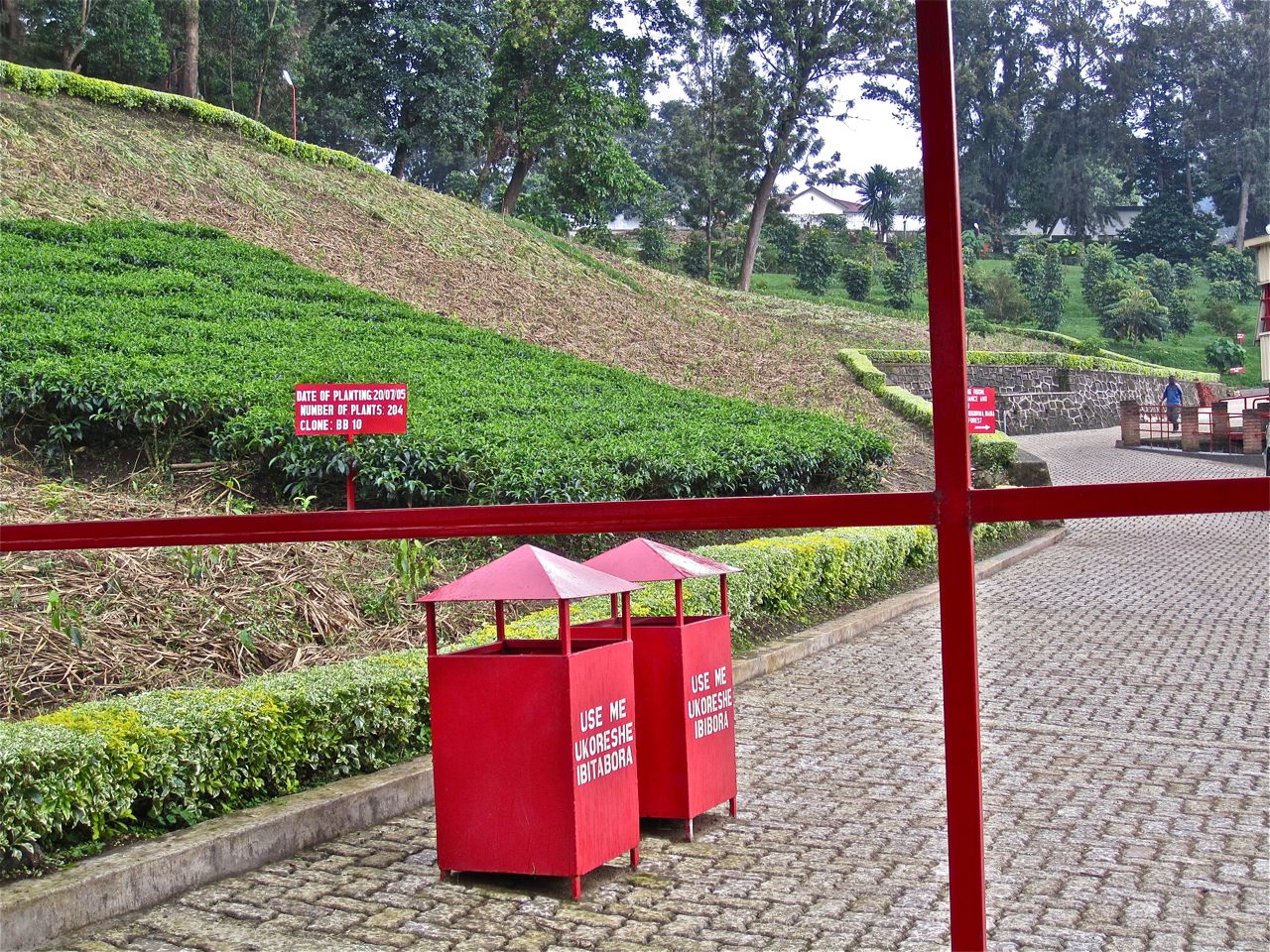
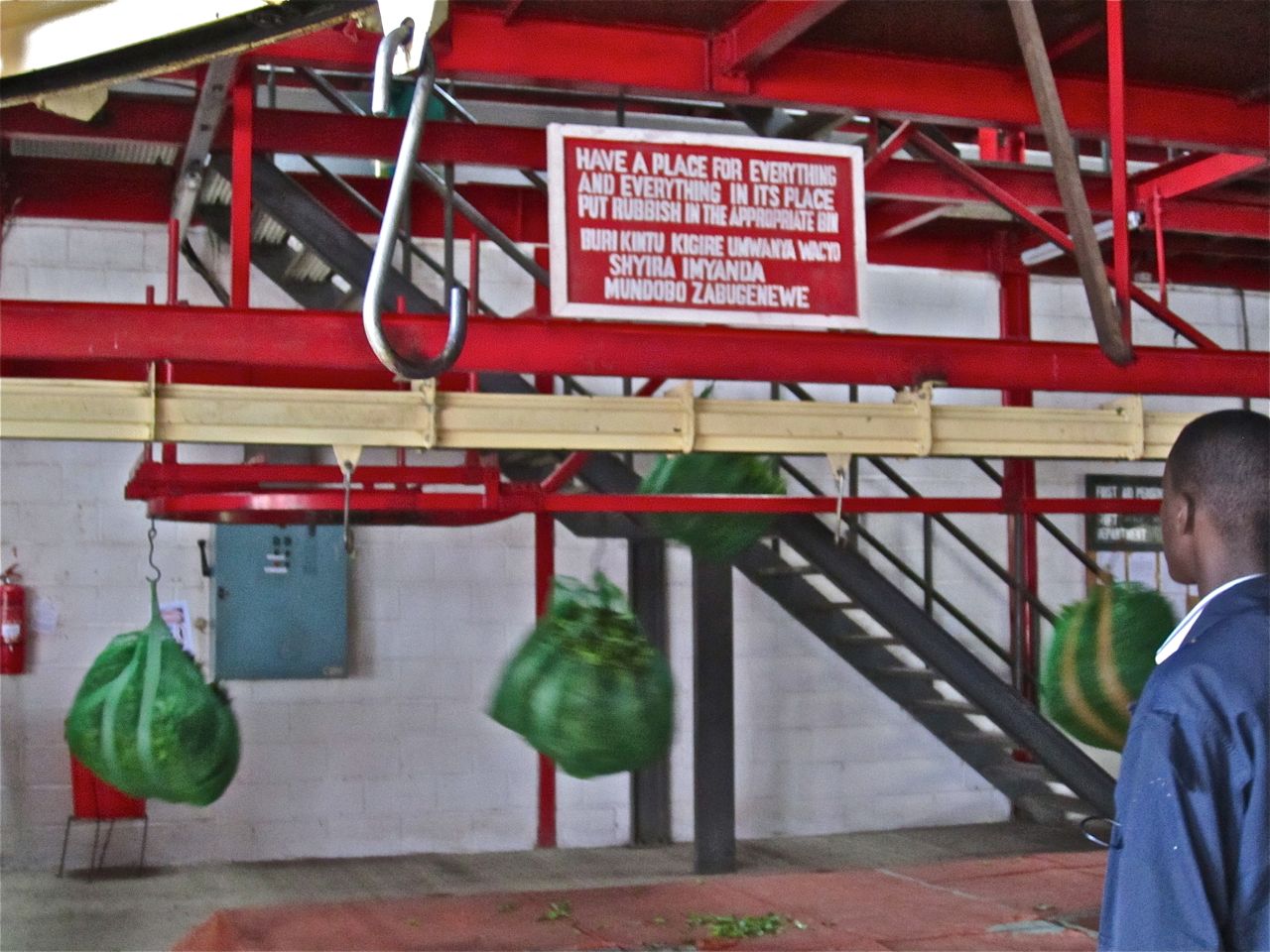
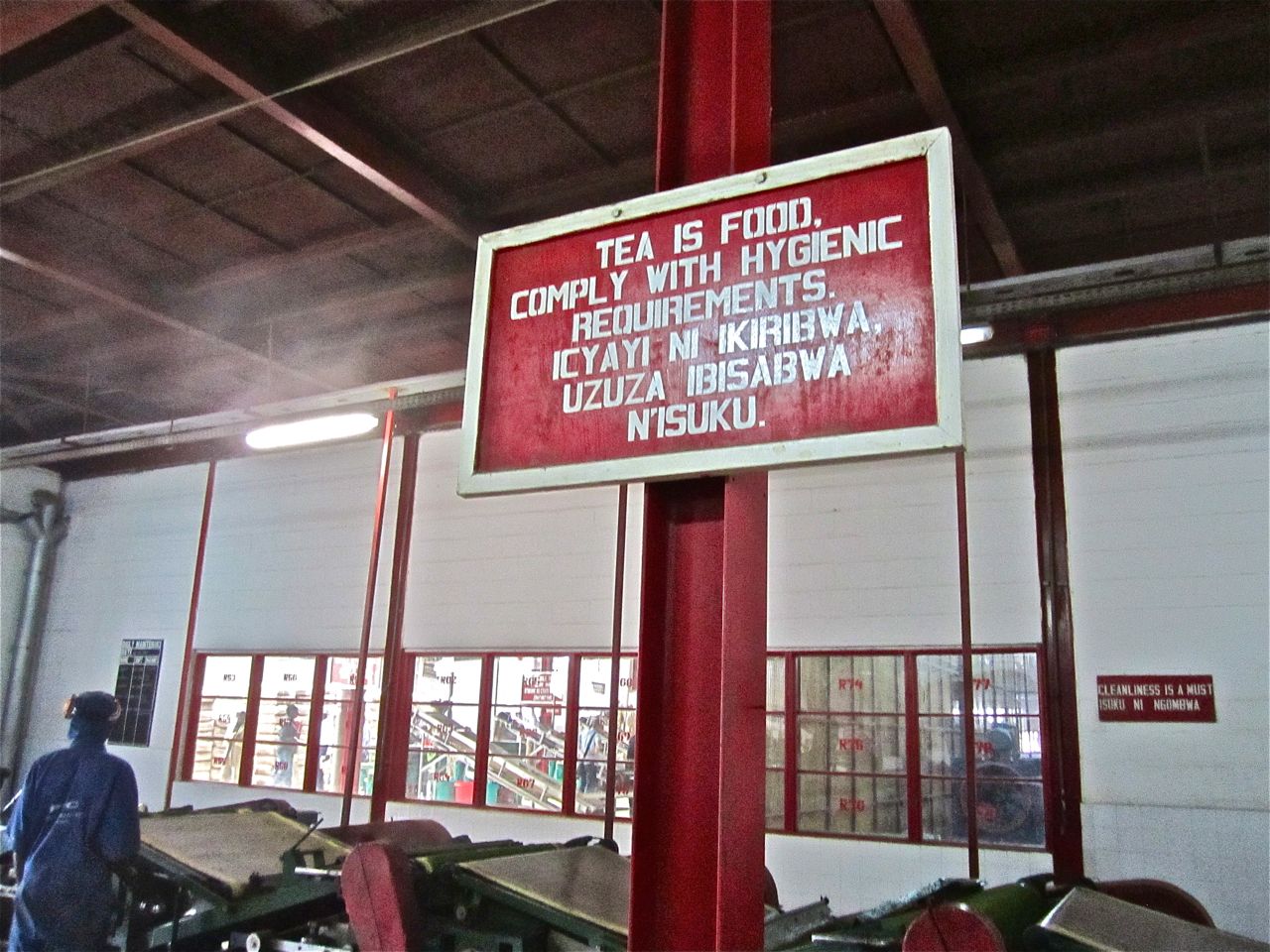
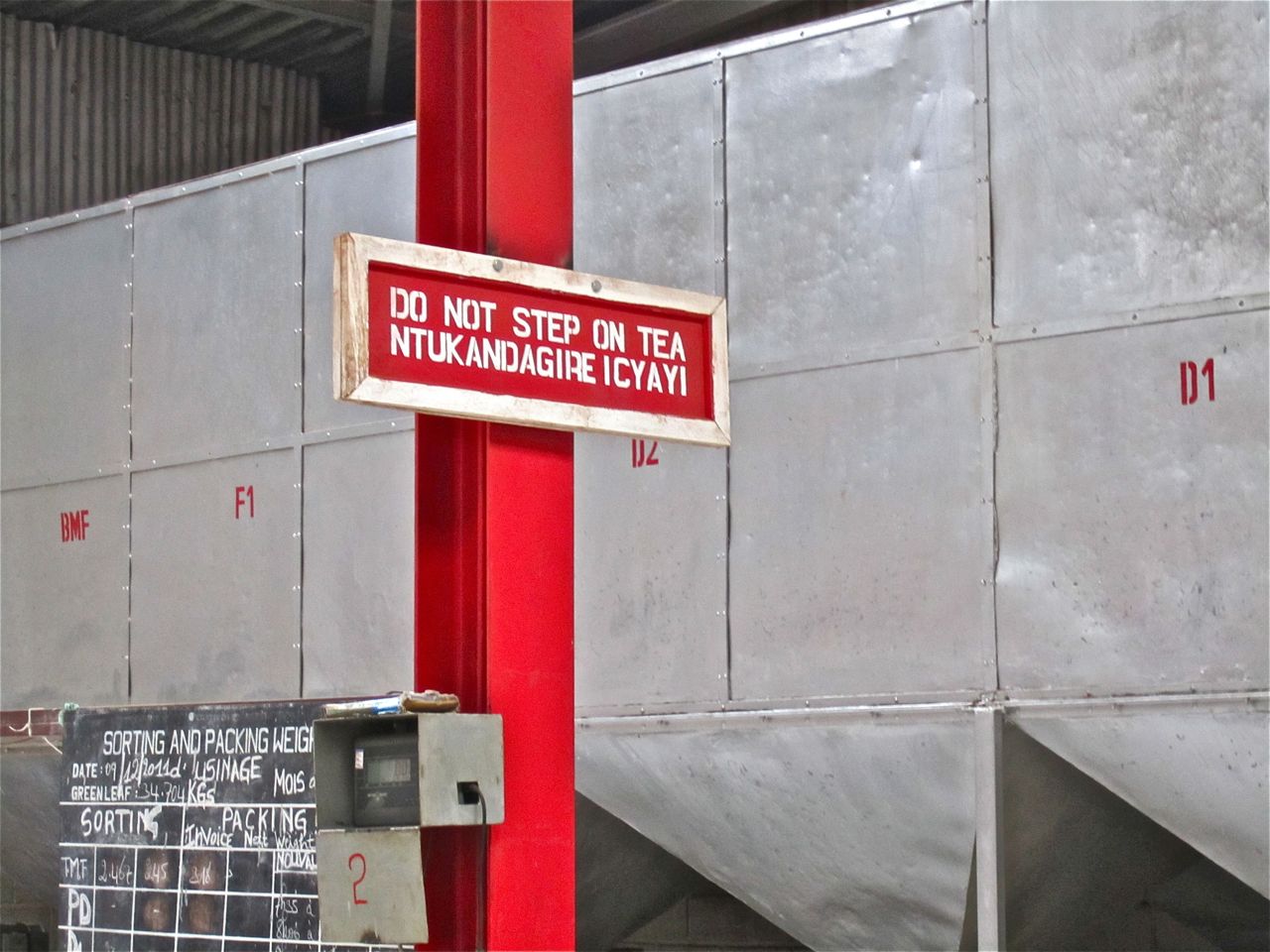
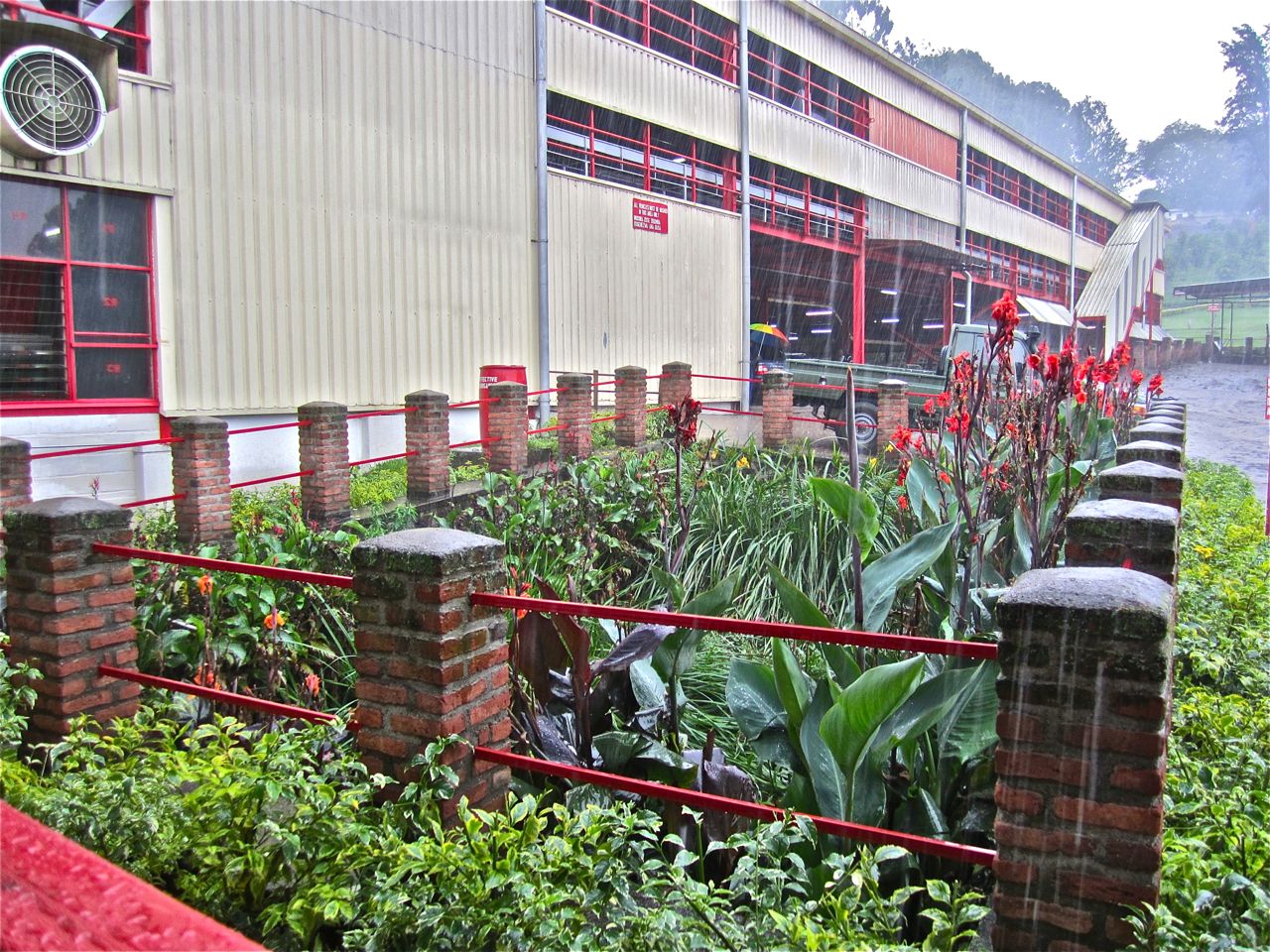
The design of the factory and its surrounding grounds — even its signage — struck me as remarkably consistent, orderly, and pleasant. Lots of straight, clean lines in red paint and low hedges.
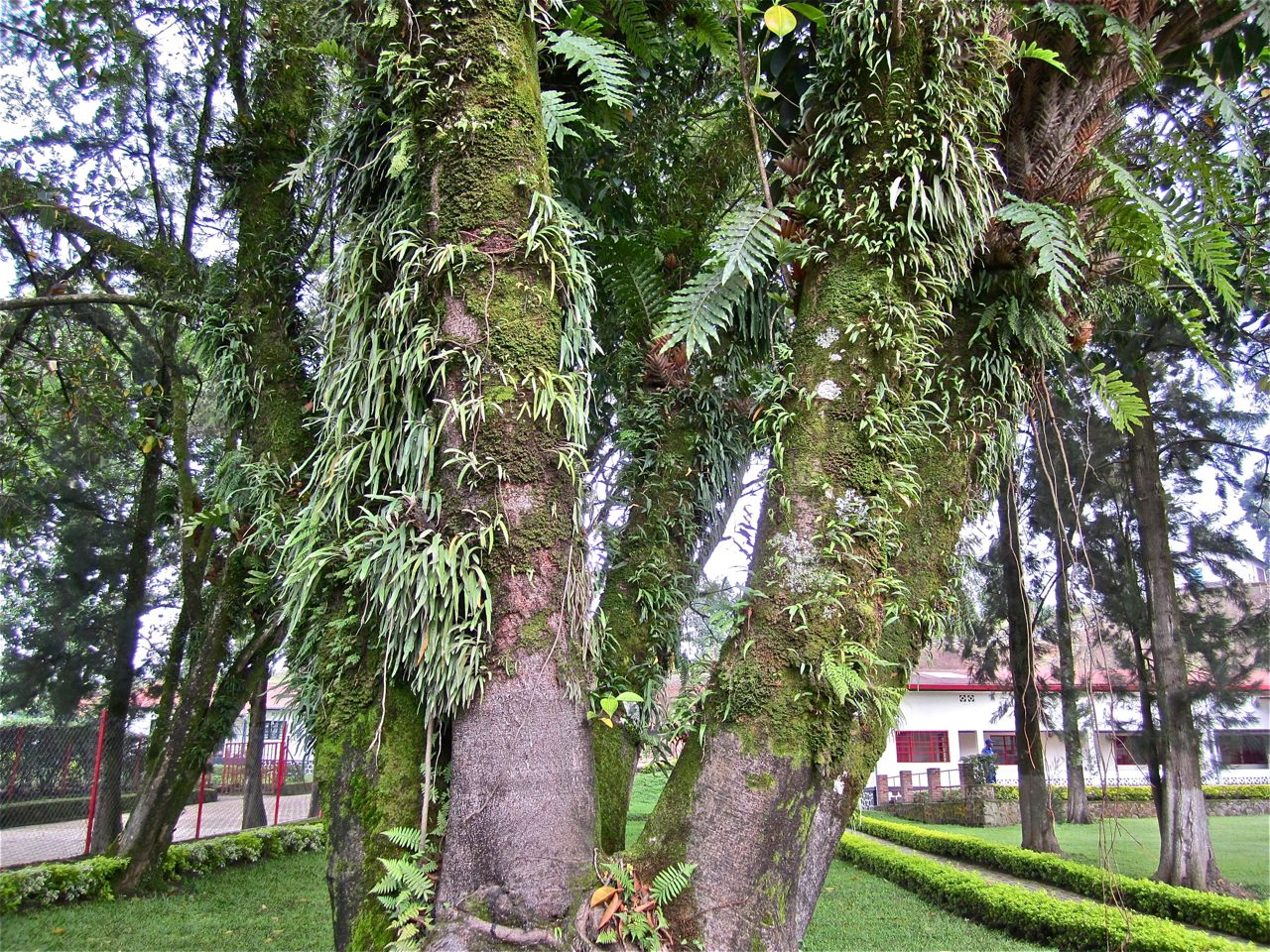
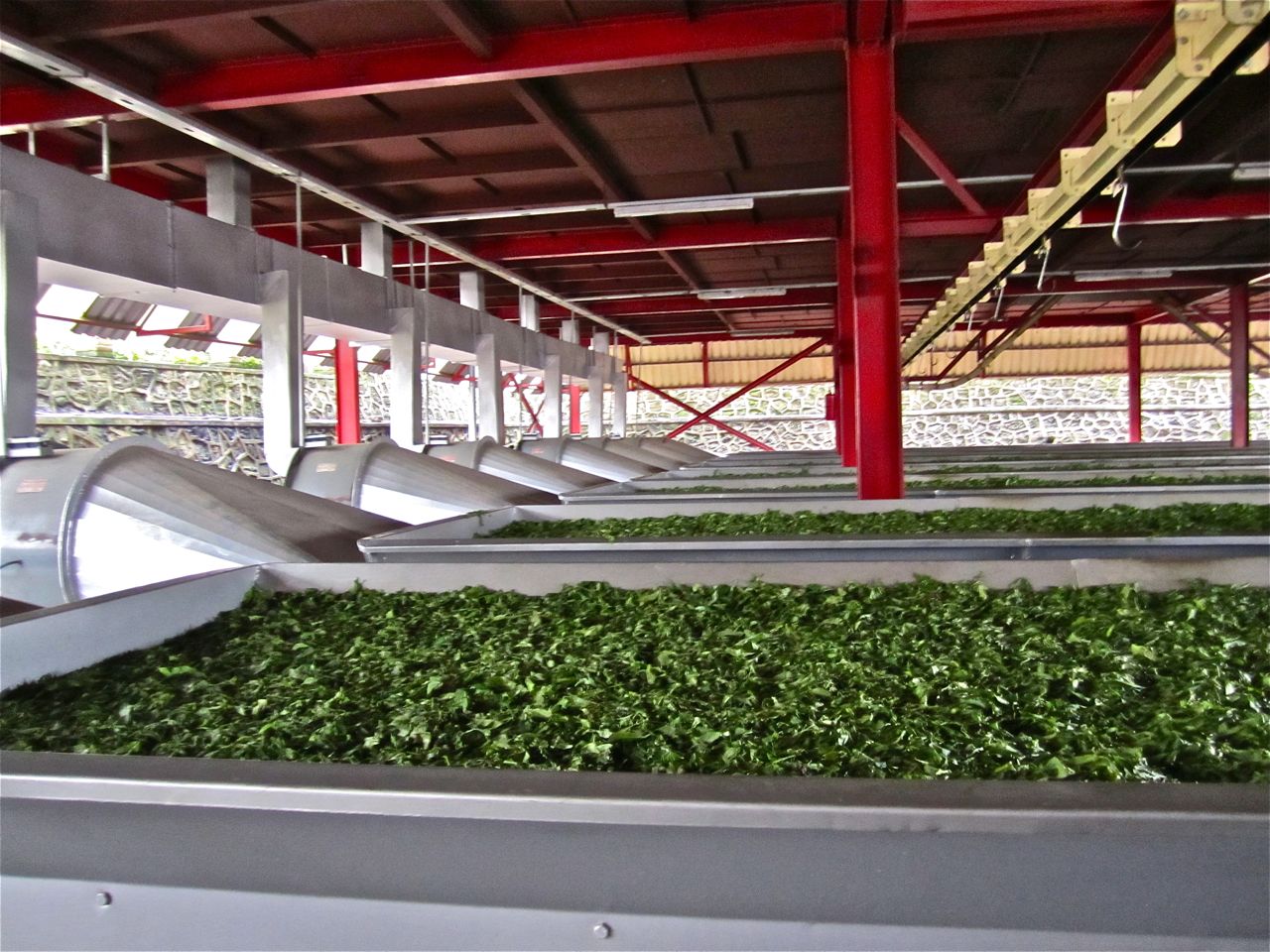
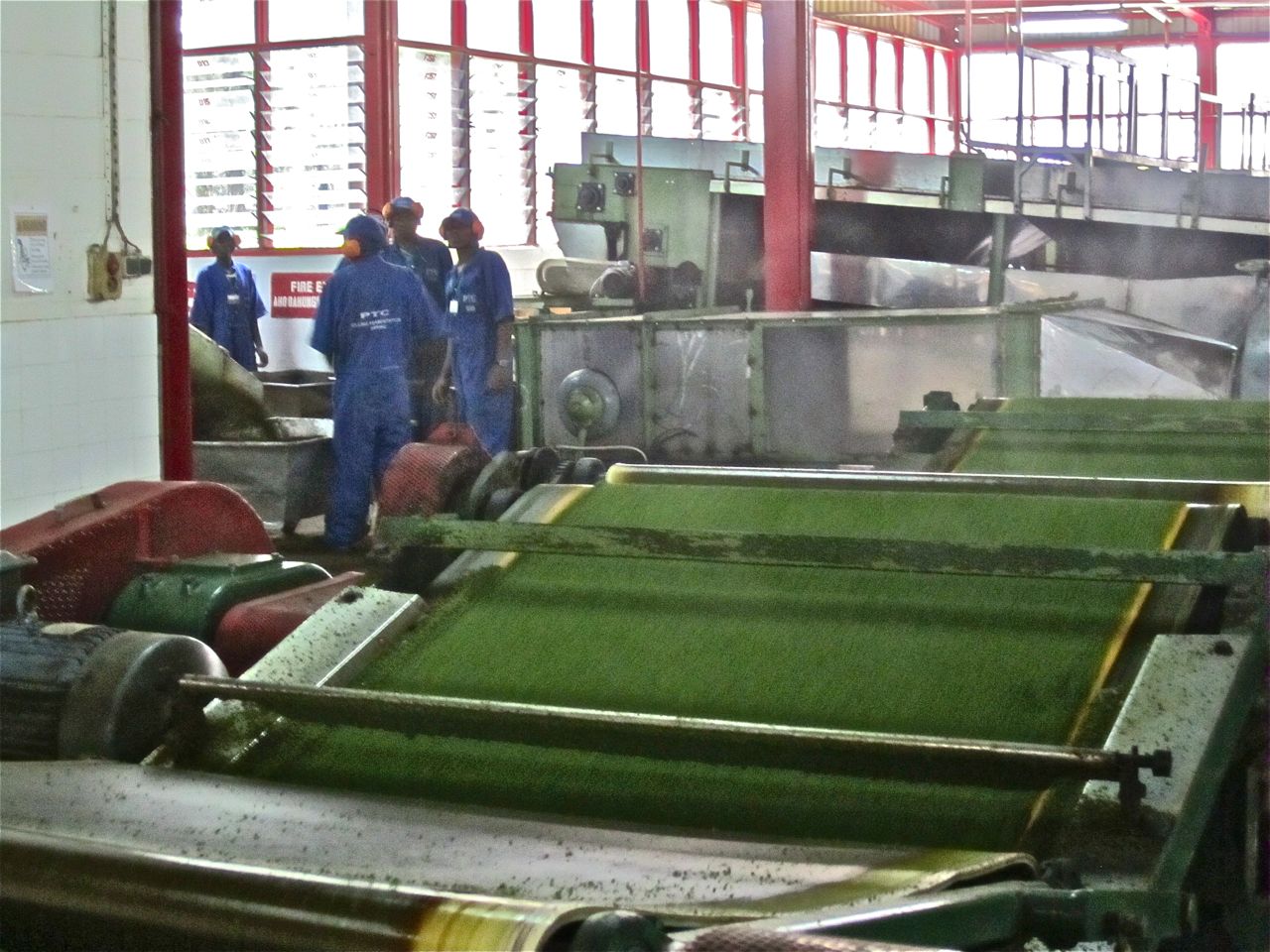
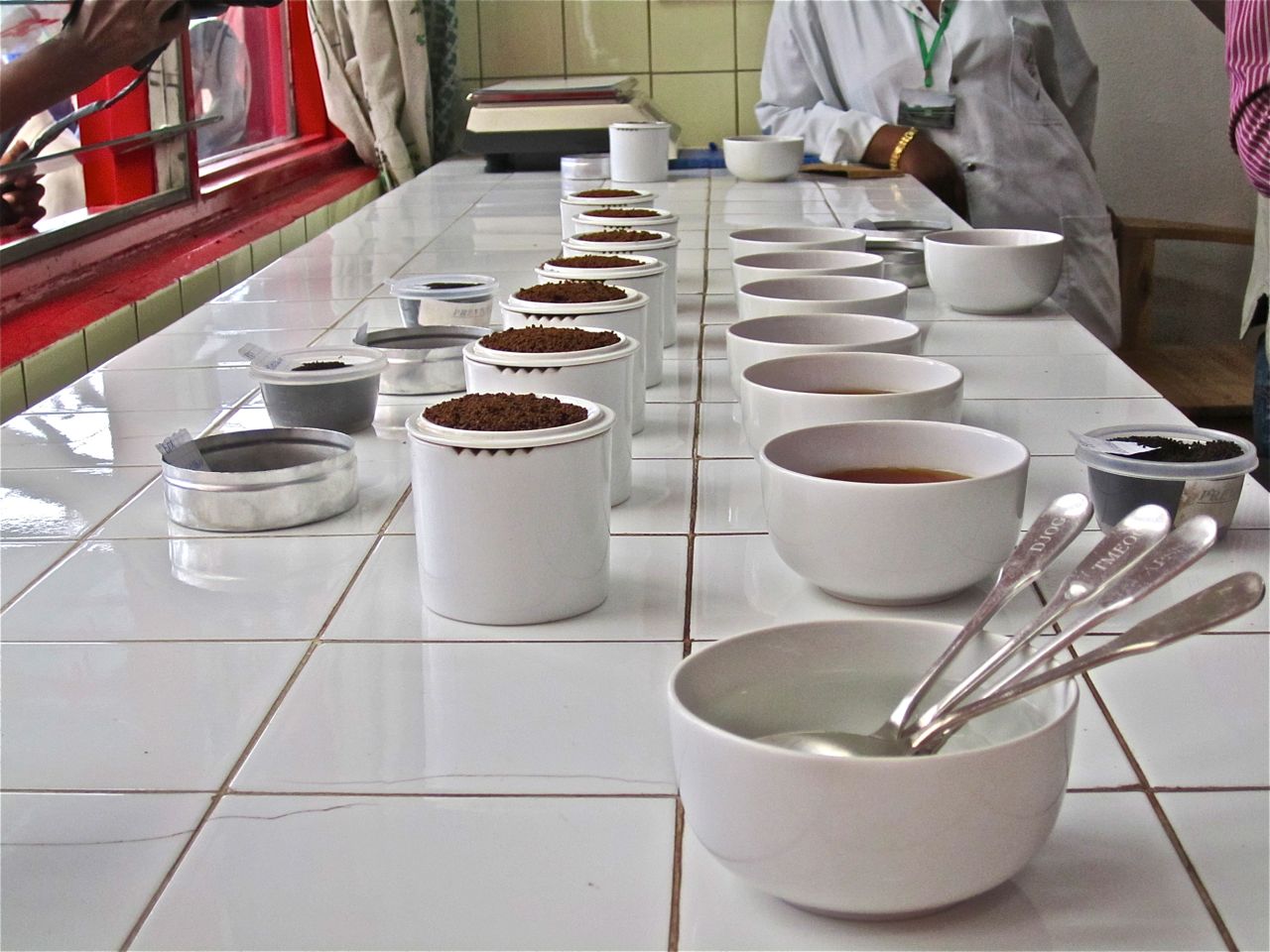
A test plot of tea bushes.A factory tree laden with moss and ferns.The green tea leaves dry here for approximately 15 hours. The factory smells like a combination of cut grass and brewed tea.Dried leaves on their way to be processed. The leaves are finely chopped.After the oxidation process, the now-black tea rolls off the belt and into buckets.And put in piles before being bagged.The factory is very orderly and clean.A relief to tea drinkers.The testing and tasting room.
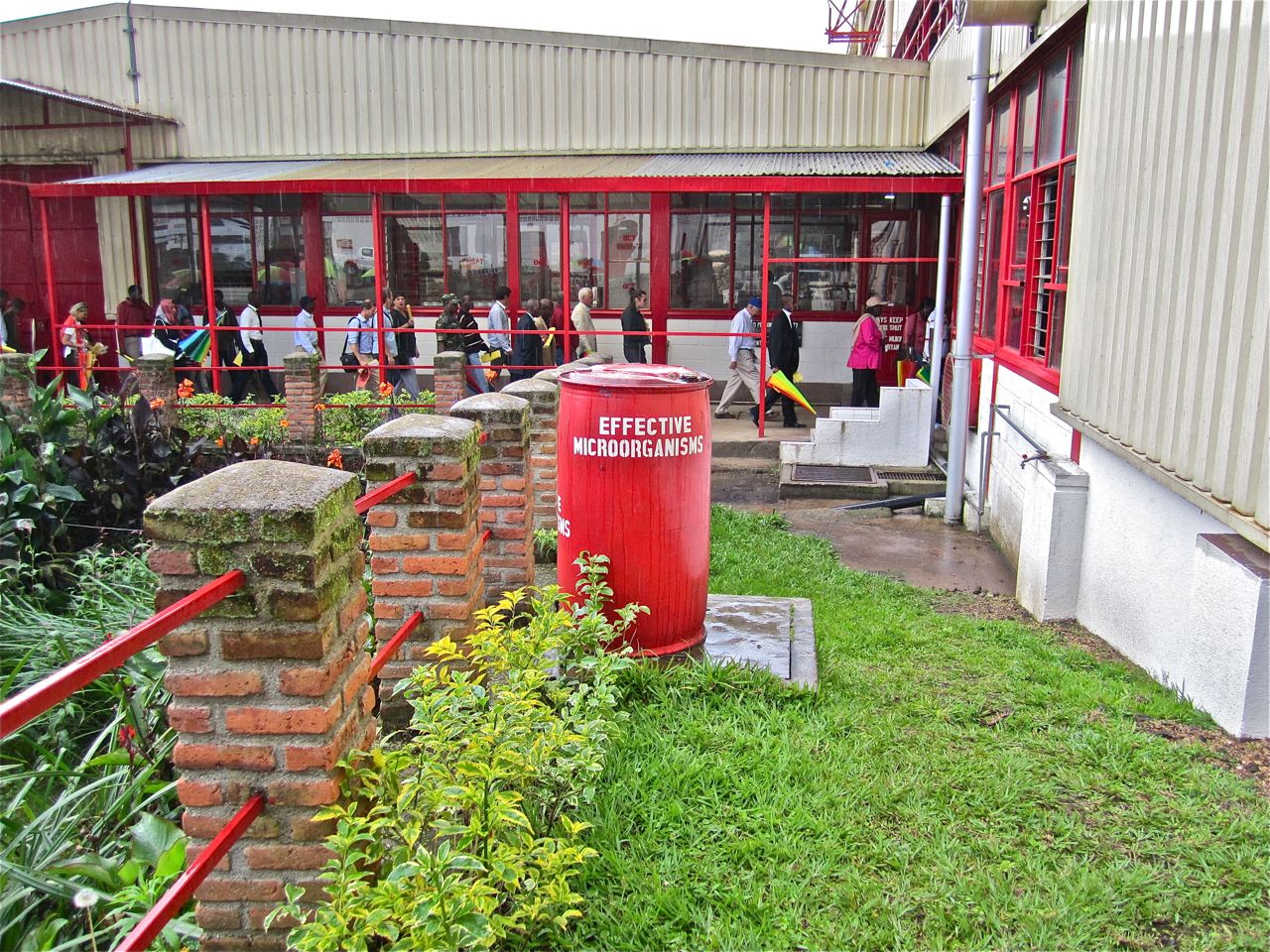
Waste water from the tea processing is diverted to a garden pool and treated with “Effective Microorganisms,” a product that cleans water and eliminates bad odors with a combination of microorganisms that were collected and cultivated naturally.
A barrel of Effective Microorganisms.A waste water garden pool in the rain.
As we travel, I am always looking for recurrent elements in the landscapes and urban surroundings through which we pass, as well as in the architecture and craft. I am trying to grasp what Rwanda really looks like, what it cares about, how it experiences its environment (and how I experience its environment) and how I can interpret at least some of that in a garden design.
The farm in yesterday’s post overlooks the Nyakabingo tungsten mine, located about 10 kms. north of Kigali.
The mine was the first stop on a two-day bus trip organized by the Foreign Ministry for diplomats. We felt a little like we were on a school field trip — only one with a police escort and a press van.
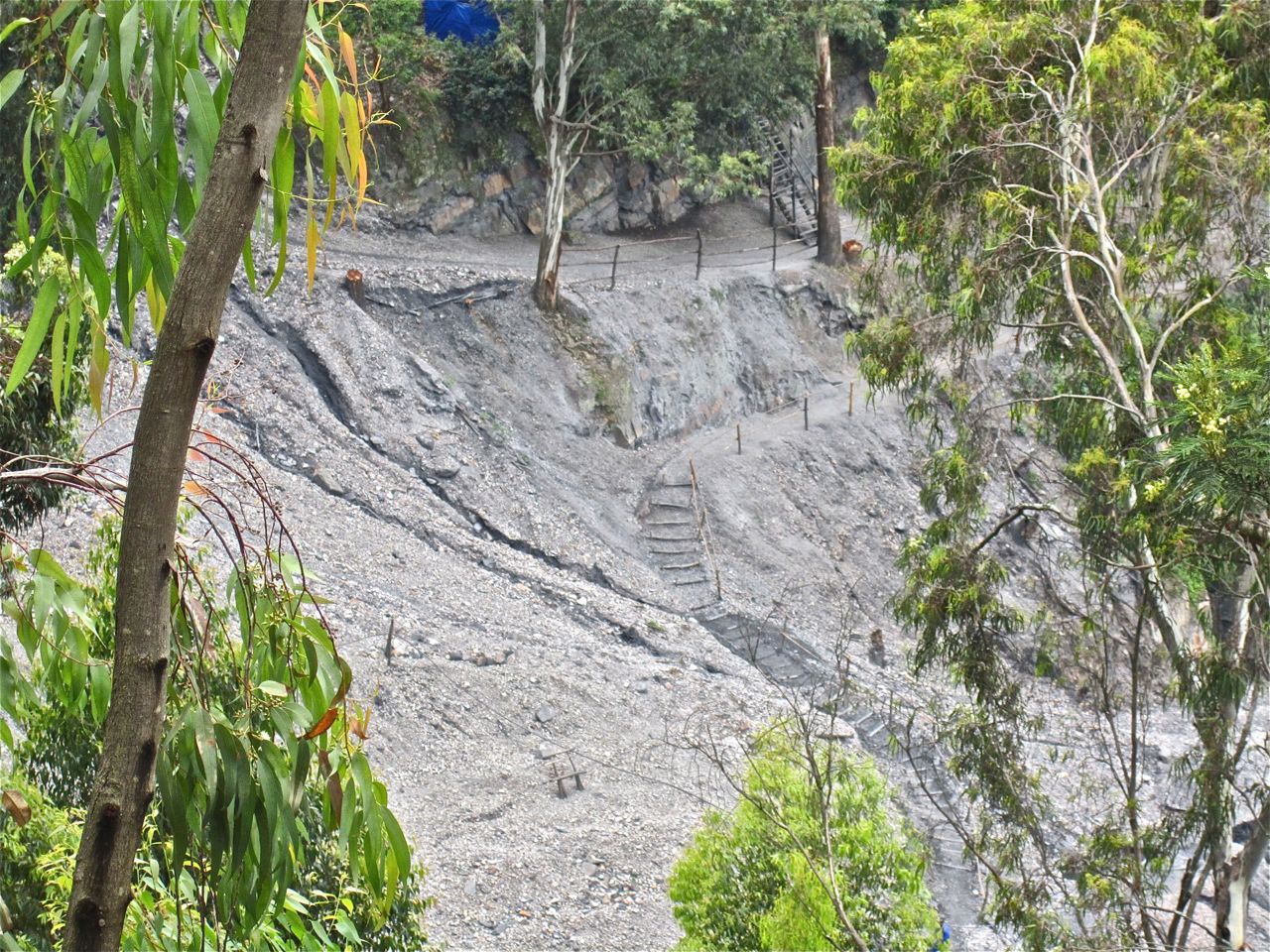
While we were at Nyakabingo, I turned down the invitation to see the mine from underground and instead photographed it from an upper road.
Paths and steps descending the hillside of the mine. About 700 people work there removing tungsten, a chemical element used in incandescent light bulb filaments, x-ray tubes, and superalloys.
The Lodge is one of two “swishy” (as Bradt’s Travel Guide puts it) places to stay in the vicinity of the Parc National des Volcans and the mountain gorillas. The other one — the Virunga Safari Lodge — we toured last month. Both cost around $500 to $600 per night per person.
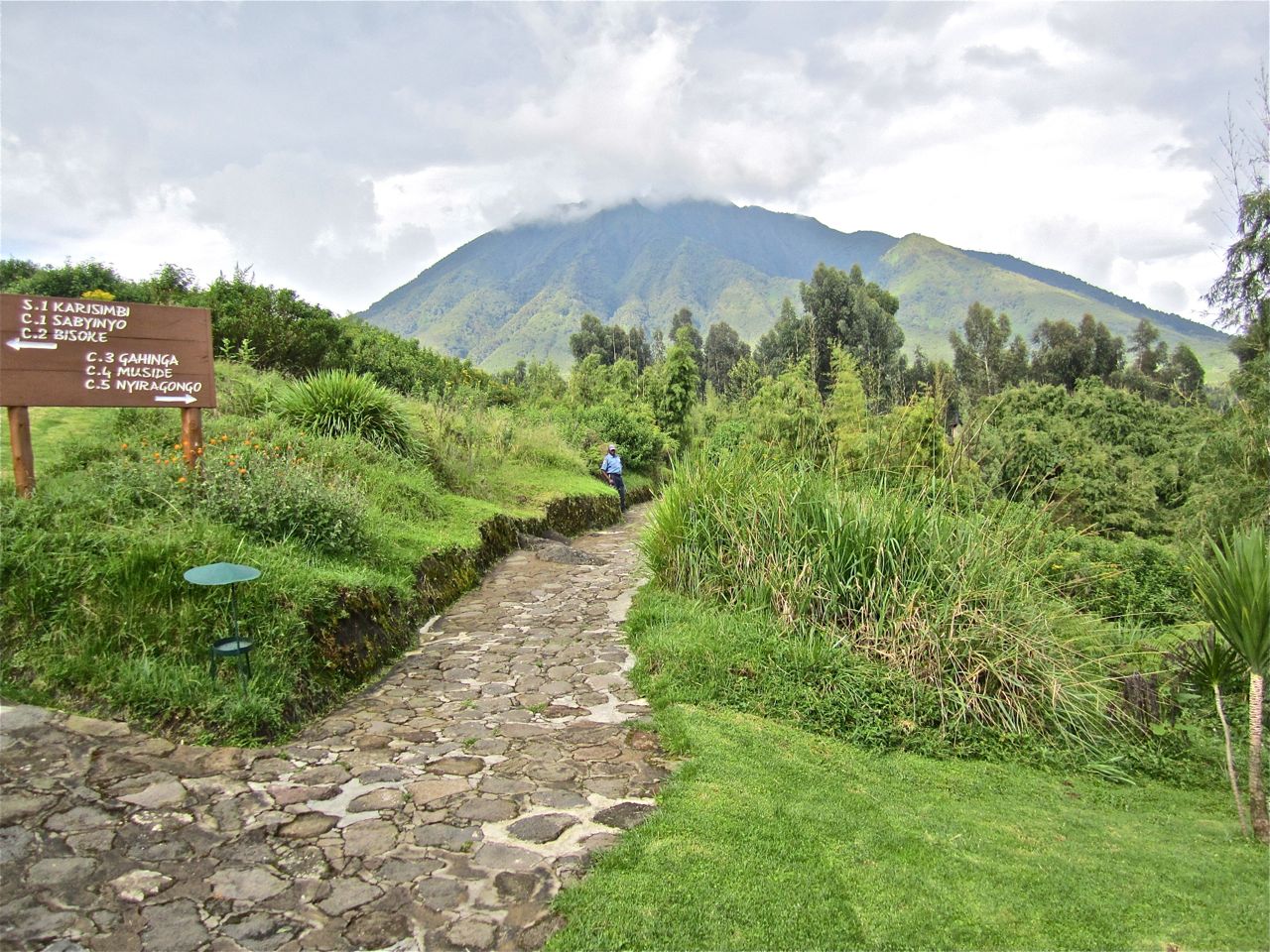
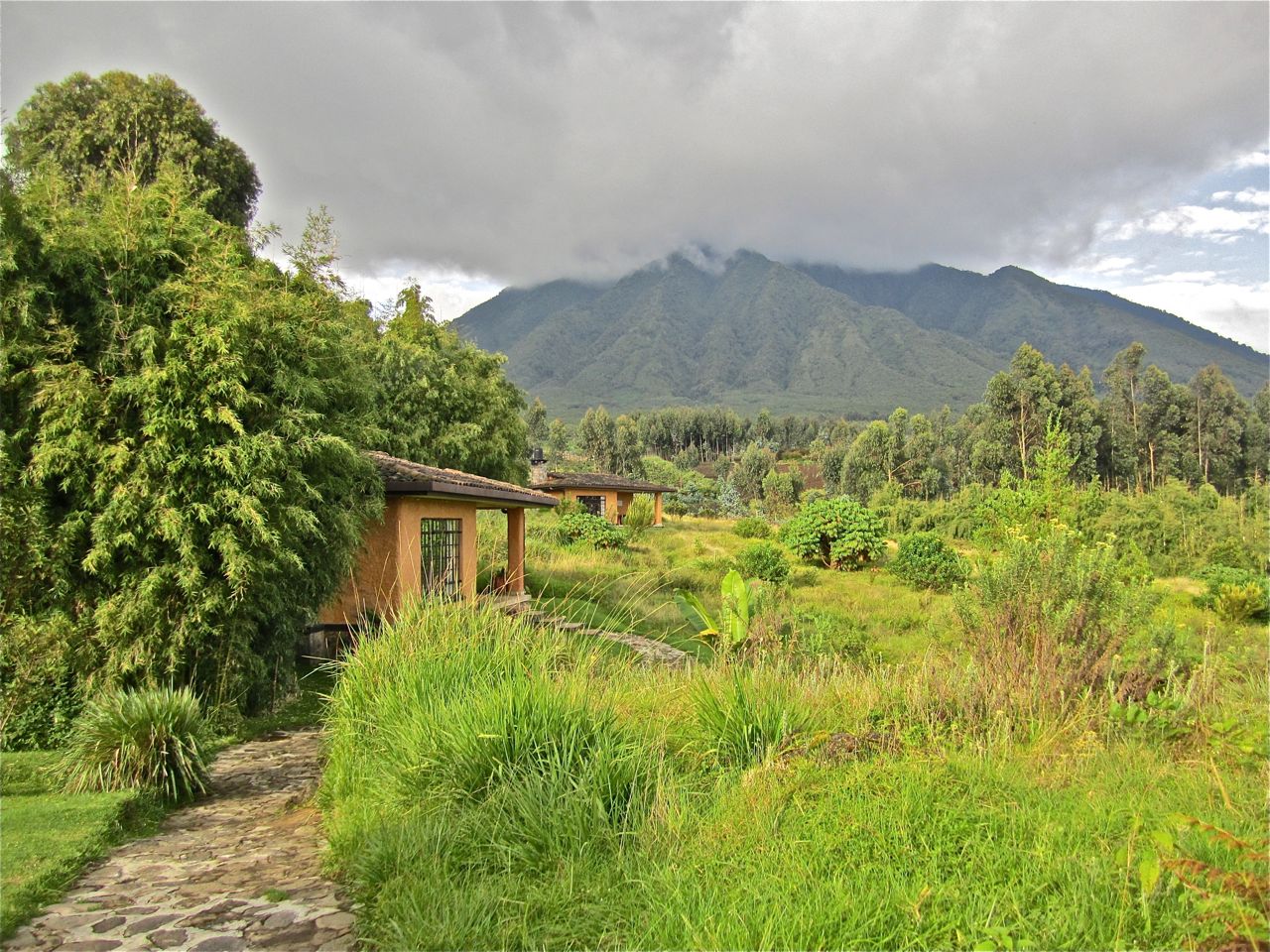
Paths to the five cottages, with the volcano in the background.
Sabyinyo has the advantage of being only 10 minutes drive from the entrance to the park headquarters. Like Virunga, it offers accommodation in individual cottages.
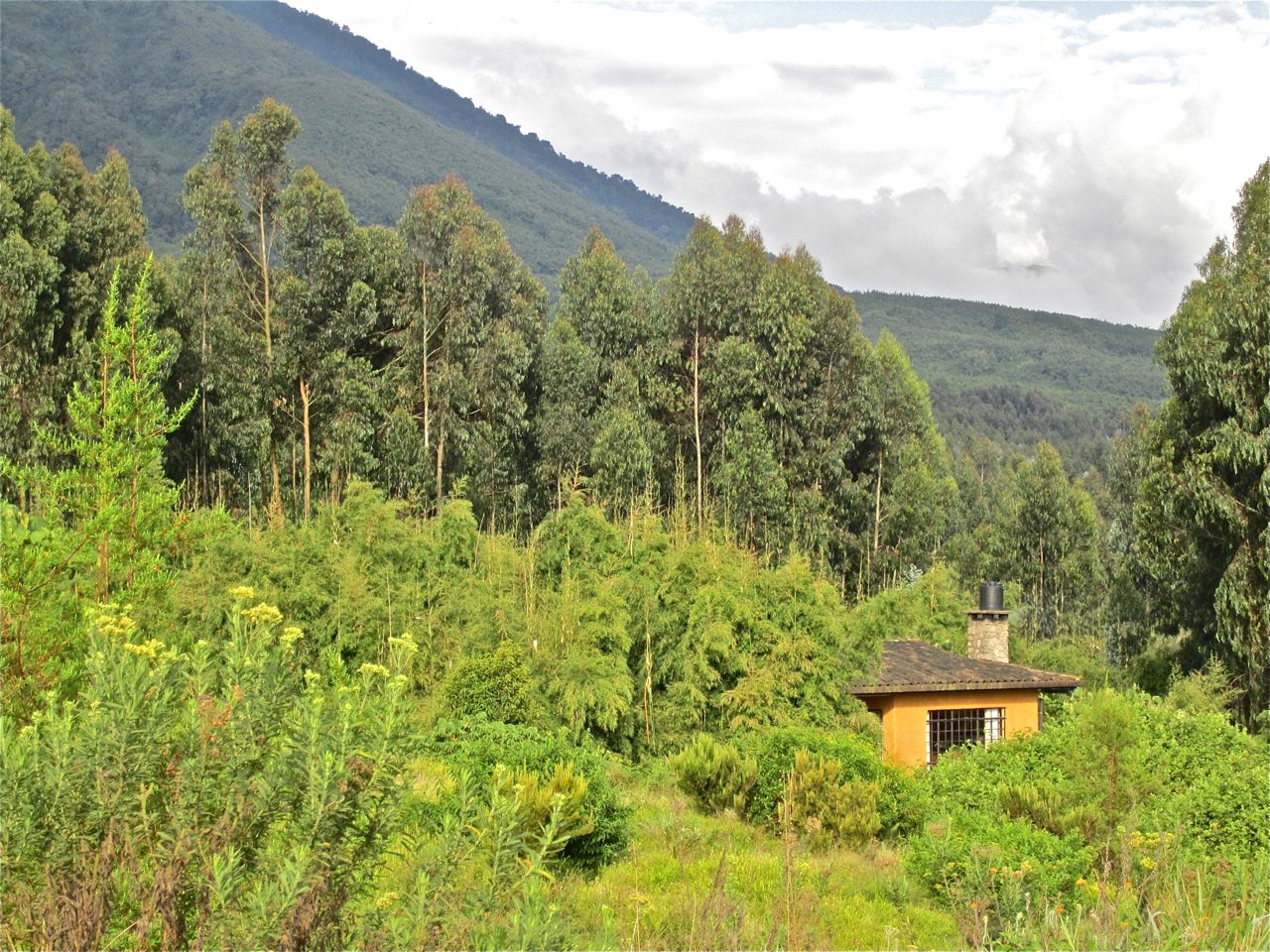
A Sabyinyo cottage. The lodge levies a $58 per person per night community fee, and the community also receives a 17% cut of the lodge’s profits.Two other cabins.
Also like Virunga Safari Lodge, the landscaping is kept simple so as not to compete with the gorgeous views.
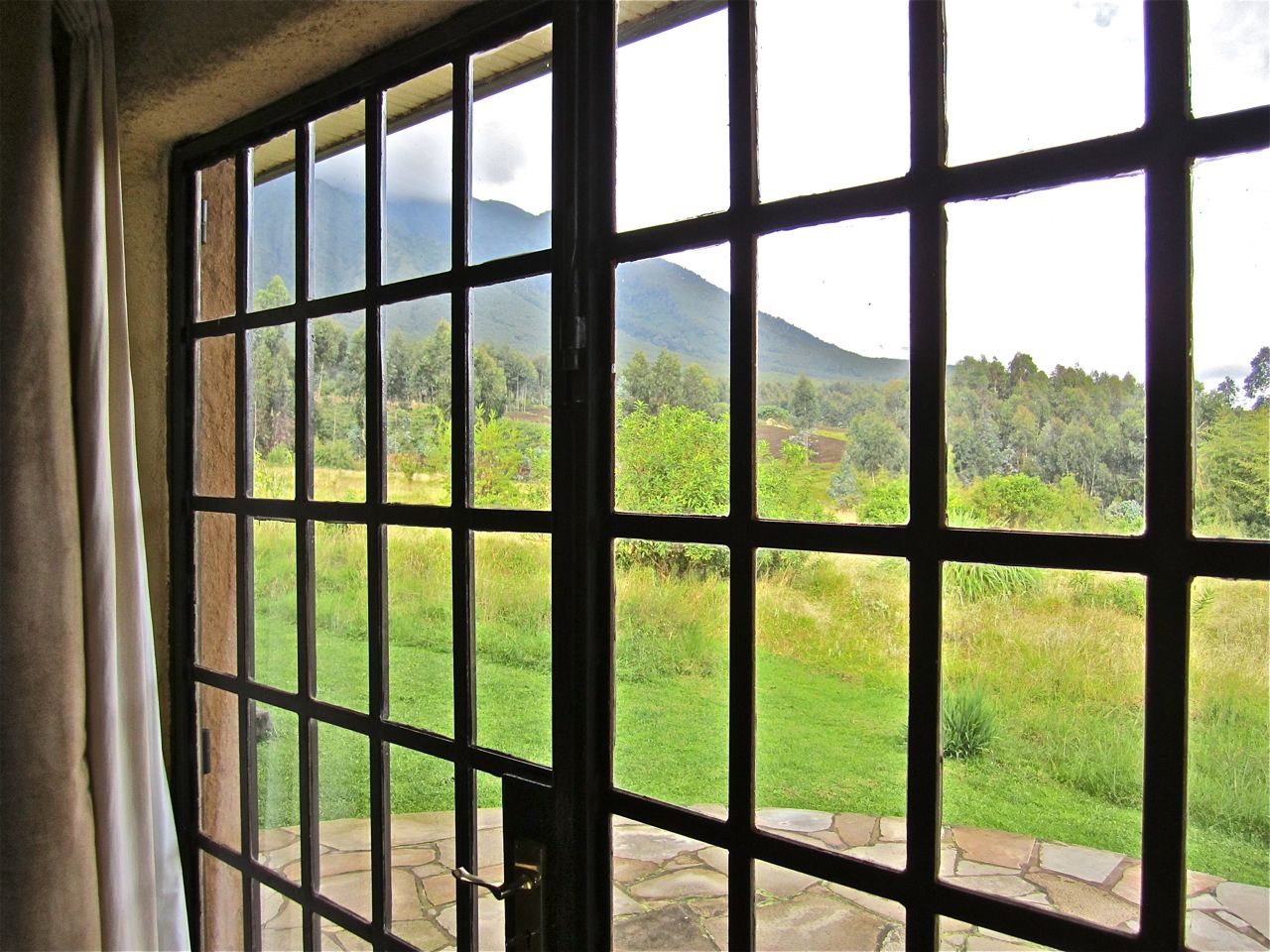
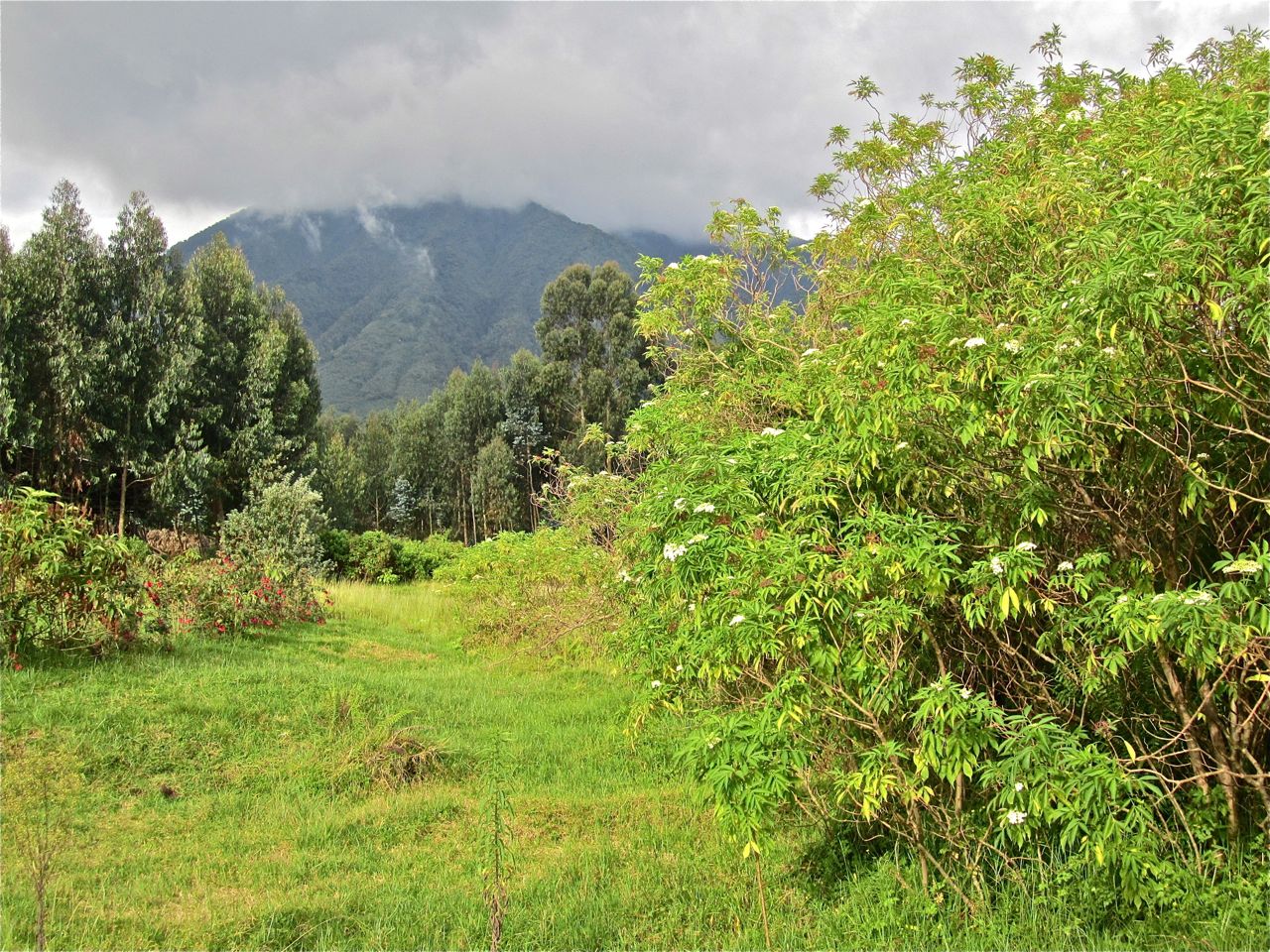
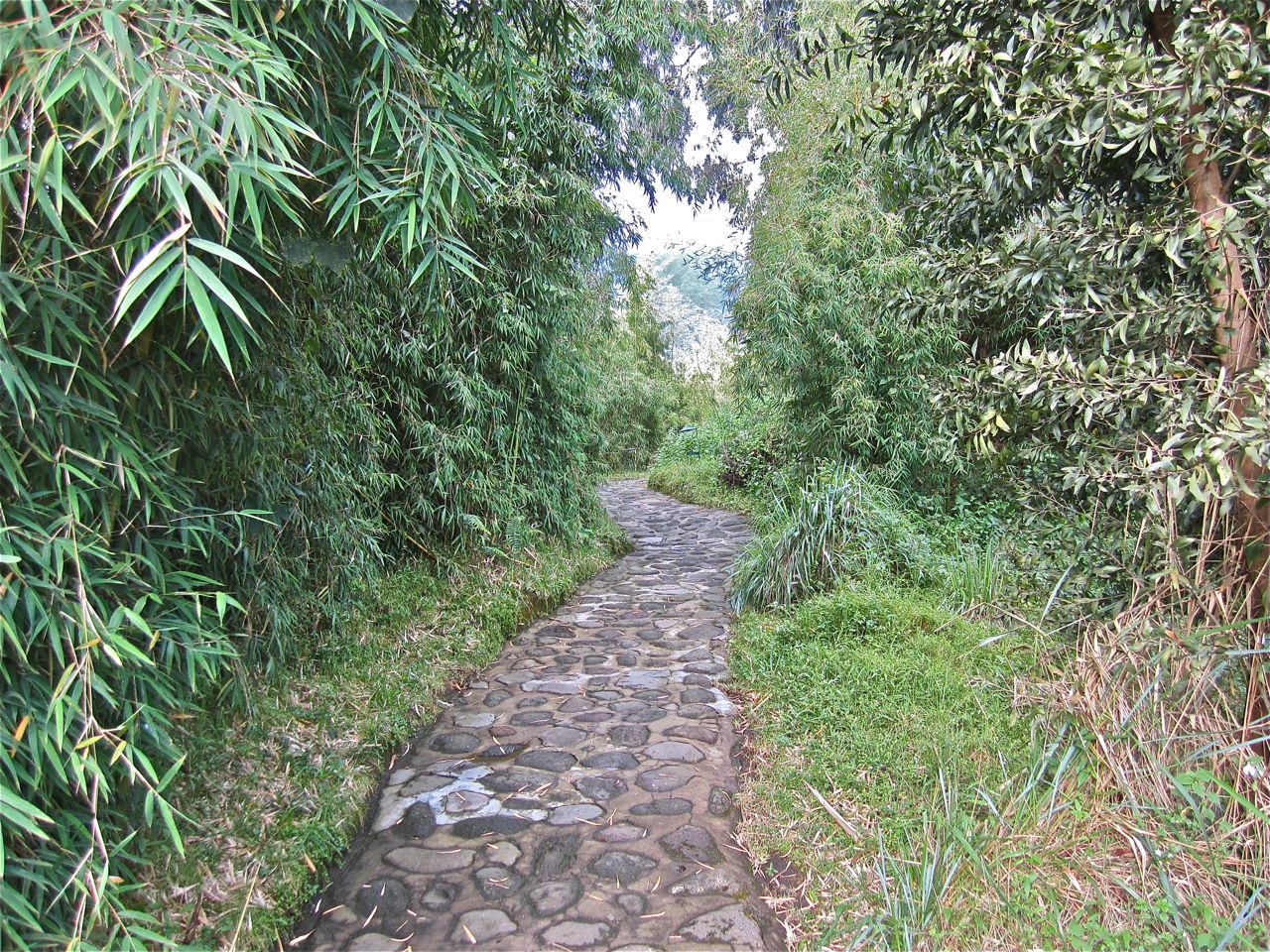
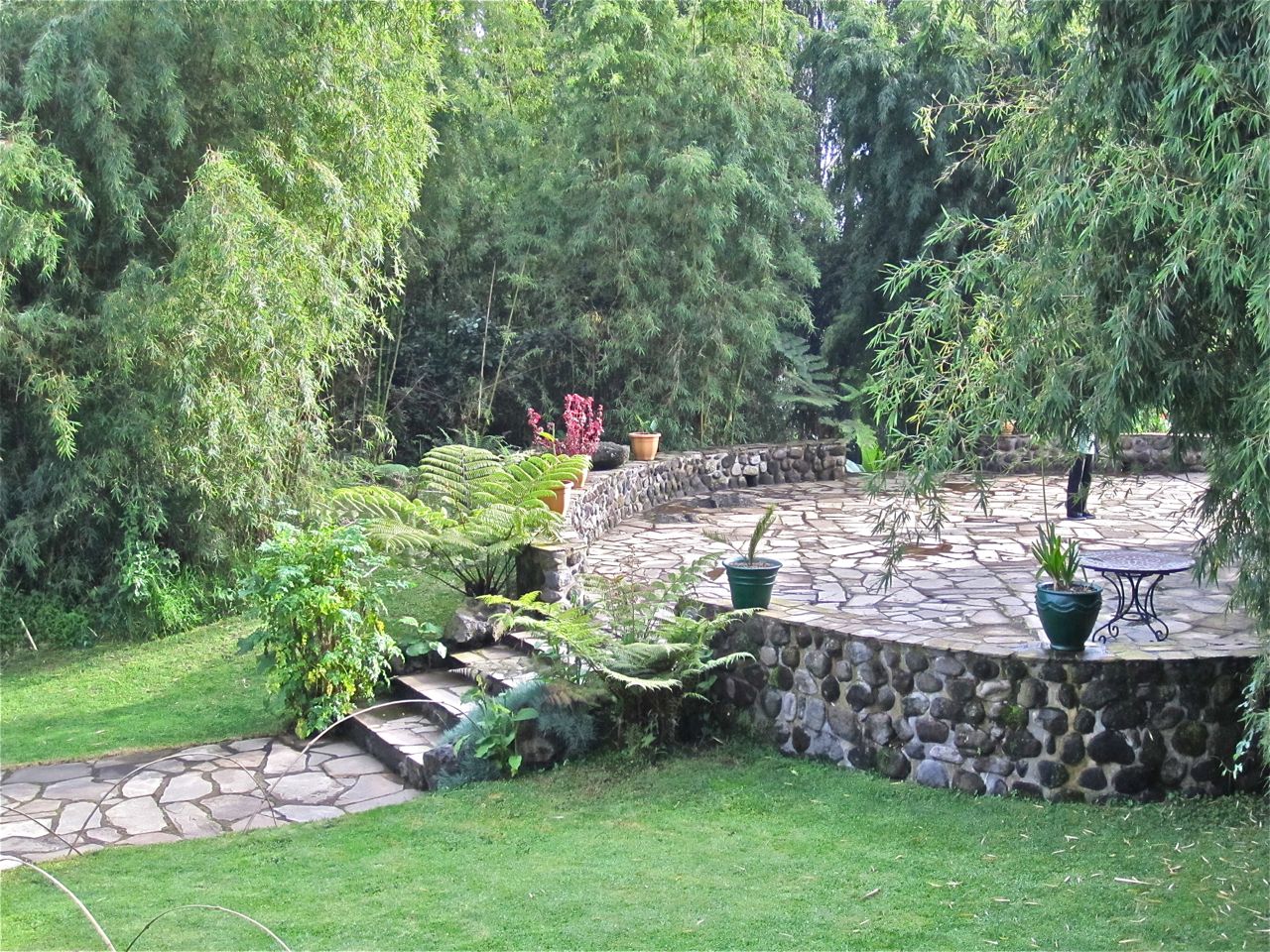
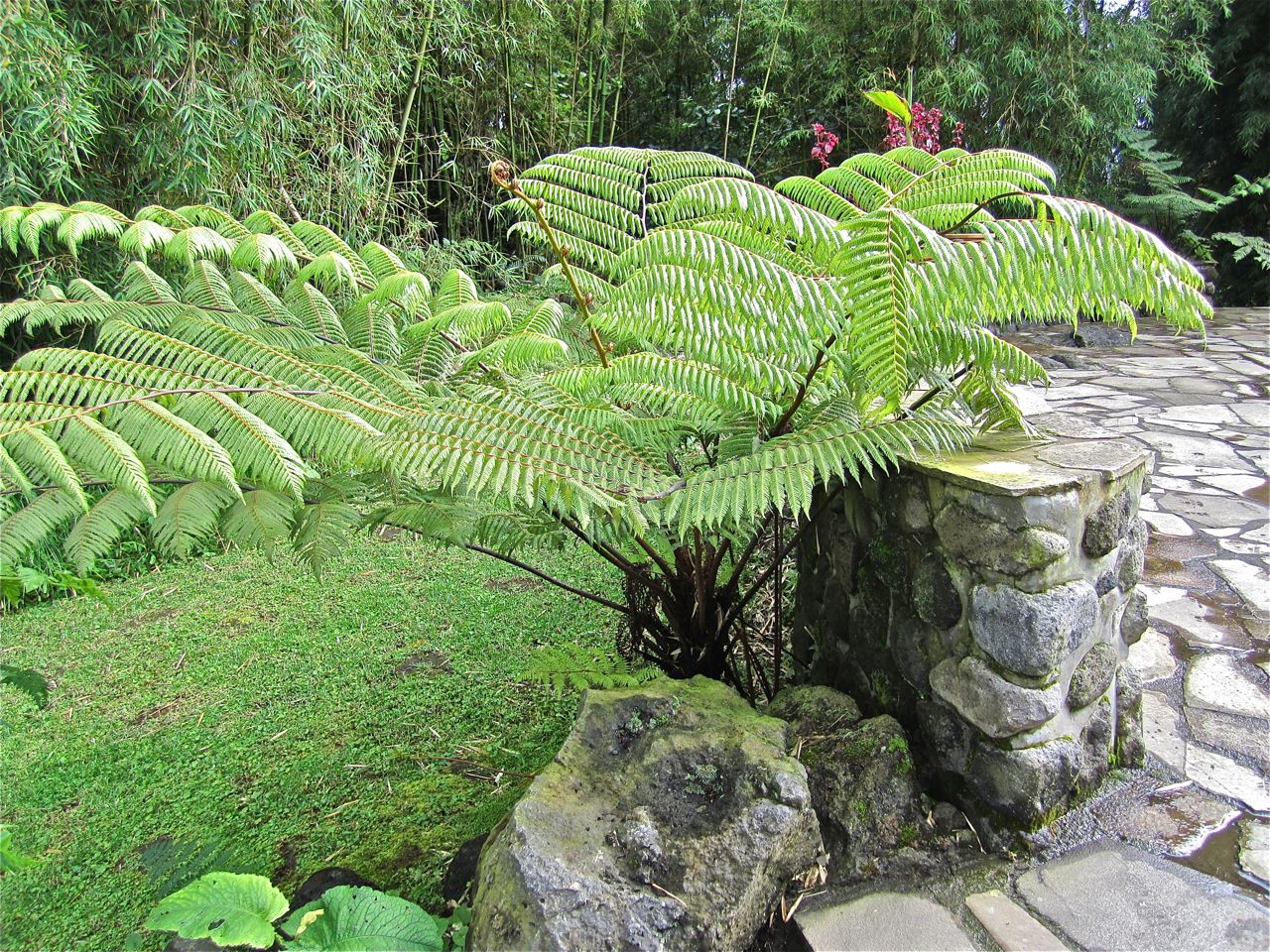
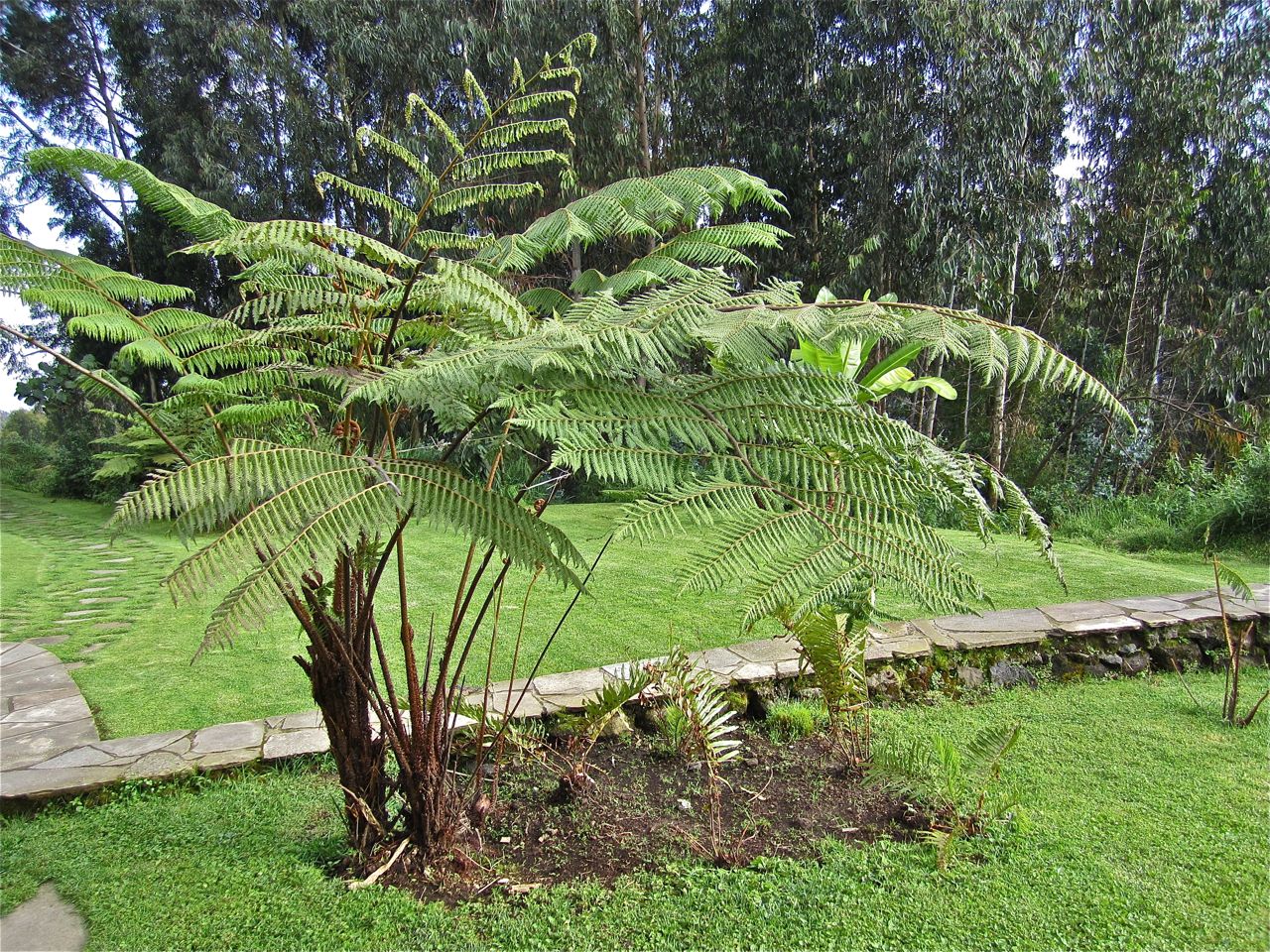
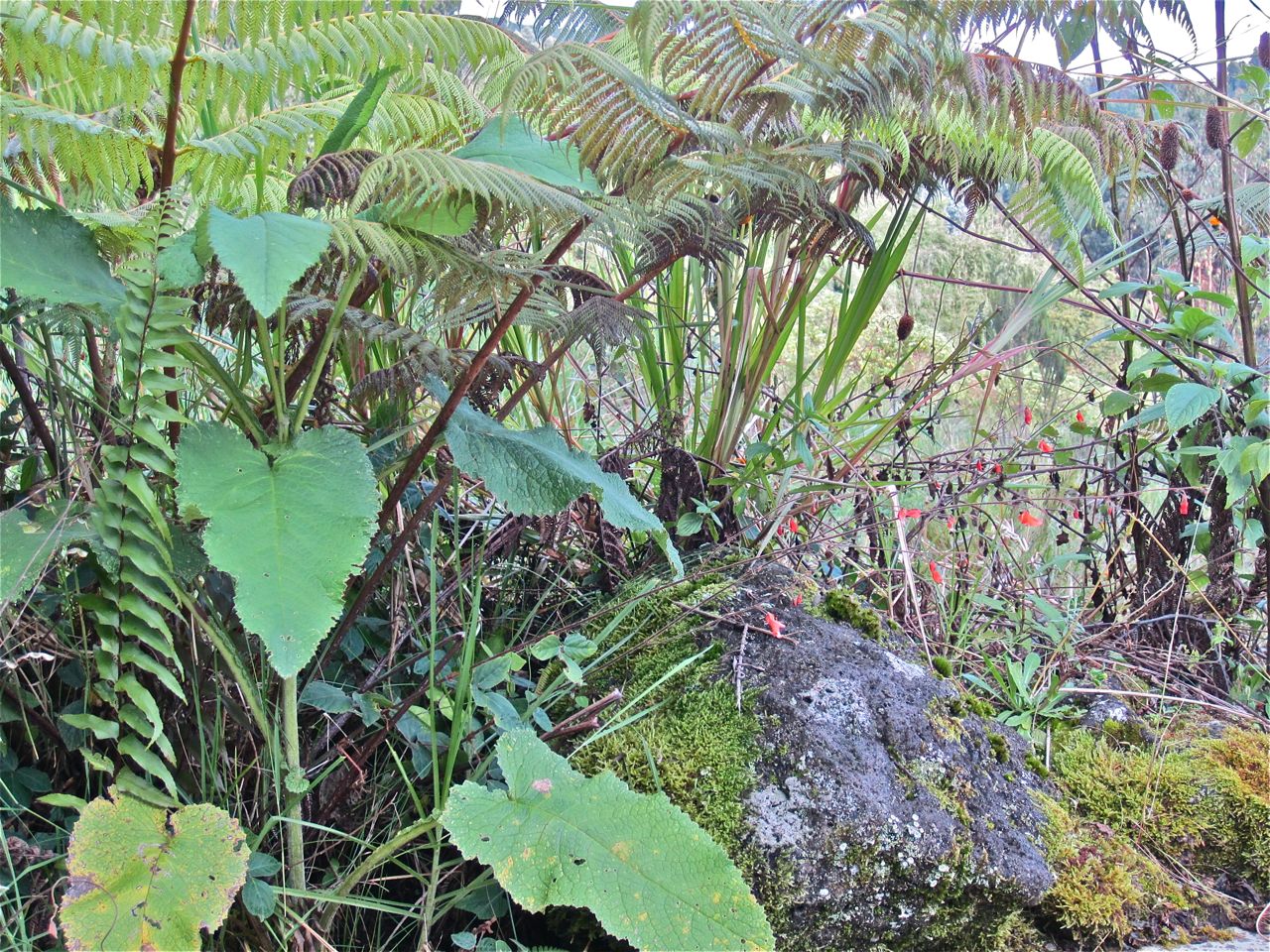
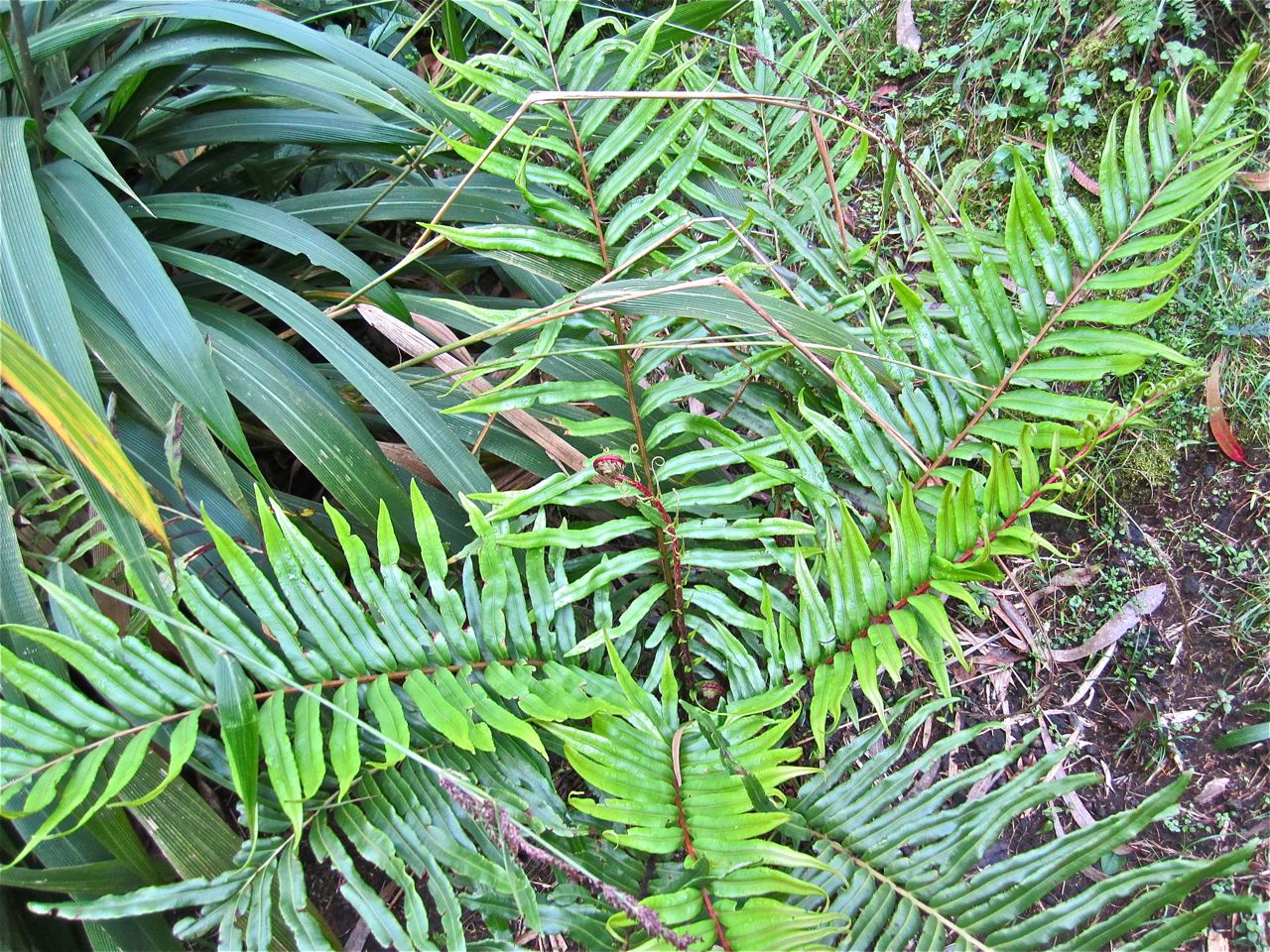
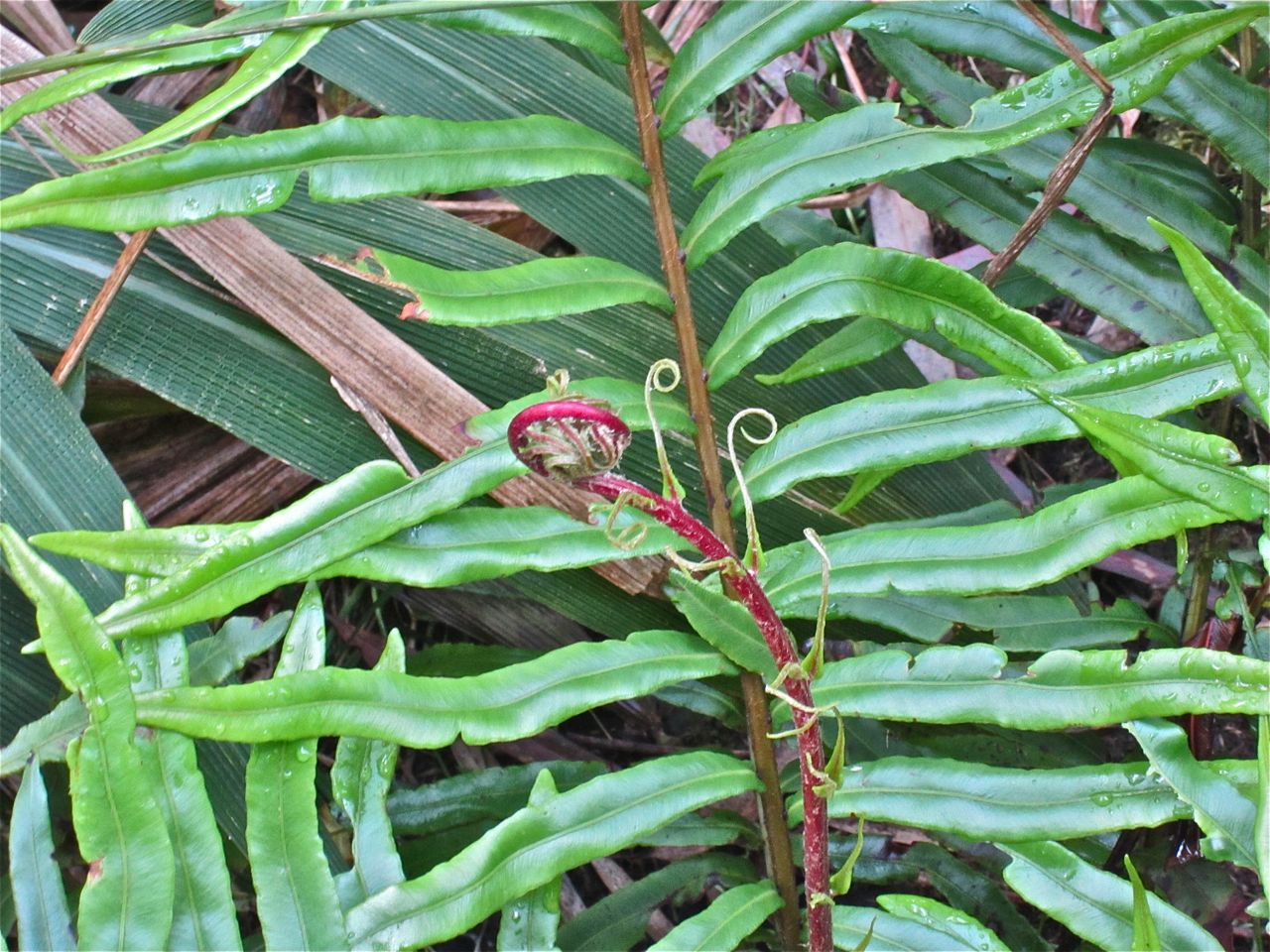
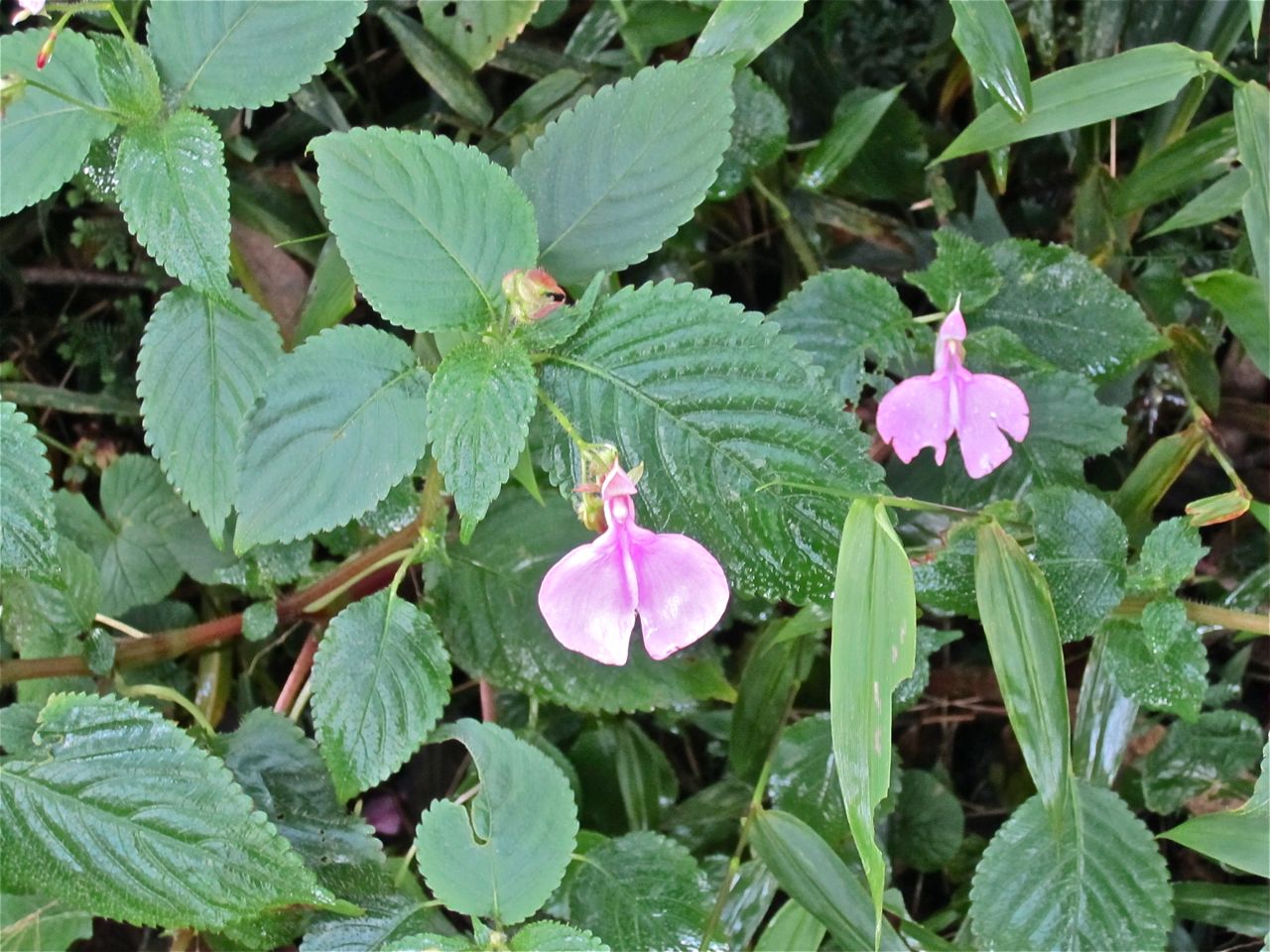
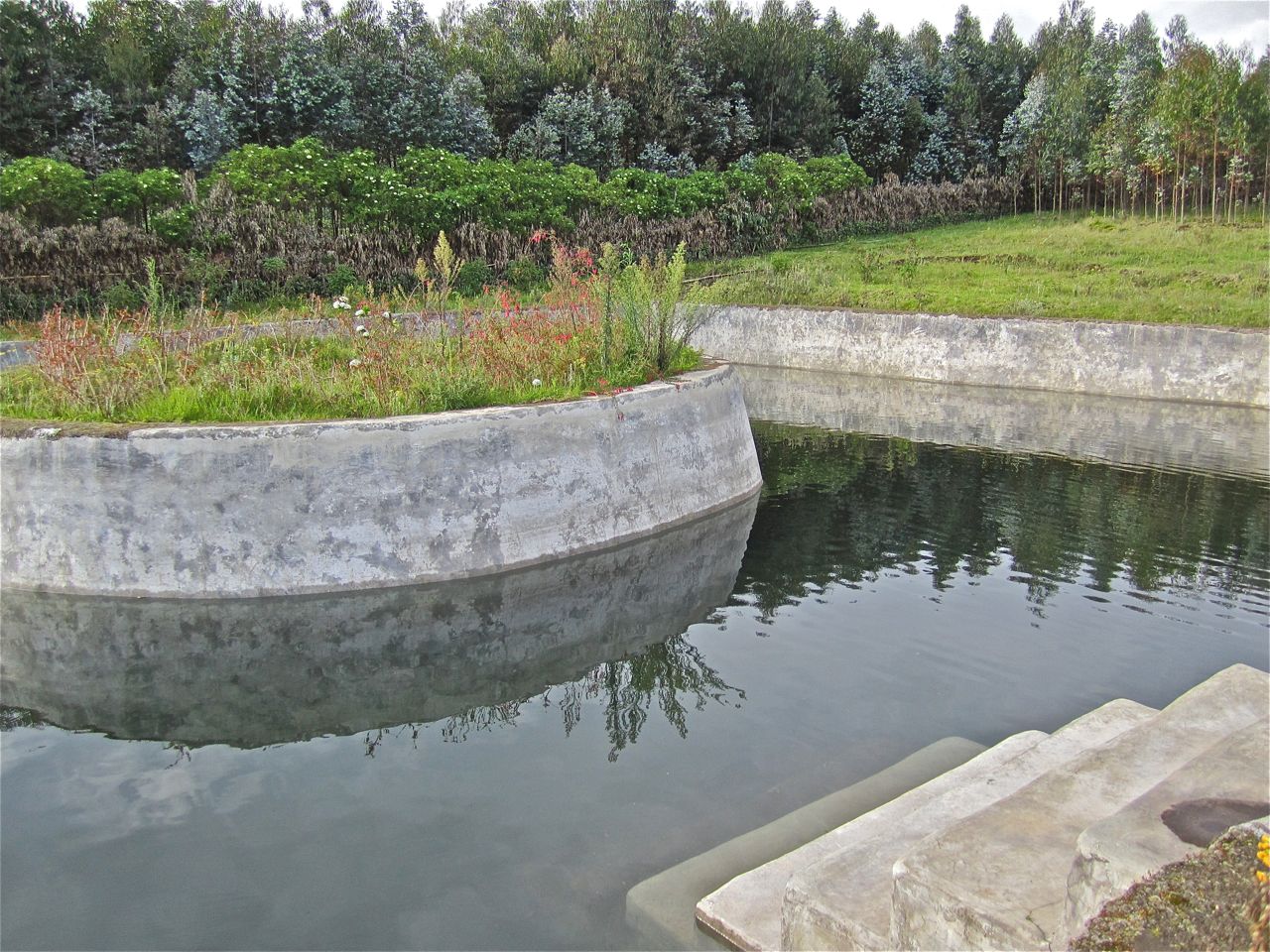
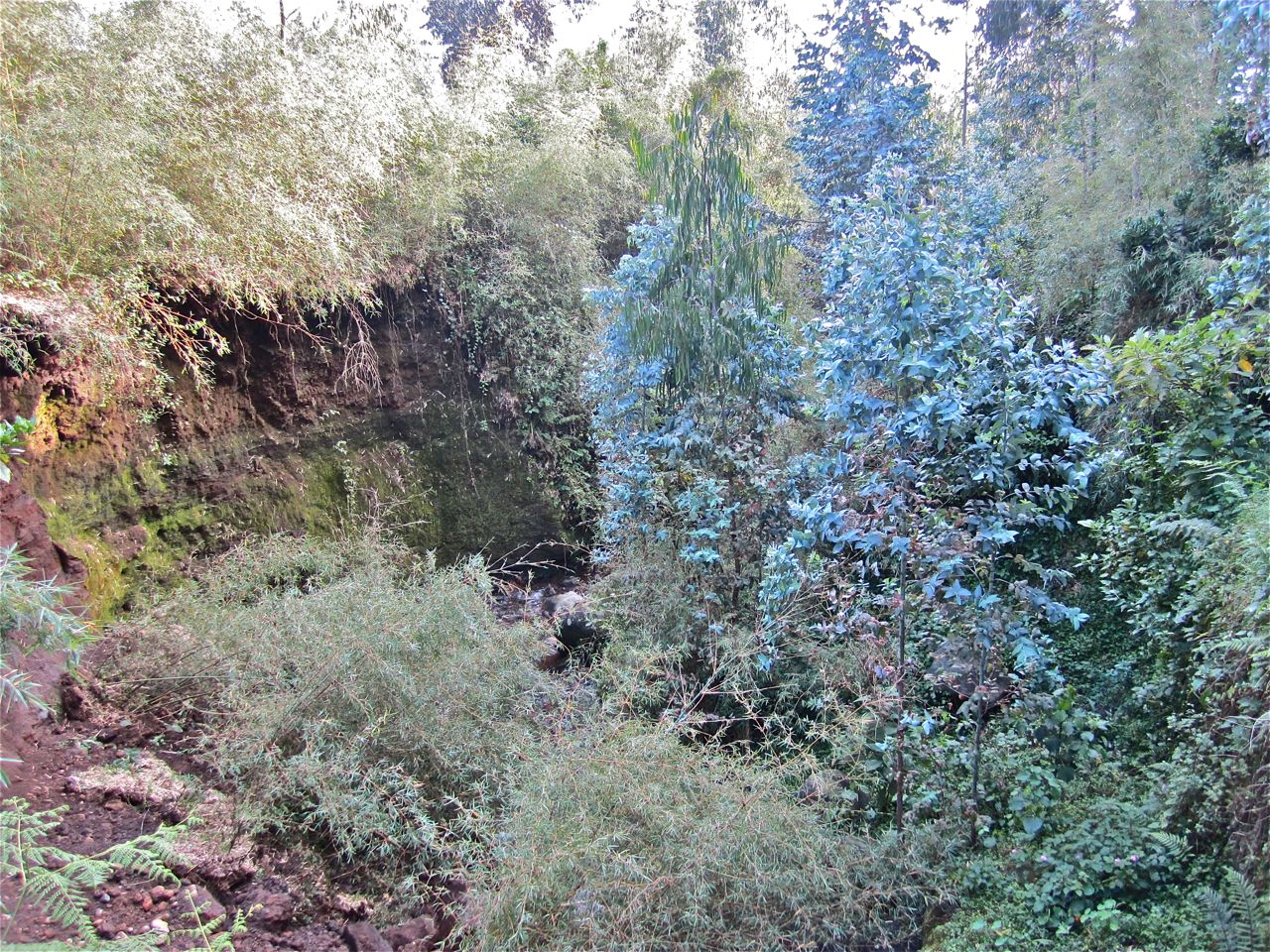
The view from a cottage window.One of the views at Sabyinyo, somewhat obscured by clouds.A path through the bamboo.Patio at the entrance to the main building.A large fern by the patio steps.Another very large fern near the main building.Ferns and other wild plants along the path.A smaller wild fernFern detail.Impatiens native to Rwanda.The water retention pool.Small stream gorge filled with bamboo and eucalyptus.
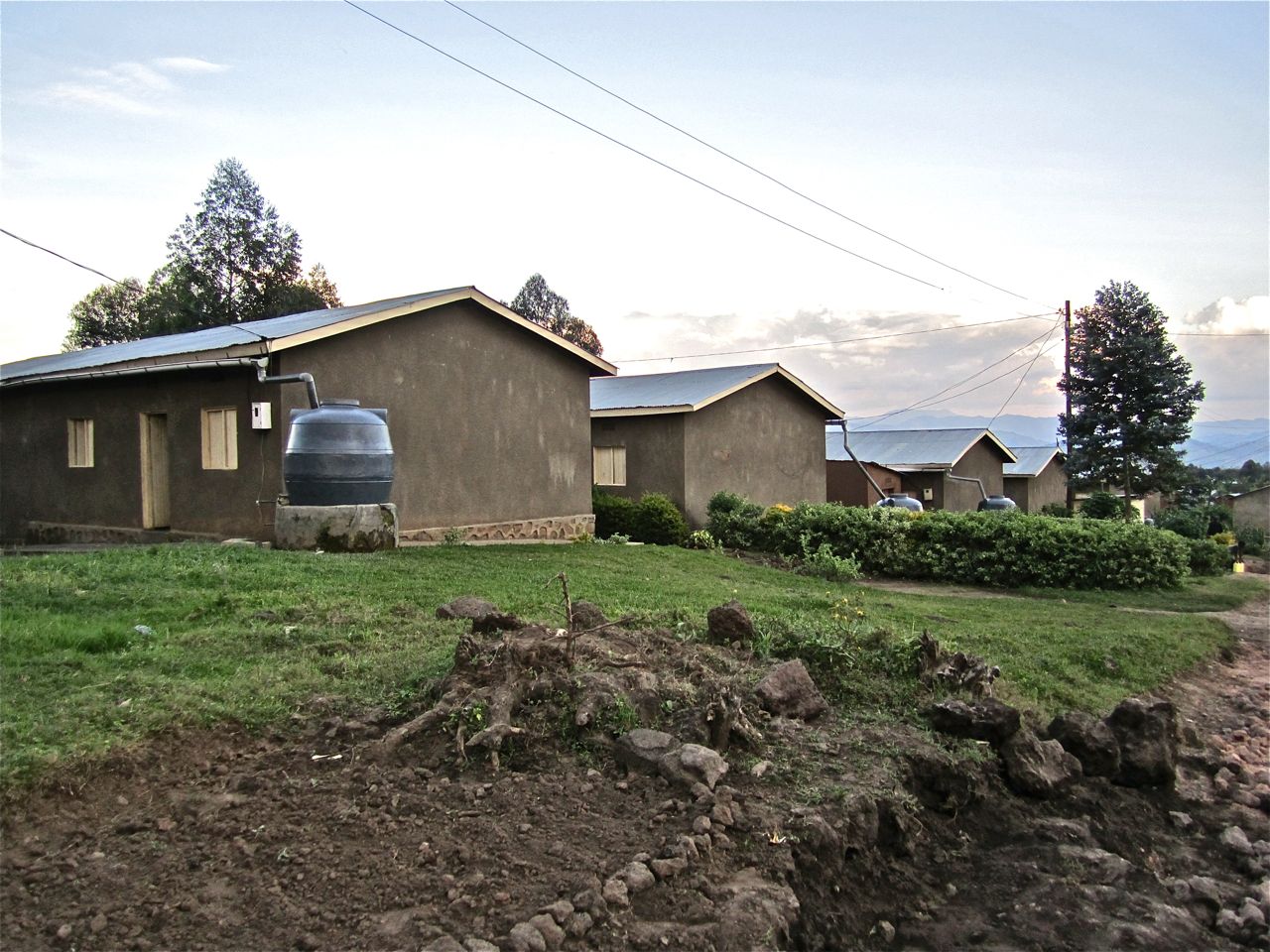
We ended our day in the village of Susa, largely made up of 96 homes built with the assistance of the Rwandan government. The people who live there include Genocide survivors, Batwa (pygmys), and Rwandans formerly living in exile in Tanzania.
Village homes with tanks that capture rainwater runoff from the roofs.
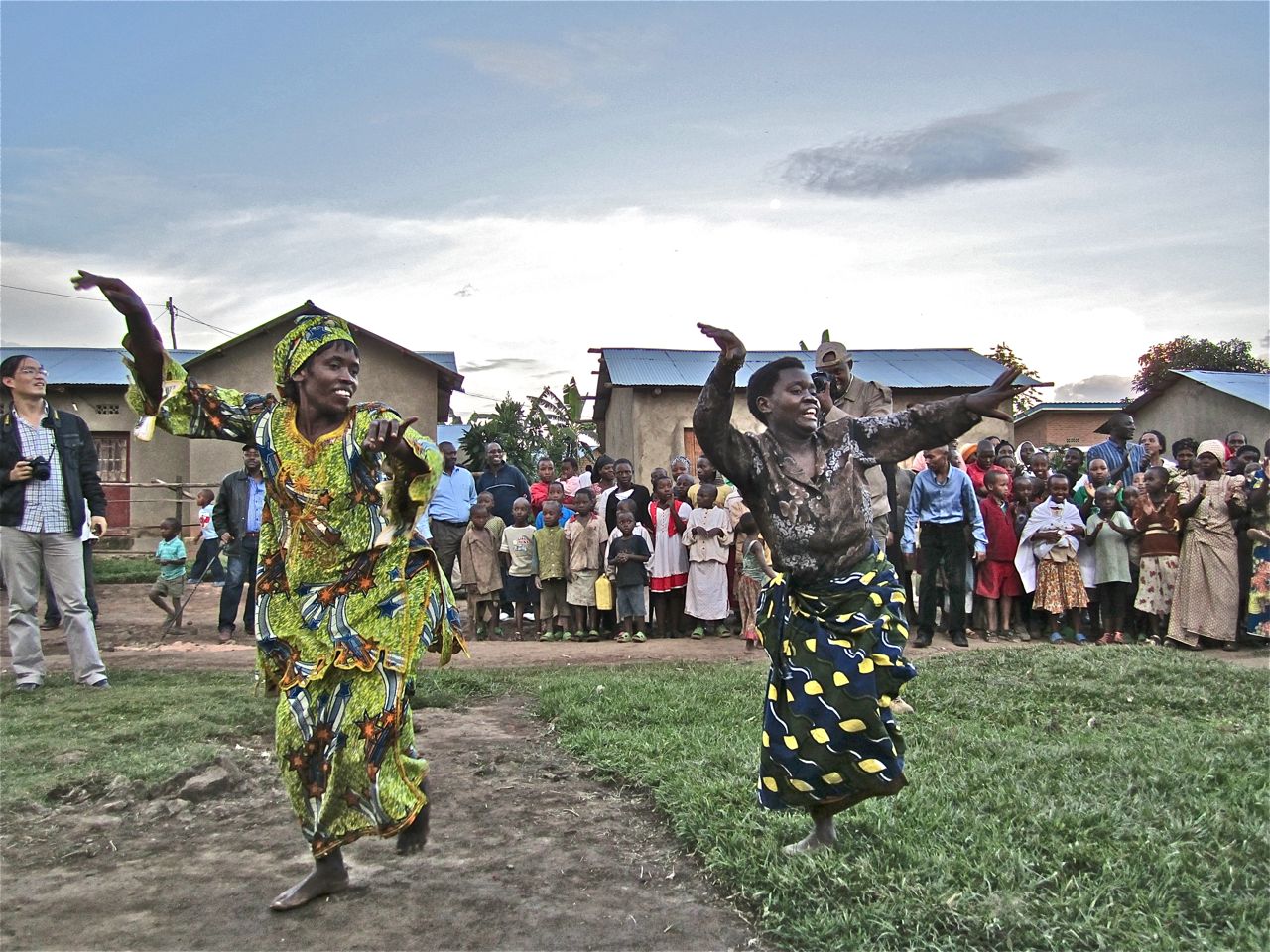
As the light began to fade, we were greeted by dancers.