The Sunday porch: luncheon

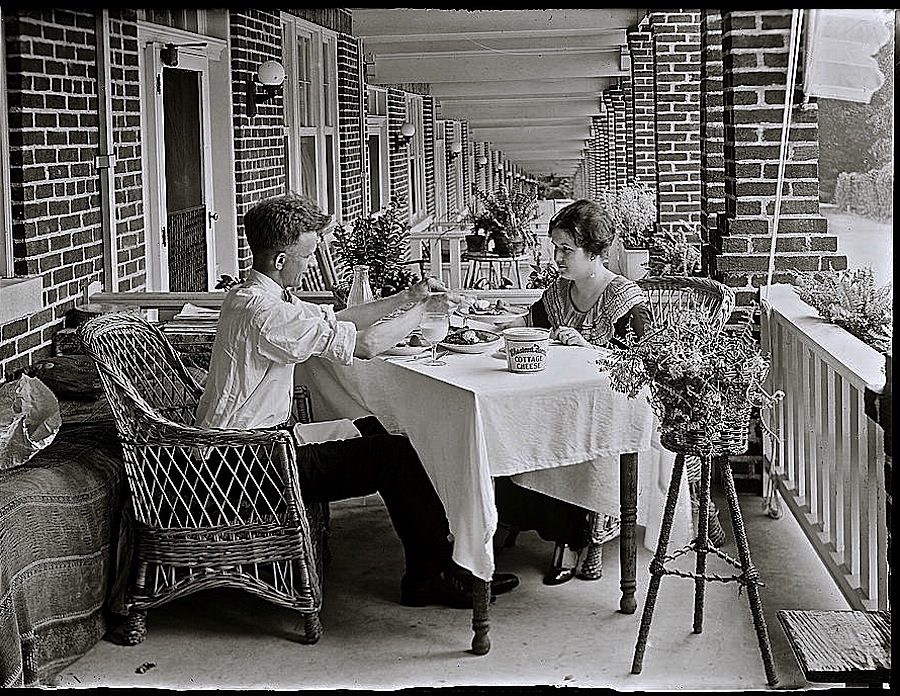
The Sunday porch:enclos*ure- cozy porch interior, ca. 1900, via Library of Congress“Man and woman eating at table on front porch of row house,” Washington, D.C., 1924, by National Photo Company, via Library of Congress Prints and Photographs Division.

I’m sure that this photo was taken to illustrate an advertisement for the maker of that tub of cottage cheese on the table.  (I can’t make out the name of the dairy company.)

You can click on the picture to enlarge it — then you can see that the couple are drinking their milk from wine glasses.

The location could have been in any one of several northwest D.C. neighborhoods — so popular in the city was the Wardman-style of rowhouse by the 1920s.

ADDENDUM:  I found another photo of the same couple, here, having a picnic lunch in Rock Creek Park — again with plenty of cottage cheese.

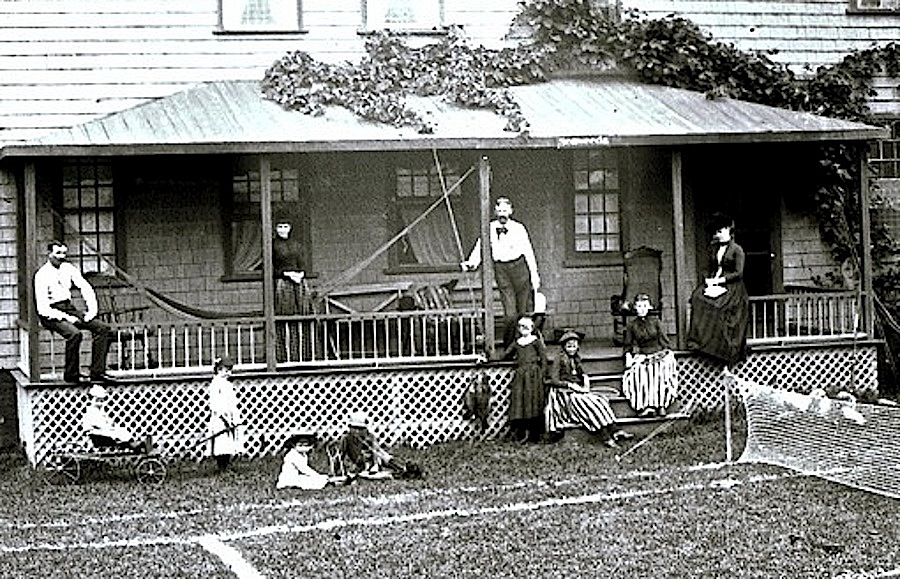
The Sunday porch: grandstand

India House, 1880s, Nantucket Historical Association“India House. A yard filled with diversions, ca. 1880s,” Nantucket, Massachusetts, via Nantucket Historical Association Commons on flickr.

India House, detail, 1880s, Nantucket Historical Association
Detail. These two families were very well equipped to enjoy their summer vacation.

You can click on either photo to enlarge it. I particularly like the striped skirts on the two older girls.

Life in gardens: tea stop

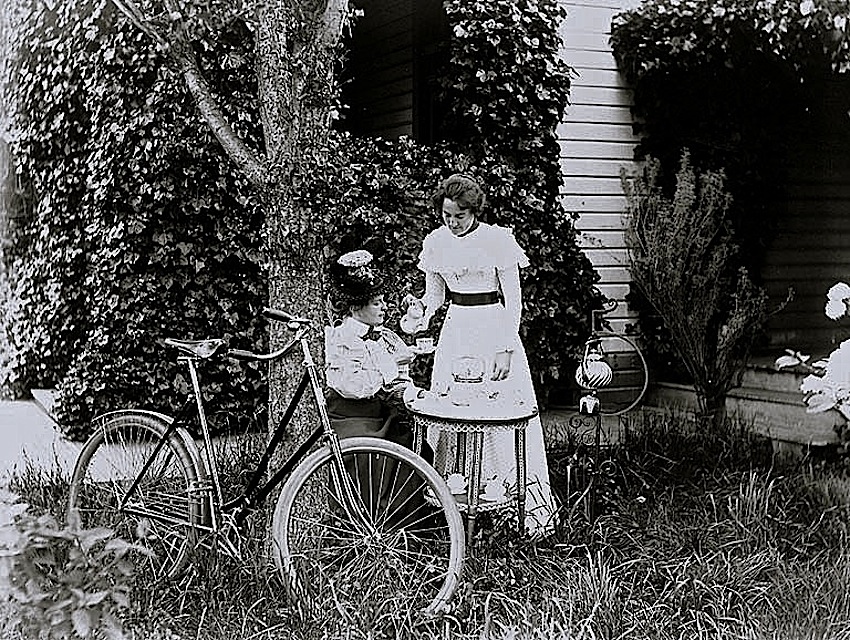
Tea and bicycle, ca. 1900, Univ. of Washington Libraries“Two women with bicycle,” Hoquiam, Washington, photographer unknown, via University of Washington Libraries Commons on flickr.

Modern and stylish, ca. 1900.   That’s an interesting device for keeping the kettle warm.

Young women of that time must have been pretty desperate to get out on their own — to bicycle in corsets, puffy high-necked blouses, and large hats.

Beautiful, thick vines on the porch behind them. (You can click on the photo to enlarge it.)

. . .Tell, tell your griefs ; attentive will I stay,
Tho’ time is precious, and I want some tea.

— Lady Mary Wortley Montagu, from “Thursday; the Bassette- Table

Life in gardens: dahlias

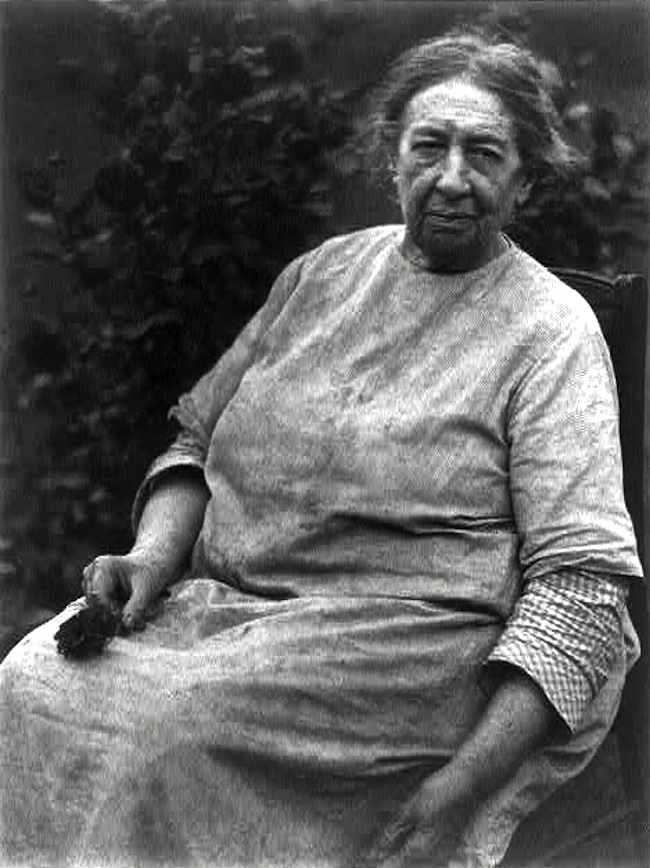
Woman with dahlia, Library of Congress“Woman with dahlias,” ca. 1930, by Doris Ulmann, via Library of Congress Prints and Photographs Division.

In this beautiful portrait of an older Appalachian women, you can just see her stand of dahlias behind her.

In the traditional language of flowers, the dahlia is usually said to represent dignity, sometimes elegance.

A well-to-do New Yorker, Doris Ulmann trained as an art photographer with Clarence H. White in the 1910s. In the 1920s, she began traveling to the southeast to photograph rural people, particularly in the hills of Kentucky and the Sea Islands of South Carolina — people “for whom life had not been a dance.” She also documented Appalachian folk arts and crafts, working with musician and folklorist John Jacob Niles.

Life in gardens: 1967

Tompkins Square Park, 1967, George Eastman HouseTompkins Square Park, East Village, New York City, 1967, by James Jowers, via George Eastman House Commons on flickr.

Tompkins Square Park . . .  was reconstructed [in the mid 1960s,] just in time for an era of sweeping changes. The surrounding neighborhood became the east coast version of ‘Haight-Ashbury.’ Rock musicians, poets, hippies, and political activists transformed downtown Manhattan into a center for counter-cultural activities and political protest. It was during the mid- to late-1960s that the area surrounding Tompkins Square Park came to be called ‘The East Village.’ . . .

Tompkins Square had once before been the site of powerful expressions of joy and rebellion. A century earlier, German-Americans had transformed the square with their volkefestes and mass demonstrations. Their spirit and command of the space were being revived— only now in 1960s terms. Young people demonstrated at the bandshell against American involvement in Vietnam and in favor of women’s and third world liberation movements. They gathered to hear bandshell concerts put on by the Fugs, the Grateful Dead and Charles Mingus. They were certainly ignoring signs that cautioned ‘keep off the grass.’ . . .

— Laurel Van Horn, from “A History of Tompkins Square Park