Vintage landscape: the watchers

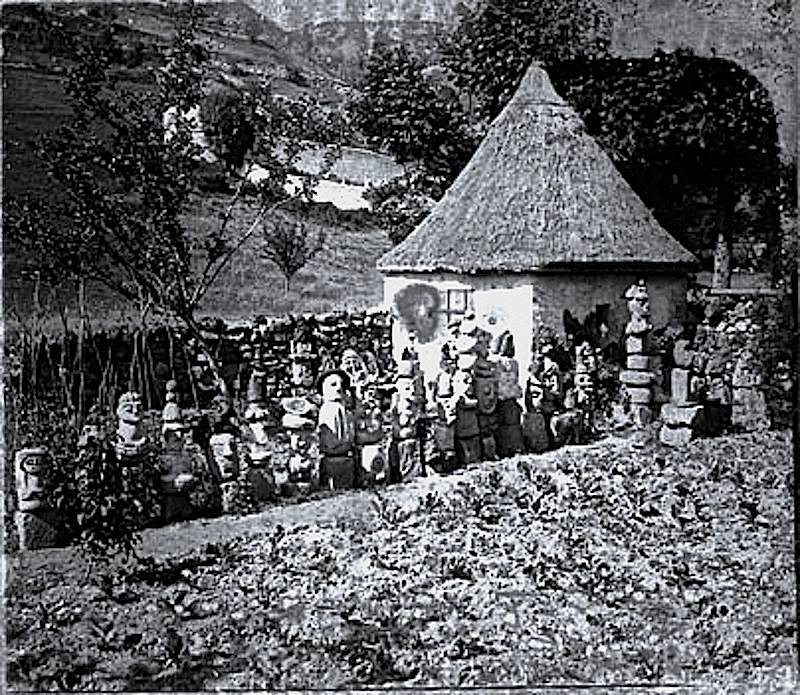
Clay figures, Bibliotheque ToulouseFigurines de pierre (stone) dans un potager,” between 1859 and 1910, by Eugène Trutatvia Bibliothèque de Toulouse Commons on flickr.

Unfortunately, the old image is not very clear.

The location of the vegetable garden was not noted, but the Bibliothèque assigns it to the Germany album. Trutat took a large number of pictures while traveling in the Rhineland-Palatinate region in the early 1920s.

Bus stop meadow

On a weekend walk in the southern suburbs of Stuttgart, I paused near a bus stop to admire the long uncut grass between the sidewalk and the street.

(Click on any of the thumbnails above to scroll through larger versions of the photos.)

Many public green spaces in the area have been left unmown this spring, and they could hardly be more beautiful.

Sumer is i-cumin in—
Lhude sing, cuccu!
Groweth sed and bloweth med
And springth the wude nu.
Sing, cuccu!

[Summer has arrived,
Loudly sing, cuckoo!
The seed grows
and the meadow blooms
And the wood springs anew,
Sing, cuckoo!]

Anonymous, from “Sumer is i-cumin in

ADDENDUM:  I just realized that today this blog is four years old.  Thanks for visiting!

The Sunday porch: Mount Toxaway

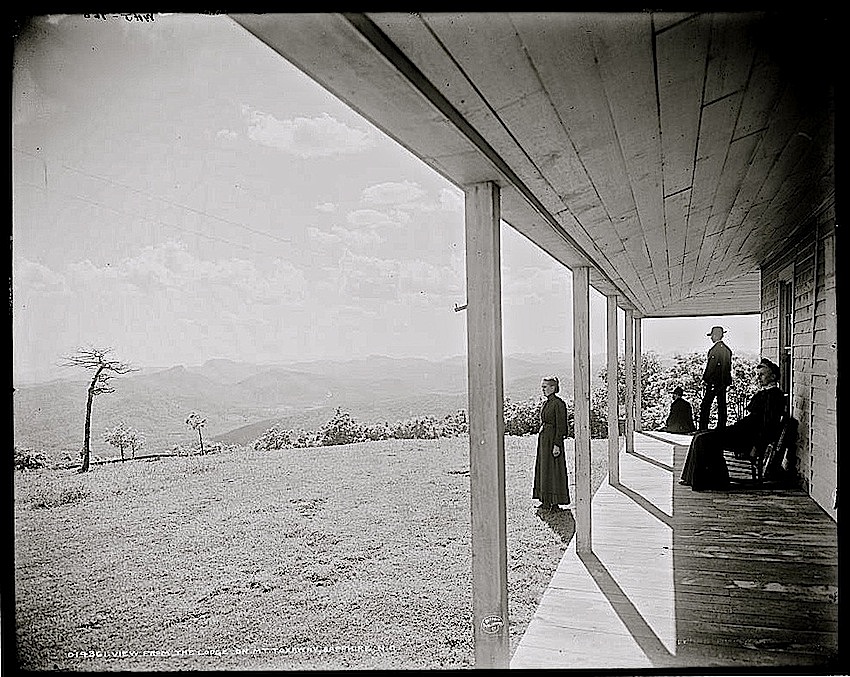
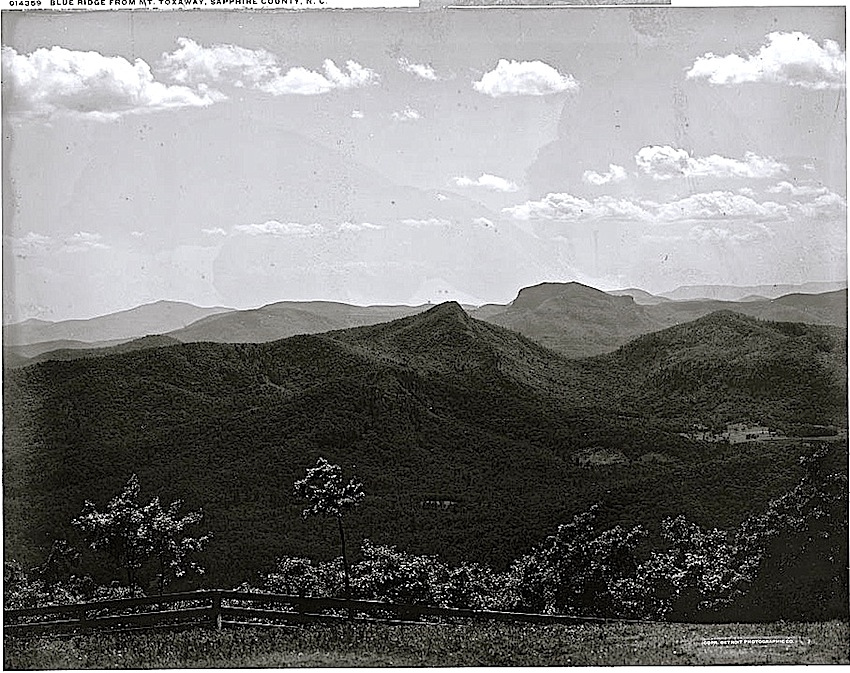
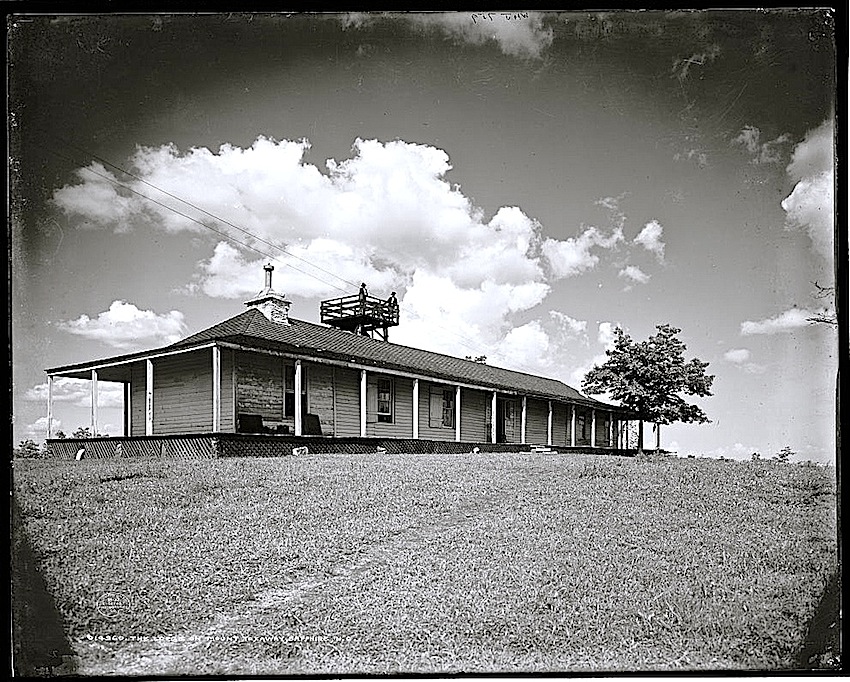
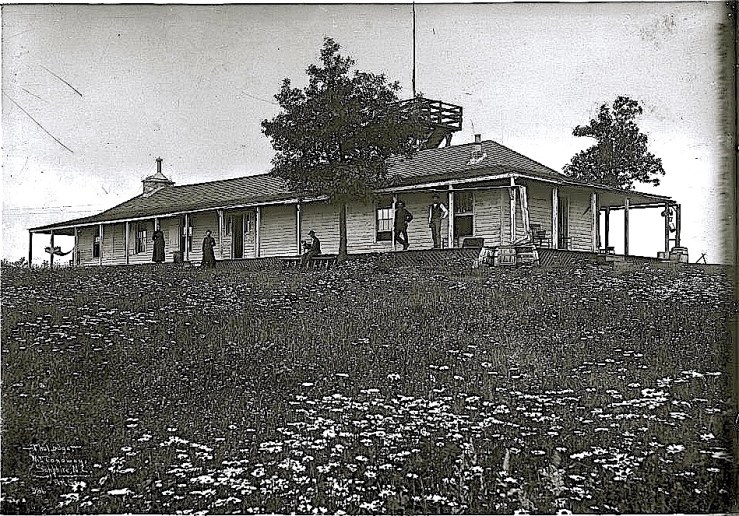
2 The Sunday porch:enclos*ure -- Lake Toxaway, c. 1902, Library of CongressThe Lodge on Mount Toxaway, Sapphire, North Carolina, ca. 1902, by William Henry Jacksonvia Library of Congress Prints and Photographs Division (all photos here).

The Lodge was part of the Toxaway System of Hotels, created by a group of Pittsburgh entrepreneurs who began to built resorts in the Sapphire area in the 1890s.

By 1903, they had dammed the Toxaway River — creating the 640-acre artificial Lake Toxaway — and constructed the luxurious 500-guest Toxaway Inn.  After 1904, when the Southern Railroad opened a depot on the lake, the area was known as “Switzerland of America.”
1 The Sunday porch:enclos*ure -- Lake Toxaway, c. 1902, Library of Congress

The Lodge was presented in a 1905  company brochure as a “nature kindergarten” for “children of the city” to learn about trees, flowers, and birds. Farm animals and poultry were also available for study.
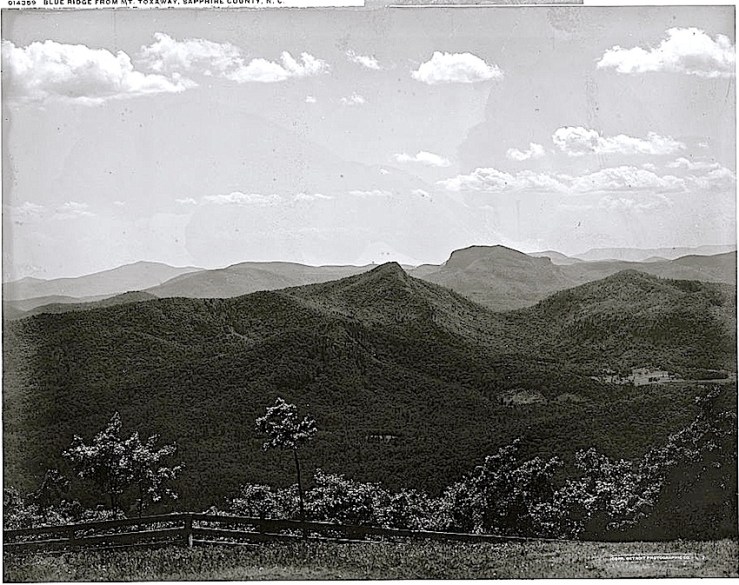
4 The Sunday porch:enclos*ure -- Lake Toxaway, c. 1902, Library of Congress

At an altitude of over 4,500 ft., the views from the wrap-around porch and the lookout tower were particularly good. Guests from the other Toxaway hotels would spend the night in the house to see the sunrise or sunset over the mountains.

It was also used as a hunting retreat for wealthy industrialists.
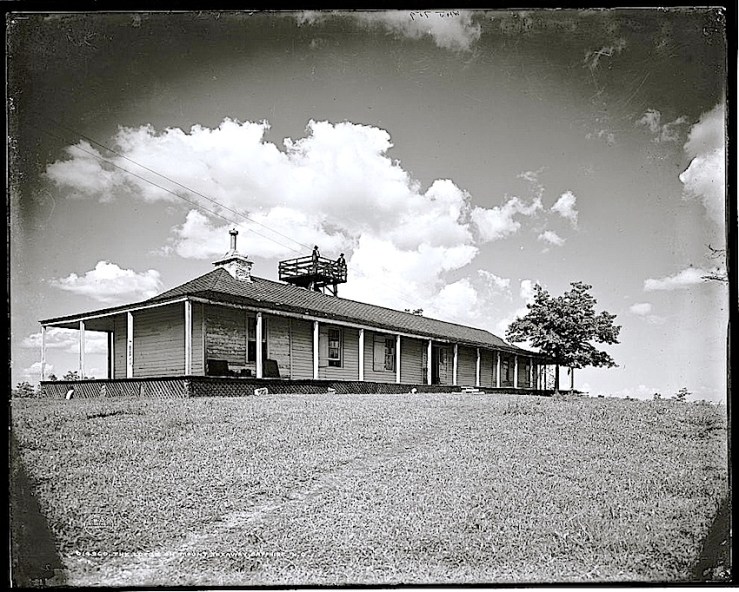
3 The Sunday porch:enclos*ure -- Lake Toxaway, c. 1902, Library of Congress

The Lodge no longer exists — although it  was still there in 1920, four years after severe flooding caused the company’s dam to burst. (Some homes were destroyed, but only a mule perished.)

Lake Toxaway disappeared, and the Toxaway Inn emptied out as well. It never re-opened after 1916 and was demolished in 1947.

In the early 1960s, another group of investors rebuilt the dam. The lake re-filled, and a golf club and hotel were opened. The property around what was once The Lodge is now  Preserve at Rock Creek, an “exclusive” real estate development.

To scroll through larger version of the photos, click on ‘Continue reading’ below and then on any thumbnail in the gallery.

My mind was once the true survey
Of all these meadows fresh and gay,
And in the greenness of the grass
Did see its hopes as in a glass. . .

— Andrew Marvell, from “The Mower’s Song

The Sunday porch: irises

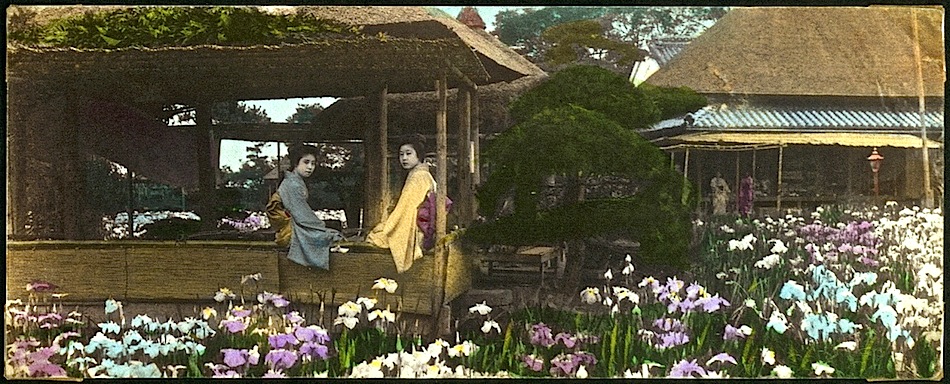
Japanese Iris GardenTwo women in a pavilion overlooking irises in Japan, between 1860 and 1910.

Japanese Iris Garden, cropped 1
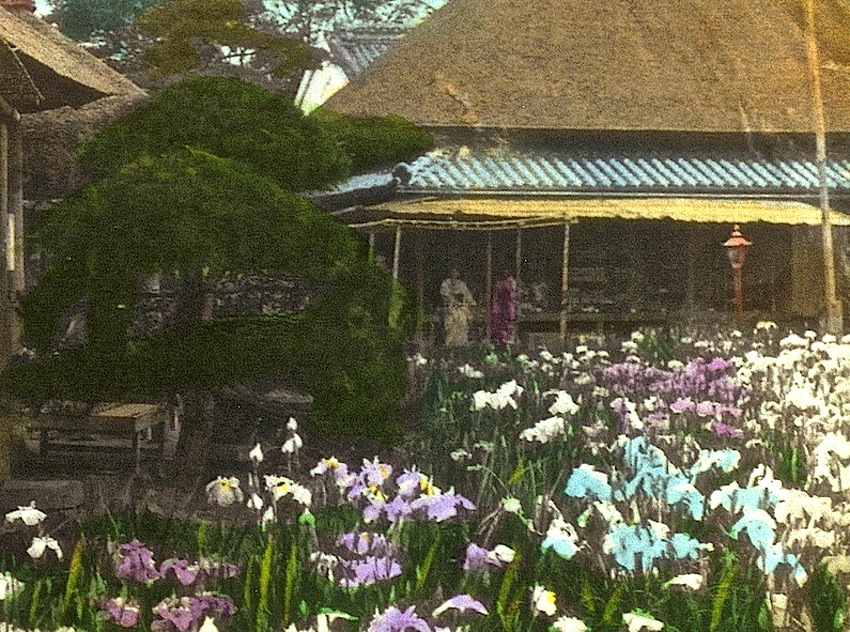
Detail of photo above.

This hand-colored photograph comes from the National Museum of Denmark Commons on flickr — part of a collection that belonged to journalist Holger Rosenberg.

Unfortunately, the museum does not have any additional information about it.

Japanese Iris Garden, cropped 2
Detail of top photo. The flowers are probably growing in slightly sunken, wet or damp ground.

In Heian Period [794 -1185] Japanese gardens, built in the Chinese model, buildings occupied as much or more space than the garden. The garden was designed to be seen from the main building and its verandas, or from small pavilions built for that purpose. In later gardens, the buildings were less visible. Rustic teahouses were hidden in their own little gardens, and small benches and open pavilions along the garden paths provided places for rest and contemplation. In later garden architecture, walls of houses and teahouses could be opened to provide carefully framed views of the garden. The garden and the house became one.

— “Japanese garden,” Wikipedia

Click here to see all the Museum’s online photos of Japanese landscapes (and some wonderful kimonos).

There’s also a 1913 Japanese iris garden in East Hampton, N.Y., here.

To scroll through larger versions of these images, click on ‘Continue reading’ below and then on any thumbnail in the gallery.

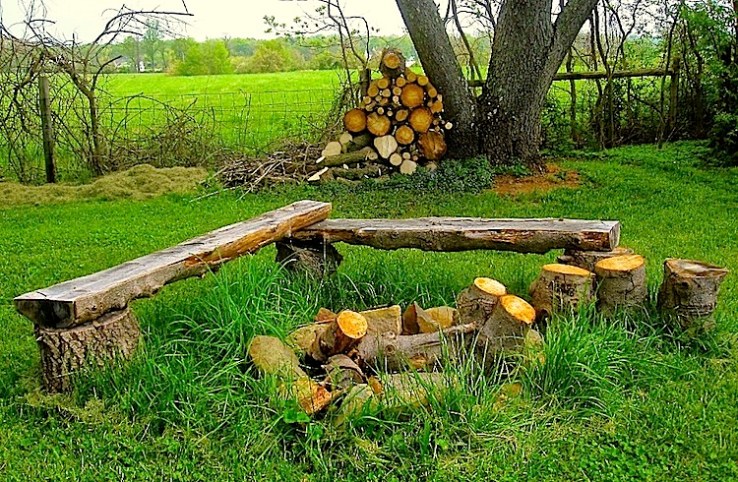
The fire pit in May

There is a fire pit underneath, awaiting summer cleanup — but I was drawn to the nice arrangement of shaggy grass and logs* (and, of course, the bench and the other beautiful pile of wood in the background).

This is at my brother’s and sister-in-law’s home in Loudon County, Virginia. The picture is from her (mostly about) quilting blog, deeroo designs.  Check out the spring color in their garden and also some ideas for half-square triangles here.

There’s another nice arrangement of logs here.

Tomorrow Tuesday Wednesday, about my own long grass. . .

Of all our sunny world
I wish only for a garden sofa
where a cat is sunning itself.

Edith Södergran, from “A Wish


*I imagine a nice little snake has been drawn to it too.

Photo © deeroo designs.