“Fenderson cottage at Lake City on Megunticook Lake in Camden, Maine, in September 1900,” by Theresa Parker Babb, via Camden Public Library Commons on flickr.
Lake City seems to have been a neighborhood of summer homes. From the late 1880s, “a flood” of people from the eastern cities –often rich and prominent– built cottages in and around Camden, drawn by the surrounding scenery and the town’s romantic seafaring past.
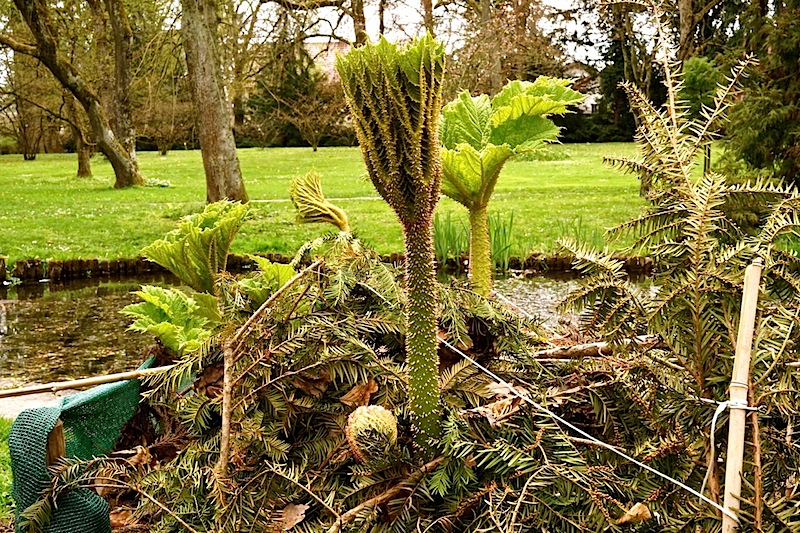
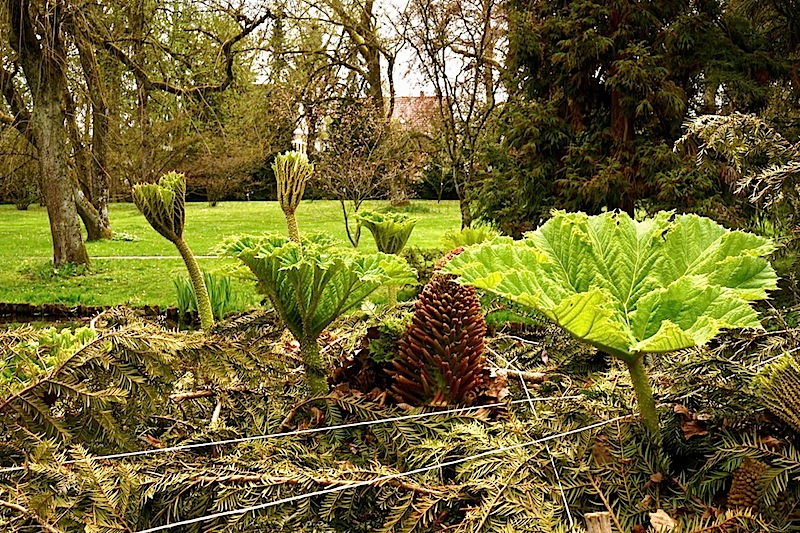
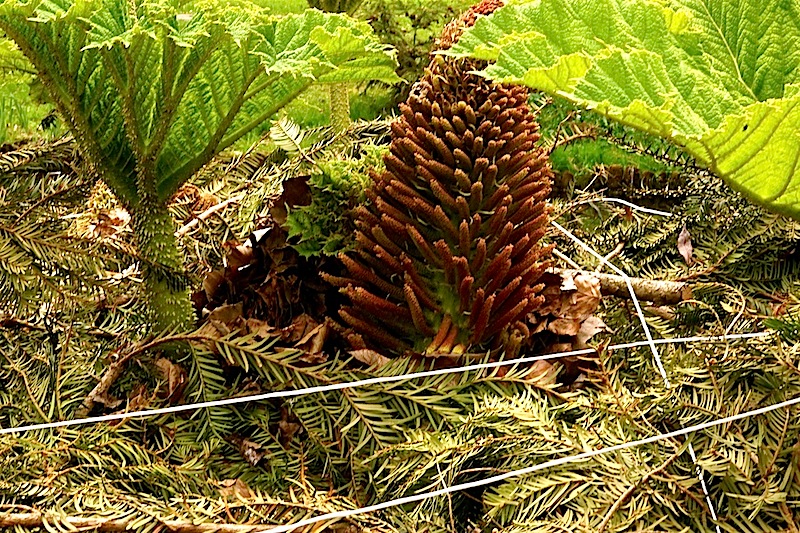
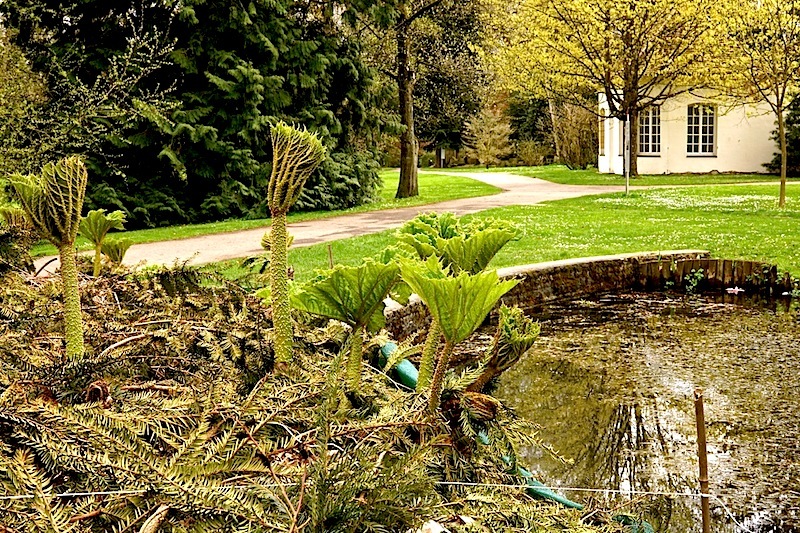
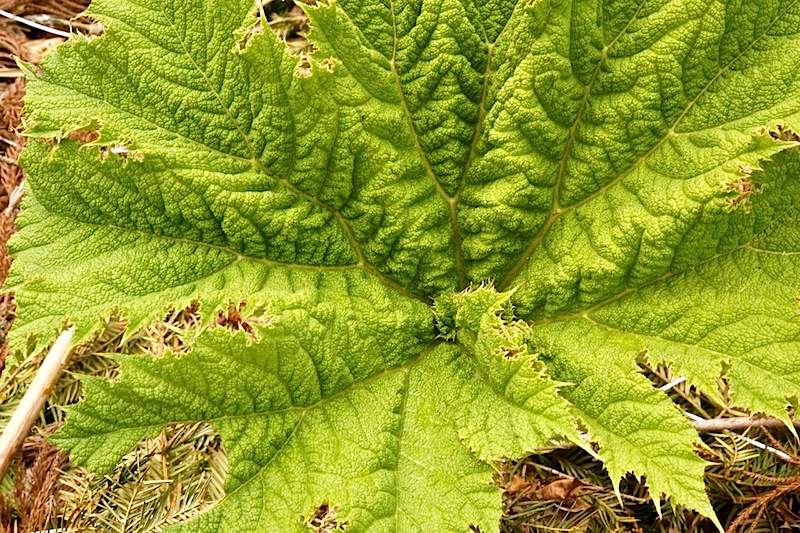
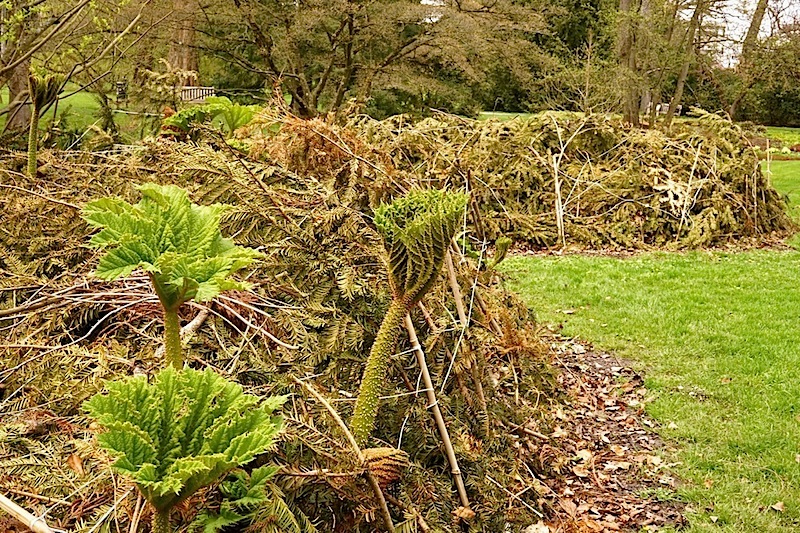
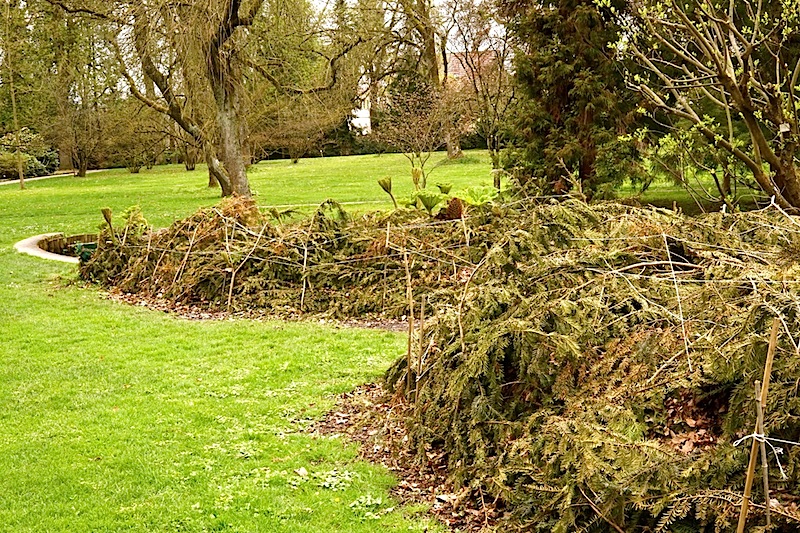
Please correct me if I’m wrong, but I think this is a Gunnera manicata pushing its way up through its winter protection. It’s planted at the edge of one of the ponds at the botanical garden of the University of Hohenheim, not far from our neighborhood. (Unfortunately, its plant tag is also somewhere under all those old branches.)
Thanks to Pam at Digging for hosting Garden Bloggers’ Foliage Follow Up the 16th of every month.
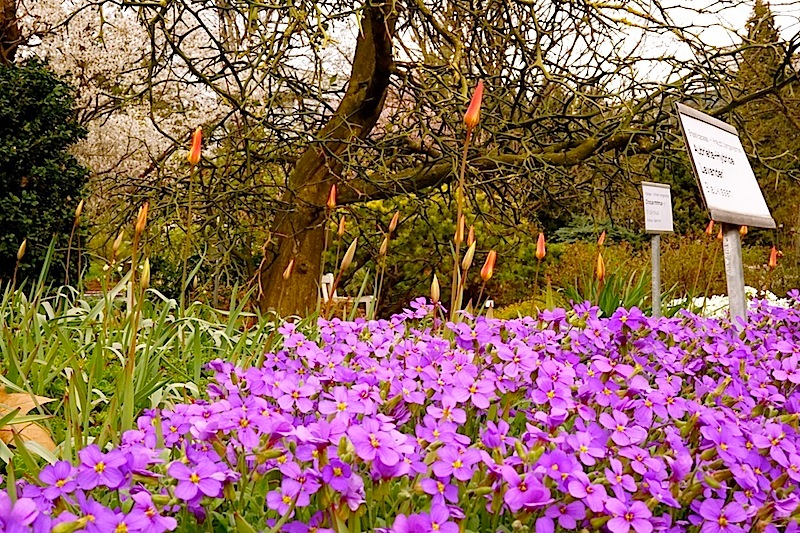
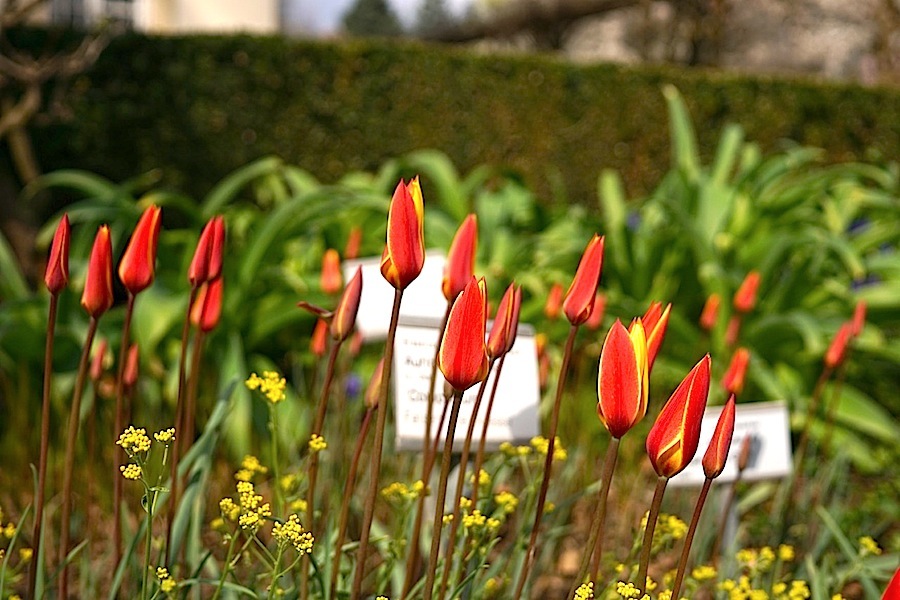
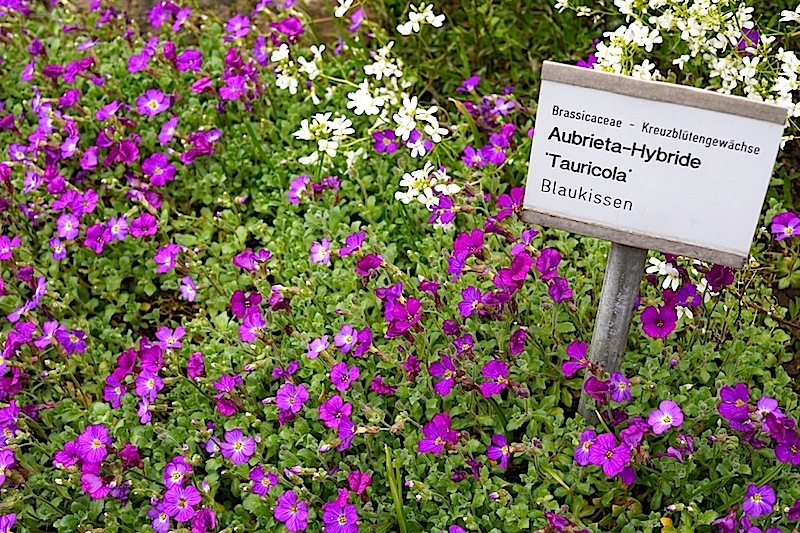
The tulips are T. Clusiania ‘Tubergen’s Gem’. The purple ground cover is Aubrita-Hybride ‘Lavander’.
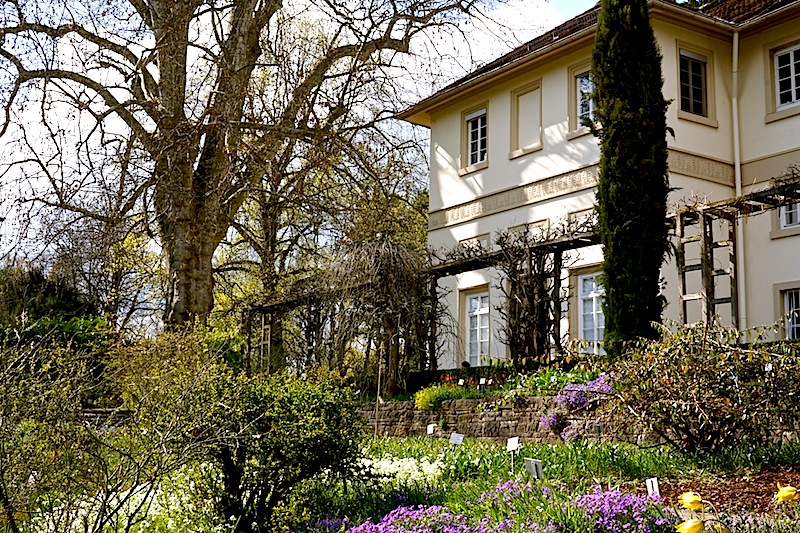
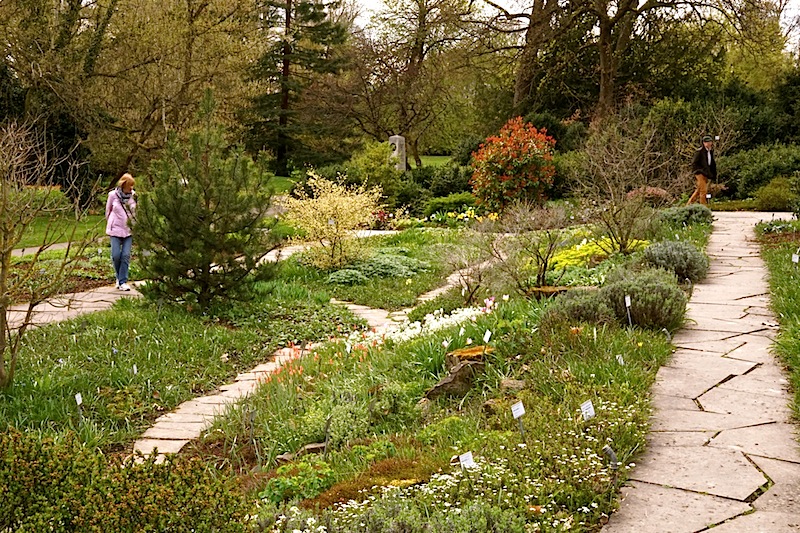
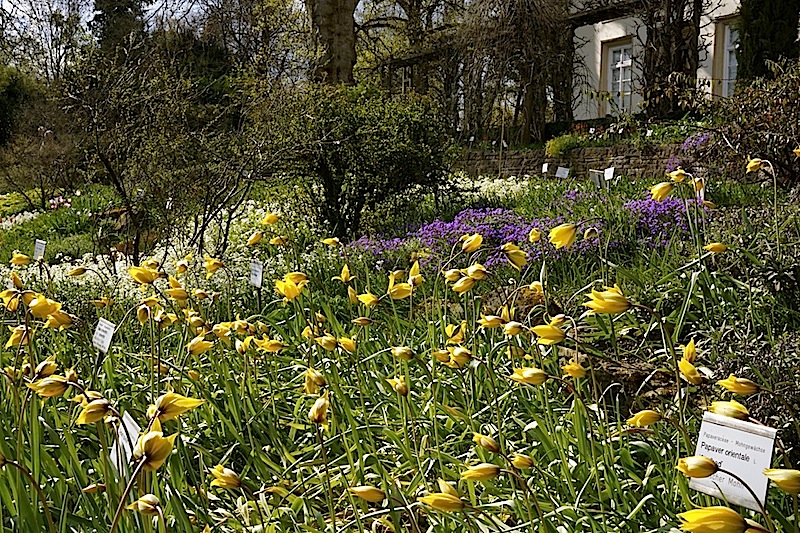
This month, I’m again stalking the pretty display garden of the Spielhaus* at the University of Hohenheim, which is close to our neighborhood.
What’s blooming? Low groundcover plants, tulips, and magnolias.
The purple groundcover is Aubrieta-Hybride ‘Tauricola’ and ‘Lavander’.The pale yellow-blooming shrub is Corylopsis pauciflora. I believe the low white flowers in the foreground are Arabis caucasia ‘Schneehaube’.
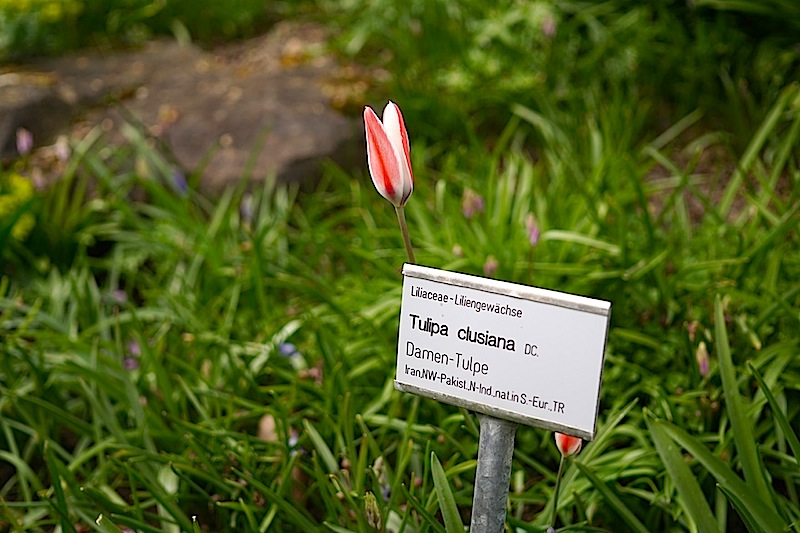
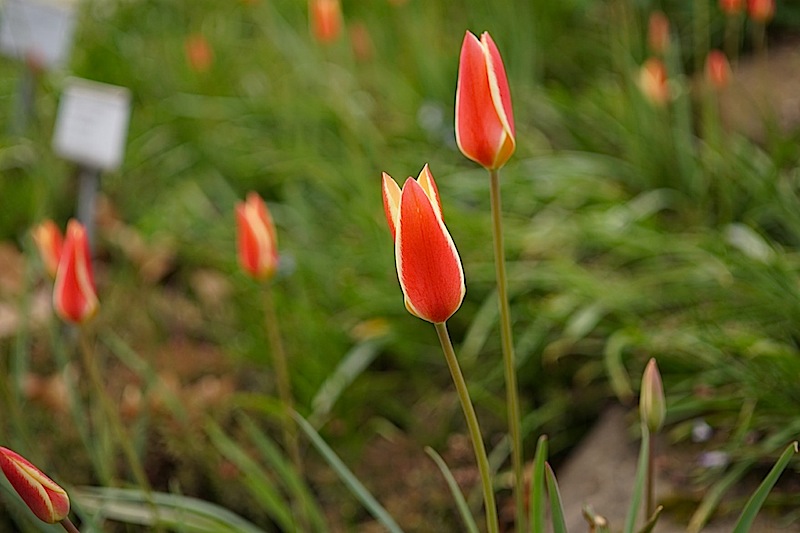
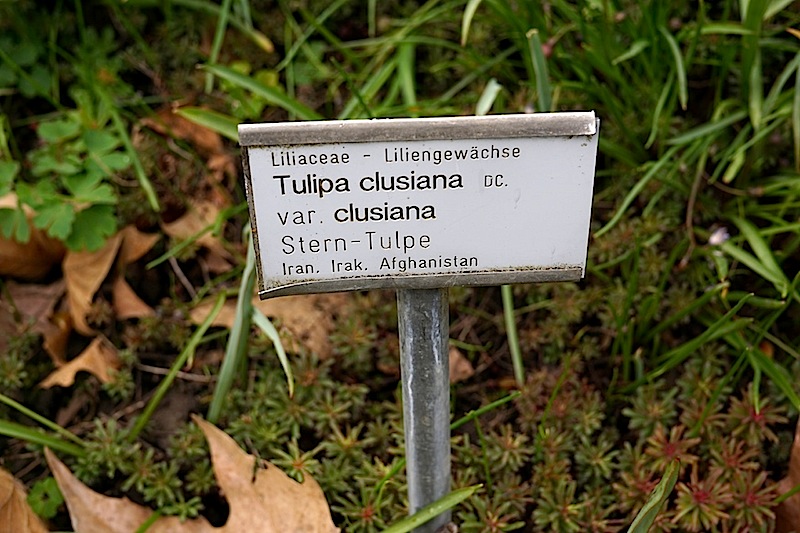
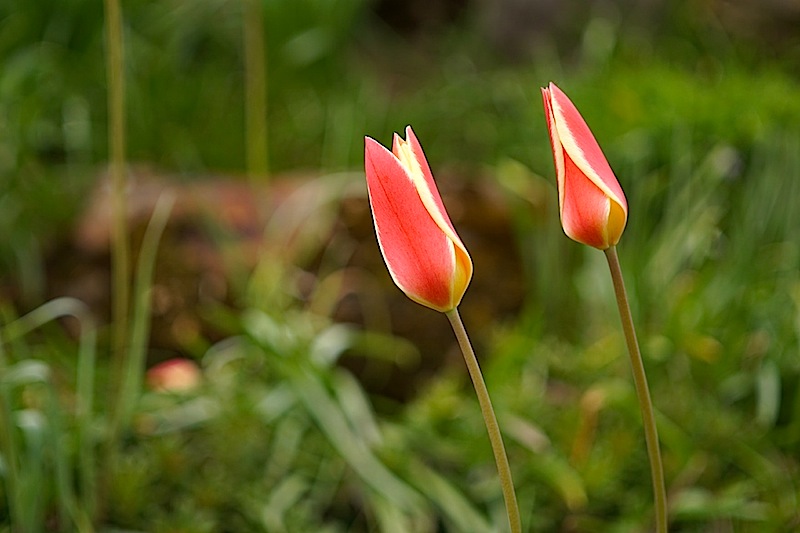
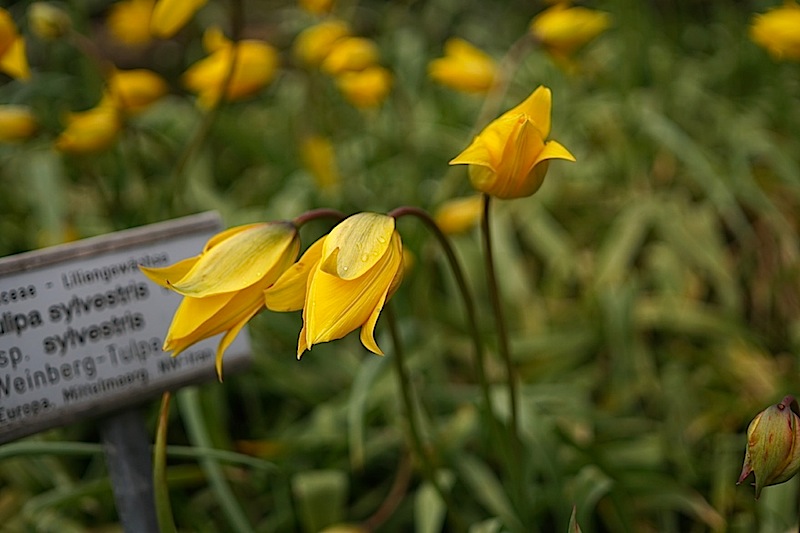
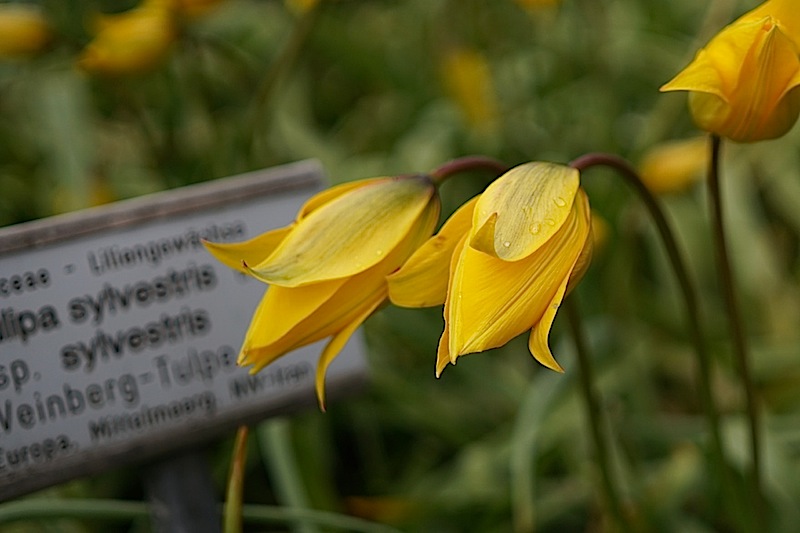
I believe these are Tulipa clusiana var. clusiana, although there were also var. chrysantha in the same area (as well as ‘Tubergen’s Gem’), and I realized after I got home that I hadn’t been careful enough keeping the flowers with the labels.
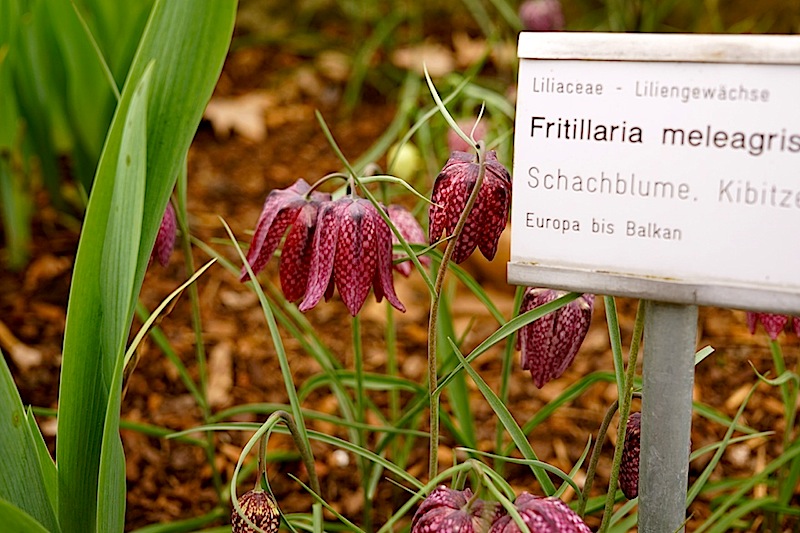
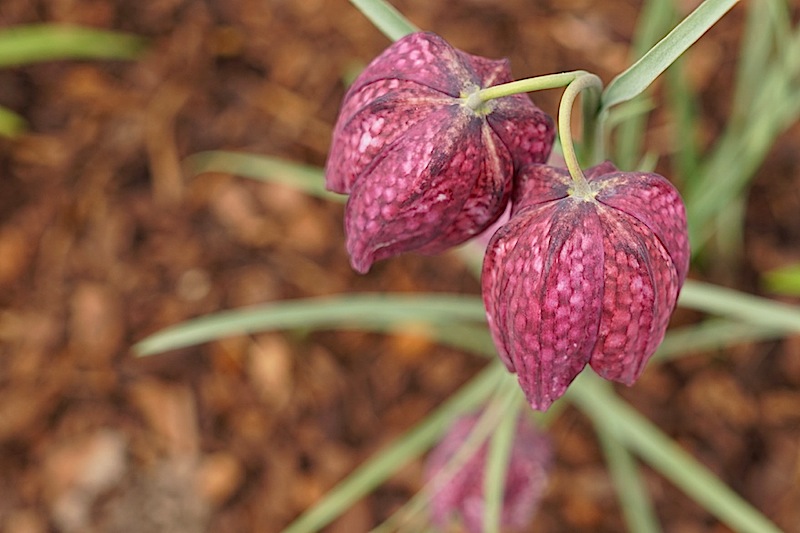
The fritillary were still blooming. They have also been called snake’s head fritillary, chess flower, frog-cup, guinea-hen flower, guinea flower, leper lily (from the bell once carried by lepers), Lazarus bell, chequered lily, chequered daffodil, and drooping tulip.
There’s a good article about them here, from the online garden magazine Dig Delve.
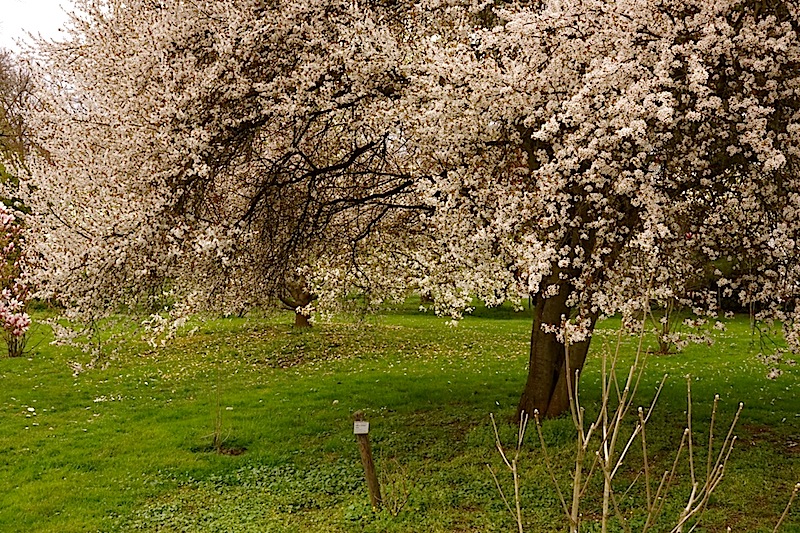
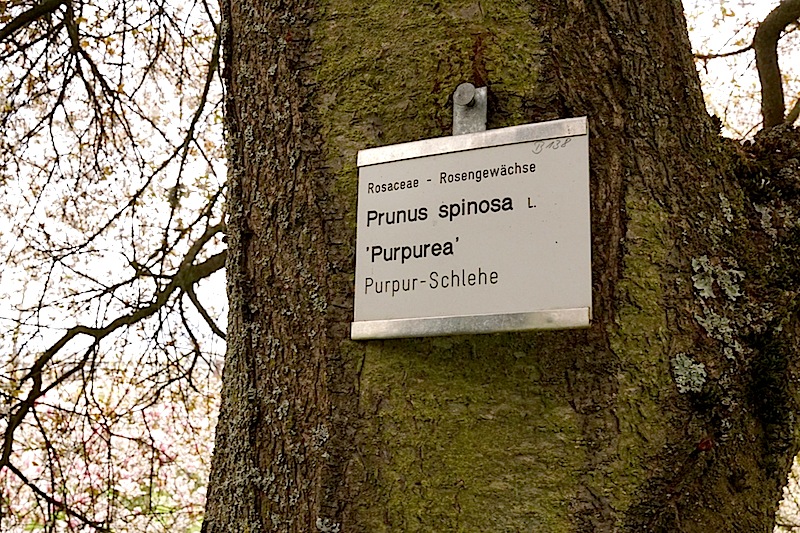
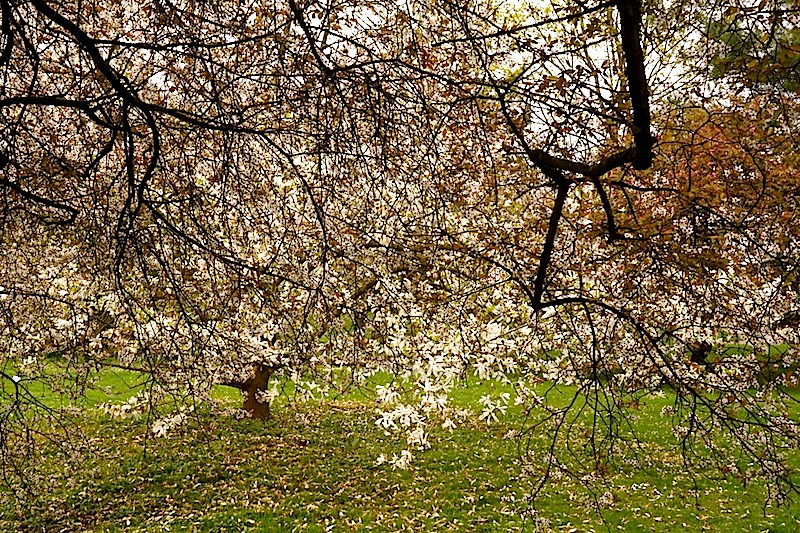
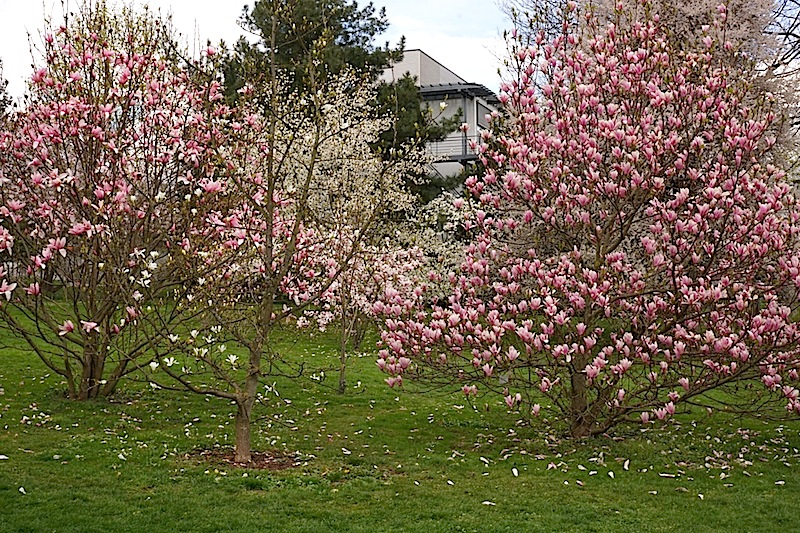
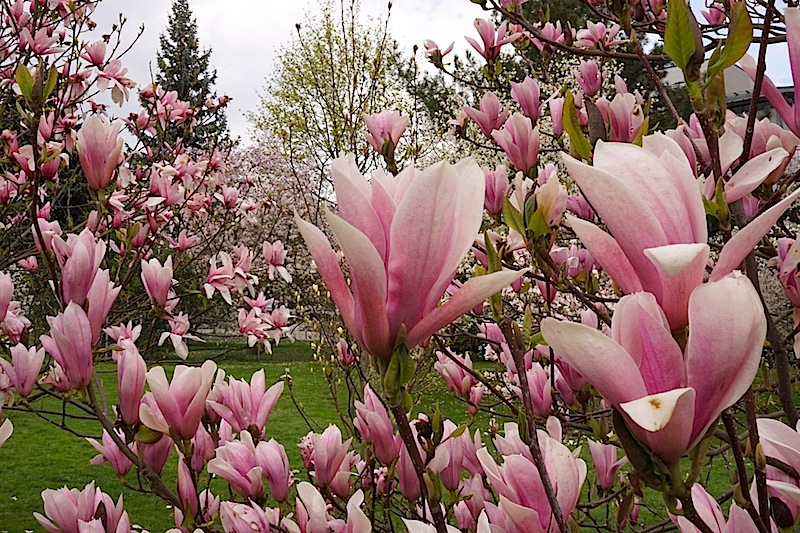
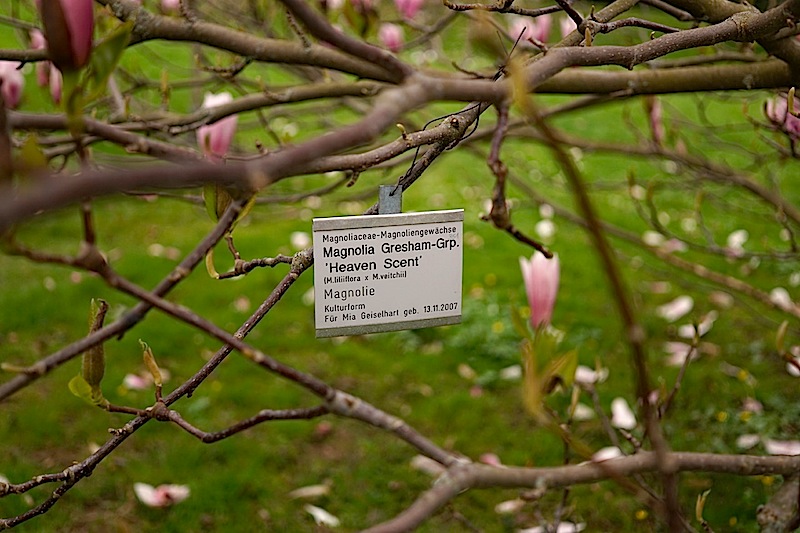
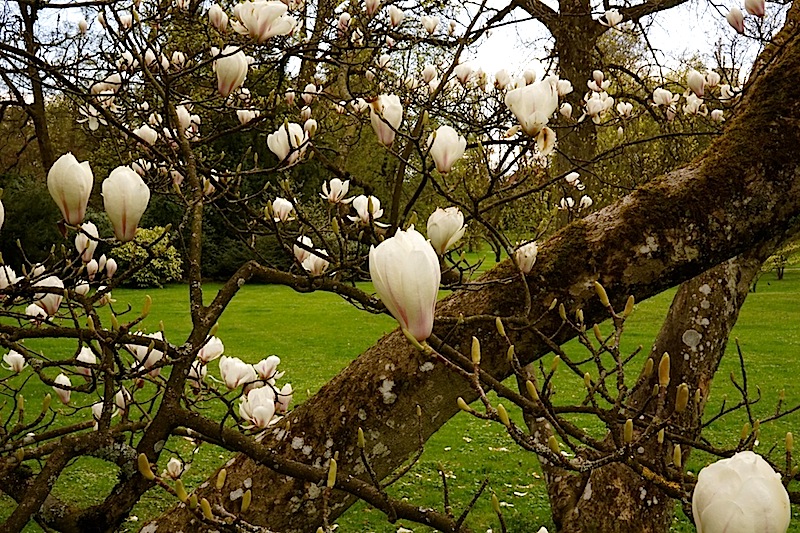
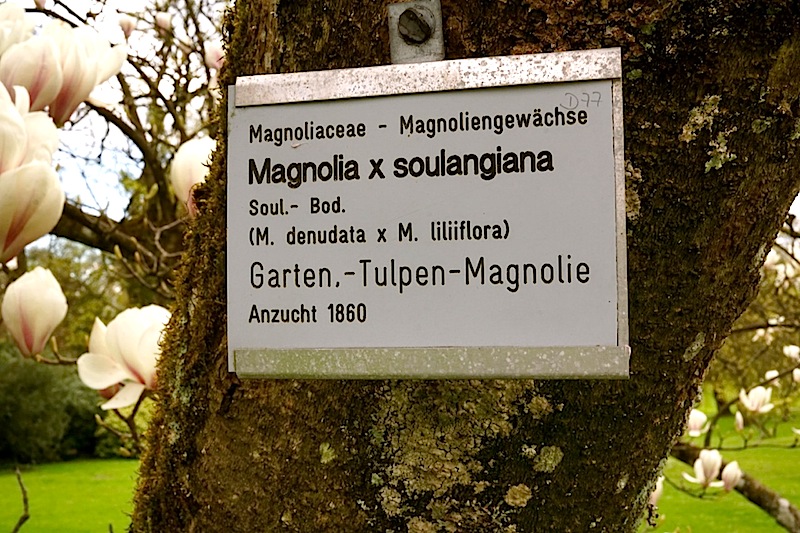
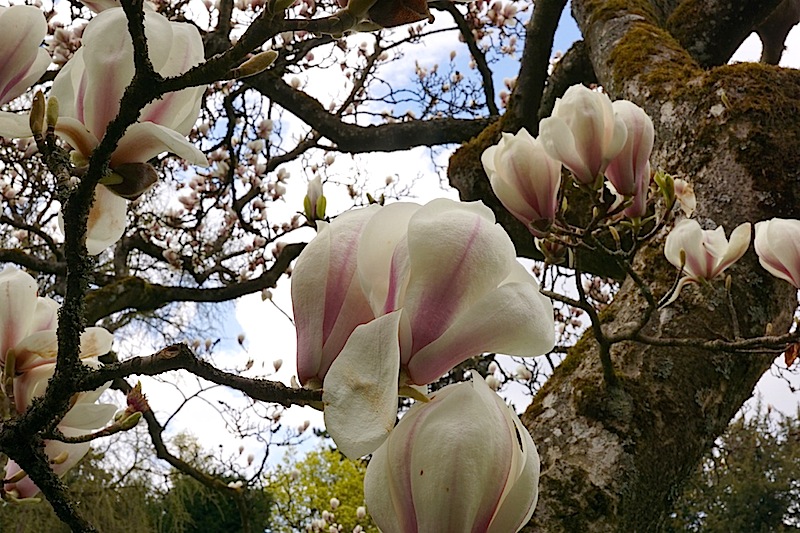
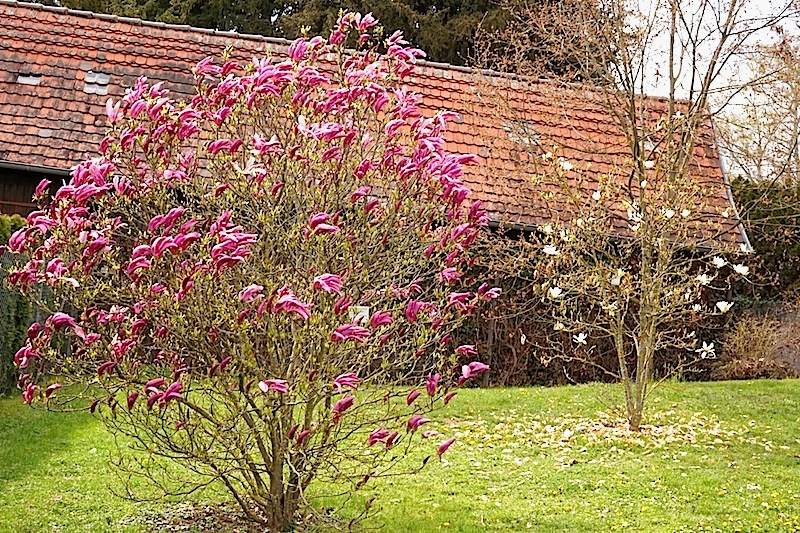
Just behind the Spielhaus were a collection of magnolia, cherry, and plum trees.
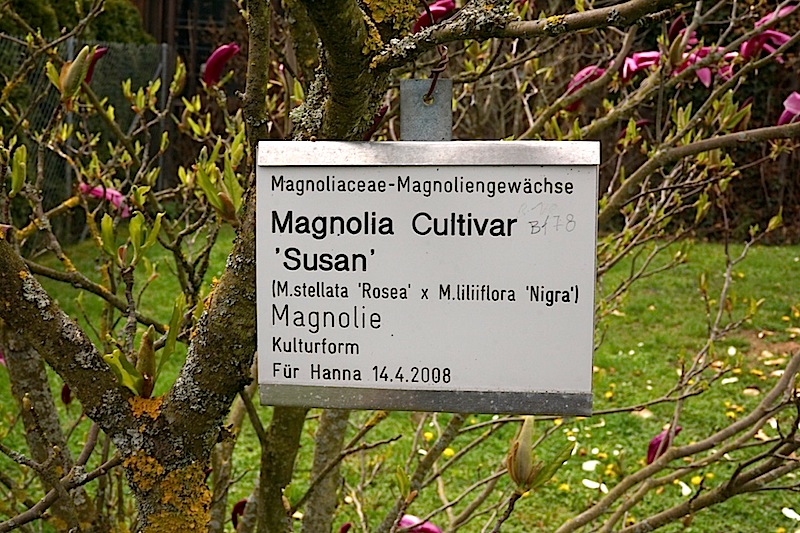
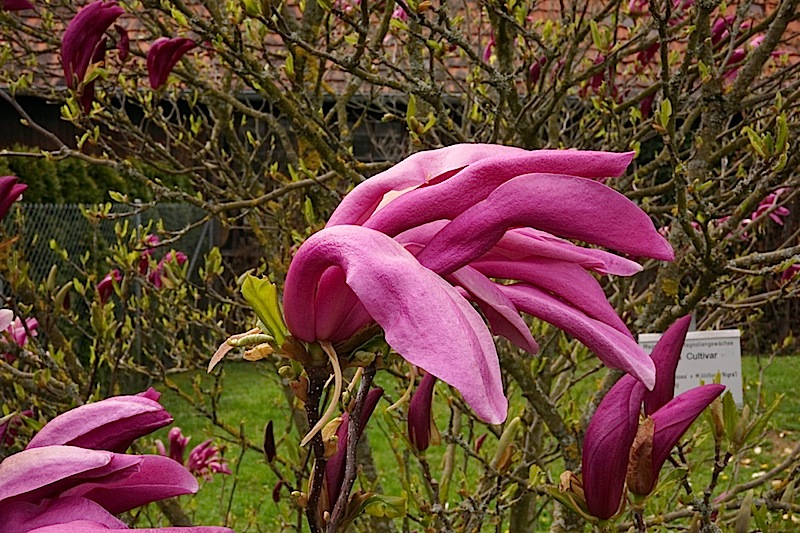
This cultivar had long flower petals that were all leaning in the same direction.
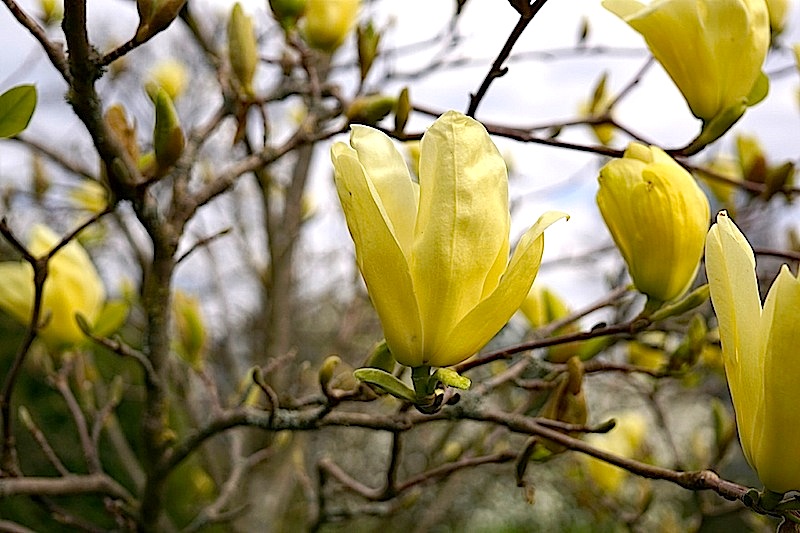
Not far away was this creamy yellow M. Cultivar ‘Elizabeth’.
To see what’s blooming today for other garden bloggers, visit Carol at May Dreams Gardens.
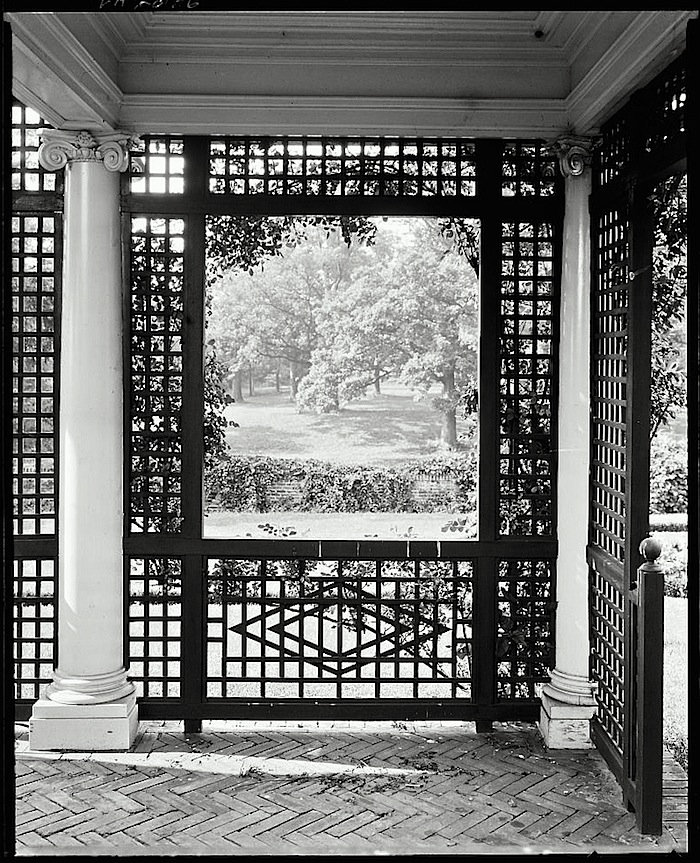
A view from the summer house at Oatlands, Loudoun County, Virginia, in the 1930s, by Frances Benjamin Johnston, via Library of Congress Prints and Photographs Division.
Oatlands Plantation was established in 1798 by a member of Virginia’s prominent Carter family. In 1903, it was sold to William and Edith Corcoran Eustis, and Mrs. Eustis began to revive the old gardens in the Colonial Revival style. Since 1965, the property has been a site of the National Trust for Historic Preservation. It is open to the public from April 1 to December 30.
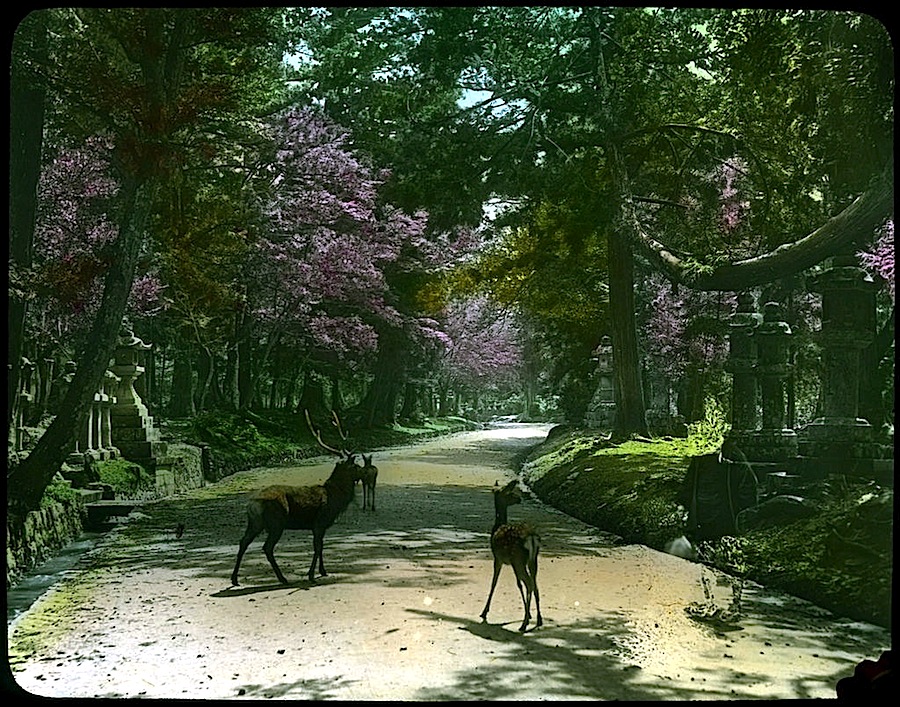
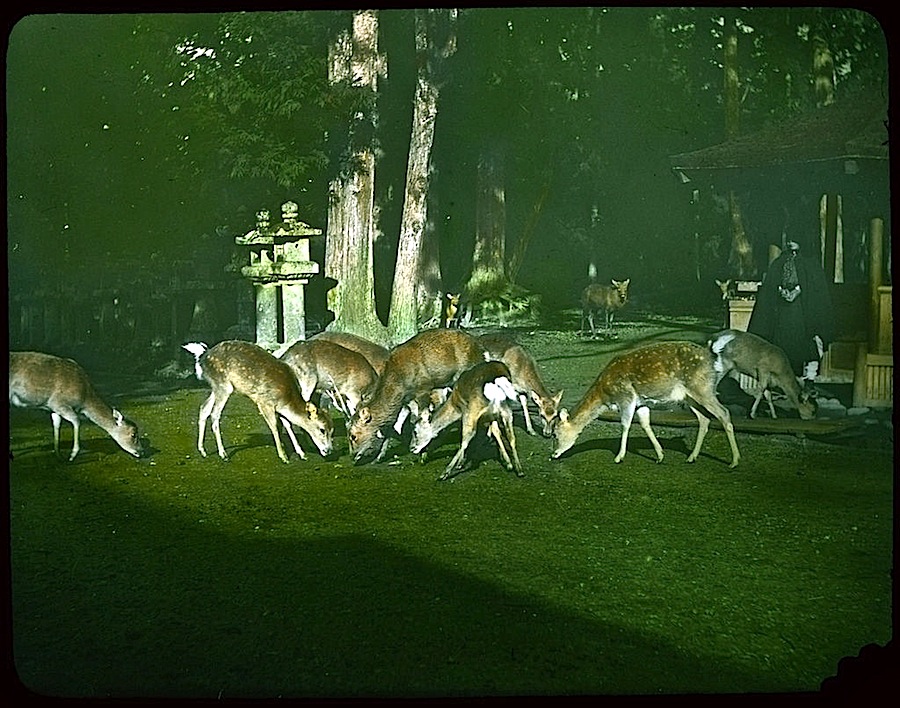
“. . . standing on road in (cemetery) garden [in Japan]; large flowering cherry trees, evergreens and stone monuments,” ca. 1910, a hand-tinted glass-plate slide, via University of Victoria Libraries Commons on flickr (both photos).
(Click on the images to enlarge them.)
A commenter on the flickr page thought this was the pathway to the Kasuga Shrine in Nara.
“Group of deer feeding on lawn in wooded garden; stone monuments and summer house in mid-ground.”

 “Fenderson cottage at Lake City on Megunticook Lake in Camden, Maine, in September 1900,” by Theresa Parker Babb, via Camden Public Library Commons on flickr.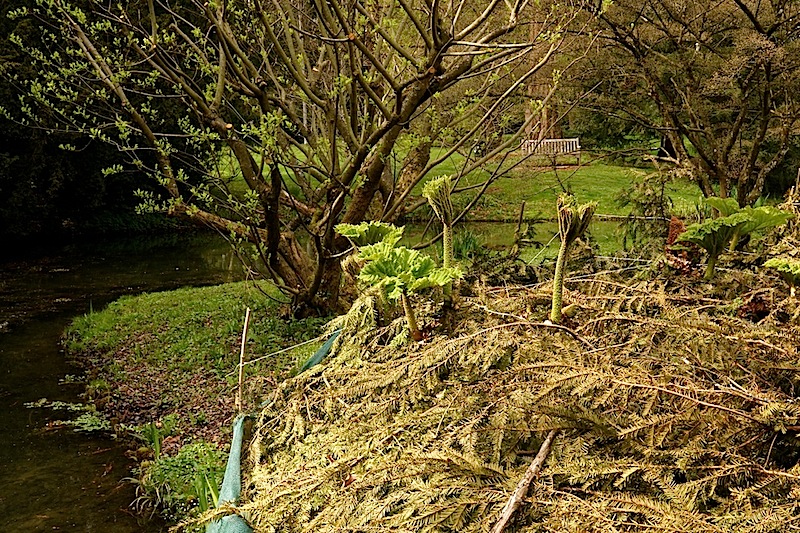
 enclos*ure