Riverside

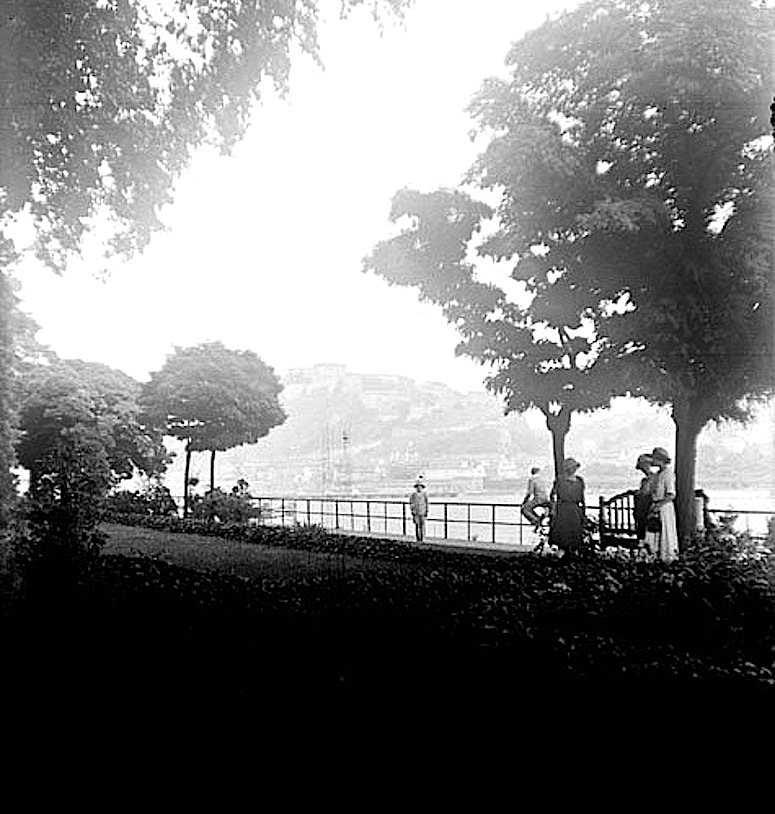
coblence-germany-garden-cropped-on-the-rhine-ca-1920s-bibliotheque-toulouseGardens alongside the Rhine River, Coblence (Rhineland-Palatinate)” via Bibliothèque de Toulouse Commons on flickr (cropped slightly by me).

The Bibliotheque‘s flickr page gives Eugène Trutat as the photographer, but M. Trutat died in 1910, and the women’s dresses seem to be from the 1920s, maybe even the 1930s.

Coblence — now Koblenz — is a German town located where the Rhine and Moselle Rivers come together. The photo may have been taken here, looking over to the Ehrenbreitstein Fortress.

Hood River, Oregon

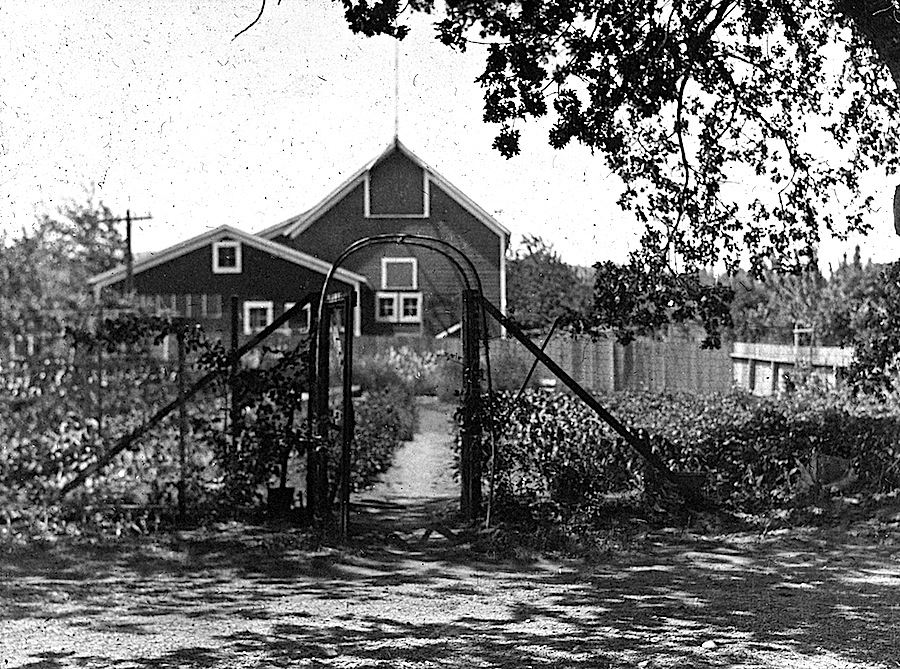
hood-river-oregon-arthur-peck-osu-special-collections-and-archives“Good enough Farm House in Hood River, [Oregon]: View from front yard,” undated, via Arthur Peck Photograph Collection, OSU Special Collections and Archives Commons on flickr.

Arthur Peck was a Professor of Landscape Architecture at the Oregon Agricultural College from 1908 to 1948. This picture was part of his teaching library of 24 boxes of glass lantern slides — now in OSU’s archives.

It is not clear whether “good enough” was his critical evaluation or the name of the farm.

Verdun, France

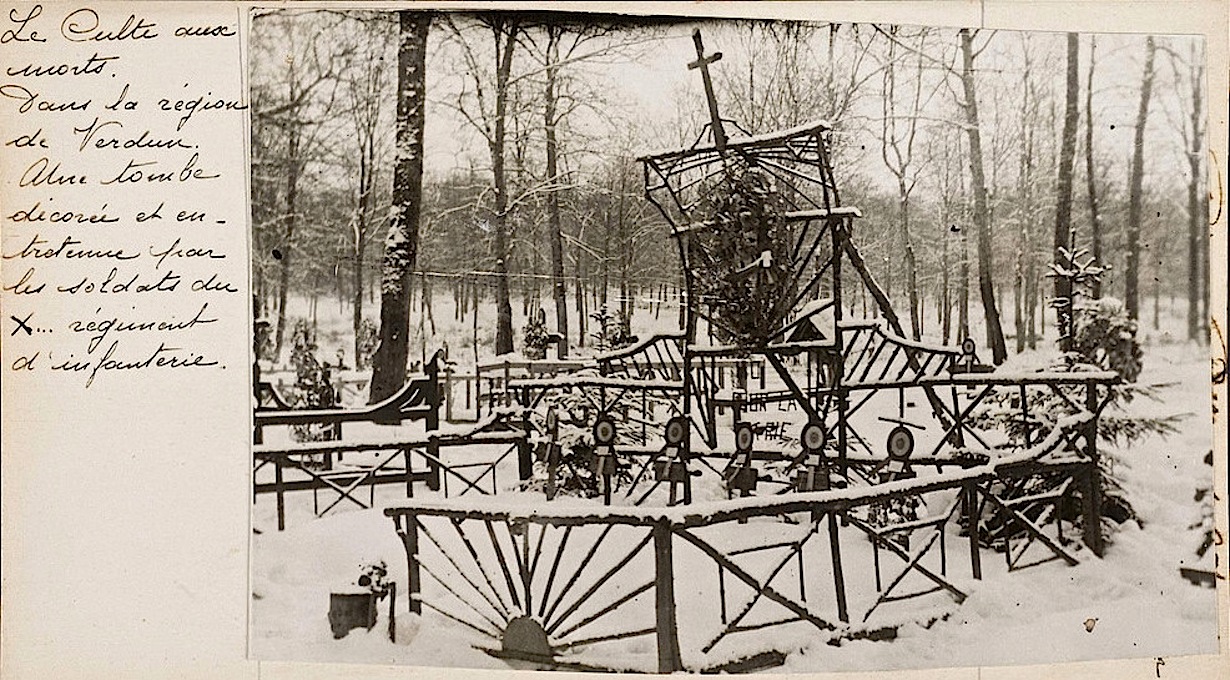
Verdun grave, university of caen, flickrSoldiers’ graves in the region of Verdun, France, ca. 1914 to ca. 1918, photographer unknown, via Université de Caen Normandie Commons on flickr.

“A gravesite decorated and trellised by the soldiers of the X. . . regiment of infantry.”

The photo is one of over 1,800 donated to the archives of Seine-Maritime in Rouen and the Université de Caen by the founder of Lafond Printing in Rouen. The sepia photographs have been digitized in their original condition: glued on bristol board with handwritten captions identifying places and scenes. Most of the pictures concern World War I.

You can click on the image to enlarge it.

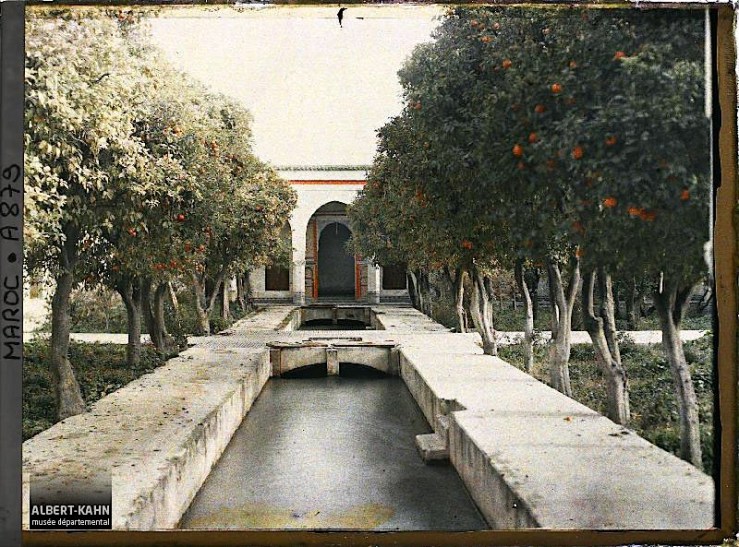
Fez, Morocco

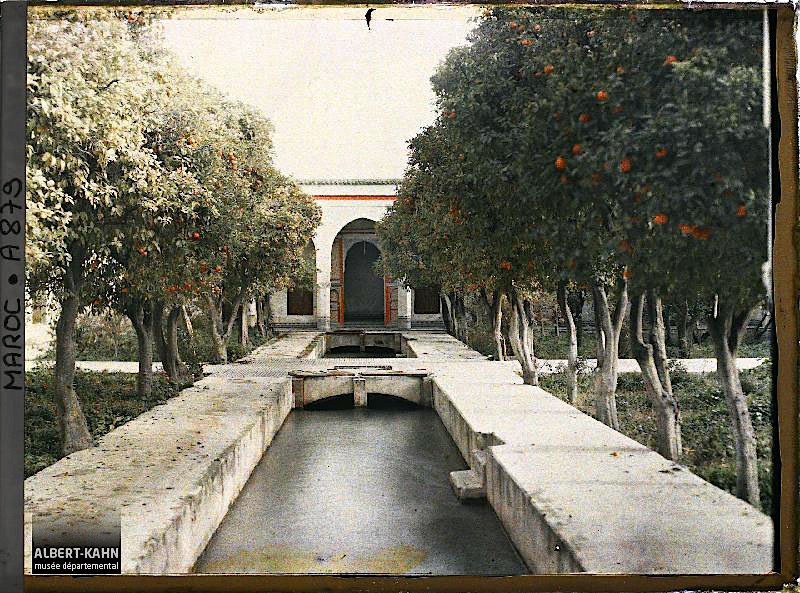
Jardin de Dar Beïda dans le palais de Bou Jloud, Fès, Maroc, janvier 1913, (Autochrome, 9 x 12 cm), Stéphane Passet, Département des Hauts-de-Seine, musée Albert-Kahn, Archives de la Planète, A 879
“Dar Beïda [white house] garden in the Bou Jeloud Palace, Fez, Morocco,” January 1913, by Stéphane Passet, via Archives of the Planet Collection – Albert Kahn Museum /Départment of Hauts-de-Seine.

I believe the image above was taken in what is now called the Jnane Sbil Garden — created as a royal garden in the 18th century and open to the public since the 19th. It was restored between 2006 and 2011.

This autochrome is one of about 72,000 that were commissioned and then archived by Albert Kahn, a wealthy French banker, between 1909 and 1931. Kahn sent thirteen photographers and filmmakers to 50 countries “to fix, once and for all, aspects, practices, and modes of human activity whose fatal disappearance is no longer ‘a matter of time.'”* The resulting collection is called Archives de la Planète and now resides in its own museum at Kahn’s old suburban estate at Boulogne-Billancourt, just west of Paris. Since June 2016, the archive has also been available for viewing online here.


*words of Albert Kahn, 1912. Also, the above photo (A 879) is © Collection Archives de la Planète – Musée Albert-Kahn and used under its terms, here.

Life in gardens: Bergen, Norway

grieg-family-bergen-norway-1865-bergen-public-library“The Grieg family in the alcove at Landås resort,” Bergen, Norway, 1865, photographer unknown, via Edvard Grieg Archives, Bergen Public Library Norway Commons on flickr.

Edvard Grieg (on the left above, I believe) was a Norwegian composer and pianist, perhaps best known for his Peer Gynt Suites.