A “natural force” at Dumbarton Oaks

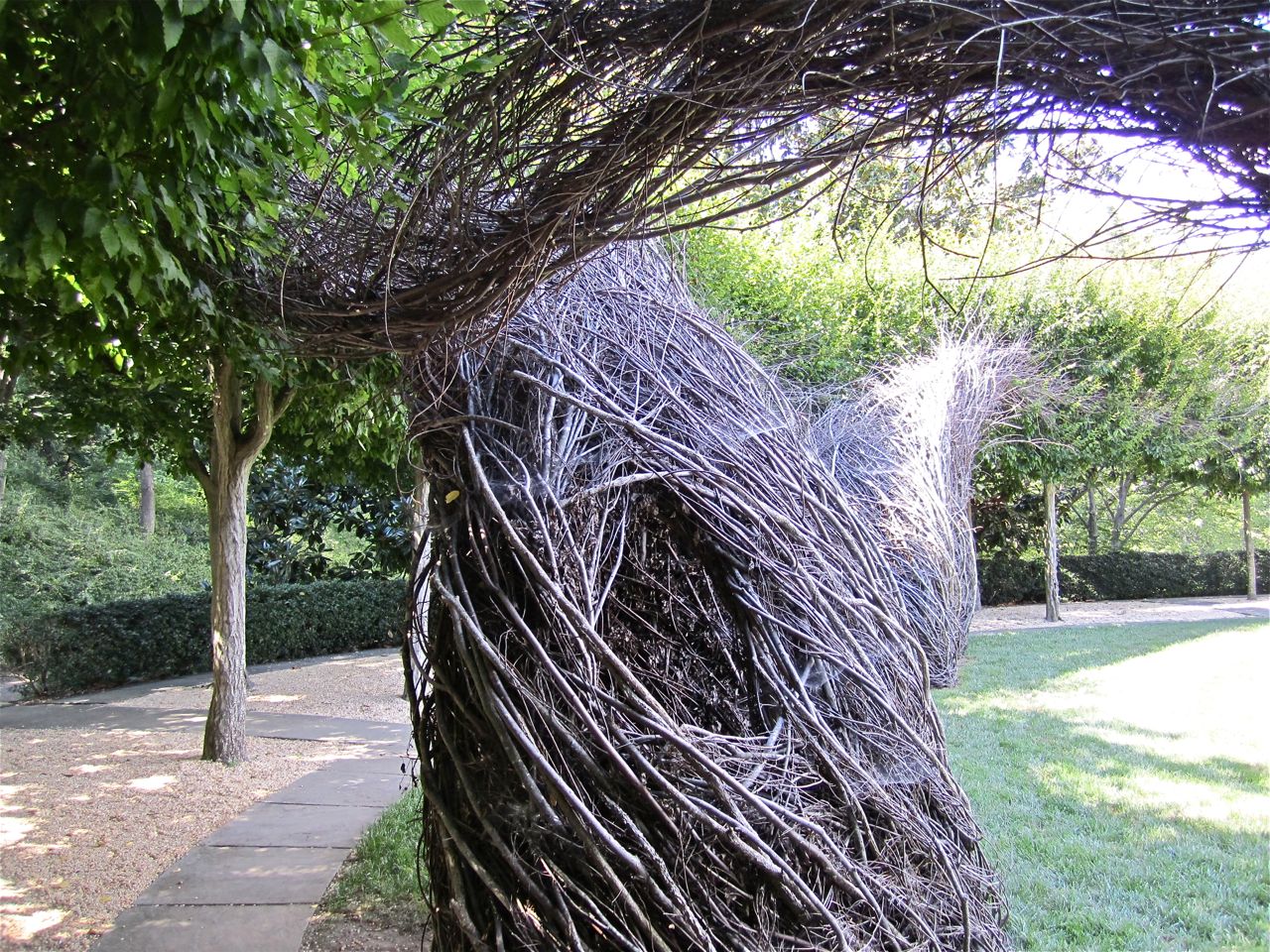
Easy Rider by Patrick Dougherty.  Click the photos to enlarge.

Dumbarton Oak Gardens is currently hosting  Easy Rider by the sculptor Patrick Dougherty. The installation is in the Ellipse, a large oval space rimmed by an aerial hedge of pruned hornbeams and anchored by a center Provençal fountain.

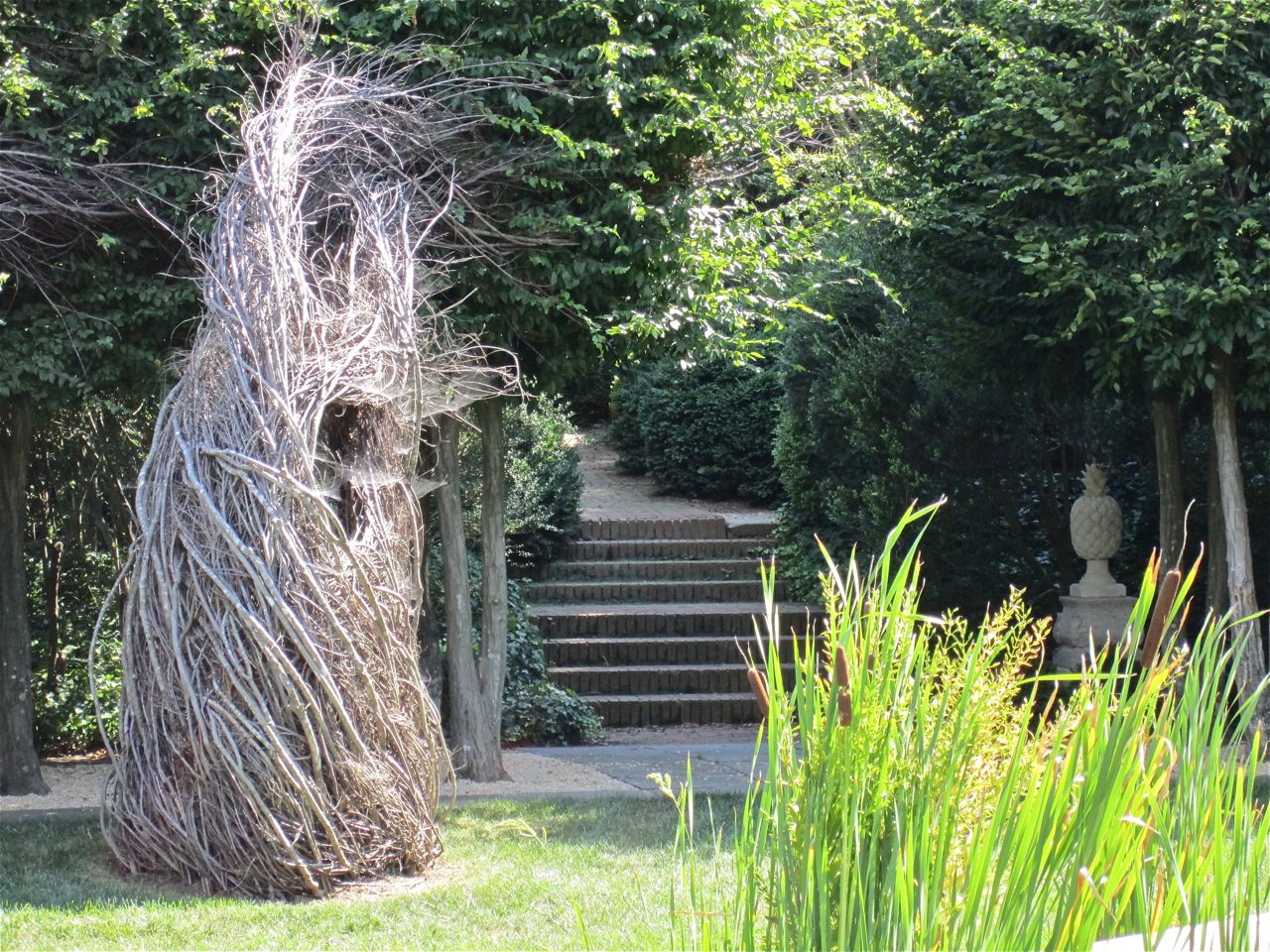
Dougherty works in woven saplings, and his sculptures evoke ancient rustic architecture, as well as nests, haystacks, and baskets.

He describes the Dumbarton Oaks work “as ‘running figures,’ or twisted architectural elements, that rise into the trees and pursue each other actively and gracefully around the Ellipse.”*
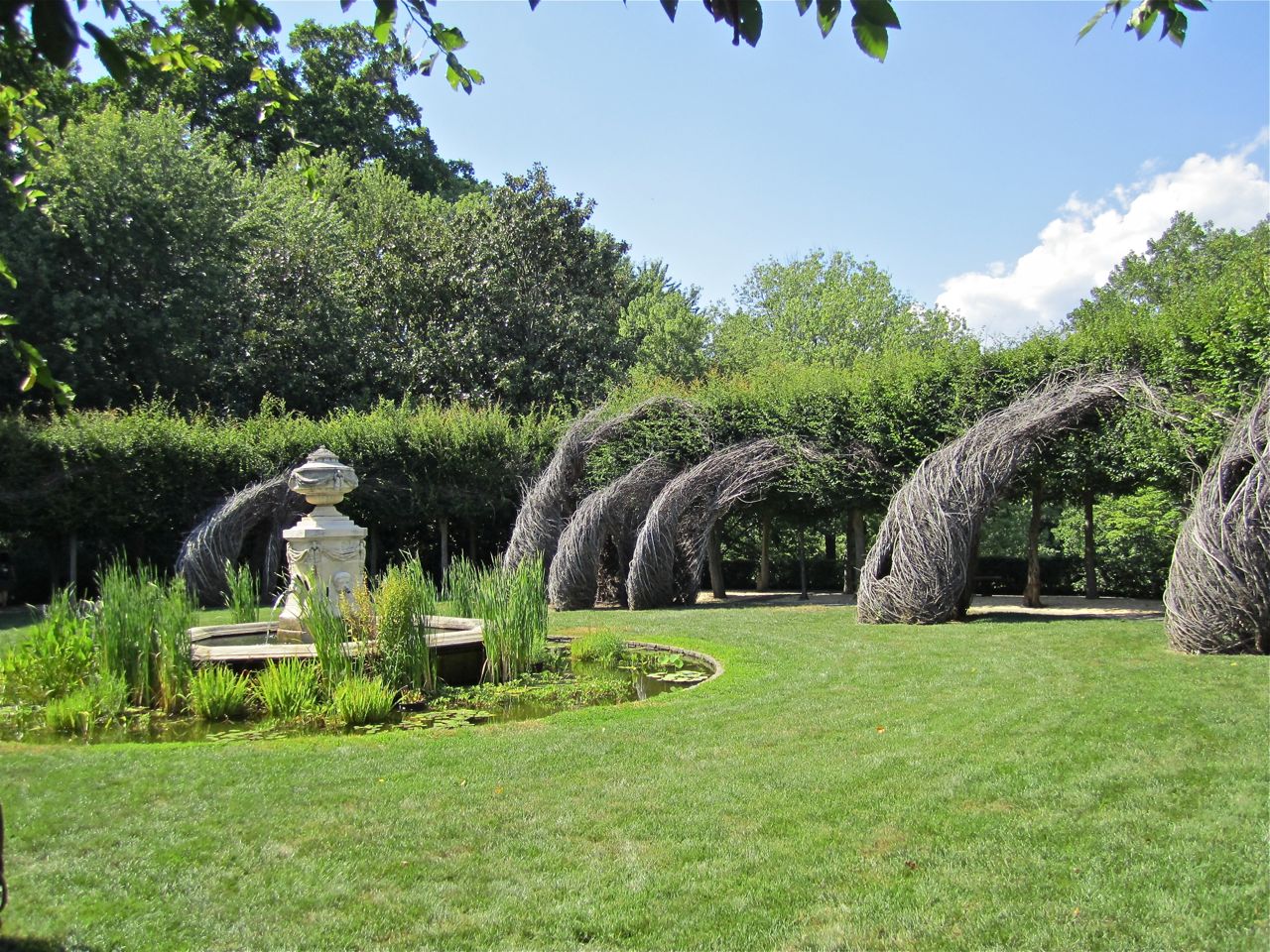
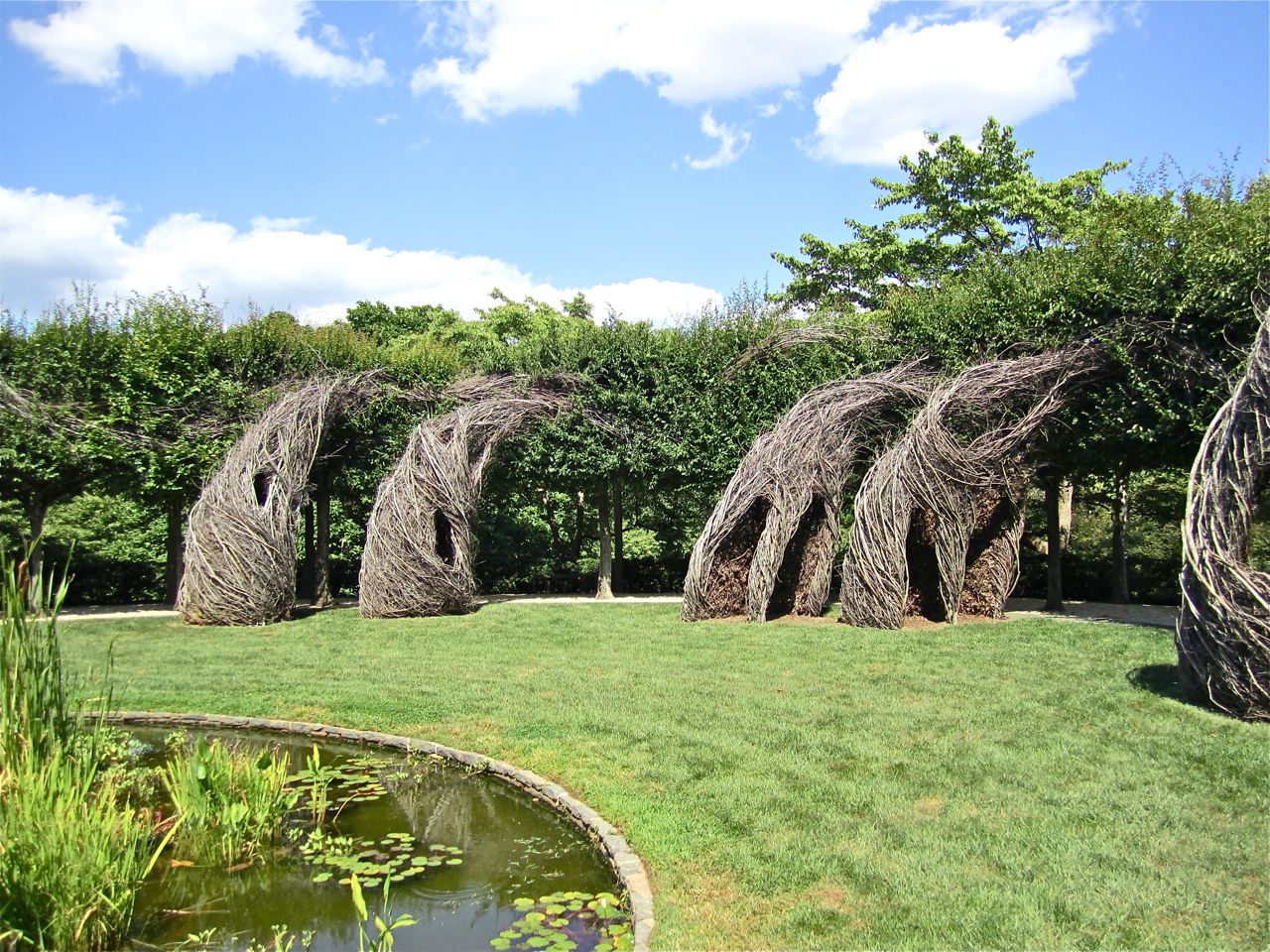
The “‘running figures’. . . rise into the trees and pursue each other . . . around the Ellipse.”
The elements of the sculpture can be seen as architectural or human-like.
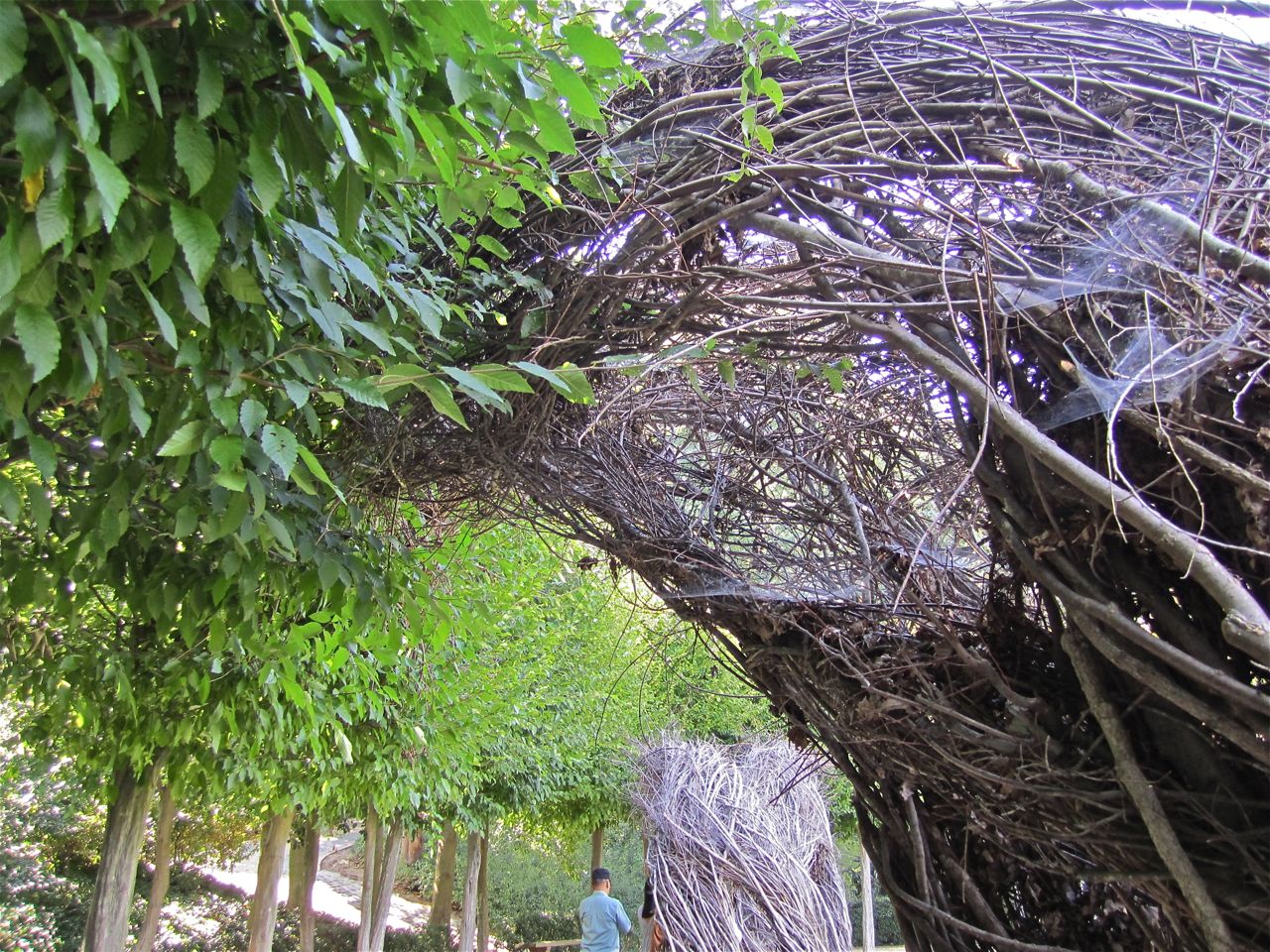
The figures twist into the hornbeam.

Each element can be seen as a building or house with a doorway and window.  Each is just wide enough for an adult to stand in.  They are like sentry or guard houses.  If I anthropomorphize them, as the artist does himself, I would say they make me think of storybook soldiers running or even dancing.  They also seem to reference magical landscapes a la Lord of the Rings, yet they are not twee.

Looking at the center fountain from a window.

In an interview with The Washington Post last August, Dougherty said, “I was really thinking about how the natural world has been conscripted as manmade architecture. You don’t think about nature as being staid or over-organized, you think of it as having a life of its own. But there, they’re pruning it and fixing it up like a big living room. My idea was to throw that off kilter and bring in a natural force.”

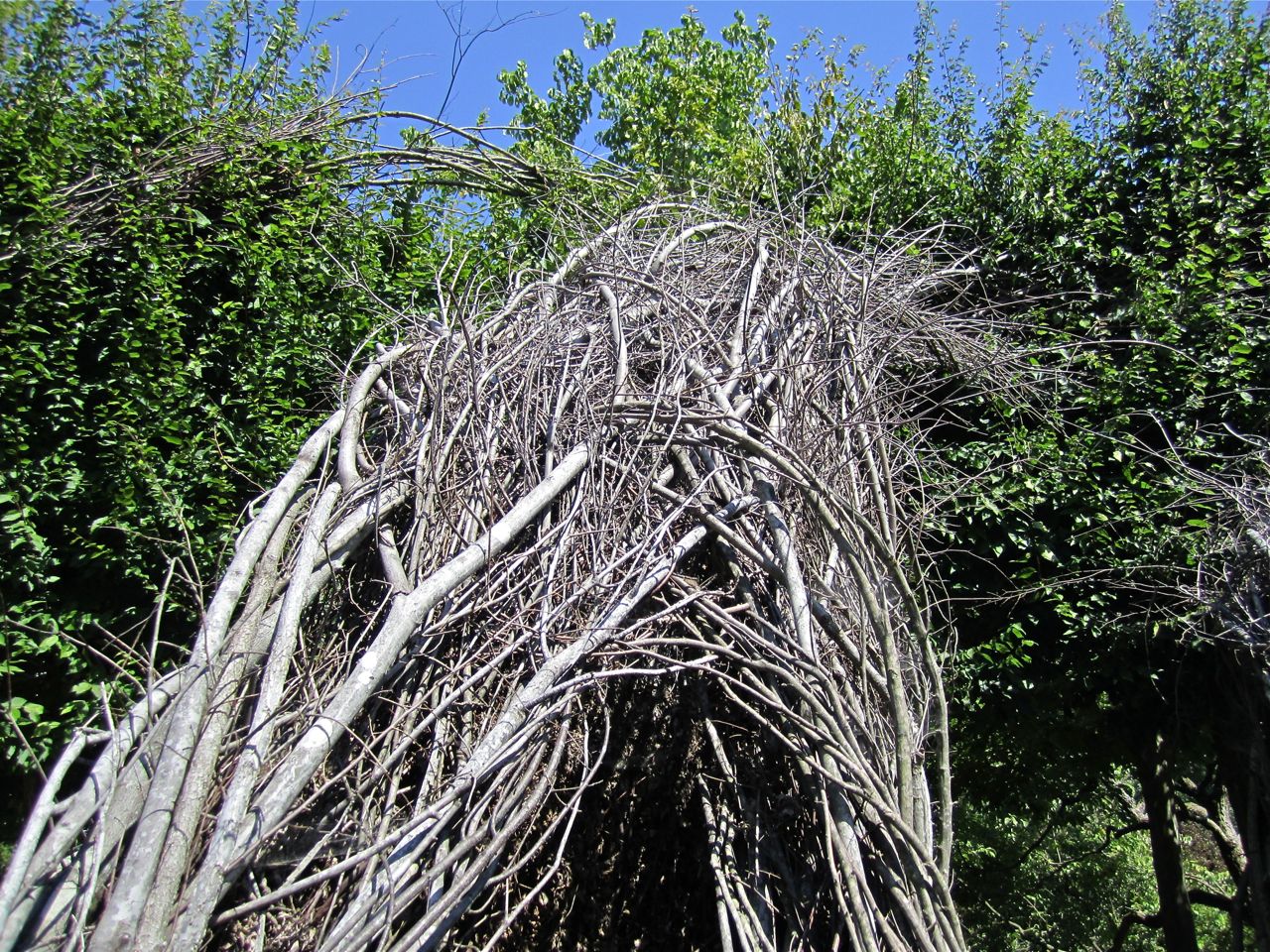
The figures evoke “a natural force.”
The “house” reaches into the trees.
The saplings and the tree leaves merge.

While the Dumbarton Oaks Gardens are primarily the work of Beatrix Farrand, Alden Hopkins, who worked on the gardens at Williamsburg and the University of Virginia, also contributed to the design of the Ellipse.  The admittedly formal, rather static space is a nice blend of old and modern forms.  With “Easy Rider,” the contrast between the brown sapling branches and the green leaves is striking.  I imagine that it will be lovely in October when the leaves start to turn.

The double row of hornbeams.  The lower, outer hedge is clipped holly.
Steps leading away from the Ellipse.
Volunteers worked 21 days using a variety of saplings, chiefly maple.
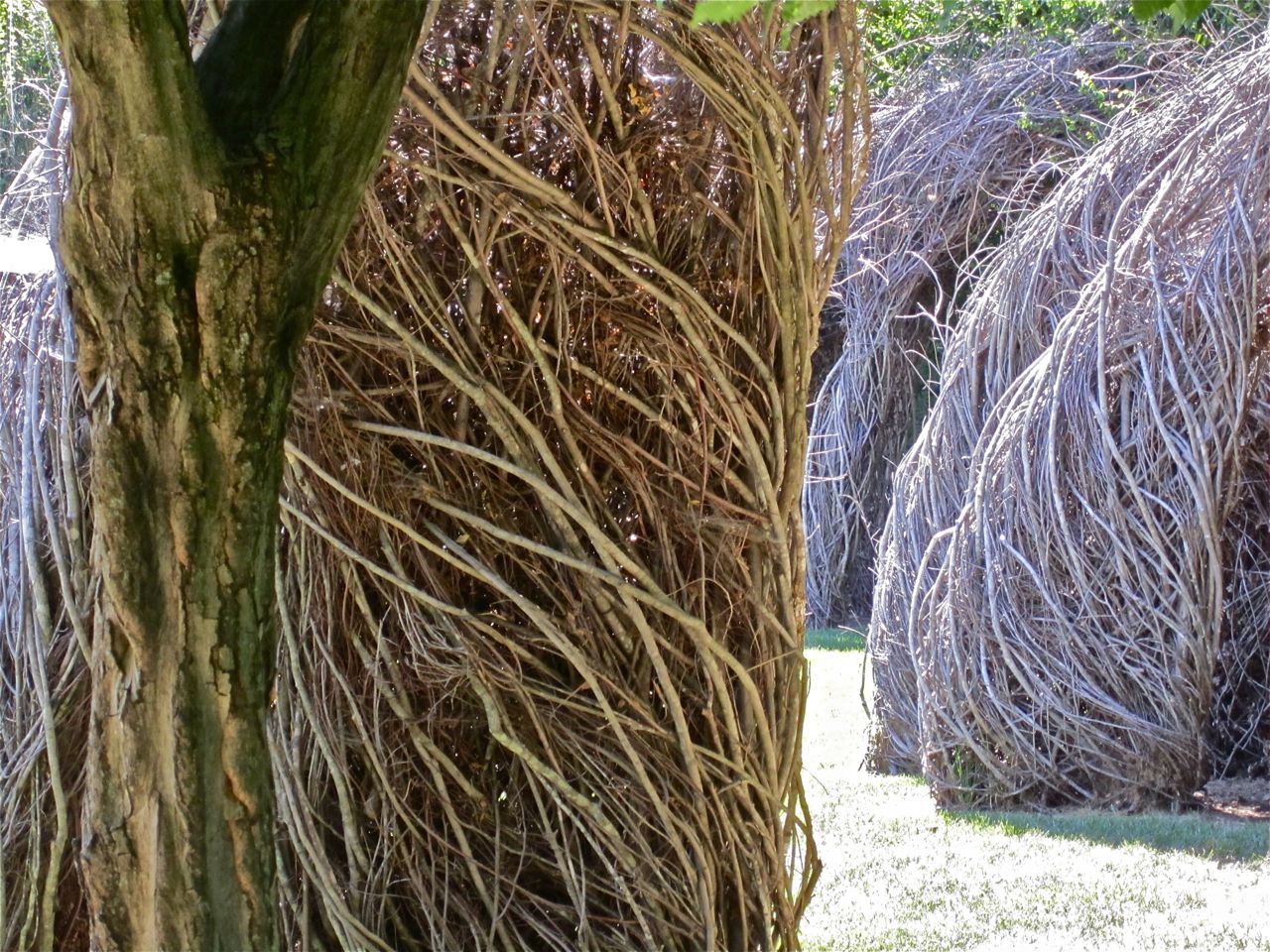
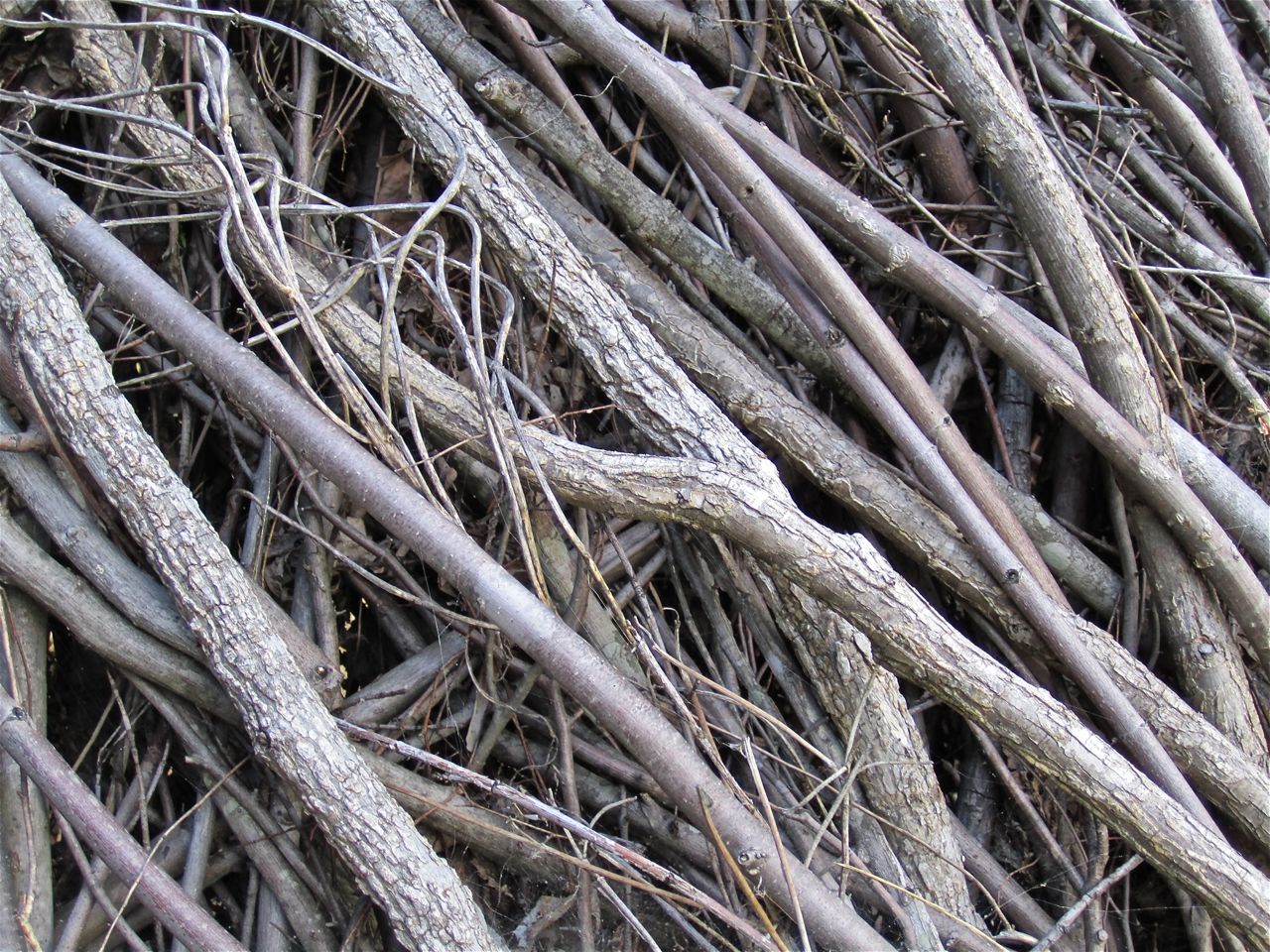
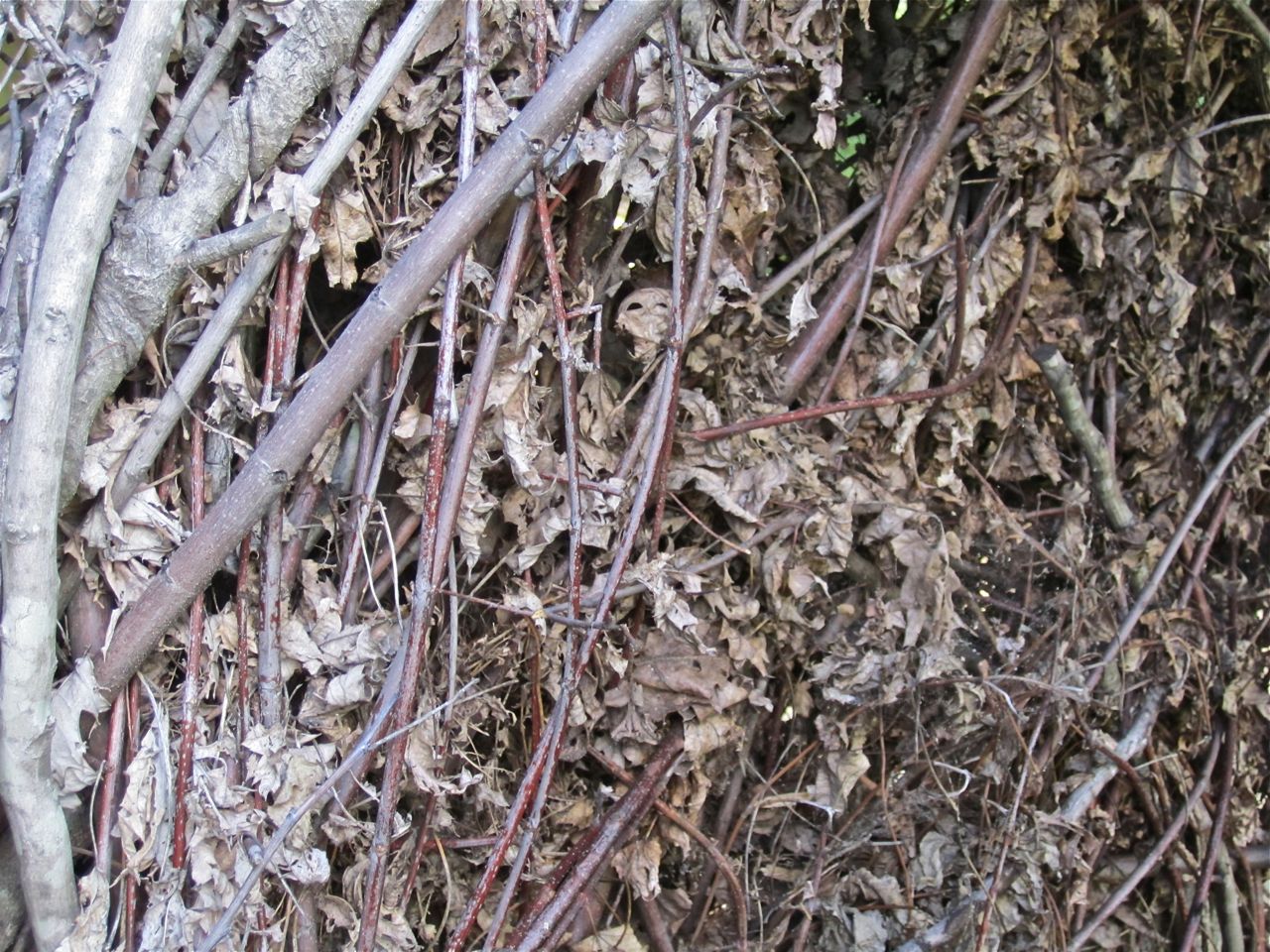
The outside texture of a figure.
The inside texture. The saplings’ leaves dried in place.

The Dumbarton Oaks installation took a team of volunteers 21 days and a variety of saplings (chiefly maples) to complete.  You can see volunteers working on a similar installation at DePauw University at this link.  Dougherty has built over 200 of these large works all over the world.

Melissa Clark, in her blog, Garden Shoots, wrote about the Easy Rider installation last September and posted some pictures of its construction.  Her blog also has a post about another Dougherty sculpture, The Summer Palace.

Easy Rider will remain through Fall 2011 (the brochure does not give an end date).  The gardens (at R and 31st Streets, N.W.) are open daily (except Mondays) from 2-6 p.m.  General admission is $8.


*Installation brochure.

To see more photos, click on “Continue reading” below and then click on any of the thumbnails in the gallery to enlarge. Continue reading “A “natural force” at Dumbarton Oaks”
Tudor Place, part two

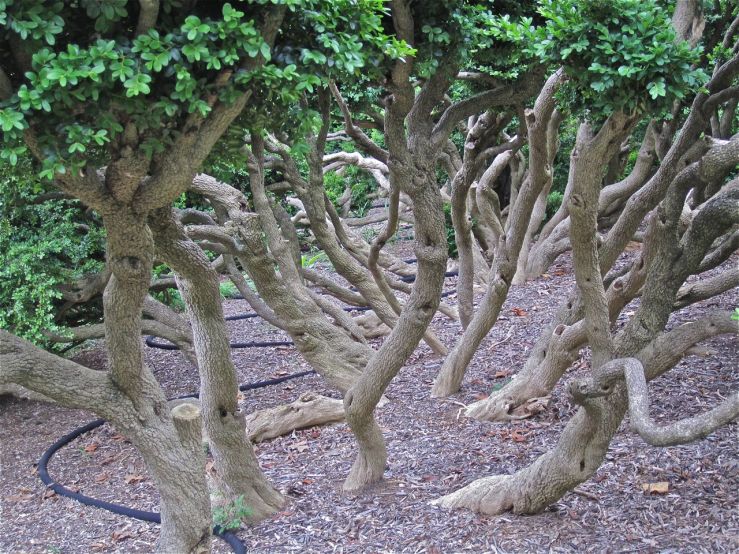
Ellipse boxwood — interior open to view.

I am fascinated by the old boxwoods of Tudor Place, an historic estate in Georgetown.

In 1805, soon after she and her husband purchased the property, Martha Custis Peter, the granddaughter of Martha Washington, planted (or more likely, directed to be planted) an ellipse of Buxus sempervirens ‘Suffruticosa’ in the center of the drive on the north side of the house.

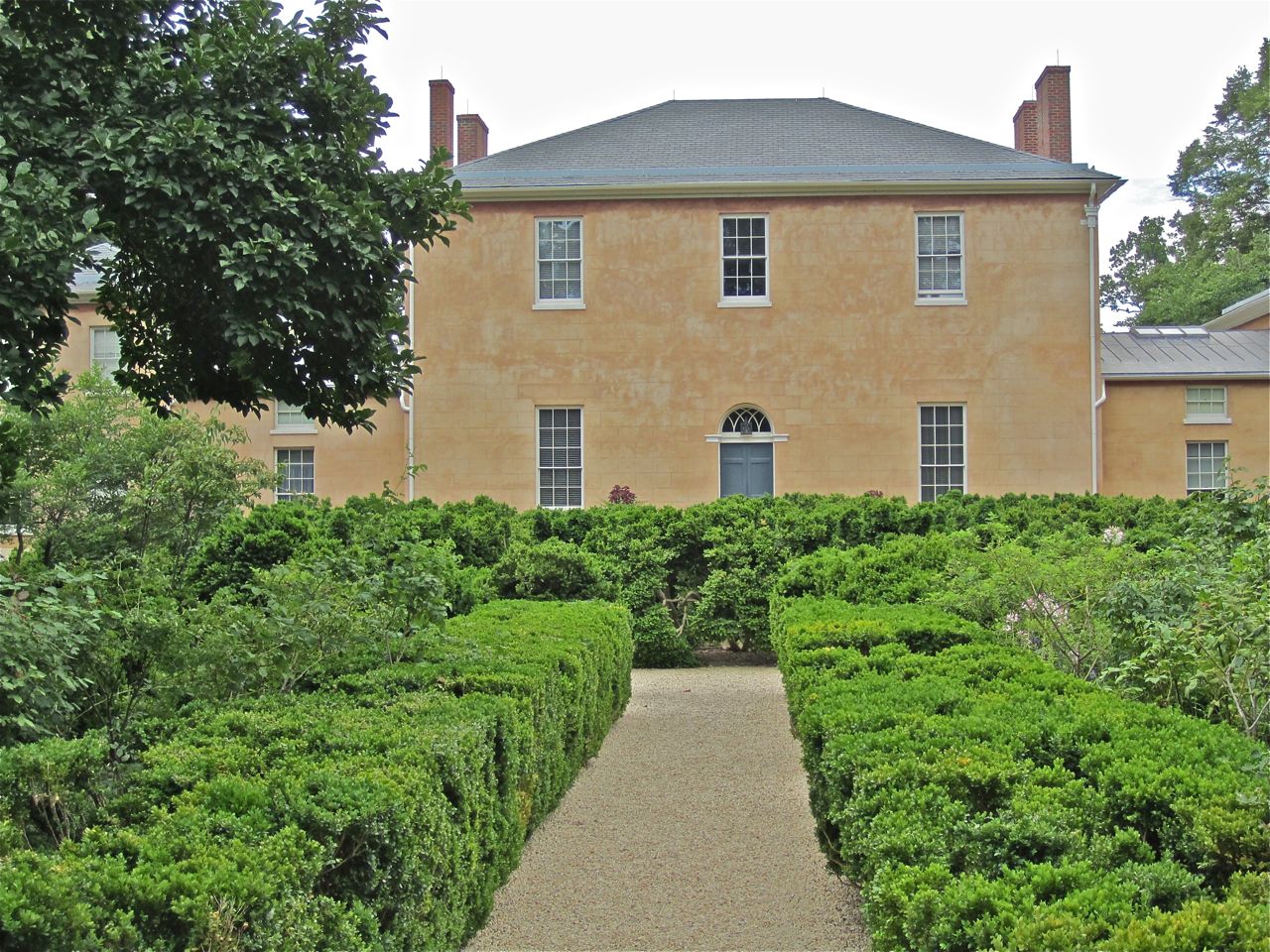
Walkway to the ellipse and house from the north side with rose garden on the right.  The neoclassical house was designed by William Thornton, architect of the U.S. Capitol and completed in 1816.  Six generations of the Peter family lived there until 1983.

For the Tudor Place Foundation, who received the estate in 1983 from a direct descendant of Martha’s, they must be a much-loved treasure and (I suspect) a big preservation headache.

Today, the ellipse is over 5′ tall, as one might expect, given its age. When I toured the property almost ten years ago during a Landscape Design class, the teacher fretted that it was too large for the original design and for the scale of the house and drive.

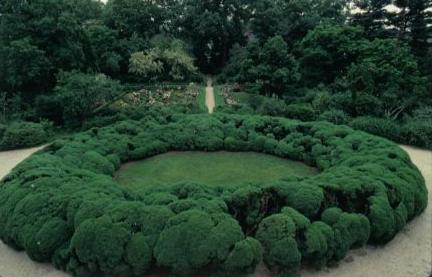
Boxwood ellipse before 2010. Photo via the Tudor Place Foundation website.

At that time, the boxwoods were nearly as tall as now, but still nicely filled out all around.  As such, I found them impressive, but not particularly interesting.

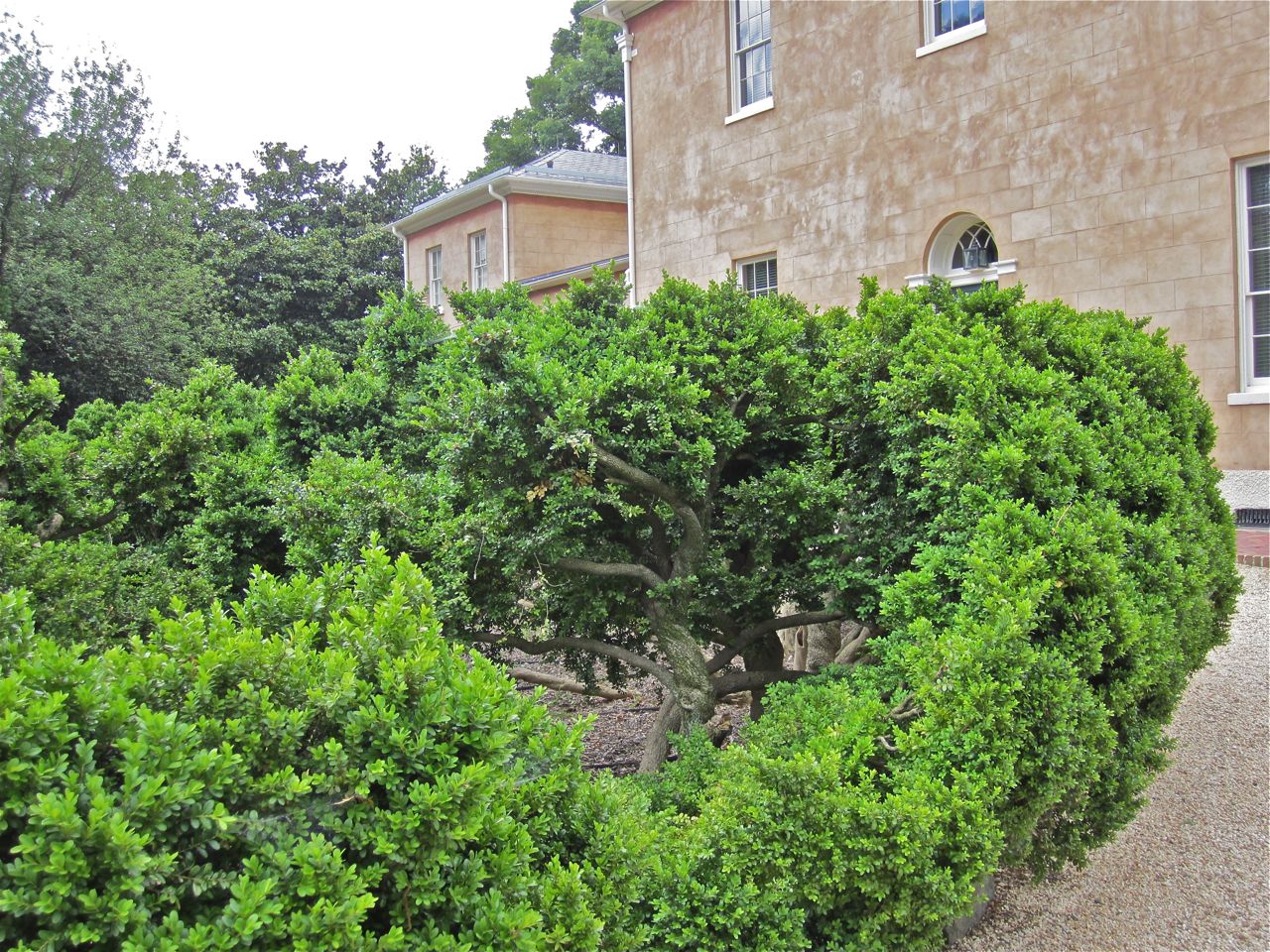
However, in February 2010, Washington had the deepest snows in over 100 years.  The damage to the boxwood ellipse and to  many other old specimens at Tudor Place was severe, and the hedge’s interior was opened to view in many places. Now the ellipse shows interior volume as well as exterior.

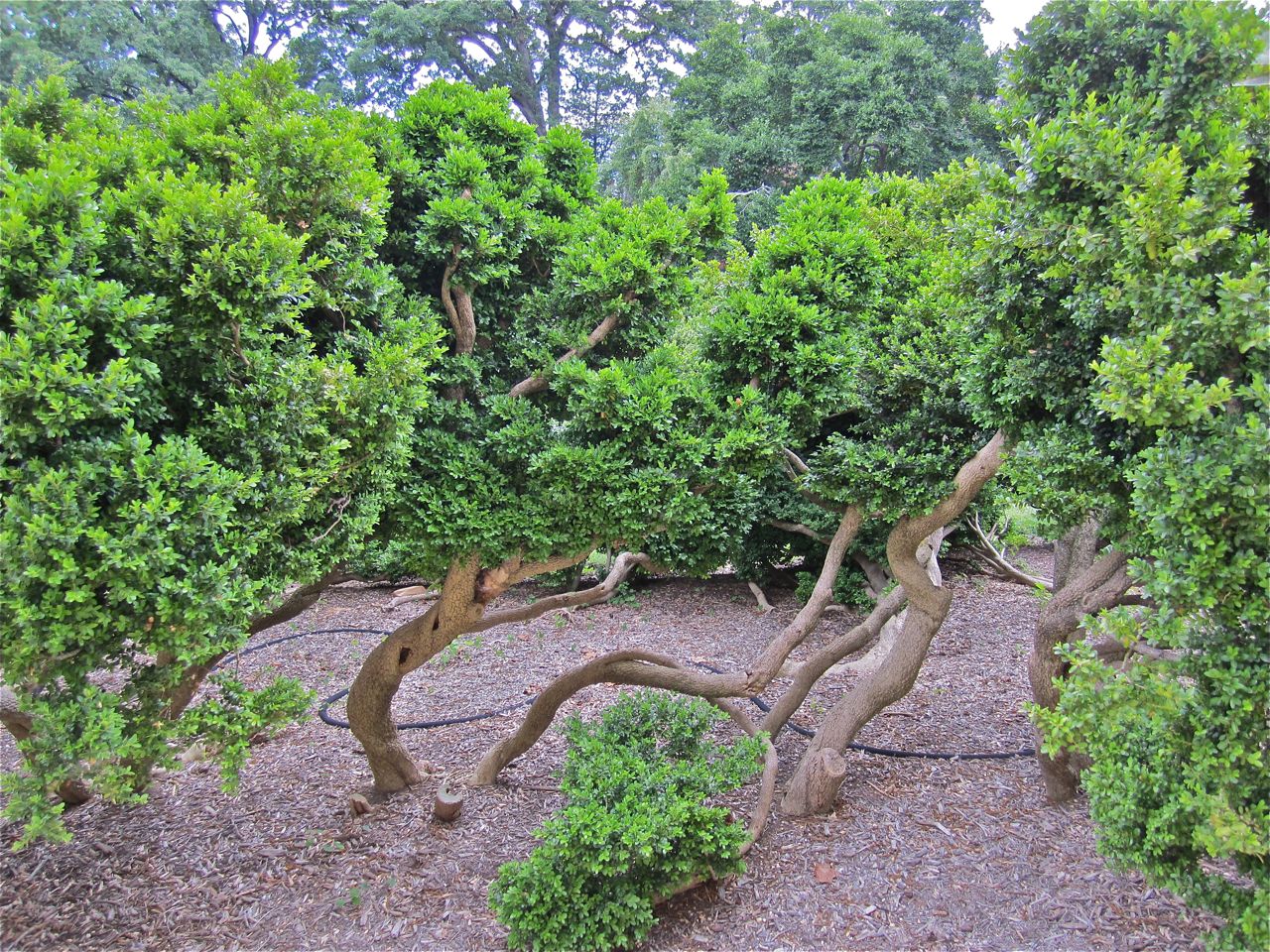
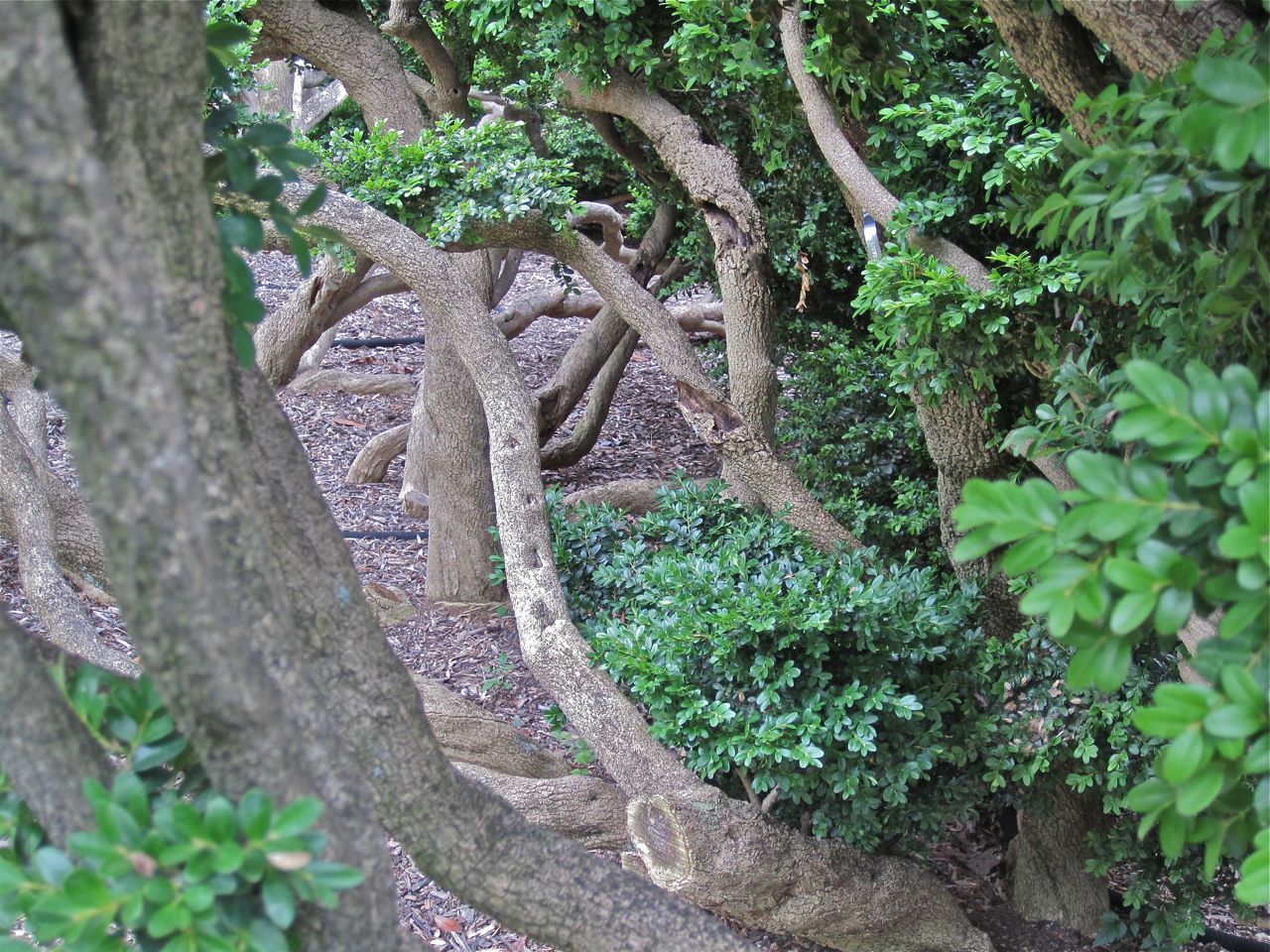
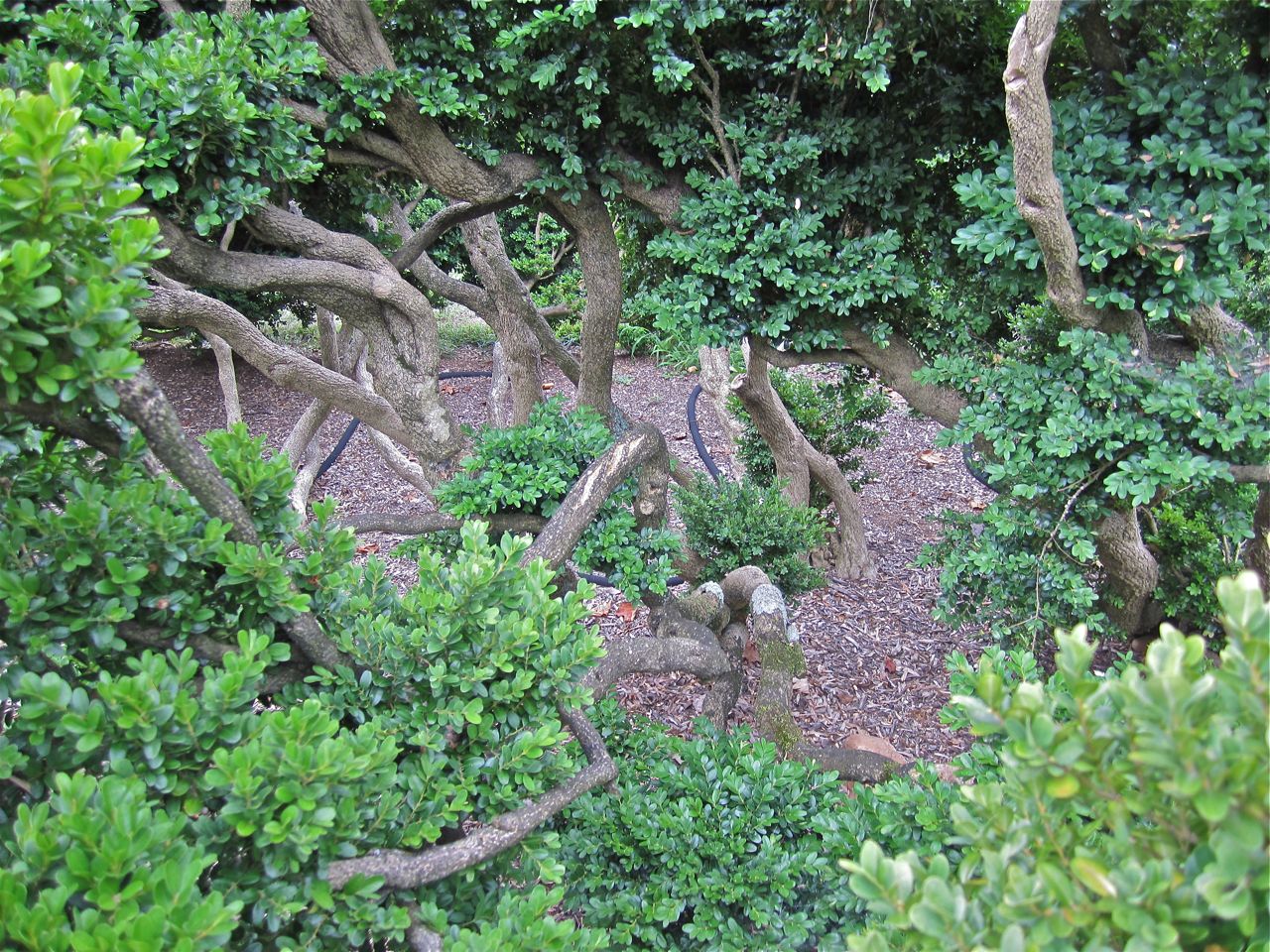
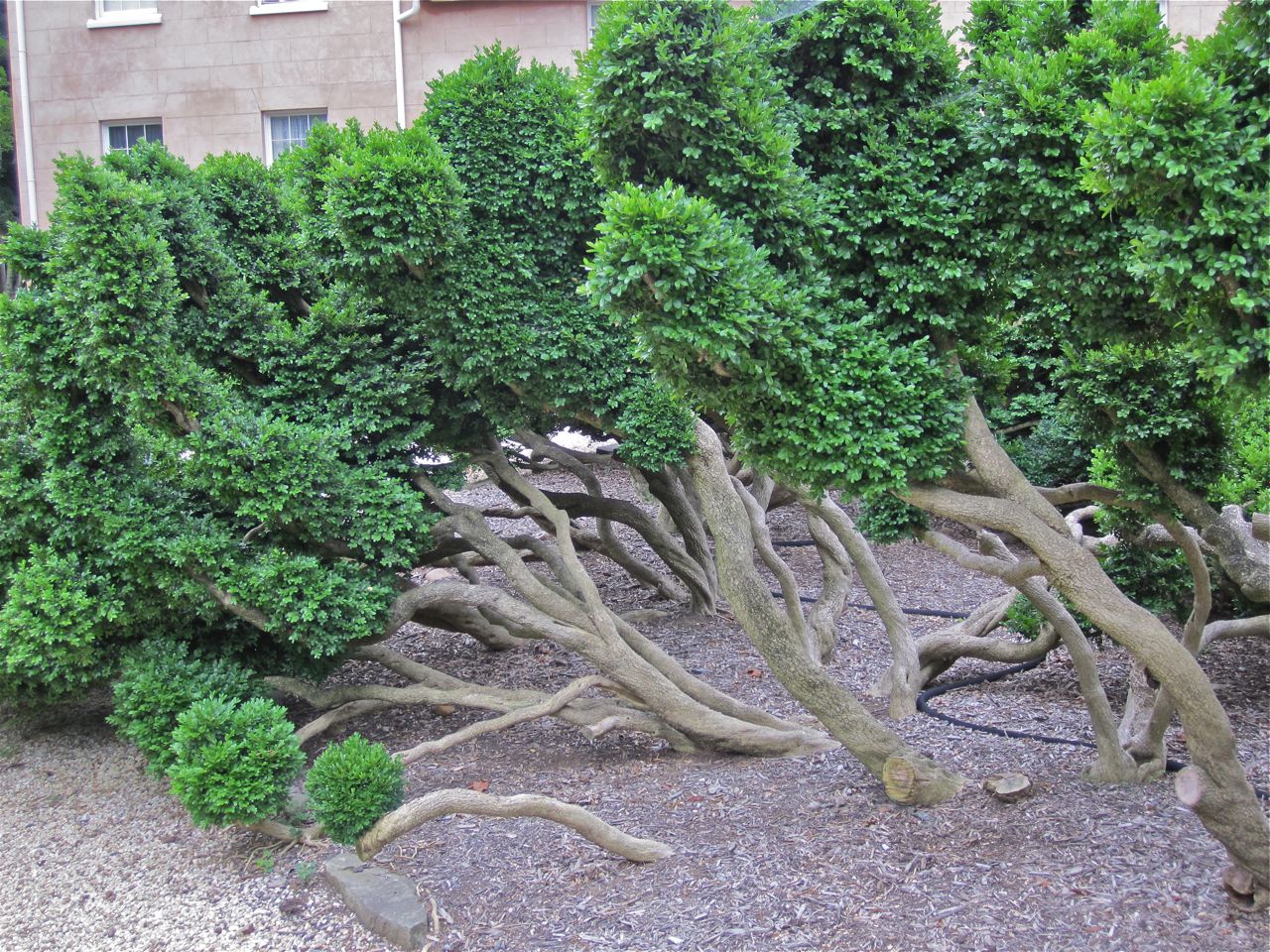
My sympathies to the Foundation, but I find the old shrubs’ new negative spaces and sculptural qualities beautiful and rather moving, and I took photo after photo.

Ellipse from west side.  The bushes are English boxwood.
Ellipse boxwood.  Click on the photos to enlarge.
Ellipse boxwood.
Ellipse boxwood.
Ellipse boxwood.

There are other old boxwoods in the north-side garden, like these in a planting bed near the old “tennis lawn.”

Boxwood in the “tennis lawn” planting bed.

And these along a walkway near the bowling green.

A walk along the bowling green seen through old boxwood. Click on photo to enlarge.

I wonder how long they will be left in place, given their current condition.  I find them beautiful, but they don’t really conform to a classic neat Federal or Colonial Revival aesthetic.  But who wants to replace bushes planted by the step-granddaughter of the father of our country?

If they were mine, I think I would want to turn the old ellipse’s design somewhat inside out and fill many of the open spaces with the contrasting foliage of other perennials planted inside them — as is happening among some of the equally ancient boxwoods at the Bishop’s Garden at the National Cathedral.  I’d like to see a few Rudbeckia maxima flowers waving over the center (although whether the ground beneath the ellipse, full of old roots, would support more plants is a practical question).

Beyond boxwood

The rest of the Tudor Place garden is lovely as well, with the center north-side area symmetrically squared off in true C.R. style with brick and gravel walkways.

The well-maintained property actually shows off an interesting continuum of original and reconstructed functions and design styles from the last two centuries.

Tennis lawn.

According to an archaeological study and plan by the University of Maryland, the planting of the south-side lawn, which contains the 200-year old tulip poplar and once had a view of the Potomac River, has changed relatively little since the building of the house (and therefore is of little archaeological interest).  And, of course, the ellipse is also truly from the Federal period.

The walkways and rose/knot garden existed in their current layouts by the 1830s. But the knot garden was destroyed in the 1860s by intruders seeking boxwood for Christmas wreaths.  It was replanted by the last Peter owner in the 1930s, using old family plans, although he moved it to the opposite side of the center walkway.

Walkway from center to west side with rose garden on left.

The northeast-side garden with lawn and curving beds was an orchard and  a tennis lawn before its current 20th century design. On the west side, there is a 20th century bowling green and a fountain on what had once been a wooded area.

A pretty 20th century patio, “Japanese” teahouse, and arbor sit off the west wing of the house, more or less in the location of the 19th century kitchen garden.  They look Tidewater southern more than anything else.

“Japanese” tea house and arbor.

The garden is open to the public Monday through Saturday, 10 a.m. to 4 p.m., Sunday, noon to 4 p.m.  There’s a small charge of $3. See this link for information about touring the house.

To see more photos and a garden plan, click “Continue reading” below and click on any thumbnail scroll through large pictures. Continue reading “Tudor Place, part two”

Tudor Place, part one

On Friday, I visited Tudor Place, a 200-year-old estate in Georgetown built by Martha Custis Peter, the granddaughter of Martha Washington, and her husband.

I took many photos (I take full advantage of my memory card), and I want to write a post about the whole garden, but today, I thought I would start with some pictures of the property’s remarkable tulip poplar tree.

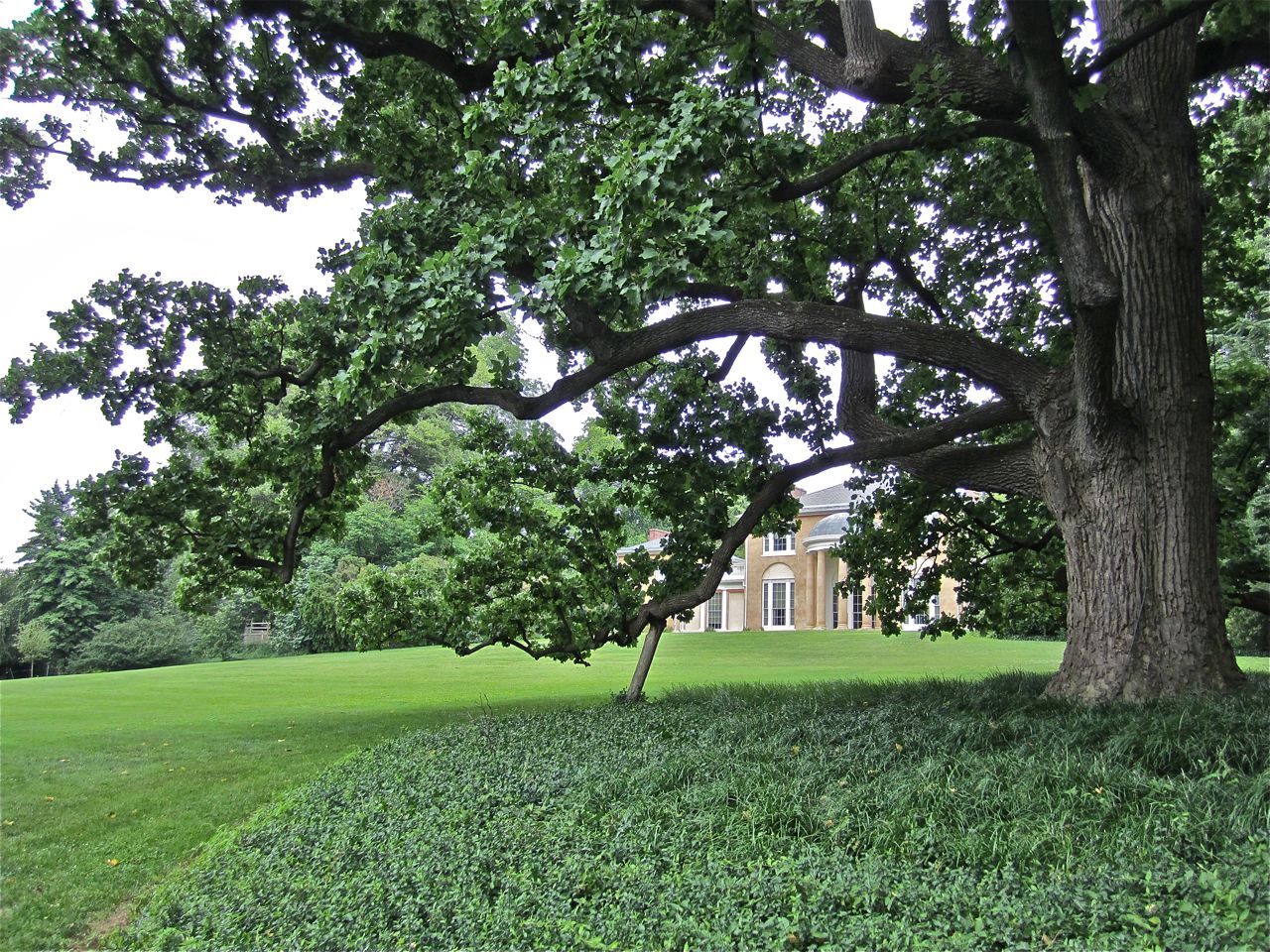
Tudor Place house, seen from south lawn.

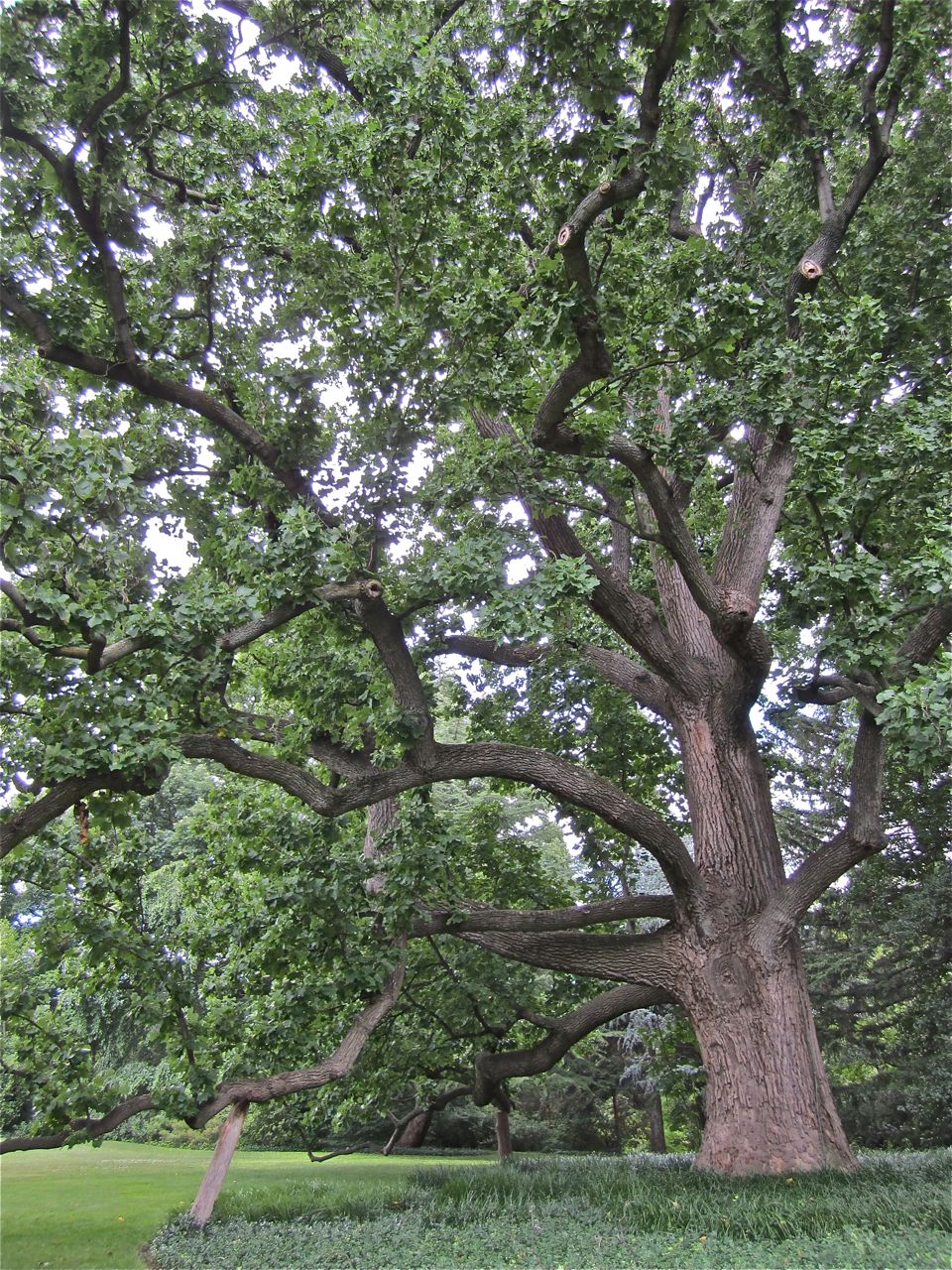
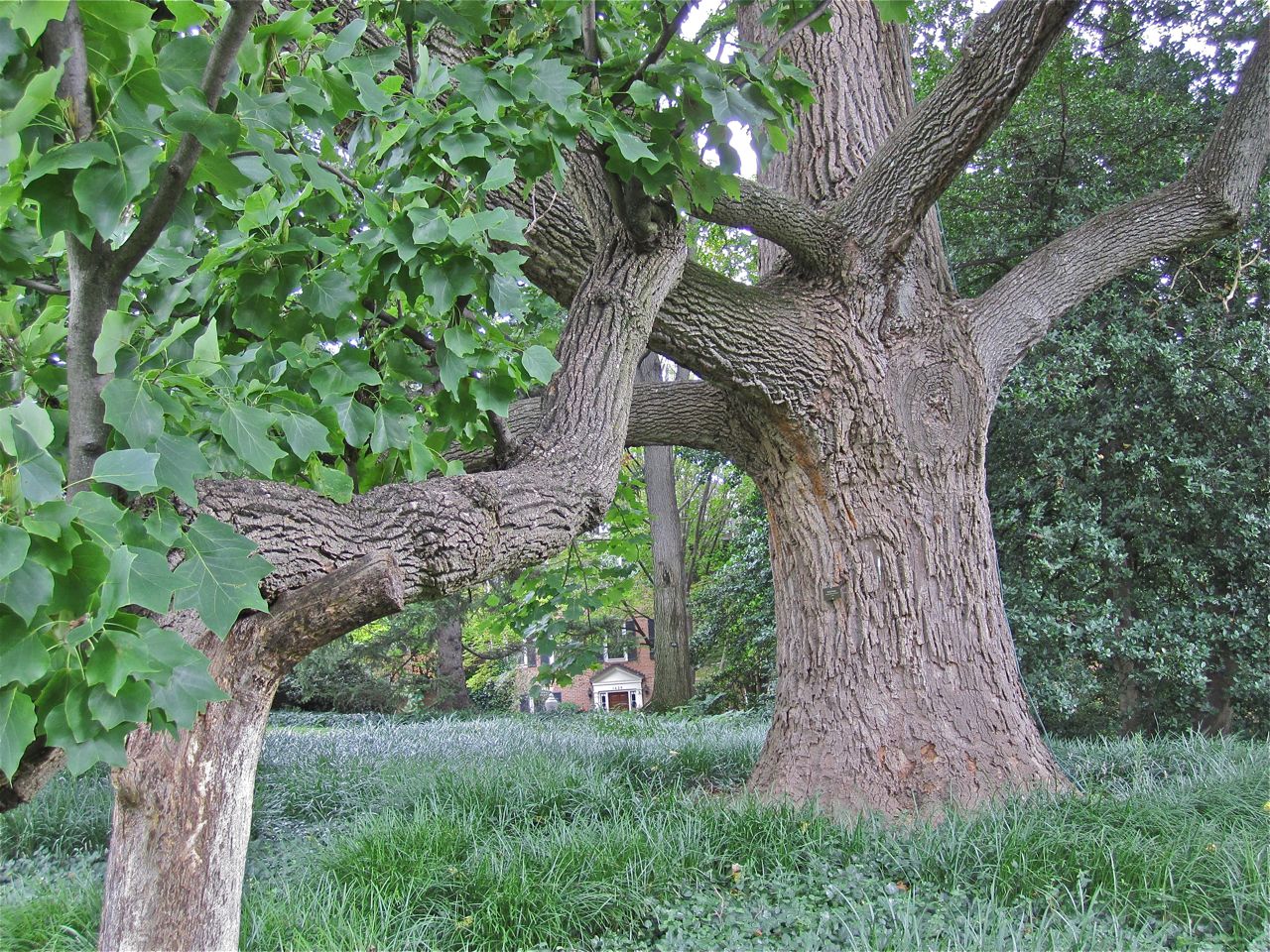
Located on the south-side lawn, the tree was possibly there when the Peters arrived.  It is now 20′ in circumference and over 100′  tall.  In 2002, it was designated the “Millenium Landmark Tree” for the District of Columbia by the America the Beautiful Fund.

Historic tulip poplar at Tudor Place. 
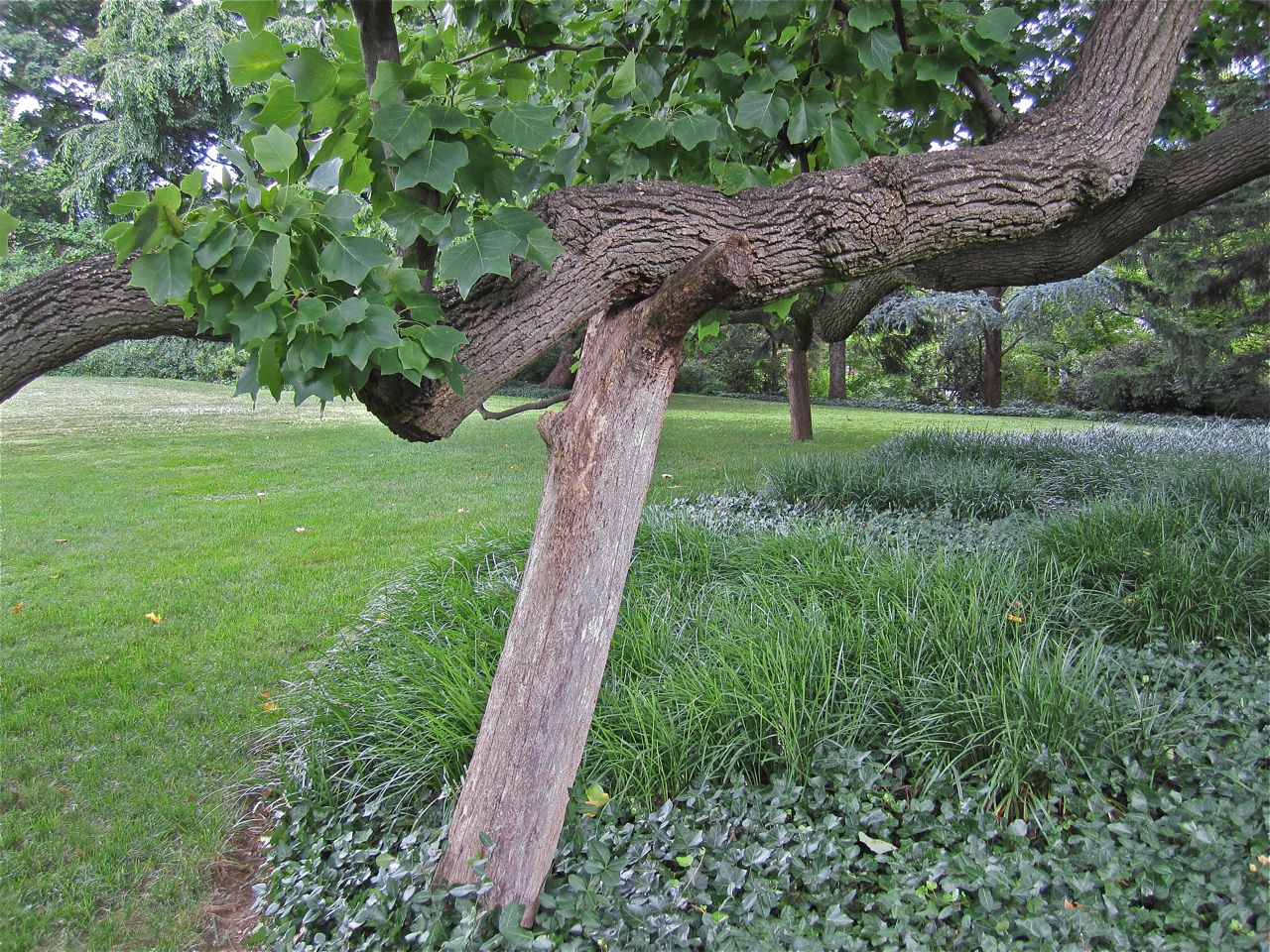
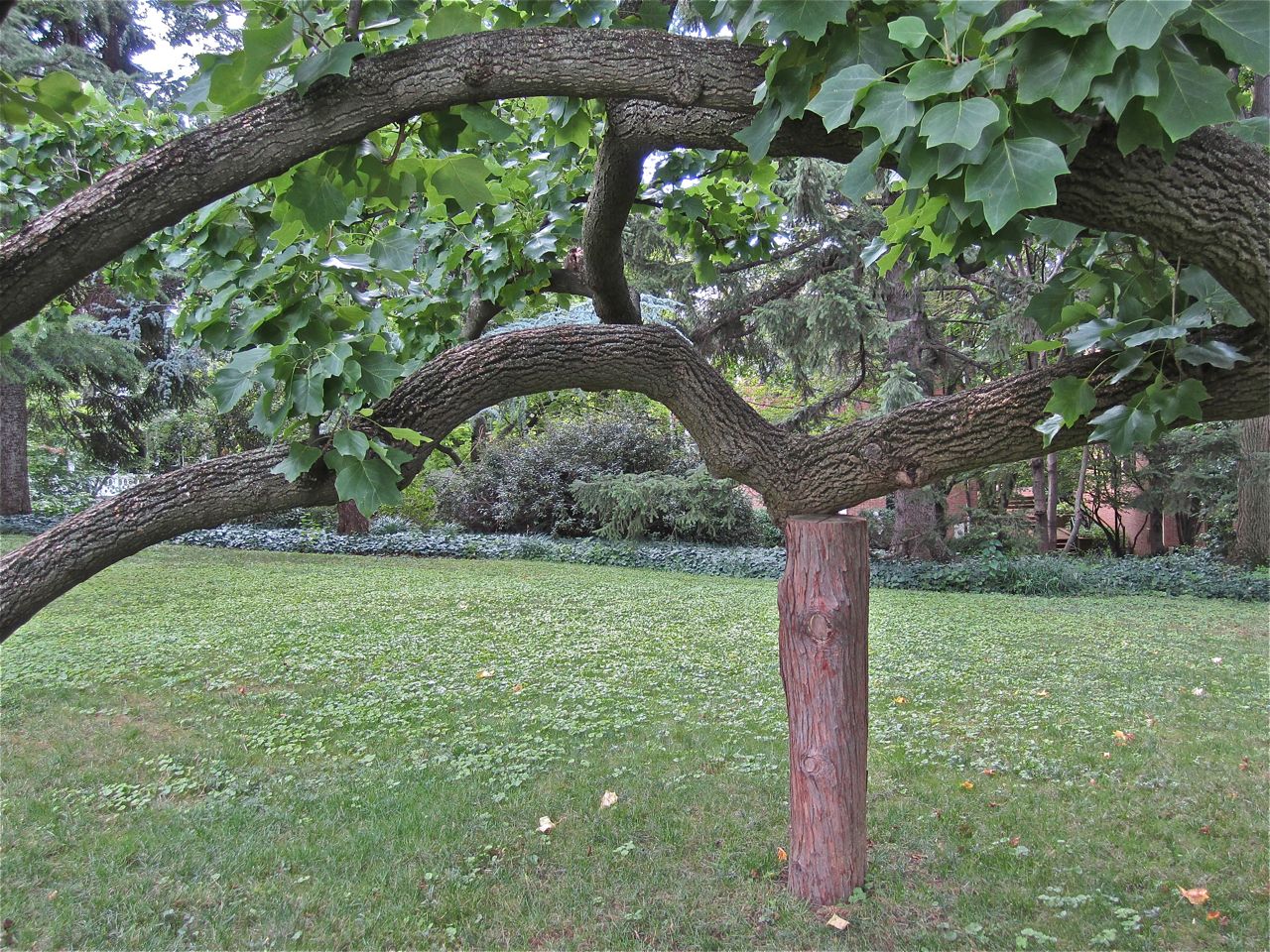
Branch support.
Branch support with neighbor’s house in the background.


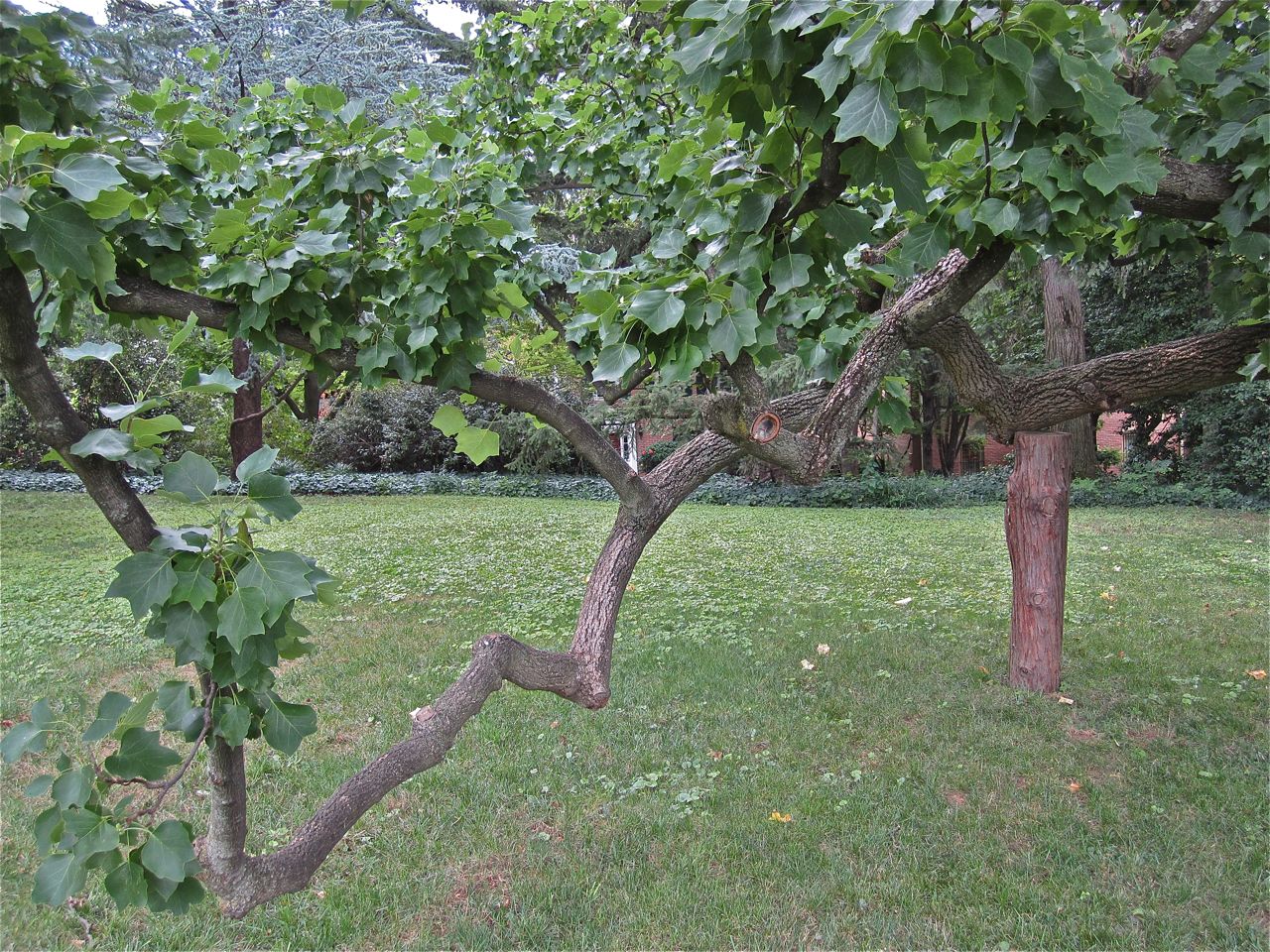
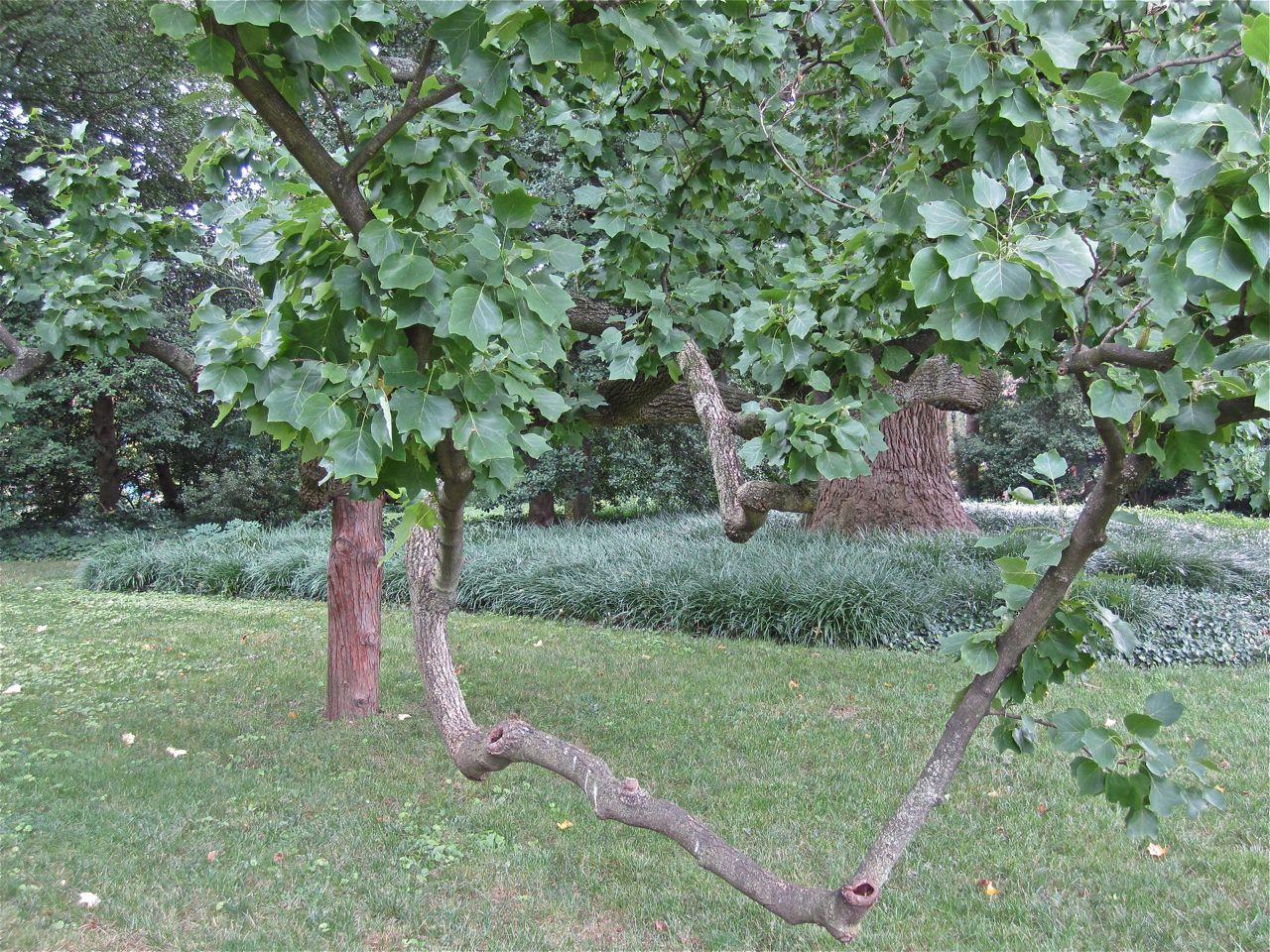
Another low branch and support.
Low branch and support.
The tree’s low branches encompass a separate space within the larger property. An “Archaeological Overview and Preservation Plan” prepared by the University of Maryland called it “perhaps the most significant landscape feature on the entire estate.”

Here are also some photos of a small “grove” of very large, very old boxwoods, also on the south lawn, which I thought were almost other-world-like from the inside.

The outside of an old boxwood the height of a small tree on the front lawn of Tudor Place.
Another small environment within the boxwoods.  
Inside this “grove” of old boxwoods.  

Tanner Springs Park

I’m stuck inside with a cold today and have been all weekend, so I haven’t been able to take any new pictures.

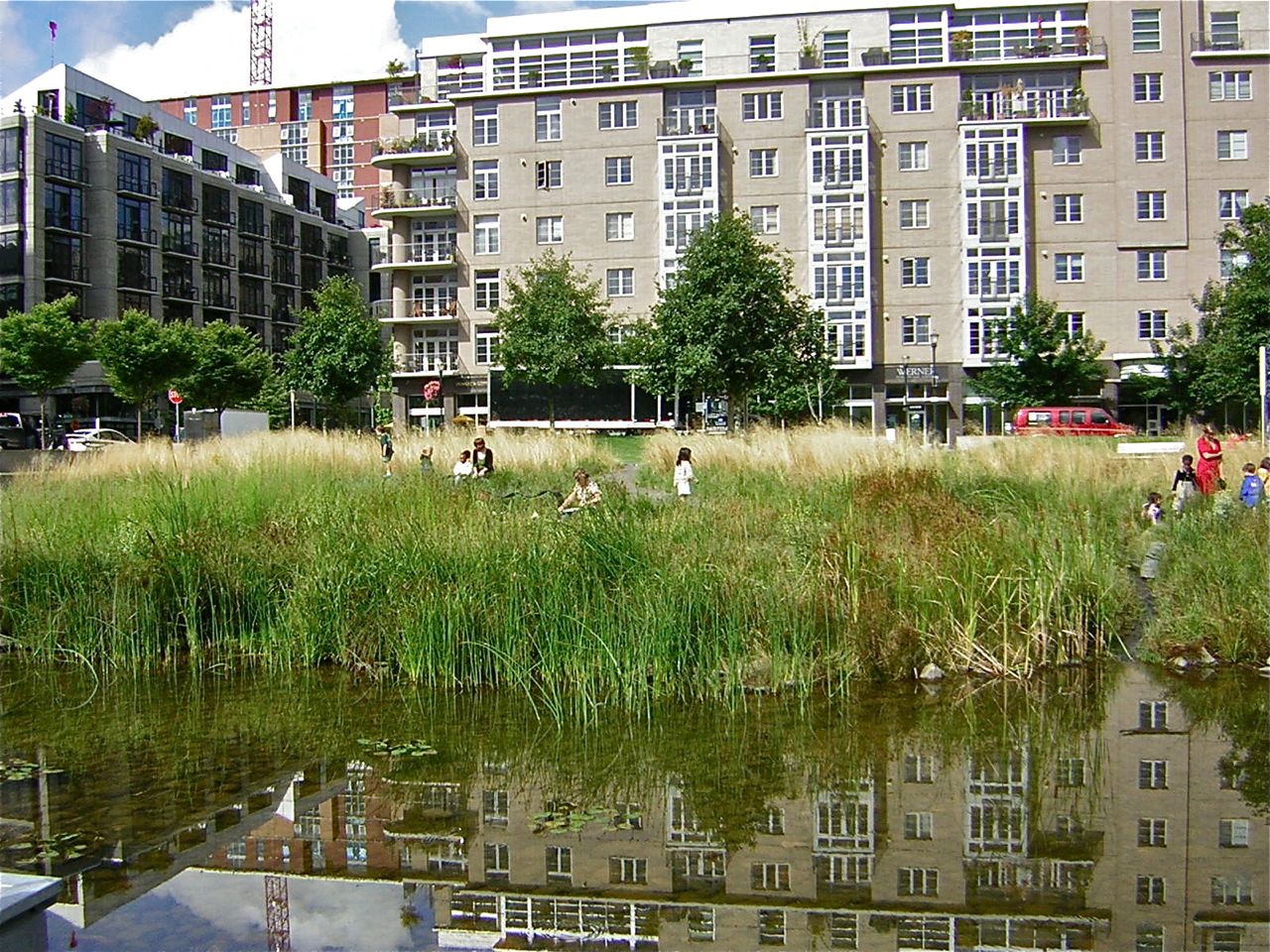
However, I found these photos of Tanner Springs Park in Portland, Oregon, which I took in 2008.  I thought I would share them because I was thinking about Fiona Stephenson’s chalk stream show garden and about how a landscape type (in this case, wetlands) can be interpreted effectively in a garden design (in this case, a .92 acre urban public park).

Also, the children in the photos are having such a nice time fooling around in the grass and water, and, while I look at them, I reflect that it’s going to be 95° here in Washington, D.C., today and only 70° in Portland.

A summer camp group visits Tanner Springs Park in Portland, Oregon.

The Tanner Springs Park opened in 2006 in the Pearl District, which is a neighborhood partly made up of old warehouses that are now turned into apartments and shops.  Before the warehouses, there was Tanner Creek, which fed streams, wetlands, and a lake and ended at the Willamette River close by.  In the late 19th century, Tanner Creek was rerouted into an underground system of pipes.

The park is not a restoration of the original environment but is meant to imitate and function somewhat like a wetland.

The concept for the park was provided by Peter Walker & Partners.  The design was by Atelier Dreiseitl and Green Works, P.C.

Click the link for an article about the park by George Hazelrigg in the April 2006 issue of  Landscape Architecture Magazine.

Click on any thumbnail in the gallery below to scroll through all the enlarged photos.

Addendum:  For more recent (May 2011) photos of the park, check out the blog Metropolitan Gardens.

Dumbarton Oaks Park: how it’s done

A footbridge over a waterfall.

On July 4th, my husband and I walked home through Georgetown after lunch.  When we reached R Street, we decided  to cut through Montrose Park and then over behind Dumbarton Oaks.

This is how we came upon Dumbarton Oaks Park, a section of Rock Creek Park with an exceptional pedigree, but a difficult present existence.  It is an almost lost remnant of the Country Place Era of American garden design (1880 – 1940).

The Dumbarton Oaks garden, which was designed by Beatrix Farrand for Mildred and Robert Bliss, is famous, but the park behind it is far less known.  I had never heard of it — not from garden history classes nor during visits to the DO garden — until this April, when I received an e-mail about the launch of efforts of save it.

Laurel Pool damaged by runoff.

But the DO Park, also designed by Farrand, is on the National Register of Historic Places.  “To landscape historians,” writes Adrian Higgins of The Washington Post, “it is hallowed ground.”

In 1928, these 27 acres of former farmland became a naturalistic extension of the Bliss estate’s formal gardens.  A series of paths and meadows were composed along a small tributary of Rock Creek and planted out with drifts of native and exotic wildflowers, bulbs, and woodland shrubs.  Eighteen waterfall dams were built, as well as two arbors and several benches and footbridges — all in the rustic Arts and Crafts style.

In 1941, when Dumbarton Oaks was given to Harvard University, this part of the property went to the National Park Service.

Over time, however, it seems that the highly designed and delicately crafted landscape was just too much for the Park Service to handle.  Photos taken in the late 1980s show it in very bad condition.  Through the decades, there has been serious damage from runoff to the stream-edge areas, and invasive weeds and vines have smothered and pushed out Farrand’s trees and plants.

The formation of the Dumbarton Oaks Park Conservancy offers some hope for its restoration.  Headed by Rebecca Trafton, a garden designer and documentary maker, it is currently raising money and hopes to present a  work plan in October.

The DO Park is a remarkable place even now, and the strength of Farrand’s vision and of her artful use of materials still shines through.  The refrain “this is how it’s done” ran through my mind as we walked along.  If you visit Dumbarton Oaks, please walk down Lover’s Lane on its east side and take a look.

Click on any thumbnail in the gallery below to scroll through the enlarged photos.  The order follows a walk from one end of the path along the stream to the other.